# Coolset: imported public Academy content

This isolated preview contains 214 published articles from https://www.coolset.com.
It is a snapshot, not a complete export of the CMS. Drafts and protected content are excluded.
Each article includes its original source URL and available dates. Verify time-sensitive claims against the original sources.
Use https://coolset-website-preview.vercel.app/api/content to search and paginate. Use https://coolset-website-preview.vercel.app/agents for the read-only interface guide.

---

# EUDR mixing and circumvention risk: a guide to blended commodities and aggregated supply chains for 2026

How EUDR mixing and circumvention rules affect blended commodities, cooperatives and aggregated supply chains before the 30 December 2026 deadline.

Author: Emilie Ihde
Published: 2026-08-19
Source: https://www.coolset.com/academy/eudr-mixing-and-circumvention-risk-how-to-handle-blended-commodities-cooperatives-and-aggregated-supply-chains

##### Key takeaways.

<ul><li>EUDR treats a product as non-compliant if any input lacks plot-level geolocation, so mixing verified and unverified material in a cooperative or aggregator collapses the whole batch.</li><li>Regulation (EU) 2025/2650 sets application at 30 December 2026 for medium and large operators and 30 June 2027 for micro and small operators established by 31 December 2024, except for former-EUTR timber products, which apply from 30 December 2026.</li><li>Only identity-preserved or segregated physical flows, with cooperative member registries, polygon geolocation and yield plausibility checks, meet the Article 10 standard.</li><li>Coolset helps compliance teams manage EUDR mixing and circumvention risk end to end. See the <a href="https://www.coolset.com/eudr" rel="noopener noreferrer">EUDR platform.</a></li></ul>

<a href="https://eur-lex.europa.eu/legal-content/EN/TXT/?uri=CELEX:32023R1115#art_9" rel="noopener noreferrer">Article 9 of Regulation (EU) 2023/1115</a> obliges operators to collect geolocation coordinates of all plots of land where the relevant commodities were produced, and Article 3 forbids placing on the EU market any relevant product that contains material sourced outside those verified plots. Together, those two provisions mean a single unverified smallholder plot inside an aggregated cocoa, coffee, palm oil, rubber or soy shipment can render the whole batch non-compliant. That risk is the core problem for anyone sourcing through cooperatives, first-mile aggregators, or blended processing streams.

<a href="https://eur-lex.europa.eu/eli/reg/2025/2650/oj/eng" rel="noopener noreferrer">Regulation (EU) 2025/2650</a>, published in the Official Journal on 23 December 2025, moves the application date to 30 December 2026 for medium and large operators and 30 June 2027 for<a href="https://www.coolset.com/academy/eudr-simplified-declaration-for-micro-and-small-operators-compliance-made-easy-for-primary-producers" rel="noopener noreferrer"> micro and small operators</a> established by 31 December 2024, except for former-EUTR timber products, which apply from 30 December 2026. The postponement did not soften the mixing and circumvention rules. It gave companies more time to engineer segregation, plot-level traceability, and cooperative-level controls before the Regulation bites.

## Why blended and aggregated supply chains break standard EUDR due diligence

Blended commodities and cooperative sourcing break standard EUDR due diligence because the Regulation treats a product as non-compliant if any input lacks plot-level geolocation or deforestation-free evidence, regardless of volume share. 

The<a href="https://green-forum.ec.europa.eu/nature-and-biodiversity/deforestation-regulation-implementation/understand-due-diligence_en" rel="noopener noreferrer"> Commission's guidance document on due diligence</a> makes the mixing test explicit. Operators must assess the risk of circumvention or of mixing with products of unknown origin or produced in areas where deforestation has occurred. They must also consider the difficulty of connecting products to the plot of land where commodities were produced. In practice, this rules out chain-of-custody models that treat verified and unverified volumes as changeable.

Downstream operators inherit the blending problem they did not create. A trader importing palm oil derivatives cannot retroactively separate compliant and non-compliant fractions once refining or crushing has occurred, and a chocolate manufacturer cannot reconstitute plot-level provenance from a co-op invoice. The<a href="https://environment.ec.europa.eu/publications/faq-eudr-implementation_en" rel="noopener noreferrer"> Commission FAQ</a>, updated as version 5 of the FAQ, is the designated instrument for clarifying operator, downstream operator and trader roles in mixed and aggregated supply-chain scenarios.

## How circumvention risk is defined and enforced under EUDR

Circumvention under EUDR covers any arrangement designed to avoid the obligations of the Regulation, including artificial splitting of shipments, laundering non-compliant material through compliant plots, and re-labelling origin at aggregation points. The<a href="https://green-forum.ec.europa.eu/nature-and-biodiversity/deforestation-regulation-implementation/understand-due-diligence_en" rel="noopener noreferrer"> guidance document</a> treats circumvention as a standing input to every risk assessment. Any relevant information indicating potential circumvention must be shared immediately with the competent authority.

Article 10 sets the criteria operators must weigh. Those criteria include the complexity and length of the supply chain, whether mixing of relevant products is involved, and the stage of processing. The<a href="https://eur-lex.europa.eu/legal-content/EN/TXT/?uri=CELEX%3A02023R1115-20251226" rel="noopener noreferrer"> consolidated Regulation</a> is clear that products may not be placed on the market or exported if the Article 10 risk assessment indicates any non-negligible risk of non-compliance. There is no volume threshold and no de minimis rule below which mixed material can be waved through.

Circumvention risk also limits the simplified due diligence route. Under Article 13, an operator can skip the risk assessment and mitigation steps only after checking that all commodities come from countries classified as low risk. That check must weigh supply-chain complexity and the risk of circumvention or mixing. The low-risk classifications sit in<a href="https://eur-lex.europa.eu/legal-content/EN/TXT/?uri=CELEX:32025R1093" rel="noopener noreferrer"> Implementing Regulation (EU) 2025/1093</a>. Operators using simplified due diligence must switch back to full due diligence if new information suggests non-compliance or circumvention. Any cooperative or aggregator that pools volumes from low-risk and standard-risk origins takes the simplified route off the table.

## Segregation models that hold up when cooperatives sit between farm and operator

Only identity-preserved and segregated physical flows satisfy the Regulation when cooperatives aggregate smallholder output.<a href="https://eur-lex.europa.eu/legal-content/EN/TXT/?uri=CELEX:32023R1115#art_9" rel="noopener noreferrer"> Article 9</a> requires plot-level geolocation, and Article 3 tests each individual product. Together they force a chain-of-custody model where every batch links back to a defined set of plots, and where verified batches stay physically apart from unverified ones at every handling stage.

Cooperatives sit at the heart of this. Under the amended Regulation, downstream operators and traders hold specified information but do not submit their own due diligence statements, so the accuracy of the upstream cooperative record determines compliance for everyone downstream. That is confirmed in<a href="https://eur-lex.europa.eu/eli/reg/2025/2650/oj/eng" rel="noopener noreferrer"> Regulation (EU) 2025/2650</a>, which also introduces a simplified one-time declaration for micro or small operators under a new Article 4a. Cooperatives that produce or first-purchase from smallholders sit inside either the standard operator regime or, where they qualify, the simplified regime. Either way, they carry the plot-level obligation.

Practical segregation for aggregated flows relies on a few controls:

<ul><li>Member registries that list every farm supplying a given cooperative, with signed farmer declarations linked to plot polygons or coordinates.</li><li>Geolocation captured to the standard the EUDR Information System supports. The<a href="https://green-forum.ec.europa.eu/nature-and-biodiversity/deforestation-regulation-implementation/information-system-deforestation-regulation_en" rel="noopener noreferrer"> Commission's Information System guidance</a> confirms operators can indicate exact origins by drawing areas on a map or providing coordinates individually or in bulk.</li><li>Batch-to-plot linkage records that identify, for each lot leaving the collection point, which plots contributed and in what volumes.</li><li>Yield plausibility checks that reconcile declared per-hectare output against typical yields for the origin region.</li><li>Physical segregation at aggregation warehouses through separate silos, containers, or timed processing runs, so that verified and unverified lots never mix downstream.</li></ul>

Operators that source through cooperatives should require these controls contractually and audit them, rather than accept a cooperative attestation on trust. That connects to how aggregated shipments look when a competent authority reviews them.

## Red flags that trigger competent authority scrutiny on aggregated shipments

Aggregated shipments carry the mixing and circumvention indicators that the Regulation and Commission guidance name explicitly. The<a href="https://green-forum.ec.europa.eu/nature-and-biodiversity/deforestation-regulation-implementation/understand-due-diligence_en" rel="noopener noreferrer"> guidance document</a> lists three mandatory inputs to any risk assessment: supply-chain complexity, the difficulty of connecting products to the plot, and the risk of mixing with products of unknown origin. Substantiated concerns submitted under Article 31 and the operator's non-compliance history count as further inputs. Any relevant information indicating potential circumvention must be shared with the competent authority immediately.

Yield plausibility is one operator-side check. If the volume claimed against a cooperative's declared plots exceeds realistic per-hectare output, the operator has a documented mixing or circumvention risk that must feed the Article 10 assessment. Coordinate integrity is another. Identical GPS points reused across multiple due diligence statements, or coordinates that fall on non-agricultural land in publicly available forest and land-cover data, are the kinds of signals the guidance document frames as indicators of potential mixing or circumvention. The<a href="https://green-forum.ec.europa.eu/nature-and-biodiversity/deforestation-regulation-implementation/eudr-cooperation-and-partnerships_en" rel="noopener noreferrer"> Commission's benchmarking framework</a> uses quantitative data primarily from the FAO Global Forest Resources Assessment, and operators can layer independent satellite and land-cover checks on top when validating cooperative data.

Origin shifts after benchmarking updates are another pattern to watch. Country classifications in<a href="https://eur-lex.europa.eu/legal-content/EN/TXT/?uri=CELEX:32025R1093" rel="noopener noreferrer"> Implementing Regulation (EU) 2025/1093</a> can be updated when the Commission deems it necessary. When paperwork toward newly low-risk countries changes without a matching change in physical sourcing, that is a circumvention risk the operator must document and address under Article 10, and simplified due diligence must convert back to full due diligence once new information suggests non-compliance.

<aside>

### Manage EUDR mixing and circumvention risk with Coolset

Coolset supports EU Deforestation Regulation (EUDR) compliance across blended commodities, cooperative sourcing and aggregated supply chains, from plot-level geolocation to due diligence statement submission.

<a href="https://www.coolset.com/eudr" rel="noopener noreferrer">See Coolset for EUDR</a>

</aside>

## Contractual and data controls to push traceability upstream

The way to protect a batch from failing at the border is to force the traceability data to exist at the collection point, not manufacture it downstream. That means embedding EUDR-specific warranties, audit rights, and batch-level traceability obligations into contracts with cooperatives and first-mile aggregators, not only with direct suppliers. The obligations should mirror the operator's own duties under<a href="https://eur-lex.europa.eu/legal-content/EN/TXT/?uri=CELEX:32023R1115" rel="noopener noreferrer"> Articles 9 and 10</a>, so that a failure upstream is a contractual breach downstream.

Contracts should require the cooperative to submit member polygon files, batch-to-plot mapping, and volume reconciliation reports on a defined cadence, with defined consequences when gaps appear. The reporting cadence can align with how batches are physically handled, so that every lot leaving the co-op is matched to a specific set of plots before it enters the operator's inventory. Where a supplier operates through several tiers of aggregators, the warranty chain has to reach the tier that actually captures plot-level data, otherwise the operator inherits a gap it cannot close.

Data infrastructure has to link every incoming batch to a specific set of plot polygons and, once the batch is placed on the market, to a specific due diligence statement reference in the EUDR Information System. The<a href="https://green-forum.ec.europa.eu/nature-and-biodiversity/deforestation-regulation-implementation/information-system-deforestation-regulation_en" rel="noopener noreferrer"> Information System documentation</a> confirms that statements are stored centrally and that API reference documentation for economic operators is available on CIRCABC and updated regularly. Downstream operators and traders that rely on upstream statements need to keep those reference numbers, along with the underlying evidence, in a form that survives an inspection request.

Internal risk assessments under Article 10 must document how cooperative-level controls address the specific circumvention patterns relevant to that commodity and origin. Generic risk statements do not meet the standard the Regulation sets. Coolset users typically pair these assessments with related work on<a href="https://www.coolset.com/academy/eudr-geolocation-requirements-how-to-collect-and-validate-gps-polygon-data-for-your-dds" rel="noopener noreferrer"> geolocation data collection</a>,<a href="https://www.coolset.com/academy/eudr-supplier-management-how-to-prioritise-escalate-and-close-data-gaps-before-december-2026" rel="noopener noreferrer"> supplier data-gap management</a>, and<a href="https://www.coolset.com/academy/eudr-legality-evidence-article-9-1-h-5621a" rel="noopener noreferrer"> legality evidence under Article 9(1)(h)</a>, since those workstreams share the same underlying data model.

## Where to focus before the 30 December 2026 deadline

The largest single risk before the amended application date in<a href="https://eur-lex.europa.eu/eli/reg/2025/2650/oj/eng" rel="noopener noreferrer"> Regulation (EU) 2025/2650</a> is any commodity flow that passes through a cooperative or first-mile aggregator without plot-level polygons and physical segregation today. The<a href="https://ec.europa.eu/commission/presscorner/detail/en/ip_26_941" rel="noopener noreferrer"> Commission</a> notes that 2025 simplifications aim to cut annual compliance costs for companies subject to EUDR obligations by about 75% while keeping the deforestation-free requirements intact. The simplifications reduce paperwork; they do not reduce the traceability standard. Later work on<a href="https://www.coolset.com/academy/eudr-re-imports-and-processed-products-when-do-you-need-a-new-dds-062b7" rel="noopener noreferrer"> re-imports and processed products</a> and on<a href="https://www.coolset.com/academy/2-eudr-country-risk-classification-review-2026-what-changes-when-the-benchmarks-are-updated" rel="noopener noreferrer"> country risk classification updates</a> depends on that traceability being in place first.

Start by pairing every cooperative-sourced or aggregated flow with a segregation and geolocation plan defensible to a competent authority, and treat cooperative engagement as a multi-month effort rather than a documentation exercise.

## Frequently asked questions

### Is mass balance chain of custody acceptable under EUDR?

Article 3 of Regulation (EU) 2023/1115 requires that each relevant product placed on the market be deforestation-free and covered by a due diligence statement tied to the plots of production. Approaches that treat verified and unverified volumes as fungible do not meet that standard. Identity-preserved or physically segregated flows are the reliable route. The<a href="https://environment.ec.europa.eu/publications/faq-eudr-implementation_en" rel="noopener noreferrer"> Commission FAQ</a> is the designated instrument clarifying such mixed-supply-chain questions.

### When does EUDR now apply after the 2025 amendment?

Under<a href="https://eur-lex.europa.eu/eli/reg/2025/2650/oj/eng" rel="noopener noreferrer"> Regulation (EU) 2025/2650</a>, application starts on 30 December 2026 for medium and large operators, and on 30 June 2027 for micro and small operators established by 31 December 2024, except for former-EUTR timber products, which apply from 30 December 2026. The amending Regulation entered into force on 26 December 2025.

### Can we use simplified due diligence for cooperative-sourced volumes?

Only if every plot supplying the cooperative is in a country classified as low risk under<a href="https://eur-lex.europa.eu/legal-content/EN/TXT/?uri=CELEX:32025R1093" rel="noopener noreferrer"> Implementing Regulation (EU) 2025/1093</a>, and only after assessing supply-chain complexity and the risk of circumvention or mixing. If any material of unknown or standard-risk origin can enter the aggregated flow, full due diligence applies.

### Do downstream operators need their own due diligence statement for aggregated products?

Under the amended text in<a href="https://eur-lex.europa.eu/eli/reg/2025/2650/oj/eng" rel="noopener noreferrer"> Regulation (EU) 2025/2650</a>, downstream operators and traders hold specified information but do not themselves submit due diligence statements. They still need to keep the upstream statement references and evidence linking the product to the underlying plots.

### What are the main indicators of mixing or circumvention on an aggregated shipment?

Indicators named in Commission guidance and Article 10 include supply-chain complexity, difficulty of connecting products to the plot, yield figures that exceed plausible per-hectare output, identical geolocation coordinates recycled across multiple statements, coordinates falling on non-agricultural land, and origin shifts that follow benchmarking updates without matching physical sourcing changes.

‍


---

# EUDR supplier tiers: mapping your full supply chain beyond Tier 1 and 2

How to map your EUDR supply chain beyond Tier 1 and 2, what to collect at each tier, and how to sequence the work before 30 December 2026.

Author: Emilie Ihde
Published: 2026-08-14
Source: https://www.coolset.com/academy/eudr-supplier-tiers-how-to-map-your-supply-chain-beyond-tier-1-and-what-you-need-from-each-level

##### Key takeaways

<ul><li>Article 9 requires plot-level geolocation, so Tier 1 and Tier 2 supplier lists alone cannot support a valid DDS.</li><li>Redraw tiers around the commodity's physical journey, with the origin tier defined as whoever holds the polygon coordinates and legality file.</li><li>Sequence mapping by commodity volume and country risk before the 30 December 2026 application date for medium and large operators as well as SMEs covered by the EUTR.</li><li>Coolset's EUDR platform helps teams collect, validate and file plot-level supplier data at scale.</li></ul>

Article 9 of<a href="https://eur-lex.europa.eu/eli/reg/2023/1115/oj/eng#art_9" rel="noopener noreferrer"> Regulation (EU) 2023/1115</a> requires operators to collect the geographic coordinates of every plot of land where the relevant commodity was produced, which means a Tier 1 supplier list, however clean, cannot satisfy the due diligence statement (DDS) filed in the EU Information System. The obligation reaches the plot, not the invoice. Any operator whose upstream map stops at the direct supplier or the first processor is filing on partial evidence.

That is the binding constraint behind the EU Deforestation Regulation (EUDR). The<a href="https://www.consilium.europa.eu/en/press/press-releases/2025/12/18/deforestation-council-signs-off-targeted-revision-to-simplify-and-postpone-the-regulation/" rel="noopener noreferrer"> Council formally adopted the targeted revision on 18 December 2025</a>, moving application to 30 December 2026 for large and medium operators and for micro/small operators already covered by the EUTR, and from 30 June 2027 for other micro and small operators. That means that the timeline shifted - the evidence bar did not. This guide sets out how to redraw supplier tiers around the commodity's physical journey, what to collect at each level, and how to sequence the mapping before submissions ramp.

## Why Tier 1 and Tier 2 mapping fails the EUDR evidence test

Tier 1 and Tier 2 visibility fails the EUDR because the regulation demands plot-level geolocation and a legal production check that only exist at the origin tier. A direct supplier can attest to a country of harvest and a volume, but the coordinates that anchor a DDS sit with the farmer, plantation, forest concession or cattle establishment several tiers upstream.<a href="https://eur-lex.europa.eu/eli/reg/2023/1115/oj/eng" rel="noopener noreferrer"> Article 9(1)(d) of the EUDR</a> requires geolocation of all plots of land where the relevant commodity was produced, and for cattle, of all establishments where the animals were kept. That data cannot be synthesized from procurement records.

The mismatch matters most in aggregated commodity flows. Soy leaves a farm, moves through a first buyer, an inland silo, a crushing plant, a port trader and an EU importer. Cocoa passes cooperatives, licensed buying companies, exporters and grinders. Each intermediate node blends batches, and the polygon that made the shipment lawful sits behind two or three transformations. A supplier map that lists only the port trader as Tier 1 and the crusher as Tier 2 hides everything the regulation actually cares about.

The consequence is legal, not reputational. Operators file the DDS and stand behind its content. The regulation gives competent authorities the power to sanction, and the Commission's own<a href="https://environment.ec.europa.eu/news/commission-updates-product-scope-and-tools-support-eudr-2026-07-13_en" rel="noopener noreferrer"> July 2026 update on Information System tools and supply-chain infographics</a> underlines that operators carry the burden of proof for what they submit. Mapping is therefore a compliance activity, not a procurement one.

## How EUDR redefines supplier tiers around the commodity, not the contract

Under EUDR, tiers should follow the commodity's physical journey from plot to EU placement, not the invoice trail. A contractual Tier 1 might be a European trader whose actual role in the physical chain is to book a container; the plot of land is five tiers back. Rebuilding the map around the commodity means numbering tiers by transformation and custody, with the origin tier defined as whoever holds the polygon coordinates and the legality file.

A workable scheme looks like this:

<ul><li>Tier 1: direct contractual supplier placing the goods with the operator.</li><li>Tiers 2 to N: intermediate processors, aggregators, cooperatives, mills, refiners, gins and traders that hold custody of the commodity between the plot and the operator.</li><li>Origin tier: the producer, farm, plantation, forest concession or cattle establishment where the commodity was grown or kept, and where geolocation exists.</li></ul>

Each intermediate tier owes chain-of-custody documentation showing volume reconciliation, so purchased tonnage matches sold tonnage, and confirming that compliant material was not mixed with non-compliant material. The sourcing model determines what evidence is possible. Segregated supply keeps a specific batch identifiable from plot to EU border and preserves the polygon link end to end. Mass balance allows compliant and non-compliant volumes to be tracked on paper without physical separation. For EUDR, compliant commodities must be segregated from unknown-origin/non-deforestation-free ones at every step to satisfy the information requirements under Art. 9. 

The re-import case is a separate wrinkle worth flagging. Where a product leaves the EU, is transformed abroad and returns, the operator needs to know whether a new DDS is required. See the Coolset guide on<a href="https://www.coolset.com/academy/eudr-re-imports-and-processed-products-when-do-you-need-a-new-dds-062b7" rel="noopener noreferrer"> EUDR re-imports and processed products</a> for the decision tree.

## What to collect at each tier to satisfy Article 9 and Article 10

Each tier owes a specific evidence package, and the operator's job is to assemble those packages into a single defensible file per DDS. The information set is fixed by<a href="https://eur-lex.europa.eu/eli/reg/2023/1115/oj/eng#art_9" rel="noopener noreferrer"> Article 9 EUDR</a>, and the risk assessment sits in Article 10. Nothing in the December 2025 revision changes the substance of these obligations.

### Tier 1: direct supplier

The direct supplier provides commodity description, quantity, country of production, its own identity and contact details, and a contractual assurance that upstream due diligence has been performed. Where the supplier is itself an operator that has already filed a DDS, the reference number of that statement should be recorded. All operators, regardless of size, are required to<a href="https://trade.ec.europa.eu/access-to-markets/en/news/delay-until-december-2026-and-other-developments-implementation-eudr-regulation" rel="noopener noreferrer"> collect and retain for five years data on the operators, downstream operators or traders that supplied them</a>.

### Intermediate tiers: processors, aggregators, cooperatives, mills, traders

Intermediate tiers provide volume reconciliation and transformation records. For each batch entering and leaving their custody, they should be able to show inbound volume, outbound volume, conversion factors where processing changes weight, and the absence of mixing with material lacking geolocation. Where a cooperative buys from 800 farmers and sells to a mill, the operator needs the cooperative's list of member plots that feed the specific batch, not the full membership roster.

### Origin tier: the plot

The origin tier provides the geolocation and the legality file. Coordinates must be delivered as polygons for plots above four hectares and as points for smaller plots, in the format the EU Information System accepts. The Coolset guide on<a href="https://www.coolset.com/academy/eudr-geolocation-requirements-how-to-collect-and-validate-gps-polygon-data-for-your-dds" rel="noopener noreferrer"> EUDR geolocation requirements</a> covers the technical bar in detail. Legal production evidence under Article 9(1)(h) covers land use rights, environmental protection, third-party rights including free, prior and informed consent where relevant, labor rights, tax, anti-corruption, and trade and customs rules. Each of these should be documented at the tier where the underlying risk sits, which for land use and environmental compliance is the plot itself.

### Article 10 risk assessment

Article 10 requires operators to assess risk using criteria including the complexity and length of the supply chain, mixing with products of unknown origin, stage of processing, adjacency of plots to forests, and the country risk classification assigned under the benchmarking system. The<a href="https://green-forum.ec.europa.eu/countries-and-partnerships_en" rel="noopener noreferrer"> EU country benchmarking system was adopted on 22 May 2025</a> and classifies countries as low, standard or high risk. Even for low-risk countries, imports must be sourced from land not subject to deforestation or forest degradation after 31 December 2020, and the full EUDR framework still applies with reduced scrutiny. Country risk data only becomes usable once the origin tier is known, which is another reason a Tier 1 view is insufficient. The Coolset guide on<a href="https://www.coolset.com/academy/2-eudr-country-risk-classification-review-2026-what-changes-when-the-benchmarks-are-updated" rel="noopener noreferrer"> EUDR country risk classification</a> covers the benchmarking review in more depth.

## Building upstream visibility when suppliers refuse to disclose

When intermediate suppliers refuse to name their upstream sources, the operator has three commercial and technical tools to close the gap. Each works in a different situation, and most programmes use them in combination.

<ol><li><strong>Contractual leverage.</strong> Amend purchase contracts so that delivery of Article 9 data, including polygon coordinates and the legality file, is a condition of acceptance. Tie payment or volume allocation to data completeness, not to intent. Cooperatives, aggregators and traders resist disclosure primarily to protect margin, and volume commitments in exchange for traceability data typically unlock what desk requests cannot.</li><li><strong>Segregated sourcing programmes.</strong> Move specific volumes into segregated supply, where a batch is identifiable from plot to EU border. Segregation is more expensive per tonne but delivers a clean Article 9 file and removes the mixing risk in the Article 10 assessment. For high-volume flows in high-risk countries, segregation is often the only workable route.</li><li><strong>Independent corroboration.</strong> Satellite monitoring, isotope testing and DNA verification can corroborate supplier-declared origin where documentation gaps remain. This is particularly relevant for timber and cocoa, where declared origin can be checked against remote-sensing data or laboratory profiles. Corroboration does not replace geolocation, but it supports the plausibility of the file.</li></ol>

Sector platforms and shared traceability schemes can reduce duplication where multiple operators share suppliers, but the operator remains legally responsible under EUDR for the accuracy of its own DDS. Outsourced data does not outsource liability. For the mechanics of escalating with a supplier that will not deliver, see the Coolset guide on<a href="https://www.coolset.com/academy/eudr-supplier-management-how-to-prioritise-escalate-and-close-data-gaps-before-december-2026" rel="noopener noreferrer"> EUDR supplier management</a>.

<aside>

### Handle EUDR supplier mapping with Coolset

EUDR compliance depends on plot-level data from every tier of your supply chain. Coolset helps teams collect geolocation coordinates, validate legality evidence and file due diligence statements in the EU Information System.

<a href="https://www.coolset.com/eudr" rel="noopener noreferrer">See Coolset for EUDR</a>

</aside>

## Sequencing the mapping work before the 30 December 2026 application date

Mapping should be sequenced by commodity risk and volume, not attempted uniformly across every SKU at once. The<a href="https://www.consilium.europa.eu/en/press/press-releases/2025/12/18/deforestation-council-signs-off-targeted-revision-to-simplify-and-postpone-the-regulation/" rel="noopener noreferrer"> </a>revised regulation applies from 30 December 2026 for medium and large operators, with an extra six months for most micro and small operators, and the<a href="https://environment.ec.europa.eu/news/commission-updates-product-scope-and-tools-support-eudr-2026-07-13_en" rel="noopener noreferrer"> Information System reopened at the end of June 2026</a> after technical updates. Submission volumes will concentrate in the second half of 2026, and mapping cycles need to close before that window opens.

A workable sequence:

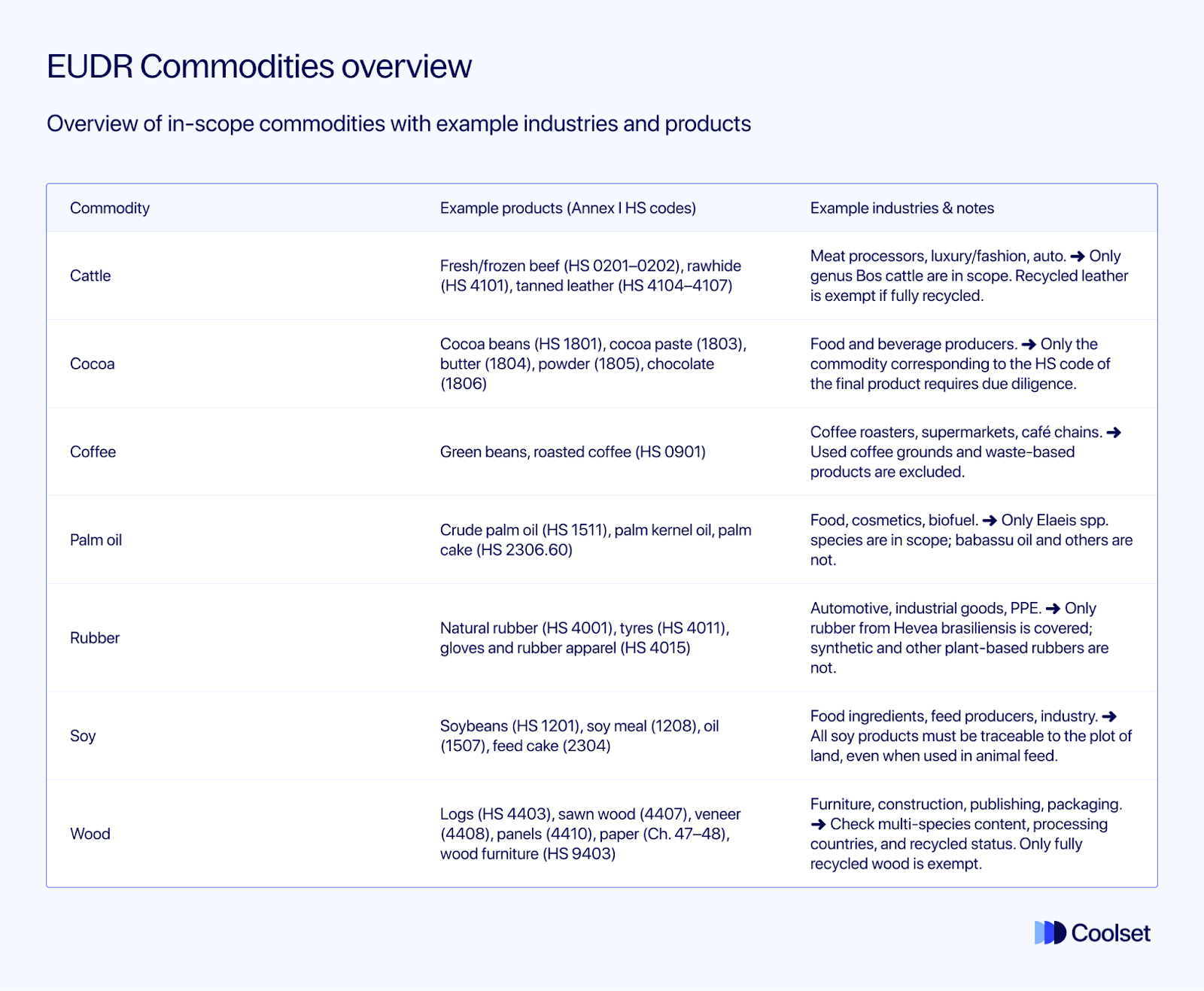
<ol><li>Rank commodity flows by EU-placed volume within scope of the regulation, which covers cattle, cocoa, coffee, oil palm, rubber, soya and wood and derived products.</li><li>Overlay the country risk classification from the benchmarking system. Standard and high-risk sourcing countries move to the front of the queue.</li><li>Lock down Tier 1 declarations first for the top flow, including supplier identity, country of production, volumes and any existing DDS reference numbers.</li><li>Work backward tier by tier until every batch has a geolocation set that reconciles with purchased volume.</li><li>Feed the gaps identified during mapping into the Article 10 risk assessment and mitigation plan. Gaps are not a blocker to the risk assessment; they are the input.</li></ol>

Downstream operators, meaning natural or legal persons who place regulated products already covered by a DDS on the market, do not file their own DDS but must<a href="https://trade.ec.europa.eu/access-to-markets/en/news/delay-until-december-2026-and-other-developments-implementation-eudr-regulation" rel="noopener noreferrer"> register in the Information System and retain supplier data</a>. If your role in a given flow is downstream, the mapping burden narrows to reference-number custody and record retention, but the classification has to be confirmed per flow, not assumed at company level.

Micro and small primary operators have a lighter path. Under the December 2025 revision, they submit a one-off simplified declaration rather than repeated DDSs. The Coolset guide on<a href="https://www.coolset.com/academy/eudr-simplified-declaration-for-micro-and-small-operators-compliance-made-easy-for-primary-producers" rel="noopener noreferrer"> EUDR simplified declarations</a> covers when this route applies.

## Where to start

Pick the single EUDR commodity with the highest EU-placed volume in your portfolio and request plot-level geolocation and legality evidence from every Tier 1 supplier for that commodity. The response rate is the honest calibration of how much upstream mapping work remains before the<a href="https://www.coolset.com/academy/eudr-compliance-roadmap-a-phased-plan-from-july-to-december-2026" rel="noopener noreferrer"> 30 December 2026 application date</a>, and it tells you which suppliers need commercial pressure, which need technical support, and which need replacing.

## Frequently asked questions

### Does an operator have to map every tier of every commodity?

Yes for commodities in scope, because Article 9 requires plot-level geolocation regardless of how many intermediaries sit between the operator and the plot. The depth of documentation at intermediate tiers can scale to the risk, but the polygon at the origin tier is non-negotiable for a valid DDS.

### What is the difference between an operator and a downstream operator under the revised EUDR?

An operator places a regulated product on the EU market for the first time and files the DDS. A downstream operator places a regulated product that is already covered by a DDS filed further upstream. Downstream operators register in the Information System and retain supplier data but do not file their own DDS.

### Do low-risk countries reduce the tier mapping burden?

Partially. Imports from low-risk countries face reduced scrutiny under a simplified due diligence procedure, but the deforestation cut-off of 31 December 2020 and the core Article 9 information set, including geolocation, still apply. Country risk lowers the depth of the Article 10 assessment, not the Article 9 evidence bar.

### When can operators start submitting DDSs in the Information System?

Large and medium operators as well as micro/small operators already covered by the EUTR must comply from 30 December 2026, and other micro and small operators from 30 June 202, following the targeted revision adopted by the Council on 18 December 2025. The Information System reopened at the end of June 2026 after technical updates, with further improvements and training sessions announced by the Commission from end of July 2026.

### Can an operator reuse an upstream supplier's DDS reference number?

SME operators can reference an existing DDS filed under Article 4(8), in reference to Article 33, for parts of products already subject to due diligence, and exercise full due diligence for any parts not covered. Under Art. 4(9), non-SME operators can refer to prior DDSs only after ascertaining that the earlier due diligence was properly performed. Reference does not transfer liability.

‍


---

# EUDR cattle traceability: multi-establishment geolocation requirements for beef supply chains explained

EUDR requires cattle operators to geolocate every establishment an animal passed through. Here is how multi-establishment traceability works for beef.

Author: Elisavet Diamantopoulou
Published: 2026-08-10
Source: https://www.coolset.com/academy/eudr-for-cattle-and-beef-multi-establishment-geolocation-traceability-across-the-supply-chain-and-what-makes-cattle-different-from-other-commodities

##### Key takeaways

<ul><li>For cattle, Article 9 of the EUDR requires geolocation of every establishment where the animal was kept, from birth to slaughter, not only the final holding.</li><li>The due diligence statement for beef links one animal ID to a bundle of plot coordinates, and a single non-compliant plot in the animal's history disqualifies the carcass.</li><li>EU postpones application to 30 December 2026 for large operators and 30 June 2027 for micro and small primary operators.</li><li>Coolset helps beef operators automate multi-establishment traceability and generate compliant DDS files. See the <a href="https://www.coolset.com/eudr" rel="noopener noreferrer">EUDR module</a>.</li></ul>

<a href="https://eur-lex.europa.eu/legal-content/EN/TXT/?uri=CELEX%3A32023R1115&amp;qid=1787304380941#art_9" rel="noopener noreferrer">Article 9(1)(d)</a> of Regulation (EU) 2023/1115 requires operators to submit the geolocation of all plots of land where the relevant commodities were produced, and for cattle it states plainly that the geolocation must instead refer to all establishments where the cattle were kept. That distinction is what makes beef different from every other commodity in scope.

Cocoa, coffee, oil palm, rubber, soy, and timber are tied to a harvest plot. Cattle move, the animal could be born on one holding, reared on another, and finished on a third before slaughter. Under EUDR, each of those holdings is a distinct establishment that must be geolocated, linked to the animal, and checked against the deforestation cut-off date.

## Why cattle break the single-plot geolocation model

Cattle are the only EUDR commodity where a single product unit is produced across multiple geolocated sites over its lifetime. A cocoa bean has one origin plot. A beef carcass typically aggregates inputs from a farm of birth, one or more rearing holdings, and a fattening unit. But each of those sites is not a "plot of land" in the regulation's technical sense, that term (Art. 2(27)) is defined as land within a single real-estate property with homogeneous conditions for assessing deforestation risk, and it's explicitly the geolocation unit used for every commodity other than cattle. Cattle sites are instead defined as "establishments", any premises, structure, or (for open-air farming) any environment or place where livestock are kept, temporarily or permanently. The regulation drew this separate definition precisely because a birthplace, a grazing area, and a slaughterhouse don't fit the "single real-estate property assessed for deforestation risk" model that works for a cocoa or soy plot.

The consequence for beef operators is that the DDS cannot be built from the last holding alone. For cattle, Annex II point 3 requires the geolocation to cover all the establishments where the cattle were kept, birthplace, rearing holdings, grazing land, and slaughterhouse, not just the site of final sale. This is the operator's obligation at the point they first place the cattle (or cattle product) on the EU market.

## What counts as an establishment under EUDR for beef

An establishment under EUDR is any holding or place where cattle were kept, and the geolocation obligation covers each of them. Article 9(1) makes this specific to cattle: where the product concerns cattle, the geolocation must refer to all establishments where the cattle were kept. Operators cannot substitute the postal address or coordinates of the slaughterhouse or the finishing farm for the establishment data of earlier holdings.

Cattle get one significant simplification compared with crop commodities, and it's written directly into the Regulation's definitions: Article 2 requires polygons for plots of land over four hectares used for commodities <em>other than cattle</em>, but explicitly excludes cattle from that requirement. Establishments where cattle are kept can be described with a single point of geolocation coordinates, even where the pasture covers several hundred hectares. This reduces onboarding effort for extensive pasture systems but does not reduce the number of sites the operator has to record.

Micro and small primary operators receive a narrower relief. Under the amendments introduced by Regulation (EU) 2025/2650, geolocation under Article 9 may be replaced by the postal address of the plots or of the establishment for those operators, but only where the operator is established in a country classified as low risk under Article 29's <a href="https://green-forum.ec.europa.eu/countries-and-partnerships/country-classification-list_en" rel="noopener noreferrer">country-benchmarking system</a>. Operators in standard- or high-risk countries, and larger operators regardless of location, remain bound to coordinate-level records for every establishment involved, including where they aggregate supply from multiple sources into a single relevant product.

One boundary matters for scoping. EUDR applies to cattle only when the animal was born on or after 29 June 2023, per the definition of "produced" in Article 2(14). Animals born before that date are out of scope, along with products derived from them. For operators slaughtering long-lived breeding stock, scope screening on date of birth precedes any establishment mapping.

## Linking animal identification to plot data across the chain

Linking animal identification to establishment data means mapping each holding where an animal was kept to a geolocation record for that establishment, then attaching the linked set of coordinates to the DDS, as required by Annex II point 3 for the operator making the first placing on the market.

Downstream actors have separate, more limited obligations under the amended framework. Non-SME downstream operators and non-SME traders must register in the Information System (Art. 5(2)) before placing or making relevant products available on the market. Under Art. 5(1) and 5(3), downstream operators and traders must collect and keep the DDS they receive from their suppliers for at least five years (Art. 5(4)) and provide it to authorities on request. This is a passive record-keeping duty, not a standing obligation to independently verify that the upstream DDS covers every establishment the animal passed through, a proactive check is only required where there's a substantiated concern.

For processors handling boxed beef, carcass quarters, or hides classified under CN codes 4101, 4104, or 4107, the DDS reference from the slaughterhouse is the entry point to the full establishment bundle. Gaps at mid-life establishments, holdings the operator making the first placing failed to disclose, are the failure mode operators need to guard against in a multi-establishment chain.

## Deforestation risk assessment when a single animal has multiple plots

<a href="https://eur-lex.europa.eu/legal-content/EN/TXT/?uri=CELEX%3A32023R1115&amp;qid=1787304380941#art_10" rel="noopener noreferrer">Article 10 risk assessment</a> must be performed for each establishment linked to the animal. A single non-compliant rearing farm can render the entire carcass's DDS non-compliant: under <a href="https://eur-lex.europa.eu/legal-content/EN/TXT/?uri=CELEX%3A32023R1115&amp;qid=1787304380941#art_9" rel="noopener noreferrer">Article 9(1)</a>, any deforestation or forest degradation on a given site automatically disqualifies the relevant product from that site from being placed or made available on the market or exported. Article 10(2) directs operators to weigh criteria including the presence of forests in the country of production, among other risk factors. Article 9(1) supplies the product- and supply-chain-specific data that feeds that assessment.

The cut-off is the same on every establishment. Under EUDR's deforestation-free test, land converted from forest after 31 December 2020 disqualifies the resulting commodity. For cattle, any pasture in the animal's history that was cleared after that date puts the DDS at risk, even if the animal only spent a few months there. A traceability file that only captures the fattening establishment cannot support that assessment.

Enforcement follows the same principle. Under Article 18, competent authorities can request the full establishment set during checks. A DDS that lists only the finishing unit is not defensible if the authority's review of the animal's movement record turns up earlier holdings the operator did not disclose.

<aside>

### Prepare your EUDR due diligence for beef supply chains

The EUDR treats every establishment in an animal's history as a production plot. Coolset structures your cattle movement records, plot coordinates, and DDS submissions in one workflow built for the 30 December 2026 application date.

<a href="https://www.coolset.com/eudr" rel="noopener noreferrer">See Coolset for EUDR</a>

</aside>

## Operational steps to build a multi-establishment traceability file

Begin with the movement record for each animal or batch. That record lists every holding the animal has been registered to. Each holding is then mapped to a geolocation record for the establishment. Establishment data is stable across time; animal movements change with every batch, so the operator only needs to onboard each establishment once, then reuse the coordinates for every animal that later passes through it.

Reconcile the animal-level establishment bundle at the slaughterhouse before issuing the DDS. This is typically the last point in the chain where the ear tag, the carcass identifier, and the establishment set can all be brought together. Downstream processors and traders reference the DDS issued upstream but cannot reconstruct missing establishments after slaughter. 

## Timeline and what changed in December 2025

The <a href="https://eur-lex.europa.eu/legal-content/EN/TXT/?uri=celex%3A32025R2650#art_1" rel="noopener noreferrer">revised application dates</a> are set by Regulation (EU) 2025/2650 of the European Parliament and of the Council, dated 19 December 2025 and published in the Official Journal on 23 December 2025. The main obligations apply from 30 December 2026 for operators generally, and from 30 June 2027 for natural persons and micro/small undertakings established as such by 31 December 2024.

## Where to focus first in a beef supply chain

The right first move is to size the true scope of geolocation collection based on how many distinct establishments a typical carcass touches, not on the number of direct suppliers. That is the count that drives the plot register beef operators need in place before the <a href="https://www.coolset.com/academy/eudr-compliance-roadmap-a-phased-plan-from-july-to-december-2026" rel="noopener noreferrer">30 December 2026 application date</a>.

## Frequently asked questions

### What is the EUDR summary?

The EUDR is <a href="https://eur-lex.europa.eu/legal-content/EN/TXT/?uri=CELEX:32023R1115" rel="noopener noreferrer">Regulation (EU) 2023/1115</a>. It requires that cattle, cocoa, coffee, palm oil, rubber, soy, wood, and certain derived products placed on or exported from the EU are deforestation-free, legally produced, and covered by a due diligence statement with plot-level geolocation. It repeals the EU Timber Regulation.

### Is the EUDR postponed to 2026?

Yes. <a href="https://eur-lex.europa.eu/eli/reg/2025/2650/oj/eng" rel="noopener noreferrer">Regulation (EU) 2025/2650</a> postponed the main obligations to 30 December 2026 for large and medium operators, and to 30 June 2027 for micro and small primary operators. The amendment entered into force on 26 December 2025.

### What is Annex I of the EUDR?

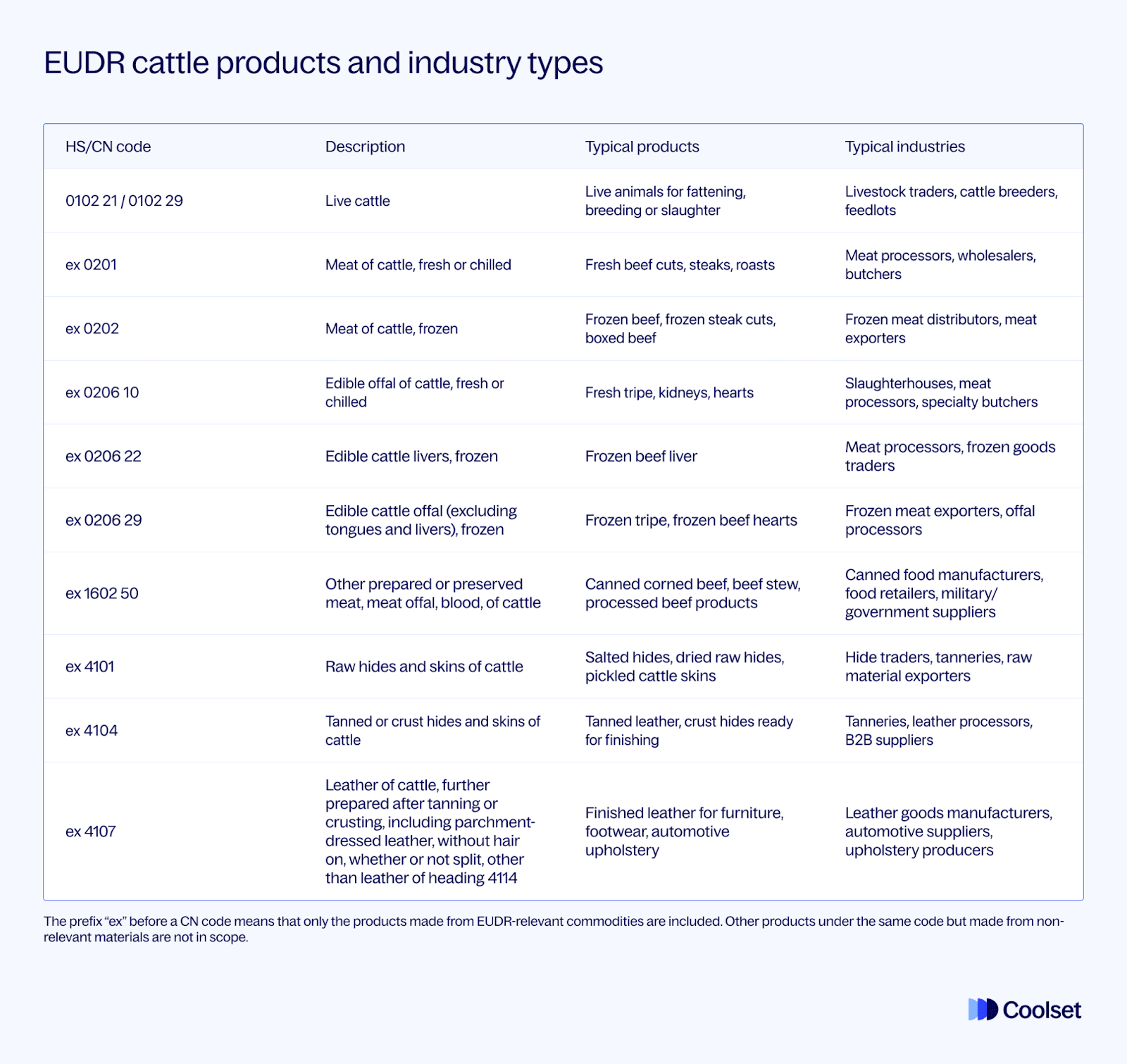
Annex I of <a href="https://eur-lex.europa.eu/legal-content/EN/TXT/?uri=CELEX:32023R1115" rel="noopener noreferrer">Regulation (EU) 2023/1115</a> lists the CN codes of relevant commodities and products in scope. For cattle it covers live animals under CN 0102 21 and 0102 29, beef under 0201 and 0202, and hides and leather under 4101, 4104, and 4107, among other cattle-derived products.

### What is a no-risk category in the EUDR?

The country benchmarking system under Article 29 classifies producing countries as low, standard, or high risk. There is no formal 'no risk' category. The <a href="https://eur-lex.europa.eu/legal-content/EN/TXT/PDF/?uri=CELEX%3A52026DC0191" rel="noopener noreferrer">Commission's 2026 simplification review</a> notes that reductions in administrative burden are particularly relevant for operators sourcing from low-risk countries, which benefit from simplified due diligence.

### Do slaughterhouses need to submit geolocation?

Slaughterhouses do not need to geolocate their own facility as a production plot, since the plant is not where cattle are produced. They typically act as the operator that first places beef on the EU market and must submit a DDS that includes the geolocation of every establishment where the animal was kept, as set out in the <a href="https://green-business.ec.europa.eu/deforestation-regulation-implementation/traceability-and-geolocation-commodities-subject-eudr_en" rel="noopener noreferrer">Commission's traceability guidance</a>.


---

# EUDR compliance checklist: what auditors will verify during December 2026 enforcement

What EU competent authorities will check under the EUDR from 30 December 2026: geolocation, chain of custody, Article 10 risk assessment and legality.

Author: Anna Kuppel
Published: 2026-08-10
Source: https://www.coolset.com/academy/what-eudr-dry-runs-revealed-what-competent-authorities-will-actually-check-in-december-2026

##### Key takeaways

<ul><li>Large operators must comply with the EUDR from 30 December 2026; micro and small operators from 30 June 2027.</li><li>Competent authorities verify the data behind the DDS: plot polygons, chain of custody back to the plot, and the Article 10 risk assessment at plot and supplier level.</li><li>Legality evidence under Article 9(1)(h) and Article 2(40) is a separate inspection stream; supplier self-declarations do not close the gap.</li><li>Coolset helps compliance teams prepare their DDS evidence and audit files. <a href="https://www.coolset.com/eudr" rel="noopener noreferrer">See how Coolset supports EUDR</a>.</li></ul>

The Council of the EU <a href="https://www.consilium.europa.eu/en/press/press-releases/2025/12/18/deforestation-council-signs-off-targeted-revision-to-simplify-and-postpone-the-regulation/" rel="noopener noreferrer">adopted the targeted revision of the EUDR on 18 December 2025</a>. The amended text was <a href="https://ec.europa.eu/newsroom/env/items/916492/" rel="noopener noreferrer">published in the Official Journal on 23 December 2025</a> and entered into force on 26 December 2025. Large operators placing cattle, cocoa, coffee, palm oil, rubber, soya, wood and derived products on the EU market face binding application <a href="https://green-forum.ec.europa.eu/nature-and-biodiversity/deforestation-regulation-implementation_en" rel="noopener noreferrer">from 30 December 2026</a>. The Commission's <a href="https://environment.ec.europa.eu/document/download/a3c5c3a0-232e-43c4-b0b8-1eecb1df45c7_en?filename=Report+from+the+Commission+to+the+Council+and+Parliament+on+the+EUDR.pdf" rel="noopener noreferrer">simplification review of 4 May 2026 (COM(2026) 191 final)</a> cites a European Forest Institute dry-run exercise for the coffee sector as evidence of how the due diligence process operates against real supply chains.

Most operators have been preparing for the filing, not for the audit. Reproducing plot-level coordinates, reconstructing custody from a customs entry back to a farm block, and evidencing the Article 10 risk assessment are separate technical tasks, and each one sits on the enforcement agenda from 30 December 2026.

## What the Commission's 2026 review confirms about implementation

The Commission's simplification review points to three concrete implementation anchors. It cites the <a href="https://environment.ec.europa.eu/document/download/a3c5c3a0-232e-43c4-b0b8-1eecb1df45c7_en?filename=Report+from+the+Commission+to+the+Council+and+Parliament+on+the+EUDR.pdf" rel="noopener noreferrer">EFI dry-run exercise for coffee</a> as evidence of how the DDS process operates in practice, identifies expansion of agricultural land as the main driver of deforestation the checks are designed to catch, and confirms that the Global Forest Cover map for 2020 at 10 meter resolution meets the EUDR forest definition and supports risk assessments.

Chapter 3 of <a href="https://eur-lex.europa.eu/legal-content/EN/TXT/PDF/?uri=CELEX%3A32023R1115" rel="noopener noreferrer">Regulation (EU) 2023/1115</a> then sets out the enforcement framework. Article 14 designates competent authorities, Article 16 makes checks mandatory, Article 18 governs checks on operators and non-SME traders, and Article 24 covers corrective action. The <a href="https://eur-lex.europa.eu/eli/reg/2023/1115/2025-12-26/eng" rel="noopener noreferrer">consolidated text</a> requires operators to offer all necessary assistance to inspectors, including access to premises and records. It also confirms that downstream operators and traders are considered checked when authorities have verified the Article 19(1) elements.

Under <a href="https://eur-lex.europa.eu/eli/reg/2023/1115/oj/eng" rel="noopener noreferrer">Article 31 of the Regulation</a>, competent authorities must also carry out checks whenever they obtain relevant information, including substantiated concerns submitted by third parties. That obligation runs in parallel to the planned inspection sample. <a href="https://www.coolset.com/academy/eudr-supplier-management-how-to-prioritise-escalate-and-close-data-gaps-before-december-2026" rel="noopener noreferrer">Supplier management</a> is where those external triggers usually surface first, because smallholder aggregation and consolidated shipments are where plot-to-shipment links break down.

## Geolocation and plot data: the first file inspectors open

Geolocation is the primary evidence base for a deforestation-free claim, and it is the first data an inspector can verify independently. Article 9 of <a href="https://eur-lex.europa.eu/legal-content/EN/TXT/PDF/?uri=CELEX%3A32023R1115" rel="noopener noreferrer">Regulation (EU) 2023/1115</a> requires operators to collect the geographic coordinates of all plots of land where the relevant commodities were produced, and to submit polygons where the area exceeds a defined threshold. Points are only acceptable for smaller plots (&lt;4ha). 

The technical baseline for verification is public. The Commission's simplification review confirms that the <a href="https://environment.ec.europa.eu/document/download/a3c5c3a0-232e-43c4-b0b8-1eecb1df45c7_en?filename=Report+from+the+Commission+to+the+Council+and+Parliament+on+the+EUDR.pdf" rel="noopener noreferrer">Global Forest Cover map for 2020 at 10 meter resolution</a> matches the EUDR forest definition and supports risk assessments. Authorities can drop submitted coordinates onto that layer to test the 31 December 2020 cut-off date defined in Article 3(a).

For a sustainability team, this means plot files need three properties before submission. Article 9 of <a href="https://eur-lex.europa.eu/legal-content/EN/TXT/PDF/?uri=CELEX%3A32023R1115" rel="noopener noreferrer">Regulation (EU) 2023/1115</a> sets polygons above the small-plot threshold, coordinates on which the commodity can be produced, and consistent plot identifiers across orders. Teams which are still assembling this data can save time by setting up their <a href="https://www.coolset.com/academy/eudr-geolocation-requirements-how-to-collect-and-validate-gps-polygon-data-for-your-dds" rel="noopener noreferrer">polygons and origins </a>properly. 

## Traceability: reconstructing the chain from shipment to plot

Chain-of-custody reconstruction is the second inspection axis, and it is where processed-goods operators are most exposed. Under Article 4 of <a href="https://eur-lex.europa.eu/eli/reg/2023/1115/oj/eng" rel="noopener noreferrer">Regulation (EU) 2023/1115</a>, operators must communicate to downstream operators and traders the reference numbers of the DDSs associated with the products placed on the market. That reference chain only holds if the underlying records link back to the plots listed.

Referencing an upstream operator's DDS does not transfer due diligence responsibility. The <a href="https://eur-lex.europa.eu/eli/reg/2023/1115/2025-12-26/eng" rel="noopener noreferrer">consolidated Regulation</a> requires each operator to offer competent authorities access to records, including the data behind referenced DDSs. The downstream operator remains accountable for the substance of the claim.

The operational consequence is that traceability documentation must be readily available. <a href="https://eur-lex.europa.eu/eli/reg/2023/1115/2025-12-26/eng" rel="noopener noreferrer">Article 18 of the consolidated Regulation</a> requires operators to give inspectors all necessary assistance, including access to premises and records during audits or checks. Understanding when a<a href="https://www.coolset.com/academy/eudr-re-imports-and-processed-products-when-do-you-need-a-new-dds-062b7" rel="noopener noreferrer"> new DDS </a>is required for products, even when re-importing is essential to ensuring that all bases are covered. 

## Article 10 risk assessment: what inspectors expect in the file

Article 10 of the EUDR requires analysis, not just data collection. The regulation requires operators to assess the risk of non-compliance for each relevant product. The assessment must cover country risk classification, presence of indigenous peoples, corruption indicators, supply chain complexity and the prevalence of deforestation in the sourcing region. A generic country-level narrative does not meet that standard.

Where risk is not negligible, Article 11 requires mitigation measures adequate to reach a negligible-risk conclusion. Those measures must be documented and, on inspection, evidenced. Third-party audits, supplier surveys and satellite monitoring outputs can serve as evidence, but only where the operator can show the data was reviewed and acted on.

For sourcing teams, the risk-assessment file should be built at plot and supplier level rather than at country level. The Commission's implementation pages confirm the <a href="https://green-forum.ec.europa.eu/nature-and-biodiversity/deforestation-regulation-implementation_en" rel="noopener noreferrer">2026 Guidance Document</a> was co-developed with Member State representatives to support national enforcement bodies. <a href="https://www.coolset.com/academy/2-eudr-country-risk-classification-review-2026-what-changes-when-the-benchmarks-are-updated" rel="noopener noreferrer">Country benchmark updates</a> will change which flows qualify for the simplified due diligence route, but they do not change the plot-level evidence standard.

<aside>

### Get your EUDR file inspection-ready

The EUDR takes effect for large operators on 30 December 2026, and competent authorities will check the data behind the DDS, not just the reference number. Coolset helps compliance teams collect plot geolocation, reconstruct chain of custody, and evidence Article 10 risk assessments in one audit-ready file.

<a href="https://www.coolset.com/eudr" rel="noopener noreferrer">See Coolset for EUDR</a>

</aside>

## Legality evidence beyond deforestation

Legality is a separate evidence stream, and authorities check it with the same rigor as the deforestation-free status. <a href="https://eur-lex.europa.eu/legal-content/EN/TXT/PDF/?uri=CELEX%3A32023R1115" rel="noopener noreferrer">Article 2(40) of Regulation (EU) 2023/1115</a> defines what counts as relevant legislation of the country of production. The definition covers seven areas: land use rights, environmental protection, third parties' rights, labor rights, human rights protected under international law, free, prior and informed consent (FPIC), and tax, anti-corruption, trade and customs rules. A shipment can be blocked under Article 4(1) if any one area is not evidenced.

Supplier self-declarations are not sufficient. Article 9(1)(h) requires adequately conclusive and verifiable information that the product was produced in accordance with the relevant legislation, including any arrangement conferring the right to use the area. Inspectors can ask for specific national law references and copies of permits, concession titles or customary rights documentation. Coolset's guide to <a href="https://www.coolset.com/academy/eudr-legality-evidence-article-9-1-h-5621a" rel="noopener noreferrer">Article 9(1)(h) legality evidence</a> walks through the documentary standard at supplier level.

Gaps in the legality section of an EUDR-commodity product can sink an otherwise compliant file. A shipment can pass every deforestation check but still be non-compliant because the underlying land tenure or labor documentation is missing. That risk is highest in flows from countries with contested tenure or documented indigenous land claims, where FPIC evidence is a distinct requirement.

## Penalties, corrective action and market-access consequences

The enforcement consequences run through Chapter 3 of the regulation and can extend past fines. Article 17 lets authorities require immediate action on products presenting a risk. Article 20 allows recovery of the costs of checks from non-compliant operators. Article 24 gives competent authorities the power to order corrective action, which can include withdrawal from the market, recall or destruction. Article 22 requires Member States to report annually on the checks carried out, which will produce the first public dataset on enforcement patterns.

The check obligation is also externally triggerable. Under <a href="https://eur-lex.europa.eu/eli/reg/2023/1115/oj/eng" rel="noopener noreferrer">Article 31 of Regulation (EU) 2023/1115</a>, third parties can submit substantiated concerns and competent authorities must then open a check. That obligation runs alongside the planned inspection sample.

Micro and small primary operators face a lighter regime. The consolidated text confirms they are <a href="https://eur-lex.europa.eu/eli/reg/2023/1115/2025-12-26/eng" rel="noopener noreferrer">exempt from Article 4(2), 4(3) second sentence and 4(4)(c) obligations</a>, and submit a <a href="https://www.coolset.com/academy/eudr-simplified-declaration-for-micro-and-small-operators-compliance-made-easy-for-primary-producers" rel="noopener noreferrer">one-time simplified declaration</a> in the Information System before placing products on the market. Large and medium operators do not benefit from that carve-out. Their application date remains <a href="https://trade.ec.europa.eu/access-to-markets/en/news/delay-until-december-2026-and-other-developments-implementation-eudr-regulation" rel="noopener noreferrer">30 December 2026</a>, and micro and small operators face 30 June 2027.

## Closing the gap before December 2026

The DDS is just the surface of the file, not the entire compliance evidence itself.  Focus the <a href="https://www.coolset.com/academy/eudr-compliance-roadmap-a-phased-plan-from-july-to-december-2026" rel="noopener noreferrer">remaining months</a> on making the highest-volume plot data reproducible outside your own data collection system, and on rebuilding the Article 10 risk assessment at plot and supplier level rather than at country level.

## Frequently asked questions

### Is the EUDR postponed to 2026?

Yes. <a href="https://trade.ec.europa.eu/access-to-markets/en/news/delay-until-december-2026-and-other-developments-implementation-eudr-regulation" rel="noopener noreferrer">Regulation (EU) 2025/2650</a>, published in December 2025, postponed application of the EUDR to the end of 2026. Large operators must comply from 30 December 2026 and natural persons and micro or small enterprises from 30 June 2027. The core obligations of Regulation (EU) 2023/1115 are unchanged.

### What is the current status of the EUDR?

The amended Regulation entered into force on <a href="https://ec.europa.eu/newsroom/env/items/916492/" rel="noopener noreferrer">26 December 2025</a> after Council adoption on 18 December 2025. Application starts 30 December 2026 for large and medium operators. The Commission's 2026 Guidance Document is available to support national competent authorities.

### What is the EUDR April 2026 review?

The revision required the Commission to publish a simplification review by 30 April 2026. The <a href="https://environment.ec.europa.eu/document/download/a3c5c3a0-232e-43c4-b0b8-1eecb1df45c7_en?filename=Report+from+the+Commission+to+the+Council+and+Parliament+on+the+EUDR.pdf" rel="noopener noreferrer">report was published on 4 May 2026 as COM(2026) 191 final</a> and draws on the EFI coffee-sector dry-run exercise to describe practical implementation of the DDS process.

### What is the grace period for the EUDR?

There is no formal grace period after 30 December 2026 for large operators. The postponement built into <a href="https://www.consilium.europa.eu/en/press/press-releases/2025/12/18/deforestation-council-signs-off-targeted-revision-to-simplify-and-postpone-the-regulation/" rel="noopener noreferrer">Regulation (EU) 2025/2650</a> is the transition window. Once application starts, competent authorities must carry out checks under Article 16 and act on substantiated concerns from third parties under Article 31.

### Which products were removed from EUDR scope in the 2025 revision?

Certain <a href="https://www.coolset.com/academy/eudr-product-scope-changes-are-official-what-the-july-2026-delegated-regulation-means-for-compliance" rel="noopener noreferrer">printed products</a>, including books, newspapers and printed pictures, were removed from scope due to limited deforestation risk, according to the <a href="https://www.consilium.europa.eu/en/press/press-releases/2025/12/18/deforestation-council-signs-off-targeted-revision-to-simplify-and-postpone-the-regulation/" rel="noopener noreferrer">Council press release of 18 December 2025</a>. Cattle, cocoa, coffee, palm oil, rubber, soya, wood and their Annex I derived products remain in scope.


---

# PPWR compliance checklist: what companies must implement by August 12, 2026

PPWR (Regulation 2025/40) applies from 12 August 2026. Here is what companies placing packaging on the EU market must have in place across five obligation areas.

Author: Emilie Ihde
Published: 2026-08-07
Source: https://www.coolset.com/academy/ppwr-what-companies-must-have-in-place-from-august-12-2026

##### Key takeaways

<ul><li>Regulation (EU) 2025/40 (PPWR) applies from 12 August 2026, with direct effect in every Member State and no national transposition.</li><li>Five areas must be operational on that date: substance limits (Art. 5), recyclability design, minimization, conformity documentation, and reuse-system rules (Art. 11).</li><li>Harmonized labelling under Art. 12(1) starts from 12 August 2028; the reusable label applies from 12 February 2029.</li><li>Coolset helps compliance teams run PPWR readiness against a live packaging inventory. </li></ul>

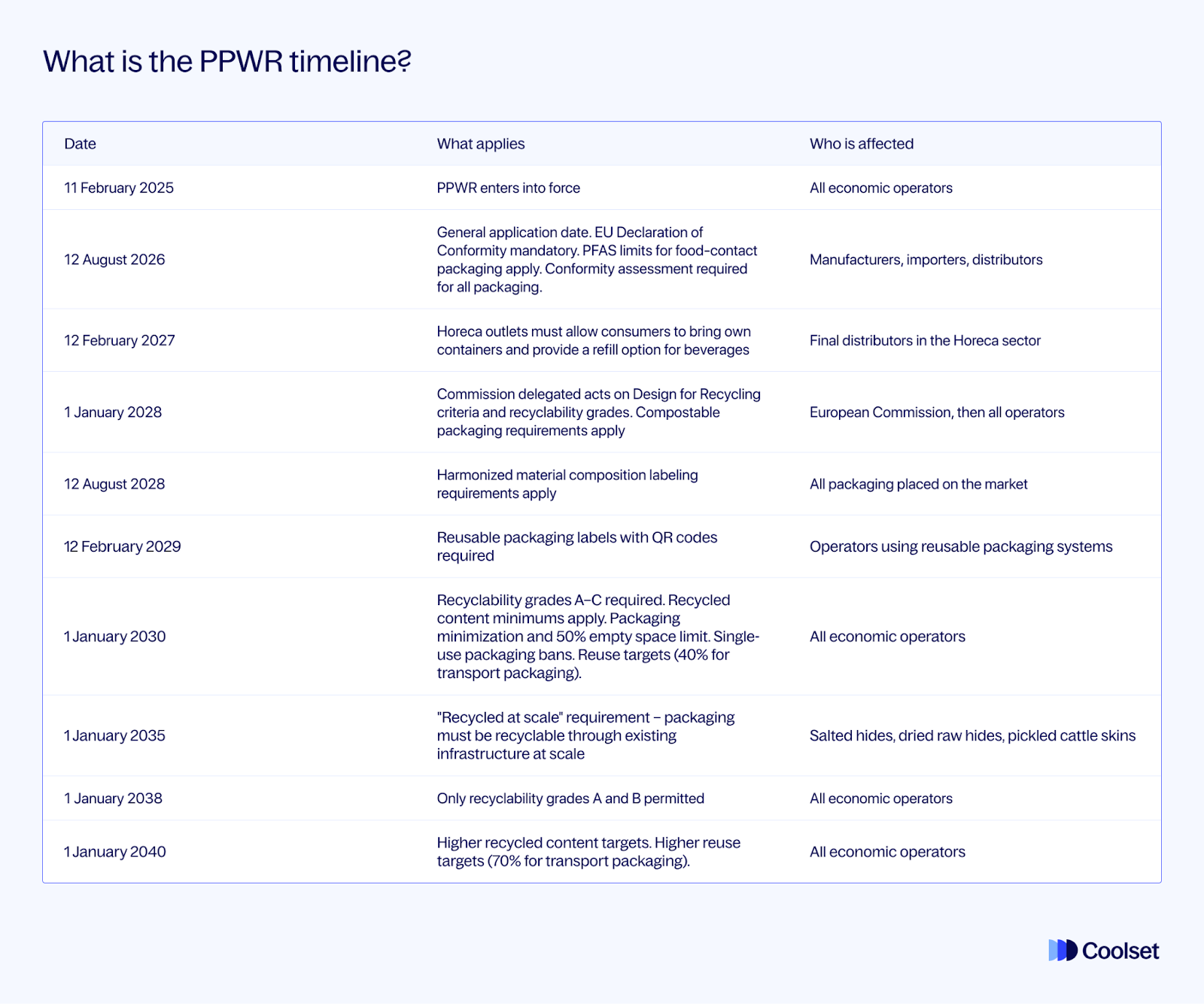
<a href="https://eur-lex.europa.eu/eli/reg/2025/40/oj/eng" rel="noopener noreferrer">Regulation (EU) 2025/40</a>, the Packaging and Packaging Waste Regulation (PPWR),<a href="https://environment.ec.europa.eu/topics/waste-and-recycling/packaging-waste_en" rel="noopener noreferrer"> entered into force on 11 February 2025 and applies generally from 12 August 2026</a>. It replaces Directive 94/62/EC. Packaging rules now bind every Member State directly, without national transposition.

The application date 12 August 2026 matters because the 2030 milestones grab most of the headlines, but the horizontal framework that customs and market surveillance can enforce lands earlier. Treating PPWR as a 2030 problem leaves gaps at 12 August 2026 in substance limits, recyclability design, minimization, conformity documentation, and reuse systems. Each of those five fronts has to be operational on day one, and the technical file behind them must be retrievable per SKU.

## What changes on 12 August 2026, and what does not

Two things are noteworthy for 12 August 2026: the horizontal framework of PPWR becomes enforceable in every Member State, and the quantitative targets that dominate the public debate (recycled content, reuse rates, single-use bans) do not yet apply. From that date, each economic operator carries its own liability for placing non-compliant packaging on the EU market.

The<a href="https://environment.ec.europa.eu/topics/waste-and-recycling/packaging-waste_en" rel="noopener noreferrer"> European Commission confirms</a> that the Regulation covers all packaging and packaging waste, whatever the material or origin. It sets rules on manufacturing, composition, and reusable or recoverable nature for packaging placed on the EU market. Internal policies that referenced national transpositions of Directive 94/62/EC need rewriting against PPWR Articles. The Regulation<a href="https://eur-lex.europa.eu/eli/reg/2025/40/oj/eng" rel="noopener noreferrer"> amends Regulation (EU) 2019/1020 and Directive (EU) 2019/904 and repeals Directive 94/62/EC</a>, so the old Directive stops being the legal basis on the application date.

The 2026 baseline is not the full Regulation. Recycled-content minimums, reuse targets, and harmonized labelling under Art. 12 will only apply later. What must be operational on 12 August 2026 is the horizontal framework: 

<ul><li>substance restrictions</li><li>recyclability as a design duty</li><li>minimization of packaging</li><li>conformity documentation</li><li>reuse-system rules for operators that already market reusable packaging.</li></ul>

The<a href="https://environment.ec.europa.eu/publications/faq-packaging-and-packaging-waste-regulation-ppwr_en" rel="noopener noreferrer"> Commission's PPWR FAQ, published on 3 August 2026</a>, complements the guidance document and addresses the practical questions raised by stakeholders since adoption. The<a href="https://environment.ec.europa.eu/publications/guidance-document-packaging-and-packaging-waste-regulation-ppwr_en" rel="noopener noreferrer"> guidance document itself interprets selected provisions</a> to support uniform application, though it does not replace or amend the Regulation text.

## Substance restrictions: heavy metals and PFAS in food-contact packaging

Substance restrictions are the first substantive obligation to apply from 12 August 2026, and with no grace period. Under <a href="https://eur-lex.europa.eu/eli/reg/2025/40/oj/eng#art_5" rel="noopener noreferrer">Art. 5 of Regulation (EU) 2025/40</a>, packaging on the EU market must stay below a combined 100 mg/kg limit for lead, cadmium, mercury and hexavalent chromium. Art. 5 also requires operators to minimize substances of concern in packaging and its components. The obligation covers intentional and unintentional presence, so ink formulations, adhesives, coatings and closures all sit inside the scope.

Art. 5 also introduces concentration limits on PFAS in food-contact packaging from 12 August 2026. Suppliers of grease-resistant paper, board and moulded fiber sit in the direct path of that restriction, and self-declared attestations from the 94/62/EC era are not a substitute for verified test data.

Enforcement runs through two channels: market surveillance authorities are the primary enforcer in-market, while customs acts downstream at the border on packaging already flagged. Evidence has to be retrievable for each packaging type with a signed DoC and Annex VII technical file for each type. Refresh supplier declarations for inks, adhesives, coatings, and closures with PPWR-specific attestations rather than carrying old Directive 94/62/EC compliance files across.

## Recyclability, minimization and the Annex VII technical file

Recyclability under PPWR is a design duty from 12 August 2026. The<a href="https://eur-lex.europa.eu/EN/legal-content/summary/packaging-and-packaging-waste-from-2026.html" rel="noopener noreferrer"> EUR-Lex summary</a> confirms that the Regulation sets sustainability and labelling requirements for packaging throughout its life cycle, covering production, use and waste management, with the aim of preventing unnecessary packaging and promoting reuse, refill and recycling. Packaging placed on the market from the application date must be designed for recycling against the criteria set out in the Regulation.

Minimization is the second design obligation. Weight, volume and layers must be reduced to the minimum necessary to ensure functionality, safety, hygiene and consumer acceptance. Composite and multi-material structures need a design review well before the enforcement date, because reformulating laminates, coatings, and closures runs through supplier qualification and validation cycles that do not shrink to fit a deadline.

The paper trail behind these obligations is the technical documentation and the EU Declaration of Conformity. Each packaging unit needs a file demonstrating conformity with the horizontal requirements, structured as set out in Annex VII of<a href="https://eur-lex.europa.eu/eli/reg/2025/40/oj/eng" rel="noopener noreferrer"> Regulation (EU) 2025/40</a>. Companies without a packaging inventory keyed to SKU, material, weight, recyclability assessment and substance declarations cannot produce that file on request, and market surveillance authorities can act on the gap.

Packaging complying with the Regulation can be<a href="https://eur-lex.europa.eu/EN/legal-content/summary/packaging-and-packaging-waste-from-2026.html" rel="noopener noreferrer"> freely marketed across the EU</a>. That single market benefit is what replaces the patchwork of national implementations under Directive 94/62/EC, and it is why the Regulation harmonizes national measures rather than leaving them to transposition.

## Labelling and the harmonized pictogram obligation

Harmonized labelling is not live on 12 August 2026, but the groundwork is. The<a href="https://eur-lex.europa.eu/eli/C/2026/3084/oj/eng" rel="noopener noreferrer"> Commission guidance</a> confirms the Art. 12(1) labelling start date. It applies from 12 August 2028, or 24 months after the implementing acts under Art. 12(6) or (7) enter into force, whichever is later. The<a href="https://eur-lex.europa.eu/eli/reg/2025/40/oj/eng" rel="noopener noreferrer"> Regulation</a> requires the Commission to adopt the implementing acts referred to in Art. 12(6) on labelling by 12 August 2026, which sets the clock for the harmonized material-composition pictogram.

For producers on 12 August 2026, existing on-pack sorting instructions should not contradict the forthcoming harmonized symbols, and green claims (recyclable, compostable, made from recycled content) must be substantiated with evidence in the technical file. Under the<a href="https://eur-lex.europa.eu/eli/reg/2025/40/oj/eng" rel="noopener noreferrer"> Regulation text</a>, labels and QR codes must be in languages that end users understand easily. Each Member State decides which languages that means for packaging sold there. Multi-market portfolios need language mapping built into the artwork process well before the pictogram deadline.

Deposit-and-return packaging carries its own marking obligation under Art. 12(1), for packaging covered by the Art. 50(1) deposit-and-return systems. Reusable packaging placed on the market from 12 February 2029, or 30 months after the relevant implementing act (whichever is later), must bear a label informing users that it is reusable. Producers running DRS-eligible SKUs across borders should treat the deposit label as a separate workstream from the material-composition pictogram. The two obligations sit in Art. 12 (1) &amp; 12(2) and follow different timelines. 

<strong>Reuse system rules become checkable on 12 August 2026</strong>

Reuse systems become checkable on 12 August 2026, even though the reuse targets themselves phase in later. The<a href="https://eur-lex.europa.eu/eli/C/2026/3084/oj/eng" rel="noopener noreferrer"> Commission guidance</a> is clear. Reusable packaging placed on the market after 11 February 2025 must comply with the Regulation. Competent authorities can only check Art. 11 compliance from 12 August 2026. The guidance also confirms that Art. 11 requirements on reusable packaging are substantially similar to those in the previous Packaging and Packaging Waste Directive and harmonized standard EN 13429:2004, which gives producers a familiar reference point for evidence.

Operators cannot simply label packaging as reusable without a functioning system behind it. Companies operating deposit-return schemes or pooled transport packaging need contractual clarity on which operator holds the PPWR compliance obligation for each rotation, because liability does not pool automatically across a scheme.

Member States retain some room to move ahead of harmonized standards. The<a href="https://eur-lex.europa.eu/eli/C/2026/3084/oj/eng" rel="noopener noreferrer"> Commission guidance</a> confirms that Member States can require home-compostability before the harmonized standards are adopted. Multi-market compostable portfolios must track national rules alongside the Regulation. For a breakdown of which operator in your chain carries which duty, see the <a href="https://www.coolset.com/academy/ppwr-supply-chain-roles-explained" rel="noopener noreferrer">Coolset explainer on roles in PPWR</a>.

<aside>

### Run your PPWR readiness against a live packaging inventory

The Packaging and Packaging Waste Regulation (PPWR) makes each economic operator liable per SKU from 12 August 2026. Coolset helps compliance teams map packaging portfolios against Article 5 substance limits, recyclability design, Annex VII documentation, and reuse-system evidence in one place.

<a href="https://www.coolset.com/demo" rel="noopener noreferrer">See PPWR in Coolset</a>

</aside>

## The readiness sequence economic operators are running now

Compliance ownership needs a named accountable role. PPWR assigns obligations per economic operator (manufacturer, importer, distributor, fulfilment provider), not per group, so the compliance owner is the legal entity that places the packaging on the market or imports it. Corporate policies that treat packaging compliance as a group function without an entity-level owner will fail the first market surveillance request.

The base data layer is a packaging inventory keyed to SKU. Each item needs its material composition, weight and volume, recyclability assessment, substance-of-concern declarations, and reuse status recorded and linked back to supplier evidence. Without that inventory, the Annex VII technical file cannot be produced on request. Companies that already run supplier data programs for EUDR or CSRD can extend the same architecture to packaging inputs.

Supplier contracts and quality agreements need PPWR clauses before the next tender cycle closes. That means specific attestations on Art. 5 substance limits (including PFAS testing for food-contact packaging), design-for-recycling assessments, and chain-of-custody evidence for any recycled-content claims. Internal governance should treat 12 August 2026 as the enforcement start and later milestones on recycled content, reuse targets, and single-use bans as a second wave planned against the same inventory model.

## Where to focus before 12 August 2026

The most useful preparatory move is to build the packaging inventory that will sit under every downstream obligation. That single dataset becomes the input for the Annex VII technical file, the supplier contract refresh, and the later planning cycle on recycled content and reuse targets.

## Frequently asked questions

### What is the new packaging Regulation 2026?

The new packaging Regulation is Regulation (EU) 2025/40, the Packaging and Packaging Waste Regulation (PPWR). It<a href="https://environment.ec.europa.eu/topics/waste-and-recycling/packaging-waste_en" rel="noopener noreferrer"> entered into force on 11 February 2025 and applies generally from 12 August 2026</a>, replacing Directive 94/62/EC. It sets EU-wide requirements for the manufacturing, composition, and reusable or recoverable nature of packaging, and covers all packaging and packaging waste regardless of material or origin.

### What is Article 12 of the PPWR?

Art. 12 sets the harmonized labelling rules for packaging, including the material-composition pictogram that helps consumers sort waste. The<a href="https://eur-lex.europa.eu/eli/C/2026/3084/oj/eng" rel="noopener noreferrer"> Commission guidance</a> confirms that Art. 12(1) labelling obligations apply from 12 August 2028, or 24 months after entry into force of the implementing acts under Art. 12(6) or (7), whichever is later. Green claims on packaging must also be substantiated under Art. 12.

### Does PPWR apply to the UK?

PPWR is EU law and does not apply to packaging placed on the UK domestic market. Any packaging placed on the EU market must comply with PPWR regardless of where it was produced, because the<a href="https://eur-lex.europa.eu/EN/legal-content/summary/packaging-and-packaging-waste-from-2026.html" rel="noopener noreferrer"> Regulation covers all packaging and packaging waste regardless of material or origin</a>.

### What is Annex VII of the PPWR?

Annex VII of<a href="https://eur-lex.europa.eu/eli/reg/2025/40/oj/eng" rel="noopener noreferrer"> Regulation (EU) 2025/40</a> sets out the structure of the technical documentation that manufacturers must prepare to demonstrate conformity of packaging with the sustainability requirements. The file supports the EU Declaration of Conformity and must be made available to market surveillance authorities on request. It is the paper trail behind substance limits, recyclability design, minimization, and labelling claims.

### When does PPWR start being enforced?

PPWR obligations start being enforced from the general date of application, 12 August 2026, for substance restrictions, minimization, recyclability design, conformity documentation, and reuse-system rules under Art. 11. Under Commission Notice, harmonized labelling under Art. 12(1) starts from 12 August 2028. If the<a href="https://eur-lex.europa.eu/eli/C/2026/3084/oj/eng" rel="noopener noreferrer"> relevant implementing acts</a> enter into force later, the clock is 24 months from that date. A<a href="https://op.europa.eu/en/web/eu-law-in-force/bibliographic-details/-/elif-publication/d34251c8-d865-11ef-be2a-01aa75ed71a1" rel="noopener noreferrer"> further date of application is set at 12 February 2029</a>.

‍


---

# EUDR legality evidence: a guide to Article 9(1)(h) compliance for suppliers

How to meet EUDR Article 9(1)(h): what 'adequately conclusive and verifiable' legality evidence means and how to build a supplier evidence bundle.

Author: Anna Kuppel
Published: 2026-07-31
Source: https://www.coolset.com/academy/eudr-legality-evidence-article-9-1-h-5621a

##### Key takeaways

<ul><li>Article 9(1)(h) EUDR requires <strong>adequately conclusive and verifiable</strong> documentary evidence of legality at plot and shipment level, not generic supplier attestations.</li><li>Points (a) to (h) of Article 2(40) cover nine legal areas, from land use rights and FPIC to tax, anti-corruption and customs.</li><li>Certification schemes and supplier declarations support but do not discharge the Article 9(1)(h) duty.</li><li>Coolset helps compliance teams build defensible EUDR evidence packs. See the <a href="https://www.coolset.com/eudr" rel="noopener noreferrer">Coolset EUDR platform</a>.</li></ul>

Article 9(1)(h) of <a href="https://eur-lex.europa.eu/legal-content/EN/TXT/?uri=CELEX:32023R1115" rel="noopener noreferrer">Regulation (EU) 2023/1115</a> requires operators to collect 'adequately conclusive and verifiable information that the relevant products have been produced in accordance with the relevant legislation of the country of production, including any arrangement conferring the right to use the respective area'. The <a href="https://green-forum.ec.europa.eu/document/download/030c9bf7-a935-4d4d-91c6-bbddd745c181_en?filename=Guidance+Document+for+the+Regulation+on+Deforestation-Free+Products+%282026%29.pdf" rel="noopener noreferrer">2026 Commission Guidance Document</a> reiterates that points (a) to (h) of Article 2(40) specify the legislation this test covers, and treats them as illustrative categories rather than an exhaustive checklist. That evidence standard is the single hardest line to satisfy in the due diligence file.

<a href="https://trade.ec.europa.eu/access-to-markets/en/news/delay-until-december-2026-and-other-developments-implementation-eudr-regulation" rel="noopener noreferrer">Regulation (EU) 2025/2650</a> sets the application date at 30 December 2026 for large and medium operators, and 30 June 2027 for micro and small operators. That leaves a short runway to build a legality pack. Generic supplier attestations and country-level legality certificates do not close the gap. Article 9(1)(h) demands documentary proof that ties each shipment to the plot of production and to specific producer-country laws.

## The legality gap Article 9(1)(h) is designed to close

Article 9(1)(h) goes further than the earlier EU Timber Regulation, which the EUDR repeals. The EUTR only asked if timber was legally harvested. The EUDR asks the same of <a href="https://www.coolset.com/academy/eudr-for-cattle-and-beef-multi-establishment-geolocation-traceability-across-the-supply-chain-and-what-makes-cattle-different-from-other-commodities" rel="noopener noreferrer">cattle</a>, cocoa, coffee, oil palm, rubber, soy, wood and their Annex I derived products, against all relevant producer-country law. That covers chocolate, tires, paper and dozens of downstream goods a supplier might treat as processed rather than agricultural.

'Relevant legislation' is defined in Article 2(40) by the law of the country of production. The <a href="https://green-forum.ec.europa.eu/deforestation-regulation-implementationold/subjects-obligations_en" rel="noopener noreferrer">Commission's implementation pages</a> confirm that it can include national laws, secondary law, jurisprudence and international law as applicable in domestic law. The Commission also notes that the Regulation lists legislative areas without naming particular legal acts, because those differ from country to country.

A single missing category is enough to disqualify a shipment. Unpaid land-use taxes, an absent Free, Prior and Informed Consent (FPIC) consultation record, or a labor inspection gap can each render a batch non-compliant even where the environmental and deforestation-free status is unquestioned. The Regulation treats legality as a cumulative test, not a weighted score, so operators need a document trail that covers every category the law of the country of production imposes.

#### What 'adequately conclusive and verifiable' means in practice

'Adequately conclusive and verifiable' means the operator must confirm each document is authentic, issued by the right authority and clearly linked to the plot of the shipment in question. The <a href="https://eur-lex.europa.eu/legal-content/EN/TXT/PDF/?uri=OJ:C_202406789" rel="noopener noreferrer">2024 Guidance Document (Commission Notice C/2024/6789)</a> makes clear that documentation collected under Article 9(1)(h) feeds the Article 10 risk assessment, not a self-certifying conclusion. A supplier declaration is a claim to be verified, not proof that the claim is correct.

The <a href="https://green-forum.ec.europa.eu/document/download/030c9bf7-a935-4d4d-91c6-bbddd745c181_en?filename=Guidance+Document+for+the+Regulation+on+Deforestation-Free+Products+%282026%29.pdf" rel="noopener noreferrer">2026 Guidance</a> reinforces this. Article 2(40) must be read with the objectives in Article 1(1)(a) and (b), so any law linked to halting deforestation is also relevant. Verifiability requires traceable references that the operator can cross-check: permit numbers, cadastral identifiers, tax receipts, labor inspection reports, land-title registrations, or public register entries.

Where producer-country enforcement is weak or documents are hard to obtain, the operator's obligation does not shrink. The <a href="https://eur-lex.europa.eu/legal-content/EN/TXT/PDF/?uri=OJ:C_202406789" rel="noopener noreferrer">2024 Guidance</a> lists country risks that undermine document reliability: corruption, falsified documents, weak enforcement, human rights violations, armed conflict, and UN or EU sanctions. In those situations, Article 9(1)(h) still requires 'adequately conclusive' information, so operators must supplement records with independent audits, third-party verification, or satellite evidence.

<a href="https://green-forum.ec.europa.eu/nature-and-biodiversity/deforestation-regulation-implementation/understand-due-diligence_en" rel="noopener noreferrer">The Commission's due diligence steps</a> tie this evidence collection directly to the plot. Article 9 requires the commodity, quantity, supplier, country of production, evidence of legal harvest, and the geographic coordinates of every plot where the commodity was produced. Legality evidence that cannot be mapped back to those coordinates is not conclusive in the sense the Regulation requires. For teams building this data layer, the Coolset guide on <a href="https://www.coolset.com/academy/eudr-geolocation-requirements-how-to-collect-and-validate-gps-polygon-data-for-your-dds" rel="noopener noreferrer">EUDR geolocation requirements</a> walks through polygon collection and validation.

## The nine categories of legality suppliers must document

Article 2(40) points (a) to (h) list the nine legal areas. The <a href="https://eur-lex.europa.eu/eli/C/2025/4524/oj/eng" rel="noopener noreferrer">Commission Notice C/2025/4524</a> confirms the list: land use rights, environmental protection, forest-related rules, third parties' rights, labor rights, human rights protected under international law, FPIC where indigenous or local communities are affected, tax, anti-corruption, and trade and customs regulations. Suppliers need category-specific documentation for each area that applies to the plot and the commodity.

Practical evidence differs by category, but the pattern is consistent across sourcing geographies:

<ul><li>Land use rights: title deeds, concession contracts, lease agreements or cadastral extracts tied to the geolocation coordinates submitted under Article 9(1)(d). The <a href="https://eur-lex.europa.eu/legal-content/EN/TXT/PDF/?uri=OJ:C_202406789" rel="noopener noreferrer">2024 Guidance</a> notes that whether a land title is required depends on national legislation: if domestic law does not require one, none is required for Article 9(1)(h), but the operator still needs proof that the production arrangement is lawful.</li><li>Environmental protection and forest-related rules: environmental permits, forest management plans, impact assessments and clearance approvals issued by the competent producer-country authority.</li><li>Third parties' rights: evidence that customary or private rights over the plot have been recognized, respected and, where required, formally acquired.</li><li>Labor rights and human rights: records showing compliance with producer-country labor law and with human rights protected under international law as transposed, including forced-labor, child-labor and occupational safety obligations.</li><li>FPIC: documented consultation records with indigenous peoples or local communities where domestic or international law requires their consent, beyond an assumption that consent exists.</li><li>Tax, anti-corruption, trade and customs: export duty receipts, VAT records, beneficial ownership disclosures, and customs declarations that a competent authority can reconcile with the shipment.</li></ul>

The <a href="https://green-forum.ec.europa.eu/deforestation-regulation-implementationold/subjects-obligations_en" rel="noopener noreferrer">Commission's guidance on subjects of obligations</a> lists the document types most likely to satisfy these categories: official documents from public authorities, contractual agreements, court decisions, impact assessments and audits. That list is not exhaustive, and the choice of instrument depends on what the country of production actually requires.

## Why country-level certificates and blanket statements fail the test

Country-level legality benchmarks and general 'legal compliance' certificates cannot on their own satisfy Article 9(1)(h). The Regulation requires plot-level and shipment-level evidence. The Article 10 risk assessment sits downstream of Article 9(1)(h), which means the operator must first hold document-based evidence of legality before it can conclude that risk is negligible.

Voluntary certification schemes can support the evidence file, but they do not discharge the operator's due diligence duty. The <a href="https://green-forum.ec.europa.eu/deforestation-regulation-implementationold/subjects-obligations_en" rel="noopener noreferrer">Commission's implementation guidance</a> is direct: operators must verify that documents are verifiable and reliable, taking into account the risk of corruption in the country of production. A certificate is a starting point for verification, not an endpoint. Where certification schemes cover only a subset of the nine categories, they leave gaps in tax, customs or FPIC evidence that the operator still has to close.

Supplier declarations of conformity carry the same limitation. Under <a href="https://eur-lex.europa.eu/legal-content/EN/TXT/?uri=CELEX:32023R1115" rel="noopener noreferrer">Article 9</a>, non-SME operators may cite an earlier Due Diligence Statement (DDS) number under Article 33. That is allowed only after confirming due diligence was done under paragraph 1. Referencing an upstream DDS does not shift liability upward. The operator remains responsible for the underlying legality facts.

Country risk classification interacts with the risk assessment step, not with the Article 9 information set. For teams sizing up how country risk fits into the wider workflow, the Coolset guide on <a href="https://www.coolset.com/academy/2-eudr-country-risk-classification-review-2026-what-changes-when-the-benchmarks-are-updated" rel="noopener noreferrer">EUDR country risk classification</a> covers what changes when the Commission's benchmarks are updated.

## What the July 2026 simplification package added to the evidence workflow

The July 2026 acts do not lower the Article 9(1)(h) evidence standard, but they add two workflow anchors. On <a href="https://environment.ec.europa.eu/news/commission-updates-product-scope-and-tools-support-eudr-2026-07-13_en" rel="noopener noreferrer">13 July 2026 the Commission adopted</a> a Delegated Act updating and simplifying the list of products covered by the Regulation, together with an Implementing Act setting out the functioning of the EU Information System. Both build on Regulation (EU) 2025/2650 and complete the simplification package presented in May 2026.

The first workflow change concerns <a href="https://www.coolset.com/academy/eudr-product-scope-changes-are-official-what-the-july-2026-delegated-regulation-means-for-compliance" rel="noopener noreferrer">product scope</a>. The Delegated Act changes which derived products fall within EUDR scope. Operators should reconfirm their in-scope commodities and derived products against the updated Annex I before assembling evidence packs. The Council's <a href="https://www.consilium.europa.eu/en/press/press-releases/2025/12/18/deforestation-council-signs-off-targeted-revision-to-simplify-and-postpone-the-regulation/" rel="noopener noreferrer">18 December 2025 adoption note</a> already removed certain printed products, including books, newspapers and printed pictures, on the ground of limited deforestation risk. Products that dropped out of scope no longer need an Article 9(1)(h) file.

The second workflow change concerns the DDS submission channel. The Implementing Act sets out how the EU Information System operates, and Article 9(1)(h) evidence sits behind the DDS reference number that authorities and downstream operators use to access the underlying due diligence file. The <a href="https://eur-lex.europa.eu/eli/C/2025/4524/oj/eng" rel="noopener noreferrer">2025 Commission Notice</a> confirms that the principle of proportionality applies to interpretation and enforcement, but proportionality operates against the evidence file, not instead of it.

## Building a supplier evidence pack that survives competent authority review

A defensible evidence pack maps each of the nine legal categories under Article 2(40) to specific documents, issuers, validity dates and the geolocation polygons submitted under Article 9(1)(d). The <a href="https://green-forum.ec.europa.eu/nature-and-biodiversity/deforestation-regulation-implementation/understand-due-diligence_en" rel="noopener noreferrer">Commission's due diligence pages</a> describe the DDS as the point where all relevant information is entered into the EU Information System. The underlying evidence pack has to be assembled in a structure that supports that submission and any subsequent <a href="https://www.coolset.com/academy/what-eudr-dry-runs-revealed-what-competent-authorities-will-actually-check-in-december-2026" rel="noopener noreferrer">authority request</a>.

Contractual terms with <a href="https://www.coolset.com/academy/eudr-mixing-and-circumvention-risk-how-to-handle-blended-commodities-cooperatives-and-aggregated-supply-chains" rel="noopener noreferrer">upstream suppliers</a> should require category-by-category evidence delivery and audit rights, with non-conformity treated as a shipment-blocking event rather than a matter for later correction. Where the operator sits several tiers away from the primary producer, the contract chain needs to preserve those rights all the way to the plot, because that is where the documentary evidence originates. For a broader view of how supplier prioritization fits into this, see the Coolset guide on <a href="https://www.coolset.com/academy/eudr-supplier-management-how-to-prioritise-escalate-and-close-data-gaps-before-december-2026" rel="noopener noreferrer">EUDR supplier management</a>.

Documents in the producer country's language should be accompanied by certified translations. Where feasible, verify them against public registries or independent third-party audits. The <a href="https://green-forum.ec.europa.eu/document/download/030c9bf7-a935-4d4d-91c6-bbddd745c181_en?filename=Guidance+Document+for+the+Regulation+on+Deforestation-Free+Products+%282026%29.pdf" rel="noopener noreferrer">2026 Guidance</a> notes that data analytics and AI-based tools may support due diligence and enforcement by prioritizing cases, checking consistency of documents, and flagging anomalies. That is where automated cross-checks between geolocation polygons, cadastral registries and permit numbers become operationally useful.

Two related workflow questions come up here. Where a product is re-imported or further processed inside the EU, the operator needs to know whether a new DDS is required. The Coolset guide on <a href="https://www.coolset.com/academy/eudr-re-imports-and-processed-products-when-do-you-need-a-new-dds-062b7" rel="noopener noreferrer">EUDR re-imports and processed products</a> works through that scenario. Primary producers using the simplified declaration route still need to hold legality evidence at plot level, as explained in the Coolset guide on the <a href="https://www.coolset.com/academy/eudr-simplified-declaration-for-micro-and-small-operators-compliance-made-easy-for-primary-producers" rel="noopener noreferrer">EUDR simplified declaration for micro and small operators</a>.

<aside>

### Build an EUDR Article 9(1)(h) evidence pack that holds up

The EUDR requires plot-level legality evidence across nine categories of producer-country law. Coolset helps compliance teams map supplier documents to Article 9(1)(h), verify them and file DDS records that survive competent authority review.

<a href="https://www.coolset.com/eudr" rel="noopener noreferrer">See Coolset for EUDR</a>

</aside>

## Where to start with your Article 9(1)(h) evidence review

The starting point for any Article 9(1)(h) review is the gap between supplier attestations and verifiable primary documents mapped to the nine categories in Article 2(40). Make sure you can prove the Article 2(40) requirements with documents which can be linked to the plot of origin.

## Frequently asked questions

### What does Article 9(1)(h) of the EUDR actually require?

Article 9(1)(h) requires operators to collect 'adequately conclusive and verifiable information' that the relevant products were produced in accordance with the legislation of the country of production, including any arrangement giving the right to use the production area. It is one of the mandatory information elements behind every Due Diligence Statement.

### Are voluntary certification schemes enough to satisfy Article 9(1)(h)?

No. The <a href="https://green-forum.ec.europa.eu/deforestation-regulation-implementationold/subjects-obligations_en" rel="noopener noreferrer">Commission's guidance</a> requires operators to verify that legality documents are reliable, taking into account country-level risks such as corruption. A certification scheme can support the evidence file, but the operator retains the duty to verify and cannot rely on the certificate alone to discharge Article 9(1)(h).

### Which nine legal areas does 'relevant legislation' cover?

Points (a) to (h) of Article 2(40) cover land use rights, environmental protection, forest-related rules, third parties' rights, labor rights, human rights under international law, FPIC where applicable, tax, anti-corruption, and trade and customs regulations. The <a href="https://eur-lex.europa.eu/eli/C/2025/4524/oj/eng" rel="noopener noreferrer">2025 Commission Notice</a> confirms these are illustrative categories rather than an exhaustive checklist.

### Can a supplier declaration alone satisfy Article 9(1)(h)?

No. The <a href="https://eur-lex.europa.eu/legal-content/EN/TXT/PDF/?uri=OJ:C_202406789" rel="noopener noreferrer">2024 Guidance Document</a> treats documents collected under Article 9(1)(h) as input for the Article 10 risk assessment, not as self-certifying conclusions. A supplier declaration is a claim the operator must verify against source documents from public authorities, contracts, court decisions or audits.

### When does the Article 9(1)(h) obligation start applying?

Under <a href="https://trade.ec.europa.eu/access-to-markets/en/news/delay-until-december-2026-and-other-developments-implementation-eudr-regulation" rel="noopener noreferrer">Regulation (EU) 2025/2650</a>, large and medium operators must comply with the main EUDR obligations from 30 December 2026, and natural persons and micro and small enterprises from 30 June 2027. Legality evidence packs need to be in place before the first shipment placed on the EU market on or after those dates.


---

# EUDR re-imports and processed products: when you need a new due diligence statement

When EUDR re-imports and processed products trigger a new due diligence statement, when upstream DDS references suffice, and how the December 2026 cutoff works.

Author: Emilie Ihde
Published: 2026-07-28
Source: https://www.coolset.com/academy/eudr-re-imports-and-processed-products-when-do-you-need-a-new-dds-062b7

##### Key takeaways

<ul><li>A new DDS is required each time a relevant product is placed on the EU market or exported <em>for the first time</em> under Article 4 EUDR, including re-imports after the goods have left the EU customs territory.</li><li>Downstream operators placing a product made from inputs that already cleared EUDR due diligence don't file a fresh DDS; they reference the verified upstream DDS number.</li><li>Stock placed on the EU market before application (30 December 2026, or 30 June 2027 for micro and small operators not already covered by the EUTR) stays outside EUDR for its entire commercial life, but the operator carries the burden of proving it.</li><li>Coolset helps compliance teams manage DDS workflows, upstream reference numbers, and supplier data across their EUDR obligations.</li></ul>

On 23 December 2025, the EU published<a href="https://eur-lex.europa.eu/eli/reg/2025/2650/oj/eng" rel="noopener noreferrer"> Regulation (EU) 2025/2650</a>. This targeted amendment to the EU Deforestation Regulation (EUDR) postpones application to 30 December 2026 for most operators. Micro and small operators not already covered by the EU Timber Regulation (EUTR) get a six-month cushion until 30 June 2027. The amendment also introduces a new<a href="https://www.coolset.com/academy/eudr-downstream-operator-what-the-new-category-means-and-what-you-need-to-do" rel="noopener noreferrer"> downstream operator</a> category with lighter filing duties.

That change reshapes an operational question at the heart of the regulation. When a shipment moves, is reprocessed, or comes back into the EU, do you need a fresh due diligence statement (DDS)? Or can you reference one that is already in the system?

The answer sits in Article 4 of the EUDR itself, sharpened by the December 2025 amendment and the Commission's implementation guidance. A new DDS is triggered every time a relevant product is placed on the EU market or exported for the first time. That covers re-imports after the goods have left the EU customs territory. It also covers transformations into a different Annex I product. Where an input has already been cleared by an upstream operator, the actor downstream can reference that number instead of repeating the full exercise, but only if the reference is verified and correctly recorded.

## When re-imports and processing reset the DDS obligation

A new DDS is required whenever a relevant product is placed on the EU market or exported, and each of those acts is a separate triggering event.<a href="https://eur-lex.europa.eu/legal-content/EN/TXT/?uri=CELEX%3A02023R1115-20251226#art_4" rel="noopener noreferrer"> Article 4(1) of Regulation (EU) 2023/1115 </a>requires operators to exercise due diligence before placing relevant products on the market or exporting them. Article 4(2) prohibits either act without prior submission of a DDS through the Article 33<a href="https://www.coolset.com/academy/eudr-information-system-how-to-register-and-submit-your-first-dds-when-traces-reopens" rel="noopener noreferrer"> Information System</a>. Compliance upstream does not carry across a new placement, because responsibility attaches to the operator performing the current act.

The Commission's guidance narrows the rule in one direction. It states that<a href="https://green-forum.ec.europa.eu/nature-and-biodiversity/deforestation-regulation-implementation/roles-and-responsibilities_en" rel="noopener noreferrer"> "placing on the market for the first time" does not include situations where a new relevant product is made from other relevant products that were already placed on the EU market and already underwent due diligence</a>. In that case the actor is a downstream operator, not an upstream one. The obligation shifts from filing a fresh DDS to referencing the existing upstream statement.

Two practical consequences follow. A re-import from outside the EU customs territory is a new placement and needs a new DDS, because the product has left the market and is entering again. A transformation of an input that has not yet passed through EUDR due diligence (for example, one imported directly from a third country) also requires the first placer to file a full DDS on the resulting Annex I product.

## Re-imports: what counts as re-entry and who files

A product exported from the EU and later re-imported is treated as a new placement, and the operator bringing it back in files the DDS.<a href="https://green-forum.ec.europa.eu/nature-and-biodiversity/deforestation-regulation-implementation/understand-due-diligence_en" rel="noopener noreferrer"> The Commission's guidance on due diligence</a> confirms that for relevant products entering the EU, the DDS reference number (or simplified declaration identifier) must be made available on the customs declaration by the customs declarant. That obligation applies whether the goods are entering the EU for the first time or coming back after an export.

Filing happens through the Article 33 Information System.<a href="https://green-forum.ec.europa.eu/nature-and-biodiversity/deforestation-regulation-implementation/information-system-deforestation-regulation_en" rel="noopener noreferrer"> The Commission notes</a> that DDS and simplified declarations submitted in the live server have legal value and their content can be subject to checks by competent authorities. The system functions pursuant to Commission Implementing Regulation (EU) 2024/3084, and bulk management is available via a machine-to-machine API with reference documentation published on CIRCABC.

Where the original exporter already filed an export DDS, the <a href="https://www.coolset.com/academy/eudr-re-imports-and-processed-products-when-do-you-need-a-new-dds" rel="noopener noreferrer">re-import statement should cite that upstream reference</a> to preserve traceability across the chain.<a href="https://eur-lex.europa.eu/legal-content/EN/TXT/?uri=OJ%3AC_202603896&amp;qid=1784530926040" rel="noopener noreferrer"> Commission guidance</a> is clear that operators must pass on their DDS reference number to their direct downstream buyer for traceability. Re-imports are one of the flows where that link is easiest to lose. Filing a fresh statement while carrying the earlier reference forward keeps the chain intact and gives competent authorities a single audit path.

## Processed products: when transformation creates a new Annex I obligation

A new DDS is required when an input commodity is transformed into a different Annex I product and that product is placed on the EU market for the first time.<a href="https://green-forum.ec.europa.eu/nature-and-biodiversity/deforestation-regulation-implementation_en" rel="noopener noreferrer"> Annex I of the EUDR</a> lists cattle, cocoa, coffee, palm oil, rubber, soy, wood and certain products made from them, each with a customs classification code. If the input has never been through EUDR due diligence (typically because it was imported directly from a third country), the processed product is a new relevant product. The first placer files the full DDS.

The picture changes when the input has already passed through EUDR due diligence upstream.<a href="https://eur-lex.europa.eu/legal-content/EN/TXT/?uri=OJ%3AC_202603896&amp;qid=1784530926040" rel="noopener noreferrer"> Commission guidance</a> states that where a new relevant product is manufactured from products already covered by upstream due diligence, the actor placing the new product on the market is a downstream operator. Downstream operators do not file a fresh DDS on the geolocation of the underlying plots. They reference the upstream DDS numbers instead. That is the simplification<a href="https://eur-lex.europa.eu/eli/reg/2025/2650/oj/eng" rel="noopener noreferrer"> Regulation (EU) 2025/2650</a> was designed to enable when it introduced the downstream operator category, with obligations on downstream operators aligned with those of traders.

The downstream operator still has to verify that due diligence was exercised.<a href="https://green-forum.ec.europa.eu/nature-and-biodiversity/deforestation-regulation-implementation/understand-due-diligence_en" rel="noopener noreferrer"> Commission guidance</a> is explicit that non-SME downstream operators and traders only need to <a href="https://www.coolset.com/academy/eudr-legality-evidence-article-9-1-h" rel="noopener noreferrer">verify upstream due diligence</a> if there is a substantiated concern. The reference number itself must still be captured, stored, and made available to competent authorities on request. Passing a number through is not the same as trusting it blindly. The operator that places the processed product on the market carries the responsibility if the upstream evidence turns out to be defective.

## Stocks and the 30 December 2026 cutoff

Products placed on the EU market before EUDR applies stay outside the regulation for their entire commercial life.<a href="https://green-forum.ec.europa.eu/nature-and-biodiversity/deforestation-regulation-implementation_en" rel="noopener noreferrer"> The Commission's implementation page</a> states that from 30 December 2026, products placed on, sold within or exported from the EU must be free from deforestation under the EUDR.<a href="https://www.consilium.europa.eu/en/press/press-releases/2025/12/18/deforestation-council-signs-off-targeted-revision-to-simplify-and-postpone-the-regulation/" rel="noopener noreferrer"> The Council's press release</a> confirms application is postponed until 30 December 2026 for all large and medium operators as well as micro and small operators already covered by the EUTR, with the six-month cushion for all other micro and small operators running to 30 June 2027. Stock placed on the market before those dates is not caught by the DDS obligation even if it is later resold.

The burden of proof sits with the operator claiming the exemption. Customs entry records, commercial invoices and warehouse receipts dated before the cutoff are the evidence competent authorities will expect if they ask. Documentation practice matters here, because<a href="https://eur-lex.europa.eu/legal-content/EN/TXT/?uri=CELEX%3A02023R1115-20251226#art_4" rel="noopener noreferrer"> Article 4 of the EUDR</a> already requires operators to keep records of the DDS for five years from the date of submission through the Information System. The same discipline is worth applying to the paper trail behind any pre-application stock relied on for the exemption.

Enforcement runs on the same clock.<a href="https://eur-lex.europa.eu/legal-content/EN/TXT/?uri=comnat:COM_2025_0652_FIN" rel="noopener noreferrer"> The Commission's proposal</a> aligned obligations of competent authorities to carry out checks under Articles 16 to 19, 22 and 24 with the postponed application dates, and prior to entry into application, competent authorities may issue warnings and recommendations. The Council revision also removed certain printed products (books, newspapers, printed pictures) from scope due to limited deforestation risk, per<a href="https://www.consilium.europa.eu/en/press/press-releases/2025/12/18/deforestation-council-signs-off-targeted-revision-to-simplify-and-postpone-the-regulation/" rel="noopener noreferrer"> the Council's press release</a>. A<a href="https://www.coolset.com/academy/eudr-simplification-2026" rel="noopener noreferrer"> simplification review</a> by the Commission was published on May 4, 2026.

## Building the DDS decision into operational workflows

The choice between filing a fresh DDS and referencing an upstream number turns on three tests per SKU. Is the product re-entering the EU customs territory? Is it a transformation of an input that has not yet been through EUDR due diligence? Was it placed on the market before the applicable cutoff? The answers determine whether the operator files a new DDS, references an upstream number under the downstream operator regime, or documents the exemption.

Upstream reference numbers are the connective tissue of that workflow.<a href="https://green-forum.ec.europa.eu/nature-and-biodiversity/deforestation-regulation-implementation/roles-and-responsibilities_en" rel="noopener noreferrer"> Commission guidance</a> makes the pass-through explicit: operators must send their DDS reference number to their direct downstream buyer so the chain can be reconstructed by any competent authority. Storing those numbers next to purchase orders removes the friction of finding them later, when a downstream operator needs to reference them under the regime introduced by<a href="https://eur-lex.europa.eu/eli/reg/2025/2650/oj/eng" rel="noopener noreferrer"> Regulation (EU) 2025/2650</a>.

On the customs side, the reference number carries the DDS into the entry. Where a DDS covers multiple shipments or batches, the same DDS reference number can be referred to in several customs declarations as long as EUDR requirements are respected. Recurring imports of the same batch profile can reuse a single statement. That does not remove the need to review whether the underlying due diligence still holds for later shipments.

<aside>

### Manage EUDR due diligence statements without duplicating work

Coolset helps compliance teams file EUDR due diligence statements, track upstream DDS reference numbers across suppliers, and separate in-scope flows from pre-application stock before the December 2026 cutoff.

<a href="https://www.coolset.com/eudr" rel="noopener noreferrer">See Coolset for EUDR</a>

</aside>

## Where to focus before the December 2026 cutoff

Start by <a href="https://www.coolset.com/academy/eudr-supplier-tiers-how-to-map-your-supply-chain-beyond-tier-1-and-what-you-need-from-each-level" rel="noopener noreferrer">mapping which product flows</a> will trigger a new DDS after 30 December 2026: direct imports from third countries, exports, re-imports of previously exported goods, and processed goods produced from third-country inputs. That single map separates the flows that need a fresh statement from those where an upstream reference under the downstream operator regime will do.

## Frequently asked questions

### What are the new EU import regulations for 2026?

The EUDR applies from <strong>30 December 2026</strong> for large and medium operators as well as for micro and small operators already covered by the EUTR, and from <strong>30 June 2027</strong> for other micro and small operators, following the postponement adopted in<a href="https://eur-lex.europa.eu/eli/reg/2025/2650/oj/eng" rel="noopener noreferrer"> Regulation (EU) 2025/2650</a>. Products in scope include cattle, cocoa, coffee, palm oil, rubber, soy, wood and certain derived products listed in Annex I. Each must be covered by a DDS before being placed on the EU market or exported.

### What are the requirements for EUDR compliance?

Under<a href="https://eur-lex.europa.eu/legal-content/EN/TXT/?uri=CELEX:32023R1115" rel="noopener noreferrer"> Article 4 of Regulation (EU) 2023/1115</a>, operators must exercise due diligence and submit a DDS through the Article 33 Information System before placing relevant products on the market or exporting them. Documentation must be kept for five years. Downstream operators can reference upstream DDS numbers instead of filing a fresh statement.

### Does a re-imported product need a new DDS?

Yes. A product that has left the EU customs territory and re-enters is placed on the market again, so<a href="https://eur-lex.europa.eu/legal-content/EN/TXT/?uri=CELEX:32023R1115" rel="noopener noreferrer"> Article 4</a> requires a new DDS from the operator carrying out the re-import. Referencing the original export DDS number preserves traceability across the chain.

### Do processed products always need a new DDS?

No. If the input was already placed on the EU market and already underwent EUDR due diligence, the actor producing the processed product is a downstream operator and references the upstream DDS number instead of filing a fresh one, per<a href="https://green-forum.ec.europa.eu/nature-and-biodiversity/deforestation-regulation-implementation/roles-and-responsibilities_en" rel="noopener noreferrer"> Commission guidance</a>. A new DDS is needed when the input has not yet passed through EUDR due diligence.

‍


---

# EUDR country risk classification: how 2026 benchmark updates affect your compliance strategy

How the 2026 EUDR country benchmark review reshapes due diligence obligations under Articles 10, 13, and 29 of Regulation (EU) 2023/1115.

Author: Emilie Ihde
Published: 2026-07-27
Source: https://www.coolset.com/academy/2-eudr-country-risk-classification-review-2026-what-changes-when-the-benchmarks-are-updated

##### Key takeaways

<ul><li>The 2026 EUDR benchmarking review can move producer countries between low, standard, and high risk based on the updated FAO Forest Resources Assessment.</li><li>A shift from low to standard risk reinstates full Article 10 risk assessment and Article 11 mitigation for every shipment from that origin.</li><li>Authority check rates scale with tier: 1% of operators for low risk, 3% for standard, 9% for high risk annually.</li><li>Coolset helps compliance teams manage benchmark exposure and due diligence workflows inside its EUDR platform.</li></ul>

The European Commission's country benchmarking system under<a href="https://eur-lex.europa.eu/legal-content/EN/TXT/?uri=CELEX%3A32023R1115&amp;qid=1785138904469#art_29" rel="noopener noreferrer"> Article 29 of Regulation (EU) 2023/1115</a> sets its first review for 2026, drawing on the updated<a href="https://www.fao.org/forest-resources-assessment/en/" rel="noopener noreferrer"> FAO Global Forest Resources Assessment</a> to reclassify producer countries as low, standard, or high risk. That shift changes the due diligence obligations operators owe under the EU Deforestation Regulation (EUDR). Any operator treating a current low-risk origin as a permanent status is underestimating what a reclassification does to their evidence workload.

The review lands in the same year operators become subject to EUDR obligations. On<a href="https://www.consilium.europa.eu/en/press/press-releases/2025/12/18/deforestation-council-signs-off-targeted-revision-to-simplify-and-postpone-the-regulation/" rel="noopener noreferrer"> 18 December 2025</a> the Council adopted the targeted revision postponing EUDR application to 30 December 2026 for large and medium operators as well as for micro/small operators already covered by the EU Timber Regulation, with other<a href="https://www.coolset.com/academy/eudr-simplified-declaration-for-micro-and-small-operators-compliance-made-easy-for-primary-producers" rel="noopener noreferrer"> micro and small operators</a> covered from 30 June 2027. The first benchmark reshuffle and the <a href="https://www.coolset.com/academy/what-eudr-dry-runs-revealed-what-competent-authorities-will-actually-check-in-december-2026" rel="noopener noreferrer">first day of enforcement</a> likely fall inside the same twelve months. Systems designed for today's country classification may need to run under a different one before they ever process a shipment.

## What the 2026 benchmark review actually changes

The 2026 review is the first scheduled update to the country classification the Commission published in<a href="https://eur-lex.europa.eu/eli/reg_impl/2025/1093/oj/eng" rel="noopener noreferrer"> Implementing Regulation (EU) 2025/1093</a>. It can move any producer country between low, standard, and high risk. The Regulation was adopted on 22 May 2025 under Article 29(2) of the EUDR. Its Annex lists the countries considered low or high risk for the seven in-scope commodities: <a href="https://www.coolset.com/academy/eudr-for-cattle-and-beef-multi-establishment-geolocation-traceability-across-the-supply-chain-and-what-makes-cattle-different-from-other-commodities" rel="noopener noreferrer">cattle</a>, cocoa, coffee, oil palm, rubber, soya, and wood.

The Commission has said the benchmarking process is dynamic, with a <a href="https://green-forum.ec.europa.eu/nature-and-biodiversity/deforestation-regulation-implementation/eudr-cooperation-and-partnerships_en" rel="noopener noreferrer">first review scheduled for 2026</a>. That review will draw on the updated FAO Forest Resources Assessment (FRA) dataset, which FAO published in October 2025. All countries in the current classification were assessed against the quantitative criteria in Article 29(3): deforestation and forest degradation rates, expansion of agricultural land for relevant commodities, and production trends.

The classification is the operational reference. The Commission publishes and maintains the<a href="https://green-forum.ec.europa.eu/nature-and-biodiversity/deforestation-regulation-implementation/eudr-cooperation-and-partnerships/country-classification-list_en" rel="noopener noreferrer"> Country Classification List</a> on its Green Forum platform for operators and Member State competent authorities. The tier that applies to a shipment is the tier in force at the moment the product is placed on the market, not the tier that applied when the supply contract was signed. A supplier agreement that runs from Q2 2026 into 2027 can start under one regime and end under another.

Operators sourcing the seven scope commodities from currently low-risk origins carry the largest exposure to an unfavourable reclassification. The compliance jump between low and standard risk is not a small uplift. It changes which articles of the EUDR the operator has to run for every shipment.

## How risk tier drives due diligence intensity under Articles 10 and 13

Tier assignment determines whether operators run the full due diligence procedure or the simplified regime for low-risk sourcing. Sourcing from low-risk countries entails<a href="https://green-forum.ec.europa.eu/nature-and-biodiversity/deforestation-regulation-implementation/eudr-cooperation-and-partnerships_en" rel="noopener noreferrer"> simplified due diligence</a>. The operator must collect information but does not need to assess and mitigate risks. That still means gathering geolocation coordinates, legality documentation, and supplier attestations. Since the December 2025 amendment, the DDS is submitted only by the operator that first places the product on the EU market. Downstream operators retain that statement's reference number instead of filing their own, and micro or small primary operators may submit a one-time simplified declaration. What a low-risk classification removes is the Article 10 risk assessment and Article 11 mitigation work — not the underlying <a href="https://www.coolset.com/academy/eudr-re-imports-and-processed-products-when-do-you-need-a-new-dds" rel="noopener noreferrer">due diligence statement</a>.

Standard and high-risk sourcing pull the operator back into the full Article 10 procedure. That means examining supplier information, considering deforestation indicators for the country and region, and documenting a conclusion that the risk is negligible before the DDS can be submitted. Where the assessment shows more than negligible risk, Article 11 mitigation applies. Mitigation can mean additional supplier audits, third-party verification, or dropping the source.

Enforcement intensity scales with tier as well. Member State competent authorities must check<a href="https://green-forum.ec.europa.eu/nature-and-biodiversity/deforestation-regulation-implementation/eudr-cooperation-and-partnerships_en" rel="noopener noreferrer"> at least 1% of operators sourcing from low-risk countries, 3% for standard-risk and 9% for high-risk countries annually</a>. A reclassification from low to standard risk triples the probability that any given operator sourcing from that country is picked for an<a href="https://www.coolset.com/academy/eudr-penalties-what-non-compliance-actually-costs-fines-bans-criminal-liability" rel="noopener noreferrer"> authority check</a>. A move from standard to high risk triples it again. That is the enforcement signal the compliance function needs to price into 2026 planning.

<a href="https://www.coolset.com/academy/eudr-geolocation-requirements-how-to-collect-and-validate-gps-polygon-data-for-your-dds" rel="noopener noreferrer">Geolocation obligations</a> stay identical across tiers. What changes is the analytical work on top of the coordinates.

## Which sourcing origins carry the biggest exposure to a tier change

Operators sourcing the seven in-scope commodities from currently low-risk origins carry the biggest workflow exposure to an upward reclassification. Implementing Regulation (EU) 2025/1093 states that<a href="https://eur-lex.europa.eu/legal-content/EN/TXT/PDF/?uri=OJ%3AL_202501093" rel="noopener noreferrer"> the risk of products not being deforestation-free varies depending on the country of origin and production</a>. The Article 29 criteria are anchored in observable trends rather than fixed designations, which is why the Commission built in a review cycle at all. A country's tier in 2025 is not a guarantee of its tier in 2027.

The commodity mix drives exposure as much as the country. Cattle, cocoa, coffee, oil palm, rubber, soya, and wood each have different production geographies. An operator whose in-scope volumes concentrate in a single producing country carries binary tier risk: the whole book moves with the benchmark. A <a href="https://www.coolset.com/academy/eudr-mixing-and-circumvention-risk-how-to-handle-blended-commodities-cooperatives-and-aggregated-supply-chains" rel="noopener noreferrer">sourcing base spread across several producing countries</a> absorbs a reclassification more smoothly, because only part of the volume shifts regime.

The downside asymmetry matters too. Moving from low to standard risk reinstates full Article 10 assessment and Article 11 mitigation for every shipment. Moving from standard to high risk keeps the same due diligence workflow but triples the authority check probability from 3% to 9%. Low-risk origins therefore concentrate operational rebuild risk, while standard-risk origins concentrate enforcement exposure.

## Building a benchmark-resilient due diligence system before the review lands

Build your due diligence workflows to the standard-risk baseline, not the low-risk one. Standard-risk is the regime that runs the full Article 10 and Article 11 procedure under<a href="https://eur-lex.europa.eu/eli/reg_impl/2025/1093/oj/eng" rel="noopener noreferrer"> Implementing Regulation (EU) 2025/1093</a>, and it is where any low-risk origin lands if its tier moves up. Systems built to that baseline absorb a reclassification without an emergency rebuild.

Collect the same evidence (plot-level geolocation, legality documentation, and supplier attestations) for every origin, even low-risk ones. The simplified regime<a href="https://green-forum.ec.europa.eu/nature-and-biodiversity/deforestation-regulation-implementation/eudr-cooperation-and-partnerships_en" rel="noopener noreferrer"> still requires operators to gather this information</a>, and the moment a country leaves the low-risk tier that same data has to feed a risk assessment. Collecting once is cheaper than collecting twice.

Contractual clauses that let the operator require additional traceability data, or switch suppliers, if a country's EUDR tier changes mid-contract carry the reclassification risk back to the source. The revision adopted by the Council on<a href="https://www.consilium.europa.eu/en/press/press-releases/2025/12/18/deforestation-council-signs-off-targeted-revision-to-simplify-and-postpone-the-regulation/" rel="noopener noreferrer"> 18 December 2025</a> streamlined some due diligence requirements and postponed application, but it did not alter the country benchmarking mechanism. Contracts signed today for delivery across the 2026 review need to give the operator room to react to whatever the review concludes.

Tracking the Commission's benchmarking communications and the FAO FRA release cycle keeps the compliance team ahead of customers and authorities. The<a href="https://green-forum.ec.europa.eu/nature-and-biodiversity/deforestation-regulation-implementation/eudr-cooperation-and-partnerships/country-classification-list_en" rel="noopener noreferrer"> Country Classification List</a> and the associated Staff Working Document are the primary channels. The<a href="https://www.europarl.europa.eu/doceo/document/TA-10-2025-07-09_EN.html" rel="noopener noreferrer"> Parliament resolution of 9 July 2025</a> on the initial implementing act, filed under procedure 2025/2739(RSP), confirms that the benchmarks are politically contested.

<aside>

### Prepare for the 2026 EUDR benchmark review

Coolset helps compliance teams run EUDR due diligence at the standard-risk baseline, capture plot-level geolocation, and track country classification changes before they hit your suppliers.

<a href="https://www.coolset.com/eudr" rel="noopener noreferrer">See Coolset for EUDR</a>

</aside>

## How to approach reassessment around the 2026 update

A benchmark-focused reassessment starts with <a href="https://www.coolset.com/academy/eudr-supplier-tiers-how-to-map-your-supply-chain-beyond-tier-1-and-what-you-need-from-each-level" rel="noopener noreferrer">mapping the current supplier base</a> against the country classification list, sorted by spend, volume, and commodity. That view shows where a reclassification would trigger the most rework, not only where it is statistically most likely. Concentration in a single low-risk origin is the clearest exposure signal in that map.

The next layer is a paper exercise: running each low-risk origin through the risk assessment it would face under a standard-risk designation, using data already on file. Gaps that appear in this exercise are the same gaps that would cause an Article 10 failure on day one of a reclassification. Closing them before the review is cheaper than closing them after.

Procurement and compliance benefit from a shared view of tier risk across multi-year contracts. A supplier in a country with a plausible upward tier move carries a compliance-cost premium that belongs in the total-cost calculation. Board and executive reporting on EUDR-scope commodities is more useful when benchmark exposure sits alongside volume and margin rather than in a separate compliance line. 

On <a href="https://environment.ec.europa.eu/news/commission-updates-product-scope-and-tools-support-eudr-2026-07-13_en" rel="noopener noreferrer">13 July 2026</a> the Commission adopted the <a href="https://eur-lex.europa.eu/legal-content/EN/TXT/?uri=PI_COM%3AC%282026%294920&amp;qid=1785157339925" rel="noopener noreferrer">Delegated Act updating the Annex I product scope</a> and an <a href="https://eur-lex.europa.eu/legal-content/EN/TXT/?uri=CELEX%3A32026R1565&amp;qid=1784034570893" rel="noopener noreferrer">Implementing Act on the Information System</a>, completing the simplification package presented in May 2026. The Delegated Act has been sent to the European Parliament and Council for scrutiny and is not yet in force. The newly added products (soluble coffee, certain palm oil derivatives, frozen cattle tongues) become subject to the Regulation from 30 December 2027. Neither measure alters the Article 29 country benchmarking mechanism.

## Where to start before the 2026 review

Start by confirming that the geolocation and <a href="https://www.coolset.com/academy/eudr-legality-evidence-article-9-1-h" rel="noopener noreferrer">legality evidence</a> already on file for low-risk origins would survive an Article 10 assessment under a standard-risk designation. That single check exposes the largest operational tail hidden in the current sourcing book.

## Frequently asked questions

### What is the EUDR benchmarking and country classification system?

It is the mechanism under Article 29 of Regulation (EU) 2023/1115 by which the Commission classifies producer countries as low, standard, or high risk of producing EUDR-scope commodities that are not deforestation-free. The list was first set out in<a href="https://eur-lex.europa.eu/eli/reg_impl/2025/1093/oj/eng" rel="noopener noreferrer"> Implementing Regulation (EU) 2025/1093</a> and is maintained on the Commission's Green Forum platform.

### When is the first benchmarking review?

The Commission has scheduled the<a href="https://green-forum.ec.europa.eu/nature-and-biodiversity/deforestation-regulation-implementation/eudr-cooperation-and-partnerships_en" rel="noopener noreferrer"> first review of the country benchmarks for 2026</a>. It is intended to take account of the updated FAO Global Forest Resources Assessment dataset, which was published in October 2025.

### What countries are currently high risk under the EUDR?

The list of countries designated low or high risk sits in the Annex to<a href="https://eur-lex.europa.eu/eli/reg_impl/2025/1093/oj/eng" rel="noopener noreferrer"> Implementing Regulation (EU) 2025/1093</a> and is republished on the Commission's<a href="https://green-forum.ec.europa.eu/nature-and-biodiversity/deforestation-regulation-implementation/eudr-cooperation-and-partnerships/country-classification-list_en" rel="noopener noreferrer"> Country Classification List</a>.

### What is the EUDR risk assessment methodology?

The Commission assessed all countries against the quantitative criteria set out in<a href="https://green-forum.ec.europa.eu/nature-and-biodiversity/deforestation-regulation-implementation/eudr-cooperation-and-partnerships_en" rel="noopener noreferrer"> Article 29(3) of the EUDR</a>, using the FAO Forest Resources Assessment dataset. The criteria cover deforestation and forest degradation rates, expansion of agricultural land for relevant commodities, and production trends, complemented by qualitative factors such as enforcement of forest laws.

### Does the December 2025 postponement change the benchmarking review?

No. The revision adopted by the Council on<a href="https://www.consilium.europa.eu/en/press/press-releases/2025/12/18/deforestation-council-signs-off-targeted-revision-to-simplify-and-postpone-the-regulation/" rel="noopener noreferrer"> 18 December 2025</a> postpones application of the regulation to 30 December 2026 for large and medium operators as well as micro/small operators that are already subject to the EU Timber Regulation, and to 30 June 2027 for other micro and small operators. The Article 29 benchmarking system and its scheduled 2026 review are not affected.


---

# EUDR supplier management: prioritise data gaps and close compliance gaps before December 2026

How to segment EUDR suppliers by geolocation gap and country risk, and close plot-level data gaps in time for the 30 December 2026 deadline.

Author: Emilie Ihde
Published: 2026-07-24
Source: https://www.coolset.com/academy/eudr-supplier-management-how-to-prioritise-escalate-and-close-data-gaps-before-december-2026

##### Key takeaways

<ul><li>Large and medium operators (as well as small and micro operators already covered by the EUTR) must file a Due Diligence Statement with full Article 9 data, including plot geolocation, from 30 December 2026.</li><li>Segment suppliers by data completeness and by country risk classification, not by spend, and escalate standard-risk and high-risk origins first.</li><li>Coolset's EUDR software tracks supplier readiness, geolocation completeness, and DDS submission in one place.</li></ul>

Under<a href="https://eur-lex.europa.eu/eli/reg/2025/2650/oj/eng" rel="noopener noreferrer"> Regulation (EU) 2025/2650</a>, large and medium operators and traders as well as micro and small undertakings already covered by the <a href="https://eur-lex.europa.eu/legal-content/EN/TXT/?uri=CELEX%3A02010R0995-20200101" rel="noopener noreferrer">EU Timber Regulation</a> (EUTR) placing <a href="https://www.coolset.com/academy/eudr-for-cattle-and-beef-multi-establishment-geolocation-traceability-across-the-supply-chain-and-what-makes-cattle-different-from-other-commodities" rel="noopener noreferrer">cattle</a>, cocoa, coffee, palm oil, rubber, soy, wood, or their derivatives on the EU market must comply with the main obligations of Regulation (EU) 2023/1115 from 30 December 2026, with other micro and small enterprises following on 30 June 2027. That leaves roughly five months to close the plot-level data gap between suppliers and Due Diligence Statements (DDS), and the constraint that will decide who files on time is supplier readiness, not the text of the regulation.

The<a href="https://www.consilium.europa.eu/en/press/press-releases/2025/12/18/deforestation-council-signs-off-targeted-revision-to-simplify-and-postpone-the-regulation/" rel="noopener noreferrer"> Council's own justification</a> for the postponement is instructive: member states and stakeholders flagged administrative burden and the readiness of the EU IT system, not any ambiguity in what companies must do. The obligations still apply. The Article 9 information set is still fixed. The 31 December 2020 deforestation cut-off is still the benchmark. Operators that spend the remaining months chasing every supplier for every data field equally will run out of runway before high-risk plots are validated.

## Why supplier data, not the regulation, is the binding constraint

Whether an operator can file a valid DDS on 30 December 2026 depends on what its suppliers deliver, because<a href="https://eur-lex.europa.eu/legal-content/EN/TXT/?uri=CELEX%3A02023R1115-20251226#art_9" rel="noopener noreferrer"> Article 9 of the EUDR</a> requires operators to collect the commodity, quantity, supplier, country of production, <a href="https://www.coolset.com/academy/eudr-legality-evidence-article-9-1-h" rel="noopener noreferrer">evidence of legal harvest</a>, and the geographic coordinates of every plot of land where the commodity was produced before that product is placed on the EU market. None of those fields can be assembled inside the operator's four walls. Each one has to travel up the chain, plot by plot.

Most <a href="https://www.coolset.com/academy/eudr-supplier-tiers-how-to-map-your-supply-chain-beyond-tier-1-and-what-you-need-from-each-level" rel="noopener noreferrer">Tier 1 suppliers</a> can already state a country of harvest and a supplier name, but far fewer can hand over polygon coordinates for plots larger than four hectares or point coordinates for smaller plots in the format the EU Information System expects. For a full walkthrough of the technical bar, see the Coolset guide on<a href="https://www.coolset.com/academy/eudr-geolocation-requirements-how-to-collect-and-validate-gps-polygon-data-for-your-dds" rel="noopener noreferrer"> EUDR geolocation requirements</a>. Where a <a href="https://www.coolset.com/academy/eudr-mixing-and-circumvention-risk-how-to-handle-blended-commodities-cooperatives-and-aggregated-supply-chains" rel="noopener noreferrer">cooperative, aggregator, or trader sits between the operator and the primary producer</a>, the data has to hop twice, and the operator loses direct control over collection quality at the point that matters most.

Treating every supplier as equally urgent spreads procurement bandwidth thin. A commodity buyer with 400 direct suppliers and a two-person sustainability team cannot personally escalate 400 accounts before the deadline. The suppliers that will block a DDS in Q4 2026 are a subset, and they need to be identified now.

## How to segment suppliers by data gap and deforestation risk

Segment the supplier base on two axes at once: how complete the Article 9 data set is per supplier, and how the country of production is classified under the EU benchmarking system. The<a href="https://green-forum.ec.europa.eu/countries-and-partnerships/country-classification-list_en" rel="noopener noreferrer"> EUDR country benchmarking system was adopted by the European Commission in 2025</a> and classifies sourcing countries as low, standard, or high risk for deforestation. Low-risk origins receive reduced levels of scrutiny, but they are not exempt: commodities from low-risk countries must still come from land that was not deforested or degraded after 31 December 2020.

That distinction changes the escalation order. Suppliers producing in standard-risk or high-risk countries move to the top of the queue regardless of their production volume, because those flows carry a full risk assessment and mitigation obligation on the operator's side. A low-volume cocoa supplier in a standard-risk origin can generate more compliance risk than a high-volume wood supplier in a low-risk origin. Financial spend is not a proxy for EUDR exposure.

Commodity mix compounds this. A supplier delivering both <a href="https://www.coolset.com/academy/eudr-re-imports-and-processed-products-when-do-you-need-a-new-dds" rel="noopener noreferrer">rubber and cocoa derivatives</a> sits in two commodity categories under the regulation and needs plot-level data for each. A four-tier segmentation gives procurement a manageable escalation path:

<ul><li>Ready: supplier has confirmed plot geolocation, quantity, and legal harvest evidence in a machine-readable format aligned with the EU Information System.</li><li>Partial-geo: supplier has coordinates for some plots but not all, or has points where polygons are required.</li><li>No-geo: supplier can name country and quantity but has no plot-level coordinates.</li><li>Indirect-via-aggregator: supplier is a trader or cooperative that must collect from primary producers before it can hand over Article 9 data.</li></ul>

Cross-tabulating that tier with country risk classification produces a small number of cells that deserve weekly attention and a larger number that can move on a slower cadence.

## Escalation paths when suppliers cannot or will not provide plot data

When a Tier 1 supplier cannot or will not provide geolocation, the operator has three options: contractual escalation, substitution, or exit. Filing a DDS with incomplete plot data is not one of them, because the<a href="https://green-forum.ec.europa.eu/nature-and-biodiversity/deforestation-regulation-implementation/understand-due-diligence_en" rel="noopener noreferrer"> Commission's guidance on due diligence</a> requires the full Article 9 information set to be submitted into the DDS in the EU Information System before the product is placed on the market.

Contractual escalation means amending purchase agreements so that Article 9 data becomes a delivery condition. That includes defined remediation windows, an agreed data format, and a named responsible party on the supplier side. For most operators this needed to be in place by mid-2026. Any operator that has not yet made Article 9 data a contractual delivery condition should treat it as the most urgent step now, because the window to substitute a supplier that misses its remediation deadline is already narrow.

For commodities sourced through cooperatives, escalation runs through the aggregator's collection system. Cocoa and coffee cooperatives often need funding or technical support to run polygon mapping across thousands of smallholder plots. Operators that fund that work in this year's remaining procurement cycle keep options open. Operators that assume the cooperative will absorb the cost tend to discover, late, that it will not.

Substitution should be evaluated against the country benchmarking published under the EU classification before switching origin. Moving from a standard-risk country with weak supplier data to a low-risk country with equally weak supplier data does not reduce non-compliance risk. It only changes which fields the competent authority will focus on. If a substitution decision is on the table, the deforestation status of the new origin's plots since 31 December 2020 has to be verified before contracts are signed.

Document every escalation step. <a href="https://www.coolset.com/academy/what-eudr-dry-runs-revealed-what-competent-authorities-will-actually-check-in-december-2026" rel="noopener noreferrer">Competent authorities carrying out checks</a> will ask for the audit trail behind the DDS, including which suppliers were contacted, when, what evidence they provided, and what mitigation was applied. A checklist for that documentation is set out in the Coolset guide on<a href="https://www.coolset.com/academy/how-to-conduct-a-eudr-compliance-audit-documentation-checklist-for-december-2026" rel="noopener noreferrer"> how to conduct a EUDR compliance audit</a>.

<aside>

### Run EUDR supplier readiness in one place

Coolset helps compliance teams track EUDR supplier data, validate plot geolocation against the 31 December 2020 cut-off, and prepare Due Diligence Statements for the EU Information System ahead of the 30 December 2026 deadline.

<a href="https://www.coolset.com/eudr" rel="noopener noreferrer">See Coolset for EUDR</a>

</aside>

## Closing the data gap between now and December 2026

Working backwards from 30 December 2026, plot-level data collection needs to be substantially complete before risk assessment and mitigation start. With roughly five months left, that collection should already be well advanced and attention shifting to risk assessment and mitigation; origins where geolocation is still missing are now the critical path. The DDS itself is filed per shipment through the<a href="https://www.coolset.com/academy/eudr-information-system-how-to-register-and-submit-your-first-dds-when-traces-reopens" rel="noopener noreferrer"> EU Information System</a>, so the data has to be structured for machine submission, not held as PDFs or spreadsheet attachments.

Two calibration points matter. First, geolocation should be validated against publicly available deforestation datasets before it enters the DDS, so that a coordinate error on a plot boundary does not surface as a market-blocking failure at shipment time. Second, the SME timeline set by<a href="https://eur-lex.europa.eu/eli/reg/2025/2650/oj/eng" rel="noopener noreferrer"> Regulation (EU) 2025/2650</a> gives micro and small enterprises until 30 June 2027 to comply with their own obligations, but SMEs that supply large operators still need to deliver Article 9 data on the large operator's 30 December 2026 timeline. That mismatch is a common source of misalignment: small suppliers assume the later date applies to them in all contexts, and large operators discover the gap only when the first shipments approach.

The regulation also confirms which product lines are no longer in scope. Under<a href="https://eur-lex.europa.eu/eli/reg/2025/2650/oj/eng" rel="noopener noreferrer"> Regulation (EU) 2025/2650</a>, Annex I entry for printed books, newspapers, pictures and other printing-industry products has been deleted from the EUDR product scope. Operators still handling those product lines can deprioritize supplier engagement on those flows and redirect that time to commodities that remain in scope. Coolset covers the full change in the note on<a href="https://www.coolset.com/academy/eudr-product-scope-changes-are-official-what-the-july-2026-delegated-regulation-means-for-compliance" rel="noopener noreferrer"> EUDR product scope changes</a>.

With the deadline five months out, a monthly supplier readiness review keeps decisions ahead of it. Each review should update the four-tier segmentation, log escalation status, and flag any supplier whose remediation window has passed without a resolution. Operators phasing this work across the remaining months can follow the sequence set out in the Coolset<a href="https://www.coolset.com/academy/eudr-compliance-roadmap-a-phased-plan-from-july-to-december-2026" rel="noopener noreferrer"> EUDR compliance roadmap</a>.

## Where to focus supplier work right now

The most useful move for a sustainability or procurement lead right now is to tag the existing supplier list by commodity and by the country risk classification the Commission has published, then start engagement with the segment that combines missing plot geolocation and a standard-risk or high-risk country of production. That segment is the smallest, the hardest, and the one that determines whether the December 2026 deadline is met.

## Frequently asked questions

### When does the EUDR apply to large operators?

Large operators and traders must comply with the main obligations of Regulation (EU) 2023/1115 from 30 December 2026, following the postponement set out in<a href="https://eur-lex.europa.eu/eli/reg/2025/2650/oj/eng" rel="noopener noreferrer"> Regulation (EU) 2025/2650</a>. Micro and small enterprises have until 30 June 2027. The Due Diligence Statement is filed per shipment through the EU Information System.

### Are commodities from low-risk countries exempt from EUDR obligations?

No. The<a href="https://green-forum.ec.europa.eu/countries-and-partnerships/country-classification-list_en" rel="noopener noreferrer"> EU benchmarking system adopted on 22 May 2025</a> assigns countries to low, standard, or high risk categories, and low-risk imports receive reduced scrutiny. All in-scope commodities must still come from land that was not deforested or degraded after 31 December 2020, and a DDS is still required.

### What information must a Due Diligence Statement contain?

Under<a href="https://eur-lex.europa.eu/legal-content/EN/TXT/?uri=CELEX%3A02023R1115-20251226#art_9" rel="noopener noreferrer"> Article 9 of the EUDR</a>, the DDS must include the commodity or product, quantity, supplier, country of production, evidence of legal harvest, and the geographic coordinates of all plots of land where the commodity was produced. For cattle, geolocation covers the establishments where the animals were kept.

### Are printed books still in scope of the EUDR?

No.<a href="https://eur-lex.europa.eu/eli/reg/2025/2650/oj/eng" rel="noopener noreferrer"> Regulation (EU) 2025/2650</a> deleted the Annex I entry covering printed books, newspapers, pictures and other products of the printing industry from the EUDR product scope, reflecting the limited deforestation risk of those flows. Operators handling only those lines can reallocate compliance effort to in-scope commodities.

### Can we file a DDS if a supplier has not delivered plot coordinates?

No. The Article 9 information set, including plot geolocation, must be submitted into the DDS in the EU Information System before the product is placed on the EU market. If a supplier cannot deliver coordinates, the operator's options are contractual escalation with a defined remediation window, substitution to a supplier that can deliver, or exit from that supply flow.

‍


---

# PPWR and Digital Product Passport compliance: choosing the right approach for 2026

How PPWR and the ESPR Digital Product Passport overlap on the same SKUs, and why one packaging data model beats two compliance tracks before August 2026.

Author: Konstantinos Kouzelis
Published: 2026-07-24
Source: https://www.coolset.com/academy/ppwr-and-the-digital-product-passport-what-the-overlap-means-for-packaging-compliance-41c93

##### Key takeaways

<ul><li>PPWR (Regulation (EU) 2025/40) enters general application on 12 August 2026 and requires harmonized labelling plus a declaration of conformity for every unit of packaging on the EU market.</li><li>PPWR packaging data and the ESPR Digital Product Passport describe the same SKUs, so one component-level data model can serve both.</li><li>The compliance load reaches manufacturers, importers, and distributors, so mapping the SKU-by-SKU accountability is the prerequisite decision.</li><li>Coolset helps teams build a single PPWR-ready packaging data model on the <a href="https://www.coolset.com/ppwr" rel="noopener noreferrer">PPWR compliance platform</a>.</li></ul>

Regulation (EU) 2025/40, the Packaging and Packaging Waste Regulation (PPWR), <a href="https://environment.ec.europa.eu/topics/waste-and-recycling/packaging-waste_en" rel="noopener noreferrer">entered into force on 11 February 2025 and generally applies from 12 August 2026</a>. From that date, every unit of packaging placed on the EU market must carry a harmonized label identifying its material composition, backed by documentation covering recyclability, recycled content, and packaging minimization. The same SKUs are covered by the Ecodesign for Sustainable Products Regulation (ESPR) through its Digital Product Passport (DPP). Packaging teams that build one data model to serve both regimes avoid running two parallel compliance tracks over the same evidence.

The overlap is not theoretical. PPWR's substance, recyclability, and recycled-content data describe the same fields the DPP is built to carry. One source of truth can feed a PPWR declaration and an ESPR DPP without keying the same supplier evidence twice.

## Where PPWR obligations and the DPP data model actually overlap

PPWR's per-unit packaging data and ESPR's per-product Digital Product Passport describe the same physical object from two regulatory angles. PPWR requires that packaging be recyclable and keep substances of concern below specified thresholds. The requirements in PPWR will increase, with a large wave of obligations coming in 2030. The Commission confirms that <a href="https://environment.ec.europa.eu/topics/waste-and-recycling/packaging-waste/packaging-packaging-waste-regulation_en" rel="noopener noreferrer">all packaging on the EU market must be recyclable by 2030 and that plastic packaging must include recycled content with increasing targets for 2030 and 2040</a>. The DPP is being built under the <a href="https://eur-lex.europa.eu/eli/reg/2024/1781/oj/eng" rel="noopener noreferrer">Ecodesign for Sustainable Products Regulation (Regulation (EU) 2024/1781)</a>. It will record product composition, environmental impact, and disposal guidance for nearly every physical good placed on the EU market. For a bottle of shampoo or a boxed appliance, the composition and end-of-life data the DPP will surface is largely the same evidence PPWR asks the packaging manufacturer to hold.

PPWR recyclability and recycled-content evidence must be substantiated at the packaging-component level, not per finished product. A bottle, its closure, its label, and its shipping carton each have their own material composition and their own recyclability assessment. Most teams still hold that data in supplier PDFs and spec sheets, which no data carrier under either regime can read. A single component-level record answers both a PPWR declaration of conformity and any DPP query about the packaging that wraps a priority product.

The Commission also confirms that <a href="https://data.europa.eu/en/news-events/news/eus-digital-product-passport-advancing-transparency-and-sustainability" rel="noopener noreferrer">the DPP will include a unique product identifier, compliance documentation, information on substances of concern, and disposal guidance</a>. PPWR requires the same substance-of-concern and disposal information at the packaging level. Treating them as two disconnected exercises means asking suppliers for the same evidence twice, in two different templates, on two different timelines.

## Two records, one supply chain: how the packaging passport and product passport diverge

PPWR compliance is carried by a packaging-level record and a data carrier on the packaging unit itself, while the ESPR DPP is a product-level record linked to the finished good. They are two separate digital objects with different economic operators responsible, even when the underlying data is identical. Operators can also add a QR code or other standardized digital data carrier on the packaging alongside the label. That carrier resolves to a packaging record.

The DPP resolves to a product record. Under the <a href="https://single-market-economy.ec.europa.eu/single-market/digital-product-passport_en" rel="noopener noreferrer">Commission's DPP framework, specific requirements are set through product-specific delegated acts under the Ecodesign Regulation, and a DPP Registry acts as the EU database supporting the system</a>. The packaging manufacturer holds the PPWR evidence for what wraps the product; the product manufacturer holds the DPP for the product itself. Data has to flow upstream from packaging supplier to brand owner in a machine-readable format, or the brand owner's DPP will be missing the packaging fields the delegated act asks for.

A single QR code cannot simply resolve to "the record" for a SKU. It has to resolve to the correct record, or to a registry entry that separates packaging conformity data from product conformity data. Collapsing the two into one record blurs which economic operator is accountable for which claim. Running them fully independently duplicates supplier requests, audit effort, and the risk of drift between what the packaging record says and what the DPP says about the same material.

#### Who carries PPWR exposure across the supply chain

PPWR applies to every economic operator along the packaging supply chain, and the party placing packaging on the EU market must hold the evidence that proves compliance. The <a href="https://www.consilium.europa.eu/en/press/press-releases/2024/03/04/packaging-council-and-parliament-strike-a-deal-to-make-packaging-more-sustainable-and-reduce-packaging-waste-in-the-eu/" rel="noopener noreferrer">Council of the EU has described PPWR as covering the full life-cycle of packaging, requiring that all packaging be recyclable and that substances of concern be minimized</a>. The <a href="https://environment.ec.europa.eu/topics/waste-and-recycling/packaging-waste_en" rel="noopener noreferrer">regulation covers all packaging and packaging waste regardless of material or origin and sets requirements for manufacturing, composition, and the reusable or recoverable nature of all packaging placed on the EU market</a>. That scope means the compliance load reaches <a href="https://www.coolset.com/academy/ppwr-supply-chain-roles-explained" rel="noopener noreferrer">manufacturers, importers, and distributors</a>, and the accountability map for each SKU is the prerequisite decision before any data or labelling work makes sense.

The Council also notes that <a href="https://www.consilium.europa.eu/en/press/press-releases/2024/03/04/packaging-council-and-parliament-strike-a-deal-to-make-packaging-more-sustainable-and-reduce-packaging-waste-in-the-eu/" rel="noopener noreferrer">the regulation applies 18 months after entry into force</a>, which lines up with the 12 August 2026 general application date. That leaves a narrow window to fix supplier data gaps.

The financial weight of the sector shapes the enforcement stakes. The Council estimates that <a href="https://www.consilium.europa.eu/en/press/press-releases/2024/03/04/packaging-council-and-parliament-strike-a-deal-to-make-packaging-more-sustainable-and-reduce-packaging-waste-in-the-eu/" rel="noopener noreferrer">packaging production and packaging waste management generate a total turnover of EUR 370 billion in the EU</a>. The European Parliament records that <a href="https://www.europarl.europa.eu/news/en/press-room/20240419IPR20589/new-eu-rules-to-reduce-reuse-and-recycle-packaging" rel="noopener noreferrer">EU packaging waste rose from 66 million tonnes in 2009 to 84 million tonnes in 2021</a>. Each European generated 188.7 kg of packaging waste that year, projected to reach 209 kg by 2030 without additional measures. Parliament also records <a href="https://www.europarl.europa.eu/news/en/press-room/20240419IPR20589/new-eu-rules-to-reduce-reuse-and-recycle-packaging" rel="noopener noreferrer">packaging reduction targets of 5% by 2030, 10% by 2035, and 15% by 2040 relative to 2018</a>. Grouped, transport, and e-commerce packaging faces a 50% maximum empty-space ratio. PFAS is banned in food packaging above set thresholds. A deeper walk-through of the operator roles and their evidence duties sits in the <a href="https://www.coolset.com/academy/ppwr-frequently-asked-questions" rel="noopener noreferrer">PPWR Q&amp;A on declarations of conformity, substances and EPR</a>.

## Building one packaging data model instead of two compliance tracks

A single packaging data model is the efficient path because the underlying fields do not change between the PPWR record and the DPP reference. That model needs, at minimum, composition by weight per component, a recyclability assessment, recycled-content share for plastic components, minimization evidence, and reuse-system data where the packaging is part of a reusable format. The <a href="https://environment.ec.europa.eu/topics/waste-and-recycling/packaging-waste_en" rel="noopener noreferrer">PPWR covers all packaging and packaging waste regardless of material or origin and sets requirements for manufacturing, composition, and the reusable or recoverable nature of all packaging placed on the EU market</a>, so the model has to hold every packaging category the organization puts into scope.

Component-level granularity is not optional. A recyclability grade or recycled-content percentage assessed only at finished-unit level cannot answer questions about the label film, the adhesive, or the closure. Supplier onboarding should collect evidence per component and in a structured format, not in the legacy recyclability certificates already on file. The classification decisions underneath (whether an item counts as sales, grouped, or transport packaging, for example) are set out in the <a href="https://www.coolset.com/academy/ppwr-packaging-classification-explained-in-three-axes" rel="noopener noreferrer">PPWR packaging classification breakdown across three axes</a>, and they determine which obligations attach to which record.

A shared packaging data model also serves sustainability reporting beyond product compliance. The same primary component-level data can feed disclosures on resource use and packaging circularity, so the numbers are collected once instead of in three different shapes for three different reporting owners. The <a href="https://www.coolset.com/academy/packaging-and-packaging-waste-regulation-ppwr-essentials" rel="noopener noreferrer">PPWR essentials overview</a> covers how these pieces fit together across the wider regulation.

<aside>

### Get PPWR-ready before 12 August 2026

The Packaging and Packaging Waste Regulation (PPWR) requires component-level data on composition, recyclability, and recycled content for every SKU on the EU market. Coolset centralizes supplier evidence, generates declarations of conformity, and keeps the same data model ready for Digital Product Passport requirements.

<a href="https://www.coolset.com/ppwr" rel="noopener noreferrer">See PPWR in Coolset</a>

</aside>

## Sequencing decisions before the August 2026 labelling deadline

To meet the 12 August 2026 general application date, the binding sequence is scope, then data, then declaration. Locking the packaging portfolio in scope tells the organization which SKUs need evidence. Supplier data collection is the slowest step and gates everything downstream. Only once the data is in hand does the data-carrier choice (a QR code or another standardized digital carrier under Article 12) become a real decision. The declaration of conformity can be generated with confidence after that. Running these steps in parallel without a named data owner tends to stall at the supplier-response step.

Packaging tied to ESPR priority product groups will demand data on the DPP's timeline, not PPWR's. The <a href="https://data.europa.eu/en/news-events/news/eus-digital-product-passport-advancing-transparency-and-sustainability" rel="noopener noreferrer">DPP is being implemented under ESPR to require nearly all products sold in the EU to feature a passport, covering origin, materials, environmental impact, and disposal recommendations</a>. Prioritizing SKUs tied to those product groups is the cleaner sequencing choice.

Reusable packaging is a separate operational track, not a data problem. The Council notes that <a href="https://www.consilium.europa.eu/en/press/press-releases/2024/03/04/packaging-council-and-parliament-strike-a-deal-to-make-packaging-more-sustainable-and-reduce-packaging-waste-in-the-eu/" rel="noopener noreferrer">a renewable five-year derogation from re-use targets is available under specific conditions, including exceeding recycling targets by five percentage points</a>. Whether an organization pursues that derogation, integrates deposit-return, or invests in pooled reuse systems is a business decision that has to be made alongside the data-model work, not after it. The specifics of what has to appear on the packaging (sortability, material identity, reuse markings) are covered in the <a href="https://www.coolset.com/academy/ppwr-labelling-requirements-explained-sortability-material-and-reuse-markings" rel="noopener noreferrer">PPWR labelling requirements guide</a>, and the manufacturer duties layer sits in the <a href="https://www.coolset.com/academy/ppwr-webinar-faq" rel="noopener noreferrer">PPWR webinar Q&amp;A on manufacturer obligations</a>.

Deposit-and-return marking is explicit in the regulation. <a href="https://eur-lex.europa.eu/legal-content/EN/TXT/HTML/?uri=OJ%3AL_202500040" rel="noopener noreferrer">Article 12 requires packaging in deposit and return systems under Article 50(1) to carry a clear, unambiguous label</a>. The packaging may also bear a harmonized color label set by implementing act. That marking sits on top of the general harmonized material-composition label, not instead of it.

## The one decision to make this quarter

Start by assigning one owner for the packaging data model, and confirm for each SKU whether the organization acts as manufacturer, importer, or distributor under PPWR. That accountability map decides which declarations and DPP records the organization must hold, and it is the prerequisite for every downstream supplier, data, and labelling call.

## Frequently asked questions

### What is Digital Product Passport compliance?

Digital Product Passport compliance means holding the product data ESPR requires for a product group in a machine-readable record linked to the item. The <a href="https://single-market-economy.ec.europa.eu/single-market/digital-product-passport_en" rel="noopener noreferrer">legal basis is Regulation (EU) 2024/1781</a>, and specific requirements are set through product-specific delegated acts and supported by an EU DPP Registry.

### What is the PPWR regulation for packaging?

PPWR is <a href="https://eur-lex.europa.eu/eli/reg/2025/40/oj/eng" rel="noopener noreferrer">Regulation (EU) 2025/40 of 19 December 2024 on packaging and packaging waste</a>. It replaces Directive 94/62/EC, applies to all packaging placed on the EU market regardless of material, and generally applies from 12 August 2026 with staged requirements on recyclability, recycled content, labelling, and reuse.

### What is the purpose of a Digital Product Passport?

The Digital Product Passport is intended to make product data available across the value chain so buyers, recyclers, and authorities can access composition, environmental impact, and disposal information for a product. The Commission describes it as <a href="https://data.europa.eu/en/news-events/news/eus-digital-product-passport-advancing-transparency-and-sustainability" rel="noopener noreferrer">covering origin, materials, environmental impact, and disposal recommendations, and enhancing supply chain management and regulatory compliance</a>.

### What is the PPWR declaration of conformity for packaging?

The declaration of conformity is the document in which the economic operator responsible for placing packaging on the market states that the packaging meets PPWR's substantive requirements, including recyclability, recycled content, and minimization. It must be available before packaging is placed on the EU market from 12 August 2026 onward.

### Does one QR code cover both PPWR and the DPP?

Not automatically. A data carrier can resolve to multiple records, but a PPWR packaging record and an ESPR DPP for the finished product are distinct digital objects with different accountable operators. A single carrier can point to a registry entry that links both, provided the underlying records are kept separate.


---

# EUDR simplified declaration for small operators: how micro and small producers can comply easily

How micro and small primary operators file the one-time EUDR simplified declaration under Regulation (EU) 2025/2650, and what evidence to prepare.

Author: Frederica Crouch
Published: 2026-07-23
Source: https://www.coolset.com/academy/eudr-simplified-declaration-for-micro-and-small-operators-compliance-made-easy-for-primary-producers

##### Key takeaways

<ul><li>Micro and small primary operators (MSPO) in low-risk countries file one simplified declaration under Article 4a of Regulation (EU) 2025/2650, not per-shipment statements.</li><li>The declaration needs geolocation of production plots (or corresponding postal address), legality evidence, the HS code and trade name, and returns an identifier downstream buyers cite in their records.</li><li>Application is 30 June 2027 for most micro and small operators; timber-sector SMEs and larger operators apply from 30 December 2026.</li><li>Coolset structures geolocation, legality evidence and identifier tracking in one place. See the <a href="https://www.coolset.com/eudr" rel="noopener noreferrer">EUDR platform</a>.</li></ul>

The EU adopted <a href="https://eur-lex.europa.eu/eli/reg/2025/2650/oj/eng" rel="noopener noreferrer">Regulation (EU) 2025/2650</a> on 19 December 2025, creating a new category of micro or small primary operator that files a one-time simplified declaration instead of repeated due diligence statements. The <a href="https://ec.europa.eu/commission/presscorner/api/files/document/print/en/ip_26_941/IP_26_941_EN.pdf" rel="noopener noreferrer">4 May 2026 simplification package</a> added guidance and a draft implementing act, and on <a href="https://environment.ec.europa.eu/news/commission-updates-product-scope-and-tools-support-eudr-2026-07-13_en" rel="noopener noreferrer">13 July 2026 the Commission adopted the implementing act</a> that puts the simplified declaration into the Information System. Small farmers, foresters and cooperatives now have a defined filing to prepare.

The mechanics reduce to one filing per stable production reality. A micro or small primary producer captures geolocation coordinates and legality evidence once, receives a declaration identifier, and downstream buyers cite that identifier in their own due diligence statements. The substantive rules on deforestation and legality do not change - what changes is the paperwork frequency, and that shift only pays off if the underlying evidence is clean before the identifier is issued.

## Who qualifies as a micro or small primary operator under EUDR

A micro or small primary operator is a small producer of one of the seven EUDR commodities who is also the first to place that commodity on the EU market from the land where it was produced. The <a href="https://eur-lex.europa.eu/eli/reg/2023/1115/2025-12-26/eng" rel="noopener noreferrer">consolidated Regulation (EU) 2023/1115</a> covers cattle, cocoa, coffee, oil palm, rubber, soya and wood, plus the <a href="https://www.coolset.com/academy/eudr-product-scope-changes-are-official-what-the-july-2026-delegated-regulation-means-for-compliance" rel="noopener noreferrer">products listed in Annex I</a>. If you sell your own harvest into the EU rather than trading or processing someone else's, you sit in the primary-operator category.

The size threshold comes from EU accounting law. The European Parliament defines a small operator as a private individual or enterprise with fewer than 50 employees whose annual turnover related to the products concerned is below 10 million euros - that test decides whether the simplified declaration is available to you at all.

Geography also matters. The Commission's <a href="https://trade.ec.europa.eu/access-to-markets/en/news/delay-until-december-2026-and-other-developments-implementation-eudr-regulation" rel="noopener noreferrer">Access2Markets note on EUDR implementation</a> defines a micro or small primary operator as a natural person or small enterprise established in a <a href="https://www.coolset.com/academy/2-eudr-country-risk-classification-review-2026-what-changes-when-the-benchmarks-are-updated" rel="noopener noreferrer">low-risk country</a>. The operator must place on the EU market products it has itself grown or obtained. Producers in standard-risk or high-risk countries do not fall under this regime, even if they meet the size test.

Downstream SMEs are treated differently. Regulation (EU) 2025/2650 introduces a separate <a href="https://eur-lex.europa.eu/legal-content/EN/TXT/PDF/?uri=OJ:L_202502650" rel="noopener noreferrer">downstream operator category</a> for businesses that place or export products already covered by a due diligence declaration or a simplified declaration, and those operators do not file returns themselves. If you handle already-declared goods further down the chain, see the <a href="https://www.coolset.com/academy/eudr-downstream-operator-what-the-new-category-means-and-what-you-need-to-do" rel="noopener noreferrer">downstream operator guide</a> instead.

Self-classification needs to be documented. Under the Access2Markets guidance, all operators regardless of size must <a href="https://www.coolset.com/academy/eudr-supplier-portal-how-to-invite-suppliers-collect-data-and-manage-non-responses" rel="noopener noreferrer">collect and retain data on suppliers and buyers</a> of the relevant products for five years, so keeping headcount, turnover and country-benchmark evidence in the same file supports the classification if it is ever questioned.

## What the one-time simplified declaration replaces

The simplified declaration replaces the repeated per-shipment due diligence statements that Article 4 of Regulation (EU) 2023/1115 imposes on larger operators. A qualifying micro or small primary operator lodges one declaration per production reality and receives a declaration identifier. The <a href="https://www.consilium.europa.eu/en/press/press-releases/2025/12/04/eu-deforestation-law-council-and-parliament-reach-a-deal-on-targeted-revision/" rel="noopener noreferrer">Council statement on the December 2025 political agreement</a> confirms that the identifier is sufficient for traceability through the chain.

<a href="https://eur-lex.europa.eu/legal-content/EN/TXT/PDF/?uri=OJ:L_202502650" rel="noopener noreferrer">Regulation (EU) 2025/2650</a> adds Annex III to the regulation. It lists what the declaration must contain:

<ul><li>The operator's name and address</li><li>The EORI number where relevant products enter or leave the market</li><li>The Harmonized System code</li><li>A free-text description of the product, including the trade name</li></ul>

Due diligence must be conduction, including the collection of geolocation and <a href="https://www.coolset.com/academy/eudr-legality-evidence-article-9-1-h" rel="noopener noreferrer">legality evidence</a>, which then sits alongside these identifiers in the filing.

Downstream buyers reference the identifier rather than asking the producer to refile. The Council text makes only the first downstream operator in the supply chain responsible for collecting and retaining the reference number of the initial declaration. For a smallholder, one filing at the top of the chain answers for every subsequent shipment made from the same production plots.

Whilst thedeclaration proves compliance, it does not replace the underlying rule. Products must still be deforestation-free after the <a href="https://eur-lex.europa.eu/EN/legal-content/summary/fighting-deforestation-and-forest-degradation.html" rel="noopener noreferrer">31 December 2020 cut-off date</a> and legally produced under the country of origin's laws. Filing a simplified declaration for a plot cleared in 2022 is not compliance, it is an admission.

## What evidence a small producer needs to gather once

A small producer needs three items in the file: dated geolocation of every production plot, legality documents for the country of origin, and identification of the commodity. Each has to be complete before the filing is opened, because the declaration identifier is only useful if it is defensible during an inspection.

Geolocation is the first item. <a href="https://eur-lex.europa.eu/eli/reg/2023/1115/oj/eng" rel="noopener noreferrer">Regulation (EU) 2023/1115</a> requires geolocation of all plots of land where the commodity was produced, together with the date or time range of production. Coordinates need to be dated to the production period, not to the day you walked the fields with a GPS receiver.

Legality is the second item. Producers must <a href="https://www.coolset.com/academy/how-to-conduct-a-eudr-compliance-audit-documentation-checklist-for-december-2026#geolocation-and-plot-level-evidence-under-article-9" rel="noopener noreferrer">hold evidence </a>that production complies with the country of origin's laws. That covers land use rights, environmental protection, third-party rights, labor and tax law, and any sector-specific permits. Missing land title or unresolved third-party claims typically break the file before geolocation ever gets scrutinized.

Commodity identification is the third item. Annex III of Regulation (EU) 2025/2650 requires the Harmonized System code, a free-text product description including the trade name, and the operator's identifying details. Get the HS code wrong at the top of the chain and every downstream operator citing your identifier inherits the error.

Records supporting the declaration must be retained. There exists a five-year retention period for supplier and buyer data. Keep the geolocation files, legality documents and identifier together, because a check against any one of them will pull in the other two.

## How the simplified filing flows through the Information System

The producer or an authorized representative enters the declaration into the EU Information System once and stores the returned identifier. The <a href="https://environment.ec.europa.eu/news/commission-updates-product-scope-and-tools-support-eudr-2026-07-13_en" rel="noopener noreferrer">implementing act adopted on 13 July 2026</a> introduces the technical route for simplified declarations and updates the specifications for automated APIs. The Information System reopened at the end of June 2026 after technical updates, and the Commission scheduled additional functionalities for later in summer 2026.

Cooperatives are the practical channel for many smallholders. Regulation (EU) 2025/2650 states that the size definition applies irrespective of legal form. A cooperative can therefore qualify as a micro or small primary operator itself, or act as an authorized representative filing on behalf of members without direct IT access (<a href="https://environment.ec.europa.eu/document/download/744919a7-8650-4850-89ad-a597268cd69e_en?filename=FAQ-UPDATE-5th-Iteration%20FINAL.pdf" rel="noopener noreferrer">FAQ 3.20, Commission's 5th iteration FAQ</a>). See the <a href="https://www.coolset.com/academy/eudr-information-system-how-to-register-and-submit-your-first-dds-when-traces-reopens" rel="noopener noreferrer">Information System registration guide</a> for the current onboarding route.

The identifier travels through the supply chain. Exporters, importers and the first downstream operator cite the identifier in their own records rather than asking the producer to file again. Only the first downstream operator has to collect and retain the reference number, under the December 2025 political agreement. 

The declaration is one-time, not one-for-life. If plot boundaries, ownership or legality status change, the declaration has to be updated. One filing per stable production reality is the practical rule, and any material change resets it.

<aside>

### Handle your EUDR simplified declaration with Coolset

Coolset supports micro and small primary operators and their buyers in preparing EUDR simplified declarations. Capture geolocation, legality evidence and declaration identifiers in one workflow, ready for the Information System.

<a href="https://www.coolset.com/eudr" rel="noopener noreferrer">See Coolset for EUDR</a>

</aside>

## Where small operators still get caught out

The simplified declaration lowers filing frequency, not the substantive obligation. The 31 December 2020 deforestation cut-off date, set out in Regulation (EU) 2023/1115, applies to every operator regardless of size. Plots cleared after that date remain non-compliant even if the filing paperwork is lighter.

Buyer expectations move upstream. Larger EU importers still need geolocation data and legality documents to run their own Article 8 checks. The regulatory paperwork is simplified, but the commercial paperwork is not. Producers should expect first buyers to ask for the same underlying evidence file that supports the declaration.

Mixing compliant and non-compliant harvests under a single declaration identifier is a third failure mode. The identifier is meant to represent a stable production reality. Blending output from a compliant plot with output from a plot cleared after 31 December 2020 corrupts the whole filing. Penalties for non-compliance are meaningful; the <a href="https://www.coolset.com/academy/eudr-penalties-what-non-compliance-actually-costs-fines-bans-criminal-liability" rel="noopener noreferrer">EUDR penalties guide</a> walks through the exposure.

## Preparing the single filing before the application date

Plot mapping is the priority action. Every production plot needs dated geolocation matched to the production period. Those plots then need reconciling against satellite baselines for 31 December 2020, because a clean declaration depends on the plot being deforestation-free from that date.

Application dates set the runway. The Council confirmed the <a href="https://www.consilium.europa.eu/en/press/press-releases/2025/12/18/deforestation-council-signs-off-targeted-revision-to-simplify-and-postpone-the-regulation/" rel="noopener noreferrer">December 2025 revision</a>. Large operators apply the regulation from 30 December 2026. Micro and small operators apply from 30 June 2027. The <a href="https://ec.europa.eu/commission/presscorner/api/files/document/print/en/ip_26_941/IP_26_941_EN.pdf" rel="noopener noreferrer">Commission's May 2026 simplification package</a> confirms 30 December 2026 for micro and small enterprises in the timber sector, aligning them with larger operators.

Legality documentation follows. Land use rights, environmental permits, labor and tax records and any sector-specific licenses should be gathered in the local language and kept with the plot data.

Alignment with the first buyer or cooperative matters early. Regulation (EU) 2025/2650 makes cooperatives eligible to file. The December 2025 political agreement puts the first downstream operator in charge of holding the reference number. Deciding which entity lodges the declaration before evidence is collected prevents duplicate or conflicting filings against the same plots. The <a href="https://www.coolset.com/academy/eudr-simplification-2026" rel="noopener noreferrer">April 2026 simplification update</a> and the wider <a href="https://www.coolset.com/academy/eudr-compliance" rel="noopener noreferrer">EUDR compliance overview</a> track how the operational picture has evolved since the December amendment.

## Getting the first filing right

Start by fixing which entity, the producer or the cooperative, will lodge the simplified declaration and hold the identifier for each production reality. That single decision anchors the rest of the evidence file and avoids rework once the Information System filing is opened. Buyers running <a href="https://www.coolset.com/academy/eudr-supplier-management-how-to-prioritise-escalate-and-close-data-gaps-before-december-2026" rel="noopener noreferrer">EUDR supplier management</a> programmes will typically want visibility of that identifier and the underlying evidence well before the application date.

## Frequently asked questions

### Who counts as a micro or small primary operator?

A natural person or micro or small enterprise established in a country the Commission has benchmarked as low risk, placing on the EU market products it has itself grown or obtained. The size test comes from EU accounting law: fewer than 50 employees and net turnover below 10 million euros for small operators, per the European Parliament briefing on the December 2025 amendments.

### When does the simplified declaration regime apply?

From 30 June 2027 for micro and small primary operators, per the Council's December 2025 confirmation. Large and medium operators, and micro and small operators in the timber sector, apply the regulation from 30 December 2026 under the May 2026 simplification package.

### What information does the simplified declaration require?

Annex III of Regulation (EU) 2025/2650 sets out the required content: the operator's name and address, the EORI number where relevant products enter or leave the market, the Harmonized System code, and a free-text description of the product including the trade name. Geolocation of production plots and legality evidence sit alongside these identifiers.

### Does the simplified declaration replace the deforestation cut-off?

No. The 31 December 2020 cut-off date for deforestation-free products applies to every operator under Regulation (EU) 2023/1115. The simplified declaration reduces filing frequency, not the substantive requirement that production land must not have been deforested after that date.

### Can a cooperative file on behalf of its members?

Yes. The MSPO definition in Article 2(15a) of Regulation (EU) 2025/2650 states that size thresholds apply irrespective of legal form. Cooperatives can therefore qualify as MSPOs in their own right and file a single simplified declaration, or - if established in the EU - act as authorized representatives submitting declarations on behalf of members. Both routes are confirmed in FAQ 3.20 of the Commission's 5th iteration FAQ.

‍


---

# EUDR geolocation requirements: how to collect GPS polygon data for your DDS in 2026

How to collect and validate GPS polygon data for your EUDR Due Diligence Statement, from Article 9 requirements to Information System filing.

Author: Emilie Ihde
Published: 2026-07-20
Source: https://www.coolset.com/academy/eudr-geolocation-requirements-how-to-collect-and-validate-gps-polygon-data-for-your-dds

##### Key takeaways

<ul><li>Articles 2(28) &amp; 9 EUDR require geolocation of every production plot in each DDS, with distinctions according to size of plots.</li><li>Coordinates must be latitude and longitude in decimal degrees to at least six decimals, checked against the JRC 2020 forest cover baseline at 10 meter resolution.</li><li>Main obligations apply from <strong>30 December 2026</strong> for medium and large operators, and from <strong>30 June 2027</strong> for micro and small enterprises.</li><li>Coolset helps compliance teams collect, validate and file EUDR polygon data through its EUDR compliance software.</li></ul>

Under Article 9 of<a href="https://eur-lex.europa.eu/eli/reg/2023/1115/2025-12-26/eng#art_9" rel="noopener noreferrer"> Regulation (EU) 2023/1115</a>, every Due Diligence Statement (DDS) filed under the EU Deforestation Regulation (EUDR) must include the geolocation of all plots of land where the relevant commodity was produced. The technical bar is fixed by Article 2(28), covered below.

The obligation starts on 30 December 2026 for medium and large operators, and on 30 June 2027 for micro and small enterprises. The collection and validation work therefore sits inside 2026.

## What counts as ‘compliant geolocation' under Article 9

Compliant geolocation is a set of coordinates that identifies each production plot precisely enough to compare it against the <a href="https://publications.jrc.ec.europa.eu/repository/handle/JRC146622" rel="noopener noreferrer">JRC's 2020 forest cover map</a>. Article 2 of the consolidated EUDR text defines geolocation as latitude and longitude in decimal degrees to at least six decimals. Plots above four hectares that produce commodities other than cattle must be submitted as polygons. Plots at or below four hectares can be submitted as points. For cattle, geolocation refers to all establishments where the animals were kept, and those are submitted as points.

Under Article 2, a plot of land means one continuous area within a single property, uniform enough to assess deforestation risk as one unit. The Commission's<a href="https://environment.ec.europa.eu/document/download/744919a7-8650-4850-89ad-a597268cd69e_en?filename=FAQ-UPDATE-5th-Iteration%20FINAL.pdf" rel="noopener noreferrer"> FAQ on EUDR implementation</a> confirms this directly: a single polygon cannot cover several plots of land.

Article 9 then requires the DDS to include the geolocation of every plot where the relevant commodity was produced, together with the date or time range of production. The<a href="https://eur-lex.europa.eu/eli/reg/2023/1115/2025-12-26/eng" rel="noopener noreferrer"> regulation</a> also stipulates the consequences. Any deforestation or forest degradation on the identified plots disqualifies all relevant commodities from those plots from being placed on the EU market or exported. Missing coordinates or a plot that fails the deforestation test does not delay a shipment. It blocks it.

For feed used for livestock, the<a href="https://eur-lex.europa.eu/legal-content/EN/TXT/PDF/?uri=CELEX%3A32023R1115" rel="noopener noreferrer"> original OJ text</a> makes clear that geolocation applies to where the cattle were raised, not to the feed itself. Operators sourcing multiple commodities inside one product need to know which coordinate set attaches to which input.

## Where polygon accuracy tends to break in the supply chain

Polygon accuracy tends to break at the plot boundary, where a small drift in coordinates can push the polygon into pixels that the JRC baseline reads as forest in 2020. The<a href="https://joint-research-centre.ec.europa.eu/jrc-news-and-updates/eu-observatory-covering-deforestation-and-forest-degradation-worldwide-goes-live-2023-12-08_en" rel="noopener noreferrer"> JRC EU Observatory on Deforestation and Forest Degradation</a>, live since 8 December 2023, publishes a global forest cover 2020 spatial dataset at 10 meter resolution. That dataset is the reference layer against which submitted polygons are checked. A polygon that leaks beyond the real cultivation boundary can cross into a 10 meter pixel classified as forest at the cut-off date, and the shipment associated with it becomes a compliance problem.

The second failure mode is scope. The Commission's<a href="https://environment.ec.europa.eu/document/download/744919a7-8650-4850-89ad-a597268cd69e_en?filename=FAQ-UPDATE-5th-Iteration%20FINAL.pdf" rel="noopener noreferrer"> EUDR FAQ</a> is explicit that a single polygon cannot cover several plots of land. Aggregators who submit a cooperative footprint or a concession outline as one polygon are not compliant, even when the geometry is technically well formed. Each production plot needs its own geometry, tied to its own commodity batch and production period.

The third failure mode sits at the DDS level. A DDS that references upstream reference numbers inherits the exposure of the polygons underneath. If an upstream operator's plot data is wrong, the downstream buyer that referenced that DDS carries the risk into its own filing. The<a href="https://green-forum.ec.europa.eu/nature-and-biodiversity/deforestation-regulation-implementation/traceability-and-geolocation-commodities-subject-eudr_en" rel="noopener noreferrer"> Commission's traceability page</a> is clear that products can only be placed on or exported from the EU if they are deforestation-free, <a href="https://www.coolset.com/academy/eudr-legality-evidence-article-9-1-h" rel="noopener noreferrer">legally produced</a> and covered by a DDS. One flawed polygon breaks that chain for everyone above it.

Cattle chains face a distinct issue.<a href="https://eur-lex.europa.eu/eli/reg/2023/1115/2025-12-26/eng" rel="noopener noreferrer"> Article 2</a> treats cattle geolocation as the establishments where animals were kept, so operators need to capture every establishment across the animal's life, not just the final farm.

## How to collect polygon data at the plot level

Polygon data is collected by capturing coordinates at the boundary of each production plot with a GNSS-enabled device and storing them for upload to the<a href="https://www.coolset.com/academy/eudr-information-system-how-to-register-and-submit-your-first-dds-when-traces-reopens" rel="noopener noreferrer"> Information System</a>. The<a href="https://eur-lex.europa.eu/legal-content/EN/TXT/PDF/?uri=CELEX%3A32023R1115" rel="noopener noreferrer"> EUDR</a> anticipates this by permitting operators to use space data and services delivered under the Union's Space programme, including EGNOS, Galileo and Copernicus. Those signals provide the positioning precision that a compliant polygon depends on.

Two anchors are non-negotiable in the field. First, six decimals of precision for every latitude and longitude value, as required by<a href="https://eur-lex.europa.eu/eli/reg/2023/1115/2025-12-26/eng" rel="noopener noreferrer"> Article 2 of Regulation (EU) 2023/1115</a>. Second, polygon geometry for every plot above four hectares that produces a commodity other than cattle, with enough vertices to describe the actual perimeter. Point data is only valid for smaller plots and for cattle establishments.

Each polygon then needs to travel with metadata. Article 9 of the regulation ties geolocation to the specific commodity and the date or time range of production. The workflow must record which plot produced which batch and when. Country of production and producer identifier belong on the same record. The<a href="https://green-forum.ec.europa.eu/nature-and-biodiversity/deforestation-regulation-implementation/traceability-and-geolocation-commodities-subject-eudr_en" rel="noopener noreferrer"> Commission's traceability guidance</a> confirms that non-EU producers may be asked to provide the exact locations where products were grown, harvested or raised, which puts the metadata burden on the operator sourcing from them.

Collection methodology itself is part of due diligence. The Commission's official<a href="https://eur-lex.europa.eu/legal-content/EN/TXT/PDF/?uri=OJ:C_202504524" rel="noopener noreferrer"> Guidance Document for Regulation (EU) 2023/1115</a>, developed with Member States, treats documentation of how data was captured as part of the operator's due diligence file. A record of the device, the surveyor, the date and the capture method for each polygon protects the operator when authorities ask how a coordinate was produced.

## Validating polygons before you file the DDS

Polygon validation before filing runs in three layers: geometric integrity, positional plausibility and post-2020 deforestation risk. Each layer stops a different failure mode from reaching the Information System.

Geometric integrity means the polygon is a closed ring with no self-intersections, no duplicate vertices and a plausible vertex count. The Commission's<a href="https://environment.ec.europa.eu/document/download/744919a7-8650-4850-89ad-a597268cd69e_en?filename=FAQ-UPDATE-5th-Iteration%20FINAL.pdf" rel="noopener noreferrer"> FAQ</a> addresses whether polygons should be provided by circumference, and reiterates that one polygon cannot cover several plots. Polygons that fail structurally are the easiest problems to fix at source.

Positional plausibility means the polygon sits inside the declared country, on land, and in a zone consistent with the declared commodity. This is the layer where projection and coordinate-order errors surface, and where the six decimal requirement in<a href="https://eur-lex.europa.eu/eli/reg/2023/1115/2025-12-26/eng" rel="noopener noreferrer"> Article 2</a> becomes visible in practice.

Deforestation risk is the layer with the sharpest consequences. Every polygon should be checked against the<a href="https://joint-research-centre.ec.europa.eu/jrc-news-and-updates/eu-observatory-covering-deforestation-and-forest-degradation-worldwide-goes-live-2023-12-08_en" rel="noopener noreferrer"> JRC forest cover 2020 dataset at 10 meter resolution</a> for any post-2020 tree cover loss inside the boundary. If the polygon covers any pixel that was forested at the EUDR cut-off, the shipment fails the deforestation-free test in<a href="https://eur-lex.europa.eu/eli/reg/2023/1115/2025-12-26/eng" rel="noopener noreferrer"> Article 9</a>. The fix is either to show that no deforestation occurred on the identified plot, or to redraw the polygon to reflect the real production area if the geometry was overdrawn.

The Commission's<a href="https://environment.ec.europa.eu/document/download/744919a7-8650-4850-89ad-a597268cd69e_en?filename=FAQ-UPDATE-5th-Iteration%20FINAL.pdf" rel="noopener noreferrer"> FAQ</a> also confirms that operators must verify geolocation data before filing a DDS, and that a DDS can be amended within a limited window. Amendments are not a substitute for validation. They are a fallback when new information emerges after filing.

<aside>

### Make your EUDR polygon data DDS-ready

The EU Deforestation Regulation makes the operator filing the Due Diligence Statement responsible for every polygon behind it. Coolset helps compliance teams collect, validate and file EUDR geolocation data against the JRC 2020 forest cover baseline before the December 2026 application date.

<a href="https://www.coolset.com/eudr" rel="noopener noreferrer">See Coolset for EUDR</a>

</aside>

## How to get polygon data from suppliers who cannot produce it themselves

The practical route is to run a <a href="https://www.coolset.com/academy/eudr-supplier-portal-how-to-invite-suppliers-collect-data-and-manage-non-responses" rel="noopener noreferrer">shared collection programme through the supply chain</a> rather than expect every producer to submit polygons in the correct format. The Commission's<a href="https://environment.ec.europa.eu/document/download/744919a7-8650-4850-89ad-a597268cd69e_en?filename=FAQ-UPDATE-5th-Iteration%20FINAL.pdf" rel="noopener noreferrer"> FAQ</a> confirms that an operator can use the producer's geolocation data, provided the operator verifies it. Trust plus verification, not delegation.

Non-EU producers have no direct EUDR obligation unless they place products on the EU market. They may still be asked to provide the locations where commodities were grown, harvested or raised, according to the Commission's<a href="https://green-forum.ec.europa.eu/nature-and-biodiversity/deforestation-regulation-implementation/traceability-and-geolocation-commodities-subject-eudr_en" rel="noopener noreferrer"> traceability page</a>. The verification burden therefore sits with the operator filing the DDS. <a href="https://www.coolset.com/academy/eudr-supplier-management-how-to-prioritise-escalate-and-close-data-gaps-before-december-2026" rel="noopener noreferrer">Supplier engagement typically runs in tiers</a>, with high-volume and <a href="https://www.coolset.com/academy/2-eudr-country-risk-classification-review-2026-what-changes-when-the-benchmarks-are-updated" rel="noopener noreferrer">high-risk origins</a> first because they generate the largest DDS exposure at go-live. Secondary suppliers follow before the 30 June 2027 date that captures micro and small enterprises through the same chain.

Regulation (EU) 2025/2650 opens a small structural door for the smallest producers. Article 6(3) of the amended text, in the<a href="https://eur-lex.europa.eu/legal-content/EN/TXT/PDF/?uri=CELEX:32025R2650" rel="noopener noreferrer"> consolidated PDF</a>, allows a micro or natural-person upstream operator to mandate the next downstream operator or trader as its authorized representative. That does not remove the geolocation requirement. It clarifies who can file on whose behalf when the smallest suppliers are involved.

Contractually, the useful move is to specify the format and metadata a supplier has to deliver, together with a right to reject shipments whose coordinates fail validation. Every clause has to trace back to the same underlying rule: six decimals, polygons above four hectares, one polygon per plot, commodity and production period attached.

Operators that need broader context on how obligations distribute through the chain can review<a href="https://www.coolset.com/academy/eudr-downstream-operator-what-the-new-category-means-and-what-you-need-to-do" rel="noopener noreferrer"> what the downstream operator category means</a> and the practical enforcement risks in<a href="https://www.coolset.com/academy/eudr-penalties-what-non-compliance-actually-costs-fines-bans-criminal-liability" rel="noopener noreferrer"> EUDR penalties</a>.

## What to lock in before the 30 December 2026 application date

Before medium and large operators enter scope on 30 December 2026, the polygon dataset for every in-scope commodity, origin and production period has to be collected, validated and ready to upload to the Information System. Application dates are set out in<a href="https://eur-lex.europa.eu/legal-content/EN/TXT/PDF/?uri=CELEX:32025R2650" rel="noopener noreferrer"> Regulation (EU) 2025/2650</a>: 30 December 2026 for medium and large operators and traders, and 30 June 2027 for natural persons and micro or small enterprises established by 31 December 2024. The<a href="https://trade.ec.europa.eu/access-to-markets/en/news/delay-until-december-2026-and-other-developments-implementation-eudr-regulation" rel="noopener noreferrer"> Commission's Access2Markets update</a> confirms the same calendar.

The Information System itself is functional. According to the<a href="https://green-forum.ec.europa.eu/nature-and-biodiversity/deforestation-regulation-implementation/information-system-deforestation-regulation_en" rel="noopener noreferrer"> Commission's Green Forum page</a>, a PRODUCTION server exists for DDS and simplified declarations with legal value. An ACCEPTANCE server runs as a replica for training, familiarization and testing, and submissions there have no legal value. That test environment is the right place to expose format errors, deforestation alerts and overlapping polygons before a legally binding statement is filed.

<a href="https://eur-lex.europa.eu/eli/reg_impl/2024/3084/oj/eng" rel="noopener noreferrer">Commission Implementing Regulation (EU) 2024/3084</a> of 4 December 2024 sets the rules for how the Information System works. It provides the legal basis for filing DDS and simplified declarations electronically, and covers data exchange with other systems. The Commission is updating the Information System User Guide to reflect the amended EUDR. Operators integrating through the API published on CIRCABC should track that guide.

Ownership matters as much as data quality. The geolocation dataset touches procurement, sustainability, legal and IT. Placing accountability with one team, usually procurement or sustainability rather than IT, prevents the polygon file from becoming everyone's problem and no one's decision. Teams comparing broader compliance approaches can review<a href="https://www.coolset.com/academy/eudr-compliance" rel="noopener noreferrer"> EUDR compliance requirements and solutions</a> or the wider question of<a href="https://www.coolset.com/academy/supply-chain-due-diligence" rel="noopener noreferrer"> supply chain due diligence</a>, and check the<a href="https://www.coolset.com/academy/eudr-simplification-2026" rel="noopener noreferrer"> April 2026 simplification package</a> for context on how the Commission has been adjusting the regime.

## The most useful next step

Run a validation pilot on one high-volume commodity, using the polygons suppliers have already provided as the input. The gaps that surface in a single origin are the most reliable signal of what the wider polygon collection programme needs to fix before the<a href="https://www.coolset.com/academy/how-to-conduct-a-eudr-compliance-audit-documentation-checklist-for-december-2026" rel="noopener noreferrer"> EUDR application date</a>.

## Frequently asked questions

### Do I need a polygon for every plot, or only for large ones?

Polygons are required for every plot above four hectares that produces a commodity other than cattle, under Article 2 of<a href="https://eur-lex.europa.eu/eli/reg/2023/1115/2025-12-26/eng" rel="noopener noreferrer"> Regulation (EU) 2023/1115</a>. Plots at or below four hectares can be submitted as points. Cattle establishments are always submitted as points.

### Can one polygon cover several plots of land?

No. The Commission's<a href="https://environment.ec.europa.eu/document/download/744919a7-8650-4850-89ad-a597268cd69e_en?filename=FAQ-UPDATE-5th-Iteration%20FINAL.pdf" rel="noopener noreferrer"> EUDR FAQ</a> confirms that a single polygon cannot cover several plots of land. Each plot needs its own geometry, tied to a single commodity batch and production period, so competent authorities can evaluate deforestation risk plot by plot.

### When does the geolocation obligation apply?

According to<a href="https://eur-lex.europa.eu/legal-content/EN/TXT/PDF/?uri=CELEX:32025R2650" rel="noopener noreferrer"> Regulation (EU) 2025/2650</a>, main EUDR obligations apply from 30 December 2026 for medium and large operators and traders, and from 30 June 2027 for natural persons and micro or small enterprises established by 31 December 2024.

### Can I rely on the producer's geolocation data?

Operators can use the producer's data but must verify it, according to the Commission's<a href="https://environment.ec.europa.eu/document/download/744919a7-8650-4850-89ad-a597268cd69e_en?filename=FAQ-UPDATE-5th-Iteration%20FINAL.pdf" rel="noopener noreferrer"> EUDR FAQ</a>. If the polygon is missing, wrong, or captures any post-2020 tree cover loss inside the plot boundary, the operator filing the DDS carries the compliance risk.

‍


---

# EUDR product scope changes are official: what the July 2026 delegated regulation means for compliance


Author: Elisavet Diamantopoulou
Published: 2026-07-15
Source: https://www.coolset.com/academy/eudr-product-scope-changes-are-official-what-the-july-2026-delegated-regulation-means-for-compliance

<ul><li>On 13 July 2026, the Commission adopted the Annex I delegated regulation and Implementing Regulation (EU) 2026/1565, turning May's proposals into formal decisions.</li><li>The seven commodities are unchanged. The derived products list moved: leather and retreaded tyre casings are out, soluble coffee and palm oil derivatives are in.</li><li>Newly added products get until 30 December 2027 to comply, a year after the main deadline.</li><li>The delegated regulation still needs Parliament and Council scrutiny. Map your products with <a href="https://www.coolset.com/eudr" rel="noopener noreferrer">Coolset's EUDR platform</a>.</li></ul>

Companies that treated the May 2026 EUDR package as a working draft need to update that assumption. On 13 July 2026, the European Commission adopted a delegated regulation updating Annex I of the EUDR, plus Implementing Regulation (EU) 2026/1565 for the Information System, according to the <a href="https://environment.ec.europa.eu/news/commission-updates-product-scope-and-tools-support-eudr-2026-07-13_en" rel="noopener noreferrer">Commission's announcement</a>. Both measures were adopted, not proposed, which is the operative change from the spring draft.

The enforcement calendar has not moved. Large and medium operators still need their due diligence systems running by 30 December 2026, and micro and small operators follow on 30 June 2027, exactly as the December 2025 amendment set out. What changed is narrower: which products trigger those obligations, and how the Information System processes them.

## What did the Commission adopt on 13 July 2026?

Two separate legal instruments moved the same day. The delegated regulation reshapes Annex I of Regulation (EU) 2023/1115, the list of products the EUDR covers. Implementing Regulation (EU) 2026/1565 rewrites <a href="https://environment.ec.europa.eu/publications/implementing-act-establishing-technical-rules-eudr-information-system_en" rel="noopener noreferrer">Implementing Regulation (EU) 2024/3084</a>, the rulebook for the Information System operators use to submit due diligence statements and simplified declarations.

Neither instrument reopens the EUDR itself. Both build on Regulation (EU) 2025/2650, the amendment adopted in December 2025 that introduced the downstream operator and micro or small primary operator categories.

## Which products were removed from Annex I, and why?

The delegated regulation deletes three HS codes for cattle hides, skins and leather (4101, 4104 and 4107) from Annex I. According to the regulation's explanatory memorandum, the reasoning centers on trade flow asymmetry: operators have limited leverage to demand due diligence data from suppliers when hides carry far less economic value than the meat from the same animal.

Five other categories drop out alongside leather:

<ul><li>Retreaded tyres, narrowed from the full tyre to just the new tread (HS 4012 90 30), since the tread is the only part added during retreading</li><li>Soybeans for sowing, carved out of the broader soybean code because they run through a separate certification and traceability system</li><li>Articles of vulcanised rubber and conveyor or transmission belts (HS 4010 and 4016), both judged to contain too little natural rubber to justify the compliance load</li><li>Aircraft and motor vehicle seats, removed from HS 9401 because their wood content is minimal</li></ul>

Leather's exclusion is not final. The regulation's recitals note that the general review due in 2030, required under Article 34(2) of the EUDR, will look again at whether hides, skins and leather should return to scope.

## Which products were added, and when do they need to comply?

Soluble coffee (HS 2101 11 00, extracts, essences and concentrates of coffee) and frozen cattle tongues (HS ex 0206 21 00) join Annex I, closing gaps the Commission flagged as incoherent: roasted beans and fresh tongues were already in scope, while their <a href="https://www.coolset.com/academy/eudr-re-imports-and-processed-products-when-do-you-need-a-new-dds" rel="noopener noreferrer">processed or frozen equivalents</a> were not.

A longer list of palm oil derivatives is added too, spanning fatty alcohols, glycerol, specific acids, amines and soap forms across chapters 15, 29, 34 and 38 of the Combined Nomenclature. One code, HS 2916 15 for oleic, linoleic and linolenic acids, was added directly in response to 2026 stakeholder feedback rather than the original 2025 draft.

Every one of these additions carries a deferred application date of 30 December 2027, a year past the main deadline for large and medium operators. The removals carry no such grace period: once the delegated regulation is in force, the excluded categories drop out immediately.

For a fuller commodity-by-commodity breakdown, see <a href="https://www.coolset.com/academy/which-products-are-covered-under-the-eudr-sector-by-sector-overview" rel="noopener noreferrer">which products are covered under the EUDR</a>.

## Does this change which commodities the EUDR covers?

No. The seven relevant commodities under Article 2(1) of the EUDR, cattle, cocoa, coffee, oil palm, rubber, soy and wood, are untouched. The delegated regulation only adjusts Annex I, the list of derived products made from those commodities.

It does add species-level precision. Cattle now applies only to the genus Bos, excluding buffalo and bison. Oil palm applies only to Elaeis species, excluding babassu oil from the Attalea genus.

Rubber applies only to Hevea brasiliensis, excluding balata, guayule, chicle and synthetic rubber. Wood products made from bamboo, rattan, reeds, rushes, osier, raffia, straw or lime bark fall outside scope entirely.

## What products and materials are clarified as out of scope?

Samples of negligible value used to solicit orders, and products consumed or destroyed during testing, are confirmed outside the EUDR, defined by reference to Council Regulation (EC) No 1186/2009. Waste, used and second-hand goods are excluded product by product, each tied to the waste definition in Article 3(1) of Directive 2008/98/EC.

Packing materials get a sharper line. Single-use packing used only to support, protect or carry another product is never in scope, regardless of material. Packing suitable for repeated use loses EUDR coverage only from the moment it is actually used for that purpose onward, so it can still be captured if placed on the market as a standalone product later.

Marketing and information materials and items of correspondence are excluded specifically within chapters 47 and 48, the pulp and paper codes, using the correspondence definition from Delegated Regulation (EU) 2015/2446. A narrower exemption also covers certain palm oil oleochemicals used to manufacture human or veterinary medicinal products under Directive 2001/83/EC, Regulation (EC) No 726/2004 or Regulation (EU) 2019/6, rather than a blanket carve-out for medicinal inputs generally.

## Is the delegated regulation already in force?

Not yet. Adopted is not the same as binding. The Commission's own announcement confirms the delegated regulation now moves to the European Parliament and the Council for scrutiny before it can take effect. That scrutiny period typically runs two months from notification, with the current Annex I still legally binding until it lapses without objection and the text is published in the Official Journal.

Treat the July changes as highly likely to stand, since the substance largely mirrors the May draft. But avoid irreversible calls, like discontinuing due diligence collection on leather, purely on the strength of a text that has not yet cleared scrutiny.

## What changed in the EUDR Information System?

Implementing Regulation (EU) 2026/1565 entered into force on 17 July 2026, three days after Official Journal publication. It introduces <a href="https://www.coolset.com/academy/eudr-simplified-declaration-for-micro-and-small-operators-compliance-made-easy-for-primary-producers" rel="noopener noreferrer">simplified declarations for micro or small primary operators</a> under a new Article 4a, letting them submit once and update later rather than filing per shipment.

A new Article 8a lets any Information System user group several due diligence statements or simplified declarations into one by referencing their existing reference numbers, useful for operators managing high shipment volumes. Users are now limited to a single registered account, though that account can hold multiple roles. The regulation also drops the system's dependency on the TRACES infrastructure, and requires the Commission to publish contingency arrangements by 30 December 2026 covering outages longer than 60 minutes, including a contingency reference number operators can use when the system is down.

## What should companies do before December 2026?

<ul><li>Re-run the Annex I mapping against the six removed and added product categories, and flag anything that moves either direction.</li><li>Keep collecting due diligence data on leather and other removed categories until the scrutiny period closes and the text is published in the Official Journal.</li><li>Build newly in-scope products, like soluble coffee or palm oil derivatives, into a 2027 roadmap rather than treating them as an immediate December 2026 requirement.</li><li>Review whether grouping due diligence statements under the new Article 8a would reduce your submission volume.</li></ul>

For the version-controlled way to track which products sit in which category as Annex I keeps shifting, see how the <a href="https://www.coolset.com/academy/the-eudr-stack" rel="noopener noreferrer">EUDR stack</a> handles supplier data without losing traceability at the plot level.

<aside>

### Prepare for EUDR in 4 on-demand sessions

Our research team walks you through every step, from supplier engagement to submitting in TRACES.

<a href="https://www.coolset.com/webinars/eudr-summer-school" rel="noopener noreferrer">Sign up for the webinars</a>

</aside>

## How Coolset helps you track a moving product scope

Annex I has changed twice in eight months, and the December 2026 deadline has not moved once. Coolset's platform keeps your product-to-HS-code mapping in one place, so when a category like leather drops out or soluble coffee moves in, you can see exactly <a href="https://www.coolset.com/academy/eudr-supplier-management-how-to-prioritise-escalate-and-close-data-gaps-before-december-2026" rel="noopener noreferrer">which suppliers and shipments are affected</a> instead of re-running the exercise from scratch. The platform covers <a href="https://www.coolset.com/academy/eudr-supplier-portal-how-to-invite-suppliers-collect-data-and-manage-non-responses" rel="noopener noreferrer">supplier data capture</a>, <a href="https://www.coolset.com/academy/eudr-geolocation-requirements-how-to-collect-and-validate-gps-polygon-data-for-your-dds" rel="noopener noreferrer">geolocation verification</a>, deforestation risk assessment and TRACES-compatible due diligence statement generation, built for first operators and downstream operators alike.

## Frequently asked questions

### Is the Annex I delegated regulation already in force?

No. It was adopted on 13 July 2026, but the European Parliament and Council still need to complete a scrutiny period before it enters into force. The current Annex I stays binding until that period closes and the text is published in the Official Journal.

### Does this delegated regulation change the seven EUDR commodities?

No. Cattle, cocoa, coffee, oil palm, rubber, soy and wood remain the covered commodities. Only Annex I's list of derived products changes, along with new species-level clarifications for cattle, oil palm and rubber.

### When do the newly added products need to comply?

Products added to scope, including soluble coffee, frozen cattle tongues and most palm oil derivatives, become subject to the regulation from 30 December 2027, a year after the deadline for large and medium operators.

### Is the medicinal products exemption a blanket carve-out?

No. It applies specifically to certain palm oil oleochemical derivatives used in manufacturing human or veterinary medicinal products under EU pharmaceutical law, not to medicinal-product inputs generally.

### What is Implementing Regulation (EU) 2026/1565?

It is the rulebook update for the EUDR Information System, in force since 17 July 2026. It adds simplified declarations for micro or small primary operators and a grouping feature for due diligence statements under Article 8a.

‍


---

# Coolset launches AI agents for ESG compliance and sustainability reporting

Coolset Agents are live. AI teammates that work alongside you on ESG compliance. Ask questions, delegate tasks, get evidence-based answers grounded in your own workspace data, from filling ESG questionnaires to calculating Scope 2 emissions to closing supply chain gaps. You stay in control: agents suggest and prepare, you review and confirm.

Author: Konstantinos Kouzelis
Published: 2026-07-14
Source: https://www.coolset.com/academy/coolset-launches-ai-agents-for-esg-compliance-and-sustainability-reporting

Coolset Agents are now live in your workspace.

Until now, Coolset helped you work on your sustainability and compliance journey.

Starting today, agents go further: they work alongside you as a teammate. Ask a question, pressure-test a decision, or hand over a task end to end.

Here's the kind of work you can delegate today:

<ul><li>Fill out ESG questionnaires with evidence-based suggestions drawn from your workspace data, ready for your review.</li><li>Turn raw data into reportable figures. Paste in electricity data and get Scope 2 emissions back both in platform and chat, calculated and sourced.</li><li>Close your supply chain gaps. Surface suppliers without a completed risk assessment and purchase orders missing geolocation data, with a ready-to-work list of what's needed.</li><li>Prepare your reporting. Chart Scope 3 emissions by vendor or track open PPWR documentation gaps, in seconds instead of hours.</li></ul>

Every output is grounded in your own workspace data, and you stay in control: agents suggest and prepare, you review and confirm.

<strong>Getting started</strong>

There's nothing to set up. Open Ask Coolset through the 'Chat' button in the top left of your workspace and describe what you need in plain language, the same way you'd brief a colleague.

<strong>Your data stays yours</strong>

Your inputs and the answers you receive are never used to train AI models. Interactions are only used internally to improve the product for you.

‍


---

# EUDR Information System: how to register and submit your first DDS in 2026

How to prepare for EUDR Information System registration and your first DDS when TRACES reopens end of summer 2026, ahead of the 30 December 2026 deadline.

Author: Emilie Ihde
Published: 2026-07-14
Source: https://www.coolset.com/academy/eudr-information-system-how-to-register-and-submit-your-first-dds-when-traces-reopens

##### Key takeaways

<ul><li>The EUDR Information System was in restricted mode until recently, but has now been re-opened with new features.</li><li>Large and medium operators must apply the EUDR from 30 December 2026; micro and small operators from 30 June 2027.</li><li>Registration uses EU Login and TRACES NT, with separate accounts required for ACCEPTANCE (training) and LIVE (production).</li><li>Coolset helps teams prepare role classification, geolocation data, and DDS workflows ahead of reopening. See the <a href="https://www.coolset.com/eudr" rel="noopener noreferrer">EUDR platform</a>.</li></ul>

The EUDR Information System has been in restricted mode since<a href="https://green-forum.ec.europa.eu/nature-and-biodiversity/deforestation-regulation-implementation/information-system-deforestation-regulation_en" rel="noopener noreferrer"> 16 February 2026 until recently</a>. The European Commission reopened the platform in July 2026 with the features required by the revised Regulation, with the remaining functionalities being added later in summer. 

Operators in scope of the<a href="https://www.coolset.com/academy/eudr-frequently-asked-questions" rel="noopener noreferrer"> EU Deforestation Regulation (EUDR)</a> must apply the regulation from<a href="https://environment.ec.europa.eu/topics/forests/deforestation/regulation-deforestation-free-products_en" rel="noopener noreferrer"> 30 December 2026</a>, with micro and small operators following on 30 June 2027. Companies placing<a href="https://www.coolset.com/academy/who-needs-to-comply-eudr-sector-role-breakdown" rel="noopener noreferrer"> cattle, cocoa, coffee, palm oil, rubber, soy, wood, or derived products</a> on the EU market need three things before the first shipment moves: an EU Login account, a TRACES NT registration for the EUDR module, and a tested DDS submission flow. In the sections below, we walk you through what is in the system, what changed in December 2025, and how to prepare so the first DDS clears on the first attempt.

## What the EUDR Information System actually is

The EUDR Information System is the EU's online platform for Due Diligence Statements. Operators, traders, and competent authorities use it to file and review DDS records under Article 33 of Regulation (EU) 2023/1115. The system functions pursuant to Commission Implementing Regulation (EU) 2024/3084, which defines its rules of operation. The platform is hosted inside TRACES NT and reached over the <em>tracesnt</em> subdomain of <a href="https://eudr.webcloud.ec.europa.eu/tracesnt/login" rel="noopener noreferrer">webcloud.ec.europa.eu</a>.

Every relevant product placed on or exported from the EU market must be covered by a DDS, or a simplified declaration in specific cases, submitted into the system before the product moves. The<a href="https://green-forum.ec.europa.eu/nature-and-biodiversity/deforestation-regulation-implementation/understand-due-diligence_en" rel="noopener noreferrer"> Commission's due diligence guidance</a> sets out that Step 1 of the duty (Article 9) requires the operator to gather commodity, quantity, supplier, country of production, evidence of legal harvest, and geolocation of the plots where the commodity was produced. The DDS is the structured record of that work, and the reference number returned by the system is what links the declaration to customs.

One DDS can cover multiple shipments. The same DDS reference number may be cited in several customs declarations, and a single customs declaration may carry multiple DDS reference numbers. That flexibility shapes how operators batch their data, particularly <a href="https://www.coolset.com/academy/eudr-re-imports-and-processed-products-when-do-you-need-a-new-dds" rel="noopener noreferrer">importers running high-frequency shipments out of one origin</a>.

<aside>

<a href="https://www.coolset.com/request-demo-old" rel="noopener noreferrer">Explore the product tour</a>

</aside>

## Why registration under Traces was closed 

Registrations were closed as the Commission was rebuilding parts of the system to reflect the December 2025 revision of the EUDR. Behind the scenes, the system needed to integrate new categories that did not exist in the original text.

<a href="https://eur-lex.europa.eu/legal-content/EN/TXT/?uri=CELEX%3A02023R1115-20251226" rel="noopener noreferrer">Regulation (EU) 2025/2650</a> amends the original EUDR, Regulation (EU) 2023/1115, in several ways that touch the data model. It introduces a<a href="https://www.coolset.com/academy/eudr-downstream-operator-what-the-new-category-means-and-what-you-need-to-do" rel="noopener noreferrer"> downstream operator category</a> whose obligations mirror those of traders, redefines ‘operator’ under Article 2(15), and creates the new Article 2(15a) definition of micro- or small primary operator. The<a href="https://eur-lex.europa.eu/legal-content/EN/TXT/PDF/?uri=CELEX:32025R2650" rel="noopener noreferrer"> text of the Regulation</a> also deletes Annex II point 4 and sets out a new Annex III template for the simplified declaration used by micro and small primary operators.

The Commission's revision responds directly to feedback that the IT system was not ready and the administrative load was too high. The<a href="https://www.consilium.europa.eu/en/press/press-releases/2025/12/18/deforestation-council-signs-off-targeted-revision-to-simplify-and-postpone-the-regulation/" rel="noopener noreferrer"> Council formally adopted the revision on 18 December 2025</a>, citing the readiness of the IT system necessary for the effective functioning of the EUDR as one of the explicit drivers. The result was a system in maintenance until the new fields, screens, and validation rules were adequately in place.

## What changed since the reopening of the EUDR information system  

The Information System has been updated to reflect the structural changes introduced by Regulation (EU) 2025/2650. <a href="https://environment.ec.europa.eu/publications/faq-eudr-implementation_en" rel="noopener noreferrer">According to the European Commission</a>, this update covers the core features required under the revised Regulation, with additional functionalities expected to roll out later in the summer. Among the changes are simplifications requested by member states and industry stakeholders — most notably, a simplified declaration process for micro and small primary operators, along with updated technical specifications for the system's application programming interfaces (APIs).

Three changes drove most of the rebuilding work. 

<ol><li>The downstream operator category needs its own profile. A downstream operator carries the same obligations as a trader and does not submit a full DDS once an upstream operator has already lodged one. </li><li>The simplified declaration route under Annex III for micro and small primary operators is a different submission, with reduced fields covering name, address, EORI number, HS code, a free-text description, and a one-off estimated annual quantity in net mass. </li><li>Only the first business to place a relevant product on the EU market is responsible for submitting the DDS, which means downstream parties should not be set up to file the full statement at all.</li></ol><figure><img alt="__wf_reserved_inherit" loading="lazy" src="https://cdn.prod.website-files.com/63c7e16529317f2df4140ec0/6a55f64c75e225f3d90e6f02_(1200x628)%20Template%20-%20Split%20width%20-%201_1%20-%20Visual%20Right%20(1).webp" decoding="async" /></figure>

The practical effect is that the role you select on registration determines what you can and cannot submit. Choosing the wrong role at sign-up creates the wrong obligations on screen and breaks the chain of reference numbers your customers or downstream partners rely on. Confirming role and scope before the first registration matters more than registering quickly.

## How registration in the EUDR Information System works

Registration in the EUDR Information System runs through EU Login and TRACES NT, and access is approved by a local administrator or the relevant competent authority. The<a href="https://eudr.webcloud.ec.europa.eu/tracesnt/login" rel="noopener noreferrer"> login page</a> confirms that authentication is handled by EU Login, the Commission's central identity service. Each EU Member State designates <a href="https://environment.ec.europa.eu/topics/forests/deforestation/regulation-deforestation-free-products_en" rel="noopener noreferrer">one or more competent authorities</a> responsible for fulfilling the obligations under the Regulation and those authorities are the gatekeepers for company-level access in their territory.

The general method, once the system reopens, will reflect the following process:

<ul><li>Create an EU Login account for each user who will sign DDS or simplified declarations. </li><li>Request access to the EUDR module in TRACES NT under the correct role. Selecting operator commits you to full Article 9 due diligence; selecting downstream operator commits you to the lighter regime under the revised text.</li><li>Register separately for the ACCEPTANCE training environment and the LIVE production environment. The Commission has confirmed that an account in one environment does not grant access to the other; each registration is independent.</li><li>Wait for confirmation from the local administrator or competent authority before lodging anything in LIVE.</li></ul>

Splitting ACCEPTANCE from LIVE is deliberate. ACCEPTANCE is where teams should test data structures, geolocation file formats, and API connections without affecting their official record. Treating ACCEPTANCE as a sandbox keeps experimental submissions and incorrect references out of the production trail that customs and competent authorities can see.

<aside>

### Get EUDR-ready before TRACES reopens

Coolset helps compliance teams classify operators under the revised EUDR, structure Annex II data, and prepare bulk DDS submissions so the first filing in TRACES NT clears on the first attempt.

<a href="https://www.coolset.com/eudr" rel="noopener noreferrer">See the EUDR platform</a>

</aside>

## How to submit your first Due Diligence Statement

A first DDS is built from the dataset described in Article 9 of the EUDR and lodged through either the web interface or the bulk API. The<a href="https://green-forum.ec.europa.eu/nature-and-biodiversity/deforestation-regulation-implementation/understand-due-diligence_en" rel="noopener noreferrer"> Commission's due diligence guidance</a> confirms that Annex II of the EUDR provides the template for the DDS, while Annex III provides the template for the simplified declaration available to micro and small primary operators classified under <a href="https://eur-lex.europa.eu/legal-content/EN/TXT/?uri=CELEX%3A02023R1115-20251226#art_29" rel="noopener noreferrer">Article 29</a> low-risk countries.

The dataset the system expects for a standard DDS includes:

<ul><li>Operator's name, address, and EORI number (where applicable).</li><li>The commodity or product, identified by HS code, description, and trade name.</li><li>The quantity, expressed in net mass and, where relevant, volume or units.</li><li>Country of production and geolocation coordinates of every plot of land where the commodity was produced.</li><li>Reference number of an existing DDS, if relying on due diligence carried out upstream.</li><li>The declaration that due diligence was exercised and no or only a negligible risk was found.</li><li>Signature (name, function, date).</li></ul>

For high-volume importers, the Commission exposes a machine-to-machine API that supports bulk DDS management. The<a href="https://green-forum.ec.europa.eu/nature-and-biodiversity/deforestation-regulation-implementation/information-system-deforestation-regulation_en" rel="noopener noreferrer"> API reference documentation</a> is published on CIRCABC. Teams running ERPs or procurement systems that already hold supplier, HS, and geolocation data should plan to feed that data through the API rather than rekey it into the web form.

Once submitted, the system returns a DDS reference number. That number flows into the customs declaration so the customs authority can match the import against the due diligence record. Because one DDS reference can be re-used across multiple shipments, importers shipping repeatedly from the same plots can compress the number of distinct DDS records they manage.

## What to prepare until the end of 2026

From now until the end of 2026 is the window to fix data, not software access. Three workstreams pay off most: role classification, the underlying product data, and dry-run testing once ACCEPTANCE is back.

Role classification comes first. The revised <a href="https://eur-lex.europa.eu/legal-content/EN/TXT/?uri=CELEX%3A02023R1115-20251226#art_2" rel="noopener noreferrer">Article 2 definitions</a> decide whether a company files as an operator, a downstream operator, or a trader, and the default under Article 2(15) is operator. The<a href="https://environment.ec.europa.eu/topics/forests/deforestation/regulation-deforestation-free-products_en" rel="noopener noreferrer"> Commission's environment portal</a> notes that the December 2025 amendment creates two new categories that change how obligations are distributed within the supply chain. Documenting the reasoning behind the chosen role is what allows a company to defend a lighter classification later.

The product data spine is the second workstream. Each in-scope SKU links to a commodity, an HS code, a country of production, a supplier, and the plots of land behind it. <a href="https://eur-lex.europa.eu/legal-content/EN/TXT/?uri=CELEX%3A02023R1115-20251226#art_9" rel="noopener noreferrer">Article 9</a> requires geolocation coordinates of those plots, and this is usually the slowest data to gather from upstream partners. The<a href="https://green-forum.ec.europa.eu/nature-and-biodiversity/deforestation-regulation-implementation/eudr-cooperation-and-partnerships_en" rel="noopener noreferrer"> country classification</a> adopted through the Commission's implementing act tells operators whether each origin is low, standard, or high risk, which affects the depth of<a href="https://www.coolset.com/academy/supply-chain-due-diligence" rel="noopener noreferrer"> risk assessment</a> owed.

Dry-run testing closes the gap. The ACCEPTANCE environment exists for trialling geolocation file uploads, DDS structures, and, where relevant, the bulk API connection before any official record is lodged. Catching schema or coordinate errors in ACCEPTANCE costs nothing; catching them on the first live shipment creates customs delays.

## Register on the platform now 

The timing leaves less than six months until the 30 December 2026 application date for large and medium operators. The<a href="https://trade.ec.europa.eu/access-to-markets/en/news/delay-until-december-2026-and-other-developments-implementation-eudr-regulation" rel="noopener noreferrer"> Commission's Access2Markets update</a> confirms that large operators must comply with the main obligations of Regulation (EU) 2023/1115 from 30 December 2026, while natural persons and micro and small enterprises must comply from 30 June 2027.

That gap is shorter than it looks. Competent authorities are now required to report significant IT system disruptions to the Commission, per the<a href="https://www.consilium.europa.eu/en/press/press-releases/2025/12/04/eu-deforestation-law-council-and-parliament-reach-a-deal-on-targeted-revision/" rel="noopener noreferrer"> December 2025 political agreement</a>. The second half of 2026 is the realistic window to absorb most onboarding work before the application date.

## Frequently asked questions

### When can I register for the EUDR Information System?

The Commission has stated that the Information System will become accessible again in<a href="https://green-forum.ec.europa.eu/nature-and-biodiversity/deforestation-regulation-implementation/information-system-deforestation-regulation_en" rel="noopener noreferrer"> June 2026</a> with the main features required by the revised Regulation, and that further functionalities will follow later in summer 2026. New registrations are not accepted while the system is in restricted mode.

### Do I need separate accounts for ACCEPTANCE and LIVE?

Yes. The Commission confirms that registering an account in one environment does not grant access to the other. ACCEPTANCE is the training environment used for testing; LIVE is the production environment where official DDS records are lodged. Each requires its own registration once the system reopens.

### Can SMS still be used as a second factor for EU Login?

No. From 30 June 2025, SMS is no longer accepted as a second factor for EU Login, which is the identity service behind the EUDR Information System. Users need an authenticator app, security key, or another supported method.

### Who has to submit the DDS in a multi-step supply chain?

Only the business that is first to place a relevant product on the EU market is responsible for submitting the DDS. Subsequent operators and traders, including the new downstream operator category, are not required to file a full DDS once one has been lodged upstream, per the December 2025 amendment.

### What is the simplified declaration under Annex III?

The simplified declaration is a one-time submission available to micro or small primary operators established in countries classified as low risk under Article 29. It carries reduced data: name, address, EORI number, HS code, a free-text product description, and a one-off estimated annual quantity expressed in net mass.

‍


---

# PPWR packaging classification explained in three axes

PPWR classifies packaging on three separate axes: structural level, functional subtype, and lifecycle status. Here's how to classify any unit correctly.

Author: Konstantinos Kouzelis
Published: 2026-07-14
Source: https://www.coolset.com/academy/ppwr-packaging-classification-explained-in-three-axes

<ul><li>PPWR replaces primary, secondary, and tertiary with sales, grouped, and transport packaging under Article 3. Classification means answering three questions, not one.</li><li>Functional subtypes like e-commerce, service, take-away, and primary production packaging nest under a structural level and add their own obligations.</li><li>Reusable and single-use status is a lifecycle overlay under Article 11(1) that applies on top of any structural level, not a category of its own.</li><li>Track classification at the packaging-unit level with Coolset's PPWR module</li></ul>

‍

The Packaging and Packaging Waste Regulation (PPWR), <a href="https://eur-lex.europa.eu/EN/legal-content/summary/packaging-and-packaging-waste-from-2026.html" rel="noopener noreferrer">Regulation (EU) 2025/40, which applies generally from 12 August 2026</a>, classifies packaging on three separate axes: structural level, functional subtype and lifecycle status. A single unit, like an e-commerce mailer or a takeaway cup, gets a separate answer on each axis, and all three apply at once. For the full breakdown of every axis, article number and legacy equivalent, download the PPWR packaging classification chart <a href="https://www.coolset.com/downloads/ppwr-packaging-type-classification" rel="noopener noreferrer">here</a>.

## Legacy labels don't map cleanly onto PPWR

Most packaging and compliance teams still think in primary, secondary and tertiary packaging. Those terms come from the <a href="https://eur-lex.europa.eu/EN/legal-content/summary/packaging-and-packaging-waste-from-2026.html" rel="noopener noreferrer">old Packaging and Packaging Waste Directive, which PPWR repeals and replaces</a>. PPWR's own Article 3 definitions use different names for the same rough tiers, and the mapping is close but not exact:

<ul><li>Sales packaging (Article 3(1)(5)): the unit supplied to the end user at the point of sale, together with the product. Roughly equivalent to primary packaging.</li><li>Grouped packaging (Article 3(1)(6)): a grouping of a number of sales units at the point of sale, removable without affecting the product's characteristics. Roughly equivalent to secondary packaging.</li><li>Transport packaging (Article 3(1)(7)): facilitates handling or transport of sales units or groupings to prevent damage, excluding containers used for transport by road, rail, ship or air. Roughly equivalent to tertiary packaging.</li></ul>

Relabelling instead of reclassifying is the most common failure mode here. A team that swaps secondary for grouped on existing records will miss every case where the old category doesn't translate cleanly, and <a href="https://www.coolset.com/academy/ppwr-and-the-digital-product-passport-what-the-overlap-means-for-packaging-compliance" rel="noopener noreferrer">PPWR gives no credit for using the right vocabulary if the underlying classification is wrong</a>.

## One wrong classification cascades further than it looks

Structural level and functional subtype together determine which obligations apply to a packaging unit, so a misclassification rarely stays contained to a single line item. <a href="https://www.lw.com/en/insights/european-packaging-and-packaging-waste-regulation-summary-of-provisions-and-new-guidance" rel="noopener noreferrer">Article 24 sets a maximum 50 percent empty space ratio for grouped, transport and e-commerce packaging from 1 January 2030</a>, a rule that doesn't apply the same way to plain sales packaging. A unit classified as sales packaging when it should have been transport packaging, or the other way round, can put a team out of step with a requirement it didn't know applied. Lifecycle status carries its own version of this problem: PPWR requires manufacturers to <a href="https://eur-lex.europa.eu/EN/legal-content/summary/packaging-and-packaging-waste-from-2026.html" rel="noopener noreferrer">retain technical documentation for five years, or ten years if the packaging is reusable</a>.

## The three questions PPWR asks about every packaging unit

Every packaging unit gets run through the same three axes: one mutually exclusive, one conditional and one that applies regardless of the other two.

### What structural level is it?

This is Axis 1. Every packaging unit gets exactly one answer: sales packaging, grouped packaging or transport packaging, as defined above.

### Does it carry a functional subtype?

Axis 2 sits underneath a structural level and only applies where PPWR names a specific use case:

<ul><li>E-commerce packaging (Article 3(1)(8)): transport packaging used to deliver products in online or other distance sales to the end user.</li><li>Service packaging (Article 3(1)(1)(d)): sales packaging designed and intended to be filled at the point of sale to dispense a product, such as a bakery bag.</li><li>Take-away packaging (Article 3(1)(3)): service packaging filled at an attended point of sale with beverages or ready-prepared food, packaged for transport and immediate consumption elsewhere.</li><li>Primary production packaging (Article 3(1)(4)): sales packaging designed for unprocessed primary-production products.</li></ul>

A unit can have zero functional subtypes, plain grouped packaging around a multipack is a common example, or exactly one. It never has more than one, since each subtype nests under a single structural level.

### Is it reusable or single-use?

Reusable packaging has no standalone Article 3 definition. Article 11(1) sets the criteria instead: the packaging must be conceived, designed and placed on the market to be reused multiple times, designed for the maximum number of rotations, and capable of being emptied or reconditioned per Annex VI while remaining functional. Single-use packaging (Article 3(1)(28)) is defined negatively, as anything that isn't reusable packaging.

From 1 January 2030, PPWR requires <a href="https://eur-lex.europa.eu/legal-content/EN/TXT/HTML/?uri=OJ%3AL_202500040" rel="noopener noreferrer">at least 40 percent of certain transport packaging, including formats used in e-commerce such as pallets, boxes, crates and pallet wrapping, to be reusable within a re-use system, rising to a 70 percent target by 2040</a>. A transport packaging unit that should be flagged reusable but isn't will misreport against that target from day one.

All three axes above are mapped in full, alongside every article number and legacy equivalent, in the <a href="https://www.coolset.com/downloads/ppwr-packaging-type-classification" rel="noopener noreferrer">downloadable PPWR packaging classification reference chart</a>.

<aside>

### PPWR Packaging classification

A reference guide for packaging type classification

<a href="https://www.coolset.com/downloads/ppwr-packaging-type-classification" rel="noopener noreferrer">Download here</a>

</aside>

## Classifying a packaging unit in practice

Work through the axes in sequence rather than trying to answer all three at once.

<ul><li>Identify the structural level first. Is it sales, grouped or transport packaging? This answer is mutually exclusive.</li><li>Check for a nested functional subtype. Does PPWR name a specific use case for this structural level: e-commerce, service, take-away or primary production?</li><li>Apply the lifecycle overlay. Regardless of the first two answers, is the unit reusable under the Article 11(1) criteria, or single-use by default?</li></ul>

### Example: a takeaway coffee cup

Structural level: sales packaging, since it's the unit handed to the end user. Functional subtype: take-away packaging, filled at an attended point of sale for immediate consumption elsewhere. Lifecycle: almost always single-use, unless it's part of a deposit-return cup scheme designed for multiple rotations.

### Example: an e-commerce mailer box

Structural level: transport packaging, since it protects the product in transit. Functional subtype: e-commerce packaging, because it's used to deliver a product sold online directly to the end user. Lifecycle: could go either way. A standard corrugated mailer is typically single-use, while a padded, returnable mailer bag designed for repeat use would need to meet the Article 11(1) criteria before it counts as reusable.

## Two classifications people get wrong

<ul><li>Isn't grouped packaging just secondary packaging? Close, but grouped packaging is defined by function, grouping sales units in a way that's removable without affecting them, not by its position in a three-tier hierarchy. Packaging that looks secondary by habit, like shrink wrap that also carries a label or protective function, is worth a second look.</li><li>Is reusable packaging its own structural category? No. It's tempting to treat reusable as a fourth structural level alongside sales, grouped and transport, but PPWR treats it as a lifecycle overlay under Article 11(1) that can apply to any of the three. A reusable unit is still classified as sales, grouped or transport packaging first, and reusable second.</li></ul>

## Frequently asked questions

### 1. Is e-commerce packaging the same as transport packaging?

Legally, e-commerce packaging is a subtype of transport packaging (Article 3(1)(8)), not a separate structural category. It inherits transport packaging's obligations and adds its own on top, including the Article 24 empty space limit that applies from 2030.

### 2. Is reusable packaging its own PPWR category?

No. Reusable and single-use status is a lifecycle classification under Article 11(1) that applies on top of any structural level. A reusable packaging unit is still first classified as sales, grouped or transport packaging.

### 3. What's the difference between grouped and transport packaging?

Grouped packaging (Article 3(1)(6)) bundles sales units together and can be removed without affecting them, such as shrink wrap around a multipack. Transport packaging (Article 3(1)(7)) protects sales units or groupings during handling and transport, and specifically excludes containers used for transport by road, rail, ship or air.

### 4. Is service packaging always sales packaging?

Yes. Service packaging (Article 3(1)(1)(d)) is a subtype of sales packaging, specifically an item designed and intended to be filled at the point of sale to dispense a product.

### 5. What's the fastest way to audit my packaging classification?

Pick one product line and run every packaging component it uses through the three-axis checklist above: structural level, functional subtype, lifecycle status. Keep <a href="https://www.coolset.com/downloads/ppwr-packaging-type-classification" rel="noopener noreferrer">the downloadable reference chart</a> next to you while you do it, and note anywhere your team's existing primary, secondary or tertiary labels disagree with the PPWR classification. That gap is where reporting, EPR fee allocation and reuse-target tracking are most likely to break first. If you're mapping classification against declarations of conformity or roles under PPWR, <a href="https://www.coolset.com/academy/ppwr-declaration-of-conformity" rel="noopener noreferrer">the guide to the PPWR Declaration of Conformity</a> and <a href="https://www.coolset.com/academy/ppwr-roles-explained-when-importers-become-manufacturers" rel="noopener noreferrer">PPWR roles explained</a> cover the next steps. Coolset's PPWR module tracks classification at the packaging-unit level, so the axis a unit sits on doesn't have to live in a separate spreadsheet from its compliance status.

‍


---

# Packaging and packaging waste regulation: PPWR essentials

The Packaging and Packaging Waste Regulation (PPWR) applies from August 12, 2026 and introduces binding requirements for every company placing packaged goods on the EU market, regardless of size. From substance restrictions and void space limits to Declarations of Conformity and extended producer responsibility, the compliance workload spans multiple teams and supply chain tiers. With testing lead times and supplier documentation cycles already running long, the window to prepare is narrower than most companies realize.

Author: Anna Kuppel
Published: 2026-07-10
Source: https://www.coolset.com/academy/packaging-and-packaging-waste-regulation-ppwr-essentials

<li>  
<ul><li>PPWR obligations are assigned by supply chain role: manufacturers must conduct conformity assessments and issue a Declaration of Conformity per packaging type, while importers whose brand appears on the packaging are reclassified as manufacturers under Article 21.</li><li>PPWR applies in phases, with substance restrictions taking effect August 12, 2026, recyclability grades and recycled content targets from 2030, and digital identifier and labeling requirements in 2027 and 2028 respectively.</li><li><a href="https://www.coolset.com/downloads/2026-ppwr-playbook---how-to-operationalize-ppwr-compliance-in-2026" rel="noopener noreferrer">Coolset's PPWR playbook</a> walks compliance teams through every workstream, from role identification and packaging portfolio mapping to supplier data collection and Declaration of Conformity preparation.</li></ul></li>

Packaging touches every product placed on the EU market. With the Packaging and Packaging Waste Regulation (PPWR) applying from August 12, 2026, every company handling packaged goods in the EU needs to understand what the regulation requires, when it applies, and what compliance looks like in practice.

For sustainability managers at mid-market companies, PPWR is not a distant concern. The August 2026 deadline is close, substance testing has can take weeks, and supplier documentation takes time to collect. The companies that wait until Q2 2026 to start will face gaps they cannot close before the deadline.

This guide covers what PPWR is, who it applies to, what it requires, and how to prepare your organization for compliance.

## What is the packaging and packaging waste regulation?

The Packaging and Packaging Waste Regulation (PPWR) is Regulation (EU) 2025/40, published in the Official Journal of the European Union on January 22, 2025. It entered into force on February 12, 2025 and will apply from August 12, 2026.

PPWR replaces the Packaging and Packaging Waste Directive (Directive 94/62/EC), which required each EU member state to implement packaging rules through national legislation. Because PPWR is a regulation rather than a directive, it applies directly in all member states without individual national implementation. One set of rules applies across the entire EU market.

The regulation covers all packaging and packaging waste placed on the EU market: consumer sales packaging, grouped packaging, transport and industrial packaging, e-commerce packaging, and packaging used in service and hospitality sectors. If packaging enters the EU market, PPWR applies.

### Why PPWR was introduced

Packaging waste is one of the fastest-growing waste streams in the EU. The European Commission introduced PPWR to address that growth by setting binding recyclability requirements, minimum recycled content targets, empty space minimization, and reuse obligations. The regulation is part of the EU's circular economy package, which treats packaging as a resource to be recovered and reused rather than discarded.

PPWR also addresses regulatory fragmentation. Under the previous directive framework, companies operating across multiple EU markets had to navigate different national implementations of the same rules. PPWR eliminates that complexity for businesses operating in two or more member states.

### Which companies does PPWR apply to?

PPWR applies to all economic operators placing packaging or packaged products on the EU market. There is no general exemption for small or micro enterprises. The regulation's core requirements, including substance restrictions and the Declaration of Conformity obligation, apply regardless of company size.

Obligations are distributed across three supply chain roles. The manufacturer is the company whose brand name or trademark appears on the packaging. Manufacturers carry the heaviest compliance burden: they must conduct conformity assessments, issue a Declaration of Conformity for each packaging type, and retain technical documentation. The importer is responsible for verifying that manufacturer documentation is complete before placing goods on the EU market. The distributor must make sure that they do not place non-compliant packaging on the market.

A single company can hold different roles for different products. An importer who sells packaged goods under their own brand name becomes the manufacturer for that product under Article 21. For a full breakdown of how roles are assigned and what each role requires, see <a href="https://www.coolset.com/academy/ppwr-supply-chain-roles-explained" rel="noopener noreferrer">PPWR supply chain roles explained: manufacturer, importer, distributor, and producer</a>.

## Why PPWR matters for your business

Non-compliance with PPWR carries direct commercial consequences. National competent authorities are responsible for enforcement across all EU member states. Authorities can require non-compliant products to be withdrawn from the market, block future sales, and impose financial penalties. Member states set their own penalty levels, but PPWR requires those penalties to be effective and proportionate.

The most immediate consequence is market access. Packaging that does not meet PPWR requirements cannot legally be placed on the EU market from August 12, 2026 onwards. For companies distributing products across EU markets, that means no sales until compliance is confirmed and documented.

### Business benefits beyond compliance

Under PPWR, national EPR fees are required to become eco-modulated. Packaging will be measured against sustainability performance standards, including recyclability and recycled content, with better performing packaging resulting in lower EPR fees.

PPWR also creates competitive advantages for companies that prepare early. Packaging that scores well on recyclability is increasingly requested by large retailers and procurement departments that have set packaging sustainability commitments ahead of the regulatory timeline.<em> </em>Achieving recyclability grade A or B under PPWR positions products favorably in these procurement processes.

Reuse systems, required for certain packaging categories from August 2026, create infrastructure that reduces material costs over time once established. Companies with documented recycled content and recyclability data are also better positioned for reporting requirements under CSRD and customer ESG questionnaires. 

For a full breakdown of what applies from August 2026 and what comes later, see <a href="https://www.coolset.com/academy/ppwr-compliance-deadlines-explained-what-applies-from-august-2026-and-what-comes-later" rel="noopener noreferrer">PPWR compliance deadlines explained: what applies from August 2026 and what comes later</a>.

## Key requirements of PPWR

PPWR sets requirements across five areas: substance restrictions, packaging minimization, recyclability, recycled content, and administrative documentation. Not all requirements take effect on August 12, 2026. The regulation introduces a phased schedule, with design requirements on recyclability and recycled content applying from 2030.

### Substance restrictions (August 2026)

From August 12, 2026, food-contact packaging containing PFAS at or above specified concentration limits cannot be placed on the EU market. This applies to all food-contact packaging regardless of material type. There is no grace period and no stock exhaustion allowance for this deadline.

PPWR also maintains restrictions on heavy metals in packaging, including lead, cadmium, mercury, and hexavalent chromium. Concentration limits for heavy metals are set at 100 parts per million total across all four substances, consistent with limits carried over from the previous directive.

Substance test results for PFAS and heavy metals require lab work and can take processing time. Companies placing food-contact packaging on the EU market should initiate testing now if they have not done so.

### Packaging minimization and void space (August 2026)

From 1 January 2030, or three years after the Article 24(2) implementing act, grouped, transport and e-commerce packaging must not exceed 50% empty space. Sales packaging does not have a maximum void space threshold, instead operators must reduce empty space to the minimum necessary and prove this. 

This requirement applies to packaged products sold online and shipped to consumers. Companies using oversized boxes for standard product shipments will need to redesign packaging formats or document why current volumes are technically necessary.

### Recyclability requirements (from 2030)

PPWR introduces a recyclability grading system under Annex II that assigns each packaging unit a grade from A to E based on the percentage of the packaging that can be effectively recycled by weight.

<figure><img alt="__wf_reserved_inherit" loading="lazy" src="https://cdn.prod.website-files.com/63c7e16529317f2df4140ec0/6a01aa3ea4443ce3f2cbfc4e_Frame%203373215.webp" decoding="async" /></figure>

‍

From January 1, 2030, only packaging achieving a minimum recyclability grade of C may be placed on the EU market. Recyclability conformity assessments are not required until 2030, but the grading criteria are defined now, so companies can assess where their packaging stands against future requirements.

For a detailed guide to the grading system by packaging material and category, see <a href="https://www.coolset.com/academy/ppwr-recyclability-grades-and-recycled-content-targets-what-importers-need-to-know" rel="noopener noreferrer">PPWR recyclability grades and recycled content targets: what importers need to know</a>.

Recycled content requirements (from 2030)

From January 1, 2030, plastic packaging must contain minimum percentages of post-consumer recyclate (PCR). Targets vary by packaging category and are set to increase further from 2040.

<ul><li>Contact-sensitive plastic packaging made from PET: 30% recycled content by 2030</li><li>Contact-sensitive plastic packaging made from other plastics: 10% recycled content by 2030</li><li>Non-contact-sensitive plastic packaging: 35% recycled content by 2030</li><li>Plastic packaging for single-use beverage bottles: 30% recycled content by 2030, rising to 65% by 2040</li></ul>

These targets apply to the plastic component of the packaging, not the full packaging unit. Companies using composite packaging (part plastic, part paper or metal) must calculate recycled content of the plastic component.

### Declaration of Conformity

A Declaration of Conformity (DoC) is a written declaration by the packaging manufacturer confirming that the packaging meets the requirements of Articles 5 to 12 of Regulation (EU) 2025/40. Manufacturers must prepare one DoC per packaging type and retain it for five years for single-use packaging or ten years for reusable packaging.

The DoC is not filed with an authority. It must be available upon request from national competent authorities, which can request documentation with short notice under PPWR enforcement powers. Upon request from authorities, the DoC must be presented within ten days. The supporting technical documentation that backs the DoC must be retained alongside it.

For a step-by-step guide to preparing the DoC and obtaining it from suppliers, see <a href="https://www.coolset.com/academy/ppwr-declaration-of-conformity" rel="noopener noreferrer">PPWR Declaration of Conformity: what it is, when you need it and how to get it from suppliers</a>.

### Labeling requirements

Article 12 sets distinct labeling obligations with different scopes and deadlines.

By 12 August 2026 the Commission will adopt a methodology for digital material-composition marking. However, the Commission has signaled that it is not prioritizing this implementing act. 

From 12 February 2027, packaging within scope of an extended producer responsibility (EPR) scheme must carry a digital EPR compliance identifier (e.g. by means of a QR code).

From 12 August 2028, or 24 months after the relevant implementing acts, harmonized waste-sorting labels must be applied to packaging to guide consumers and end-users on how to separate and dispose of packaging correctly. The specific symbols and formats have yet to be defined. 

From 12 February 2029, or 30 months after the relevant implementing act, reusable packaging must bear a label that indicates it is reusable. Further information regarding the reuse system, collection points and rotation tracking can be provided via QR code or a similar digital carrier. 

## How to prepare for PPWR

Preparing for PPWR requires action across four workstreams: role identification, packaging portfolio mapping, supplier data collection, and documentation. The sequence matters. Role identification drives which obligations apply to each product, and that drives what data needs to be collected before any documentation can be completed.

### Step 1: Determine your PPWR role per product

Start with role identification. For each product, determine whether your company is the manufacturer, importer, or distributor under PPWR. The classification is not based on company type but on what each company does for each product.

If your brand name or trademark appears on the packaging, you are the manufacturer. If you import packaged goods produced by another company and your brand appears on the label, Article 21 reclassifies you as the manufacturer. This has significant documentation implications: as the manufacturer, you are responsible for the full conformity assessment and Declaration of Conformity.

For a practical guide to Article 21 and the conditions under which importers become manufacturers, see <a href="https://www.coolset.com/academy/ppwr-roles-explained-when-importers-become-manufacturers" rel="noopener noreferrer">PPWR roles explained: when importers become manufacturers under Article 21</a>.

### Step 2: Map your packaging portfolio

Build a complete inventory of every packaging format used across your product range. Categorize each by material type (plastic, glass, metal, paper, wood, composite), packaging function (consumer, grouped, transport, e-commerce), whether it is food-contact packaging (PFAS restrictions apply), and who manufactures the packaging (internal or external supplier).

Flag packaging types that are likely to require immediate action: food-contact packaging for PFAS testing, e-commerce packaging for empty space assessment, and any packaging that is currently non-recyclable or uses no recycled content (to understand future exposure from 2030 requirements).

### Step 3: Collect supplier documentation

For each packaging type where your company is the manufacturer, you need technical documentation from your packaging supplier. Request the following from each supplier:

<ul><li>Material composition per packaging type</li><li>Substance test results for PFAS limits and heavy metal concentrations</li><li>Recyclability assessment data (recyclability grade under Annex II methodology)</li><li>Technical documentation per Annex VII module requirements</li><li>Current recycled content percentage by material</li></ul>

Many packaging suppliers are working through multiple PPWR documentation requests simultaneously. Send structured requests with clear templates and explicit deadlines. Unformatted or vague requests consistently produce slower and less complete responses.

### Step 4: Complete conformity assessment and issue the DoC

Once supplier data is collected, assess each packaging type against the applicable requirements. For substance restrictions applying from August 2026, the assessment must be complete before that date. All these results should be documented in the technical documentation. Sign the Declaration of Conformity and retain it alongside the supporting technical file.

The DoC is signed once per packaging type and remains valid until the packaging changes. It is not an annual filing. If packaging design, material composition, or supplier changes, the DoC must be updated and the conformity process repeated.

### Step 5: Plan for 2027 and 2028 requirements

<a href="https://www.coolset.com/academy/ppwr-and-the-digital-product-passport-what-the-overlap-means-for-packaging-compliance" rel="noopener noreferrer">Digital identifiers</a> (2027) and harmonized labeling (2028) involve packaging design changes. These processes require thorough long-term planning to adjust manufacturing and procurements cycles appropriately. Starting the planning and supplier briefings for these requirements in 2026 is realistic. Starting in 2027 is not.

### Common challenges and how to address them

Supplier readiness is the most common bottleneck. Many suppliers, particularly those based outside the EU, are unfamiliar with PPWR documentation requirements. Providing structured request templates, a brief explanation of the regulation, and clear deadlines consistently produces better results than general inquiries.

PFAS testing capacity is constrained across the EU. Accredited laboratories are processing a significant volume of test requests ahead of the August 2026 deadline. Companies that start testing in early 2026 may face waiting times that push results past the compliance date.

Internal role clarity is another challenge. In mid-market companies, PPWR responsibilities often sit across legal, procurement, sustainability, and logistics teams with no single owner. Designating a clear owner per compliance workstream before data collection begins prevents gaps from emerging between teams.

<aside>

### Download our PPWR Playbook

Get PPWR compliant before August 12

<a href="https://www.coolset.com/downloads/2026-ppwr-playbook---how-to-operationalize-ppwr-compliance-in-2026" rel="noopener noreferrer">Download here</a>

</aside>

## PPWR timeline and deadlines

PPWR applies in a phased schedule. Most immediate obligations take effect on August 12, 2026. Design and content requirements apply from 2030, with further targets from 2040.

<ul><li>January 22, 2025: PPWR published in the EU Official Journal as Regulation (EU) 2025/40</li><li>February 12, 2025: PPWR entered into force</li><li>August 12, 2026: substance restrictions (PFAS for food-contact packaging, heavy metals), reuse system requirements take effect, recyclability basis</li><li>12 February 2027: EPR digital compliance identifier required to signal EPR compliance; does not include composition/recyclability data</li><li>12 August 2028: harmonized waste-sorting labels required</li><li>12 February 2029: reusable packaging labeling required</li><li>January 1, 2030: minimum recyclability grade C required for all packaging; recycled content targets for plastic packaging take effect; Annex V restrictions on specific single-use plastic packaging formats apply; empty space and minimization</li><li>2040: higher recycled content targets apply across all plastic packaging categories</li></ul>

PPWR does not provide a phased schedule for smaller companies. The August 2026 requirements apply to all economic operators regardless of company size. The regulation's core requirements are not size-gated.

For a detailed breakdown of each deadline and what it requires in practice, see <a href="https://www.coolset.com/academy/ppwr-compliance-deadlines-explained-what-applies-from-august-2026-and-what-comes-later" rel="noopener noreferrer">PPWR compliance deadlines explained: what applies from August 2026 and what comes later</a>.

For a broader view of how PPWR sits alongside EUDR, CSRD, CBAM, and other EU supply chain regulations, see <a href="https://www.coolset.com/academy/eu-supply-chain-regulations-eudr-csrd-csddd-cbam-ppwr" rel="noopener noreferrer">which EU regulations affect your supply chain? EUDR, CSRD, PPWR, CBAM and more</a>.

## How Coolset helps with PPWR compliance

Coolset's <a href="https://www.coolset.com/ppwr" rel="noopener noreferrer">PPWR compliance platform</a> is built for companies managing packaging compliance across multiple product lines and supplier relationships.

The platform automates supplier data collection. Structured requests go out to packaging suppliers through the platform, and responses are tracked centrally. Compliance teams can see which packaging types have complete documentation and which have outstanding gaps, without chasing suppliers individually via email.

Coolset provides Declaration of Conformity templates aligned with Regulation (EU) 2025/40, pre-populated with company and product information. Once supplier documentation is received, the DoC can be completed and stored in the same system, with five-year or ten-year retention requirements tracked automatically.

A compliance dashboard shows the status of each packaging type against PPWR requirements, with deadline tracking and a clear view of where gaps remain. This is particularly useful for mid-market companies managing tens or hundreds of packaging SKUs across multiple markets.

To evaluate what to look for when choosing a PPWR compliance tool, see <a href="https://www.coolset.com/academy/how-to-evaluate-ppwr-compliance-software-9-questions-to-ask-before-you-buy" rel="noopener noreferrer">how to evaluate PPWR compliance software: 9 questions to ask before you buy</a>.

## Frequently asked questions about PPWR

### What is the packaging and packaging waste regulation?

The Packaging and Packaging Waste Regulation (PPWR) is Regulation (EU) 2025/40, a directly applicable EU regulation that governs all packaging and packaging waste placed on the EU market. It replaces the previous Packaging and Packaging Waste Directive and applies uniformly across all EU member states from August 12, 2026 without individual national implementation.

### Who does PPWR apply to?

PPWR applies to all companies placing packaging or packaged goods on the EU market: manufacturers, importers, and distributors. There is no general exemption for small or micro enterprises. The role a company holds for each product determines which specific obligations apply.

### When does PPWR apply?

Most PPWR requirements apply from August 12, 2026. Later requirements include digital identifiers (2027), harmonized labeling (2028), minimum recyclability grades and recycled content targets for plastics (January 1, 2030), and higher recycled content targets (2040).

### What happens if a company does not comply with PPWR?

Non-compliant packaging cannot legally be placed on the EU market. National competent authorities can require product withdrawal and impose financial penalties. PPWR requires member states to set penalties that are effective, proportionate, and discourage non-compliance, though each member state sets its own penalty levels.

### What is a Declaration of Conformity under PPWR?

A Declaration of Conformity (DoC) is a written declaration by the packaging manufacturer confirming that the packaging meets Articles 5 to 12 of Regulation (EU) 2025/40. One DoC is required per packaging type. It must be retained for five years (single-use packaging) or ten years (reusable packaging) and made available to national authorities upon request.

### Does PPWR apply to companies outside the EU?

PPWR applies based on where packaging enters the EU market, not where a company is incorporated. Non-EU companies selling packaged products into EU member states must comply. In practice, the obligation falls on the importer or authorized representative who places the product on the EU market on behalf of the non-EU manufacturer.


---

# EUDR compliance roadmap: phased implementation plan for 2026

A three-phase EUDR roadmap for 2026: Q3 data foundation, Q4 DDS dress rehearsal, and post-30 December operational compliance under enforcement.

Author: Emilie Ihde
Published: 2026-07-07
Source: https://www.coolset.com/academy/eudr-compliance-roadmap-a-phased-plan-from-july-to-december-2026

##### Key takeaways

<ul><li>EUDR applies from 30 December 2026 for large and medium operators and from 30 June 2027 for micro and small enterprises, with no further delay planned.</li><li>Split 2026 into three phases: Q3 data foundation, Q4 DDS dress rehearsal, and post-30 December operational compliance under enforcement.</li><li>Only the actor first placing a product on the EU market files the due diligence statement; downstream operators reference it.</li><li>See how Coolset supports <a href="https://www.coolset.com/eudr" rel="noopener noreferrer">EUDR compliance</a> across geolocation, DDS, and supplier onboarding.</li></ul>

EUDR compliance roadmap: phased implementation plan for 2026

##### Key takeaways

<ul><li>EUDR applies from 30 December 2026 for large and medium operators and from 30 June 2027 for micro and small enterprises, with no further delay planned.</li><li>Split 2026 into three phases: Q3 data foundation, Q4 DDS dress rehearsal, and post-30 December operational compliance under enforcement.</li><li>Only the actor first placing a product on the EU market files the due diligence statement; downstream operators reference it.</li><li>See how Coolset supports EUDR compliance across geolocation, DDS, and supplier onboarding.</li></ul>

<a href="https://eur-lex.europa.eu/eli/reg/2025/2650/oj/eng" rel="noopener noreferrer">Regulation (EU) 2025/2650 </a>sets the EU Deforestation Regulation (EUDR) application date at 30 December 2026 for large and medium operators and traders. Micro and small enterprises follow on 30 June 2027. That six-month gap, plus a single hard cutover on 30 December 2026 for most importers, is why 2026 is not a year for a big-bang project.

Companies subject to EUDR should sequence their 2026 work in three phases: a Q3 readiness lock-down, a Q4 pre-launch dress rehearsal, and post-30 December operational compliance. Geolocation collection, due diligence statement (DDS) submission, supplier onboarding, and customs integration all have to be live at the same moment. None of them can be finished in the final quarter alone.

## What the 2026 phasing actually establishes

The 2026 roadmap is anchored to two dates: 30 December 2026 for large and medium operators and an extra six-month cushion for micro and small operators until 30 June 2027. Most importers of cattle, cocoa, coffee, oil palm, rubber, soya and wood have twelve months to build, test, and run the full compliance chain. No additional grace period is available inside that window.

<a href="https://eur-lex.europa.eu/legal-content/EN/TXT/PDF/?uri=CELEX:32025R2650" rel="noopener noreferrer">Regulation (EU) 2025/2650</a> introduces a new 'downstream operator' category. Its purpose is to clarify obligations in downstream supply chains and cut reporting on the Article 33 information system. In practice, the first company that places a relevant product on the EU market carries the DDS obligation for the shipment, and downstream actors align to traders. Working out where each of your entities sits in that chain is the precondition for every other 2026 decision. Coolset covers this reclassification in more depth in the guide to the<a href="https://www.coolset.com/academy/eudr-downstream-operator-what-the-new-category-means-and-what-you-need-to-do" rel="noopener noreferrer"> EUDR downstream operator category</a>.

The commodity list has moved slightly and will move again. The<a href="https://eur-lex.europa.eu/eli/reg/2025/2650/oj/eng" rel="noopener noreferrer"> amending regulation deletes point 4 in Annex II</a> of the initial EUDR, and the Commission's May 2026 simplification package<a href="https://ec.europa.eu/commission/presscorner/api/files/document/print/en/ip_26_941/IP_26_941_EN.pdf" rel="noopener noreferrer"> tabled a draft delegated act adding soluble coffee and certain palm oil derivatives while removing leather and retreaded tyres</a>. If your SKU list still reflects the original Annex I, your Q3 scoping will be wrong before it starts.

Country risk is the other lever. The<a href="https://environment.ec.europa.eu/topics/forests/deforestation/regulation-deforestation-free-products_en" rel="noopener noreferrer"> Commission's implementing regulation classifies producing countries as high, standard or low risk</a>, and that classification decides whether simplified due diligence applies. It should drive supplier segmentation in the first phase, not the last.

<aside>

<a href="https://www.coolset.com/request-demo-old" rel="noopener noreferrer">Explore the product tour</a>

</aside>

## July to September 2026: lock the data foundation

Phase one closes the traceability gaps that would otherwise block DDS submission in Q4. Under<a href="https://eur-lex.europa.eu/EN/legal-content/summary/fighting-deforestation-and-forest-degradation.html" rel="noopener noreferrer"> Regulation (EU) 2023/1115</a>, operators must trace commodities back to the plot of land where they were produced. The Commission's own impact assessment estimates that without intervention EU consumption of the seven covered commodities could cause almost 250,000 hectares of deforestation annually by 2030. Plot-level traceability is the single largest data lift for most importers, and it cannot be retrofitted during peak harvest.

The Q3 work therefore centers on four items:

<ul><li>A complete SKU-to-origin map for every in-scope commodity and product, refreshed against the current Annex I and the pending delegated act on scope.</li><li>Supplier contracts amended to require <a href="https://www.coolset.com/academy/eudr-geolocation-requirements-how-to-collect-and-validate-gps-polygon-data-for-your-dds" rel="noopener noreferrer">geolocation data</a>, cut-off date attestations, and audit rights, so the obligation to provide plot data does not depend on goodwill.</li><li>A tested connection to the EUDR information system. The<a href="https://environment.ec.europa.eu/topics/forests/deforestation/regulation-deforestation-free-products_en" rel="noopener noreferrer"> Article 33 Information System was launched on 4 December 2024</a> and its functioning is governed by Commission Implementing Regulation (EU) 2024/3084 of 4 December 2024. Waiting to test the API in November leaves no time to fix authentication or schema errors.</li><li>Internal ownership assigned across procurement, sustainability, legal, and customs. The DDS reference number needs to move from the information system to the customs declaration without a manual handover.</li></ul>

Suppliers in high-risk origins deserve early attention because substitution is realistic in July and impossible in December. If a plot cannot be geolocated or its production date cannot be confirmed against the deforestation cut-off, that flow needs to be redirected or dropped from the 2026 book long before Q4.

## October to November 2026: run the DDS dress rehearsal

Phase two submits live due diligence statements against real shipments to surface system, data, and classification errors before enforcement begins. Parliament confirmed on<a href="https://www.europarl.europa.eu/news/en/press-room/20251211IPR32168/deforestation-law-parliament-adopts-changes-to-postpone-and-simplify-measures" rel="noopener noreferrer"> 17 December 2025</a> that the additional time is intended to allow improvement of the IT system used to submit electronic due diligence statements. That framing tells teams to test the system under load, not to wait for policy clarity.

The dress rehearsal needs to cover the full chain, not just the DDS form. That means:

<ol><li>Running risk assessments on a representative sample of SKU-origin pairs and templating the output so the same reasoning can be reused across similar flows.</li><li>Verifying that HS code mappings in the customs system point to the right DDS reference numbers, so declarations from 30 December 2026 automatically link.</li><li>Testing the referencing chain end-to-end for downstream flows. The<a href="https://trade.ec.europa.eu/access-to-markets/en/news/delay-until-december-2026-and-other-developments-implementation-eudr-regulation" rel="noopener noreferrer"> Access2Markets summary of Regulation (EU) 2025/2650</a> confirms the amendment adjusts due diligence obligations and creates two new categories that redistribute obligations along the chain. A broken reference in a downstream flow can still block a shipment.</li><li>Reviewing supplier data quality against satellite baselines rather than accepting self-reported coordinates at face value.</li></ol>

The purpose of a dress rehearsal is to fail on purpose. A DDS rejected in November by an internal quality check is a saved fine in January. For a deeper look at the mechanics of documenting risk, plot data, and mitigation, Coolset's<a href="https://www.coolset.com/academy/supply-chain-due-diligence" rel="noopener noreferrer"> supply chain due diligence guide</a> walks you through the process.

<aside>

### Run your EUDR roadmap with Coolset

Coolset helps compliance teams execute the EU Deforestation Regulation (EUDR) across geolocation collection, due diligence statement submission, supplier onboarding, and customs integration before the 30 December 2026 application date.

<a href="https://www.coolset.com/eudr" rel="noopener noreferrer">See EUDR in Coolset</a>

</aside>

## From 30 December 2026: operating compliance under enforcement

Once the application date passes, the roadmap shifts from build to run. Every batch placed on the EU market needs a DDS before market entry, and competent authorities designated under<a href="https://environment.ec.europa.eu/topics/forests/deforestation/regulation-deforestation-free-products_en" rel="noopener noreferrer"> Regulation (EU) 2023/1115</a> begin executing their inspection duties across Member States. The information system, live again as of July 2026, becomes the source of truth for what a company said about a shipment and when.

Penalties are the reason this matters at the executive level. According to the<a href="https://eur-lex.europa.eu/EN/legal-content/summary/fighting-deforestation-and-forest-degradation.html" rel="noopener noreferrer"> EUR-Lex legal summary</a>, penalties must be effective, proportionate and dissuasive, including fines of at least 4% of the operator's annual EU turnover and temporary exclusion from public procurement and public funding. That is not a rounding item on a compliance budget. Coolset breaks down the enforcement mechanics in the article on<a href="https://www.coolset.com/academy/eudr-penalties-what-non-compliance-actually-costs-fines-bans-criminal-liability" rel="noopener noreferrer"> what EUDR non-compliance actually costs</a>.

Two operational realities take over in this phase. First, monitoring is continuous. New plots, new suppliers, and new SKUs enter the system throughout the year, and each has to be tied to a valid DDS before its first shipment. Second, only the actor placing the product on the market for the first time submits the DDS, so downstream operators need a documented process to <a href="https://www.coolset.com/academy/eudr-re-imports-and-processed-products-when-do-you-need-a-new-dds" rel="noopener noreferrer">receive and retain reference numbers</a> from their upstream operator.<a href="https://www.europarl.europa.eu/news/en/press-room/20251211IPR32168/deforestation-law-parliament-adopts-changes-to-postpone-and-simplify-measures" rel="noopener noreferrer"> Parliament's 17 December 2025 press release</a> confirms that only businesses first to place a relevant product on the EU market file the DDS. Micro and small primary operators need only submit a <a href="https://www.coolset.com/academy/eudr-simplified-declaration-for-micro-and-small-operators-compliance-made-easy-for-primary-producers" rel="noopener noreferrer">one-off simplified declaration</a>.

For companies inside the second wave, the June 2027 date does not mean nine free months. It means their upstream partners are live under enforcement while they are still building. The realistic posture is a lighter but documented workflow ready by 30 December 2026, not an exemption held until the last day.

## Where 2026 roadmaps typically break

The most common failure mode is waiting for another delay. The<a href="https://www.consilium.europa.eu/en/press/press-releases/2025/12/04/eu-deforestation-law-council-and-parliament-reach-a-deal-on-targeted-revision/" rel="noopener noreferrer"> provisional political agreement of 4 December 2025</a> removed the Commission's proposed 'grace period' for large and medium companies. It replaced that grace period with a clean extension of the application date for all operators until 30 December 2026. Planning as if a further postponement will land is not a plan.

The second failure mode is treating the file as a procurement issue. Submitting a DDS through the Article 33 information system requires customs alignment, IT integration, legal review of supplier contracts, and sustainability data governance. The<a href="https://ec.europa.eu/commission/presscorner/api/files/document/print/en/ip_26_941/IP_26_941_EN.pdf" rel="noopener noreferrer"> May 2026 simplification package (IP/26/941)</a> is expected to cut annual compliance costs for companies subject to EUDR obligations by about 75% compared to the original EUDR. That saving only reaches companies that already have the underlying data ready to run through the simplified process. Simplification is not a substitute for the plot map.

The third failure mode is buying<a href="https://www.coolset.com/academy/top-5-liveeo-tradeaware-alternatives-for-eudr-compliance" rel="noopener noreferrer"> geolocation datasets</a> without verification. A coordinate that does not match the physical boundary of a producing plot cannot support a defensible risk assessment. Satellite verification and cross-checks against local land records are what turn coordinates into evidence.

The fourth is scope drift. The Commission's draft delegated act under the May 2026 package proposes to add soluble coffee and certain palm oil derivatives while removing leather and retreaded tyres from scope. Portfolios need a quarterly review against the delegated act text, not an annual one. Coolset's summary of the<a href="https://www.coolset.com/academy/eudr-simplification-2026" rel="noopener noreferrer"> April 30 EUDR simplification package</a> tracks the moving pieces.

## Setting the phase-one milestone

Start by mapping every in-scope SKU to its country of production and confirming which plots still lack geolocation data. That gap list is what turns a 2026 calendar into an executable plan, because every later phase depends on knowing what data you already have and what you still need to collect during the growing season. For the full compliance picture beyond the phasing, Coolset's<a href="https://www.coolset.com/academy/eudr-compliance" rel="noopener noreferrer"> EUDR compliance guide</a> covers requirements, timelines, and solution options in one place.

## Frequently asked questions

### When does the EUDR actually apply?

Regulation (EU) 2025/2650 sets the application date at 30 December 2026 for large and medium operators and traders, and 30 June 2027 for micro and small enterprises. The dates were formally confirmed by the<a href="https://www.consilium.europa.eu/en/press/press-releases/2025/12/18/deforestation-council-signs-off-targeted-revision-to-simplify-and-postpone-the-regulation/" rel="noopener noreferrer"> Council on 18 December 2025</a>.

### Which commodities are in scope?

Cattle, cocoa, coffee, oil palm, rubber, soya and wood, together with products derived from them and listed in Annex I of Regulation (EU) 2023/1115. A draft delegated act tabled in the<a href="https://ec.europa.eu/commission/presscorner/api/files/document/print/en/ip_26_941/IP_26_941_EN.pdf" rel="noopener noreferrer"> May 2026 simplification package</a> proposes to add soluble coffee and certain palm oil derivatives and to remove leather and retreaded tyres.

### Who has to submit the due diligence statement?

Only businesses that are first to place a relevant product on the EU market submit the DDS, according to the<a href="https://www.europarl.europa.eu/news/en/press-room/20251211IPR32168/deforestation-law-parliament-adopts-changes-to-postpone-and-simplify-measures" rel="noopener noreferrer"> European Parliament press release of 17 December 2025</a>. Downstream operators and traders receive and reference the upstream DDS rather than filing their own.

### What are the maximum penalties for non-compliance?

Penalties must be effective, proportionate and dissuasive, including fines of at least 4% of the operator's annual EU turnover and temporary exclusion from public procurement and public funding, as summarized by<a href="https://eur-lex.europa.eu/EN/legal-content/summary/fighting-deforestation-and-forest-degradation.html" rel="noopener noreferrer"> EUR-Lex</a>.

### Will the 30 December 2026 date be postponed again?

No further postponement is on the table. The<a href="https://www.consilium.europa.eu/en/press/press-releases/2025/12/04/eu-deforestation-law-council-and-parliament-reach-a-deal-on-targeted-revision/" rel="noopener noreferrer"> 4 December 2025 provisional agreement</a> deliberately removed the earlier grace-period proposal in favor of a clean, single application date. The May 2026 simplification package focuses on reducing burden inside the existing timeline, not on shifting it.

‍


---

# EUDR compliance audit: documentation checklist for December 2026

A shipment-level guide to the five EUDR document sets competent authorities will test after 30 December 2026.

Author: Elisavet Diamantopoulou
Published: 2026-07-03
Source: https://www.coolset.com/academy/how-to-conduct-a-eudr-compliance-audit-documentation-checklist-for-december-2026

##### Key takeaways

<ul><li>Large and medium operators must apply the full EUDR regime from 30 December 2026, with micro and small operators from 30 June 2027.</li><li>An audit rests on five document sets tied to Articles 4, 9, 10 and 11: geolocation, DDS records, risk assessment, mitigation evidence, and legality documents.</li><li>Article 9 information must be kept for five years and reconcile to each DDS reference filed in the Information System.</li><li>Coolset helps compliance teams prepare defensible <a href="https://www.coolset.com/eudr" rel="noopener noreferrer">EUDR</a> audit files across suppliers and shipments.</li></ul>

Under Regulation (EU) 2023/1115, <a href="https://www.coolset.com/academy/who-needs-to-comply-eudr-sector-role-breakdown" rel="noopener noreferrer">large and medium EU operators and traders</a> must apply the full due diligence regime <a href="https://www.europarl.europa.eu/news/en/press-room/20251211IPR32168/deforestation-law-parliament-adopts-changes-to-postpone-and-simplify-measures" rel="noopener noreferrer">from 30 December 2026</a>, with micro and small operators following on 30 June 2027. Every shipment placed on or exported from the EU market from that date must be covered by a Due Diligence Statement (DDS) submitted to the EU Information System before customs release. 

For most operators that statement carries plot-level geolocation; micro and small primary operators (MSPOs) submit a <a href="https://www.coolset.com/academy/eudr-simplified-declaration-for-micro-and-small-operators-compliance-made-easy-for-primary-producers" rel="noopener noreferrer">one-time simplified declaration</a>, in which a postal address may replace geolocation where it clearly corresponds to the plot or establishment.

An audit that holds up rests on five defensible document sets. Each is tied to a specific Article of Regulation (EU) 2023/1115: geolocation data under Article 9(1)(d), DDS records under Article 4, risk assessments under Article 10, mitigation evidence under Article 11, and supplier legality and chain of custody under Article 9(1)(h). The rest of this guide walks each set in the order a competent authority will read them.

## What competent authorities will actually ask to see

Competent authorities will ask for the full Article 9 information file behind each DDS reference number filed in the EU Information System. The <a href="https://www.coolset.com/academy/eudr-frequently-asked-questions" rel="noopener noreferrer">EU Deforestation Regulation (EUDR)</a> requires operators to <a href="https://green-forum.ec.europa.eu/nature-and-biodiversity/deforestation-regulation-implementation/understand-due-diligence_en" rel="noopener noreferrer">reach a level of no or negligible risk</a> before placing relevant products on the EU market. A DDS in isolation is not enough. Every field on the statement must reconcile with source documents in the operator's records.

The retention period is fixed. Article 9 requires operators to <a href="https://www.eeas.europa.eu/sites/default/files/documents/2024/240314_EN_FAQ%20EUDR%20(1)_0.pdf" rel="noopener noreferrer">collect, organize and keep the information for five years</a> and make it available on request. A shipment released in January 2027 must still be reconstructable in 2032, with the same coordinates, legality documents, and reviewer signatures.

Gaps usually surface in three places. Geolocation files fail when polygons are missing or the plot outline does not match the declared volume. Legality evidence fails when operators rely on certification alone. DDS reference numbers passed downstream fail when the downstream file stores the number but no evidence that its validity was checked. Each is fixable before December 2026 if the internal audit tests the same five sets a competent authority will examine.

<aside>

<a href="https://www.coolset.com/request-demo-old" rel="noopener noreferrer">Explore the product tour</a>

</aside>

## Geolocation and plot-level evidence under Article 9

Article 9 requires the geolocation of all plots of land where the relevant commodities were produced, together with the date or time range of production. Traceability to the plot of land is a core part of the Regulation: it prohibits placing on the market, or exporting, any covered product whose geolocation has not been collected and submitted in a DDS. The one exception is the simplified declaration of a micro or small primary operator, for whom a postal address may stand in for geolocation, provided the address clearly corresponds to the plot or establishment concerned. A geolocation file that cannot be resolved to a specific plot is a compliance failure, not a data quality issue.

For plots larger than 4 hectares (all commodities except cattle) the geolocation must be a <a href="https://www.coolset.com/academy/eudr-geolocation-requirements-how-to-collect-and-validate-gps-polygon-data-for-your-dds" rel="noopener noreferrer">polygon describing the perimeter, using latitude and longitude to six decimal places</a>. Plots of 4 hectares or less may be described with a polygon or a single point. Auditable geolocation files should carry the raw coordinates in the machine-readable format the Information System accepts GeoJSON, in WGS-84 (EPSG:4326). They should also record the source of the data, the timestamp of collection, and any deduplication check performed against other suppliers.

Cattle files have an extra layer. Under Article 2(29), <a href="https://www.eeas.europa.eu/sites/default/files/documents/2024/240314_EN_FAQ%20EUDR%20(1)_0.pdf" rel="noopener noreferrer">the geolocation requirement refers to all establishments or premises associated with raising the cattle</a>, birthplace, farms where they were kept, any environment where livestock are kept temporarily or permanently, up to the point of slaughter. Establishments where cattle are kept are always described with a single point, regardless of size. Beef, leather and <a href="https://www.coolset.com/academy/eudr-re-imports-and-processed-products-when-do-you-need-a-new-dds" rel="noopener noreferrer">derived-product operators</a> should record each life-stage location and reconcile it with the animal or batch identification carried through slaughter.

## Risk assessment and mitigation files under Articles 10 and 11

Article 10 requires a documented risk assessment for every supply chain. The Commission's guidance annex references <a href="https://environment.ec.europa.eu/document/download/5dc7aa19-e58f-42a3-bbbe-f0eb2e5a1d3a_en?filename=C_2025_2485_F1_ANNEX_EN_V3_P1_4056628.PDF" rel="noopener noreferrer">Article 10 (Risk assessment) as core legal basis, alongside Article 4 (Obligations) and Article 8 (Due diligence)</a>. The risk assessment is where the operator shows its reasoning, not just its outputs.

The FAQ sets the operational floor. Operators and non-SME traders must <a href="https://www.eeas.europa.eu/sites/default/files/documents/2024/240314_EN_FAQ%20EUDR%20(1)_0.pdf" rel="noopener noreferrer">exercise due diligence with regard to all relevant products supplied by each particular supplier, put a due diligence system in place, collect Article 9 information, and apply Article 10 risk assessment and Article 11 risk mitigation measures</a>. That is a per-supplier, per-origin obligation, not a per-country one.

Country risk classification is the anchor point. Under the simplification review, <a href="https://environment.ec.europa.eu/document/download/a3c5c3a0-232e-43c4-b0b8-1eecb1df45c7_en?filename=Report+from+the+Commission+to+the+Council+and+Parliament+on+the+EUDR.pdf" rel="noopener noreferrer">Commission Implementing Regulation (EU) 2025/1093 of 22 May 2025 sets rules on the list of countries presenting a low or high risk</a>. The file should record the country risk tier applied to each sourcing origin, the date it was checked against the official list, and any additional risk factors weighed on top.

Where risk is above negligible, Article 11 mitigation closes the file. Certification schemes can support mitigation but do not replace the operator's own assessment. Coolset's guide to <a href="https://www.coolset.com/academy/eudr-certification-schemes-fsc-rspo-rainforest-alliance" rel="noopener noreferrer">certification schemes under the EUDR</a> unpacks how FSC, RSPO, and Rainforest Alliance evidence fits into an Article 11 file. Independent surveys, supplier audits and additional information requests should each carry date, scope and conclusion. An annual review must be dated and signed by a named reviewer.

<aside>

### Build a defensible EUDR audit file

The EU Deforestation Regulation (EUDR) requires operators to reconstruct geolocation, DDS references, risk assessments and legality evidence on request for five years. Coolset helps compliance teams centralize supplier data, DDS records and audit trails in one system.

<a href="https://www.coolset.com/eudr" rel="noopener noreferrer">See Coolset for EUDR</a>

</aside>

## Supplier evidence and legality documentation from the country of production

Article 9(1)(h) requires adequately conclusive and verifiable evidence that the relevant commodities were produced in accordance with the relevant legislation of the country of production. Under <a href="https://green-forum.ec.europa.eu/document/download/030c9bf7-a935-4d4d-91c6-bbddd745c181_en?filename=Guidance+Document+for+the+Regulation+on+Deforestation-Free+Products+%282026%29.pdf" rel="noopener noreferrer">Article 2(40),</a> that legislation concerns the legal status of the area of production in terms of: land use rights; environmental protection; forest-related rules; third parties' rights; labour rights; human rights protected under international law; the principle of free, prior and informed consent (FPIC); and tax, anti-corruption, trade and customs regulations.

Acceptable evidence is document-based. Concession titles, harvest permits, tax receipts, labor inspection records, and free, prior and informed consent (FPIC) agreements each speak to a specific limb of Article 2(40). Certification schemes are useful supporting evidence but do not, on their own, discharge the Article 9(1)(h) obligation. For how these documents fit into a wider due diligence program, see Coolset's guide to <a href="https://www.coolset.com/academy/supply-chain-due-diligence" rel="noopener noreferrer">supply chain due diligence</a>.

Chain-of-custody documentation connects the plot to the batch. EUDR requires full traceability from product to plot with no mixing of unknown or unverifiable sources: identity-preserved is the strongest method, segregation is acceptable, and mass balance is permitted only where every input is traceable and EUDR-compliant. For soy crushed with other origins, or cocoa blended at a warehouse, the operator should keep the throughput records and the allocation rule used, and show how volume from a geolocated plot flowed through processing to the batch declared on the DDS.

Supplier contracts should carry the Article 9 information requirements and audit rights in writing. If a supplier is unable or unwilling to provide plot coordinates, legality documents, or verification access, the operator has no route to negligible risk. The Commission's guidance is clear that <a href="https://green-forum.ec.europa.eu/nature-and-biodiversity/deforestation-regulation-implementation_en" rel="noopener noreferrer">non-EU producers may be asked to provide information such as locations where products were grown, harvested or raised</a>, and the operator carries the burden of obtaining it.

## Due diligence statements and the reference number chain under Article 4

Every quantity of relevant products first placed on the EU market must be covered by a DDS submitted before customs release. Following the 2025 amendments, that <a href="https://www.europarl.europa.eu/news/en/press-room/20251211IPR32168/deforestation-law-parliament-adopts-changes-to-postpone-and-simplify-measures" rel="noopener noreferrer">only businesses first placing a relevant product on the EU market must submit due diligence statements</a>; subsequent downstream operators and traders are not obliged to do so. That narrows the population of filers, but the reference number still has to work end-to-end.

Downstream operators sit in a lighter category but are not exempt from documentation. Under <a href="https://eur-lex.europa.eu/eli/reg/2025/2650/oj/eng" rel="noopener noreferrer">Regulation (EU) 2025/2650</a>, the definition of operator is updated and obligations are redistributed within the supply chain. The first downstream operator or trader, the one whose direct supplier is an operator, must receive and keep the DDS reference numbers or declaration identifiers received, link them to incoming product flows, and keep them for at least five years. There is no obligation to store them in a specific system, nor to systematically check the content or validity of the reference; it is enough to be able to retrieve and compile the records within a reasonable period on request. For an overview of that role, see Coolset's <a href="https://coolset.com/" rel="noopener noreferrer">EUDR downstream operator explainer</a>.

Batch and shipment logic matters. A single DDS can cover multiple physical batches or shipments of multiple different relevant products, and the same reference number can appear in several customs declarations, provided the whole declared quantity is covered and due diligence was carried out for all of it. Once that quantity has been fully placed on the market, a new statement must be filed for additional quantities. Because operators must review their due diligence system annually under Article 12(2), a consolidated statement should not cover shipments over a period longer than one year. Auditors will expect the operator to show the mapping between one DDS and each customs entry, not to assume one-to-one linkage. If the mapping lives only in a customs broker's system, retrieve it and store it in the operator's own file.  
  
The Information System reopened in June 2026 following a closure that began on 16 February 2026 to integrate the December 2025 legislative amendments. The production server and acceptance (training) server are both live. The <a href="https://green-forum.ec.europa.eu/nature-and-biodiversity/deforestation-regulation-implementation/information-system-deforestation-regulation_en" rel="noopener noreferrer">Commission's Green Forum</a> page is the authoritative source for current specifications, updated user guides, and training dates.

Two practical points follow. First, the amendments created new roles that need registering: micro and small primary operators, downstream operators, and traders who have not yet registered should do so before shipments move under the December 2026 regime (non-SME downstream operators and non-SME traders must register once, under Article 5(2)). Second, TRACES provides a test (acceptance) environment. Operators filing for the first time, or under a new role, should run end-to-end test submissions before the production deadline. A submission that fails in testing in the summer is recoverable; one that fails at customs in January 2027 is not. The test environment carries no legal value and cannot be used to demonstrate compliance, but it uses the same fields and validation logic as the live system.

The Information System is also evolving to support the amendments, including the simplified declaration for micro and small primary operators. Operators using any grouping of DDS reference numbers should keep a record of which child references were bundled under which parent.

## Running a pre-December 2026 internal audit as method

A shipment-based internal audit reconstructs the full evidence trail behind sampled DDS reference numbers within the time a competent authority would allow. The five document sets provide the checkpoints: geolocation resolvable to a specific plot, DDS linked and live in the Information System, dated risk assessment with a named reviewer, Article 11 mitigation evidence where risk is not negligible, and legality documents covering each limb of Article 2(40).

Article 12 obligations sit on top of the shipment-level check. The Commission's April 2025 guidance annex confirms that <a href="https://environment.ec.europa.eu/document/download/5dc7aa19-e58f-42a3-bbbe-f0eb2e5a1d3a_en?filename=C_2025_2485_F1_ANNEX_EN_V3_P1_4056628.PDF" rel="noopener noreferrer">Article 12(1) requires operators to establish and keep up to date a framework of procedures and measures, a due diligence system, to exercise due diligence</a>. Evidence of an annual system review, signed off at management level, is part of what auditors will ask to see.

Findings should feed a corrective action log. Owners, dates and closure evidence captured against each finding demonstrate the Article 12 system in operation. For what non-compliance costs when the corrective log has not been kept, see Coolset's overview of <a href="https://www.coolset.com/academy/eudr-penalties-what-non-compliance-actually-costs-fines-bans-criminal-liability" rel="noopener noreferrer">EUDR penalties</a>. For the wider effect of the December 2025 amendment on scope and timelines, see the <a href="https://www.coolset.com/academy/eudr-simplification-2026" rel="noopener noreferrer">April 30 EUDR simplification 2026</a> analysis.

Downstream operators run the same discipline over a narrower scope. The lighter obligations still require the operator to keep the DDS references received, evidence that those references were valid at the time of onward placement, and to pass the reference downstream where required.

## Where to start

Start by reconstructing one live DDS reference from the Information System against the Article 9 evidence already stored in the operator's repository. The gaps that appear are the ones to close before shipments move under the December 2026 regime. The Information System's acceptance server provides a controlled environment to test that reconstruction. Pull a live DDS reference from the production server, attempt to file an equivalent test submission in the acceptance server using the same Article 9 data, and verify that the geolocation, HS codes, and supplier fields validate without error. Discrepancies between what the system accepts and what the operator's records contain are the gaps to close before December 2026.

## Frequently asked questions

### When does the EUDR apply?

Regulation (EU) 2023/1115 applies to large and medium operators and traders from 30 December 2026, and to micro and small operators from 30 June 2027, following Regulation (EU) 2025/2650. Competent authorities can request DDS records and underlying evidence once obligations are live.

### How long must EUDR documentation be kept?

Operators must collect, organize and keep the Article 9 information for five years from the date of placing the product on the market. That includes geolocation files, the DDS reference, risk assessment records, mitigation evidence and legality documents from the country of production.

### Does certification such as FSC or RSPO cover Article 9(1)(h)?

No. Certification can support the risk assessment and mitigation file but does not on its own satisfy Article 9(1)(h). Operators still need document-based evidence covering each limb of the relevant legislation, including land use rights, environmental rules, third parties' rights, labor and human rights, FPIC, and tax and customs law.

### Do downstream operators need to submit their own DDS?

Only businesses first placing a relevant product on the EU market must submit a DDS. Subsequent operators and traders in the revised downstream category rely on the upstream reference, but they must still record the reference received, verify its validity, and keep the record on file.

### What is the biggest audit failure point to fix first?

Geolocation that does not resolve to a specific plot, or a DDS reference that is not linked to underlying evidence in the operator's own file. Both are treated as compliance failures rather than administrative errors, and both are the fastest to test with a sample shipment reconstruction.


---

# PPWR substance restrictions: PFAS, heavy metals, and banned chemicals explained

PPWR restricts PFAS in food-contact packaging and limits lead, cadmium, mercury and hexavalent chromium. Here is what producers need to document before August 2026.

Author: Emilie Ihde
Published: 2026-06-30
Source: https://www.coolset.com/academy/pfas-heavy-metals-ppwr

##### Key takeaways

<ul><li>The<a href="https://eur-lex.europa.eu/eli/reg/2025/40/oj/eng" rel="noopener noreferrer"> PPWR</a> sets three substance requirements that all apply from <strong>12 August 2026</strong>: a general duty to minimise substances of concern, a combined limit on four heavy metals, and concentration limits on PFAS in food-contact packaging.</li><li>As a manufacturer, you self-declare conformity. The burden of proof sits in your own technical file, built on supplier data you mostly do not hold in one place today.</li><li><a href="https://www.coolset.com/ppwr" rel="noopener noreferrer">Coolset</a> helps manufacturers and importers check whether their packaging documentation meets PPWR requirements before the deadline.</li></ul>

##### Three substance rules, one deadline

Most of the conversation about the PPWR focuses on recyclability and recycled content, which roll out from 2030. The substance rules are different: they are among the first obligations to apply, and they apply on the general application date of <strong>12 August 2026</strong> with<a href="https://www.coolset.com/academy/ppwr-compliance-deadlines-explained-what-applies-from-august-2026-and-what-comes-later" rel="noopener noreferrer"> no grace period</a>. After that date, packaging that does not meet them cannot lawfully be placed on the EU market, regardless of when it was produced.

For manufacturers, the regime breaks into three distinct requirements under <a href="https://eur-lex.europa.eu/legal-content/EN/TXT/?uri=OJ:L_202500040&amp;pk_campaign=todays_OJ&amp;pk_source=EUR-Lex&amp;pk_medium=X&amp;pk_content=Environment&amp;pk_keyword=Regulation#art_5" rel="noopener noreferrer">Article 5 </a>of the Regulation:

<ol><li>A general obligation to <strong>minimise substances of concern</strong> in all packaging.</li><li>A combined concentration limit on <strong>four heavy metals</strong> in all packaging.</li><li><strong>PFAS concentration limits</strong> that apply to food-contact packaging only.</li></ol>

The three requirements work together, and your conformity file should address all of them.

## The PFAS restriction: scope and thresholds

The PPWR does not ban PFAS outright; it sets maximum concentration levels for food-contact packaging. PFAS (per- and polyfluoroalkyl substances) are the family of chemicals widely used as grease and water repellents on paper, board and moulded fibre, which is exactly why food-service packaging is one of the most exposed categories.

From 12 August 2026, food-contact packaging cannot be placed on the market if it contains PFAS at or above any of the limits outlined in Art. 5(5) of PPWR. The Commission recommends following the approach for verifying that your products comply with the food-contact PFAS limits:

<ol><li><strong>Total fluorine (TF) screening</strong>: How much fluorine does the sample contain?   
If TF is below 50 ppm, the sample can be considered compliant. No further testing needed.</li><li><strong>Distinction between organic and inorganic fluorine</strong>   
If TF is above 50 ppm, fluorine is likely to be inorganic (not PFAS). Testing must be done to determine whether the sample contains organic (PFAS) or inorganic (not PFAS) fluorine. </li><li><strong>Targeted analysis of any individual PFAS and sum of PFAS</strong>  
Direct analysis has to be employed to determine the measurement of any individual PFAS and the sum of PFAS in the sample</li></ol>

Three practical points decide how much work this is for you:

<ul><li><strong>It covers intentional and unintentional PFAS alike.</strong> The Regulation makes no distinction. In practice, only packaging where PFAS were intentionally added tends to exceed the limits, but the obligation applies either way.</li><li><strong>The limit applies to the packaging unit as a whole.</strong> That includes the associated inks, varnishes, glues and adhesives placed on the market, not just the base substrate. A clean substrate paired with a non-compliant coating still fails.</li><li><strong>There is no published list of restricted PFAS.</strong> No CAS-number list will be issued. The limits apply to every substance falling within the Regulation's definition of PFAS, so you cannot screen against a fixed list.</li></ul>

A separate,<a href="https://echa.europa.eu/hot-topics/perfluoroalkyl-chemicals-pfas" rel="noopener noreferrer"> horizontal PFAS restriction is moving through REACH</a> on its own timeline. The two tracks run in parallel: the PPWR sets the packaging-specific perimeter that applies from August 2026, and the REACH route is a broader restriction whose final scope is still being defined. The Commission must review the PPWR PFAS limits by <strong>12 August 2030</strong> to assess any overlap and decide whether to amend or repeal them.

## Heavy metal limits

The combined concentration of <strong>lead, cadmium, mercury and hexavalent chromium</strong> must not exceed <strong>100 mg/kg </strong>across all packaging, not only food-contact. This limit carries forward from<a href="https://eur-lex.europa.eu/legal-content/EN/TXT/?uri=celex%3A31994L0062" rel="noopener noreferrer"> Directive 94/62/EC</a>, which the PPWR repeals and replaces, so companies already meeting it mostly need to update their technical documentation to reference Regulation (EU) 2025/40.

Glass packaging has a defined derogation pathway where the exceedance results from recycled glass content and no heavy metal is intentionally introduced during manufacturing. Glass bottlers can rely on it, but they still need to be able to evidence that they qualify.

<aside>

### Get PPWR substance compliance under control

The Packaging and Packaging Waste Regulation (PPWR) turns PFAS and heavy metals into a supplier documentation problem. Coolset helps compliance teams collect substance evidence across SKUs and suppliers, and keep it audit ready.

<a href="https://www.coolset.com/demo" rel="noopener noreferrer">See Coolset for PPWR</a>

</aside>

## The substances of concern obligation

This is the part that most often gets underestimated. Alongside the named limits, Article 5(1) requires that all packaging be manufactured so that the <strong>presence and concentration of substances of concern is minimised</strong> in the material itself and in emissions and waste-management outcomes such as ash, leachate and secondary raw materials.

A substance counts as a substance of concern if it meets <strong>at least one</strong> of the criteria borrowed from the<a href="https://eur-lex.europa.eu/eli/reg/2024/1781/oj/eng#art_2" rel="noopener noreferrer"> Ecodesign for Sustainable Products Regulation</a> (Article 2(27)). The conditions are not cumulative, one is enough. In summary, a substance qualifies if it:

<ul><li>is a Substance of Very High Concern under<a href="https://echa.europa.eu/candidate-list-table" rel="noopener noreferrer"> REACH</a>;</li><li>is classified under the CLP Regulation in a relevant hazard class (carcinogenicity, mutagenicity, reproductive toxicity, endocrine disruption, PBT/vPvB or PMT/vPvM properties, sensitisation, aquatic or ozone-layer hazard, or specific target organ toxicity);</li><li>is regulated under the POPs Regulation (EU) 2019/1021; or</li><li>negatively affects the reuse or recycling of the material it is in.</li></ul>

Two features make this different from the PFAS and heavy metal limits. First, there is<strong> </strong>no general concentration threshold. The duty is to minimise, with the underlying principle that human health and the environment are protected. Second, there is no closed list of substances. The Commission and ECHA must publish a report on substances of concern in packaging by 31 December 2026, which may eventually lead to new restrictions. The definition is already in force, and a manufacturer can identify qualifying substances today using the existing hazard classifications and the<a href="https://echa.europa.eu/candidate-list-table" rel="noopener noreferrer"> ECHA candidate list</a>.

One crucial element that distinguishes the PPWR from the old EN 13428:2004 concerns the presumption of conformity for substances of concern. After 12 August 2026, the PPWR will no longer create such a presumption of conformity, because it addresses end-of-life emissions rather than the full life-cycle scope the PPWR now requires.

## Key deadlines for manufacturers

<strong>12 August 2026</strong>: Substances of concern minimisation duty (all packaging), heavy metal limit (all packaging) and PFAS limits (food-contact packaging) all apply. EN 13428:2004 no longer creates a presumption of conformity for substances of concern.

<strong>31 December 2026</strong>: Commission and ECHA report on substances of concern in packaging is due, with possible follow-up restrictions.

<strong>12 August 2030</strong>: Commission review of the PPWR PFAS limits against REACH, the POPs Regulation and food-contact materials rules.

The headline date is 12 August 2026 but the <a href="https://www.coolset.com/academy/ppwr-what-companies-must-have-in-place-from-august-12-2026" rel="noopener noreferrer">work that proves compliance</a>, including collecting supplier data, commissioning tests, reconciling it into a defensible file, has to be finished before the first non-compliant shipment would otherwise move.

<figure><img alt="__wf_reserved_inherit" loading="lazy" src="https://cdn.prod.website-files.com/63c7e16529317f2df4140ec0/6a54fbbe6107c0108719f1c6_(1200x628)%20Template%20-%20Split%20width%20-%201_1%20-%20Visual%20Right%20(2).webp" decoding="async" /></figure>

## What this means for your conformity evidence

The PPWR uses internal conformity assessment, not third-party certification. That puts the documentation burden squarely on you as the manufacturer, and it makes the quality of your evidence highly relevant.

A defensible compliance process has three layers:

<ol><li><strong>Substance-level test data.</strong> Each restricted substance must be shown to sit below the applicable threshold, tested at the material-layer level rather than on the finished pack. A single aggregate report can dilute a component-level failure below detection while still being non-compliant in use.</li><li><strong>A documented chain of custody for that data.</strong> If a supplier ran the test, you need their actual report, not a summary of it. Under Article 16, suppliers are obliged to give you the information needed to demonstrate conformity, and that obligation extends across pigments, inks, adhesives, coatings and recycled-content streams — anywhere a restricted substance could enter the packaging. Generic "PFAS-free" letterhead statements don't satisfy this; you need the underlying substance data behind the claim.</li><li><strong>A reasoned methodology</strong> that explains how you turned the test results and supplier evidence into a conformity decision for the packaging as placed on the market.</li></ol>

All of this feeds the technical documentation required under Annex VII and the<a href="https://www.coolset.com/academy/ppwr-declaration-of-conformity" rel="noopener noreferrer"> EU Declaration of Conformity</a> you issue from August 2026. Note the<a href="https://www.coolset.com/academy/ppwr-roles-explained-when-importers-become-manufacturers" rel="noopener noreferrer"> Article 21 rule</a>: if your name or brand appears on the packaging, you are the manufacturer for PPWR purposes even if you did not produce it, and the declaration is yours to issue.

Non-compliance carries layered exposure: market surveillance authorities can demand corrective action, withdrawal or recall, and Member States can impose fines. Where a packaging type has already been the subject of a prohibition measure, customs can stop further shipments at the EU border on a risk basis. That combination is what turns substance compliance from a sustainability side project into a procurement and logistics priority.

## What to do this week

<ol><li>Pull the bill of materials for your highest-volume food-contact packaging SKUs and send each supplier a written request for substance test reports, <strong>per material layer</strong>, covering PFAS and the four heavy metals. Reference Regulation (EU) 2025/40 and the 12 August 2026 application date, and set a 30-day response deadline. </li><li>Screen your full portfolio against the substances-of-concern criteria using the ECHA candidate list and CLP classifications, so you know which materials carry a minimisation and documentation duty even where they clear the numeric limits.</li></ol>

The pattern of supplier responses is your gap analysis. It tells you which materials, suppliers and SKUs need active intervention — reformulation, resourcing, or replacement — while there is still time to act before the Regulation applies.

## Frequently asked questions

<strong>Does the PPWR ban PFAS?</strong> No. It sets maximum concentration limits for food-contact packaging, 25 ppb for any individual PFAS, 250 ppb for the sum, and 50 ppm including polymeric PFAS, rather than prohibiting the substances outright. A separate horizontal PFAS restriction is being developed under REACH on its own timeline.

<strong>Do the heavy metal limits apply to all packaging or only food-contact?</strong> All packaging. The combined limit of 100 mg/kg for lead, cadmium, mercury and hexavalent chromium applies regardless of contents. Only the PFAS limits are scoped to food-contact packaging.

<strong>Is there a list of substances of concern to check against?</strong> Not a definitive one. The Commission and ECHA report due by 31 December 2026 may list relevant substances, but the legal definition is already in force from August 2026. Manufacturers identify qualifying substances now using REACH SVHC status, CLP hazard classifications, POPs regulation coverage, and recyclability impact.

<strong>Who is responsible for demonstrating compliance?</strong> The manufacturer placing the packaging on the market. Suppliers must provide the underlying information under Article 16, but the conformity decision and technical documentation are the manufacturer's. If your name or brand is on the packaging, you are the manufacturer for PPWR purposes.

<strong>Do the PFAS limits cover inks and adhesives?</strong> Yes. The limits apply to the packaging unit as a whole, including associated inks, varnishes, glues and adhesives. Test at the material-layer level rather than relying on a single report for the finished pack.

‍


---

# EUDR downstream operator: what the regulation means for your business in 2026

Regulation (EU) 2025/2650 creates an EUDR downstream operator category with lighter obligations. Here is how to classify products before 30 December 2026.

Author: Frederica Crouch
Published: 2026-06-24
Source: https://www.coolset.com/academy/eudr-downstream-operator-what-the-new-category-means-and-what-you-need-to-do

##### Key takeaways

<ul><li>Regulation (EU) 2025/2650 introduces the downstream operator category and postpones EUDR application to 30 December 2026 for large and medium operators and 30 June 2027 for micro and small operators.</li><li>The first downstream operator in the chain must collect and keep DDS reference numbers from their supplier; subsequent downstream operators must retain basic supplier and buyer identity information.</li><li>The category only applies to companies further processing products already covered by a DDS.</li><li>Coolset's <a href="https://www.coolset.com/eudr" rel="noopener noreferrer">EUDR platform</a> handles classification, reference tracking and information system filings in one workflow.</li></ul>

Regulation (EU) 2025/2650, <a href="https://eur-lex.europa.eu/eli/reg/2025/2650/oj/eng" rel="noopener noreferrer">published in the Official Journal on 23 December 2025</a>, formally introduces the downstream operator category into the EU Deforestation Regulation (EUDR) and postpones the application date to 30 December 2026 for large and medium operators, with micro and small operators following on 30 June 2027. 

The amendment carves out a lighter compliance route for companies that buy, transform, or resell EUDR products after an upstream operator has already filed a Due Diligence Statement (DDS). Companies that fit the new definition skip the full due diligence process, but only if they confirm their classification before the application date. The default under the revised Article 2(15) is still operator, with all the obligations that brings.

## Why the downstream operator category was created

Under the original EUDR text, every actor placing a relevant product on the EU market faced near-identical due diligence duties, which created duplicate work down the chain. According to the European Parliament's Legislative Train, on <a href="https://www.europarl.europa.eu/legislative-train/theme-a-european-green-deal/file-targeted-amendments-to-the-eu-deforestation-regulation-(eudr)" rel="noopener noreferrer">21 October 2025 the Commission tabled 'COM(2025) 652 final'</a>, the legislative proposal that became Regulation (EU) 2025/2650.

The explanatory memo is direct about the intent. The <a href="https://environment.ec.europa.eu/document/download/15e6d00c-28bc-48db-9b32-b485742d372b_en?filename=Proposal+for+a+Regulation+-+EUDR.pdf" rel="noopener noreferrer">proposal text</a> introduces two new definitions providing simplifications for most subjects of obligations and significantly lowers the number of due diligence statements submitted in the Article 33 information system. For both downstream operators and traders, the obligation to ascertain that due diligence was exercised and to submit a due diligence statement is eliminated.

This reclassifies large parts of the <a href="https://www.coolset.com/academy/who-needs-to-comply-eudr-sector-role-breakdown" rel="noopener noreferrer">manufacturing, retail and distribution sector</a> that previously assumed they were full operators. A chocolate maker buying cocoa from an EU importer, a furniture brand assembling timber components already placed on the market, and a cosmetics company formulating with palm oil derivatives already covered by a DDS each now sit in a different compliance category from the importer at the top of the chain.

The recitals of <a href="https://eur-lex.europa.eu/legal-content/EN/TXT/PDF/?uri=CELEX:32025R2650" rel="noopener noreferrer">Regulation (EU) 2025/2650</a> state plainly that the amendment provides legal clarity in downstream supply chains and reduces reporting requirements and load on the Article 33 information system. The change routes obligations to the actor that can do something about deforestation risk, which is the first placer, and frees up the rest of the chain to carry references rather than rebuild the case.

<aside>

<a href="https://www.coolset.com/request-demo-old" rel="noopener noreferrer">Explore the product tour</a>

</aside>

## How to tell if your company is a downstream or upstream operator

An upstream operator is the first natural or legal person who places a relevant product on the EU market or exports it. Under the revised <a href="https://trade.ec.europa.eu/access-to-markets/en/news/delay-until-december-2026-and-other-developments-implementation-eudr-regulation" rel="noopener noreferrer">Article 2(15)</a>, the definition of operator was updated to mean any natural or legal person who places relevant products on the EU market or exports them, excluding downstream operators. The seven commodities in scope remain <a href="https://www.coolset.com/academy/who-needs-to-comply-eudr-sector-role-breakdown" rel="noopener noreferrer">cattle, cocoa, coffee, oil palm, rubber, soya and wood</a> and their derived products.

A downstream operator is something more specific. Article 2(15b) of <a href="https://eur-lex.europa.eu/legal-content/EN/TXT/PDF/?uri=CELEX:32025R2650" rel="noopener noreferrer">Regulation EU 2025/2650</a> defines a downstream operator as any natural or legal person who, in the course of a commercial activity, places on the market or exports relevant products made using relevant products covered by a DDS or simplified declaration. The classic example in the Commission's guidance is a chocolate bar maker using cocoa beans that an upstream operator already imported and declared. 

The downstream operator category applies to any natural or legal person regardless of where they are established - there is no geographic restriction in the definition. However, where a non-EU entity is the first to place a relevant product on the EU market, Article 7 of Regulation EU 2023/1115 deems the first EU-established person who then makes those products available to be an operator with full due diligence obligations.

A short classification test:

<ul><li>If your company is the first to place a relevant product on the EU market or export it, you are an upstream operator.</li><li>If you buy a relevant product from an upstream operator (or from another actor already covered by a DDS) and resell, repackage or further process it, you are likely a downstream operator.</li><li>If you <a href="https://www.coolset.com/academy/eudr-re-imports-and-processed-products-when-do-you-need-a-new-dds" rel="noopener noreferrer">process the product into something with a different Annex I CN/HS code</a>, that is the textbook downstream operator case.</li><li>If you import the product from outside the EU yourself and are the first placer on the EU market, you are an upstream operator regardless of what happens afterwards.</li></ul><figure><img alt="__wf_reserved_inherit" loading="lazy" src="https://cdn.prod.website-files.com/63c7e16529317f2df4140ec0/6a4254528f32c272f391bc10_Group%209.webp" decoding="async" /></figure>

Misclassification cuts both ways. Treating yourself as a downstream operator when you are actually the first placer leaves the chain without a DDS at the import point. For the financial detail of penalty exposure, see Coolset's guide to <a href="https://www.coolset.com/academy/eudr-penalties-what-non-compliance-actually-costs-fines-bans-criminal-liability" rel="noopener noreferrer">EUDR penalties</a>.

## The reduced obligations that apply to downstream operators

Downstream operators do not submit a full Due Diligence Statement verifying compliance. The Commission's <a href="https://environment.ec.europa.eu/document/download/15e6d00c-28bc-48db-9b32-b485742d372b_en?filename=Proposal+for+a+Regulation+-+EUDR.pdf" rel="noopener noreferrer">explanatory memo </a>confirms that the obligation to ascertain that due diligence was exercised, and to submit a DDS, is eliminated for both downstream operators and traders.

Traceability obligations remain, but vary by position in the chain. Under Recital 6 of Regulation EU 2025/2650, the obligation to collect and keep DDS reference numbers and declaration identifiers from micro or small primary operators applies only to the first downstream operator or trader in the chain - this obligation does not pass to downstream operators further along. 

All downstream operators must, however, collect and keep information on their direct suppliers under Article 5(3), and where their direct supplier is an operator, they must collect the DDS reference numbers or declaration identifiers associated with those products.

Registration in the EU information system is still required for non-SME downstream operators. <a href="https://eur-lex.europa.eu/legal-content/EN/TXT/PDF/?uri=CELEX:32025R2650" rel="noopener noreferrer">Regulation (EU) 2025/2650</a> states that non-SME downstream operators and non-SME traders have a significant influence on supply chains and must still register in the information system. The simplification is in the volume of declarations, not in the visibility of the actor.

What the lighter regime looks like in practice:

<ul><li>If you are the first downstream operator in the chain, collect the DDS reference number or simplified declaration identifier from your upstream operator supplier before or at the point of supply.</li><li>Keep that reference, plus information on direct suppliers and direct customers, for at least five years as required by Article 5(4).</li><li>If you are a downstream operator, but not the first one in the chain, collect information on your direct suppliers and maintain it for 5 years.</li><li>If you are a non-SME downstream operator, register in the Article 33 information system.</li><li>Do not submit a separate DDS verifying compliance for the same product chain.</li></ul>

There is an additional mechanism worth flagging. Under Article 6(3) of Regulation EU 2025/2650, an upstream operator that is a natural person or microenterprise can mandate the next downstream operator or trader in their supply chain to act as their authorised representative. If you sit just below a very small primary supplier in a low-risk country, you may end up handling their declaration in the system on their behalf.

## What changes operationally before 30 December 2026

The single operational question between now and the application date is whether your contracts, master data and registrations match the operator category you actually fall into. Application dates set the deadline. Under <a href="https://www.consilium.europa.eu/en/press/press-releases/2025/12/18/deforestation-council-signs-off-targeted-revision-to-simplify-and-postpone-the-regulation/" rel="noopener noreferrer">the Council's formal adoption on 18 December 2025</a>, the EUDR applies to all large and medium operators from 30 December 2026, with micro and small operators receiving a six-month cushion to 30 June 2027. The original EUDR entered into force in June 2023 and was first postponed in December 2024 to 30 December 2025 before this second postponement.

The <a href="https://trade.ec.europa.eu/access-to-markets/en/news/delay-until-december-2026-and-other-developments-implementation-eudr-regulation" rel="noopener noreferrer">Commission's Access2Markets notice</a> tells businesses to check what has changed, adapt their systems and adjust commercial arrangements to meet the requirements of <a href="https://eur-lex.europa.eu/eli/reg/2023/1115/oj/eng" rel="noopener noreferrer">Regulation (EU) 2023/1115</a> as amended. For downstream operators, that translates into rewriting supplier clauses so DDS reference numbers arrive in a structured channel before or at shipment, and adding warranties that the upstream actor has actually filed a DDS for the product as supplied. Product master data and ERP records then need to carry that reference at SKU or batch level, so the link between a physical movement and the upstream declaration is preserved through manufacturing, blending and repackaging. Where a finished product blends inputs from multiple upstream operators, multiple references travel with it.

The Access2Markets notice also states that the additional time is intended to allow improvement of the IT systems all operators must use to submit electronic due diligence statements. For a view of how to choose tooling that handles both operator categories, see Coolset's guide to <a href="https://www.coolset.com/eudr" rel="noopener noreferrer">EUDR compliance solutions</a>.

<aside>

### Run EUDR downstream operator classification in Coolset

Coolset maps your SKUs to the EUDR operator categories under Regulation (EU) 2025/2650, tracks DDS reference numbers from upstream suppliers and prepares your information system filings for the 30 December 2026 application date.

<a href="https://www.coolset.com/eudr" rel="noopener noreferrer">See Coolset for EUDR</a>

</aside>

## Building a downstream operator workflow that scales

The work splits into five concrete steps that compliance, procurement and IT can run in parallel.

<ol><li>Map every SKU that contains one of the seven EUDR commodities. Tag each SKU with the responsible upstream operator and the country where the product first entered the EU market. The output is a single product-to-operator register.</li><li>Set one intake channel for DDS reference numbers. An API, EDI feed or supplier portal works. PDF attachments and ad hoc emails do not scale and create reconciliation work at year end. For background on the broader discipline, see <a href="https://www.coolset.com/academy/supply-chain-due-diligence" rel="noopener noreferrer">supply chain due diligence</a>.</li><li>Decide how certification evidence is handled alongside DDS references. FSC, RSPO and Rainforest Alliance certificates are not a substitute for a DDS, but they form part of the supplier file. Coolset has covered this question in <a href="https://www.coolset.com/academy/eudr-certification-schemes-fsc-rspo-rainforest-alliance" rel="noopener noreferrer">EUDR certification schemes</a>.</li><li>Register the legal entity in the EU information system if you are a non-SME downstream operator, in line with the requirement set in <a href="https://eur-lex.europa.eu/legal-content/EN/TXT/PDF/?uri=CELEX:32025R2650" rel="noopener noreferrer">Regulation (EU) 2025/2650</a>.</li><li>Document the workflow and assign an accountable owner. The Green Forum guidance on <a href="https://green-forum.ec.europa.eu/nature-and-biodiversity/deforestation-regulation-implementation/roles-and-responsibilities_en" rel="noopener noreferrer">roles and responsibilities</a> sets the expectation that direct supplier and customer information is collected and kept by every downstream operator. The accountable owner needs to be named in writing and connected to a senior decision maker.</li></ol>

For teams tracking what may still change between now and the application date, the <a href="https://www.coolset.com/academy/eudr-simplification-2026" rel="noopener noreferrer">April 30 EUDR simplification 2026 update</a> covers the Commission's report obligation and the parallel guidance refresh.

## Confirm your role before 30 December 2026

This week, run a classification check on your top EUDR-relevant SKUs. For each line, document whether the company is the first placer on the EU market or buying from an upstream operator with an existing DDS, and record the answer in the product master data. That single document carries through to procurement contract updates, information system registration and the eventual DDS filings, and it is the difference between a manageable December 2026 filing season and a scramble.

## Frequently asked questions

### When does the EUDR apply for downstream operators?

The EUDR applies to large and medium operators, including downstream operators, from 30 December 2026, and to micro and small operators from 30 June 2027, under <a href="https://eur-lex.europa.eu/eli/reg/2025/2650/oj/eng" rel="noopener noreferrer">Regulation (EU) 2025/2650</a>.

### Do downstream operators submit a Due Diligence Statement?

No. The Commission's <a href="https://environment.ec.europa.eu/document/download/15e6d00c-28bc-48db-9b32-b485742d372b_en?filename=Proposal+for+a+Regulation+-+EUDR.pdf" rel="noopener noreferrer">explanatory memorandum</a> confirms the obligation to ascertain that due diligence was exercised and to submit a DDS is eliminated for downstream operators. They collect and pass on the upstream DDS reference numbers instead.

### Do downstream operators still register in the EU information system?

Non-SME downstream operators must still register. <a href="https://eur-lex.europa.eu/legal-content/EN/TXT/PDF/?uri=CELEX:32025R2650" rel="noopener noreferrer">Regulation (EU) 2025/2650</a> states they have a significant influence on supply chains and must remain registered in the Article 33 information system. SMEs benefit from a lighter regime.

### What if my company sits in both categories for different products?

A company that imports cocoa beans itself and also buys finished cocoa butter from another EU operator is an upstream operator for the beans and a downstream operator for the butter, since the revised <a href="https://trade.ec.europa.eu/access-to-markets/en/news/delay-until-december-2026-and-other-developments-implementation-eudr-regulation" rel="noopener noreferrer">Article 2(15)</a> definition turns on whether the actor is the first placer of the relevant product. The <a href="https://green-forum.ec.europa.eu/nature-and-biodiversity/deforestation-regulation-implementation/roles-and-responsibilities_en" rel="noopener noreferrer">Green Forum guidance</a> applies the same test to each product flow.

Related: <a href="https://www.coolset.com/academy/eudr-information-system-how-to-register-and-submit-your-first-dds-when-traces-reopens" rel="noopener noreferrer">EUDR Information System: how to register and submit your first DDS in 2026</a>

Related: <a href="https://www.coolset.com/academy/eudr-annex-i-changes-which-products-are-added-removed-or-clarified-in-the-2026-delegated-act" rel="noopener noreferrer">EUDR Annex I changes: which products are affected by the 2026 delegated act updates</a>

Related: <a href="https://www.coolset.com/academy/how-to-conduct-a-eudr-compliance-audit-documentation-checklist-for-december-2026" rel="noopener noreferrer">EUDR compliance audit: documentation checklist for December 2026</a>

Related: <a href="https://www.coolset.com/academy/eudr-compliance-roadmap-a-phased-plan-from-july-to-december-2026" rel="noopener noreferrer">EUDR compliance roadmap: phased implementation plan for 2026</a>


---

# PPWR Q&A: your top questions on declarations of conformity, substances and EPR answered

The most-asked PPWR questions answered: Declaration of Conformity scope, manufacturer definition, substances of concern testing, recyclability obligations, stock exhaustion rules and EPR registration.

Author: Emilie Ihde
Published: 2026-06-22
Source: https://www.coolset.com/academy/ppwr-frequently-asked-questions

##### Key takeaways

<ul><li>PPWR requires a separate DoC per packaging type. Sales and transport packaging cannot share one; the manufacturer must always issue it.</li><li>PFAS restrictions under Article 5(5) apply only to food-contact packaging. The 100 mg/kg heavy metals limit applies to all packaging types from 12 August 2026.</li><li>Recyclability grades A-C apply from 1 January 2030. Until then, a qualitative EN 13430:2004 assessment in the technical documentation is sufficient.</li><li><a href="https://www.coolset.com/ppwr" rel="noopener noreferrer">Coolset's PPWR module</a> helps manage documentation, conformity assessments and audit readiness.</li></ul>

Your packaging supplier just sent you the technical documentation accompanying your packaging. Your legal team is asking whether you need to register for EPR in every country you sell into, and whether you need to provide a Declaration of Conformity (DoC) for all of your packaging. August 12, 2026 is close, and the questions are piling up.

Coolset's research team ran a dedicated Q&amp;A session as part of the PPWR Spring School series, fielding nearly 170 questions from compliance, procurement and sustainability teams preparing for the deadline. What emerged were six recurring themes where the same misunderstandings kept surfacing.

This article addresses the most-asked questions from that session, grounded in <a href="https://eur-lex.europa.eu/legal-content/EN/TXT/?uri=CELEX:32025R0040" rel="noopener noreferrer">Regulation (EU) 2025/40</a> and the <a href="https://environment.ec.europa.eu/document/download/3d59ca88-539c-4b6b-a623-0f61068e853e_en?filename=Annex+to+the+Communication+to+the+Commission.pdf" rel="noopener noreferrer">European Commission's guidance published on 30 March 2026</a>. If you are still working through the basics, start with our <a href="https://www.coolset.com/academy/ppwr-compliance-deadlines-explained-what-applies-from-august-2026-and-what-comes-later" rel="noopener noreferrer">PPWR compliance deadlines explained</a> article first.

## Who can request the PPWR Declaration of Conformity?

The DoC is a written self-declaration by the manufacturer confirming that a specific packaging type meets the requirements of <a href="https://www.coolset.com/academy/ppwr-declaration-of-conformity" rel="noopener noreferrer">Articles 5 to 12 of Regulation (EU) 2025/40</a>. It is defined in Article 39 with the model structure detailed in Annex VIII.

Two groups can legally request it: market surveillance authorities conducting audits and economic operators in the supply chain. Under Art. 17, the manufacturer carries the sole legal responsibility to draw up the DoC and provide a copy of it, together with all technical information, at the request of relevant national authorities. If you are an importer of packaging, you are obliged to ensure that the manufacturer has carried out the conformity assessment and drawn up the technical documentation before placing the packaging on the market. This means that you as the importer need to request the DoC from the manufacturer as a condition of doing business. The obligations of distributors are limited to the verification of correct compliance documentation; they do not need to request the DoC from the manufacturer or importer.

End consumers have no right to request the DoC, and no practical need for it either.

## Can one DoC cover multiple packaging types that share the same structure?

The key question when grouping packaging types under one DoC is always: does the compliance outcome change? 

A compliance outcome is the result of the conformity assessment across articles 5-12 of PPWR, such as the<a href="https://eur-lex.europa.eu/eli/reg/2025/40/oj/eng#art_5" rel="noopener noreferrer"> substances of concern assessment under Article 5</a>. You are allowed to use one DoC across multiple packaging variants only if those variants share the same material composition, contain the same product, and any differences between them (such as size) do not change the result of the conformity assessment. If any variable affects the compliance result, for example a different ink formulation that changes the heavy metals profile, a separate DoC is required for that variant.

The same logic applies to packaging with artwork variations. If seven different artworks share the same underlying compliance profile, one DoC is sufficient. If one artwork uses a specialist ink that changes the substances of concern assessment, that variant needs its own DoC.

As of 12 August 2026, your products pass the conformity assessment if they do not contain any banned substances above allowed thresholds (PFAS, heavy metals), if they are deemed recyclable and if they are accompanied by all required documentation, such as the DoC. By 1 January 2030, requirements relating to recyclability grade, minimum recycled content targets and empty space minimization for certain packaging types will apply. 

## Is a separate DoC needed for sales packaging and transport packaging?

Yes. The DoC is issued per packaging type, and a packaging type cannot belong to two different packaging categories. Sales packaging and transport packaging are distinct categories under PPWR and must each have their own DoC.

This has practical implications for portfolio size. A product with primary, secondary and transport packaging components may require three to five separate DoCs depending on the complexity of the packaging stack. Transport packaging is not exempt from PPWR, so pallets, stretch wrap and strapping all require DoCs and the technical documentation to support them.

The conformity criteria also apply differently depending on packaging category. Minimization assesses empty space relative to:

<ul><li>the selling and presentation function for sales packaging</li><li>the protection function for transport packaging</li></ul>

The basis is the same article (<a href="https://eur-lex.europa.eu/eli/reg/2025/40/oj/eng#art_10" rel="noopener noreferrer">Art. 10 PPWR</a>); the application depends on what the packaging is designed to do.

<aside>

### Download the PPWR Declaration of Conformity template

Get a ready-to-use template to request compliant DoCs from packaging suppliers (Annex VIII format).

<a href="https://www.coolset.com/downloads/ppwr-template-declaration-of-conformity" rel="noopener noreferrer">Download now</a>

</aside>

## Who is the manufacturer under PPWR?

The PPWR defines <a href="https://eur-lex.europa.eu/eli/reg/2025/40/oj/eng#art_3" rel="noopener noreferrer">"manufacturer" in Article 3(1)(13)</a> as a natural or legal person that has packaging or a packaged product designed or manufactured under their own name or trademark, regardless of whether any other trademark is visible on the packaging or packaged product.

In practice, two criteria determine who holds the manufacturer role: brand and design specification. If your brand or trademark appears on the packaging, you are the manufacturer regardless of who physically produced it. If no brand is applied but you specified the dimensions, materials or functional requirements in the design brief, you are the manufacturer.

This matters because the manufacturer must carry out the conformity assessment, prepare the technical documentation under Annex VII Module A, and issue the DoC. The manufacturer cannot refer to or use a supplier's DoC. They either create their own DoC, or hold an existing one as an importer or distributor. A manufacturer may receive <a href="https://www.coolset.com/academy/ppwr-and-the-digital-product-passport-what-the-overlap-means-for-packaging-compliance" rel="noopener noreferrer">technical documentation</a> from a supplier to inform their own assessment, but the obligation to compile, maintain and sign the DoC rests with the manufacturer.

If a Belgian supplier physically produces packaging to a specification your company provided, but no brand is applied, your company is the manufacturer because you designed it. If the downstream buyer applies their brand, that buyer becomes the manufacturer. The rule follows brand first, then design, and it does not follow who pressed the button on the machine.

## What substances of concern apply from August 2026 and how do you prove compliance?

PPWR Article 5 restricts two categories of substances in packaging. The first applies to all packaging types: the combined concentration of lead, cadmium, mercury and hexavalent chromium must not exceed <a href="https://eur-lex.europa.eu/eli/reg/2025/40/oj/eng#art_5" rel="noopener noreferrer">100 mg/kg</a>. This limit was already in place under the Packaging and Packaging Waste Directive 94/62/EC and PPWR carries it forward.

The second restriction applies only to food-contact packaging: from 12 August 2026, PFAS must not be present above three thresholds. <a href="https://eur-lex.europa.eu/eli/reg/2025/40/oj/eng#art_5" rel="noopener noreferrer">Article 5(5) sets limits of 25 ppb for any individual PFAS by targeted analysis, 250 ppb for the sum of targeted PFAS, and 50 ppm for total PFAS including polymeric PFAS.</a>

On evidence: a signed DoC alone is never sufficient. The DoC is proof that technical documentation exists. The technical documentation must contain the actual evidence, meaning test reports or verified supplier declarations that demonstrate compliance with each threshold. A signed statement from a supplier claiming compliance without underlying evidence is not sufficient.

The <a href="https://environment.ec.europa.eu/document/download/3d59ca88-539c-4b6b-a623-0f61068e853e_en?filename=Annex+to+the+Communication+to+the+Commission.pdf" rel="noopener noreferrer">Commission's March 2026 guidance</a> recommends a stepwise PFAS testing approach. The first step is to test for total fluorine. If total fluorine is below 50 ppm, the packaging is compliant without further testing. If it exceeds that, test to differentiate organic and inorganic fluorine. If total organic fluorine is below 50 ppm, the packaging is compliant. If still above, targeted analysis against the individual substance and sum thresholds is required.

For heavy metals, PPWR does not establish formal risk-tier exemptions by material. The 100 mg/kg limit applies to all packaging types regardless of material. For materials with no known heavy metals exposure, the testing method is flexible. What matters is that the technical documentation contains credible evidence of compliance with the threshold, not that a specific test protocol was followed. A supplier statement supported by documented methodology is acceptable where it can credibly support the compliance claim.

## What recyclability obligations apply from August 2026?

<a href="https://eur-lex.europa.eu/eli/reg/2025/40/oj/eng#art_6" rel="noopener noreferrer">PPWR Article 6(1)</a> requires all packaging placed on the EU market to be recyclable from 12 August 2026. This is a baseline obligation that has existed since the previous Packaging and Packaging Waste Directive.

The recyclability grades, where packaging must meet grade A, B or C to remain on the market, do not apply until 1 January 2030. <a href="https://environment.ec.europa.eu/document/download/3d59ca88-539c-4b6b-a623-0f61068e853e_en?filename=Annex+to+the+Communication+to+the+Commission.pdf" rel="noopener noreferrer">The Commission's guidance confirms</a> that until the harmonized design-for-recycling requirements under Article 6(2)(a) become applicable, manufacturers must demonstrate recyclability under the existing standard EN 13430:2004, Requirements for packaging recoverable by material recycling. No PPWR conformity assessment for recyclability is required at this stage.

You do not need a formal percentage score or grade classification from August 2026. You do need the technical documentation to include a qualitative description of how the recyclability assessment under Article 6 was carried out, as required by <a href="https://www.coolset.com/academy/ppwr-declaration-of-conformity" rel="noopener noreferrer">Annex VII of PPWR</a>. Demonstrating that you assessed your packaging against EN 13430:2004 is the expected minimum. Companies already doing this under the Directive continue under the same framework until the PPWR delegated acts are finalized, expected by 1 January 2028.

## What happens to existing stock when the August 2026 deadline hits?

Under PPWR, what determines compliance is not when packaging was manufactured but when it was placed on the EU market. "Placing on the market" is defined in Article 3(1)(10) as the first making available of packaging on the Union market, which occurs at the point of transfer of ownership, possession or any other property right.

If ownership transferred from your supplier to you before 12 August 2026, the packaging was placed on the market under the old rules and may continue to be sold without PPWR compliance obligations. If you are the manufacturer and the packaging was produced but not yet placed on the EU-market before the deadline, it cannot be sold after that date because the transfer, and therefore the placing on the market, occurs post-deadline.

There is one critical exception. <a href="https://environment.ec.europa.eu/document/download/3d59ca88-539c-4b6b-a623-0f61068e853e_en?filename=Annex+to+the+Communication+to+the+Commission.pdf" rel="noopener noreferrer">The Commission's guidance is explicit</a>: PPWR does not foresee a transitional period for the exhaustion of stocks for food-contact packaging. Food-contact packaging placed on the EU market after 12 August 2026 must comply with the PFAS limits under Article 5(5), even if the underlying packaging stock was transferred before that date. The substance restriction follows the date of sale, not the date of manufacture or import.

## What obligations are live from August 12, 2026?

Article 5 is just one of several requirements that are live from that date.

<ul><li>Article 5 - Substances of Concern (SoC). The general obligation to minimize SoC, the four heavy metal concentration limits, and the PFAS limits in food-contact packaging</li><li>Article 6(1) - Recyclability (basic obligation). All packaging must be recyclable.</li><li>Plus reusable packaging criteria, conformity assessment, DoC obligation, EPR registration and accurate environmental claims</li></ul>

## Who is the producer for EPR registration purposes?

EPR registration under PPWR is required in every Member State where packaging is first made available on the market by you. The producer definition and the manufacturer definition are distinct roles under PPWR.

To identify whether you are the producer in a given Member State, you must answer three questions. 

1. Are you established in that country and distributing packaging domestically? If yes, you are the producer for that market. 

2. Are you selling B2B in that market to another company that distributes further? If so, the entity that makes the packaging available to end users carries the EPR obligation, not you. 

3. Are you selling directly to end users in any Member State where you are not established? If yes, you are the producer in each of those markets.

‍

<figure><img alt="__wf_reserved_inherit" loading="lazy" src="https://cdn.prod.website-files.com/63c7e16529317f2df4140ec0/6a42532073b228980538ef5d_(1200x628)%20Template%20-%20Split%20width%20-%201_1%20-%20Visual%20Right.webp" decoding="async" /></figure>

For cross-border e-commerce, the placing on the market is considered to occur in the Member State of the end user, not the Member State of the seller's registered address. A company established in the Netherlands selling directly to consumers in Germany, France and Belgium carries EPR registration obligations in all three countries. There is no EU-wide single registration; each Member State operates its own national producer registry.

‍

## Does the five percent weight threshold exempt packaging from all PPWR obligations?

The five percent weight threshold is not a general compliance exemption. It appears in two specific and limited contexts in PPWR.

The first is in Article 7, which covers recycled content targets for plastic packaging. Plastic packaging components that represent less than five percent of the total packaging weight can be excluded from the recycled content calculation targets. This applies only to plastic components, not to metal, glass or other materials. It does not exempt those components from DoC requirements, technical documentation or the substances of concern assessment.

The second context is composite packaging classification: if a secondary material in composite packaging represents less than five percent by weight of the total packaging, the packaging may be treated as a mono-material for recyclability classification purposes. This becomes relevant from 2030 when the recyclability grade system applies.

In both cases, the threshold is specific and narrow. A label or small accessory making up less than five percent of packaging weight still requires a DoC and remains in scope for the substances of concern obligations under Article 5.

## Frequently asked questions

### Can an importer use a supplier's DoC instead of creating their own?

No. The DoC must always be issued by the manufacturer. An importer or distributor who is not the manufacturer holds an existing DoC issued by the manufacturer. If your brand is on the packaging or you specified its design, you are the manufacturer and must create the DoC yourself, not refer to a supplier's document.

### Is PFAS testing required for all packaging types?

No. PFAS restrictions under Article 5(5) of PPWR apply only to food-contact packaging. Heavy metals limits (100 mg/kg combined for lead, cadmium, mercury and hexavalent chromium) apply to all packaging types regardless of whether they contact food.

### Does recyclability need to be proven with a formal grade from August 2026?

No. Recyclability grades A-C under PPWR apply from 1 January 2030. From 12 August 2026, packaging must be demonstrated as recyclable under EN 13430:2004. You need a qualitative assessment in the technical documentation, not a formal grade score or classification.

### Does placing packaging on the EU market before August 2026 exempt it from PPWR?

Mostly, but not for food-contact packaging with PFAS violations. Non-food packaging placed on the market before 12 August 2026 may continue to be sold. Food-contact packaging sold after that date must comply with the PFAS limits under Article 5(5), regardless of when it was manufactured or transferred.

### Do I need to register for EPR in every EU country where I sell?

Yes, if you are the producer in those markets. You must register in each Member State where you first make packaging available. For direct-to-consumer e-commerce, registration is required in each country of the end user. There is no EU-wide single registration system.


---

# EUDR penalties: what non-compliance actually costs companies in 2026

EUDR penalties in 2026 include 4% turnover fines, confiscation, market bans and criminal liability under Directive 2024/1203. Here is what each tier costs.

Author: Frederica Crouch
Published: 2026-06-16
Source: https://www.coolset.com/academy/eudr-penalties-what-non-compliance-actually-costs-fines-bans-criminal-liability

##### Key takeaways

<ul><li>Article 25 EUDR sets a fine ceiling of at least 4% of annual Union-wide turnover, plus confiscation of products and revenues, procurement exclusion and market bans.</li><li>Directive (EU) 2024/1203 adds criminal liability, with imprisonment up to 10 years for natural persons and fines up to 5% of worldwide turnover or EUR 40 million for legal persons.</li><li>EUDR applies from 30 December 2026 for large and medium operators and from 30 June 2027 for micro and small operators under Regulation (EU) 2025/2650.</li><li>Coolset helps compliance teams build audit-ready DDS workflows and supplier evidence files. See the <a href="https://www.coolset.com/eudr" rel="noopener noreferrer">EUDR platform</a>.</li></ul>

Article 25 of <a href="https://eur-lex.europa.eu/eli/reg/2023/1115/oj/eng" rel="noopener noreferrer">Regulation (EU) 2023/1115</a> requires Member States to set maximum fines of at least 4% of an operator's or trader's total annual Union-wide turnover for breaches of the EU Deforestation Regulation (EUDR), alongside confiscation of the products concerned and the revenues derived from them. That ceiling is the floor of the EUDR penalty regime, not the cap.

With the application date now pushed to 30 December 2026 under <a href="https://eur-lex.europa.eu/eli/reg/2025/2650/oj/eng" rel="noopener noreferrer">Regulation (EU) 2025/2650</a>, sustainability and compliance teams have one more financial year to prepare. That preparation looks different once you read Article 25 next to the revised Environmental Crime Directive, which adds imprisonment for natural persons who commit the offence, and fines of up to 5% of worldwide turnover to the same conduct. EUDR exposure in 2026 and 2027 is a stacked enforcement regime, and it lands on the balance sheet rather than in the sustainability report.

## The four penalty tiers Member States must transpose under Article 25

Article 25 EUDR sets out four categories of sanction that competent authorities can impose on operators and traders, and Member States must transpose each of them into national law. The categories include fines, confiscation, temporary exclusion from public procurement and a temporary trading ban.

On fines specifically, the regulation requires Member States to calibrate them to the environmental damage caused and the value of the commodities or products concerned - and to increase them progressively for repeated infringements. The penalties must be effective, proportionate and dissuasive. 

For legal persons, the maximum fine must be set at no less than 4% of the operator's or trader's total annual Union-wide turnover in the year preceding the fining decision. That 4% is therefore a floor on what Member States must allow - national law can go higher, but not lower. There is also a hard override where the economic benefit an operator derived from the infringement would exceed that ceiling. In this instance, the fine must be increased beyond it regardless. An operator that saved or gained more than 4% of its EU turnover through non-compliance has no cap protection at all.

Confiscation of the non-compliant products and of the revenues gained from the transaction sits alongside the fine. A single shipment of cocoa, soy or palm oil that fails the due diligence test can therefore trigger both a monetary penalty calculated on group turnover and seizure of the underlying goods. For perishable commodities, the goods lose their value before they are returned, and confiscated revenue is calculated on gross sales rather than on margin.

The third tier is temporary exclusion from public procurement processes and from access to public funding, for a maximum of 12 months. For operators that sell to government buyers in any of the 27 Member States, this sanction can foreclose more revenue than the fine itself. The fourth tier is a temporary prohibition from placing or making available relevant products on the EU market, which is the most operationally damaging of the four because it halts the revenue stream rather than taxing it.

Article 24 of the regulation runs parallel to the penalty regime. Under <a href="https://eur-lex.europa.eu/eli/reg/2023/1115/oj/eng" rel="noopener noreferrer">Article 24(2)</a>, competent authorities can require operators to withdraw or recall a product, donate it to charitable or public interest purposes, or dispose of it under EU waste management law. These corrective actions sit on top of the penalty rather than replacing it, meaning a non-compliant shipment can attract a fine, a confiscation order and a recall obligation in the same enforcement action.

<a href="https://www.coolset.com/academy/supply-chain-due-diligence" rel="noopener noreferrer">Supply chain due diligence</a> is therefore not just a documentation exercise. It is the primary defence against a four-part sanction stack that operates simultaneously.

<aside>

<a href="https://www.coolset.com/request-demo-old" rel="noopener noreferrer">Explore the product tour</a>

</aside>

## How the 4% turnover fine is actually calculated

The 4% maximum applies to total annual Union-wide turnover, which is the figure that matters for any operator with a presence in more than one Member State. The<a href="https://eur-lex.europa.eu/eli/reg/2023/1115/oj/eng" rel="noopener noreferrer"> Regulation (EU) 2023/1115</a> describes the threshold as a maximum of at least 4% of the operator's or trader's annual Union-wide turnover, meaning Member States are free to set higher national ceilings but cannot go lower. The base is total EU turnover, not turnover from the non-compliant commodity line.

That distinction matters most for multinational operators. A trader with a single non-compliant cocoa import faces a fining base that includes its packaging, retail and logistics turnover across every Member State where it operates. Penalty severity is calibrated to the environmental damage caused and the value of the commodities, which means weak or absent due diligence files raise the multiplier before the percentage is even applied.

The European Commission's <a href="https://green-forum.ec.europa.eu/nature-and-biodiversity/deforestation-regulation-implementation_en" rel="noopener noreferrer">official Guidance</a>, developed with Member State representatives, covers penalties alongside geolocation, traceability and the EUDR Information System. That guidance is the reference point national competent authorities will use to set their calibration of fines, and it confirms that proportionality applies to environmental damage and product value, not to a company's ability to pay.

## Criminal liability under the revised Environmental Crime Directive

EUDR exposure no longer ends with administrative fines. <a href="https://eur-lex.europa.eu/legal-content/EN/TXT/PDF/?uri=CELEX:32024L1203" rel="noopener noreferrer">Directive (EU) 2024/1203</a> on the protection of the environment through criminal law was published in the Official Journal on 30 April 2024 and replaces Directive 2008/99/EC. The recitals state plainly that existing penalty rules under the previous directive and Union environmental sectoral law have not been sufficient to achieve compliance, which is the policy justification for adding criminal sanctions.

The European Parliament's <a href="https://www.europarl.europa.eu/legislative-train/theme-a-new-push-for-european-democracy/file-refit-of-the-directive-on-the-protection-of-the-environment" rel="noopener noreferrer">Legislative Train file</a> sets out the penalty levels in detail. Natural persons - meaning individual human beings, such as a company director, compliance officer, or sole trader - responsible for environmental offences causing death may be sentenced to up to 10 years in prison, qualified offences are punishable by up to 8 years, and most other offences by up to 5 years. Legal persons - meaning incorporated entities such as limited companies, subsidiaries, and corporate groups - face fines with a minimum maximum of 3% or 5% of annual worldwide turnover, or fixed amounts of at least EUR 24 million or EUR 40 million, depending on offence severity, with the choice of method left to Member States. 

The <a href="https://eur-lex.europa.eu/legal-content/EN/LSU/?uri=CELEX:32024L1203" rel="noopener noreferrer">legislative summary of Directive (EU) 2024/1203</a> clarifies what counts as a qualified criminal offence: unlawful acts that cause irreversible or long-lasting damage to an ecosystem of considerable size, or that substantially harm air, soil or water quality. Serious negligence is enough in some cases, not just intent. For an operator placing soy or palm oil from a deforested plot on the EU market, that threshold is closer than it looks.

The directive also reaches into corporate governance. The <a href="https://eur-lex.europa.eu/legal-content/EN/TXT/PDF/?uri=CELEX:32024L1203" rel="noopener noreferrer">full text</a> allows accessory penalties on legal persons that include obligations to install due diligence schemes and to promote compliance and transparency. Member States must transpose the directive within 24 months of its entry into force, which puts national criminal provisions in place during the same window that EUDR enforcement begins. EUDR breaches that satisfy the qualified offence threshold can move from administrative file to criminal docket in the same Member State.

## Where enforcement will hit first in 2026 and 2027

The application date for large and medium operators is now 30 December 2026, with micro and small enterprises following on 30 June 2027. Both dates come from <a href="https://eur-lex.europa.eu/eli/reg/2025/2650/oj/eng" rel="noopener noreferrer">Regulation (EU) 2025/2650</a>, which moved through its final legislative steps in quick succession: the European Parliament voted on 17 December 2025, the Council formally adopted it on 18 December, and the final act was signed on 19 December 2025 - the date the regulation officially bears. It was published in the Official Journal on 23 December 2025 and entered into force on 26 December 2025.

The Council's <a href="https://www.consilium.europa.eu/en/press/press-releases/2025/12/18/deforestation-council-signs-off-targeted-revision-to-simplify-and-postpone-the-regulation/" rel="noopener noreferrer">formal adoption note</a> explains that the postponement is intended to streamline due diligence requirements and to allow improvements to the IT system used for electronic due diligence statements. 

Two practical consequences follow. First, the categorisation of an entity as <a href="https://www.coolset.com/academy/who-needs-to-comply-eudr-sector-role-breakdown" rel="noopener noreferrer">operator, trader or downstream operator</a> now determines which obligations apply and which DDS reference is owed, and the revised definitions sit in the amending regulation rather than the original text. Second, the Commission was required to deliver a simplification review by 30 April 2026 - that review was published on 4 May 2026, slightly past its deadline. The package is more refinement than reform: it clarifies obligations but does not delay enforcement. The December 2026 deadline remains unchanged. For a full breakdown of what the package contained, see the <a href="https://www.coolset.com/academy/eudr-simplification-2026" rel="noopener noreferrer">EUDR simplification 2026</a> article. 

## The hidden costs beyond statutory fines

The 4% turnover figure is the line item the board will see, but it is rarely the largest exposure. A temporary market ban under Article 25 halts shipments mid-contract, which exposes operators to breach-of-contract claims from downstream buyers who cannot accept non-compliant goods. Those claims are calculated on the customer's loss, not on the operator's margin, and they sit outside the EUDR penalty cap.

Procurement exclusion is the second hidden cost. <a href="https://eur-lex.europa.eu/legal-content/EN/LSU/?uri=CELEX:32023R1115" rel="noopener noreferrer">Penalties</a> include temporary exclusion from public procurement processes and from access to public funding. For commodities like timber, paper, cocoa, coffee and soy that move through public-sector kitchens, hospitals and offices, losing access to tender lists across the EU compounds the financial damage well beyond the original fine.

Reputational exposure with banks, insurers and CSRD-reporting customers is the third. Large customers downstream are required to disclose value chain risks under their own reporting obligations, which makes the supplier list a live data set that updates as enforcement actions are published. An EUDR sanction can prompt buyer reviews in commercial relationships that have nothing to do with the original product flow.

The fourth cost is the criminal accessory penalty. Under <a href="https://eur-lex.europa.eu/legal-content/EN/TXT/PDF/?uri=CELEX:32024L1203" rel="noopener noreferrer">Directive (EU) 2024/1203</a>, courts can impose obligations on legal persons to install due diligence schemes and to promote compliance and transparency. In practice, that means a court-ordered compliance programme on top of any administrative remediation already imposed by the EUDR competent authority. The directive aims to strengthen prevention through compliance schemes, compliance officers, and cross-border cooperation, which writes the existence of a compliance function into the sentence itself.

<aside>

### Get EUDR-ready before December 2026

The EU Deforestation Regulation applies to large and medium operators from 30 December 2026. Coolset helps compliance teams build plot-level geolocation, supplier evidence and DDS workflows that stand up to competent authority review.

<a href="https://www.coolset.com/eudr" rel="noopener noreferrer">See the EUDR platform</a>

</aside>

## The due diligence evidence that limits penalty exposure

Penalty calibration under Article 25 depends on whether the breach was negligent or intentional and on the documentary record the operator can produce. A defensible due diligence system is therefore not a procedural nicety. It is the primary statutory defence against the highest multipliers in the fining range. The Commission's <a href="https://green-forum.ec.europa.eu/nature-and-biodiversity/deforestation-regulation-implementation_en" rel="noopener noreferrer">Guidance on EUDR implementation</a> covers geolocation data, traceability, product scope, definitions, due diligence and the EUDR Information System, and is the document national competent authorities will reference when evaluating whether an operator's system meets the standard.

Five elements carry the most weight in an enforcement file:

<ul><li>Geolocation evidence linking each commodity batch to the plot of land where it was produced, with timestamps that pre-date placement on the EU market</li><li>A risk assessment that names the source country, the deforestation risk classification and the specific mitigation actions taken</li><li>Supplier verification documentation, including the evidence requested from suppliers and the corrective actions taken when gaps were identified</li><li>A <a href="https://www.coolset.com/academy/eudr-re-imports-and-processed-products-when-do-you-need-a-new-dds" rel="noopener noreferrer">DDS reference number</a> submitted via the EU Information System before the product is placed or made available on the market</li><li>An internal escalation procedure and a named compliance officer with documented authority to halt shipments</li></ul><figure><img alt="__wf_reserved_inherit" loading="lazy" src="https://cdn.prod.website-files.com/63c7e16529317f2df4140ec0/6a324b023c5c88737ad6d782_enforcement-file.webp" decoding="async" /></figure>

The last point connects directly to the Environmental Crime Directive. The directive identifies compliance schemes and compliance officers as preventive mechanisms, which means a documented internal structure is read by both EUDR and criminal-law authorities as evidence of supervision and control. Operators that can produce timestamped DDS submissions, plot-level geolocation and a <a href="https://www.coolset.com/academy/eudr-risk-assessment-and-mitigation-2026-guide-for-operators-and-importers" rel="noopener noreferrer">current risk assessment</a> are positioned to argue down the negligence multiplier rather than absorb it.

For operators relying on third-party verification, the <a href="https://www.coolset.com/academy/eudr-certification-schemes-fsc-rspo-rainforest-alliance" rel="noopener noreferrer">role of certification schemes like FSC, RSPO and Rainforest Alliance</a> is treated as supporting evidence under the Commission Guidance, not as a substitute for the operator's own due diligence file.

## What to do before the first 2026 enforcement checks

The work that limits penalty exposure has to happen before the first DDS is submitted, not after the first competent authority letter arrives. Five actions should be on the compliance plan for the next two quarters:

<ol><li>Map every EUDR-relevant product flow against the four sanction tiers in Article 25, and identify which legal entity's Union-wide turnover would form the fining base for each flow</li><li>Confirm the revised operator definitions under <a href="https://eur-lex.europa.eu/eli/reg/2025/2650/oj/eng" rel="noopener noreferrer">Regulation (EU) 2025/2650</a> and reclassify entities where the new downstream operator category changes which obligations apply</li><li>Stand up a DDS workflow that produces a reference number before placement on the EU market for large and medium operators from 30 December 2026, and a separate workflow for micro and small operators ahead of 30 June 2027</li><li>Document supplier verification and risk mitigation in a single audit-ready file per commodity, calibrated to the high, standard and low country risk classifications used by the Commission</li><li>Name an internal compliance officer with documented authority over EUDR submissions, and connect the role to the directors' supervision and control duties under <a href="https://eur-lex.europa.eu/legal-content/EN/TXT/PDF/?uri=CELEX:32024L1203" rel="noopener noreferrer">Directive (EU) 2024/1203</a></li></ol>

Operators that still have open questions about scope, definitions or system functions should track the Commission's simplification review report and any further guidance updates published through 2026. The <a href="https://environment.ec.europa.eu/document/download/744919a7-8650-4850-89ad-a597268cd69e_en?filename=FAQ-UPDATE-5th-Iteration%20FINAL.pdf" rel="noopener noreferrer">EUDR FAQ guide</a> covers the most common operator and trader questions in detail.

## Frequently asked questions

### What is the maximum EUDR fine in 2026?

The maximum fine under Article 25 of <a href="https://eur-lex.europa.eu/eli/reg/2023/1115/oj/eng" rel="noopener noreferrer">Regulation (EU) 2023/1115</a> is at least 4% of the operator's or trader's total annual Union-wide turnover, calibrated to the environmental damage caused and the value of the commodities concerned. Member States can set higher national ceilings but cannot go below the 4% floor.

### When do EUDR penalties start to apply?

Penalties apply once the substantive obligations of the regulation apply. Under <a href="https://eur-lex.europa.eu/eli/reg/2025/2650/oj/eng" rel="noopener noreferrer">Regulation (EU) 2025/2650</a>, that date is 30 December 2026 for medium-sized and large operators and traders, and 30 June 2027 for natural persons and micro and small enterprises.

### Can EUDR breaches result in criminal charges?

Yes. <a href="https://eur-lex.europa.eu/legal-content/EN/TXT/PDF/?uri=CELEX:32024L1203" rel="noopener noreferrer">Directive (EU) 2024/1203</a> on environmental crime sets minimum criminal penalties for serious environmental offences, with imprisonment of up to 10 years for natural persons in the most severe cases, and fines of up to 5% of worldwide turnover or EUR 40 million for legal persons.

### Are confiscation and market bans separate from the fine?

Yes. Article 25 EUDR allows competent authorities to impose confiscation of non-compliant products and revenues, temporary exclusion from public procurement and access to public funding, and temporary prohibition from placing or making available relevant products on the EU market. All four sanctions can be combined in a single enforcement action.

### Does a certification scheme protect against EUDR penalties?

No. Under the Commission's <a href="https://green-forum.ec.europa.eu/nature-and-biodiversity/deforestation-regulation-implementation_en" rel="noopener noreferrer">EUDR Guidance</a>, certification and third-party verification can support an operator's due diligence file but do not replace the statutory obligations under Articles 8 to 11 of Regulation (EU) 2023/1115. The operator remains legally responsible for the DDS and the underlying evidence.

Related: <a href="https://www.coolset.com/academy/eudr-downstream-operator-what-the-new-category-means-and-what-you-need-to-do" rel="noopener noreferrer">EUDR downstream operator: what the regulation means for your business in 2026</a>

Related: <a href="https://www.coolset.com/academy/eudr-information-system-how-to-register-and-submit-your-first-dds-when-traces-reopens" rel="noopener noreferrer">EUDR Information System: how to register and submit your first DDS in 2026</a>

Related: <a href="https://www.coolset.com/academy/eudr-annex-i-changes-which-products-are-added-removed-or-clarified-in-the-2026-delegated-act" rel="noopener noreferrer">EUDR Annex I changes: which products are affected by the 2026 delegated act updates</a>

Related: <a href="https://www.coolset.com/academy/how-to-conduct-a-eudr-compliance-audit-documentation-checklist-for-december-2026" rel="noopener noreferrer">EUDR compliance audit: documentation checklist for December 2026</a>

Related: <a href="https://www.coolset.com/academy/eudr-compliance-roadmap-a-phased-plan-from-july-to-december-2026" rel="noopener noreferrer">EUDR compliance roadmap: phased implementation plan for 2026</a>


---

# EUDR compliance: how to choose the right solution for your business

How to choose an EUDR compliance solution that produces a legally valid Due Diligence Statement before the 30 December 2026 deadline.

Author: Frederica Crouch
Published: 2026-06-12
Source: https://www.coolset.com/academy/eudr-compliance-how-to-choose-the-right-solution

##### Key takeaways

<ul><li>EUDR requires a Due Diligence Statement per order with plot-level geolocation, submitted through the EU Information System on TRACES.</li><li>The Regulation applies from 30 December 2026 for all large and medium operators, and 30 June 2027 for micro and small operators.</li><li>Coolset's <a href="https://www.coolset.com/eudr" rel="noopener noreferrer">EUDR compliance platform</a> handles geolocation validation, risk assessment and TRACES submission in one workflow.</li></ul>

Under <a href="https://eur-lex.europa.eu/eli/reg/2023/1115/oj/eng" rel="noopener noreferrer">Regulation (EU) 2023/1115</a>, operators must submit a Due Diligence Statement in the EU Information System for every order of cattle, cocoa, coffee, palm oil, rubber, soya, wood and derived products placed on the EU market. Following the targeted revision <a href="https://www.consilium.europa.eu/en/press/press-releases/2025/12/18/deforestation-council-signs-off-targeted-revision-to-simplify-and-postpone-the-regulation/" rel="noopener noreferrer">formally adopted by the Council on 18 December 2025</a>, that obligation applies from 30 December 2026 for all large and medium operators, with an additional six-month cushion for micro and small operators until 30 June 2027.

The compliance question is no longer whether to act, but which tool can actually produce a legally valid statement. The right EUDR solution is the one that can generate a Due Diligence Statement at the geolocation-polygon level for every relevant commodity batch, not a generic ESG tracker repurposed for the occasion. Choosing it means testing vendors against the specific obligations of Regulation (EU) 2023/1115, not against vendor marketing.

## Why generic ESG and procurement tools fall short on EUDR

EUDR is a transaction-level regulation. Each order placed on the EU market requires its own Due Diligence Statement with a unique reference number issued by the EU Information System built on the <a href="https://webgate.ec.europa.eu/tracesnt/login" rel="noopener noreferrer">TRACES platform.</a> That mechanic differs fundamentally from annual sustainability disclosure tools, which aggregate data at the entity level once a year. A platform that cannot issue and track DDS reference numbers per shipment is not an EUDR tool, regardless of its sustainability branding.

Geolocation is the data point that breaks most generic systems. The <a href="https://green-forum.ec.europa.eu/nature-and-biodiversity/deforestation-regulation-implementation_en" rel="noopener noreferrer">European Commission's guidance</a> identifies geolocation, traceability, due diligence, the Information System, timelines and penalties as the practical areas covered by the regime. Standard procurement systems and supplier questionnaire platforms are not designed to ingest geographic geometry, validate it against forest-cover baselines, or persist it as evidence. Self-attested checkboxes in a supplier survey will not stand as the basis for a due diligence conclusion.

Operator liability is also non-transferable. Producers in non-EU countries do not carry the burden of obligations under EUDR unless they place product on the EU market, which means the EU-based operator is the entity competent authorities will audit. The tooling has to produce auditable evidence trails, with raw geolocation data, satellite analysis outputs and risk assessment rationale preserved in a form a competent authority can inspect.

For a broader view of how this fits into <a href="https://www.coolset.com/academy/supply-chain-due-diligence" rel="noopener noreferrer">supply chain due diligence</a> across regimes, the same underlying data should serve more than one purpose, which is the reverse of how generic ESG tools tend to silo it.

<aside>

<a href="https://www.coolset.com/request-demo-old" rel="noopener noreferrer">Explore the product tour</a>

</aside>

## The compliance obligations your solution has to execute

EUDR splits operator responsibilities into information collection, risk assessment and risk mitigation, and any credible tool has to execute all three. The DDS reference number sits at the end of that chain, and downstream operators and traders rely on it for their own statements.

Information collection covers the data set described in <a href="https://eur-lex.europa.eu/eli/reg/2023/1115/oj/eng" rel="noopener noreferrer">Regulation (EU) 2023/1115</a>: HS codes from Annex I, quantity, country of production, geolocation of the plots of land where the commodities were produced, supplier and customer data, and evidence of deforestation-free status after the cut-off date of 31 December 2020. Producers outside the EU may be asked to supply production geolocations, without which you cannot import the goods into the EU. Operationally, that means your tool must run a structured outreach to upstream suppliers and store their responses as evidence.

<a href="https://www.coolset.com/academy/eudr-risk-assessment-and-mitigation-2026-guide-for-operators-and-importers" rel="noopener noreferrer">Risk assessment and mitigation</a> are the next gates. A risk assessment that returns a single opaque score will not survive an audit; competent authorities will expect to see how the conclusion was reached and what evidence supported it. Mitigation actions need to be logged with dates, responsible parties and outcomes, so that the record itself can be produced on inspection.

Records and DDS must be retained for at least five years. <a href="https://trade.ec.europa.eu/access-to-markets/en/news/delay-until-december-2026-and-other-developments-implementation-eudr-regulation" rel="noopener noreferrer">Regulation (EU) 2025/2650</a> confirms the five-year retention rule and introduces the <a href="https://www.coolset.com/academy/who-needs-to-comply-eudr-sector-role-breakdown" rel="noopener noreferrer">downstream operator category</a>, defined as a natural or legal person who places products on the market made from materials already covered by a due diligence statement or simplified declaration. Downstream operators and traders do not file declarations, but they must register in the Information System. Your platform needs to model both roles cleanly.

## What "negligible risk" actually demands from your data layer

Negligible risk is the bar EUDR sets for placing product on the market, and the data layer behind it does the real work. Geolocation data must be precise enough to overlay against deforestation baselines for the cut-off date of 31 December 2020, which means geometry has to be validated against satellite reference data, not just stored as coordinates in a database. A tool that accepts a geolocation upload but cannot run a temporal forest-cover comparison is incomplete.

Country risk classification then changes the depth of due diligence. The <a href="https://green-forum.ec.europa.eu/nature-and-biodiversity/deforestation-regulation-implementation/eudr-cooperation-and-partnerships_en" rel="noopener noreferrer">Commission's benchmarking system</a> assigns every country a level of risk (low, standard or high) based on the quantitative criteria in Article 29(3), using the FAO Global Forest Resources Assessment dataset. Sourcing from low-risk countries triggers simplified due diligence obligations. Your tool's workflow has to adapt to that distinction automatically, otherwise compliance teams will spend the same effort on low-risk Finnish spruce as on high-risk supply from a region with active deforestation pressure.

For commodity categories where certification schemes are often offered as a shortcut, <a href="https://www.coolset.com/academy/eudr-certification-schemes-fsc-rspo-rainforest-alliance" rel="noopener noreferrer">FSC, RSPO and Rainforest Alliance do not substitute for due diligence</a>. They can feed evidence into the assessment, but the operator still owns the conclusion.

## Buyer's checklist: testing vendors against the regulation, not the marketing

The fastest way to separate EUDR tools from ESG tools wearing an EUDR badge is to test against the regulation's actual mechanics. Use this checklist when evaluating shortlisted vendors.

<ul><li>Confirm the platform ingests polygon geometry for plot-level geolocation and validates it against forest-cover baselines for the 31 December 2020 cut-off.</li><li>Verify native integration with the EU Information System for DDS submission and retrieval of reference numbers. A manual CSV export workflow is not integration.</li><li>Require evidence of satellite-based deforestation analysis with traceable methodology. Ask which datasets the vendor uses, how recent imagery is processed and how false positives are handled.</li><li>Test multi-tier supplier onboarding. The tool has to collect geolocation from smallholders and aggregators without forcing them into unfamiliar enterprise software, since most upstream suppliers will not use the same system as the operator.</li><li>Check that risk assessment logic produces an auditable rationale per consignment, not a black-box score.</li><li>Confirm that mitigation actions, evidence files and supplier communications are logged and retained for the full five-year statutory period.</li><li>Validate handling of the downstream operator and trader categories introduced by Regulation (EU) 2025/2650, including registration in the Information System and citation of upstream DDS references.</li><li>Ask for proof that <a href="https://www.coolset.com/academy/top-5-osapiens-alternatives-for-eudr-compliance-in-2026" rel="noopener noreferrer">the platform</a> applies the simplified regime correctly when sourcing from low-risk countries under the Article 29 benchmarking system.</li></ul><aside>

### Run your EUDR due diligence in one platform

Coolset's EUDR module ingests polygon geolocation, runs risk assessments against the 31 December 2020 baseline and submits Due Diligence Statements to the EU Information System without manual exports.

<a href="https://www.coolset.com/eudr" rel="noopener noreferrer">See the EUDR platform</a>

</aside>

## Where EUDR tooling has to plug into the rest of your compliance stack

EUDR data is operational data, and a defensible solution should reduce duplication of supplier outreach rather than create it. Geolocation, supplier master data and risk assessments collected for EUDR can be reused across other due diligence and reporting workflows in the same organization. Asking suppliers for overlapping information through multiple disconnected portals erodes cooperation and inflates onboarding costs.

ERP and procurement integration is the practical hinge. HS codes, supplier master data, consignment volumes and invoice references should flow into the EUDR tool automatically rather than be re-keyed per shipment. Re-keying is where errors enter audit files, and audit files are what competent authorities will inspect.

The May 2026 simplification package reinforces the point that the core obligations are stable. The <a href="https://green-forum.ec.europa.eu/publications/guidance-document-regulation-eu-20231115-deforestation-free-products_en" rel="noopener noreferrer">European Commission's Guidance Document</a> clarifies how the regime applies in practice, and the Commission has confirmed it will not reopen the core text, relying instead on guidance, FAQs and a delegated act on Annex I. The <a href="https://www.coolset.com/academy/eudr-simplification-2026" rel="noopener noreferrer">simplification package update</a> walks through what changed in December 2025 and what did not.

## Run a 30 December 2026 readiness test this week

The most efficient way to choose between vendors is a live mock submission. Pick one high-volume commodity SKU, ideally one with a complex upstream supply chain, and ask each shortlisted vendor to produce a complete mock Due Diligence Statement using your real supplier data. The deliverable should include polygon coordinates validated against the 31 December 2020 deforestation baseline, a risk assessment that walks through each criterion with cited evidence, documented mitigation actions where risk is not yet negligible, and a TRACES-format submission package ready for the EU Information System.

Set a one-week deadline. The vendors that complete the exercise on real data are the ones worth advancing to procurement. For supporting context on common questions during procurement, the <a href="https://www.coolset.com/academy/eudr-frequently-asked-questions" rel="noopener noreferrer">EUDR FAQ</a> is a useful reference to share with internal stakeholders.

## Frequently asked questions

### When does EUDR start to apply?

Following the targeted revision <a href="https://www.coolset.com/academy/who-needs-to-comply-eudr-sector-role-breakdown" rel="noopener noreferrer">adopted by the Council on 18 December 2025</a>, the EUDR applies from 30 December 2026 for all large and medium operators, with micro and small operators having an additional six-month cushion until 30 June 2027. The application date was postponed from the previous deadline of 30 December 2025.

### What commodities are covered by EUDR?

The <a href="https://green-forum.ec.europa.eu/nature-and-biodiversity/deforestation-regulation-implementation_en" rel="noopener noreferrer">Regulation</a> covers cattle, cocoa, coffee, palm oil, rubber, soya and wood, along with derived products listed in Annex I. The list of relevant products is identified by HS classification codes.

### What is a Due Diligence Statement?

A Due Diligence Statement is the document operators submit through the <a href="https://eur-lex.europa.eu/legal-content/EN/TXT/HTML/?uri=LEGISSUM:4680738" rel="noopener noreferrer">EU Information System</a> for each consignment of relevant products placed on the EU market or exported. The system returns a unique reference number that downstream operators and traders must cite in their own statements.

### Does sourcing from a low-risk country exempt me from EUDR?

No. Sourcing from a low-risk country under the <a href="https://green-forum.ec.europa.eu/nature-and-biodiversity/deforestation-regulation-implementation/eudr-cooperation-and-partnerships_en" rel="noopener noreferrer">Article 29 benchmarking system</a> triggers a simplified due diligence regime. Operators remain liable for the accuracy of the information and must still submit a statement.

### Are micro and small operators in scope?

Yes, with a later start date. <a href="https://trade.ec.europa.eu/access-to-markets/en/news/delay-until-december-2026-and-other-developments-implementation-eudr-regulation" rel="noopener noreferrer">Regulation (EU) 2025/2650</a> postpones application to 30 June 2027 for natural persons and micro and small enterprises. Micro or small primary operators in low-risk countries submit a single simplified declaration in the Information System, the content of which is set out in Annex III.

Related: <a href="https://www.coolset.com/academy/eudr-downstream-operator-what-the-new-category-means-and-what-you-need-to-do" rel="noopener noreferrer">EUDR downstream operator: what the regulation means for your business in 2026</a>


---

# Roles in PPWR : who bears compliance responsibility in your supply chain

How PPWR allocates manufacturer, importer and producer duties per SKU and per Member State, and how to map roles before 12 August 2026.

Author: Elisavet Diamantopoulou
Published: 2026-06-08
Source: https://www.coolset.com/academy/who-is-the-manufacturer-importer-under-ppwr

##### Key takeaways

<ul><li>PPWR assigns producer duties to whoever first makes packaging available in a Member State, not to whoever physically produced it.</li><li>EU manufacturers carry Article 15 design conformity, the Annex VII technical file and the Article 39 DoC; importers carry Article 18 verification and EPR registration in every Member State of first supply.</li><li>Article 21 reclassifies own-brand distributors and modifiers as manufacturers, and fulfillment service providers fill the producer gap in cross-border e-commerce.</li><li>Coolset's <a href="https://www.coolset.com/ppwr" rel="noopener noreferrer">PPWR compliance platform</a> maps roles per SKU and per Member State before 12 August 2026.</li></ul>

Regulation (EU) 2025/40 (PPWR) <a href="https://eur-lex.europa.eu/EN/legal-content/summary/packaging-and-packaging-waste-from-2026.html" rel="noopener noreferrer">entered into force on 11 February 2025 and applies from 12 August 2026</a>, and it splits accountability for every packaging unit sold in the EU between two roles: the manufacturer that designs and signs off conformity, and the producer that pays the extended producer responsibility (EPR) fees in the Member State where the packaging becomes waste. The European Commission's draft guidance is explicit that these 'manufacturer', 'producer' and 'importer' labels do not necessarily refer to the same entity, and the allocation depends on who, in which Member State, first makes the packaging or packaged product available on the market.

That single trigger, first placing on the market, is where most cross-border supply chains misallocate liability. Get it wrong and the EPR fees, the conformity work and the Article 62 market surveillance exposure land on the wrong legal entity inside the group. Get it right and the obligations follow the flow of goods exactly as PPWR intends.

## The single trigger that decides who carries PPWR liability

<a href="https://www.coolset.com/academy/ppwr-roles-explained-when-importers-become-manufacturers" rel="noopener noreferrer">If your logo or trademark appears on the packaging, or if you have designed the packaging, you are most likely the manufacturer in PPWR. </a>The manufacturer obligations are laid out in Article 15 of the PPWR text. The regulation states that manufacturers can only place packaging on the market after ensuring that it conforms with Articles 5-12. Manufacturers draw up the technical documentation (Annex VII) and issue the declaration of conformity for their packaging items. 

The producer role is anchored in Article 45 and operates per Member State. The <a href="https://eur-lex.europa.eu/legal-content/EN/TXT/?uri=PI_COM%3AC%282026%293702&amp;qid=1780906186144" rel="noopener noreferrer">Commission guidance</a> describes the producer as <a href="https://environment.ec.europa.eu/document/download/3d59ca88-539c-4b6b-a623-0f61068e853e_en?filename=Annex+to+the+Communication+to+the+Commission.pdf" rel="noopener noreferrer">the eligible company in the supply chain responsible for fulfilling EPR obligations in a given Member State</a>, registering under Article 44 and paying the eco-modulated fee where the packaging is expected to become waste. If fees are paid in one Member State and a distributor later makes the packaging available for the first time in another, the fees must be reimbursed. Misreading this trigger is the most expensive error a group structure can make under PPWR, because it strands fees, double-pays in some markets and leaves the actual first-placer unregistered in others.

PPWR assigns producer obligations to whichever actor first makes packaging or packaged goods available on a Member State's market, not to whoever physically produces the packaging. The Commission's  guidance frames this as a granular question per packaging unit and per Member State, confirming that <a href="https://environment.ec.europa.eu/document/download/3d59ca88-539c-4b6b-a623-0f61068e853e_en?filename=Annex+to+the+Communication+to+the+Commission.pdf" rel="noopener noreferrer">there is only one manufacturer EU-wide for a given packaging, while there can be one producer per Member State of first supply</a>. In practice that means a single SKU can carry one EU manufacturer of record and several different producers, one for each Member State where the packaging is first supplied.

## Key obligations of the manufacturer

The manufacturer carries the full design responsibility for the packaging type. Packaging must clear the substance limits in Article 5 (including the 100 mg/kg cap on lead, cadmium, mercury and hexavalent chromium combined), the recyclability requirements in Article 6, the recycled content thresholds in Article 7, and the minimization rules in Article 10. PFAS limits on food-contact packaging apply from 12 August 2026 at 25 ppb for any individual PFAS, 250 ppb for the sum of targeted PFAS and 50 ppm for total PFAS including polymeric.

The documentation work must be thorough. Under <a href="https://eur-lex.europa.eu/eli/reg/2025/40/oj/eng" rel="noopener noreferrer">Article 15(2)</a>, the manufacturer must carry out (or have carried out on its behalf) the conformity assessment, draw up the Annex VII technical file and issue the Article 39 declaration of conformity before the packaging is first made available on the EU market. Retention periods are set out in the supporting guidance: five years for single-use packaging and ten years for reusable packaging. The manufacturer also affixes batch or serial identification under Article 15(5) and its contact details under Article 15(6). When non-conformity is discovered after market placement, Article 15(8) obliges the manufacturer to take immediate corrective measures (withdrawal, recall, bringing into conformity) and to inform the market surveillance authority in the Member State of supply. Although physical packaging producers are often not manufacturers, <a href="https://eur-lex.europa.eu/eli/reg/2025/40/oj/eng" rel="noopener noreferrer">Article 16 obliges suppliers to provide the manufacturer with the information and documentation needed </a>to demonstrate conformity. If a supplier refuses or cannot prove packaging meets key obligations, the manufacturer's DoC is not supported by evidence and the packaging cannot be placed on the market.

If an EU manufacturer places filled packaging on their national market, they also become the producer for that Member State. Producer obligations include EPR registration with the respective national scheme, EPR fee payment and participation in any deposit-return systems applicable to its packaging.

<aside>

<a href="https://www.coolset.com/product-tour-compliance" rel="noopener noreferrer">Explore the product tour</a>

</aside>

## Importer obligations the moment packaged goods cross the EU border

An importer is any EU-established economic operator that first places packaging or packaged products from a third country on the EU market. The Commission's draft guidance is firm that <a href="https://environment.ec.europa.eu/document/download/3d59ca88-539c-4b6b-a623-0f61068e853e_en?filename=Annex+to+the+Communication+to+the+Commission.pdf" rel="noopener noreferrer">'established' means a natural or legal person incorporated in the EU, not merely a branch office</a>. A UK supplier dispatching to a customer in the Netherlands does not import: the EU economic operator receiving the goods is the importer under PPWR.

The verification duties are dense. Under <a href="https://eur-lex.europa.eu/eli/reg/2025/40/oj/eng" rel="noopener noreferrer">Article 18, the importer must place on the market only packaging that conforms to Articles 5 to 12</a>, and must verify before placement that the non-EU manufacturer has carried out the conformity assessment, prepared the technical documentation, drawn up the declaration of conformity and affixed the required labelling and identification. Article 18(7) and 18(8) require the importer to keep a copy of the DoC available for market surveillance authorities and to provide all information and documentation in electronic form within ten days of a reasoned request. The retention windows mirror those of the manufacturer: five years for single-use, ten years for reusable.

What this means operationally is that the importer absorbs the supplier-due-diligence work that a domestic manufacturer would handle in-house. Recycled-content evidence, recyclability grade calculations, substance test reports, supplier conformity declarations: all of it has to arrive from the non-EU manufacturer in a form that survives an Article 62 market surveillance request. Where a non-EU manufacturer's packaging fails a recyclability or recycled-content threshold after import, the importer is the party authorities act against, not the foreign supplier. The risk is enforceable: as Germany's packaging register notes, <a href="https://www.verpackungsregister.org/en/ppwr/system-participation-own-brands-imports" rel="noopener noreferrer">retailers that fail to participate own-brand or imported packaging with a system by 12 August 2026 face a distribution ban</a> without any transition period.

The importer is also the producer in each Member State where it first makes the packaging available. That triggers EPR registration in every such Member State, fee modulation per Article 45, and reconciliation if the goods are later resold across a national border by a downstream distributor.

## The grey zones: private label, drop-shipping and intra-EU resale

Three scenarios cause the most allocation errors, and each is addressed explicitly in the regulation.

Private label is the first. Article 21 contains the deemed-manufacturer rule: <a href="https://eur-lex.europa.eu/eli/reg/2025/40/oj/eng" rel="noopener noreferrer">where an importer or distributor places packaging on the market under its own name or trademark, or modifies packaging in a way that could affect compliance, that party is considered the manufacturer</a> and is subject to Article 15 in full. A contract packer named on the artwork does not share the manufacturer's obligations. There is one exception: under Article 21, if the 'manufacturer' is a micro-enterprise (fewer than 10 employees and turnover or balance sheet at or below EUR 2 million) and the supplier of the packaged product is located in the EU, the supplier is treated as the PPWR manufacturer.

Cross-border e-commerce is the second. PPWR extends producer status to online marketplace operators and fulfillment service providers where the seller is not established in the destination Member State. The fulfillment service provider that picks, packs and ships the order into a Member State becomes the producer there if the importer behind the listing has no establishment in that market.

Intra-EU resale is the third. A pure distributor that resells sealed, unmodified packaging is not a manufacturer or importer, but it is not free of duties either. If a distributor is the first to make a packaged product available in a Member State where no other producer is registered, the distributor inherits producer status in that Member State. Group structures where an EU sister entity 'imports' on paper from a non-EU parent do not escape the trigger: the EU entity is the importer regardless of internal transfer pricing.

<aside>

### PPWR Spring School : Q&A Session

A practical session answering your most asked questions during the 3-art webinar series

<a href="https://www.coolset.com/webinars/ppwr-spring-school-q-a-session" rel="noopener noreferrer">Register now</a>

</aside>

## Mapping each SKU to one accountable party before August 2026

Role determination must be done granularly. The Commission guidance and supporting analysis are unambiguous that role determination is per packaging and per Member State, and blanket company-level classification is no longer permissible. That is the single biggest shift from the old Directive 94/62/EC regime, which most groups handled at entity level. A practical mapping for PPWR looks like this:

<ol><li>Build a SKU-level register that tags each packaging unit with three fields: the manufacturer of record (EU legal entity that signs theDoC), the country of first supply and the producer entity registered for EPR in that country.</li><li>For each SKU sourced from outside the EU, identify the EU importer of record and confirm it has separate legal personality, not just a branch office or VAT registration.</li><li>Renegotiate supplier contracts so non-EU manufacturers warrant Article 5 to 12 conformity, deliver Annex VII technical files in the required format and indemnify the EU importer for findings under Article 62 market surveillance.</li><li>Align EPR registration numbers across Member States with the entity identified as producer per SKU, so the customs importer of record and the registered EPR producer point to the same legal entity.</li><li>Where the same group both manufactures inside the EU and imports from outside, separate the two flows in the compliance file so design conformity duties (Article 15) and importer verification duties (Article 18) do not get blended into a single workflow that satisfies neither.</li><li>For own-brand SKUs, confirm whether Article 21 reclassifies a buyer or distributor as manufacturer, and whether the micro-enterprise carve-out applies.</li></ol><figure><img alt="__wf_reserved_inherit" loading="lazy" src="https://cdn.prod.website-files.com/63c7e16529317f2df4140ec0/6a33eabdf916042f8174e973_(1200x628)%20Template%20-%20Split%20width%20-%201_1%20-%20Visual%20Right.webp" decoding="async" /></figure>

The technical file work compounds this. The harmonized labelling regime under PPWR phases in between 2028 and 2029, with only<a href="https://www.coolset.com/academy/ppwr-recyclability-grades-and-recycled-content-targets-what-importers-need-to-know" rel="noopener noreferrer"> recyclability grades</a> A to C marketable from January 2030 and only grades A and B from January 2038. Although the grades only come into force in 2030, packaging redesign processes can take a long time, and packaging with less than 70% recyclability should be addressed sooner rather than later. 

For broader cross-regulation context on how PPWR interacts with EUDR, CSRD and CBAM, the <a href="https://www.coolset.com/academy/eu-supply-chain-regulations-eudr-csrd-csddd-cbam-ppwr" rel="noopener noreferrer">Coolset guide to EU supply chain regulations</a> sets out where the data demands overlap and how to avoid duplicating evidence collection.

## How to get started

Scope your packaging portfolio. For each one, mark whether it is manufacturer-placed (filled or supplied by an EU-established entity) or importer-placed (cleared customs into the EU as a packaged product), and write down the EU legal entity that holds that role. Then check the EPR registration in every Member State of first supply against that designation. Where the customs importer of record and the registered EPR producer are different entities, you have a <a href="https://www.coolset.com/academy/ppwr-what-companies-must-have-in-place-from-august-12-2026" rel="noopener noreferrer">misalignment to resolve before 12 August 2026</a>.

## Frequently asked questions

### Is the manufacturer always the factory that physically produces the packaging?

No. Under PPWR, the manufacturer is the EU-established entity whose name or trademark appears on the packaging, or that orders and decides the design. A contract packer or printer named on the artwork does not assume manufacturer duties under Article 15.

### Can a non-EU company be the importer under PPWR?

No. The importer must be a natural or legal person incorporated in the EU. The Commission's draft guidance confirms that a branch of a non-EU entity without separate legal personality, or mere VAT registration, does not qualify as an importer. Companies without EU-representation can be represented by an <a href="https://www.coolset.com/academy/ppwr-authorised-representative" rel="noopener noreferrer">authorized representative.</a>

### What happens if EPR fees are paid in the wrong Member State?

If fees are paid in one Member State and a distributor later first makes the packaging available in a different Member State, the fees must be reimbursed and re-paid where the packaging actually becomes waste, per the Commission's interpretative guidance on Article 45.

### Does PPWR require CE marking on packaging?

No. The declaration of conformity under Article 39 is a standalone obligation; CE marking is not required on packaging under PPWR. The DoC must be drawn up by the manufacturer and held available for market surveillance authorities.

### What is the deadline for resolving manufacturer and importer roles?

<a href="https://www.coolset.com/academy/ppwr-compliance-deadlines-explained-what-applies-from-august-2026-and-what-comes-later" rel="noopener noreferrer">The first wave of PPWR obligations apply from 12 August 2026. </a>These include heavy metals and PFAS limits, as well as basic recyclability requirements. From 2030 these obligations will expand to include minimization, recycled content and more.


---

# April 30 EUDR simplification 2026: What the Commission's update package means for compliance

The European Commission published its EUDR simplification package on May 4, 2026 following the announcements on April 30. This article explains what the four-part package changes across product scope, due diligence obligations and IT system functions, and what companies need to do before the December 30, 2026 enforcement deadline.

Author: Elisavet Diamantopoulou
Published: 2026-05-04
Source: https://www.coolset.com/academy/eudr-simplification-2026

##### Key takeaways

<ul><li>The EU Commission published its <a href="https://ec.europa.eu/commission/presscorner/detail/en/ip_26_941" rel="noopener noreferrer">EUDR simplification package on May 4,</a> 2026: updated guidance, a draft Delegated Act on product scope, and revised IT system rules.</li><li>The December 30, 2026 enforcement deadline is unchanged. The package clarifies obligations – it does not delay enforcement.</li><li>Key changes: only first operators submit a full DDS; annual submissions now allowed; waste and packaging proposed for removal from scope.</li></ul>

The <a href="https://eur-lex.europa.eu/legal-content/EN/TXT/?uri=CELEX%3A02023R1115-20251226" rel="noopener noreferrer">EU Deforestation Regulation</a> has been delayed twice and amended once since it entered into force in 2023. When the December 2025 amendment was adopted, it came with a commitment: the European Commission would conduct a simplification review and publish its findings by 30 April 2026. That review was published on 4 May 2026.

The package is more refinement than reform. The December 2025 amendments already set the main regulatory changes, introducing the downstream operator category and the simplified regime for micro and small primary operators. The May 2026 package largely clarifies how those changes work in practice.

The part most worth paying attention to is the delegated act on product scope. Several HS codes have been added to or removed from Annex I, including the removal of cattle leather products and the addition of a range of palm oil derivatives.

Large and medium operators have until 30 December 2026 to have their due diligence systems in place.

## What is in the EU Commission's EUDR simplification package?

The May 2026 package has four components, each addressing a different part of how the regulation operates in practice.

<ul><li>A simplification review report, assessing the EUDR's administrative burden, particularly for smaller operators</li><li>Updated guidance and a new FAQ edition, clarifying due diligence obligations for downstream operators, re-imports and company groups</li><li>A draft Delegated Act amending Annex I, adjusting which products fall within EUDR scope</li><li>A revised Implementing Regulation on the IT system, adding new functions to support simplified declarations by small primary operators</li></ul>

The Commission confirmed it will not reopen the core EUDR text. The <a href="https://www.coolset.com/academy/eudr-delay-2025-explained" rel="noopener noreferrer">enforcement deadlines remain unchanged</a>: December 30, 2026 for large and medium operators, and June 30, 2027 for small and micro operators on non-timber products. 

## Product scope: What the delegated act proposes?

The draft Delegated Act amending Annex I makes three types of changes to the list of products covered by the EUDR: exclusions, additions and clarifications. As a delegated act, this document does not require a full legislative vote, but it is not yet binding. Once formally adopted by the Commission, both the European Parliament and the Council have a scrutiny period of typically two months during which either can object.

### Products proposed to be removed from the EUDR scope:

<ol><li>The most significant removal is cattle leather. The <a href="https://eur-lex.europa.eu/legal-content/EN/TXT/?uri=CELEX%3A02023R1115-20251226" rel="noopener noreferrer">current Annex I</a> includes raw hides (HS 4101), tanned hides (HS 4104) and further prepared leather (HS 4107) derived from cattle. All three entries are proposed for deletion, meaning leather goods and leather supply chains would no longer fall under EUDR obligations.</li><li>The delegated act proposes to exclude used and second-hand products across a broad range of rubber and wood categories. Retreaded tyres as a category would be narrowed to cover only tyre treads (HS 4012 90 30) rather than the full retreaded tyre. </li><li>Waste as defined under the EU Waste Framework Directive is also being formally excluded from several entries, including rubber and paper products, bringing the legal text in line with the practical guidance that already existed.</li><li>For paper and pulp, the delegated act proposes to exclude items of correspondence and marketing and information materials from chapters 47 and 48. In practical terms, this means paper-based communications, brochures, catalogues and similar materials fall outside the scope of EUDR obligations, whether they ship alongside a product or are distributed independently.</li><li>Samples used for examination, analysis or testing. This includes samples of negligible value and quantity used to solicit orders, and products undergoing examination, analysis or testing that are completely used up or destroyed in the process, or kept solely for legal or contractual compliance purposes.</li></ol>

### Products proposed to be added in scope:

<ol><li>The largest expansion concerns palm oil derivatives. The <a href="https://www.coolset.com/academy/which-products-are-covered-under-the-eudr-sector-by-sector-overview#understanding-the-annex-i-product-list" rel="noopener noreferrer">current Annex I </a>covers palm oil and its direct fractions in a relatively straightforward way. The delegated act proposes adding a significant number of downstream chemical products that are synthesised using:  
<ul><li>oil palm, including hydrogenated and chemically modified palm oils (HS 1516 20, HS 1518 00)</li><li>crude glycerol from palm processing (HS 1520 00)</li><li>fatty alcohols (HS 2905 16, 2905 17, 2905 19)</li><li>acetic esters (HS 2915 39)</li><li>undecenoic acids (HS 2916 19 10)</li><li>amines and amides (HS 2921 19, HS 2923 90, HS 2924 19)</li><li>soap products (HS 3401 11, HS 3401 20)</li></ul></li></ol><ol start="2"><li>On the coffee side, extracts, essences and concentrates (HS 2101 11 00) are proposed for addition, meaning instant coffee and similar products would now fall within scope.</li></ol>

### What is changing but remaining in scope:

<ol><li>Cattle:  
<ul><li>Live cattle shifts from specific HS subheadings (0102 21 and 0102 29) to the broader "ex 0102" designation.</li><li>A footnote confirms that only specific species will be included in the scope of the regulation (e.g., genus Bos).</li><li>New HS code added in the list of in scope products - ex 0206 21 00.</li></ul></li><li>Wood:  
<ul><li>Nearly all wood product entries (HS 4401 through 4421) and furniture entries are updated with an "ex" prefix, confirming that only the wood portion of those HS codes derived from relevant commodities is in scope.</li><li>Used and second-hand products are explicitly excluded across the majority of wood entries</li></ul></li></ol>

## What does EUDR simplification mean for downstream operators?

If you are a company that buys EUDR-covered products that have already been placed on the EU market by someone else, you are a <a href="https://www.coolset.com/academy/who-needs-to-comply-eudr-sector-role-breakdown#key-responsibilities-by-role" rel="noopener noreferrer">downstream operator,</a> and your obligations are significantly narrower than those of the operator who first brought the product into the EU. You do not need to conduct due diligence, submit due diligence statements, or verify that due diligence was properly exercised upstream. What you need is the reference number.

<a href="https://www.coolset.com/academy/eudr-delay-2025-explained" rel="noopener noreferrer">The December 2025 amendment</a> introduced the downstream operator category as one of its most significant changes. Before the amendment, the regulation created the impression that every company in the supply chain needed to conduct full due diligence independently. The amended regulation corrects this by formally distinguishing between the operator who first places a product on the EU market and everyone who handles it further down the chain.

When your supplier is a primary operator, your core obligation is to collect and retain the reference numbers of their due diligence statements or simplified declarations, and keep records of your suppliers and customers. Non-SME downstream operators must also register in the EUDR information system before placing products on the market.

The picture changes if you become aware of new information suggesting a product may not be compliant. In that case you are required to immediately inform competent authorities in the member states where you placed the product on the market, as well as any further downstream operators and traders you have already supplied. For exports, the obligation is to inform the competent authority of the country of production. Non-SME downstream operators must also go a step further  and actively verify that due diligence was exercised upstream, and unless that verification confirms negligible risk, they must suspend placing the product on the market.

<aside>

### Prepare for EUDR in 4 on-demand sessions

Our research team walks you through every step - from supplier engagement to submitting in TRACES.

<a href="https://coolset.com/eudr-winter-school-2025" rel="noopener noreferrer">Watch on-demand</a>

</aside>

## What does EUDR simplification mean for micro and small primary operators?

If you are a small producer established in a low-risk country who grows, harvests or raises the commodities you sell directly into the EU market, you are likely a <a href="https://www.coolset.com/academy/who-needs-to-comply-eudr-sector-role-breakdown#key-responsibilities-by-role" rel="noopener noreferrer">micro or small primary operator</a>, and the regulation treats you differently from larger operators in several ways. The "primary" part of that definition matters: to qualify, you must be the actual producer of the commodities yourself. Intermediaries or traders who buy from farmers and resell, even if they are small companies based in a low-risk country, do not qualify.

The main implications on this new role are:

<ul><li>Instead of submitting a due diligence statement for every shipment, micro and small primary operators submit a single one-time simplified declaration in the EUDR information system. That declaration covers your operations rather than individual transactions, which significantly reduces the ongoing administrative burden compared to what larger operators face.</li><li>Where standard operators are required to provide precise geolocation coordinates for every plot of land where commodities were produced, micro and small primary operators may use a postal address instead, provided it clearly corresponds to the geographic location of the plots or establishment concerned.</li></ul>

One nuance worth noting for larger companies: the guidance document clarifies that a company exceeding the micro or small thresholds overall can still qualify if it can demonstrate that the parts of its balance sheet, net turnover and average number of employees specifically related to relevant commodities do not exceed the limits of at least two of those three criteria. This is relevant for diversified businesses where EUDR-covered commodities represent only a portion of their overall activity.

## What should companies do after the May 2026 simplification package?

The simplification package clarifies the rules. It does not reduce the preparation work that December 30, 2026 compliance requires. Companies that have been waiting for regulatory clarity before acting should start immediately.

Three steps to complete as soon as possible:

<ol><li>Identify your role: determine whether you are a first operator, downstream operator or trader. The <a href="https://www.coolset.com/academy/how-to-comply-with-the-eudr-guide" rel="noopener noreferrer">step-by-step EUDR compliance guide</a> includes a role identification framework</li><li>Review your product list against the Annex I changes: check whether any products are newly excluded (waste, packaging) or newly in scope (palm oil soap, instant coffee)</li><li>Update supplier contracts to reflect the first-operator DDS obligation and reference-number collection requirements for downstream operators</li></ol>

 An important limitation remains: the country benchmarking (risk classification) system is still unresolved. No country currently holds a low-risk designation, so no sourcing shortcuts apply. Standard due diligence obligations remain in force for all source countries. For background on how benchmarking works, see <a href="https://www.coolset.com/academy/how-the-eudr-risk-benchmarks-change-your-due-diligence-responsibilities-and-when-they-dont" rel="noopener noreferrer">how EUDR risk benchmarks change your due diligence responsibilities</a>.

<aside>

<a href="https://www.coolset.com/request-demo-old" rel="noopener noreferrer">Explore the product tour</a>

</aside>

## How Coolset helps companies prepare for EUDR compliance

EUDR compliance requires systematic data collection, supplier engagement and audit-ready documentation, especially for first operators submitting DDS in TRACES. Coolset's platform covers the full workflow: supplier data capture, geolocation verification, deforestation risk assessment and TRACES-compatible DDS generation.

Coolset's version-controlled supplier data model makes this straightforward where teams can aggregate across shipments without losing traceability at the individual plot level. For companies operating as downstream operators, the platform supports reference-number collection and validity verification across supplier networks. The <a href="https://www.coolset.com/academy/eudr-reporting-guide-for-operators" rel="noopener noreferrer">EUDR reporting guide for operators</a> explains how each role maps to specific platform workflows.

## FAQ

### Is there going to be another EUDR delay?

<strong>‍</strong>No. The Commission has confirmed that the 30 December 2026 enforcement deadline will not move again. The May 2026 simplification package clarifies how companies must comply within the existing timeline, it is not a further postponement.

### I buy EUDR-covered products that are already on the EU market. Do I need to conduct due diligence?

<strong>‍</strong>No. If you are a downstream operator, meaning you buy products already covered by a due diligence statement or simplified declaration, you do not need to conduct your own due diligence or submit due diligence statements. Your core obligation is to collect and retain the reference numbers of those statements from your supplier and keep records of your suppliers and customers.

### We are a small producer in a low-risk country. Do we qualify as a micro or small primary operator?

<strong>‍</strong>Only if you are the actual producer of the commodities yourself. Intermediaries or traders who buy from farmers and resell do not qualify, even if they are small companies based in a low-risk country. If you do qualify, your main simplification is a one-time simplified declaration rather than a due diligence statement per shipment, and you may use a postal address instead of precise geolocation coordinates.

### Are the product scope changes in the delegated act already binding?

<strong>‍</strong>Not yet. The delegated act is still in draft form. Once formally adopted by the Commission, both the European Parliament and the Council have a scrutiny period of typically two months during which either can object. Companies should treat the changes as highly likely but not yet final.

### Our company is larger than a micro or small undertaking overall, but our EUDR-covered commodity activity is small. Can we still qualify for the simplified regime?

<strong>‍</strong>Potentially yes. The guidance document clarifies that a company exceeding the micro or small thresholds overall can still qualify if it can demonstrate that the parts of its balance sheet, net turnover and average number of employees specifically related to relevant commodities do not exceed the limits of at least two of those three criteria.

Related: <a href="https://www.coolset.com/academy/eudr-compliance-by-commodity-cocoa-coffee-palm-oil-soy-timber-cattle-and-rubber" rel="noopener noreferrer">Get started with EUDR compliance by commodity: a practical guide for cocoa, coffee, palm oil, soy, timber, cattle and rubber</a>

Related: <a href="https://www.coolset.com/academy/eudr-penalties-what-non-compliance-actually-costs-fines-bans-criminal-liability" rel="noopener noreferrer">EUDR penalties: what non-compliance actually costs companies in 2026</a>

Related: <a href="https://www.coolset.com/academy/eudr-downstream-operator-what-the-new-category-means-and-what-you-need-to-do" rel="noopener noreferrer">EUDR downstream operator: what the regulation means for your business in 2026</a>

Related: <a href="https://www.coolset.com/academy/eudr-information-system-how-to-register-and-submit-your-first-dds-when-traces-reopens" rel="noopener noreferrer">EUDR Information System: how to register and submit your first DDS in 2026</a>

Related: <a href="https://www.coolset.com/academy/eudr-annex-i-changes-which-products-are-added-removed-or-clarified-in-the-2026-delegated-act" rel="noopener noreferrer">EUDR Annex I changes: which products are affected by the 2026 delegated act updates</a>

Related: <a href="https://www.coolset.com/academy/how-to-conduct-a-eudr-compliance-audit-documentation-checklist-for-december-2026" rel="noopener noreferrer">EUDR compliance audit: documentation checklist for December 2026</a>

Related: <a href="https://www.coolset.com/academy/eudr-compliance-roadmap-a-phased-plan-from-july-to-december-2026" rel="noopener noreferrer">EUDR compliance roadmap: phased implementation plan for 2026</a>


---

# EUDR compliance explained: requirements, timeline, and how to choose the right solutions

Understand EUDR compliance requirements, deadlines, and penalties, and learn how to choose the right solution for plot-level due diligence.

Author: Frederica Crouch
Published: 2026-04-24
Source: https://www.coolset.com/academy/eudr-compliance

##### Key takeaways

<ul><li>EUDR applies from 30 December 2026 for large and medium operators, and 30 June 2027 for micro and small operators.</li><li>Compliance requires plot-level geolocation, legality evidence, and a due diligence statement submitted through TRACES NT.</li><li>Penalties reach at least 4% of annual EU turnover, plus confiscation and market bans.</li><li>Coolset automates EUDR due diligence and connects it to CSRD workflows. See the <a href="https://www.coolset.com/eudr" rel="noopener noreferrer">EUDR module</a>.</li></ul>

The EU Deforestation Regulation has turned supply chain transparency into a legal prerequisite for placing commodities on the European market. For companies dealing in cattle, cocoa, coffee, palm oil, rubber, soya, or wood, compliance is no longer a policy commitment. It is a documented, geolocated, legally binding obligation enforced through the <a href="https://webgate.ec.europa.eu/tracesnt/login" rel="noopener noreferrer">TRACES NT portal</a>. Choosing the right compliance approach, and the right software to support it, now shapes whether products can be sold in the EU at all. This guide breaks down what EUDR compliance requires, the deadlines that apply, and the criteria to weigh when selecting a solution for your supply chain.

## What is EUDR?

The <a href="https://environment.ec.europa.eu/topics/forests/deforestation/regulation-deforestation-free-products_en" rel="noopener noreferrer">EU Deforestation Regulation</a> (Regulation (EU) 2023/1115), commonly referred to as EUDR, is a European Union law that prohibits the placing or exporting of specified commodities and derived products on the EU market if they are linked to deforestation or forest degradation after 31 December 2020. It replaces the earlier <a href="https://eur-lex.europa.eu/eli/reg/2010/995/oj/eng" rel="noopener noreferrer">EU Timber Regulation</a> (EUTR) and extends its logic to a broader range of forest-risk commodities.

EUDR covers seven commodity groups: cattle, cocoa, coffee, oil palm, rubber, soya, and wood. Derived products such as chocolate, furniture, paper, tires, and biofuels fall within scope when they contain or have been produced using these commodities. Annex I of the regulation lists the exact tariff codes in scope, which is the definitive reference when scoping internal product portfolios.

The regulation applies to operators and traders that place relevant products on the EU market or export them from it. An operator is the natural or legal person that first places a product on the EU market or exports it, excluding downstream operators. Under the December 2025 amendment (Regulation (EU) 2025/2650), only this first operator is responsible for submitting a full due diligence statement. Downstream operators and traders are no longer required to submit their own DDS, though the first downstream operator must retain and pass on the DDS reference number for traceability. Small and micro operators who qualify as primary operators (i.e. they produce the goods themselves and are established in a low-risk country) benefit from a one-time simplified declaration instead of a full DDS.

Three core obligations define EUDR compliance. First, products must be deforestation-free, meaning the land used for production has not been subject to deforestation or forest degradation after 31 December 2020. Second, production must comply with the relevant legislation of the country of origin, covering land use rights, environmental protection, labor rights, human rights, and tax. Third, each consignment must be covered by a due diligence statement (DDS) submitted through the TRACES NT information system, referencing the geolocation coordinates of every plot of land where the commodity was produced.

## Why EUDR compliance matters for your business

EUDR compliance is a market access condition. Without a valid due diligence statement and a reference number from TRACES NT, a consignment cannot legally be placed on the EU market. Customs authorities can block shipments, and competent authorities in member states can order products to be withdrawn, donated, or destroyed.

The penalty regime is deliberately severe. Fines can reach at least 4% of a company's total annual EU-wide turnover, with the cap rising if needed to exceed any economic benefit gained from the infringement. National authorities can also confiscate revenues from the transaction, seize the products themselves, temporarily exclude the company from public procurement and public funding, and impose a temporary ban on placing relevant commodities on the market. Repeat offenders face cumulative sanctions.

Beyond fines, reputational consequences are structural. Competent authorities are required to publish final decisions on non-compliance, which means enforcement actions become part of the public record. Buyers, investors, and lenders increasingly screen for this exposure as part of standard ESG due diligence. A single blocked shipment can cascade into renegotiated contracts and delisted SKUs.

The upside of getting this right extends beyond avoiding penalties. A working EUDR process gives a company geolocated, verifiable visibility into the origins of its most sensitive raw materials. That visibility feeds directly into Corporate Sustainability Reporting Directive (CSRD) disclosures on biodiversity and Scope 3 emissions, into climate transition plans, and into customer and retailer scorecards. Companies that treat EUDR as a data infrastructure project, not just a paperwork exercise, can reuse the same supplier data across multiple frameworks.

<aside>

<a href="https://www.coolset.com/request-demo-old" rel="noopener noreferrer">Explore the product tour</a>

</aside>

## Key requirements of EUDR

EUDR compliance is built around a three-step due diligence process defined in Articles 8 to 11: information gathering, risk assessment, and risk mitigation. Each step must be documented and retained for at least five years, and the output feeds directly into the due diligence statement submitted to TRACES NT.

### Reporting scope and organizational boundaries

The scope of the EUDR covers every consignment of a relevant product placed on the EU market or exported from it. There is no minimum threshold by volume. A single pallet of coffee, a container of soy meal, and a shipment of hardwood flooring all trigger the same core obligations, although the administrative intensity scales with company size and role in the supply chain.

Organizational boundaries follow the legal entity that first places the product on the EU market. Group-level coordination is permitted, but the due diligence statement is filed by the operator responsible for that first placement. Non-EU entities may designate an authorised representative established in the EU to file on their behalf. For multinational groups, this often means multiple entities file separate statements, even when sourcing from the same supplier. Mapping which legal entity is the EUDR operator for each product flow is usually the first scoping exercise.

Under the December 2025 amendment (Regulation (EU) 2025/2650), the obligation to submit a due diligence statement rests exclusively with the first operator in the supply chain. Downstream operators and traders — regardless of size — are no longer required to submit their own statement. Only the first downstream operator must retain and pass on the DDS reference number for traceability purposes. Micro and small primary operators established in low-risk countries submit a one-time simplified declaration instead of a full DDS. Understanding where your company sits in this taxonomy is essential before selecting tools or designing workflows. The <a href="https://www.coolset.com/academy/who-needs-to-comply-eudr-sector-role-breakdown" rel="noopener noreferrer">sector and role breakdown</a> provides a detailed mapping.

### Data requirements

Article 9 specifies the information every operator must collect before placing a product on the market. The list is prescriptive. Missing one element invalidates the due diligence statement.

<ul><li>Product description, quantity, HS code, and supplier and customer details.</li><li>Country of production, and where relevant, parts of the country.</li><li>Geolocation coordinates of all plots of land where the relevant commodities were produced, expressed as latitude and longitude with at least six decimal places. For plots larger than four hectares, polygon data is required.</li><li>Date or time range of production.</li><li>Adequate and verifiable information that the commodities are deforestation-free, typically satellite imagery, land-use maps, or field verification.</li><li>Adequate and verifiable information that production complied with the relevant legislation of the country of origin.</li></ul>

The geolocation requirement is the most operationally demanding element. For commodities with long, fragmented upstream chains, such as cocoa sourced from smallholders in West Africa or palm oil from independent mills in Southeast Asia, collecting plot-level coordinates for every batch requires supplier onboarding at a scale most procurement teams have never attempted. Certification schemes such as FSC, RSPO, and Rainforest Alliance do not automatically satisfy EUDR, although they can support the underlying data collection. The <a href="https://www.coolset.com/academy/eudr-certification-schemes-fsc-rspo-rainforest-alliance" rel="noopener noreferrer">guide to EUDR certification schemes</a> explains what each one covers and where the gaps are.

### Risk assessment and mitigation

Once the data is collected, operators must assess the risk of non-compliance on a plot-by-plot basis. The regulation sets out specific criteria in Article 10, including the country benchmarking system (which classifies countries or parts of countries as low, standard, or high risk), the prevalence of deforestation, the presence of indigenous peoples, concerns over corruption, and the complexity of the supply chain.

Where risk is more than negligible, operators must take mitigation measures before placing the product on the market. These can include additional data collection, independent audits, supplier capacity-building, or, in the final instance, disengagement. The risk assessment and any mitigation steps must be documented and reviewed at least annually, and more frequently if the risk landscape changes.

## How to prepare for EUDR compliance

EUDR compliance is best approached as a structured program with clear milestones rather than a last-minute documentation sprint. The following five-step sequence works for most mid-market operators.

<ol><li><strong>Scope the product portfolio.</strong> Map every SKU against Annex I HS codes. Identify which legal entity places each product on the EU market. Flag composite products that contain in-scope commodities as ingredients, since these are often missed in initial scoping.</li><li><strong>Map the supply chain to plot level.</strong> Work upstream from direct suppliers to the producers and plots of origin. Document the chain of custody, including any mixing points such as mills, refineries, or consolidation warehouses. For fragmented supply chains, prioritize the highest-volume commodities first.</li><li><strong>Collect geolocation and legality evidence.</strong> Issue data requests to suppliers, specifying the required coordinates, date ranges, and supporting legal documents. Expect multiple rounds of clarification, especially in the first cycle. Use supplier portals or structured templates to avoid reconciling spreadsheets by hand.</li><li><strong>Run risk assessment and mitigation.</strong> Overlay geolocation data against deforestation alerts and land-use baselines from sources such as Global Forest Watch or the EU Observatory on Deforestation. Document mitigation actions for every non-negligible risk.</li><li><strong>Submit due diligence statements through TRACES NT.</strong> For every consignment, generate the DDS, obtain the reference number, and pass it downstream. Retain all supporting evidence for at least five years.</li></ol>

Common challenges cluster around three areas. Supplier responsiveness is often the bottleneck, especially when working through distributors that do not have direct relationships with producers. Data quality varies wildly, with geolocation formats, reference systems, and plot definitions inconsistent across regions. And TRACES NT integration is technically straightforward but operationally demanding at volume, since each consignment requires a separate statement. Supply chain due diligence as a broader discipline, covered in the <a href="https://www.coolset.com/academy/supply-chain-due-diligence" rel="noopener noreferrer">complete guide to supply chain due diligence</a>, provides the wider context for building these processes once and reusing them across CSRD and the Corporate Sustainability Due Diligence Directive (CSDDD).

<aside>

### Read our EUDR playbook for 2026

Learn how to build traceability, run audit-proof risk assessments, generate DDSs in EU TRACES and stay audit-ready.

<a href="https://www.coolset.com/downloads/2026-eudr-playbook" rel="noopener noreferrer">Download now</a>

</aside>

## EUDR timeline and deadlines

The EUDR application dates have been revised twice since the regulation entered into force in June 2023. The original deadline of 30 December 2024 was first extended by 12 months under Regulation (EU) 2024/3234, and then extended again under Regulation (EU) 2025/2650 following ongoing concerns about the readiness of the EU information system and administrative burdens on smaller operators. The current schedule is as follows.

<ul><li><strong>30 December 2024:</strong> Original application date for large and medium operators, postponed by 12 months under Regulation (EU) 2024/3234.</li><li><strong>30 December 2026:</strong> Full application for large and medium-sized operators and traders under the December 2025 amendment. From this date, no relevant product can be placed on the EU market without a valid due diligence statement.</li><li><strong>30 June 2027:</strong> Full application for micro and small operators and traders.</li></ul>

The country benchmarking system, which classifies producer countries as low, standard, or high risk, was published by the European Commission in May 2025. Low-risk countries benefit from a simplified due diligence regime, under which operators are not required to conduct a full risk assessment and mitigation process, although they must still collect and submit the underlying data.

Between now and the application date, companies should assume that guidance will continue to evolve. The Commission has issued several rounds of <a href="https://www.eeas.europa.eu/sites/default/files/documents/2024/240314_EN_FAQ%20EUDR%20%281%29_0.pdf" rel="noopener noreferrer">FAQs</a> clarifying scope, the treatment of composite products, and the mechanics of information system submissions. Building a solution flexible enough to absorb clarifications without rebuilding workflows is a practical design principle.

## How to choose the right EUDR solution

A credible EUDR solution has to do three things at once: collect plot-level data from a fragmented supplier base, assess that data against deforestation and legality risk, and generate compliant due diligence statements in a format accepted by TRACES NT. Most point tools cover one of these well and the other two poorly. The evaluation criteria below help separate complete solutions from partial ones.

<ul><li><strong>Geolocation handling.</strong> Can the tool ingest coordinates, polygons, and shapefiles in multiple formats and reconcile them against deforestation baselines? Does it validate geometry automatically?</li><li><strong>Supplier engagement.</strong> Is there a dedicated supplier portal with multi-language support, or are data requests handled by email and spreadsheets? How is supplier identity verified?</li><li><strong>Deforestation risk analysis.</strong> Does the tool integrate authoritative datasets such as Global Forest Watch, JRC Global Forest Cover, or the EU Observatory? Can it produce plot-level risk scores with supporting imagery?</li><li><strong>TRACES NT integration.</strong> Does the tool generate DDS payloads in the required XML schema and support API submission, or does it stop at a CSV export that still has to be uploaded manually?</li><li><strong>Audit trail and record retention.</strong> Every decision, data point, and mitigation action has to be retrievable for at least five years. Native versioning and timestamped evidence storage matter more than they appear at first glance.</li><li><strong>Interoperability with CSRD, CSDDD and EcoVadis.</strong> The same supplier data feeds multiple frameworks. A tool locked to EUDR alone creates duplication within 12 months.</li></ul>

Market alternatives include specialist geospatial platforms, broader ESG suites, and traceability tools originally designed for specific commodities. Comparative breakdowns of the <a href="https://www.coolset.com/academy/top-5-liveeo-tradeaware-alternatives-for-eudr-compliance" rel="noopener noreferrer">LiveEO TradeAware alternatives</a> and <a href="https://www.coolset.com/academy/top-5-osapiens-alternatives-for-eudr-compliance-in-2026" rel="noopener noreferrer">Osapiens alternatives</a> set out where each approach works and where it does not.

### How Coolset supports EUDR compliance

Coolset provides an EUDR module designed for compliance-first teams at mid-market EU companies. The module combines supplier onboarding, geolocation validation, deforestation risk scoring against authoritative datasets, and direct TRACES NT submission within a single workflow. Supplier data collected for EUDR flows into the same platform that handles CSRD double materiality, Scope 3 emissions, and EcoVadis responses, which removes duplicate data entry across frameworks.

Risk assessment is automated at the plot level, with every flagged parcel linked to the satellite imagery and land-use evidence that triggered the alert. Mitigation workflows, audit trails, and five-year record retention are built in, so the documentation required by competent authorities is produced as a byproduct of the operational process rather than as a separate reporting exercise.

## Frequently asked questions

### What is the EUDR compliance deadline?

Large and medium-sized operators and traders must comply with EUDR from 30 December 2026. Micro and small operators and traders established before 31 December 2020 have until 30 June 2027. These dates reflect the 12-month postponement adopted under Regulation (EU) 2024/3234.

### Does an EUDR compliance certificate exist?

No. EUDR does not issue a compliance certificate. Compliance is evidenced by a due diligence statement submitted through the TRACES NT portal, which generates a reference number that accompanies the consignment. Certification schemes such as FSC or RSPO can support underlying data collection but do not replace the DDS.

### Which commodities are covered by EUDR?

EUDR covers seven commodity groups: cattle, cocoa, coffee, oil palm, rubber, soya, and wood. It also covers derived products listed in Annex I, including leather, chocolate, furniture, paper, tires, and biofuels. The exact scope is defined by the tariff codes in Annex I, which should be used when screening product portfolios.

### What penalties apply for non-compliance with EUDR?

Penalties include fines of at least 4% of a company's total annual EU turnover, confiscation of products and revenues, temporary exclusion from public procurement and funding, and a temporary ban on placing relevant commodities on the market. Final decisions are published by competent authorities, which creates additional reputational exposure.

### Do certification schemes like FSC or RSPO satisfy EUDR?

No. Third-party certification does not by itself satisfy EUDR. Operators remain responsible for the due diligence statement, including plot-level geolocation and legality evidence. Certification can support data collection and risk assessment, but the regulation requires operator-level verification and documentation regardless of scheme membership.

Related: <a href="https://www.coolset.com/academy/eudr-compliance-roadmap-a-phased-plan-from-july-to-december-2026" rel="noopener noreferrer">EUDR compliance roadmap: phased implementation plan for 2026</a>


---

# EU Digital Product Passport (DPP): What it is, what data it requires, and how to comply

The EU's Digital Product Passport (DPP) is a mandatory structured digital record for physical products, required under the Ecodesign for Sustainable Products Regulation (ESPR). Batteries face the first deadline in February 2027 under Regulation (EU) 2023/1542, with textiles, electronics, and furniture following through 2030. DPP data requirements overlap significantly with PPWR packaging documentation and CSRD's ESRS E5 circular economy disclosures, making a shared data infrastructure the efficient compliance path.

Author: Luísa Braga da Cruz
Published: 2026-04-22
Source: https://www.coolset.com/academy/eu-digital-product-passport-dpp-guide

#### Key takeaways

<ul><li>The EU Digital Product Passport is mandatory under ESPR, starting with batteries from 18 February 2027 under Regulation (EU) 2023/1542.</li><li>DPP data requirements overlap with PPWR packaging documentation and CSRD's ESRS E5 disclosures — one data infrastructure can serve all three obligations.</li><li>Battery manufacturers and importers are most time-pressured; textiles, electronics, and furniture follow through delegated acts expected 2027–2030.</li><li>Coolset helps manufacturers and importers build the product data workflows that DPP, PPWR, and CSRD require in a single platform.</li></ul>

The EU's Digital Product Passport is coming, starting with batteries in February 2027 and expanding to textiles, electronics, furniture, and other product categories through 2030. This guide explains what a DPP is, which regulations mandate it, what data it must include, and how it connects to the broader EU compliance ecosystem including the Packaging and Packaging Waste Regulation (PPWR), CSRD, and the EU Taxonomy.

## What is a Digital Product Passport?

A <a href="https://data.europa.eu/en/news-events/news/eus-digital-product-passport-advancing-transparency-and-sustainability" rel="noopener noreferrer">Digital Product Passport (DPP)</a> is a structured digital record that contains information about a product's composition, origin, environmental impact, repairability, and recyclability across its entire lifecycle. It gives consumers, recyclers, repair technicians, and regulators access to standardized product data in support of the EU's circular economy goals.

The DPP works through a data carrier, typically a QR code, physically attached to the product. Scanning the carrier links to a digital record accessible to any authorized party, from the manufacturer to the end-of-life processor.

The EU's Ecodesign for Sustainable Products Regulation (ESPR), adopted in 2024, is the primary legal framework mandating Digital Product Passports across product categories. ESPR applies to virtually all physical products sold on the EU market, with food, feed, and medicines as the main exceptions.

## Why the DPP matters for manufacturers and importers

Companies that manufacture or import physical products into the EU will need to create and maintain a DPP for each relevant product category once the applicable delegated acts come into force. The DPP becomes the primary document for demonstrating compliance with product sustainability requirements, covering recycled content, repairability scores, and carbon footprint data.

The compliance burden is significant, but the data work required for a DPP overlaps with obligations under the Packaging and Packaging Waste Regulation (PPWR) and with CSRD reporting requirements under ESRS E5 (Resource Use &amp; Circular Economy). Companies that align their data collection efforts across these frameworks will cover multiple compliance obligations with a single infrastructure investment.

## The legal framework: ESPR, Battery Regulation, and PPWR

Three EU regulations create DPP requirements and connect them to packaging and corporate reporting obligations. Understanding how they interact is essential for compliance planning.

### ESPR (Ecodesign for Sustainable Products Regulation)

The <a href="https://eur-lex.europa.eu/eli/reg/2024/1781/oj/eng" rel="noopener noreferrer">Ecodesign for Sustainable Products Regulation (ESPR) </a>is the umbrella regulation mandating Digital Product Passports across EU product categories. Adopted in 2024, ESPR replaces the earlier Ecodesign Directive, which only covered energy-related products.

Under ESPR, product-specific requirements, including which data must go into a DPP and how it must be structured, are set through delegated acts. Product categories are addressed one by one through these acts, each defining the exact data fields, data carriers, and access rules for the relevant sector.

The European Commission published the first ESPR Working Plan in April 2025, identifying textiles and apparel, furniture, mattresses, tyres, iron, steel, and aluminium as priority product groups. The Working Plan confirmed that up to 30 delegated acts are expected by 2030, covering most physical products sold on the EU market.

<a href="https://environment.ec.europa.eu/document/download/5f7ff5e2-ebe9-4bd4-a139-db881bd6398f_en?filename=FAQ-UPDATE-4th-Iteration_clean.pdf" rel="noopener noreferrer">The April 2025 Working Plan</a> also launched a public consultation on requirements for DPP Service Providers, which closed in July 2025. The outcome of this consultation will determine how companies and technology providers must implement, host, and update DPPs in practice.

### EU Battery Regulation (2023/1542)

The <a href="https://eur-lex.europa.eu/eli/reg/2023/1542/oj/eng" rel="noopener noreferrer">EU Battery Regulation (Regulation (EU) 2023/1542)</a> is the first EU law to impose a mandatory DPP requirement and the only confirmed deadline as of early 2026. Under this regulation, a battery passport is required for electric vehicle (EV) batteries, light means of transport (LMT) batteries, and industrial batteries with a capacity above 2 kWh from 18 February 2027.

The battery DPP must include data on the battery's chemistry, capacity, state of health, carbon footprint per kWh, recycled content of cobalt, lithium, nickel, and lead, and supply chain due diligence information. Battery manufacturers and importers placing these products on the EU market should already be mapping their data assets against these requirements.

The battery passport is technically the most advanced DPP requirement in force. It requires the battery to carry a QR code linked to a digital record hosted by a service provider certified under the regulation's requirements.

### The PPWR connection

The <a href="https://eur-lex.europa.eu/legal-content/EN/TXT/?uri=OJ:L_202500040&amp;pk_campaign=todays_OJ&amp;pk_source=EUR-Lex&amp;pk_medium=X&amp;pk_content=Environment&amp;pk_keyword=Regulation" rel="noopener noreferrer">Packaging and Packaging Waste Regulation (PPWR)</a> sets requirements for packaging composition, recyclability, and recycled content that overlap directly with the type of structured product data a DPP is designed to carry. Packaging material composition, recyclability grades, and recycled content percentages involved in PPWR are exactly the kind of product attributes a DPP records.

For companies subject to both PPWR and ESPR, the DPP creates an opportunity to centralize product-level compliance data. The structured data workflows required for PPWR documentation, including supplier declarations and recyclability assessments, form the foundation of what a DPP data architecture will require.

For a detailed breakdown of PPWR obligations and their deadlines, see <a href="https://www.coolset.com/academy/ppwr-compliance-deadlines-explained-what-applies-from-august-2026-and-what-comes-later" rel="noopener noreferrer">PPWR compliance deadlines explained</a>.

## DPP timeline: when does it apply to your products?

The DPP rollout follows the ESPR delegated act schedule, with batteries as the only confirmed mandatory category so far. For all other product groups, requirements are published on a rolling basis as delegated acts are finalized.

### Confirmed:

<ul><li>Batteries (EV, LMT, industrial batteries above 2kWh): mandatory from 18 February 2027 under Regulation (EU) 2023/1542</li></ul>

### Expected from 2027 (ESPR Working Plan, April 2025):

<ul><li>Textiles and apparel: delegated act expected 2027–2028</li><li>Furniture and mattresses: delegated act expected 2027–2028</li><li>Tyres: delegated act expected 2027–2028</li><li>Iron, steel, and aluminium: 2026 onwards under ESPR</li></ul>

### Under development (timeline to be confirmed):

<ul><li>Electronics and electrical equipment: targeted in the EU-funded CIRPASS-2 pilot project running to April 2027; delegated act expected 2028–2030</li><li>Construction products: under separate regulatory development</li><li>Footwear, detergents, and chemicals: study phases underway; delegated acts expected between 2028 and 2030</li></ul>

The European Commission's April 2025 Working Plan confirmed that DPP requirements will expand to cover most physical product categories on the EU market by 2030. Companies should not wait for their specific delegated act to start building the product data infrastructure DPP compliance requires.

## What data must a Digital Product Passport contain?

DPP data requirements vary by product category and are set in each delegated act. Based on the ESPR framework and the confirmed battery DPP requirements, most DPPs will include data across six main areas.

<strong>Product identification and manufacturer information:</strong>

<ul><li>Unique product identifier (GS1 GTIN or equivalent standard)</li><li>Manufacturer name and contact information</li><li>Country of origin and production location</li><li>Production date and product model information</li></ul>

<strong>Material composition and substances of concern:</strong>

<ul><li>Primary materials and their percentage by weight</li><li>Presence of substances of very high concern (SVHCs) listed under REACH</li><li>Packaging materials and their recyclability classification</li></ul>

<strong>Environmental performance data:</strong>

<ul><li>Product carbon footprint (lifecycle assessment basis)</li><li>Recycled content percentage by material</li><li>Resource consumption data where required by the delegated act</li></ul>

<strong>Circularity and end-of-life information:</strong>

<ul><li>Repairability score and availability of spare parts</li><li>Recyclability assessment and disassembly instructions</li><li>End-of-life handling and sorting guidance</li></ul>

<strong>Supply chain traceability:</strong>

<ul><li>Key supplier information and origin of critical components</li><li>Relevant certifications and compliance declarations</li></ul>

<strong>Compliance declarations:</strong>

<ul><li>Confirmation of conformity with applicable ESPR delegated act requirements</li><li>CE marking reference where applicable</li></ul>

For battery DPPs specifically, Regulation (EU) 2023/1542 requires detailed data on state of health, remaining capacity, carbon footprint per kWh, and recycled material content for cobalt, lithium, nickel, and lead. These requirements set the benchmark for how detailed DPP data obligations can be across other product categories.

Companies that have already built PPWR data workflows, including recyclability grade assessments and packaging declarations of conformity, will find significant overlap with DPP material composition and packaging data fields.

## Technical implementation: how DPPs work

A DPP is built on three technical components: a data carrier attached to the product, a unique product identifier, and a digital record linked to the carrier. Understanding each component is essential for implementation planning.

### Data carriers and identifiers

A data carrier is a physical marking on the product or its packaging that links to the DPP digital record. Under ESPR, the data carrier must be machine-readable and physically attached to the product throughout its lifecycle.

The most common data carrier is a QR code, which links to a URL using the GS1 Digital Link standard. GS1 Digital Link encodes a unique product identifier, typically a Global Trade Item Number (GTIN), into a web-resolvable URL format that any modern smartphone can scan without a dedicated app.

Alternative carriers serve different use cases:

<ul><li>RFID (Radio Frequency Identification) tags: high data capacity, suited for supply chain automation and logistics scanning</li><li>NFC (Near Field Communication) chips: consumer-facing, enable smartphone interaction without a visible code, common in luxury goods</li><li>Data Matrix codes: compact format offering equivalent data capacity to a QR code in a smaller footprint</li></ul>

GS1 published a Provisional Standard for DPP encoding in 2024, providing a framework for how product identifiers map to DPP data records. Companies that already use GS1 standards for product identification are well-positioned to extend their existing identifier infrastructure to support DPP data carriers.

### Data architecture

DPP data can be stored in centralized or decentralized systems, but all approaches must meet interoperability requirements set under ESPR. The key requirement is that data be accessible to any authorized party, from market surveillance authorities to recyclers, through a standardized interface.

The CIRPASS project, an EU-funded initiative that concluded its first phase in March 2024 after consulting over 40 stakeholders across battery, electronics, and textile sectors, established that decentralized architectures are preferred. Manufacturers maintain their own data and link it to the product's data carrier. Interoperability is achieved through common data standards, not centralized storage.

The follow-on CIRPASS-2 project, running from May 2024 to April 2027, is conducting 13 large-scale pilot deployments across textiles (6 pilots), electronics (5 pilots), and tyres (2 pilots) with 50 consortium partners from across Europe. The pilots are testing real-life circular use cases including reuse, repair, and recycling, ahead of final delegated act requirements. Their findings will inform the technical specifications companies need to implement.

## Who creates and maintains the DPP?

The primary responsibility for creating and maintaining a DPP rests with the manufacturer placing the product on the EU market. For products manufactured outside the EU, the importer takes on responsibility for ensuring the DPP meets applicable requirements before the product is placed on the market.

Distributors and retailers also carry obligations under ESPR to ensure the products they handle carry a valid, up-to-date DPP. For importers already managing supplier documentation under PPWR, the data collection structure for DPPs follows a similar pattern. See <a href="https://www.coolset.com/academy/ppwr-compliance-for-importers-and-distributors-a-step-by-step-guide" rel="noopener noreferrer">PPWR compliance for importers: a step-by-step guide</a> for a worked example of how to structure supplier data requests and documentation workflows.

Supply chain data providers, component manufacturers, and material suppliers play a supporting role, as much of the data required for a complete DPP sits upstream of the final product manufacturer. This makes supply chain data collection one of the main practical challenges in DPP implementation.

<aside>

### Read our 2026 DMA Guide

This guide walks you through the double materiality assessment process, step by step, so you can approach it with structure and confidence.

<a href="https://www.coolset.com/downloads/double-materiality-assessment" rel="noopener noreferrer">Download here</a>

</aside>

## How DPP connects to your EU compliance stack

The Digital Product Passport does not exist in isolation. It connects directly to three other EU regulatory frameworks that require product-level sustainability data.

### DPP and PPWR

The Packaging and Packaging Waste Regulation (PPWR) and the ESPR DPP overlap on packaging composition and recyclability data. PPWR requires companies to document packaging recyclability under a grading system (grades A through E under the harmonized recyclability methodology) and to track recycled content targets by material type and packaging function. This same structured packaging data, formatted to ESPR standards, feeds directly into DPP requirements for any product where packaging falls within scope.

Companies that have already built PPWR data workflows, collecting material composition declarations and recyclability assessments from packaging suppliers, are ahead on DPP data preparation. The <a href="https://www.coolset.com/academy/ppwr-declaration-of-conformity" rel="noopener noreferrer">PPWR Declaration of Conformity</a> documentation captures much of the structured product data a DPP will require for packaging fields.

For companies where PPWR compliance is already underway, the recommended approach is to build DPP data requirements into the same supplier engagement process rather than creating separate data collection streams. For a full breakdown of PPWR roles and responsibilities, see <a href="https://www.coolset.com/academy/ppwr-roles-explained-when-importers-become-manufacturers" rel="noopener noreferrer">PPWR roles explained: when importers become manufacturers under Article 21</a>.

### DPP and CSRD (ESRS E5: Resource use and circular economy)

ESRS E5, the Circular Economy standard under the Corporate Sustainability Reporting Directive (CSRD), requires companies to report on circular economy practices including product design for durability, recyclability, and reuse. DPP data, specifically the repairability scores, recyclability assessments, and recycled content percentages a DPP contains, directly supports ESRS E5 disclosures.

For companies subject to CSRD reporting, the DPP becomes a data backbone for circular economy metrics. Rather than collecting product lifecycle data separately for the DPP and again for ESRS E5 disclosures, the same underlying data can serve both obligations. The DPP's structured product-level data provides the quantitative evidence base that ESRS E5 disclosures on circular economy strategies and targets require.

For a full breakdown of ESRS E5 disclosure requirements, see <a href="https://www.coolset.com/academy/esrs-e5-circular-economy" rel="noopener noreferrer">how to interpret ESRS E5: Resource use and circular economy</a>.

### DPP and EU Taxonomy

The EU Taxonomy's circular economy objective (Environmental Objective 4) applies to economic activities that contribute substantially to the transition to a circular economy. For companies conducting EU Taxonomy assessments, DPP data on recycled content, recyclability, and repairability provides quantitative evidence for technical screening criteria under this objective.

Product-level lifecycle data that a DPP captures, including end-of-life recyclability rates and circular material use percentages, maps directly to the "do no significant harm" criteria under other environmental objectives and contributes to Taxonomy-eligible revenue calculations for companies with circular economy activities in their business model.

The connection is particularly relevant for manufacturing companies that report under both CSRD and the EU Taxonomy. A single product data infrastructure, built to meet DPP requirements, can supply the product-level evidence needed for ESRS E5 impact disclosures and EU Taxonomy activity assessments simultaneously.

## How to prepare for DPP compliance

DPP compliance is a data-first challenge. Companies that start building their product data infrastructure now will be significantly better positioned when delegated acts take effect for their product categories.

### Step 1: Determine if your products fall under DPP scope

The ESPR applies to virtually all physical products placed on the EU market, except food, feed, and medicines. If your company manufactures or imports batteries, textiles, electronics, furniture, or most other physical goods, DPP requirements will apply to at least some of your product portfolio. Check whether your product categories appear in the April 2025 ESPR Working Plan priorities. Battery manufacturers and importers have a confirmed deadline of 18 February 2027 and should already be in active preparation.

### Step 2: Map your current product data availability

Conduct an internal audit of the product data your company currently holds. For each product category, assess what data exists on material composition, origin, carbon footprint, recyclability, and supplier certifications. Identify where data is stored: ERP systems, product lifecycle management tools, supplier portals, or unstructured documents. Many companies discover that the data exists but is fragmented across systems and business units.

### Step 3: Identify data gaps against DPP requirements

Compare your current data holdings against the likely DPP requirements for your product category. For batteries, use Regulation (EU) 2023/1542 as the benchmark. For other categories, the ESPR framework and CIRPASS-2 pilot outputs provide a directional view. Common data gaps include product carbon footprint data (particularly lifecycle-based), supply chain traceability beyond direct suppliers, and standardized recyclability assessments that go beyond general claims.

### Step 4: Engage your supply chain for missing data

The data required for a complete DPP largely sits upstream with component suppliers, material producers, and sub-suppliers. Establishing structured data collection processes with key suppliers is a prerequisite for DPP compliance. Companies that have already set up supplier data workflows for <a href="https://www.coolset.com/academy/ppwr-what-companies-must-have-in-place-from-august-12-2026" rel="noopener noreferrer">PPWR packaging compliance</a> can adapt these processes for DPP data fields, as the supplier engagement model is similar.

### Step 5: Evaluate technology solutions for DPP creation

Creating and hosting a DPP requires a data management system capable of storing structured product data, issuing unique product identifiers compliant with GS1 standards, generating QR codes or other data carriers, and managing data updates as products change across their lifecycle. The market for DPP technology platforms is developing rapidly alongside the ESPR regulatory framework.

### Step 6: Monitor delegated acts for your product category

DPP requirements are set category by category through delegated acts. The April 2025 ESPR Working Plan identified priority categories, but the specific data fields and technical standards for each will only be confirmed when the relevant delegated act is published. Set up monitoring for European Commission publications in your product categories, and follow CIRPASS-2 pilot outputs, which will publish findings through April 2027 and will inform the technical specifications of future delegated acts.

## FAQ

### What is a Digital Product Passport?

A Digital Product Passport (DPP) is a structured digital record attached to a physical product via a data carrier (typically a QR code). It contains information about the product's composition, origin, environmental impact, repairability, and recyclability. The EU's Ecodesign for Sustainable Products Regulation (ESPR), adopted in 2024, mandates DPPs across EU product categories.

### Is the EU Digital Product Passport mandatory?

Yes. DPPs are mandatory under ESPR for product categories covered by delegated acts. Batteries are first: EV, LMT, and industrial batteries above 2kWh require a DPP from 18 February 2027 under Regulation (EU) 2023/1542. Textiles, electronics, and furniture follow through delegated acts expected between 2027 and 2030. ESPR covers virtually all physical products on the EU market except food, feed, and medicines.

### How do you create a Digital Product Passport?

Creating a DPP requires five steps: (1) collecting product data on composition, origin, and environmental impact; (2) structuring it according to the applicable delegated act; (3) assigning a unique product identifier using GS1 standards; (4) encoding it in a data carrier such as a QR code or RFID tag; and (5) linking the carrier to an interoperable digital record accessible to consumers, regulators, and recyclers.

### How does a Digital Product Passport work?

A DPP works through a data carrier physically attached to the product. Scanning the carrier, typically a QR code using the GS1 Digital Link standard, links to a digital record containing standardized product information. This record is accessible to consumers, recyclers, regulators, and market surveillance authorities throughout the product's lifecycle, from manufacture to end-of-life processing.

### What brands are using Digital Product Passports?

Early adopters include battery manufacturers preparing for the February 2027 deadline and luxury fashion brands including LVMH, Cartier, and Burberry, which have piloted DPPs for product authentication, repair programs, and resale. The EU-funded CIRPASS-2 project (2024–2027) is running 13 large-scale pilots across textile, electronics, and tyre value chains with 50 European consortium partners.

### How does the DPP relate to PPWR and CSRD?

PPWR requires packaging composition and recyclability data that overlaps directly with DPP requirements. CSRD's ESRS E5 (Circular Economy) requires reporting on product lifecycle data that DPPs provide. For companies subject to all three, the DPP becomes a shared data source: PPWR conformity documentation, ESRS E5 circular economy disclosures, and EU Taxonomy circular economy assessments all draw from the same product-level data a DPP captures.

Related: <a href="https://www.coolset.com/academy/pfas-heavy-metals-ppwr" rel="noopener noreferrer">PPWR substance restrictions: PFAS, heavy metals, and banned chemicals explained</a>


---

# PPWR webinar Q&A: manufacturers' obligations answered

Answers to 48 questions from the Coolset PPWR for Manufacturers webinar, covering DoC requirements, substance limits, recyclability timelines, deemed-manufacturer triggers under Article 21, and supplier documentation in practice.

Author: Elisavet Diamantopoulou
Published: 2026-04-22
Source: https://www.coolset.com/academy/ppwr-webinar-faq

#### Key takeaways

<ul><li>PPWR (EU 2025/40) applies to all packaging placed on the EU market from 12 August 2026; recyclability grades and recycled-content targets phase in from 2030.</li><li>Manufacturers issue a <a href="https://www.coolset.com/academy/ppwr-declaration-of-conformity" rel="noopener noreferrer">DoC</a> per packaging type; importers retain it and produce it within 10 working days on request.</li><li>Substance limits cover PFAS (food-contact) and four heavy metals (all packaging), including inks, coatings and adhesives.</li><li>Coolset's <a href="https://www.coolset.com/ppwr" rel="noopener noreferrer">PPWR platform</a> centralises DoCs and keeps supplier documentation audit-ready.</li></ul>

<strong>Manufacturers' Obligations Webinar — 16 April 2026</strong>

<em>Prepared by Coolset Research Team | Based on PPWR Regulation (EU) 2025/40, Commission FAQ &amp; Guidance Document (March 2026)</em>

This document provides answers to all 49 questions submitted during the PPWR for Manufacturers webinar. Questions answered live during the session are marked accordingly. Answers draw from the webinar transcript, PPWR Regulation (EU) 2025/40, the Commission Guidance Document (published March 2026), and the Commission FAQ document. For a broader overview of responsibilities across the packaging chain, see our <a href="https://www.coolset.com/academy/ppwr-compliance-for-importers-and-distributors-a-step-by-step-guide" rel="noopener noreferrer">PPWR compliance guide for importers and distributors</a>.

<aside>

### Download the PPWR Declaration of Conformity template

Get a ready-to-use template to request compliant DoCs from packaging suppliers (Annex VIII format).

<a href="https://www.coolset.com/downloads/ppwr-template-declaration-of-conformity" rel="noopener noreferrer">Download now</a>

</aside>

### Q1 — DoC / Recyclability

<strong>Do we need to declare compliance with recyclability in the DoC by August 2026? The criteria to meet are not yet available – how can the manufacturer perform the assessment and declare conformity?</strong>

Yes, a recyclability assessment must be included in your conformity assessment and <a href="https://www.coolset.com/academy/ppwr-declaration-of-conformity" rel="noopener noreferrer">DoC</a> from 12 August 2026. However, the Commission has clarified that until the new delegated acts (with specific recyclability grades) are in place, manufacturers should assess against the existing predecessor harmonised standards (e.g. EN 13430 series). The baseline obligation for August 2026 is simply that packaging must be "recyclable" – formal <a href="https://www.coolset.com/academy/ppwr-recyclability-grades-and-recycled-content-targets-what-importers-need-to-know" rel="noopener noreferrer">A/B/C/D grade targets</a> only apply from January 2030.

In practice: document which existing standards you applied, perform the assessment in good faith against those standards, and state this clearly in your technical documentation. When new delegated acts are published, you will need to reassess.

### Q2 — Scope

<strong>How about packaging imported with parts for production (packaging itself is not put on the market by us). Do we need declarations from our suppliers for that?</strong>

PPWR applies to packaging placed on the EU market. If the packaging is used purely internally (e.g. to transport components between your own facilities) and never made available on the market, it may fall outside scope. However, if that packaging eventually reaches a customer or end user, it is in scope.

As a rule of thumb: if you are the company placing the packaged product on the EU market, you need to ensure the packaging is compliant and retain the relevant DoC (either issued by you or your supplier, depending on your role). If your supplier is located in the EU and you are a microenterprise (&lt;10 employees, &lt;€2M turnover), your supplier bears the manufacturer responsibility.

### Q3 — DoC

<strong>Do we need to translate the DoC into all EU languages?</strong>

No – not all EU languages. Under Article 39(2) of the PPWR, the DoC must be drawn up in, or translated into, one or more languages required by the Member State(s) in which the packaging is placed on or made available on the market.

So if you sell only in Germany, a German DoC suffices. If you sell across multiple Member States, you need to check each country's requirements and provide translations accordingly. Many Member States accept English for B2B documentation, but this should be verified per country.

### Q4 — Substances

<strong>Do all inks/adhesives of different packaging types need to be tested?</strong>

Yes – the PPWR is explicit that PFAS and heavy metal limits apply to the packaging unit as a whole, including all associated inks, varnishes, glues, and adhesives (Commission FAQ Q15). This means each packaging type that contains inks or adhesives needs to have those components covered in the conformity assessment.

<ul><li><strong>Food-contact packaging:</strong> each ink/adhesive must be assessed for PFAS (limits: 25 ppb per individual PFAS, 250 ppb total PFAS, 50 ppm total fluorine).</li><li><strong>All packaging:</strong> inks/adhesives must be covered in the heavy metals assessment (combined Pb, Cd, Hg, Cr(VI) ≤ 100 mg/kg).</li></ul>

Request test data or declarations from your ink/adhesive suppliers and include them in your technical documentation.

### Q5 — General

<strong>From a practical point of view, packaging is highly dependent on supply/demand and geographical location. This will pose huge administrative burdens for companies across Europe and even bigger burdens for companies outside Europe.</strong>

This reflects a widely shared concern. The regulation is designed as a directly applicable regulation across all 27 EU Member States precisely to reduce fragmentation – one unified set of rules instead of 27 different national transpositions. That said, the compliance burden is real, especially for companies with diverse global supply chains.

The Commission's approach is that the manufacturer (or deemed manufacturer) bears responsibility because they have the contractual leverage to influence packaging design and sourcing. The practical path forward is to build data collection into supplier contracts and use compliance tools to centralise documentation. Coolset's PPWR solution is designed specifically to help manage this at scale.

### Q6 — Substances

<strong>Could a statement from suppliers about heavy metals absence be accepted as proof for the DoC?</strong>

The PPWR does not explicitly require third-party test reports for heavy metals — it requires that compliance be demonstrated in the technical documentation. A supplier declaration can form part of this evidence, but it must be substantiated.

In practice, market surveillance authorities will scrutinise declarations, and a bare self-declaration without any testing basis is a weak form of evidence. For heavy metals, many packaging types (especially plastics, pigmented materials, coatings) will need test reports to back up declarations. We recommend obtaining ISO 17025-accredited test reports for any packaging where there is a plausible risk of heavy metal contamination. For clearly low-risk materials (e.g. plain unprinted natural paper), a supplier declaration may be more defensible.

### Q7 — Scope / Manufacturer

<strong>If we use cardboard boxes to ship prototypes to our customers or to our factories at other sites, are we subject to PPWR? Or does it apply only to the tape? Or the entire cardboard?</strong>

PPWR applies to all packaging placed on the EU market – including transport packaging. If you ship prototypes to customers, the cardboard box is in scope and the manufacturer of that packaging (whether you or your supplier) must have a DoC.

<ul><li><strong>Unbranded, standardised cardboard boxes</strong> purchased off the shelf: your supplier (the physical manufacturer) is the manufacturer for PPWR purposes and should provide the DoC – you retain it.</li><li><strong>Tape bearing your brand:</strong> you become the manufacturer of the tape and must issue its DoC.</li><li><strong>The unbranded cardboard box:</strong> your supplier remains responsible.</li></ul>

So effectively you would retain a DoC from your box supplier and issue one yourself for branded tape. For more on when branding shifts responsibility, see our guide to <a href="https://www.coolset.com/academy/ppwr-roles-explained-when-importers-become-manufacturers" rel="noopener noreferrer">PPWR roles and Article 21</a>.

### Q8 — Governance

<strong>Who within the organisation typically owns and manages the DoC and technical documentation?</strong>

There is no regulatory prescription on internal ownership – the regulation assigns legal responsibility to the manufacturer entity, not a specific function. In practice, ownership tends to fall across teams:

<ul><li><strong>Regulatory Affairs / Compliance:</strong> overall responsibility and sign-off on DoCs</li><li><strong>Procurement / Supplier Management:</strong> data collection from suppliers</li><li><strong>R&amp;D / Packaging Engineering:</strong> technical documentation, design specifications</li><li><strong>Legal:</strong> contract provisions requiring suppliers to provide compliant documentation</li></ul>

For cross-functional coordination to work, many companies are appointing a PPWR Compliance Lead to drive the programme. Documentation should be centralised in a system that allows retrieval within the 10-working-day window authorities require.

### Q9 — Logistics

<strong>Will the slides be shared?</strong>

Yes – Coolset shared the slides with registered attendees after the webinar. If you haven't received them, please reach out to Coolset directly via their website (coolset.com) or the contact email provided at the end of the session.

### Q10 — Substances

<strong>Is there a list of Substances of Concern (SoC)?</strong>

No definitive list exists yet. The Commission has tasked ECHA with preparing a report on substances of concern in packaging by 31 December 2026. That report is expected to include a list of SoCs based on current packaging manufacturing knowledge.

In the meantime, manufacturers should use existing frameworks to identify SoCs:

<ul><li>The ECHA Candidate List (SVHCs under REACH)</li><li>Annex VI of CLP Regulation (classified hazardous substances)</li><li>The ESPR definition of "substance of concern" which covers carcinogens, mutagens, reprotoxics, endocrine disruptors, PBT/vPvB substances, and substances that negatively affect recycling</li></ul>

The four heavy metals with explicit limits (Pb, Cd, Hg, Cr(VI)) and PFAS (for food-contact packaging) are the only substances with specific concentration limits as of August 2026.

### Q11 — DoC

<strong>Is it permitted to issue one Declaration of Conformity for a product family with identical packaging characteristics, or does PPWR require a separate DoC for each individual product?</strong>

The PPWR requires a <a href="https://www.coolset.com/academy/ppwr-declaration-of-conformity" rel="noopener noreferrer">DoC</a> per packaging type, not per individual product. A "packaging type" is defined as packaging with the same material composition, design and format, the same product inside, and no differences that affect PPWR compliance requirements.

The Commission's FAQ (Q11 in the conformity assessment section) confirms: if bottles are different sizes but contain the same product and the size difference does not affect compliance with Articles 5–12, one DoC may cover both. But if the product inside differs (different content = different packaging type), a separate DoC is required. Be conservative – when in doubt, issue separate DoCs rather than risk non-compliance.

### Q12 — Supplier Engagement

<strong>Some suppliers have refused to share technical documentation because the product falls under their IP. But under PPWR we are considered the manufacturer since it's our brand name. How can we go about this?</strong>

This is a real tension. Article 16 places a legal obligation on suppliers to provide manufacturers with all information necessary to demonstrate conformity — this is a statutory requirement, not optional.

Practical steps:

<ol><li><strong>Cite Article 16 explicitly</strong> in your supplier contracts and supplier engagement letters — non-compliance exposes them to losing your business.</li><li><strong>Negotiate under NDA</strong> — confidential data can be provided under NDA or in a redacted form that still allows conformity assessment.</li><li><strong>Use third-party testing labs</strong> — suppliers may be more comfortable sharing data with an accredited lab who then certifies compliance without disclosing proprietary formulations.</li><li><strong>Commission independent testing</strong> of the packaging materials you receive, and use those results to build your technical documentation.</li><li><strong>Consider switching suppliers</strong> — if a supplier persistently refuses, you may need alternative suppliers who will cooperate.</li></ol>

### Q13 — DoC

<strong>How much flexibility ("margin of discretion") do companies have when deciding how to group packaging under a DoC?</strong>

The regulation gives manufacturers some discretion, but it is bounded by the definition of "packaging type." The Commission's FAQ confirms: you may group packaging under one DoC only when characteristics are the same in view of all applicable PPWR requirements and the packaged products are identical.

Key test: if any PPWR requirement (PFAS, heavy metals, recyclability, minimisation, recycled content) would produce a different compliance outcome for two packaging formats, they must have separate DoCs. If all requirements give identical results, grouping is permissible. The burden of proof lies with the manufacturer to demonstrate grouping is valid. Our recommendation: err on the side of issuing more DoCs rather than fewer — the cost of non-compliance far outweighs the administrative burden of an additional document.

### Q14 — DoC

<strong>What exactly needs to be included in the six required elements of the DoC (Annex VIII) in practice?</strong>

Annex VIII of the PPWR specifies the mandatory elements of the EU <a href="https://www.coolset.com/academy/ppwr-declaration-of-conformity" rel="noopener noreferrer">Declaration of Conformity</a>:

<ol><li>Unique identification number of the DoC</li><li>Name and address of the manufacturer (and authorised representative if applicable)</li><li>Statement that the DoC is issued under the sole responsibility of the manufacturer</li><li>Object of the declaration — identification of the packaging allowing traceability (type, batch or serial number + description)</li><li>Statement that the packaging is in conformity with the relevant Union harmonisation legislation (reference PPWR Regulation (EU) 2025/40 and the specific articles)</li><li>References to harmonised standards or common specifications used (or explanation of other technical specifications used if no harmonised standards applied)</li></ol>

Plus: where applicable, details of any notified body involved; additional information; place, date, name/function and signature of the signatory. Coolset has a DoC template based on the EU model – reach out to access it.

### Q15 — DoC

<strong>Is the DoC expected to be updated per batch, or can it remain static for a packaging type?</strong>

The DoC is linked to a packaging type, not a production batch. You issue one DoC per packaging type and it remains valid as long as the packaging and its compliance characteristics remain unchanged.

However, the PPWR requires that the DoC be "continuously updated" (Article 39(2)). This means: if the material composition, design, inks, adhesives, or any other compliance-relevant characteristic changes, you must reassess conformity and update or reissue the DoC. You should also update if the harmonised standards or technical specifications you relied upon are replaced by new ones. In practice, build a change management process with your suppliers so that any packaging modification triggers a compliance review.

### Q16 — DoC

<strong>How should batch numbers or serial numbers be handled in the DoC, given that these change with each packaging batch?</strong>

The DoC must "identify the packaging for which it has been drawn up" using "unique identification" (type, batch or serial number). The Commission's FAQ (Q3 on conformity assessment) clarifies that the DoC identifies the packaging type – it does not need to list every individual batch number.

In practice: your DoC should include the packaging type description and a type reference code. Batch/serial numbers are applied to the physical packaging itself (Article 15(5)) to enable traceability, but they do not need to appear individually in the DoC. The DoC covers the type; the batch/serial marking on the product covers specific production runs.

### Q17 — DoC / Importer

<strong>Is it only the DoC and not the technical documentation we need to request if the packaging is unbranded?</strong>

For unbranded packaging where your supplier is the manufacturer: you as the <a href="https://www.coolset.com/academy/ppwr-compliance-for-importers-and-distributors-a-step-by-step-guide" rel="noopener noreferrer">importer/distributor</a> must obtain and retain the DoC (Article 18). You do not need to hold the full technical documentation yourself, but you must verify that it exists and is accessible – i.e., the manufacturer can produce it within 10 working days if an authority requests it.

In practice: request from your supplier both the DoC and written confirmation that the technical documentation exists and is maintained. This gives you audit coverage without requiring the full documentation bundle in your own systems.

### Q18 — Manufacturer / Deemed Manufacturer

<strong>If we have an unbranded box but seal it with tape bearing our brand name, are we responsible only for the tape or for the entire box?</strong>

You are the manufacturer for the tape (branded — <a href="https://www.coolset.com/academy/ppwr-roles-explained-when-importers-become-manufacturers" rel="noopener noreferrer">Article 21 trigger</a> applies). For the unbranded box, you are not the manufacturer — your box supplier is, and they must provide the DoC for the box.

The critical question is whether affixing branded tape "modifies" the box in a way that affects PPWR compliance. In most cases, tape on an unbranded box does not modify the box's compliance characteristics – so the box supplier remains the manufacturer for the box. You retain the box's DoC from your supplier and issue your own DoC for the branded tape.

### Q19 — Manufacturer / Deemed Manufacturer

<strong>Is it correct that if you have an unbranded plastic bag on which you put a branded sticker — you are the manufacturer of both the sticker and the plastic bag?</strong>

Yes — adding a branded sticker to an unbranded plastic bag triggers <a href="https://www.coolset.com/academy/ppwr-roles-explained-when-importers-become-manufacturers" rel="noopener noreferrer">Article 21 (deemed manufacturer)</a>, making you the manufacturer of the entire packaging unit (the plastic bag + sticker system).

The Commission's guidance is clear: if you place your name or trademark on packaging (including via a sticker), you are deemed the manufacturer and take on full manufacturer responsibilities for that packaging. You must therefore carry out the conformity assessment, create the technical documentation, and issue the DoC for the whole packaging, not just the sticker. This is the case regardless of whether the physical production was done by someone else.

### Q20 — DoC / Packaging Type

<strong>The material is the same, but the colour is different. Should they be counted separately or can they be combined? For example, cardboard or EPE foam in different colours.</strong>

Potentially they can be grouped, but only if the colour difference does not affect any PPWR compliance requirement. The test is whether Articles 5–12 produce identical compliance outcomes for both colours.

The key risk area is inks and pigments: different coloured inks may have different substance profiles (e.g., heavy metals or PFAS in certain pigments). If the pigments used in different colour variants are materially different, you would need to assess each separately and may need separate DoCs. If the same pigment system is used in different proportions to achieve different colours, and you can demonstrate the same compliance outcome, grouping may be defensible. Document your rationale carefully.

### Q21 — DoC / Manufacturer

<strong>Do you need to issue this as brand owner if your packaging supplier has already issued these documents?</strong>

It depends on your role:

<ul><li><strong>Your brand name or trademark is on the packaging:</strong> <a href="https://www.coolset.com/academy/ppwr-roles-explained-when-importers-become-manufacturers" rel="noopener noreferrer">Article 21</a> deems you the manufacturer, you must issue the DoC yourself. Your supplier's documentation may form part of your technical documentation, but the DoC must come from you as the deemed manufacturer.</li><li><strong>The packaging is unbranded and your supplier physically produces it:</strong> your supplier is the manufacturer and issues the DoC. You (as importer or distributor) obtain and retain a copy of that DoC.</li></ul>

### Q22 — General / Policy

<strong>Does the Commission understand that they could create a total block of the market as there is no harmonised system for tracking and reporting?</strong>

The Commission is aware of implementation challenges. The regulation is designed with <a href="https://www.coolset.com/academy/ppwr-compliance-deadlines-explained-what-applies-from-august-2026-and-what-comes-later" rel="noopener noreferrer">phased timelines</a> precisely to allow market participants and harmonised standard bodies time to develop the necessary infrastructure. The most urgent obligations (PFAS limits, heavy metals, basic recyclability, DoCs) apply from August 2026; more complex obligations (recyclability grades, recycled content targets, EPR fee modulation) phase in from 2030 onwards.

On harmonisation of testing: work is ongoing via the EURL on Food Contact Materials and national reference laboratories to develop harmonised PFAS testing protocols. On tracking and reporting: EPR registry harmonisation is part of the regulation's mandate for Member States. The Commission's FAQs and guidance documents represent an ongoing effort to clarify requirements before the application date.

### Q23 — Substances

<strong>Do the heavy metal requirements only apply to food packaging?</strong>

No – the heavy metals limit (combined Pb + Cd + Hg + Cr(VI) ≤ 100 mg/kg) applies to <strong>all packaging</strong> from 12 August 2026, not just food packaging. This is confirmed explicitly in the Commission's FAQ: "The general obligation to minimise SoC in Article 5(1) and the limits on four heavy metals in Article 5(4) apply to all packaging from 12 August 2026."

PFAS restrictions, by contrast, apply only to food-contact packaging from August 2026. So the heavy metals rule is broader in scope than PFAS.

### Q24 — Scope / Materials

<strong>We are packing our product in non-woven bags. Can we still use it after August 2026?</strong>

Yes, if your non-woven bags comply with the PPWR requirements. The regulation does not ban non-woven bags per se – it requires all packaging (including non-woven bags) to meet substance limits, be recyclable, and carry the correct labels.

Key questions to assess:

<ol><li>Do your bags meet PFAS limits (if food-contact)?</li><li>Do they meet heavy metal limits?</li><li>Are they recyclable under current assessment standards?</li></ol>

Non-woven polypropylene bags can be recyclable, but this needs to be assessed and documented. If your bags meet the requirements, you can continue using them. If not, you'll need to reformulate or switch materials.

### Q25 — Substances / PFAS

<strong>For PFAS: is a supplier "self-declaration" without any test report sufficient?</strong> <em>(Answered live during the webinar)</em>

No – a bare statement that "PFAS is not intentionally added" is not sufficient evidence of compliance.

The Commission's recommended stepwise approach requires actual testing:

<ul><li><strong>Step 1:</strong> Total Fluorine quantification — if below 50 mg/kg, provisionally compliant.</li><li><strong>Step 2:</strong> If TF ≥ 50 mg/kg, pyrolysis-GC/MS to determine if fluorine is organic or inorganic.</li><li><strong>Step 3:</strong> Direct TOP analysis to verify the 25 ppb and 250 ppb limits.</li></ul>

A supplier declaration without supporting test data cannot demonstrate compliance with this framework. Test reports from accredited laboratories (ISO 17025) are strongly recommended.

### Q26 — Substances / PFAS

<strong>Does the no-PFAS rule apply only to food containers, or to every package for other products as well?</strong>

PFAS concentration limits under Article 5(5) apply <strong>only to food-contact packaging</strong> – packaging which is intended to be brought into contact with food or is already in contact with food. This is explicit in the regulation text and confirmed by the Commission's FAQ.

For non-food-contact packaging: there is no specific PFAS concentration limit from August 2026. However, the general obligation to minimise substances of concern (Article 5(1)) does apply to all packaging, which means PFAS used in non-food packaging should also be minimised as a matter of principle. Future delegated acts may extend PFAS limits to non-food packaging.

### Q27 — Recyclability / Timeline

<strong>Can you clarify what you mean by "all packaging sold in the EU must meet design, recyclability and labelling standards in August 2026" if the first recyclability standards only start as of January 2030?</strong>

This requires clarification. In August 2026, packaging must be "recyclable" in a general sense (the baseline obligation under the regulation). However, the specific <a href="https://www.coolset.com/academy/ppwr-recyclability-grades-and-recycled-content-targets-what-importers-need-to-know" rel="noopener noreferrer">recyclability grade system (A/B/C/D/E)</a> and the requirement that only Grade C and above is allowed only begins in January 2030.

<ul><li><strong>From August 2026:</strong> demonstrate that packaging is recyclable based on existing harmonised standards (the "predecessor standards"). This is a declaration obligation.</li><li><strong>From 2030:</strong> the formal grade-based system applies with the 70% recyclability threshold (Grade C).</li></ul>

Think of August 2026 as a "recyclability declaration" obligation, and 2030 as when the performance thresholds and grades become enforceable.

### Q28 — Labelling

<strong>The address of the responsible person must appear on all packaging (including secondary and transport packaging), but is it acceptable to use a code that allows traceability instead? This is due to confidential clients, for example.</strong>

Article 15(6) requires manufacturers to indicate on the packaging (or via QR code or data carrier) their name, registered trade name/trademark, and postal address. Where this is not possible on the packaging itself, the information may be provided via QR code or in a document accompanying the packaged product.

A code that enables traceability may be acceptable if it links to a publicly accessible registry or data system that reveals the contact information – this is consistent with the regulation's data carrier provisions. However, a code that simply obscures the manufacturer's identity without any way for authorities to trace it is unlikely to comply. If you have genuine confidentiality concerns (e.g., white-label B2B products), discuss this with your legal advisors — the regulation does allow for authorised representatives to be listed in place of the manufacturer in some contexts.

### Q29 — Scope / Pharma

<strong>How are all PPWR requirements impacting pharmaceutical packaging and medical devices? Are there any exemptions or adjusted timelines/deadlines?</strong>

The PPWR applies to pharmaceutical and medical device packaging, but with some specific provisions:

<ul><li><strong>Labelling exemption (Article 12):</strong> Waste sorting labelling requirements do <strong>not</strong> apply to packaging of human/veterinary medicinal products and medical devices used only by professional end users in industrial/professional settings. For medical devices, "immediate packaging" = packaging in contact with the device; "outer packaging" = sales packaging.</li><li><strong>Custom-made transport packaging:</strong> Article 15(11) exempts "custom-made transport packaging for configurable medical devices and medical systems used in industrial and healthcare environments" from contact info and identification marking obligations (Articles 15(2) and (3)).</li><li><strong>All other PPWR obligations</strong> (substance limits, recyclability, DoC, technical documentation) apply to pharmaceutical/medical packaging on the standard timeline.</li></ul>

Packaging of medicinal products that are integral delivery devices (e.g., pre-filled syringes as part of the product) may fall outside PPWR scope, seek legal advice on this boundary.

### Q30 — Recyclability (Answered live during the webinar)

<strong>What does it mean that packaging must be recyclable by August 2026? There are no clear recyclability criteria yet, right?</strong>

This is correct – there are no specific <a href="https://www.coolset.com/academy/ppwr-recyclability-grades-and-recycled-content-targets-what-importers-need-to-know" rel="noopener noreferrer">recyclability grade criteria</a> yet as of August 2026. The implementing act that will define the detailed grade methodology is due by August 2026, but the grade-based targets (only Grade C and above) only apply from January 2030.

For August 2026: manufacturers must carry out a recyclability assessment and declare conformity based on existing predecessor harmonised standards (EN 13430 series etc.). This is a "best effort" baseline assessment. More detailed guidance is expected in the implementing act before August 2026. Monitor developments closely.

### Q31 — Importer / Non-EU Manufacturer

<strong>If the manufacturer is outside the EU and we import and place on market (unbranded, and we did not design the packaging) — who should be the manufacturer?</strong>

If the packaging is unbranded and you did not specify or design it, the physical manufacturer (your non-EU supplier) is the packaging manufacturer for PPWR purposes. However, as an EU importer placing that packaging on the EU market, you carry obligations under Article 18 – primarily to verify the manufacturer's compliance and retain the DoC.

Since your non-EU supplier cannot themselves be the EU importer (they have no EU establishment), you as the EU importer must ensure a DoC exists and is valid. If the non-EU manufacturer has not produced one, you may need to engage a third party or commission independent testing to create the compliance evidence. If you have an EU-established <a href="https://www.coolset.com/academy/ppwr-authorised-representative" rel="noopener noreferrer">authorised representative</a> acting for the non-EU manufacturer, that representative can hold the technical documentation on the manufacturer's behalf.

### Q32 — Importer / Trader

<strong>We are a trader, the packaging is produced outside the EU and it is unbranded. Products are sold to retailers. Will we have the responsibility?</strong>

Yes – as the entity placing the packaged product on the EU market for the first time in a given Member State, you are the "producer" for EPR purposes and the "importer" for conformity obligations. Your responsibilities include:

<ul><li>Verifying the DoC exists (issued by the non-EU manufacturer)</li><li>Retaining a copy of the DoC</li><li>Ensuring the packaging meets PPWR substance limits and recyclability requirements</li><li>Registering for EPR in each Member State where you make products available</li></ul>

Since the packaging is unbranded and you didn't design it, you are not the "manufacturer", you don't need to issue the DoC yourself, you retain the DoC from the producer. But you carry verification and retention obligations, and you cannot place the product on the EU market without a valid DoC.

### Q33 — Scope

<strong>Are boxes for watches and jewellery concerned by PPWR?</strong>

Yes – PPWR applies to all packaging placed on the EU market regardless of the product category. Watch and jewellery boxes are packaging under the regulation's definition, covering all packaging that is discarded upon or after purchase of the product.

If your watch/jewellery box bears your brand name or trademark, you are the manufacturer (<a href="https://www.coolset.com/academy/ppwr-roles-explained-when-importers-become-manufacturers" rel="noopener noreferrer">Article 21</a> applies). You must carry out the conformity assessment, create technical documentation, and issue the DoC. The substance limits, recyclability assessment, and labelling requirements all apply.

### Q34 — DoC / Transport Packaging

<strong>Will reusable transit packaging need its own DoC?</strong>

Yes – transport packaging has no exemption from the conformity assessment and DoC requirements. The Commission's FAQ explicitly confirms (Q12, conformity assessment section): "There is no exemption for transport packaging. Indeed, completely different packaging types, such as pallets, pallet collars, wrappings and straps, must undergo separate assessments and must have separate declarations of conformity."

Reusable transport packaging has the same DoC requirement but a longer retention period: documentation must be retained for <strong>10 years</strong> (vs. 5 years for single-use packaging).

### Q35 — Substances / PFAS (Answered live during the webinar)

<strong>We have over 20 suppliers for which we are the manufacturer. Most saying PFAS is not intentionally added in the material but not tested. Will a statement from the factory suffice? Multiple suppliers testing for PFAS is not feasible.</strong>

No – a bare statement is not sufficient. The Commission's guidance makes clear that compliance must be demonstrated, not merely declared. The three-step testing approach applies: (1) Total Fluorine below 50 mg/kg → provisionally compliant; (2) If TF ≥ 50 mg/kg, further testing required.

On feasibility: the recommended first step (Total Fluorine quantification) is relatively low-cost and widely available at commercial labs. On the basis of the Commission's own data, packaging without intentionally added PFAS typically passes the TF screening test. So the practical approach is: <strong>run TF screening first across your supplier base; only those that fail the TF screen need further targeted PFAS analysis.</strong> This makes the testing burden manageable at scale.

### Q36 — Substances / PFAS

<strong>PFAS limits apply only to packaging intended to be in direct contact with food, correct? And they apply to the entire unit of packaging, not just the single part in contact, correct?</strong>

Correct on both counts:

<ol><li>PFAS limits apply <strong>only to food-contact packaging</strong> — packaging intended to be brought into contact with food, or already in contact with food. Non-food packaging is not subject to PFAS limits (though the general SoC minimisation obligation applies).</li><li>The PFAS limits apply to <strong>the packaging unit as a whole</strong>, including all associated inks, varnishes, glues and adhesives. So if your outer cardboard is fine but your food-contact inner liner or coating contains PFAS above the threshold, the whole packaging unit is non-compliant.</li></ol>

### Q37 — Substances

<strong>Are test reports required for heavy metals?</strong>

The PPWR requires that compliance be demonstrated in technical documentation, but does not mandate a specific form of test report. However, for heavy metals, test reports from accredited laboratories provide the strongest evidence. Supplier declarations can supplement but typically should not be the sole basis.

<ul><li><strong>Low-risk packaging</strong> (e.g., unprinted natural cardboard): a well-substantiated supplier declaration may be defensible.</li><li><strong>Higher-risk packaging</strong> (coloured inks, coatings, pigments, recycled content): test reports are strongly recommended.</li></ul>

Market surveillance authorities conducting risk-based audits are likely to scrutinise higher-risk packaging types more closely.

### Q38 — DoC / Technical Documentation

<strong>Evidence also contributes to the DoC, I think?</strong>

Correct – evidence (including test reports) is part of the <strong>technical documentation</strong>, not the DoC itself. The <a href="https://www.coolset.com/academy/ppwr-declaration-of-conformity" rel="noopener noreferrer">DoC</a> is a declaration document that references the supporting evidence. The technical documentation (Annex VII) contains the actual test reports, material specifications, design drawings, and assessment outcomes.

Both must exist: the DoC declares conformity; the technical documentation proves it. The DoC must be producible within 10 working days of an authority request; the technical documentation underpins it and must be equally accessible.

‍

<aside>

<a href="https://ppwr.lovable.app/" rel="noopener noreferrer">Open the PPWR document checker</a>

</aside>

‍

### Q39 — Scope

<strong>Which packaging types / part codes actually fall under PPWR? Does this apply only to secondary and tertiary packaging, or also primary?</strong>

PPWR applies to <strong>all packaging</strong> – primary, secondary, and tertiary/transport. There is no exemption based on packaging tier:

<ul><li><strong>Primary</strong> (sales packaging in direct contact with product): e.g., a bottle, blister pack, pouch — in scope.</li><li><strong>Secondary</strong> (grouped packaging): e.g., a carton grouping individual units — in scope.</li><li><strong>Tertiary/transport</strong>: e.g., pallets, stretch wrap, strapping — in scope.</li><li><strong>Service packaging</strong>: e.g., bags given at point of sale — in scope.</li></ul>

The only packaging genuinely out of scope is packaging that does not fall within the PPWR definition of "packaging" or that has specific exemptions (e.g., certain medical device packaging for professional use under the labelling provisions).

### Q40 — DoC / Packaging Type (Answered live during the webinar)

<strong>Can I confirm that I understood correctly: if the packaging is the same but the content is different, it is considered a different packaging type?</strong>

Yes, that is correct. A packaging type is defined by: same material composition, same design and format, <strong>and</strong> same product inside, with no differences affecting PPWR compliance. If the product inside differs, the packaging types are different – primarily because minimisation requirements depend on the product being packaged (different volume/space occupation affects void fill assessments). Issue a separate DoC for each.

### Q41 — Manufacturer / Deemed Manufacturer

<strong>I pack products in unbranded boxes that I buy from a supplier. I ship these boxes inside an outer case with my customer's brand on it. Who is the manufacturer? Should we consider the boxes and outer cases differently?</strong>

Yes – they should be treated separately:

<ol><li><strong>Unbranded inner boxes:</strong> your supplier is the manufacturer. You retain their DoC.</li><li><strong>Outer case with your customer's brand:</strong> your customer's brand triggers <a href="https://www.coolset.com/academy/ppwr-roles-explained-when-importers-become-manufacturers" rel="noopener noreferrer">Article 21</a> — your customer is the deemed manufacturer for the outer case and must issue the DoC for it.</li></ol>

Your role: you are likely the filler/packer. You are not the manufacturer for either packaging type if you neither branded nor designed them. However, if you are placing the packaged product on the EU market for the first time (as the entity first making it available in a Member State), you may be the "producer" for EPR purposes, which is a different set of obligations.

### Q42 — Timeline / DoC

<strong>Is it clear that for now (12th of August) only conformity with Article 5 is necessary? Hence not needing packaging design documents etc.?</strong>

Not quite. From 12 August 2026, companies must comply with all Articles that have that general application date, which includes:

<ul><li>Article 5 (substance limits: PFAS for food-contact, heavy metals for all packaging)</li><li>Article 12 (labelling — though specific pictograms await implementing acts)</li><li>Article 38 (conformity assessment procedure)</li><li>Article 39 (DoC requirement)</li></ul>

The DoC and technical documentation requirements <strong>do apply from August 2026</strong>, which means design documents, material specifications, and test reports should be collected and prepared before then.

What is phased:

<ul><li>Recyclability grade requirements → 2030</li><li>Recycled content targets → 2030</li><li>Detailed waste sorting label pictograms → 2028</li><li>EPR fee modulation by recyclability → 2030</li></ul>

The paperwork framework (DoC + technical documentation) is a Day 1 obligation. For a full breakdown of what applies when, see our <a href="https://www.coolset.com/academy/ppwr-compliance-deadlines-explained-what-applies-from-august-2026-and-what-comes-later" rel="noopener noreferrer">PPWR compliance deadlines</a> guide.

### Q43 — Scope / Non-EU

<strong>How does PPWR influence export companies from Eastern European countries that are not EU members?</strong>

PPWR applies to packaging placed on the EU market – its geographic trigger is where the product enters the EU market, not where the company is based. If a non-EU Eastern European company exports packaged products into the EU, those products must comply with PPWR at the point of entry.

The practical effect:

<ul><li>The <strong>EU importer</strong> (the first entity receiving the goods within the EU) bears the importer obligations (Article 18) — verifying compliance, retaining DoCs, responding to authorities.</li><li>The <strong>non-EU manufacturer</strong> needs an EU-based <a href="https://www.coolset.com/academy/ppwr-authorised-representative" rel="noopener noreferrer">authorised representative</a> (Article 17) to hold documentation and liaise with EU authorities on their behalf.</li><li>Non-EU manufacturers who sell directly to EU consumers (e.g., via e-commerce) are themselves responsible for compliance.</li></ul>

### Q44 — General / Technology

<strong>What if the technology is not ready for tracking each packaging type per product?</strong>

The regulation requires documentation at <strong>packaging type level</strong>, not real-time digital tracking of every individual unit. The 10-working-day retrieval obligation is for documentation (DoCs, technical files), not for serialised product tracking.

For companies with many SKUs and packaging types, the challenge is manageable with a structured data approach: build a packaging inventory (SKU → packaging type mapping), collect documentation per type, and store it in a retrievable system. Physical tracking of individual units is not required unless you are operating a reuse system (where trip/rotation counting is relevant for reusable packaging labelling from 2029). Spreadsheets can work for smaller portfolios; dedicated compliance platforms (like Coolset) help at scale.

### Q45 — Transport Packaging / EPR

<strong>Based on the Commission's interpretation, for unbranded transport packaging (pallets, palletising films, straps) — does responsibility fall under packaging suppliers (manufacturers)? Meaning DoC and EPR reporting?</strong>

Yes – for unbranded transport packaging purchased standardised off the shelf (no design input from you, no branding by you), your supplier is the manufacturer and must provide the DoC. You retain it.

For EPR: the "producer" for EPR purposes for transport packaging is typically the entity making the transport packaging available for the first time in a Member State — which is often the manufacturer/supplier of that transport packaging, unless you (as the user) are filling and making it available. For pallets and strapping purchased from a supplier who makes them available to you: the supplier is the producer for EPR. If you are purchasing empty pallets and then loading/distributing them yourself as the first placement in a Member State, check whether you become the producer for EPR.

### Q46 — DoC

<strong>Do differences in the following require separate DoCs: (a) size, (b) supplier, (c) manufacturing location/site?</strong>

<strong>(a) Size:</strong> Different sizes do NOT automatically require separate <a href="https://www.coolset.com/academy/ppwr-declaration-of-conformity" rel="noopener noreferrer">DoCs</a>, only if the size difference affects compliance with any PPWR requirement (e.g., different minimisation assessment outcomes). If compliance outcomes are identical, one DoC may cover both sizes.

<strong>(b) Different supplier:</strong> If two suppliers produce packaging of the same type to identical specifications and materials, in principle one DoC could cover both. However, different suppliers = different manufacturing processes = potential differences in compliance characteristics. We recommend separate DoCs by supplier as a conservative approach.

<strong>(c) Different manufacturing location/site:</strong> Same logic as supplier. If the same manufacturer produces at two sites with identical materials and processes, one DoC may be defensible. If different manufacturers/sites, separate DoCs are safer. Document your rationale.

### Q47 — DoC (Answered live during the webinar)

<strong>Do we need a separate DoC for each packaging type, or can we group them? What qualifies as a "family of similar packaging"?</strong>

A <a href="https://www.coolset.com/academy/ppwr-declaration-of-conformity" rel="noopener noreferrer">DoC</a> must be issued per packaging type. The regulation and Commission FAQ do not use the term "family", instead, grouping is only permissible when all compliance-relevant characteristics are identical.

<strong>Packaging type = same material composition + same design and format + same product inside + no differences that affect PPWR compliance (Articles 5–12).</strong>

If any of these differ in a way that would change the compliance outcome, separate DoCs are required. When in doubt, issue separate DoCs — the cost of an additional document is far less than the cost of non-compliance.

### Q48 — DoC

<strong>How should variations (e.g. labels, languages, supplier) be handled within one DoC?</strong>

<ul><li><strong>Label/language variations:</strong> if the label change does not affect any PPWR compliance requirement (substance limits, recyclability, minimisation), it does not constitute a new packaging type — one DoC can cover all language variants of the same packaging.</li><li><strong>Supplier variations:</strong> treat cautiously — different suppliers may have different material compositions even for nominally identical packaging. See Q46.</li><li><strong>If a label contains inks with different substance profiles</strong> (e.g., a special colour for a limited edition), this may require a separate assessment and DoC.</li></ul>

Document your reasoning for grouping decisions clearly within your technical documentation.

<em>For further guidance, reach out to the Coolset research team or book a 1-to-1 advisory session via coolset.com/ppwr</em>

Related: <a href="https://www.coolset.com/academy/ppwr-compliance-for-importers-and-distributors-a-step-by-step-guide" rel="noopener noreferrer">PPWR compliance for e-commerce: how to meet empty space rules and marketplace duties in 2026</a>


---

# Updated ESRS now live in Coolset's CSRD module

Coolset's CSRD module now supports the updated European Sustainability Reporting Standards (ESRS), following the European Commission's recent revisions. Compliance teams can collect, structure, and report disclosures in one place, always aligned with the latest requirements. Stay audit-ready without the risk of working against outdated standards.

Author: Konstantinos Kouzelis
Published: 2026-04-21
Source: https://www.coolset.com/academy/updated-esrs-now-live-in-coolsets-csrd-module

The European Sustainability Reporting Standards (ESRS) set out the disclosure requirements that apply to every company in scope of the Corporate Sustainability Reporting Directive (CSRD). Following the European Commission's recent revisions, companies need to ensure their reporting process reflects the updated standards.

Without a platform that stays current, teams risk collecting data against outdated requirements, generating incomplete disclosures, and facing avoidable complications during auditor review.

Coolset's CSRD module is already updated. Your team can continue to collect, structure, and report required disclosures in one place, always aligned with what auditors will expect.

With the updated module, compliance teams can:

<ul><li>Work through guided disclosure collection mapped directly to the revised ESRS</li><li>Get a live overview of what's complete, what's pending, and what needs attention</li><li>Generate outputs structured for auditor review, well before the deadline pressure hits</li></ul>

<a href="https://www.coolset.com/request-demo?utm_source=hs_email&amp;utm_medium=email&amp;_hsenc=p2ANqtz-9lBAgQ09GgLXu1FWCNjAB3rR15UdEKuE_82wQ5dBCJ5ioIVXLwjVWW5lePlI23agtNEfbg" rel="noopener noreferrer">Get in touch with our team→  
</a>


<aside>

<a href="https://www.coolset.com/product-tour-compliance" rel="noopener noreferrer">Explore the product tour</a>

</aside>

Related: <a href="https://www.coolset.com/academy/sustainability-reporting-the-complete-eu-framework-guide-csrd-eudr-cbam-eu-taxonomy-sfdr-ppwr" rel="noopener noreferrer">EU sustainability reporting frameworks: a complete guide to CSRD, EUDR, CBAM, EU Taxonomy, SFDR and PPWR</a>


---

# CSRD reporting: a complete guide for EU companies in 2026

A 2026 guide to CSRD reporting for EU companies: scope after Omnibus, ESRS requirements, timeline, assurance and how to prepare.

Author: Anna Kuppel
Published: 2026-04-17
Source: https://www.coolset.com/academy/csrd-reporting

##### Key takeaways

<ul><li>CSRD reporting requires in-scope EU companies to disclose sustainability data under the ESRS, with limited assurance and iXBRL tagging.</li><li>The Omnibus package narrows scope to companies above 1,000 employees and delays Waves 2 and 3 by two years.</li><li>Double materiality, Scope 3 data quality and audit-grade controls are the hardest parts of preparation.</li><li>Coolset automates CSRD data collection, disclosure and audit readiness on the <a href="https://www.coolset.com/csrd" rel="noopener noreferrer">CSRD compliance platform</a>.</li></ul>

The Corporate Sustainability Reporting Directive (CSRD) is the most significant change to European corporate disclosure since the introduction of the International Financial Reporting Standards (IFRS). It replaces the Non-Financial Reporting Directive (NFRD), and forces sustainability data to meet the same standard and rigor as financial data. For sustainability managers at mid-market EU companies, 2026 is the year CSRD reporting stops being a theoretical project and becomes operational reality.

This guide explains what CSRD reporting requires in 2026, who is in scope after the Omnibus simplification package, how the timeline has shifted, and what concrete steps your team should take now to prepare a defensible, audit-ready report.

## What is CSRD?

The Corporate Sustainability Reporting Directive (CSRD) is an EU law, adopted in December 2022 as Directive (EU) 2022/2464, that requires companies to publish detailed, audited information on their sustainability performance. CSRD reporting is the process of collecting, calculating, disclosing and assuring that information in line with the European Sustainability Reporting Standards (ESRS), which are set out in Commission Delegated Regulation (EU) 2023/2772.

CSRD amends four existing pieces of EU legislation, including the Accounting Directive (2013/34/EU) and the Transparency Directive (2004/109/EC). In practice, this means sustainability information now sits inside the management report of a company's annual financial statements rather than in a separate, voluntary sustainability report.

### Which companies are affected

Under the original CSRD text, the directive applied to four groups: large EU companies meeting two of three thresholds (more than 250 employees, over 50 million euros in net turnover, over 25 million euros in total assets), all EU listed companies (including listed SMEs), large EU subsidiaries of non-EU parents, and non-EU parent companies with significant EU activity.

The Omnibus I simplification package, proposed by the European Commission in February 2025, significantly narrows that scope. Once adopted in its final form, CSRD is expected to apply only to companies with more than 1,000 employees that also exceed either 50 million euros in turnover or 25 million euros in balance sheet total. The Commission estimates this removes roughly 80 percent of companies from scope compared to the original directive. Listed SMEs are exempted entirely, and the threshold for non-EU parent companies has been lifted to 450 million euros in EU turnover.

### Key requirements overview

At a high level, CSRD reporting requires four things from in-scope companies. First, a double materiality assessment that identifies which sustainability topics are material from both an impact and a financial perspective. Second, disclosures against the ESRS covering governance, strategy, impact and risk management, and metrics and targets. Third, machine-readable reporting in XHTML format with iXBRL tagging under the European Single Electronic Format (ESEF). Fourth, limited assurance from an accredited auditor, rising to reasonable assurance once the Commission adopts the necessary standards.

## Why CSRD matters for your business

CSRD reporting matters because it is legally binding, publicly disclosed and directly tied to financial reporting deadlines. A missed or misstated CSRD disclosure carries the same management responsibility as a misstated financial disclosure, and national regulators have begun transposing the directive with sanctions that echo financial reporting penalties.

Under Article 49 of the amended Accounting Directive, member states must ensure that penalties are effective, proportionate and dissuasive. In the Netherlands, the draft transposition ties CSRD enforcement to existing AFM powers and allows fines of up to 10 million euros or 5 percent of annual turnover for listed issuers. In France, the ordonnance of 6 December 2023 allows criminal penalties for obstructing the statutory auditor's sustainability work. Ireland's transposing regulations provide for fines up to 50,000 euros and imprisonment for directors who knowingly authorize non-compliant reports.

Beyond penalties, CSRD reporting affects access to capital. Banks subject to the EBA's Pillar 3 ESG disclosure requirements rely on CSRD data from their counterparties to calculate Green Asset Ratios. Companies that cannot provide ESRS-aligned data risk higher financing costs or loss of eligibility for sustainability-linked loans. Large customers subject to CSRD will also push data requests down their supply chain, which means even out-of-scope suppliers feel the effect.

The upside is structural. Companies that treat CSRD reporting as a genuine management exercise rather than a disclosure burden tend to uncover inefficiencies in energy use, logistics and supplier risk that would otherwise remain invisible. A properly executed double materiality assessment surfaces the Impacts, Risks and Opportunities (IROs) that actually move the business, which is useful input for strategy and capital allocation regardless of the regulatory trigger.

<aside>

<a href="https://www.coolset.com/product-tour-compliance" rel="noopener noreferrer">Explore the product tour</a>

</aside>

## Key requirements of CSRD

The ESRS set out 12 cross-sector standards: two general standards (ESRS 1 and ESRS 2), five environmental standards (E1 through E5), four social standards (S1 through S4), and one governance standard (G1). ESRS 1 defines general requirements, ESRS 2 defines general disclosures, and the topical standards apply only where the double materiality assessment concludes the topic is material.

ESRS 2 is the only standard that is always mandatory. It requires disclosures on basis of preparation, governance, strategy, impact, risk and opportunity management, and metrics and targets. Every other topical standard is conditional on materiality, with one exception: ESRS E1 Climate change requires an explicit, reasoned explanation if a company concludes it is not material.

### Reporting scope

CSRD reporting covers the reporting entity and, where applicable, its consolidated subsidiaries. Organizational boundaries follow the financial consolidation perimeter, which aligns sustainability reporting with the annual accounts. The value chain dimension extends further. ESRS 1 requires companies to include material information on upstream and downstream value chain actors where relevant for understanding impacts, risks and opportunities.

A transitional provision in ESRS 1 allows companies to omit certain value chain information for the first three years of reporting where that information is not reasonably available, provided they disclose the efforts made to obtain it and the plans to close the gap. This mechanism is one of the few exceptions to account for data maturity issues, it should not be applied as the default, but rather be used intentionally where data maturity is a real concern.

The <a href="https://www.coolset.com/academy/double-materiality-assessment" rel="noopener noreferrer">double materiality assessment</a> sits at the center of scope definition. The topics identified as material in the DMA go on to define which ESRS topics are in scope for the full CSRD report. It is crucial to make sure your <a href="https://www.coolset.com/academy/how-to-conduct-a-double-materiality-assessment-for-csrd-in-2026" rel="noopener noreferrer">DMA is thorough</a> and considers all possible IROs related to your business. 

### Data requirements

ESRS disclosures split into quantitative datapoints and narrative qualitative disclosures. EFRAG's implementation guidance lists over 1,100 datapoints across the 12 standards, of which roughly 265 apply under ESRS 2 alone. Datapoints are classified as mandatory or voluntary, and as quantitative, semi-narrative or narrative.

Quantitative metrics include Scope 1, 2 and 3 greenhouse gas emissions calculated in line with the Greenhouse Gas Protocol, energy consumption by source, water withdrawals in water-stressed areas, waste generation by type, and a range of workforce metrics such as gender pay gap and non-employee headcount. Scope 3 is often the most painful area because it depends on supplier data quality and spend-based proxies are only acceptable in early years.

Qualitative disclosures cover policies, actions, targets and transition plans. ESRS E1 in particular requires a climate transition plan compatible with limiting warming to 1.5 degrees Celsius, with milestones for 2030 and, where relevant, 2050. These narrative sections are where assurance providers concentrate much of their scrutiny, because the underlying evidence (board minutes, internal memos, policy documents) is harder to standardize than a fuel invoice.

## How to prepare for CSRD

Preparing for CSRD reporting is a multi-year exercise even for companies with mature sustainability functions. Although reporting looks different for every company, there are some key steps to get you started.

<ol><li>Confirm scope and reporting boundary. Verify your company's employee count, turnover and balance sheet total against the Omnibus-revised thresholds as they are finalized in your member state.</li><li>Run a double materiality assessment. Identify stakeholders, map the value chain, catalogue IROs, score them against defined thresholds and document the process. Make sure you<a href="https://www.coolset.com/academy/double-materiality-assessment-reporting-communicating" rel="noopener noreferrer"> keep a well-organized record</a> of how you conduct your DMA. </li><li>Audit your ESRS datapoints against material topics: assign ownership, source, and calculation method to each one.</li><li>Close data gaps. For Scope 1 and 2, that usually means centralizing utility and fleet data. For Scope 3, it means engaging suppliers, replacing spend-based proxies with activity-based factors where feasible, and documenting assumptions.</li><li>Draft policies, actions and targets. Align the climate transition plan with Paris-aligned pathways and ensure board approval is documented.</li><li>Build the XHTML report with iXBRL tagging. The ESEF taxonomy is published by ESMA and must be applied at the datapoint level.</li><li>Engage your assurance provider early. Under Article 34a of the amended Accounting Directive, limited assurance applies from the first year of reporting. Coolset's walkthrough in <a href="https://www.coolset.com/academy/csrd-compliance-audit" rel="noopener noreferrer">how to get audit-ready for CSRD</a> covers the practical steps.</li></ol>

‍

<figure><img alt="" loading="lazy" src="https://cdn.prod.website-files.com/63c7e16529317f2df4140ec0/69f8a1ef6005d2c15bef62a9_(1200x628)%20Template%20-%20Split%20width%20-%201_1%20-%20Visual%20Right%20(3).webp" decoding="async" /></figure>

‍

There are three key areas where companies commonly face challenges. First, Scope 3 data quality, particularly for purchased goods and services (Category 1) and use of sold products (Category 11). Second, value chain engagement, where suppliers are reluctant or unable to share primary data. Third, internal controls: sustainability data has historically lived in spreadsheets outside the ERP, and limited assurance requires controls comparable to those over financial data. 

<aside>

### A step-by-step guide to your company's double materiality assessment

Download our free guide to kickstart your CSRD journey.

<a href="https://www.coolset.com/downloads/double-materiality-assessment-guide" rel="noopener noreferrer">Download now</a>

</aside>

## CSRD timeline and deadlines

The CSRD timeline was restructured by the Omnibus "stop-the-clock" directive (Directive (EU) 2025/794), which entered into force in April 2025 and postponed reporting obligations for Waves 2 and 3 by two years. The revised phase-in is as follows.

<ul><li>Wave 1: Large public-interest entities with more than 500 employees that were already subject to NFRD. First reporting on financial year 2024, published in 2025. This wave is unchanged by the Omnibus.</li><li>Wave 2: Other large EU companies meeting the size thresholds. First reporting on financial year 2027, published in 2028 (postponed from financial year 2025).</li><li>Wave 3: Listed SMEs, small and non-complex credit institutions and captive insurance undertakings. First reporting on financial year 2028, published in 2029 (postponed from financial year 2026). Under the Omnibus content proposal, listed SMEs are expected to be removed from scope entirely.</li><li>Wave 4: Non-EU parent companies with net turnover above €150 million in the EU for two consecutive years, where a subsidiary or branch in the EU meets the relevant size criteria. First reporting on financial year 2028, published in 2029.</li></ul>

Transition periods within the ESRS themselves also apply. Companies with fewer than 750 employees can omit Scope 3 emissions and ESRS S1 workforce metrics in year one, and can omit ESRS E4 Biodiversity, E5 Resource use and circular economy, S2 Workers in the value chain, S3 Affected communities and S4 Consumers and end-users for the first two years. All companies benefit from a three-year transition on anticipated financial effects under E1 to E5.

Reasonable assurance is scheduled to replace limited assurance once the Commission adopts the relevant standards, which Article 26a of the Audit Directive allows from October 2028 at the earliest. Until then, the assurance opinion is limited assurance, which is a lower bar but still requires robust evidence.

## How Coolset helps with CSRD

Coolset is an ESG and supply chain software built for compliance-first teams in the EU. The platform covers the full CSRD reporting lifecycle, from double materiality assessment through data collection, calculation, disclosure drafting and audit preparation.

On data collection, Coolset automates Scope 1, 2 and 3 emissions calculations in line with the GHG Protocol. For Scope 3 categories where primary data is unavailable, the platform applies activity-based and spend-based methods and flags the estimation method in the audit trail.

Coolset's compliance dashboard tracks progress against the double materiality outcome, shows the datapoints that still require evidence, and exports in a format compatible with iXBRL tagging.

On audit readiness, every datapoint in the platform carries a full audit trail: source document, calculation method, applied emission factor, reviewer, approval timestamp. This is the level of traceability that limited assurance providers expect, and it is the difference between a smooth audit and a prolonged one.

## Frequently asked questions

### Is CSRD reporting still mandatory after the Omnibus package?

Yes. CSRD remains in force. The Omnibus simplification package narrows the scope to companies with more than 1,000 employees meeting one of two financial thresholds and delays Waves 2 and 3 by two years, but the underlying reporting obligation, the ESRS and the assurance requirement remain intact for in-scope companies.

### What is the difference between CSRD and ESRS?

CSRD is the directive that creates the legal obligation to report. ESRS are the standards that define what and how to report. The European Sustainability Reporting Standards, set in Commission Delegated Regulation (EU) 2023/2772, contain the 12 standards and over 1,100 datapoints that in-scope companies apply.

### Does CSRD apply to UK companies?

Not directly. The UK is not an EU member state. However, UK companies with a large EU subsidiary, an EU-listed entity or significant EU turnover can fall into scope through the large-subsidiary route or the non-EU parent route (the latter at 450 million euros in EU turnover under the Omnibus proposal). Many UK groups are also pulled in indirectly through customer data requests.

### When is the first CSRD report due for mid-market EU companies?

Most mid-market EU companies fall into Wave 2. After the Omnibus stop-the-clock directive, Wave 2 companies first report on financial year 2027, with the report published alongside the 2027 annual accounts in 2028. Companies below 1,000 employees are expected to fall out of scope once the Omnibus content proposal is adopted.

### What kind of assurance does CSRD require?

Limited assurance from the start, performed by a statutory auditor or, where member states allow, an independent assurance services provider. The Commission may move the requirement to reasonable assurance from October 2028 at the earliest, once it has adopted the relevant assurance standards under Article 26a of the Audit Directive.


---

# Coolset launches PPWR compliance module for EU packaging regulations

Coolset has launched a dedicated Packaging and Packaging Waste Regulation (PPWR) compliance module, giving EU-based companies a structured, end-to-end solution to meet their PPWR obligations before enforcement deadlines. The module covers packaging portfolio mapping, supplier data collection, automated gap assessments, and Declaration of Conformity generation, fully integrated with Coolset's existing CSRD, EUDR, and EU Taxonomy workflows.

Author: Konstantinos Kouzelis
Published: 2026-04-15
Source: https://www.coolset.com/academy/coolset-launches-ppwr-compliance-module-for-eu-packaging-regulations

## Coolset now supports PPWR compliance

Packaging compliance just got more manageable. The <a href="https://eur-lex.europa.eu/legal-content/EN/TXT/?uri=OJ:L_202500040&amp;pk_campaign=todays_OJ&amp;pk_source=EUR-Lex&amp;pk_medium=X&amp;pk_content=Environment&amp;pk_keyword=Regulation" rel="noopener noreferrer">Packaging and Packaging Waste Regulation </a>(PPWR) is coming into force across the EU, and for many companies it means navigating a complex mix of recycled content targets, packaging minimization requirements, and labeling obligations, all on top of existing reporting workloads.

That's why Coolset has built PPWR compliance directly into the platform. Starting today, companies can use Coolset to map their packaging portfolio, identify compliance gaps, take the right remediation steps, and generate the documentation they need, before deadlines hit.

## What PPWR requires from companies

The Packaging and Packaging Waste Regulation introduces concrete, enforceable obligations for companies placing packaged goods on the EU market. These include <a href="https://www.coolset.com/academy/ppwr-recyclability-grades-and-recycled-content-targets-what-importers-need-to-know" rel="noopener noreferrer">recycled content targets</a>, <a href="https://www.coolset.com/academy/ppwr-labelling-requirements-explained-sortability-material-and-reuse-markings" rel="noopener noreferrer">mandatory labeling</a>, packaging minimization requirements, and <a href="https://www.coolset.com/academy/ppwr-declaration-of-conformity" rel="noopener noreferrer">Declarations of Conformity</a>.

Unlike purely reporting-oriented frameworks, PPWR ties compliance directly to product. A packaging type that doesn't meet the regulation's requirements cannot legally be placed on the EU market. For teams already managing the Corporate Sustainability Reporting Directive (CSRD), EU Taxonomy, or supply chain due diligence obligations, the added layer is significant.

## How the Coolset PPWR module works

Coolset guides teams through every step of the <a href="https://www.coolset.com/ppwr" rel="noopener noreferrer">PPWR compliance process</a>. The module is structured to reduce ambiguity: companies know exactly what the regulation requires, where their current packaging falls short, and what to do next.

With the PPWR module, companies can:

<ul><li>Map their entire packaging portfolio and identify which items fall within the scope of PPWR</li><li><a href="https://www.coolset.com/academy/ppwr-compliance-deadlines-explained-what-applies-from-august-2026-and-what-comes-later#what-does-ppwr-require-from-august-12-2026" rel="noopener noreferrer">Request relevant data from suppliers</a> through supplier workspaces and guided onboarding </li><li>Automatically assess gaps against PPWR packaging requirements</li><li>Generate <a href="https://www.coolset.com/downloads/ppwr-template-declaration-of-conformity" rel="noopener noreferrer">Declarations of Conformity</a> and supporting documentation with full traceability</li><li>Meet labeling obligations and keep packaging information accurate and audit-ready</li></ul>

## Built for compliance, sustainability, and supply chain teams working together

PPWR compliance cuts across functions. Sustainability managers, legal teams, product owners, and procurement all have a role to play. Coolset brings those teams into a single, structured workflow, so nothing gets missed and everyone is working from the same data.

The module also connects to Coolset's broader compliance capabilities. Companies already using Coolset for <a href="https://www.coolset.com/csrd" rel="noopener noreferrer">CSRD</a>, <a href="https://www.coolset.com/eudr" rel="noopener noreferrer">EUDR</a>, or <a href="https://www.coolset.com/eu-taxonomy" rel="noopener noreferrer">EU Taxonomy</a> reporting can extend that work to cover PPWR without building new processes from scratch.

PPWR introduces concrete, enforceable requirements, not just reporting targets, and companies need to be ready well before the deadlines arrive. With our PPWR module, we guide teams through exactly what applies to their packaging, where the gaps are, and what steps to take to get compliant.

‍

Want to see how Coolset handles PPWR for your business? <a href="https://www.coolset.com/request-demo" rel="noopener noreferrer">Book a call with our team</a> or <a href="https://www.coolset.com/academy/coolset-launches-ppwr-compliance-module-for-eu-packaging-regulations" rel="noopener noreferrer">visit our PPWR Product page.</a>


---

# What is supply chain due diligence? A complete guide

Learn what supply chain due diligence is, why it matters under EUDR and CSRD, and how to implement a due diligence process step by step.

Author: Frederica Crouch
Published: 2026-04-10
Source: https://www.coolset.com/academy/supply-chain-due-diligence

##### Key takeaways

<ul><li>Supply chain due diligence identifies and addresses ESG risks from tier 1 suppliers to raw material origins.</li><li>The EUDR makes due diligence mandatory for seven commodity groups from 30 December 2026, with fines up to 4% of annual EU turnover.</li><li>The process covers five steps: mapping, risk assessment, mitigation, monitoring, and <a href="https://www.coolset.com/academy/what-is-an-eudr-due-diligence-statement" rel="noopener noreferrer">regulatory disclosure</a>.</li><li>Coolset's <a href="https://www.coolset.com/eudr" rel="noopener noreferrer">EUDR platform</a> automates geolocation collection, risk screening, and TRACES submission.</li></ul>

Regulators across the European Union are raising the bar for corporate accountability. Where supplier codes of conduct and occasional audits once satisfied legal obligations, a new generation of regulations now demands systematic, documented due diligence across every tier of the value chain. For sustainability and compliance professionals, supply chain due diligence is no longer optional. Understanding what it requires - and how to build a process that satisfies EUDR, CSRD, and PPWR simultaneously - is now a core competency. This guide covers the definition, the regulatory drivers, the five-step process, and the tools that make it manageable.

## What is supply chain due diligence?

Supply chain due diligence is the structured process by which a company identifies, assesses, prevents, mitigates, and accounts for environmental, social, and governance (ESG) risks across its entire value chain, from direct (tier 1) suppliers through to raw material origins (tier 3 and beyond). It combines data collection, risk analysis, remediation planning, and documented disclosure into a repeatable compliance system.

Unlike general supplier auditing, which typically focuses on a snapshot assessment of tier 1 performance against a checklist, due diligence is ongoing, risk-proportionate, and extends visibility deep into the upstream supply chain. It requires a company to demonstrate not just that it asked the right questions, but that it acted on the answers.

The scope covers three overlapping risk categories. Environmental risks include deforestation, biodiversity loss, water scarcity, and greenhouse gas emissions tied to commodities and production processes. Social risks include forced labor, child labor, unsafe working conditions, and community rights violations. Governance risks include corruption, land-rights disputes, and the absence of traceable ownership documentation.

Documentation is the key differentiator. Supplier auditing produces a report. Due diligence produces a defensible, auditable record of every decision made, every risk identified, and every mitigation measure applied, across multiple tiers, over time.

## Why supply chain due diligence matters now

The regulatory calendar has compressed dramatically. Three major EU frameworks now require documented supply chain due diligence, each with its own scope, timeline, and penalty regime.

### EUDR

The EU Deforestation Regulation (Regulation (EU) 2023/1115) applies to seven commodity groups: cattle, cocoa, coffee, oil palm, rubber, soya, and wood, along with derived products. Large and medium operators and importers must comply by 30 December 2026. Small and micro operators have until 30 June 2027.

Non-compliance carries fines of up to 4% of a company's total annual EU turnover, confiscation of goods, and exclusion from public procurement. The regulation requires operators to submit a due diligence statement through the TRACES NT portal before placing products on the EU market. For more on building your compliance framework, visit the <a href="https://www.coolset.com/eudr" rel="noopener noreferrer">EUDR compliance</a> platform.

### CSRD

Following the Omnibus I package adopted in early 2026, the Corporate Sustainability Reporting Directive (CSRD) now applies to companies with 1,000 or more employees and either €450 million or more in net turnover or €25 million or more on the balance sheet. Value chain reporting sits at the heart of two key standards: ESRS E4 (biodiversity and ecosystems) and ESRS S2 (workers in the value chain).

Both standards require companies to conduct double materiality assessments, identify which value chain impacts and dependencies are material, and report on mitigation actions taken. Superficial supplier questionnaires are insufficient. Regulators and auditors expect evidence of structured engagement and documented follow-up.

### PPWR

The Packaging and Packaging Waste Regulation (PPWR) introduces traceability requirements for packaging materials. Operators placing packaging on the EU market need documentation to support declarations of conformity, which in practice means knowing where packaging materials originate and being able to verify recycled content claims through the supply chain.

### Business drivers beyond regulation

Investor pressure through ESG screening frameworks, customer procurement requirements in regulated sectors, and reputational exposure from NGO investigations have all accelerated the business case for proactive due diligence. Companies that build the infrastructure now avoid the scramble when enforcement begins.

<aside>

### Read our EUDR playbook for 2026

Learn how to build traceability, run audit-proof risk assessments, generate DDSs in EU TRACES and stay audit-ready.

<a href="https://www.coolset.com/downloads/2026-eudr-playbook" rel="noopener noreferrer">Download now</a>

</aside>

## The 5 steps of a supply chain due diligence process

### Step 1: Map your supply chain

You cannot assess risks you cannot see. Supply chain mapping starts with tier 1 suppliers (direct business relationships) and works outward to tier 2 (your suppliers' suppliers) and tier 3 (raw material producers and harvesters). Most companies have reasonable visibility at tier 1 and significant gaps from tier 2 onward.

Under EUDR, it's not enough to know where your commodities come from in general terms. Every production plot must be mapped to GPS polygon or point coordinates - a standard most supplier onboarding processes were never designed to meet. That means actively collecting data from upstream actors, not simply asking them to sign off on a declaration.

Visibility gaps at tier 2 and tier 3 are common, particularly in agricultural and forestry supply chains. Prioritize mapping based on commodity type, sourcing country, and volume. A tiered approach lets you allocate effort where regulatory exposure and risk are highest.

### Step 2: Identify and assess risks

Once your supply chain is mapped, each node requires a risk assessment. Risk assessments for supply chain due diligence typically operate across three dimensions: country risk (based on deforestation rates, governance indices, and regulatory capacity), legality risk (assessing whether the commodity's point of origin meets the legal requirements of the producing country), and supplier-level risk (based on certifications held, audit history, and the robustness of their own traceability systems).

For EUDR specifically, the European Commission's benchmarking system will classify countries as low, standard, or high risk. This classification determines whether a simplified or full due diligence process applies. For a detailed breakdown of how to conduct this process, see the <a href="https://www.coolset.com/academy/eudr-risk-assessment-and-mitigation-2026-guide-for-operators-and-importers" rel="noopener noreferrer">EUDR risk assessment process</a>.

Document every assessment decision. The regulation requires operators to explain why a risk was classified as negligible or non-negligible, and that explanation must be reproducible if the competent authority audits your due diligence statement.

### Step 3: Implement mitigation measures

Where the risk assessment identifies non-negligible risk, the company must take action before placing goods on the market. Mitigation measures take several forms depending on the nature and severity of the risk identified.

Additional documentation requests are the first step: third-party certifications, harvest records, land tenure documentation, and independent verification reports. Where documentation gaps persist, corrective action plans with defined timelines give suppliers a clear pathway to compliance while allowing commercial relationships to continue under documented conditions.

For suppliers where gaps reflect capability rather than intent, site visits and targeted training can be more effective than documentation demands alone. On-the-ground visits allow compliance teams to verify conditions directly and identify where traceability systems break down in practice. Supplier education programmes - covering deforestation requirements, mapping standards, and record-keeping - help build the internal capacity needed for sustained compliance, particularly among smaller or less sophisticated upstream actors.

Alternative sourcing is a last resort, used where suppliers cannot close documentation gaps within an acceptable timeframe and the commodity volume represents material regulatory exposure. Most companies will resolve the majority of risk findings through documentation improvement rather than sourcing changes.

### Step 4: Monitor and track progress

Due diligence is not a one-time exercise. The regulatory frameworks require ongoing reassessment at least annually, and more frequently when new information emerges, when sourcing geographies change, or when a country's risk classification is updated by the Commission.

Key performance indicators for monitoring include supplier response rates to documentation requests, the percentage of sourcing volume covered by verified geolocation data, open corrective action plan items by supplier and commodity, and the audit trail completeness score for due diligence statements. Understanding how <a href="https://www.coolset.com/academy/what-is-an-eudr-due-diligence-statement" rel="noopener noreferrer">due diligence statements</a> function in this cycle helps compliance teams structure their monitoring cadence around submission requirements.

### Step 5: Report and disclose

The final step closes the loop between internal process and external accountability. For EUDR, this means submitting a due diligence statement through the TRACES NT portal for each batch of regulated commodity or product before it enters the EU market. The statement references the supply chain data, risk assessment outcome, and mitigation measures applied.

For CSRD, disclosure occurs in the annual sustainability report under the relevant ESRS standards. ESRS S2 requires disclosure of actual and potential adverse impacts on workers in the value chain, the actions taken, and the effectiveness of those actions. ESRS E4 requires equivalent disclosure for biodiversity-related impacts tied to sourcing.

For EcoVadis-rated procurement processes, due diligence documentation doubles as evidence for the Environment, Labor and Human Rights, Ethics, and Sustainable Procurement pillars of the scorecard. Companies that build their due diligence process around evidence collection find the EcoVadis assessment significantly more efficient as a result.

## Supply chain due diligence under key EU regulations

The EU has built an interlocking set of frameworks that collectively require companies to demonstrate supply chain accountability from raw material to market. For a full overview, see our guide to <a href="https://www.coolset.com/academy/eu-supply-chain-regulations-eudr-csrd-csddd-cbam-ppwr" rel="noopener noreferrer">EU regulations that affect your supply chain</a>.

### EUDR due diligence requirements

Article 8 of Regulation (EU) 2023/1115 sets out the specific due diligence obligations for operators and traders. The process must include: collection of information and documents sufficient to verify that the product is deforestation-free and produced in accordance with the legislation of the country of production; a risk assessment based on that information; and risk mitigation measures that bring the residual risk to negligible before placing the product on the market or exporting it.

Geolocation data is the technical spine of EUDR compliance. Operators must collect and hold GPS coordinates (polygon or point) for every plot of land associated with the commodities in their supply chain. This data must be retained for five years and made available to competent authorities on request. For comprehensive guidance on the technical and procedural requirements, see the <a href="https://www.coolset.com/eudr-academy" rel="noopener noreferrer">EUDR compliance guides</a>.

### CSRD and value chain due diligence

Under CSRD, the double materiality assessment determines which ESG topics require disclosure. For companies with significant agricultural or forestry supply chains, ESRS E4 (biodiversity and ecosystems) and ESRS S2 (workers in the value chain) are almost always material from an impact perspective.

ESRS S2 specifically requires disclosure of the company's approach to conducting due diligence on value chain workers, the channels through which concerns can be raised, and the actions taken in response to identified risks. Following the Omnibus I revisions, the reporting threshold now sits at 1,000 employees and €450 million in turnover, narrowing the scope relative to the original directive while maintaining the substantive requirements for in-scope companies.

### EcoVadis and supplier assessment

EcoVadis has become the de facto supplier sustainability assessment standard in European procurement, used by thousands of buying organizations to evaluate suppliers across four pillars: Environment, Labor and Human Rights, Ethics, and Sustainable Procurement. A strong EcoVadis score increasingly functions as a prerequisite for supplier approval in regulated sectors.

The due diligence documentation you build for EUDR and CSRD directly supports EcoVadis scoring. Verified geolocation data, corrective action plans, and supply chain monitoring records all serve as evidence across multiple pillars. For guidance on preparing your assessment submission, visit the <a href="https://www.coolset.com/ecovadis" rel="noopener noreferrer">EcoVadis assessment preparation</a> resources.

## Tools and software for supply chain due diligence

Manual due diligence processes, built on spreadsheets and email-based document collection, do not scale to the evidentiary requirements of EUDR or CSRD. Purpose-built software reduces both the operational burden and the risk of compliance gaps.

When evaluating tools, look for the following capabilities:

<ul><li>Supply chain mapping across tier 1, tier 2, and tier 3 with visual network representation</li><li>Geolocation data capture in polygon and point coordinate formats accepted by TRACES</li><li>Automated risk assessment workflows based on country benchmarking and commodity classification</li><li>Document management with version control and audit trail generation</li><li>TRACES NT integration for direct due diligence statement submission</li><li>Multi-framework support covering EUDR, CSRD, and EcoVadis in a single platform</li></ul>

For a comparative analysis of the leading options, see the guide to the <a href="https://www.coolset.com/academy/best-6-eudr-compliance-tools-for-2026-supply-chain-due-diligence" rel="noopener noreferrer">best EUDR compliance tools</a> and the deep-dive into <a href="https://www.coolset.com/academy/the-eudr-stack" rel="noopener noreferrer">the EUDR compliance technology stack</a>.

Coolset automates the full EUDR due diligence workflow. The platform collects geolocation data directly from suppliers, validates it against Sentinel-2 satellite imagery for deforestation detection, generates due diligence statements, supports TRACES NT submission, and maintains a five-year audit trail for every transaction. Compliance teams gain full supply chain visibility without building parallel data infrastructure. Learn more about <a href="https://www.coolset.com/eudr" rel="noopener noreferrer">Coolset's EUDR compliance platform</a>.

<aside>

### Read our EUDR playbook for 2026

Learn how to build traceability, run audit-proof risk assessments, generate DDSs in EU TRACES and stay audit-ready.

<a href="https://www.coolset.com/downloads/2026-eudr-playbook" rel="noopener noreferrer">Download now</a>

</aside><aside>

<a href="https://www.coolset.com/request-demo-old" rel="noopener noreferrer">Explore the product tour</a>

</aside>

## Common challenges and how to overcome them

Even well-resourced compliance teams encounter the same recurring obstacles when building a supply chain due diligence program. Knowing how others have navigated them reduces the time to a working process.

Data gaps at tier 2 and tier 3 are the most frequently cited barrier. Suppliers beyond tier 1 often lack the systems or incentives to share granular sourcing data proactively. The most effective approach is to frame the initial outreach as commercial and collaborative rather than compliance-driven. Asking a supplier to share data so you can continue doing business with them is a different conversation than presenting a compliance questionnaire with a regulatory threat attached.

Cost and resource constraints are particularly acute for mid-market companies that fall within CSRD or EUDR scope but do not have large sustainability teams. Software automation addresses this directly. Platforms that automate geolocation validation, risk scoring, and document collection reduce the per-supplier compliance cost substantially, allowing small teams to cover supply chains that would otherwise require significant headcount.

Balancing compliance with operational continuity is a genuine concern when suppliers cannot close documentation gaps quickly. The EUDR enforcement date of 30 December 2026 for large and medium operators provides a defined runway. Use it to implement a tiered risk response: highest-volume, highest-risk supply chains take priority, while lower-risk flows receive proportionate attention. Cutting suppliers as a first response to compliance gaps is both commercially disruptive and rarely necessary when the right engagement process is in place.

## Frequently asked questions

### What is the difference between supply chain due diligence and supply chain auditing?

Supplier auditing produces a point-in-time assessment of a supplier's performance against defined criteria, typically at tier 1. Supply chain due diligence is a continuous, multi-tier process that extends upstream to raw material origins, requires documented risk assessment and mitigation decisions, and produces a defensible compliance record that can be reviewed by regulators. Due diligence incorporates audits as one input among many.

### Is supply chain due diligence mandatory in the EU?

Yes, for companies within scope of EUDR or CSRD. EUDR makes due diligence mandatory for any operator or importer placing the seven regulated commodity groups on the EU market, with enforcement beginning 30 December 2026 for large and medium companies. CSRD requires value chain due diligence disclosure for companies with 1,000 or more employees and €450 million or more in annual turnover.

### How often should you perform supply chain due diligence?

The due diligence process must run continuously, not annually. For EUDR, a due diligence statement is required for each batch placed on the market or exported. Risk assessments must be refreshed when sourcing geographies change, when the European Commission updates country risk classifications, or when new information emerges about a supplier. Annual reviews are a minimum baseline, not a sufficient cadence for active supply chains.

Related: <a href="https://www.coolset.com/academy/eudr-compliance" rel="noopener noreferrer">EUDR compliance: how to choose the right solution for your supply chain</a>

Related: <a href="https://www.coolset.com/academy/eudr-penalties-what-non-compliance-actually-costs-fines-bans-criminal-liability" rel="noopener noreferrer">EUDR penalties: what non-compliance actually costs companies in 2026</a>

Related: <a href="https://www.coolset.com/academy/eudr-downstream-operator-what-the-new-category-means-and-what-you-need-to-do" rel="noopener noreferrer">EUDR downstream operator: what the regulation means for your business in 2026</a>

Related: <a href="https://www.coolset.com/academy/eudr-information-system-how-to-register-and-submit-your-first-dds-when-traces-reopens" rel="noopener noreferrer">EUDR Information System: how to register and submit your first DDS in 2026</a>

Related: <a href="https://www.coolset.com/academy/eudr-annex-i-changes-which-products-are-added-removed-or-clarified-in-the-2026-delegated-act" rel="noopener noreferrer">EUDR Annex I changes: which products are affected by the 2026 delegated act updates</a>

Related: <a href="https://www.coolset.com/academy/how-to-conduct-a-eudr-compliance-audit-documentation-checklist-for-december-2026" rel="noopener noreferrer">EUDR compliance audit: documentation checklist for December 2026</a>

Related: <a href="https://www.coolset.com/academy/eudr-compliance-roadmap-a-phased-plan-from-july-to-december-2026" rel="noopener noreferrer">EUDR compliance roadmap: phased implementation plan for 2026</a>


---

# PPWR labelling requirements explained: sortability, material and reuse markings

Managing packaging labels across EU markets has meant navigating a different rulebook in almost every country: France's Triman logo, Italy's environmental labelling decree, Germany's Verpackungsgesetz markings. From August 2026, that changes. The Packaging and Packaging Waste Regulation (Regulation EU 2025/40), better known as the PPWR, introduces a single harmonized labelling system that applies to all packaging placed on the EU market. Three types of markings become mandatory: waste sorting (sortability), material composition, and reuse markings for packaging designed for formal reuse systems. This guide covers what each marking requires, when it applies, which national schemes will be replaced and how compliance teams can prepare.

Author: Anna Kuppel
Published: 2026-04-09
Source: https://www.coolset.com/academy/ppwr-labelling-requirements-explained-sortability-material-and-reuse-markings

<ul><li>From August 2026, one EU harmonized system replaces national schemes like France's Triman and Italy's environmental labelling decree. Companies must comply from 2028.</li><li>Importers are responsible for labelling compliance when the manufacturer is outside the EU, not just manufacturers.</li><li>Audit your current labels and prepare templates before the Commission publishes final pictogram designs.</li></ul>

## What does the PPWR require for packaging labelling?

The PPWR requires all packaging placed on the EU market to carry standardized, harmonized labels that help consumers sort waste correctly and identify which materials have been used. The legal basis is Article 12 and Annex VII of Regulation EU 2025/40, which entered into force on February 11, 2025.

Three categories of marking apply:

1. Sortability/waste sorting markings: helping consumers place packaging in the correct waste stream  
2. Material composition/identification markings: identifying the materials the packaging is made from  
3. Reuse markings: indicating that packaging is part of a formal reuse system (only applies to reusable packaging)

The core principle behind the PPWR labelling framework is harmonization. Instead of 27 member state schemes that can conflict and overlap, one EU-wide system applies from August 12, 2026. Companies selling packaged goods across multiple EU markets today often manage between five and ten different national labelling requirements simultaneously, the PPWR reduces that to one labelling system across all 27 member states. 

Labelling is one element of a broader set of <a href="https://www.coolset.com/academy/ppwr-compliance-deadlines-explained-what-applies-from-august-2026-and-what-comes-later" rel="noopener noreferrer">PPWR obligations</a>. For importers and distributors, it sits alongside the <a href="https://www.coolset.com/academy/ppwr-declaration-of-conformity" rel="noopener noreferrer">Declaration of Conformity</a> and recyclability requirements. 

## What are the three types of PPWR packaging markings?

### Sortability markings

Sortability markings tell consumers which waste stream a piece of packaging belongs to: paper, plastic, glass, metal, textile, or composite. Article 12 of PPWR requires consumer-facing packaging to carry labels describing the material composition through pictograms. The clear labelling helps consumers sort their waste correctly. 

Further details regarding the exact content of the pictograms, as well as further designs and formats are yet to be determined by the European Commission in an implementing act. 

<aside>

### Webinar: PPWR for manufacturers

A practical session to understand your obligations

<a href="https://www.coolset.com/webinars/ppwr-for-manufacturers-understanding-your-obligations" rel="noopener noreferrer">Register now</a>

</aside>

### Material composition / identification markings

Material composition markings identify the material or materials a piece of packaging is made from. The PPWR builds on Commission Decision 97/129/EC, the existing identification system for packaging materials based on numbering and abbreviations, but converts what was previously a voluntary identification system into a mandatory requirement.

The exact material codes and formats will be confirmed by the European Commission via an implementing act due by 12 August 2026. Commission Decision 97/129/EC will continue to apply until it is formally repealed on 12 August 2028, when the new harmonized system supersedes the 1997 framework under Article 70 of the PPWR.

Accurate material coding also feeds directly into recyclability assessments. For companies working through PPWR r<a href="https://www.coolset.com/academy/ppwr-recyclability-grades-and-recycled-content-targets-what-importers-need-to-know" rel="noopener noreferrer">ecyclability grades and recycled content targets</a>, the material identification step is a shared foundation.

### Reuse markings

Reuse markings apply only to packaging that is part of a formal reuse system, meaning packaging designed to be returned, cleaned and refilled rather than discarded after a single use. Not all packaging requires a reuse marking.

Reuse markings must convey information about the reuse system the packaging belongs to, including collection points. The specific format will be defined in the Commission's implementing acts. Companies operating reuse systems need to ensure their packaging artwork communicates clearly what the system is and where packaging can be returned.

## When do PPWR labelling requirements apply?

Labeling requirements in PPWR are still not finalized by the European Commission. By August 12 2026 the European Commission will define how the pictograms and other labelling conventions will look. From the date of the EC's implementing act, companies have 24 months to transition to the new EU-wide labeling conventions. 

<figure><img alt="__wf_reserved_inherit" loading="lazy" src="https://cdn.prod.website-files.com/63c7e16529317f2df4140ec0/69de821c239d194ca57aa608_69ddedf81f11f0182b0c7df2_(1200x628)%2520Template%2520-%2520Split%2520width%2520-%25201_1%2520-%2520Visual%2520Right%2520(2).webp" decoding="async" /></figure>

#### Does the PPWR replace national labelling schemes like France's Triman?

Yes. The PPWR replaces all national packaging labelling schemes with a single harmonized EU system. Member states cannot require national labels alongside or instead of the harmonised EU labels after August 12, 2028, or within 24 months of the Commission implementing act entering into force.

### France's Triman logo and Info-tri

France currently requires the Triman logo and associated Info-tri sorting instructions on all consumer packaging subject to extended producer responsibility (EPR). The European Commission views the mandatory Triman requirement as a barrier to the single market and incompatible with the PPWR harmonization objective.

The Commission initiated infringement proceedings against France on November 14, 2024, and referred France to the Court of Justice of the European Union (CJEU) on July 17, 2025, according to <a href="https://bivdanewsletter.com/environmental-newsletter/ppwr-commission-opens-infringement-procedure-against-french-triman-logo/" rel="noopener noreferrer">BIVDA Newsletter</a>. Companies currently selling in France should prepare artwork incorporating PPWR harmonized labels while monitoring the CJEU proceedings for guidance on the transition timeline.

### Italy's environmental labelling 

Italy introduced mandatory environmental labelling for household packaging under Decreto 116/2020, requiring material identification codes and sorting instructions on consumer packaging. Under the PPWR, the Italian scheme will be replaced by the harmonized EU labelling system. Companies operating in Italy should plan for a single-label transition rather than running parallel Italian and EU labels during the transition period.

### Germany's Verpackungsgesetz (VerpackG) markings

Germany's packaging law requires manufacturers and importers to register with and participate in a dual take-back system for consumer packaging. The PPWR's harmonized sortability and material composition labels will take over the consumer-facing waste communication function previously handled by national symbols. Companies should verify with their German EPR compliance partner how the two systems interact during the transition.

## What are the PPWR labelling exemptions?

### Small packaging

Packaging below a minimum surface area threshold does not need to carry physical labels. Under Article 12 of the PPWR, small packaging may instead use a QR code or digital data carrier that links to the required labelling information. The QR code option exists for cases where there simply is not enough physical space to display a legible pictogram, not as a general alternative for companies that prefer digital labels over printed ones.

### Transport and industrial packaging

Packaging that does not reach end consumers directly, such as transport and industrial packaging, has lighter labelling requirements under the PPWR. Material identification markings still apply, but sortability pictograms are less relevant for packaging that never reaches households. Companies should confirm the classification of each packaging unit in their portfolio before assuming lighter treatment applies.

<aside>

<a href="https://ppwr.lovable.app/" rel="noopener noreferrer">Open the PPWR document checker</a>

</aside>

## Who is responsible for PPWR labelling?

Responsibility for PPWR labelling falls on the party that places the packaging on the EU market.

- The manufacturer applies the correct labels before placing packaging on the market. For companies producing their own packaging within the EU, this responsibility is straightforward.  
- The importer is responsible when the manufacturer is based outside the EU. Importers must verify that the packaging they bring into the EU meets labelling requirements, and a non-EU manufacturer's declaration alone is not sufficient.  
- The distributor must not place non-compliant packaging on the market. Distributors carry a secondary duty to check that packaging already placed on the market by others meets the requirements before they sell it.

The Article 21 rule, where an <a href="https://www.coolset.com/academy/ppwr-roles-explained-when-importers-become-manufacturers" rel="noopener noreferrer">importer takes on the role of manufacturer</a> for PPWR compliance purposes, also applies to labelling. If an <a href="https://www.coolset.com/academy/ppwr-compliance-for-importers-and-distributors-a-step-by-step-guide" rel="noopener noreferrer">importer places packaging on the EU market</a> under their own name or trademark, they assume the full obligations of a manufacturer, including correct labelling. 

## How can companies prepare for PPWR labelling compliance?

The August 2026 deadline leaves limited runway. Packaging artwork changes require design, approval, print and production lead times that add up quickly, so preparation should start now.

1. Audit your current packaging labels across all EU markets. List every label, symbol and marking currently in use and note which country or regulation requires each one.  
2. Map which national marking schemes apply to your products. Identify where you currently use Triman, Italian environmental labelling, German dual system marks or any other national requirement.  
3. Identify your packaging materials using the Decision 97/129/EC coding system. Verify the material composition of every packaging unit in your portfolio, as this data feeds both labelling and recyclability assessments.  
4. Prepare artwork templates with space for harmonized labels. Design teams need to build pictogram placeholders into packaging layouts before the final implementing act designs are confirmed.  
5. Monitor the Commission implementing act for final pictogram designs. The JRC proposal is the working reference, but the implementing act contains the legally binding specifications. Track official European Commission packaging regulation publications.  
6. Communicate with suppliers about labelling changes on supplied packaging. Suppliers providing packaging to you need to understand what markings the finished packaging must carry, particularly if you are the importer and therefore bear responsibility for compliance.  
7. Plan the transition. Decide whether to run dual labels during the transition period or shift entirely to harmonized EU labels on August 12, 2026.

Coolset helps companies manage <a href="https://www.coolset.com/academy/best-6-ppwr-compliance-tools-for-importers-and-distributors-2026" rel="noopener noreferrer">PPWR compliance,</a> and packaging labelling sits alongside recyclability tracking, recycled content documentation and Declaration of Conformity management in one place. 

## Frequently asked questions

### What are the PPWR labelling requirements?

The PPWR requires three types of markings on packaging placed on the EU market: sortability pictograms to guide consumers on waste sorting, material composition codes identifying packaging materials, and reuse markings for packaging in formal reuse systems. The legal basis is Article 12 and Annex VII of Regulation EU 2025/40. All three markings will apply from 12 August 2028 or 24 months after the implementing act of the European Commission. 

### Does the PPWR replace France's Triman logo?

Yes. The PPWR replaces national labelling schemes including France's Triman and Info-tri, Italy's environmental labelling decree and other country-specific markings. The European Commission opened infringement proceedings against France in November 2024 and referred France to the CJEU in July 2025 over the Triman requirement conflicting with PPWR harmonisation.

### What are the PPWR labelling exemptions?

Small packaging below a minimum surface area may use a QR code or digital data carrier instead of physical labels under Article 12. Transport and industrial packaging has lighter requirements. Packaging manufactured before August 12, 2026 can be sold for up to 36 months under the transition provision.

### Who is responsible for PPWR labelling: the manufacturer or the importer?

The manufacturer must apply correct labels before placing packaging on the EU market. If the manufacturer is outside the EU, the importer is responsible for verifying labelling compliance. Under the Article 21 rule, importers who place packaging under their own name or trademark take on full manufacturer obligations, including labelling.

### Can companies use a QR code instead of physical PPWR labels?

Only for small packaging that lacks sufficient surface area to display a legible label. Article 12 permits a QR code or digital data carrier linking to the required information in these cases. For standard-sized consumer packaging, physical labels are required, and the QR code option is a size-based exemption.

‍

Related: <a href="https://www.coolset.com/academy/ppwr-compliance-for-importers-and-distributors-a-step-by-step-guide" rel="noopener noreferrer">PPWR compliance for e-commerce: how to meet empty space rules and marketplace duties in 2026</a>


---

# Best 20 ESG reporting software tools compared (2026)

The ESG software market changed after Omnibus. Compare 20 ESG reporting tools side by side — frameworks covered, AI features, pricing and pros/cons — to find the right fit for CSRD, EUDR, PPWR, EcoVadis, GHG Scope 1-3 and more.

Author: Josephine Millen
Published: 2026-04-07
Source: https://www.coolset.com/academy/best-esg-reporting-software-tools

##### Key takeaways

<ul><li>ESG software automates data collection and audit prep as CSRD, EUDR, PPWR, CBAM and <a href="https://www.coolset.com/academy/scope-1-2-and-3-emissions-navigating-climate-jargon" rel="noopener noreferrer">GHG Scope 1-3</a> reporting tighten.</li><li>Top tools combine multi-framework coverage, AI data entry, cross-framework reuse and audit-ready outputs.</li><li><a href="https://www.coolset.com/request-demo" rel="noopener noreferrer">Coolset</a> covers CSRD, EU Taxonomy, VSME, EcoVadis, EUDR, PPWR and EUTR in one platform with guided workflows and AI autofills.</li></ul>

## ESG reporting in 2026: what's changed

ESG reporting has entered a new phase. The <a href="https://www.coolset.com/academy/csrd-under-omnibus-updated-scope-timelines-and-what-companies-should-do-in-2026" rel="noopener noreferrer">Omnibus I package</a>, approved by the European Parliament in December 2025, significantly narrowed the scope of the Corporate Sustainability Reporting Directive (CSRD), now limited to companies with more than 1,000 employees and turnover exceeding €450 million. Wave 2 and 3 reporting timelines have been pushed to 2028 and 2029 respectively, and the <a href="https://www.coolset.com/academy/the-amended-esrs-what-has-changed-and-what-it-means-for-2026-csrd-reporting" rel="noopener noreferrer">amended ESRS</a> datapoints have been reduced from over 1,100 to an estimated 400–500, pending a delegated act expected mid-2026.

For many companies, this means more breathing room. But for those still in scope, the obligations remain complex, and the Omnibus changes don't make preparation optional. First reporting under the revised rules starts January 2027. That gives in-scope enterprises roughly a year to get their data infrastructure, <a href="https://www.coolset.com/academy/double-materiality-assessment" rel="noopener noreferrer">materiality assessments</a> and supplier engagement processes in order.

There's also an important nuance: companies above the CSRD threshold are almost always managing <a href="https://www.coolset.com/academy/eu-supply-chain-regulations-eudr-csrd-csddd-cbam-ppwr" rel="noopener noreferrer">other overlapping ESG obligations</a> at the same time: <a href="https://www.coolset.com/academy/eu-taxonomy-alignment-mid-market-companies" rel="noopener noreferrer">EU Taxonomy</a>, GRI, CDP, <a href="https://www.coolset.com/academy/ecovadis-your-guide-for-a-platinum-score" rel="noopener noreferrer">EcoVadis</a>. A tool that handles CSRD in isolation won't solve the broader challenge.

Meanwhile, regulations beyond CSRD are accelerating. The <a href="https://www.coolset.com/academy/how-to-comply-with-the-eudr-guide" rel="noopener noreferrer">EU Deforestation Regulation (EUDR)</a> is moving toward enforcement, the <a href="https://www.coolset.com/academy/ppwr-compliance-for-importers-and-distributors-a-step-by-step-guide" rel="noopener noreferrer">Packaging and Packaging Waste Regulation (PPWR)</a> begins applying from August 2026, and the <a href="https://www.coolset.com/academy/what-is-cbam-carbon-border-adjustment-mechanism-explained" rel="noopener noreferrer">Carbon Border Adjustment Mechanism (CBAM)</a> enters its definitive phase in 2026. Companies that need to comply with multiple frameworks at once are the ones who benefit most from integrated ESG software.

For a deeper look at how the Omnibus changes affect software selection specifically, see our <a href="https://www.coolset.com/academy/your-csrd-software-buyers-guide" rel="noopener noreferrer">CSRD software buyer's guide</a>.

This article compares 20 of the leading ESG reporting tools available today. Here is what they do, who they're built for, and what to look for when making your decision.

## Quick picks: ESG reporting software at a glance

Short on time? Here are the standout tools by use case:

## Comparison table: 20 ESG reporting software tools

<table>
<thead>
<tr>
<th>Tool</th>
<th>Best for</th>
<th>Key frameworks</th>
<th>AI features</th>
<th>Pricing</th>
</tr>
</thead>
<tbody>
<tr><td>Coolset</td><td>Multi-framework compliance + carbon</td><td>GHG Protocol, CSRD, EU Taxonomy, EUDR, PPWR, VSME, EcoVadis</td><td>AI autofills, MCP, automated factor matching</td><td>On request</td></tr>
<tr><td>Normative</td><td>Verified carbon data + advisory</td><td>CSRD, CDP, SBTi, GHG Protocol</td><td>Automated factor matching</td><td>On request</td></tr>
<tr><td>Greenly</td><td>SME carbon management</td><td>GHG Protocol, GRI, CDP</td><td>AI-powered analysis</td><td>On request</td></tr>
<tr><td>Workday</td><td>Existing Workday customers</td><td>GRI, SASB, CDP</td><td>Analytics integration</td><td>Included for customers</td></tr>
<tr><td>Diligent</td><td>GRC + ESG governance</td><td>GRI, SASB, TCFD</td><td>Risk analytics</td><td>Custom</td></tr>
<tr><td>Workiva</td><td>Financial + ESG reporting</td><td>CSRD, ISSB, GRI, SEC</td><td>Automated data linking</td><td>Custom</td></tr>
<tr><td>Sphera</td><td>Enterprise EHS + ESG</td><td>CSRD, GRI, CDP, GHG Protocol</td><td>LCA analytics, forecasting</td><td>Custom</td></tr>
<tr><td>IBM Envizi</td><td>Enterprise ESG consolidation</td><td>CSRD, GRI, CDP, TCFD</td><td>AI analytics</td><td>From ~€4,162/mo</td></tr>
<tr><td>AuditBoard</td><td>Audit + risk + ESG</td><td>GRI, SASB, TCFD</td><td>Workflow automation</td><td>Custom</td></tr>
<tr><td>Cority</td><td>Sustainability data management</td><td>GRI, CDP, GHG Protocol</td><td>Configurable dashboards</td><td>Custom</td></tr>
<tr><td>Benchmark Gensuite</td><td>Enterprise ESG data</td><td>GRI, CDP, SASB</td><td>Data mining + reporting</td><td>Custom</td></tr>
<tr><td>LucaNet</td><td>Financial + ESG integration</td><td>EU Taxonomy, CSRD, GRI</td><td>300+ data connectors</td><td>On request</td></tr>
<tr><td>Novisto</td><td>ESG data management</td><td>GRI, SASB, CDP, CSRD</td><td>AI-powered quality checks</td><td>On request</td></tr>
<tr><td>Sweep</td><td>Enterprise multi-framework</td><td>CSRD, ISSB, GRI, CDP, SFDR, TCFD</td><td>AI data validation</td><td>Custom</td></tr>
<tr><td>Position Green</td><td>Scandinavian ESG reporting</td><td>CSRD, ESRS, VSME, EU Taxonomy, CSDDD</td><td>AI drafting, anomaly detection</td><td>Custom</td></tr>
<tr><td>Watershed</td><td>F500 enterprise carbon</td><td>CSRD, CDP, SB 253/261</td><td>AI reporting, OCR extraction</td><td>On request</td></tr>
<tr><td>Persefoni</td><td>Carbon accounting + climate</td><td>CSRD, SEC, GHG Protocol</td><td>AI-powered measurement</td><td>Tiered plans</td></tr>
<tr><td>Plan A</td><td>Certified carbon accounting</td><td>CSRD, ESRS, EU Taxonomy, GHG Protocol</td><td>Gaia AI assistant</td><td>On request</td></tr>
<tr><td>SustainIQ</td><td>Real-time ESG monitoring</td><td>GRI, CDP</td><td>Automated data capture</td><td>On request</td></tr>
<tr><td>KeyESG</td><td>All-in-one ESG management</td><td>GRI, CDP, CSRD</td><td>Target setting analytics</td><td>On request</td></tr>
</tbody>
</table>

## Why using ESG reporting software is worth the investment

When done manually, ESG data collection and reporting is a time-consuming, error-prone, and costly process. It also becomes increasingly complex to manage as your business grows. Without painstaking oversight, it can increase the risk of non-compliance with ESG reporting standards and regulations.

It can also restrict your ability to deeply analyze data and identify trends, making strategic decision-making more difficult. Additionally, it can lead to inconsistent reporting, affecting comparability over time.

ESG reporting software eliminates these inefficiencies by centralizing all data, automating repetitive tasks, and ensuring traceability across reporting cycles. The latest generation of tools goes a step further. They use AI to extract, validate and prefill ESG data, so teams can focus on review and strategy instead of manual input. AI-assisted ESG software now helps organizations interpret disclosures, detect data gaps, and even generate draft responses aligned with standards like ESRS or GRI.

<ul><li>Streamlined data collection and higher accuracy</li><li>Reduced manual work and faster reporting cycles</li><li>Built-in compliance and audit-readiness</li><li>Enhanced stakeholder communication</li><li>Data-driven insights for performance improvement</li><li>Better collaboration and stakeholder transparency</li><li>Performance benchmarking and monitoring</li><li>Signalling maturity and gaining competitive edge</li></ul>

## Best 20 ESG reporting software solutions right now

Now, let's dive into the top 20 ESG reporting tools available on the market. We've organized them into four categories to help you find the right fit faster.

### Multi-framework ESG compliance platforms

These tools are built for teams managing multiple regulatory obligations simultaneously: <a href="https://www.coolset.com/academy/csrd-eu-climate-regulation-explained" rel="noopener noreferrer">CSRD</a>, <a href="https://www.coolset.com/academy/eu-taxonomy-alignment-mid-market-companies" rel="noopener noreferrer">EU Taxonomy</a>, <a href="https://www.coolset.com/academy/how-to-comply-with-the-eudr-guide" rel="noopener noreferrer">EUDR</a>, <a href="https://www.coolset.com/academy/ppwr-compliance-for-importers-and-distributors-a-step-by-step-guide" rel="noopener noreferrer">PPWR</a>, <a href="https://www.coolset.com/academy/navigating-the-vsme" rel="noopener noreferrer">VSME</a>, <a href="https://www.coolset.com/academy/ecovadis-your-guide-for-a-platinum-score" rel="noopener noreferrer">EcoVadis</a>, <a href="https://www.coolset.com/academy/scope-1-2-and-3-emissions-navigating-climate-jargon" rel="noopener noreferrer">GHG Scope 1-3</a> and <a href="https://www.coolset.com/academy/what-is-cbam-carbon-border-adjustment-mechanism-explained" rel="noopener noreferrer">CBAM</a>.

#### 1. Coolset

<figure><img alt="" loading="lazy" src="https://cdn.prod.website-files.com/63c7e16529317f2df4140ec0/69d779ba6621924780e9a736_68f23f6089e9096d392e9b9e_683fef9ea6291c7d463c4c3c_68136d07514a0a547b3eafa6_Coolset%25252520header.webp" decoding="async" /></figure>

Coolset is an ESG management and supply chain compliance platform built for teams managing multiple regulatory obligations and carbon accounting at once. Where other tools focus on a single framework, Coolset covers <a href="https://www.coolset.com/academy/csrd-under-omnibus-updated-scope-timelines-and-what-companies-should-do-in-2026" rel="noopener noreferrer">CSRD</a>, <a href="https://www.coolset.com/academy/eu-taxonomy-alignment-mid-market-companies" rel="noopener noreferrer">EU Taxonomy</a>, <a href="https://www.coolset.com/academy/navigating-the-vsme" rel="noopener noreferrer">VSME</a>, <a href="https://www.coolset.com/academy/ecovadis-your-guide-for-a-platinum-score" rel="noopener noreferrer">EcoVadis</a>, <a href="https://www.coolset.com/academy/best-6-eudr-compliance-tools-for-2026-supply-chain-due-diligence" rel="noopener noreferrer">EUDR</a>, EUTR and <a href="https://www.coolset.com/academy/best-6-ppwr-compliance-tools-for-importers-and-distributors-2026" rel="noopener noreferrer">PPWR</a> in one platform, and keeps each module updated as regulations evolve, so teams aren't left working with outdated requirements.

The platform is designed to make complex regulations genuinely manageable. Guided, step-by-step workflows break down dense regulatory requirements into clear tasks, leading to comprehensive, audit-ready reports without requiring deep regulatory expertise from every team member. Data collected for one framework can be reused across others, avoiding duplicate entry when managing overlapping obligations. AI-powered autofills, smart suggestions and linked evidence sources reduce manual input and keep disclosures traceable to their source.

Since the Omnibus changes, Coolset has updated its CSRD module to reflect the <a href="https://www.coolset.com/academy/the-amended-esrs-what-has-changed-and-what-it-means-for-2026-csrd-reporting" rel="noopener noreferrer">revised ESRS datapoints</a>, one of the clearest indicators that a platform is keeping pace with the regulatory environment rather than lagging behind it.

<ul><li><strong>Best for:</strong> Mid-market and larger companies (500–5,000 employees) managing carbon accounting alongside multiple ESG compliance frameworks</li><li><strong>Frameworks:</strong> GHG Protocol (Scope 1, 2 and 3), CSRD, ESRS, EU Taxonomy, EUDR, PPWR, VSME, EcoVadis, EUTR</li><li><strong>Strengths:</strong> Widest framework coverage in a single platform, full Scope 1-2-3 carbon accounting, guided regulatory workflows, AI autofills, cross-framework data reuse, <a href="https://www.coolset.com/academy/coolset-announces-mcp-integration-to-bring-esg-data-and-workflows-into-any-ai-environment" rel="noopener noreferrer">MCP integration</a> for connecting ESG data to any AI environment</li><li><strong>Limitations:</strong> Primarily designed for compliance-driven teams, less suited for pure voluntary reporting without regulatory obligations</li><li><strong>Pricing:</strong> Available <a href="https://www.coolset.com/request-demo" rel="noopener noreferrer">on request</a></li><li><strong>Website:</strong> <a href="https://www.coolset.com/" rel="noopener noreferrer">www.coolset.com</a></li></ul>

#### 2. Sweep

<figure><img alt="" loading="lazy" src="https://cdn.prod.website-files.com/63c7e16529317f2df4140ec0/69d779ba6621924780e9a70a_68f23f6089e9096d392e9b6e_67505aca91f42788479a840f_660fb696e856eb18c31abfb2_Sweep-esg-reporting-software.webp" decoding="async" /></figure>

Sweep is a sustainability data management platform that helps organizations centralize ESG and carbon emissions data across their operations and supply chain. The platform supports multi-framework reporting from a single dataset, making it a strong option for enterprises that need to report under several standards simultaneously.

<ul><li><strong>Best for:</strong> Enterprise and mid-market teams needing multi-framework reporting from a single dataset</li><li><strong>Frameworks:</strong> CSRD, GHG Protocol, ISSB, GRI, CDP, SFDR, TCFD, SASB</li><li><strong>Strengths:</strong> Centralized data collection, built-in validation and governance, real-time supplier data collection</li><li><strong>Limitations:</strong> Less focused on supply chain compliance regulations like EUDR or PPWR</li><li><strong>Pricing:</strong> Custom pricing on request</li><li><strong>Website:</strong> <a href="https://www.sweep.net/" rel="noopener noreferrer">www.sweep.net</a></li></ul>

#### 3. Position Green

Position Green is an integrated ESG platform connecting regulatory compliance, carbon management, supplier sustainability and performance insight. AI is embedded across the suite, supporting ESRS mapping, disclosure drafting, anomaly detection and benchmarking. The platform claims to automate over 30% of sustainability reporting through intelligent data mapping.

<ul><li><strong>Best for:</strong> Organizations wanting AI-powered ESG reporting with advisory support</li><li><strong>Frameworks:</strong> CSRD, ESRS, VSME, EU Taxonomy, CSDDD, GRI, CDP</li><li><strong>Strengths:</strong> Strong AI capabilities, enter-once data model, in-house advisor support, decarbonization modeling</li><li><strong>Limitations:</strong> Relatively newer to the market compared to established enterprise players</li><li><strong>Pricing:</strong> Custom pricing on request</li><li><strong>Website:</strong> <a href="https://www.positiongreen.com/" rel="noopener noreferrer">www.positiongreen.com</a></li></ul>

### Carbon accounting and emissions platforms

These tools specialize in measuring, reporting and reducing greenhouse gas emissions. These are ideal for companies where <a href="https://www.coolset.com/academy/scope-1-2-and-3-emissions-navigating-climate-jargon" rel="noopener noreferrer">Scope 1, 2 and 3 emissions</a> are the primary concern.

#### 4. Watershed

Watershed is an enterprise sustainability platform used by 90+ Fortune 500 companies. It combines carbon measurement (500,000+ emissions factors), automated ESG reporting with AI drafting, and decarbonization pathways. The platform supports automated data collection with OCR, anomaly detection and supplier analysis.

<ul><li><strong>Best for:</strong> Large enterprises and financial institutions focused on carbon management and ESG reporting</li><li><strong>Frameworks:</strong> CSRD, CDP, SB 253/261, GHG Protocol</li><li><strong>Strengths:</strong> Enterprise scale, AI-powered report drafting, strong clean energy procurement capabilities</li><li><strong>Limitations:</strong> Primarily US-focused, less depth on European regulatory frameworks like EUDR or PPWR</li><li><strong>Pricing:</strong> On request</li><li><strong>Website:</strong> <a href="https://watershed.com/" rel="noopener noreferrer">watershed.com</a></li></ul>

#### 5. Persefoni

<figure><img alt="" loading="lazy" src="https://cdn.prod.website-files.com/63c7e16529317f2df4140ec0/69d779ba6621924780e9a6fa_68f23f6089e9096d392e9b80_67505ac791f42788479a83cb_660fb6de93505cfa6cd71c13_Persefoni-esg-reporting-software.webp" decoding="async" /></figure>

Persefoni is an AI-powered climate management and carbon accounting platform. It helps businesses measure their carbon footprint, create decarbonization plans, and comply with emissions reporting requirements like the SEC, CSRD, and more.

<ul><li><strong>Best for:</strong> Businesses and financial services focusing on carbon accounting and climate management</li><li><strong>Frameworks:</strong> CSRD, SEC, GHG Protocol, CDP, TCFD</li><li><strong>Strengths:</strong> AI-powered carbon measurement, strong financial services capabilities, Scope 3 supplier engagement</li><li><strong>Limitations:</strong> Narrower regulatory coverage beyond carbon and climate</li><li><strong>Pricing:</strong> Offers PRO, PRO+, and ADVANCED plans, with details available upon request</li><li><strong>Website:</strong> <a href="https://www.persefoni.com/" rel="noopener noreferrer">www.persefoni.com</a></li></ul>

#### 6. Plan A

Plan A is a TÜV Rheinland-certified carbon accounting platform that helps businesses measure, report and reduce their carbon footprint. Its Gaia AI assistant helps teams navigate sustainability requirements, while the platform supports regulatory reporting across CSRD, ESRS, EU Taxonomy and more. Notable clients include BMW, Visa and KFC.

<ul><li><strong>Best for:</strong> Mid-market companies needing certified carbon accounting with regulatory reporting</li><li><strong>Frameworks:</strong> CSRD, ESRS, EU Taxonomy, GHG Protocol, SBTi, SEC, UK SDR</li><li><strong>Strengths:</strong> TÜV Rheinland certified, AI assistant (Gaia), strong decarbonization tools, B Corp certified</li><li><strong>Limitations:</strong> Carbon-first, less depth on non-climate ESG topics like social reporting</li><li><strong>Pricing:</strong> On request</li><li><strong>Website:</strong> <a href="https://plana.earth/" rel="noopener noreferrer">plana.earth</a></li></ul>

#### 7. Normative

Normative is a science-based carbon accounting engine with a strong focus on Scope 3 emissions and supply chain transparency. Every footprint is built to GHG Protocol standards, independently verified by TÜV SÜD, and fully traceable from source to output. Every account includes a named, GHG Protocol-certified Climate Strategy Advisor.

<ul><li><strong>Best for:</strong> Enterprises requiring scientifically validated carbon data and expert climate strategy support</li><li><strong>Frameworks:</strong> CSRD, CDP, SBTi, EcoVadis, GHG Protocol, SECR</li><li><strong>Strengths:</strong> TÜV SÜD verified, dedicated Climate Strategy Advisor per account, automated data ingestion and factor matching</li><li><strong>Limitations:</strong> Focused on carbon, does not cover broader ESG frameworks like EUDR or PPWR</li><li><strong>Pricing:</strong> On request</li><li><strong>Website:</strong> <a href="https://normative.io/" rel="noopener noreferrer">normative.io</a></li></ul>

#### 8. Greenly

<figure><img alt="" loading="lazy" src="https://cdn.prod.website-files.com/63c7e16529317f2df4140ec0/69d779ba6621924780e9a713_68f23f6089e9096d392e9b7d_67505ac791f42788479a83d1_660fb6bbe276ded99924bc89_Greenly-esg-reporting-software.webp" decoding="async" /></figure>

Greenly is a carbon accounting platform that helps businesses assess, manage, and reduce CO2 emissions. It allows you to measure greenhouse gas emissions, build customized decarbonization plans, participate in carbon offsetting programs, and produce reports to communicate your progress.

<ul><li><strong>Best for:</strong> SMEs and mid-market companies looking for accessible carbon management</li><li><strong>Frameworks:</strong> GHG Protocol, GRI, CDP</li><li><strong>Strengths:</strong> User-friendly interface, good for smaller teams, AI-powered carbon analysis</li><li><strong>Limitations:</strong> Limited regulatory framework coverage (no CSRD module, no EUDR/PPWR)</li><li><strong>Pricing:</strong> On request</li><li><strong>Website:</strong> <a href="https://greenly.earth/en-us" rel="noopener noreferrer">greenly.earth</a></li></ul>

For more carbon-focused tools, see our comparison of the <a href="https://www.coolset.com/academy/top-carbon-accounting-software-tools" rel="noopener noreferrer">top 5 carbon accounting software tools</a> and <a href="https://www.coolset.com/academy/best-scope-3-reporting-software-tools" rel="noopener noreferrer">best Scope 3 reporting software</a>.

### Enterprise GRC and ESG platforms

These tools combine governance, risk management and compliance (GRC) with ESG capabilities, suited for large organizations that want ESG integrated into their existing enterprise infrastructure.

#### 9. Workday

<figure><img alt="" loading="lazy" src="https://cdn.prod.website-files.com/63c7e16529317f2df4140ec0/69d779ba6621924780e9a716_68f23f6089e9096d392e9b31_67505ac791f42788479a83bf_660fb662d7ebf9db26461307_Workday-esg-reporting-software.webp" decoding="async" /></figure>

Workday is a cloud-based software provider that develops applications to help businesses manage payroll, benefits, HR, and employee data. Its data and analytics platform helps businesses stay on track with ESG initiatives and reporting by delivering critical sustainability insights to decision-makers.

<ul><li><strong>Best for:</strong> Medium to large businesses already using Workday for HR/finance</li><li><strong>Frameworks:</strong> GRI, SASB, CDP</li><li><strong>Strengths:</strong> No additional cost for Workday customers, integrated with HR and finance data, strong workforce reporting</li><li><strong>Limitations:</strong> Limited ESG depth compared to dedicated platforms, weak on EU-specific regulations</li><li><strong>Pricing:</strong> Included at no additional cost for Workday customers</li><li><strong>Website:</strong> <a href="https://www.workday.com/" rel="noopener noreferrer">www.workday.com</a></li></ul>

#### 10. Diligent

<figure><img alt="" loading="lazy" src="https://cdn.prod.website-files.com/63c7e16529317f2df4140ec0/69d779ba6621924780e9a6f7_68f23f6089e9096d392e9b25_67505ac791f42788479a83c8_660fb66ccc371e8f8e28fc9b_Dilligent-esg-reporting-software.webp" decoding="async" /></figure>

Diligent's ESG reporting platform makes it easy to monitor, measure, and report on ESG matters. From centralized data collection and measurement to automated reporting it helps businesses to expertly manage evolving ESG considerations.

<ul><li><strong>Best for:</strong> Organizations looking for comprehensive governance, risk, compliance, and ESG management</li><li><strong>Frameworks:</strong> GRI, SASB, TCFD</li><li><strong>Strengths:</strong> Strong board and governance integration, centralized GRC + ESG platform, benchmarking capabilities</li><li><strong>Limitations:</strong> GRC-first approach, ESG functionality less deep than dedicated ESG tools</li><li><strong>Pricing:</strong> Custom pricing on request</li><li><strong>Website:</strong> <a href="https://www.diligent.com/" rel="noopener noreferrer">www.diligent.com</a></li></ul>

#### 11. Workiva

<figure><img alt="" loading="lazy" src="https://cdn.prod.website-files.com/63c7e16529317f2df4140ec0/69d779ba6621924780e9a710_68f23f6089e9096d392e9b28_67505ac791f42788479a83ce_660fb68d140883045459488b_Workiva-esg-reporting-software.webp" decoding="async" /></figure>

Workiva unifies financial reporting, ESG reporting, and auditing and risk management into one centralized hub. With pre-built ESG frameworks and standards to choose from, businesses can measure what's relevant for them to keep up with evolving regulations and stakeholder expectations.

<ul><li><strong>Best for:</strong> Companies looking for a comprehensive ESG, GRC, and financial reporting platform</li><li><strong>Frameworks:</strong> CSRD, ISSB, GRI, SEC, TCFD</li><li><strong>Strengths:</strong> End-to-end ESG + financial reporting, cross-team collaboration, pre-built framework templates, named a leader in the Green Quadrant</li><li><strong>Limitations:</strong> Can be complex to set up, more suited to US/global reporting than EU-specific supply chain regulations</li><li><strong>Pricing:</strong> Custom pricing based on the specific needs of the business</li><li><strong>Website:</strong> <a href="https://www.workiva.com/" rel="noopener noreferrer">www.workiva.com</a></li></ul>

#### 12. Sphera

Sphera is a long-established enterprise software provider specializing in EHS, sustainability and operational risk management. Named a leader in the 2025 Green Quadrant, it offers one of the broadest capability sets in the market, combining sustainability reporting with lifecycle assessment and supply chain risk monitoring. Its LCA database provides comprehensive, industry-specific Scope 3 emissions calculations.

<ul><li><strong>Best for:</strong> Large enterprises in industrial, asset-heavy sectors needing deep EHS + ESG integration</li><li><strong>Frameworks:</strong> CSRD, GRI, CDP, GHG Protocol, CSDDD</li><li><strong>Strengths:</strong> Industry-leading LCA database, highly configurable, advanced Scope 3 analytics, EHS integration</li><li><strong>Limitations:</strong> Complex implementation, better suited for very large organizations</li><li><strong>Pricing:</strong> Custom pricing on request</li><li><strong>Website:</strong> <a href="https://sphera.com/" rel="noopener noreferrer">sphera.com</a></li></ul>

#### 13. IBM Envizi ESG Suite

<figure><img alt="" loading="lazy" src="https://cdn.prod.website-files.com/63c7e16529317f2df4140ec0/69d779ba6621924780e9a71f_68f23f6089e9096d392e9b3c_67505ac791f42788479a83c5_660fb6c25c4db02ce16ab77c_IBM-Envizi-ESG-Suite-esg-reporting-software.webp" decoding="async" /></figure>

IBM's Envizi ESG Suite is a cloud-based ESG reporting software that helps enterprises capture and manage ESG data in a single platform. Its templates allow you to report in alignment with multiple frameworks.

<ul><li><strong>Best for:</strong> Enterprises needing to consolidate, manage, and report their ESG data efficiently</li><li><strong>Frameworks:</strong> CSRD, GRI, CDP, TCFD, GHG Protocol</li><li><strong>Strengths:</strong> Robust GHG calculations, streamlined reporting tools, decarbonization analytics</li><li><strong>Limitations:</strong> Enterprise pricing makes it less accessible for mid-market companies</li><li><strong>Pricing:</strong> Starting at an estimated price of €4,162 per month</li><li><strong>Website:</strong> <a href="https://www.ibm.com/products/envizi" rel="noopener noreferrer">ibm.com/products/envizi</a></li></ul>

#### 14. AuditBoard

<figure><img alt="" loading="lazy" src="https://cdn.prod.website-files.com/63c7e16529317f2df4140ec0/69d779ba6621924780e9a719_68f23f6089e9096d392e9b83_67505ac791f42788479a83da_660fb6c93b6c424783bc7170_AuditBoard-esg-reporting-software.webp" decoding="async" /></figure>

AuditBoard's ESG and sustainability management platform helps businesses to centralize their ESG program into a single platform. It streamlines data collection, automates manual tasks, simplifies reporting, and ensures data accuracy.

<ul><li><strong>Best for:</strong> Audit, risk, and compliance teams in various industries looking to streamline ESG program management</li><li><strong>Frameworks:</strong> GRI, SASB, TCFD</li><li><strong>Strengths:</strong> Centralizes ESG data and evidence collection, extends enterprise risk management to include ESG</li><li><strong>Limitations:</strong> More US-focused, limited EU regulatory coverage</li><li><strong>Pricing:</strong> Custom; schedule a demo for details</li><li><strong>Website:</strong> <a href="https://www.auditboard.com/product/esg/" rel="noopener noreferrer">auditboard.com</a></li></ul>

### Specialized and mid-market ESG tools

These platforms serve specific niches, whether it is financial + ESG integration, real-time monitoring, or tools designed for smaller teams.

#### 15. Cority

<figure><img alt="" loading="lazy" src="https://cdn.prod.website-files.com/63c7e16529317f2df4140ec0/69d779ba6621924780e9a71c_68f23f6089e9096d392e9b5c_67505ac791f42788479a83d4_660fb6a61929536638cf97c7_Cority-esg-reporting-software.webp" decoding="async" /></figure>

Cority's sustainability and ESG solution helps businesses to measure and report their ESG performance. From streamlined data collection to configurable sustainability and CSR reporting templates, the tool is all about helping organizations ensure their ESG data is accurate and auditable.

<ul><li><strong>Best for:</strong> Organizations seeking sustainability and ESG data management solutions, trusted by 1,500+ organizations</li><li><strong>Frameworks:</strong> GRI, CDP, GHG Protocol</li><li><strong>Strengths:</strong> Centralized Sustainability Cloud, audit-ready data, strong EHS heritage</li><li><strong>Limitations:</strong> Focused on environmental data, less depth on governance or social metrics</li><li><strong>Pricing:</strong> Customized based on specific needs</li><li><strong>Website:</strong> <a href="https://www.cority.com/environmental-cloud/sustainability-software/" rel="noopener noreferrer">cority.com</a></li></ul>

#### 16. Benchmark Gensuite

<figure><img alt="" loading="lazy" src="https://cdn.prod.website-files.com/63c7e16529317f2df4140ec0/69d779ba6621924780e9a6fd_68f23f6089e9096d392e9b4a_67505ac791f42788479a83d7_660fb6ad4b7f5b7289ad02a7_Benchmark-Gensuite-esg-reporting-software.webp" decoding="async" /></figure>

Designed for enterprise leaders, Benchmark Gensuite's ESG reporting and management software helps businesses compile investor-grade ESG data and insights. It has four sustainability tools designed to help companies track emissions, assess resource utilization, build reduction plans, and prioritize ESG issues.

<ul><li><strong>Best for:</strong> Enterprise leaders needing investor-grade ESG data</li><li><strong>Frameworks:</strong> GRI, CDP, SASB</li><li><strong>Strengths:</strong> Powerful data mining and reporting, collaborative dashboards, desktop and mobile analytics</li><li><strong>Limitations:</strong> Limited EU regulatory framework support</li><li><strong>Pricing:</strong> Not listed; offers a demo and tailored solutions</li><li><strong>Website:</strong> <a href="https://benchmarkgensuite.com/lp-esg-reporting-software/" rel="noopener noreferrer">benchmarkgensuite.com</a></li></ul>

#### 17. LucaNet

<figure><img alt="" loading="lazy" src="https://cdn.prod.website-files.com/63c7e16529317f2df4140ec0/69d779ba6621924780e9a700_68f23f6089e9096d392e9b90_67505aca91f42788479a8498_660fb6b5bf8ce950c150af11_LucaNet-esg-reporting-software.webp" decoding="async" /></figure>

LucaNet is an end-to-end ESG solution that collects and analyzes sustainability data and produces fully compliant reports. It helps businesses accelerate their reporting, improve data quality, identify risks, and comply with reporting obligations.

<ul><li><strong>Best for:</strong> Companies integrating ESG with financial reporting, emphasizing automated data collection</li><li><strong>Frameworks:</strong> EU Taxonomy, CSRD, GRI</li><li><strong>Strengths:</strong> Over 300 interfaces for data automation, central ESG data management, strong financial reporting integration</li><li><strong>Limitations:</strong> Primarily focused on financial consolidation, ESG is an add-on, not the core product</li><li><strong>Pricing:</strong> Available upon request</li><li><strong>Website:</strong> <a href="https://www.lucanet.com/en/cpm-software/esg-sustainability-reporting-software/" rel="noopener noreferrer">lucanet.com</a></li></ul>

#### 18. Novisto

<figure><img alt="" loading="lazy" src="https://cdn.prod.website-files.com/63c7e16529317f2df4140ec0/69d779ba6621924780e9a706_68f23f6089e9096d392e9b7a_67505aca91f42788479a840c_660fb6d1564a3940109ed73c_Novisto-esg-reporting-software.webp" decoding="async" /></figure>

Novisto is an ESG data management and analytics platform that automates workflows to help businesses fast-track their sustainability journeys. It includes features for ESG data collection, reporting, benchmarking, collaboration, and risk management.

<ul><li><strong>Best for:</strong> Companies looking to streamline their ESG data management and reporting</li><li><strong>Frameworks:</strong> GRI, SASB, CDP, CSRD</li><li><strong>Strengths:</strong> Automated workflows, centralized audit-ready data, AI-powered data quality enhancements</li><li><strong>Limitations:</strong> Less focus on carbon accounting and emissions-specific features</li><li><strong>Pricing:</strong> On request</li><li><strong>Website:</strong> <a href="https://novisto.com/" rel="noopener noreferrer">novisto.com</a></li></ul>

#### 19. SustainIQ

<figure><img alt="" loading="lazy" src="https://cdn.prod.website-files.com/63c7e16529317f2df4140ec0/69d779ba6621924780e9a703_68f23f6089e9096d392e9b71_67505aca91f42788479a8415_660fb6da2dc78c37a0ac1b57_SustainIQ-esg-reporting-software.webp" decoding="async" /></figure>

SustainIQ helps businesses to measure, monitor, and report on sustainability and ESG data in real-time. It takes factors like waste management, social value, biodiversity, and more into consideration to provide a holistic view of ESG performance.

<ul><li><strong>Best for:</strong> Businesses aiming to centralize their sustainability and ESG data for real-time reporting and analysis</li><li><strong>Frameworks:</strong> GRI, CDP</li><li><strong>Strengths:</strong> Real-time monitoring, bulk data upload capabilities, holistic ESG view</li><li><strong>Limitations:</strong> Limited framework coverage compared to newer platforms</li><li><strong>Pricing:</strong> On request; demo available</li><li><strong>Website:</strong> <a href="https://marketing.sustainiq.com/all-in-one-esg-reporting-software" rel="noopener noreferrer">sustainiq.com</a></li></ul>

#### 20. KeyESG

<figure><img alt="" loading="lazy" src="https://cdn.prod.website-files.com/63c7e16529317f2df4140ec0/69d779ba6621924780e9a70d_68f23f6089e9096d392e9b77_67505aca91f42788479a8412_660fd2410901924eca7ba817_KeyESG-esg-reporting-software.webp" decoding="async" /></figure>

KeyESG is an all-in-one ESG management software to manage, analyze, report on, and improve ESG performance. It helps businesses automate data collection, calculate and estimate emissions, measure and analyze data, and report in line with global standards.

<ul><li><strong>Best for:</strong> Businesses seeking efficient ESG management processes, including data collection, compliance, reporting, and improvement</li><li><strong>Frameworks:</strong> GRI, CDP, CSRD</li><li><strong>Strengths:</strong> Simplified data collection, intelligent reporting, target setting for ESG improvement</li><li><strong>Limitations:</strong> Less established than larger platforms, limited supply chain features</li><li><strong>Pricing:</strong> On request; demo available</li><li><strong>Website:</strong> <a href="https://www.keyesg.com/" rel="noopener noreferrer">keyesg.com</a></li></ul>

## The role of AI in ESG reporting software

AI has moved from a marketing buzzword to a core differentiator in ESG software. According to market research, the AI-powered CSRD reporting software market alone is expected to grow at 26% CAGR through 2031.

The most impactful AI features in today's ESG tools include:

<ul><li><strong>Automated data extraction:</strong> OCR and natural language processing pull ESG data from invoices, supplier documents and internal systems, reducing manual entry by up to 90% in some cases</li><li><strong>Disclosure drafting:</strong> AI generates draft responses for ESRS datapoints and other standards, which teams can review and refine rather than writing from scratch</li><li><strong>Gap detection:</strong> Algorithms identify missing data points, inconsistencies and compliance gaps before auditors do</li><li><strong>Anomaly detection:</strong> AI flags unusual data patterns that could indicate errors or reporting risks</li><li><strong>Multi-framework mapping:</strong> Smart data models map a single piece of data to multiple frameworks automatically enter once, report across CSRD, GRI, CDP and more)</li></ul>

When evaluating AI claims, look for specificity: what exactly does the AI do, and where in the workflow? A platform that says "AI-powered" without explaining the mechanism is less trustworthy than one that specifies "AI autofills ESRS E1 datapoints using your uploaded emissions data."

## Post-Omnibus: what to look for in ESG software

The <a href="https://www.coolset.com/academy/csrd-under-omnibus-updated-scope-timelines-and-what-companies-should-do-in-2026" rel="noopener noreferrer">Omnibus I package</a> changed the ESG software landscape in several important ways:

<ul><li><strong>CSRD scope narrowed:</strong> companies below 1,000 employees may now fall under <a href="https://www.coolset.com/academy/navigating-the-vsme" rel="noopener noreferrer">VSME instead of full CSRD</a>. Your software should support both, since many companies still need voluntary ESRS alignment for supply chain requests even if they're not directly in scope</li><li><strong>ESRS datapoints reduced:</strong> tools that have already updated to reflect the <a href="https://www.coolset.com/academy/the-amended-esrs-what-has-changed-and-what-it-means-for-2026-csrd-reporting" rel="noopener noreferrer">amended ESRS</a> demonstrate regulatory agility. Platforms still showing the old 1,100+ datapoints are a red flag</li><li><strong>Multi-framework pressure increased:</strong> with CSRD delayed for many, teams are refocusing on EUDR, PPWR, CBAM, and EcoVadis. A platform that only covers CSRD may have been enough in 2024, but in 2026, <a href="https://www.coolset.com/academy/eu-supply-chain-regulations-eudr-csrd-csddd-cbam-ppwr" rel="noopener noreferrer">multi-regulation coverage</a> is critical</li><li><strong>Voluntary reporting rising:</strong> many companies outside the revised scope are still reporting voluntarily to satisfy customer due diligence requirements, investor expectations, or upcoming supply chain regulations. Software that supports both mandatory and voluntary reporting pathways is more future-proof</li></ul>

## How to choose ESG reporting software for your business

When selecting ESG reporting software for your business, consider these factors based on what matters most to your team:

<ul><li><strong>Framework coverage and regulatory depth:</strong> Does the platform support the regulations relevant to you? For EU-based companies, look for CSRD/ESRS, <a href="https://www.coolset.com/academy/eu-taxonomy-alignment-mid-market-companies" rel="noopener noreferrer">EU Taxonomy</a>, <a href="https://www.coolset.com/academy/how-to-comply-with-the-eudr-guide" rel="noopener noreferrer">EUDR</a>, <a href="https://www.coolset.com/academy/ppwr-compliance-for-importers-and-distributors-a-step-by-step-guide" rel="noopener noreferrer">PPWR</a>, and <a href="https://www.coolset.com/academy/what-is-cbam-carbon-border-adjustment-mechanism-explained" rel="noopener noreferrer">CBAM</a>. For global companies, check ISSB, GRI, CDP and SEC coverage. The strongest tools cover both</li><li><strong>Regulatory update cadence:</strong> How quickly does the vendor update the platform when regulations change? After the Omnibus I package, many tools took months to reflect the new CSRD scope. Vendors that update within weeks show they have dedicated regulatory teams</li><li><strong>Supply chain emissions coverage:</strong> Make sure your ESG reporting software has the capabilities to track and report on <a href="https://www.coolset.com/academy/scope-1-2-and-3-emissions-navigating-climate-jargon" rel="noopener noreferrer">Scope 1, 2, and 3 emissions</a>. Understanding the full scope of your impact, including supply chain emissions, is critical for setting realistic targets</li><li><strong>AI capabilities:</strong> What does the AI actually do? Look for specifics: automated data extraction, disclosure drafting, gap detection, multi-framework mapping. Ask for a demo of the AI features, not just a slide</li><li><strong>Data reuse across frameworks:</strong> Can you enter data once and use it across CSRD, EU Taxonomy, EcoVadis, and other obligations? This is one of the biggest time-savers and accuracy improvements</li><li><strong>Customization and scalability:</strong> Choose a software that fits your current needs and is scalable to accommodate future growth. Confirm it can handle increased data volume or complexity without disrupting operations</li><li><strong>Audit readiness:</strong> Does the platform produce outputs that auditors can verify directly? Look for linked evidence trails, traceability to source documents, and <a href="https://www.coolset.com/academy/issa-5000-csrd-guide" rel="noopener noreferrer">ISSA 5000</a> alignment</li><li><strong>Actionable insights:</strong> Alongside tracking and reporting data, look for tools that <a href="https://www.coolset.com/academy/identify-emission-hotspots-in-growing-companies" rel="noopener noreferrer">give you actionable insights</a>. From benchmarking against industry standards to identifying emission hotspots, this level of analysis helps you proactively improve sustainability performance</li></ul>

## Streamline ESG reporting with Coolset

As you can see, there are plenty of ESG reporting tools out there to enhance your business's ESG data management. We hope this comparison helped you understand the different options available and which might be the best fit for your needs.

At <a href="https://www.coolset.com/" rel="noopener noreferrer">Coolset</a>, we specialize in helping mid-market companies streamline ESG data collection and focus their efforts on reducing and reporting impact in line with leading sustainability frameworks.

Discover the capabilities of our reporting platform by <a href="https://www.coolset.com/request-demo" rel="noopener noreferrer">scheduling a free demo</a> with an ESG expert today.

‍

## Related resources

<ul><li><a href="https://www.coolset.com/academy/top-csrd-software-tools" rel="noopener noreferrer">Top 7 CSRD software tools in 2026</a></li><li><a href="https://www.coolset.com/academy/top-carbon-accounting-software-tools" rel="noopener noreferrer">Top 5 carbon accounting software tools (2026)</a></li><li><a href="https://www.coolset.com/academy/best-scope-3-reporting-software-tools" rel="noopener noreferrer">Best 12 Scope 3 reporting software tools in 2026</a></li><li><a href="https://www.coolset.com/academy/top-eu-taxonomy-reporting-software-tools" rel="noopener noreferrer">Best 5 EU Taxonomy reporting software tools in 2026</a></li><li><a href="https://www.coolset.com/academy/top-cbam-software-tools-7f11d" rel="noopener noreferrer">Top CBAM software tools for 2026</a></li><li><a href="https://www.coolset.com/academy/best-6-eudr-compliance-tools-for-2026-supply-chain-due-diligence" rel="noopener noreferrer">Best 6 EUDR compliance tools for 2026</a></li><li><a href="https://www.coolset.com/academy/best-6-ppwr-compliance-tools-for-importers-and-distributors-2026" rel="noopener noreferrer">Best 6 PPWR compliance tools for 2026</a></li><li><a href="https://www.coolset.com/academy/your-csrd-software-buyers-guide" rel="noopener noreferrer">Your CSRD software buyer's guide</a></li><li><a href="https://www.coolset.com/academy/the-amended-esrs-what-has-changed-and-what-it-means-for-2026-csrd-reporting" rel="noopener noreferrer">The amended ESRS: what has changed and what it means for 2026 CSRD reporting</a></li><li><a href="https://www.coolset.com/academy/csrd-under-omnibus-updated-scope-timelines-and-what-companies-should-do-in-2026" rel="noopener noreferrer">CSRD under Omnibus: updated scope, timelines and what companies should do in 2026</a></li><li><a href="https://www.coolset.com/academy/navigating-the-vsme" rel="noopener noreferrer">Navigating the VSME: a practical guide for mid-market companies</a></li><li><a href="https://www.coolset.com/academy/how-to-transition-from-csrd-to-vsme" rel="noopener noreferrer">How to transition from CSRD to VSME</a></li><li><a href="https://www.coolset.com/academy/ecovadis-your-guide-for-a-platinum-score" rel="noopener noreferrer">EcoVadis: Your guide for a platinum score</a></li><li><a href="https://www.coolset.com/academy/eu-supply-chain-regulations-eudr-csrd-csddd-cbam-ppwr" rel="noopener noreferrer">Which EU regulations affect your supply chain?</a></li></ul>


---

# Coolset announces MCP integration to bring ESG data and workflows into any AI environment


Author: Konstantinos Kouzelis
Published: 2026-04-07
Source: https://www.coolset.com/academy/coolset-announces-mcp-integration-to-bring-esg-data-and-workflows-into-any-ai-environment

At Coolset, we are happy to announce the launch of <a href="https://www.coolset.com/coolset-mcp" rel="noopener noreferrer">Coolset MCP</a>: a new integration that makes ESG data, reporting workflows and compliance tasks accessible directly from AI assistants, without leaving the environment where your team already works.

The integration is built on the Model Context Protocol (MCP), an open standard that enables AI assistants such as Claude to connect to external platforms and act on live data in real time.

## ESG data shouldn't require a platform switch

Sustainability teams spend a significant part of their day navigating between tools: pulling emissions data, chasing document uploads, preparing audit materials, updating reporting inputs. Each task is manageable on its own. The overhead compounds over time.

Coolset MCP addresses this directly. Rather than asking users to log in to a separate environment, the integration brings Coolset's functionality into wherever a team member is already working, whether that's an AI assistant, a development environment or another MCP-compatible client.

"We've spent five years making ESG work easier inside the platform," says Konstantinos Kouzelis, CEO at Coolset. "Coolset MCP is the next step: making it accessible outside of it, in whatever workflow your team already uses."

## From emissions queries to supplier due diligence, in one interface

Coolset MCP is designed to support the full range of tasks sustainability, compliance and procurement teams handle day to day.

With Coolset MCP, users can:

<ul><li>Query <a href="https://www.coolset.com/academy/ghg-protocol-explained" rel="noopener noreferrer">Scope 1, 2 and 3 emissions data</a> and year-on-year comparisons by asking in plain language</li><li>Trigger <a href="https://www.coolset.com/academy/eudr-due-diligence-requirements-explained-what-companies-need-to-prove-ox7iv" rel="noopener noreferrer">EUDR due diligence requests</a> directly from a batch of purchase orders</li><li>Reflect policy and asset changes in active reporting periods without manual data entry</li><li>Pull reference documentation for specific <a href="https://www.coolset.com/academy/csrd-compliance-audit" rel="noopener noreferrer">audit windows </a>on demand</li></ul>

From the compliance officer preparing for an auditor review, to the procurement lead onboarding new suppliers, the same interface handles it.

## Built for every role, not just the sustainability expert

Coolset has always been built for the full range of people involved in ESG: the director who owns the strategy, the analyst who manages the data and the operations manager who contributes one input a year. Coolset MCP extends that same approach to how the platform is accessed.

By removing the requirement to open a dedicated platform, the integration reduces the barrier to entry for colleagues who need Coolset occasionally rather than daily. The data and workflows remain the same. The path to reach them becomes shorter.

## How to get started

Coolset MCP is available for all Coolset customers. Users with a compatible AI assistant, including Claude, ChatGPT, Microsoft Copilot, Mistral, Gemini and more, will be able to connect directly to their Coolset environment.

‍

<a href="https://www.coolset.com/coolset-mcp" rel="noopener noreferrer">Learn more</a>   
  
<a href="https://www.coolset.com/request-demo" rel="noopener noreferrer">‍</a>‍<a href="https://www.coolset.com/request-demo" rel="noopener noreferrer">Get in touch with our team</a> 

‍

‍


---

# The GHG protocol explained: A complete guide to corporate emissions reporting

Learn what the GHG Protocol is, how Scope 1, 2, and 3 emissions work, and how the standard connects to CSRD reporting. Practical guide with examples.

Author: Konstantinos Kouzelis
Published: 2026-03-30
Source: https://www.coolset.com/academy/ghg-protocol-explained

##### Key takeaways

<ul><li>The GHG Protocol is the most widely used framework for measuring corporate emissions across Scope 1 (direct), Scope 2 (energy), and Scope 3 (value chain) categories.</li><li>Under the CSRD, companies reporting under ESRS E1 must disclose emissions following GHG Protocol methodology - making it a regulatory requirement.</li><li><a href="https://www.coolset.com/scope-1-2-3" rel="noopener noreferrer">Coolset's carbon management platform</a> measures Scope 1-3 emissions using TUV-certified GHG Protocol methodology and generates CSRD-compliant reports.</li></ul>

The GHG Protocol is the most widely used international standard for measuring corporate greenhouse gas emissions. Developed by the World Resources Institute (WRI) and the World Business Council for Sustainable Development (WBCSD), it provides the methodology that thousands of companies use to calculate their carbon footprint across Scope 1, 2, and 3 emissions.

Under the CSRD, companies reporting under <a href="https://www.coolset.com/academy/esrs-e1-requirements-climate-change" rel="noopener noreferrer">ESRS E1 (Climate Change)</a> are required to disclose emissions following GHG Protocol methodology. This makes it not just a voluntary framework but a regulatory foundation for corporate climate reporting in the EU.

This guide explains what the GHG Protocol is, how its three scopes of emissions work, and how to use it as the basis for CSRD-compliant reporting.

<aside>

### Webinar: Carbon accounting 101

Get practical, usable methods you can apply right away

<a href="https://www.coolset.com/webinars/carbon-accounting-101" rel="noopener noreferrer">Watch the recording</a>

</aside>

## What is the GHG Protocol?

The Greenhouse Gas Protocol is a comprehensive framework for measuring, managing, and reporting corporate greenhouse gas emissions. It was first published in 2001 by the <a href="https://www.wri.org/" rel="noopener noreferrer">World Resources Institute (WRI)</a> and the <a href="https://www.wbcsd.org/" rel="noopener noreferrer">World Business Council for Sustainable Development (WBCSD)</a>, and has since become the global standard for <a href="https://www.coolset.com/academy/carbon-accounting" rel="noopener noreferrer">carbon accounting</a>.

As of 2016, 92% of Fortune 500 companies responding to CDP used the GHG Protocol directly or indirectly. The framework covers seven greenhouse gases: carbon dioxide (CO2), methane (CH4), nitrous oxide (N2O), hydrofluorocarbons (HFCs), perfluorocarbons (PFCs), sulphur hexafluoride (SF6), and nitrogen trifluoride (NF3).

The GHG Protocol is not a single document but a suite of interconnected standards:

<ul><li><strong>Corporate Standard</strong> - the core standard for preparing a corporate-level GHG emissions inventory. It defines how to set organizational and operational boundaries, categorize emissions into scopes, and report results.</li><li><strong>Corporate Value Chain (Scope 3) Standard</strong> - provides requirements and guidance for companies to measure and report emissions across their full value chain, organized into 15 categories.</li><li><strong>Product Standard</strong> - enables companies to understand the full lifecycle emissions of individual products and identify reduction opportunities.</li><li><strong>Scope 2 Guidance</strong> - standardizes how companies measure emissions from purchased electricity, steam, heat, and cooling, including both market-based and location-based accounting methods.</li></ul>

Together, these standards provide a complete system for corporate emissions measurement - from direct operations to the full value chain.

## The five principles of GHG Protocol reporting

The GHG Protocol is built on five accounting and reporting principles that guide how companies should prepare their emissions inventory:

<ul><li><strong>Relevance</strong> - ensure the GHG inventory reflects the actual emissions of the company and serves the decision-making needs of both internal and external users.</li><li><strong>Completeness</strong> - account for all emission sources and activities within the chosen inventory boundary. Any exclusions must be disclosed and justified.</li><li><strong>Consistency</strong> - use consistent methodologies over time so that emissions data can be meaningfully compared across reporting periods.</li><li><strong>Transparency</strong> - disclose sufficient information about assumptions, methodologies, and data sources so that third parties can assess the credibility of the reported figures.</li><li><strong>Accuracy</strong> - reduce uncertainties as far as practical and ensure reported emissions are neither systematically overstated nor understated.</li></ul>

These principles align directly with the qualitative characteristics required under <a href="https://www.coolset.com/academy/csrd-eu-climate-regulation-explained" rel="noopener noreferrer">CSRD reporting</a>, making GHG Protocol a natural fit for companies preparing their sustainability statements.

## The three scopes of emissions explained

The GHG Protocol categorizes emissions into three scopes to distinguish between direct and indirect sources. This classification helps companies structure their inventory and ensures that <a href="https://www.coolset.com/academy/scope-1-2-and-3-emissions-navigating-climate-jargon" rel="noopener noreferrer">emissions are not double-counted</a> between organizations.

### Scope 1 - direct emissions

Scope 1 covers all direct greenhouse gas emissions from sources that a company owns or controls. These are the emissions your organization produces on-site or through assets you operate directly.

Common examples include:

<ul><li>On-site combustion of natural gas for heating or manufacturing</li><li>Fuel burned in company-owned vehicles and fleet</li><li>Emissions from industrial processes (e.g. cement or chemical production)</li><li>Fugitive emissions from refrigerants and air conditioning systems</li></ul>

Scope 1 emissions are measured using activity data (e.g. litres of fuel, cubic meters of gas) multiplied by source-specific emission factors. For most service-sector companies, Scope 1 represents a relatively small share of total emissions - but for manufacturing or logistics, it can be substantial.

### Scope 2 - indirect energy emissions

Scope 2 covers indirect emissions from the generation of purchased or acquired electricity, steam, heating, and cooling. These emissions physically occur at the facility where the energy is generated, but are attributed to the company that purchases and consumes it.

The GHG Protocol's Scope 2 Guidance (updated in 2015) requires companies to report Scope 2 emissions using two methods:

<ul><li><strong>Location-based method</strong> - uses average grid emission factors for the region where energy is consumed. This reflects the actual physical emissions of the local electricity grid.</li><li><strong>Market-based method</strong> - uses emission factors specific to the energy a company has contractually purchased, such as renewable energy certificates (RECs) or green electricity contracts.</li></ul>

Reporting both methods gives stakeholders a complete picture: the location-based figure shows actual grid impact, while the market-based figure reflects procurement decisions.

### Scope 3 - value chain emissions

Scope 3 covers all other indirect emissions that occur across a company's value chain - both upstream (suppliers, purchased goods, business travel) and downstream (use of sold products, end-of-life treatment). These are emissions your company influences but does not directly control.

Scope 3 is by far the largest category for most companies. Research consistently shows that <a href="https://www.coolset.com/academy/why-your-biggest-customers-now-expect-you-to-report-scope-3-emissions" rel="noopener noreferrer">value chain emissions represent 70-90% of a company's total carbon footprint</a>. This makes Scope 3 measurement essential for any credible decarbonization strategy - and increasingly, a regulatory requirement under CSRD.

Measuring Scope 3 is also the most complex part of GHG accounting, which is why the <a href="https://www.coolset.com/academy/measuring-scope-3-emissions-biggest-challenges" rel="noopener noreferrer">challenges of Scope 3 measurement</a> often drive companies to invest in dedicated carbon management tools.

## The 15 categories of Scope 3 emissions

The GHG Protocol organizes Scope 3 emissions into 15 categories, split between upstream and downstream activities. Understanding which categories are relevant to your company is the first step toward a complete value chain inventory.

### Upstream categories (1-8)

<ul><li><strong>Category 1: Purchased goods and services</strong> - emissions from the production of all goods and services your company buys. For most companies, this is the largest Scope 3 category.</li><li><strong>Category 2: Capital goods</strong> - emissions from the production of long-lived assets like machinery, buildings, and IT equipment.</li><li><strong>Category 3: Fuel- and energy-related activities</strong> - emissions from the extraction, production, and transport of fuels and energy purchased by your company (not already covered in Scope 1 or 2).</li><li><strong>Category 4: Upstream transportation and distribution</strong> - emissions from transporting purchased goods from suppliers to your facilities, paid for by your company.</li><li><strong>Category 5: Waste generated in operations</strong> - emissions from the treatment and disposal of waste produced at your facilities.</li><li><strong>Category 6: Business travel</strong> - emissions from employee travel for business purposes in vehicles not owned by the company (flights, trains, rental cars, hotels).</li><li><strong>Category 7: Employee commuting</strong> - emissions from employees traveling between their homes and workplaces.</li><li><strong>Category 8: Upstream leased assets</strong> - emissions from the operation of assets leased by your company that are not already included in Scope 1 or 2.</li></ul>

### Downstream categories (9-15)

<ul><li><strong>Category 9: Downstream transportation and distribution</strong> - emissions from transporting and distributing sold products to customers (not paid for by your company).</li><li><strong>Category 10: Processing of sold products</strong> - emissions from further processing of intermediate products sold by your company.</li><li><strong>Category 11: Use of sold products</strong> - emissions from end-users using the products your company sells. For energy-consuming products, this can be a major category.</li><li><strong>Category 12: End-of-life treatment of sold products</strong> - emissions from the disposal or recycling of products your company has sold.</li><li><strong>Category 13: Downstream leased assets</strong> - emissions from the operation of assets owned by your company but leased to others.</li><li><strong>Category 14: Franchises</strong> - emissions from the operation of franchises not included in Scope 1 or 2.</li><li><strong>Category 15: Investments</strong> - emissions associated with your company's investments, including equity investments and project finance.</li></ul>

Not every category is relevant to every company. The GHG Protocol recommends screening all 15 categories to identify which are material, then prioritizing data collection and calculation for the most significant ones.

## GHG Protocol calculation methods

The GHG Protocol offers multiple approaches to calculating emissions. The right method depends on your data availability, the emission source, and the level of accuracy you need.

### Activity-based method

Activity-based calculation uses actual physical data - such as kilowatt-hours of electricity consumed, litres of fuel burned, or kilometres traveled - multiplied by emission factors specific to each activity. This method delivers the highest accuracy and is the preferred approach whenever reliable data is available.

For Scope 1 and 2 emissions, activity-based calculation is standard practice. For Scope 3, it requires collecting specific data from suppliers and partners, which can be more resource-intensive but produces far more reliable results.

### Spend-based method

Spend-based calculation estimates emissions based on financial expenditure. It applies average emission factors (typically expressed as kg CO2e per euro spent) to procurement categories. This method requires less detailed data and can be used as a starting point when activity data is not yet available.

The trade-off is accuracy: spend-based estimates rely on industry averages rather than actual measurements, so they are less precise. However, they provide a useful baseline and help identify which categories deserve deeper analysis.

### Hybrid approaches

For most mid-market companies, a hybrid approach works best. This means using activity-based calculation for the most material emission sources (where you have good data and the impact is significant) and spend-based estimates for categories where detailed data is harder to obtain.

As your carbon management matures, you can progressively shift from spend-based to activity-based methods across more categories - improving accuracy over time without delaying your first measurement. A <a href="https://www.coolset.com/academy/preparing-financial-data-for-carbon-accounting" rel="noopener noreferrer">well-prepared financial data set</a> can accelerate this transition significantly.

## How the GHG Protocol connects to CSRD reporting

The GHG Protocol is not just a voluntary framework - it is now embedded in European regulatory requirements. Under the CSRD, companies reporting under <a href="https://www.coolset.com/academy/esrs-e1-requirements-climate-change" rel="noopener noreferrer">ESRS E1 (Climate Change)</a> must disclose their Scope 1, 2, and 3 greenhouse gas emissions. The ESRS explicitly references the GHG Protocol as the methodology standard for this disclosure.

Specifically, ESRS E1 requires companies to:

<ul><li>Report Scope 1 and Scope 2 emissions separately, with Scope 2 disclosed using both location-based and market-based methods</li><li>Report material Scope 3 emissions broken down by category</li><li>Disclose the methodologies, emission factors, and data sources used</li><li>Present a transition plan with reduction targets, ideally aligned with science-based targets (SBTi)</li></ul>

This means that companies preparing for <a href="https://www.coolset.com/academy/csrd-eu-climate-regulation-explained" rel="noopener noreferrer">CSRD compliance</a> need a GHG Protocol-aligned emissions inventory as a foundation. The GHG Protocol provides the measurement standard, ESRS E1 defines the disclosure requirements, and frameworks like <a href="https://www.coolset.com/academy/how-to-set-near-term-and-net-zero-science-based-sbti-targets" rel="noopener noreferrer">SBTi</a> guide target-setting.

Companies that already measure their emissions using GHG Protocol methodology have a significant advantage: their data is already structured in the format that CSRD reporting requires.

## How to start measuring emissions with the GHG Protocol

Getting started with GHG Protocol measurement follows a structured process. Here is a practical overview of the five key steps. For a detailed walkthrough, see our <a href="https://www.coolset.com/academy/measuring-your-companys-carbon-footprint" rel="noopener noreferrer">step-by-step guide to measuring your company's carbon footprint</a>.

### Step 1: Define organizational boundaries

Decide which entities, subsidiaries, and operations to include in your inventory. The GHG Protocol offers two approaches: the equity share approach (accounting for emissions proportional to ownership) and the operational control approach (accounting for 100% of emissions from operations you control). For most mid-market companies, operational control is the more practical choice - it aligns with CSRD requirements and gives you direct leverage over reduction actions.

### Step 2: Identify emission sources by scope

Map all potential emission sources across Scope 1, 2, and 3. Start by identifying your direct operations (Scope 1), energy purchases (Scope 2), and then screen the 15 Scope 3 categories to determine which are relevant and material for your business.

### Step 3: Collect activity data

Gather the underlying data needed for calculations - energy bills, fuel purchase records, travel bookings, supplier invoices, waste disposal records. The quality of your emissions inventory depends directly on the quality of your input data.

### Step 4: Apply emission factors

Convert activity data into CO2-equivalent emissions using recognized emission factor databases. Common sources include DEFRA (UK), EPA (US), ecoinvent, and ADEME (France). The choice of emission factors should be documented for transparency and audit readiness.

### Step 5: Calculate, verify, and report

Aggregate your calculations into a structured GHG inventory. For companies preparing for CSRD, this inventory forms the basis of your ESRS E1 disclosure. An <a href="https://www.coolset.com/academy/audit-proof-greenhouse-gas-assessment" rel="noopener noreferrer">audit-proof GHG assessment</a> requires clear documentation of boundaries, methods, data sources, and any exclusions or estimates.

## Frequently asked questions

### What is the GHG Protocol and who created it?

The GHG Protocol is the most widely used international standard for corporate greenhouse gas accounting. It was developed jointly by the World Resources Institute (WRI) and the World Business Council for Sustainable Development (WBCSD), with the first edition of the Corporate Standard published in 2001. The framework has since expanded to include standards for Scope 3 emissions, product-level accounting, and city-level reporting.

### Is GHG Protocol reporting mandatory under CSRD?

Yes. Under ESRS E1 (Climate Change), companies in scope of the CSRD must disclose Scope 1, 2, and 3 emissions following GHG Protocol methodology or an equivalent standard. The European Financial Reporting Advisory Group (EFRAG) explicitly references the GHG Protocol in the ESRS technical guidance.

### What is the difference between GHG Protocol and SBTi?

The GHG Protocol provides the measurement methodology for calculating emissions - it tells you how to measure your carbon footprint. The Science Based Targets initiative (SBTi) uses GHG Protocol data to set reduction targets aligned with climate science. They are complementary: you measure with the GHG Protocol, then set reduction targets with SBTi. Learn more in our guide on <a href="https://www.coolset.com/academy/how-to-set-near-term-and-net-zero-science-based-sbti-targets" rel="noopener noreferrer">how to set science-based targets</a>.

### What are the 15 categories of Scope 3 emissions?

The GHG Protocol defines 15 Scope 3 categories split between upstream (categories 1-8) and downstream (categories 9-15). Upstream categories include purchased goods and services, capital goods, fuel- and energy-related activities, transportation, waste, business travel, employee commuting, and leased assets. Downstream categories include transportation and distribution, processing of sold products, use of sold products, end-of-life treatment, leased assets, franchises, and investments.

### What is the difference between activity-based and spend-based calculation?

Activity-based calculation uses physical data (kWh, litres, km) multiplied by specific emission factors - it delivers higher accuracy. Spend-based calculation uses financial data (euros spent) multiplied by average emission factors per economic sector - it is faster to implement but less precise. Most companies use a hybrid approach, starting with spend-based estimates and progressively shifting to activity-based methods for their most material categories.

## Getting started with Coolset

Coolset's carbon management platform measures Scope 1, 2, and 3 emissions using TUV-certified GHG Protocol methodology. The platform automates data collection, applies verified emission factors, and generates reports that align with ESRS E1 requirements - so your team can focus on <a href="https://www.coolset.com/academy/9-decarbonization-methods-to-reduce-supply-chain-emissions" rel="noopener noreferrer">reducing emissions</a> instead of calculating them.

Whether you are starting your first carbon footprint measurement or preparing for CSRD reporting, Coolset helps you build a GHG Protocol-compliant inventory and translate it into actionable reduction plans.


---

# PPWR authorised representative: obligations for non-EU companies selling into the EU

Under Article 45 of the PPWR (Regulation (EU) 2025/40), non-EU companies placing packaging on the EU market directly to end users must appoint an authorised representative in each member state to handle EPR registration, packaging data reporting and fee payments - starting 12 August 2026. This guide covers who needs one, what the role involves, written mandate requirements, liability implications and how to prepare before the deadline.

Author: Elisavet Diamantopoulou
Published: 2026-03-27
Source: https://www.coolset.com/academy/ppwr-authorised-representative

##### Key takeaways:

<ul><li>Article 45 of the PPWR requires non-EU companies to appoint an authorised representative in each EU member state where their packaging reaches the direct users, effective 12 August 2026.</li><li>The authorised representative manages EPR registration, packaging data reporting and fee payments on behalf of the non-EU producer.</li><li>A proposed suspension of the AR obligation until 2035 applies only to EU-based producers - non-EU companies are explicitly excluded.</li><li><a href="https://www.coolset.com/ppwr" rel="noopener noreferrer">Coolset's PPWR module</a> helps companies track AR requirements, manage EPR registrations and maintain compliance across member states.</li></ul>

Non-EU companies that sell packaged goods into the EU, directly to end users, face a new obligation under the <a href="https://www.coolset.com/academy/ppwr-compliance-for-importers-and-distributors-a-step-by-step-guide" rel="noopener noreferrer">Packaging and Packaging Waste Regulation</a> (PPWR): appointing an authorised representative in every EU member state where their packaging first reaches the market. This requirement, set out in Article 45 of <a href="https://eur-lex.europa.eu/eli/reg/2025/40/oj/eng" rel="noopener noreferrer">Regulation (EU) 2025/40</a>, applies from 12 August 2026.

For non-EU manufacturers and e-commerce sellers, the authorised representative acts as the legal bridge between their business and EU extended producer responsibility (EPR) systems. Without one, placing packaging on the EU market is not permitted.

This article explains what a PPWR authorised representative is, who needs one, what the role involves and how to set up the arrangement before the enforcement deadline.

## What is a PPWR authorised representative?

A PPWR authorised representative is a natural or legal person established in an EU member state who is appointed by a non-EU producer to fulfil extended producer responsibility obligations on their behalf. The legal basis is Article 45(3) of the PPWR.

The concept is not new in EU product regulation. Authorised representatives exist under <a href="https://eur-lex.europa.eu/legal-content/EN/TXT/?uri=CELEX%3A32006R1907" rel="noopener noreferrer">REACH</a>, the CE marking framework and medical device regulations. However, the PPWR authorised representative is specific to packaging EPR and carries a distinct set of obligations tied to waste management, registration and reporting.

### How it differs from other EU authorised representative roles

<ul><li><strong>REACH authorised representative:</strong> Handles chemical substance registration with ECHA. No overlap with packaging waste obligations.</li><li><strong>CE marking authorised representative:</strong> Acts as a contact point for market surveillance authorities regarding product safety and conformity. Under PPWR, the <a href="https://www.coolset.com/academy/ppwr-declaration-of-conformity" rel="noopener noreferrer">Declaration of Conformity</a> is a separate obligation held by the manufacturer - not the EPR authorised representative.</li><li><strong>PPWR authorised representative:</strong> Manages EPR registration, packaging data reporting and fee payments in each member state. This is a waste management role, not a product safety role.</li></ul>

The distinction matters because companies already using authorised representatives for CE or REACH compliance cannot assume the same entity covers PPWR EPR obligations. A separate written mandate is required.

## Who needs to appoint an authorised representative?

Under the PPWR, the obligation to appoint an Authorised Representative for Extended Producer Responsibility follows directly from how "producer" is defined in Article 3(1), point (15). Two specific scenarios trigger this requirement.

### Scenario 1: You're selling directly to EU end users from outside the EU

Article 3(1), point (15)(c) and (d) makes clear that if you, regardless of where you're established, make packaging or packaged products available for the first time on the territory of a member state, directly to end users, you are the producer in that member state. And as a producer operating there without a physical establishment, you must appoint an AR.

This applies to both non-EU companies and EU companies selling across borders. Some concrete examples:

<ul><li><code>A U</code>S-based supplements brand that ships its bottled products directly to German consumers via its own webshop</li><li>A Chinese electronics manufacturer selling packaged devices directly through its own EU-facing e-commerce platform to French buyers</li></ul>

The key trigger is direct-to-end-user supply into a member state where you're not established. Distance selling like webshops, marketplaces, direct fulfilment is explicitly covered by the regulation, regardless of the selling technique used.

### Scenario 2: You're an EU company selling cross-border into another member state

This is the scenario many EU businesses overlook. If you are established in one member state but make packaging or packaged products available on the territory of another member state directly to end users, whether transport, service, primary production packaging, or products packaged otherwise, you fall under Article 3(1), point (15)(c) and (d) in that other member state. You are the producer there, and must appoint an AR.

### When the importer already fulfills this role

If you are a non-EU company selling your products to an EU-based company, then they are considered the <a href="https://www.coolset.com/academy/ppwr-roles-explained-when-importers-become-manufacturers" rel="noopener noreferrer">importer,</a> and assume the producer role for EPR purposes. In this case you do not need a separate authorised representative for that member state. The importer is already established in the EU and carries its own obligations under <a href="https://www.coolset.com/academy/ppwr-compliance-for-importers-and-distributors-a-step-by-step-guide" rel="noopener noreferrer">Article 18</a>.

However, if your products enter multiple member states through different channels - some via importers, some via direct sales - you will need authorised representatives for the states where no EU-based importer takes on the producer role.

### The proposed suspension for EU-based companies

The European Commission has <a href="https://eur-lex.europa.eu/legal-content/EN/TXT/?uri=CELEX%3A52025PC0982&amp;qid=1765985452410" rel="noopener noreferrer">proposed</a> suspending the authorised representative obligation for EU-based producers until 1 January 2035. This proposal, if adopted, would only apply to producers already established within the EU. Non-EU companies are explicitly excluded from the suspension. For non-EU sellers, the 12 August 2026 deadline stands regardless of whether the suspension is adopted.

<aside>

### Join our upcoming webinar: PPWR for importers and distributors

Practical session on your responsibilities, the packaging data you need, the DoC and how to manage supplier requests

<a href="https://www.coolset.com/webinars/ppwr-for-importers-and-distributors" rel="noopener noreferrer">Register now</a>

</aside>

## What the authorised representative must do

The authorised representative carries two categories of obligation: core regulatory duties and EPR-specific responsibilities.

### Core obligations

<ul><li><strong>Hold documentation:</strong> The authorised representative must keep the EU <a href="https://www.coolset.com/academy/ppwr-declaration-of-conformity" rel="noopener noreferrer">Declaration of Conformity</a> and technical documentation available for market surveillance authorities on request.</li><li><strong>Provide information to authorities:</strong> Upon request from a national market surveillance authority, the representative must supply all information and documentation needed to demonstrate that packaging complies with the PPWR.</li><li><strong>Cooperate on corrective actions:</strong> If non-conforming packaging is identified, the authorised representative must cooperate with national authorities on recalls, withdrawals or other corrective measures.</li><li><strong>Serve as the EU contact point:</strong> The representative acts as the primary point of contact for regulatory communication between the non-EU producer and EU authorities.</li></ul>

### EPR obligations

Extended producer responsibility is the operational core of the authorised representative's role. In each member state covered by the mandate, the representative must:

<ul><li><strong>Register with the national producer register:</strong> Each EU member state maintains a producer register for packaging. The authorised representative registers on behalf of the non-EU company and maintains the registration.</li><li><strong>Register with producer responsibility organisations (PROs):</strong> In most member states, producers must join a PRO that organises collection, sorting and recycling of packaging waste. The authorised representative handles this registration and ongoing relationship.</li><li><strong>Submit packaging data reports:</strong> PROs and national authorities require periodic reporting on the volumes and types of packaging placed on the market. The representative compiles and submits these reports using data provided by the non-EU company.</li><li><strong>Pay EPR fees:</strong> The representative manages fee payments to PROs based on the weight, material type and <a href="https://www.coolset.com/academy/ppwr-recyclability-grades-and-recycled-content-targets-what-importers-need-to-know" rel="noopener noreferrer">recyclability grade</a> of packaging placed on the market.</li></ul>

These obligations are country-specific. EPR systems, fee structures and reporting requirements differ across member states. An authorised representative in Germany handles different registration processes and fee calculations than one in France or Spain.

## How to appoint an authorised representative

Appointing an authorised representative is a formal legal process. Article 45 requires a written mandate that sets out the scope, duration and terms of the arrangement.

### Written mandate requirements

The written mandate is the legal document that authorises the representative to act on the producer's behalf. It must cover:

<ul><li><strong>Scope:</strong> Which member states the mandate covers and which EPR obligations the representative is authorised to handle.</li><li><strong>Duration:</strong> The start date and either a fixed end date or the conditions under which the mandate terminates.</li><li><strong>Termination provisions:</strong> How either party can end the arrangement, including notice periods and transition requirements to ensure continuity of EPR compliance.</li><li><strong>Data exchange:</strong> The non-EU company's obligation to provide accurate packaging data - volumes, materials, weights - on a schedule that allows the representative to meet reporting deadlines.</li><li><strong>Fee responsibility:</strong> Who bears the cost of EPR fees, PRO memberships and any administrative charges. The non-EU company typically funds these, but the mandate should be explicit.</li></ul>

The mandate must be documented in writing and available for inspection by national authorities. If an authority requests proof of the arrangement, the authorised representative must be able to produce the mandate.

### Choosing an AR provider

Non-EU companies can appoint either an in-house entity or a third-party service provider as their authorised representative.

<strong>In-house entity:</strong> If your company has an EU subsidiary or office, that entity can serve as the authorised representative. This gives you direct control but requires the entity to have the operational capacity to manage EPR registrations, reporting and fee payments in each relevant member state.

<strong>Third-party AR service:</strong> Specialist providers offer authorised representative services across multiple EU member states. These providers handle EPR registration, PRO membership, data reporting and fee management as a managed service. When evaluating providers, consider:

<ul><li><strong>Country coverage:</strong> Does the provider operate in all member states where you need representation?</li><li><strong>PRO relationships:</strong> Does the provider have established relationships with PROs, or will they need to set up new arrangements?</li><li><strong>Reporting capabilities:</strong> Can the provider handle the specific data formats and reporting schedules required by each national system?</li><li><strong>Fee transparency:</strong> Are EPR fees passed through at cost, or does the provider mark them up?</li><li><strong>Transition support:</strong> If you switch providers, what happens to your existing registrations and reporting history?</li></ul>

The cost of an authorised representative varies based on the number of member states, packaging volumes and complexity of the product portfolio. Budget for both the service fee and the underlying EPR costs, which are calculated per kilogram of packaging by material type.

## Liability and enforcement implications

The authorised representative shares legal responsibility for EPR compliance with the non-EU producer. If obligations are not met - whether due to missed registrations, inaccurate reporting or unpaid fees - both the representative and the producer face enforcement action.

### What the AR is liable for

The authorised representative is liable for the EPR obligations specified in the written mandate. If the mandate covers EPR registration and reporting in Germany, and the representative fails to register or submits incorrect data, the representative is directly accountable to the German authorities.

However, liability is limited to the scope of the mandate. The authorised representative is not liable for <a href="https://www.coolset.com/academy/ppwr-declaration-of-conformity" rel="noopener noreferrer">packaging conformity</a> requirements under Articles 5 to 12 - those remain with the manufacturer and importer.

### Market surveillance authority powers

National market surveillance authorities can:

<ul><li>Request documentation from the authorised representative to verify compliance</li><li>Conduct inspections of EPR registrations and reporting records</li><li>Order corrective actions where non-compliance is identified</li><li>Impose administrative penalties for failures in registration, reporting or fee payment</li></ul>

### Penalties for operating without an authorised representative

Penalties for non-compliance are determined by individual EU member states, not by the PPWR itself. The regulation requires member states to lay down rules on penalties that are "effective, proportionate and dissuasive." In practice, this means:

<ul><li>Fines for failing to register with the national producer register</li><li>Fines for placing packaging on the market without an authorised representative where one is required</li><li>Potential market access restrictions - products may be barred from the market if EPR obligations are not met</li><li>Cumulative penalties where non-compliance persists across reporting periods</li></ul>

The amounts vary by member state. Countries with mature EPR systems, such as Germany and France, tend to impose higher fines for registration and reporting failures. Companies selling into multiple member states face enforcement in each jurisdiction independently.

## Timeline

The <a href="https://www.coolset.com/academy/ppwr-compliance-deadlines-explained-what-applies-from-august-2026-and-what-comes-later" rel="noopener noreferrer">PPWR compliance deadlines</a> are structured in phases, but the authorised representative requirement takes effect at the earliest enforcement date.

<ul><li><strong>11 February 2025:</strong> PPWR enters into force. The 18-month transition period begins.</li><li><strong>12 August 2026:</strong> General application date. Non-EU companies must have authorised representatives in place. EPR registrations must be active. Market surveillance enforcement begins.</li><li><strong>1 January 2030:</strong> Recyclability grades A-C become mandatory. EPR fees will increasingly reflect recyclability performance, affecting the data the authorised representative must report.</li><li><strong>1 January 2035:</strong> Proposed date from which the suspension of the AR obligation for EU-based producers would expire (if adopted). Non-EU companies are not affected by this suspension.</li></ul>

### Preparation steps before August 2026

To meet the 12 August 2026 deadline, non-EU companies should:

<ol><li><strong>Identify target member states:</strong> Map where your packaging first enters the EU market, either through importers, distributors or direct-to-consumer channels.</li><li><strong>Determine where an AR is needed:</strong> For each member state, confirm whether an EU-based importer already holds the producer role. Where no importer covers this, an authorised representative is required.</li><li><strong>Select and mandate an AR:</strong> Appoint an authorised representative with the right country coverage and operational capacity. Execute the written mandate.</li><li><strong>Provide packaging data:</strong> Supply the representative with accurate data on packaging volumes, materials and weights to enable EPR registration and reporting.</li><li><strong>Verify registrations:</strong> Confirm that EPR registrations and PRO memberships are active before the enforcement date.</li></ol>

Starting in Q2 2026 leaves limited time. Companies with complex distribution networks across multiple member states should begin the process in Q1 2026 or earlier.

## How Coolset helps

<a href="https://www.coolset.com/ppwr" rel="noopener noreferrer">Coolset's PPWR module</a> gives non-EU companies and their authorised representatives a centralized system to manage compliance across member states.

<ul><li><strong>AR requirement tracking:</strong> Map which member states require an authorised representative based on your distribution channels and importer arrangements.</li><li><strong>EPR registration management:</strong> Track EPR registrations and PRO memberships across member states in one dashboard, with alerts for upcoming deadlines.</li><li><strong>Packaging data collection:</strong> Collect and organize packaging volume, material and weight data from your supply chain - the inputs your authorised representative needs for reporting.</li><li><strong>Compliance status dashboard:</strong> Monitor which member states are covered, where registrations are pending and where documentation gaps exist.</li></ul>

For companies already using Coolset for <a href="https://www.coolset.com/academy/the-eu-deforestation-regulation-eudr-what-businesses-need-to-know-and-do" rel="noopener noreferrer">EUDR</a> or <a href="https://www.coolset.com/academy/csrd-eu-climate-regulation-explained" rel="noopener noreferrer">CSRD</a> compliance, adding PPWR tracking avoids duplicating supplier engagement and data collection across regulatory frameworks.

<a href="https://www.coolset.com/ppwr" rel="noopener noreferrer">See how Coolset helps companies manage PPWR obligations across the EU</a>.

## Frequently asked questions

### What is a PPWR authorised representative?

A PPWR authorised representative is a natural or legal person established in an EU member state, appointed by a non-EU producer to manage extended producer responsibility (EPR) obligations for packaging. The representative handles EPR registration, packaging data reporting and fee payments on behalf of the non-EU company.

### Do all non-EU companies need a PPWR authorised representative?

Non-EU companies that place packaging on the EU market need an authorised representative in each member state where they are treated as the producer. If an EU-based importer already assumes the producer role in a given member state, a separate authorised representative may not be required for that country.

### When does the authorised representative requirement apply?

The requirement applies from 12 August 2026, when the PPWR's general provisions become enforceable. Non-EU companies must have their authorised representatives appointed and EPR registrations active by that date.

### Is the authorised representative the same as a REACH or CE marking representative?

No. The PPWR authorised representative handles packaging EPR obligations - registration, reporting and fee payments for packaging waste. REACH and CE marking representatives cover chemical substance registration and product safety conformity respectively. The roles require separate mandates and may be held by different entities.

### What happens if a non-EU company does not appoint an authorised representative?

A non-EU company that fails to appoint an authorised representative where required cannot legally place packaging on the EU market. National authorities can impose fines, restrict market access and take enforcement action. Penalties are set by individual member states and vary in severity.

### Can one authorised representative cover multiple EU member states?

In principle, a single entity can serve as an authorised representative in multiple member states, provided it is established or has operations in each one. In practice, most companies appoint a specialist provider with pan-European coverage or use separate representatives per country depending on the complexity of national EPR systems.

Related: <a href="https://www.coolset.com/academy/ppwr-compliance-for-importers-and-distributors-a-step-by-step-guide" rel="noopener noreferrer">PPWR compliance for e-commerce: how to meet empty space rules and marketplace duties in 2026</a>


---

# PPWR supply chain roles explained: manufacturer, importer, distributor, and producer

Under PPWR, every company in the packaging supply chain holds a defined role with specific compliance obligations. This guide explains the five supply chain roles, the producer accountability role, how to determine which applies to you, and includes the Amazon case study from Coolset's March 2026 webinar.

Author: Konstantinos Kouzelis
Published: 2026-03-25
Source: https://www.coolset.com/academy/ppwr-supply-chain-roles-explained

##### Key takeaways

<ul><li>PPWR assigns five supply chain roles (manufacturer, importer, distributor, supplier, final distributor) and two accountability roles, each with distinct obligations.</li><li>The producer role is geography-dependent: the same company can be the producer in Germany but not France, depending on who first places packaging on that market.</li><li>Importers must verify manufacturer compliance and collect Declarations of Conformity; distributors must check EPR producer registration.</li><li>Coolset's <a href="https://www.coolset.com/ppwr" rel="noopener noreferrer">PPWR software</a> helps manage <a href="https://www.coolset.com/academy/ppwr-declaration-of-conformity" rel="noopener noreferrer">Declarations of Conformity</a> and EPR documentation across EU markets.</li></ul>

## What is an economic operator under PPWR?

The Packaging and Packaging Waste Regulation (PPWR), <a href="https://eur-lex.europa.eu/eli/reg/2025/40/oj/eng" rel="noopener noreferrer">Regulation (EU) 2025/40</a>, introduces binding compliance obligations that follow you based on what you do with packaging, not just what your company sells. <a href="https://eur-lex.europa.eu/legal-content/EN/TXT/HTML/?uri=OJ:L_202500040" rel="noopener noreferrer">Article 3</a> defines "economic operator" broadly: anyone who manufactures, supplies, imports, distributes, or fulfills orders involving packaging on the EU market.

If you touch packaging at any point in the chain, you are in scope. The role you play determines your obligations. The same company can hold more than one role, and different products in the same portfolio can trigger different obligations.

Understanding your role is the foundation for every compliance decision you make before the <a href="https://www.coolset.com/academy/ppwr-compliance-deadlines-explained-what-applies-from-august-2026-and-what-comes-later" rel="noopener noreferrer">August 12, 2026 application date</a>.

## Supply chain roles under PPWR

PPWR distinguishes between two types of roles: supply chain roles and accountability roles. Supply chain roles describe what you physically and commercially do with packaging. They do not change based on geography; they describe actions.

<a href="https://eur-lex.europa.eu/EN/legal-content/summary/packaging-and-packaging-waste-from-2026.html" rel="noopener noreferrer">Article 3 PPWR</a> defines five supply chain roles:

<ul><li><strong>Supplier:</strong> the company that makes or provides packaging material to another company, which then brands it. Suppliers do not carry PPWR compliance responsibilities directly, because they are not placing branded packaging on the market.</li><li><strong>Manufacturer:</strong> the company whose name or trademark appears on the packaging. Branding the packaging is what makes you the manufacturer, regardless of where it was physically produced. Manufacturers hold the most extensive obligations under PPWR, including technical documentation, conformity assessment, and the <a href="https://www.coolset.com/academy/ppwr-declaration-of-conformity" rel="noopener noreferrer">Declaration of Conformity</a>.</li><li><strong>Importer:</strong> any company that brings packaging into the EU from a third country for the first time. If you import packaging under someone else's brand, you are an importer. If you import packaging under your own brand, you are simultaneously the manufacturer and the importer.</li><li><strong>Distributor:</strong> any company that moves packaging along the supply chain without owning the brand. Distributors do not create technical documentation but are required to verify that manufacturers and importers have done so, and to check that producers are registered for <a href="https://www.coolset.com/academy/ppwr-compliance-for-importers-and-distributors-a-step-by-step-guide" rel="noopener noreferrer">extended producer responsibility (EPR)</a> in the relevant member states.</li><li><strong>Final distributor:</strong> the last commercial step before the product reaches the end consumer. This could be a retailer, an online marketplace, or any business that delivers directly to customers. The final distributor is both a distributor and, in many cases, the EPR producer for the relevant member state.</li></ul>

## Accountability roles: producer and authorized representative

Accountability roles are distinct from supply chain roles. They describe who carries legal and financial responsibility for <a href="https://environment.ec.europa.eu/topics/waste-and-recycling/packaging-waste_en" rel="noopener noreferrer">what happens to packaging after it becomes waste</a>, specifically who must register and pay into <a href="https://www.europen-packaging.eu/policy-area/extended-producer-responsibility/" rel="noopener noreferrer">EPR schemes</a>.

A producer under PPWR is not defined by what you manufacture. A producer is the company that first introduces packaging into a specific EU member state for the first time. The same company can be the producer in one country and not in another, depending on who first places the packaging on that market.

The producer role is geography-dependent. You become the producer in a country when you are the first to make a packaged product available on that market, or when you sell directly to end users in that country from another EU member state. Only one company can be the producer for a given unit of packaging in a given member state.

An authorized representative (AR) is a company or individual established in an EU member state, appointed to handle EPR registration and reporting on behalf of a producer who has no physical presence in that country. If a non-EU company sells directly to consumers in France but has no French establishment, it must appoint a French-based authorized representative to register and report to French authorities.

## Supply chain roles vs accountability roles: what is the difference?

The distinction between these two categories is operationally important and often misunderstood.

Supply chain roles cover the physical and commercial journey of packaging from production to consumption:

<ul><li>Every company in the chain has at least one supply chain role.</li><li>Roles can overlap. An importer can simultaneously be the manufacturer if it places packaging under its own brand.</li><li>Supply chain roles do not change based on geography. They describe actions, not locations.</li><li>These roles determine what documentation you must create, verify, or retain.</li></ul>

Accountability roles cover end-of-life responsibility:

<ul><li>Only one company per packaging unit per member state carries the producer accountability.</li><li>These roles are geography-dependent. The same company can be the producer in Germany but not in the Netherlands for the same product.</li><li>These roles determine who must register in national producer registers, contribute to PRO (producer responsibility organisation) fees, and report placed-on-market volumes.</li></ul><figure><img alt="__wf_reserved_inherit" loading="lazy" src="https://cdn.prod.website-files.com/63c7e16529317f2df4140ec0/6a01a8955af28da0662e9cf6_69d149d7584c4d8786077871_69c40b3f6a159958a86cb691_(1200x628)%252520Template%252520-%252520Split%252520width%252520-%2525201_1%252520-%252520Visual%252520Right%252520(1).webp" decoding="async" /></figure>

## How to determine your supply chain roles

The following questions help you classify your supply chain role for each product line or packaging format:

<ul><li>Is my brand or trademark on the packaging? If yes, you are the manufacturer.</li><li>Do I make or provide packaging that another company brands? If yes, you are the supplier.</li><li>Do I bring packaging into the EU from outside the EU commercially? If yes, you are the importer.</li><li>Do I move packaging along the chain without owning the brand? If yes, you are a distributor.</li><li>Am I the last commercial step before the consumer? If yes, you are the final distributor.</li></ul>

Note that Article 21 PPWR creates an important reclassification rule: any importer or distributor that places packaging on the EU market under its own name, brand, or trademark becomes a manufacturer under the regulation, regardless of where the packaging was originally made. This is sometimes called the "deemed manufacturer" rule. For a detailed breakdown of when this applies, see the Coolset article on <a href="https://www.coolset.com/academy/ppwr-roles-explained-when-importers-become-manufacturers" rel="noopener noreferrer">when importers become manufacturers under Article 21</a>.

## How to determine your accountability roles

Once supply chain roles are clear, determine producer status per market:

<ul><li>Am I first to introduce packaging in my own EU country to anyone (B2B or B2C)? If yes, you are the producer in that country.</li><li>Am I selling directly to end users in another EU country? If yes, you are also the producer in that country.</li><li>Is nobody upstream already the producer for this packaging in this country? If yes, you are the producer by default.</li><li>Am I a producer in a country where I have no physical presence? If yes, you need an authorized representative in that country.</li></ul>

EPR registration becomes mandatory across all EU member states by August 2028, with reporting obligations starting August 12, 2026. For a full breakdown of what applies when, see the guide to <a href="https://www.coolset.com/academy/ppwr-compliance-deadlines-explained-what-applies-from-august-2026-and-what-comes-later" rel="noopener noreferrer">PPWR compliance deadlines</a>.

## What are your obligations per supply chain role?

PPWR does not assign the same obligations to everyone. The responsibilities below reflect what each supply chain role is required to do, verify, or retain under Articles 18 and 19.

Manufacturers must:

<ul><li>Ensure packaging conforms with <a href="https://www.coolset.com/academy/ppwr-recyclability-grades-and-recycled-content-targets-what-importers-need-to-know" rel="noopener noreferrer">Articles 5 to 12</a> (design, substances, recyclability, recycled content, minimisation, labelling, reusability).</li><li>Create technical documentation (<a href="https://eur-lex.europa.eu/legal-content/EN/TXT/PDF/?uri=OJ:L_202500040" rel="noopener noreferrer">Annex VII, Module A</a>) as the underlying evidence base for compliance.</li><li>Carry out the conformity assessment.</li><li>Draw up and retain the <a href="https://www.coolset.com/academy/ppwr-declaration-of-conformity" rel="noopener noreferrer">EU Declaration of Conformity</a>.</li><li>Display their contact information on the packaging.</li><li>Apply identification marking (batch or lot number).</li><li>Retain documentation for five years for single-use packaging, ten years for reusable packaging.</li></ul>

Importers must:

<ul><li>Verify that the manufacturer has carried out the conformity assessment and drawn up the <a href="https://www.coolset.com/academy/ppwr-declaration-of-conformity" rel="noopener noreferrer">Declaration of Conformity</a> before placing packaging on the EU market.</li><li>Verify that technical documentation exists and is accessible.</li><li>Display their own contact information on the packaging.</li><li>Retain a copy of the Declaration of Conformity for five years (single-use) or ten years (reusable).</li><li>Not place packaging on the market if they have reason to believe it is non-compliant.</li></ul>

Distributors must:

<ul><li>Verify that the manufacturer and importer have fulfilled their obligations (contact information present, identification marking applied).</li><li>Verify that the producer is registered in the EPR register of the relevant member state before making packaging available.</li><li>Not make packaging available if they have reason to believe it is non-compliant.</li><li>Distributors do not create or retain technical documentation and are not required to draw up or keep the Declaration of Conformity.</li></ul>

For a detailed walkthrough of documentation workflows, including how to request the Declaration of Conformity from your suppliers, see the full guide on <a href="https://www.coolset.com/academy/ppwr-declaration-of-conformity" rel="noopener noreferrer">PPWR Declarations of Conformity</a>.

## Case study: the same platform, three different compliance pictures

To illustrate the different roles, let's explore how the same online platform can assume different PPWR reponsibilities depending on pacakging branding and shipping.

### Scenario 1: Amazon sells a Philips blender (EU-only chain)

A Dutch box maker produces the cardboard packaging for the Philips blender but places no brand on it. It is the supplier. No PPWR compliance responsibility falls on it.

Philips buys the box and puts its brand on it. Branding the packaging makes Philips the manufacturer under Article 3 PPWR. Philips is responsible for technical documentation, the conformity assessment, and the Declaration of Conformity.

Amazon stores and delivers the packaged blender to a customer in Germany. Amazon never puts its name on the packaging and never owns the product. This makes Amazon a distributor, and specifically the final distributor, the last commercial step before the customer.

Because Amazon is the first to introduce the Philips blender with its packaging on the German market, it is also the producer in Germany for EPR purposes. This means Amazon must verify that Philips is registered in the German producer register and, if not, it cannot make the product available.

### Scenario 2: Amazon sells "Amazon Basics" products (non-EU manufacturer)

Amazon EU SARL brands the packaging with "Amazon Basics". Branding makes Amazon EU SARL the manufacturer. Because Amazon EU SARL is also the entity bringing the packaging into the EU for the first time from China, it is simultaneously the importer. This is the <a href="https://www.coolset.com/academy/ppwr-roles-explained-when-importers-become-manufacturers" rel="noopener noreferrer">Article 21 "deemed manufacturer" scenario</a> in action. The supplier of the box is not in scope for PPWR.

Each local Amazon entity (Amazon DE, Amazon NL, Amazon FR) is the first to make the Amazon Basics packaged product available directly to end users in its country. This makes each entity the producer in its respective member state and the final distributor in that chain. Each national entity must register for EPR in its own country separately.

### Scenario 3: Amazon sells a Korean brand's product directly to French consumers, with no physical possession

The Korean brand places its name on the packaging, making it the manufacturer. Because the Korean brand ships directly from Korea to French consumers, it is a non-EU entity selling directly to EU end users. This makes it the producer in France. 

Amazon never takes physical possession of the goods and never places its name on the packaging. In this scenario, Amazon is acting purely as a marketplace and is not an importer, distributor, or final distributor.

Because the Korean brand is the producer in France but has no physical presence there, it cannot register or report directly to French authorities. It must appoint a French-based compliance firm as its authorized representative to handle all EPR obligations in France on its behalf.

This third scenario is increasingly common for cross-border e-commerce and represents a <a href="https://www.coolset.com/ppwr" rel="noopener noreferrer">compliance gap that many non-EU brands</a> are not yet aware of.

## Getting ready for the 2026 deadline

The PPWR applies from August 12, 2026. PFAS bans on food-contact packaging and Declaration of Conformity obligations are among the first requirements that become enforceable. Here is how to prepare based on your role classification:

### Step 1: Identify your roles per product line

Apply the decision questions above to every packaging format in your portfolio. Note that the same company can hold different roles for different products.

### Step 2: Request technical documentation and Declarations of Conformity from manufacturers

Importers and distributors should be sending structured templates to their suppliers now. A <a href="https://www.coolset.com/academy/ppwr-declaration-of-conformity" rel="noopener noreferrer">Declaration of Conformity checklist</a> should verify: unique identification number, full manufacturer details, responsibility statement, packaging description, applicable standards, relevant regulatory references, test reports, and signature. If your supplier cannot provide a complete DoC, the packaging cannot be verified as compliant.

### Step 3: Register for EPR in every member state where you are the producer

Registration requirements and deadlines vary per country. In the Netherlands, registration via PackTool is required by April 1 each year for producers placing more than 50,000 kg on the market, or using any single-use packaging. For a step-by-step walkthrough of what this involves, see the <a href="https://www.coolset.com/academy/ppwr-compliance-for-importers-and-distributors-a-step-by-step-guide" rel="noopener noreferrer">PPWR compliance guide for importers and distributors</a>.

### Step 4: Build your packaging data foundation

Collect material composition, weight per unit, packaging type, and recycled content percentages at the SKU level. Map each component to PPWR material categories for accurate EPR reporting. For a full overview of what software can help with this process, see <a href="https://www.coolset.com/academy/best-6-ppwr-compliance-tools-for-importers-and-distributors-2026" rel="noopener noreferrer">the best PPWR compliance tools for 2026</a>.

### Step 5: Prepare for the ten-day rule

Under PPWR, <a href="https://environment.ec.europa.eu/topics/waste-and-recycling/packaging-waste_en" rel="noopener noreferrer">market surveillance authorities</a> can request your compliance documentation at any time. You have ten days to produce it electronically. Inability to present documentation is as legally significant as the packaging itself failing compliance. Set up document retention systems now, not after the first audit request.

<figure><img alt="__wf_reserved_inherit" loading="lazy" src="https://cdn.prod.website-files.com/63c7e16529317f2df4140ec0/6a01a8955af28da0662e9cfc_69d149d7584c4d8786077875_69c40ba97b3ece4c5feb0e5c_Frame%2525203373214.webp" decoding="async" /></figure>

## Frequently asked questions

#### 1. Can one company hold multiple PPWR roles at the same time?

Yes. A company that imports packaging and places it on the EU market under its own brand is simultaneously the manufacturer (under <a href="https://www.coolset.com/academy/ppwr-roles-explained-when-importers-become-manufacturers" rel="noopener noreferrer">Article 21</a>) and the importer. The same company can also be the producer in the member states where it first introduces the packaging.

#### 2. What is the difference between a manufacturer and a producer under PPWR?

A manufacturer is the company whose brand is on the packaging. A producer is the company responsible for EPR registration and fees in a specific EU member state. These roles often overlap but are not the same. A manufacturer in the Netherlands is automatically the producer there; a manufacturer in Korea selling to France becomes the producer in France and may need an authorized representative.

#### 3. What is an authorized representative under PPWR?

An authorized representative (AR) is a company or individual established in an EU member state, appointed by a producer who has no physical presence in that country to handle EPR registration, reporting, and compliance obligations on their behalf.

#### 4. Does PPWR apply to companies that only distribute packaging?

Yes. Distributors have specific obligations under <a href="https://www.coolset.com/academy/ppwr-compliance-for-importers-and-distributors-a-step-by-step-guide" rel="noopener noreferrer">Article 19 PPWR</a>, including verifying that manufacturers and importers have met their compliance obligations and checking that the producer is registered in the national EPR register. Distributors who cannot verify compliance must not make the packaging available on the market.

#### 5. When does PPWR apply from?

PPWR applies from August 12, 2026, when Declaration of Conformity requirements, PFAS bans on food-contact packaging, and EPR reporting obligations become enforceable. Further requirements phase in through 2030 and 2038. For a full timeline, see the <a href="https://www.coolset.com/academy/ppwr-compliance-deadlines-explained-what-applies-from-august-2026-and-what-comes-later" rel="noopener noreferrer">PPWR compliance deadlines guide</a>.

#### 6. How does EPR reporting work for producers?

Producers must report to the national competent authority via the producer register each year. Reports cover quantities by weight of packaging placed on the market for the first time, broken down by material category. Producers placing less than 10 tonnes per year submit a simplified seven-material breakdown. For more on EPR registration in the Netherlands, see the <a href="https://www.coolset.com/academy/ppwr-compliance-for-importers-and-distributors-a-step-by-step-guide" rel="noopener noreferrer">step-by-step compliance guide for importers and distributors</a>.  

<aside>

### See Coolset in action

Explore Coolset's top features and use cases.

<a href="https://www.coolset.com/product-tour-compliance" rel="noopener noreferrer">See product tour</a>

</aside>

Related: <a href="https://www.coolset.com/academy/ppwr-compliance-for-importers-and-distributors-a-step-by-step-guide" rel="noopener noreferrer">Packaging and packaging waste regulation: PPWR essentials</a>

Related: <a href="https://www.coolset.com/academy/ppwr-compliance-for-importers-and-distributors-a-step-by-step-guide" rel="noopener noreferrer">PPWR compliance for e-commerce: how to meet empty space rules and marketplace duties in 2026</a>


---

# Which EU regulations affect your supply chain? EUDR, CSRD, PPWR, CBAM and more

Between 2025 and 2027, six major EU regulations are reshaping supply chain compliance. This article maps the requirements of EUDR, CSRD, CSDDD, CBAM, PPWR and Scope 1-3 emissions, explains where they overlap and outlines what to do first.

Author: Elisavet Diamantopoulou
Published: 2026-03-24
Source: https://www.coolset.com/academy/eu-supply-chain-regulations-eudr-csrd-csddd-cbam-ppwr

##### Key takeaways

<ul><li>Six EU regulations (EUDR, CSRD, CSDDD, CBAM, PPWR, Scope 1-3) demand supply chain data between 2025 and 2029 - with overlapping deadlines and shared data needs.</li><li>Geolocation, embedded emissions and supplier risk data feed multiple regulations at once - centralizing collection reduces duplication.</li><li><a href="https://www.coolset.com/request-demo" rel="noopener noreferrer">Coolset</a> connects EUDR, CSRD and PPWR compliance into one platform so you ask suppliers once and use the data everywhere.</li></ul>

Between 2025 and 2027, a wave of major EU regulations are reshaping how companies manage their supply chains. If your business imports goods into the EU, sources raw materials from global suppliers or simply places packaging on the European market, you are affected.

The challenge is not any single regulation. The <a href="https://www.coolset.com/academy/the-eu-deforestation-regulation-eudr-what-businesses-need-to-know-and-do" rel="noopener noreferrer">EU Deforestation Regulation (EUDR)</a>, <a href="https://www.coolset.com/academy/csrd-eu-climate-regulation-explained" rel="noopener noreferrer">Corporate Sustainability Reporting Directive (CSRD)</a>, Corporate Sustainability Due Diligence Directive (CSDDD), <a href="https://www.coolset.com/academy/what-is-cbam-carbon-border-adjustment-mechanism-explained" rel="noopener noreferrer">Carbon Border Adjustment Mechanism (CBAM)</a>, <a href="https://www.coolset.com/academy/ppwr-compliance-for-importers-and-distributors-a-step-by-step-guide" rel="noopener noreferrer">Packaging and Packaging Waste Regulation (PPWR)</a> and <a href="https://www.coolset.com/academy/scope-1-2-and-3-emissions-navigating-climate-jargon" rel="noopener noreferrer">Scope 1, 2 and 3 emissions</a> calculations all demand supply chain data. And their enforcement windows overlap.

The good news: much of the underlying data these regulations require is the same. Geolocation data, embedded emissions, supplier risk assessments and traceability records feed multiple compliance obligations simultaneously. The companies that recognize this - and centralize their data collection - will spend less time duplicating work and more time building resilient supply chains.

This article maps each regulation's supply chain requirements, explains where they overlap and outlines what your procurement and sustainability teams need to do first.

## EU supply chain regulations and obligations at a glance

The following six regulations and obligations each place distinct demands on your supply chain. Different data, different deadlines, different teams responsible. But they share a common thread: all of them require visibility into what happens upstream of your business.

<strong>EUDR - Deforestation-linked commodities</strong>

<strong>CSRD - Sustainability reporting (incl. value chain)</strong>

<strong>CSDDD - Human rights and environmental due diligence</strong>

<strong>CBAM - Carbon embedded in imported goods</strong>

<strong>PPWR - Packaging sustainability and waste reduction</strong>

<strong>Scope 1, 2 and 3 emissions - Corporate greenhouse gas footprint</strong>

## What does the EUDR require from your supply chain?

The <a href="https://www.coolset.com/academy/the-eu-deforestation-regulation-eudr-what-businesses-need-to-know-and-do" rel="noopener noreferrer">EU Deforestation Regulation (EUDR)</a> requires companies to prove that seven commodities - cattle, cocoa, coffee, oil palm, rubber, soy and timber - and their <a href="https://www.coolset.com/academy/which-products-are-covered-under-the-eudr-sector-by-sector-overview" rel="noopener noreferrer">derived products</a> (leather, chocolate, furniture, paper and more) were not produced on land deforested after December 31, 2020.

<strong>Supply chain obligation:</strong> Operators and traders placing these products on the EU market must collect GPS coordinates at plot or farm level, verify the country of origin and harvest date, complete a <a href="https://www.coolset.com/academy/eudr-due-diligence-requirements-explained-what-companies-need-to-prove-ox7iv" rel="noopener noreferrer">three-step due diligence process</a> and submit deforestation-free declarations via the EU Information System.

For a detailed walkthrough of the process, see our guide to <a href="https://www.coolset.com/academy/supply-chain-due-diligence" rel="noopener noreferrer">supply chain due diligence</a>.

The <a href="https://www.coolset.com/academy/eudr-compliance-and-enforcement" rel="noopener noreferrer">enforcement deadline</a> for large and medium operators is December 30, 2026. Micro and small operators have until June 30, 2027. The European Commission is also required to deliver a simplification review by April 30, 2026, which is expected to deliver mainly practical clarifications.

For a full breakdown of what EUDR means for your operations, read <a href="https://www.coolset.com/academy/the-eu-deforestation-regulation-eudr-what-businesses-need-to-know-and-do" rel="noopener noreferrer">What is EUDR</a>.

## What does CSRD require from your supply chain?

The <a href="https://www.coolset.com/academy/csrd-eu-climate-regulation-explained" rel="noopener noreferrer">Corporate Sustainability Reporting Directive (CSRD)</a> is the EU's framework for mandatory sustainability reporting. CSRD requires in-scope companies to disclose sustainability performance across their entire value chain using the <a href="https://www.coolset.com/academy/the-amended-esrs-what-has-changed-and-what-it-means-for-2026-csrd-reporting" rel="noopener noreferrer">European Sustainability Reporting Standards (ESRS)</a>.

Following the adoption of the Omnibus I Directive (EU) 2026/470 in February 2026, <a href="https://www.coolset.com/academy/csrd-under-omnibus-updated-scope-timelines-and-what-companies-should-do-in-2026" rel="noopener noreferrer">CSRD thresholds have been raised significantly</a>. Sustainability reporting now applies only to EU companies with more than 1,000 employees and 450 million euro in net annual turnover. This reduces the number of companies in scope by roughly 90%.

<strong>Supply chain obligation:</strong> In-scope companies must collect <a href="https://www.coolset.com/academy/scope-1-2-and-3-emissions-navigating-climate-jargon" rel="noopener noreferrer">Scope 3 emissions data</a> from suppliers, conduct a <a href="https://www.coolset.com/academy/how-to-conduct-a-double-materiality-assessment-for-csrd-in-2026" rel="noopener noreferrer">double materiality assessment</a> covering value chain impacts and report under ESRS, including standards like <a href="https://www.coolset.com/academy/esrs-e1-requirements-climate-change" rel="noopener noreferrer">ESRS E1 (climate change)</a>, <a href="https://www.coolset.com/academy/esrs-e4-biodiversity-and-ecosystems" rel="noopener noreferrer">ESRS E4 (biodiversity)</a> and <a href="https://www.coolset.com/academy/esrs-s2-workers-in-the-value-chain" rel="noopener noreferrer">ESRS S2 (workers in the value chain)</a>. Companies with fewer than 1,000 employees are protected by a "value chain cap" and cannot be required to provide data beyond voluntary <a href="https://www.coolset.com/academy/navigating-the-vsme" rel="noopener noreferrer">SME standards (VSME)</a>.

Wave 1 companies (former NFRD reporters) started reporting on FY2024 data in 2025. Wave 2 reporters will now, under the revised timeline, report in 2028, covering FY2027.

With the November 2025 updates to the ESRS data points, understanding responsibilities is important. Read the <a href="https://www.coolset.com/academy/the-amended-esrs-what-has-changed-and-what-it-means-for-2026-csrd-reporting" rel="noopener noreferrer">amended ESRS overview</a> to get started.

<aside>

### Webinar: Getting started with the ESRS in 2026

A practical session on the amended datapoints, materiality and audit-ready reporting

<a href="https://www.coolset.com/webinars/getting-started-with-the-esrs-in-2026" rel="noopener noreferrer">Register now</a>

</aside>

## What does the CSDDD require from your supply chain?

The Corporate Sustainability Due Diligence Directive (CSDDD) requires large companies to identify, prevent and mitigate adverse human rights and environmental impacts across their value chain. CSDDD is a risk-based due diligence obligation that goes beyond disclosure - it demands action. In other words, where a regulation like CSRD only requires a report on negative impacts, CSDDD requires companies to mitigate them.

<strong>Supply chain obligation:</strong> In-scope companies must conduct risk-based due diligence on Tier 1 suppliers, identify and address actual or potential adverse human rights and environmental impacts, implement corrective action plans where risks are found and embed sustainability clauses into supplier contracts. A two-step scoping process requires companies to first identify general risk areas, then assess specific impacts at the business partner level.

Post-Omnibus thresholds apply to EU companies with more than 5,000 employees and 1.5 billion euro in net worldwide turnover. Non-EU companies generating 1.5 billion euro or more in revenue within the EU are also in scope. The requirement to adopt and implement a climate transition plan has been removed from CSDDD, though CSRD requirements to disclose transition plans (where a company has one) remain.

EU member states must transpose the directive by July 26, 2028, with application beginning from July 2029 for the largest companies. Penalties for non-compliance are capped at 3% of net worldwide turnover.

## What does CBAM require from your supply chain?

The <a href="https://www.coolset.com/academy/what-is-cbam-carbon-border-adjustment-mechanism-explained" rel="noopener noreferrer">Carbon Border Adjustment Mechanism (CBAM)</a> is a carbon pricing tool that applies to imports of <a href="https://www.coolset.com/academy/goods-covered-under-cbam-sector-breakdown-guide" rel="noopener noreferrer">iron, steel, aluminum, cement, fertilizers, hydrogen and electricity</a> into the EU. CBAM prices the embedded carbon in these goods to level the playing field between EU producers (who pay for emissions under the EU Emissions Trading System) and importers.

The <a href="https://www.coolset.com/academy/cbam-timeline-deadlines-phases-what-to-expect-2026" rel="noopener noreferrer">definitive phase began on January 1, 2026</a>. Importers must register as authorized CBAM declarants - the application deadline is March 31, 2026.

<strong>Supply chain obligation:</strong> Importers must <a href="https://www.coolset.com/academy/how-to-collect-supplier-emissions-data-for-cbam-compliance-step-by-step-guide" rel="noopener noreferrer">collect verified embedded emissions data</a> for all in-scope goods at the installation level, using either actual verified values or EU default values. Production routes and energy sources at each facility must be documented. Third-party verification is mandatory when reporting actual emissions. No <a href="https://www.coolset.com/academy/what-is-a-cbam-certificate-and-how-do-you-get-one" rel="noopener noreferrer">certificate</a> purchases are required in 2026, but imports made this year generate financial liability. CBAM certificate sales begin on February 1, 2027, with the first annual <a href="https://www.coolset.com/academy/cbam-reporting-requirements-what-companies-need-to-know" rel="noopener noreferrer">CBAM declaration</a> and certificate surrender due by September 30, 2027.

A de minimis exemption applies: importers bringing in 50 tonnes or less of CBAM-covered goods annually are exempt from all CBAM obligations. This covers around 90% of importers but only about 1% of covered emissions. Non-compliance carries a penalty of 100 euro per excess tonne of CO2.

For a practical look at how CBAM affects your import costs, use our <a href="https://www.coolset.com/academy/how-to-calculate-cbam-costs-as-an-importer-with-examples" rel="noopener noreferrer">CBAM cost calculator</a>.

## What does PPWR require from your supply chain?

The <a href="https://www.coolset.com/academy/ppwr-compliance-for-importers-and-distributors-a-step-by-step-guide" rel="noopener noreferrer">Packaging and Packaging Waste Regulation (PPWR)</a> - Regulation (EU) 2025/40 - is a directly applicable EU regulation that replaces the former Packaging Directive. PPWR establishes uniform rules for all packaging placed on the EU market, regardless of material, sector or company size.

Most provisions become legally binding on <a href="https://www.coolset.com/academy/ppwr-compliance-deadlines-explained-what-applies-from-august-2026-and-what-comes-later" rel="noopener noreferrer">August 12, 2026</a>.

<strong>Supply chain obligation:</strong> All economic operators placing packaging on the EU market must ensure packaging complies with strict design and minimization requirements - double walls, false bottoms and unnecessary layers are prohibited. PFAS (per- and polyfluoroalkyl substances) in food-contact packaging are banned. Manufacturers must perform conformity assessments, issue <a href="https://www.coolset.com/academy/ppwr-declaration-of-conformity" rel="noopener noreferrer">declarations of conformity</a> and maintain technical documentation. Importers must verify these declarations exist before importing. Further requirements - including mandatory <a href="https://www.coolset.com/academy/ppwr-recyclability-grades-and-recycled-content-targets-what-importers-need-to-know" rel="noopener noreferrer">recycled content targets</a>, harmonized labeling and reuse systems - will be phased in between 2028 and 2040.

There is no general exemption for small companies. All economic operators placing packaging on the EU market must comply, including manufacturers, <a href="https://www.coolset.com/academy/ppwr-roles-explained-when-importers-become-manufacturers" rel="noopener noreferrer">importers</a>, distributors and online marketplaces.

## What do Scope 1, 2 and 3 emissions require from your supply chain?

<a href="https://www.coolset.com/academy/scope-1-2-and-3-emissions-navigating-climate-jargon" rel="noopener noreferrer">Scope 1, 2 and 3 emissions</a> are the three categories defined by the <a href="https://www.coolset.com/academy/ghg-protocol" rel="noopener noreferrer">Greenhouse Gas (GHG) Protocol</a> to classify corporate greenhouse gas emissions.

Scope 1 covers direct emissions from sources a company owns or controls (fuel combustion, company vehicles, on-site processes). Scope 2 covers indirect emissions from purchased electricity, heating or cooling.

Scope 3 covers all other indirect emissions across the value chain - both upstream (suppliers, purchased goods, logistics) and downstream (product use, end-of-life treatment).

<strong>Supply chain obligation:</strong> Under the GHG Protocol, companies must account for emissions across all 15 Scope 3 categories. The supplier-specific approach produces the most accurate results, using primary data collected directly from suppliers on energy consumption, fuel use and production processes. Most companies start with spend-based estimates for lower-impact categories and prioritize <a href="https://www.coolset.com/academy/how-to-collect-supplier-emissions-data-for-cbam-compliance-step-by-step-guide" rel="noopener noreferrer">collecting primary data</a> from their highest-volume suppliers first.

The practical challenge: Scope 1 and 2 are relatively straightforward to <a href="https://www.coolset.com/academy/measuring-your-companys-carbon-footprint" rel="noopener noreferrer">measure from internal data</a>. Scope 3 is not. It requires supplier-level data - energy consumption, fuel use, production methods, transport distances - that many companies still collect manually through surveys, spreadsheets and disconnected tools. Companies starting their Scope 3 journey typically begin with spend-based calculations for Category 1 (purchased goods and services) and gradually transition to supplier-specific primary data for their <a href="https://www.coolset.com/academy/measuring-scope-3-emissions-biggest-challenges" rel="noopener noreferrer">highest-impact categories</a>.

## How do these regulations overlap - and where does your data work twice?

This is where supply chain compliance gets strategic. Several of these regulations require similar underlying data - and companies that recognize the overlaps can consolidate collection efforts, reduce supplier fatigue and save time.

<strong>Geolocation and commodity traceability (EUDR + CSRD + CSDDD)</strong>

<strong>Embedded emissions and Scope 3 data (CBAM + CSRD + GHG Protocol)</strong>

<strong>Supply chain due diligence and risk assessments (all six regulations)</strong>

<strong>Packaging composition and material data (PPWR + CSRD)</strong>

The practical takeaway: compliance is not six separate workstreams. Treating it as one data challenge - with a centralized supplier engagement process - reduces duplication and makes the entire effort more manageable.

## What data do you need to collect from your suppliers?

Below is a consolidated checklist of the supplier data each regulation requires. Use it to map your current data gaps and prioritize outreach.

### For EUDR

<ul><li>GPS coordinates or geolocation polygons at plot/farm level</li><li>Country of origin and harvest date</li><li>Proof of deforestation-free status</li><li>Data for the <a href="https://www.coolset.com/academy/eudr-risk-assessment-and-mitigation-2026-guide-for-operators-and-importers" rel="noopener noreferrer">risk assessment</a> at local and national level</li></ul>

### For CSRD (Scope 3 / value chain)

<ul><li>Primary emissions data from key suppliers (energy consumption, fuel use)</li><li>Spend-based or activity-based data for Tier 1 suppliers</li><li>Supplier sustainability certifications (ISO 14001, FSC, etc.)</li><li>Evidence to back up claims that negative or positive impacts are being worked on</li></ul>

### For CSDDD

<ul><li>Supplier self-assessment questionnaires on human rights and environmental practices</li><li>Evidence of corrective action plans where risks are identified</li><li>Contracts with sustainability clauses covering Tier 1 suppliers</li></ul>

### For CBAM

<ul><li>Actual <a href="https://www.coolset.com/academy/how-to-collect-supplier-emissions-data-for-cbam-compliance-step-by-step-guide" rel="noopener noreferrer">embedded emissions per tonne of goods</a> (preferred) or EU default values</li><li>Production routes and energy sources used at the facility</li><li>Third-party verification where actual values are reported</li></ul>

### For PPWR

<ul><li>Packaging material composition and recycled content percentage</li><li><a href="https://www.coolset.com/academy/ppwr-recyclability-grades-and-recycled-content-targets-what-importers-need-to-know" rel="noopener noreferrer">Recyclability test results and classification</a></li><li><a href="https://www.coolset.com/academy/ppwr-declaration-of-conformity" rel="noopener noreferrer">Declaration of conformity</a> and technical documentation</li></ul>

### For Scope 1, 2 and 3 emissions calculations

<ul><li><strong>Scope 1 data:</strong> Fuel consumption, process emissions, refrigerant use from owned or controlled sources</li><li><strong>Scope 2 data:</strong> Purchased electricity, heating, cooling and steam consumption (both location-based and market-based)</li><li><strong>Scope 3 data:</strong> Supplier-specific emissions factors, energy mix at production facilities, transport distances and modes, waste treatment methods and product use-phase energy consumption</li><li><strong>Supporting documentation:</strong> Emission factor sources, calculation methodology, percentage of primary vs. estimated data</li></ul>

## How does software help you manage multi-regulation supply chain compliance?

The most common pattern across companies preparing for these regulations: different teams collecting similar data in separate spreadsheets, email threads and disconnected tools. Procurement tracks supplier origins for EUDR. The sustainability team gathers Scope 3 data for CSRD. Trade compliance handles CBAM emissions reporting. The result is duplicated supplier requests, inconsistent data and gaps that only surface at audit time.

Centralized supply chain compliance software solves this by connecting data collection, due diligence workflows and reporting into a single platform. At Coolset, this means <a href="https://www.coolset.com/academy/the-eu-deforestation-regulation-eudr-what-businesses-need-to-know-and-do" rel="noopener noreferrer">EUDR</a> shipment tracking with geolocation data collection and deforestation-free statement generation, certified <a href="https://www.coolset.com/academy/scope-1-2-and-3-emissions-navigating-climate-jargon" rel="noopener noreferrer">Scope 1, 2 and 3 emissions</a> measurement with supplier-level granularity connected to relevant ESRS datapoints and <a href="https://www.coolset.com/academy/ppwr-compliance-for-importers-and-distributors-a-step-by-step-guide" rel="noopener noreferrer">PPWR</a> packaging compliance tracking.

The goal is practical: ask your suppliers once, use the data across every regulation that needs it and maintain an audit-ready trail.

Want to see how it works? <a href="https://www.coolset.com/request-demo" rel="noopener noreferrer">Request a personalized walkthrough</a> to see how Coolset can help you stay ahead of multi-regulation compliance.

<aside>

<a href="https://www.coolset.com/product-tour-compliance" rel="noopener noreferrer">Explore the product tour</a>

</aside>

## FAQ

### Which EU regulations apply to my supply chain?

It depends on your industry, company size and the goods you import or sell. <a href="https://www.coolset.com/academy/ppwr-compliance-for-importers-and-distributors-a-step-by-step-guide" rel="noopener noreferrer">PPWR</a> applies to all companies placing packaging on the EU market. <a href="https://www.coolset.com/academy/the-eu-deforestation-regulation-eudr-what-businesses-need-to-know-and-do" rel="noopener noreferrer">EUDR</a> applies to seven specific commodities and their derivatives. <a href="https://www.coolset.com/academy/csrd-eu-climate-regulation-explained" rel="noopener noreferrer">CSRD</a>, CSDDD and <a href="https://www.coolset.com/academy/what-is-cbam-carbon-border-adjustment-mechanism-explained" rel="noopener noreferrer">CBAM</a> each have turnover and employee thresholds.

### What is the difference between EUDR and CSDDD?

<a href="https://www.coolset.com/academy/the-eu-deforestation-regulation-eudr-what-businesses-need-to-know-and-do" rel="noopener noreferrer">EUDR</a> targets deforestation risk for seven commodities and requires plot-level geolocation data. CSDDD is a broader human rights and environmental due diligence obligation covering a company's entire value chain. Both require supplier engagement, but EUDR is commodity-specific while CSDDD is risk-based across all sectors.

### What is the difference between CSRD and CSDDD?

<a href="https://www.coolset.com/academy/csrd-eu-climate-regulation-explained" rel="noopener noreferrer">CSRD</a> is a reporting directive - it requires companies to disclose sustainability data under ESRS, including value chain impacts. CSDDD is an action directive - it requires companies to identify, prevent and mitigate adverse impacts in their supply chain. CSRD tells you what to report. CSDDD tells you what to do about it.

### Do CSRD and CBAM require the same emissions data?

Partly. <a href="https://www.coolset.com/academy/cbam-reporting-requirements-what-companies-need-to-know" rel="noopener noreferrer">CBAM</a> requires embedded emissions data for specific imported goods (steel, aluminum, cement, fertilizers, hydrogen, electricity). CSRD requires Scope 3 Category 1 data across your full supplier base. The data collection processes overlap significantly - aligning your Scope 3 and CBAM workflows reduces duplication.

### When do CBAM certificate payments start?

<a href="https://www.coolset.com/academy/what-is-a-cbam-certificate-and-how-do-you-get-one" rel="noopener noreferrer">CBAM certificate</a> sales open on February 1, 2027. The first annual CBAM declaration and certificate surrender is due by September 30, 2027, covering emissions from 2026 imports. No certificate purchases are required during 2026, but imports made in 2026 generate the financial liability.

### Why is Scope 3 the hardest part of emissions reporting?

Scope 3 covers all indirect emissions across your value chain - from raw material extraction to product end-of-life. It often represents 70-90% of a company's total footprint but relies on supplier data that companies do not directly control. Most companies start with spend-based estimates and gradually transition to <a href="https://www.coolset.com/academy/measuring-scope-3-emissions-biggest-challenges" rel="noopener noreferrer">primary data from their highest-impact suppliers</a>.

Related: <a href="https://www.coolset.com/academy/who-is-the-manufacturer-importer-under-ppwr" rel="noopener noreferrer">PPWR manufacturer vs importer: who bears compliance responsibility in your supply chain</a>

Related: <a href="https://www.coolset.com/academy/pfas-heavy-metals-ppwr" rel="noopener noreferrer">PPWR substance restrictions: PFAS, heavy metals, and banned chemicals explained</a>


---

# EUDR certification schemes: do FSC, RSPO or Rainforest Alliance count?

FSC, RSPO and Rainforest Alliance don't replace EUDR due diligence. See what each scheme covers, where it falls short, and what you still need to prove.

Author: Konstantinos Kouzelis
Published: 2026-03-23
Source: https://www.coolset.com/academy/eudr-certification-schemes-fsc-rspo-rainforest-alliance

##### Key takeaways:

<ul><li>No certification scheme (FSC, RSPO, Rainforest Alliance, PEFC) fully satisfies EUDR requirements. The highest-scoring scheme, FSC, covers only 58% of compliance indicators.</li><li>Article 10(2) allows certifications as supporting evidence in risk assessment, but operators retain full legal liability for compliance.</li><li>Four gaps are universal: misaligned cut-off dates, no plot-level geolocation, incomplete legality scope, and no transfer of operator liability.</li><li><a href="https://www.coolset.com/eudr" rel="noopener noreferrer">Coolset</a> closes these gaps with geolocation collection, satellite screening, risk assessment, and DDS automation.</li></ul>

Many companies assume that holding a sustainability certification such as FSC, RSPO, or Rainforest Alliance means they are already compliant with the <a href="https://www.coolset.com/academy/the-eu-deforestation-regulation-eudr-what-businesses-need-to-know-and-do" rel="noopener noreferrer">EU Deforestation Regulation</a> (EUDR). An overlap between these certifications and EUDR requirements exists, but they are not the same.

<a href="https://eur-lex.europa.eu/legal-content/EN/TXT/?uri=CELEX%3A32023R1115#art_10" rel="noopener noreferrer">Article 10(2)</a> of the EUDR states that certifications or other third-party verified schemes "may be taken into account" during the risk assessment phase of due diligence - but they never replace the obligation itself. The operator retains full legal liability regardless of any certification held by the supplier.

With enforcement beginning on 30 December 2026 for large and medium operators (following the adoption of <a href="https://eur-lex.europa.eu/legal-content/EN/TXT/?uri=CELEX:32025R2650" rel="noopener noreferrer">Regulation (EU) 2025/2650</a>), understanding what certifications can and cannot do is essential for building a compliant <a href="https://www.coolset.com/academy/how-to-comply-with-the-eudr-guide" rel="noopener noreferrer">due diligence system</a>. This article examines the major certification schemes one by one, identifies where each falls short, and explains how to use them effectively as part of your EUDR compliance process, not as a substitute for it.

<aside>

### Access the 2026 EUDR Playbook

Learn how to build traceability, run audit-proof risk assessments, generate DDSs in EU TRACES and stay audit-ready.

<a href="https://www.coolset.com/downloads/2026-eudr-playbook" rel="noopener noreferrer">Download here</a>

</aside>

## What the EUDR actually says about certifications

### Article 10(2) - certifications as a risk assessment tool

The regulation's position on certifications is specific and limited. <a href="https://eur-lex.europa.eu/legal-content/EN/TXT/?uri=CELEX%3A32023R1115#art_10" rel="noopener noreferrer">Article 10(2)</a> allows operators to "take into account" certifications or third-party verified schemes during risk assessment, but only when three conditions are met:

<ul><li>The scheme is verified by an independent third party.</li><li>The scope of the certification adequately covers the requirements being assessed.</li><li>The certification addresses both the deforestation-free status and legality of production.</li></ul>

Critically, "taken into account" does not mean "accepted as proof". The operator must still carry out a full <a href="https://www.coolset.com/academy/eudr-due-diligence-requirements-explained-what-companies-need-to-prove-ox7iv" rel="noopener noreferrer">due diligence process</a>, including independent data collection, risk assessment, and where necessary, mitigation. Even with a certified supply chain, the legal liability for placing non-compliant products on the EU market rests entirely with the operator.

This distinction matters because certification bodies audit against their own standards, not against the EUDR's specific requirements. No certification body has designed its scheme to fully mirror the regulation's obligations around geolocation data, cut-off dates, or the breadth of local-law compliance the EUDR demands.

### What the European Commission has said

The European Commission has consistently reinforced this position. In its <a href="https://green-forum.ec.europa.eu/nature-and-biodiversity/deforestation-regulation-implementation_en" rel="noopener noreferrer">published guidance and FAQ</a>, the Commission states that no certification scheme is recognized as a substitute for EUDR due diligence. Operators cannot rely on any single certification to demonstrate compliance.

The Commission's simplification review, due by 30 April 2026, may address how certifications are treated in future guidance. However, the scope of this review is focused on Annex I product definitions, FAQ updates, and implementing regulation revisions, not on granting formal recognition to certification schemes. Companies should not expect the review to change the fundamental requirement for independent due diligence.

## Scheme-by-scheme analysis: what each certification covers and where it falls short

A <a href="https://www.sciencedirect.com/science/article/abs/pii/S1389934124000893" rel="noopener noreferrer">2024 study</a> compared the sustainability standards in question against 24 EUDR compliance indicators. For each of the standards, a percentage alignment was determined. 

### FSC (Forest Stewardship Council) - approximately 58% alignment

FSC is the most widely referenced certification in the timber sector and scores the highest alignment with EUDR requirements among the schemes studied. <a href="https://fsc.org/en/fsc-eudr" rel="noopener noreferrer">FSC has publicly acknowledged</a> the gaps between its standards and the EUDR and is working on alignment initiatives.

<strong>What FSC covers:</strong>

<ul><li>Chain of custody traceability through FSC-certified supply chains</li><li>Legal compliance requirements for certified forest management units</li><li>Some deforestation-related criteria, including high conservation value (HCV) protections</li></ul>

<strong>Where FSC falls short:</strong>

<ul><li><strong>No plot-level geolocation:</strong> FSC does not require the GPS coordinates or polygon mapping that the EUDR mandates for every product. Forest management unit boundaries are recorded, but not at the specific plot level the regulation requires.</li><li><strong>Cut-off date mismatch:</strong> FSC's chain of custody system does not specifically verify against the EUDR's 31 December 2020 deforestation cut-off date. FSC's own deforestation-related provisions use different reference dates.</li><li><strong>"Controlled wood" allows unverified mixing:</strong> FSC's "controlled wood" category permits mixing certified and uncertified material under certain conditions. Under the EUDR, every unit of product must be independently traceable to its origin.</li><li><strong>Forest degradation definition differs:</strong> The EUDR's definition of forest degradation is broader than FSC's, covering structural changes to forest canopy that FSC standards may not fully capture.</li></ul>

<strong>Practical implication:</strong> FSC certification provides useful supporting evidence for timber risk assessments, particularly around legal compliance and supply chain traceability. However, operators must still independently collect geolocation data, verify the 31 December 2020 cut-off, and confirm full local-law compliance beyond what FSC audits cover.

### RSPO (Roundtable on Sustainable Palm Oil) - approximately 37.5% alignment

RSPO is the dominant certification for sustainable palm oil and has been actively positioning itself for EUDR readiness. <a href="https://rspo.org/why-sustainable-palm-oil/eudr/" rel="noopener noreferrer">RSPO's own EUDR guidance</a> has also acknowledged that certification alone does not satisfy the regulation.

<strong>What RSPO covers:</strong>

<ul><li>Supply chain traceability, particularly under the Identity Preserved (IP) and Segregated (SG) models</li><li>No-deforestation commitment under the 2018 Principles and Criteria (P&amp;C)</li><li>Some legality requirements related to land use and environmental permits</li></ul>

<strong>Where RSPO falls short:</strong>

<ul><li><strong>Mass balance allows mixing:</strong> RSPO's mass balance model permits certified and uncertified palm oil to be physically mixed during processing. The EUDR requires product-level traceability back to the specific plot of land. Only RSPO IP and Segregated models maintain physical separation, but even these lack the granularity the EUDR demands.</li><li><strong>Cut-off date mismatch:</strong> RSPO's no-deforestation commitment uses November 2018 as the reference date under the 2018 P&amp;C. The EUDR uses 31 December 2020. Land cleared between these dates could be RSPO-compliant but EUDR non-compliant.</li><li><strong>No plot-level geolocation:</strong> RSPO requires mill-level geolocation and some plantation mapping, but does not mandate the plot-level GPS coordinates or polygon boundaries the EUDR requires.</li><li><strong>Narrower legality scope:</strong> RSPO's legality requirements focus on land use rights and environmental permits. The EUDR requires compliance with all applicable laws in the country of production, including labor, tax, trade, and anti-corruption legislation.</li></ul>

<strong>Practical implication:</strong> RSPO IP or Segregated certification is more useful than mass balance for EUDR purposes because it maintains physical traceability. However, operators still need to independently collect plot-level geolocation data, verify the 31 December 2020 cut-off, and confirm compliance with the full scope of local laws beyond RSPO's coverage.

### Rainforest Alliance - approximately 41.6% alignment

Rainforest Alliance (which absorbed UTZ in 2018) is a major certification for cocoa, coffee, tea, and other agricultural commodities. It scores slightly above RSPO but well below the EUDR's requirements.

<strong>What Rainforest Alliance covers:</strong>

<ul><li>Farm-level audits covering good agricultural practices</li><li>Some traceability through its supply chain certification program</li><li>Environmental management requirements, including shade cover and biodiversity protections</li></ul>

<strong>Where Rainforest Alliance falls short:</strong>

<ul><li><strong>No EUDR-aligned deforestation cut-off:</strong> Rainforest Alliance's 2020 standard includes a no-deforestation requirement, but it does not specifically verify against the EUDR's 31 December 2020 cut-off date at the plot level for every certified farm.</li><li><strong>Limited geolocation:</strong> While farm locations are recorded in the certification system, the standard does not mandate the precise GPS or polygon data the EUDR requires for each production plot.</li><li><strong>Mass balance traceability:</strong> Rainforest Alliance uses a mass balance model for many supply chains, which allows mixing of certified and uncertified product. This does not meet the EUDR's product-level traceability requirement.</li><li><strong>Legality focus on farm management:</strong> The certification's legality requirements centre on farm-level environmental and labor practices. They do not cover the full range of applicable laws the EUDR demands, including land tenure, tax, and trade regulations.</li></ul>

<strong>Practical implication:</strong> Rainforest Alliance certification provides useful supplementary evidence for cocoa and coffee supply chains, particularly around farm-level practices and environmental management. However, operators face significant gaps in geolocation, cut-off date verification, traceability model, and legal compliance scope that must be addressed independently.

### PEFC, SAN and other schemes

Beyond the three major schemes, several other certifications are commonly referenced in EUDR discussions:

<strong>PEFC (Programme for the Endorsement of Forest Certification):</strong> PEFC faces similar limitations to FSC, with additional concerns. PEFC's percentage-based and credit methods allow mixing of certified and uncertified timber within supply chains. Some PEFC-endorsed national certification schemes have weaker standards than the overarching PEFC framework, creating inconsistency in what the certification actually guarantees.

<strong>SAN (Sustainable Agriculture Network):</strong> SAN developed the standard that preceded Rainforest Alliance's current certification. It has been largely superseded and is not independently assessed against EUDR requirements.

<strong>ISPO and MSPO (Indonesian and Malaysian Sustainable Palm Oil):</strong> These national palm oil certification schemes are mandatory in their respective countries but were designed to meet national sustainability goals, not EU regulatory requirements. Neither scheme independently meets EUDR requirements for geolocation, cut-off dates, or the full scope of legality verification.

None of these schemes change the fundamental conclusion: no certification independently satisfies the EUDR.

## Why no certification scheme fully satisfies the EUDR

### The four gaps every scheme shares

Across all major certification schemes, four structural gaps prevent any of them from fully meeting EUDR requirements:

<strong>1. Cut-off date</strong>

The EUDR uses a fixed deforestation cut-off of 31 December 2020. Any product linked to land deforested after this date is non-compliant, regardless of other factors. Certification schemes either use different reference dates (RSPO's November 2018, for example), have no fixed cut-off, or do not verify deforestation status at the plot level against a specific date. This mismatch means a product can be fully certified yet still linked to post-2020 deforestation.

<strong>2. Geolocation at plot level</strong>

The EUDR requires GPS point coordinates for plots under 4 hectares and polygon boundaries for plots over 4 hectares. No major certification scheme mandates this level of geographic precision. Schemes may record farm or concession locations, but not the plot-level data the regulation requires for each product placed on the market. For detailed guidance on the EUDR's geolocation requirements, see our <a href="https://www.coolset.com/academy/how-to-comply-with-the-eudr-guide" rel="noopener noreferrer">compliance guide</a>.

<strong>3. Full local-law compliance</strong>

The EUDR requires that products are produced in compliance with all applicable laws in the country of origin. This includes environmental law, land tenure and use rights, labor law, human rights protections, tax law, anti-corruption legislation, and trade and customs regulations. Certification schemes cover subsets of these, typically environmental management and some labor standards, but none audit against the full breadth of legislation the EUDR demands.

<strong>4. Operator liability</strong>

A certification body's audit does not transfer legal liability from the operator to the certifier. Under the EUDR, the operator placing products on the EU market bears full responsibility for compliance. Even if a supplier holds a valid certification and a certification body has conducted an audit, the operator remains legally accountable for any non-compliant product. This is a fundamental structural difference between voluntary certification and regulatory obligation.

### Comparison of certification schemes against EUDR requirements

<figure><img alt="__wf_reserved_inherit" loading="lazy" src="https://cdn.prod.website-files.com/63c7e16529317f2df4140ec0/69cb8fb9955caf1069046ad6_certification%20schemes%20eudr%20.webp" decoding="async" /></figure>

## How to use certifications effectively in your EUDR due diligence

### Use certifications as supporting evidence in risk assessment

While certifications cannot replace due diligence, Article 10(2) explicitly allows them to serve as a positive indicator during <a href="https://www.coolset.com/academy/eudr-risk-assessment-and-mitigation-2026-guide-for-operators-and-importers" rel="noopener noreferrer">risk assessment and mitigation</a>. A valid FSC chain of custody certificate, for example, provides evidence that some level of traceability and legal compliance verification has already taken place. This can reduce, but not eliminate, the assessed risk for a given supply chain.

In practice, certifications are most useful when they:

<ul><li>Cover the specific product and origin being assessed (not just the supplier's broader operations)</li><li>Use a traceability model that maintains physical separation (IP or Segregated rather than mass balance)</li><li>Include recent audit findings that are relevant to deforestation and legality</li></ul>

The key principle is that certifications lower risk, they do not remove it. Your <a href="https://www.coolset.com/academy/how-the-eudr-risk-benchmarks-change-your-due-diligence-responsibilities-and-when-they-dont" rel="noopener noreferrer">country risk benchmark</a> classification, supplier history, and product-specific factors all remain part of the assessment.

### Cross-reference certificate data with your own verification

Any certification data used in your risk assessment should be independently verified against your own due diligence findings. This means:

<ul><li><strong>Verify the certificate is current:</strong> Check expiry dates, audit cycle status, and whether the certificate has been suspended or withdrawn. Certification databases (such as FSC's public certificate search or RSPO's ACOP reports) can confirm active status.</li><li><strong>Confirm the scope matches:</strong> Ensure the certification covers the specific product type, origin country, and production site relevant to your shipment. A supplier may hold a valid certificate for one product line while sourcing uncertified material for another.</li><li><strong>Collect geolocation data independently:</strong> Regardless of certification status, you must collect and verify plot-level GPS coordinates or polygon boundaries as required by the EUDR. No certification scheme provides this data in the format the regulation demands.</li><li><strong>Verify the cut-off date independently:</strong> Use satellite imagery or other deforestation screening tools to confirm that production land was not deforested after 31 December 2020, regardless of what the certification standard requires.</li></ul>

For practical guidance on supplier data collection, see our guide on how to <a href="https://www.coolset.com/academy/how-to-collect-eudr-data-from-suppliers-and-how-to-ensure-engagement" rel="noopener noreferrer">collect EUDR data from suppliers</a> and ensure their engagement.

### Document your reasoning

Every time a certification is factored into your risk assessment, the reasoning must be documented. This creates a defensible audit trail that demonstrates your due diligence process was thorough and considered.

Your documentation should record:

<ul><li>Which certification was considered and for which specific shipment or product</li><li>How it was factored into the risk assessment (e.g., "FSC chain of custody certificate reduced traceability risk from standard to low")</li><li>Why the certification was insufficient on its own and what additional verification steps were taken</li><li>The outcome of those additional steps and how the final risk determination was reached</li></ul>

This level of documentation is essential for your <a href="https://www.coolset.com/academy/what-is-an-eudr-due-diligence-statement" rel="noopener noreferrer">due diligence statement</a> and for any subsequent inspection by competent authorities. A well-documented process that honestly assesses certification gaps is far more defensible than one that assumes certification equals compliance.

## What could change: the EU's recognition framework

Article 10(2) of the EUDR includes a provision for the European Commission to potentially recognize specific certification schemes that meet defined criteria. If formally recognized, such schemes could carry greater weight in risk assessments, though the regulation as written does not allow any scheme to fully replace due diligence.

As of March 2026, no certification scheme has been formally recognized under this framework. The Commission has not published the criteria for recognition, nor has it indicated a timeline for doing so.

The April 2026 simplification review is unlikely to grant formal recognition to any scheme. The review's scope, as outlined by the Commission, focuses on potential changes to Annex I (product scope), updated FAQ guidance, and amendments to implementing regulations. Certification recognition is a separate process that would require substantial regulatory development.

Until formal guidance is issued, the prudent approach is to treat all certifications as supporting evidence only. Companies that build their due diligence systems around independent verification, with certifications as a supplementary input, will be well positioned regardless of how the recognition framework develops.

For more on enforcement timelines and competent authority responsibilities, see our guide on <a href="https://www.coolset.com/academy/eudr-compliance-and-enforcement" rel="noopener noreferrer">EUDR compliance and enforcement</a>.

## How Coolset helps close the gaps certifications leave

Where certifications fall short on geolocation, cut-off verification, and legality scope, Coolset's EUDR platform fills the gaps:

<ul><li><strong>Plot-level geolocation collection and validation:</strong> Collect GPS coordinates and polygon boundaries directly from suppliers through structured workflows, with built-in validation to ensure data meets EUDR format requirements.</li><li><strong>Satellite-based deforestation screening:</strong> Automated screening against the 31 December 2020 cut-off date, using satellite imagery to verify that production land was not deforested, independent of any certification claim.</li><li><strong>Risk assessment incorporating certification data:</strong> Factor certification status into your risk assessment alongside independent verification data, country risk benchmarks, and supplier-specific indicators, all within a single, auditable workflow.</li><li><strong>DDS generation and TRACES submission:</strong> Automatically generate due diligence statements from verified data and submit them through the EU's TRACES system before shipment.</li><li><strong>Five-year audit trail:</strong> Every data point, risk decision, and certification reference is recorded and stored for the full retention period the regulation requires.</li></ul>

Explore the <a href="https://www.coolset.com/eudr" rel="noopener noreferrer">Coolset EUDR solution</a> or <a href="https://www.coolset.com/request-demo" rel="noopener noreferrer">schedule a demo</a> to see how it works with your existing supply chain certifications.

<aside>

<a href="https://www.coolset.com/request-demo-old" rel="noopener noreferrer">Explore the product tour</a>

</aside>

## FAQ - EUDR and certification schemes

### Can FSC certification replace EUDR due diligence?

No. FSC certification covers approximately 58% of EUDR compliance indicators and can support your risk assessment, but it does not replace the obligation to independently collect plot-level geolocation data, verify the 31 December 2020 deforestation cut-off, confirm full local-law compliance, or submit a due diligence statement. The operator retains full legal liability regardless of FSC status.

### Does the EUDR recognize any certification scheme?

No. As of March 2026, no certification scheme has been formally recognized under Article 10(2) of the EUDR. The European Commission has stated that certifications can be "taken into account" during risk assessment but do not replace due diligence. The April 2026 simplification review is not expected to change this position.

### How does RSPO certification align with the EUDR?

RSPO achieves approximately 37.5% alignment with EUDR indicators. Identity Preserved (IP) and Segregated models offer stronger traceability than mass balance, but RSPO still lacks plot-level geolocation, uses a November 2018 cut-off date (versus the EUDR's 31 December 2020), and covers a narrower scope of legality requirements. Operators must fill these gaps with independent verification.

### What is the difference between EUDR due diligence and certification audits?

Certification audits assess compliance against the scheme's own voluntary standards, which were designed for market differentiation rather than regulatory compliance. EUDR due diligence requires independent operator verification against a specific set of legal requirements, including geolocation, cut-off dates, and full local-law compliance, with the operator bearing legal liability for the outcome. A certification audit does not transfer this liability.

### Will the April 2026 simplification review change how certifications are treated?

The review is unlikely to grant formal recognition to any certification scheme. Its scope focuses on Annex I product definitions, FAQ updates, and implementing regulation adjustments. A separate recognition framework under Article 10(2) would be required to formally elevate any scheme's status, and the Commission has not indicated a timeline for this. Companies should continue building due diligence systems based on independent verification.

Related: <a href="https://www.coolset.com/academy/eudr-penalties-what-non-compliance-actually-costs-fines-bans-criminal-liability" rel="noopener noreferrer">EUDR penalties: what non-compliance actually costs companies in 2026</a>

Related: <a href="https://www.coolset.com/academy/eudr-downstream-operator-what-the-new-category-means-and-what-you-need-to-do" rel="noopener noreferrer">EUDR downstream operator: what the regulation means for your business in 2026</a>

Related: <a href="https://www.coolset.com/academy/eudr-information-system-how-to-register-and-submit-your-first-dds-when-traces-reopens" rel="noopener noreferrer">EUDR Information System: how to register and submit your first DDS in 2026</a>

Related: <a href="https://www.coolset.com/academy/eudr-annex-i-changes-which-products-are-added-removed-or-clarified-in-the-2026-delegated-act" rel="noopener noreferrer">EUDR Annex I changes: which products are affected by the 2026 delegated act updates</a>

Related: <a href="https://www.coolset.com/academy/how-to-conduct-a-eudr-compliance-audit-documentation-checklist-for-december-2026" rel="noopener noreferrer">EUDR compliance audit: documentation checklist for December 2026</a>


---

# Best practices in CSRD reporting: what current reports are doing right (Updated Mar 2026)

The CSRD reporting landscape has changed dramatically with Omnibus I. In this updated guide, we cover the new scope thresholds, simplified ESRS, assurance changes, and share best practices from the first wave of real CSRD-compliant reports to help you navigate compliance confidently.

Author: Anna Kuppel
Published: 2026-03-20
Source: https://www.coolset.com/academy/csrd-reporting-best-practices

##### Key takeaways

<ul><li>Poor CSRD reporting leads to costly rework, higher audit fees and penalties of up to 3% of net worldwide turnover under the Omnibus I Directive.</li><li>Top-performing reports (SAP, Orsted, Scan Global Logistics) share common traits: detailed IRO mapping, clear ESRS datapoint coverage and strong stakeholder engagement.</li><li><a href="https://www.coolset.com/csrd" rel="noopener noreferrer">Coolset's CSRD platform</a> guides teams through double materiality, ESRS disclosure mapping and audit-ready report generation in one workflow.</li></ul>

As with any new set of rules, wrapping your head around the <a href="https://www.coolset.com/glossary" rel="noopener noreferrer">terminology</a> and requirements can feel overwhelming. That's why understanding CSRD reporting best practices is crucial - not just for meeting compliance but for crafting reports that truly reflect your sustainability journey and resonate with stakeholders.

In this blog post, we'll recap the CSRD, highlight the risks of poor reporting, and share key CSRD reporting best practices to help you navigate the process confidently. Plus, we'll spotlight some standout examples of recent CSRD reports to guide you along the way.

## Quick recap: the CSRD and the consequences of bad reporting

The CSRD is the EU's latest initiative to boost transparency and accountability in corporate sustainability reporting. It expands the scope of the previous <a href="https://www.coolset.com/academy/the-csrd-and-nfrd-everything-your-company-needs-to-know" rel="noopener noreferrer">Non-Financial Reporting Directive (NFRD)</a>, providing a more solid framework for assessing and comparing companies' <a href="https://www.coolset.com/glossary/esg" rel="noopener noreferrer">environmental, social, and governance (ESG)</a> performance.

As part of the <a href="https://commission.europa.eu/strategy-and-policy/priorities-2019-2024/european-green-deal_en" rel="noopener noreferrer">European Green Deal</a>, the CSRD plays a key role in helping the EU meet its ambitious target of becoming the first climate-neutral continent by 2050, while aligning with the Paris Agreement's goal of limiting global warming to below 1.5°C.

Since the CSRD was first adopted, its scope has changed significantly. The <a href="https://www.coolset.com/academy/csrd-under-omnibus-updated-scope-timelines-and-what-companies-should-do-in-2026" rel="noopener noreferrer">Omnibus I Directive</a>, which entered into force on 18 March 2026, raised the reporting thresholds to companies with more than 1,000 employees and EUR 450 million in net turnover. This reduced the number of in-scope companies by roughly 80%, from around 49,000 to approximately 6,000. For a full breakdown of what changed, see our <a href="https://www.coolset.com/academy/eu-omnibus-q-a-what-businesses-need-to-know" rel="noopener noreferrer">Omnibus Q&amp;A</a>.

### Consequences of bad reporting

While CSRD reporting is a valuable opportunity for companies to showcase their commitment to the environment and enhance their market position, <a href="https://www.enterpriseengagement.org/articles/content/8635154/csrd-report-part-7-estimated-time-and-costs-for-smes-and-large-enterprises/" rel="noopener noreferrer">it comes with significant costs</a> - and mismanagement can make those costs skyrocket. 

From executive briefings and leadership training to IT systems, cross-department training, system integrations, legal counsel, and audits, the price tag adds up quickly. For instance, the <a href="https://www.efrag.org/en" rel="noopener noreferrer">EFRAG</a> estimates that yearly auditing costs for limited assurance alone range from <a href="https://www.wsj.com/articles/at-least-10-000-foreign-companies-to-be-hit-by-eu-sustainability-rules-307a1406" rel="noopener noreferrer">0.013% to 0.026% of revenue</a>. That's €13,000 to €26,000 per year for every €10 million in revenue. 

If your report isn't up to standard, you won't just face expensive rework - you'll also deal with higher compliance and audit fees. Under Omnibus I, the requirement for reasonable assurance has been removed entirely. CSRD reports will remain under <a href="https://www.coolset.com/academy/issa-5000-csrd-guide" rel="noopener noreferrer">limited assurance</a> indefinitely, with the new <a href="https://www.iaasb.org/focus-areas/understanding-international-standard-sustainability-assurance-5000" rel="noopener noreferrer">ISSA 5000</a> standard (effective December 2026) becoming the global baseline for sustainability assurance engagements.

<figure><img alt="" loading="lazy" src="https://cdn.prod.website-files.com/63c7e16529317f2df4140ec0/698f4176ff19c94a7f683a59_6708f81b5b868b33245346ae_AD_4nXeHoa8Q_GIbvC64sjAUOqvRFUg6Qb0F1QYLmqtkzKQazl0rhZKiJW2Y0NjpiPrSIhDtJZQa7ulXkIn2R3R6a2EcizWRI_SfDwGPVWByhMt6ITM8ChByED8WP4IqeiaKF0CvfxQbCWnidMyISKHgqx1KwmXr.png" decoding="async" /></figure>

### Penalties for non-compliance

The Omnibus I Directive introduced a maximum penalty cap of 3% of net worldwide turnover across the EU. Member states must transpose these provisions by 19 March 2027. The following penalties were introduced by different EU member states under the original CSRD transposition:

<ul><li>In <strong>France</strong>, businesses can face fines of up to <a href="https://www.forbes.com/sites/maryfoley/2023/12/21/france-introduces-possible-jail-time-as-penalty-for-non-compliance-with-sustainability-disclosure/" rel="noopener noreferrer">€75,000</a> and up to five years in prison for obstructing audits.</li><li>In <strong>Germany</strong>, businesses can face up to<a href="https://www.business-reporter.com/sustainability/complying-with-the-corporate-sustainability-reporting-directive" rel="noopener noreferrer"> €10 million</a>, 5% of annual turnover, or twice the profits gained/losses avoided from non-compliance.</li><li>In the <strong>Netherlands</strong>, penalties are still in development, but will follow similar EU guidelines.</li><li><strong>EU-wide</strong>: Under Omnibus I, the maximum penalty is capped at 3% of net worldwide turnover. Member states must align national penalties with this cap by March 2027.</li></ul>

## CSRD reporting best practices to take into account

<figure><img alt="" loading="lazy" src="https://cdn.prod.website-files.com/63c7e16529317f2df4140ec0/698f4176ff19c94a7f683a55_6708f81b42c3baa180fff6c2_AD_4nXe_F1P_W7-GUXq16wb661Shu7QEE-ee9LMfHFVVYPnTXVd1lhCrKnf9Mq3xx-sAUM9uuOXBzNmkhxBmer8wElYtnFjy_BNKoxpCs8PAmulUmpo91NmrwCpWX-5uAKEJPkkLbevEJjKKGfYkvGBfDaQIWqCl.png" decoding="async" /></figure>

Now that we've covered the risks of poor reporting, let's focus on some key tips to help you get your reports right and ensure compliance. You may also want to review <a href="https://www.coolset.com/academy/qualitative-characteristics-csrd-compliant-reporting" rel="noopener noreferrer">the 5 qualitative characteristics of CSRD reporting</a> as a foundation for what auditors look for.

### 1. Start collecting data as early as possible

Early data collection is essential for producing comprehensive reports. The sooner you start gathering data on your company's ESG impacts, the more time you have to identify gaps across teams and refine company-wide sustainability strategies. 

Many businesses find that initial data collection uncovers gaps that require significant attention, so the earlier you begin, the better equipped you'll be to meet the stringent standards of CSRD.

### 2. Invest in a dedicated sustainability team

The complexity of CSRD reporting demands a team (or individual, depending on your company size) with expertise in sustainability and ESG reporting. This group, or person will conduct double materiality assessments, coordinate data collection, and ensure compliance with frameworks like the <a href="https://www.coolset.com/academy/the-amended-esrs-what-has-changed-and-what-it-means-for-2026-csrd-reporting" rel="noopener noreferrer">European Sustainability Reporting Standards (ESRS)</a>. Note that EFRAG's <a href="https://www.efrag.org/en/draft-simplified-esrs" rel="noopener noreferrer">simplified ESRS</a>, submitted in December 2025, reduced mandatory datapoints by 61% and removed all voluntary datapoints. The delegated act adopting these simplified standards is expected in mid-2026.

Having this expertise in-house is important to produce reports that not only meet regulatory standards but also align with your long-term business strategy.

The growing demand for talent makes this investment even more critical. According to <a href="https://economicgraph.linkedin.com/content/dam/me/economicgraph/en-us/PDF/linkedIn-global-climate-talent-stocktake-sept-2024.pdf" rel="noopener noreferrer">LinkedIn's 2025 Green Skills Report</a>, workers with green skills are hired at a rate 46.6% higher than the overall workforce. The global share of workers with at least one green skill has risen from 15.2% to 17.6% between 2021 and 2025, but supply growth has slowed from 5.5% to 4.3% annually, well below hiring demand growth of around 8%.

This widening gap means competition for green-skilled professionals is heating up, and businesses without a dedicated team could fall behind. Investing in talent early can help your company avoid delays and ensure that your sustainability goals are met without unnecessary costs or compliance risks.

### 3. Conduct a double materiality assessment

One of the most critical aspects of CSRD compliance is <a href="https://www.coolset.com/academy/how-to-conduct-a-double-materiality-assessment-for-csrd-in-2026" rel="noopener noreferrer">conducting a double materiality assessment</a>. This mandatory first step ensures your report focuses on the sustainability topics that truly matter to your business. 

Topics can be considered material from two perspectives: impact materiality - how your business affects the environment and society - and financial materiality - how sustainability factors can influence your company's financial performance.

By understanding and sharing these impacts, companies can create reports that truly benefit stakeholders and help investors and governments make informed decisions. 

For more guidance, <a href="https://www.coolset.com/downloads/double-materiality-assessment-guide" rel="noopener noreferrer">download our free double materiality assessment guide</a> or watch our <a href="https://www.coolset.com/webinars" rel="noopener noreferrer">latest webinars</a> to walk you through the process. 

<aside>

### Watch our webinar on thresholding materiality and reporting on ESRS data points

A webinar based on real-life examples and best practices

<a href="https://www.coolset.com/webinars/webinar-how-to-report-on-the-esrs-after-the-double-materiality-assessment" rel="noopener noreferrer">Watch here</a>

</aside>

### 4. Engage stakeholders and disclose their input openly

CSRD compliance is a team effort that involves collaboration across various departments and stakeholders. Engaging a broad range of voices - employees, investors, and suppliers -  ensures your report reflects diverse perspectives. 

By actively involving stakeholders and sharing their input openly, you build trust and create a report that speaks directly to the concerns of those who matter most to your business. For a practical walkthrough, see our guide on <a href="https://www.coolset.com/academy/how-to-stakeholder-interviews-double-materiality-assessment" rel="noopener noreferrer">how to conduct stakeholder interviews for a double materiality assessment</a>.

### 5. Use the right international / EU frameworks

Working knowledge of EU and global frameworks supporting credible, audit-ready reporting is key to getting CSRD compliance right. These frameworks make sure your reporting is clear, consistent, and easy to compare, both within Europe and globally.

The CSRD requires companies to follow the <a href="https://www.coolset.com/academy/how-to-write-an-esrs-sustainability-statement" rel="noopener noreferrer">ESRS</a>, the main framework for ensuring reporting is consistent across industries. The <a href="https://www.coolset.com/academy/the-amended-esrs-what-has-changed-and-what-it-means-for-2026-csrd-reporting" rel="noopener noreferrer">amended ESRS</a> significantly reduced complexity, and the upcoming simplified standards will cut mandatory datapoints by 61%.

The <a href="https://finance.ec.europa.eu/sustainable-finance/tools-and-standards/eu-taxonomy-sustainable-activities_en" rel="noopener noreferrer">EU Taxonomy</a> helps businesses show how their activities support the EU's environmental goals. For instance, in the environmental section of a CSRD report, companies need to disclose how their actions align with the EU Taxonomy Regulation (Regulation 2020/852).

Companies are also encouraged to adopt global standards like the <a href="https://mneguidelines.oecd.org/mneguidelines/" rel="noopener noreferrer">OECD Guidelines for Multinational Enterprises</a>, which add a broader ethical dimension. Together, these frameworks help businesses meet both European and international expectations for sustainability and responsible practices. For insights on how companies are using the CSRD delay to align with global standards and improve ESG readiness, read our full analysis <a href="https://www.coolset.com/academy/csrd-after-omnibus-2-year-delay" rel="noopener noreferrer">here</a>

### 6. Study CSRD requirements closely

The CSRD introduces a range of new rules, from third-party audits to detailed disclosures on governance and social impacts. It's crucial to understand CSRD requirements to avoid common mistakes. Unlike the NFRD, which allowed more flexibility, the CSRD has specific formatting and auditing standards that must be followed.

Here are some key CSRD requirements to keep in mind:

<ul><li>You need to conduct a double materiality assessment to determine which sustainability topics to include in your report.</li><li>Sustainability data will need to be filed in iXBRL format on the <a href="https://www.efrag.org/en/projects/esrs-xbrl-taxonomy/concluded" rel="noopener noreferrer">European Single Access Point (ESAP)</a> starting in 2027. The ESRS XBRL taxonomy aligns with the simplified ESRS standards.</li><li>Your <a href="https://www.coolset.com/academy/how-to-write-an-esrs-sustainability-statement#6-format-and-structure-your-report-according-to-esrs-requirements" rel="noopener noreferrer">sustainability statement</a> must be a dedicated section in your management report, split into four parts: General (ESRS 2), Environmental (ESRS E1-5), Social (ESRS S1-4), and Governance (ESRS G1).</li><li>Reports must go through <a href="https://www.coolset.com/academy/csrd-compliance-audit" rel="noopener noreferrer">third-party assurance</a>, meaning they need to be reviewed by an independent auditor. <a href="https://www.coolset.com/academy/csrd-compliance-audit#does-your-csrd-report-need-to-be-audited" rel="noopener noreferrer">Companies must meet limited assurance standards.</a></li></ul>

The <a href="https://www.coolset.com/academy/csrd-under-omnibus-updated-scope-timelines-and-what-companies-should-do-in-2026" rel="noopener noreferrer">Omnibus I Directive</a>, published in the EU Official Journal on 26 February 2026, has already changed several of these requirements - including raising scope thresholds, dropping reasonable assurance, and simplifying the ESRS. Companies should check whether they remain in scope under the new thresholds.

## Examples of what top CSRD reports are doing right

With the first wave of mandatory CSRD reports now published, we can draw on real CSRD-compliant sustainability statements for best-practice insights. According to <a href="https://www.pwc.com/gx/en/issues/esg/sustainability-compliance-to-reinvention/corporate-sustainability-reporting-directive/initial-csrd-insights.html" rel="noopener noreferrer">PwC's analysis of the first 100+ CSRD reports</a>, report length ranges from 30 to over 300 pages, with climate change, own workforce, and business conduct as the most frequently reported topics. Below are four standout examples:

### 1. SAP

<a href="https://www.sap.com/integrated-reports/2024/en/csrd.html" rel="noopener noreferrer">SAP's 2024 Integrated Report</a> is one of the most comprehensive first-wave CSRD-compliant sustainability statements published to date.

SAP's report stands out for its thoroughness. It includes a full <a href="https://www.coolset.com/academy/double-materiality-assessment-iro" rel="noopener noreferrer">double materiality assessment with detailed IRO identification</a>, clear mapping of ESRS datapoints across all material topics, and transparent disclosure of both impact and financial materiality perspectives.

The report demonstrates how a large technology company can integrate sustainability data across operations, supply chain, and workforce - setting a benchmark for what audit-ready CSRD reporting looks like in practice.

### 2. H+H International

<a href="https://www.hplush.com/" rel="noopener noreferrer">H+H International</a>, a leading manufacturer of building materials, delivers a clear and well-organized sustainability report.  

They break down exactly where each ESRS data point is covered, making it easy for stakeholders to find what they need. The report uses straightforward language, making it accessible even to non-experts.

You can access it <a href="https://edge.sitecorecloud.io/hnhinternational-2bb7370b/media/sites/hplushcorp/documents/financial-reports/2023/annual-report-2023.pdf" rel="noopener noreferrer">here</a>.

### 3. Scan Global Logistics

<a href="https://www.scangl.com/" rel="noopener noreferrer">Scan Global Logistics</a>, a global logistics and supply chain management company, emphasizes stakeholder engagement in their sustainability report.

They break down IROs at the sub-topic level, consulting stakeholders to understand specific concerns, and provide a detailed overview of the IROs they considered. This approach ensures the report reflects genuine input, not just top-down decisions.

You can access it <a href="https://www.scangl.com/media/jgtoalmb/sgl-group-sustainability-report-2023.pdf" rel="noopener noreferrer">here</a>.

### 4. Ørsted

<a href="https://orsted.com/" rel="noopener noreferrer">Ørsted</a>, a global leader in renewable energy, particularly offshore wind, produces a highly visual and accessible sustainability report.

Its strong use of visuals makes complex information easier to digest while offering a clear breakdown of their sustainability impact. The report is user-friendly and guides stakeholders through their sustainability efforts from double materiality assessments to future goals.

You can access it <a href="https://orstedcdn.azureedge.net/-/media/annual-report-2023/orsted-ar-2023.pdf" rel="noopener noreferrer">here</a>.

## Using the right CSRD compliance management software for your reports

With investors requiring extensive non-financial KPIs and companies integrating ESG risks and opportunities into their long-term strategy, it's more important than ever to get it right. Trying to manage the process manually can be time-consuming, increase the chance of errors, and lead to higher costs.

That's why many companies are turning to CSRD compliance software to simplify the process. Tools like <a href="https://www.coolset.com/compliance-management/csrd-compliance" rel="noopener noreferrer">Coolset</a> guide you through the entire CSRD compliance process, helping you create audit-ready reports that meet the latest standards. For a detailed comparison of options, see our <a href="https://www.coolset.com/academy/your-csrd-software-buyers-guide" rel="noopener noreferrer">CSRD software buyer's guide</a>. Our software saves time, reduces errors, and ensures your reports follow all CSRD reporting best practices.

Don't leave compliance to chance. See Coolset in action with our self-guided demo below or <a href="https://www.coolset.com/request-demo" rel="noopener noreferrer">request a personalized walkthrough</a> from one of our product experts today.

<aside>

<a href="https://www.coolset.com/product-tour-compliance" rel="noopener noreferrer">Explore the product tour</a>

</aside>


---

# EUDR FAQ: Top 25 frequently asked questions on the EU Deforestation Regulation (2026)

This FAQ answers the 25 most common questions about the EU Deforestation Regulation (EUDR), covering scope, deadlines, due diligence, geolocation, enforcement, and compliance steps for importers and operators.

Author: Konstantinos Kouzelis
Published: 2026-03-20
Source: https://www.coolset.com/academy/eudr-frequently-asked-questions

##### Key takeaways

<ul><li>The EUDR applies from 30 December 2026, requiring deforestation-free proof for seven commodity groups.</li><li>Operators must complete three-step due diligence and submit a <a href="https://www.coolset.com/academy/what-is-an-eudr-due-diligence-statement" rel="noopener noreferrer">due diligence statement</a> via TRACES NT per consignment.</li><li>Plot-level geolocation is mandatory, with country benchmarks setting inspection rates of 1%, 3%, or 9%.</li><li>Coolset's <a href="https://www.coolset.com/eudr" rel="noopener noreferrer">EUDR compliance platform</a> automates geolocation validation, deforestation checks, and DDS preparation.</li></ul>

The EU Deforestation Regulation (EUDR) requires companies placing specific commodities on the EU market - or exporting them from it - to prove those products are deforestation-free and legally produced. With the application date now confirmed for 30 December 2026, compliance teams need clear answers to plan their implementation. This FAQ covers the 25 questions we hear most often from operators, traders, and their supply-chain partners.

If you are new to the regulation, start with our <a href="https://www.coolset.com/academy/the-eu-deforestation-regulation-eudr-what-businesses-need-to-know-and-do" rel="noopener noreferrer">comprehensive EUDR explainer</a> for the full picture. The questions below go deeper into scope, deadlines, due diligence mechanics, geolocation requirements, risk benchmarks, enforcement, and practical implementation steps.

## Scope and applicability

#### 1. What is the EUDR and why was it introduced?

The EU Deforestation Regulation (Regulation 2023/1115) is a binding EU law that prohibits placing commodities and derived products on the EU market - or exporting them - unless they are deforestation-free, produced in compliance with the legislation of the country of production, and covered by a due diligence statement. It entered into force on 29 June 2023.

The regulation was introduced because the EU's consumption footprint is a significant driver of global deforestation. The EUDR replaces the older EU Timber Regulation (EUTR) and extends the scope from wood alone to seven high-risk commodity groups. Its goal is to break the link between EU demand and forest destruction worldwide.

#### 2. Which commodities and products are covered by the EUDR?

The EUDR covers seven commodities: <strong>cattle, cocoa, coffee, oil palm, rubber, soya, and wood</strong>. Critically, it also covers a wide range of derived products - for example, leather, chocolate, printed paper, tyres, furniture, and soy-based animal feed. Annex I of the regulation lists the full set of CN codes.

If your product contains, was fed with, or was made using any of these commodities, it likely falls within scope. For a sector-by-sector breakdown, see our <a href="https://www.coolset.com/academy/which-products-are-covered-under-the-eudr-sector-by-sector-overview" rel="noopener noreferrer">EUDR product coverage guide</a>.

#### 3. What is the difference between an operator and a trader under the EUDR?

An <strong>operator</strong> is any natural or legal person who, in the course of a commercial activity, places relevant commodities or products on the EU market or exports them (Art. 2). In practice, this is typically the importer of record or the first company to make the product available on the EU market. An operator bears the full due diligence obligation.

A <strong>trader</strong> is any person in the supply chain - other than the operator - who makes relevant products available on the market in the course of a commercial activity. Traders who are not SMEs carry the same due diligence obligations as operators. SME traders can rely on the due diligence statement numbers provided by their upstream suppliers, though they must still collect and retain those references. For the full role breakdown, see our <a href="https://www.coolset.com/academy/who-needs-to-comply-eudr-sector-role-breakdown" rel="noopener noreferrer">EUDR role-by-role compliance guide</a>. Traders can also consult our dedicated <a href="https://www.coolset.com/academy/eudr-reporting-guide-for-traders" rel="noopener noreferrer">EUDR reporting guide for traders</a>.

#### 4. Are SMEs exempt from the EUDR?

No. SMEs are not exempt from the EUDR. They must still ensure their products are deforestation-free and legally produced. However, SMEs that qualify as traders (not operators) benefit from a simplified due diligence regime under Art. 4(8): they are not required to conduct their own full due diligence system but must collect, retain, and be able to present the reference numbers of the due diligence statements from their upstream suppliers.

SMEs also receive a later application date - <strong>30 June 2027</strong> instead of 30 December 2026. This gives smaller businesses an additional six months to prepare. For practical guidance on what this means, read our <a href="https://www.coolset.com/academy/eudr-reporting-guide-for-smes" rel="noopener noreferrer">EUDR reporting guide for SMEs</a>.

#### 5. Does the EUDR apply to products sourced within the EU?

Yes. The EUDR is origin-neutral. It applies to all relevant commodities and products placed on the EU market regardless of where they were produced - including within the EU itself. A German furniture manufacturer using German-sourced wood, or a French dairy company with EU-raised cattle, must still demonstrate that the commodity was produced on land that was not subject to deforestation after 31 December 2020.

The practical burden is lighter for EU-sourced products because all EU member states have been classified as <strong>low-risk</strong> under the country benchmarking system, which reduces inspection rates. But the legal obligation to conduct due diligence and submit a due diligence statement remains. See the <a href="https://www.coolset.com/academy/who-needs-to-comply-eudr-sector-role-breakdown" rel="noopener noreferrer">compliance breakdown by role</a> for specifics.

<aside>

### Get ready for EUDR compliance with Coolset

Speak to one of our supply chain experts.

<a href="https://www.coolset.com/request-demo" rel="noopener noreferrer">Request demo</a>

</aside>

## Key deadlines and timeline

#### 6. When does the EUDR apply?

The EUDR entered into force on 29 June 2023, but its obligations apply from <strong>30 December 2026</strong> for large operators and traders. For micro, small, and medium-sized enterprises (SMEs) that qualify as traders, the application date is <strong>30 June 2027</strong>.

These dates were pushed back by one year through Regulation 2025/2650, published on 23 December 2025. The original deadlines were 30 December 2025 and 30 June 2026 respectively. Despite the delay, the European Commission has confirmed that the regulation will apply without further postponement. For a timeline overview, see our <a href="https://www.coolset.com/academy/eudr-delay-2025-explained" rel="noopener noreferrer">EUDR delay explainer</a>.

#### 7. What is the deforestation cut-off date?

The cut-off date is <strong>31 December 2020</strong> (Art. 2(13)). This means that relevant commodities must have been produced on land that was not subject to deforestation after this date. The cut-off date was not affected by the one-year delay to the application date - it remains fixed.

In practice, this means you need to establish that the plot of land where your commodity was produced was not converted from forest to agricultural use (or did not undergo forest degradation, in the case of wood) at any point between 1 January 2021 and the date the product was placed on the market. Historical satellite imagery is the primary tool most companies use to verify this.

#### 8. Has the EUDR been delayed?

Yes, once. In December 2025, the European Parliament and Council adopted Regulation 2025/2650, which postponed the application dates by exactly one year. Large operators and traders now face a <strong>30 December 2026</strong> deadline; SME traders have until <strong>30 June 2027</strong>.

The delay was granted to give companies and third-country governments more time to prepare, and to allow the European Commission to finalise the IT systems (particularly TRACES NT) and country benchmarks needed for compliance. However, the Commission has also announced a simplification review due by <strong>30 April 2026</strong>, which may result in targeted adjustments - though not a further delay. For the full political context, read our <a href="https://www.coolset.com/academy/eudr-delay-2025-what-eu-vote-means-for-importers-and-operators" rel="noopener noreferrer">analysis of what the EU vote means for importers</a>.

Since the delay, the Commission has restricted access to the EUDR Information System (TRACES NT) from 16 February 2026 for maintenance and updates. The system is expected to reopen shortly after mid-April 2026. Meanwhile, a Community of Practice was launched on 11 March 2026 by the European Forest Institute and the EU Sustainable Supply Chains Coalition to support practical implementation. The Commission's simplification review, due by 30 April 2026, is expected to deliver updated guidance and potential adjustments to the product scope (Annex I) without reopening the core regulation. The Commission published its simplification package in May 2026 – read the full <a href="https://www.coolset.com/academy/eudr-simplification-2026" rel="noopener noreferrer">EUDR simplification 2026 breakdown</a>. For a timeline of all key milestones, see our <a href="https://www.coolset.com/academy/eudr-compliance-timeline-what-to-do-and-when-before-2025-and-2026" rel="noopener noreferrer">EUDR compliance timeline</a>.

## Due diligence requirements

#### 9. What are the three steps of EUDR due diligence?

Article 8 of the EUDR requires operators and non-SME traders to operate a due diligence system with three mandatory steps:

<ol><li><strong>Information gathering</strong> - Collect product descriptions, quantities, geolocation coordinates of the production plots, supplier details, and evidence that the product is deforestation-free and legally produced (Art. 9).</li><li><strong>Risk assessment</strong> - Analyse the collected information against defined criteria (country benchmarks, commodity-specific risks, complexity of the supply chain, etc.) to determine whether there is a risk that the products are non-compliant (Art. 10).</li><li><strong>Risk mitigation</strong> - Where the risk assessment identifies a non-negligible risk, take adequate measures to reduce it - such as independent audits, satellite monitoring, supplier verification, or additional documentation (Art. 10).</li></ol>

Only when the risk has been reduced to negligible can the operator submit a due diligence statement and place the product on the market. For a walkthrough, see our <a href="https://www.coolset.com/academy/eudr-due-diligence-requirements-explained-what-companies-need-to-prove-ox7iv" rel="noopener noreferrer">EUDR due diligence requirements explainer</a>.

#### 10. What is a due diligence statement (DDS)?

A due diligence statement is a formal declaration submitted via the EU's information system (TRACES NT) before the relevant product is placed on the EU market or exported. By submitting it, the operator or trader confirms that due diligence was carried out and that no more than a negligible risk of non-compliance was found (Art. 4(2)).

Each DDS receives a unique reference number that must travel with the product through the supply chain. Downstream traders need this number to meet their own obligations. The statement includes the commodity type, country of production, geolocation data, supplier and operator details, and a declaration of compliance. For a complete breakdown, read our <a href="https://www.coolset.com/academy/what-is-an-eudr-due-diligence-statement" rel="noopener noreferrer">guide to the EUDR due diligence statement</a>.

#### 11. Can I rely on certifications like FSC or RSPO instead of doing my own due diligence?

Not as a substitute, but they can be a useful input. The EUDR explicitly states that certifications and third-party verification schemes may be used as part of the risk assessment and risk mitigation steps, but they do <strong>not</strong> replace the operator's own due diligence obligation (Art. 10(2)). You remain legally responsible for the accuracy of your due diligence statement.

In practice, a credible certification scheme can strengthen your risk assessment - especially if it includes geolocation tracking and independent auditing - but you still need to verify that the certification is valid, that the specific supply chain is covered, and that all EUDR-specific data requirements (like plot-level geolocation) are met. For a detailed look at how specific schemes stack up, see our <a href="https://www.coolset.com/academy/eudr-certification-schemes-fsc-rspo-rainforest-alliance" rel="noopener noreferrer">guide to EUDR certification schemes</a>. For broader implementation advice, read our <a href="https://www.coolset.com/academy/how-to-comply-with-the-eudr-guide" rel="noopener noreferrer">EUDR compliance how-to guide</a>.

#### 12. Do I need to do due diligence for every shipment?

Yes. The EUDR requires a due diligence statement for each consignment of relevant products placed on or exported from the EU market. There is no blanket approval for suppliers or origins.

However, this does not mean you start from scratch each time. Your due diligence system can be designed to process recurring supply chains efficiently - reusing verified supplier data, pre-assessed geolocation plots, and established risk profiles. What matters is that every DDS reflects current and accurate information for the specific shipment it covers.

#### 13. How long must I retain due diligence records?

Operators and traders must retain all documentation related to their due diligence - including the information gathered, risk assessments, risk mitigation measures, and the due diligence statements themselves - for a minimum of <strong>five years</strong> from the date the statement was submitted (Art. 12). This documentation must be made available to competent authorities upon request.

## Geolocation and traceability

#### 14. What geolocation data is required under the EUDR?

The EUDR requires the geolocation of all plots of land where the relevant commodity was produced (Art. 9(1)(d)). The format depends on the size of the plot:

<ul><li>For plots <strong>smaller than 4 hectares</strong>: a single latitude/longitude point (using at least six decimal places) is sufficient.</li><li>For plots <strong>of 4 hectares or more</strong>: a polygon describing the perimeter of the plot is required.</li></ul>

This is one of the most operationally demanding requirements of the EUDR, particularly for commodities sourced from smallholder farmers in complex supply chains. For a practical guide on what to submit and how, see our <a href="https://www.coolset.com/academy/eudr-reporting-guide-for-operators" rel="noopener noreferrer">EUDR reporting guide for operators</a>.

#### 15. How do I collect geolocation data from suppliers?

Collecting accurate geolocation data is one of the biggest practical challenges of EUDR compliance. The approach depends on your supply chain structure. For direct sourcing, you can work with producers to map plots using GPS-enabled devices or mobile applications. For indirect or multi-tier supply chains, you will need to engage upstream suppliers - cooperatives, aggregators, or first-mile traders - and establish clear data-sharing protocols.

Key practical steps include: defining the data format and accuracy requirements upfront, providing suppliers with tools or templates, integrating geolocation collection into purchasing contracts, and validating incoming data against satellite imagery. Start early - many suppliers will need training and support. Read our guide on <a href="https://www.coolset.com/academy/how-to-collect-eudr-data-from-suppliers-and-how-to-ensure-engagement" rel="noopener noreferrer">how to collect EUDR data from suppliers</a> for detailed advice.

#### 16. What about blended or mixed-origin commodities?

The EUDR does not exempt blended products. If a commodity has been mixed - for example, cocoa beans from multiple farms aggregated at a cooperative, or soy meal from multiple origins - the operator must provide geolocation data for <strong>all</strong> plots of land that could have contributed to the final product. Segregation is the simplest path to compliance, but where blending is unavoidable, you must trace back to every potential source plot.

This has major implications for procurement. Companies sourcing blended commodities should evaluate whether to shift towards segregated supply chains, work with suppliers who can provide full traceability, or invest in mass-balance systems that maintain plot-level records even through blending. For more, see our guide on <a href="https://www.coolset.com/academy/how-to-integrate-eudr-into-procurement" rel="noopener noreferrer">integrating the EUDR into procurement</a>.

#### 17. Can I use satellite imagery to verify deforestation-free status?

Yes, and in most cases you should. Satellite imagery is the primary tool for verifying that a plot of land has not been deforested after the 31 December 2020 cut-off date. The European Commission encourages the use of freely available data sources such as Copernicus Sentinel imagery, Global Forest Watch, and the Joint Research Centre's forest monitoring tools.

Satellite monitoring is particularly valuable in the risk assessment step (Art. 10). It can confirm forest cover status at the cut-off date, detect subsequent changes, and flag plots for further investigation. However, satellite data alone does not prove legality - you still need documentation that the commodity was produced in accordance with local laws. For a deeper dive into risk assessment methodology, see our <a href="https://www.coolset.com/academy/eudr-risk-assessment-and-mitigation-2026-guide-for-operators-and-importers" rel="noopener noreferrer">EUDR risk assessment and mitigation guide</a>.

## Risk assessment and country benchmarks

#### 18. How does risk assessment work under the EUDR?

Risk assessment under the EUDR (Art. 10) requires you to evaluate whether the products in a given consignment carry a non-negligible risk of being non-compliant - meaning they might be linked to deforestation after 31 December 2020 or produced in violation of local laws. The assessment must consider a defined set of criteria, including the country or region of production, the presence of forests, the prevalence of deforestation, the commodity-specific risk, the complexity of the supply chain, and any relevant supplementary information.

If the assessment identifies a non-negligible risk, you must proceed to risk mitigation before you can submit a due diligence statement. Only when the risk is reduced to negligible can you place the product on the market. For the full methodology and practical examples, see our <a href="https://www.coolset.com/academy/eudr-risk-assessment-and-mitigation-2026-guide-for-operators-and-importers" rel="noopener noreferrer">EUDR risk assessment and mitigation guide</a>.

#### 19. What does "negligible risk" mean and how do I demonstrate it?

"Negligible risk" is the threshold the EUDR requires you to meet before submitting a due diligence statement (Art. 3). The regulation does not define it quantitatively - it is a judgement the operator must make based on the totality of the evidence gathered and the risk assessment performed. In practice, it means that after analysing all available information and, where necessary, taking mitigation measures, you have no substantive reason to believe the product is linked to post-2020 deforestation or was produced illegally.

You demonstrate negligible risk through the documentation in your due diligence system: verified geolocation data matched against satellite imagery, confirmed legal compliance of the production, supplier verification records, and - where applicable - the results of on-the-ground audits or independent checks. The key is a well-documented, defensible process.

#### 20. How does the country benchmarking system work?

The European Commission published its first country benchmarks on 22 May 2025, classifying countries into three tiers based on deforestation risk: <strong>low</strong>, <strong>standard</strong>, and <strong>high</strong>. These benchmarks directly affect the level of due diligence scrutiny and the rate at which competent authorities inspect consignments from each tier.

As of the May 2025 publication: <strong>140 countries are classified as low-risk</strong>, including all EU member states, the United States, Canada, and China. <strong>Four countries are classified as high-risk</strong>: Belarus, Myanmar, North Korea, and Russia. All remaining countries are classified as standard-risk. Benchmarks will be reviewed and updated periodically. For a detailed analysis, see our <a href="https://www.coolset.com/academy/how-the-eudr-risk-benchmarks-change-your-due-diligence-responsibilities-and-when-they-dont" rel="noopener noreferrer">guide to EUDR risk benchmarks and due diligence responsibilities</a>.

#### 21. What changes for low-risk vs high-risk countries?

The country benchmark determines two things: the <strong>inspection rate</strong> applied by competent authorities and the <strong>simplified due diligence option</strong> available for low-risk sourcing.

For products sourced from <strong>low-risk countries</strong>, competent authorities will inspect approximately <strong>1%</strong> of operators and consignments. Operators sourcing exclusively from low-risk countries may apply a simplified due diligence procedure - though they must still submit a due diligence statement and retain records. For <strong>standard-risk countries</strong>, the inspection rate rises to <strong>3%</strong>. For <strong>high-risk countries</strong>, the rate is <strong>9%</strong>, and competent authorities must apply enhanced scrutiny. The full due diligence system - information gathering, risk assessment, and risk mitigation - applies in all cases, but the practical burden is proportionate to the risk tier. Read our <a href="https://www.coolset.com/academy/eudr-due-diligence-for-low-risk-countries-what-changes-and-what-stays-the-same" rel="noopener noreferrer">guide to EUDR due diligence for low-risk countries</a> for the specifics.

## Enforcement and penalties

#### 22. What are the penalties for non-compliance with the EUDR?

The EUDR requires Member States to establish penalties that are "effective, proportionate, and dissuasive" (Art. 25). While the exact penalty amounts are set at national level, the regulation specifies a minimum framework: fines must be proportionate to the environmental damage and the market value of the products concerned, and must at minimum be set at a level that deprives the operator of the economic benefit gained through non-compliance.

Beyond fines, competent authorities can order the <strong>confiscation of products and revenues</strong>, impose <strong>temporary bans on placing products on the market</strong>, and exclude non-compliant operators from public procurement processes. Repeat offenders face escalating penalties. For a comprehensive overview, read our <a href="https://www.coolset.com/academy/eudr-compliance-and-enforcement" rel="noopener noreferrer">EUDR enforcement and penalties guide</a>.

#### 23. What percentage of operators will be inspected?

Inspection rates are tied directly to the country benchmarking system and are defined in the regulation:

<ul><li><strong>High-risk countries</strong>: 9% of operators and 9% of the quantity of relevant products</li><li><strong>Standard-risk countries</strong>: 3% of operators and 3% of the quantity</li><li><strong>Low-risk countries</strong>: 1% of operators and 1% of the quantity</li></ul>

These are minimum thresholds - competent authorities may exceed them. Inspections can include documentary checks, review of due diligence statements, verification of geolocation data against satellite imagery, and physical inspections of products and facilities. The TRACES NT system facilitates risk-based targeting, so operators with incomplete or inconsistent filings are more likely to be selected. See our <a href="https://www.coolset.com/academy/eudr-compliance-and-enforcement" rel="noopener noreferrer">EUDR enforcement guide</a> for more.

## Practical implementation

#### 24. Do I need EUDR compliance software?

You are not legally required to use dedicated software, but for most companies handling multiple commodities, suppliers, or geographies, doing so is a practical necessity. The data management requirements - collecting and validating geolocation coordinates for every production plot, running risk assessments, generating due diligence statements, and retaining records for five years - are difficult to manage reliably in spreadsheets at scale.

Good EUDR compliance software should automate geolocation data collection and validation, integrate satellite monitoring for deforestation checks, streamline the risk assessment process, connect to TRACES NT for DDS submission, and maintain an auditable trail for competent authority inspections. For guidance on building your compliance technology stack, see our guide to <a href="https://www.coolset.com/academy/the-eudr-stack" rel="noopener noreferrer">the EUDR compliance stack</a>.

#### 25. How does the EUDR relate to the EU Timber Regulation (EUTR)?

The EUDR replaces the EU Timber Regulation (Regulation 995/2010), which has been in force since 2013 and applied only to timber and timber products. The EUTR is formally repealed once the EUDR becomes applicable - meaning the EUTR remains in force until 30 December 2026 for large operators and until 30 June 2027 for SME traders.

During this transition period, operators placing timber products on the EU market must continue to comply with the EUTR. After the EUDR application date, the EUTR obligations cease and the EUDR takes over entirely. If you are currently compliant with the EUTR, you have a head start on EUDR compliance for wood - but you will need to expand your system to meet the EUDR's additional requirements, including plot-level geolocation and the deforestation-free criterion. For more on the transition, see our <a href="https://www.coolset.com/academy/does-the-eutr-still-apply-if-the-eudr-is-delayed" rel="noopener noreferrer">EUTR-to-EUDR transition guide</a>.

<aside>

<a href="https://www.coolset.com/request-demo-old" rel="noopener noreferrer">Explore the product tour</a>

</aside>

Related: <a href="https://www.coolset.com/academy/eudr-penalties-what-non-compliance-actually-costs-fines-bans-criminal-liability" rel="noopener noreferrer">EUDR penalties: what non-compliance actually costs companies in 2026</a>


---

# How to interpret ESRS E5: Circular economy (Updated March 2026)

Discover how to interpret and implement ESRS E5: Circular Economy under the CSRD framework. This guide explains key disclosure requirements under the simplified ESRS, actionable steps, and strategies for managing resource use, reducing waste, and adopting circular economy principles.

Author: Anna Kuppel
Published: 2026-03-20
Source: https://www.coolset.com/academy/esrs-e5-circular-economy

##### Key takeaways

<ul><li>ESRS E5 covers resource inflows, outflows and waste management under the CSRD, requiring companies to disclose circular material use rates, recycled input shares and waste processing methods.</li><li>The simplified ESRS cut E5 data points by 60%, deleted the standalone financial effects disclosure (E5-6) and added a new metric on critical raw materials.</li><li><a href="https://www.coolset.com/csrd" rel="noopener noreferrer">Coolset's CSRD platform</a> guides teams through E5 materiality assessment, resource tracking and circular economy disclosures in one workflow.</li></ul>

## Changes to ESRS E5 as a result of Omnibus

The Omnibus I Directive adopted in February 2026 introduced significant simplifications across all ESRS standards, including ESRS E5 on Circular Economy. Mandatory data points were reduced substantially, and many previously required disclosures became conditional or optional.

The most significant changes for ESRS E5 include:

<ul><li>Several waste and material flow metrics previously mandatory are now conditional (applicable only when material per the DMA)</li><li>The product design and end-of-life disclosures have been simplified</li><li>Companies with fewer than 750 employees in scope may benefit from additional phase-in provisions</li></ul>

For companies still in CSRD scope under the Omnibus thresholds (1,000+ employees and &gt;€450M turnover), ESRS E5 disclosures remain required where circular economy topics are material. For others, the standard is now largely voluntary.

## What is ESRS E5?

ESRS E5 — Circular Economy — is the European Sustainability Reporting Standard governing how companies disclose their approach to resource use, waste, and product lifecycle management. It covers:

<ul><li>Resource use and consumption across the value chain</li><li>Waste generation and management</li><li>Product design for circularity (repairability, recyclability, take-back)</li><li>Revenue from circular business models</li><li>Targets and actions to improve circularity</li></ul>

## Who does ESRS E5 apply to?

ESRS E5 applies to companies where circular economy topics are material per their double materiality assessment. This means:

<ul><li>Companies with significant product waste or packaging obligations</li><li>Manufacturers with material waste streams or resource-intensive processes</li><li>Retailers handling high volumes of single-use packaging</li><li>Companies with take-back or end-of-life product responsibilities</li></ul>

Post-Omnibus, the reporting obligations for circular economy are materially lighter than originally specified, but the underlying business case for circularity — cost reduction, regulatory compliance, customer expectations — remains strong.

## ESRS E5 key disclosures

### Resource inflows (E5-4)

Disclosures on materials consumed, water use, and the proportion of materials sourced from recycled or renewable sources.

### Resource outflows (E5-5)

Disclosures on products sold, their end-of-life fate, waste generated, and how waste is managed (recycled, incinerated, landfilled).

### Waste (E5-5)

Detailed breakdown of waste streams, hazardous vs. non-hazardous, and waste management methods. This is often the most data-intensive E5 disclosure.

## How to prepare for ESRS E5

<ol><li>Determine materiality via your DMA</li><li>Map your key material flows and waste streams</li><li>Identify phase-in provisions you can apply in the first year</li><li>Build supplier engagement to collect upstream material data</li><li>Set targets for waste reduction and circularity where material</li></ol>

## How Coolset supports ESRS E5

Coolset’s CSRD platform includes structured data collection for ESRS E5 as part of the full reporting workflow. Following the <a href="https://www.coolset.com/academy/the-amended-esrs-what-has-changed-and-what-it-means-for-2026-csrd-reporting" rel="noopener noreferrer">amended ESRS</a> under Omnibus, the platform reflects the updated mandatory/conditional data point structure. See also our guide on <a href="https://www.coolset.com/academy/csrd-eu-climate-regulation-explained" rel="noopener noreferrer">CSRD regulation</a> for broader context. <a href="https://www.coolset.com/request-demo" rel="noopener noreferrer">Book a demo</a> to see the platform in action.


---

# Which products are covered under the EUDR? A sector-by-sector overview (Updated June 2026)

Understand how to classify commodities and products under the EUDR before 2025 enforcement. Learn which primary commodities - cattle, cocoa, coffee, oil palm, rubber, soy, and wood - and their derivatives are in scope and where they’re commonly misclassified. Use this guide to map portfolios, trace supply chains, and apply due diligence to stay audit-ready.

Author: Elisavet Diamantopoulou
Published: 2026-03-20
Source: https://www.coolset.com/academy/which-products-are-covered-under-the-eudr-sector-by-sector-overview

##### Key takeaways:

<ul><li>Check if your products contain <strong>cattle, soy, palm oil, cocoa, coffee, rubber, or wood</strong>, and match their CN codes against <strong>Annex I</strong> to confirm if EUDR applies.</li><li>Focus your efforts where risk and complexity are highest - like smallholder-based cocoa or blended coffee supply chains — and start collecting geolocation and legality data now.</li><li><a href="https://coolset.com/eudr" rel="noopener noreferrer">Coolset</a> links your product and supplier data to EUDR obligations, making it easy to classify goods, track compliance, and generate DDS files ready for EU audits.</li></ul>

## Introduction

The EU Deforestation Regulation (<a href="https://environment.ec.europa.eu/topics/forests/deforestation/regulation-deforestation-free-products_en" rel="noopener noreferrer">EUDR</a>) targets seven of the world's leading drivers of deforestation: cattle, soy, palm oil, coffee, cocoa, rubber, and wood. These commodities are restricted from EU trade unless they are proven to be deforestation-free and legally produced. Together, they account for around <a href="https://ejfoundation.org/news-media/new-eu-deforestation-regulation-is-a-win-for-forest-protection#:~:text=Agricultural%20expansion%20is%20the%20main,the%20Amazon%20for%20cattle%20ranching" rel="noopener noreferrer">40% of tropical deforestation globally</a>, much of it driven by international demand. 

One striking example is the cocoa industry in Côte d'Ivoire, where between 2000 and 2019, forestland larger than half the size of the Netherlands was replaced by <a href="https://www.research-collection.ethz.ch/bitstream/handle/20.500.11850/598202/3/Renier_2023_Environ._Res._Lett._18_024030.pdf" rel="noopener noreferrer">cocoa plantations</a>.

With enforcement set for 30 December 2026 for large and medium operators (and 30 June 2027 for micro and small operators), understanding which products are covered is one of the most urgent compliance steps. For a full overview of <a href="https://www.coolset.com/academy/eudr-due-diligence-requirements-explained-what-companies-need-to-prove-ox7iv" rel="noopener noreferrer">EUDR due diligence requirements</a>, see our dedicated guide. The European Commission has confirmed it will not reopen the core EUDR text, meaning the product scope is now stable and preparation should continue.

This guide breaks down the EUDR's product scope, why these commodities were selected, which product types fall in or out of the scope of the regulation, and what this means for your sector. Whether you trade in bulk soy or finished leather goods, knowing how your goods fall under the EUDR scope is key to acting early and staying ahead.

## What the EUDR regulates at a glance

The EUDR applies to seven key commodities linked to deforestation and forest degradation:

<ul><li>Cattle</li><li>Palm oil</li><li>Soy</li><li>Cocoa</li><li>Coffee</li><li>Natural rubber</li><li>Wood</li></ul>

These commodities, and a defined <a href="https://eur-lex.europa.eu/legal-content/EN/TXT/?uri=CELEX%3A32023R1115&amp;qid=1687867231461#anx_I" rel="noopener noreferrer">list</a> of products made from them, can only be traded into or out of the EU if they are proven to be both <a href="https://www.coolset.com/academy/the-eu-deforestation-regulation-eudr-what-businesses-need-to-know-and-do#what-does-deforestation-free-mean" rel="noopener noreferrer">deforestation-free and legally produced</a>.

<ul><li>Deforestation-free means the land used to produce the commodity was not deforested or degraded after 31 December 2020.</li><li>Legal means the product complies with all applicable laws in the country of production, including those related to land use rights, labour conditions, and environmental protection.</li></ul>

<strong>Same rules, regardless of commodity</strong>

The regulation applies the same due diligence obligations across all commodity types. Whether you import coffee beans or timber, the <a href="https://www.coolset.com/academy/the-eu-deforestation-regulation-eudr-what-businesses-need-to-know-and-do#due-diligence-requirements-what-companies-must-do" rel="noopener noreferrer">due diligence obligations</a> are identical: collect data, assess and mitigate risks, and submit due diligence statements (DDS) before placing products on the EU market. 

Good to know: A simplified due diligence process may apply if you source from <a href="https://green-forum.ec.europa.eu/nature-and-biodiversity/deforestation-regulation-implementation/information-system-deforestation-regulation_en" rel="noopener noreferrer">low-risk countries</a> based on the <a href="https://www.coolset.com/academy/how-the-eudr-risk-benchmarks-change-your-due-diligence-responsibilities-and-when-they-dont" rel="noopener noreferrer">EU Benchmarking</a>. 

<figure><img alt="__wf_reserved_inherit" loading="lazy" src="https://cdn.prod.website-files.com/63c7e16529317f2df4140ec0/68d3b4afc85215c7b1030bc3_684c07d34bbd2c00c6f6224b_684988ad8d1d7ebe95b50c3c_EUDR%252520risk%252520classification%252520map.webp" decoding="async" /></figure>

<strong>For multi-ingredient products, only the main commodity matters</strong>

Each product is regulated under a single Harmonized System (HS) and Combined Nomenclature (CN) code, determined by its primary component or function. If a product contains multiple EUDR commodities, only the one defining its classification is subject to due diligence.

## Understanding the Annex I product list

To determine whether your products are regulated under the EUDR, you need to check if they appear in <a href="https://eur-lex.europa.eu/legal-content/EN/TXT/?uri=CELEX%3A32023R1115&amp;qid=1687867231461#anx_I" rel="noopener noreferrer">Annex I</a> of the regulation. Annex I defines the product scope using CN codes (Combined Nomenclature), the <a href="https://taxation-customs.ec.europa.eu/customs-4/calculation-customs-duties/customs-tariff/combined-nomenclature_en" rel="noopener noreferrer">European Union's official product classification system</a>.

<strong>CN vs HS codes: what you need to know</strong>

CN codes are 8-digit classifications used in EU customs systems. They are built on the international Harmonised System (HS), which uses 6 digits. All CN codes start with an HS code, with the last two digits providing more detailed classification specific to the EU.

While Annex I lists CN codes,in the due diligence statement you submit must report the first 6 digits, that is, the HS code.

<strong>How product classification works</strong>

Product classification is based on the item's main purpose, material, or form. This classification determines its customs code, which in turn defines whether the product falls under EUDR scope.

For example, a chocolate bar is classified under HS code 1806 ("chocolate and other food preparations containing cocoa") because cocoa is the main ingredient. Even if the bar contains palm oil, it is not considered a palm oil product for regulatory purposes. Due diligence applies only to the cocoa.

In contrast, crude palm oil is classified under HS code 1511, which is explicitly included in Annex I, meaning it is in full scope. Refined palm oil products, such as cooking oil made entirely from palm oil, would also fall under this classification.

A bar of soap made with palm oil, however, is classified under HS code 3401 ("soap and organic surface-active products"), which is not listed in Annex I. Despite palm oil being an input, the product itself is not regulated under the EUDR because its classification is based on its final form and primary function, not its ingredients.

<strong>Watch for "ex" markings in Annex I</strong>

Lastly, some CN codes in Annex I are marked with "ex", which signals that only a subset of products under that code are covered, specifically, those derived from EUDR-regulated commodities.

For example:

<ul><li>"ex 0201" covers beef from cattle, but not meat from pigs or poultry.</li><li>"ex 4011" covers tyres made from natural rubber, but not from synthetic rubber.</li></ul>

In these cases, businesses must confirm not just the CN code, but also whether the product is derived from a relevant commodity.

## Latest developments: What changed in December 2025 and what's next

In December 2025, <a href="https://eur-lex.europa.eu/eli/reg/2025/2650/oj" rel="noopener noreferrer">Regulation (EU) 2025/2650</a> was published, formally postponing EUDR enforcement and introducing several simplifications to product scope and operator obligations:

<ul><li><strong>Printed products removed from scope.</strong> All products under CN Chapter 49 (books, newspapers, periodicals, printed pictures) are no longer regulated under the EUDR.</li><li><strong>"Ex" prefix clarifications added.</strong> Several CN code entries in Annex I now carry an "ex" prefix, confirming that only products derived from EUDR-regulated commodities are in scope under those codes.</li><li><strong>Simplified operator obligations.</strong> Only the first operator placing a product on the EU market must submit a full due diligence statement. Downstream operators can reference the original DDS number. Micro and small primary operators may submit a simplified one-off declaration.</li><li><strong>Waste, second-hand goods, and samples excluded.</strong> These categories are now explicitly confirmed as out of scope.</li></ul>

<strong>Update: Annex I delegated act adopted 13 July 2026</strong>

The European Commission adopted a delegated act amending Annex I on 13 July 2026, following the draft published for feedback on 4 May 2026. It removes cattle leather (HS 4101, 4104, 4107) from scope and adds soluble coffee and a range of palm oil derivatives. The act is not yet in force — it is subject to a Parliament and Council scrutiny period, and the current Annex I remains binding until then. See the <a href="https://www.coolset.com/academy/eudr-product-scope-changes-are-official-what-the-july-2026-delegated-regulation-means-for-compliance" rel="noopener noreferrer">full breakdown</a> for details.

## Covered sectors: what's in and what's out

### Coffee

All major forms of coffee are in scope, green beans, roasted beans, ground coffee, and instant coffee. 

Coffee-flavoured drinks, syrups, and candies may not be in scope if they're classified differently and coffee is not the defining ingredient.

<strong>Note</strong>: Instant coffee (soluble coffee, HS 2101 11 00) was added to Annex I by the delegated act adopted on 13 July 2026. It is not yet in force, pending Parliament and Council scrutiny, and compliance for this newly added product is required from 30 December 2027. Companies trading instant coffee should monitor Commission updates closely.

<figure><img alt="__wf_reserved_inherit" loading="lazy" src="https://cdn.prod.website-files.com/63c7e16529317f2df4140ec0/68d3b4cb48a126c1b9fcabcd_684c07d34bbd2c00c6f6222c_684988fae57fc1493319db54_eudr%252520coffee.webp" decoding="async" /></figure>

<strong>Sector nuance</strong>

For coffee, the main EUDR challenge is operational. Supply chains often involve large numbers of smallholder farms, making plot-level geolocation data difficult to obtain especially when records are informal or not digitized.

Operators will need to work closely with exporters and cooperatives to obtain this information, and may need to invest in digital tools or field-level support to get it reliably. 

The widespread use of multi-origin blends adds a second layer of complexity. Traceability systems must ensure that batches do not mix beans with and without valid due diligence particularly as sourcing regions shift seasonally. Without clear segregation and documentation processes, companies risk losing visibility and falling out of compliance.

<strong>Global footprint and production dynamics</strong>

Coffee is grown in over 75 countries, making it one of the most globally dispersed EUDR commodities. Small-scale farms account for roughly <a href="https://www.frontiersin.org/journals/sustainable-food-systems/articles/10.3389/fsufs.2022.808207/full#B58" rel="noopener noreferrer">60%</a> of global production, while mid and large scale producers make up the remaining 40%. 

Small scale exporters are concentrated in countries like Vietnam, Indonesia, Ethiopia, Colombia and Honduras. Vietnam alone sources nearly 95% of its production from smallholder farms, primarily focused on Robusta coffee (<a href="https://www.fao.org/4/ap301e/ap301e.pdf" rel="noopener noreferrer">FAO</a>). Average plot sizes in the most productive regions are estimated at <a href="https://www.sciencedirect.com/science/article/pii/S2212420923006659" rel="noopener noreferrer">1.3 hectares</a> only. 

In contrast, major large-scale producers are mainly based in Brazil, with smaller concentrations in <a href="https://www.solidaridadnetwork.org/wp-content/uploads/2024/06/The-Grounds-for-Sharing-annex-Colombia.pdf" rel="noopener noreferrer">Colombia</a>, <a href="https://trade.ec.europa.eu/access-to-markets/en/country-assets/Sector%20Fiche%20Honduras%20Agriculture%20fv.pdf" rel="noopener noreferrer">Honduras</a> and Peru. They typically grow Arabica coffee on plots ranging from<a href="https://www.solidaridadnetwork.org/wp-content/uploads/2024/06/The-Grounds-for-Sharing-annex-Brazil.pdf" rel="noopener noreferrer"> 10 to even 10,000 hectares</a>, showing the large variation in plot sizes.  

### Cocoa

Cocoa is fully in scope under the EUDR. From raw cocoa beans, to cocoa paste, butter, and powder, through to chocolate and other food preparations containing cocoa. If you import or export cocoa or chocolate as a finished good, due diligence applies.

Products that only contain small amounts of cocoa, such as chocolate-coated biscuits, may be classified under different CN codes (e.g. bakery goods) and are not covered, even if they contain deforestation-linked cocoa.

<figure><img alt="__wf_reserved_inherit" loading="lazy" src="https://cdn.prod.website-files.com/63c7e16529317f2df4140ec0/68d3b4cc48a126c1b9fcabde_684c07d34bbd2c00c6f62234_6849894319218a7d858173cc_cocoa.webp" decoding="async" /></figure>

<strong>Sector nuance</strong>

For cocoa, EUDR compliance will likely hinge on how well companies can trace fragmented, smallholder-based supply chains, particularly in West Africa and Latin America. Plot-level geolocation data may be incomplete or hard to collect across multiple tiers, especially where supplier relationships are indirect. 

Confectionery and branded food companies should focus their due diligence efforts on products classified under CN 1806 as classification, is not ingredient based, and CN codes determine whether EUDR due diligence is required.

<strong>Global footprint and production dynamics</strong>

Cocoa production is driven by smallholder farmers, with more than 90% of farms covering <a href="https://www.solidaridadnetwork.org/wp-content/uploads/2024/06/The-Grounds-for-Sharing-annex-Brazil.pdf" rel="noopener noreferrer">less than 5 hectares</a>. The bulk of global supply comes from countries like Côte d'Ivoire, Ghana, Nigeria, and Indonesia, regions where cocoa cultivation is deeply tied to local livelihoods. While large-scale farms play only a minor role in the sector, <a href="https://worldcocoafoundation.org/news-and-resources/article/cocoaaction-brasil-building-farmer-prosperity-through-partnership" rel="noopener noreferrer">Brazil</a> stands out as a notable exception, contributing most of the cocoa that comes from larger scale operations

### Palm oil

Palm oil is covered in raw and refined forms, crude palm oil,  palm kernel oil, palm oilcake, as well as certain palm-based chemicals and industrial derivatives. These are typically used in food processing, cosmetics, detergents, and biofuels.

Finished consumer goods made with palm oil, such as snacks, are currently not in scope unless their CN code appears in Annex I. However, a delegated act adopted on 13 July 2026 adds a range of palm oil derivatives, including soap forms, to Annex I; it is not yet in force, pending Parliament and Council scrutiny. Companies trading palm oil-based soap should monitor Commission updates closely.

<figure><img alt="__wf_reserved_inherit" loading="lazy" src="https://cdn.prod.website-files.com/63c7e16529317f2df4140ec0/68d3b4cc48a126c1b9fcabef_684c07d34bbd2c00c6f62248_6849898a1eaeadda147d7856_palm%252520.webp" decoding="async" /></figure>

<strong>Sector nuance</strong>

For palm oil, the key EUDR challenge lies in traceability beyond the refinery. Many EU buyers source from integrated traders or refiners, but these facilities often aggregate supply from dozens, sometimes hundreds of mills, each sourcing from a wide mix of plantations and smallholders. 

Without mill-level or plantation-level traceability, operators risk falling short on the regulation's geolocation and deforestation-free requirements. Even when suppliers are RSPO-certified or operating in low-risk regions, documentation must still meet EUDR's specific data standards. 

Companies should also pay close attention to product classification: while crude and refined palm oils are clearly listed in Annex I, many downstream products that contain palm oil, including margarine, soap, and personal care items, are not. This means that due diligence is required only for specific commodity codes. Getting classification wrong could lead to unnecessary compliance effort or overlooked legal exposure.

<strong>Global footprint and production dynamics</strong>

Roughly 60% of global palm oil production comes from <a href="https://www.fern.org/fileadmin/uploads/fern/Documents/2022/Palm_oil_production_comsumption_and_trade_pattern.pdf" rel="noopener noreferrer">large-scale estates</a>, primarily located in Indonesia and Malaysia. These plantations typically range from 3,000 to 10,000 hectares in size. The remaining share is produced by smallholders in the same regions, where the legal maximum for small-scale farms is <a href="https://www.solidaridadnetwork.org/wp-content/uploads/2022/09/Palm-Oil-Barometer-2022_solidaridad.pdf" rel="noopener noreferrer">40 hectares</a>. In Thailand, smallholders play an even more dominant role, accounting for up to 90% of production, with average plot sizes around <a href="https://www.efeca.com/wp-content/uploads/2020/03/Smallholder-Briefing-Note-March-2020-Final-.pdf" rel="noopener noreferrer">8 hectares</a>

<aside>

### Prepare for EUDR with our EUDR Winter School

Get practical with supply chain mapping, tracing origins and assessing risk in just 4 sessions.

<a href="https://coolset.com/eudr-winter-school-2025" rel="noopener noreferrer">Watch on demand</a>

</aside>

### Soy

Soy is in scope when traded as beans, oil, flour and meal, or soy oilcake. These are core ingredients in feed and edible oil markets.

Derived products such as tofu, soy sauce, or meat alternatives made with soy are typically out of scope, as they fall under CN codes not listed in Annex I.

<figure><img alt="__wf_reserved_inherit" loading="lazy" src="https://cdn.prod.website-files.com/63c7e16529317f2df4140ec0/68d3b4cb48a126c1b9fcabd0_684c07d34bbd2c00c6f6222f_684989ce4e816ea92ace51a4_soy.webp" decoding="async" /></figure>

<strong>Sector nuance</strong>

Soy supply chains also present traceability challenges. Sourcing often involves large commodity traders and indirect links to producers, with limited visibility at farm level. Geolocation data may not be readily available, especially when soy is aggregated at crushing or export terminals. Buyers will need to strengthen traceability expectations with suppliers or shift to sourcing arrangements that provide EUDR-compliant data.

It's also important to distinguish what's not in scope. Processed foods that contain soy, such as tofu, soy sauce, or plant-based meat alternatives, are typically classified under general food codes and do not appear in Annex I. Products made from soy-fed animals (poultry, pork, fish, eggs) are also excluded.

<strong>Global footprint and production dynamics</strong>

Brazil, the United States, and Argentina are among the world's leading producers of soy. In these countries, more than 80% of production comes from <a href="https://www.iisd.org/system/files/2020-10/ssi-global-market-report-soybean.pdf" rel="noopener noreferrer">large-scale farms</a>, typically ranging from 500 to 5,000 hectares. In Brazil, however, there are notable regional differences. While the southern region is characterized by smallholders with average farm sizes of around <a href="https://www.ocl-journal.org/articles/ocl/full_html/2018/01/ocl170039/ocl170039.html" rel="noopener noreferrer">35 hectares</a>, the Midwest is dominated by large estates

<aside>

<a href="https://www.coolset.com/request-demo-old" rel="noopener noreferrer">Explore the product tour</a>

</aside>

### Natural rubber

Natural rubber is in scope both in raw form and in many rubber-based products, like tyres, hoses, belts, and gloves, when they are made from natural rubber. Rubber-based products like synthetic tyres or recycled rubber are not included.

<figure><img alt="__wf_reserved_inherit" loading="lazy" src="https://cdn.prod.website-files.com/63c7e16529317f2df4140ec0/68d3b4cc48a126c1b9fcabec_684c07d34bbd2c00c6f6223d_68498a1965904a6973760c89_rubber.webp" decoding="async" /></figure>

<strong>Sector nuance</strong>

For rubber, EUDR compliance depends on two things: whether the product is classified under a listed CN code, and whether it contains natural (not synthetic) rubber. Many commonly traded products are listed under "ex" codes in Annex I, meaning they're only in scope if made with natural rubber. Importers must be able to verify this and document it. 

Traceability is another critical challenge. Finished goods often pass through multiple processors, and natural rubber is typically aggregated from thousands of smallholders. Without direct supplier links or upstream traceability systems, collecting compliant geolocation data at farm level may be difficult. 

Companies relying on large traders or pre-assembled components will need to build controls that ensure natural rubber inputs are EUDR-aligned before import. 

<strong>Global footprint and production dynamics</strong>

More than <a href="https://www.nature.com/articles/s41586-023-06642-z" rel="noopener noreferrer">85% of global natural rubber</a> production comes from smallholder farmers, most of whom manage plots smaller than 5 hectares, typically between <a href="https://natural-rubber.michelin.com/natural-rubber-by-michelin/challenges" rel="noopener noreferrer">2 and 3 hectares</a>. This small-scale structure is a defining feature of the sector, particularly in Southeast Asia, which accounts for the majority of global exports. The leading producers and exporters include Thailand, Indonesia, Vietnam, and Malaysia.

### Wood and timber

Wood is broadly covered under the EUDR, including raw materials like logs and fuelwood, semi-processed goods like sawn wood and panels, and manufactured articles like wood joinery and wooden packaging when sold as standalone products.

Products made of non-wood materials (like bamboo or rattan) are not included.

<figure><img alt="__wf_reserved_inherit" loading="lazy" src="https://cdn.prod.website-files.com/63c7e16529317f2df4140ec0/68d3b4cc48a126c1b9fcabf5_684c07d34bbd2c00c6f62245_68498a62085a6e99c8dd89a3_timber.webp" decoding="async" /></figure>

<strong>Sector nuance</strong>

For the timber sector, many companies are already familiar with legality checks from the former EU Timber Regulation (EUTR). But under EUDR, the bar is higher: products must also be proven deforestation- and degradation-free. This adds new complexity, especially around degradation, which is harder to assess and may apply even to selective logging. 

Timber supply chains are also highly fragmented, often involving small or informal traders, which makes geolocation tracking and documentation more difficult to maintain.

Operators must also account for land type and land-use history. Wood may come from forests, plantations, or other wooded land. A plantation may be acceptable if it replaced non-forested land, but not if it was established through post-2020 forest clearance. Accurate land classification and historical data are critical.

<strong>Global footprint and production dynamics</strong>

Industrial, large-scale operations make up 48% of global forest plantations, while non-industrial plantations account for approximately 26%, according to the <a href="https://www.fao.org/4/y1997e/y1997e08.htm" rel="noopener noreferrer">FAO</a>. In terms of export value, major wood-producing countries include Brazil, China, Germany, Canada, the United States, Sweden, and historically, Russia

### Cattle

The EUDR applies to live cattle, beef, processed beef, and leather derived from cattle hides. These are among the highest-risk products due to their link to pasture-based deforestation.

Dairy and finished leather goods (e.g. handbags, shoes, car seats) are not in scope.

<figure><img alt="__wf_reserved_inherit" loading="lazy" src="https://cdn.prod.website-files.com/63c7e16529317f2df4140ec0/68d3b4cc48a126c1b9fcabf2_684c07d34bbd2c00c6f6223a_68498aa30a5f9dfd75339506_cattle%252520.webp" decoding="async" /></figure>

<strong>Sector nuance</strong>

For cattle, EUDR compliance requires full traceability across the animal's entire life, not just the final farm. Operators must document all plots of land where the animal lived, from birth through fattening and slaughter. This includes pasture, feedlots, and any changes in ownership. Partial records won't meet EUDR standards, which poses a challenge in regions with limited farm-level data systems or informal trading practices.

It's also important to note that EUDR doesn't stop with the animal. It includes deforestation risk in the feed supply chain. If cattle were fed soy, palm oil, or other in-scope commodities, and that feed is imported and placed on the EU market separately, it must also be covered by a due diligence statement. This makes it critical for vertically integrated supply chains to coordinate data across both livestock and feed systems, especially when sourcing from higher risk regions like Latin America.

<strong>Global footprint and production dynamics</strong>

Cattle production is fragmented across regions, with significant differences in farm scale and land use. In Brazil, which is the <a href="https://www.weforum.org/stories/2024/08/how-brazil-can-chart-a-path-to-sustainable-cattle-production/" rel="noopener noreferrer">world's leading exporter</a>, large-scale ranches, often exceeding 1,000 hectares, are common, especially in the Cerrado region. These operations are <a href="https://openknowledge.fao.org/server/api/core/bitstreams/af7565b6-5584-4385-af1e-10a62d1ebe2b/content" rel="noopener noreferrer">closely linked to deforestation</a>. In Europe, by contrast, cattle farming primarily takes place on small to mid-sized farms. In many parts of <a href="https://openknowledge.fao.org/items/02c3572f-6b43-4e1d-bc04-1f0aa8adebf4" rel="noopener noreferrer">Asia and Africa</a>, large-scale ranching is rare; instead, smallholder farming dominates. This form of agriculture contributes to an estimated 70% of <a href="https://openknowledge.fao.org/items/02c3572f-6b43-4e1d-bc04-1f0aa8adebf4" rel="noopener noreferrer">forest conversion</a> in Asia and up to 95% in Africa. Overall, livestock farming remains the <a href="https://www.worldwildlife.org/magazine/issues/summer-2018/articles/what-are-the-biggest-drivers-of-tropical-deforestation" rel="noopener noreferrer">leading driver of global deforestation.</a>

## Grey zones and exceptions to watch for

Even with a clear Annex I list, some product types sit at the edge of EUDR scope. These grey zones don't change the rules, but they do require extra attention to classification and context.

<strong>Composite products with multiple commodities  
</strong>For products containing more than one EUDR commodity, only the commodity that determines the product's CN code is subject to due diligence. 

<strong>Processed foods with minor commodity content  
</strong>Many processed foods include small amounts of EUDR commodities but are classified under general food categories not listed in Annex I. For example, a biscuit containing cocoa nibs may fall under a bakery product code, not as a cocoa item placing it outside the scope.

<strong>Products made with EUDR commodities, but classified differently  
</strong>The presence of an in-scope commodity doesn't determine coverage, classification does. A soap bar made with palm oil (CN 3401) is not included, as soap is not listed in Annex I. Similarly, leather handbags or shoes are typically classified under finished goods codes, not under the leather CN codes that are listed in the regulation.

<strong>Recycled or waste-derived products  
</strong>The EUDR does not apply to products made entirely from recycled materials or classified as waste. This includes reclaimed wood, recycled rubber, second-hand leather goods, or antique furniture.

<strong>Re-exports  
</strong>If you export a product covered by the EUDR, even one that was originally imported by someone else, you are still responsible for ensuring it's covered by a DDS. You may <a href="https://www.coolset.com/academy/who-needs-to-comply-eudr-sector-role-breakdown#non-sme-operators-further-down-the-supply-chain" rel="noopener noreferrer">reference the original DDS</a> if it is already available.

<strong>Packaging in or out?  
</strong>Packaging is only in scope if it's sold or placed on the market as a product in its own right. A wooden pallet sold as packaging material (CN 4415) must meet EUDR requirements. However, the same pallet used solely for transporting goods is not regulated under the EUDR.

<strong>Printed goods removed from scope</strong>  
<a href="https://eur-lex.europa.eu/eli/reg/2025/2650/oj" rel="noopener noreferrer">Regulation (EU) 2025/2650</a> confirmed that all products under CN Chapter 49 (printed books, newspapers, periodicals, and other products of the publishing and graphic industries) are excluded from EUDR scope as of December 2025.

## What this means for your sector

Whether you trade in raw materials or finished goods, the EUDR's product scope directly shapes your compliance obligations. Understanding which of your products are in scope, and why, is the first step toward setting up a resilient, sector-specific compliance process. Our <a href="https://www.coolset.com/academy/eudr-reporting-guide-for-operators" rel="noopener noreferrer">reporting guide for operators</a> and <a href="https://www.coolset.com/academy/eudr-reporting-guide-for-smes" rel="noopener noreferrer">SME reporting guide</a> walk through the process step by step.

<strong>Start with CN code classification  
</strong>Every product in your catalogue is classified under a CN (Combined Nomenclature) code. This classification determines whether a product is regulated under EUDR. 

Cross-reference your product list against Annex I: if the CN code appears there, the product is in scope. If it doesn't, the regulation doesn't apply, even if the product contains cocoa, palm oil, leather, or soy or any other regulated commodity.

<strong>Tailor your risk approach to the commodity  
</strong>Once you know what's covered, prioritize where the risks and data challenges are greatest. Each commodity brings its own supply chain complexity.

For example, palm oil may be traceable to a mill but not to a plantation; cocoa and coffee may rely on smallholder farms with no digital plot records; cattle need multi-location traceability and feed disclosures. Build these twists into your risk assessments and supplier onboarding, not as afterthoughts but as core workflows. See our <a href="https://www.coolset.com/academy/eudr-risk-assessment-and-mitigation-2026-guide-for-operators-and-importers" rel="noopener noreferrer">EUDR risk assessment guide</a> for a practical walkthrough.

<strong>Don't delay your data readiness  
</strong>EUDR requires operators to collect detailed, georeferenced information for every in-scope product. This includes origin plots, harvest or production dates, supplier declarations, and justification for risk rating. 

This isn't data you can assemble at the last minute. If you work across multiple commodities or sourcing regions, early planning is essential. Our guide on <a href="https://www.coolset.com/academy/how-to-collect-eudr-data-from-suppliers-and-how-to-ensure-engagement" rel="noopener noreferrer">how to collect EUDR data from suppliers</a> can help you get started.

<strong>Coolset can help  
</strong>Coolset's <a href="https://www.coolset.com/eudr" rel="noopener noreferrer">EUDR solution</a> helps companies collect the right data, check for deforestation risk, and file Due Diligence Statements without chasing suppliers or working in complex spreadsheets.

With Coolset, companies can import product and order data from your ERP, request documents from suppliers, and track everything in one place. The system flags missing or at-risk shipments and generates audit-ready DDS files that follow the mandatory EU TRACES format.

## July 2026 update: Annex I delegated act adopted — changes pending scrutiny

The Commission adopted the Delegated Act amending Annex I on 13 July 2026, alongside Implementing Regulation (EU) 2026/1565 on the Information System, turning the 4 May 2026 draft into a formal decision. It is not yet binding — the European Parliament and the Council now have a scrutiny period of typically two months during which either can object, after which the text is published in the Official Journal. The following changes were adopted.

<strong>Products removed from scope:</strong>

<ul><li>Cattle leather: raw hides (HS 4101), tanned hides (HS 4104), and further prepared leather (HS 4107) derived from cattle are deleted. Once in force, leather goods and leather supply chains will no longer fall under EUDR obligations.</li><li>Retreaded tyres: the full retreaded tyre category is narrowed to cover only tyre treads (HS 4012 90 30), rather than all retreaded tyres.</li><li>Soybeans for sowing, carved out of the broader soybean code due to separate certification and traceability systems.</li><li>Articles of vulcanised rubber and conveyor or transmission belts (HS 4010 and 4016), and aircraft and motor vehicle seats (HS 9401), all judged to contain too little of the regulated commodity to justify the compliance load.</li><li>Waste as defined under the EU Waste Framework Directive, across several rubber and wood/paper entries.</li><li>Items of correspondence, marketing materials, and catalogues from chapters 47 and 48 (paper and pulp).</li><li>Samples used for examination, analysis, or testing — including samples of negligible value used to solicit orders.</li></ul>

<strong>Products added to scope (compliance required from 30 December 2027):</strong>

<ul><li>Soluble coffee and coffee extracts, essences, and concentrates: HS 2101 11 00. This brings instant coffee within EUDR scope for the first time.</li><li>A range of palm oil derivatives spanning fatty alcohols, glycerol, specific acids, amines and soap forms across chapters 15, 29, 34 and 38 of the Combined Nomenclature, including HS 2916 15 for oleic, linoleic and linolenic acids.</li><li>Frozen cattle tongues: HS ex 0206 21 00.</li></ul>

The delegated act is adopted but not yet in force. The current Annex I as set out in Regulation (EU) 2023/1115 remains the binding list until the scrutiny period closes and the text is published in the Official Journal. Companies in affected sectors — particularly leather, coffee, and palm oil derivatives — should keep collecting due diligence data on removed categories until then. For the full breakdown, see <a href="https://www.coolset.com/academy/eudr-product-scope-changes-are-official-what-the-july-2026-delegated-regulation-means-for-compliance" rel="noopener noreferrer">EUDR product scope changes are official</a>.

## FAQ - Common questions about EUDR product scope

### 1. What's the difference between FLEGT, EUTR, and EUDR?

<strong>‍</strong>The EUTR (EU Timber Regulation) was the previous framework governing timber imports. It required companies to prove the timber they imported was legal, but didn't cover deforestation or apply to other commodities. It also applied only to timber imported from outside the EU.

FLEGT is an EU licensing scheme under which timber exported from partner countries with a FLEGT agreement is considered legal. A valid FLEGT licence exempts the importer from conducting further legality checks but it only applies to certain timber sources.

The EUDR replaces the EUTR and goes further. For more detail on the transition, see our article on <a href="https://www.coolset.com/academy/does-the-eutr-still-apply-if-the-eudr-is-delayed" rel="noopener noreferrer">whether the EUTR still applies</a>. It applies not only to timber, but also to cattle, soy, palm oil, cocoa, coffee, and rubber. And it adds a new requirement: products must not only be legal, they must be deforestation-free, meaning they were not produced on land deforested or degraded after 31 December 2020.

### 2. What are the EUDR compliance requirements?

<strong>‍</strong>While specifics vary by supply chain role, country of production, and company size, the general <a href="https://www.coolset.com/academy/how-to-comply-with-the-eudr-guide" rel="noopener noreferrer">due diligence process</a> includes:

<ul><li>Collecting key data for each product: CN code, commodity, geolocation of production, harvest date, quantity, supplier details, and proof of legality</li><li>Assessing the risk that the product is linked to illegal production or post-2020 deforestation (and degradation, in the case of timber)</li><li>Mitigating the risks if compliance cannot be confirmed e.g., by verifying documents</li><li>Submitting a <a href="https://www.coolset.com/academy/what-is-an-eudr-due-diligence-statement" rel="noopener noreferrer">due diligence statement (DDS)</a> before placing or exporting the product</li><li>Retaining records of the above for at least five years</li></ul>

### 3. Is my product in scope if it contains palm oil?

<strong>‍</strong>Only if its CN code is listed in Annex I under the palm oil category.

Included among others:

<ul><li>Crude palm oil (1511)</li><li>Refined palm oil (1511)</li><li>Palm kernel oil (1513)  
Palm oilcake (2306 60)</li><li>Oleochemicals like stearic acid, palmitic acid (3823), certain fatty acids and alcohols (ex 2915, ex 2905)</li></ul>

Note: The Commission adopted a delegated act on 13 July 2026 that adds a range of palm oil derivatives to Annex I, including soap forms, fatty alcohols, glycerol and specific acids. It is not yet in force, pending Parliament and Council scrutiny. Monitor official Commission updates for confirmation.

Not included among others:

<ul><li>Soap containing palm oil (3401)</li><li>Food products like margarine, instant noodles, or snacks using palm oil as an ingredient</li><li>Cosmetics using palm derivatives unless the product itself is listed</li><li>Detergents or biodiesel unless covered under a listed CN code (currently rare)</li></ul>

The key test is not whether palm oil is present, but whether the product falls under a CN code listed in Annex I. If it doesn't, the product is out of scope.

### 4. What's the latest list of regulated products?

<strong>‍</strong>The most up-to-date list of EUDR-regulated products is in <a href="https://eur-lex.europa.eu/legal-content/EN/TXT/?uri=CELEX%3A32023R1115&amp;qid=1687867231461#anx_I" rel="noopener noreferrer">Annex I of Regulation (EU) 2023/1115</a>. It lists the CN codes that determine whether a product is in scope, grouped by commodity. You can access the list via EUR-Lex. The European Commission adopted a delegated act on 13 July 2026 adjusting product scope, removing cattle leather and adding products such as soluble coffee and palm oil derivatives. It is not yet in force, pending Parliament and Council scrutiny. The Commission published the draft as part of the May 2026 simplification package – see our <a href="https://www.coolset.com/academy/eudr-simplification-2026" rel="noopener noreferrer">EUDR simplification 2026</a> article and the <a href="https://www.coolset.com/academy/eudr-product-scope-changes-are-official-what-the-july-2026-delegated-regulation-means-for-compliance" rel="noopener noreferrer">July 2026 adoption breakdown</a> for full detail.

‍

‍


---

# Who needs to comply with the EUDR? (Sector + role breakdown) (Updated June 2026)

Learn how to determine your company's role under the EU Deforestation Regulation with clear guidance. Identify whether you qualify as an operator or trader, understand size-based obligations under the amended EUDR (Regulation 2025/2650), navigate commodity-specific risks, and prepare the right compliance steps to meet EUDR requirements before the December 2026 deadline.

Author: Elisavet Diamantopoulou
Published: 2026-03-20
Source: https://www.coolset.com/academy/who-needs-to-comply-eudr-sector-role-breakdown

##### Key takeaways:

<ul><li>Only the first operator placing a product on the EU market must submit a full DDS. Downstream operators and traders handle traceability and record-keeping only.</li><li>Deadlines are confirmed: 30 December 2026 for large/medium operators, 30 June 2027 for micro/small enterprises (non-timber).</li><li>Micro/small primary operators in <a href="https://www.coolset.com/academy/eudr-country-risk-benchmarking-rejected-what-this-means-for-compliance#what-is-the-eudr-benchmarking-system" rel="noopener noreferrer">low-risk countries</a> can submit a one-time simplified declaration instead of a DDS.</li><li><a href="https://www.coolset.com/eudr" rel="noopener noreferrer">Coolset</a> simplifies EUDR from end to end. Collect data, manage supplier workflows, and submit DDS - all in one audit-ready platform.</li></ul>

The regulation is part of the European Green Deal and responds to one of the biggest environmental drivers of climate change: global deforestation. Between 1990 and 2020, over <a href="https://www.fao.org/state-of-forests/en" rel="noopener noreferrer">420 million hectares</a> of forest were lost, an area larger than the entire EU. Most of this loss has been driven by agricultural expansion tied to just a handful of commodities, including those now regulated under the EUDR.

As supply chains stretch across borders and become more complex, risks around deforestation and illegal sourcing increase. The EUDR addresses this with a <a href="https://www.coolset.com/academy/the-eu-deforestation-regulation-eudr-what-businesses-need-to-know-and-do#what-is-the-eu-deforestation-regulation" rel="noopener noreferrer">single, enforceable framework</a> that makes companies directly responsible for verifying the origin of their products.

<strong>Why this matters for your business</strong>

If you're sourcing, manufacturing, or selling in-scope products in the EU, you'll need to verify where your products come from and prove they meet strict environmental and legal standards. This guide will help you make that assessment and outline what compliance looks like for your sector and role.

<strong>Note: </strong>In December 2025, the EU formally adopted <a href="https://eur-lex.europa.eu/eli/reg/2025/2650/oj/eng" rel="noopener noreferrer">Regulation (EU) 2025/2650</a>, which postpones the EUDR application date to 30 December 2026 for large and medium operators, and to 30 June 2027 for small operators (fewer than 50 employees and under €10 million in relevant product turnover). The regulation also introduces simplified obligations for micro and small primary operators and removes certain printed products from scope.

<aside>

### Webinar: How to prepare for EUDR during the postponement

How to strengthen your systems and avoid the scramble of last-minute implementation

<a href="https://www.coolset.com/webinars/how-to-prepare-for-eudr-during-the-postponement" rel="noopener noreferrer">Watch now</a>

</aside>

## Who is affected by the EUDR?

### How your supply chain activity defines your EUDR role

The EUDR distinguishes between two core market activities. While the legal definitions may sound technical, here's what they mean in practical terms:

<ul><li><strong>Placing on the market:</strong> You're placing a product if you're the first to bring it into the EU, either by importing it from outside the EU or manufacturing it within the EU and offering it for sale.</li><li><strong>Making available on the market:</strong> You're making a product available if it's already been placed on the EU market and you're selling or distributing it. This applies to wholesalers and retailers sourcing from EU-based suppliers.</li></ul>

Based on these activities, companies fall into one of two roles:

<ul><li><strong>Operators:</strong> Companies that place regulated products on the EU market or export them outside the EU. This includes importers, EU manufacturers, and exporters.</li><li><strong>Traders: </strong>Companies that buy and sell regulated products that have already been placed on the EU market. This includes distributors and retailers sourcing from within the EU.</li></ul>

<strong>Note: </strong><a href="https://www.coolset.com/academy/eudr-delay-2025-what-eu-vote-means-for-importers-and-operators#what-has-been-accepted-in-the-voting-of-the-parliament-today" rel="noopener noreferrer">The amendments adopted by the European Parliament</a> in November 2025 were finalized through trilogue negotiations and formally adopted as <a href="https://eur-lex.europa.eu/eli/reg/2025/2650/oj/eng" rel="noopener noreferrer">Regulation (EU) 2025/2650</a> in December 2025. These changes are now legally binding and entered into force on 26 December 2025.

### How company size changes your EUDR responsibilities

You're considered an <a href="https://www.coolset.com/academy/how-to-comply-with-the-eudr-guide#step-1-confirm-your-role-operator-trader-in-the-eudr-process" rel="noopener noreferrer">SME</a> (small or medium-sized enterprise) if you meet two out of three of the following:

<ul><li>Fewer than 250 employees</li><li>Annual turnover below €50 million</li><li>Annual balance sheet total below €25 million</li></ul>

Large companies exceed these thresholds and face full <a href="https://www.coolset.com/academy/eudr-due-diligence-requirements-explained-what-companies-need-to-prove-ox7iv" rel="noopener noreferrer">due diligence requirements</a>, whether acting as operators or traders, while small operators benefit from a simplified process.

Understanding your role for each product type and transaction is essential to determining your obligations. If you've already confirmed your role, explore <a href="https://www.coolset.com/academy/how-to-comply-with-the-eudr-guide" rel="noopener noreferrer">how to comply with the EUDR step-by-step.</a>

<strong>Parliament amendments for SMEs (November 2025):</strong>

Under <a href="https://eur-lex.europa.eu/eli/reg/2025/2650/oj/eng" rel="noopener noreferrer">Regulation (EU) 2025/2650</a>, the compliance deadline for small operators (fewer than 50 employees, under €10 million relevant turnover) is <strong>30 June 2027</strong>. Micro and small primary operators can submit a one-time simplified declaration (instead of a DDS), use postal codes instead of precise geolocation coordinates, and are no longer required to pass on DDS numbers downstream.

## How to determine your role under EUDR 

To figure out your role under EUDR, consider the following checkpoints for each of your products:

<figure><img alt="" loading="lazy" src="https://cdn.prod.website-files.com/63c7e16529317f2df4140ec0/69bd209f306cb8e87d278351_68caa8b893353a116f88ade9_68221acb2ada156e48b84666_AD_4nXcy3YalgW3PMHBOe6emM87YfeAXVt-ItvTiygnEbfiUUuZptJoS0ArQq8urg6icAwBPrfCcAnCW0-jNZDNBi7YDYujf3ASsMnEVsc0Fzsbi_G8TdM3T6dL69clYunJKLShCGnk_.png" decoding="async" /></figure>

## Key responsibilities by role

Your obligations under the EUDR depend on three factors: 1) your company's role in the supply chain (operator or trader), 2) your company size (SME or non-SME), and 3) whether you're first in line or further down the supply chain.

<strong>Note:</strong> In December 2025, <a href="https://eur-lex.europa.eu/eli/reg/2025/2650/oj/eng" rel="noopener noreferrer">Regulation (EU) 2025/2650</a> was formally adopted, confirming deadline extensions and simplified obligations for small operators and certain downstream traders. These changes are now in force. The European Commission must also present a <a href="https://www.europarl.europa.eu/news/en/press-room/20251211IPR32168/deforestation-law-parliament-adopts-changes-to-postpone-and-simplify-measures" rel="noopener noreferrer">simplification review report</a> by 30 April 2026.

### Non-SME operators first in the supply chain

Large companies that import, manufacture, or export in-scope products for the first time carry the most extensive responsibilities. These businesses must conduct full due diligence for each product before it enters or leaves the EU market (Article 8). This includes collecting geolocation data and verifying that the product is legally produced and deforestation-free (<a href="https://eur-lex.europa.eu/legal-content/EN/TXT/?uri=CELEX%3A32023R1115&amp;qid=1687867231461#art_9" rel="noopener noreferrer">Article 9</a>), assessing and mitigating any risks (<a href="https://eur-lex.europa.eu/legal-content/EN/TXT/?uri=CELEX%3A32023R1115&amp;qid=1687867231461#art_10" rel="noopener noreferrer">Articles 10</a> and <a href="https://eur-lex.europa.eu/legal-content/EN/TXT/?uri=CELEX%3A32023R1115&amp;qid=1687867231461#art_11" rel="noopener noreferrer">11</a>), and submitting a DDS through the EU Information System (<a href="https://eur-lex.europa.eu/legal-content/EN/TXT/?uri=CELEX%3A32023R1115&amp;qid=1687867231461#art_3" rel="noopener noreferrer">Article 3</a>).

In addition, they must review their due diligence system annually and publicly report on their efforts (Article 12). All documentation must be retained for at least five years (<a href="https://eur-lex.europa.eu/legal-content/EN/TXT/?uri=CELEX%3A32023R1115&amp;qid=1687867231461#art_12" rel="noopener noreferrer">Article 12</a>).

Example: An Italian company importing timber from Brazil to manufacture flooring in the EU qualifies as an operator. Because it places the product on the EU market for the first time, it must carry out full due diligence and submit a DDS. See our <a href="https://www.coolset.com/academy/eudr-reporting-guide-for-operators" rel="noopener noreferrer">EUDR reporting guide for operators</a> for a step-by-step breakdown.

<strong>Confirmed (Regulation 2025/2650):</strong> This group retains full due diligence obligations. The compliance deadline is <strong>30 December 2026</strong>.

### SME operators first in the supply chain

Small and medium-sized enterprises that import or produce in-scope goods must also carry out due diligence when placing a new product on the market (Article 8). Their obligations include collecting geolocation data and verifying legality (Article 9), assessing and mitigating risks (Articles 10 and 11), submitting a DDS (Article 12), and maintaining their internal due diligence system (Article 12). They must keep relevant documentation for five years but are not required to publish annual reports (Article 12).

Note: SME status does not exempt companies from due diligence obligations when placing a product on the market.

Example: An SME importing cocoa beans from out of EU and producing cocoa powder must conduct due diligence and submit a DDS.

<strong>Confirmed (Regulation 2025/2650): </strong>Small operators have <strong>until 30 June 2027</strong> to comply. Micro and small primary operators (in a <a href="https://www.coolset.com/academy/how-the-eudr-risk-benchmarks-change-your-due-diligence-responsibilities-and-when-they-dont" rel="noopener noreferrer">low-risk country</a>) need only submit a one-time simplified declaration instead of a <a href="https://www.coolset.com/academy/what-is-an-eudr-due-diligence-statement" rel="noopener noreferrer">DDS</a>. Read our <a href="https://www.coolset.com/academy/eudr-reporting-guide-for-smes" rel="noopener noreferrer">dedicated guide for SME reporting</a> for a full breakdown of obligations.

### Non-SME operators further down the supply chain

Even if a company is working with materials that have already been covered by a DDS upstream, it must still meet certain compliance requirements if it transforms those materials into new products and places them on the market. In these cases, the company must verify that upstream due diligence was properly conducted (FAQ 3.4), submit a new DDS that references the upstream DDS and includes its verification number (FAQ 3.4), maintain an internal due diligence system (Article 12), and retain documentation for at least five years (Article 12).

Example: A large furniture manufacturer using timber from an EU sawmill must file its own DDS when placing finished furniture on the market, even though the raw material was already covered by a DDS.

<strong>Confirmed (Regulation 2025/2650):</strong> No specific changes were made to this group; full responsibilities remain.

### SME operators further down the supply chain

When SMEs use inputs that have already been assessed upstream, their role focuses on traceability rather than repeating due diligence. They are not required to submit a new DDS for the covered components. However, they must retain and pass along DDS reference numbers and verification codes (FAQ 3.5), include them in customs declarations when exporting (FAQ 3.5), and share them with customers or authorities upon request (FAQ 3.5). If they become aware of non-compliance, they are required to inform authorities immediately. Any new inputs not previously covered must go through due diligence and be documented in a new DDS (<a href="https://eur-lex.europa.eu/legal-content/EN/TXT/?uri=CELEX%3A32023R1115&amp;qid=1687867231461#art_8" rel="noopener noreferrer">Article 8</a>).

Example: An SME purchasing cocoa beans that were already covered by a DDS can rely on the upstream documentation when selling chocolate products, but must ensure any additional cocoa inputs meet EUDR requirements.

<strong>Confirmed (Regulation 2025/2650): </strong>SMEs in this role are no longer required to pass on DDS numbers unless they are the first downstream operator. This reduces admin burden in multi-step chains.

### Non-SME traders

Large distributors and retailers that sell regulated products already placed on the market must also comply. These traders are responsible for verifying that upstream due diligence was properly conducted (FAQ 3.4), submitting a new DDS that references the existing DDS and its verification number (FAQ 3.4), maintaining a system that supports this verification (Article 12), and keeping all documentation for at least five years (Article 12).

Example: A major supermarket selling chocolate made by another company must file its own DDS referencing the manufacturer's DDS, even though the product has already been placed on the EU market.

<strong>Confirmed (Regulation 2025/2650): </strong>Under the final regulation, only businesses that first place a product on the EU market are required to submit a DDS. Downstream non-SME traders are responsible for traceability and record-keeping but are no longer obligated to submit their own DDS.

### SME traders

SMEs distributing regulated products already placed on the market carry the lightest obligations. They are not required to perform due diligence or submit a DDS. However, they must obtain and retain DDS references from their suppliers (Article 5), pass this information to customers or authorities upon request (Article 5), and keep transaction records for at least five years (Article 5). If they suspect non-compliance, they must notify authorities immediately (Article 5).

Example: A small German wholesaler buying coffee from an EU-based importer and reselling it to local roasters qualifies as an SME trader. It isn't required to conduct due diligence but must store and share the upstream DDS reference.

Read our <a href="https://www.coolset.com/academy/eudr-reporting-guide-for-traders" rel="noopener noreferrer">dedicated guide to EUDR reporting traders </a>to understand what you're expected to document, retain, and submit.

<strong>Important:</strong>

Under <a href="https://eur-lex.europa.eu/eli/reg/2025/2650/oj/eng" rel="noopener noreferrer">Regulation (EU) 2025/2650</a> (which builds on the <a href="https://ec.europa.eu/commission/presscorner/detail/en/ip_25_2464" rel="noopener noreferrer">October 2025 proposal</a>), both SME and non-SME traders share the same simplified responsibilities. All traders must:

<ul><li>Collect and store DDS or declaration identifiers from their suppliers,</li><li>Maintain traceability records for at least five years, and</li><li>Pass on this information downstream to customers or authorities upon request.</li></ul>

<strong>Confirmed (Regulation 2025/2650):</strong> SME traders are no longer required to pass on DDS references to customers if they are not the first downstream operator. They must still store them and cooperate with checks.  

### Dual-role companies

Some companies will act as both operator and trader, depending on the transaction. When importing or producing in-scope goods, they are operators and must follow full due diligence. When reselling goods already placed on the market by another EU entity, they are traders and only responsible for traceability.

Example: A Polish furniture manufacturer importing timber from Indonesia is an operator and must comply fully. If that same company also buys finished wood panels from a French supplier and resells them, it acts as a trader for that specific transaction.

<strong>Confirmed (Regulation 2025/2650): </strong>No specific changes apply to dual-role companies, but they should evaluate each activity individually to determine if small-operator simplifications or DDS exemptions apply.

<aside>

<a href="https://www.coolset.com/request-demo-old" rel="noopener noreferrer">Explore the product tour</a>

</aside>  

## Sector overview: Which industries are impacted?

The EUDR targets seven commodities widely linked to deforestation:

<strong>Cattle, cocoa, coffee, oil palm, rubber, soy, and wood.</strong>

But the regulation extends beyond raw materials. Any product listed in <a href="https://eur-lex.europa.eu/legal-content/EN/TXT/PDF/?uri=CELEX:32023R1115" rel="noopener noreferrer">Annex I</a> falls under the EUDR regardless of whether it's raw, processed, or finished. For the complete list, see our <a href="https://www.coolset.com/academy/which-products-are-covered-under-the-eudr-sector-by-sector-overview" rel="noopener noreferrer">sector-by-sector product overview</a>. This includes everything from chocolate and tyres to wooden furniture and leather goods. Note that <a href="https://eur-lex.europa.eu/eli/reg/2025/2650/oj/eng" rel="noopener noreferrer">Regulation (EU) 2025/2650</a> removed certain printed products (books, newspapers, printed pictures) from scope due to their limited deforestation risk.

If a commodity is transformed into a product with a different <a href="https://www.wcoomd.org/en/topics/nomenclature/instrument-and-tools/hs-nomenclature-2022-edition/hs-nomenclature-2022-edition.aspx" rel="noopener noreferrer">HS code</a>, for example, turning soybeans into soy meal or timber boards into wooden chairs, it's considered a new product under EUDR. This triggers new due diligence requirements, even if the original commodity was already assessed.

### Examples of EUDR-regulated goods by industry

Below, we break down the seven commodities with real-world product examples, use cases, and sector-specific risks to help you assess what's relevant in your supply chain.

<figure><img alt="" loading="lazy" src="https://cdn.prod.website-files.com/63c7e16529317f2df4140ec0/69bd209f306cb8e87d278354_68caa8b893353a116f88adf8_68221aeb9c1df3a14b67cc29_AD_4nXddpSbA2_Zq2JHgXKYcXjhpNPHmogPrC__swRXeO9fVWwSKa7zBE-PqfxURQY-LcEfwHhx2TcOY7M9E-bITFGOXAUFuaCkxy3i3atGBsvSpaQN1TeCZjyJ7vXaZenbTrAOIHphf1A.png" decoding="async" /></figure>

### Special cases and common misunderstandings

<strong>Composite products  
</strong>If a product contains multiple EUDR commodities, due diligence may only be required for the commodity linked to the product's final HS code.  
  
<strong>Example</strong>: Chocolate bars (HS 1806) fall under cocoa, not palm oil even if both are ingredients.

<strong>Recycled content  
</strong>Products made entirely from recycled or waste material (like 100% recycled paper) are not subject to EUDR. However, any portion that contains newly sourced material, even in small amounts, must still be traced and verified.<strong>  
  
Packaging</strong>  
Wooden or paper-based packaging is in scope if sold as a product. If it's simply used to ship another item, it's not in scope.

<strong>Example</strong>:

<ul><li>Wooden crate sold as a standalone item → in scope</li><li>Same crate used only to transport coffee → not in scope</li></ul>

## What happens if you don't comply?

The <a href="https://www.coolset.com/academy/the-eu-deforestation-regulation-eudr-what-businesses-need-to-know-and-do#enforcement-and-penalties" rel="noopener noreferrer">EUDR isn't optional</a>. For a detailed overview of how <a href="https://www.coolset.com/academy/eudr-compliance-and-enforcement" rel="noopener noreferrer">compliance and enforcement</a> works in practice, see our dedicated guide. If your company fails to meet its obligations, the consequences can be immediate and costly.

First, your products won't make it to market. Without a valid DDS, customs authorities will block your shipment. Even if a DDS has been submitted, any identified risk that hasn't been fully mitigated makes it illegal to place that product on the EU market. In practice, that means shipments can be held at the border or pulled from shelves.

Once on the market, non-compliant goods may be seized. EU Member States have the authority to inspect, withdraw, or destroy products linked to deforestation or insufficient due diligence. They can also halt further sales or temporarily suspend business operations tied to those goods. A batch of timber linked to illegal logging, for example, could be confiscated while the remainder is locked from sale until corrective steps are taken.

Financial penalties are steep. Depending on the Member State, serious or repeated breaches can lead to fines of up to 4% of your EU revenue, with additional penalties for each non-compliant shipment. In cases of fraud, such as submitting false documents, criminal prosecution may apply.

Even without formal penalties, operational disruption is a real risk. Companies sourcing from high-risk areas face regular inspections. If documentation is incomplete or flagged, expect delays, added costs, and potential contract losses. These knock-on effects, from missed delivery deadlines to dissatisfied customers, can quickly add up.

Finally, there's the reputational cost. EUDR compliance is fast becoming a baseline requirement in contracts and procurement. Falling short can damage relationships, attract unwanted media attention, and invite scrutiny from NGOs, consumers, and investors.

### Changing penalty enforcement timelines

Under <a href="https://eur-lex.europa.eu/eli/reg/2025/2650/oj/eng" rel="noopener noreferrer">Regulation (EU) 2025/2650</a>, enforcement powers - including inspections, seizures, and fines - apply from the moment obligations take effect: <a href="https://www.coolset.com/academy/eudr-delay-2025-explained" rel="noopener noreferrer">30 December 2026</a> for large operators and traders, and 30 June 2027 for small operators. No grace period was included. Companies should prepare their compliance systems well ahead of these deadlines.

## Next steps

Understanding your EUDR obligations is only the first step. The next is applying the framework to your own operations.

Start by identifying which of your products fall under the scope of the regulation. Are you placing a product on the EU market for the first time either by importing it or manufacturing it within the EU? Are you transforming a commodity into something new with a different HS code? Are you reselling goods already placed on the EU market by another EU-based supplier? And do you qualify as a SME, or exceed the thresholds that define a large company?

Answering these questions will clarify your role whether you're acting as an operator or a trader and determine your specific obligations. That could mean conducting full due diligence and submitting a DDS, or ensuring you retain and pass along traceability documentation.

Once your role is clear, you can <a href="https://www.coolset.com/academy/how-to-comply-with-the-eudr-guide" rel="noopener noreferrer">start building</a> the internal systems, supplier workflows, and documentation processes needed to stay compliant. Our <a href="https://www.coolset.com/academy/eudr-risk-assessment-and-mitigation-2026-guide-for-operators-and-importers" rel="noopener noreferrer">risk assessment guide</a> and <a href="https://www.coolset.com/academy/how-to-collect-eudr-data-from-suppliers-and-how-to-ensure-engagement" rel="noopener noreferrer">supplier data collection guide</a> can help you set up these workflows.

At Coolset, we help companies simplify EUDR compliance by making traceability actionable. Whether you're just getting started or preparing for full implementation, our platform is designed to support every step of the process.

Coolset's EUDR product helps companies collect the right data, check for deforestation risk, and file Due Diligence Statements without chasing suppliers or working in complex spreadsheets. With Coolset, companies can import product and order data from your ERP, request documents from suppliers, and track everything in one place. The system flags missing or at-risk shipments and generates audit-ready DDS files that follow the mandatory EU TRACES format.   
  
Comply with EUDR with Coolset's platform <a href="https://www.coolset.com/eudr" rel="noopener noreferrer">here.</a>

## June 2026 update: New operator categories and scope changes

Regulation (EU) 2025/2650 (December 2025) introduced two important changes to who needs to comply and how, both of which affect the role breakdown covered in this article.

<strong>Micro or small primary operators.</strong> A new compliance category was created for micro or small enterprises established in countries classified as low-risk under the EUDR that have grown, harvested, raised, or obtained relevant commodities themselves. These operators — primarily farmers and foresters — are not required to submit a Due Diligence Statement for each shipment. Instead, they submit a one-off simplified declaration to the EUDR Information System, under Article 4a as formalised by Implementing Regulation (EU) 2026/1565 on 13 July 2026. They may also use a postal address instead of precise GPS coordinates, provided it clearly corresponds to the geographic location of the relevant plots or establishment. Cooperatives and associations can submit simplified declarations on behalf of their members where they act as the placing entity.

<strong>Downstream operators.</strong> Article 2(15b) formally introduced the downstream operator category. A downstream operator places on the market or exports relevant products made using products already covered by a DDS or simplified declaration. These actors do not submit their own DDS, do not conduct due diligence, and do not need to ascertain that due diligence was carried out upstream. Non-SME downstream operators must register in the EUDR Information System. Their main obligation is to passively collect and retain reference numbers from their direct upstream supplier.

<strong>Product scope update: adopted 13 July 2026, not yet binding.</strong> The Commission adopted a Delegated Act on 13 July 2026 amending Annex I, following the draft published for feedback on 4 May 2026. Products removed include cattle leather (HS 4101, 4104, 4107) and retreaded tyres (narrowed to treads only). Products added include soluble coffee (HS 2101 11 00) and a range of palm oil derivatives. The act is not yet in force — it is subject to a Parliament and Council scrutiny period, and the current Annex I remains binding until then. See our <a href="https://www.coolset.com/academy/eudr-product-scope-changes-are-official-what-the-july-2026-delegated-regulation-means-for-compliance" rel="noopener noreferrer">full breakdown</a> for details.


---

# EU Deforestation Regulation (EUDR): What businesses need to do now (Updated June 2026)

In this article, we outline the considerations mid-market companies need to make as the EU Deforestation Regulation (EUDR) moves toward its 30 December 2026 enforcement deadline, including the finalized amendments under Regulation 2025/2650.

Author: Jasper Akkermans
Published: 2026-03-19
Source: https://www.coolset.com/academy/the-eu-deforestation-regulation-eudr-what-businesses-need-to-know-and-do

##### Key takeaways:

<ul><li>The EUDR bans deforestation-linked cattle, soy, palm oil, wood, cocoa, coffee, and rubber from the EU market after Dec 2025, however the <a href="https://www.coolset.com/academy/eudr-delay-2025-what-eu-vote-means-for-importers-and-operators" rel="noopener noreferrer">EU Parliament has proposed a one-year delay</a> that is not legally binding yet.</li><li>Operators must trace supply chains to the plot level, assess deforestation and legality risks, and submit Due Diligence Statements for each shipment.</li><li>Non-compliance risks include fines, market bans, and seizure of goods.</li><li><a href="https://coolset.com/eudr" rel="noopener noreferrer">Coolset</a> simplifies EUDR compliance with supplier data collection, risk checks, and TRACES-ready DDS generation in one connected platform.</li></ul>

## Why the EUDR matters

Deforestation remains a critical global issue, fueling climate change and biodiversity loss. In 2022, the world lost primary tropical forest at a rate of about <a href="https://ejfoundation.org/news-media/new-eu-deforestation-regulation-is-a-win-for-forest-protection#:~:text=year%20between%202001,forest%20were%20lost%20every%20minute" rel="noopener noreferrer">11 football fields</a> every minute. This rampant forest clearance is largely driven by agricultural expansion – for example, cattle ranching, soy farming, palm oil plantations and other commercial agriculture caused <a href="https://ejfoundation.org/news-media/new-eu-deforestation-regulation-is-a-win-for-forest-protection#:~:text=Agricultural%20expansion%20is%20the%20main,the%20Amazon%20for%20cattle%20ranching" rel="noopener noreferrer">roughly 40%</a> of tropical deforestation from 2000 to 2010. The environmental consequences are severe: deforestation contributes <a href="https://ejfoundation.org/news-media/new-eu-deforestation-regulation-is-a-win-for-forest-protection#:~:text=This%20has%20repercussions%20far%20beyond,over%20the%20past%2020%20years" rel="noopener noreferrer">around 12%</a> of annual global greenhouse gas emissions and destroys habitats that <a href="https://ejfoundation.org/news-media/new-eu-deforestation-regulation-is-a-win-for-forest-protection#:~:text=Forest%20ecosystems%20are%20of%20tremendous,forest%20were%20lost%20every%20minute" rel="noopener noreferrer">sustain 80%</a> of the planet’s land-based wildlife.

The European Union plays a significant role in this problem as a major consumer market. The EU has been the world’s <a href="https://www.politico.eu/article/europe-food-tropical-deforestation-climate-change/" rel="noopener noreferrer">second-largest driver</a> of tropical deforestation after China due to its imports of commodities like beef, soy, palm oil, coffee, cocoa, rubber, and wood products. One <a href="https://www.euronews.com/green/2021/04/14/eu-is-the-world-s-second-biggest-importer-of-tropical-deforestation-says-wwf" rel="noopener noreferrer">WWF study</a> found the EU responsible for 16% of deforestation linked to international trade.

## What is the EU Deforestation Regulation?

The EU Deforestation Regulation (Regulation (EU) 2023/1115) is the EU’s law to keep deforestation and forest degradation out of supply chains. It repeals the <a href="https://eur-lex.europa.eu/legal-content/EN/TXT/PDF/?uri=CELEX:32010R0995" rel="noopener noreferrer">EU Timber Regulation, </a>which since 2013 had prohibited illegal timber imports, and applies to seven commodities and many derived products. It was formally adopted in 2022 and entered into force on June 29, 2023. Following a second postponement, the legally binding start for market obligations is now <strong>30 December 2026</strong> for large and medium operators, and <strong>30 June 2027</strong> for micro and small operators. This was confirmed when the <a href="https://eur-lex.europa.eu/legal-content/EN/TXT/?uri=CELEX:32025R2650" rel="noopener noreferrer">amended Regulation (EU) 2025/2650</a> was published in the Official Journal on 23 December 2025 and <a href="https://www.coolset.com/academy/eudr-delay-2025-explained#what-is-the-legally-binding-eudr-timeline-now" rel="noopener noreferrer">entered into force</a> on 26 December 2025.

The EUDR builds on the EU’s prior efforts to fight deforestation – it actually repeals and replaces the older EU Timber Regulation (<a href="https://eur-lex.europa.eu/legal-content/EN/TXT/PDF/?uri=CELEX:32010R0995" rel="noopener noreferrer">EUTR</a>), which since 2013 had prohibited illegal timber imports. The new regulation significantly expands the scope beyond timber, covering a broader set of commodities responsible for forest loss. It is also more stringent: rather than targeting only illegal deforestation (as the EUTR did for illegal logging), the EUDR targets <em>all</em> deforestation regardless of legality, after a certain cutoff date.

At its core, the EUDR prohibits the placing of specific high-risk commodities on the EU market (or exporting them from the EU) unless the products are verified to be: 

(a) “deforestation-free,” and;

(b) produced in accordance with the laws of the country of origin. 

In addition, each in-scope product must be covered by a Due Diligence Statement (DDS) attesting to compliance. These requirements apply to all operators and traders dealing in the relevant commodities and products, whether they are based in the EU or outside it (as long as they place goods on the EU market).

### What does “deforestation-free” mean?

Under the EUDR, “deforestation-free” is defined in relation to a specific cutoff date: <strong>December 31, 2020</strong>. This means that any product placed on the EU market must not have been produced on land where deforestation or forest degradation occurred after this date. In practical terms:

<ul><li>If a farm was converted from forest to cropland after Dec 31, 2020, products from that farm cannot be sold in the EU under the EUDR.</li><li>If the farmland was already established before 2020 (or the commodity was sourced from land where no forest was lost after 2020), the products can qualify as deforestation-free.</li></ul>

This approach effectively grandfathers existing agricultural land as of 2020 and creates a firm line against any further forest clearance for commodity production.

### Objectives of the EUDR

The EUDR has several overarching goals:

<ul><li><strong>Halt EU-driven deforestation:</strong> By requiring that products entering the EU market are free from recent deforestation, the regulation aims to cut the EU’s contribution to global forest loss.</li><li><strong>Protect biodiversity and climate:</strong> Forests are critical carbon sinks and biodiversity reservoirs. By preserving them, the EUDR supports the EU’s climate goals under the <a href="https://www.consilium.europa.eu/en/policies/fit-for-55/" rel="noopener noreferrer">European Green Deal</a> and international biodiversity targets (such as the Kunming-Montreal Global Biodiversity Framework).</li><li><strong>Ensure sustainable supply chains:</strong> Companies will need greater transparency and traceability in their supply chains, which can also lead to better governance and reduced corruption in forestry and agriculture sectors.</li><li><strong>Ensure legality:</strong> Besides being deforestation-free, products must comply with the relevant laws of the producing country (including land-use, environmental, human rights, and trade laws).</li></ul>

## When do EUDR obligations start for different companies?

Although the EU Deforestation Regulation (EUDR) entered into force in mid-2023, there has been a delay alongside many regulatory proposals which have put the timeline into uncertainty. Below is a timeline of what’s currently legally binding, <a href="https://www.coolset.com/academy/eudr-delay-2025-what-eu-vote-means-for-importers-and-operators#what-are-the-positions-of-the-european-commission-council-and-parliament" rel="noopener noreferrer">alongside proposed changes that are still under review</a>.

<strong>Key dates to know:</strong>

<strong>June 29, 2023: </strong>The EUDR entered into force. From this point, it became official EU law, although compliance obligations were not yet active. Companies were expected to begin preparations early.

<strong>May 20, 2025: </strong>The European Commission published the first country <strong>risk benchmarking</strong> classifications: 140 countries classified as low-risk (including all EU Member States, the US, Canada, China, Ukraine, and Thailand), 4 countries as high-risk (Belarus, Myanmar, North Korea, and Russia), and all remaining countries as standard-risk.

<strong>October, 2025</strong>:  The Commission suggested deferring the general deadline to 30 December 2026 and introducing a one-time simplified declaration for micro and small primary operators.

<strong>November, 2025: </strong><a href="https://www.coolset.com/academy/eudr-delay-2025-what-eu-vote-means-for-importers-and-operators#what-has-been-accepted-in-the-voting-of-the-parliament-today" rel="noopener noreferrer">EU Parliament adopted a set of amendments</a>, including:

<ul><li>Deferring obligations for large and medium operators to 30 December 2026 and for small/micro operators to 30 June 2027</li><li>Clarifying exemptions for <a href="https://www.coolset.com/glossary/small-and-micro-primary-operators" rel="noopener noreferrer">small and micro primary producers</a></li><li>Removing redundant data-sharing obligations from <a href="https://www.coolset.com/glossary/downstream-operators" rel="noopener noreferrer">downstream operators</a></li><li>Excluding printed paper products (e.g. books) from scope</li></ul>

<strong>December, 2025: </strong>The amended regulation (<a href="https://eur-lex.europa.eu/legal-content/EN/TXT/?uri=CELEX:32025R2650" rel="noopener noreferrer">Regulation (EU) 2025/2650</a>) was formally adopted following trilogue agreement on 4 December, Parliament adoption on 17 December, and <a href="https://www.consilium.europa.eu/en/press/press-releases/2025/12/18/deforestation-council-signs-off-targeted-revision-to-simplify-and-postpone-the-regulation/" rel="noopener noreferrer">Council endorsement on 18 December</a>. It was published in the Official Journal on 23 December 2025 and entered into force on 26 December 2025. The binding deadlines are now <strong>30 December 2026</strong> for large and medium operators and <strong>30 June 2027</strong> for micro and small operators.

In May 2026, the Commission published a further simplification package – clarifying due diligence obligations, adjusting the product scope and updating the IT system. See our <a href="https://www.coolset.com/academy/eudr-simplification-2026" rel="noopener noreferrer">EUDR simplification 2026 explainer</a> for a full breakdown.

## What commodities and actors are covered?

The EUDR covers seven key commodities that have been identified as major drivers of deforestation globally. These are:

<ol><li><strong>Cattle</strong></li><li><strong>Cocoa</strong></li><li><strong>Coffee</strong></li><li><strong>Oil palm</strong></li><li><strong>Rubber</strong></li><li><strong>Soy</strong></li><li><strong>Wood</strong></li></ol>

It’s important to note that the regulation applies not only to these raw commodities but also to a wide range of derived products. For instance, under palm oil, products like chocolate, cosmetics, or biofuels that contain palm oil derivatives are covered. Under cattle, leather goods and processed meat products fall in scope. The <a href="https://www.coolset.com/academy/which-products-are-covered-under-the-eudr-sector-by-sector-overview#what-the-eudr-regulates-at-a-glancee" rel="noopener noreferrer">full product list</a> is detailed in the regulation’s annex and references customs codes (CN codes) for clarity.

If a product contains or is made from one of these seven commodities – whether directly as an ingredient or used in production—like palm oil derivatives in cosmetics or soy-based cattle feed in meat production—the end product still falls under the EUDR. Companies must assess each product in their portfolio to determine if it includes any EUDR-relevant components.

## Who must comply?

The EUDR applies to three categories of market participants: operators, downstream operators, and traders. While their roles and responsibilities differ, all are essential in ensuring only deforestation-free products enter or circulate within the EU market. For a detailed breakdown by sector and role, see <a href="https://www.coolset.com/academy/who-needs-to-comply-eudr-sector-role-breakdown" rel="noopener noreferrer">who needs to comply with the EUDR</a>.

<strong>Note:</strong> The December 2025 amendments (<a href="https://eur-lex.europa.eu/legal-content/EN/TXT/?uri=CELEX:32025R2650" rel="noopener noreferrer">Regulation 2025/2650</a>) are now in force and have adjusted several obligations - see details below.

### Operators

Operators are companies or individuals who place relevant commodities or derived products on the EU market or export them from the EU. This includes:

<ul><li>Importers bringing covered goods into the EU</li><li>EU-based manufacturers placing finished products on the EU market</li><li>Any company, inside or outside the EU, that introduces a regulated product into the EU supply chain for the first time  
</li></ul>

Operators carry the primary responsibility for EUDR compliance. This means they must conduct and document full due diligence to ensure that products are deforestation-free and legally produced. For example, a coffee importer sourcing beans from Brazil is considered an operator and must trace those beans back to verified, compliant plots of land.

Important: The <a href="https://www.coolset.com/academy/eudr-delay-2025-what-eu-vote-means-for-importers-and-operators#what-has-been-accepted-in-the-voting-of-the-parliament-today" rel="noopener noreferrer">amended EUDR (Regulation 2025/2650)</a>, small and micro primary operators based in low-risk countries may submit a one-time simplified declaration instead of full due diligence. Additionally, SMEs can use postal codes instead of precise geolocation coordinates for traceability. For a step-by-step walkthrough, see the <a href="https://www.coolset.com/academy/eudr-reporting-guide-for-operators" rel="noopener noreferrer">EUDR reporting guide for operators</a>.

### Downstream operators

The amended EUDR (Regulation 2025/2650) introduced a distinct <a href="https://www.coolset.com/glossary/downstream-operators" rel="noopener noreferrer">downstream operator</a> category. Downstream operators are companies that handle EUDR-relevant products after the first operator has placed them on the EU market - for example, a food manufacturer sourcing palm oil from an importer who already filed the initial due diligence statement.

Under the amended regulation, downstream operators are <strong>not</strong> required to submit their own due diligence statements. Instead, they must:

<ul><li>Collect and retain the DDS reference number from their supplier (the first operator)</li><li>Verify that their supplier has filed a valid DDS for the products in question</li><li>Refrain from placing products on the market if they know or suspect non-compliance</li></ul>

This change significantly reduces the administrative burden for companies further down the supply chain. Previously, each actor would have needed to conduct separate due diligence. Now, only the first operator placing the product on the EU market carries the full due diligence obligation.

### Traders

Traders are companies that make EUDR-regulated products available on the EU market, but are not the first to place them there. These include:

<ul><li>Wholesalers</li><li>Distributors</li><li>Retailers  
</li></ul>

Traders have lighter obligations than operators, particularly if they are classified as micro or small enterprises. In most cases, they are required to:

<ul><li>Ensure that upstream operators have completed due diligence</li><li>Pass along relevant compliance information (e.g., due diligence statement references)</li><li>Avoid placing non-compliant products on the market</li></ul>

<strong>Important: </strong>The <a href="https://www.coolset.com/academy/eudr-delay-2025-what-eu-vote-means-for-importers-and-operators#what-has-been-accepted-in-the-voting-of-the-parliament-today" rel="noopener noreferrer">amended EUDR (Regulation 2025/2650)</a>, only the first downstream operator must collect and store DDS references. Other downstream traders (including SME traders) no longer need to pass them on, easing traceability obligations.

## Due diligence requirements: what companies must do

The heart of the EUDR is its due diligence system, which operators must follow before placing a regulated product on the EU market. The process is structured around three main steps:

### 1. Collect information

Companies must gather detailed data about the products they are importing or placing on the market. The EUDR specifies the information that must be collected, which includes:

<ul><li>A description of the product (commodity and derived products, quantities, and the relevant <a href="https://www.coolset.com/academy/which-products-are-covered-under-the-eudr-sector-by-sector-overview" rel="noopener noreferrer">customs codes</a>).</li><li>The country and region of production.</li><li><strong>Geolocation data:</strong> For agricultural products, the GPS coordinates of the specific plots of land where the commodity was grown or produced. This is a critical and novel requirement, ensuring traceability to the origin farm or forest. For large plots, a polygon outline may be needed; for smaller ones, a single geopoint may suffice.</li><li>Evidence that the product is deforestation-free (produced without deforestation after Dec 31, 2020) and legally produced (in compliance with the origin country’s laws on land use, environment, labor, etc.).</li><li>Supplier and buyer information for the product in the supply chain.</li></ul>

This step essentially builds a detailed <strong>information file</strong> for each shipment or batch of products, which forms the basis for the subsequent risk analysis.

### 2. Assess risk

Once the data is collected, the next step is to evaluate the likelihood that the product may be non-compliant. This risk assessment must be based on objective criteria, including:

<ul><li>The complexity of the supply chain</li><li>The prevalence of deforestation in the country or region of origin</li><li>The presence of indigenous or customary land rights</li><li>Corruption or governance issues in the source country</li><li>Whether the commodity is known to be associated with deforestation (e.g. palm oil or soy in certain regions)</li></ul>

The operator must conclude whether there is a “negligible risk” or “more than negligible risk” that the product is linked to deforestation or non-compliance. If the risk is more than negligible—or if the company cannot confidently rule out risk—then the product cannot move forward without further action.

This means companies must have systems in place to document their evaluations, justify their decisions, and demonstrate a clear methodology for reaching a “negligible risk” conclusion. For a practical walkthrough, see the <a href="https://www.coolset.com/academy/eudr-risk-assessment-and-mitigation-2026-guide-for-operators-and-importers" rel="noopener noreferrer">EUDR risk assessment guide</a>.

### 3. Mitigate risk

If the risk assessment reveals any concerns (i.e. risk is not negligible), the company must take steps to reduce or eliminate the identified risk. Risk mitigation measures could include:

<ul><li>Requesting additional documentation or independent audits of the supply chain.</li><li>Conducting on-the-ground checks or third-party verifications of farms or logging operations.</li><li>Engaging with suppliers to obtain satellite data or certification evidence for the relevant plots.</li></ul>

The goal is to bring the risk down to a “negligible” level. Only when the operator is satisfied that the risk of non-compliance is negligible can they proceed to place the product on the market. If risk cannot be adequately mitigated, the product should not enter the EU market.

### Submitting a due diligence statement

After completing the above steps, the operator must submit a <a href="https://www.coolset.com/downloads/eudr-due-diligence-guide" rel="noopener noreferrer">Due Diligence Statement</a> (DDS) to the <a href="https://www.coolset.com/academy/eudr-due-diligence-requirements-explained-what-companies-need-to-prove-ox7iv" rel="noopener noreferrer">relevant authority</a> via the EUDR Information System. The DDS is a formal declaration that due diligence has been conducted and that the product meets EUDR requirements. Each DDS covers a specific product consignment, and the operator is legally accountable for its accuracy.

### DDS requirements under the amended EUDR

In <a href="https://www.coolset.com/academy/what-is-an-eudr-due-diligence-statement#how-do-companies-submit-a-dds-in-practice" rel="noopener noreferrer">submitting a DDS</a>, operators should note that the following rules apply to DDS obligations under the <a href="https://www.coolset.com/academy/eudr-delay-2025-what-eu-vote-means-for-importers-and-operators#what-has-been-accepted-in-the-voting-of-the-parliament-today" rel="noopener noreferrer">amended EUDR</a> (Regulation 2025/2650):

<ul><li>Traceability duties related to DDS numbers apply only to the first downstream operator, who is responsible for collecting and keeping them.</li><li>Downstream operators are no longer required to pass DDS numbers further along the supply chain.</li><li>DDS numbers only need to be collected when the supplier is an operator, not a trader.</li><li>Micro and small primary operators in low-risk countries are exempt from submitting a full DDS and instead may submit a simplified declaration once.</li></ul>

### Ensuring traceability

Traceability is a cornerstone of the EUDR. The regulation effectively requires a documented chain from the final product all the way back to the piece of land where the raw material was grown or harvested. Companies must be able to show, for any given product, where the commodity came from (with GPS coordinates of the plot of land), when it was produced, and that no deforestation occurred on that land after Dec 31, 2020.

This level of traceability is one of the EUDR’s most ambitious and technically challenging demands. It goes beyond what many companies currently track in their supply chains. In practice, ensuring traceability may involve:  

<ul><li>Working directly with first-mile suppliers or farms to collect geolocation data of production areas.  
</li><li>Using satellite monitoring or geospatial analysis services to verify that the plots in question have not undergone deforestation.</li><li>Establishing data-sharing agreements or platforms across the supply chain, so that information can flow from the origin country to the EU importer. </li><li>Keeping detailed records for each consignment linking the product to the compliance data (origin, DDS reference, etc.).  
</li></ul>

### What about traders?

Under the EU Deforestation Regulation (EUDR), traders, particularly small and micro enterprises, have reduced obligations compared to operators. If you’re a distributor or retailer buying from an operator:

<ul><li>You do not have to repeat the full due diligence</li><li>You must obtain and retain the due diligence statement or its reference from your supplier</li><li>You must not trade in products you know- or should reasonably suspect, are non-compliant</li></ul>

Each actor in the supply chain must preserve the flow of information. By the time a product reaches a retail shelf, there must be a clear and documented trail back to the compliant plot of land. Traders must also be prepared to respond to regulatory inquiries and cooperate with inspections. While the burden of data collection, geolocation, and risk assessment sits primarily with the operator, responsibility is shared across the chain.

<strong>Important: </strong>Under the amended EUDR (Regulation 2025/2650), traders are only required to retain DDS references when their supplier is an operator, and the obligation to pass DDS numbers further down the chain has been removed. Only the first downstream operator must collect and store DDS numbers. For role-specific guidance, see the reporting guides for <a href="https://www.coolset.com/academy/eudr-reporting-guide-for-traders" rel="noopener noreferrer">traders</a> and <a href="https://www.coolset.com/academy/eudr-reporting-guide-for-smes" rel="noopener noreferrer">SMEs</a>.  

### What do you need to keep in mind?

Regardless of whether you are an operator, <a href="https://www.coolset.com/academy/eudr-delay-2025-what-eu-vote-means-for-importers-and-operators" rel="noopener noreferrer">downstream operator</a>, or trader, the EUDR holds everyone in the supply chain to a standard of accountability. Even companies that are not directly importing can face penalties if they knowingly deal in non-compliant products. Therefore, even if you are “just a trader,” it’s important to know your obligations and to demand transparency from your suppliers.

The multi-layered approach extends to multi-ingredient products—each relevant commodity must be separately assessed and traced. For example, if you import a cosmetic product containing both palm oil and cocoa derivatives, you must ensure EUDR compliance for both commodities in that product.

Ensuring full traceability across complex, multi-tier supply chains is one of the largest practical challenges under the EUDR. Many companies have limited visibility beyond their first-tier suppliers, often across borders and languages. But in return, the regulation offers a path to more sustainable, transparent supply chains.

<figure><img alt="__wf_reserved_inherit" loading="lazy" src="https://cdn.prod.website-files.com/63c7e16529317f2df4140ec0/68caa9cff15607adf3550052_683d9ed9373c77c4e65d8b82_6810b650c1e52adaaafd6509_elisabet.webp" decoding="async" /></figure>

## Country risk classification: changes in benchmarking

The Commission published its first country benchmarking list on May 20, 2025, classifying 140 countries as low-risk (including all EU Member States, the US, Canada, China, Ukraine, and Thailand), 4 countries as high-risk (Belarus, Myanmar, North Korea, and Russia), and the rest as standard-risk. On July 9, 2025, the European Parliament voted (373 to 289) to reject this classification, citing reliance on outdated data, lack of transparency, and concerns over political bias. Despite this rejection, the amended regulation (2025/2650) maintained the benchmarking framework. The first review of classifications is scheduled for 2026, using updated FAO Global Forest Resources Assessment data. The Commission is exploring several approaches to improve the system:

<ul><li><strong>Technical revision of the benchmarking system</strong>, preserving the system to remain credible while addressing legitimate concerns. Maintaining the three risk categories but improving data quality, transparency, and regional differentiation within countries. </li><li> <strong>Introduction of a “no-risk” category</strong>, pushed by political groups advocating for deregulation. This scenario would reduce or remove due diligence obligations for some countries - potentially undermining the EUDR’s purpose by opening loopholes in the supply chain.<strong></strong>‍</li><li>‍<strong>Reopening the EUDR itself for broader changes</strong>, using the benchmarking debate as a lever to delay implementation or weaken key provisions. Although less likely, this option reflects wider political pressures on EU regulatory frameworks.</li></ul>

The following are the three original risk categories:

‍<strong>Low-risk countries</strong>

Commodities sourced entirely from low-risk areas can follow a simplified due diligence procedure. Companies must still collect all basic information - such as geolocation data, production details, and legal compliance evidence - but the formal risk assessment step (Article 10) can be <a href="https://environment.ec.europa.eu/document/5dc7aa19-e58f-42a3-bbbe-f0eb2e5a1d3a_en" rel="noopener noreferrer">streamlined</a>. The underlying rationale: if a country has strong forest governance and low deforestation rates, the baseline risk is lower, and thus less mitigation is needed.

‍<strong>Standard-risk countries</strong>

This is the default risk level. Operators must follow the full due diligence process, including detailed risk assessment and mitigation steps. There is no reduction in obligations for standard-risk countries. It is worth noting that under the EUDR, every country starts as standard-risk until the Commission’s benchmarking exercise assigns a different level.

‍<strong>High-risk countries</strong>

Operators importing from high-risk countries face <a href="https://www.skadden.com/insights/publications/2024/10/the-eu-deforestation-regulation" rel="noopener noreferrer">enhanced due diligence requirements</a>. This includes stricter inspection targets by competent authorities (at least 9% of operators by volume of relevant products). In practical terms, high-risk sourcing requires extra scrutiny - third-party verification, independent audits, and ongoing monitoring of the relevant supply chain might be needed to demonstrate negligible risk.

### Why the benchmarking system still matters

The core of the EUDR remains unchanged. Companies importing, trading, or exporting <a href="https://www.coolset.com/academy/which-products-are-covered-under-the-eudr-sector-by-sector-overview" rel="noopener noreferrer">cattle, palm oil, soy, wood, cocoa, coffee, rubber, or their derivatives</a> must comply with the regulation by <strong>30 December 2026</strong> (or <strong>30 June 2027</strong> for micro and small operators). The Commission’s response to political pressure will determine how the benchmarking system evolves. Whether through technical revisions or broader changes, businesses should stay on track with EUDR preparations. Learn how to build your due diligence system under the<a href="https://www.coolset.com/academy/eudr-country-risk-benchmarking-rejected-what-this-means-for-compliance" rel="noopener noreferrer"> latest updates on EUDR benchmarking.</a>

## Enforcement and penalties

A regulation is only as good as its enforcement. Under the EUDR, EU Member States are responsible for enforcing the law through their designated<a href="https://single-market-economy.ec.europa.eu/system/files/2021-10/eu_countries_competent_authorities.pdf" rel="noopener noreferrer"> competent authorities</a> (for example, customs authorities, environmental agencies, or other regulators appointed at the national level). These authorities will conduct checks on companies to ensure they are complying with the due diligence requirements and not placing non-compliant products on the market.

How will enforcement work? <a href="https://single-market-economy.ec.europa.eu/system/files/2021-10/eu_countries_competent_authorities.pdf" rel="noopener noreferrer">Competent authorities</a> will use a mix of audits, document reviews, and possibly on-the-ground inspections. They may:

<ul><li><strong>Check due diligence statements and reports:</strong> Authorities can request to see the due diligence documentation a company has for a particular shipment or product. They might examine the geolocation data, the risk assessment records, etc., to verify that the company indeed did what the law requires.  
  
</li><li><strong>Physical inspections:</strong> At border points or warehouses, they may inspect shipments. Inspection rates are risk-tiered under the amended regulation: <a href="https://www.mayerbrown.com/en/insights/publications/2024/03/deforestation-regulation-impacts-of-a-possible-delay-in-risk-classification-of-countries-and-other-recent-developments#:~:text=,or%20making%20available%20on" rel="noopener noreferrer">1% of shipments</a> from low-risk countries, 3% from standard-risk countries, and 9% from high-risk countries. Competent authority enforcement obligations begin 30 June 2026. They might also use satellite data or cooperation with third countries to spot-check if a given batch truly originates from a deforestation-free area.  
  
</li><li><strong>Market surveillance:</strong> Authorities may monitor the market for products that appear non-compliant (for example, unusually cheap products from high-risk regions with no proper documentation).</li></ul>

There are significant penalties for non-compliance. While the exact penalties will be set by each Member State’s national law, the EUDR sets minimum provisions for what penalties should include:

<ul><li><strong>Fines proportionate to environmental damage and product value:</strong> The regulation stipulates that fines should be at least 4% of the company’s annual EU turnover for serious violations. This is a substantial threat, especially for large multinational companies.  
  
</li><li><strong>Confiscation of products and revenues:</strong> Non-compliant goods can be seized, and any profits derived from them can be confiscated.  
  
</li><li><strong>Exclusion from public procurement and funding: </strong>A company found in serious violation could be barred from participating in public procurement processes or receiving public funding for a period.  
  
</li><li><strong>Temporary bans from the market:</strong> In severe cases, a company could be prohibited from placing products on the EU market (or even from receiving EU funding) for a certain period, effectively a trading ban until they can demonstrate compliance.  
  
</li><li><strong>Prohibition of product placement:</strong> Competent authorities can order that a non-compliant product be withdrawn or recalled from the market.  
  
</li></ul>

These enforcement measures are designed to give the regulation real teeth. Combined with the requirement for information sharing between Member States and with the European Commission, the EUDR aims to create a coordinated enforcement framework across the EU. Companies should treat the EUDR compliance much like other major regulations (e.g. GDPR or AML rules) – the cost of non-compliance can far exceed the cost of building a proper due diligence system.

For a deeper look at the enforcement regime, read our article on <a href="https://www.coolset.com/academy/eudr-compliance-and-enforcement" rel="noopener noreferrer">EUDR compliance and enforcement</a> and the EU’s own <a href="https://green-forum.ec.europa.eu/nature-and-biodiversity/deforestation-regulation-implementation/information-system-deforestation-regulation_en" rel="noopener noreferrer">guidelines documents</a>.

In terms of broader market impact, the enforcement infrastructure is still being built. Member States differ in how advanced their competent authorities are, and the effectiveness of EUDR enforcement will depend on consistent implementation across the EU. The European Commission plans to monitor enforcement activities and may step in with further guidance if enforcement is uneven. A centralized public database linking operators to their due diligence statements is also in the works, which will aid oversight.

<figure><img alt="__wf_reserved_inherit" loading="lazy" src="https://cdn.prod.website-files.com/63c7e16529317f2df4140ec0/68caa9cff15607adf355004f_683d9ed9373c77c4e65d8b85_6810b6ce2378dedc493338aa_derived%252520products.webp" decoding="async" /></figure>

## How the EUDR complements other EU sustainability policies

The EUDR is part of a much larger framework of policies aimed at making the EU economy more sustainable. Understanding these connections can help companies find efficiencies and align compliance efforts across multiple regulations:

### 1. European Green Deal and Biodiversity Strategy

The EUDR is a direct outcome of the EU’s biodiversity strategy, which is part of the <a href="https://www.consilium.europa.eu/en/policies/fit-for-55/" rel="noopener noreferrer">European Green Deal</a>. The Green Deal set the overarching goal of making the EU climate-neutral by 2050, and protecting biodiversity is integral to that. The EUDR contributes by addressing deforestation linked to consumption. Companies working on EUDR compliance may also find it helps them align with biodiversity goals and climate commitments under the Green Deal.

### 2. Corporate Sustainability Due Diligence Directive (CSDDD)

The EU’s CSDDD requires large companies to conduct broad human rights and environmental due diligence across their supply chains. There is clear overlap with the EUDR’s requirements. Companies that set up robust environmental due diligence systems for EUDR (e.g. supplier engagement, risk assessment, monitoring) will likely be well-placed to meet CSDDD requirements for environmental due diligence. Integrating EUDR compliance into a wider supply chain due diligence framework can save effort and ensure consistency.

For a complete map of how EUDR fits alongside CSRD, CSDDD, CBAM, PPWR and Scope 1-3 obligations, see <a href="https://www.coolset.com/academy/eu-supply-chain-regulations-eudr-csrd-csddd-cbam-ppwr" rel="noopener noreferrer">which EU regulations affect your supply chain</a>.

### 3. Corporate Sustainability Reporting Directive (CSRD)

The CSRD requires companies to report on sustainability matters, including environmental impacts and risks. Companies subject to both CSRD and EUDR can leverage the data gathered for EUDR due diligence in their sustainability reports. For instance, information on deforestation risk in supply chains, sourcing of commodities, and traceability achievements could feed into CSRD disclosures on topics like biodiversity and land use (<a href="https://www.coolset.com/academy/esrs-e4-biodiversity-and-ecosystems" rel="noopener noreferrer">ESRS E4 – Biodiversity</a>, <a href="https://climate.ec.europa.eu/eu-action/land-use-sector_en#what-is-the-land-use-land-use-change-and-forestry-regulation-lulucf" rel="noopener noreferrer">LULUCF</a>, etc.).

### 4. EU Climate Policies

The EUDR supports the EU’s climate agenda by targeting a significant source of greenhouse gas emissions. Deforestation and land-use change are responsible for a large portion of global emissions. By curtailing deforestation in its supply chains, the EU reduces its climate footprint. This complements other EU climate policies such as the <a href="https://environment.ec.europa.eu/topics/forests/deforestation/regulation-deforestation-free-products_en" rel="noopener noreferrer">Land Use, Land-Use Change and Forestry (LULUCF)</a> regulation and the overall Fit for 55 package of climate legislation.

### 6. Global Biodiversity Framework

Globally, the <a href="https://www.unep.org/resources/kunming-montreal-global-biodiversity-framework" rel="noopener noreferrer">Kunming-Montreal Global Biodiversity Framework</a> (adopted in 2022) set targets for protecting natural ecosystems. The EUDR aligns with these targets.

## Preparing for compliance: a practical checklist for companies

If your company is affected by the EUDR, early action is essential. Here’s a clear roadmap to get ready:

<strong>Note: </strong>Certain obligations in this checklist may differ for micro and small primary operators in low-risk countries, who follow a simplified declaration process under the <a href="https://www.coolset.com/academy/eudr-delay-2025-what-eu-vote-means-for-importers-and-operators#what-has-been-accepted-in-the-voting-of-the-parliament-today" rel="noopener noreferrer">amended EUDR (Regulation 2025/2650)</a>. For a full walkthrough, see the <a href="https://www.coolset.com/academy/how-to-comply-with-the-eudr-guide" rel="noopener noreferrer">step-by-step EUDR compliance guide</a>.

### 1. Assign responsibility and align internally

<ul><li>Designate a EUDR compliance lead or team.</li><li>Align legal, procurement, sustainability, and operations on the regulation’s implications.</li><li>Decide where the EUDR sits in your governance structure, how it overlaps with existing sustainability or supply chain programs, and who owns each step.</li></ul>

### 2. Determine scope and responsibilities

<ul><li>Identify all products in your portfolio that fall under the EUDR.</li><li>Classify your role: Are you an operator, downstream operator, or trader?</li><li>Map obligations accordingly. Operators must build full due diligence systems; traders must verify and retain compliance documentation.</li></ul>

### 3. Review sourcing and engage suppliers

<ul><li>List sourcing countries and regions.</li><li>Research deforestation risks for each origin.</li><li>Begin conversations with suppliers to:   
<ul><li>Request geolocation data (GPS coordinates) and production dates. See our guide on <a href="https://www.coolset.com/academy/how-to-collect-eudr-data-from-suppliers-and-how-to-ensure-engagement" rel="noopener noreferrer">collecting EUDR data from suppliers</a> for practical tips.</li><li>Ensure understanding of EUDR compliance expectations.</li><li>Update contracts to require deforestation-free sourcing and information sharing.</li></ul></li><li>Evaluate supplier readiness and prioritize engagement where risks are highest.</li></ul>

### 4. Build your due diligence system

<ul><li>Establish internal procedures for EUDR due diligence (information collection, risk assessment, risk mitigation).</li><li>Develop templates or checklists for each product/commodity.</li><li>Define clear criteria for what constitutes “negligible risk” vs. risk requiring further action.</li></ul>

### 5. Implement traceability and risk assessment technology

<ul><li>Identify and evaluate technology solutions for:<ul><li>Collecting and managing geolocation data from suppliers</li><li>Performing deforestation risk checks (e.g. satellite-based monitoring)</li><li>Storing and sharing due diligence records and DDS submissions</li></ul></li><li>Consider integration with existing supply chain management or ERP systems.</li></ul>

### 6. Manage geolocation and data properly

<ul><li>Centralize geolocation data (GPS coordinates) for all sourcing plots.</li><li>Ensure data quality and consistency, cross-reference with satellite imagery where possible.</li><li>Maintain records accessible for audit and regulatory inspection.</li></ul>

### 7. Document everything systematically

<ul><li>Keep all due diligence records for at least 5 years.</li><li>Store DDS submissions, geolocation files, risk assessments, and supplier correspondence in a structured, accessible system.</li></ul>

### 8. Pilot and refine

<ul><li>Use 2026 to pilot your processes on selected supply chains.</li><li>Test collection of geolocation data, risk assessments, and due diligence statement submissions.</li><li>Identify gaps and improve workflows before the EUDR obligations go live.  
</li></ul>

### 9. Stay updated and flexible

<ul><li>Monitor EUDR developments, especially around the country risk benchmarking revisions expected in 2026.</li><li>Subscribe to updates from the European Commission and from industry associations in your sector.</li><li>Adjust your compliance plan as new guidance or amendments emerge.</li></ul>

### 10. Leverage synergies and external expertise if needed

<ul><li>Align EUDR work with other compliance projects (e.g., ethical sourcing, human rights due diligence).</li><li>Consider collaborating with industry initiatives, consultants, or traceability solution providers to accelerate readiness.</li></ul>

<strong>Important: </strong>Under the <a href="https://www.coolset.com/academy/eudr-delay-2025-what-eu-vote-means-for-importers-and-operators" rel="noopener noreferrer">amended EUDR (Regulation 2025/2650)</a>, requirements related to due diligence statements, data handling, and administrative responsibilities are reduced for micro and small primary operators in low-risk countries. Consider using specialized <a href="https://www.coolset.com/academy/best-6-eudr-compliance-tools-for-2026-supply-chain-due-diligence" rel="noopener noreferrer">EUDR compliance tools</a> to streamline the process.

These changes are explained in more detail in <a href="https://www.coolset.com/academy/eudr-delay-2025-what-eu-vote-means-for-importers-and-operators" rel="noopener noreferrer">this deep-dive article</a>.

## The path forward: turning compliance into opportunity

The EU Deforestation Regulation marks a major shift toward transparent, responsible supply chains. It doesn’t ban trade - it steers it toward sustainability.

Companies that prepare early can turn compliance into an opportunity, gaining competitive advantage and securing their place in a future where deforestation-free sourcing will be the norm.

The EUDR also supports Europe’s wider climate and biodiversity goals and is likely to set a global standard, with similar rules emerging in the UK and US.

For businesses, acting now isn’t just about avoiding penalties, it’s about building resilient, future-proof operations. Those who adapt early will lead the change toward a more sustainable global economy.

Coolset’s EUDR product helps companies collect the right data, check for deforestation risk, and file Due Diligence Statements without chasing suppliers or working in complex spreadsheets. With Coolset, companies can import product and order data from your ERP, request documents from suppliers, and track everything in one place. The system flags missing or at-risk shipments and generates audit-ready DDS files that follow the mandatory EU TRACES format. 

See Coolset’s EUDR module in action. <a href="https://www.coolset.com/request-demo" rel="noopener noreferrer">Request demo</a> today.  
  

<aside>

<a href="https://www.coolset.com/request-demo-old" rel="noopener noreferrer">Explore the product tour</a>

</aside>

## June 2026 update: What the Commission’s simplification package means for businesses

The European Commission published its mandated EUDR simplification review on 4 May 2026 (COM(2026) 191 final), along with an updated Guidance Document (3rd edition) and a draft Delegated Act amending Annex I. Together, these confirm the regulatory direction through to the December 2026 application date.

<strong>No further delays.</strong> The Commission confirmed it does not consider it appropriate to propose further amendments to the core EUDR legal text. The enforcement deadlines remain unchanged: 30 December 2026 for large and medium operators, and 30 June 2027 for micro and small operators on non-timber products.

<strong>Compliance costs significantly reduced.</strong> The Commission estimates that the combined simplification measures introduced since 2024 — including the country risk classification, the simplified regime for micro and small primary operators, and reduced downstream obligations — have cut annual compliance costs by approximately 75%, from EUR 8.1 billion to EUR 2.0 billion per year (COM(2026) 191 final, Chapter 5).

<strong>Country risk classification now in force.</strong> The risk list was formally adopted via Commission Implementing Regulation (EU) 2025/1093 on 22 May 2025. Under the adopted classification, 51% of importing operators qualify for simplified due diligence — meaning no risk assessment or mitigation required under Articles 10 and 11 — significantly more than the 20% originally projected.

<strong>Information System update.</strong> On 13 July 2026, the Commission adopted Implementing Regulation (EU) 2026/1565, formalising the Information System features previously expected: simplified declarations for micro and small primary operators (Article 4a), voluntary grouping of DDS or declaration reference numbers (Article 8a), and a single registered account per user. The system no longer depends on TRACES, and the Commission must publish contingency arrangements by 30 December 2026 for outages longer than 60 minutes. Companies should use the run-up to the December 2026 deadline to test submissions under the new rules.

<strong>Product scope: Annex I delegated act adopted, not yet in force.</strong> The same day, the Commission adopted a Delegated Act amending Annex I, following the draft published on 4 May 2026. It removes cattle leather (HS 4101, 4104, 4107) and narrows the retreaded tyre category, while adding soluble coffee and a range of palm oil derivatives. The act is not yet binding — it is subject to a Parliament and Council scrutiny period, and the current Annex I remains in force until then. See our <a href="https://www.coolset.com/academy/eudr-product-scope-changes-are-official-what-the-july-2026-delegated-regulation-means-for-compliance" rel="noopener noreferrer">full breakdown</a> for details.

## FAQs – EUDR compliance and deadlines

### 1. What is the EUDR and who must comply?

The EU Deforestation Regulation (EUDR) is a law that bans the sale or export of products linked to deforestation in the EU. Any company that places or exports covered commodities (like soy, beef, cocoa, or timber) on the EU market must comply - including both EU and non-EU companies.

### 2. Which products are affected by the EUDR?

The EUDR covers seven commodities - cattle, cocoa, coffee, oil palm, rubber, soy, and wood - plus a wide range of derived products (e.g. leather, chocolate, furniture, biofuels). <a href="https://www.coolset.com/academy/which-products-are-covered-under-the-eudr-sector-by-sector-overview" rel="noopener noreferrer">The full product list</a> references specific customs codes.

### 3. What does "deforestation-free" mean under the EUDR?

A product is considered deforestation-free if the raw materials used were produced on land that has not been subject to deforestation after December 31, 2020. This includes both legal and illegal deforestation - the EUDR does not distinguish.

### 4. When do EUDR requirements take effect?

Following the second postponement confirmed in December 2025 (<a href="https://eur-lex.europa.eu/legal-content/EN/TXT/?uri=CELEX:32025R2650" rel="noopener noreferrer">Regulation 2025/2650</a>), the binding deadlines are <strong>30 December 2026</strong> for large and medium operators and <strong>30 June 2027</strong> for micro and small operators. Micro and small primary operators previously covered by the EU Timber Regulation must comply by 30 December 2026.

### 5. What are the due diligence steps required by the EUDR?

Operators must:

<ol><li>Collect supply chain data (including farm geolocation)</li><li>Assess deforestation risk</li><li>Mitigate any risk to "negligible"</li><li>Submit a due diligence statement for each shipment</li></ol>


---

# The 5 qualitative characteristics of CSRD reporting (Updated Mar 2026)

This article recaps the core elements of the CSRD and explains the five qualitative characteristics your sustainability data needs to meet.

Author: Anna Kuppel
Published: 2026-03-19
Source: https://www.coolset.com/academy/qualitative-characteristics-csrd-compliant-reporting

##### Key takeaways

<ul><li>CSRD disclosures must meet five qualitative characteristics: relevance, faithful representation, comparability, verifiability and understandability.</li><li>Failing to meet these standards leads to costly rework, higher audit fees and potential qualified opinions that undermine stakeholder trust.</li><li><a href="https://www.coolset.com/csrd" rel="noopener noreferrer">Coolset's CSRD platform</a> structures data collection and disclosures to align with all five characteristics, reducing revision cycles and audit costs.</li></ul>

Complying with the <a href="https://www.coolset.com/academy/csrd-eu-climate-regulation-explained" rel="noopener noreferrer">Corporate Sustainability Reporting Directive (CSRD)</a> involves more than just gathering data–it's about making sure your sustainability information is both credible and meaningful for those who use it.  

To make this easier, the CSRD defines <a href="https://eur-lex.europa.eu/legal-content/en/TXT/?uri=CELEX:32023R2772#d1e4594-3-1" rel="noopener noreferrer">five essential qualitative characteristics</a> that your disclosures must adhere to: relevance, faithful representation, comparability, verifiability, and understandability. These standards ensure your sustainability data is <a href="https://www.coolset.com/academy/csrd-compliance-audit" rel="noopener noreferrer">audit-proof</a>, reliable, and valuable for all stakeholders.

Failing to meet these standards can lead to costly delays and rework. By aligning your reporting with these characteristics from the start, you can avoid time-consuming revisions and keep compliance costs down.

This article will recap the core elements of the CSRD and explain the five qualitative characteristics your sustainability data needs to meet.

## CSRD, ESRS, double materiality assessments: how do these relate to each other?

Before we dive into the five qualitative characteristics, let's quickly recap some of the key elements under the CSRD umbrella.

### The Corporate Sustainability Reporting Directive (CSRD)

<a href="https://www.coolset.com/academy/csrd-compliance-audit" rel="noopener noreferrer">The CSRD</a> is the EU's updated framework for enhancing transparency and accountability in corporate sustainability reporting. It replaces and expands upon the previous <a href="https://www.coolset.com/academy/the-csrd-and-nfrd-everything-your-company-needs-to-know" rel="noopener noreferrer">Non-Financial Reporting Directive (NFRD)</a>, offering investors and consumers a clearer way to assess and compare corporate environmental, social, and governance (ESG) impact.

Introduced under the European Green Deal, the CSRD supports the EU's goal to become the first climate-neutral continent by 2050 and keep global warming below 1.5°C, in line with the <a href="https://unfccc.int/process-and-meetings/the-paris-agreement" rel="noopener noreferrer">Paris Agreement</a>.

### The European Sustainability Reporting Standards (ESRS)

<a href="https://www.coolset.com/academy/the-amended-esrs-what-has-changed-and-what-it-means-for-2026-csrd-reporting" rel="noopener noreferrer">The ESRS</a> forms the governing framework of the CSRD. These standards set out the specific reporting requirements for companies, ensuring sustainability reports are comparable, accurate, and meaningful. 

There are 12 standards in total, 10 of which focus on specific ESG topics. The remaining two cross-cutting standards provide general guidance for disclosure, applicable to all companies. Under the <a href="https://www.coolset.com/academy/the-amended-esrs-what-has-changed-and-what-it-means-for-2026-csrd-reporting" rel="noopener noreferrer">amended ESRS</a>, the number of required data points has been reduced significantly, though the five qualitative characteristics remain unchanged.

Sector-specific standards were originally planned for adoption by June 30 2026, but the <a href="https://www.coolset.com/academy/csrd-under-omnibus-updated-scope-timelines-and-what-companies-should-do-in-2026" rel="noopener noreferrer">Omnibus I Directive</a> (adopted February 2026) removed the requirement for mandatory sector-specific ESRS. Instead, the European Commission may publish non-binding <a href="https://www.coolset.com/academy/the-amended-esrs-what-has-changed-and-what-it-means-for-2026-csrd-reporting" rel="noopener noreferrer">sector-specific guidance</a> to help companies apply the cross-sector standards.

<figure><img alt="" loading="lazy" src="https://cdn.prod.website-files.com/63c7e16529317f2df4140ec0/692997a57d737c4db099a1e4_6761c6b42c64aa95bcdf84b4_67090be6473531fb67403a2e_AD_4nXdD6jFDce8-fmWhoCsjlsCPrdGXRDR2cLDPKFqPHjNdokRag7GLuLKh-kP8j5N33WZS2Oggdw9G_kRlAOl4QsMG1EaMYvKYobyONzR0vjgtEdQBjwPsP1xkbq1hzf_cR8srXa10myKmBHuuVoFiJ9RO25E.png" decoding="async" /></figure>

### The double materiality assessment 

The <a href="https://www.coolset.com/academy/double-materiality-assessment" rel="noopener noreferrer">double materiality assessment</a> is the mandatory first step in CSRD compliance (see also: <a href="https://www.coolset.com/academy/how-to-conduct-a-double-materiality-assessment-for-csrd-in-2026" rel="noopener noreferrer">how to conduct one in 2026</a>). It helps you identify which of the 10 topical standards should be included in your reports. 

Topics can be material based on their impact on your business's financial performance (financial materiality), their effect on society and the environment (impact materiality), or both.

By evaluating your business through these dual lenses, you ensure that the disclosed information reflects what truly matters to both your business and its stakeholders.

<aside>

### Read our all-in-one double materiality guide

Written by our in-house sustainability experts

<a href="https://www.coolset.com/downloads/double-materiality-assessment-guide" rel="noopener noreferrer">Read here</a>

</aside>

## Data quality requirements: 5 qualitative characteristics of CSRD reporting

<figure><img alt="" loading="lazy" src="https://cdn.prod.website-files.com/63c7e16529317f2df4140ec0/692997a57d737c4db099a1db_6761c6b42c64aa95bcdf84a3_67090be692c41614adeb69e0_AD_4nXf4rYhoFUdFPeujsUZm5bkrlkVR9QDgVO1wc9yKuGd_sgM9IhKVLEOGMcluklXiOWmURUMxPr6jOU-IORTC4W6HSPahlX51z4D8dmXUv_uLmPmqVCxIup2PVgDEWSfafxvKpZmGds-SW9A64dSstdPWghY.png" decoding="async" /></figure>

After identifying your material topics, the next step is gathering the necessary data and preparing your report. Keeping the <a href="https://eur-lex.europa.eu/legal-content/en/TXT/?uri=CELEX:32023R2772#d1e4594-3-1" rel="noopener noreferrer">CSRD's disclosure qualities</a> in focus throughout the compliance process - including the double materiality assessment - ensures your reports are reliable and audit-proof.

Now, let's take a look at the five qualitative characteristics in more detail:

### 1. Relevance

The first qualitative characteristic of CSRD data is relevance. Relevant information should have the capacity to influence assessments and decisions, whether it's helping stakeholders predict future outcomes or confirming or changing past evaluations. 

This means your data should be open, transparent, and clearly communicate sustainability matters, taking into account the context and importance of the information provided.

### 2. Faithful representation

Faithful representation means showing things as they really are. Information provides a faithful representation of reality if it is complete, neutral, and accurate. 

<ul><li>A <strong>complete</strong> disclosure covers all material information related to the topic, with appropriate descriptions and explanations, giving users what they need to make informed decisions.</li><li><strong>Neutrality</strong> means presenting the facts without bias, providing a balanced view of risks, opportunities, and impacts–-avoiding a skewed focus on either positive or negative aspects.</li><li><strong>Accuracy</strong> means your data should be clear, without netting or compensating figures, and clearly highlighting estimates and their limitations. While accuracy doesn't need to be perfect, the information should be as close to reality as possible.</li></ul>

The qualities of comparability, verifiability, and understandability also help to make the data more useful.

### 3. Comparability

Comparability boosts the usefulness of your information by ensuring it's consistent over time, and can be easily compared across and within sectors. Your data should align with a reference point like a baseline, target, or industry benchmark, and use consistent reporting methods year after year.

In sustainability reporting, both raw data and normalized data should be prioritized because they offer clear and fair comparisons. Relative data like percentages still has value, even though it's not as comprehensive on its own.

### 4. Verifiability

Sustainability information is verifiable if it allows users to trust the data that informs their decisions, allowing different independent observers with reasonable expertise to reach similar conclusions. Verifiable information should be traceable and auditable, with clear documentation of the processes and methods used to produce the information.

### 5. Understandability

Understandable information is presented clearly and concisely, enabling users to grasp the main points. It should be laid out in easy-to-follow formats like tables, graphs, and diagrams alongside narrative text to highlight key aspects.

Even complex information should be presented as clearly as possible. Avoid unnecessary jargon and abbreviations, and include units of measurement to keep information accessible.

<figure><img alt="__wf_reserved_inherit" loading="lazy" src="https://cdn.prod.website-files.com/63c7e16529317f2df4140ec0/692997a57d737c4db099a1ea_67090e391a754aeb3f4a4eac_67090e0e8db09d20d046172d_Konstantinos-quote-sustainable-travel-policies%252520(2).webp" decoding="async" /></figure>

## Speed up your CSRD compliance journey with the right software

As you can see, CSRD compliance involves much more than just gathering data - it's about ensuring your sustainability information is reliable, and useful for all stakeholders involved. By keeping the five quality standards top of mind from the start, you can avoid costly delays and ensure your disclosures meet stakeholder expectations.

To make this process more efficient, Coolset's sustainability management software automates every step of your CSRD compliance journey. 

Pre-built surveys guide you through the double materiality assessment with results visualized on a materiality matrix. Based on these outcomes, the software unlocks only the relevant ESRS disclosures, so you avoid wasting time gathering data you don't need.

With curated suggested answers and the ability to attach supporting evidence, you can finalize your report quickly and export it in the required .XBRL format, ready for audit.

Ready to get started? Try Coolset for yourself below, or <a href="https://www.coolset.com/request-demo" rel="noopener noreferrer">request a free personalized walkthrough</a> from one of our product experts today.  
  

<aside>

<a href="https://www.coolset.com/product-tour-compliance" rel="noopener noreferrer">Explore the product tour</a>

</aside>


---

# The EUDR stack: How to architect a joint ESG + supply chain workflow (Updated June 2026)

An EUDR stack is a joint compliance workflow integrating ESG governance with supply chain execution to automate due diligence, risk assessment, and DDS submission before every regulated shipment. Large and medium operators and non-SME traders must comply by 30 December 2026, and micro and small operators have until 30 June 2027; non-compliance carries penalties of at least 4% of total Union-wide annual turnover. Since the Commission published its first country risk benchmarks in May 2025, risk assessment is now operationally concrete. A complete stack spans three layers, governance, operations, and platform integration, and enables EUDR compliance data to be reused across CSRD, EcoVadis, and CBAM reporting.

Author: Josephine Millen
Published: 2026-03-19
Source: https://www.coolset.com/academy/the-eudr-stack

#### Key takeaways:

<ul><li>An EUDR stack is a joint compliance workflow connecting ESG governance with supply chain execution.</li><li>Large and medium operators and non-SME traders must submit a DDS before every shipment from 30 December 2026; micro and small operators have until 30 June 2027.</li><li>The Commission published country risk benchmarks in May 2025: 140 low-risk countries, standard-risk (incl. Brazil, Indonesia), and 4 high-risk countries.</li><li><a href="https://www.coolset.com/academy/best-6-eudr-compliance-tools-for-2026-supply-chain-due-diligence" rel="noopener noreferrer">Coolset's platform</a> combines supplier engagement workflows, deforestation risk scoring, DDS automation, and TRACES integration into a single system.</li></ul>

## Why is an EUDR stack essential for compliance?

An EUDR stack is essential to automate the complex due diligence and data management needed to prove that products are deforestation-free and legally sourced, as required for compliance. Compliance means submitting a Due Diligence Statement (DDS) before every shipment is dispatched. Following the formal adoption of the delay through Regulation (EU) 2025/2650 on 19 December 2025, large and medium operators and non-SME traders must comply by 30 December 2026 . Micro and small operators established as such by 31 December 2024 have until 30 June 2027 to comply, with the exception of micro and small operators who were already subject to obligations under the EU Timber Regulation - they follow the 30 December 2026 deadline.

## What is an EUDR stack?

An EUDR stack is the set of software systems and data processes that work together to fulfil the regulation’s requirements. At its core, it connects three data domains: supply chain origin data (geolocation, harvest dates, commodity details), risk assessment data (deforestation check results, legality evidence), and compliance records (DDS submissions, reference numbers, audit trail).

The stack can be built from a single purpose-built EUDR platform, or assembled from multiple tools — ERP, supplier portal, geospatial service, and DDS submission module — integrated with each other. The choice depends on your company’s scale, existing systems, and supply chain complexity.

## What the stack must support by role

The December 2025 revision of the EUDR introduced three distinct compliance roles with different stack requirements:

<strong>Upstream operators</strong> (first placers on the EU market) need the full stack: supplier data collection, geolocation verification, risk assessment, DDS generation, and IS submission.

<strong>Downstream operators</strong> (those placing products already covered by an upstream DDS) need a lighter stack focused on: receiving and storing DDS reference numbers from upstream suppliers, registering in the Information System (non-SME downstream operators only), and flagging any substantiated concerns.

<strong>Micro and small primary operators</strong> (in low-risk countries, sourcing own commodities) need the lightest stack of all: information collection under Article 9 and one-off simplified declaration submission to the Information System. They are not required to perform risk assessment or mitigation.

## Core components of the EUDR stack

### 1. Supplier data collection layer

This is where geolocation coordinates, harvest dates, legality documents, and commodity details are gathered from producers or direct suppliers. The data collection layer must handle structured and unstructured inputs — GeoJSON files, scanned documents, supplier questionnaire responses — and link them to specific product batches or shipments.

For micro and small primary operators, the data collection layer needs to support postal address submission as an alternative to GPS coordinates, where the address clearly corresponds to the plot location.

### 2. Risk assessment engine

The risk assessment engine evaluates whether a sourcing origin presents a negligible, standard, or non-negligible deforestation risk. It draws on country risk classifications, satellite deforestation monitoring, and legality checks to produce a documented risk conclusion for each product.

Note: operators sourcing entirely from countries classified as low-risk under Commission Implementing Regulation (EU) 2025/1093 (22 May 2025) are not required to run risk assessment or mitigation steps under Articles 10 and 11. Their stack can skip the risk assessment engine for those supply chains, unless new information indicates a risk of non-compliance.

### 3. DDS generation and IS submission module

This module compiles the collected data and risk conclusions into the correct EU format and submits them to the EUDR Information System. It must support both full DDS submissions and simplified declarations (for micro and small primary operators).

The Information System API has been available for bulk machine-to-machine submissions since Q2 2024. Stacks that integrate directly via API avoid manual data entry and reduce submission errors at scale.

### 4. Reference number management (downstream)

For downstream operators and traders, the stack needs to receive, store, and — if relevant — pass on DDS reference numbers from upstream suppliers. This is a passive function: the Guidance Document (3rd edition) confirms that downstream actors are not required to investigate or proactively request reference numbers. The obligation is reactive.

### 5. Audit trail and records management

All EUDR documentation must be retained for at least five years. The records layer stores DDS submissions, risk assessment documentation, supplier correspondence, geolocation files, and legality evidence in a retrievable, audit-ready format.

## ERP and supply chain system integration

For most operators, the EUDR stack does not stand alone — it needs to pull product and order data from existing ERP or supply chain management systems. Integration points typically include: product catalogue (commodity, HS code, description), purchase orders (supplier, quantity, origin), and inbound shipment records.

Connecting the EUDR stack to the ERP ensures that every shipment triggers the due diligence workflow automatically, rather than relying on manual tracking.

## Certifications in the stack

Certifications such as FSC, RSPO, and Rainforest Alliance can be incorporated into the EUDR stack as supporting evidence during risk assessment and risk mitigation steps. They do not replace due diligence — the Guidance Document confirms that operators must exercise due diligence prior to placing relevant products on the market or exporting them. However, certifications can support the EUDR due diligence by being used as a risk mitigation measure, but only if the specific risk is clearly understood. For a detailed scheme-by-scheme breakdown of what FSC, RSPO, Rainforest Alliance and other certifications actually cover, see our <a href="https://www.coolset.com/academy/eudr-certification-schemes-fsc-rspo-rainforest-alliance" rel="noopener noreferrer">certification schemes guide</a>.

## FAQ

### What stack does a downstream operator need under the amended EUDR?

A downstream operator’s stack is significantly lighter than an upstream operator’s. It needs to: receive and store DDS reference numbers from their direct upstream supplier; register the company in the Information System (if a non-SME); and log any substantiated concerns for reporting purposes. No risk assessment or DDS submission capability is required.

### What stack do micro and small primary operators need?

Micro and small primary operators submit a one-off simplified declaration rather than a DDS per shipment. Their stack needs to support: information collection under Article 9 (including postal address as an alternative to GPS coordinates); and submission of the simplified declaration to the EUDR Information System. Risk assessment and mitigation components are not required. Cooperatives and associations can submit simplified declarations on behalf of members where they act as the placing entity.

### How does country risk classification affect the stack?

The country risk classification adopted via Commission Implementing Regulation (EU) 2025/1093 (22 May 2025) affects which components of the stack need to be active for a given supply chain. For supply chains from low-risk countries, the risk assessment engine can be bypassed unless new information indicates non-compliance. For standard- and high-risk supply chains, the full assessment and mitigation workflow must run. A well-architected stack should be configurable by country risk level.

### Can certifications replace the EUDR stack?

No. EUDR guidance declares that operators must exercise due diligence prior to placing relevant products on the market or exporting them. However, certifications can support EUDR due diligence by being used as a risk mitigation measure , but only if the specific risk is clearly understood. For a detailed scheme-by-scheme breakdown of what FSC, RSPO, Rainforest Alliance and other certifications actually cover, see our <a href="https://www.coolset.com/academy/eudr-certification-schemes-fsc-rspo-rainforest-alliance" rel="noopener noreferrer">certification schemes guide</a>.

## June 2026 update: What changed in the EUDR architecture

The Commission’s simplification review (COM(2026) 191 final, 4 May 2026) and the updated Guidance Document (3rd edition) clarify how the technology and data layer of an EUDR stack needs to accommodate the changes introduced by Regulation (EU) 2025/2650.

<strong>Information System changes.</strong> The EUDR Information System is being upgraded and is planned to reopen in June 2026 for both the training and production environments. New features being added include: simplified declaration submission for micro and small primary operators; registration of new compliance roles (downstream operators, non-SME and micro/small primary operators); voluntary grouping of DDS reference numbers; and updated API specifications for bulk machine-to-machine submissions. The API for bulk submissions has been available since Q2 2024. Stacks that integrate directly via API will accommodate these changes more smoothly than those relying on manual web interface entry.

<strong>Downstream operator role in the stack.</strong> The Guidance Document (3rd edition) confirms that the obligation of downstream operators and traders to collect reference numbers is passive. They are not required to investigate or proactively request information from their supply chain. For stacks serving downstream operators, this means the data collection layer needs to support receiving and storing DDS reference numbers passed on by upstream actors — not originating a full due diligence workflow.

<strong>New repositories as a reference layer.</strong> The Commission plans to launch two new repositories before the December 2026 application date: one listing relevant legislation of countries of production (supporting Article 9(1)(h) legality checks), and one listing certification schemes applicable to EUDR commodities. These will form a useful reference layer for teams building legality assessment workflows into their stacks.


---

# How the EUDR risk benchmarks change your due diligence responsibilities (Updated June 2026)

Understand how the EU's country risk benchmarks impact your EUDR obligations. Updated for the December 2025 amendment (Regulation 2025/2650), revised enforcement dates, and the new downstream operator category. Learn what the low, standard, and high-risk classifications mean for your due diligence scope.

Author: Frederica Crouch
Published: 2026-03-18
Source: https://www.coolset.com/academy/how-the-eudr-risk-benchmarks-change-your-due-diligence-responsibilities-and-when-they-dont

##### Key takeaways

<ul><li>EUDR country risk benchmarks determine the due diligence level per shipment, but the first risk list was rejected in July 2025, so full due diligence applies to all origins until a new system is adopted.</li><li>Even under low-risk benchmarks, geolocation, legality verification and DDS submission remain mandatory for every operator.</li><li><a href="https://www.coolset.com/eudr" rel="noopener noreferrer">Coolset's EUDR platform</a> flags shipments by origin risk, automates due diligence and generates TRACES-ready DDS files.</li></ul>

<aside>

<strong>Disclaimer: New EUDR developments - December 2025</strong>‍  

In November 2025, the European Parliament and Council <a href="https://www.coolset.com/academy/eudr-delay-2025-what-eu-vote-means-for-importers-and-operators" rel="noopener noreferrer">backed key changes</a> to the EU Deforestation Regulation (EUDR), including a 12‑month enforcement delay and simplified obligations based on company size and supply chain role.  

Key changes proposed:

<ul><li>New enforcement timeline: 30 December 2026 for large/medium operators, 30 June 2027 for small/micro operators</li><li>Simplified DDS: One-time declarations for small and micro primary producers</li><li>Narrowed scope: Most downstream actors and non‑SME traders would no longer need to submit DDSs</li><li>New DDS requirement: Estimated annual quantity of regulated products must be included  
</li></ul>

These updates are not yet legally binding. A final text will be confirmed through trilogue negotiations and formal publication in the EU’s Official Journal. Until then, the current EUDR regulation and deadlines remain in force.  

We continue to monitor developments and will update all guidance as the final law is adopted.

</aside>

## Introduction

On 22 May 2025, the European Commission released its long-awaited first list of country risk classifications under the EU Deforestation Regulations (<a href="https://www.coolset.com/academy/the-eu-deforestation-regulation-eudr-what-businesses-need-to-know-and-do" rel="noopener noreferrer">EUDR</a>), marking a significant milestone in the regulations implementation. The <a href="https://green-forum.ec.europa.eu/nature-and-biodiversity/deforestation-regulation-implementation/eudr-cooperation-and-partnerships/country-classification-list_en" rel="noopener noreferrer">list</a> - published via an<a href="https://environment.ec.europa.eu/publications/commission-implementing-regulation-laying-down-rules-application-deforestation-regulation_en" rel="noopener noreferrer"> implementing act</a> on the Commission's Green Forum - ranks each source country as high, standard or low risk for deforestation or forest degradation, in relation to <a href="https://www.coolset.com/academy/which-products-are-covered-under-the-eudr-sector-by-sector-overview" rel="noopener noreferrer">cattle, cocoa, coffee, wood, soy, palm oil and rubber</a>. 

The goal of EUDR risk benchmarking? To reduce administrative burden for low-risk countries, and allow competent authorities to<a href="https://green-forum.ec.europa.eu/deforestation-regulation-implementation/eudr-cooperation-and-partnerships_en#:~:text=The%20benchmarking%20system%20classifies%20countries,Document%20outlining%20the%20benchmarking%20methodology." rel="noopener noreferrer"> effectively monitor and enforce compliance</a> for those that pose a higher risk. However, the belief that a 'low-risk' status lets companies off the hook entirely is misinformed.

In this article we'll break down the <a href="https://environment.ec.europa.eu/publications/commission-implementing-regulation-laying-down-rules-application-deforestation-regulation_en" rel="noopener noreferrer">new benchmarking system</a>, and where each country lies. We'll then outline what these risk benchmarks mean for due diligence, highlight what changes, and what doesn't.

## What are the EUDR country risk benchmarks?

### The logic behind the system

Under the EUDR, the European Commission now classifies <a href="https://green-forum.ec.europa.eu/deforestation-regulation-implementation/eudr-cooperation-and-partnerships/country-classification-list_en" rel="noopener noreferrer">each producer country</a> into one of three categories: low, standard, or high risk. The country benchmarking system is based on data-driven criteria that are set out in the<a href="https://eur-lex.europa.eu/legal-content/EN/TXT/?uri=CELEX%3A32023R1115&amp;qid=1687867231461" rel="noopener noreferrer"> official EUDR regulation</a>. 

The assessment criteria considers the current rate of deforestation in the country, the rate of expansion of agricultural land for relevant commodities, and production trends of relevant commodities. It supports this assessment with other factors such as local law enforcement, protections for indigenous peoples, and accordance with laws such as the<a href="https://www.un.org/en/climatechange/paris-agreement" rel="noopener noreferrer"> Paris Agreement</a>. This <a href="https://environment.ec.europa.eu/document/download/5dc7aa19-e58f-42a3-bbbe-f0eb2e5a1d3a_en?filename=C_2025_2485_F1_ANNEX_EN_V3_P1_4056628.PDF" rel="noopener noreferrer">Commission Staff Working Document</a> outlines the principles underlying the  methodology, aiming to ensure transparency, objectivity and consistency.

It's important to note that the benchmarking list is dynamic. The Commission will review and update countries periodically - with the first review <a href="https://green-forum.ec.europa.eu/deforestation-regulation-implementation/eudr-cooperation-and-partnerships_en#:~:text=due%20diligence%20purposes%2C%20but%20not,assess%20and%20mitigate%20risks" rel="noopener noreferrer">scheduled for 2026</a>, incorporating updated FAO Forest Resources Assessment data published in October 2025. A dynamic list hopes to incentivise countries to improve the sustainability of their agricultural production systems, minimising deforestation impact as they work towards a low-risk status, whilst simultaneously punishing countries that start to slack. For companies, this means the due diligence workload isn't set in stone; compliance systems must stay agile and responsive to updated risk information. 

<aside>

### Download your Coolset due diligence guide

Learn everything you need to know about the EUDR due diligence process.

<a href="https://www.coolset.com/downloads/eudr-due-diligence-guide" rel="noopener noreferrer">Download for free</a>

</aside>

## What changes if your source country is low-risk?

### Due Diligence (DD) simplifications - but not a free pass

One of the biggest perks of sourcing from a low-risk country under EUDR is access to a simplified due diligence procedure. The law still requires operators to <a href="https://www.coolset.com/academy/the-eu-deforestation-regulation-eudr-what-businesses-need-to-know-and-do" rel="noopener noreferrer">collect all requisite information</a> about their products and supply chains - this is mandatory regardless of country. 

For each batch of commodity, companies must gather details like the geolocation of the plot, supplier information, and production timeframes. They must also submit a <a href="https://www.coolset.com/academy/what-is-an-eudr-due-diligence-statement" rel="noopener noreferrer">due diligence statement</a> to confirm the product is deforestation-free and legal. None of these basic obligations go away for low-risk production countries.

However, the benefit of sourcing from a low-risk country is that the EUDR does not require formal risk assessments or risk mitigation measures. In other words, companies do not have to actively assess or address deforestation risk when all products come from low-risk countries (see our <a href="https://www.coolset.com/academy/eudr-due-diligence-for-low-risk-countries-what-changes-and-what-stays-the-same" rel="noopener noreferrer">detailed guide to low-risk due diligence</a>) - unless you receive new information that suggests a problem or a <a href="https://eur-lex.europa.eu/legal-content/EN/TXT/PDF/?uri=CELEX:32023R1115#page=17" rel="noopener noreferrer">substantiated concern</a>. 

If you do receive a claim suggesting non-compliance with EUDR, then competent authorities must be informed and<a href="https://eur-lex.europa.eu/legal-content/EN/TXT/PDF/?uri=CELEX:32023R1115#page=25" rel="noopener noreferrer"> immediate action taken</a>. The focus for those sourcing from low-risk countries is, as such, information gathering and record keeping, rather than deeper investigations (as the EU has already given them a green light).

Companies must be careful not to get complacent with a low-risk country benchmark - low-risk does not mean no risk. There are concerns that the benchmarking system may encourage circumvention, where products are re-routed through low-risk countries so they may appear to comply with regulation, despite not having fulfilled all the required due diligence. Operators should stay alert to such possibilities, and ensure complete transparency of their supply chain, particularly where mixing of products may occur.

<figure><img alt="__wf_reserved_inherit" loading="lazy" src="https://cdn.prod.website-files.com/63c7e16529317f2df4140ec0/68d3be5faca9906a84b84b35_6842f36a0627709a232ae55e_684058055c4a2765367ce150_683d6125d8ea252f2c9f905e_6839b0d9c72b5e3e4c109d25_country%2525252520level%2525252520risk.webp" decoding="async" /></figure>

<em>For the complete and official list of country classifications, please refer to the </em><a href="https://green-forum.ec.europa.eu/deforestation-regulation-implementation/eudr-cooperation-and-partnerships/country-classification-list_en" rel="noopener noreferrer"><em>European Commission's Green Forum</em></a><em>.</em>

## What if you source from standard or high-risk regions?

### No change - full due diligence still required

If you are sourcing from countries classified as standard or high risk, the EUDR expects the <a href="https://www.coolset.com/academy/how-to-comply-with-the-eudr-guide" rel="noopener noreferrer">full due diligence process </a>- general information, risk assessment and risk mitigation. Alongside the standard supply chain information, operators must also assess the risk that the commodities may be linked to deforestation or produced in violations of local laws. Before placing on the market, the risk must be considered 'negligible'. If you cannot conclude a negligible risk from the risk assessment alone, risk mitigation steps must be taken to reduce the risk to a negligible level. All of these steps must be documented and reflected in your due diligence statement. 

### Standard risk countries

For standard risk countries, a risk assessment may entail analysing country-specific factors (e.g., recent deforestation rates, countries forest protection laws, known corruption issues) and substantiate a negligible-risk conclusion with evidence. Many firms choose to use a <a href="https://www.coolset.com/academy/eudr-risk-assessment-and-mitigation-2026-guide-for-operators-and-importers" rel="noopener noreferrer">risk assessment template</a> or <a href="https://www.coolset.com/eudr" rel="noopener noreferrer">software solution</a> to score the risk based upon country, commodity and supplier-specific criteria. If a non-negligible risk is found, the company then must mitigate it: for example, by requiring suppliers to shift to a certified source, conducting independent audits, or even dropping a non-compliant supplier.

### High risk countries

For high-risk countries, the full due diligence process is even more stringent. In a high-risk origin country, it is near certain that you will find some level of deforestation risk in your risk assessment, so the mitigation steps become effectively mandatory. These mitigation steps could include third-party audits, use of advanced tools (e.g., satellite monitoring), and collecting extra documentation. They should also have policies, measures and controls in place to manage the risk of non-compliance (chapter 2; article 11). High-risk countries will also face increased auditing by EU authorities; by law, at least <a href="https://green-forum.ec.europa.eu/deforestation-regulation-implementation/eudr-cooperation-and-partnerships_en" rel="noopener noreferrer">9% of companies</a> sourcing from high-risk countries will be checked annually.

## Regulatory checks - vary with risk benchmark

Another factor that the risk benchmark impacts is the <a href="https://green-forum.ec.europa.eu/deforestation-regulation-implementation/eudr-cooperation-and-partnerships_en#enforcement" rel="noopener noreferrer">compliance checks</a> (see also our guide on <a href="https://www.coolset.com/academy/eudr-compliance-and-enforcement" rel="noopener noreferrer">EUDR compliance and enforcement</a>) - an inspection conducted to verify that an operator/trader has fulfilled their legal obligations under the EUDR. These checks will cover at least 9% of the relevant products placed on or exported from the market that originate in high-risk countries, 3% for standard-risk countries, and 1% for low-risk countries. It is important to note the unit being checked is the operator/trader, not the production plot itself, however it may include indirect validation of plot data.

A compliance check focuses on verifying the due diligence of a company. This may include: reviewing the submitted due diligence statement, auditing documentation, checking traceability, verifying claims and inspecting shipments. 

### What's the role of the 1%, 3% and 9% thresholds?

The 1%, 3%, and 9% thresholds are minimum annual inspection rates required of each country, depending on risk. 

<figure><img alt="__wf_reserved_inherit" loading="lazy" src="https://cdn.prod.website-files.com/63c7e16529317f2df4140ec0/68d3be5faca9906a84b84b3f_6842f36a0627709a232ae54e_684058055c4a2765367ce153_683d6125d8ea252f2c9f9063_6839b13453d82bf7befe11e5_risk%2525252520inspection%2525252520rates.webp" decoding="async" /></figure>

## Why the first draft is controversial

### NGO criticism and industry concern

The first draft of the EUDR country risk benchmarks have not landed without criticism. With only four countries placed on the high-risk list in this first instance - Russia, Belarus, Myanmar and North Korea - there are concerns that it is too limited. These high-risk countries make up a mere <a href="https://www.earthsight.org.uk/news/EUDR-benchmarking" rel="noopener noreferrer">0.07% of the EU's imports</a> of the regulated commodities, thus leading critics to argue that the benchmarks will let some of the biggest deforestation drivers off the hook. 

Countries well-known for tropical deforestation like Brazil, Indonesia and the Democratic Republic of Congo, have been classified as standard risk. In the eyes of some environmental groups, and many industry professionals, this undermines the credibility of the benchmarking system. 

Mighty Earth, a prominent NGO, blasted the new country classification as <a href="https://mightyearth.org/article/eudr-risk-benchmarking-branded-a-farce/" rel="noopener noreferrer">"a farce"</a> arguing that some of the "worst levels of deforestation" globally are occurring in places omitted from the high-risk category. 

Allowing countries that are well known for their high deforestation levels off the hook of the heaviest due diligence scrutiny is causing speculation that the EU may have given friendly or strategically important countries an easier pass despite significant deforestation concerns.

<figure><img alt="__wf_reserved_inherit" loading="lazy" src="https://cdn.prod.website-files.com/63c7e16529317f2df4140ec0/68d3be5faca9906a84b84b39_6842f36a0627709a232ae554_684058055c4a2765367ce156_683d6125d8ea252f2c9f9066_6839b174e62f8fc869151916_import%2525252520exposure.webp" decoding="async" /></figure>

### New low-risk benchmark?

The low-risk category is not exempt from criticism. On the one hand, <a href="https://mightyearth.org/article/eudr-risk-benchmarking-branded-a-farce/" rel="noopener noreferrer">Mighty Earth</a> (and others) have challenged the rating of Canada, Ghana, Papua New Guinea and Romania as low risk, calling the decision 'nonsensical' - as they claim the benchmark ignores clear evidence of deforestation, forest degradation, and illegal logging linked to commodities from those countries. 

From the industry side, officials in producer countries like Malaysia (standard risk) have complained that the EU <a href="https://www.mpoc.org.my/malaysia-to-challenge-the-european-commission-over-eudr-benchmarking/" rel="noopener noreferrer">"showed favouritism"</a> to itself by giving every EU member state a low-risk label while developing nations are mostly standard risk. 

Adding to the controversy, a group of 11 EU member countries, including Austria, Luxembourg, Italy, and Finland, have called for further modifications to the regulation. In a document reviewed by <a href="https://www.reuters.com/sustainability/climate-energy/eleven-countries-demand-eu-weakens-deforestation-law-further-document-shows-2025-05-26/" rel="noopener noreferrer">Reuters</a>, these countries argue that the compliance requirements are overly burdensome, particularly for farmers and foresters. 

They propose introducing a new "very low risk" category, which would exempt certain countries from customs checks and traceability obligations. This proposal aims to simplify compliance for countries with strong forest governance and minimal deforestation risk. While the European Commission defends its process as <a href="https://green-forum.ec.europa.eu/deforestation-regulation-implementation/eudr-cooperation-and-partnerships_en#:~:text=accompanied%20by%20a%20Staff%20Working,Document%20outlining%20the%20benchmarking%20methodology" rel="noopener noreferrer">data-driven, transparent, and fair</a>, no "very low risk" category was adopted in the December 2025 amendment (Regulation 2025/2650), though the simplification review due by April 2026 may revisit this proposal. 

### EU Parliament objection to the benchmarks

On 9 July 2025, the European Parliament voted 373-289 to reject the country risk benchmarking framework, citing concerns over data quality, methodological robustness, and a lack of transparency in the classification criteria. MEPs argued that three risk categories were insufficient to differentiate between countries with vastly different deforestation risk profiles. While the vote was <a href="https://www.europarl.europa.eu/news/en/press-room/20251211IPR32168/deforestation-law-parliament-adopts-changes-to-postpone-and-simplify-measures" rel="noopener noreferrer">largely symbolic</a> and did not legally compel the Commission to change the benchmarks, it added significant political pressure ahead of the planned 2026 review.

## EUDR amendment: what changed in December 2025

### Regulation 2025/2650 - postponement and simplification

In December 2025, the EU adopted <a href="https://www.consilium.europa.eu/en/press/press-releases/2025/12/04/eu-deforestation-law-council-and-parliament-reach-a-deal-on-targeted-revision/" rel="noopener noreferrer">Regulation (EU) 2025/2650</a>, a targeted revision of the EUDR that introduced two major changes. First, enforcement was <a href="https://trade.ec.europa.eu/access-to-markets/en/news/delay-until-december-2026-and-other-developments-implementation-eudr-regulation" rel="noopener noreferrer">postponed</a> to 30 December 2026 for large and medium operators, and 30 June 2027 for micro and small operators. Second, the amendment introduced a new category of "downstream operators" - companies that process products already placed on the EU market under a due diligence declaration. These downstream operators face lighter obligations limited to traceability, record-keeping, and risk notification, rather than submitting their own full due diligence statement.

The amendment also removed printed products (books, newspapers) from the regulation's scope and requires the Commission to conduct a simplification review by 30 April 2026. For a full breakdown of the enforcement timeline, see our <a href="https://www.coolset.com/academy/eudr-delay-2025-explained" rel="noopener noreferrer">EUDR timeline tracker</a>.

## How to use the benchmarks responsibly

### For sourcing teams and compliance leads

Given the political debate, compliance leads may wonder how to actually use the new country risk benchmarks in a responsible way. We suggest treating the risk ratings as one input into a broader due diligence strategy. Below are a few steps to ensure that you remain compliant with the EUDR, regardless of your risk:

<ul><li>Confirm risk status - don't assume   
<ul><li>Refer to the European Commission <a href="https://environment.ec.europa.eu/publications/commission-implementing-regulation-laying-down-rules-application-deforestation-regulation_en" rel="noopener noreferrer">risk benchmark list</a>, to confirm your producer country's risk status</li></ul></li><li>Validate the origin of the product - not just the supplier location   
<ul><li>Remember the risk level applies to the country where the product originates from (e.g., where the cocoa for chocolate was grown), not where your direct supplier is based. Supply chains can have multiple steps, so be sure to ensure transparency.</li></ul></li><li>Track product flow to avoid circumvention   
<ul><li>With different risk benchmarks requiring varying due diligence obligations, there remains a risk of transshipment through low risk countries. Avoid this, and associated fines, by mapping clearly your whole supply chain.</li></ul></li><li>Document decisions in DDS clearly   
<ul><li>Outline clearly the origin country and risk level of your product, and refer back to these if applying simplified due diligence outputs.</li></ul></li></ul>

## What Coolset does differently

### Built-in benchmark logic, always updated

Implementing these changes in your due diligence system might sound daunting, especially for firms managing dozens of suppliers across various countries. This is where technology and automation can make a big difference. Compliance platforms like Coolset are designed to help companies streamline sustainability and due diligence workflows, so you can adapt to the EUDR with confidence.

Here are a few ways Coolset's tools can support the new EUDR risk benchmarking requirements, alongside any other EUDR changes that come our way:

<ul><li>Automatic country risk identification</li><li>Integrated risk assessment template</li><li>Dynamic updates and alerts</li><li>Document storage and due diligence</li><li>Collaboration and supplier engagement</li></ul>

Coolset's EUDR product helps companies collect the right data, check for deforestation risk, and file Due Diligence Statements without chasing suppliers or working in complex spreadsheets. With Coolset, companies can import product and order data from your ERP, request documents from suppliers, and track everything in one place. The system flags missing or at-risk shipments and generates audit-ready DDS files that follow the mandatory EU TRACES format. The product is live and available today. <a href="https://www.coolset.com/eudr" rel="noopener noreferrer">Learn more about Coolset's EUDR solution here.</a>

For a deeper understanding of EUDR fundamentals, check out our <a href="https://www.coolset.com/nl/eudr-academy" rel="noopener noreferrer">EUDR pillar page</a> which offers a comprehensive introduction to the regulation. You can also explore our <a href="https://www.coolset.com/webinars/understanding-the-eudr-a-step-by-step-introduction" rel="noopener noreferrer">EUDR webinar series</a> for additional guidance. 

<aside>

<a href="https://www.coolset.com/request-demo-old" rel="noopener noreferrer">Explore the product tour</a>

</aside>

## FAQs - EUDR risk benchmarking

### 1. What are the EUDR country risk benchmarks?

The EU Deforestation Regulation (EUDR) benchmarks classify producer countries as low, standard, or high risk for deforestation and illegal land use. These categories determine the depth of due diligence required by companies sourcing seven forest-risk commodities: soy, palm oil, wood, cocoa, coffee, rubber, and beef.

### 2. Which countries are considered high risk under EUDR?

In the initial classification published May 2025, the European Commission designated Belarus, Myanmar, North Korea, and Russia as high-risk countries. These countries are also under EU or UN sanctions. The benchmarking list is dynamic, and a first review incorporating updated FAO data is expected in 2026.

### 3. What's the difference between low, standard, and high-risk classifications?

<ul><li>Low risk: Allows simplified due diligence - no formal risk assessment or mitigation is needed if all product origins are from low-risk areas and no red flags are present.</li><li>Standard risk: Requires full due diligence, including risk assessment and mitigation.</li></ul>

High risk: Requires enhanced due diligence and is subject to the strictest regulatory checks (at least 9% of operators and import volume audited annually).

### 4. Does a low-risk classification mean no due diligence is needed?

No. Operators must still collect and retain all required supply chain data - including geolocation, supplier identities, and product origin -  and submit a Due Diligence Statement (DDS). Simplified due diligence only exempts companies from risk assessment and mitigation, unless new substantiated concerns arise.

### 5. What does EUDR require if I source from a standard- or high-risk country?

You must carry out full due diligence, which includes:

<ul><li>Collecting core supply chain information</li><li>Performing a risk assessment on deforestation and legality</li><li>Implementing risk mitigation measures if any non-negligible risk is found (e.g., supplier switching, audits, certification)  
</li></ul>


---

# How to interpret ESRS E3: Water and marine resources (Updated Mar 2026)

This article provides a comprehensive overview of ESRS E3, which addresses water and marine resource management under the CSRD. Updated for March 2026 to reflect the Omnibus I directive, the simplified ESRS rename to 'ESRS E3 - Water,' and key changes including the redistribution of marine resource disclosures to E4 and E5.

Author: Jasper Akkermans
Published: 2026-03-18
Source: https://www.coolset.com/academy/how-to-interpret-esrs-e3-water-and-marine-resources

##### Key takeaways

<ul><li>Under the simplified ESRS, E3 has been renamed to "ESRS E3 - Water" with a 70% cut in data points. Marine resource use moved to E5 and marine biodiversity to E4, leaving only freshwater and seawater use within E3's scope.</li><li>Companies must disclose water consumption, withdrawal and discharge metrics, with mandatory reporting on high water-stress areas and recycling rates.</li><li><a href="https://www.coolset.com/csrd" rel="noopener noreferrer">Coolset's CSRD platform</a> helps teams assess water materiality, collect E3 data points and produce audit-ready ESRS disclosures.</li></ul>

### What is ESRS E3 exactly?

ESRS E3 focuses on water and marine resources, highlighting their crucial role in sustainability. Water conservation is essential, as global water scarcity affects <a href="https://www.unicef.org/wash/water-scarcity" rel="noopener noreferrer">four billion</a> people a year, while pollution from industrial, agricultural, and domestic sources further degrades freshwater supplies (see also <a href="https://www.coolset.com/academy/esrs-e2-pollution" rel="noopener noreferrer">ESRS E2 on pollution</a>). ESRS E3 encourages organizations to report on water usage, management practices, and efforts to reduce consumption and pollution, helping to address these urgent challenges.

Marine ecosystem protection is equally important in ESRS E3, given the rising threats from overfishing, pollution, and <a href="https://www.coolset.com/academy/esrs-e1-requirements-climate-change" rel="noopener noreferrer">climate change</a>. Healthy oceans are vital for <a href="https://www.coolset.com/academy/esrs-e4-biodiversity-and-ecosystems" rel="noopener noreferrer">biodiversity</a>, carbon sequestration, and livelihoods, yet marine ecosystems are increasingly under stress. ESRS E3 pushes for transparency in how businesses impact marine resources, from fishing practices to wastewater discharge.

Under the <a href="https://www.efrag.org/en/news-and-calendar/news/efrag-provides-its-technical-advice-on-draft-simplified-esrs-to-the-european-commission" rel="noopener noreferrer">simplified ESRS</a> submitted by EFRAG in December 2025, this standard has been renamed to "ESRS E3 - Water." Marine resource use (such as fish and gravel) has moved to <a href="https://www.coolset.com/academy/esrs-e5-circular-economy" rel="noopener noreferrer">ESRS E5 on circular economy</a>, while marine biodiversity and ecosystem impacts now fall under <a href="https://www.coolset.com/academy/esrs-e4-biodiversity-and-ecosystems" rel="noopener noreferrer">ESRS E4 on biodiversity and ecosystems</a>. Only the use of seawater (for example, desalination) remains within the scope of E3. This represents the largest reduction of any ESRS standard: a 70.4% cut in data points and 82% reduction in word count.

## What changed under Omnibus I and the simplified ESRS

The <a href="https://eur-lex.europa.eu/eli/dir/2026/470/oj/eng" rel="noopener noreferrer">Omnibus I directive</a> (Directive (EU) 2026/470) was published in the EU Official Journal on 26 February 2026 and entered into force on 18 March 2026. It narrows the scope of ESRS reporting to EU entities with more than 1,000 employees and more than EUR 450 million in net turnover. For a full overview of the changes, see our article on <a href="https://www.coolset.com/academy/csrd-under-omnibus-updated-scope-timelines-and-what-companies-should-do-in-2026" rel="noopener noreferrer">CSRD under Omnibus</a>.

A "quick-fix" delegated act adopted in July 2025 already gave Wave 1 companies (reporting from FY 2024) a two-year postponement on phased-in E3 requirements, providing relief while the simplified standards are finalized. The European Commission must adopt the simplified ESRS as a delegated act by approximately September 2026. Companies that fall within the new scope will begin reporting under the simplified standards from financial year 2027.

The simplified ESRS also introduces a top-down materiality approach, allowing companies to predetermine the most obvious material topics based on their business model and sector before conducting a detailed assessment. The topic hierarchy has been simplified as well, with sub-sub-topics abolished. For more on how the <a href="https://www.coolset.com/academy/the-amended-esrs-what-has-changed-and-what-it-means-for-2026-csrd-reporting" rel="noopener noreferrer">amended ESRS</a> affect reporting, see our dedicated article.

## The ESRS E3 Disclosure Requirements

## General Disclosures - ESRS 2 IRO-1

<strong>Note:</strong> Under the simplified ESRS, this disclosure is integrated into ESRS 2 General Disclosures rather than being a standalone E3 requirement.

Reporting on general disclosures of ESRS E3 requires organizations to describe the processes used to identify material <a href="https://www.coolset.com/academy/double-materiality-assessment-iro" rel="noopener noreferrer">impacts, risks, and opportunities (IROs)</a>. This includes outlining how water and marine resource-related risks are integrated into the overall risk management framework. 

Companies should explain the criteria and methodologies applied to evaluate the significance of these impacts, such as water usage, pollution levels, or ecosystem disruptions, as well as how they prioritize actions based on these assessments.

Additionally, organizations should provide information on how their assets and activities have been screened for water and marine-related risks, detailing the tools, assumptions, and methodologies used in the process. 

This disclosure should include whether consultations were conducted with stakeholders, particularly affected communities, to gather local insights and understand potential social impacts. Companies may consider frameworks like the LEAP approach to ensure comprehensive and stakeholder-informed assessments.

<figure><img alt="" loading="lazy" src="https://cdn.prod.website-files.com/63c7e16529317f2df4140ec0/68d3fd64f859cac5a8ceb2e7_675c0d7fd8f41f496c591acb_66c58f63122e36d38e456498_AD_4nXcptLC9BBlxQggcjsu8m3yvmGBjalO0VUOIznNHsqqg51RlmatUHrNBoZtynmzQUoZJPZfEA5KqB4rZuw3Ql9pgjuQyZlme63QwCB72FBcR3f0RbXTnokXulOGc6Gn4TZR1DeZhtG0YPLVIsIQoMsgjVmg.png" decoding="async" /></figure>

#### Impact, risk and opportunity management

## Disclosure Requirement E3-1: Policies related to water and marine resources

<strong>Simplified ESRS update:</strong> Under the draft simplified standards, E3-1 is streamlined and now references the general disclosure requirement ESRS 2 GDR-P for policy disclosures.

Under ESRS E3-1, organizations must disclose their policies for managing material impacts, risks, and opportunities related to water and marine resources. These policies, as part of the Minimum Disclosure Requirements - Policy (MDR-P), are critical for addressing water use, sourcing, treatment, and pollution prevention. They also promote the design of products and services that protect marine ecosystems and reduce water consumption, especially in areas of high water stress.

Clear policies help mitigate risks, enhance sustainability, and support responsible water management across the value chain. Organizations must also disclose any policies or practices related to the sustainability of oceans and seas.

## Disclosure Requirement E3-2: Actions and resources related to water and marine resources

<strong>Simplified ESRS update:</strong> Under the draft simplified standards, E3-2 is streamlined and references ESRS 2 GDR-A for action and resource disclosures.

As per the guidance in ESRS E3-2, organizations must disclose the specific actions and resources allocated to managing water and marine resources in line with their policy objectives. This disclosure clarifies how organizations aim to meet targets for water use, conservation, and ecosystem protection.

Actions and resources should be allocated toward avoiding or reducing water and marine resource usage, reclaiming and reusing water, and restoring aquatic ecosystems. Additionally, organizations must disclose any actions in high-water stress areas. These initiatives are critical for mitigating risks and ensuring sustainable water management.

#### Metrics and Targets

## Disclosure Requirement E3-3: Targets related to water and marine resources

<strong>Simplified ESRS update:</strong> Under the draft simplified standards, E3-3 is streamlined and references ESRS 2 GDR-T for target disclosures.

Under ESRS E3-3, organizations must disclose the water and marine resources-related targets they have set to manage material impacts, risks, and opportunities. These targets support the implementation of water and marine policies and aim to improve areas such as water quality, reduce consumption, and responsibly manage marine resources.

The disclosure must specify how the targets address:

<ul><li>Impacts, risks, and opportunities in areas at water risk.</li><li>The responsible management of marine resources, including the nature and quantity of marine-related commodities.</li><li>Reduction of water consumption, particularly in areas of high water stress.</li></ul>

Organizations must also report whether ecological thresholds were considered in setting these targets, including the methods used, if they are entity-specific, and how responsibility for them is allocated. Finally, they must specify if the targets are mandatory or voluntary.

## Disclosure Requirement E3-4: Water metrics

Under ESRS E3-4, organizations are required to disclose their water consumption performance, focusing on material impacts, risks, and opportunities. This disclosure provides insights into the company's water use and its progress toward related targets.

<strong>Simplified ESRS update:</strong> The scope of E3-4 has been expanded under the draft simplified standards. Water withdrawal and water discharges are now mandatory metrics (previously voluntary). The standard now covers four sub-topics: water withdrawals, water consumption, water discharges, and water storage. The water intensity metric has been removed.

The disclosure must include:

<ul><li><strong>Total water consumption</strong>: The organization must report its total water consumption in cubic meters (m³).</li><li><strong>Water consumption in areas at water risk</strong>: This includes consumption in areas facing high water stress or other water-related risks.</li><li><strong>Water recycling and reuse</strong>: The volume of water recycled and reused must be disclosed, demonstrating efforts to optimize water usage.</li><li><strong>Water storage</strong>: The total water stored and any changes in storage should be reported.</li></ul>

In addition, organizations must provide contextual information on the quality and availability of water in the basins from which water is sourced, the methods used to collect data (e.g., measured, estimated, or modeled), and any standards or assumptions applied. This ensures transparency and consistency in how water-related data is gathered and assessed.

Note that under the current Set 1 ESRS, companies were also required to disclose water intensity (total water consumption per million EUR of net revenue). This metric has been removed in the draft simplified standards.

## Disclosure Requirement E3-5: Anticipated financial effects from water and marine resources-related impacts, risks, and opportunities

<strong>Simplified ESRS update:</strong> This disclosure requirement has been deleted in the draft simplified standards. Anticipated financial effects are now centralized in ESRS 2, as the methodology for quantifying these effects was considered insufficiently mature for a standalone requirement.

Under ESRS E3-5, organizations must disclose the anticipated financial effects of material risks and opportunities related to water and marine resources. This information provides insights into how water and marine dependencies and impacts are expected to affect the organization's financial position, performance, and cash flows over the short, medium, and long term.

The disclosure must include:

<ul><li><strong>Anticipated financial effects of risks</strong>: Organizations must quantify or qualitatively describe the potential financial impact of material water and marine resources-related risks. This should cover how these risks could influence the entity's financial standing and cash flows.</li><li><strong>Anticipated financial effects of opportunities</strong>: Organizations should disclose the expected financial effects of opportunities related to water and marine resources, although quantification is not mandatory if it would compromise the quality of the information.</li></ul>

Additionally, the disclosure should include:

<ul><li><strong>Quantification and description</strong>: A monetary quantification of the anticipated financial effects should be provided, if feasible. If not, qualitative information should be shared. This includes details of the impacts and dependencies to which the financial effects relate and the timeframes in which they are expected to occur.</li><li><strong>Critical assumptions</strong>: The organization must outline the critical assumptions used to estimate these financial effects, including the sources and uncertainties of these assumptions, ensuring transparency and clarity regarding potential financial impacts.</li></ul>

This disclosure is designed to give stakeholders a clear understanding of how water and marine resource-related risks and opportunities could shape the organization's financial future.

## Regulatory context: EU water and marine policy developments

Beyond the ESRS changes, broader EU policy developments are shaping the water and marine reporting landscape. The <a href="https://commission.europa.eu/topics/environment/water-resilience-strategy_en" rel="noopener noreferrer">EU Water Resilience Strategy</a>, adopted in June 2025, sets three goals: restoring and protecting the EU water cycle, building a water-smart economy, and ensuring clean and affordable water for all. It introduces a "Water Efficiency First" principle and extends critical infrastructure requirements to the water sector.

The European Commission has also launched a targeted revision of the Water Framework Directive (WFD) in early 2026, and a <a href="https://environment.ec.europa.eu/news/commission-launches-consultation-marine-protection-rules-2025-12-16_en" rel="noopener noreferrer">public consultation on the Marine Strategy Framework Directive (MSFD)</a> closed in March 2026. These revisions may influence future E3 reporting expectations as the regulatory landscape continues to evolve.

## Practical steps for implementing ESRS E3 Disclosure Requirements

### 1. Conduct a double materiality assessment

<figure><img alt="__wf_reserved_inherit" loading="lazy" src="https://cdn.prod.website-files.com/63c7e16529317f2df4140ec0/68d3fd64f859cac5a8ceb2e2_6707c8400c6eeda42c8de778_6707c692f3244183fe5df443_double%252520materiality%252520assessment%252520mage%252520(1).webp" decoding="async" /></figure>

To implement the ESRS E3 Disclosure Requirements effectively, organizations should perform a double materiality assessment which includes the sub-topics water and marine resources. Below are the concise steps for each sub-topic.

#### Sub-topic 1: Water

<ol><li><strong>Engage stakeholders</strong>: Consult with employees, communities, and environmental groups to gather input on water use and conservation concerns. See our guide on <a href="https://www.coolset.com/academy/how-to-stakeholder-interviews-double-materiality-assessment" rel="noopener noreferrer">how to conduct stakeholder interviews</a> for a detailed approach.</li><li><strong>Assess water consumption</strong>: Collect and analyze data on total water use, particularly in high-risk areas.</li><li><strong>Evaluate conservation efforts</strong>: Review and benchmark existing water conservation practices, identifying opportunities for improvement.</li><li><strong>Analyze pollution prevention</strong>: Identify pollution risks from water discharges and assess current prevention measures, implementing cleaner production techniques where necessary.</li><li><strong>Identify IROs</strong>: Determine the relevant impacts, risks and opportunities related to water and match them to this sub-topic.</li></ol>

#### Sub-topic 2: Marine resources

<ol><li><strong>Engage stakeholders</strong>: Collaborate with local communities, regulatory bodies, and NGOs to understand marine ecosystem health.</li><li><strong>Assess dependency</strong>: Analyze the organization's reliance on marine resources, identifying financial risks from changing marine resource value chains.</li><li><strong>Identify pollution sources</strong>: Evaluate potential pollution sources linked to marine operations and assess mitigation measures.</li><li><strong>Identify IROs</strong>: Determine the relevant impacts, risks and opportunities related to marine resources and match them to this sub-topic.</li></ol><aside>

### Read our guide and understand the double materiality assessment

Written by our sustainability researchers, this guide contains all the steps for compiling your own DMA.

<a href="https://www.coolset.com/downloads/double-materiality-assessment-guide" rel="noopener noreferrer">Download here</a>

</aside>

### 2. Set policies and targets addressing water use and marine resources

If ESRS E3 is determined to be material, corresponding policies should be defined. A <strong>sustainable water use policy</strong> should aim to reduce overall water consumption by setting specific, measurable targets, such as a [X]% reduction over [Y] years. 

This policy must prioritize water recycling and reuse, striving to increase recycled water use to [Z]% of total consumption by a specified date. Implementing water-efficient technologies and practices, such as low-flow fixtures and advanced irrigation techniques, is essential for enhancing water efficiency across all operations. Furthermore, organizations must establish protocols for minimizing water pollution by adopting best practices in wastewater management, ensuring compliance with local regulations, and conducting regular employee training on water conservation techniques.

In addition, a <strong>marine resources conservation policy</strong> should focus on protecting marine ecosystems and promoting sustainable management practices. This involves committing to sourcing marine resources exclusively from sustainable fisheries and certified suppliers, thereby minimizing ecological impacts. Organizations should also implement measures to protect marine biodiversity through habitat conservation programs and partnerships with environmental organizations.

### 3. Select the right ESG software for water and marine resource management

To enhance compliance with ESRS E3 requirements, organizations should implement advanced tools and software for efficient data collection, analysis, and reporting on water and marine resources.

By automating data processes and integrating analytics, organizations can make informed, proactive decisions that improve water management practices and support sustainability goals, ultimately simplifying the reporting process and enhancing transparency. Coolset helps users achieve CSRD compliance by simplifying the reporting process and enhancing transparency in reporting data points. Try out our software below, or book a demo <a href="https://www.coolset.com/request-demo" rel="noopener noreferrer">here</a>.

<aside>

<a href="https://www.coolset.com/product-tour-compliance" rel="noopener noreferrer">Explore the product tour</a>

</aside>


---

# ISSA 5000 for CSRD: Everything you need to know (Updated Mar 2026)

In this article, we break down everything you need to know about ISSA 5000 - now formally published and effective from December 2026 - and what it means for CSRD compliance after the Omnibus I Directive.

Author: Anna Kuppel
Published: 2026-03-18
Source: https://www.coolset.com/academy/issa-5000-csrd-guide

##### Key takeaways

<ul><li>ISSA 5000 is the global assurance standard for sustainability reporting, effective December 2026, setting the baseline for how auditors verify CSRD sustainability statements under limited assurance.</li><li>The Omnibus I Directive permanently removed the transition to reasonable assurance, but companies must still meet ISSA 5000 requirements for data quality, internal controls and management representations.</li><li><a href="https://www.coolset.com/csrd" rel="noopener noreferrer">Coolset's CSRD platform</a> structures data collection and evidence management to align with ISSA 5000 assurance expectations from the start.</li></ul>

If your business reports on the <a href="https://www.coolset.com/academy/csrd-eu-climate-regulation-explained" rel="noopener noreferrer">Corporate Sustainability Reporting Directive (CSRD)</a>, your sustainability statement must be verified by an independent auditor. Following the <a href="https://finance.ec.europa.eu/publications/omnibus-i-package-commission-simplifies-rules-sustainability-and-eu-investments-delivering-over-eu6_en" rel="noopener noreferrer">EU Omnibus I simplification package</a> adopted in February 2025, CSRD scope has been narrowed to companies with 1,000+ employees (and either more than EUR 50M turnover or more than EUR 25M balance sheet), reducing the number of in-scope companies by roughly 80%. For more on how the Omnibus affects your organization, see our guide on the <a href="https://www.coolset.com/academy/csrd-under-omnibus-updated-scope-timelines-and-what-companies-should-do-in-2026" rel="noopener noreferrer">Omnibus Proposal and sustainability reporting</a>.

While in the past, assurance professionals had to rely on a mix of general assurance standards and frameworks - such as the <a href="https://www.coolset.com/academy/3810n-assurance-what-you-should-know" rel="noopener noreferrer">3810N assurance standard</a> in the Netherlands - all of that has now changed with the introduction of the <a href="https://www.iaasb.org/focus-areas/understanding-international-standard-sustainability-assurance-5000" rel="noopener noreferrer">International Standard on Sustainability Assurance 5000 (ISSA 5000)</a>.

A crucial step in enhancing confidence and trust in sustainability reporting, this new standard offers a more consistent, flexible, and robust framework for verifying sustainability information across all topics and industries.

Not only can this enhance the credibility of your sustainability statements, but the streamlined process can also speed up auditing - potentially cutting your overall compliance costs, too.

In this article, we'll break down everything you need to know about ISSA 5000 and what it means for CSRD compliance.

## ISSA 5000: what is it, why is it important, and when is it coming into effect

ISSA 5000 is the new international standard on sustainability assurance developed and approved by the <a href="https://www.iaasb.org/" rel="noopener noreferrer">International Auditing and Assurance Standards Board (IAASB)</a>. 

It offers a framework for assurance professionals to assess and confirm the accuracy of information prepared in accordance with any sustainability reporting framework, like that required by the CSRD. 

### What makes ISSA 5000 unique?

What makes ISSA 5000 unique is its flexibility. It applies to all sustainability topics and works with any reporting framework. It can also be used for both <a href="https://www.coolset.com/academy/csrd-compliance-audit#limited-assurance-vs-reasonable-assurance" rel="noopener noreferrer">limited and reasonable assurance</a> engagements. 

Interesting side-note: In the 196-page draft <a href="https://ifacweb.blob.core.windows.net/publicfiles/2023-08/IAASB-International-Standard-Sustainability-5000-Exposure-Draft_0.pdf" rel="noopener noreferrer">document</a>, the CSRD is not mentioned once. This highlights that – while the ISSA 5000 is set to form the <a href="https://www.drsc.de/en/news/iaasb-verabschiedet-issa-5000/" rel="noopener noreferrer">foundation</a> of the CSRD audit – it was built as a cross-framework assurance standard.

The standard is available to all assurance practitioners, as long as they follow ethical and quality management standards, including the <a href="https://www.ethicsboard.org/iesba-code" rel="noopener noreferrer">International Code of Ethics for Professional Accountants</a> and the <a href="https://www.iaasb.org/focus-areas/quality-management" rel="noopener noreferrer">IAASB's quality management guidelines</a>. 

ISSA 5000 is a principles-based standard, focusing on outcomes rather than strict procedures, which allows for scalability and adaptability across different sectors and organizations, regardless of their complexity.

<figure><img alt="__wf_reserved_inherit" loading="lazy" src="https://cdn.prod.website-files.com/63c7e16529317f2df4140ec0/699333124c42ac0b3fd16e3c_671606bdeeb664350513ae2e_6716069a9a04c989722e17ce_quote%252520ISSA%2525205000.webp" decoding="async" /></figure>

### When will ISSA 5000 come into effect?

ISSA 5000 was officially approved on September 20, 2024 and <a href="https://www.iaasb.org/publications/international-standard-sustainability-assurance-5000-general-requirements-sustainability-assurance" rel="noopener noreferrer">formally published by the IAASB</a> on November 12, 2024, following certification by the Public Interest Oversight Board (PIOB).

Since then, the IAASB has released <a href="https://www.coolset.com/academy/csrd-compliance-audit" rel="noopener noreferrer">guidance and application materials</a>, illustrative reports, and implementation Q&amp;As to help organizations adopt the standard. ISSA 5000 is now included as Volume 3 of the 2025 IAASB Handbook and is being adopted by jurisdictions worldwide.

## How the ISSA 5000 standard relates to your CSRD reporting 

If your company is required to report on the CSRD, your sustainability statement - prepared according to the <a href="https://www.coolset.com/academy/the-amended-esrs-what-has-changed-and-what-it-means-for-2026-csrd-reporting" rel="noopener noreferrer">amended ESRS standards</a> - must be verified by a third-party auditor. This is to ensure that your environmental, social, and governance (ESG) data is accurate and reliable. 

Verification can be done through limited assurance or reasonable assurance. Under the CSRD's <a href="https://www.coolset.com/academy/csrd-compliance-audit#assurance-timeline-under-the-csrd" rel="noopener noreferrer">assurance timeline</a>, companies must meet limited assurance standards initially. The transition to reasonable assurance - originally targeted for October 2028 - has been pushed back and is now unlikely before 2030 at the earliest, as the Commission reassesses feasibility in light of the Omnibus changes.

Companies currently follow their national assurance requirements for limited assurance. The EU is working toward EU-wide limited assurance standards, with ISSA 5000 positioned as the foundational framework for these engagements. A "stop-the-clock" directive agreed by the Council and Parliament in 2025 postpones reporting obligations for wave 2 and wave 3 companies by two years.

## Key requirements of ISSA 5000 for CSRD compliance

As a business under the scope of CSRD, it's important to align your sustainability reports with ISSA 5000's key requirements to ensure transparency, accuracy, and compliance during the assurance process. Here's what you need to keep in mind:

### Objectives of ISSA 5000

The objective of ISSA 5000 is to provide limited or reasonable assurance. This means that a third-party auditor will issue a written report confirming that your sustainability reports are free from material misstatements. This report will also outline the level of assurance (limited or reasonable) and explain the basis for their conclusion.

### Engagement acceptance

Before an auditor takes on your assurance engagement, they will need to evaluate:

<ul><li><strong>Scope of work</strong>: What sustainability data will be audited?</li><li><strong>Reporting boundaries</strong>: What activities and data are included in your sustainability disclosures?</li><li><strong>Level of assurance</strong>: Will the engagement be for limited or reasonable assurance?</li></ul>

### Planning the engagement

The assurance process requires auditors to understand your internal systems and controls for gathering and reporting sustainability information. 

Auditors will use risk assessment procedures, including those relating to fraud. Requirements will vary based on the level of assurance required, and focus more deeply on controls if reasonable assurance is required.

### Materiality

ISSA 5000 follows a <a href="https://www.coolset.com/academy/how-to-conduct-a-double-materiality-assessment-for-csrd-in-2026" rel="noopener noreferrer">double materiality approach</a>, which is also crucial for CSRD compliance. This means looking at sustainability from two perspectives:

<ul><li><strong>Financial materiality</strong>: How sustainability issues impact your company's financial performance.</li><li><strong>Impact materiality</strong>: How your company's activities affect the environment, society, and external factors.</li></ul>

Both qualitative (narrative explanations) and quantitative (data and numbers) disclosures are important. Your auditor will review how your organization has determined what is "material" and ensure that it aligns with the assurance standards.

<aside>

### Watch our webinar on double materiality assessment

Join our sustainability experts as they break down the process and offer practical, actionable guidance.

<a href="https://www.coolset.com/webinars/the-double-materiality-matrix-from-theory-to-practice" rel="noopener noreferrer">Watch now</a>

</aside>

### Obtaining evidence

The level of evidence required will depend on whether you're seeking limited or reasonable assurance.

Limited assurance involves a moderate level of review and requires less detailed evidence. Reasonable assurance involves diving deeper into your data and processes, requiring more comprehensive evidence, especially for forward-looking or qualitative information.

Auditors will use their professional judgment to determine whether enough evidence has been provided, particularly in areas with uncertainties or future estimates.

Good to know: Coolset's <a href="https://www.coolset.com/academy/csrd-compliance-audit" rel="noopener noreferrer">new supporting evidence feature</a> lets you easily attach documentation to each data point or ESRS disclosure. This helps auditors trace and verify data sources, ensuring CSRD compliance and simplifying the audit process. Try it out in our <a href="https://coolset.navattic.com/so2u044a" rel="noopener noreferrer">interactive demo</a>.

### Documentation

You will need to maintain detailed documentation that supports your sustainability claims. This includes records on how you collect, calculate, and report your ESG data. For a step-by-step guide, see <a href="https://www.coolset.com/academy/how-to-write-an-esrs-sustainability-statement" rel="noopener noreferrer">how to write an ESRS sustainability statement</a>. 

Assurance professionals will rely on this documentation to verify your compliance with CSRD, so it's important to ensure that all supporting information is complete and well-organized.

### Reporting

Your auditor will issue a report outlining the level of assurance (limited or reasonable) and explaining the procedures they used. It's crucial that this report clearly distinguishes between limited and reasonable assurance, as the scope and depth of the review differ significantly. To ensure your report meets audit expectations, review the <a href="https://www.coolset.com/academy/qualitative-characteristics-csrd-compliant-reporting" rel="noopener noreferrer">qualitative characteristics of CSRD-compliant reporting</a>.

## Main benefits of using ISSA 5000 for CSRD reporting

<figure><img alt="__wf_reserved_inherit" loading="lazy" src="https://cdn.prod.website-files.com/63c7e16529317f2df4140ec0/699333124c42ac0b3fd16e39_671606bdeeb664350513ae2b_6714ec770d659204005a83df_6714ead1a586ff2befc7f0c0_issa-5000-csrd-guide-benefits-csrd.webp" decoding="async" /></figure>

Not only does ISSA 5000 help you comply with the CSRD, but it also adds value to your sustainability efforts by improving credibility, transparency, and efficiency in the auditing process. Here's a breakdown of the key benefits:

### 1. Enhanced credibility

By applying ISSA 5000, your sustainability reports are backed by a globally recognized standard, which demonstrates your company's commitment to transparency and accountability. 

This is particularly important for businesses under the CSRD, as stakeholders, investors, and regulators are paying closer attention to the quality and reliability of sustainability data. Enhanced credibility means your company is more likely to gain the trust of investors and customers, positioning your sustainability efforts as both legitimate and impactful.

### 2. Better transparency

ISSA 5000 ensures sustainability information is thoroughly verified and free from material misstatements. 

The assurance process, whether limited or reasonable, involves a rigorous examination of your sustainability data, which increases transparency. By providing accurate and reliable data, your business builds trust not only with auditors and regulators but also with external stakeholders like investors, customers, and partners. 

This can improve your reputation and show that you are serious about your sustainability commitments, while also helping you avoid the risks associated with misleading or incomplete reporting, such as accusations of greenwashing.

### 3. Streamlined auditing processes

In the past, auditing sustainability reports lacked a universally recognized international standard specifically designed for sustainability assurance. 

ISSA 5000 provides a clear framework for assurance professionals, making the auditing process smoother and more efficient. This means less time and resources needed to complete audits. 

By aligning your reporting with ISSA 5000, you can ensure that your sustainability reports are structured in a way that auditors can easily follow, minimizing delays and improving overall efficiency. 

This is especially valuable for companies operating in multiple industries or reporting under several frameworks, as ISSA 5000's flexibility allows it to accommodate various sustainability topics and frameworks.

### 4. Faster CSRD compliance

ISSA 5000's standardized approach to sustainability assurance makes it easier to meet CSRD reporting requirements efficiently and avoid costly delays.  

With annual costs for limited assurance audits <a href="https://www.wsj.com/articles/at-least-10-000-foreign-companies-to-be-hit-by-eu-sustainability-rules-307a1406" rel="noopener noreferrer">estimated by EFRAG</a> to range from 0.013% to 0.026% of revenue - or EUR 13,000 to EUR 26,000 per year for every EUR 10 million in revenue - any time saved through streamlined processes helps keep these expenses in check, preventing additional audit and rework fees from poor reporting.

## Get started with Coolset's CSRD compliance platform today

With fines up to EUR 10 million for non-compliance under the CSRD, ensuring your sustainability reports are audit-ready is crucial. CSRD audits can be time-consuming and costly, especially if your sustainability data isn't properly prepared or documented. 

To avoid hefty penalties and ensure smooth compliance, many businesses are turning to CSRD compliance software.

Coolset's CSRD compliance management platform offers everything you need to manage, measure, and improve your sustainability performance. Our platform guides you through every step of your CSRD compliance journey - from conducting your double materiality assessment to reporting on the relevant ESRS disclosures.

With Coolset, you can:

<ul><li>Invite your auditor to the platform for seamless collaboration.</li><li>Generate audit trails and attach supporting evidence.</li><li><a href="https://www.coolset.com/compliance-management" rel="noopener noreferrer">Create audit-ready reports in .XBLR format</a> for hassle-free submission.</li></ul>

Ready to audit-proof your sustainability reporting? See Coolset in action below or <a href="https://www.coolset.com/request-demo" rel="noopener noreferrer">contact one of our product experts</a> for a personalized walkthrough today.

<aside>

<a href="https://www.coolset.com/product-tour-compliance" rel="noopener noreferrer">Explore the product tour</a>

</aside>


---

# 5 takeaways from the Dutch implementation proposal of the CSRD (Updated Mar 2026)

This article outlines the Dutch government's proposal to implement the CSRD into national law. It covers the five key legislative changes, the significant impact of the EU Omnibus Directive (in force March 2026), and the current status of the bill which remains pending in parliament.

Author: Jasper Akkermans
Published: 2026-03-17
Source: https://www.coolset.com/academy/dutch-implementation-proposal-csrd

##### Key takeaways

<ul><li>The Dutch implementation proposal for the CSRD introduces national-level guidance on how companies in the Netherlands should apply the directive, including audit requirements and penalty frameworks.</li><li>With the Omnibus I Directive raising the scope threshold to 1,000 employees and EUR 450M turnover, many Dutch companies previously in scope are now exempt from mandatory CSRD reporting.</li><li><a href="https://www.coolset.com/csrd" rel="noopener noreferrer">Coolset's CSRD platform</a> helps Dutch companies assess whether they remain in scope and prepare audit-ready sustainability reports aligned with the latest ESRS.</li></ul>

On January 13th 2025, the Dutch government submitted the <a href="https://www.coolset.com/academy/csrd-eu-climate-regulation-explained" rel="noopener noreferrer">CSRD implementation proposal</a> to the House of Representatives (Tweede Kamer). This proposal outlines how the Netherlands plans to transpose the EU Corporate Sustainability Reporting Directive into national law, with specific implications for Dutch companies and their sustainability reporting obligations.

This article summarizes the key points of the Dutch implementation proposal and what they mean for Dutch businesses preparing for CSRD compliance.

## Key elements of the Dutch CSRD implementation proposal

### Scope and timeline

The Dutch proposal aligns with the EU CSRD timeline for Wave 1 companies (large listed companies already subject to NFRD obligations, reporting on FY2024). For Wave 2 companies (other large companies meeting two of: 250+ employees, €50M+ revenue, €25M+ assets), the proposal reflects the EU Omnibus delay, pushing the reporting start to FY2027.

### Assurance requirements

The Dutch proposal designates accountants (registered accountants and accounting consultants under Dutch law) as the competent assurance providers for CSRD sustainability statements. This aligns with the existing Standard 3810N framework for sustainability assurance in the Netherlands.

### Integration with annual reporting

The proposal requires CSRD sustainability disclosures to be included in the management report (bestuursverslag), consistent with the EU CSRD directive. This places sustainability disclosures within the annual report alongside financial information.

### XBRL tagging requirements

Dutch companies will be required to tag their sustainability statements in XBRL format, enabling machine-readable filing. This requirement aligns with the broader EU approach to structured data in sustainability reporting.

## Implications for Dutch companies

Dutch companies planning for CSRD should note the following:

<ul><li>Wave 1 companies (large NFRD reporters) should already be in compliance for FY2024 reporting</li><li>Wave 2 companies benefit from the EU Omnibus delay but should continue preparation</li><li>Assurance engagements in the Netherlands will follow Standard 3810N until the EU-wide ESSA standard takes effect</li><li>Finance teams should be involved early given the integration with annual reporting requirements</li></ul>

## Monitoring developments

The Dutch implementation proposal is subject to parliamentary review and may be amended. Companies should monitor legislative developments through the <a href="https://www.tweedekamer.nl/" rel="noopener noreferrer">Tweede Kamer</a> and <a href="https://www.nba.nl/" rel="noopener noreferrer">NBA</a> communications for the latest updates.

For broader context on the <a href="https://www.coolset.com/academy/csrd-under-omnibus-updated-scope-timelines-and-what-companies-should-do-in-2026" rel="noopener noreferrer">EU Omnibus proposal and its impact on CSRD scope and timelines</a>, see our dedicated guide. For guidance on CSRD compliance preparation, see our <a href="https://www.coolset.com/academy/csrd-eu-climate-regulation-explained" rel="noopener noreferrer">CSRD overview</a> and <a href="https://www.coolset.com/academy/csrd-compliance-audit" rel="noopener noreferrer">audit readiness guide</a>.


---

# How to evaluate PPWR compliance software: 9 questions to ask before you buy

A practical guide to evaluating PPWR compliance software, covering the nine questions every compliance team should ask before committing to a platform.

Author: Anna Kuppel
Published: 2026-03-16
Source: https://www.coolset.com/academy/how-to-evaluate-ppwr-compliance-software-9-questions-to-ask-before-you-buy

<li>Know your obligations before evaluating vendors, map your packaging portfolio, EU markets, and role before comparing platforms. Your answers define which capabilities matter most.</li><li>August 2026 is the start, not the finish. Digital labelling, recyclability requirements, and recycled content targets phase in through 2040. A platform built only for 2026 will need replacing within the year.</li><li><a href="https://www.coolset.com/ppwr" rel="noopener noreferrer">Coolset's PPWR compliance software</a> helps importers, distributors and manufacturers stay ahead and audit ready.</li>

As the EU’s Packaging and Packaging Waste Regulation (PPWR) moves from publication to enforcement, companies are evaluating software tools to help manage compliance. With requirements spanning recycled content targets, recyclability grading, extended producer responsibility, and labelling — the complexity is real. But choosing the wrong tool wastes time and budget.

This guide gives you nine questions to ask before buying any PPWR compliance software.

## 1. Does it cover all the PPWR obligations I face?

PPWR creates different obligations depending on your role in the supply chain. Importers, manufacturers, and distributors face different requirements. Make sure any software you evaluate covers your specific obligations — not just the most commonly implemented features. Key areas to check: recycled content tracking, recyclability assessment, EPR fee calculation, and labelling requirements.

For a full breakdown of who is affected and how, see our guide to <a href="https://www.coolset.com/academy/ppwr-compliance-for-importers-and-distributors-a-step-by-step-guide" rel="noopener noreferrer">PPWR compliance for importers and distributors</a>.

## 2. Is the recyclability grading methodology up to date?

PPWR’s recyclability grading system (from Grade A to Grade F) determines which packaging can be placed on the EU market and at what EPR fee rate. The methodology is being defined through delegated acts and implementing regulations — verify that any software you evaluate uses the current EU-approved methodology, not a proprietary approximation.

## 3. How does it handle the packaging supply chain?

PPWR data often doesn’t live with the importer or brand owner — it lives with packaging suppliers. Can the software handle supplier data requests and submissions? Does it have a supplier portal or data integration capability? Without this, you’ll be managing PPWR data in spreadsheets even if you have “software”.

## 4. Does it support EPR reporting by country?

Extended producer responsibility requirements vary by EU member state. Companies selling into multiple markets need to calculate and report EPR contributions separately for each country. Ask whether the software supports multi-country EPR reporting and whether it stays updated with country-specific rule changes.

## 5. How does it connect to PPWR labelling requirements?

PPWR introduces new mandatory labelling for packaging: sortability markings, recycled content claims, reusability indicators. These labelling requirements must be coordinated with the recyclability and content data in your compliance system. Ask how the software handles the link between data and label generation.

## 6. What evidence trail does it maintain?

PPWR compliance will be audited — either by EPR schemes, national authorities, or third-party verifiers. The software needs to maintain an evidence trail linking each packaging item to the data that supports its recyclability grade, recycled content declaration, and EPR classification. Ask specifically about audit-trail capabilities.

## 7. Does it cover the full PPWR obligation lifecycle?

PPWR obligations are phased in over several years. Different requirements take effect at different dates. A good PPWR software tool should help you understand which obligations apply now and which are coming, so you can plan ahead. Ask about roadmap updates and how the vendor tracks regulatory changes.

For a clear timeline of what applies when, see our guide to <a href="https://www.coolset.com/academy/ppwr-compliance-for-importers-and-distributors-a-step-by-step-guide" rel="noopener noreferrer">PPWR compliance deadlines</a>.

## 8. How quickly can you onboard?

PPWR deadlines are real. Some requirements are already in force; others take effect in August 2026 and beyond. Ask vendors for realistic onboarding timelines and reference customers who went live under time pressure. A tool that takes six months to implement is a problem if you have a compliance deadline in three.

## 9. What does total cost of ownership look like?

Beyond license fees, consider: implementation costs, data migration, ongoing support, and the staff time required to keep the system updated. Some PPWR tools are priced attractively but require significant consulting investment to get running. Others are designed for self-service with fast time-to-value. Know what you’re buying.

## How Coolset approaches PPWR compliance

Coolset’s PPWR module is built for importers and distributors who need to manage recycled content tracking, recyclability grading, EPR fee calculation, and labelling in a single system. The platform includes supplier data request workflows, multi-country EPR support, and audit-ready evidence management. <a href="https://www.coolset.com/request-demo" rel="noopener noreferrer">Book a demo</a> to see how it works.


---

# EUDR reporting guide for SMEs (Updated June 2026)

Understand how small and medium-sized enterprises (SMEs) must comply with the EU Deforestation Regulation (EUDR) under the updated rules adopted in December 2025. Learn how SME obligations differ from larger firms, what products fall in scope, and when simplified duties apply. Follow a step-by-step roadmap to assess your role, identify affected products, trace supply chains, and manage due diligence. Get practical guidance on using DDS reference numbers, applying lighter mitigation rules, and ensuring traceability - so your business stays compliant and audit-ready.

Author: Frederica Crouch
Published: 2026-03-15
Source: https://www.coolset.com/academy/eudr-reporting-guide-for-smes

##### Key takeaways

<ul><li>SMEs must comply with the EUDR by 30 June 2026. The EU Parliament's <a href="https://www.coolset.com/academy/eudr-delay-2025-what-eu-vote-means-for-importers-and-operators#what-has-been-accepted-in-the-voting-of-the-parliament-today" rel="noopener noreferrer">proposed amendments</a> could extend this to 30 June 2027 for small and micro firms.</li><li>The EU Parliament has <a href="https://www.coolset.com/academy/eudr-delay-2025-what-eu-vote-means-for-importers-and-operators" rel="noopener noreferrer">adopted amendments</a> that would simplify EUDR obligations for SMEs. <a href="https://www.coolset.com/academy/eudr-delay-2025-explained#what-happens-next-in-brussels" rel="noopener noreferrer">These changes are not yet legally binding.</a></li><li><a href="https://coolset.com/eudr" rel="noopener noreferrer">Coolset</a> helps you automate and streamline data collection, risk checks, and EU-compliant formatting.</li></ul>

## Introduction

The EU Deforestation Regulation (EUDR) is a new European law designed to ensure that certain commodities are deforestation-free and legally produced. In short, it aims to stop products linked to recent forest loss from entering the EU market. Applying to seven core commodities and derived products, the EUDR aims to cut to the heart of deforestation drivers.

## Why SMEs are still in scope - and why they need to act

Businesses of all sizes are in scope. The EUDR applies to any company that places relevant products on the EU market or exports them - regardless of size. While small and medium enterprises may have reduced obligations in certain circumstances, they are not excluded from the regulation.

Under <a href="https://eur-lex.europa.eu/legal-content/EN/TXT/PDF/?uri=CELEX:32025R2650" rel="noopener noreferrer">Regulation (EU) 2025/2650</a>, the compliance deadline for medium-sized businesses (under 250 employees, under €50M turnover, under €43M balance sheet) is the same as for large companies: <strong>30 December 2026</strong>. Small and micro enterprises have until <strong>30 June 2027</strong>.

The December 2025 revision also introduced simplifications for small and micro primary operators, including a one-time simplified declaration option, formalised under Article 4a by Implementing Regulation (EU) 2026/1565 on 13 July 2026. For details, see the <a href="https://www.coolset.com/academy/who-needs-to-comply-eudr-sector-role-breakdown" rel="noopener noreferrer">EUDR compliance scope guide</a>.

<aside>

### Read the 2026 EUDR playbook

5 practical steps to prepare for and stay audit-ready for EUDR

<a href="https://www.coolset.com/downloads/2026-eudr-playbook" rel="noopener noreferrer">Download now</a>

</aside>

## What products are in scope?

The EUDR covers seven commodities - cattle, cocoa, coffee, oil palm, rubber, soy, and wood - and a wide range of derived products (e.g., leather, chocolate, biofuels, rubber products, wooden furniture). For a full list with CN codes, see <a href="https://www.coolset.com/academy/which-products-are-covered-under-the-eudr-sector-by-sector-overview" rel="noopener noreferrer">which products are covered under the EUDR</a>.

If your company processes, imports, or sells any of these products, you need to determine your role in the supply chain.

## SME operator vs SME trader: what’s the difference?

Under the EUDR, companies fall into one of two main compliance roles:

<ul><li><strong>Operators</strong> place relevant products on the EU market for the first time or export them. SME operators must carry out due diligence - collecting supply chain data, assessing risk, and submitting a Due Diligence Statement (DDS) for each shipment.</li><li><strong>Traders</strong> buy and sell products that have already been placed on the EU market. SME traders do not submit a DDS themselves, but must retain and pass on DDS reference numbers from the operator who first placed the products on the market.</li></ul>

Update: Under Regulation 2025/2650, downstream SME traders now benefit from reduced DDS obligations - only the first downstream operator must retain and pass on DDS reference numbers.

## Obligations for SME operators: what you need to do

If your SME is an operator - importing or first placing in-scope products on the EU market - you must:

<ol><li>Collect supply chain data, including geolocation of production areas, harvest dates, commodity type and quantity, supplier and buyer details, and proof of legality</li><li>Assess deforestation and legality risk for each product and sourcing country</li><li>Mitigate any non-negligible risk identified (e.g., request additional documentation, seek third-party verification)</li><li>Submit a Due Diligence Statement (DDS) to the EUDR Information System before placing the product on the market or exporting it</li><li>Keep all records for at least five years</li></ol>

For a step-by-step walkthrough of this process, see the <a href="https://www.coolset.com/academy/how-to-comply-with-the-eudr-guide" rel="noopener noreferrer">EUDR compliance guide</a>.

## Obligations for SME traders: what you need to do

If your SME is a trader - buying and reselling products already on the EU market - your obligations are lighter:

<ul><li>Retain information about your direct suppliers and buyers (name, address, contact details)</li><li>If your direct supplier is an operator, collect and retain the DDS reference number for the relevant products</li><li>Do not place products on the market if you know or have reason to believe they are non-compliant</li><li>Report substantiated concerns about non-compliance to the relevant authority</li></ul>

Note: Under Regulation (EU) 2025/2650, if you purchase from another downstream operator or trader (rather than directly from an upstream operator), you are not required to collect DDS reference numbers. Your obligation is limited to basic business partner information.

## Country risk and simplified due diligence for SMEs

The EUDR’s risk benchmarking system classifies countries as low, standard, or high risk for deforestation. SMEs sourcing entirely from low-risk countries are entitled to simplified due diligence - meaning they are not required to carry out the risk assessment or risk mitigation steps, only the information collection step under Article 9.

SMEs sourcing from standard- or high-risk countries must follow the full due diligence process, including risk assessment and mitigation.

## How software can help

Coolset’s EUDR solution helps companies collect the right data, check for deforestation risk, and file Due Diligence Statements without chasing suppliers or working in complex spreadsheets. With Coolset, companies can import product and order data from your ERP, request documents from suppliers, and track everything in one place. The system flags missing or at-risk shipments and generates audit-ready DDS files that follow the mandatory EU TRACES format. Reach out to our team to see our EUDR module in action. You can also compare <a href="https://www.coolset.com/academy/best-6-eudr-compliance-tools-for-2026-supply-chain-due-diligence" rel="noopener noreferrer">EUDR compliance tools</a> to find the right fit for your business.

<aside>

<a href="https://www.coolset.com/request-demo-old" rel="noopener noreferrer">Explore the product tour</a>

</aside>

## June 2026 update: What the simplification package means for SMEs

The Commission’s simplification review (COM(2026) 191 final, 4 May 2026) and updated Guidance Document (3rd edition) contain several developments that directly affect how SMEs approach EUDR compliance.

<strong>Simplified due diligence for low-risk sourcing is now confirmed.</strong> Commission Implementing Regulation (EU) 2025/1093 (22 May 2025) formally adopted the country risk classification. Under the adopted list, 51% of importing operators — including many SME importers — now qualify for simplified due diligence under Article 13. This means no risk assessment or risk mitigation steps are required under Articles 10 and 11, as long as an initial examination does not indicate non-compliance. The Guidance Document (3rd edition) further clarifies that for negligible-risk low-risk supply chains, operators are not required to systematically collect comprehensive legal documentation for each individual plot, obtain specific document types such as individual land titles, or compile an exhaustive list of all potentially applicable laws.

<strong>Passive obligations for downstream SME traders are now confirmed.</strong> Under Regulation (EU) 2025/2650, the obligation of the first downstream operator or trader to collect reference numbers is passive. SME traders are not required to investigate or proactively ask suppliers for reference numbers. Acting in good faith, they may presume their supplier is not an upstream operator if no reference numbers are received. This removes any expectation of active supply chain investigation for SME traders further down the chain.

<strong>No further delays planned.</strong> The Commission confirmed in COM(2026) 191 final that no further amendments to the core EUDR legal text are proposed. SMEs should treat 30 June 2027 as a firm deadline.

## July 2026 update: Simplified declarations formalised, product scope changes ahead

On 13 July 2026, the Commission adopted Implementing Regulation (EU) 2026/1565, giving the one-off simplified declaration for micro and small primary operators a dedicated legal basis: Article 4a. Operators can file once and update the declaration later. The same regulation adds Article 8a, letting operators combine several statements or declarations into one by referencing existing reference numbers, and limits users to a single registered account.

The Commission also adopted a Delegated Act amending Annex I the same day, following the draft published on 4 May 2026. It removes cattle leather and narrows the retreaded tyre category, while adding soluble coffee and a range of palm oil derivatives. This is not yet in force, pending Parliament and Council scrutiny, but SMEs sourcing or trading in these categories should watch for the outcome. See our <a href="https://www.coolset.com/academy/eudr-product-scope-changes-are-official-what-the-july-2026-delegated-regulation-means-for-compliance" rel="noopener noreferrer">full breakdown</a> for details.

## FAQ - EUDR for SMEs

### 1. Does the EUDR apply to small and medium-sized enterprises (SMEs)?

Yes. All SMEs are in scope. Under <a href="https://eur-lex.europa.eu/legal-content/EN/TXT/PDF/?uri=CELEX:32025R2650" rel="noopener noreferrer">Regulation (EU) 2025/2650</a>, medium-sized businesses follow the same rules and deadlines as large companies (30 December 2026). Small and micro enterprises have until 30 June 2027. The revision also introduced simplifications for small and micro primary operators, including a one-time simplified declaration option.

### 2. What is the difference between an SME operator and an SME trader?

SME operators place or export in-scope products for the first time. SME traders buy and sell goods already placed on the market. Operators must conduct due diligence; traders only need to store and pass on traceability data.

Update: Under Regulation 2025/2650, downstream SME traders now benefit from reduced DDS obligations - only the first downstream operator must retain and pass on DDS reference numbers.

### 3. What if the product has already undergone due diligence upstream?

If your supplier already submitted a valid DDS, you don’t need to duplicate it. Instead, you must reference that DDS and maintain traceability records.

Note: Under Regulation 2025/2650, this is reinforced - operators and traders can reuse existing DDS without new submissions. Only the first downstream operator must store and pass on reference details.

### 4. What data do SME operators need to collect for EUDR compliance?

SME operators must collect geolocation data, production dates, product and shipment info, supplier and buyer contacts, and legality and deforestation-free evidence.

Update (Regulation 2025/2650): Small and micro primary operators in low-risk countries can now submit a one-time simplified declaration instead, with lighter data requirements (e.g. postal address allowed instead of precise geolocation).

### 5. What are the penalties for non-compliance?

Penalties for EUDR non-compliance can include:

<ul><li>Blocking of non-compliant products from entering the EU market</li><li>Fines up to 4% of annual EU turnover</li><li>Confiscation of goods and profits</li><li>Temporary bans from public contracts or from placing goods on the market</li></ul>

Even small firms are subject to checks and audits. SMEs are advised to act early to avoid supply disruptions or regulatory action once enforcement begins.


---

# FAQ: Top 25 frequently asked questions on the CSRD audit (Updated Mar 2026)

This FAQ answers 25 frequently asked questions on the CSRD audit.

Author: Jasper Akkermans
Published: 2026-03-15
Source: https://www.coolset.com/academy/frequently-asked-questions-csrd-audit

##### Key takeaways

<ul><li>All companies reporting under the CSRD must obtain at least limited assurance from a third-party auditor, with no distinction between listed and unlisted companies.</li><li>The Omnibus Directive permanently removed the transition to reasonable assurance, but proper planning, segregation of duties and traceable data remain essential for a clean audit opinion.</li><li><a href="https://www.coolset.com/csrd" rel="noopener noreferrer">Coolset's CSRD platform</a> centralizes sustainability data with full audit trails, making it easier to meet assurance requirements and reduce audit costs.</li></ul>

CSRD audit preparation raises a lot of practical questions. In this FAQ, we address the most common questions sustainability and finance teams ask about preparing for limited assurance under the Corporate Sustainability Reporting Directive.

## What is limited assurance under CSRD?

Limited assurance is the standard of third-party review required for CSRD sustainability statements. Under limited assurance, an accredited auditor performs procedures sufficient to identify material misstatements, but does not provide the higher level of scrutiny associated with reasonable assurance (the standard for financial statements).

In practice, limited assurance requires that your sustainability disclosures are traceable, consistent, and based on documented methodologies. The auditor will review key metrics, check for internal consistency, and assess whether your double materiality assessment is defensible.

## Who can provide CSRD assurance?

Under CSRD, assurance must be provided by an accredited assurance provider. In most EU member states, this means a registered statutory auditor or audit firm. In the Netherlands, Standard 3810N governs the assurance engagement until the EU-wide European Standard on Sustainability Assurance (ESSA) is adopted.

## What does an auditor actually review?

A CSRD auditor will typically review:

<ul><li>Your double materiality assessment and the rationale for materiality decisions</li><li>The data collection process and internal controls for sustainability data</li><li>Key quantitative metrics (emissions, workforce data, etc.) and their supporting evidence</li><li>Consistency between the sustainability statement and financial reporting</li><li>Completeness of disclosures relative to your DMA conclusions</li></ul>

## What evidence do I need to prepare?

For each quantitative metric in your sustainability statement, you should be able to provide:

<ul><li>The source document or data system the figure came from</li><li>The calculation methodology applied</li><li>The emission factor or conversion factor used (if applicable)</li><li>Who collected and verified the data</li><li>Any material assumptions or limitations</li></ul>

## How do I make my double materiality assessment audit-ready?

Your DMA documentation should include:

<ul><li>A description of the process followed (who was involved, what sources were consulted)</li><li>How stakeholders were engaged</li><li>The scoring rationale for each sustainability topic</li><li>The conclusions reached and which topics are material</li><li>Why certain topics were assessed as not material</li></ul>

Auditors will look for evidence that the DMA was a genuine, structured process — not a checkbox exercise.

## What are the most common CSRD audit failures?

Common reasons companies struggle with limited assurance:

<ul><li>No traceable audit trail from disclosure to source data</li><li>Inconsistencies between sustainability and financial reporting</li><li>Poorly documented or indefensible DMA</li><li>Scope 3 emissions with no supporting methodology documentation</li><li>Data collected in spreadsheets with no version control</li></ul>

## How should I engage my auditor during preparation?

Engage your assurance provider early — before your data collection is complete, not after. Early engagement helps you understand what evidence they will require, align on methodology questions before they become audit findings, and build confidence that your process will meet their requirements.

## How does Coolset support audit readiness?

Coolset is designed for <a href="https://www.coolset.com/academy/csrd-eu-climate-regulation-explained" rel="noopener noreferrer">CSRD</a> audit readiness from the ground up. Every data point entered into the platform is linked to its source, every calculation has a documented methodology, and the full audit trail is exportable for your assurance provider. The platform also generates XBRL output for machine-readable filing. <a href="https://www.coolset.com/request-demo" rel="noopener noreferrer">Book a demo</a> to see how it works.


---

# EUDR compliance and enforcement: How companies are monitored, flagged and held accountable (Updated June 2026)

The EUDR introduces an active, multi-layered enforcement system that monitors companies from customs checks to third-party whistleblowing. Updated for Regulation 2025/2650, this article explains how substantiated concerns work, what enforcement looks like in practice, and how to reduce compliance risk with the right systems in place.

Author: Elisavet Diamantopoulou
Published: 2026-03-14
Source: https://www.coolset.com/academy/eudr-compliance-and-enforcement

##### Key takeaways:

<ul><li>EUDR enforcement confirmed for 30 Dec 2026 (large/medium) and 30 Jun 2027 (micro/small), per Regulation 2025/2650.</li><li>Enforcement starts at customs, backed by Competent Authorities that can audit, seize, or suspend shipments.</li><li>Inspections are risk-based, targeting high-risk commodities, countries, or operators.</li><li>Substantiated concerns from NGOs or the public can trigger investigations outside regular inspections.</li><li><a href="https://www.coolset.com/eudr" rel="noopener noreferrer">Coolset</a> helps companies stay enforcement-ready with centralised data, DDS automation, and audit-proof records.</li></ul>

## Introduction: Why understanding enforcement matters

The EU <a href="https://www.coolset.com/academy/the-eu-deforestation-regulation-eudr-what-businesses-need-to-know-and-do#what-is-the-eu-deforestation-regulation" rel="noopener noreferrer">Deforestation Regulation (EUDR)</a> introduces more than a new set of sustainability rules. It comes with a robust enforcement framework that will actively monitor compliance. For companies - whether you are still determining <a href="https://www.coolset.com/academy/who-needs-to-comply-eudr-sector-role-breakdown" rel="noopener noreferrer">who needs to comply</a> or already building your systems - understanding how the regulation is enforced is as critical as understanding what it <a href="https://www.coolset.com/academy/how-to-comply-with-the-eudr-guide" rel="noopener noreferrer">requires</a>.

In December 2025, the EU formally adopted <a href="https://www.consilium.europa.eu/en/press/press-releases/2025/12/18/deforestation-council-signs-off-targeted-revision-to-simplify-and-postpone-the-regulation/" rel="noopener noreferrer">Regulation (EU) 2025/2650</a>, postponing EUDR enforcement and introducing targeted simplifications. The regulation now applies from <strong>30 December 2026</strong> for large and medium operators and traders, and from <strong>30 June 2027</strong> for micro and small operators. For a full <a href="https://www.coolset.com/academy/eudr-delay-2025-explained" rel="noopener noreferrer">timeline of delays and legislative changes</a>, see our EUDR timeline tracker.

Key changes under the amended regulation include the introduction of a new \"downstream operator\" category with lighter verification requirements, a simplified one-off declaration for micro and small primary operators, and the removal of printed products from the regulation's scope. The European Commission must also complete a simplification review by 30 April 2026 and submit a report to the European Parliament and Council.

Ignoring enforcement mechanisms can lead to shipment seizures, financial penalties, and reputational risk. But knowing how compliance is assessed in practice helps businesses build due diligence systems that can withstand scrutiny from the start.

In this article, we explain how EUDR enforcement works: From the role of customs and national regulators to the concept of substantiated concerns and the penalties for non-compliance. We also share practical steps businesses can take to reduce enforcement risk through strong due diligence and smart tooling.

<aside>

### Prepare for EUDR in 4 on-demand sessions

Our research team walks you through every step - from supplier engagement to submitting in TRACES.

<a href="https://coolset.com/eudr-winter-school-2025" rel="noopener noreferrer">Watch now</a>

</aside>

## How EUDR compliance is monitored

EUDR enforcement isn't limited to post-facto audits or passive paperwork checks. It's a structured, data-driven process that begins the moment goods enter the EU and extends far beyond customs clearance. For companies preparing their due diligence systems, understanding how compliance is verified in practice is essential. 

<strong>Competent authorities: The frontline of enforcement</strong>

Every EU Member State has designated one or more <a href="https://eur-lex.europa.eu/legal-content/EN/TXT/HTML/?uri=CELEX:02023R1115-20241226#art_16" rel="noopener noreferrer">Competent Authorities</a> responsible for enforcing the EUDR. These national regulators, often tied to environmental, agriculture, or forestry ministries, oversee whether operators meet their due diligence obligations. They carry legal authority to audit, investigate, and, where needed, apply penalties.

Unlike scheduled financial audits, EUDR inspections can be unannounced. Competent Authorities may request documentation, review systems, or inspect facilities without prior notice.

These authorities also operate in coordination with customs and their counterparts across the EU. If non-compliant goods are detected in one country, the information is shared to prevent entry elsewhere creating a joined-up enforcement network across the single market.

<blockquote><strong>Tip: Not sure who your Competent Authority is?  
</strong>The European Commission maintains an official list of Competent Authorities by country. <a href="https://single-market-economy.ec.europa.eu/system/files/2021-10/eu_countries_competent_authorities.pdf" rel="noopener noreferrer">Check yours here.</a></blockquote>

<strong>Customs is your first point of contact</strong>

EUDR enforcement doesn't start with regulators, it starts at the border. Every shipment of in-scope commodities must be linked to a <a href="https://www.coolset.com/academy/what-is-an-eudr-due-diligence-statement" rel="noopener noreferrer">due diligence statement (DDS)</a>. <a href="https://eur-lex.europa.eu/legal-content/EN/TXT/HTML/?uri=CELEX:02023R1115-20241226#:~:text=Competent%20authorities%20shall%20be%20responsible,relevant%20provisions%20of%20Chapter%203" rel="noopener noreferrer">Customs authorities</a> will now verify this DDS as part of the standard import or export declaration process.

If a DDS is missing, incomplete, or associated with a high-risk source or flagged operator, customs can delay or suspend the release until a Competent Authority completes its review. This early-stage enforcement prevents non-compliant goods from entering the EU market in the first place.

Today, this coordination happens through national contact points and customs systems. But that process is evolving. By June 2028, the EU will launch a fully integrated <a href="https://taxation-customs.ec.europa.eu/eu-single-window-environment-customs_en" rel="noopener noreferrer">Single Window</a> Environment, an automated interface connecting national customs systems with the EUDR database. Once in place, customs officers will receive real-time alerts if a DDS is missing or linked to risk indicators, streamlining enforcement and closing current coordination gaps.

Meanwhile, the <a href="https://green-forum.ec.europa.eu/nature-and-biodiversity/deforestation-regulation-implementation/information-system-deforestation-regulation_en" rel="noopener noreferrer">EUDR Information System</a>, built on the existing TRACES NT platform, is already live. Operators can access both a production server (where due diligence statements have legal value) and an acceptance server for training purposes. This system will be the central platform for submitting <a href="https://www.coolset.com/academy/what-is-an-eudr-due-diligence-statement" rel="noopener noreferrer">due diligence statements (DDS)</a>.

For <a href="https://www.coolset.com/academy/eudr-reporting-guide-for-operators" rel="noopener noreferrer">operators</a>, this means border checks will become faster but also more precise. Any inconsistencies in documentation or risk status will be caught earlier and with greater certainty.

<strong>Risk-based enforcement, not random spot checks</strong>

EUDR does not treat all operators equally and that's intentional. The regulation mandates a <a href="https://www.coolset.com/academy/how-the-eudr-risk-benchmarks-change-your-due-diligence-responsibilities-and-when-they-dont#regulatory-checks-vary-with-risk-benchmark" rel="noopener noreferrer">risk-based inspection model</a> designed to focus enforcement where the likelihood of deforestation or non-compliance is highest. For guidance on building your own <a href="https://www.coolset.com/academy/eudr-risk-assessment-and-mitigation-2026-guide-for-operators-and-importers" rel="noopener noreferrer">risk assessment</a> process, see our practical guide.

Authorities base their inspection plans on several factors: the country of origin's risk level, the type of commodity being traded, the complexity of the supply chain, and the operator's compliance history. They also account for \"substantiated concerns\" raised by third parties, such as NGOs, whistleblowers, or competitors.

To guide the yearly inspections, the European Commission has introduced a <a href="https://www.coolset.com/academy/how-the-eudr-risk-benchmarks-change-your-due-diligence-responsibilities-and-when-they-dont" rel="noopener noreferrer">country benchmarking system</a>. Each origin country is classified as high, standard, or low risk. This classification directly influences how frequently operators dealing with goods from those regions are inspected.

<strong>Important</strong>: The European Commission published its first country benchmarking list in May 2025, classifying approximately 140 countries as low risk (including all EU Member States, the US, Canada, China, and Japan) and around 50 countries as standard risk (including Brazil, Indonesia, and Malaysia). No countries were classified as high risk in the initial list. In July 2025, the European Parliament voted to reject this benchmarking system due to concerns over transparency and methodology. While this vote was not legally binding, it puts pressure on the Commission to revise its approach. The first formal review is expected once updated forest data from the FAO becomes available. Until then, the existing risk classification remains in place.

The current regulation sets clear minimum inspection thresholds:
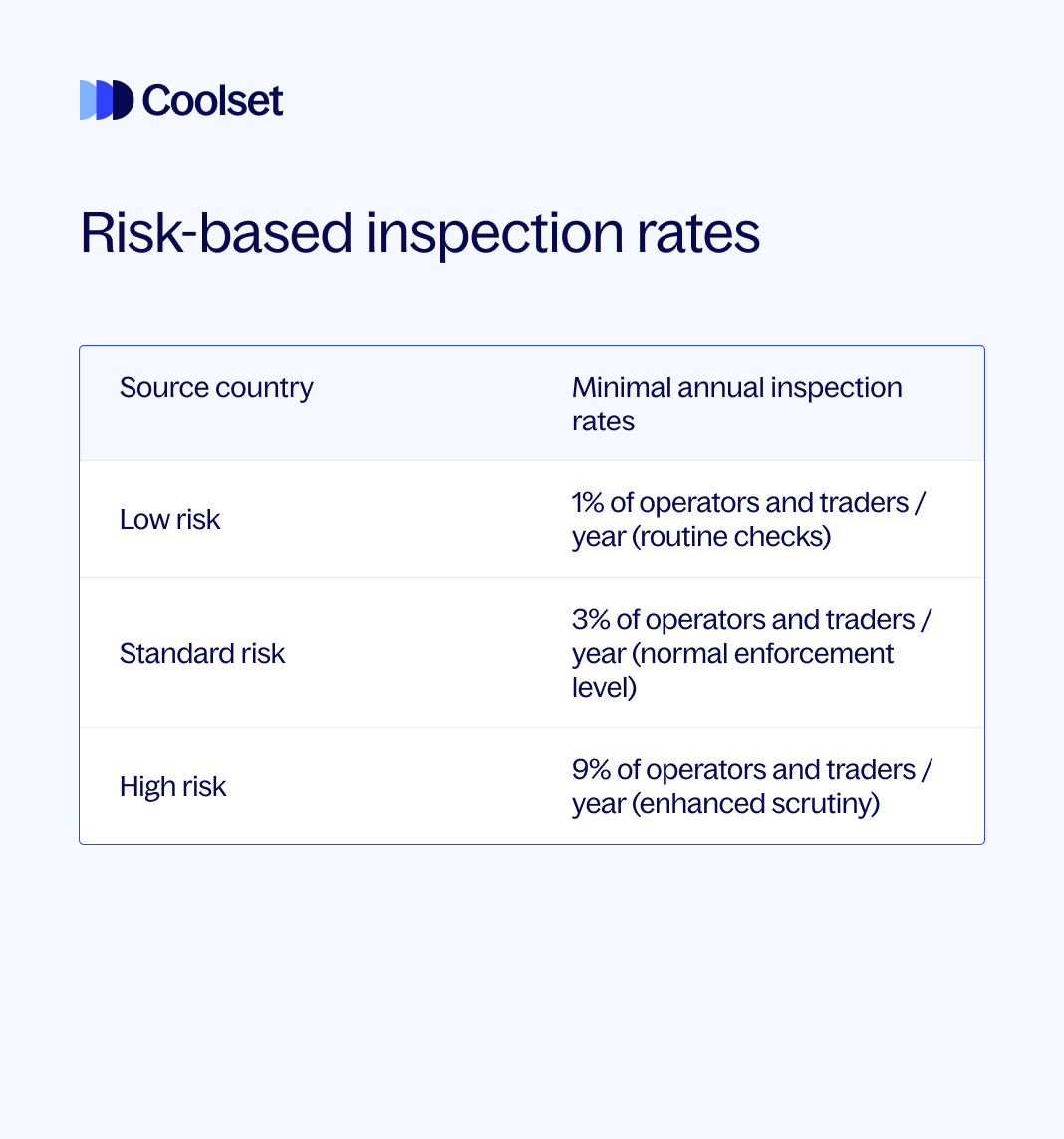
<figure><img alt="" loading="lazy" src="https://cdn.prod.website-files.com/63c7e16529317f2df4140ec0/68cc10293d1d1fe960f591fb_6867f5815b2ca6c51ff130ad_AD_4nXcHIafKXMM8_neiPrlV0RWs_MlVCzYuHAzcehFmz73yorXg6ft-3rchZc6iESFJke0qcX5eJZsEA51DBo6xVbO6s4bxvDEyCfVeD1A9eMpiiRHdLNqeV8Lp-tGYtFbfxY_8tOPy2w.png" decoding="async" /></figure>

These thresholds apply to both the number of operators and the volume of goods they handle. The higher the risk, the more scrutiny. But no risk category is exempt. Authorities may conduct inspections on any operator at any time if a concern is flagged or conditions change.

This tiered model ensures that enforcement resources are allocated where they are most needed, while preserving a baseline level of oversight across all supply chains.

## What are substantiated concerns, and how do they work?

One unique feature of the EUDR enforcement regime is the concept of \"<a href="https://eur-lex.europa.eu/legal-content/EN/TXT/HTML/?uri=CELEX:02023R1115-20241226#cpt_6" rel="noopener noreferrer">substantiated concerns</a>.\" This mechanism allows third parties to formally notify authorities of potential non-compliance. Under the regulation, a substantiated concern is defined as a \"duly reasoned claim based on objective and verifiable information\" suggesting that a company is not complying with the EUDR.

In plain terms, it's a credible, evidence-backed tip-off that a trader or operator may be violating the regulation.

<strong>Who can submit a substantiated concern?</strong>

Any person or organization can file a substantiated concern with a national Competent Authority. This includes individuals, civil society groups, non-governmental organizations, and even business competitors. There is no requirement to be directly affected by the potential violation.

For example, an environmental group that uncovers satellite evidence of recent deforestation on a plantation linked to an EU importer could raise a concern. Similarly, a labor rights organization could file a concern about violations of local laws by a commodity producer.

<strong>What happens once a concern is filed?</strong>

Competent Authorities are legally required to assess all substantiated concerns \"without undue delay\" and to do so \"diligently and impartially.\" If the claim appears credible, they must take appropriate enforcement actions such as launching an official investigation, requesting company records, or conducting interviews. In some cases, interim measures may also be applied to prevent further harm during the review process.

In effect, substantiated concerns act as an early warning system. They allow authorities to act on credible information even if a company hasn't been flagged through routine inspections.

<strong>Response timeline and feedback</strong>

Authorities must inform the party that submitted the concern of the outcome within 30 days unless national law specifies otherwise. This feedback includes whether an investigation has been launched or closed, along with the rationale behind that decision. The feedback loop is a critical element in building trust in the mechanism.

To encourage responsible reporting, the regulation incorporates strong confidentiality safeguards. The identity of the individual or organization submitting the concern must be protected upon request. 

<strong>Why this matters for operators</strong>

The substantiated concern mechanism effectively extends enforcement beyond government oversight by empowering the public to act. In many cases, EUDR investigations may begin with a concern raised by an external party.   
  
For example:

<ul><li>A watchdog group submits satellite imagery showing land clearing on a supplier farm.</li><li>A local community group presents evidence of land rights violations by a timber exporter.</li></ul>

In both cases, the Competent Authority would investigate whether the EU-based operator fulfilled its due diligence obligations.

This adds a layer of accountability. Even if a company is not selected for routine inspection, it may still face scrutiny if a third party raises a substantiated concern. 

## What happens if you're reported or found non-compliant

Nobody wants to end up in an EUDR enforcement case, but it's crucial to know what the process looks like if it happens. Here's a breakdown of what you can expect if you're flagged or found non-compliant.

​

<figure><img alt="" loading="lazy" src="https://cdn.prod.website-files.com/63c7e16529317f2df4140ec0/68cc10293d1d1fe960f59204_6867f5815b2ca6c51ff130b9_AD_4nXe_NK71Ta2uxmBft97Lf-WRLgxekAskwyEhyYoYDuS_dq6ax4bLJktGnF9l4vPC4BVFVBuE71c2_ZUNYlP3txL0eRHFZ6yPNMXhVArU_G4chUIN9_b2b-2zF9qiPLe1xaVmlVOKBg.png" decoding="async" /></figure>

<strong>1. Interim measures and investigation</strong>

Once a Competent Authority has credible evidence or suspicion of non-compliance they can immediately take interim action. This includes seizing goods or suspending them from sale to prevent deforestation-linked products from entering or staying on the market. 

For instance, if your shipment is under investigation, they may detain the goods in a warehouse or instruct you not to sell or move them until cleared.

<strong>2. Compliance check and hearings</strong>

The authorities will initiate a full compliance check. This may involve auditing your due diligence system, reviewing supply chain documentation, or conducting formal hearings. Full cooperation is mandatory, including providing access to relevant data and facilities.

If the investigation stems from a substantiated concern, authorities will evaluate the specific claims, for example, whether sourcing occurred from recently deforested land, and test the adequacy of your due diligence.

<strong>3. Finding of non-compliance</strong>

If the authority concludes that EUDR rules were breached, they'll issue a formal notice requiring you to take corrective action without delay. Depending on the case, you may be required to:

<ul><li>Fix procedural or data gaps (e.g. submit missing documentation, correct geolocation data)</li><li>Halt distribution of affected products</li><li>Withdraw or recall items already on the market</li><li>Dispose of or donate non-compliant goods</li><li>Strengthen your due diligence processes (e.g. improve supplier monitoring, retrain staff)</li></ul>

You'll receive a deadline. If you fail to comply, authorities can escalate enforcement through court orders or direct action.

<strong>4. Penalties for non-compliance</strong>

Each EU Member State defines its own <a href="https://eur-lex.europa.eu/legal-content/EN/ALL/?uri=CELEX:32023R1115#art_25" rel="noopener noreferrer">penalties</a>, but they must meet minimum EU standards. These include:

<ul><li>Fines: Up to 4% of your annual EU turnover. Fines are scaled based on environmental harm, financial benefit, and prior violations.</li><li>Confiscation: Authorities can seize both products and profits from non-compliant goods.</li><li>Temporary bans: Operators may be barred from selling regulated commodities or from participating in public tenders for up to 12 months.</li><li>Loss of simplified due diligence: Repeated or serious violations can revoke eligibility for simplified procedures in low-risk countries.</li></ul>

These penalties underscore that EUDR non-compliance isn't insignificant, it can be business-altering. A 4% turnover fine for a large company can be in the tens or hundreds of millions of euros. A trading ban, even temporary, can disrupt supply chains and contracts.

Authorities are also required to report enforcement outcomes to the European Commission, which will publish company names, violations, and penalties, making reputational risk part of the consequence. 

<strong>Real-world causes of non-compliance</strong>

In practice, most enforcement cases stem from a few recurring issues:

<ul><li>Not having a strong due diligence system in place or failing to submit the required statement</li><li>Providing false or misleading data</li><li>Sourcing products from land that was deforested or used illegally after 2020</li><li>Ignoring credible red flags, including NGO reports or public allegations tied to your suppliers</li><li>Repeating past violations or failing to fix compliance issues once flagged</li></ul>

## How companies can reduce risk and stay compliant

The EUDR sets a high bar for traceability and accountability. Staying compliant means more than submitting a statement. It requires building systems that are adaptable, accurate, and <a href="https://www.coolset.com/academy/eudr-reporting-guide-for-operators#maintaining-traceability-and-audit-readiness" rel="noopener noreferrer">defensible under scrutiny</a>. Here's how companies can reduce risk and meet expectations with confidence.

<ol><li><strong>Build a robust due diligence system and make it audit-ready</strong></li></ol>

Your <a href="https://www.coolset.com/academy/how-to-comply-with-the-eudr-guide" rel="noopener noreferrer">due diligence system</a> is your first line of defense. It should be a structured and documented process, typically maintained in a manual or digital tool, that covers information collection, risk assessment, and risk mitigation for each batch of commodity you handle.

Crucially, your due diligence system needs to be audit-ready. The regulation requires operators to store due diligence statements and supporting documentation for at least five years. In practice, this means you should be able to present a complete file, physical or digital, on demand. That file should clearly document the evidence and reasoning used to determine that the product is compliant.

<ol start="2"><li><strong>Review your system annually and adapt to new risks</strong></li></ol>

EUDR compliance is not static. Companies must regularly reassess whether their systems remain effective as external risks evolve.The European Commission recommends a full system review at least once a year. These reviews should test whether:

<ul><li>All required data is being collected</li><li>Risk assessments are consistently applied</li><li>Mitigation steps are being executed and documented</li></ul>

If conditions change, such as increased deforestation alerts in a source region, or new national laws affecting legality, you're expected to revise your procedures. Updates should be formally documented and kept on record for five years.

<ol start="3"><li><strong>Ensure data accuracy and traceability</strong></li></ol>

The foundation of a defensible due diligence statement is traceability. You must be able to link each product back to its exact point of origin with full confidence that:

<ul><li>Coordinates lead directly to the actual farm boundaries, not just the general area</li><li>Volumes, supplier names, and documentation match across all files (see our guide on <a href="https://www.coolset.com/academy/how-to-collect-eudr-data-from-suppliers-and-how-to-ensure-engagement" rel="noopener noreferrer">how to collect EUDR data from suppliers</a>)</li><li>Legal documents are official, complete, and translated where necessary</li></ul>

High-quality data helps reduce two types of risk: genuine non-compliance, and false positives during enforcement screening. If your documentation is thorough and consistent, it's far less likely to draw attention during risk profiling. In contrast, submissions with missing or implausible data, such as blank fields or coordinates that point to urban areas, are easy targets for inspection.

<strong>Note for micro and small operators:</strong> Under Regulation 2025/2650, micro and small primary operators can now submit a simplified one-off declaration instead of performing full due diligence. This declaration must still include the country of production and geolocation coordinates, but removes the requirement for a full risk assessment and mitigation process. All other operators must continue to perform full due diligence as described above.

<ol start="4"><li><strong>Use external certifications wisely</strong></li></ol>

Third-party certification schemes, such as FSC for timber or RSPO for palm oil, can support your risk assessment, but they do not replace your own due diligence. Certifications can be a positive risk indicator and may reduce your residual risk when evaluating a supply chain, especially if the certifier uses credible and independent verification. 

However, you still need to complete all the EUDR due diligence steps yourself: collecting required information, assessing risk, mitigating if needed, and documenting everything in a due diligence statement. Think of certifications as supporting evidence, not a compliance shield. For a detailed scheme-by-scheme analysis of what FSC, RSPO, Rainforest Alliance and other certifications actually cover under the EUDR, see our <a href="https://www.coolset.com/academy/eudr-certification-schemes-fsc-rspo-rainforest-alliance" rel="noopener noreferrer">certification schemes guide</a>.

<ol start="5"><li><strong>Prepare a response plan just in case</strong></li></ol>

Even well-prepared companies can be subject to inspections or substantiated concerns. Planning ahead can reduce confusion and improve outcomes if that happens.

Key steps include:

<ul><li>Assigning internal roles for regulatory communication</li><li>Creating a process for gathering requested documents quickly</li><li>Preparing external communication templates, in case you need to update customers or partners</li><li>Know who your national Competent Authority is and how to reach them. </li></ul>

## How software helps enforce-proof your workflow

The demands of the EUDR make manual compliance increasingly risky. While strong processes and trained teams are essential, digital tools can help ensure that nothing falls through the cracks in the following ways:

<strong>Centralize data and documentation: </strong>EUDR compliance produces vast amounts of information: coordinates, supplier records, legality documents, risk assessments, and due diligence statements. A digital platform allows you to organize all of it in one place linked to each shipment or product lot. This eliminates the chaos of spreadsheets and email chains, and ensures that when authorities request evidence, everything is accessible within minutes. Audit trails are created automatically, and documentation is standardized across teams.

<strong>Automate key workflows and deadlines: </strong>Purpose-built software can embed compliance checks directly into your operations. It can prompt procurement teams to collect required data, block progress until geolocation is provided, or send alerts when a due diligence statement deadline is approaching. 

<strong>Proactively manage supply chain risk: </strong>Advanced tools go beyond data storage. They help identify and act on risks. This includes:

<ul><li>Flagging suppliers from high-risk countries</li><li>Sending deforestation alerts using satellite data</li><li>Tracking reports on land conflicts or legality issues</li></ul>

<strong>Technology as your compliance co-pilot: </strong>For a comparison of available <a href="https://www.coolset.com/academy/best-6-eudr-compliance-tools-for-2026-supply-chain-due-diligence" rel="noopener noreferrer">EUDR compliance tools</a>, see our 2026 review. Software doesn't replace human oversight. But it reinforces your processes, ensures tasks are completed consistently, and gives compliance teams time to focus on what matters most.

<aside>

<a href="https://www.coolset.com/request-demo-old" rel="noopener noreferrer">Explore the product tour</a>

</aside>

## How Coolset helps you stay on track

<a href="https://www.coolset.com/eudr" rel="noopener noreferrer">Coolset's platform</a> is designed to simplify EUDR compliance for companies of all sizes. It enables businesses to:

<ul><li>Automate DDS generation: Pull supplier data into pre-configured DDS templates. Save time and reduce errors.</li><li>Validate origin data: Flag missing GPS coordinates, incomplete documents, or mismatches.</li><li>Benchmark risk: Incorporate EU country risk scores to scale due diligence efforts based on sourcing location.</li><li>Audit-proof recordkeeping: Maintain all DDS, supplier documents, and risk assessments in a secure archive.</li><li>Integrate with ERP tools: Pull product data and sourcing details directly from procurement or supply systems.</li></ul>

Coolset's tools are pre-configured to support EUDR documentation requirements and designed for ESG or compliance teams that need to move fast.

<a href="https://www.coolset.com/request-demo" rel="noopener noreferrer">Reach out to our team</a> to see the Coolset EUDR module in action.

## FAQ - EUDR compliance and enforcement

### 1. What is a substantiated concern under EUDR?

A substantiated concern is a formal claim based on objective, verifiable evidence that a company violated the EUDR. Anyone can file one with a national authority, which must assess, investigate, and act if credible. Authorities must inform the complainant of the outcome within 30 days.

### 2. Who enforces EUDR and how?

National Competent Authorities enforce EUDR, supported by customs. They conduct risk-based inspections, including document reviews and site visits. High-risk operators face more checks. Customs verify documentation at borders. Enforcement is coordinated through EU-wide systems to ensure consistent action across all Member States.

### 3. What are the penalties for non-compliance?

Penalties include fines up to 4% of EU turnover, confiscation of goods and profits, market bans, product recalls, and suspension of simplified procedures. Multiple penalties can apply together. Authorities must publish the names of non-compliant companies and details of the actions taken.

### 4. How can my company reduce the risk of being flagged?

Maintain accurate, verifiable data and update your due diligence system regularly. Train procurement teams, monitor suppliers for red flags, and respond proactively to concerns. Keep records organized and aligned with EUDR expectations, errors in data or documentation alone can trigger enforcement.

### 5. Can I be reported anonymously?

Yes. The EUDR requires Member States to protect the identity of those submitting substantiated concerns. This aligns with EU whistleblower protections, allowing informants to remain confidential if they choose. Authorities assess the claim regardless of whether the complainant is named. For companies, this means a concern can be submitted at any time by anyone, and still prompt an investigation. The anonymity provision ensures the focus stays on the facts, not the individual raising them.


---

# How ESRS S4 impacts consumers and end-users (Updated Mar 2026)

Learn how ESRS S4 under the CSRD impacts consumers and end-users by requiring businesses to report on product safety, data privacy, and social inclusion. This framework empowers consumers with transparency, driving informed choices and trust.

Author: Jasper Akkermans
Published: 2026-03-14
Source: https://www.coolset.com/academy/esrs-s4-consumers-and-end-users

##### Key takeaways

<ul><li>ESRS S4 covers how products and services impact consumers and end-users across product safety, data privacy and social inclusion, with 69 data points in the original standard.</li><li>The simplified ESRS cut S4 data points by ~64%, and the Quick Fix regulation allows all Wave 1 companies to defer S4 disclosures for FY2025 and FY2026 even when assessed as material.</li><li><a href="https://www.coolset.com/csrd" rel="noopener noreferrer">Coolset's CSRD platform</a> helps teams assess S4 materiality, collect consumer impact data and structure audit-ready ESRS disclosures.</li></ul>

The roll-out of the <a href="https://www.coolset.com/academy/csrd-eu-climate-regulation-explained#:~:text=The%20Corporate%20Sustainability%20Reporting,matters%20to%20a%20wider%20audience." rel="noopener noreferrer">CSRD</a> and its underlying reporting standards, the ESRS, has brought the issue of consumers and end-users into sharp focus for many businesses. ESRS S4, titled ‘Consumers and End-users,’ is the standard under which companies operating in the B2C market must disclose how their products and services impact the people who use them.

This article explains what ESRS S4 requires, when it applies, and how companies should approach it.

## What is ESRS S4?

ESRS S4 is the CSRD standard covering impacts, risks, and opportunities related to consumers and end-users — the people who purchase or use a company’s products or services. The standard is organized around four areas of potential impact:

<ul><li><strong>Information-related impacts:</strong> Including product safety information, marketing practices, and data privacy</li><li><strong>Personal safety:</strong> Risks from product use, including physical safety and health impacts</li><li><strong>Social inclusion:</strong> Access to products and services, and fair pricing</li><li><strong>Responsible business practices:</strong> Including anti-competitive behavior, responsible sales practices, and handling of consumer complaints</li></ul>

## When does ESRS S4 apply?

Like all topical ESRS standards, S4 applies only where the topic is material under your double materiality assessment. For companies in B2C markets with significant direct consumer relationships, S4 is likely to be material. For pure B2B companies with no direct consumer exposure, it may not be material.

The Omnibus I Directive simplified many S4 requirements, moving several data points from mandatory to conditional. For companies still in CSRD scope, the relevant S4 obligations are determined by the materiality assessment combined with the amended ESRS framework.

For a full overview of the amended ESRS, see our guide to <a href="https://www.coolset.com/academy/the-amended-esrs-what-has-changed-and-what-it-means-for-2026-csrd-reporting" rel="noopener noreferrer">the amended ESRS under Omnibus</a>.

## Key ESRS S4 disclosures

### Policies and processes (S4-1)

Companies must disclose their policies related to consumers and end-users, including consumer health and safety policies, data privacy practices, and approaches to marketing and responsible selling.

### Engagement with consumers (S4-2)

Disclosure of how the company engages with consumers on sustainability matters, including mechanisms for feedback and complaint handling.

### Processes to remediate negative impacts (S4-3)

Description of how the company addresses negative impacts on consumers that have been identified, including any remediation channels.

### Targets and metrics (S4-4 and S4-5)

Quantitative metrics related to consumer impacts, including product safety incidents, data privacy breaches, and any targets set for improvement.

## How to approach ESRS S4

<ol><li><strong>Start with the DMA:</strong> Determine whether consumer and end-user impacts are material for your business. For most consumer-facing businesses, they will be.</li><li><strong>Review existing policies:</strong> Map your current consumer protection, data privacy, and product safety policies against S4 requirements.</li><li><strong>Identify gaps:</strong> Where policies or processes don’t currently meet S4 disclosure requirements, build the documentation needed.</li><li><strong>Engage your legal and compliance teams:</strong> S4 overlaps significantly with consumer protection law and data protection regulation (GDPR). These teams will have much of the relevant information.</li><li><strong>Build incident tracking:</strong> S4-4 metrics require tracking product safety incidents and data privacy breaches systematically.</li></ol>

## How Coolset supports ESRS S4

Coolset’s CSRD platform includes structured data collection for ESRS S4 as part of the full reporting workflow. The platform reflects the updated requirements under the amended ESRS post-Omnibus. <a href="https://www.coolset.com/request-demo" rel="noopener noreferrer">Book a demo</a> to see how it works.


---

# What is EUDR due diligence and what are the requirements for companies (Updated June 2026)

The EUDR’s due diligence rules require companies to go beyond basic traceability and actively prove deforestation-free sourcing, legal production, and negligible risk. This article explains what the regulation demands in practice, what data businesses must collect and verify, and how to set up a defensible due diligence process that meets EUDR requirements.

Author: Elisavet Diamantopoulou
Published: 2026-03-14
Source: https://www.coolset.com/academy/eudr-due-diligence-requirements-explained-what-companies-need-to-prove-ox7iv

##### Key takeaways:

<ul><li>Under EUDR, companies must prove products are deforestation-free, legally sourced, and backed by a valid DDS.</li><li>This means collecting origin data, assessing risk, reducing it if needed, and submitting a DDS before shipment.</li><li>Risk must be “negligible” and backed by verifiable evidence - certifications alone are not enough.</li><li><a href="https://coolset.com/eudr" rel="noopener noreferrer">Coolset</a> helps companies manage this end-to-end: collect data, assess risk, and submit DDS from one platform.</li></ul>

<aside>

<strong>Disclaimer: New EUDR developments - December 2025</strong>‍  

In November 2025, the European Parliament and Council <a href="https://www.coolset.com/academy/eudr-delay-2025-what-eu-vote-means-for-importers-and-operators" rel="noopener noreferrer">backed key changes</a> to the EU Deforestation Regulation (EUDR), including a 12‑month enforcement delay and simplified obligations based on company size and supply chain role.  

Key changes proposed:

<ul><li>New enforcement timeline: 30 December 2026 for large/medium operators, 30 June 2027 for small/micro operators</li><li>Simplified DDS: One-time declarations for small and micro primary producers</li><li>Narrowed scope: Most downstream actors and non‑SME traders would no longer need to submit DDSs</li><li>New DDS requirement: Estimated annual quantity of regulated products must be included  
</li></ul>

These updates are not yet legally binding. A final text will be confirmed through trilogue negotiations and formal publication in the EU’s Official Journal. Until then, the current EUDR regulation and deadlines remain in force.  

We continue to monitor developments and will update all guidance as the final law is adopted.

</aside>

Under the EU Deforestation Regulation (EUDR), companies are required to conduct mandatory due diligence before placing regulated commodities on the EU market or exporting them from it. 

The aim is clear: ensure that products are deforestation-free, legally produced, and properly documented. Article 3 of the regulation sets the core requirements, which in practice means businesses must demonstrate three things: The product was not sourced from land deforested after the cut-off date. It was produced in compliance with applicable laws in the country of origin. It is covered by a valid Due Diligence Statement (DDS).

This guide explains what that means in practice, what information must be collected, and how the process works across different company types and supply chain roles.

## Who must carry out due diligence?

The obligation to conduct due diligence falls primarily on <strong>operators</strong> — the companies that first place a regulated product on the EU market, or that export regulated products from the EU. This includes importers and EU-based manufacturers who are first in line in the supply chain.

Following the adoption of Regulation (EU) 2025/2650 in December 2025, a new category of <strong>downstream operators</strong> was introduced. Downstream operators place products on the market using commodities already covered by an upstream DDS. They are explicitly exempt from submitting their own DDS and from conducting due diligence. Their obligation is limited to passively collecting and retaining reference numbers from their direct upstream supplier.

<strong>Traders</strong> — companies that buy and resell products already on the EU market — also do not submit a DDS. They retain traceability records and pass on reference numbers if their direct supplier is an upstream operator.

## The three-step due diligence process

### Step 1: Collect information (Article 9)

Operators must gather the following information for each product before placing it on the market:

<ul><li>Product description: commodity type, CN/HS code, trade name, quantity</li><li>Country of production and the specific region or district</li><li>Geolocation of all plots of land where the relevant commodity was produced (GPS coordinates in GeoJSON format), or all establishments for cattle</li><li>Date or time period of production</li><li>Name, address, and contact details of the supplier to the operator</li><li>Name, address, and contact details of the operator’s direct customer (where the operator makes the product available on the market)</li><li>Adequate and conclusive information that the commodity or product complies with the applicable legislation of the country of production</li></ul>

The information collected must be sufficient to demonstrate compliance with both the deforestation-free and legality requirements.

### Step 2: Risk assessment (Article 10)

Operators must assess the risk that the product is not compliant. The risk assessment must consider, among other things: country and regional risk factors; the complexity of the supply chain; whether the commodities were produced by operators who comply with relevant requirements; whether there are substantiated concerns; and whether the operator or any of its relevant trading partners are subject to ongoing enforcement action.

The output of the risk assessment is a conclusion: either the risk is “negligible” — meaning the operator can proceed to submit a DDS — or the risk is non-negligible, requiring mitigation before submission.

### Step 3: Risk mitigation (Article 11)

Where the risk is not negligible, operators must take additional steps to reduce it to negligible. Mitigation measures may include: requesting additional documentation from suppliers; commissioning independent surveys or audits; requiring suppliers to implement corrective action; switching to alternative sources where risk cannot be adequately reduced.

Only once the risk has been mitigated to negligible can the operator submit the DDS and place the product on the market.

## Due Diligence Statement (DDS): what it contains

The DDS is the final declaration submitted by an operator to the EUDR Information System. It must include:

<ul><li>The operator’s name, address, and EORI number</li><li>Product description: HS code, trade name, scientific name (where applicable), quantity</li><li>Country of production and geolocation coordinates of all plots</li><li>Reference to any existing DDS being used</li><li>A legal declaration confirming due diligence was carried out and that no or only negligible risk was identified</li><li>A dated signature including the name and function of the signatory</li></ul>

For a full breakdown of how to submit a DDS, including the technical requirements, see our <a href="https://www.coolset.com/academy/what-is-an-eudr-due-diligence-statement" rel="noopener noreferrer">DDS guide</a>.

## How due diligence is checked and enforced

Each EU Member State designates competent authorities to enforce the EUDR through risk-based audits, inspections, and document reviews. For a detailed breakdown, see our guide on <a href="https://www.coolset.com/academy/eudr-compliance-and-enforcement" rel="noopener noreferrer">EUDR compliance and enforcement</a>. All DDS submissions go into a centralised EU system, where authorities analyse them using risk criteria, flagging shipments or operators for closer scrutiny. Customs also play a role by ensuring a valid DDS is provided for imports and blocking non-compliant shipments. Penalties for non-compliance may include fines (up to at least 4% of turnover), seizure of goods, or suspension from market access. Operators must be ready to show not just the DDS, but the full due diligence system behind it.

<aside>

### Prepare for EUDR in 4 on-demand sessions

Our research team walks you through every step - from supplier engagement to submitting in TRACES.

<a href="https://www.coolset.com/eudr-winter-school-2025" rel="noopener noreferrer">Watch now</a>

</aside>

Explore the <a href="https://www.coolset.com/eudr" rel="noopener noreferrer">Coolset EUDR solution</a> or schedule a live demo with us.

## June 2026 update: How the simplification package affects due diligence requirements

The Commission’s Guidance Document (3rd edition, 4 May 2026) provides the most detailed operational clarification of EUDR due diligence requirements to date. Several points are directly relevant to the steps described in this article.

<strong>Simplified information collection for low-risk sourcing.</strong> For supply chains, production areas, and countries of production where an initial examination of available information indicates a negligible risk of non-compliance with Article 3(b) (legality), operators are not required to carry out in-depth data collection. Specifically, the Guidance Document confirms that operators sourcing from low-risk countries should not be required to: systematically collect comprehensive legal documentation for each individual plot of land; obtain specific document types such as individual land titles; or compile an exhaustive list of all potentially relevant national laws. This applies as long as the initial examination does not indicate a higher risk. Under the adopted country risk classification (Commission Implementing Regulation (EU) 2025/1093, 22 May 2025), 51% of importing operators now qualify for this simplified approach.

<strong>Downstream operators and traders: no due diligence obligation.</strong> The Guidance Document (3rd edition) confirms that downstream operators are not required to ascertain that due diligence was exercised by their upstream supplier, and are not required to submit a DDS. Their obligation under Regulation (EU) 2025/2650 is limited to passively collecting and retaining reference numbers from their direct upstream supplier. Traders further down the chain who do not purchase directly from an upstream operator face only basic business partner information obligations.

<strong>Annual compliance costs.</strong> The Commission estimates that the combined effect of the simplification measures since 2024 — including the country risk classification, the simplified regime for micro and small primary operators, and reduced downstream obligations — has reduced annual compliance costs by approximately 75%, from EUR 8.1 billion to EUR 2.0 billion per year (COM(2026) 191 final, Chapter 5).

## July 2026 update: Information System changes affecting due diligence submission

On 13 July 2026, the Commission adopted Implementing Regulation (EU) 2026/1565, which changes several mechanics of how due diligence is submitted, and adopted a Delegated Act amending Annex I (not yet in force). These build on the steps described above.

<strong>Simplified declarations formalised under Article 4a.</strong> The one-off simplified declaration option for micro and small primary operators, previously described in general terms, now has a dedicated legal basis: Article 4a of the Information System rules. Operators can file once and update the declaration later, rather than resubmitting from scratch.

<strong>Statement grouping under Article 8a.</strong> A new Article 8a lets operators combine several due diligence statements or simplified declarations into one by referencing existing reference numbers, reducing repetitive submissions for shipments already covered.

<strong>Single account, no TRACES dependency.</strong> Information System users are now limited to one registered account (which can hold multiple roles), and the system no longer depends on TRACES. The Commission must publish contingency arrangements by 30 December 2026 for outages longer than 60 minutes.

The Annex I changes affecting which products require due diligence in the first place are adopted but not yet in force, pending Parliament and Council scrutiny. See our <a href="https://www.coolset.com/academy/eudr-product-scope-changes-are-official-what-the-july-2026-delegated-regulation-means-for-compliance" rel="noopener noreferrer">full breakdown of the July 2026 Annex I changes</a> for detail on what's being added and removed.

## FAQ - EUDR due diligence requirements

### 1. What is “due diligence” under the EUDR?

Under the EUDR, due diligence is the mandatory process operators must follow to ensure products are deforestation-free, legally produced, and backed by a DDS. This involves collecting detailed supply chain data, assessing the risk of non-compliance, and taking mitigation measures if the risk is above negligible. Only once compliance is confirmed can a DDS be submitted to the EU system.

### 2. What information must a Due Diligence Statement (DDS) contain?

The DDS is the final declaration submitted by an operator under the EUDR. It must include: The operator’s name, address, and, if applicable, EORI number. A product description including HS code, trade name, scientific name (if applicable), and quantity. The country of production and geolocation coordinates of all plots where the commodities were produced (or all establishments for cattle). A reference number if an existing DDS is being used. A legal declaration confirming due diligence was carried out and that no or only negligible risk was identified. A dated signature including the name and function of the person signing.

### 3. How is due diligence compliance checked and enforced?

Each EU Member State designates competent authorities to enforce the EUDR through risk-based audits, inspections, and document reviews. For a detailed breakdown, see our guide on <a href="https://www.coolset.com/academy/eudr-compliance-and-enforcement" rel="noopener noreferrer">EUDR compliance and enforcement</a>. All DDS submissions go into a centralized EU system, where authorities analyze them using risk criteria flagging shipments or operators for closer scrutiny.Customs also play a role by ensuring a valid DDS is provided for imports and blocking non-compliant shipments. Penalties for non-compliance may include fines (up to at least 4% of turnover), seizure of goods, or suspension from market access. Operators must be ready to show not just the DDS, but the full due diligence system behind it.

### 4. Can existing certifications (e.g. FSC, RSPO) replace the need for due diligence?

No. Certifications cannot replace due diligence under the EUDR, they can only support it. Operators must still collect all required data and perform their own risk assessments.

The European Commission does not recognize any certifications as substitutes for a DDS. Each shipment must be backed by a full due diligence process, regardless of certification status.


---

# Breaking down the double materiality assessment: what are IROs? (Updated Mar 2026)

Understanding key concepts like the double materiality assessment and how to identify impacts, risks, and opportunities (IROs) is essential for CSRD reporting. In this article, we break down IROs and provide everything you need to know about their importance, how to identify and evaluate them, and what has changed since the EU Omnibus proposal.

Author: Anna Kuppel
Published: 2026-03-13
Source: https://www.coolset.com/academy/double-materiality-assessment-iro

##### Key takeaways

<ul><li>IROs (impacts, risks and opportunities) are the building blocks of the <a href="https://www.coolset.com/academy/double-materiality-assessment" rel="noopener noreferrer">double materiality assessment</a> and determine which ESRS topics your company must report on under the CSRD.</li><li>Post-Omnibus, the DMA process has been simplified with sector-based opt-outs and limited value chain scope, but Wave 1 companies must still conduct full assessments.</li><li><a href="https://www.coolset.com/csrd" rel="noopener noreferrer">Coolset's CSRD module</a> guides teams through IRO identification, materiality scoring and ESRS mapping to produce audit-ready documentation.</li></ul>

If your business is planning to report on the <a href="https://www.coolset.com/academy/csrd-eu-climate-regulation-explained" rel="noopener noreferrer">Corporate Sustainability Reporting Directive (CSRD)</a>, you've almost certainly come across the concept of a Double Materiality Assessment (DMA). One crucial component of this assessment is the identification and evaluation of Impacts, Risks, and Opportunities (IROs).

This guide explains what IROs are in the context of CSRD and how to approach them in your double materiality assessment.

## What are IROs in the context of CSRD?

Under ESRS 1, companies are required to identify and assess their sustainability-related IROs as part of their double materiality assessment:

<ul><li><strong>Impacts:</strong> The actual or potential positive or negative effects your company has on people or the environment, through your own operations or value chain. Impacts relate to impact materiality.</li><li><strong>Risks:</strong> The sustainability-related financial risks that could negatively affect your company's financial performance, position, or cash flows. Risks relate to financial materiality.</li><li><strong>Opportunities:</strong> The sustainability-related opportunities that could positively affect your company's financial performance. Opportunities also relate to financial materiality.</li></ul>

## Why IRO identification matters

IROs are the building blocks of your DMA. The process of identifying and assessing them determines which ESRS topics are material for your company — and therefore which disclosures you must make.

Under the <a href="https://www.coolset.com/academy/the-amended-esrs-what-has-changed-and-what-it-means-for-2026-csrd-reporting" rel="noopener noreferrer">amended ESRS</a> following the Omnibus I Directive, the requirements around IRO identification have been clarified and simplified, but the core process remains. You need to be able to demonstrate that your assessment of material topics is grounded in a systematic review of your actual and potential impacts, risks, and opportunities.

## How to identify and assess IROs

### Step 1: Define the scope

Consider your own operations and your upstream and downstream value chain. ESRS requires companies to look beyond their direct operations to understand how their supply chain and the use of their products create impacts, risks, or opportunities.

### Step 2: Identify IROs for each sustainability topic

Work through each ESRS topic (E1–E5, S1–S4, G1) and identify the specific impacts your operations have on that topic, the financial risks arising from that topic, and any financial opportunities it presents.

### Step 3: Assess severity and likelihood

For each identified IRO, assess its significance:

<ul><li>For impacts: evaluate scale, scope, and irremediability</li><li>For risks and opportunities: evaluate the likelihood of occurrence and potential financial magnitude</li></ul>

### Step 4: Apply materiality thresholds

Determine which IROs are material based on their assessed significance. A topic is material under CSRD if it is material on either the impact dimension or the financial dimension.

### Step 5: Document and defend

The most important thing is documentation. Your auditor will want to understand not just your conclusions but your process and rationale. Every materiality decision should be traceable to evidence and stakeholder input.

## Common challenges with IRO assessment

<ul><li>Scope creep — trying to assess too many IROs without a structured process</li><li>Insufficient value chain coverage, especially for Scope 3 impacts</li><li>Lack of documentation to support materiality decisions</li><li>Treating IRO identification as a compliance exercise rather than a strategic tool</li></ul>

## How Coolset supports IRO assessment

Coolset's DMA workflow provides a structured framework for identifying and assessing IROs across all ESRS topics. It includes scoring guidance, documentation templates, and a direct connection from the DMA output to your ESRS reporting scope. <a href="https://www.coolset.com/request-demo" rel="noopener noreferrer">Book a demo</a> to learn more.


---

# How to interpret ESRS G1: Business conduct (Updated Mar 2026)

What exactly is ESRS G1, and how can businesses approach its interpretation effectively? In this article, we’ll break down the essentials of ESRS G1, explore its key requirements, and provide practical steps to help you implement it correctly.

Author: Jasper Akkermans
Published: 2026-03-13
Source: https://www.coolset.com/academy/esrs-g1-business-conduct

##### Key takeaways

<ul><li>ESRS G1 covers six governance disclosure areas: corporate culture, whistleblower protection, supplier relationships, corruption prevention, political engagement and payment practices.</li><li>Under the simplified ESRS, G1 has been restructured into a Policies-Actions-Targets architecture with 61% fewer mandatory data points, while the original G1-1 through G1-6 structure remains applicable until FY2026.</li><li><a href="https://www.coolset.com/csrd" rel="noopener noreferrer">Coolset's CSRD platform</a> helps teams map G1 disclosures, track governance metrics and produce audit-ready ESRS sustainability statements.</li></ul>

ESRS G1 is the CSRD standard covering business conduct — how companies manage ethical business practices, anti-corruption, corporate culture, and political engagement. Unlike the environmental standards, G1 is typically applicable to all companies in CSRD scope, as governance and business conduct are almost universally material.

This article explains what ESRS G1 requires, what changed under the amended ESRS following the Omnibus I Directive, and how companies should approach compliance.

## What is ESRS G1?

ESRS G1 — Business Conduct — covers the governance and conduct standards that underpin CSRD reporting. The standard requires companies to disclose:

<ul><li>Corporate culture and how it supports ethical business conduct</li><li>Anti-corruption and anti-bribery policies and incidents</li><li>Protection of whistleblowers</li><li>Animal welfare (where relevant)</li><li>Political contributions and lobbying activities</li><li>Payment practices toward suppliers (particularly SMEs)</li></ul>

## What changed under the amended ESRS

Following the Omnibus I Directive, the <a href="https://www.coolset.com/academy/the-amended-esrs-what-has-changed-and-what-it-means-for-2026-csrd-reporting" rel="noopener noreferrer">amended ESRS</a> introduced simplifications to G1. Key changes include:

<ul><li>Several previously mandatory data points moved to conditional status</li><li>Payment practices disclosure (G1-6) simplified</li><li>Certain lobbying disclosure requirements scaled back</li></ul>

The core anti-corruption, whistleblower, and corporate culture requirements remain. G1 continues to apply to all companies where business conduct is material — which for most companies means it applies in full.

## Key G1 disclosures

### Anti-corruption and anti-bribery (G1-3)

Companies must disclose their policies on corruption and bribery prevention, the training provided to employees, and any confirmed incidents of corruption during the reporting period. This includes money laundering and corruption by business partners.

### Payment practices (G1-6)

Disclosure of payment practices toward suppliers, focusing on average payment terms and the proportion of payments made beyond agreed terms. This standard targets large companies that create cash flow pressure on SME suppliers through late payments.

### Whistleblower protection (G1-1)

Companies must describe their mechanisms for employees and other stakeholders to report concerns about ethical conduct, and how these reports are handled.

## How to prepare for ESRS G1

<ol><li>Review existing codes of conduct, anti-corruption policies, and whistleblower procedures</li><li>Establish mechanisms to track and report G1 metrics (corruption incidents, payment terms)</li><li>Ensure HR and legal teams are involved in data collection for G1 disclosures</li><li>Document policies and training programs to demonstrate compliance</li></ol>

## How Coolset supports ESRS G1

Coolset includes ESRS G1 in its full CSRD reporting workflow, with structured templates for each disclosure requirement. The platform reflects the updated requirements under the <a href="https://www.coolset.com/academy/the-amended-esrs-what-has-changed-and-what-it-means-for-2026-csrd-reporting" rel="noopener noreferrer">amended ESRS</a> and maintains an audit trail for all G1 data. For a list of comparable CSRD software tools, see our <a href="https://www.coolset.com/academy/top-esrs-software-tools" rel="noopener noreferrer">top ESRS software tools</a> guide. <a href="https://www.coolset.com/request-demo" rel="noopener noreferrer">Book a demo</a> to see it in action.


---

# How to interpret ESRS S3: Affected communities (Updated Mar 2026)

Learn how to effectively interpret and implement ESRS S3: Affected Communities under the Corporate Sustainability Reporting Directive (CSRD). Discover the key disclosure requirements, practical steps for compliance, and how this standard helps businesses prioritize the well-being of impacted communities while aligning with global sustainability and human rights standards.

Author: Anna Kuppel
Published: 2026-03-13
Source: https://www.coolset.com/academy/esrs-s3-affected-communities

##### Key takeaways

<ul><li>ESRS S3 requires companies to disclose how their operations and value chain affect communities, covering human rights, indigenous peoples' rights, engagement processes and remediation channels.</li><li>Implementation starts with a <a href="https://www.coolset.com/academy/double-materiality-assessment" rel="noopener noreferrer">double materiality assessment</a> across economic, social, cultural and civil rights sub-topics, followed by policies, stakeholder engagement and measurable targets.</li><li><a href="https://www.coolset.com/csrd" rel="noopener noreferrer">Coolset's CSRD platform</a> helps teams structure S3 disclosures, document community engagement and generate audit-ready reports.</li></ul>

ESRS S3 is the Corporate Sustainability Reporting Directive (CSRD) standard covering a company's impacts, risks, and opportunities related to affected communities — those beyond the company's own workforce who may be impacted by its operations, supply chain, or products.

This article explains what ESRS S3 requires, what changed under the Omnibus I Directive, and how to approach S3 in practice.

## What is ESRS S3?

ESRS S3 — Affected Communities — covers the communities where a company operates or where its value chain activities occur. This includes local communities near production sites, communities affected by land use or extraction activities, and communities in supply chain countries.

Key disclosure areas include:

<ul><li>Policies and due diligence processes related to affected communities</li><li>Engagement with affected communities</li><li>Mechanisms for raising grievances</li><li>Impacts on communities’ livelihoods, land rights, health, and cultural heritage</li><li>Targets and actions to address negative community impacts</li></ul>

## What changed under the amended ESRS

Following the Omnibus I Directive, the <a href="https://www.coolset.com/academy/the-amended-esrs-what-has-changed-and-what-it-means-for-2026-csrd-reporting" rel="noopener noreferrer">amended ESRS</a> simplified S3 significantly. Key changes:

<ul><li>Many S3 data points are now conditional rather than mandatory</li><li>Value chain community data subject to the 3-year phase-in provision</li><li>Disclosure of grievance mechanisms simplified for companies without formal programs</li></ul>

For most mid-market companies, S3 will only be material where there are direct operations in sensitive areas or significant upstream supply chain exposure in high-risk regions.

## How to determine if S3 is material

Your double materiality assessment determines whether S3 disclosures are required. Key indicators of S3 materiality include:

<ul><li>Operations in or near indigenous territories, protected areas, or conflict-affected regions</li><li>Large-scale land use activities or extractive operations</li><li>Significant supply chain exposure in countries with high community conflict risk</li><li>Previous grievances or incidents involving community impacts</li></ul>

## Practical steps for ESRS S3 compliance

<ol><li>Determine materiality through your DMA</li><li>Map community touchpoints across your value chain</li><li>Review existing community engagement and grievance mechanisms</li><li>Document any incidents or claims from communities</li><li>Use phase-in provisions for value chain data where primary data is not available</li></ol>

## How Coolset supports ESRS S3

Coolset’s CSRD platform includes structured collection for ESRS S3 disclosures as part of the full reporting workflow. <a href="https://www.coolset.com/request-demo" rel="noopener noreferrer">Book a demo</a> to see how the platform handles S3 and the other social standards.


---

# 9 decarbonization methods to reduce supply chain emissions (Updated Mar 2026)

How to reduce carbon emissions in the supply chain? 9 effective methods to decarbonize supply chains, updated for 2026 with the latest on CSRD Scope 3 reporting obligations, CSDDD supply chain due diligence, and CBAM carbon pricing. Covers: public recognition, upskilling, peer benchmarking, pay for performance, longer term investment, decarbonization criteria in procurement, mandatory carbon reporting, carbon pricing, and contract termination. Before designing a decarbonization roadmap, companies must assess their Scope 3 emissions and identify emissions hotspots.

Author: Not recorded
Published: 2026-03-12
Source: https://www.coolset.com/academy/9-decarbonization-methods-to-reduce-supply-chain-emissions

##### Key takeaways

<ul><li>Supply chain emissions (Scope 3) account for over 70% of most companies' carbon footprints, making <a href="https://www.coolset.com/academy/measuring-scope-3-emissions-biggest-challenges" rel="noopener noreferrer">supply chain decarbonization</a> essential for credible climate targets.</li><li>Effective methods range from procurement criteria and supplier benchmarking to carbon pricing, with procurement-related levers offering the best balance of ease and impact.</li><li><a href="https://www.coolset.com/scope-1-2-3" rel="noopener noreferrer">Coolset's carbon management platform</a> identifies Scope 3 emission hotspots by supplier and spending category to prioritize reduction efforts.</li></ul>

From large corporations to local businesses, companies worldwide are accelerating their transition to sustainability. What was once voluntary is now increasingly mandatory: the EU's <a href="https://www.coolset.com/academy/csrd-eu-climate-regulation-explained" rel="noopener noreferrer">CSRD</a>, the <a href="https://www.coolset.com/academy/csrd-under-omnibus-updated-scope-timelines-and-what-companies-should-do-in-2026" rel="noopener noreferrer">CSDDD</a>, and the rise of <a href="https://www.coolset.com/academy/cbam-reporting-requirements-what-companies-need-to-know" rel="noopener noreferrer">carbon pricing mechanisms like CBAM</a> all signal that supply chain emissions are now a legal, financial, and reputational concern for business leaders.

The good news: there are proven strategies that companies can implement to actually reduce supply chain emissions—not just report on them. In this article, we outline 9 practical decarbonization methods to help your business take meaningful action.

Before diving into the methods, a quick note: effective decarbonization starts with <a href="https://www.coolset.com/academy/measuring-scope-3-emissions-biggest-challenges" rel="noopener noreferrer">measuring your Scope 3 emissions</a> and understanding your emissions hotspots. Without this baseline, it's difficult to prioritize where to focus your efforts.

## 1. Public recognition

Publicly naming and celebrating your top-performing suppliers—those who have made significant strides in reducing their carbon footprint—can be a powerful motivator. This recognition can take various forms: featuring them on your website, sharing their stories on social media, or acknowledging their efforts in your annual sustainability reports. 

This not only incentivizes your current suppliers to improve their sustainability practices but can also attract new, more environmentally-friendly suppliers to your network.

## 2. Upskilling your teams 

Empower your team members with the knowledge and tools to make more sustainable decisions. This could involve training programs on sustainable procurement or carbon accounting. 

A workforce that understands the importance of sustainability and how to achieve it can be a significant driver of change. They're the ones making day-to-day decisions that can either contribute to or mitigate your supply chain emissions.

## 3. Peer benchmarking

No company operates in isolation. By benchmarking your sustainability performance against your peers or industry standards, you can identify gaps and opportunities for improvement. 

This process can also inspire healthy competition, as businesses strive to outperform their competitors in terms of environmental impact. Numerous sustainability reporting frameworks and <a href="https://www.coolset.com/academy/top-carbon-accounting-software-tools" rel="noopener noreferrer">carbon accounting tools</a> can provide the data needed for effective peer benchmarking.

## 4. Pay for performance 

Align financial incentives with your sustainability goals by implementing a 'pay for performance' model in your procurement strategy. Under this model, suppliers who demonstrate measurable improvements in their carbon footprint are rewarded with better contract terms, higher purchasing volumes, or even financial bonuses. 

This approach makes sustainability a financially rewarding endeavor for your suppliers, creating a powerful incentive for them to reduce their emissions.

## 5. Long-term investment 

Reducing supply chain emissions isn't just an ethical imperative; it's also a smart business strategy. Companies that lead on sustainability tend to be more resilient and better positioned for long-term success. 

Encouraging your suppliers to invest in sustainable infrastructure and technologies is a strategic move that can reduce your supply chain's carbon footprint in the long run. This might involve providing suppliers with information about sustainable technologies, facilitating access to green financing options, or even co-investing in sustainability projects with them.

## 6. Decarbonization criteria in procurement

Make sustainability a key criterion in your procurement decisions by integrating decarbonization requirements into your supplier selection process. This means that when evaluating potential new suppliers, you consider their carbon footprint alongside traditional factors like cost, quality, and reliability.

This can create a powerful incentive for suppliers to improve their sustainability performance, as they know it will directly impact their chances of doing business with you. It also signals to the market that your company is serious about supply chain decarbonization.

When managing <a href="https://www.coolset.com/academy/9-decarbonization-methods-to-reduce-supply-chain-emissions" rel="noopener noreferrer">your supply chain</a>, consider incorporating <a href="https://www.coolset.com/academy/what-is-eudr" rel="noopener noreferrer">EUDR compliance requirements</a> into supplier assessments, especially if you operate in regulated sectors like timber, cocoa, soy, palm oil, or cattle products.

## 7. Mandatory carbon reporting

Encourage or require your suppliers to report their carbon emissions. This not only creates a culture of accountability but also provides you with crucial data to identify hotspots in your supply chain where carbon reduction efforts can be most effective. 

Remember, what gets measured gets managed. By mandating carbon reporting, you're ensuring that carbon is always on the agenda for your suppliers, driving ongoing efforts to reduce emissions.

## 8. Carbon pricing

Implement a carbon pricing mechanism within your supply chain, such as an internal carbon tax or a cap-and-trade system. This effectively puts a price on carbon emissions, incentivizing suppliers to reduce their carbon footprint to avoid financial penalties or benefit financially from lower emissions. 

A carbon pricing mechanism can be a powerful tool for driving significant reductions in supply chain emissions, as it creates a clear financial incentive for suppliers to invest in low-carbon technologies and practices.

## 9. Contract termination

While it should be a last resort, the threat of contract termination for suppliers who fail to meet your sustainability standards can be a powerful motivator. This signals to your entire supply chain that you're serious about sustainability and are willing to make tough decisions to achieve your goals.

Of course, this approach needs to be handled carefully and transparently, with clear criteria established for what constitutes a failure to meet sustainability standards. It should also be accompanied by support and resources to help suppliers improve their performance before this drastic action is taken. 

Implement these 9 decarbonization methods and you'll be well on your way to a more sustainable supply chain. Remember, the journey to a low-carbon supply chain is a marathon, not a sprint. It takes time, commitment, and continuous improvement. But with the right strategies in place, you can make a significant dent in your supply chain emissions and contribute to a more sustainable future for all. 

Book a <a href="https://www.coolset.com/request-demo" rel="noopener noreferrer">free demo</a> with one of our experts today to learn how Coolset can help you achieve your sustainability goals.


---

# CSRD Phase-In: What data points are subject to optional delay? (Updated Mar 2026)

The Omnibus I Directive (2026/470), adopted in February 2026, has fundamentally reshaped CSRD phase-in provisions. Mandatory data points have been cut by 70% (from 1,000+ to 320), scope narrowed to companies with 1,000+ employees and €450M+ turnover, and sector-specific standards scrapped. Learn which data points can still be delayed and how to use the remaining phase-in flexibility strategically.

Author: Jasper Akkermans
Published: 2026-03-12
Source: https://www.coolset.com/academy/csrd-phase-in-what-data-points-are-subject-to-optional-delay

##### Key takeaways

<ul><li>The CSRD allows companies to delay reporting on value chain data (3 years), financial impacts of climate change (1 year) and selected social/biodiversity disclosures (1-2 years for sub-750 employee companies).</li><li>Under the Omnibus I Directive, mandatory CSRD data points have been cut by 70% (from 1,000+ to ~320) and scope narrowed to companies with 1,000+ employees and over 450M EUR in turnover.</li><li><a href="https://www.coolset.com/csrd" rel="noopener noreferrer">Coolset's CSRD platform</a> maps which data points are mandatory versus eligible for phase-in, so teams focus on required disclosures first.</li></ul>

The European Commission (EC) has built smart flexibility into the Corporate Sustainability Reporting Directive (CSRD), giving companies a thoughtful runway to develop their sustainability reporting capabilities over time. This flexibility comes in the form of phase-in provisions — specific data points and disclosures that companies can choose to delay reporting on for one to three years from the start of their CSRD reporting obligations.

Understanding which data points are subject to these optional delays is critical for prioritizing your CSRD roadmap and allocating your team's resources effectively.

<aside>

### Watch our webinar: ESRS 2.0

How to adapt your materiality assessment, disclosures, and audit readiness going into 2026

<a href="https://www.coolset.com/webinars/esrs-2-0-what-efrags-new-data-points-mean-for-your-reporting" rel="noopener noreferrer">Watch the recording</a>

</aside>

## What are CSRD phase-in provisions?

Phase-in provisions are temporary exemptions that allow companies to delay reporting on specific data points within the European Sustainability Reporting Standards (ESRS) for a defined period after their first year of CSRD reporting. They are designed to acknowledge that some data is harder to collect than others and that companies need time to build the necessary processes and systems.

These provisions apply to data points that are:

<ul><li>Particularly challenging to collect in the short term</li><li>Dependent on supply chain or value chain data that is not yet available</li><li>Requiring significant methodological development or system investment</li></ul>

## What changed with the Omnibus I Directive

The <a href="https://www.coolset.com/academy/csrd-eu-climate-regulation-explained" rel="noopener noreferrer">Corporate Sustainability Reporting Directive (CSRD)</a> originally came with an ambitious set of reporting requirements across 12 topical ESRS standards and over 1,000 data points. Following the Omnibus I Directive, adopted in February 2026, this picture has changed substantially:

<ul><li>Mandatory data points have been cut by roughly 70%, from over 1,000 to approximately 320</li><li>Sector-specific ESRS standards have been scrapped entirely</li><li>The employee threshold has been raised from 250 to 1,000+ employees and €450M+ turnover</li><li>Many previously conditional data points are now explicitly optional</li></ul>

This simplification has changed the practical relevance of phase-in provisions. With fewer mandatory data points, companies now have more clarity about what they must report versus what is genuinely voluntary.

## Key categories of phase-in data points

Under the ESRS framework, the following categories of data points remain subject to phase-in provisions for companies that still fall within the updated CSRD scope:

### 1. Value chain data (3-year phase-in)

Companies may delay reporting on data sourced from their upstream or downstream value chain for up to three years from their first CSRD reporting year. This applies to specific data points in ESRS E1, E2, E3, E4, S2, and S3 that explicitly require data from suppliers, customers, or other value chain actors. This is one of the most significant phase-ins given how difficult Scope 3 and supply chain data collection remains for most companies.

### 2. Financial impact quantification for climate (1-year phase-in)

Under ESRS E1, companies may delay for one year the disclosure of quantified financial effects of climate-related risks and opportunities on their financial position, financial performance, and cash flows. This applies specifically to the forward-looking financial impacts rather than the risk identification itself.

### 3. Social and biodiversity data points (1-2 year phase-in for smaller companies)

Companies with fewer than 750 employees may apply phase-in provisions to specific data points in ESRS S1 (own workforce) and ESRS E4 (biodiversity) for one to two years depending on the specific disclosure. This recognizes that smaller reporters in scope need additional time to build HR and environmental data infrastructure.

## How phase-in provisions work in practice

To use a phase-in provision, your company must:

<ol><li>Identify that the data point in question is eligible for phase-in in the ESRS standard</li><li>Explicitly disclose in your sustainability statement that you are using the phase-in</li><li>State when you will begin reporting on the phased-in data points</li><li>Ensure the phase-in is reflected in your double materiality assessment and your overall ESRS reporting plan</li></ol>

You cannot simply omit data points without explanation. Disclosure of the fact that you are using a phase-in provision — and for how long — is itself a requirement.

## Which ESRS standards are most affected?

The phase-in provisions are most relevant for:

<ul><li><strong>ESRS E1 (Climate change)</strong> — value chain emissions and financial impact quantification</li><li><strong>ESRS E4 (Biodiversity)</strong> — site-level data and biodiversity impact metrics</li><li><strong>ESRS S1 (Own workforce)</strong> — certain workforce composition and remuneration data points for smaller companies</li><li><strong>ESRS S2 (Workers in the value chain)</strong> — almost entirely dependent on value chain data, making the phase-in broadly applicable</li><li><strong>ESRS S3 (Affected communities)</strong> — same as S2, highly dependent on value chain information</li></ul>

## How to use phase-in provisions strategically

Rather than treating phase-ins as a way to avoid reporting, forward-thinking companies use them as a structured runway to build data collection capabilities. The best approach:

<ol><li><strong>Be explicit in your reporting</strong>: Disclose which phase-ins you are using and your plan to close the gap</li><li><strong>Prioritize value chain engagement early</strong>: Supplier data collection is the hardest part. Start building relationships and data request processes now, even if you're not yet required to report the results</li><li><strong>Use the phase-in period to build systems</strong>: Invest in the data infrastructure and supplier engagement tools that will make phase-in elimination possible</li><li><strong>Review annually</strong>: As your capabilities improve, move away from phase-ins ahead of schedule where possible. This demonstrates maturity and reduces last-minute pressure</li></ol>

## The relationship between phase-ins and your double materiality assessment

Your DMA determines which ESRS standards are material for your business. Phase-in provisions only apply to data points within standards that are material — there is no need to consider phase-ins for topics that are not material and therefore not reported.

This means the DMA and the phase-in decision are closely linked. A company that has identified climate change as material must decide which E1 data points it will report from year one versus phase in. These decisions should be documented and defensible.

## Practical next steps

To operationalize CSRD phase-in provisions effectively:

<ul><li>Complete your <a href="https://www.coolset.com/academy/double-materiality-assessment" rel="noopener noreferrer">double materiality assessment</a> to clarify scope</li><li>Map each material data point to its phase-in eligibility in the ESRS standard</li><li>Document your phase-in decisions with rationale</li><li>Build a roadmap for closing phase-in gaps in year two and three</li><li>Align with your auditor on phase-in disclosures ahead of limited assurance</li></ul>

For the latest changes to ESRS data points and mandatory requirements, see our article on the <a href="https://www.coolset.com/academy/the-amended-esrs-what-has-changed-and-what-it-means-for-2026-csrd-reporting" rel="noopener noreferrer">amended ESRS under Omnibus</a>. For guidance on navigating VSME reporting for companies that fall out of scope, see <a href="https://www.coolset.com/academy/navigating-the-vsme" rel="noopener noreferrer">navigating the VSME</a>. For a high-level view of how the CSRD timeline has shifted for Wave 2 and 3 companies, see <a href="https://www.coolset.com/academy/csrd-after-omnibus-2-year-delay" rel="noopener noreferrer">CSRD after Omnibus</a>.

For context on why customers increasingly expect you to report Scope 3 data even if you're not directly in CSRD scope, see <a href="https://www.coolset.com/academy/why-your-biggest-customers-now-expect-you-to-report-scope-3-emissions" rel="noopener noreferrer">why your biggest customers now expect Scope 3 reporting</a>. For the updated Omnibus timeline, see <a href="https://www.coolset.com/academy/csrd-under-omnibus-updated-scope-timelines-and-what-companies-should-do-in-2026" rel="noopener noreferrer">CSRD under Omnibus: updated scope and timelines</a> and the <a href="https://www.coolset.com/academy/esrs-update-june-2025" rel="noopener noreferrer">June 2025 ESRS update</a>.


---

# How to perform a double materiality assessment for CSRD (Updated Mar 2026)

Discover how the double materiality assessment is your roadmap to compliance with the CSRD. This article gives you the ins and outs of the assessment and includes a free guide to kickstart preparations.

Author: Anna Kuppel
Published: 2026-03-12
Source: https://www.coolset.com/academy/double-materiality-assessment

##### Key takeaways

<ul><li>The double materiality assessment is the mandatory first step in CSRD compliance, determining which of the 10 ESRS topical standards your company must report on based on both impact and financial materiality.</li><li>Post-Omnibus, the DMA process has been simplified with a top-down approach and sector-based opt-outs, but companies still in scope must document their methodology rigorously for third-party audit.</li><li><a href="https://www.coolset.com/csrd" rel="noopener noreferrer">Coolset's CSRD platform</a> guides teams through stakeholder engagement, IRO scoring and materiality documentation to produce audit-ready DMA outputs.</li></ul>

Double materiality is a core concept in today's corporate sustainability world — especially for companies preparing to comply with the EU's <a href="https://www.coolset.com/academy/csrd-eu-climate-regulation-explained" rel="noopener noreferrer">Corporate Sustainability Reporting Directive (CSRD)</a>. It requires companies to assess and report on sustainability issues from two angles: how sustainability issues affect the company (financial materiality) and how the company affects society and the environment (impact materiality).

This guide explains what double materiality is, why it matters, and how to conduct a double materiality assessment (DMA) for your company.

<aside>

### A step-by-step guide to your business's Double Materiality Assessment

Download your free guide and share it with your team to kickstart preparations.

<a href="https://www.coolset.com/downloads/double-materiality-assessment-guide" rel="noopener noreferrer">Download now</a>

</aside>

## What is double materiality?

Double materiality is a framework for assessing the significance of sustainability topics from two perspectives:

<ul><li><strong>Financial materiality (outside-in):</strong> How sustainability issues (e.g. climate risks, regulatory changes) affect your company's financial performance, position, or cash flows.</li><li><strong>Impact materiality (inside-out):</strong> How your company's operations, products, and value chain affect people and the environment.</li></ul>

Under the CSRD and ESRS framework, a topic is considered material if it is material on <em>either</em> dimension — not just both. This is the defining feature of the EU's approach and differs from the single-materiality approach traditionally used in financial reporting.

## Why double materiality matters for CSRD compliance

The double materiality assessment is the foundation of CSRD reporting. The topics your DMA identifies as material determine:

<ul><li>Which ESRS topical standards apply to your company</li><li>What data points you must collect and disclose</li><li>The scope of your sustainability statement and what goes to limited assurance</li></ul>

Without a complete and well-documented DMA, you cannot determine the scope of your reporting obligations — or defend them to an auditor.

## How to conduct a double materiality assessment

A DMA typically follows these steps:

### 1. Define the universe of sustainability topics

Start with the list of topics covered by the ESRS: E1 (climate change), E2 (pollution), E3 (water), E4 (biodiversity), E5 (circular economy), S1 (own workforce), S2 (workers in the value chain), S3 (affected communities), S4 (consumers), and G1 (business conduct).

### 2. Conduct stakeholder engagement

Gather input from internal and external stakeholders about which sustainability topics they consider most significant for your business. ESRS 1 requires companies to demonstrate that their DMA reflects a genuine engagement process.

### 3. Assess impact materiality

For each topic, assess whether your company has actual or potential impacts on people or the environment — either through your own operations or through your value chain. Evaluate the severity and scale of these impacts.

### 4. Assess financial materiality

For each topic, assess whether the related risks or opportunities could have a significant effect on your company's financial performance, position, or cash flows over the short, medium, or long term.

### 5. Apply thresholds and determine material topics

A topic is material under CSRD if it crosses the threshold on either dimension. Document your rationale for each materiality decision — auditors will review not just the conclusions but the process.

### 6. Map material topics to ESRS standards

Translate your list of material topics into the corresponding ESRS standards and disclosure requirements. This determines your full reporting scope.

## Common mistakes in double materiality assessments

<ul><li>Using a tick-box approach without genuine stakeholder engagement</li><li>Failing to consider the full value chain (upstream and downstream)</li><li>Not documenting the rationale for materiality decisions</li><li>Treating the DMA as a one-time exercise rather than a living process</li><li>Confusing double materiality with single (financial) materiality</li></ul>

## How Coolset supports your DMA

Coolset provides a structured DMA workflow that guides you through each step of the assessment, from topic identification and stakeholder engagement through to materiality scoring and documentation. The output maps directly to your ESRS reporting scope, connecting your DMA to the data collection and disclosure process. <a href="https://www.coolset.com/request-demo" rel="noopener noreferrer">Book a demo</a> to see how it works.


---

# How to conduct a double materiality assessment for CSRD in 2026

Materiality assessment is one of the most widely discussed tools in EU sustainability compliance, but also one of the most misunderstood. EFRAG's revised ESRS 1, published in November 2025 and pending formal European Commission adoption in summer 2026, shifts the double materiality assessment (DMA) away from procedural box-ticking toward strategic, judgment-based analysis. This article covers what has changed under the updated framework and how to run one step by step.

Author: Frederica Crouch
Published: 2026-03-11
Source: https://www.coolset.com/academy/how-to-conduct-a-double-materiality-assessment-for-csrd-in-2026

<li>The revised ESRS 1 allows companies to reach materiality conclusions through a top-down analysis of their business model, with qualitative analysis sufficient where the answer isn't clear, reducing the evidence burden significantly.</li><li>With investors, lenders and customers increasingly demanding materiality assessments, the DMA has become a commercial necessity as much as a compliance requirement.</li><li><a href="https://www.coolset.com/csrd#anchor-product-tours" rel="noopener noreferrer">Coolset's CSRD compliance tool</a> guides teams through stakeholder engagement, IRO mapping and materiality documentation, producing audit-ready outputs aligned with ESRS requirements.</li>

The double materiality assessment (DMA) is the mandatory starting point for CSRD compliance. It determines which sustainability topics are material for your company, which in turn determines the full scope of your ESRS disclosures. Without a complete and defensible DMA, you cannot know what to report or defend your reporting choices to an auditor.

This step-by-step guide explains how to conduct a double materiality assessment for CSRD in 2026, incorporating the simplifications introduced by the Omnibus I Directive and the amended ESRS.

## What has changed for the DMA in 2026

The Omnibus I Directive and EFRAG’s ESRS simplification process have made several changes relevant to the DMA:

<ul><li>The top-down DMA approach is now explicitly encouraged — companies can start with sector-level impacts and filter down rather than assessing every topic from scratch</li><li>Materiality thresholds have been clarified to focus on truly significant impacts, risks, and opportunities rather than exhaustive coverage</li><li>The stakeholder engagement requirement is maintained but the process has been simplified for smaller in-scope companies</li><li>The amended ESRS reduces the number of mandatory data points, meaning fewer topics need to be reported even if assessed as material</li></ul>

For a full overview of what changed in the ESRS, see our guide to the <a href="https://www.coolset.com/academy/the-amended-esrs-what-has-changed-and-what-it-means-for-2026-csrd-reporting" rel="noopener noreferrer">amended ESRS under Omnibus</a>.

## Step 1: Understand the DMA framework

Double materiality requires assessing sustainability topics from two angles:

<ul><li><strong>Impact materiality (inside-out):</strong> How your company's operations, supply chain, and products affect people and the environment</li><li><strong>Financial materiality (outside-in):</strong> How sustainability issues create financial risks or opportunities for your company</li></ul>

A topic is material if it is significant on either dimension. Topics material on both dimensions are doubly material.

## Step 2: Map the ESRS topic landscape

Start with the full list of ESRS topics: E1–E5 (environmental), S1–S4 (social), and G1 (governance). For each topic, document:

<ul><li>The specific subtopics and sub-subtopics covered by the ESRS</li><li>What impacts your company has on each topic through own operations and value chain</li><li>What financial risks or opportunities the topic creates for your company</li></ul>

Using a structured template for this mapping prevents gaps and makes the process auditable.

## Step 3: Conduct stakeholder engagement

ESRS 1 requires companies to demonstrate that their DMA reflects stakeholder input. Stakeholders include internal stakeholders (employees, management, board), external stakeholders affected by your operations, and investors or lenders with financial interests.

Engagement can take various forms: workshops, surveys, interviews, or consultation of stakeholder representatives. Document the engagement: who was consulted, when, what input they provided, and how it influenced your materiality conclusions.

## Step 4: Assess impact materiality

For each topic, assess whether your company has material impacts. The assessment criteria under ESRS 1 include:

<ul><li><strong>Scale:</strong> How severe is the impact?</li><li><strong>Scope:</strong> How many people or how much of the environment is affected?</li><li><strong>Irremediability:</strong> How hard is it to reverse the impact?</li><li><strong>Likelihood:</strong> For potential impacts, how likely are they to occur?</li></ul>

Document your scoring for each topic and the evidence or rationale behind your conclusions.

## Step 5: Assess financial materiality

For each topic, assess whether it creates financial risks or opportunities. Consider:

<ul><li>Transition risks: regulatory, market, technology, and reputational risks from the transition to a sustainable economy</li><li>Physical risks: climate-related physical impacts on assets, operations, or supply chains</li><li>Opportunities: cost savings, new markets, improved access to capital</li></ul>

Assess significance in terms of potential financial magnitude and likelihood over relevant time horizons.

## Step 6: Apply thresholds and determine material topics

A topic is material if it meets the significance threshold on either the impact or financial dimension. Document your threshold methodology and apply it consistently across all topics.

The result is a list of material topics that determines your ESRS reporting scope. Topics assessed as not material should be briefly documented with rationale, as auditors will ask why they were excluded.

## Step 7: Map material topics to ESRS standards

Translate your material topics into the applicable ESRS standards and disclosure requirements. This is the bridge between the DMA and your data collection plan.

## Step 8: Document everything

The DMA documentation is itself a disclosure requirement under ESRS 1. You must be able to demonstrate the process you followed, the input you received, and the rationale for your conclusions. This documentation also forms the basis for your auditor’s review.

## Maintaining your DMA over time

The DMA should be reviewed annually. As your business changes, stakeholder expectations evolve, or new regulations emerge, the material topics for your company may shift. Document any changes and the rationale for updating your materiality conclusions year-over-year.

## How Coolset supports DMA in 2026

Coolset provides a structured DMA workflow that guides sustainability teams through each step, from topic mapping and stakeholder engagement to materiality scoring and ESRS mapping. The platform reflects the updated ESRS requirements following the Omnibus I Directive and generates audit-ready documentation throughout. For an overview of the CSRD compliance roadmap, see our guide on <a href="https://www.coolset.com/academy/csrd-compliance-roadmap-from-double-materiality-to-audit-ready-reporting" rel="noopener noreferrer">CSRD compliance roadmap</a>. <a href="https://www.coolset.com/request-demo" rel="noopener noreferrer">Book a demo</a> to see it in action.


---

# PPWR recyclability grades and recycled content targets: what importers need to know

Businesses placing packaged goods on the EU market have to comply with the PPWR rules around packaging. Deadlines are fast approaching, the first in August 2026.

Author: Anna Kuppel
Published: 2026-03-09
Source: https://www.coolset.com/academy/ppwr-recyclability-grades-and-recycled-content-targets-what-importers-need-to-know

<li><ul><li>Importers are legally on the hook. Under PPWR, EU importers share full legal accountability for packaging compliance. If you sell under your own brand, you must issue the Declaration of Conformity yourself. </li><li>2030 is closer than it looks. Recyclability grade minimums and recycled content targets (up to 35% for plastics) take effect January 2030. Reformulating materials and rebuilding supply chain documentation takes years.</li><li><a href="https://www.coolset.com/ppwr" rel="noopener noreferrer">Coolset's PPWR module</a> removes the admin burden. It helps manufacturers, importers, and distributors manage compliance documentation and stay audit-ready in one platform.</li></ul></li>

The EU's<a href="https://www.coolset.com/academy/ppwr-compliance-for-importers-and-distributors-a-step-by-step-guide" rel="noopener noreferrer"> Packaging and Packaging Waste Regulation (PPWR)</a>, officially Regulation (EU) 2025/40, entered into force in February 2025. It replaces a<a href="https://eur-lex.europa.eu/legal-content/NL/ALL/?uri=celex%3A31994L0062" rel="noopener noreferrer"> 30-year-old directive</a> with a directly applicable regulation: no national transposition, no room for member-state interpretation. From 12 August 2026, every piece of packaging sold in the EU must meet design, recyclability and labeling standards. Even though manufacturers play a crucial role for compliance, the final responsibility is on the importer bringing packaging into the EU. 

Two of the PPWR's most consequential requirements are recyclability performance grades and mandatory recycled content targets. Understanding both is essential for any importer building a compliance roadmap. For context on the compliance obligations that accompany each role, see the guide to <a href="https://www.coolset.com/academy/ppwr-supply-chain-roles-explained" rel="noopener noreferrer">PPWR supply chain roles explained</a>.

## What are the obligations for importers under PPWR?

The PPWR applies to all packaging placed on the EU market, including packaging used for imported goods. Importers are classified as economic operators under the regulation and share legal accountability with manufacturers for packaging compliance. Failing to meet requirements can result in enforcement action, product seizures and removal from the EU market.

Under Article 18, importers must verify that their non-EU suppliers have completed a conformity assessment, collect a <a href="https://www.coolset.com/academy/ppwr-declaration-of-conformity" rel="noopener noreferrer">Declaration of Conformity (DoC)</a> for each packaging type and retain documentation for five to ten years. National and European authorities can request this documentation at any time and importers must respond within ten days. 

Under <a href="https://www.coolset.com/academy/ppwr-roles-explained-when-importers-become-manufacturers" rel="noopener noreferrer">Article 21</a>, importers that place packaged goods on the EU market under their own brand or name are reclassified as manufacturers. This means that they must issue the DoC themselves rather than relying on their supplier.

## What are the PPWR recyclability performance grades?

From 1 January 2030, only packaging achieving a minimum recyclability performance grade of C may be placed on the EU market. The grading system is  set out in Annex II of Regulation (EU) 2025/40. It measures the proportion of a packaging unit, calculated by weight, that can be effectively recycled. Packaging is assigned one of five grades (A through E):

<ul><li>Grade A: ≥95% recyclable by weight, permitted in all PPWR timelines </li><li>Grade B: ≥80% recyclable by weight, permitted in all PPWR timelines</li><li>Grade C: ≥70% recyclable by weight, not permitted from 2038</li><li>Grade D or E &lt;70% recyclable by weight, not permitted from 2030</li></ul><figure><img alt="__wf_reserved_inherit" loading="lazy" src="https://cdn.prod.website-files.com/63c7e16529317f2df4140ec0/69e8b95f0ef0129e7a35fec3_69b9b4cb071f8530ee712bf3_69ae89f78737f5394fd95bdc_download.webp" decoding="async" /></figure>

Recyclability can also be impacted if packaging has various components. For example, take a glass jar with a metal lid and a paper label. If the lid and label are easily separated the unit may achieve Grade A. Add a non-recyclable plastic sleeve with no separation mechanism and the grade drops. Multi-material packaging of that kind is where importers will find the most compliance risk. The key is to keep packaging simple and recyclable, so that it can achieve higher grades.

The European Commission will adopt delegated acts by 1 January 2028 setting the formal Design for Recycling (DfR) criteria that underpin grade assessments, per the <a href="https://eur-lex.europa.eu/EN/legal-content/summary/packaging-and-packaging-waste-from-2026.html" rel="noopener noreferrer">EUR-Lex summary of the regulation.</a> These criteria will evaluate component separability, sorting and recycling process efficiency and the quality of the output recyclate. The obligations for recyclability obligations will take effect from 1 January 2030 or 24 months after the DfR delegated acts enter into force, whichever is later.

By 2035, the PPWR introduces a further standard: packaging must be recyclable "in practice and at scale." This means it must be processed through real industrial recycling infrastructure across the EU, not just technically recyclable in pilot or lab conditions. 

For practical Q&amp;A on the August 2026 recyclability declaration and the 2030 grade system, see the <a href="https://www.coolset.com/academy/ppwr-webinar-faq" rel="noopener noreferrer">PPWR webinar Q&amp;A</a>.

## What recycled content targets apply under the PPWR?

Recycled content targets require manufacturers to incorporate a minimum percentage of recycled material into new plastic packaging, with the specific percentage varying by packaging type. These targets are designed to stimulate demand for recycled plastics and support the transition to a circular economy by ensuring that recycled materials are fed back into the production cycle rather than being displaced by virgin plastics.

Mandatory minimum recycled content thresholds for plastic packaging apply from 1 January 2030, with stricter targets taking effect in 2040. The targets are differentiated by packaging type and polymer category:

Single-use plastic beverage bottles

<ul><li>2030: 30% minimum recycled content</li><li>2040: 65% minimum recycled content</li></ul>

Contact-sensitive PET packaging (excluding beverage bottles) 

<ul><li>2030: 30% minimum recycled content</li><li>2040: 65% minimum recycled content</li></ul>

Contact-sensitive plastic, non-PET (excl. beverage bottles)

<ul><li>2030: 10% minimum recycled content</li><li>2040: 35% minimum recycled content</li></ul>

Other plastic packaging

<ul><li>2030: 35% minimum recycled content</li><li>2040: 65% minimum recycled content</li></ul><figure><img alt="__wf_reserved_inherit" loading="lazy" src="https://cdn.prod.website-files.com/63c7e16529317f2df4140ec0/69e8b95f0ef0129e7a35fec6_69b9b4cb071f8530ee712bf6_69ae8a2d8a31e83b10dcca68_download%252520(1).webp" decoding="async" /></figure>

For non-plastic packaging, material-wide requirements are set: 

<ul><li>Paper and cardboard packaging: 70% recycled content</li><li>Glass packaging: 50% recycled content</li><li>Metal packaging: 25% recycled content</li></ul>

These targets apply to packaging as placed on the EU market. Importers sourcing packaging globally will need documented evidence of recycled content at each supply chain tier, not just declarations from tier-one suppliers.

For many importers, the 10% threshold for contact-sensitive non-PET plastic packaging may look achievable, but the 30% and 35% targets for other categories require meaningful reformulation. Some materials may require switching suppliers or even packaging formats. These big changes are why it is important to start considering how these new rules might affect your business and its products. 

## How will recyclability grades affect Extended Producer Responsibility fees?

Extended Producer Responsibility (EPR) means that businesses are responsible for packaging after a product has been consumed and is thrown away. This means registering with a national scheme and paying fees that fund collection, sorting and recycling infrastructure. These fees are paid by producers, importers and distributors. Non-EU producers must manage EPR obligations, including fee payments, through an <a href="https://www.coolset.com/academy/ppwr-authorised-representative" rel="noopener noreferrer">authorised representative</a> appointed in each member state. Depending on the recyclability grade, fees associated with EPR vary. Higher-grade packaging attracts lower EPR fees; lower-grade packaging incurs higher charges. EPR schemes 

All EU member states were required to have eco-modulated EPR schemes in place by 2025. From 2030, fee modulation must align with the PPWR grade system. Each member state retains discretion over how it proportions the fees, which means multinational importers should expect variation in EPR cost structures across different markets.

Importers should build a packaging inventory that records the recyclability grade of every packaging type placed on the EU market. This is not just a compliance requirement, it is also a financial planning tool for forecasting EPR costs as the 2030 deadline approaches.

## What does PPWR mean for supply chain documentation?

Meeting recyclability grade and recycled content requirements is a documentation challenge as much as a design one. Importers need verifiable records, not just declarations, to substantiate that packaging placed on the EU market meets the applicable thresholds.

The DoC is the central compliance document under the PPWR. It certifies that a specific packaging type meets the sustainability requirements set out in Articles 5 through 12 of Regulation (EU) 2025/40, including recyclability and recycled content. Importers who cannot obtain a compliant DoC from their packaging manufacturer must either switch suppliers or, if they brand-own the packaging, assume manufacturer status under Article 21 and issue the DoC themselves. 

<aside>

### Webinar PPWR for importers and distributors

A guide through documentation, Declaration of Conformity and supplier workflow

<a href="https://www.coolset.com/webinars/ppwr-for-importers-and-distributors" rel="noopener noreferrer">Register now</a>

</aside>

## How should importers prepare now?

The PPWR applies from August 2026, with recyclability grade and recycled content thresholds following from 2030. The supply chain engagement required to meet both takes time to build.

<ol><li>Audit your packaging portfolio: Identify every packaging type you place on the EU market. Assess material composition and current recyclability performance against the Grade A-to-E scale.</li><li>Engage suppliers early: Request documentation on recycled content percentages, material sourcing and DfR status. If a supplier cannot provide verifiable data, consider switching before 2026.</li><li>Collect DoCs: Under Article 18, you need a DoC per packaging type. If you brand-own the packaging, plan to issue the DoC yourself under Article 21.</li><li>Monitor the 2028 delegated acts: The Commission's delegated acts will finalise the technical grading criteria. Track their publication and reassess your portfolio as soon as they are available.</li><li>Keep your compliance records organised:<strong> </strong>Market surveillance authorities can request documentation at any time. Records must be retained for five to ten years and made available within ten days. </li></ol>

Platforms like<a href="https://www.coolset.com/" rel="noopener noreferrer"> Coolset</a> help compliance teams centralise packaging documentation, track supplier data and manage obligations across multiple regulatory frameworks.

## Frequently asked questions

<strong>What are the PPWR recyclability performance grades?</strong>

The PPWR uses a five-tier system (A to E) to grade packaging recyclability by weight. Grade A requires ≥95% recyclability, Grade B ≥80% and Grade C ≥70%. From 1 January 2030, only Grades A, B and C may be placed on the EU market. From 2038, Grade C will also be phased out.

<strong>When do the PPWR recycled content targets take effect?</strong>

Mandatory minimum recycled content targets for plastic packaging apply from 1 January 2030 or 24 months after the DfR delegated acts enter into force, whichever is later. Targets for paper, glass and metal packaging also apply from 2030. More stringent plastic targets follow in 2040.

<strong>Do PPWR obligations apply to imported goods?</strong>

Yes. The PPWR applies to all packaging placed on the EU market regardless of where the goods or packaging were produced. Importers are classified as economic operators and share legal responsibility for packaging compliance with manufacturers.

<strong>What happens if packaging does not achieve Grade C or above?</strong>

Packaging that falls below Grade C (less than 70% recyclable by weight) cannot be placed on the EU market from 1 January 2030. Non-compliant packaging is subject to enforcement action, including market withdrawal. Grade C will be phased out from 2038.

<strong>How is recycled content verified under the PPWR?</strong>

Recycled content claims must be substantiated through documented supply chain evidence, with material traceability at each tier. Mass balance approaches are permitted under certain conditions but require recognised third-party certification. Importers must collect and retain supporting documentation from all packaging suppliers.

<aside>

<a href="https://ppwr.lovable.app/" rel="noopener noreferrer">Open the PPWR document checker</a>

</aside>

Related: <a href="https://www.coolset.com/academy/ppwr-compliance-for-importers-and-distributors-a-step-by-step-guide" rel="noopener noreferrer">Packaging and packaging waste regulation: PPWR essentials</a>


---

# PPWR compliance deadlines explained: what applies from August 2026 and what comes later

This article breaks down the PPWR compliance timeline, explaining that August 12, 2026 is the primary enforcement date with no grace period, while additional obligations around recyclability, recycled content, and digital labelling roll out in phases through 2030. It outlines what each economic operator must do and how to sequence preparation.

Author: Elisavet Diamantopoulou
Published: 2026-03-04
Source: https://www.coolset.com/academy/ppwr-compliance-deadlines-explained-what-applies-from-august-2026-and-what-comes-later

<ul><li>August 12, 2026 is a hard deadline. No grace period; all packaging entering the EU market must comply from day one.</li><li>Post-2026 deadlines need action now. Recyclability grades, recycled content, and QR labeling roll out through 2030; with 12–24 month lead times, planning must start today.</li><li><a href="https://www.coolset.com/ppwr" rel="noopener noreferrer">Coolset</a> helps manufacturers and importers check if their packaging documentation meets PPWR requirements. Assess your PPWR readiness in minutes, not hours.</li></ul>

## What compliance teams need to understand about PPWR timing

The <a href="https://eur-lex.europa.eu/eli/reg/2025/40/oj/eng" rel="noopener noreferrer">PPWR</a> has one headline date, August 12, 2026, but the compliance picture is more layered than that. Some obligations are active from day one. Others won't land until 2027, 2028 or 2030. Knowing which is which is going to be core in preparing for compliance later this year.

Upon its enforcement, PPWR  is directly binding across all EU Member States with no need for national transposition and no grace period for new stock. If packaging enters the EU market after that date, it must comply. This article maps each compliance milestone, explains what it requires, and lays out how to sequence your preparation.

## Who does PPWR apply to?

PPWR applies to any <a href="https://www.coolset.com/academy/ppwr-roles-explained-when-importers-become-manufacturers#what-are-the-economic-operator-roles-under-ppwr" rel="noopener noreferrer">economic operator</a> that places packaging or packaged goods on the EU market. The regulation defines four primary roles - manufacturer, importer, distributor and producer - and each carries distinct obligations.

Manufacturers bear the primary design and conformity responsibilities. Importers must collect and verify supplier documentation. Distributors carry verification duties. Producers, defined broadly to include brand owners, importers and distance sellers, must register with national extended producer responsibility (EPR) systems in every Member State where they operate. Understanding which role applies to your company is the starting point for all compliance work. See the <a href="https://www.coolset.com/academy/ppwr-supply-chain-roles-explained" rel="noopener noreferrer">PPWR supply chain roles explained</a>.

## Is August 2026 the only PPWR deadline?

No. August 12, 2026 is the primary enforcement date, but PPWR rolls out in <a href="https://www.coolset.com/academy/ppwr-compliance-for-importers-and-distributors-a-step-by-step-guide#what-is-the-ppwr-timeline" rel="noopener noreferrer">distinct phases</a> through 2040. Several obligations such as recyclability grade requirements, recycled content minimums, reuse infrastructure, require planning well before their enforcement dates.

### August 12, 2026 - the general application date

August 12, 2026 is when the bulk of PPWR obligations become enforceable across all 27 EU member states. The date marks the end of the 18 month transition period the EU built-in for companies to prepare for compliance after the regulation came into force.

Unlike directives, PPWR is a regulation. That means no national transposition is required: the same rules apply simultaneously and identically across all EU markets on the same day. Companies that have historically managed packaging compliance market by market will need to treat August 12, 2026 as a single, unified deadline regardless of the geographies included.

From that date, packaging not meeting PPWR's sustainability, labeling and conformity requirements cannot be placed on the EU market. The main obligations that apply from August 12, 2026 are:

<ul><li>PFAS and heavy metal limits for packaging</li><li>EU Declaration of Conformity for every packaging type</li><li>Manufacturer and importer identification on packaging</li><li>EPR registration in each relevant Member State</li><li>Active reuse systems for operators already using reusable packaging</li></ul>

### Which requirements don't apply until after August 2026?

Recyclability grade requirements, where packaging must meet grade A, B or C to remain on the market, apply from January 1, 2030. Minimum recycled content targets for plastic packaging begin in 2030. Harmonized material composition labeling applies from August 12, 2028. Reusable packaging labels with QR codes become mandatory from February 12, 2029.

Planning for post-2026 requirements cannot wait until after 2026. Packaging redesigns and supply chain changes typically need 12-24 months of lead time. Work on recyclability assessments and reuse infrastructure must begin now.

### Does existing stock get a grace period after August 2026?

No general grace period exists under PPWR. Non-compliant packaging cannot be placed on the EU market after August 12, 2026. Stock already in the supply chain before that date may generally be sold through, but sell-through rules vary by Member State. Companies should verify the position of each relevant national authority before the enforcement date.

<aside>

### Upcoming webinar: PPWR for importers and distributors

A guided walkthrough of documentation requirements, Declaration of Conformity and supplier workflows that help you build effective and efficient PPWR compliance.

<a href="https://www.coolset.com/webinars/ppwr-for-importers-and-distributors" rel="noopener noreferrer">Register now</a>

</aside>

## What does PPWR require from August 12, 2026?

From August 12, 2026, the following <a href="https://www.coolset.com/academy/ppwr-compliance-for-importers-and-distributors-a-step-by-step-guide#what-are-the-key-ppwr-requirements-importers-and-distributors-need-to-track" rel="noopener noreferrer">obligations</a> apply to all economic operators placing packaging on the EU market.

### Substances of concern: PFAS and heavy metals

PPWR restricts two categories of substances in packaging from the general application date.

For <a href="https://www.oecd.org/en/publications/fact-cards-of-major-groups-of-per-and-polyfluoroalkyl-substances-pfass_59e7ffc6-en.html" rel="noopener noreferrer">PFAS</a>, the restriction applies to food-contact packaging only. Three thresholds apply: 25 ppb for any individual PFAS (targeted analysis, polymeric PFAS excluded); 250 ppb for the sum of all PFAS by targeted analysis; and 50 ppm total fluorine. If total fluorine exceeds 50 mg/kg, the manufacturer or importer must be able to show, on request, whether that fluorine is PFAS or non-PFAS in origin. Manufacturers and importers should request PFAS test data from suppliers and verify results against all three thresholds before August 12, 2026.

For heavy metals, PPWR carries forward the limit on lead, cadmium, mercury and hexavalent chromium from <a href="https://eur-lex.europa.eu/legal-content/EN/TXT/?uri=celex%3A31994L0062" rel="noopener noreferrer">Directive 94/62/EC</a>, which PPWR repeals and replaces. The combined concentration of these four metals must not exceed 100 mg/kg across all packaging types - not only food-contact. Companies already meeting the Directive limit need to update their technical documentation to reference Regulation (EU) 2025/40.

### EU Declaration of Conformity

Every packaging type placed on the EU market must carry an <a href="https://www.coolset.com/academy/ppwr-declaration-of-conformity#when-do-you-need-a-doc-key-dates-and-retention-periods" rel="noopener noreferrer">EU Declaration of Conformity</a> (DoC) from August 12, 2026. The DoC is a formal written self-declaration, using the model in Annex VIII of Regulation (EU) 2025/40, confirming that a packaging type meets the sustainability requirements in Articles 5-12.

Manufacturers issue the DoC. Importers collect and verify DoCs from suppliers. If an importer's name or brand appears on the packaging, the importer becomes the manufacturer under Article 21 of PPWR and must issue the DoC themselves. Importers must retain the DoC for five years (single-use) or ten years (reusable) and produce it to authorities within ten days on request.

For a full breakdown of what the DoC must contain and how to request it from suppliers, see<a href="https://www.coolset.com/academy/ppwr-declaration-of-conformity" rel="noopener noreferrer"> PPWR Declaration of Conformity: what it is, when you need it and how to get it from suppliers</a>.

### Identification and contact labeling

From August 12, 2026, every packaging unit must carry a traceable identifier: a type, batch or serial number, or include that information in an accompanying document where size or format makes direct labeling impractical (Article 15(5)). The manufacturer's name, trade name or trademark and postal address must also appear on the packaging or via a data carrier such as a QR code (Article 15(6)).

For importers, the same requirement applies to importer contact details under Article 18(3). Where the importer's name or brand already appears on the packaging under Article 21, the importer is the manufacturer for PPWR purposes and must meet Article 15(6) directly.

### EPR registration

PPWR requires producers to register with national EPR systems in each EU Member State where they place packaged products on the market. For companies operating across multiple EU markets, that means parallel registrations with different national processes and lead times. Companies should begin assessing EPR exposure and initiating registrations now.

### Reuse systems for operators using reusable packaging

From August 12, 2026, operators who already place reusable packaging on the market must have active reuse systems in place: collection, reconditioning and redistribution of reusable units. PPWR does not require a switch from single-use to reusable from this date.

<figure><img alt="" loading="lazy" src="https://cdn.prod.website-files.com/63c7e16529317f2df4140ec0/6995bd029853aab58895defd_b51a515c.png" decoding="async" /></figure>

## What PPWR requirements come after 2026?

PPWR introduces additional obligations at regular intervals after the general application date.

### February 12, 2027 - HORECA refill obligations

From February 12, 2027, final distributors in the Hotel, Restaurant and Catering (HORECA) sector must allow consumers to bring their own containers and offer a refill option for beverages. HORECA operators need to plan infrastructure changes, including refill stations, well in advance.

### January 1, 2028 - recyclability criteria and compostable packaging

From January 1, 2028, the European Commission must publish delegated acts establishing the Design for Recycling criteria and recyclability performance grades. These acts define the grading framework binding from 2030. Compostable packaging requirements also begin applying from this date.

Grading each packaging type requires technical assessments that often need supplier input. Companies should start that work in 2027 at the latest.

### August 12, 2028 - harmonized material composition labeling

From August 12, 2028, all packaging must carry standardized material composition information, enabling consumers to sort correctly for recycling. The exact format will come through implementing acts. Companies should begin tracking material composition data at SKU level before this deadline.

### February 12, 2029 - reusable packaging labels with QR codes

From February 12, 2029, operators using reusable packaging systems must label units with QR codes containing specific environmental and operational data. Companies should assess their product data infrastructure early to avoid a full packaging redesign at the deadline.

### January 1, 2030 - recyclability grades, recycled content, minimization and reuse targets

January 1, 2030 is the next major enforcement date. From that date, all economic operators must meet the following requirements:

<ul><li>Only packaging in recyclability grades A, B or C may be placed on the EU market. Packaging below grade C is considered technically non-recyclable under PPWR and cannot remain on the market.</li><li>Minimum recycled content targets apply to plastic packaging: 30% for contact-sensitive PET packaging, 10% for other contact-sensitive plastic packaging, and 30% for single-use plastic beverage bottles.</li><li>Packaging weight and volume must meet the functional minimum criteria under Article 10 of PPWR, a stricter standard than the 2026 threshold.</li><li>A 40% reuse target applies for transport packaging. Online sellers must offer a reusable shipping packaging option at checkout.</li></ul>

Additional requirements follow in 2035, 2038 and 2040: a "recycled at scale" criterion, a shift to recyclability grades A and B only, and a 70% reuse target for transport packaging.

## How should compliance teams sequence PPWR preparation?

PPWR compliance runs across parallel workstreams with different deadlines and lead times. Sequencing work correctly avoids last-minute pressure on the most operationally demanding obligations.

### Now to August 2026: Documentation, design and registration

Three workstreams need to close before August 12, 2026.

<ul><li>Role and scope mapping: Determine which economic operator role applies to your company for each packaging type. This drives every downstream decision: who issues the DoC, what documentation to hold and where EPR obligations sit. See the<a href="https://www.coolset.com/academy/ppwr-roles-explained-when-importers-become-manufacturers" rel="noopener noreferrer"> PPWR roles article</a> for the decision framework.</li><li>Documentation: Collect Declarations of Conformity from packaging suppliers for all packaging types in scope. If your name or brand appears on the packaging, you must issue the DoC yourself. For a step-by-step guide, see<a href="https://www.coolset.com/academy/ppwr-compliance-for-importers-and-distributors-a-step-by-step-guide" rel="noopener noreferrer"> PPWR compliance for importers and distributors</a>.</li><li>EPR registration: Register with national EPR systems in each relevant Member State. Registration varies in complexity and lead time</li><li>Also audit your packaging portfolio for PFAS content and substances of concern. Packaging that fails these requirements must be updated or replaced before August 12, 2026.</li></ul><figure><img alt="" loading="lazy" src="https://cdn.prod.website-files.com/63c7e16529317f2df4140ec0/69c43566180ee696bc028e40_69a82ed7765f8d043f37b524_309daed5.png" decoding="async" /></figure>

### 2026 - 2028: Digital labeling and reuse system planning

Companies with food service or takeaway packaging must begin planning for 2027 and 2028 obligations now. Reuse systems require infrastructure, supplier agreements, return logistics, container management. 

Digital labeling with QR codes applies from February 2029. Companies should assess their product data infrastructure so they can accommodate digital identifiers without a full redesign at the deadline.

### 2028 and beyond: Recyclability assessment and packaging redesign

The 2030 recyclability grade requirements will require many companies to assess and reclassify their entire packaging portfolio. For packaging below grade C, a redesign or supplier change becomes necessary, work that should begin no later than 2027 to allow time for negotiations, testing and transition.

Recycled content targets will also drive supply chain changes for plastic packaging. Sourcing recycled materials in sufficient volumes is already constrained in some markets – making early supplier engagement important.

## How does Coolset support PPWR compliance?

Coolset's PPWR module helps compliance teams manage obligations across multiple packaging types, supplier relationships and EU markets.

Key capabilities:

<ul><li>Packaging portfolio management: track every SKU, its compliance status and upcoming deadline exposure in one place.</li><li>Supplier data collection: request Declarations of Conformity and technical documentation from suppliers at scale, with automated reminders and status tracking.</li><li>DoC management: store and organize Declarations of Conformity by packaging type, with audit-ready formatting and ten-year retention support.</li><li>Conformity monitoring: track which packaging types meet the August 2026 deadline and flag those requiring action before later milestones.</li></ul>

<a href="https://www.coolset.com/ppwr" rel="noopener noreferrer">Explore how Coolset helps compliance teams stay ahead of every PPWR deadline.</a>

For 48 practitioner questions about what actually applies from 12 August 2026, see the <a href="https://www.coolset.com/academy/ppwr-webinar-faq" rel="noopener noreferrer">PPWR webinar Q&amp;A</a>.

## Frequently asked questions

<strong>What is the PPWR compliance deadline?</strong>   
The primary deadline is August 12, 2026, when most PPWR obligations become enforceable across all EU member states. These include the PFAS ban, empty-space rules, the Declaration of Conformity requirement, EPR registration and reuse systems for reusable packaging. Additional requirements apply in phases from 2027 through 2030.

<strong>Is there a grace period after August 2026?</strong>   
No. Non-compliant packaging cannot be placed on the EU market after August 12, 2026. Stock placed on the market before that date may generally be sold through, but sell-through rules vary by Member State. Companies should verify the position of national authorities in each relevant market rather than assuming a uniform window.

<strong>Does the PPWR apply to companies outside the EU?</strong>   
Yes. Any company placing packaged goods on the EU market, regardless of where it is based, falls within PPWR scope. Non-EU companies must appoint an EU authorized representative to manage EPR registration and reporting, unless an EU importer contractually assumes those obligations. For a full guide on what this involves, see <a href="https://www.coolset.com/academy/ppwr-authorised-representative" rel="noopener noreferrer">PPWR authorised representative: obligations for non-EU companies</a>.

<strong>What does the PPWR require from 2030?</strong>   
From January 1, 2030, only packaging in recyclability grades A, B or C may be placed on the EU market. Packaging must meet minimum recycled content targets by material type, packaging weight and volume must meet the functional minimum, and online sellers must offer a reusable shipping option at checkout.

<strong>How do I know which PPWR obligations apply to my company?</strong>   
Your obligations depend on which economic operator role applies to your company for each packaging type. Manufacturers, importers, producers and distributors each carry different documentation, EPR and conformity obligations. For a full breakdown, including the Article 21 rule that reclassifies importers as manufacturers, see the<a href="https://www.coolset.com/academy/ppwr-roles-explained-when-importers-become-manufacturers" rel="noopener noreferrer"> PPWR roles article</a>.  
  

<aside>

<a href="https://ppwr.lovable.app/" rel="noopener noreferrer">Open the PPWR document checker</a>

</aside>

Related: <a href="https://www.coolset.com/academy/ppwr-compliance-for-importers-and-distributors-a-step-by-step-guide" rel="noopener noreferrer">Packaging and packaging waste regulation: PPWR essentials</a>


---

# CSRD compliance roadmap: from double materiality to audit-ready reporting

The CSRD compliance process begins with a double materiality assessment (DMA), which determines which ESRS standards apply and drives everything downstream, from data collection to disclosure drafting. Following the Omnibus agreement, mandatory scope is now limited to companies with over 1,000 employees and €450 million in net turnover, delaying Wave 2 reporting to FY2027 and cutting mandatory ESRS data points by 61%. The DMA evaluates sustainability topics across two dimensions: impact materiality (inside-out) and financial materiality (outside-in), where a topic is material if it meets the threshold on either dimension, not both. Audit-readiness should be treated as a design principle embedded throughout the process, with management judgements, scoring rationale and stakeholder engagement records documented in real time, since limited assurance is now the permanent standard under CSRD and requires systematic evidence review across the full sustainability statement.

Author: Luísa Braga da Cruz
Published: 2026-03-02
Source: https://www.coolset.com/academy/csrd-compliance-roadmap-from-double-materiality-to-audit-ready-reporting

#### Key takeaways

<li>The Omnibus agreement has reduced mandatory CSRD compliance to companies exceeding both 1,000 employees and €450 million in net turnover, cutting roughly 85% of previously in-scope companies. Wave 2 companies now face a two-year delay, with reporting applying from FY2027.</li><li>The DMA must come first, as all downstream work flows directly from its output: ESRS mapping, data collection, and disclosure drafting. </li><li><a href="https://www.coolset.com/csrd" rel="noopener noreferrer">Coolset's CSRD module</a> guides sustainability managers through double materiality assessments, maps applicable ESRS standards, and generates audit-ready documentation.</li>

<a href="https://www.coolset.com/academy/csrd-eu-climate-regulation-explained" rel="noopener noreferrer">Corporate Sustainability Reporting Directive (CSRD)</a> compliance in 2026 comes with planning challenges. Many companies face questions about where to start, which European Sustainability Reporting Standards (ESRS) apply to their business, and how to manage a process that involves multiple teams and sources of data. This guide walks through the key steps and what to expect at each stage.  

## Step 1: Complete your double materiality assessment (DMA)

The DMA is the entry point for CSRD compliance. It determines which ESRS standards are relevant for your company and drives everything downstream: which data you need to collect, which disclosures you must make, and how much of your sustainability statement must go to assurance.

A DMA assesses sustainability topics along two dimensions:

<ul><li><strong>Impact materiality (inside-out):</strong> How your company's operations affect people and the environment</li><li><strong>Financial materiality (outside-in):</strong> How sustainability issues affect your company's financial performance and position</li></ul>

A topic is considered material if it crosses the threshold on either dimension — not both. This is the defining feature of double materiality and the key difference from financial materiality assessments used in traditional reporting.

Your DMA must cover all ESRS topical standards: E1–E5 (environmental), S1–S4 (social), and G1 (governance). For each topic, you assess whether the relevant impacts, risks, or opportunities are material. The result is a list of material topics that determines the scope of your ESRS disclosures.

For guidance on how to conduct the assessment in practice, see our step-by-step guide to the <a href="https://www.coolset.com/academy/double-materiality-assessment" rel="noopener noreferrer">double materiality assessment</a>.

## Step 2: Map your material topics to ESRS standards

Once you have a list of material topics, translate them into the corresponding ESRS standards. Each standard has a set of disclosure requirements — some mandatory for all companies in scope, others conditional on materiality.

Under the <a href="https://www.coolset.com/academy/the-amended-esrs-what-has-changed-and-what-it-means-for-2026-csrd-reporting" rel="noopener noreferrer">amended ESRS following the Omnibus I Directive</a>, mandatory data points have been reduced significantly — from over 1,000 to approximately 320. This simplification reduces reporting burden for most companies, particularly on environmental and social standards where many data points were previously conditional but now clarified as optional.

Review the structure of each applicable standard carefully. ESRS 1 and ESRS 2 are required for all companies in scope and establish the framework. The topical standards (E1–E5, S1–S4, G1) apply only where the topic is material per your DMA.

## Step 3: Assess your current data

Before you can report, you need to understand what data you currently have and what gaps exist. For each applicable ESRS disclosure requirement, ask:

<ul><li>Does this data exist in your organization?</li><li>Where is it held (HR systems, finance, operations, suppliers)?</li><li>Is it in a format that can be verified?</li><li>Who owns it?</li></ul>

This gap analysis drives your data collection work plan and helps you prioritize effort.

## Step 4: Set up data collection processes

CSRD reporting requires structured data from across the organization. This typically involves:

<ul><li><strong>Carbon emissions:</strong> Scope 1, 2, and 3 GHG inventory aligned with <a href="https://www.coolset.com/academy/the-amended-esrs-what-has-changed-and-what-it-means-for-2026-csrd-reporting#breakdown-of-core-esrs-standards-general-and-mandatory-disclosures-esrs-1-and-2" rel="noopener noreferrer">ESRS E1</a> requirements</li><li><strong>Workforce data:</strong> Headcount, diversity metrics, health and safety data under ESRS S1</li><li><strong>Governance information:</strong> Board composition, remuneration policies, business conduct under ESRS G1</li><li><strong>Policy documentation:</strong> Descriptions of your policies and actions related to material topics</li></ul>

Build collection templates and workflows that make it easy for data owners across the business to contribute. Sustainability data is rarely held in one place — effective CSRD reporting requires coordination across finance, HR, legal, operations, and procurement.

## Step 5: Draft your sustainability statement

The sustainability statement is the output of your CSRD reporting process. It sits within your annual report and must follow the structure and content requirements of the ESRS.

A well-structured sustainability statement includes:

<ul><li>Overview of your DMA process and outcomes</li><li>Governance and strategy disclosures (ESRS 2)</li><li>Topical disclosures for each material ESRS standard</li><li>Policies and actions taken on material topics</li><li>Targets and progress metrics</li></ul>

The statement must be machine-readable in XBRL format, which requires tagging your disclosures against the ESRS taxonomy. This is typically handled by specialist software or your audit firm.

## Step 6: Prepare for limited assurance

CSRD requires your sustainability statement to undergo limited assurance by an accredited third party (typically your financial auditor). Limited assurance means the auditor performs procedures sufficient to identify material misstatements, but does not provide the same level of scrutiny as reasonable assurance.

To pass limited assurance, you need:

<ul><li>A documented and defensible DMA</li><li>Traceable evidence for quantitative metrics</li><li>Consistent application of ESRS definitions and methodology</li><li>Internal review and sign-off by management</li></ul>

Audit-readiness should be treated as a design principle throughout the process, not an afterthought. Building traceable documentation as you go is far more efficient than reconstructing it after the fact.

## Where Coolset fits in

Coolset supports each stage of this process. The platform provides a structured DMA workflow, ESRS data collection templates, carbon accounting aligned with <a href="https://www.coolset.com/academy/csrd-under-omnibus-updated-scope-timelines-and-what-companies-should-do-in-2026" rel="noopener noreferrer">current CSRD scope and timelines</a>, and audit-ready documentation with linked evidence. For more on how to work with your supply chain on CSRD-related requirements, see our guide to the <a href="https://www.coolset.com/academy/how-to-comply-with-the-eudr-guide" rel="noopener noreferrer">EUDR compliance process</a>.

To see Coolset in action, <a href="https://www.coolset.com/request-demo" rel="noopener noreferrer">book a demo</a> with our team.


---

# EUDR reporting guide for traders (Updated June 2026)

Learn what the EU Deforestation Regulation means for traders under the amended Regulation 2025/2650. Understand the simplified DDS obligations, the new downstream operator category, country risk benchmarks, TRACES registration requirements, and how to prepare for enforcement starting December 2026.

Author: Elisavet Diamantopoulou
Published: 2026-03-01
Source: https://www.coolset.com/academy/eudr-reporting-guide-for-traders

##### Key Takeaways:

<ul><li>Traders are businesses that buy and resell EUDR-covered products within the EU after they have already been placed on the market, including distributors, wholesalers and retailers</li><li>Under the adopted <a href="https://eur-lex.europa.eu/legal-content/EN/TXT/PDF/?uri=CELEX:32025R2650" rel="noopener noreferrer">Regulation (EU) 2025/2650</a>, traders no longer submit their own DDS - they collect, store and pass on DDS reference numbers to maintain full traceability</li><li>Enforcement starts 30 December 2026 for large and medium traders, and 30 June 2027 for micro and small enterprises</li><li><a href="https://www.coolset.com/eudr" rel="noopener noreferrer">Coolset</a> helps you automate traceability, DDS reference tracking and audit readiness, making compliance simple</li></ul>

The <a href="https://green-forum.ec.europa.eu/deforestation-regulation-implementation_en" rel="noopener noreferrer">EU Deforestation Regulation</a> (EUDR) requires that products covered under the EUDR placed on or exported from the EU market are deforestation-free and legally produced. Following a targeted revision, Regulation (EU) 2025/2650 was formally adopted in December 2025, postponing and simplifying the regulation. The new enforcement dates are 30 December 2026 for large and medium operators and traders, and 30 June 2027 for small and micro operators (non-timber products).

This guide covers what the EUDR means for traders specifically: how the role is defined, what due diligence obligations apply, and what you need to do to be ready before the application date.

## Who is a trader under the EUDR?

A trader is any person in the supply chain other than an operator or downstream operator who makes relevant products available on the market in the course of a commercial activity (Article 2(17), Regulation (EU) 2023/1115). Traders do not place products on the market for the first time, and they do not transform relevant products — they buy and resell products that have already been placed on the EU market.

The distinction matters because traders carry fewer obligations than operators. They are not required to conduct due diligence, submit a Due Diligence Statement (DDS), or verify that due diligence was exercised upstream.

## What do traders need to do?

Under the revised EUDR (Regulation (EU) 2025/2650), traders are required to:

<ul><li>Collect and keep information about their direct suppliers and commercial clients, including name, postal address, and email address</li><li>If their direct supplier is an upstream operator, also collect and keep the DDS reference numbers or declaration identifiers associated with the products</li><li>Register in the EUDR Information System if they are a non-SME</li><li>Inform competent authorities immediately if they become aware of information indicating non-compliance, including substantiated concerns</li></ul>

Traders who purchase from other downstream operators or traders — rather than directly from an upstream operator — are not required to collect DDS reference numbers. Their obligation is limited to basic business partner information.

## What traders do NOT need to do

Traders are not required to:

<ul><li>Conduct due diligence or risk assessment</li><li>Submit a DDS to the EUDR Information System</li><li>Verify that due diligence was carried out upstream</li><li>Proactively investigate their supply chain for compliance evidence</li></ul>

This significantly reduces the compliance burden compared to operators. The obligations that do apply are largely administrative and data-retention focused.

## Non-SME trader obligations

Non-SME traders (i.e. medium and large enterprises) have one additional obligation beyond smaller traders: if they become aware of substantiated concerns about non-compliance, they must verify that due diligence was exercised and that no or only negligible risk was found before continuing to make products available on the market (Article 5(6), Regulation (EU) 2023/1115).

This is a reactive obligation — it only applies when a concern is raised. It does not require ongoing monitoring or proactive supply chain investigation.

## Penalties for non-compliance

Traders who fail to comply with the EUDR can face the same penalties as other operators: fines of up to at least 4% of annual EU turnover, confiscation of goods, and potential suspension from placing products on the market. Even traders with lighter obligations should ensure their information collection and retention processes are in order before the application date.

For a full breakdown of enforcement and penalty mechanisms, see Coolset's <a href="https://www.coolset.com/academy/eudr-compliance-and-enforcement" rel="noopener noreferrer">EUDR compliance and enforcement guide</a>.

<aside>

### Read our 2026 EUDR Playbook

A practical 5-step playbook to prepare for EUDR

<a href="https://www.coolset.com/downloads/2026-eudr-playbook" rel="noopener noreferrer">Download now</a>

</aside>

## How Coolset helps traders

Coolset's EUDR solution supports the full due diligence workflow, from supplier data collection to DDS submission. Traders using Coolset can track reference numbers from upstream operators, maintain the required audit trail, and stay ready for any compliance checks ahead of the December 2026 application date.

See Coolset's EUDR module in action. <a href="https://www.coolset.com/request-demo" rel="noopener noreferrer">Request a demo today.</a>

## June 2026 update: Simplification package confirmed

The April 2026 Simplification Package referenced in this article was published on 4 May 2026 (COM(2026) 191 final), along with an updated Guidance Document (3rd edition) and new FAQs. The key clarifications most relevant to traders are now confirmed.

The Guidance Document (3rd edition) confirms that the obligation of the first downstream operator or trader to collect reference numbers is passive. Traders are not required to investigate or proactively ask suppliers for reference numbers. Acting in good faith, a trader may presume their supplier is not an upstream operator if no reference numbers are received from them. This removes any expectation of active supply chain investigation for traders further down the chain.

On the question of compliance costs: the Commission estimates that, combined, the simplification measures introduced since 2024 reduce annual compliance costs for companies subject to EUDR obligations by approximately 75% — from EUR 8.1 billion to EUR 2.0 billion per year (COM(2026) 191 final, Chapter 5). The largest driver of cost reduction for traders specifically is the shift to passive reference number collection and the removal of the obligation to ascertain that due diligence was exercised upstream.

## July 2026 update: Reference number grouping and product scope

On 13 July 2026, the Commission adopted Implementing Regulation (EU) 2026/1565, introducing Article 8a, which lets operators and traders combine several DDS or simplified declaration reference numbers into one by referencing existing numbers, reducing repetitive collection for shipments already covered. Users are now limited to a single registered account, and the system no longer depends on TRACES.

The same day, the Commission adopted a Delegated Act amending Annex I, following the draft published on 4 May 2026. It removes cattle leather (HS 4101, 4104, 4107) and narrows the retreaded tyre category, while adding soluble coffee and a range of palm oil derivatives. This is not yet in force, pending Parliament and Council scrutiny — traders dealing in these categories should watch for the outcome, since it changes which products carry DDS or reference-number obligations at all. See our <a href="https://www.coolset.com/academy/eudr-product-scope-changes-are-official-what-the-july-2026-delegated-regulation-means-for-compliance" rel="noopener noreferrer">full breakdown</a> for details.

## FAQ — EUDR for traders

### 1. Does the EUDR apply to traders?

Yes. Traders are subject to the EUDR if they make relevant products available on the EU market in the course of a commercial activity. However, their obligations are significantly lighter than those of operators: no due diligence, no DDS submission, and no obligation to verify compliance upstream.

### 2. What is the difference between a trader and an operator under the EUDR?

An operator is the first person to place a relevant product on the EU market or export it. They must conduct full due diligence and submit a DDS. A trader buys and resells products already on the market — they are not required to perform due diligence or submit a DDS, but must keep traceability records.

### 3. When does the EUDR apply to traders?

Under Regulation (EU) 2025/2650, trader obligations apply from 30 December 2026 for medium and large traders, and from 30 June 2027 for small and micro traders (non-timber products).

### 4. What records do traders need to keep?

Traders must retain information about their direct suppliers and clients (name, address, email). If their direct supplier is an upstream operator, they must also retain the DDS reference numbers for at least five years and make them available to competent authorities on request.


---

# Best 6 PPWR compliance tools for importers and distributors (2026)

The best PPWR compliance tools for EU importers and distributors in 2026 are Coolset, Recyda, Valpak, Packa, PPWR Copilot, and Trace One, evaluated against seven criteria including DoC collection, EPR registration, and audit trail management under Regulation (EU) 2025/40. From 12 August 2026, Article 18 requires importers to collect and retain Declarations of Conformity for 5–10 years and respond to authority requests within 10 days. Coolset ranks first for the importer use case, offering automated supplier documentation workflows, per-SKU conformity tracking, and multi-framework support alongside EUDR and CSRD.

Author: Elisavet Diamantopoulou
Published: 2026-02-25
Source: https://www.coolset.com/academy/best-6-ppwr-compliance-tools-for-importers-and-distributors-2026

#### Key Takeaways

<ul><li>Article 18 of Regulation (EU) 2025/40, effective 12 August 2026, requires importers to collect Declarations of Conformity from packaging manufacturers and retain them for 5–10 years.</li><li>Importers managing large SKU portfolios need PPWR software to automate DoC collection, track conformity per SKU, and register for EPR across EU member states, tasks that don't scale on spreadsheets.</li><li><a href="https://www.coolset.com/ppwr" rel="noopener noreferrer">Coolset's PPWR module</a> helps manufacturers, importers and distributors manage packaging compliance documentation, track portfolios, and stay audit-ready in one platform.</li></ul>

If your company imports or distributes packaged goods in the EU, you already manage customs paperwork, product safety certificates and supplier audits. But starting 12 August 2026, the <a href="https://www.coolset.com/academy/ppwr-compliance-for-importers-and-distributors-a-step-by-step-guide" rel="noopener noreferrer">Packaging and Packaging Waste Regulation (PPWR)</a> adds a new layer: collecting <a href="https://www.coolset.com/academy/ppwr-declaration-of-conformity" rel="noopener noreferrer">Declarations of Conformity</a> from packaging manufacturers, managing packaging portfolios per SKU, registering for Extended Producer Responsibility (EPR) across multiple EU member states and keeping audit-ready documentation for up to 10 years.

Put simply, these are not tasks that spreadsheets handle very well at scale. That’s why many forward-thinking companies are replacing fragmented manual processes with a dedicated system built for the regulation's requirements. PPWR compliance tools centralize documentation, automate supplier follow-ups and create a single audit trail.

This guide evaluates the best PPWR compliance tools available in 2026, ranked by how well each one serves the importer and distributor use case. We selected the tools by reviewing PPWR software options based on feature coverage for importers and distributors, publicly available product information, regulatory alignment with <a href="https://eur-lex.europa.eu/eli/reg/2025/40/oj" rel="noopener noreferrer">Regulation (EU) 2025/40</a> and relevance to supply chain compliance workflows. 

Tools covered:

<ol><li>Coolset</li><li>Recyda</li><li>Valpack</li><li>Packa</li><li>PPWR Copilot</li><li>Trace One</li></ol>

## What is a PPWR compliance tool?

A PPWR compliance tool is software that helps companies meet the requirements of the EU's Packaging and Packaging Waste Regulation (<a href="https://eur-lex.europa.eu/eli/reg/2025/40/oj" rel="noopener noreferrer">Regulation (EU) 2025/40</a>). PPWR compliance software covers packaging data management, supplier documentation collection, labeling, recyclability tracking, Extended Producer Responsibility (EPR) reporting and conformity verification.

The Packaging and Packaging Waste Regulation applies from 12 August 2026. Under<a href="https://eur-lex.europa.eu/eli/reg/2025/40/oj" rel="noopener noreferrer"> Article 18 of the PPWR</a>, importers carry eight specific obligations including verifying that manufacturers have completed a conformity assessment under Article 38, prepared technical documentation under Annex VII and drawn up a <a href="https://www.coolset.com/academy/ppwr-declaration-of-conformity" rel="noopener noreferrer">Declaration of Conformity</a> following the Annex VIII model structure. 

Importers must hold a copy of the DoC for 5 years (single-use packaging) or 10 years (reusable packaging) and make technical documentation available to national authorities on request.

To put this into perspective, consider a mid-market importer bringing 500 SKUs from 40 packaging suppliers across 3 EU markets. Imagine manually requesting, tracking and storing DoCs via email! It would quickly become unmanageable. 

Dedicated PPWR software tools centralize this workflow, automate supplier follow-ups and create a single audit trail that scales with the portfolio.

## What should importers and distributors look for in a PPWR compliance tool?

Not every PPWR software tool is designed for importers and distributors. Many focus on packaging design or manufacturer-side recyclability assessment. 

<a href="https://www.coolset.com/academy/ppwr-compliance-for-importers-and-distributors-a-step-by-step-guide" rel="noopener noreferrer">Importers and distributors have a different set of obligations under the PPWR</a>. They do not control packaging design, but carry legal responsibility for what reaches the EU market. 

Under Article 21, importers who sell under their own brand even trigger manufacturer-level obligations.

Here are seven evaluation criteria for comparing PPWR compliance software:

<ol><li><strong>Supplier documentation collection:</strong> Automates DoC requests, sends reminders and validates incoming documents against Annex VIII requirements. A <a href="https://www.coolset.com/academy/ppwr-declaration-of-conformity" rel="noopener noreferrer">Declaration of Conformity</a> is a written self-declaration by the packaging manufacturer confirming that packaging meets Articles 5–12 of Regulation (EU) 2025/40.</li><li><strong>Packaging portfolio management: </strong>Tracks materials, weights and recyclability status per SKU. The PPWR sets recyclability grades A through E and recycled content targets (e.g. 30% recycled content for contact-sensitive PET by 1 January 2030).</li><li><strong>EPR registration and reporting support:</strong> Extended Producer Responsibility requires registration in each EU member state where packaged goods are placed on the market, data reporting and fee payments. Multi-country coverage is essential.</li><li><strong>Labeling and conformity document generation:</strong> The PPWR introduces harmonized EU labeling from 12 August 2028. Packaging regulation software that generates labeling guidance reduces risk across markets with varying existing requirements.</li><li><strong>ERP/PLM integration:</strong> Connects to existing enterprise resource planning or product lifecycle management systems to avoid manual data re-entry.</li><li><strong>Audit trail and evidence storage: </strong>Article 18(7) requires importers to respond to authority requests within 10 days. Retention extends to 10 years for reusable packaging.</li><li><strong>Multi-framework support:</strong> Companies facing the <a href="https://www.coolset.com/eudr" rel="noopener noreferrer">EUDR</a>, <a href="https://www.coolset.com/csrd" rel="noopener noreferrer">CSRD</a> or <a href="https://www.coolset.com/ecovadis" rel="noopener noreferrer">EcoVadis</a> benefit from a single platform that eliminates duplicate data collection.</li></ol><aside>

### Webinar: PPWR for importers and distributors: what you're responsible for, and what you need from suppliers

Join our live session breaking down PPWR from the importer and distributor perspective.

<a href="https://www.coolset.com/webinars/ppwr-for-importers-and-distributors" rel="noopener noreferrer">Register to join</a>

</aside>

## What are the best PPWR compliance tools for importers and distributors in 2026?

The following six tools represent a cross-section of the PPWR software market, from end-to-end supply chain compliance platforms to specialized packaging assessment and documentation tools.

### 1. Coolset

<figure><img alt="" loading="lazy" src="https://cdn.prod.website-files.com/63c7e16529317f2df4140ec0/699eb11d2d9ded96d791bcc4_103089a4.png" decoding="async" /></figure>

Coolset is an end-to-end supply chain compliance platform with a dedicated <a href="https://www.coolset.com/ppwr" rel="noopener noreferrer">PPWR module</a> built for importers and distributors. The platform automates supplier documentation workflows including Declaration of Conformity collection and validation and provides packaging portfolio management per SKU with conformity status tracking.

While we know we're the authors of this article, we truly believe Coolset should be #1 as our platform directly addresses the importer/distributor workflow: supplier documentation collection, packaging portfolio management and conformity tracking. These are the core obligations under Articles 18 and 19 of the PPWR, and Coolset is built around them.

<strong>Website</strong>: <a href="https://www.coolset.com/ppwr" rel="noopener noreferrer">coolset.com/ppwr</a>

‍

<strong>Standout features</strong>:

<ul><li>Automated DoC collection and validation workflows with supplier reminders</li><li>Packaging portfolio management per SKU with conformity status dashboard</li><li>Audit-ready evidence storage meeting PPWR retention requirements (5–10 years under Article 18)</li><li>Multi-framework support: PPWR, <a href="https://www.coolset.com/eudr" rel="noopener noreferrer">EUDR</a>, <a href="https://www.coolset.com/csrd" rel="noopener noreferrer">CSRD</a>, <a href="https://www.coolset.com/ecovadis" rel="noopener noreferrer">EcoVadis</a> in one platform</li><li>Supplier engagement portal for documentation requests across multi-tier supply chains</li></ul>

<strong>Best for</strong>: Mid-market importers and distributors managing many SKUs across multi-tier supply chains.

<strong>Limitation</strong>: Coolset does not perform in-depth recyclability-at-scale assessments or packaging design optimization. Companies needing granular material-level recyclability scoring may need to pair Coolset with a specialized tool like Recyda.

### 2. Recyda

<figure><img alt="" loading="lazy" src="https://cdn.prod.website-files.com/63c7e16529317f2df4140ec0/699eb11d2d9ded96d791bcca_d0e9d4e5.png" decoding="async" /></figure>

Recyda is a packaging sustainability platform focused on recyclability assessment, EPR fee calculation and packaging data management. The Freiburg-based company evaluates packaging against guidelines from more than 20 countries including RecyClass, CEFLEX, KIDV and the German ZSVR Minimum Standard. 

<strong>Website</strong>: <a href="https://www.recyda.com/" rel="noopener noreferrer">recyda.com</a>

<strong>Standout features</strong>:

<ul><li>Portfolio-wide recyclability assessment against 20+ country-specific guidelines</li><li>EPR fee calculation with eco-modulation analysis</li><li>ERP/PLM data integration (including SAP partnership)</li><li>Logic-based heuristics to enrich incomplete packaging data</li><li>Declaration of Conformity support and technical documentation preparation</li></ul>

<strong>Best for</strong>: Brand owners and manufacturers managing large packaging portfolios who need detailed recyclability scoring across multiple EU markets and want to optimize EPR costs.

<strong>Limitation</strong>: Recyda is built for manufacturers and brand owners managing design-for-recycling workflows. It does not focus on the importer-side DoC collection workflow.

### 3. Valpak

<figure><img alt="" loading="lazy" src="https://cdn.prod.website-files.com/63c7e16529317f2df4140ec0/699eb11d2d9ded96d791bcc7_1ce97790.png" decoding="async" /></figure>

Valpak is a UK-based compliance scheme operated by Reconomy offering PPWR compliance as a managed service. Valpak combines expert consultancy with a database of over 50 million SKUs, covering impact assessments, custom labeling reports and ongoing regulatory updates as delegated acts are published through 2030.

<strong>Website</strong>: <a href="https://www.valpak.co.uk/compliance/ppwr-eu-packaging-compliance-service/" rel="noopener noreferrer">valpak.co.uk/compliance/ppwr-eu-packaging-compliance-service</a>

<strong>Standout features</strong>:

<ul><li>Managed compliance service with dedicated expert team</li><li>Database of 50+ million SKUs with packaging metrics</li><li>Custom PPWR labeling reports per product</li><li>Live regulatory timeline tracking with delegated act updates</li><li>Packaging analysis for recyclability grading (grades A–C)</li></ul>

<strong>Limitation</strong>: Valpak operates as a managed service, not a self-serve software platform. Companies wanting full control over workflows may find it less flexible.

‍<strong>Best for</strong>: UK-based companies exporting to the EU that prefer a managed-service model and need expert-led impact assessments across their packaging portfolio.

### 4. Packa

<figure><img alt="" loading="lazy" src="https://cdn.prod.website-files.com/63c7e16529317f2df4140ec0/699eb11d2d9ded96d791bcd3_09617d93.png" decoding="async" /></figure>

Packa is a digital packaging management platform that bundles together specifications, artwork approval, supplier management and regulatory compliance. Originally built for fast-moving consumer goods (FMCG) companies, Packa includes a PPWR check, EPR calculator and recyclability analysis tools alongside centralized packaging specification storage.

<strong>Website</strong>: <a href="https://www.packa.com/en" rel="noopener noreferrer">packa.com</a>

<strong>Standout features</strong>:

<ul><li>Centralized packaging specification management with high data quality</li><li>Integrated PPWR check and EPR calculator per packaging type</li><li>CO₂ footprint and recyclability analysis per packaging item</li><li>Automated document expiry reminders</li><li>ERP integration with standardized data parameters</li></ul>

<strong>Limitation</strong>: Packa focuses on packaging specification management for manufacturers and brand owners, not importer-side supply chain documentation. 

<strong>Best for</strong>: FMCG companies and brand owners needing a unified packaging management platform combining specifications, artwork approval and PPWR compliance checks.

### 5. PPWR Copilot

<figure><img alt="" loading="lazy" src="https://cdn.prod.website-files.com/63c7e16529317f2df4140ec0/699eb11d2d9ded96d791bccd_d9f0459e.png" decoding="async" /></figure>

PPWR Copilot is a Cardiff-based documentation tool that generates country-specific packaging compliance dossiers in under 60 seconds. The platform maintains a database of requirements across all 27 EU member states plus the UK, automatically selecting recycling symbols (such as PAP 20, GL 70), material codes and country-specific labeling requirements.

It also includes an Article 24 Void Space Calculator flagging packaging exceeding the 50% empty-space threshold.

<strong>Website</strong>: <a href="https://ppwrcopilot.com/" rel="noopener noreferrer">ppwrcopilot.com</a>

<strong>Standout features</strong>:

<ul><li>Country-specific compliance dossiers across 27 EU member states + UK in under 60 seconds</li><li>Automated recycling symbol and material code selection per packaging composition</li><li>Article 24 void-space calculator with compliance traffic-light flagging</li><li>PDF export accepted by Amazon and major distributors</li><li>Free trial available, no credit card required</li></ul>

<strong>Limitation</strong>: PPWR Copilot covers labeling and documentation generation only, not EPR registration, supplier DoC collection or conformity tracking. 

<strong>Best for</strong>: E-commerce brands and smaller importers who need fast, affordable packaging documentation, especially teams without a dedicated compliance department.

### 6. Trace One

<figure><img alt="" loading="lazy" src="https://cdn.prod.website-files.com/63c7e16529317f2df4140ec0/699eb11d2d9ded96d791bcd0_8d959507.png" decoding="async" /></figure>

Trace One is a product lifecycle management (PLM) platform for food and beverage, cosmetics and specialty chemicals. The platform centralizes packaging specifications, supplier data and regulatory compliance, with PPWR capabilities added to its packaging management module. 

<strong>Website</strong>: <a href="https://www.traceone.com/" rel="noopener noreferrer">traceone.com</a>

<strong>Standout features</strong>:

<ul><li>Full PLM platform with packaging specification management and approval workflows</li><li>Supplier portals for direct data submission and certification updates</li><li>Regulatory compliance dashboard tracking PPWR delegated acts by region</li><li>ERP integration (SAP, PIM, GDSN) with GS1-compliant formatting</li><li>CITEO partnership (France) for localized EPR support</li></ul>

<strong>Limitation</strong>: Trace One is a full enterprise PLM system with longer implementation timelines and enterprise pricing. Companies needing only PPWR compliance may find it more complex than necessary.

<strong>Best for</strong>: Large CPG retailers and food/beverage manufacturers already invested in PLM who want PPWR compliance within their existing product development infrastructure.

## How does Coolset help importers and distributors with PPWR compliance?

Coolset's <a href="https://www.coolset.com/ppwr" rel="noopener noreferrer">PPWR module</a> is built around the workflow that <a href="https://www.coolset.com/academy/ppwr-compliance-for-importers-and-distributors-a-step-by-step-guide" rel="noopener noreferrer">importers and distributors face under the PPWR</a>: collecting documentation from upstream suppliers, tracking conformity across a packaging portfolio and maintaining audit-ready evidence for market surveillance authorities.

The PPWR holds importers and distributors legally accountable from 12 August 2026, even for packaging they did not design.

Article 18 requires importers to verify supplier Declarations of Conformity, hold them for 5 to 10 years and respond to authority requests within 10 days. Article 19 places parallel obligations on distributors. That gap between legal responsibility and operational control is what Coolset addresses.

The workflow follows four steps:

<ol><li><strong>Map your packaging portfolio</strong>: Import SKU and packaging data, linking each product to its packaging types, materials and suppliers.</li><li><strong>Collect supplier documentation</strong>: Send automated <a href="https://www.coolset.com/academy/ppwr-declaration-of-conformity" rel="noopener noreferrer">Declaration of Conformity</a> requests through Coolset's supplier portal. The platform tracks response status, sends reminders and validates documents against Annex VIII requirements.</li><li><strong>Monitor conformity status</strong>: A central dashboard shows which SKUs have valid DoCs, which are pending and which have gaps – giving compliance teams real-time readiness visibility.</li><li><strong>Generate audit-ready evidence</strong>: All documentation, conformity assessments and communication logs are stored with timestamped audit trails for Article 18(7) requests.</li></ol>

For companies already using Coolset for <a href="https://www.coolset.com/eudr" rel="noopener noreferrer">EUDR</a>, <a href="https://www.coolset.com/csrd" rel="noopener noreferrer">CSRD</a> or <a href="https://www.coolset.com/ecovadis" rel="noopener noreferrer">EcoVadis</a>, the PPWR module adds packaging compliance without a new platform or supplier onboarding process.

‍

<a href="https://www.coolset.com/request-demo" rel="noopener noreferrer">Request a demo</a> or explore the <a href="https://www.coolset.com/ppwr" rel="noopener noreferrer">PPWR product page</a>.

## FAQ

### What is the Packaging and Packaging Waste Regulation (PPWR)? 

The PPWR (<a href="https://eur-lex.europa.eu/eli/reg/2025/40/oj" rel="noopener noreferrer">Regulation (EU) 2025/40</a>) is an EU regulation replacing the <a href="https://eur-lex.europa.eu/legal-content/EN/TXT/?uri=celex%3A31994L0062" rel="noopener noreferrer">Packaging Directive 94/62/EC</a>. It sets binding rules on recyclability, labeling, substance restrictions and Extended Producer Responsibility for all packaging placed on the EU market. It applies from 12 August 2026.

### Who needs to comply with PPWR? 

Manufacturers, importers, distributors, brand owners and fulfillment service providers placing packaged goods on the EU market. Under Article 18, importers must collect Declarations of Conformity from manufacturers and verify compliance. Under Article 21, importers selling under their own brand trigger manufacturer-level obligations.

### What is a PPWR Declaration of Conformity (DoC)? 

A self-declaration signed by the packaging manufacturer confirming that a packaging type meets Articles 5–12 of Regulation (EU) 2025/40, following the Annex VIII model structure. Importers must store DoCs for 5 years (single-use) or 10 years (reusable). Read our<a href="https://www.coolset.com/academy/ppwr-declaration-of-conformity" rel="noopener noreferrer"> full guide to the PPWR Declaration of Conformity</a>.

### How much does PPWR compliance software cost? 

Pricing varies widely. Documentation tools like PPWR Copilot offer free trials and accessible entry pricing. Full platforms like Coolset use custom pricing based on company size, SKU count and supplier volume. Request demos from shortlisted vendors to compare.

### What is the difference between PPWR and the old Packaging Directive? 

The <a href="https://eur-lex.europa.eu/legal-content/EN/TXT/?uri=celex%3A31994L0062" rel="noopener noreferrer">Packaging Directive (94/62/EC)</a> required member states to create national laws, leading to fragmented rules. The PPWR is a regulation directly applicable across all 27 EU member states without national transposition creating uniform requirements for recyclability, labeling and EPR.


---

# ESRS E1 climate reporting: what changes under the amended ESRS (2026)

ESRS E1 is the CSRD standard for climate change reporting, expanded under the November 2025 EFRAG amendments to 11 disclosure requirements covering transition plans, climate risk identification, Scope 1–3 GHG emissions, and the anticipated financial effects of physical and transition risks. The amended standard tightens materiality rules, requires gross emission reduction targets without reliance on carbon credits, and separates climate risk analysis and resilience into standalone disclosures. The European Commission is expected to adopt the amended ESRS by mid-2026, with application from reporting periods beginning January 1, 2027.

Author: Jasper Akkermans
Published: 2026-02-25
Source: https://www.coolset.com/academy/esrs-e1-requirements-climate-change

#### Key Takeaways

<ul><li>The Amended ESRS E1 expands climate reporting from 9 to 11 disclosure requirements under CSRD, with the finalized standards expected to apply from January 1, 2027.</li><li>EFRAG submitted the amended standards to the European Commission in November 2025; adoption as a delegated act is expected by mid-2026.</li><li>Companies concluding climate change is not material must now explicitly justify that conclusion.</li><li><a href="https://www.coolset.com/csrd" rel="noopener noreferrer">Coolset</a> helps companies collect emissions data, structure ESRS E1 disclosures, and generate CSRD-compliant reports automatically.</li></ul>

The Corporate Sustainability Reporting Directive (CSRD) has already transformed how large European companies approach sustainability reporting. At the heart of this transformation is ESRS E1 — the European Sustainability Reporting Standard on Climate Change. For most companies in scope, ESRS E1 will be among the most demanding standards to comply with, requiring detailed disclosures on emissions, targets, transition plans, and climate-related risks and opportunities.

This article explains what ESRS E1 requires, what changed under the Omnibus I Directive, and how companies should prepare.

## What is ESRS E1?

ESRS E1 governs how companies report on their relationship with climate change. It covers:

<ul><li>Governance and strategy for climate-related matters</li><li>Transition plans and climate targets</li><li>Scope 1, 2, and 3 GHG emissions</li><li>Physical and transition climate risks and opportunities</li><li>Energy consumption and efficiency</li><li>Carbon removal and offsetting activities</li></ul>

The standard is structured around the concept of double materiality — companies must report on how climate affects them financially (financial materiality) and how their operations affect the climate (impact materiality).

## What ESRS E1 requires: core disclosures

### Transition plan (E1-1)

Companies must disclose their transition plan for climate change mitigation. This includes how the company’s business model aligns with limiting global warming to 1.5°C and achieving the EU’s 2050 climate neutrality objective. The transition plan must cover near, medium, and long-term milestones and how they are resourced and managed.

### Emissions targets (E1-4)

Companies must disclose their climate-related targets, including GHG reduction targets. Targets should be specific, time-bound, and aligned with scientific pathways where possible. Science-Based Targets initiative (SBTi) alignment is increasingly the benchmark.

### GHG emissions (E1-6)

This is the most data-intensive ESRS E1 requirement. Companies must disclose:

<ul><li><strong>Scope 1:</strong> Direct emissions from owned or controlled sources</li><li><strong>Scope 2:</strong> Indirect emissions from purchased electricity, heat, and steam (both location-based and market-based)</li><li><strong>Scope 3:</strong> All other indirect emissions across the value chain, covering all relevant categories</li></ul>

Scope 3 reporting is subject to a 3-year phase-in provision. However, companies should begin building their Scope 3 measurement infrastructure immediately, as this data is also required for other purposes (e.g., supplier engagement, SBTi target-setting).

### Physical and transition risks (E1-9)

Companies must disclose the financial effects of climate-related risks and opportunities on their financial position and performance. This includes quantified impacts where possible, though quantification of financial effects has a 1-year phase-in.

## What changed with Omnibus

The Omnibus I Directive introduced significant changes to ESRS E1. For companies now in scope (1,000+ employees and &gt;€450M turnover), the key changes are:

<ul><li>Mandatory data points in ESRS E1 reduced significantly</li><li>Many previously mandatory disclosures moved to conditional or optional status</li><li>Sector-specific ESRS for high-emitting sectors scrapped</li><li>Simplification of transition plan requirements for smaller Wave 2 companies</li></ul>

For the full picture of what changed across all ESRS standards, see our guide to the <a href="https://www.coolset.com/academy/the-amended-esrs-what-has-changed-and-what-it-means-for-2026-csrd-reporting" rel="noopener noreferrer">amended ESRS</a>.

## How to prepare for ESRS E1 compliance

<ol><li><strong>Build your GHG inventory:</strong> ESRS E1-6 is the foundation. Start with Scope 1 and 2, then build toward Scope 3 coverage.</li><li><strong>Set science-based targets:</strong> E1-4 requires climate targets. SBTi-aligned targets are increasingly the market standard and satisfy ESRS requirements.</li><li><strong>Develop your transition plan:</strong> E1-1 requires more than a net-zero pledge — it requires a credible roadmap with milestones, resources, and governance.</li><li><strong>Assess climate risks and opportunities:</strong> Link TCFD-style analysis to your ESRS E1 financial risk disclosures.</li><li><strong>Build traceable documentation:</strong> Every E1 metric will go to limited assurance. Auditors need to trace each figure back to its source.</li></ol>

## How Coolset supports ESRS E1

Coolset’s carbon accounting module provides TÜV Rheinland-certified Scope 1, 2, and 3 measurement aligned with the GHG Protocol and ESRS E1 requirements. The platform integrates GHG accounting directly with CSRD reporting, ensuring E1 disclosures are traceable, consistent, and audit-ready.

For more on the regulatory context driving ESRS E1 requirements, see our guide on the <a href="https://www.coolset.com/academy/csrd-under-omnibus-updated-scope-timelines-and-what-companies-should-do-in-2026" rel="noopener noreferrer">EU Omnibus proposal and what it means for CSRD scope</a>. To see Coolset in action, <a href="https://www.coolset.com/request-demo" rel="noopener noreferrer">book a demo</a>.


---

# PPWR roles explained: when importers become manufacturers under Article 21

Under Regulation (EU) 2025/40 (effective 12 August 2026), a company's PPWR obligations are determined by its economic operator role — not its commercial title — and one company can hold multiple roles across different SKUs. Article 21 reclassifies any importer or distributor selling packaging under its own brand as a manufacturer, requiring it to conduct conformity assessments, draw up the Declaration of Conformity, and retain technical documentation for up to 10 years. Misclassification leads to invalid DoCs, EPR registration failures, and potential loss of EU market access.

Author: Anna Kuppel
Published: 2026-02-25
Source: https://www.coolset.com/academy/ppwr-roles-explained-when-importers-become-manufacturers

<strong>Key Takeaways</strong>

<ul><li>Article 21 of the PPWR reclassifies any importer or distributor placing packaging on the EU market under its own name or brand as a manufacturer, requiring them to issue the Declaration of Conformity themselves.</li><li>The PPWR, effective 12 August 2026, assigns five economic operator roles: manufacturer, importer, producer, distributor, authorized representative, each with distinct obligations.</li><li><a href="https://www.coolset.com/ppwr" rel="noopener noreferrer">Coolset's PPWR module</a> helps manufacturers, importers and distributors manage compliance documentation, track portfolios, and stay audit-ready in one platform.</li></ul>

The <a href="https://www.coolset.com/academy/ppwr-compliance-for-importers-and-distributors-a-step-by-step-guide" rel="noopener noreferrer">Packaging and Packaging Waste Regulation</a> (PPWR) assigns legal obligations based on how a company interacts with packaging rather than commercial roles or titles. An importing company that places packaging on the EU market under its own brand is classified as a manufacturer under PPWR and carries the corresponding obligations.

PPWR: <a href="https://eur-lex.europa.eu/legal-content/EN/TXT/?uri=OJ:L_202500040" rel="noopener noreferrer">Regulation (EU) 2025/40</a> applies from 12 August 2026. Role misclassification leads to missed documentation requirements, invalid <a href="https://www.coolset.com/academy/ppwr-declaration-of-conformity" rel="noopener noreferrer">Declarations of Conformity</a> (DoC) and potential market access issues. The regulation assigns specific obligations to specific roles, and those obligations are not interchangeable.

This article covers what the main economic operator roles mean, how Article 21 works and what to check in your own business. For a broader overview of all supply chain roles under PPWR, see the <a href="https://www.coolset.com/academy/ppwr-supply-chain-roles-explained" rel="noopener noreferrer">PPWR supply chain roles explained</a>.

## What are the economic operator roles under PPWR?

PPWR defines a structured set of roles, each carrying distinct legal obligations. One company can hold multiple roles simultaneously. The<a href="https://environment.ec.europa.eu/topics/waste-and-recycling/packaging-waste/packaging-packaging-waste-regulation_en" rel="noopener noreferrer"> European Commission's packaging waste overview</a> outlines how these roles fit into the broader regulatory framework.

The five core roles are:

### Manufacturer

<ul><li>Definition: Designs or commissions packaging and places it on the EU market under its own name or trademark. Only one manufacturer per supply chain.</li><li>Example: A German cosmetics company producing its own packaging</li></ul>

### Importer

<ul><li>Definition: Brings complete packaging or packaged products into the EU from a third country. Movement within the EU makes you a distributor, not an importer.</li><li>Example: A French retailer sourcing packaged food from Thailand.</li></ul>

### Producer

<ul><li>Definition: The economic operator that first makes packaging available in the Member State where it becomes waste. Carries EPR obligations.</li><li>Example: A brand owner registering packaging with the national producer register.</li></ul>

### Distributor

<ul><li>Makes packaging available on the EU market without being the manufacturer or importer. Verifies conformity marking.</li><li>A wholesaler buying from a German manufacturer and selling across EU markets.</li></ul>

### Authorized representative

<ul><li>Definition: Appointed by a non-EU manufacturer to act as a point of contact for EU market surveillance authorities.</li><li>Example: An EU-based agent representing a Chinese packaging manufacturer. For a full guide to this role, including written mandate requirements and EPR obligations, see <a href="https://www.coolset.com/academy/ppwr-authorised-representative" rel="noopener noreferrer">PPWR authorised representative: obligations for non-EU companies</a>.</li></ul><figure><img alt="" loading="lazy" src="https://cdn.prod.website-files.com/63c7e16529317f2df4140ec0/69c43659f9df95a95b8c83a5_699eb57155a971b8173b2984_56db3f68.png" decoding="async" /></figure>

## What is Article 21 and how does it affect your PPWR role?

<a href="https://eur-lex.europa.eu/eli/reg/2025/40/oj/eng#art_21" rel="noopener noreferrer">Article 21</a> of the PPWR specifies the two conditions under which an importer or distributor is reclassified as a manufacturer and must assume all manufacturer obligations:

<ol><li><strong>Own-name or own-brand placement: </strong>The importer or distributor places packaging on the EU market with its own name or trademark. This makes them the manufacturer, meaning that full obligations apply. The importer or distributor must carry out the conformity assessment, prepare technical documentation and issue <a href="https://www.coolset.com/downloads/ppwr-template-declaration-of-conformity" rel="noopener noreferrer">the EU DoC. </a></li><li><strong>Modification affecting conformity: </strong>The importer or distributor modifies packaging already placed on the market in a way that could affect its compliance with PPWR requirements. For example, adding a new layer or coating to packaging could affect its recyclability, or compliance with food safety standards. Cosmetic changes, such as updating a printed graphic without changing materials or structure would generally not trigger reclassification. </li></ol>

When either condition is met, the importer or distributor steps into the manufacturer's role completely. This means:

<ul><li>Conducting the conformity assessment under Annex VII (internal production control, Module A)</li><li>Drawing up and signing the Declaration of Conformity</li><li>Maintaining technical documentation for 5 years (single-use packaging) or 10 years (reusable packaging)</li><li>Taking full legal responsibility for packaging compliance under Article 39(4)</li></ul>

A real-world example: A Dutch retailer imports cosmetics packaged by a supplier in South Korea and sells them under its own brand name. Under PPWR, the Dutch retailer is the manufacturer, not the South Korean supplier. The DoC must be issued by the retailer, not collected from the supplier.

See common real-world role questions answered in our <a href="https://www.coolset.com/academy/ppwr-webinar-faq" rel="noopener noreferrer">PPWR webinar Q&amp;A on manufacturers' obligations</a>.

<aside>

### Webinar on PWR for importers and distributors

Learn about your responsibilities, the packaging data you need, the DoC and how to structure supplier data requests

<a href="https://www.coolset.com/webinars/ppwr-for-importers-and-distributors" rel="noopener noreferrer">Register for free</a>

</aside>

### The micro-enterprise exception

Article 21 includes one exception. If the brand owner qualifies as a micro-enterprise – fewer than 10 employees and annual turnover ≤ €2 million or balance sheet total ≤ €2 million, as defined by<a href="https://eur-lex.europa.eu/EN/legal-content/summary/micro-small-and-medium-sized-enterprises-definition-and-scope.html" rel="noopener noreferrer"> EU Commission Recommendation 2003/361/EC</a> – and the packaging supplier is based in the same Member State, the supplier assumes the manufacturer role instead.

This exception does not apply when the supplier is outside the EU. An importer sourcing packaging from a third country cannot use the micro-enterprise exception regardless of company size. 

The full text of Article 21 can be found in<a href="https://eur-lex.europa.eu/legal-content/EN/TXT/?uri=OJ:L_202500040" rel="noopener noreferrer"> Regulation (EU) 2025/40 on EUR-Lex</a>.

## How do you know which PPWR role applies to your company?

<figure><img alt="" loading="lazy" src="https://cdn.prod.website-files.com/63c7e16529317f2df4140ec0/69c43659f9df95a95b8c83a9_699eb57155a971b8173b2987_76a2e355.png" decoding="async" /></figure>

Role classification must happen at SKU level, not company level. The same company may be an importer for one product and a manufacturer for another. Use this decision framework to classify each packaging type in your portfolio.

‍

<strong>Step 1: Does your name, brand or trademark appear on the packaging?</strong>

Yes → You are the manufacturer under Article 21. Proceed to manufacturer obligations.

No → Continue to Step 2.

‍

<strong>Step 2: Did you modify the packaging after it was placed on the market in a way that affects conformity?</strong>

Yes → You are the manufacturer under Article 21. Proceed to manufacturer obligations.

No → Continue to Step 3.

‍

<strong>Step 3: Are you bringing packaged products from outside the EU into the EU market?</strong>

Yes → You are an importer. Your obligations include verifying the DoC, holding a copy and ensuring PPWR compliance before market entry.

No → You are likely a distributor.

‍

<strong>Step 4 (if manufacturer): Are you a micro-enterprise and is your packaging supplier based in the same Member State?</strong>

Yes → The manufacturer role may transfer to your supplier. Confirm with legal counsel.

No → Manufacturer obligations apply to you in full. 

This assessment needs to be documented. If your company is audited, you need to demonstrate how you determined your role for each packaging type. It is best to treat the classification role as an ongoing compliance process rather than a one-time exercise. For more on the documentation requirements, see<a href="https://www.coolset.com/academy/ppwr-declaration-of-conformity" rel="noopener noreferrer"> PPWR Declaration of Conformity: what it is, when you need it and how to get it from suppliers</a>.

<figure><img alt="" loading="lazy" src="https://cdn.prod.website-files.com/63c7e16529317f2df4140ec0/69c43659f9df95a95b8c83a1_699eb57155a971b8173b298a_a1de073b.png" decoding="async" /></figure>

## What changes operationally when you are reclassified as a manufacturer?

Reclassification under Article 21 shifts the entire compliance burden from supplier to your organization. Instead of your company only being responsible for collecting the Declaration of Conformity and other technical information from your suppliers, you are now responsible for creating this documentation yourself. The change affects four areas.

### Conformity assessment and technical documentation

As a manufacturer, you can no longer rely on your supplier's Declaration of Conformity. You must conduct internal production control under Annex VII, covering:

<ul><li>General description of the packaging</li><li>Design drawings and material specifications</li><li>Harmonized standards applied</li><li>Qualitative assessments of recyclability, minimization and reusability</li></ul>

You must prepare this documentation before placing the packaging on the market and keep it on file for 5 years (single-use) or 10 years (reusable packaging).

### Declaration of Conformity

You must draw up and sign the<a href="https://www.coolset.com/academy/ppwr-declaration-of-conformity" rel="noopener noreferrer"> Declaration of Conformity (DoC)</a> yourself. The DoC confirms compliance with PPWR Articles 5–12. You must keep the DoC on file and make it available to national market surveillance authorities on request. See the<a href="https://www.coolset.com/downloads/ppwr-template-declaration-of-conformity" rel="noopener noreferrer"> Coolset DoC template</a> for a full breakdown.

### Supplier relationships

If you were previously collecting DoCs from your supplier, that process no longer covers your obligation. You now need to collect the technical inputs from your supplier to complete your own DoC. This requires a different level of supplier engagement – not just a document handover but active data sharing on materials, recyclability assessments and substance restrictions.

### Extended producer responsibility obligations

As an importer, you are already a producer under PPWR and carry extended producer responsibility (EPR) obligations. This means that you are responsible for the end-of-life management of products, including collection, recycling and disposal. Reclassification to manufacturer does not change your producer status, but it increases the scope of documentation you must hold. For companies already managing<a href="https://www.coolset.com/academy/top-sustainability-compliance-software-tools" rel="noopener noreferrer"> sustainability compliance</a> across multiple EU regulations, PPWR adds another layer of documentation that requires centralized tracking.

## How Coolset supports PPWR compliance for importers and manufacturers

Coolset's<a href="https://www.coolset.com/ppwr" rel="noopener noreferrer"> PPWR module</a> is built for companies managing compliance across multiple packaging types and supplier relationships. Key capabilities:

<ul><li><strong>Centralized packaging portfolio management: </strong>Track every SKU, its role classification and its conformity status, in one centralized portfolio.</li><li><strong>Automated supplier data collection: </strong>Request and receive technical documentation from suppliers at scale.</li><li><strong>DoC management: </strong>Store and organize Declarations of Conformity by packaging type, with audit-ready formatting and 10-year retention support.</li><li><strong>Conformity monitoring: </strong>Track which packaging types are compliant, which require action and where documentation gaps exist.</li></ul>

<a href="https://www.coolset.com/ppwr" rel="noopener noreferrer">See how Coolset helps importers and manufacturers manage PPWR obligations in one place</a>. 

## Frequently asked questions (FAQs)

### What is Article 21 of the PPWR?

Article 21 of Regulation (EU) 2025/40 sets out the conditions under which an importer or distributor takes on the obligations of a manufacturer. This applies when they place packaging on the market under their own name or trademark, or when they modify existing packaging in a way that could affect its compliance with PPWR requirements.

### Does selling packaging under my own brand make me a manufacturer under PPWR?

Yes. If your name or trademark appears on the packaging, you are the manufacturer under PPWR, regardless of where or by whom the packaging was physically produced. This means you must conduct the conformity assessment, draw up the Declaration of Conformity and maintain technical documentation.

### Can a company hold more than one role under PPWR?

Yes. A single company can hold multiple roles simultaneously depending on the product. A company that imports some packaging under its own brand and distributes other packaging under a supplier's brand will be a manufacturer for the former and a distributor for the latter. Obligations apply for each role separately.

### What is the micro-enterprise exception under PPWR?

If a brand owner qualifies as a micro-enterprise – fewer than 10 employees and annual turnover or balance sheet total of ≤ €2 million and their packaging supplier is based in the same EU Member State, the manufacturer role transfers to the supplier. This exception does not apply to importers sourcing from outside the EU.

### What happens if I misclassify my PPWR role?

Misclassification leads to incomplete documentation, invalid Declarations of Conformity and potential failure to meet EPR registration requirements. Non-compliance with PPWR can result in products being barred from the EU market, financial penalties and reputational damage. National enforcement authorities can request documentation at any time after 12 August 2026.

Related: <a href="https://www.coolset.com/academy/ppwr-compliance-for-importers-and-distributors-a-step-by-step-guide" rel="noopener noreferrer">Packaging and packaging waste regulation: PPWR essentials</a>


---

# How to calculate CBAM costs as an importer in 2026 (examples + calculator)

The EU’s Carbon Border Adjustment Mechanism (CBAM) is moving from reporting to payment, forcing importers to shift from emissions tracking to financial forecasting. This article breaks down how CBAM costs are calculated, what data is required, and why default values could inflate your future obligations. Use this guide and our interactive calculator to calculate your CBAM exposure.

Author: Anna Kuppel
Published: 2026-02-24
Source: https://www.coolset.com/academy/how-to-calculate-cbam-costs-as-an-importer-with-examples

##### Key takeaways

<ul><li>CBAM costs are calculated by multiplying the quantity of imported goods (metric tonnes), their embedded emissions per metric tonne and the EU ETS carbon price. This formula applies to each shipment</li><li>Estimating CBAM exposure early helps businesses budget for upcoming certificate purchases, especially as carbon prices fluctuate and reporting rules tighten</li><li>Tools like <a href="https://coolset.com/cbam" rel="noopener noreferrer">Coolset</a> support cost modelling by automating calculations, mapping emissions to product and tracking supplier data - all within a scalable, audit-ready system</li></ul>

The Carbon Border Adjustment Mechanism (CBAM) creates a direct financial obligation for importers of covered goods into the EU: you must purchase CBAM certificates equivalent to the embedded emissions in your imports. Understanding how to calculate those embedded emissions — and your resulting CBAM cost — is essential for financial planning and compliance.

This guide walks through the CBAM cost calculation methodology with worked examples.

## The CBAM cost formula

Your CBAM financial obligation is calculated as follows:

<strong>CBAM cost = Embedded emissions (tCO2e) × CBAM certificate price (€/tCO2e) − Carbon price already paid in country of origin</strong>

Each element of this formula requires specific data and methodology. Let’s work through each.

## Step 1: Calculate embedded emissions

Embedded emissions are the greenhouse gas emissions generated during the production of the imported goods, expressed in tonnes of CO2e per tonne of goods.

There are two approaches:

### Default values

The EU has published default embedded emission values for each CBAM sector and country of origin. These defaults represent a conservative estimate — typically above the actual emissions of well-operated facilities. Using default values means your CBAM cost will likely be higher than necessary if your supplier operates efficiently.

### Actual production data

If your non-EU supplier can provide verified production emissions data, you can use actual values instead of defaults. This requires the supplier to calculate emissions using the EU-specified methodology and have the results verified by an accredited third party. Actual data almost always results in a lower CBAM cost for suppliers with below-average emissions.

## Step 2: Determine the CBAM certificate price

CBAM certificate prices are linked to the EU Emissions Trading System (ETS) auction price. The weekly average EU ETS price determines the price at which CBAM certificates are purchased from the competent national authority.

EU ETS prices have varied considerably over recent years. For financial planning purposes, companies typically model a range of scenarios. For CBAM cost estimates, see our companion guide on <a href="https://www.coolset.com/academy/cbam-reporting-requirements-what-companies-need-to-know" rel="noopener noreferrer">CBAM reporting requirements</a>.

## Step 3: Deduct carbon price already paid

If the country of origin has a carbon pricing mechanism, and your supplier has paid a carbon price on the embedded emissions, that price can be deducted from your CBAM obligation. This prevents double-charging for carbon where both the exporting country and the EU impose carbon costs.

The deduction is only available if the carbon price is:

<ul><li>Legally mandated (not voluntary)</li><li>Paid directly on the production emissions (not a general tax)</li><li>Documented and verifiable</li></ul>

## Worked example

Let’s assume you import 1,000 tonnes of steel from a country without carbon pricing:

<ul><li>Default embedded emissions for your steel product: 1.8 tCO2e per tonne of steel</li><li>Total embedded emissions: 1,000 × 1.8 = 1,800 tCO2e</li><li>CBAM certificate price: €60 per tCO2e</li><li>Carbon price in country of origin: €0</li><li><strong>CBAM cost: 1,800 × €60 − €0 = €108,000</strong></li></ul>

If your supplier provides verified actual data showing 1.2 tCO2e per tonne, your cost drops to €72,000 — a saving of €36,000 on the same shipment.

## Historical context: the transitional phase

During the CBAM transitional phase (October 2023 – December 2025), importers had to report embedded emissions quarterly but were not required to purchase certificates. This phase ended when the definitive regime began in January 2026. For context on how the requirements have evolved, see the historical <a href="https://www.coolset.com/academy/cbam-reporting-requirements-what-companies-need-to-know" rel="noopener noreferrer">CBAM timeline and requirements guide</a>.

## How Coolset supports CBAM cost calculation

Coolset’s CBAM module automates embedded emissions calculations, manages supplier data collection, and generates CBAM declarations. <a href="https://www.coolset.com/request-demo" rel="noopener noreferrer">Book a demo</a> to see how it works.


---

# The three pillars of sustainability: people, planet, and profit

While sustainability is often viewed through an environmental lens, the three pillars of sustainability - environmental, social, and economic - offer a more holistic framework that reflects the full scope of its impact. This widely accepted model helps organizations and individuals understand how sustainability decisions affect people, the planet, and long-term prosperity.

Author: Jasper Akkermans
Published: 2026-02-24
Source: https://www.coolset.com/academy/three-pillars-of-sustainability

##### Key takeaways

<ul><li>The three pillars of sustainability (people, planet and profit) form a framework for balancing social equity, environmental stewardship and economic growth in business strategy.</li><li>Under the EU's <a href="https://www.coolset.com/academy/csrd-eu-climate-regulation-explained" rel="noopener noreferrer">CSRD</a>, companies must now report on all three dimensions through structured ESG disclosures aligned with the ESRS.</li><li><a href="https://www.coolset.com/request-demo" rel="noopener noreferrer">Coolset</a> helps mid-market companies turn sustainability data into audit-ready ESG reports across CSRD, EU Taxonomy and more.</li></ul>

While sustainability is often thought of within an environmental framework, a holistic approach that encompasses its true impact across three essential categories has gained wide-spread acceptance. 

Fittingly, these categories have become known as the three pillars of sustainability, encompassing <strong>planet</strong>, <strong>people</strong>, and <strong>profit</strong>. What does this framework entail and how is it used? We explain this below.

## What is corporate sustainability?

Corporate sustainability is a business approach that helps companies <a href="https://www.coolset.com/academy/long-term-sustainability-strategies-ceo" rel="noopener noreferrer">create long-term stakeholder value</a> while ensuring accountability.

It's about understanding how business operations affect <strong>economic</strong>, <strong>social</strong> and <strong>environmental</strong> impacts, and managing them responsibly over time

### Key components when it comes to corporate responsibility

Let's take a closer look at the key components or responsibilities of corporate sustainability:

#### Economic responsibility

Companies ensure their financial stability and growth, making decisions that drive profit, but not at the expense of the environment or society.

#### Social responsibility

Companies act ethically and contribute positively to community wellbeing, including factors like employee rights, fair trade, and community development.

#### Environmental responsibility

Companies minimize their negative impact on the environment by reducing waste and emissions, using resources efficiently, and adopting green technologies.

The ultimate goal of corporate sustainability is to operate in a way that protects the future viability of the business and the communities it serves, while respecting and caring for the planet. 

By balancing economic success with social progress and environmental stewardship, companies can achieve true sustainable growth.

<aside>

### Download the 2025 Sustainability Trends Report

We've collated the latest sustainability trends in an annual report. The 2025 edition is out now.

<a href="https://www.coolset.com/downloads/2025-sustainability-trends-report" rel="noopener noreferrer">Download now</a>

</aside>

## The triple bottom line or 3 pillars of sustainability

The three pillars of sustainability, often referred to as the '<a href="https://en.wikipedia.org/wiki/Triple_bottom_line" rel="noopener noreferrer">triple bottom line</a>', consist of social, environmental, and economic dimensions. 

The social pillar, or '<strong>people</strong>,' emphasizes fair business practices for employees and the community. 

The environmental pillar, '<strong>planet</strong>,' encourages responsible use of resources to protect the environment. 

The economic pillar, '<strong>profit</strong>,' involves creating economic value that also considers environmental and social costs. 

Now, let's dive into the specific pillars and their implications.

## Social pillar - fostering fairness and embracing diversity

The social pillar of sustainability represents an essential aspect of corporate responsibility, emphasizing fairness and diversity. It's about how businesses interact with people - their employees, customers, and the wider community. 

By fostering fairness in operations and embracing diversity, companies can contribute to a more equitable society, promoting social well-being and stability. Let's dive deeper into how businesses can achieve this.

### Diversity

In the field of sustainability, diversity has taken center stage as a critical ingredient for innovation and resilience. 

Different perspectives – from the local to the national level – foster creativity and collaborative problem-solving, ensuring the solutions we devise are holistic and effective in tackling the complex challenges of climate change.

### Human rights

The bond between human rights and sustainability is irrefutable. Ensuring the rights to clean air, clean water, and a stable climate is paramount; these are prerequisites to a healthy life and serve as the cornerstones of any strategy focused on long-term, sustainable development. This is why <a href="https://www.coolset.com/academy/supply-chain-due-diligence" rel="noopener noreferrer">supply chain due diligence</a> has become a critical part of corporate sustainability.

### Equal opportunity

In the process of devising long-term sustainability strategies, equal opportunity is both a destination and a journey. 

It's about leveling the playing field for everyone, ensuring fair access to resources and opportunities, while recognizing the existing inequalities that are a direct result of historical power structures.

Lasting solutions to climate issues must not only be inclusive, but must also seek to rectify these existing inequalities.

### Civil society stakeholdership

The role of civil society in sustainability can't be overstated. These groups play a vital part in pushing for change, holding governments and businesses accountable, and ensuring that the voices of the most vulnerable are heard in the discourse around climate change and sustainability.

## The ecological pillar – protecting our planet and its diverse ecosystems

The ecological pillar of sustainability prioritizes our planet and the influence we have on it as humans. It's about recognizing our dependence on Earth's diverse ecosystems and taking tangible steps to minimize our impact. 

From energy use and waste management to biodiversity conservation, businesses have a key role to play in protecting our shared environment. By integrating environmentally-friendly practices into their operations, companies can contribute to climate change mitigation. Here are four key dimensions of the ecological pillar:

### Compliance

In the ecological sphere, compliance is not only about adhering to regulations; it's about proactively working towards net-zero. 

Voluntary reporting of CO2 emissions, for instance, signifies a step towards increased transparency and accountability, demonstrating a company's commitment to be part of the solution rather than the problem.

### Biodiversity management

Biodiversity is a prerequisite to life on our planet, maintaining the balance and health of ecosystems and, by extension, our own survival. 

Effective biodiversity management is about recognizing our interconnectedness with all life forms and making a concerted effort to protect them. It's a reminder that humans need nature, not the other way around.

### Emissions

Addressing emissions is a critical component of any environmental strategy. Cutting down <a href="https://www.coolset.com/academy/scope-1-2-and-3-emissions-navigating-climate-jargon" rel="noopener noreferrer">greenhouse gas emissions across Scope 1, 2, and 3</a> is not just about meeting targets; it's about fulfilling our responsibilities to future generations. 

### Material use & discharge

Embracing a circular economy — where resources are used, reused, and recycled — can help minimize waste and the harmful discharge into our ecosystems. 

By shifting from a linear 'take-make-waste' approach to a more circular '<a href="https://www.solarschools.net/knowledge-bank/sustainability/reduce-reuse-recycle" rel="noopener noreferrer">reduce-reuse-recycle</a>' principle, companies and consumers alike can ensure the longevity of resources and the health of our planet.

## The economic pillar – cultivating prosperity and progress responsibly

The economic pillar of sustainability underscores the role of businesses in fostering prosperity and progress, but not at any cost. The focus here is on achieving economic growth in a responsible manner, considering social welfare and environmental protection. 

It's about redefining success, not just in terms of financial gain, but in the broader context of sustainable development. Let's delve into how this responsible cultivation of prosperity can be realized in practice.

### Sustainable growth

In the economic context of sustainability, growth must be synonymous with longevity. It's about ensuring that our progress today doesn't compromise the ability of future generations to meet their own needs - as per the guiding principle of the <a href="https://www.are.admin.ch/are/en/home/media/publications/sustainable-development/brundtland-report.html" rel="noopener noreferrer">Brundtland Report from 1987</a>, which laid the foundation for today's sustainability efforts. 

Sustainable growth is the intelligent fusion of environmental, social, and economic priorities to drive development that lasts.

### Inclusive growth

Inclusive growth acknowledges that economic progress must be broad-based and equitable, benefiting all members of society. It is the concept that prosperity should serve the many rather than the few. 

By practicing inclusive growth, we ensure that local and global inequalities are internalized in future policy-making processes.

### Risk management

In the pursuit of sustainability, risk management becomes a key economic principle. This involves identifying and mitigating not just financial risks, but environmental and social ones too. 

By doing so, we create resilient economies that are equipped to weather any storm, be it financial downturns or environmental crises.

## How are the 3 pillars of sustainability connected?

The three pillars of sustainability – social, ecological, and economic – are deeply interconnected, each influencing and depending on the others. 

Like a tripod, the structure topples when one is removed; sustainability efforts require a focus on all three to stand strong.

### Social and ecological interconnection

The social pillar is profoundly connected to the ecological. The environment we live in significantly impacts our quality of life, from the air we breathe to the water we drink. 

Biodiversity loss and climate change affect marginalized communities the most, underlining the crucial link between social equity and ecological health.

### Social and economic interplay

Social sustainability and economic sustainability are deeply intertwined. Without equal opportunities and a fair distribution of resources, sustainable economic growth is difficult to maintain—especially for growing companies.

Conversely, a healthy economy enables social progress, providing the means for individuals and communities to thrive.

### Ecological and economic connection

The economic pillar is equally dependent on the ecological. Our economies rely heavily on natural resources, from the raw materials that drive industry to the ecosystem services that support our existence. 

Sustainable economic growth necessitates responsible resource management and a commitment to reducing emissions and pollution.

### The synergy of sustainability

The three pillars of sustainability are not singular entities but form a holistic whole. For sustainable development to be achieved – whether locally, nationally or globally – the social, economic, and ecological elements must actively complement and reinforce each other.

## Finding the right balance between the 3 P's of sustainability

Striking the right balance between the 3 P's of sustainability — People, Planet, and Profit — is a crucial aspect of sustainable development. This equilibrium promotes social equity, environmental protection, and economic prosperity simultaneously.

The challenge lies not in prioritizing one over the others, but in understanding their deep interconnection. This is how to combine them:

### Establishing a holistic framework

Creating a holistic framework requires treating the three pillars not as separate entities, but as an integrated system where the health of each component influences the overall balance. 

The goal is to devise strategies that drive social progress, economic growth, and environmental protection simultaneously, rather than prioritizing one over the others.

### The Human Development Index as an example

A practical example of such a holistic approach is the <a href="https://hdr.undp.org/data-center/human-development-index#/indicies/HDI" rel="noopener noreferrer">Human Development Index (HDI)</a>. The HDI, introduced by the United Nations, measures a country's standard of living, including health, education, and income. 

This broad approach reflects the understanding that economic prosperity alone is insufficient for true development. Similarly, in the pursuit of sustainability, we must consider social and ecological factors alongside economic ones.

Just as the HDI encompasses diverse factors to assess a nation's development, companies must integrate social, ecological, and economic considerations to attain true sustainability.

This holistic mindset moves beyond a single-minded focus on profit, allowing for a comprehensive approach that can lead to lasting, meaningful progress.

### How ESG differs from the three pillars of sustainability

ESG, or Environmental, Social, and Governance, is a framework used by organizations to evaluate their impact on society and the environment while ensuring robust governance practices. Unlike the broader environmental, social, and economic pillars, which provide a general overview of sustainability and societal impacts, ESG specifically incorporates governance, emphasizing corporate leadership, ethical standards, and regulatory compliance.

ESG forms the basis of European sustainability reporting, particularly under the <a href="https://www.coolset.com/academy/csrd-eu-climate-regulation-explained" rel="noopener noreferrer">Corporate Sustainability Reporting Directive</a> (CSRD), which now mandates phased comprehensive disclosure of ESG-related information under the Omnibus directive. Companies can follow <a href="https://www.coolset.com/academy/csrd-reporting-best-practices" rel="noopener noreferrer">CSRD reporting best practices</a> to meet these requirements effectively. It requires structured transparency and accountability in business sustainability efforts, including performing a <a href="https://www.coolset.com/academy/double-materiality-assessment" rel="noopener noreferrer">double materiality assessment</a> to identify the most relevant sustainability topics.

## Why are green skills so essential to building a sustainable business?

Green skills are rapidly becoming a business necessity rather than an optional add-on.

In their effort to become more sustainable, businesses need individuals who can navigate the complexities of environmental issues, devise innovative solutions, and drive the transition towards more sustainable practices. 

These skills not only strengthen a company's commitment to environmental stewardship but also offer a competitive edge in the increasingly eco-conscious global marketplace. Let's delve into the reasons that make green skills so indispensable to sustainable businesses.

### Driving innovation

Green skills, which pertain to knowledge and abilities in environmental and sustainability issues, are crucial for driving innovation in sustainable businesses. They encourage creative thinking and the development of new, eco-friendly products, services, and processes.

### Meeting regulatory requirements

With increasing environmental regulations and standards, businesses need green skills to ensure compliance. This includes understanding legislation, implementing sustainable practices, and producing detailed environmental impact reports.

### Responding to market demand

There's a growing consumer demand for sustainable products and services. Green skills help cross-functional teams respond to sustainability trends effectively, even with limited time and resources. Compliance is not only about adhering to regulations; it's about proactively working towards net-zero.

### Reducing operational costs

Skills in energy efficiency and waste reduction can help teams lower their operational costs. By identifying and implementing sustainable practices, companies can reduce their resource use and cut waste production, often leading to measurable savings over time.

### Enhancing brand reputation

Green skills enable businesses to act responsibly towards the environment, which can enhance their reputation among stakeholders, including customers, employees, and investors. 

Demonstrating a commitment to sustainability can strengthen a brand's image and improve customer loyalty.

Green skills increasingly support the shift toward more data-driven, measurable sustainability practices. They spur innovation, ensure compliance, respond to consumer demand, reduce costs, and bolster a brand's reputation. 

As the business landscape evolves to prioritize sustainability, green skills will only grow in importance, becoming an integral part of every company's toolkit for success in the greener world of tomorrow.

<aside>

### Download the 2025 Sustainability Trends Report

We've collated the latest sustainability trends in an annual report. The 2025 edition is out now.

<a href="https://www.coolset.com/downloads/2025-sustainability-trends-report" rel="noopener noreferrer">Download now</a>

</aside>

## Practical examples of the 3 pillars of sustainability in modern businesses

Understanding what the 3 pillars of sustainability are is critical to mid-sized firms navigating the business landscape of evolving ESG expectations. Below are various examples of companies that have adopted at least one pillar into their everyday operations.

### Social pillar examples

To truly grasp the social pillar of sustainability, let's look at two Dutch examples: Moyee Coffee and Dopper. Their actions in fair trade and community education showcase how businesses can incorporate social responsibility into their core operations.

#### Moyee Coffee's FairChain model

<a href="https://www.moyeecoffee.com/" rel="noopener noreferrer">Moyee Coffee</a> is a small Dutch coffee roasting company that has implemented a FairChain model to ensure that farmers in Ethiopia, where they source their coffee, receive a fair price for their beans. They also promote social entrepreneurship by training locals in the coffee industry.

#### Dopper's education initiatives

<a href="https://dopper.com/nl" rel="noopener noreferrer">Dopper</a>, a Dutch company that produces reusable water bottles, runs educational programs about plastic waste to raise awareness and change behaviors. Their initiatives target various age groups, creating an informed community that values sustainability.

### Ecological pillar examples

To illustrate the ecological pillar of sustainability, consider the actions of Fairphone and MUD Jeans. Through sustainable production and circular economy models, these companies demonstrate how businesses can significantly reduce their environmental impact.

#### Fairphone's sustainable production

<a href="https://www.fairphone.com/nl/" rel="noopener noreferrer">Fairphone</a>, a Dutch social enterprise, creates environmentally friendly smartphones. They emphasize longevity, repairability, and sourcing of fair-trade, recycled materials, thereby reducing electronic waste and ecological impact.

#### MUD Jeans' circular fashion

<a href="https://mudjeans.nl/" rel="noopener noreferrer">MUD Jeans</a> is a Dutch denim brand that adopts a circular economy approach. They offer a 'Lease A Jeans' model, where customers can return their jeans after use for recycling or upcycling, reducing waste and promoting sustainable consumption.

### Economic pillar examples

Delving into the economic pillar of sustainability, we find two examples in Dutch companies Triodos Bank and Tony's Chocolonely. Their practices in ethical investing and profit sharing exhibit how companies can achieve economic growth that is both responsible and beneficial to all stakeholders.

#### Triodos Bank's ethical investing

<a href="https://www.triodos.nl/" rel="noopener noreferrer">Triodos Bank</a> is a pioneer in ethical banking, investing its customers' money only in companies that contribute positively to society and the environment. Their focus on sustainable finance illustrates how businesses can grow economically while benefiting society and the environment.

#### Tony's Chocolonely's profit sharing

<a href="https://tonyschocolonely.com/nl/nl" rel="noopener noreferrer">Tony's Chocolonely</a> implements a unique profit-sharing model with their cocoa farmers to ensure economic sustainability and fairness in their supply chain. This strategy not only fosters more equitable economic relationships but also incentivizes sustainable farming practices among their suppliers.

These examples illuminate how businesses, small and large alike, can successfully integrate the principles of sustainability into their operations. 

Whether it's through fair trade, circular economy models, or ethical investing, every business has the potential to contribute positively to the social, ecological, and economic dimensions of sustainability. 

## Greening the economy through proper carbon accounting at your company

Carbon accounting, measuring and reducing greenhouse gas emissions, is vital for businesses to assess their environmental impact. The following points highlight its importance and how effective implementation can aid your company in fostering a greener economy.

### Identifying emission sources

Implementing proper <a href="https://www.coolset.com/academy/carbon-accounting" rel="noopener noreferrer">carbon accounting</a> at a company level involves accurately measuring and documenting all sources of greenhouse gas emissions. 

This includes both direct emissions from company operations and indirect emissions from supply chains, energy use, and product lifecycle. Understanding these sources enables companies to identify where reductions can be most effective and prioritize those areas for action.

### Driving sustainable innovations

With a clear understanding of their carbon footprint, companies can start to innovate for sustainability. 

Carbon accounting provides critical data to inform research and development, enabling companies to devise more sustainable processes, create low-carbon products, and potentially open up new market opportunities. Explore proven <a href="https://www.coolset.com/academy/9-decarbonization-methods-to-reduce-supply-chain-emissions" rel="noopener noreferrer">decarbonization methods</a> to reduce supply chain emissions. 

By reducing their emissions, companies also reduce their exposure to future carbon pricing, setting themselves up for long-term economic resilience.

### Boosting corporate reputation and trust

Companies that actively measure, reduce, and <a href="https://www.coolset.com/academy/ghg-protocol" rel="noopener noreferrer">report on their greenhouse gas emissions</a> demonstrate a commitment to sustainability that can strengthen their reputation among consumers, investors, and potential employees. 

In an increasingly eco-conscious market, transparency in carbon accounting can foster trust, increase customer loyalty, and attract investment, thereby contributing to greening the economy at large. 

Ready to get started? Make sure you use a good <a href="https://www.coolset.com/academy/top-carbon-accounting-software-tools" rel="noopener noreferrer">carbon accounting software tool</a>.

## How to tackle corporate sustainability with Coolset

Using <a href="https://coolset.com/" rel="noopener noreferrer">Coolset</a> to tackle your company's sustainability challenges is a simple yet effective move. Based in Amsterdam, Coolset is a growing company that helps mid-market enterprises understand and manage their carbon emissions. 

Here's how it works:

### Measuring carbon footprint

Coolset provides tools that show a company's carbon emissions. This helps companies see where their pollution comes from. It's like a health check-up for a company's environmental impact.

### Improving sustainability

Once a company knows its carbon footprint, Coolset helps it reduce these emissions by building a decarbonization roadmap. We do this by offering actionable sustainability advice, which encompasses both strategies and partnerships.

## Generating audit-ready ESG reports

Coolset supports companies in turning sustainability data into structured, audit-ready ESG reports—aligned with key regulatory frameworks like the <a href="https://www.coolset.com/csrd" rel="noopener noreferrer">CSRD</a> and <a href="https://www.coolset.com/eu-taxonomy" rel="noopener noreferrer">EU Taxonomy</a>. By automating data collection, simplifying materiality assessments, and ensuring traceability, Coolset reduces the manual burden of reporting while increasing confidence in your disclosures.

This way, companies not only become compliant - they also join a forward-thinking network of industry leaders actively decarbonizing business.


---

# Which goods are covered under CBAM? (Sector breakdown guide)

This article breaks down the current CBAM sector scope, providing a detailed guide on which goods are covered, how to identify if your imports are in scope, and what steps to take to ensure CBAM compliance.

Author: Anna Kuppel
Published: 2026-02-24
Source: https://www.coolset.com/academy/goods-covered-under-cbam-sector-breakdown-guide

##### Key takeaways

<ul><li>CBAM currently covers six high-emission sectors including steel, cement, aluminium, fertilisers, electricity, and hydrogen.</li><li>To comply, importers must match goods to CN codes and start collecting supplier emissions data now - default values are being phased out.</li><li><a href="https://www.coolset.com/cbam" rel="noopener noreferrer">Coolset</a> helps importers identify CBAM-covered goods, collect supplier emissions data, and forecast certificate exposure for 2026 imports, all in one system.</li></ul>

The EU Carbon Border Adjustment Mechanism (CBAM) applies to a specific set of carbon-intensive goods imported into the EU. Understanding which goods fall under CBAM is the first step for any importer assessing their compliance obligations. This guide provides a sector-by-sector breakdown of what’s covered, what’s included at the product level, and what’s excluded.

## How CBAM defines covered goods

CBAM applies to goods listed in Annex I of the CBAM Regulation, organized by Combined Nomenclature (CN) codes. Coverage is based on the CN code of the product being imported, not the end use or the material content. If your imported product has a CN code listed in Annex I, it is a CBAM good.

The definitive phase of CBAM (from January 2026) maintained the same six-sector scope as the transitional phase. For the latest updates on the scope and calculation requirements, see our full guide to <a href="https://www.coolset.com/academy/cbam-reporting-requirements-what-companies-need-to-know" rel="noopener noreferrer">CBAM reporting requirements</a>.

## The six CBAM sectors

### 1. Cement

CBAM covers clinker, cement, and related products (CN 2507, 2523). This is one of the highest-emission sectors globally, with cement production accounting for approximately 8% of global CO2 emissions. Embedded emissions include process emissions from calcination as well as combustion emissions.

### 2. Iron and Steel

Iron and steel is the broadest CBAM sector, covering primary iron, steel, pig iron, sponge iron, flat and long steel products, and many downstream steel products including tubes, pipes, and structural profiles. The full list of CN codes runs to several dozen entries.

Embedded emissions for steel include blast furnace and electric arc furnace emissions, as well as emissions from associated production processes like sintering and coking.

### 3. Aluminium

CBAM covers unwrought aluminium, aluminium alloys, and a range of semi-fabricated products including foil, plates, sheets, and extruded profiles. Both primary (smelted) and recycled (secondary) aluminium are covered, though primary aluminium carries significantly higher embedded emissions.

### 4. Fertilisers

The fertiliser sector coverage includes ammonia (both anhydrous and in solution), nitric acid, ammonium nitrate, and mixed fertilisers containing nitrogen. Embedded emissions for nitrogenous fertilisers are closely tied to the Haber-Bosch process for ammonia synthesis, which is highly energy-intensive.

### 5. Electricity

CBAM covers direct imports of electricity into the EU. This is a technically distinct category — electricity is measured in MWh rather than tonnes, and embedded emissions represent the generation mix of the country of origin. The electricity CBAM is primarily relevant for member states with cross-border interconnectors to non-EU countries.

### 6. Hydrogen

Hydrogen was added to the CBAM scope in the final regulation. Both uncompressed and compressed hydrogen are covered. Embedded emissions vary enormously by production method: electrolysis (especially green hydrogen) produces far lower emissions than steam methane reforming (grey or blue hydrogen).

## How to check if your goods are covered

To determine if your imports fall under CBAM:

<ol><li>Identify the CN codes of your imported goods (from customs documentation or tariff classification)</li><li>Check those CN codes against the Annex I list in the CBAM Regulation</li><li>If the CN code is listed, the good is in scope for CBAM reporting and certificate obligations</li></ol>

For guidance on what to do next once you’ve confirmed your goods are in scope, see our guide to <a href="https://www.coolset.com/academy/cbam-reporting-requirements-what-companies-need-to-know" rel="noopener noreferrer">CBAM reporting requirements</a>.

## How Coolset supports CBAM compliance

Coolset’s CBAM module helps importers manage the full compliance workflow: mapping in-scope goods, collecting embedded emissions data from suppliers, and preparing CBAM declarations. <a href="https://www.coolset.com/request-demo" rel="noopener noreferrer">Book a demo</a> to see how it works.


---

# Amended ESRS explained: what changed and what companies need to report for 2026

EFRAG's November 2025 Amended ESRS package cuts mandatory datapoints by 61%, removes all voluntary datapoints and introduces a streamlined double materiality assessment, with fair presentation replacing prescriptive narrative checklists across all 12 standards. The revised ESRS are not yet law: the European Commission will adopt them via a delegated act, targeting application for financial years starting January 1, 2027, with voluntary early use possible for 2026. Double materiality remains mandatory, but the expectation shifts from volume to judgement, requiring fewer datapoints and clearer reasoning on what is material.

Author: Jasper Akkermans
Published: 2026-02-23
Source: https://www.coolset.com/academy/the-amended-esrs-what-has-changed-and-what-it-means-for-2026-csrd-reporting

#### Key Takeaways

<ul><li>EFRAG's November 2025 Amended ESRS cut mandatory datapoints by 61% and remove all voluntary datapoints across all 12 standards.</li><li>The revised standards target application from January 1, 2027, with optional early use for financial year 2026.</li><li>Update your double materiality assessment using the new top-down approach and remove disclosures no longer required.</li><li>‍<a href="https://www.coolset.com/csrd" rel="noopener noreferrer">Coolset</a> helps companies apply the amended ESRS efficiently, streamline data collection, and stay CSRD-compliant.</li></ul>

The European Sustainability Reporting Standards (ESRS) are entering a new phase. At the end of November 2025, EFRAG submitted a simplified, reworked set of “Amended ESRS” to the European Commission, cutting mandatory data points by 61% in response to the <a href="https://www.coolset.com/academy/csrd-after-omnibus-2-year-delay" rel="noopener noreferrer">Omnibus I Proposal</a>.

These amended standards will now move into the <a href="https://commission.europa.eu/law/law-making-process/adopting-eu-law/implementing-and-delegated-acts_en#delegated-acts" rel="noopener noreferrer">Commission’s delegated act process</a>, followed by a one-month feedback period, before becoming EU law. At this stage, the Commission is not expected to reopen the standards, but it can still introduce targeted adjustments, especially where ESRS phase-ins intersect with the ongoing debate around the future scope of Corporate Sustainability Reporting Directive (CSRD). 

The following high level changes have become an integral part of the new ESRS:

<ul><li>A streamlined double materiality assessment focused on “what really matters”</li><li>Closer alignment with <a href="https://www.ifrs.org/issued-standards/ifrs-sustainability-standards-navigator/" rel="noopener noreferrer">IFRS</a> S1 and S2 on transition plans, financial effects and scenario analysis</li><li>Explicit alignment with the Greenhouse Gas Protocol</li><li>More flexibility in how companies use estimates and aggregate information</li><li>Stronger emphasis on fair presentation rather than mandatory narrative checklists</li></ul>

At the same time, several disclosures become more explicit. Microplastics move out of the shadows in ESRS E2. Adequate wages are now anchored in ILO living-wage principles. Human rights policies become cross-cutting rather than siloed. And climate transition plans, while still not required, must be clearly described or explicitly acknowledged as missing.

EFRAG’s <a href="https://www.efrag.org/sites/default/files/media/document/2025-12/Simplified%20ESRS%20Factsheets%20%284%29.pdf" rel="noopener noreferrer">factsheet</a> reinforces the broader intent: shorter standards, clearer language, lighter reporting burden, and smoother interoperability with ISSB.

For companies preparing their next CSRD cycle, this update is significant. The rules are becoming simpler on paper, but expectations are becoming sharper. The Amended ESRS ask for fewer datapoints, but better judgement. This article breaks down what changed, what didn’t, and what it means for your reporting strategy in 2026 and beyond.

<aside>

### Webinar: Getting started with the ESRS in 2026

Find out how to set up a simplification-ready double materiality assessment that still holds up under assurance.

<a href="https://www.coolset.com/webinars/getting-started-with-the-esrs-in-2026" rel="noopener noreferrer">Register now</a>

</aside>

## What actually changed? Overview of the Amended ESRS package

The Amended ESRS introduce a revised structure, a smaller set of mandatory disclosures and clearer guidance on how companies should approach sustainability reporting under the CSRD. The update reflects feedback from first wave reporters and aims to provide a more workable framework while keeping the original objectives of the ESRS in place.

The main themes across the package are:

<ul><li><strong>A streamlined double materiality assessment</strong></li></ul>

The DMA now allows a top down approach, simpler aggregation choices and a clearer distinction between material and non material topics. Several definitions and assessment steps have been clarified to reduce ambiguity.

<ul><li><strong>Fewer data points and clearer language</strong></li></ul>

Mandatory data points are reduced by 61% and all voluntary data points have been removed. Narratives that previously required detailed checklists are replaced with shorter and more principle based instructions.

<ul><li><strong>More proportionality and practical reliefs</strong></li></ul>

Companies can use estimates more widely and may rely on reasonable and supportable information available without undue cost or effort. Additional reliefs address value chain data, anticipated financial effects and the timing of acquisitions and disposals.

<ul><li><strong>Improved interoperability with global frameworks</strong></li></ul>

The revision brings the ESRS closer to IFRS S1, IFRS S2 and the Greenhouse Gas Protocol. Wording and structure are adjusted to reduce overlap for companies reporting under multiple frameworks.

<ul><li><strong>A clearer role for fair presentation and connected information</strong></li></ul>

The standards reinforce that companies should provide a complete and balanced sustainability statement that reflects their specific situation. They also allow the use of appendices, cross references and connected information to improve clarity and reduce duplication.

Overall, the Amended ESRS reduce the volume of prescribed disclosures (by 61%) and place more emphasis on relevance, materiality and consistency across the sustainability statement.

<figure><img alt="" loading="lazy" src="https://cdn.prod.website-files.com/63c7e16529317f2df4140ec0/69985be41791d7447c6397a8_693837cd5784e2040a2ae5e8_b5d14f76.png" decoding="async" /></figure>

## Preparing for CSRD reporting under Amended ESRS

Reporting under the amended ESRS in 2026 requires a more deliberate and structured approach than before. The focus shifts from completing extensive disclosure lists to applying the standards correctly.  

Key steps companies should follow:  

### 1. Start with a clear view of what is in scope

<strong>‍</strong>First, establish which ESRS standards and datapoints remain applicable under the amended ESRS. Existing reporting structures based on earlier versions should not be reused without review, as they may include disclosures that are no longer requireds

### 2. Apply the revised distinction between disclosure types

The amended ESRS more clearly differentiate between mandatory disclosures, conditional disclosures, and those that depend on materiality outcomes. Companies need to explicitly identify which category each disclosure falls into before reporting.  

### 3. Prepare double materiality using the simplified framework

Double materiality remains the entry point for ESRS reporting. The simplified framework allows a more pragmatic, top-down approach, but materiality conclusions still need to be clearly reasoned and documented.  

### 4. Focus on relevance rather than completeness

Try to avoid overly granular or defensive reporting. We recommend to resist the tendency to disclose datapoints simply because they existed in previous ESRS versions and instead align disclosures with the amended requirements.  

### 5. Review and clean up existing disclosures

Before drafting the sustainability statement, remove outdated datapoints and narratives that no longer apply. This helps reduce reporting volume and improves clarity.  

To support this process, a consolidated overview of all amended ESRS datapoints can help teams understand what remains applicable and how the requirements are structured.

Get access to the ESRS 2026 cheat sheet <a href="https://coolset.com/esrs-cheatsheet" rel="noopener noreferrer">here</a>.

## Breakdown of core ESRS standards: General and mandatory disclosures (ESRS 1 & 2)

### ESRS 1: General requirements 

<a href="https://www.efrag.org/sites/default/files/media/document/2025-12/November_2025_ESRS_1.pdf" rel="noopener noreferrer">ESRS 1</a> sets the foundation for how a company determines what belongs in its sustainability statement. The amended version streamlines this process and gives companies clearer decision points. The key highlights are:

<ul><li>Materiality as the primary filter for all disclosures  
</li><li>Optional top down approach to assess topics  
</li><li>Flexible aggregation and geographic boundaries  
</li><li>Wider use of estimates when data cannot be obtained without undue cost or effort  
</li><li>Ability to omit non material disclosure requirements  
</li><li>Stronger emphasis on fair presentation and clearer narrative expectations</li></ul>

Materiality now shapes the entire reporting process. Paragraph 23 defines material information as anything that, if omitted or obscured, “could reasonably be expected to influence” decisions by users, and paragraph 24 confirms that non material disclosure requirements do not need to be reported.

The top down option offers a practical starting point. Paragraph 27 allows companies to reach a topic level materiality conclusion using their strategy, business model and geographies, with AR 8 confirming this approach.

ESRS 1 also expands flexibility in how information is structured. AR 10 permits geographic analysis at any level relevant to the company.

Data expectations are simplified. Paragraph 32 requires only “reasonable and supportable evidence” without undue cost or effort, and AR 12 specifies that companies are “not required to perform an exhaustive search for information”. Paragraph 34 allows the use of sector or regional data for value chain analysis.

Fair presentation is reinforced. The <a href="https://www.efrag.org/sites/default/files/media/document/2025-12/Simplified%20ESRS%20Factsheets%20%284%29.pdf" rel="noopener noreferrer">factsheet</a> highlights an “explicit emphasis on fair presentation”, and ESRS 1 allows the use of internal references and appendices to limit duplication.

### ESRS 2: General disclosures

<a href="https://www.efrag.org/sites/default/files/media/document/2025-12/November_2025_ESRS_2.pdf" rel="noopener noreferrer">ESRS 2</a> sets out the disclosures that apply to every company, independent of which topics are material. The amended version consolidates requirements, removes duplication across topical standards and clarifies what information genuinely needs to appear in the sustainability statement. The key highlights are:

<ul><li>Human rights policy moved into ESRS 2 as a cross cutting disclosure  
</li><li>Streamlined strategy, governance and IRO sections  
</li><li>Simplified General Disclosure Requirements for policies, actions, metrics and targets  
</li><li>Clearer expectations for how companies describe engagement, remediation and key actions  
</li><li>Reliefs and phase ins for anticipated financial effects  
</li><li>More flexibility to avoid duplication and use internal references</li></ul>

ESRS 2 functions as the core set of disclosures that apply universally. The standard confirms that the information in ESRS 2 is “fundamental in nature and therefore likely to result in material information for all undertakings” (AR 11).

Governance and strategy disclosures have been reduced. The <a href="https://www.efrag.org/sites/default/files/media/document/2025-12/Simplified%20ESRS%20Factsheets%20%284%29.pdf" rel="noopener noreferrer">factsheet </a>notes reduced granularity in GOV 1 and GOV 2 and less detail in SBM-1 on the business model. Engagement expectations in SBM 2 are also simplified, with focus placed on key stakeholders.

Information on impacts, risks and opportunities is now structured more clearly. SBM 3 covers how IROs interact with strategy and business model, while the detailed description of IROs themselves sits in IRO 2. Several datapoints were deleted to simplify the overall flow.

General Disclosure Requirements for policies, actions, metrics and targets (GDR P, A, M and T) have been consolidated. ESRS 2 removes overlapping instructions from topical standards and introduces a single set of narrative expectations. The <a href="https://www.efrag.org/sites/default/files/media/document/2025-12/Simplified%20ESRS%20Factsheets%20%284%29.pdf" rel="noopener noreferrer">factsheet</a> mentions that these requirements were “simplified by deleting unnecessary overlap with topical standards”.

ESRS 2 also adjusts expectations around anticipated financial effects. Quantitative information remains required, but with phase ins until 2029 and additional reliefs aligned with IFRS S1.

Overall, ESRS 2 gives companies a clearer and more consistent foundation for the sustainability statement, reducing repetition and focusing attention on the information that underpins all ESRS reporting.

<figure><img alt="" loading="lazy" src="https://cdn.prod.website-files.com/63c7e16529317f2df4140ec0/69985be41791d7447c6397a4_693837cd5784e2040a2ae5eb_c84f5398.png" decoding="async" /></figure>

## Environmental standards (ESRS E1-E5)

### ESRS E1: Climate change

<a href="https://www.efrag.org/sites/default/files/media/document/2025-12/November_2025_ESRS_E1.pdf" rel="noopener noreferrer">ESRS E1</a> sets the requirements for disclosing climate impacts, risks, opportunities and progress. The amended standard restructures the transition plan disclosure, improves alignment with IFRS S2 and the Greenhouse Gas Protocol and clarifies several key metrics. The key highlights are:

<ul><li>Clearer structure for transition plan disclosures  
</li><li>Alignment with IFRS S2 on assumptions, dependencies and resilience  
</li><li>No obligation to have a transition plan, but mandatory disclosure if none exists  
</li><li>Explicit GHG Protocol references for scope 2 and scope 3 boundaries  
</li><li>Reliefs and phase ins for anticipated financial effects and difficult metrics  
</li><li>Locked in emissions included explicitly  
</li><li>Updated guidance on targets, 1.5 degree alignment and net zero</li></ul>

The transition plan disclosure in ESRS E1 sets out what a plan should cover, including targets, actions and how the plan aligns with climate neutrality. If a company has no transition plan, ESRS E1 requires a statement to that effect and an indication of whether one is expected in the future.

Disclosures on climate impacts, risks and resilience are reorganised. ESRS E1 brings these closer to IFRS S2 and confirms that scenario analysis is voluntary, while still requiring companies to explain how they assess resilience when climate risks are material.

Emissions reporting is clarified. ESRS E1 specifies the boundary for scope 1, scope 2 and scope 3 emissions and requires companies to consider the Greenhouse Gas Protocol scope 2 and scope 3 standards when preparing inventories.

Target setting is refined. ESRS E1 updates requirements around base years, maintains the expectation of 1.5 degree alignment and reintroduces net zero guidance. Reliefs and phase ins apply to anticipated financial effects, with quantitative elements not required immediately.

### ESRS E2: Pollution

<a href="https://www.efrag.org/sites/default/files/media/document/2025-12/November_2025_ESRS_E2.pdf" rel="noopener noreferrer">ESRS E2</a> covers emissions to air, water and soil, including microplastics and hazardous substances. The amended standard clarifies what must be measured and which companies fall under the more detailed chemical reporting requirements. The key highlights are:

<ul><li>Microplastics now explicit: Quantitative disclosure for primary microplastics and qualitative for secondary microplastics  
</li><li>Clearer pollutant identification: Use of E PRTR and IEPR thresholds when assessing material pollutants  
</li><li>More focused SoC and SVHC metrics: Non chemical undertakings report only on SVHC; SoC reporting applies to chemical undertakings with phase ins  
</li><li>Leaner requirements for policies and actions: Narrative expectations aligned with ESRS 2  
</li></ul>

ESRS E2 now includes primary and secondary microplastics directly in the E2-4 metrics disclosure. Companies must report amounts of primary microplastics manufactured, used or directly released, while secondary microplastics require qualitative information only.

For pollutants, ESRS E2 points companies to the European Pollutant Release and Transfer Register and the Industrial Emissions Portal Regulation to help determine which pollutants are material, using their threshold values as reference points.

Substances of very high concern and substances of concern are handled through E2-5. Reporting for non chemical undertakings is limited to substances of very high concern, while the broader substances of concern metric applies only to chemical undertakings and is subject to phase ins.

Policies, actions and targets in ESRS E2 now rely on the general disclosure structure in ESRS 2, which reduces repetition and narrows the narrative burden.

### ESRS E3: Water

<a href="https://www.efrag.org/sites/default/files/media/document/2025-12/November_2025_ESRS_E3.pdf" rel="noopener noreferrer">ESRS E3</a> sets out how companies report on water use, water related risks and water impacts. The amended standard clarifies the scope of water, sharpens the focus on stressed locations and simplifies the required metrics. The key highlights are:

<ul><li>Stronger focus on areas with water stress  
</li><li>Core metrics for withdrawal, discharge, consumption, reuse and storage  
</li><li>Clearer definitions for water stress, water scarcity and water related risks  
</li><li>Optional disaggregation where geography drives differences in impacts  
</li><li>Clearer links to climate, biodiversity and social topics</li></ul>

ESRS E3 clarifies the scope of water by defining it to include freshwater as well as other types such as brackish water, seawater and third party water.

The standard places greater emphasis on location specific context. Methodological guidance explains how to determine whether an area is water stressed and confirms that companies should disaggregate or aggregate water information to match the geography of their impacts.

Metrics are simplified. Water withdrawal and water discharge are mandatory, supported by methodological guidance on calculation and units, while the water intensity metric is removed.

ESRS E3 also clarifies how water interacts with other ESRS topics. The standard notes that water use, climate impacts and biodiversity impacts are interconnected and must be assessed consistently, especially in high impact geographies. 

### ESRS E4: Biodiversity and ecosystems

<a href="https://www.efrag.org/sites/default/files/media/document/2025-12/November_2025_ESRS_E4.pdf" rel="noopener noreferrer">ESRS E4</a> covers how companies report their impacts on species, habitats and ecosystems. The amended version narrows when a transition plan must be disclosed, clarifies key location based concepts and consolidates metrics. The key highlights are:

<ul><li>Transition plan disclosure required only when a biodiversity plan already exists and is public  
</li><li>Alignment with the Kunming Montreal Global Biodiversity Framework  
</li><li>Clearer definitions of biodiversity sensitive areas and the area of influence  
</li><li>Consolidated metrics focused on material biodiversity impacts  
</li><li>Stronger links to climate, water and affected communities</li></ul>

The transition plan requirement is conditional. ESRS E4-1 applies only if the company has a biodiversity transition plan and has made its key features public. The objective is to describe how the business model aligns with the Global Biodiversity Framework.

Location concepts are clarified. ESRS E4 introduces an “area of influence” definition to determine when a site is in or near a biodiversity sensitive area, using buffer distances based on regulation, science based recommendations or industry best practice.

Metrics are streamlined. E4-5 consolidates location specific biodiversity disclosures: companies report the locations of material impacts, the related sensitive areas and the activities that drive those impacts.

Target setting guidance is strengthened. Biodiversity targets should be science based, aligned with ecological thresholds and contribute to the Global Biodiversity Framework. They may be set at site, landscape or company level depending on influence.

### ESRS E5: Resource use and circular economy

<a href="https://www.efrag.org/sites/default/files/media/document/2025-12/November_2025_ESRS_E5.pdf" rel="noopener noreferrer">ESRS E5</a> focuses on how companies use materials, design products and manage waste. The amended version sharpens the role of key materials, simplifies inflow and outflow metrics and adds a new transparency requirement on waste destinations. The key highlights are:

<ul><li>Simplified structure built around “key materials”, now a defined concept  
</li><li>Clearer disclosure of secondary (recycled and recovered) materials  
</li><li>New metric on waste with an unknown final destination  
</li><li>Product circularity attributes, including a designed recyclability rate  
</li><li>Alignment with European Union circular economy and product rules</li></ul>

Key materials form the basis of resource inflow metrics. ESRS E5-4 requires companies to report material inputs by key material, replacing the previous biological and technical material categories. Secondary resources must be disclosed as total weight or percentage of total inflow.

Waste reporting is strengthened. E5-5 introduces a new datapoint for the share of waste with an unknown final destination, highlighting gaps in downstream traceability. Companies must also identify the key materials present in each waste stream.

Product circularity metrics are expanded. ESRS E5 includes a designed recyclability rate for products and packaging, based on the share of materials that are recyclable.

The standard reflects the wider European Union regulatory landscape by integrating concepts from the European Union Circular Economy Action Plan and relevant product legislation. This positions ESRS E5 as the link between resource inflows, product design and waste outcomes.

## Social standards (ESRS S1-S4)

### ESRS S1: Own workforce

ESRS S1 covers employment conditions, pay, dialogue and workforce wellbeing. The amended version tightens wage and pay reporting, simplifies several metrics and clarifies when disclosures apply. The key highlights are:

<ul><li>Adequate wages now anchored in ILO living wage principles  
</li><li>Unadjusted gender pay gap remains mandatory  
</li><li>Adjusted gender pay gap becomes entity specific  
</li><li>Clearer expectations for grievance mechanisms and remediation  
</li><li>Streamlined workforce metrics with reduced narrative requirements</li></ul>

Adequate wages are now assessed using the ILO Principles for Estimating a Living Wage. ESRS S1-9 allows a choice between two methodologies for non European Union countries and requires companies to disclose the benchmark they used for transparency and comparability.

Pay gap reporting is sharpened. ESRS S1-15 keeps the unadjusted gender pay gap mandatory and clarifies how it must be calculated. The standard also confirms that an adjusted gender pay gap can be provided as entity specific information to supplement the mandatory figure.

Grievance channels and remediation expectations are consolidated across S1-S4. The <a href="https://www.efrag.org/sites/default/files/media/document/2025-12/Simplified%20ESRS%20Factsheets%20%284%29.pdf" rel="noopener noreferrer">factsheet</a> explains that previous disclosure requirements on engagement, channels and remedy were merged and simplified, with several data points deleted.

Workforce metrics are streamlined. ESRS S1-5 and S1-7 use a revised significance threshold based on the ten largest countries of operation, with a <em>de minimis</em> of fifty employees per country. ESRS S1-6 reduces non-employee information to a single essential datapoint, applicable only when non-employees are critical to the business model.

These changes reduce unnecessary granularity while keeping the core pay, wage and worker protection metrics central in ESRS S1.

### ESRS S2: Workers in the value chain

<a href="https://www.efrag.org/sites/default/files/media/document/2025-12/November_2025_ESRS_S2.pdf" rel="noopener noreferrer">ESRS S2</a> addresses impacts on workers who are not employed by the company but operate in its upstream or downstream value chain. The amended standard reduces narrative load and concentrates on material human rights risks. The key highlights are:

<ul><li>More focused policies and actions on upstream and downstream impacts  
</li><li>Clearer expectations for grievance channels and remediation  
</li><li>Stronger emphasis on alignment with UNGP and OECD due diligence standards  
</li><li>Fewer datapoints, with tighter expectations where risks are material  
</li></ul>

S2 defines value chain workers broadly, including supplier employees, outsourced workers on company sites and workers deeper in the supply chain who extract or process inputs.

Policies in S2-1 require companies to explain how their policies address material impacts, including whether they cover trafficking in human beings, forced labor and child labor, and whether a supplier code of conduct is in place.

S2-2 and S2-3 combine engagement, grievance mechanisms and remediation. Companies must describe how workers in the value chain can raise concerns and how their input informs prevention, mitigation and remedy.

Targets in S2-4 can be qualitative or quantitative and must link to actions and engagement.

Across S1 to S4, the simplified ESRS social architecture merges and deletes many narrative datapoints, while clarifying that disclosures only apply where the topic is material.

### ESRS S3: Affected communities

ESRS S3 addresses impacts on communities linked to the company’s operations or value chain. The amended standard tightens definitions, strengthens links to human rights frameworks and simplifies disclosures. The key highlights are:

<ul><li>Clearer anchoring in international human rights instruments  
</li><li>Sharper expectations for engagement with communities, including Indigenous peoples and FPIC  
</li><li>Grievance mechanisms aligned with UNGP effectiveness criteria  
</li><li>More precise definition of human rights incidents, with aggregation allowed  
</li><li>Targets streamlined through ESRS 2  
</li></ul>

S3 applies only when affected communities are a material topic. The standard refers directly to the International Bill of Human Rights, the UN Guiding Principles and the OECD Guidelines, positioning these frameworks as the basis for identifying impacts and designing responses.

Engagement requirements in S3-2 focus on how communities participate in decision making. Where Indigenous peoples are concerned, companies must disclose how free, prior and informed consent is respected.

Grievance channels must be described, including how their effectiveness is assessed against UNGP criteria.

Human rights incidents are narrowly defined as substantiated cases linked to internationally recognized rights, with examples such as land rights or FPIC disputes. Companies may aggregate cases by type or geography rather than list them individually.

S3-4 links to ESRS 2 for targets. Targets may be qualitative or quantitative but should reflect engagement with affected communities.

### ESRS S4: Consumers and end users

ESRS S4 covers impacts on people who use a company’s products or services. The amended standard reduces narrative detail, sharpens expectations for grievance channels and keeps incident reporting focused and materiality driven. The key highlights are:

<ul><li>Simplified reporting on safety, inclusion and information related impacts  
</li><li>Clearer requirements for grievance channels and approaches to remediation  
</li><li>Streamlined narratives, with explicit incident reporting retained where material</li></ul>

S4 applies only when consumers or end users face material impacts. The standard mirrors the S1–S4 social architecture, with disclosures on policies, engagement and remedy, actions and targets aligned to ESRS 2.

S4-1 requires companies to explain how their policies address product or service related impacts, including safety, accessibility and responsible marketing. S4-2 combines engagement and grievance mechanisms, asking companies to describe how consumers can raise concerns and how effectiveness of remedy is assessed. These provisions reflect the simplified social structure introduced across S1–S4.

Incident reporting remains explicit. Material incidents such as misleading marketing, unsafe products or breaches of consumer rights must still be disclosed, with the concept of a “human rights incident” aligned with the clarified definition introduced across S2–S4: substantiated, linked to internationally recognized rights and assessed based on severity.

Targets in S4-4 follow ESRS 2 and may be qualitative or quantitative. They are expected to reflect engagement with consumer groups or their representatives, ensuring that actions and performance measures relate to the specific impacts identified.

## Governance standard (ESRS G1)

### ESRS G1: Business conduct

<a href="https://www.efrag.org/sites/default/files/media/document/2025-12/November_2025_ESRS_G1.pdf" rel="noopener noreferrer">ESRS G1</a> sets expectations for ethical business practices, including corruption, bribery, supplier conduct and political engagement. The amended standard reduces datapoint volume and aligns the structure with the policies, actions and targets format used across the ESRS. The key highlights are:

<ul><li>Leaner disclosures on corruption and anti bribery  
</li><li>More flexibility on supplier ESG expectations and codes of conduct  
</li><li>No standardised late payment metric for SMEs, with entity specific disclosure when material  
</li><li>Clearer requirements for political influence and lobbying disclosures  
</li><li>Reduced datapoint load overall  
</li></ul>

G1-1 to G1-3 are restructured to mirror the ESRS policies actions targets approach. This removes granular datapoints and concentrates disclosures on supplier relationships, corruption, bribery and whistleblowing while keeping them tied to material impacts, risks and opportunities.

Corruption and bribery metrics in G1-4 are clarified so companies report convictions, fines and sanctions within a clearer scope.

Political influence and lobbying disclosures in G1-5 are simplified, narrowing narrative requirements and focusing on material lobbying activities and expenditure.

Late payment disclosures are reduced. G1-6 removes the previous average time to pay metric and instead provides application guidance for entity specific reporting where late payments to small and medium sized enterprises are material.

Overall, ESRS G1 retains core transparency expectations but eliminates much of the detailed narrative reporting, allowing companies to focus on the governance practices most relevant to their business model and stakeholder risks.

## ESRS implementation timeline and what might still change

The Amended ESRS are entering final stages of implementation. On 3 December 2025, EFRAG delivered its technical advice to the European Commission. The Commission will now draft a delegated act to revise the first ESRS set, run a one-month feedback process and then submit the text to Parliament and Council for scrutiny.

Current signals on timing and scope look roughly like this:

<ul><li><strong>Delegated act and feedback window: </strong>The Commission aims to adopt the revised ESRS delegated act as soon as possible and at the <a href="https://www.efrag.org/sites/default/files/media/document/2025-04/EFRAG%20ESRS%20Revision%20Work%20Plan%20and%20Timeline%20submitted%20to%20the%20EC_25042025.pdf" rel="noopener noreferrer">latest</a> six months after the Omnibus package enters into force. External briefings expect adoption around mid 2026, with application targeted for financial years starting on or after 1 January 2027 and optional early application for 2026.  
  
</li><li><strong>Where the Commission might still adjust: </strong>The Commission can modify EFRAG’s text, within the Omnibus mandate. Commentary so far points to possible fine tuning where ESRS reliefs and phase ins interact with the revised CSRD scope and timelines, for example around anticipated financial effects, value chain data and some of the longer phase ins.  
  
</li><li><strong>Guidance and implementation support: </strong>EFRAG has already <a href="https://www.efrag.org/en/news-and-calendar/news/efrag-launches-a-public-call-for-input-on-esrs-set-1-revision" rel="noopener noreferrer">signalled</a> that it will keep publishing implementation guidance, Q and A and interoperability material in December 2025. The interoperability guidance with IFRS S1 and IFRS S2 is expected to be refreshed after the delegated act is final, to reflect the new transition plan, financial effects and GHG alignment wording.  
  
</li><li><strong>First reporting year this will actually affect: </strong>The Commission currently targets application of the revised ESRS for financial years beginning on or after 1 January 2027, with voluntary early use possible for 2026.<a href="https://www.bdo.global/en-gb/insights/ifrs-and-corporate-reporting/2025/efrag-submits-technical-advice-on-draft-simplified-esrs-to-the-european-commission?utm_source=chatgpt.com" rel="noopener noreferrer"> </a>In parallel, the “stop the clock” decision delays CSRD Wave 2 and Wave 3 by two years, so:  
  
<ul><li>Wave 1 (large listed and other PIEs already under NFRD) continue to report under the current ESRS, plus the July 2025 quick fix reliefs, for 2024 to 2026, and are expected to switch to the Amended ESRS from 2027 onward.  
  
</li><li>Wave 2 (other large EU undertakings) now first report for financial year 2027, in 2028, which is likely to be directly under the Amended ESRS rather than the original 2023 set.  
  
</li><li>Wave 3 (listed SMEs) now first report for financial year 2028, in 2029, also under the revised framework if they remain in scope after the CSRD scope reform.</li></ul></li></ul>

In other words, the simplifications are unlikely to change what Wave 1 has to report for 2024 to 2026, but they are very likely to define the rulebook for Wave 2 and Wave 3 first time reporters and for all reporters from 2027 onward.

<a href="https://www.coolset.com/csrd" rel="noopener noreferrer">Coolset</a> helps companies apply the amended ESRS efficiently and stay CSRD-compliant.

See how CSRD reporting works in Coolset's platform below.

<aside>

<a href="https://www.coolset.com/product-tour-compliance" rel="noopener noreferrer">Explore the product tour</a>

</aside>  

## FAQs

### Do we need to redo the ESRS double materiality assessment for 2026?

Likely yes. The amended ESRS introduce a streamlined, top-down approach and clearer criteria. Your 2025 assessment may need updating to reflect the new definitions, aggregation options and the explicit ability to omit non-material topics.

### Which ESRS datapoints remain mandatory?

Mandatory datapoints are reduced by 61%. Topic disclosures now depend on materiality, while ESRS 2 general disclosures still apply to all companies. Voluntary datapoints are removed altogether.

### Is there a list of all amended ESRS datapoints?

Yes. The Coolset research team created the ESRS 2026 cheat sheet, which provides a consolidated overview of all amended ESRS datapoints. It shows how datapoints are structured across standards, articles, and paragraphs, helping companies understand what remains in scope and how the requirements apply to CSRD reporting in 2026. Access it <a href="https://www.coolset.com/esrs-cheatsheet" rel="noopener noreferrer">here</a>.

### How do the new reliefs affect value-chain data?

You may use estimates, sector or regional data and rely on information available without undue cost or effort. Exhaustive searches are no longer required, easing upstream and downstream data gaps.

### What does “fair presentation” require?

EFRAG emphasises a complete, balanced, connected sustainability statement. Less checklist-style detail is required, but clearer judgement and consistent documentation remain essential.

### What should I prioritize for 2026?

Update your materiality assessment, review which disclosures still apply, adjust data processes for new reliefs, and align policies and metrics, especially around climate, wages, microplastics, key materials and human rights.

‍


---

# EUDR reporting guide for operators (Updated June 2026)

Under the EUDR, operators, any company first placing or exporting a regulated commodity on the EU market, must conduct full due diligence, submit a DDS before every shipment, and retain documentation for at least five years. Under Regulation (EU) 2025/2650, large and medium operators must comply by 30 December 2026 and micro and small operators by 30 June 2027; the December 2025 amendments removed the DDS requirement for downstream operators and introduced a one-time simplified declaration for micro and small primary operators in low-risk countries. Non-compliance risks fines of at least 4% of annual turnover, goods seizure, and suspension from EU market access.

Author: Elisavet Diamantopoulou
Published: 2026-02-23
Source: https://www.coolset.com/academy/eudr-reporting-guide-for-operators

#### Key takeaways:

<ul><li>Operators are the primary EUDR compliance party, any company first placing or exporting a regulated commodity must submit a DDS per shipment and retain records for five years.</li><li>Large and medium operators must comply by 30 December 2026; micro and small by 30 June 2027. Downstream operators no longer submit a DDS.</li><li>Non-compliance risks fines of at least 4% of annual turnover, goods seizure, or suspension from EU market access.</li><li><a href="https://www.coolset.com/eudr-academy" rel="noopener noreferrer">Coolset</a> centralizes due diligence data, automates traceability, and simplifies DDS submission to keep operators audit-ready.</li></ul>

The EU Deforestation Regulation (EUDR) stops deforestation-linked products from entering or leaving the EU market. For companies acting as operators, the EUDR means embedding checks for deforestation and illegality on an order-by-order basis across the supply chain.

<a href="https://eur-lex.europa.eu/eli/reg/2025/2650/oj/eng" rel="noopener noreferrer">Regulation (EU) 2025/2650</a>, published in the Official Journal on 23 December 2025, postpones the application date to 30 December 2026 for large and medium operators and to 30 June 2027 for micro and small operators. The amending regulation also introduces significant simplifications, particularly for<a href="https://www.coolset.com/academy/eudr-reporting-guide-for-traders" rel="noopener noreferrer"> downstream operators and traders</a>.

Every operator must still ensure their products are "deforestation-free" (no forest clearing after 31 December 2020) and legally produced. Then this must be declared via an official due diligence statement (DDS). This guide covers operators' core obligations, the step-by-step compliance process, traceability, common pitfalls and audit preparation.

## Why do operators matter under the EUDR?

Operators carry the primary responsibility for keeping deforestation out of EU supply chains. The EUDR requires operators to conduct<a href="https://www.coolset.com/academy/eudr-due-diligence-requirements-explained-what-companies-need-to-prove-ox7iv" rel="noopener noreferrer"> full due diligence</a> on each batch of regulated commodities before any goods enter or exit the market.

If an operator fails to identify a non-compliant source, one linked to recent deforestation or illegal production, that risk propagates down the entire value chain. Operators collect origin data, analyze deforestation risk and vouch for compliance. Traders further downstream rely on that work.

Under the<a href="https://www.consilium.europa.eu/en/press/press-releases/2025/12/18/deforestation-council-signs-off-targeted-revision-to-simplify-and-postpone-the-regulation/" rel="noopener noreferrer"> December 2025 amendments</a>, downstream operators no longer submit their own due diligence statements (DDSs). That makes the operator's role even more consequential. The entire chain depends on the quality of the upstream assessment.

By submitting a proper<a href="https://www.coolset.com/academy/what-is-an-eudr-due-diligence-statement" rel="noopener noreferrer"> DDS</a> and only placing compliant products, operators ensure that only sustainable, legally sourced products flow through EU markets.

## What is an operator under the EUDR?

An operator is any person or company who, in the course of a commercial activity, places relevant products on the EU market or exports them. If a company is the first to introduce a regulated commodity or product, as defined by the HS codes in Annex I, into the EU market, or to export it out of the EU, that company qualifies as an operator under the EUDR.

Operators include:

<ul><li>Importers bringing in-scope commodities into the EU</li><li>EU-based producers who harvest in-scope commodities locally and place them on the EU market</li><li>Exporters shipping in-scope goods out of the EU</li><li>Manufacturers who create new products (classified under different HS codes) that include in-scope materials already placed on the market, such as chocolate made from imported cocoa or furniture made with wood</li></ul>

### First-in-line operators vs. downstream operators

The December 2025 amendments sharpened the distinction between first-in-line and downstream operators and changed what each group must do.

First-in-line operators either import relevant products into the EU or harvest in-scope raw materials within the EU. First-in-line operators must collect geolocation, legality and deforestation data directly from the source and assess risks.

Downstream operators, such as manufacturers and exporters using compliant inputs now have significantly lighter obligations under<a href="https://eur-lex.europa.eu/eli/reg/2025/2650/oj/eng" rel="noopener noreferrer"> EUDR Regulation 2025/2650</a>. They no longer conduct due diligence or submit a DDS. Instead, their responsibilities are limited to:

<ul><li>Collecting and retaining DDS reference numbers or simplified declaration identifiers from upstream suppliers</li><li>Maintaining traceability and transaction records for at least five years</li><li>Notifying competent authorities if they encounter substantiated concerns about a product's compliance</li><li>Cooperating with competent authorities during inspections</li></ul>

Only the first downstream operator in the chain must collect and retain DDS reference numbers. Operators further along the supply chain do not need to pass them on, preventing cumulative administrative burdens.

### How is an operator different from a trader?

A<a href="https://www.coolset.com/academy/eudr-reporting-guide-for-traders" rel="noopener noreferrer"> trader</a> buys and sells products already placed on the EU market without materially transforming them. One company may play both roles depending on the transaction, what matters is whether the activity represents a new placement, an export or intra-EU reselling of a regulated product.

### Examples of operators in practice

<ul><li>A Dutch importer bringing in cocoa beans from Côte d'Ivoire is a first-in-line operator.</li><li>A Finnish forestry company selling timber harvested in Finland on the EU market is also an operator, even though the production is domestic.</li><li>A Spanish manufacturer making chocolate from cocoa paste already imported by an upstream supplier is a downstream operator.</li><li>A Portuguese exporter shipping leather bags (made from EU-sourced cattle leather) to the U.S. is also a downstream operator.</li></ul>

## What are the core obligations for operators?

The core rule is straightforward: operators must not place or export any product unless it is deforestation-free, legally produced and covered by a DDS. This applies whether a company imports raw materials, produces locally or manufactures goods that include<a href="https://www.coolset.com/academy/which-products-are-covered-under-the-eudr-sector-by-sector-overview" rel="noopener noreferrer"> in-scope commodities</a>.

For most first-in-line operators, the EUDR requires setting up a due diligence system to:

<ul><li>Collect necessary data (geolocation, production dates, supplier information)</li><li>Assess deforestation, legality and country or supply chain risks</li><li>Mitigate non-negligible risks</li><li>Submit a DDS before placing the product on the market</li><li>Maintain traceability across operations</li><li>Retain data for at least five years</li><li>Report annually</li></ul>

### How do obligations vary by risk level?

Operators sourcing entirely from countries classified as<a href="https://www.coolset.com/academy/eudr-due-diligence-for-low-risk-countries-what-changes-and-what-stays-the-same" rel="noopener noreferrer"> low-risk</a> can skip the risk assessment and mitigation steps. These operators still collect supply chain data, including deforestation and legality checks and submit a DDS. The simplification only applies if the product's entire origin falls within a low-risk designation.

### How do obligations differ for downstream operators?

Under the updated EUDR<a href="https://eur-lex.europa.eu/eli/reg/2025/2650/oj/eng" rel="noopener noreferrer"> Regulation 2025/2650</a>, downstream operators no longer submit a DDS or conduct due diligence. Their obligations are limited to traceability, record-keeping, notification of substantiated concerns and cooperation with authorities.

Downstream operators, who are not <a href="https://www.coolset.com/glossary/eudr-sme" rel="noopener noreferrer">small and medium-sized enterprises (SMEs)</a>, must also register in the EUDR Information System. If a downstream operator encounters concrete evidence that a product does not comply with the EUDR, that operator must verify that upstream due diligence took place and inform the competent authorities.

### What about SMEs?

SMEs are not exempt from the EUDR, but the regulation adjusts requirements based on company size. Micro and small companies have until 30 June 2027 to comply and do not need to publish annual reports.

If an SME acts as a first-in-line operator, for example, by importing raw cocoa or harvesting wood within the EU, the SME must follow the full due diligence process, including submitting a DDS.

Micro and small primary operators in low-risk countries now qualify for a simplified, one-time declaration. Under the December 2025 amendments, these operators submit a simplified declaration through the Information System (per the new Annex III) and receive a declaration identifier. This identifier serves as sufficient proof of compliance for traceability purposes, with updates required only if material changes occur.

If an SME is a downstream operator, the SME follows the lighter downstream regime described above: no DDS, but mandatory traceability and record-keeping.

### What about the April 2026 simplification review?

The European Commission must conduct a simplification review by 30 April 2026 to evaluate the administrative burden and impact of the EUDR, particularly for micro and small operators. The Commission will outline possible ways to address any issues identified, including through technical guidelines, improvements to the IT system and, where appropriate, a legislative proposal. This review may lead to changes, so operators should monitor developments closely.

## How does the step-by-step reporting process work?

The steps below apply to first-in-line operators who must conduct full due diligence. Downstream operators can skip directly to the traceability and record-keeping guidance further below.

### Step 1: Identify in-scope products and suppliers

The EUDR covers seven commodities linked to deforestation: cattle, cocoa, coffee, oil palm, rubber, soy and wood. These commodities and their derived products appear in<a href="https://www.coolset.com/academy/which-products-are-covered-under-the-eudr-sector-by-sector-overview" rel="noopener noreferrer"> Annex I</a> of the regulation, identified by Harmonized System (HS) codes.

The December 2025 amendments removed certain printed products (books, newspapers, printed pictures) from scope, given their limited deforestation risk.

To determine whether products fall under the EUDR:

<ol><li>Check the HS code of each product and verify if it appears in Annex I. Only products with HS codes specified in Annex I are subject to the EUDR.</li><li>Assess composite and manufactured products. For products containing multiple commodities, determine the primary commodity. For processed products, trace them back to the raw materials. Due diligence applies to the main commodity if its HS code appears in Annex I.</li><li>Understand "ex" codes. Some HS codes in Annex I are preceded by "ex," indicating that only specific products within that code are covered. For example, "ex 9401" refers specifically to wooden seats, not all seats under that code.</li><li>Map supplier and product information. Maintain detailed records linking each supplier to the specific commodities and HS codes of the products they provide. This should include supplier name and contact information, commodity supplied, associated HS code and product descriptions.</li></ol>

### Step 2: Assess supplier maturity

This step applies when reusing an upstream DDS. Skip it if conducting independent due diligence.

Operators planning to reference an upstream DDS should first evaluate supplier reliability. This means assessing how prepared each supplier is to meet EUDR requirements and whether the data they provide can be trusted.

Key aspects to assess:

<ul><li>Due diligence system: Evaluate whether the supplier has an implemented and effective due diligence system for EUDR compliance.</li><li>DDS availability: Confirm that the supplier can provide a valid DDS for the relevant products.</li><li>Compliance history: Review any past non-compliance issues or violations related to deforestation or legality.</li><li>Data validity: Spot check the accuracy and completeness of the information provided in the DDS.</li></ul>

If a supplier demonstrates a high level of maturity, reusing their DDS may be appropriate. If concerns or gaps exist, conduct a comprehensive independent due diligence.

### Step 3: Collect required data

This step applies to operators conducting their own due diligence. Skip it if reusing an upstream DDS.

Operators must gather a comprehensive set of information for each shipment of an in-scope commodity before completing the transaction.

Key data points:

<ul><li>Geolocation of production: Capture the exact geographic coordinates (latitude/longitude or polygon) of every plot where the commodity was produced. Mixed lots require coordinates for all plots.</li><li>Production date or period: Record when the commodity was produced or harvested. This proves the product was not linked to post-2020 deforestation.</li><li>Commodity details and quantity: Specify the product, its volume or weight and the corresponding HS code. For wood, also specify the species.</li><li>Supplier and chain-of-custody information: Document the direct supplier's name and address, along with any other actors involved. Collect records that link the product to its source (contracts, mill reports).</li><li>Proof of legality: Gather evidence the product complies with local laws, such as land tenure, harvest permits or environmental approvals.</li><li>Proof of deforestation-free status: Use satellite images, field reports or third-party certifications to confirm the land was not deforested or degraded after 31 December 2020.</li></ul>

### Step 4: Conduct a risk assessment

This step applies to operators conducting their own due diligence and sourcing from standard or high-risk countries. Skip it if reusing an upstream DDS or sourcing entirely from low-risk countries.

Operators must assess whether the risk of deforestation or illegality exceeds "negligible" before placing products on the EU market or exporting them.

Key risk dimensions:

<ul><li>Country-level risk: Forest presence, deforestation and degradation trends, strength of environmental laws, land governance, corruption levels and issues around indigenous or community rights.</li><li>Supply chain-level risk: Number of intermediaries, complexity of processing, risk of mixing compliant and non-compliant material and whether partners have a history of non-compliance.</li><li>Plot or supplier-level risk: Valid legal permits, land titles, respect for indigenous or third-party rights, deforestation history of the land and any past labor, environmental or wildlife violations.</li><li>Documentation and conduct risk: Missing or unverifiable documents, inconsistent data, lack of supplier transparency or any history of EUDR-related misconduct.</li></ul>

If the country of origin has been classified by the EU as<a href="https://www.coolset.com/academy/eudr-due-diligence-for-low-risk-countries-what-changes-and-what-stays-the-same" rel="noopener noreferrer"> low risk</a>, the risk assessment and mitigation steps can be skipped, but only if the entire supply chain and geolocation fall within that low-risk designation. For all other cases, especially when sourcing from standard or high-risk countries, each risk dimension must be assessed in detail. The higher the risk, the more scrutiny is required to justify a negligible risk conclusion.

### Step 5: Mitigate non-negligible risk

This step applies when the risk assessment identifies more than negligible risk. Skip it if reusing an upstream DDS.

Operators must reduce the risk to negligible before placing the product on the market. Only then can the operator credibly declare compliance.

Mitigation measures may include:

<ul><li>Requesting additional documentation from the supplier, such as extra evidence on land ownership</li><li>Conducting audits or on-the-ground checks, especially if the origin is in a high-risk country or the data is unclear</li><li>Improving supplier capacity through training, updating procurement contracts or requiring third-party verification going forward</li><li>Switching suppliers or sourcing regions if a product cannot be verified or the supplier is uncooperative</li></ul>

After mitigation, reassess the risk. If it remains non-negligible, the product cannot be placed on the market. If the risk is now negligible and justifiable, the operator can move on to submitting the DDS.

### Step 6: Submit a DDS

This step applies to first-in-line operators. Downstream operators no longer submit a DDS under the EUDR, see below for their responsibilities.

Once due diligence is complete and the risk is negligible, the operator submits a<a href="https://www.coolset.com/academy/what-is-an-eudr-due-diligence-statement" rel="noopener noreferrer"> DDS</a> through the EU's online system before placing the product on the market or exporting it.

The operator files the DDS via the EUDR Information System (part of the TRACES portal), entering product type and HS code, volume, country of origin, geolocation of production plots and production period. The system also requires a declaration confirming that due diligence has been applied, risk is negligible and evidence has been retained.

After submission, the operator receives a DDS reference number and a verification number. These numbers must be linked to the shipment and shared with the first downstream partner, serving as formal proof of compliance.

Submitting a DDS is a legal commitment. Authorities can inspect records and assess whether the risk conclusion holds up. If a DDS turns out to be false or incomplete, enforcement actions may follow, including fines or restrictions on placing products on the market.

### What about downstream operators at step 6?

Under the enacted Regulation 2025/2650, downstream operators no longer submit a DDS. Instead, their responsibilities at this stage are to:

<ul><li>Collect and retain valid DDS reference numbers or simplified declaration identifiers from upstream suppliers</li><li>Keep traceability and transaction records for at least five years</li><li>Register in the Information System (if not an SME)</li><li>Act on substantiated concerns by verifying upstream due diligence and informing competent authorities</li></ul>

Only the first downstream operator in the chain must collect and store DDS references. Operators further down the chain do not need to pass them on.

Micro and small primary operators in low-risk countries submit a one-time simplified declaration (per Annex III), with updates only required if material changes occur.

## How should operators maintain traceability and prepare for audits?

EUDR compliance is not a one-off task. Operators need systems and routines that ensure consistent, end-to-end traceability.

### Building a traceability system

Start by embedding EUDR compliance into operations with clear internal ownership. Procurement, sustainability, operations and IT teams should all understand their role in gathering, validating and maintaining due diligence data.

Link each batch or shipment to its production plot, supplier information and DDS reference. Operators should trace any product back to its source with minimal friction. If the business handles mixed product lines, segregate compliant and non-compliant goods, both physically and in recordkeeping systems.

Version-control all compliance files, geolocation, supplier records, permits, risk assessments and mitigations and store them securely for easy retrieval. The EUDR requires retaining documentation for at least five years. Missing records count as non-compliance, regardless of the quality of the initial due diligence.

### Preparing for inspections

National authorities inspect operators using a risk-based approach. The higher the risk classification of the country or region (based on the EU benchmarking system), the more likely a DDS will face scrutiny.

Auditors check for: completeness of documentation and five-year retention, how the operator determined "negligible risk," whether the due diligence system functions in practice and a yearly recheck of all due diligence-related assessments. Authorities may also run traceability tests, asking the operator to show how a product on the market links back to a specific production plot.

Run regular internal audits or mock inspections. Choose a recent shipment and practice retrieving the full due diligence file. Simulating an audit uncovers gaps, such as missing permits or outdated coordinates and strengthens team readiness.

Monitor evolving risks, refresh supplier assessments at least yearly and adapt systems as the business grows. Treat the EUDR not just as a regulatory obligation but as a foundation for resilient and responsible supply chains.

## What are the most common compliance mistakes (and how to avoid them)?

Even well-prepared operators run into pitfalls during EUDR compliance. Below are four frequent mistakes and how to avoid them.

### Mistake 1: Relying solely on certifications or supplier assurances

Some operators assume that certified raw materials (Forest Stewardship Council, or FSC, for wood; Roundtable on Sustainable Palm Oil, or RSPO, for palm oil) or a supplier's letter of compliance complete their due diligence. The EUDR does not accept certifications as a substitute for independent due diligence. Certification schemes vary in rigor and none fully meet all EUDR requirements.

Treat certifications as supporting evidence, not a free pass. If a timber supplier holds FSC certification, factor that into the risk assessment, but still collect forest plot coordinates and confirm no post-2020 deforestation independently. Spot-check a sample of certified farms. When submitting the DDS, the operator, not the certification body, bears legal accountability.

### Mistake 2: Underestimating the time and effort required

Some companies start preparing close to the deadline and assume compliance can come together in a week or two. EUDR compliance involves gathering substantial information and working with suppliers who need time to adapt. Mapping 100 supply chains in a rush often results in sloppy data or unchecked risks.

Start early and pilot the process. Map supply chains now and try a trial due diligence on one high-risk product. This highlights where to focus and surfaces uncooperative suppliers before they become a bottleneck.

### Mistake 3: Treating risk assessment as a formality

Some operators declare everything "negligible risk" without thorough justification or apply a one-size-fits-all approach. If an authority audits and finds the operator ignored obvious risk factors, such as sourcing from a country known for illegal deforestation, the consequences can be severe.

Develop a clear risk assessment methodology and document it. Create a checklist or scoring system covering the regulation's criteria (country risk level, supply chain complexity) or use a dedicated<a href="https://www.coolset.com/academy/best-6-eudr-compliance-tools-for-2026-supply-chain-due-diligence" rel="noopener noreferrer"> EUDR software tool</a>. If something is medium risk, mark it as such and then mitigate. Showing that a risk was identified and addressed is far better than pretending the risk was negligible from the start.

### Mistake 4: Poor record-keeping and lack of an audit trail

After completing due diligence, some operators fail to keep documentation organized. Files scatter across emails, or only one person understands the folder structure. A year later, retrieving evidence for a specific shipment becomes difficult and that creates a compliance risk during inspections.

Link every DDS to a corresponding document pack, ideally tracked in a shared database with reference numbers, dates, commodities and file locations. Use cloud storage with access controls and regularly audit the archive through mock inspections. Many<a href="https://www.coolset.com/eudr" rel="noopener noreferrer"> EUDR compliance tools</a> automate document linking and audit-ready storage, making traceability faster, safer and more scalable.

## What should operators do next?

Operators play a central role in preventing deforestation-linked products from entering or exiting the EU market. Whether importing raw commodities, producing goods locally or exporting finished products, operators are the primary party responsible for full compliance.

The December 2025 amendments set clear deadlines,<a href="https://www.coolset.com/academy/eudr-delay-2025-explained" rel="noopener noreferrer"> 30 December 2026 for large and medium operators, 30 June 2027 for micro and small operators</a>, streamlined downstream obligations and sharpened the roles within the supply chain. For first-in-line operators, the core requirements remain substantial: identify in-scope products, collect geolocation and legal data, assess and mitigate risk, submit a DDS and maintain a robust traceability system.

Start by mapping supply chains, identifying which products fall under<a href="https://www.coolset.com/academy/which-products-are-covered-under-the-eudr-sector-by-sector-overview" rel="noopener noreferrer"> Annex I</a> and determining whether the company acts as a first-in-line or downstream operator. Clarify<a href="https://www.coolset.com/academy/who-needs-to-comply-eudr-sector-role-breakdown" rel="noopener noreferrer"> the company's role</a> and estimate the effort compliance requires based on risk exposure and company size.

A dedicated EUDR compliance solution can help manage this process at scale. The right software centralizes data, automates traceability, simplifies DDS submission and keeps the organization audit-ready.<a href="https://www.coolset.com/eudr" rel="noopener noreferrer"> </a>

<a href="https://www.coolset.com/eudr" rel="noopener noreferrer">See how Coolset can help.</a>

## July 2026 update: Information System changes and product scope

On 13 July 2026, the Commission adopted Implementing Regulation (EU) 2026/1565, formalising the simplified declaration mechanism for micro and small primary operators under Article 4a, and introducing Article 8a, which lets operators combine several DDS or simplified declarations into one by referencing existing reference numbers. Users are now limited to a single registered account, and the system no longer depends on TRACES.

The same day, the Commission adopted a Delegated Act amending Annex I, following the draft published on 4 May 2026. It removes cattle leather (HS 4101, 4104, 4107) and narrows the retreaded tyre category, while adding soluble coffee and a range of palm oil derivatives. This is not yet in force, pending Parliament and Council scrutiny, so operators should keep collecting due diligence data on the affected categories in the meantime. See our <a href="https://www.coolset.com/academy/eudr-product-scope-changes-are-official-what-the-july-2026-delegated-regulation-means-for-compliance" rel="noopener noreferrer">full breakdown</a> for details.

## Frequently asked questions

### What is an operator under the EUDR?

An operator is any person or company that first places a regulated commodity or product on the EU market or exports it. This includes importers, EU-based producers, exporters and manufacturers creating new products from in-scope materials.

### When do EUDR obligations apply for operators?

Large and medium operators must comply by 30 December 2026. Micro and small operators have until 30 June 2027. These dates were set by EUDR<a href="https://eur-lex.europa.eu/eli/reg/2025/2650/oj/eng" rel="noopener noreferrer"> Regulation 2025/2650</a>, which entered into force on 26 December 2025.

### Do downstream operators still need to submit a DDS?

No. Under the December 2025 amendments, downstream operators no longer submit a DDS or conduct due diligence. Their obligations are limited to collecting DDS reference numbers, maintaining traceability records and cooperating with authorities.

### What is a simplified declaration under the EUDR?

Micro and small primary operators in low-risk countries can submit a one-time simplified declaration instead of full due diligence, under Article 4a as formalised by Implementing Regulation (EU) 2026/1565 on 13 July 2026. This declaration follows the format in Annex III and generates a declaration identifier sufficient for traceability purposes.

### What happens if an operator fails to comply with the EUDR?

Non-compliance can result in fines of up to at least 4% of annual turnover, seizure of goods or suspension from placing products on the EU market (<a href="https://eur-lex.europa.eu/eli/reg/2023/1115/oj#art_25" rel="noopener noreferrer">Regulation 2023/1115, Article 25</a>). Authorities may also restrict future market access for repeat offenders.


---

# Top 7 CSRD software tools in 2026

Following the December 2025 Omnibus I approval, CSRD now applies only to companies with more than 1,000 employees and net turnover exceeding €450 million, with first reporting from financial year 2027. The amended ESRS reduce mandatory datapoints from 1,073 to 320, with the final delegated act expected mid-2026. This guide covers what CSRD software does, six capabilities to prioritize, and eight tools available for enterprises preparing for compliance.

Author: Jasper Akkermans
Published: 2026-02-20
Source: https://www.coolset.com/academy/top-csrd-software-tools

##### Key takeaways

<ul><li>After the Omnibus approval, <a href="https://www.coolset.com/academy/csrd-eu-climate-regulation-explained" rel="noopener noreferrer">CSRD</a> applies to companies with 1,000+ employees and €450M+ turnover, with the amended ESRS reducing mandatory datapoints from 1,073 to 320.</li><li>Effective CSRD software should cover double materiality, Scope 1-3 measurement, supplier engagement and audit-ready evidence management in one platform.</li><li><a href="https://www.coolset.com/csrd" rel="noopener noreferrer">Coolset's CSRD platform</a> offers TÜV-certified carbon measurement, adaptive ESRS disclosures and guided compliance workflows for mid-market teams.</li></ul>

After the December 2025 Omnibus approval, CSRD now applies only to companies with more than 1,000 employees and net turnover exceeding €450 million - and first reporting starts from financial year 2027. The right software determines how smoothly that process goes.

The amended European Sustainability Reporting Standards (ESRS) cut mandatory datapoints from 1,073 to 320. But for large enterprises still in scope, the reporting workload remains substantial - especially with EU Taxonomy, CDP and GRI running alongside the Corporate Sustainability Reporting Directive (CSRD).

Below are the eight software tools worth considering in 2026, what to look for when evaluating them, and the red flags that should give you pause.

## Who still needs CSRD compliance software after the Omnibus?

Companies with more than 1,000 employees AND net turnover exceeding €450 million must comply with CSRD. Both conditions must apply - meeting only one does not trigger the obligation.

The Omnibus I package, formally approved by the European Parliament and Council in December 2025, exempts roughly <a href="https://www.esgtoday.com/eu-parliament-approves-omnibus-agreement-to-cut-sustainability-reporting-and-due-diligence-requirements/" rel="noopener noreferrer">80% of the originally scoped companies</a> from mandatory reporting. Wave 1 companies that now fall outside the new thresholds may be exempted by Member States for FY2025 and FY2026. Official Journal publication is expected around March 2026, with mandatory application from January 2027.

Companies remaining in scope are typically large multinationals managing emissions across complex value chains, not organizations where a lightweight point solution will be sufficient.

## What does CSRD software actually do?

CSRD software structures and automates the process of collecting ESG data, conducting double materiality assessments, and producing ESRS-aligned disclosures. The Corporate Sustainability Reporting Directive requires companies to report across 12 ESRS covering environmental, social and governance topics - the software organizes that into a manageable workflow.

One sustainability expert estimated it takes around <a href="https://www.esgtoday.com/eu-parliament-approves-omnibus-agreement-to-cut-sustainability-reporting-and-due-diligence-requirements/" rel="noopener noreferrer">375 hours</a> to compile data manually for a full CSRD disclosure. Software compresses that significantly through automation and guided data entry. Even with the Omnibus reduction to 320 datapoints, the manual effort for large enterprises remains high.

Core capabilities typically include:

<ul><li>Guided double materiality assessment workflows</li><li>Scope 1, 2 and 3 emissions measurement aligned with the Greenhouse Gas Protocol</li><li>ESRS disclosure structuring with suggested answers and evidence linking</li><li>Supplier data collection and value chain engagement</li><li>Audit-ready report generation with traceable source links</li></ul>

## Top 7 CSRD monitoring software tools in 2026

We went ahead and did some of the research for you. Below is a list of our top 7 CSRD software tools. We hope you find one that suits your business's purposes. Let's dive in:

### 1. Coolset

<figure><img alt="" loading="lazy" src="https://cdn.prod.website-files.com/63c7e16529317f2df4140ec0/6942a128a7112f882ca9056b_683ffb502eaaa90628e73ed0_67505fd9e4f95ba0c2162753_653792130360b8ed50061fd7_Top%25252520Csrd%25252520Software%25252520Coolset.webp" decoding="async" /></figure>

Coolset is a comprehensive ESG platform built for mid-market and enterprise companies managing CSRD, carbon accounting, EU Taxonomy and supply chain compliance from one place. The platform uses TÜV-certified methodology for Scope 1–3 emissions and has updated its ESRS coverage to reflect the post-Omnibus simplified standards - reducing to 320 datapoints in line with the December 2025 changes.

Guided templates, suggested answers and linked evidence management make the platform well-suited for small sustainability teams managing large reporting obligations. Coolset also supports vetted assurance providers for limited assurance under the revised CSRD requirements.

<strong>Website:</strong> <a href="https://coolset.com/" rel="noopener noreferrer">coolset.com</a>  
‍  
‍<strong>Pricing:</strong> Custom pricing for Essential and Committed packages  
‍  
‍<strong>Best for:</strong> Mid-market companies (1000–5,000 employees)  
‍  
‍<strong>Category:</strong> CSRD compliance, DMA, ESG reporting, GHG Scope 1-3 carbon accounting, decarbonization strategy

<aside>

<a href="https://www.coolset.com/product-tour-compliance" rel="noopener noreferrer">Explore the product tour</a>

</aside>

### 2. Denxpert Solutions

<figure><img alt="" loading="lazy" src="https://cdn.prod.website-files.com/63c7e16529317f2df4140ec0/6942a128a7112f882ca90559_683ffb502eaaa90628e73edf_67505fd9e4f95ba0c2162820_6537922cacc086dd70cbc522_Top%25252520Csrd%25252520Software%25252520Denxpert.webp" decoding="async" /></figure>

With over 15 years of experience in the sustainability, environment, and health and safety fields, Denxpert Solutions offers a comprehensive platform for businesses to manage their environmental, social, and governance (ESG) data. 

The platform provides tools for data collection, analysis, and reporting, ensuring that businesses can effectively track their ESG performance. Its goal is to make it easy for businesses to comply with environmental and occupational legislation and evolving regulatory requirements.

With a focus on transparency and accuracy, Denxpert Solutions helps businesses make informed decisions and communicate their sustainability efforts to stakeholders. According to Denxpert, prioritizing <a href="https://denxpertsolutions.com/en/" rel="noopener noreferrer">CSRD compliance</a> in your organization is one of the most important decisions to ensure long-term business growth.

<strong>Website address:</strong> <a href="https://denxpertsolutions.com/en/" rel="noopener noreferrer">https://denxpertsolutions.com/en/</a>

<strong>Pricing:</strong> Not explicitly mentioned, pricing available on request

<strong>Target audience:</strong> Companies looking to manage and report on their ESG data

<strong>Category:</strong> ESG Data Management

### 3. NAVEX ESG

<figure><img alt="" loading="lazy" src="https://cdn.prod.website-files.com/63c7e16529317f2df4140ec0/6942a128a7112f882ca90553_683ffb502eaaa90628e73ed3_67505fd9e4f95ba0c2162790_65379237d976fd8ede61a93d_Top%25252520Csrd%25252520Software%25252520Navex.webp" decoding="async" /></figure>

Headquartered in Portland, Oregon, NAVEX develops solutions to help businesses manage their governance, risk, and compliance programs. 

One of those tools is NAVEX's ESG compliance software which consolidates ESG data and reporting in one place. As such, it's a great tool for CSRD monitoring and reporting. 

Data collection, analysis, and reporting are streamlined with the tools provided by this platform, enabling businesses to effectively monitor and convey their ESG performance. NAVEX ESG emphasizes transparency and stakeholder engagement, fostering trust and promoting enduring value for businesses.

<strong>Website address:</strong> <a href="https://www.navex.com/en-gb/products/navex-esg-environmental-social-governance/" rel="noopener noreferrer">https://www.navex.com/en-gb/products/navex-esg-environmental-social-governance/</a>

<strong>Pricing:</strong> Not explicitly mentioned, pricing available on request

<strong>Target audience:</strong> Businesses of all sizes looking to manage their ESG initiatives

<strong>Category:</strong> ESG Management

### 4. Quentic

<figure><img alt="" loading="lazy" src="https://cdn.prod.website-files.com/63c7e16529317f2df4140ec0/6942a128a7112f882ca90582_683ffb502eaaa90628e73ed6_67505fd9e4f95ba0c2162756_6537924016efbeff12b56dfa_Top%25252520Csrd%25252520Software%25252520Quentic.webp" decoding="async" /></figure>

Founded in 2007, Quentic is a Berlin-based SaaS company that develops solutions for environmental, health, safety, quality (EHSQ), and ESG management. Its cloud-based software also supports CSRD reporting, allowing you to manage your ESG data, carbon accounting, legal compliance, and reporting from a central platform.

Quentic offers features like real-time performance assessment, stakeholder connection, and certification standards. It provides a unified system that handles occupational safety, sustainability, and environmental and quality management digitally.

<strong>Website address:</strong> <a href="https://www.quentic.com/" rel="noopener noreferrer">https://www.quentic.com/</a>

<strong>Pricing:</strong> Not explicitly mentioned, pricing available on request

<strong>Target audience:</strong> Companies aiming for enhanced compliance, safety, and sustainability

<strong>Category:</strong> EHSQ &amp; ESG Management

### 5. Azeus Convene ESG

<figure><img alt="" loading="lazy" src="https://cdn.prod.website-files.com/63c7e16529317f2df4140ec0/6942a128a7112f882ca9057c_683ffb502eaaa90628e73ee5_67505fd9e4f95ba0c21627bc_6537925687b17dcc671cb415_Top%25252520Card%25252520Software%25252520Convene.webp" decoding="async" /></figure>

Azeus Convene ESG is a digital platform designed to simplify the <a href="https://www.coolset.com/academy/best-esg-reporting-software-tools" rel="noopener noreferrer">ESG reporting</a> process. Recognizing the challenges of manual data collection and the increasing demands for auditability, Azeus offers digitized solutions for efficient and accurate data collection. 

Its end-to-end platform allows businesses to collect data, track progress, compare data with peers, align with industry-leading frameworks, and produce ESG reports. It ensures compliance, consistency, accuracy, and comparability of sustainability reporting, making the ESG journey smoother for businesses.

When it comes to CSRD compliance, the platform gives you best practice recommendations from experts and lets you define the scope of your report using flexible reporting templates to guarantee full compliance.

<strong>Website address: </strong><a href="https://www.azeusconvene.com/esg" rel="noopener noreferrer">https://www.azeusconvene.com/esg</a>

<strong>Pricing:</strong> Not explicitly mentioned, pricing available on request

<strong>Target audience:</strong> Sustainability report writers and board executives or directors

<strong>Category:</strong> ESG Reporting

### 6. Enablon ESG by Wolters Kluwer

<figure><img alt="" loading="lazy" src="https://cdn.prod.website-files.com/63c7e16529317f2df4140ec0/6942a128a7112f882ca9058b_683ffb502eaaa90628e73ef7_67505fd9e4f95ba0c21627d4_6537925e933147a7ea6d4bb8_Top%25252520Csrd%25252520Software%25252520Enablon.webp" decoding="async" /></figure>

With over 20 years of experience, Enablon ESG by Wolters Kluwer is an ESG reporting solution designed to simplify the complexities of ESG reporting.

The platform automates ESG data collection and helps businesses to integrate it into strategic business decisions. It empowers businesses to go beyond mere ESG reporting and weave ESG into all aspects of their operations. 

This approach helps to mitigate ESG risks, uncover new opportunities, and improve overall ESG performance. The platform emphasizes data quality, accuracy, and auditability, ensuring that businesses can confidently communicate their ESG efforts.

<strong>Website address:</strong> <a href="https://www.wolterskluwer.com/en/solutions/enablon/esg" rel="noopener noreferrer">https://www.wolterskluwer.com/en/solutions/enablon/esg</a>

<strong>Pricing:</strong> Not explicitly mentioned, pricing available on request

<strong>Target audience:</strong> Businesses aiming to integrate ESG into their operations and strategy

<strong>Category:</strong> ESG Data Collection and Reporting

### 7. North Star Carbon Management

<figure><img alt="__wf_reserved_inherit" loading="lazy" src="https://cdn.prod.website-files.com/63c7e16529317f2df4140ec0/6942a128a7112f882ca90568_683ffb502eaaa90628e73ed9_67505fd8e4f95ba0c2162731_667d8600c880ef48c55dcbdc_North-Star-Carbon-Management-carbon-accounting-software.webp" decoding="async" /></figure>

North Star Carbon Management is an easy-to-use carbon accounting and management software solution. It aims to simplify the process for companies to measure, manage, report, and reduce their carbon emissions effectively across their entire value chain. 

The platform is highly customizable fitting unique corporate sustainability goals and integrates seamlessly with existing infrastructures.

<strong>Website address:</strong> <a href="https://www.northstarcarbon.com/" rel="noopener noreferrer">https://www.northstarcarbon.com/</a>

<strong>Pricing:</strong> Customizable based on client needs.

<strong>Target audience:</strong> Businesses seeking an intuitive and scalable carbon management solution

<strong>Category:</strong> Carbon Accounting and Management Software

## What should you look for in CSRD compliance software?

Six capabilities that separate effective CSRD software from tools that will create more work than they save:

<ol><li><strong>Regulatory coverage across frameworks:</strong> the software should support CSRD, EU Taxonomy, GRI and carbon accounting in one platform — not require separate subscriptions for each.</li><li><strong>Updated ESRS datapoints:</strong> as of February 2026, the amended ESRS reduce mandatory datapoints from 1,073 to 320. Any vendor that hasn't updated its platform to reflect this is already behind.</li><li><strong>Supplier and value chain engagement:</strong> CSRD Scope 3 reporting requires collecting data from upstream and downstream partners. Look for platforms with built-in supplier portals and structured data collection workflows, not manual CSV exports.</li><li><strong>Audit-ready evidence management:</strong> every disclosure should link directly to its source - a policy document, a supplier declaration, an energy invoice. If the platform can't show this chain of evidence, auditors will build it themselves and bill the company for the time.</li><li><strong>Regulatory adaptability:</strong> the Omnibus process showed how quickly EU sustainability rules shift. Choose a vendor that updated its ESRS coverage in response to the December 2025 changes, not one still waiting to see what happens.</li><li><strong>Meaningful automation:</strong> automated quality checks, suggested answers and prefilled fields save real time. Vague "AI-powered" claims without explanation of what the AI actually does are a red flag, not a feature.</li></ol>

## What are the red flags when evaluating ESG software?

<ul><li>Premium pricing tied to features still pending regulatory finalization - the simplified ESRS delegated act isn't final until mid-2026.</li><li>No supplier engagement capability - which means the platform hasn't solved the hardest part of CSRD Scope 3 reporting.</li><li>Single-framework focus on CSRD only - which creates data silos and forces duplication when obligations extend beyond one regulation.</li><li>Rigid contracts with no provisions for regulatory change, in a landscape that has changed significantly twice in 12 months.</li><li>"AI-powered" without specifics - automation claims should come with explanation of what tasks are automated and how.</li></ul>

## Frequently asked questions

<strong>Does my company still need CSRD software after Omnibus?</strong>Yes, if your company has more than 1,000 employees AND net turnover exceeding €450 million. Both thresholds must apply. The Omnibus I package, formally approved in December 2025, exempts companies below either threshold from mandatory CSRD reporting. Listed SMEs fall under separate provisions.

<strong>When does the revised CSRD scope take effect?</strong>Mandatory reporting under the revised scope starts from financial year 2027. Wave 1 companies that now fall outside the new thresholds may be exempted by Member States for financial years 2025 and 2026.

<strong>How many datapoints are in the simplified ESRS?</strong>The amended ESRS contain 320 mandatory datapoints — down from 1,073 in the original set, a 70% reduction. The final delegated act confirming these numbers is expected mid-2026, following a public consultation underway in February 2026.

<strong>Should I wait until the delegated act is final before choosing software?</strong>No. The core compliance workflow — materiality assessment, data collection, Scope 3 measurement, audit preparation — doesn't change significantly between now and mid-2026. Choose a vendor that has already adapted to the Omnibus changes rather than one still catching up.

<strong>What is supplier engagement in CSRD terms?</strong>Supplier engagement means systematically collecting ESG data from companies in your value chain. CSRD requires reporting on Scope 3 emissions and supply chain impacts, which means gathering data from upstream and downstream partners. For most large companies, this is the most time-intensive part of CSRD compliance.

‍

‍

## Related resources

<ul>
<li><a href="https://www.coolset.com/csrd" rel="noopener noreferrer">CSRD compliance</a></li>
<li><a href="https://www.coolset.com/product-tour-compliance" rel="noopener noreferrer">Product tour: CSRD compliance</a></li>
<li><a href="https://www.coolset.com/auditable-reporting" rel="noopener noreferrer">Auditable, export-ready reporting</a></li>
<li><a href="https://www.coolset.com/academy/the-amended-esrs-what-has-changed-and-what-it-means-for-2026-csrd-reporting" rel="noopener noreferrer">The amended ESRS: what has changed and what it means for 2026 CSRD reporting</a></li>
<li><a href="https://www.coolset.com/academy/csrd-under-omnibus-updated-scope-timelines-and-what-companies-should-do-in-2026" rel="noopener noreferrer">CSRD under Omnibus: updated scope, timelines and what companies should do in 2026</a></li>
<li><a href="https://www.coolset.com/academy/ecovadis-your-guide-for-a-platinum-score" rel="noopener noreferrer">EcoVadis: your guide for a platinum score</a></li>
</ul>


---

# PPWR compliance for importers and distributors: a step-by-step guide to requirements, documentation and conformity

The PPWR (Regulation (EU) 2025/40) holds importers legally accountable under Article 18 for verifying supplier conformity assessments, collecting Declarations of Conformity (DoCs) per packaging type, and producing documentation to national authorities within 10 days, starting 12 August 2026. Distributors carry lighter obligations under Article 19 but must verify labeling and EPR registration before making packaging available. Importers who place packaging under their own brand or modify it are reclassified as manufacturers under Article 21, with full DoC and conformity assessment obligations.

Author: Elisavet Diamantopoulou
Published: 2026-02-18
Source: https://www.coolset.com/academy/ppwr-compliance-for-importers-and-distributors-a-step-by-step-guide

#### Key takeaways

<ul><li>The PPWR holds importers and distributors legally accountable for packaging compliance from 12 August 2026, even if they didn't design it.</li><li>Article 18 requires importers to verify supplier DoCs, hold them for 5 to 10 years, and respond to authority requests within 10 days.</li><li>Importers who sell under their own brand trigger Article 21, becoming manufacturers with full DoC and conformity obligations.</li><li><a href="https://www.coolset.com/ppwr" rel="noopener noreferrer">Coolset's PPWR module</a> helps manufacturers, importers, and distributors manage packaging compliance documentation, track portfolios, and stay audit-ready in one platform.</li></ul>

If your company imports or distributes packaged goods in the EU, you carry legal responsibility for packaging you did not design. That is the core tension of the Packaging and Packaging Waste Regulation (PPWR) –<a href="https://eur-lex.europa.eu/eli/reg/2025/40/oj/eng" rel="noopener noreferrer"> Regulation (EU) 2025/40</a> – for importers and distributors.

Under Articles 18 and 19 of the PPWR, importers must verify conformity assessments, keep declarations on file and produce technical documentation on request. Distributors must confirm labeling and registration requirements before making packaging available. Neither role controls what the manufacturer designs – but both are accountable when non-conforming packaging reaches the EU market.

PPWR compliance applies from 12 August 2026, with sustainability requirements phased in through 2038. This guide breaks down what the PPWR requires, what documentation importers need, and how to build a preparation plan from scratch.

## What is the PPWR and why does it matter for importers and distributors?

The PPWR functions as a market access regulation. Importers and distributors cannot legally place non-conforming packaging on the EU market. Under Articles 18 and 19, importers carry verification and documentation obligations for every packaging type they bring into the EU. Distributors must confirm that upstream obligations have been met before making packaging available.

The Packaging and Packaging Waste Regulation (PPWR) applies identically across all 27 EU member states without requiring national transposition – replacing the <a href="https://eur-lex.europa.eu/legal-content/EN/TXT/?uri=celex%3A31994L0062" rel="noopener noreferrer">Packaging and Packaging Waste Directive</a> (94/62/EC) with a single, directly applicable regulation.

Importers and distributors carry legal responsibility for PPWR compliance – but they do not control packaging design. That responsibility gap shapes every operational decision that follows. For companies sourcing from non-EU manufacturers, an additional layer applies: the non-EU manufacturer may need to appoint an <a href="https://www.coolset.com/academy/ppwr-authorised-representative" rel="noopener noreferrer">authorised representative</a> in each member state to handle EPR obligations.

<aside>

### Join our upcoming webinar: PPWR for importers and distributors

Practical session on your responsibilities, the packaging data you need, the DoC and how to manage supplier requests

<a href="https://www.coolset.com/webinars/ppwr-for-importers-and-distributors" rel="noopener noreferrer">Register now</a>

</aside>

## Who does the PPWR apply to?

The PPWR applies to all economic operators who place packaging on the EU market or make it available. Article 3 defines four key roles, and a single company can hold more than one simultaneously.

<ul><li>A manufacturer (Article 3(13)) is any person who manufactures packaging or has packaging designed or manufactured and markets it under their own name or trademark.</li><li>An importer (Article 3(17)) is any person established in the EU who places packaging from a third country on the EU market.</li><li>A distributor (Article 3(18)) is any person in the supply chain – other than the manufacturer or importer – who makes packaging available on the market.</li><li>A producer (Article 3(15)) is a broader category covering anyone who first makes a packaged product available on the national market of a member state – this role triggers Extended Producer Responsibility (EPR) obligations.</li></ul>

### What importers must do under Article 18

Importers carry eight specific obligations under Article 18 of the PPWR:

<ul><li>Place only packaging on the market where the manufacturer has carried out the conformity assessment under Article 38 and prepared the technical documentation under Annex VII</li><li>Verify that the manufacturer has drawn up the EU <a href="https://www.coolset.com/academy/ppwr-declaration-of-conformity" rel="noopener noreferrer">Declaration of Conformity</a> under Annex VIII</li><li>Ensure packaging bears the required labeling under Article 12 (later enforcement)</li><li>Ensure their name, registered trade name or trademark and contact address appear on the packaging or accompanying documentation</li><li>Ensure storage and transport conditions do not jeopardize compliance</li><li>Keep a copy of the EU <a href="https://www.coolset.com/academy/ppwr-declaration-of-conformity" rel="noopener noreferrer">Declaration of Conformity</a> for 5 years (single-use packaging) or 10 years (reusable packaging) and make the technical documentation available to national authorities on request</li><li>Provide national authorities with all information and documentation needed to demonstrate conformity </li><li>Produce documentation in electronic form within 10 days of a reasoned request from a national authority (Article 18(8))</li></ul><figure><img alt="" loading="lazy" src="https://cdn.prod.website-files.com/63c7e16529317f2df4140ec0/6995d55f6e0046e9c9090d32_7c694bdf.png" decoding="async" /></figure>

### What distributors must do under Article 19

Distributors carry lighter but still binding obligations:

<ul><li>Verify – before making packaging available – that the manufacturer and importer have met identification requirements and that packaging bears the required labeling</li><li>Confirm the producer is registered in the relevant EPR register</li><li>Not make packaging available on the market where they have reason to believe it does not comply with Articles 5 to 12</li><li>Inform the manufacturer, importer and market surveillance authorities when packaging presents a risk</li></ul><figure><img alt="" loading="lazy" src="https://cdn.prod.website-files.com/63c7e16529317f2df4140ec0/69c2f64681f7bdd4e2bc743d_6995d5beb3fe235dc9d4bebd_b75c0c41.png" decoding="async" /></figure>

### When importers or distributors become manufacturers under Article 21

Article 21 creates a critical trigger. If an importer or distributor places packaging on the market under its own name or trademark, or modifies packaging already on the market in a way that affects compliance, the PPWR treats that importer or distributor as a manufacturer. The full obligations of Article 15 then apply – including carrying out the conformity assessment, preparing all technical documentation and issuing the EU <a href="https://www.coolset.com/academy/ppwr-declaration-of-conformity" rel="noopener noreferrer">Declaration of Conformity</a>.

For companies that use private-label or own-brand packaging, Article 21 means the compliance burden shifts entirely to them.

## What are the key PPWR requirements importers and distributors need to track?

The PPWR sets sustainability and design requirements for all packaging placed on the EU market including considerations in regards to substances of concern, recyclability, recycled content, compostable and reusable packaging as well as labeling and packaging minimisation strategies. Articles 5 through 12 define what packaging must meet – and importers must verify that manufacturers have complied with each one. The thresholds and deadlines below come directly from the regulation.

### Substances of concern (Article 5)

The combined concentration of lead, cadmium, mercury and hexavalent chromium in packaging must not exceed 100 mg/kg by weight. For food-contact packaging, per- and polyfluoroalkyl substances (PFAS) limits apply from 12 August 2026: a maximum of 25 ppb for any individual PFAS substance and 250 ppb for the total sum.

### Recyclability (Article 6)

The PPWR assigns recyclability performance grades to all packaging based on the weight that can be recycled into secondary raw materials. The grades are:

<ul><li>Grade A: ≥95% recyclable by weight</li><li>Grade B: ≥80% recyclable by weight</li><li>Grade C: ≥70% recyclable by weight</li></ul>

From 1 January 2030, only packaging with grades A, B or C may reach the market. From 1 January 2038, only grades A and B qualify.

The European Commission will adopt delegated acts establishing Design for Recycling criteria and recyclability assessment methodology by 1 January 2028. From 1 January 2035, packaging must also be "recycled at scale" – meaning the collection, sorting and recycling infrastructure exists in practice.

### Recycled content (Article 7)

Plastic packaging must contain minimum percentages of recycled content recovered from post-consumer plastic waste. By 1 January 2030:

<ul><li>30% for contact-sensitive PET packaging</li><li>10% for contact-sensitive plastic packaging made from materials other than PET</li><li>35% for single-use plastic beverage bottles</li><li>35% for all other plastic packaging</li></ul>

Higher targets apply from 1 January 2040: 50% for contact-sensitive PET, 25% for other contact-sensitive plastics, 65% for single-use beverage bottles and 65% for all other plastic packaging.

### Compostable packaging (Article 9)

Certain packaging types must be industrially compostable by 12 February 2028: permeable tea and coffee bags and single-serve coffee or tea system pods, sticky labels placed directly on fruit and vegetables, and very lightweight plastic carrier bags. Member states may require these to be home-compostable as well.

### Minimization (Article 10)

From 1 January 2030, all packaging must be designed to reduce weight and volume to the minimum necessary. The empty space ratio in grouped, transport and e-commerce packaging must not exceed 50%. Packaging must meet five specific performance criteria related to product protection, manufacturing processes, logistics, information requirements and legal obligations.

### Reusable packaging (Article 11)

Packaging designed for reuse must complete a minimum number of rotations within a reuse system. The PPWR sets reuse targets for transport packaging: 40% by 1 January 2030 and 70% by 1 January 2040. Reusable packaging must meet specific design requirements including durability, cleanability and repairability.

### Labeling (Article 12)

From 12 August 2028, all packaging must carry harmonized material composition labels to support consumer sorting. The labeling must follow a format established by the Commission through implementing acts. From 12 February 2029, reusable packaging must carry additional labels with QR codes providing information on the reuse system, collection points and available deposit schemes.

## What documentation do importers need for PPWR compliance?

Importers need access to two core documents for every packaging type they place on the EU market: the EU Declaration of Conformity and the technical documentation. Importers do not create these documents – manufacturers do. But importers are legally required to verify they exist, keep copies and produce them on request.

### EU Declaration of Conformity (Article 39, Annex VIII)

The manufacturer issues the EU <a href="https://www.coolset.com/academy/ppwr-declaration-of-conformity" rel="noopener noreferrer">Declaration of Conformity</a> as a written self-declaration confirming that packaging meets the requirements of Articles 5 to 12. Annex VIII specifies the contents:

<ul><li>A unique declaration of conformity number</li><li>The name, registered trade name or trademark and contact address of the manufacturer</li><li>A statement that the declaration is issued under the sole responsibility of the manufacturer</li><li>Identification of the packaging (including a photograph) allowing traceability</li><li>A statement that the packaging meets the relevant requirements of the PPWR</li><li>References to the harmonized standards or other technical specifications applied</li><li>The name and identification number of any notified body involved</li><li>Date of issue and signature of the responsible person</li></ul>

The importer keeps a copy of the EU Declaration of Conformity for 5 years after the last unit of single-use packaging reaches the market, or 10 years for reusable packaging. The manufacturer must update the Declaration whenever the PPWR or harmonized standards change.

### Technical documentation (Annex VII, Module A)

The technical documentation supports the conformity assessment and demonstrates how the packaging meets each applicable requirement. Under Annex VII, Module A (internal production control), it must include:

<ul><li>A general description of the packaging</li><li>Conceptual design and manufacturing drawings, including material compositions of all components</li><li>Descriptions and explanations necessary to understand the drawings and the operation of the packaging</li><li>A list of harmonized standards applied in full or in part</li><li>Results of design calculations and examinations</li><li>Qualitative assessments demonstrating compliance with recyclability, minimization and reusability requirements</li><li>Test reports</li></ul>

The manufacturer creates and maintains the technical documentation. The importer must ensure it exists and can produce it to national authorities on request.

### The 10-day rule

Article 18(8) sets a hard deadline: upon a reasoned request from a national market surveillance authority, importers must provide all information and documentation necessary to <a href="https://environment.ec.europa.eu/topics/waste-and-recycling/packaging-waste/packaging-packaging-waste-regulation_en" rel="noopener noreferrer">demonstrate conformity</a> within 10 days – in electronic form.

For a company managing dozens or hundreds of packaging types across multiple suppliers, meeting the 10-day rule requires a systematic approach to data collection, storage and retrieval. Documentation must stay current for as long as packaging remains on the market – and retained for years afterward.

## What is the PPWR timeline?

The PPWR phases in requirements over more than a decade. Not every deadline applies to importers and distributors directly – some target the Commission or member states. The timeline below highlights the dates that affect economic operators placing packaging on the EU markets.

<figure><img alt="" loading="lazy" src="https://cdn.prod.website-files.com/63c7e16529317f2df4140ec0/6995bd029853aab58895defd_b51a515c.png" decoding="async" /></figure>

For importers, the most critical near-term deadline is 12 August 2026. From that date, every packaging type placed on the EU market must have a completed conformity assessment, a valid EU <a href="https://www.coolset.com/academy/ppwr-declaration-of-conformity" rel="noopener noreferrer">Declaration of Conformity</a> and compliant labeling. The documentation collection process should start well in advance.

## How should importers and distributors prepare for PPWR compliance?

Preparing for PPWR compliance requires a structured approach. The six steps below are sequenced for a compliance manager starting from zero – beginning with data collection and ending with audit readiness.

### Step 1: Map your packaging portfolio

Start by creating a full inventory of every packaging type across your product range. Record the packaging material, number of components, weight, dimensions and the supplier responsible for each type. This baseline determines which PPWR requirements apply and what documentation to collect.

For importers handling hundreds of SKUs, this step often reveals packaging types and material compositions that were never formally documented. A food importer bringing in products from 15 suppliers across Asia, for example, may discover mixed-material packaging that falls outside current recyclability grades.

### Step 2: Classify your role per product line

For each product line, determine whether your company acts as the importer, distributor or manufacturer under the PPWR definitions. Pay particular attention to Article 21: if any packaging is placed on the market under your own name or trademark, you carry full manufacturer obligations under Article 15 – not just importer duties.

A company that imports third-party branded goods and also sells own-label products will hold different roles for different SKUs, each with different compliance obligations.

### Step 3: Request documentation from suppliers

For every packaging type, request the EU <a href="https://www.coolset.com/academy/ppwr-declaration-of-conformity" rel="noopener noreferrer">Declaration of Conformity</a> and supporting technical documentation from the manufacturer. Use a standardized request template that specifies exactly what is needed per Annex VII (technical documentation) and Annex VIII (Declaration of Conformity).

Be specific in requests. Ask for the unique DoC number, the list of harmonized standards applied, the recyclability assessment method used and the material composition of each packaging component. Generic "compliance certificates" do not meet the PPWR requirements.

### Step 4: Track submissions and flag gaps

Build a tracking system for documentation status across your full supplier base. Record which suppliers have submitted complete documentation, which submissions are incomplete and which suppliers have not responded.

Flag packaging types where the manufacturer has not completed a conformity assessment – these cannot legally be placed on the EU market from 12 August 2026. Importers who identify non-compliance before market placement avoid the enforcement risk. Importers who discover it afterward face potential fines, product recalls and market surveillance actions.

### Step 5: Assess packaging against sustainability requirements

Review each packaging type against the substance limits (Article 5), recyclability performance grades (Article 6) and recycled content targets (Article 7). Identify packaging that meets current requirements but will need to change before 2030 – when only recyclability grades A–C are permitted and recycled content minimums kick in.

This assessment also surfaces packaging that will need a complete redesign. A composite plastic pouch with a recyclability grade below C, for example, cannot remain on the market after 1 January 2030. The sooner the importer flags this to the manufacturer, the more time both parties have to find an alternative.

### Step 6: Set up document retention and audit readiness

Store EU <a href="https://www.coolset.com/academy/ppwr-declaration-of-conformity" rel="noopener noreferrer">Declarations of Conformity</a>, technical documentation and internal conformity decisions in a central system with version history. Retention periods are strict: 5 years after the last unit of single-use packaging is placed on the market, 10 years for reusable packaging.

Structure the system to meet the 10-day rule. If a national authority requests documentation under Article 18(8), the importer must produce it in electronic form within 10 business days. That means documents need to be searchable, current and accessible – not buried in email chains or scattered across shared drives.

## How can software help with PPWR compliance?

Software helps importers manage the operational complexity of PPWR compliance at scale. Tracking hundreds of SKUs across multiple suppliers, collecting <a href="https://www.coolset.com/academy/ppwr-declaration-of-conformity" rel="noopener noreferrer">Declarations of Conformity</a> in a consistent format, monitoring conformity status per packaging type and retaining documentation with full version history – these are data management problems that spreadsheets cannot reliably solve.

Coolset is building PPWR compliance into its ESG and supply chain platform, connecting packaging data with existing<a href="https://www.coolset.com/academy/csrd-eu-climate-regulation-explained" rel="noopener noreferrer"> CSRD</a>,<a href="https://www.coolset.com/academy/the-eu-deforestation-regulation-eudr-what-businesses-need-to-know-and-do" rel="noopener noreferrer"> EUDR</a> and<a href="https://www.coolset.com/academy/the-eu-deforestation-regulation-eudr-what-businesses-need-to-know-and-do" rel="noopener noreferrer"> EUTR</a> workflows. For companies already managing supplier due diligence for deforestation or sustainability reporting under<a href="https://www.coolset.com/academy/csrd-eu-climate-regulation-explained" rel="noopener noreferrer"> ESRS</a>, adding packaging conformity tracking to the same platform avoids duplicating effort across compliance teams.

PPWR is one of six EU regulations reshaping supply chain compliance between 2025 and 2027 - for the full picture, see <a href="https://www.coolset.com/academy/eu-supply-chain-regulations-eudr-csrd-csddd-cbam-ppwr" rel="noopener noreferrer">which EU regulations affect your supply chain</a>.

For answers to 48 real practitioner questions from Coolset's manufacturers webinar, see the <a href="https://www.coolset.com/academy/ppwr-webinar-faq" rel="noopener noreferrer">PPWR webinar Q&amp;A</a>.

## Frequently asked questions

<strong>What is the PPWR?</strong> 

The Packaging and Packaging Waste Regulation (PPWR) is a directly applicable EU regulation replacing the Packaging and Packaging Waste Directive. The PPWR sets harmonized requirements for packaging recyclability, recycled content, labeling and documentation. The PPWR applies from 12 August 2026.

<strong>When does the PPWR come into force?</strong> 

The PPWR entered into force on 11 February 2025. The general application date is 12 August 2026, with sustainability requirements phased in through 2038. EU <a href="https://www.coolset.com/academy/ppwr-declaration-of-conformity" rel="noopener noreferrer">Declarations of Conformity</a> become mandatory from 12 August 2026.

<strong>What are the PPWR obligations for importers?</strong> 

Under Article 18, importers must verify the manufacturer completed the conformity assessment, check labeling, keep the EU <a href="https://www.coolset.com/academy/ppwr-declaration-of-conformity" rel="noopener noreferrer">Declaration of Conformity</a> for 5–10 years and produce technical documentation to authorities within 10 days of a request.

<strong>What is a PPWR Declaration of Conformity?</strong> T

The PPWR <a href="https://www.coolset.com/academy/ppwr-declaration-of-conformity" rel="noopener noreferrer">Declaration of Conformity</a> is a self-declaration by the manufacturer confirming packaging meets Articles 5–12 of the regulation. The Declaration follows Annex VIII and must be retained for 5 years (single-use) or 10 years (reusable).

<strong>What are the PPWR recyclability grades?</strong> 

PPWR recyclability grades are A (≥95% recyclable by weight), B (≥80%) and C (≥70%). From 1 January 2030, only grades A–C may reach the EU market. From 1 January 2038, only grades A and B are permitted.

<strong>Does the PPWR apply to distributors?</strong> 

Yes. Under Article 19, distributors must verify the producer's EPR registration, confirm correct labeling and must not make non-conforming packaging available. Distributors must inform authorities when packaging presents a risk.

<strong>What happens if an importer places packaging under its own brand?</strong> 

Under Article 21, an importer or distributor placing packaging under its own name or trademark becomes a manufacturer. The importer must then complete the conformity assessment, prepare technical documentation and issue the EU <a href="https://www.coolset.com/academy/ppwr-declaration-of-conformity" rel="noopener noreferrer">Declaration of Conformity</a> under Article 15.


---

# PPWR Declaration of Conformity: what it is, when you need it and how to get it from suppliers

The PPWR (Regulation (EU) 2025/40) requires a manufacturer-issued Declaration of Conformity (DoC) for every packaging type placed on the EU market from 12 August 2026. Importers are responsible for collecting and retaining the DoC from their suppliers, not creating it, keeping it on file for 5 years (single-use) or 10 years (reusable), and producing it to market surveillance authorities within 10 days on request. Without a valid DoC per packaging type, packaging cannot legally enter the EU market.

Author: Anna Kuppel
Published: 2026-02-18
Source: https://www.coolset.com/academy/ppwr-declaration-of-conformity

#### Key takeaways

<ul><li>The PPWR requires every EU packaging type to have a manufacturer-issued Declaration of Conformity (DoC) from 12 August 2026.</li><li>Importers must collect and hold the DoC per packaging type for 5 to 10 years and make it available to authorities on request.</li><li>Without a valid DoC, packaging cannot legally enter the EU market; each packaging type requires its own document.</li><li><a href="https://www.coolset.com/ppwr" rel="noopener noreferrer">Coolset's PPWR module</a> helps manufacturers, importers, and distributors manage packaging compliance documentation, track portfolios, and stay audit-ready in one platform.</li></ul>

If your company imports products into the EU, you already manage customs declarations, product safety certificates and supplier audits. Starting 12 August 2026, there is a new document to add to that list: the PPWR Declaration of Conformity (DoC). Unlike most compliance paperwork you don't have to create this one, but rather collect it.

The Packaging and Packaging Waste Regulation (<a href="https://eur-lex.europa.eu/eli/reg/2025/40/oj/eng" rel="noopener noreferrer">Regulation (EU) 2025/40</a>) requires every packaging type placed on the EU market to be backed by a signed Declaration of Conformity from the manufacturer. For importers working with dozens or hundreds of packaging suppliers, that means building a process to request, verify and store DoCs at scale before the deadline hits.   
  
Read our <a href="https://www.coolset.com/academy/ppwr-compliance-for-importers-and-distributors-a-step-by-step-guide" rel="noopener noreferrer">full breakdown of the PPWR regulation in our step-by-step guide to requirements here</a>.  

Most existing guides explain how manufacturers create a DoC. This guide flips the perspective. It covers what the PPWR Declaration of Conformity is, what it must contain, who is responsible for what and most importantly, how to collect it from your suppliers without drowning in email threads.  For a full breakdown of which roles apply to your company, see the guide to <a href="https://www.coolset.com/academy/ppwr-supply-chain-roles-explained" rel="noopener noreferrer">PPWR supply chain roles explained</a>.

<aside>

### Download the PPWR Declaration of Conformity template

Get a ready-to-use template to request compliant DoCs from packaging suppliers (Annex VIII format).

<a href="https://www.coolset.com/downloads/ppwr-template-declaration-of-conformity" rel="noopener noreferrer">Download now</a>

</aside>

<strong>What is the PPWR Declaration of Conformity?</strong>

The EU Declaration of Conformity (DoC) is a written self-declaration by the packaging manufacturer confirming that a specific packaging type meets the sustainability requirements of <em>Articles 5–12 of Regulation (EU) 2025/40 – the Packaging and Packaging Waste Regulation</em>. The DoC follows the model structure in Annex VIII of the PPWR. By signing it, the manufacturer takes full legal responsibility for the packaging's compliance (<a href="https://eur-lex.europa.eu/eli/reg/2025/40/oj/eng" rel="noopener noreferrer">Article 39(4)</a>).

For importers, the key point is: you don't create the DoC. Your supplier, who manufactures the packaging you use, creates the DoC. Under Article 18(7), you must hold a copy and keep it available for market surveillance authorities. Without a valid DoC, the packaging cannot legally be placed on the EU market. If you want more control over the content of the DoC, you can proactively supply them with a template. 

You can help your manufacturers and supply them with a template proactively.

The DoC is not a CE marking, the PPWR regulation explicitly states that CE marking on packaging would cause confusion with product-level CE marks. It is not a test certificate. It is a self-declaration backed by technical documentation that proves the packaging meets PPWR requirements for substance restrictions, recyclability and minimization.

## What must a PPWR Declaration of Conformity contain?

<figure><img alt="" loading="lazy" src="https://cdn.prod.website-files.com/63c7e16529317f2df4140ec0/69c4373f49193286439aeeef_6995b6128f6547d17e737942_0a059491.png" decoding="async" /></figure>

Annex VIII of the PPWR sets out the mandatory elements of the Declaration of Conformity. Each element serves a specific purpose and each one is something importers should verify when a supplier submits a DoC.

<ol><li><strong>A unique DoC identification number </strong>that links the document to internal systems, SAP material numbers or supplier IDs. Essential for traceability across a multi-supplier portfolio.</li><li><strong>Name and address of the manufacturer </strong>(and authorized representative if applicable). This identifies who takes legal responsibility for the declaration.</li><li><strong>A statement of sole responsibility </strong>where the manufacturer confirms the DoC is issued under their sole responsibility. No hedging, no shared liability.</li><li><strong>Unique identification of the packaging </strong>including type, batch, serial number or other traceability element. A generic "all our packaging" statement does not meet this requirement.</li><li><strong>Object of the declaration </strong>with identification and description of the packaging the DoC applies to, including materials and key characteristics.</li><li><strong>Conformity statement </strong>confirming the packaging conforms with Regulation (EU) 2025/40, specifically Articles 5–12 covering substance restrictions, recyclability, minimization and reusability.</li><li><strong>References to harmonized standards or common specifications </strong>used to demonstrate conformity. If no harmonized standards exist yet (largely the case in 2026), references to other technical specifications or internal methods.</li><li><strong>Notified body details, </strong>where applicable. Not required for the standard Module A internal production control procedure that most packaging falls under.</li><li><strong>Additional information: </strong>any supplementary details relevant to the conformity claim.</li><li><strong>Signature, place and date </strong>signed by or on behalf of the manufacturer. Without a valid signature, the DoC has no legal standing.</li></ol>

For practical Q&amp;A on DoC grouping, batch numbers, and supplier refusals, see our <a href="https://www.coolset.com/academy/ppwr-webinar-faq" rel="noopener noreferrer">PPWR webinar Q&amp;A on manufacturers' obligations</a>.

<aside>

<a href="https://ppwr.lovable.app/" rel="noopener noreferrer">Open the PPWR document checker</a>

</aside>

## How does the Declaration of Conformity connect to the conformity assessment and technical documentation?

The Declaration of Conformity doesn't exist in isolation. It sits at the top of a three-part compliance chain. Understanding how these parts connect is critical for importers verifying supplier documentation. 

### The conformity assessment procedure (Annex VII, Module A)

The PPWR uses internal production control (Module A) as its conformity assessment procedure, set out in Annex VII. The manufacturer assesses conformity internally, no third-party notified body is required under the standard procedure.

The process works in three steps: the manufacturer prepares technical documentation covering design, materials and compliance assessments; ensures the manufacturing process delivers compliant packaging; and then draws up the DoC based on that documentation.

The technical documentation under Annex VII must contain a general description of the packaging, design drawings, materials of components, harmonized standards applied, qualitative descriptions of recyclability, minimization and reusability assessments (Articles 6, 10, 11) and relevant test reports.

### How the DoC sits on top of the technical documentation

The DoC is the summary declaration. The technical documentation is the proof underneath it. If market surveillance authorities request documentation under Article 18(8), they want both: the DoC itself and access to the technical documentation behind it.

A DoC without technical documentation is a claim without evidence. Technical documentation without a DoC means the manufacturer hasn't formally declared compliance. Both must exist for the packaging to be lawfully placed on the EU market.

### What does this mean for importers?

Under Article 18(2), before placing packaging on the market, importers must ensure the manufacturer has completed the conformity assessment, drawn up the technical documentation, labeled the packaging correctly and complied with identification requirements.

Importers keep a copy of the DoC (Article 18(7)) and must also present documentation to authorities on request. In practice, this means requesting both the DoC and written confirmation that technical documentation exists and is accessible.

## Who is responsible for the DoC and what are your obligations as an importer?

Manufacturers (Art. 15)  are responsible for creating the DoC, technical documentation and signing them. Non-EU manufacturers must also appoint an <a href="https://www.coolset.com/academy/ppwr-authorised-representative" rel="noopener noreferrer">authorised representative</a> in each EU member state to manage EPR obligations on their behalf. Under Annex VII, it is the manufacturer who carries out the conformity assessment. Manufacturers should hold on to both documents for at least five years for single-use packaging and ten years for reusable packaging. 

Importers (Art. 18) verify that the manufacturer has completed the assessment and documentation prior to placing packaging on the market. They should store these documents and make them available to authorities upon request. If non-conformity is discovered, importers must take immediate action. 

Distributors (Art. 19) check that both manufacturers and importers have met identification requirements. They verify that packaging has been labeled correctly. Distributors do not need to hold a copy of the DoC, but must ensure that non-conforming packaging does not reach the market. 

### When importers become manufacturers (Article 21)

If an importer or distributor places packaging under their own name or trademark, or modifies packaging already on the market in a way that affects conformity, they take on the role of manufacturer under Article 21. That means carrying out the full conformity assessment, preparing the technical documentation and issuing the DoC themselves under Article 15.

This is particularly relevant for private label importers and retailers. If the packaging carries your brand name, the compliance obligation sits with you – not your supplier.

## When do you need a DoC? Key dates and retention periods

The PPWR entered into force on 11 February 2025, but the DoC obligation applies from 12 August 2026 – the general application date of the regulation. Importers must have a functioning collection process running by then.

<figure><img alt="" loading="lazy" src="https://cdn.prod.website-files.com/63c7e16529317f2df4140ec0/69c4373f49193286439aeef2_6995b6128f6547d17e737945_f458162c.png" decoding="async" /></figure>

## How to request and collect the Declaration of Conformity from your suppliers

This is where the PPWR Declaration of Conformity shifts from a regulatory concept to an operational challenge. For importers working with multiple packaging suppliers, collecting DoCs requires a structured process. 

### Step 1: Identify which suppliers need to provide a DoC

Every packaging manufacturer supplying packaging that will be placed on the EU market needs to issue a DoC for each packaging type. Start by mapping your suppliers to the packaging types in your portfolio. A supplier providing three distinct packaging formats needs three separate DoCs.

### Step 2: Send a standardized documentation request

Don't leave it open-ended. Send a structured request that specifies exactly what you need:

<ul><li>A DoC per Annex VIII for each packaging type supplied</li><li>Confirmation that technical documentation per Annex VII exists and is accessible</li><li>The specific packaging types covered, identified by type, batch or article number</li><li>The format and language you need the documentation in</li></ul>

Common problems with unstructured requests: suppliers provide generic quality certificates (ISO 9001, food-contact certificates) instead of PPWR-specific DoCs, or they submit a single DoC for "all packaging" without per-type identification.

### Step 3: Verify completeness against Annex VIII

Check each returned DoC against the 10 required elements outlined above

<ul><li>Is there a unique identification number? </li><li>Does it reference Regulation (EU) 2025/40 specifically?</li><li>Is it signed?</li><li>Does it cover the specific packaging type, not just a general product family?</li></ul>

### Step 4: Track submissions and follow up on gaps

Build a tracking view with the following columns: supplier name, packaging type, DoC status (requested, received, complete, incomplete), date received and whether an update is needed. Flag suppliers who haven't responded or who submitted incomplete documents.

### Step 5: Store with version control for audit readiness

Store DoCs in a system that maintains version history. Authorities may ask for documentation from years ago, so avoid endless searches with an audit-proof system. 

## What are the most common mistakes importers make with PPWR Declarations of Conformity?

Even well-organized compliance teams run into predictable failure modes when collecting PPWR Declarations of Conformity from suppliers. Here are the most common ones and how to avoid them. 

<ul><li>Assuming existing quality certificates cover PPWR: ISO 9001 or food-contact certificates do not replace a DoC. The DoC must specifically reference the PPWR regulation.</li></ul><ul><li>Accepting a single DoC for all packaging types: DoCs must identify specific packaging types. A blanket declaration does not meet the PPWR requirements. </li></ul><ul><li>Not checking for technical documentation: a DoC without underlying technical documentation lacks proof. If authorities request the technical files and you cannot produce them, you run the risk of a conformity gap. </li></ul><ul><li>No system in place for updates: Packaging materials and design can change, then a DoC must be updated. Without a tracking system, outdated DoCs will cause clutter. </li></ul><ul><li>Overlooking Art. 21 trigger: if you sell packaging under your brand, you are the manufacturer and need to issue a DoC yourself. </li></ul><ul><li>Relying on email for DoC storage: the 5-10 year retention means you need structured, searchable systems. Check each returned DoC against the 10 required elements outlined above</li></ul>

## How can software help with DoC collection and management?

Requesting documents from dozens of suppliers, verifying completeness against Annex VII, tracking submission status and maintaining version history are exactly the kind of repetitive tasks that benefit from a dedicated platform. 

At Coolset we are developing our supply chain traceability platform to include supplier documentation workflows designed specifically for PPWR compliance. This aims to make compliance with PPWR simpler and faster for importers and distributors. 

Explore our solution <a href="https://www.coolset.com/ppwr" rel="noopener noreferrer">here</a>!

## Frequently asked questions

### What is the PPWR Declaration of Conformity?

The DoC is a written declaration by packaging manufacturers. It confirms that a specific packaging type complies with sustainability requirements of <em>Articles 5–12 of Regulation (EU) 2025/40</em>. The DoC is mandatory for all packaging placed on the EU market from 12 August 2026.

### What is the conformity assessment procedure for PPWR?

The PPWR conformity assessment follows Module A – internal production control, set out in Annex VII. The packaging manufacturer prepares technical documentation covering design, materials, recyclability and minimization assessments, and test reports. Based on this documentation, the manufacturer draws up and signs the EU Declaration of Conformity per Annex VIII. 

### How do importers get a Declaration of Conformity?

Importers request the DoC from the packaging manufacturer, they do not create it themselves. Under Article 18(2), importers must ensure the manufacturer has carried out the conformity assessment and drawn up the technical documentation before placing packaging on the EU market. 

### Who signs the PPWR Declaration of Conformity?

The packaging manufacturer or an authorized representative signs the DoC. By signing the DoC, manufacturers assume legal responsibility for the packaging's compliance with PPWR requirements. 

### How long must importers keep PPWR documentation?

Importers must keep a copy of the EU Declaration of Conformity for 5 years (single-use packaging) or 10 years (reusable packaging) from the date the packaging was placed on the market. 

### What happens if an importer doesn't have a valid DoC?

Under Article 62, if the DoC has not been drawn up or has not been drawn up correctly, the Member State can require the economic operator to resolve the non-compliance. If the issue persists, the Member State can prohibit the packaging from being made available on the market, or require it to be recalled or withdrawn.

### Does the DoC replace CE marking for packaging?

No. The PPWR explicitly does not use CE marking for packaging compliance (Recital 109). CE marking on packaging refers only to the packaged product's compliance with other EU product law, not to the packaging itself. PPWR compliance is demonstrated through the DoC and technical documentation, not through CE marking.


---

# What is an EUDR due diligence statement?

The submission of the Due Diligence Statement (DDS) is the EU Deforestation Regulation’s (EUDR) most critical compliance step. Operators and non-SME traders must submit a DDS via the EU’s TRACES platform before placing, making available or exporting in-scope goods. This article explains what a DDS is, what it must include, who files it, common mistakes, and how Coolset helps teams prepare audit-ready submissions.

Author: Elisavet Diamantopoulou
Published: 2026-02-17
Source: https://www.coolset.com/academy/what-is-an-eudr-due-diligence-statement

##### Key takeaways:

<ul><li>A DDS is required before placing or exporting EUDR-regulated products.</li><li>It must include product details and the geolocation data </li><li>Common errors include missing geolocation, wrong HS codes, or late submissions - these can block shipments.<a href="https://coolset.com/eudr" rel="noopener noreferrer">‍</a></li><li><a href="https://coolset.com/eudr" rel="noopener noreferrer">Coolset</a> helps you prepare, validate, and submit DDSs with confidence - automating data collection, risk checks, and EU-compliant formatting.</li></ul>

<aside>

<strong>Disclaimer: New EUDR developments - December 2025</strong>‍  

In November 2025, the European Parliament and Council <a href="https://www.coolset.com/academy/eudr-delay-2025-what-eu-vote-means-for-importers-and-operators" rel="noopener noreferrer">backed key changes</a> to the EU Deforestation Regulation (EUDR), including a 12‑month enforcement delay and simplified obligations based on company size and supply chain role.  

Key changes proposed:

<ul><li>New enforcement timeline: 30 December 2026 for large/medium operators, 30 June 2027 for small/micro operators</li><li>Simplified DDS: One-time declarations for small and micro primary producers</li><li>Narrowed scope: Most downstream actors and non‑SME traders would no longer need to submit DDSs</li><li>New DDS requirement: Estimated annual quantity of regulated products must be included  
</li></ul>

These updates are not yet legally binding. A final text will be confirmed through trilogue negotiations and formal publication in the EU’s Official Journal. Until then, the current EUDR regulation and deadlines remain in force.  

We continue to monitor developments and will update all guidance as the final law is adopted.

</aside>

## What is a due diligence statement under the EUDR?

The <a href="https://www.coolset.com/academy/eudr-due-diligence-requirements-explained-what-companies-need-to-prove-ox7iv" rel="noopener noreferrer">Due Diligence</a> Statement (DDS) is the formal declaration operators or traders must file under the <a href="https://www.coolset.com/academy/the-eu-deforestation-regulation-eudr-what-businesses-need-to-know-and-do" rel="noopener noreferrer">EU Deforestation Regulation (EUDR)</a> before placing, making available or exporting <a href="https://www.coolset.com/academy/which-products-are-covered-under-the-eudr-sector-by-sector-overview" rel="noopener noreferrer">regulated goods</a> on the EU market. It is the official proof point that all required checks have been completed and that the company stands behind its compliance.

By submitting a DDS, a company confirms that:

<ul><li>Due diligence has been carried out in accordance with <a href="https://eur-lex.europa.eu/eli/reg/2023/1115/oj/eng" rel="noopener noreferrer">Articles 9-11 of the regulation</a>.</li><li>The risk of deforestation, forest degradation, or illegality in the supply chain is assessed as no more than negligible.</li><li>The operator or trader takes full legal responsibility for the accuracy of the assessment and the products being placed on the market.</li></ul>

In other words, the DDS is the final step of the due diligence process: without it, products in scope of the regulation cannot legally enter or exit the EU market. It acts as both a compliance safeguard and a legal commitment, making it one of the most important obligations for companies trading in EUDR-regulated goods.

## What information must a DDS contain?

Every DDS must include specific information required under Annex II of Regulation (EU) 2023/1115. This ensures that authorities can trace products back to their origin and verify that no deforestation or illegality is linked to the supply chain.

The DDS must cover:

<ul><li>Product information: Harmonised System (HS) or Combined Nomenclature (CN) codes, as well as the common and scientific names (optional and only for wood) of the commodity or product, and the quantity being traded.</li><li>Country of production: The country (or countries) where the commodity was grown, harvested, or produced.</li><li>Geolocation data: Exact coordinates for all plots of land where production took place:   
<ul><li>As point data if the plot is smaller than 4 hectares.</li><li>As polygon data if the plot is 4 hectares or larger.</li></ul></li><li>Production dates: The time window of harvest or production to verify compliance with the cut-off date.</li><li>Contact details: Name and contact details of the operator or non-SME traders.</li><li>Reference number(s): For operators referring to an existing due diligence statement, the reference number(s) of such due diligence statement(s)  
</li></ul>

All of this information is consolidated into a single digital declaration, which becomes the official DDS submitted to the EU system.

## Who is responsible for submitting the DDS and when?

The duty to submit a DDS depends on the company's role in the supply chain and its size:

<ul><li><a href="https://www.coolset.com/academy/eudr-reporting-guide-for-operators" rel="noopener noreferrer">Operators</a> (importers, manufacturers, exporters) must submit a DDS before placing products on the EU market or exporting them.</li><li>Non-SME traders are treated as operators and therefore required to file a DDS.</li><li><a href="https://www.coolset.com/academy/eudr-reporting-guide-for-traders" rel="noopener noreferrer">SME traders</a> are exempt from filing themselves, but must keep records of the DDS provided by their suppliers.</li></ul>

Currently binding deadlines:

<ul><li>Large and medium-sized companies: 30 December 2025</li><li>SMEs: 30 June 2026  
</li></ul>

<strong>Important</strong>: In November 2025, the European Parliament <a href="https://www.coolset.com/academy/eudr-delay-2025-what-eu-vote-means-for-importers-and-operators" rel="noopener noreferrer">backed a delay of EUDR deadlines</a> to 30 December 2026 for large and medium operators and 30 June 2027 for small and micro operators. The proposal also removes DDS obligations for non-SME traders and redefines downstream responsibilities. These updates are not yet legally binding. Final confirmation is expected after trilogue negotiations. Until then, current deadlines and roles remain in force.

In all cases, the DDS must be filed before the product enters or leaves the EU market.

## How do companies submit a DDS in practice?

The European Commission requires DDS submission through the <a href="https://food.ec.europa.eu/animals/traces_en" rel="noopener noreferrer">TRACES platform</a>, the official EU certification system.

Steps:

<ol><li>Register with <a href="https://food.ec.europa.eu/animals/traces_en" rel="noopener noreferrer">TRACES</a> (Information System for EUDR).</li><li>Enter shipment details, HS/CN codes, and quantities.</li><li>Upload the geolocation.</li><li>Confirm negligible risk.</li><li>Submit and receive a DDS reference number and a verification number.</li></ol>

This reference number must be attached to customs declarations and shared with downstream customers.

<aside>

### Watch our webinar - Submitting your due diligence statement

An Introduction to TRACES, DDS submissions, changing compliance procedures and more.

<a href="https://www.coolset.com/webinars/submitting-your-eudr-due-diligence-statement" rel="noopener noreferrer">Watch now</a>

</aside>

## What are common mistakes when preparing a DDS?

Companies frequently run into problems when preparing their DDS. Here are some of the most common pitfalls to be aware of:

<ul><li><strong>Incomplete geolocation data</strong>: For example, missing or inaccurate polygon files for plots over 4 hectares.</li><li><strong>Incorrect HS codes</strong>: Misreporting product codes from Annex I, which can lead to false or invalid declarations.</li><li><strong>Poor record-keeping</strong>: Not versioning or updating files, making it difficult to trace changes or prove compliance during audits.</li><li><strong>Late submission</strong>: Filing the DDS too close to shipment, which can trigger customs delays or outright rejection.</li></ul>

Avoiding these mistakes requires a structured compliance process with audit-ready documentation at every step.  

## How Coolset helps companies prepare compliant DDS submissions

To overcome the common pitfalls in due diligence, many companies are moving away from manual processes and adopting dedicated <a href="https://www.coolset.com/academy/top-5-osapiens-alternatives-for-eudr-compliance-in-2026" rel="noopener noreferrer">EUDR software</a>. 

<a href="https://www.coolset.com/eudr" rel="noopener noreferrer">Coolset's platform</a> is designed to make DDS preparation both faster and more reliable. It brings supplier data, such as geolocation coordinates, legal documents, and production records, into a single system, automatically checking for gaps or risks before a statement is filed.

Instead of relying on spreadsheets or scattered email trails, sustainability teams can work within one platform that generates an audit-ready DDS, complete with version control, digital signatures, and integration with TRACES so submissions meet EU format requirements. 

Records are retained for five years, giving companies confidence that they can respond to inspections at any time.

With this structured approach, teams spend less time chasing information and more time ensuring their products meet compliance standards (without the risk of shipment delays or blocked customs clearance).

Download our<a href="https://www.coolset.com/downloads/eudr-due-diligence-guide" rel="noopener noreferrer"> Due Diligence Statement guide</a> for step-by-step support.

<figure><img alt="" loading="lazy" src="https://cdn.prod.website-files.com/63c7e16529317f2df4140ec0/692994bfb6a854cd84eedb28_471325d9.png" decoding="async" /></figure>

‍

## FAQ - Due diligence statement under EUDR

Still have questions about how the DDS works in practice? Below we answer the most common points companies raise when preparing for EUDR compliance.

### What is a due diligence statement under the EUDR?

A Due Diligence Statement (DDS) is the formal legal declaration required under the <a href="https://eur-lex.europa.eu/eli/reg/2023/1115/oj" rel="noopener noreferrer">EU Deforestation Regulation (Regulation (EU) 2023/1115)</a>. It must be submitted via the <a href="https://food.ec.europa.eu/animals/traces_en" rel="noopener noreferrer">TRACES system</a> before regulated products can be placed on or exported from the EU market. 

By submitting a DDS, the company confirms that the goods are deforestation-free, legally produced, and that the risk of non-compliance has been assessed as no more than negligible.

### What information must a DDS contain?

According to <a href="https://eur-lex.europa.eu/eli/reg/2023/1115/oj" rel="noopener noreferrer">Annex II of the regulation</a>, a DDS must include:

<ul><li>Product details, including HS/CN codes, scientific (optional and only for wood) and common names, and quantities.</li><li>Country of production and geolocation data for all plots of land, provided as point or polygon data depending on size.</li><li>Proof that the land has not been subject to deforestation after 31 December 2020.</li></ul>

### Who must submit a DDS?

Under the currently binding regulation, the obligation to submit EUDR due diligence statementfalls on operators (importers, manufacturers, and exporters) as well as non-SME traders, who are treated as operators under the regulation.

<strong>Note</strong>: In November 2025, the European Parliament<a href="https://www.coolset.com/academy/eudr-delay-2025-what-eu-vote-means-for-importers-and-operators" rel="noopener noreferrer"> proposed removing DDS obligations</a> for non-SME traders and narrowing responsibilities for downstream actors. Under this proposal, only operators placing products on the EU market would be required to submit a DDS. These changes are not yet legally binding. A final decision is expected after trilogue negotiations. Until then, the current rules and obligations remain in force.

### When must the DDS be filed?

The DDS must be filed in TRACES before placing products on or exporting them from the EU market. Current legal deadlines are 30 Dec 2025 (large/medium companies) and 30 June 2026 (SMEs). A 12-month delay has been proposed but is not yet law. Until adopted, current deadlines remain in force.

‍


---

# CSRD under Omnibus: updated scope, timelines, and what companies should do in 2026

The Omnibus package reshapes CSRD in practice by narrowing mandatory scope, delaying Wave 2 reporting through the stop-the-clock measure, and setting the direction for simplified ESRS. For many companies, 2026 is no longer a reporting year but a planning year, where the focus shifts to confirming scope, refreshing materiality, and aligning with the Amended ESRS rather than building a full report. The right approach now depends on whether CSRD is a legal obligation or a readiness exercise driven by customers, banks, and value-chain pressure.

Author: Josephine Millen
Published: 2026-02-16
Source: https://www.coolset.com/academy/csrd-under-omnibus-updated-scope-timelines-and-what-companies-should-do-in-2026

##### Key takeaways:

<ul><li>The EU Omnibus package significantly changes the scope, timelines, and how much reporting effort is required for the CSRD.</li><li>Aligning early with the <a href="https://www.coolset.com/academy/the-amended-esrs-what-has-changed-and-what-it-means-for-2026-csrd-reporting" rel="noopener noreferrer">Amended ESRS</a> helps teams avoid over-preparing against outdated disclosure lists and focus on defensible materiality and evidence.</li><li><a href="https://www.coolset.com/csrd" rel="noopener noreferrer">Coolset</a> supports this transition by helping teams run materiality, scope ESRS datapoints, and keep evidence audit-ready in one platform.</li></ul>

<a href="https://www.coolset.com/academy/csrd-eu-climate-regulation-explained#what-is-the-corporate-sustainability-reporting-directive-csrd" rel="noopener noreferrer">Corporate Sustainability Reporting Directive (CSRD)</a> preparation plans built in 2023 and early 2024 are no longer fully fit for purpose. Since then, the EU has introduced the <a href="https://finance.ec.europa.eu/news/omnibus-package-2025-04-01_en" rel="noopener noreferrer">Omnibus package</a>, <a href="https://www.consilium.europa.eu/en/press/press-releases/2025/04/14/simplification-council-gives-final-green-light-on-the-stop-the-clock-mechanism-to-boost-eu-competitiveness-and-provide-legal-certainty-to-businesses/" rel="noopener noreferrer">adopted the stop-the-clock delay</a>, signalled a narrower CSRD scope and <a href="https://www.coolset.com/academy/the-amended-esrs-what-has-changed-and-what-it-means-for-2026-csrd-reporting" rel="noopener noreferrer">Amended the European Sustainability Reporting Standards (ESRS)</a>. For many companies, this has created uncertainty: are we still in scope, do we still need to prepare, and what actually matters in 2026?

This guide is designed to answer those questions clearly. It explains how Omnibus changes CSRD scope and timelines, what happens to Wave 2 and Wave 3, and how teams should adjust their preparation plans for 2026.

## What is the Omnibus package and how does it change CSRD reporting plans? 

<a href="https://finance.ec.europa.eu/news/omnibus-package-2025-04-01_en" rel="noopener noreferrer">The Omnibus package </a>is part of a broader EU initiative to simplify sustainability regulation and reduce unnecessary administrative burden, while keeping the core objectives of transparency and accountability intact. Reducing the administrative burden for companies is a key focus for the Commission by <a href="https://finance.ec.europa.eu/news/omnibus-package-2025-04-01_en" rel="noopener noreferrer">25% overall and 35% for SMEs, as it will unlock billions in investment capacity</a>.

In December 2025 the <a href="https://www.ethicaltrade.org/resources/blog/european-parliament-votes-favour-omnibus-i" rel="noopener noreferrer">European Parliament voted in favour of the “Omnibus I”</a> legislative package, which introduces significant changes to existing EU sustainability laws, including the CSRD. Rather than replacing the CSRD, Omnibus introduces targeted changes to how the directive applies in practice. 

The Omnibus package affects the CSRD in three key ways:

<ol><li>First, it narrows the group of companies that fall under mandatory reporting.</li><li>Second, it adjusts the timing of reporting through the <a href="https://www.consilium.europa.eu/en/press/press-releases/2025/04/14/simplification-council-gives-final-green-light-on-the-stop-the-clock-mechanism-to-boost-eu-competitiveness-and-provide-legal-certainty-to-businesses/" rel="noopener noreferrer">stop-the-clock measure</a>, which delays when certain companies need to publish their first CSRD report.</li><li>Third, it sets the direction towards simplified reporting with the <a href="https://www.coolset.com/academy/the-amended-esrs-what-has-changed-and-what-it-means-for-2026-csrd-reporting" rel="noopener noreferrer">Amended ESRS</a> published by <a href="https://www.efrag.org/en/draft-simplified-esrs" rel="noopener noreferrer">EFRAG</a>.</li></ol>

Omnibus does not remove CSRD as a legal requirement. Double materiality remains central, sustainability information will still be subject to third-party assurance, and companies in scope will still need structured, auditable disclosures. What Omnibus changes is who needs to do this, when they need to do it, and how heavy the reporting burden is expected to be.

### Omnibus narrows the group of companies that fall under mandatory reporting

Under the Omnibus approach, mandatory CSRD reporting is expected to apply mainly to EU undertakings with more than 1,000 employees and more than €450m net turnover, with a similar €450m turnover generated in the EU trigger for non-EU groups. 

This represents a significant shift away from the original CSRD expansion, which would have captured a much broader set of mid-market companies. 

For many organisations that were preparing for CSRD under the earlier thresholds, the immediate task in 2026 becomes reassessing whether CSRD remains a legal obligation or whether reporting work is now driven primarily by customer, bank, and value-chain expectations rather than by direct regulatory requirements.

CSRD-aligned reporting may still be relevant for companies outside mandatory scope, as <a href="https://www.lw.com/admin/upload/SiteAttachments/Alert%203059.pdf" rel="noopener noreferrer">customers, banks, and value-chain partners increasingly request comparable sustainability data to meet their own obligations</a>.

### Omnibus adjusts the timing of reporting through the stop-the-clock measure

The <a href="https://www.consilium.europa.eu/en/press/press-releases/2025/04/14/simplification-council-gives-final-green-light-on-the-stop-the-clock-mechanism-to-boost-eu-competitiveness-and-provide-legal-certainty-to-businesses/" rel="noopener noreferrer">stop-the-clock measure</a> that adjusts the time of reporting has already been formally adopted. For Wave 2 companies, this introduces a two-year delay to their first CSRD report. Instead of publishing in 2026 for the 2025 financial year, these companies are now expected to publish their first CSRD report in 2028, covering FY2027. 

In practical terms, this turns 2026 into a preparation year rather than a reporting year. Teams can use this time to clarify scope, refresh double materiality assessments, and align internal processes with the updated direction of the standards, rather than rushing to meet deadlines that no longer apply.

### Omnibus sets the direction for how reporting will be done through the Amended ESRS 

In response to the Commission’s mandate, EFRAG has delivered a streamlined set of <a href="https://www.coolset.com/academy/the-amended-esrs-what-has-changed-and-what-it-means-for-2026-csrd-reporting" rel="noopener noreferrer">Amended ESRS</a>, reducing datapoints by 61% (under the final <a href="https://www.efrag.org/en/draft-simplified-esrs" rel="noopener noreferrer">EFRAG updates</a>) compared to the original standards and placing greater emphasis on materiality and judgement.

<aside>

### Webinar: Getting started with the ESRS in 2026

A practical session on the amended datapoints, materiality and audit-ready reporting

<a href="https://www.coolset.com/webinars/getting-started-with-the-esrs-in-2026" rel="noopener noreferrer">Register now</a>

</aside>

While these <a href="https://www.coolset.com/academy/the-amended-esrs-what-has-changed-and-what-it-means-for-2026-csrd-reporting" rel="noopener noreferrer">Amended ESRS</a> are still moving through formal adoption, they signal a clear shift in expectations. Reporting under CSRD is becoming less about completing long disclosure checklists and more about applying robust judgement. A well-documented materiality assessment, clear explanations of why certain topics are in or out of scope, and an audit-ready evidence trail will matter more than breadth of coverage.

<figure><img alt="" loading="lazy" src="https://cdn.prod.website-files.com/63c7e16529317f2df4140ec0/699d9bda66fd855bd31aa767_a2a301ff.png" decoding="async" /></figure>

Taken together, these three changes reshape CSRD planning. These three changes shift CSRD planning from a one-size-fits-all, to a targeted approach where companies confirm scope and timing, then scale ESRS work to the fewer datapoints while strengthening judgement and evidence.

## CSRD timelines under Omnibus: what happened to Wave 2 and Wave 3?

Under Omnibus, the CSRD rollout has effectively been reshaped in two ways: Wave 2 has been delayed by the <a href="https://www.consilium.europa.eu/en/press/press-releases/2025/12/09/council-and-parliament-strike-a-deal-to-simplify-sustainability-reporting-and-due-diligence-requirements-and-boost-eu-competitiveness/" rel="noopener noreferrer">adopted stop-the-clock measure</a>, and the original Wave 3 category is expected to fall out of mandatory scope.

<strong>Wave 1</strong>

First, it is important to mention that Wave 1 remains unchanged. These companies were already subject to the <a href="https://www.europarl.europa.eu/RegData/etudes/BRIE/2021/654213/EPRS_BRI(2021)654213_EN.pdf" rel="noopener noreferrer">Non-Financial Reporting Directive (NFRD)</a> and in practice this includes large EU listed companies and other public-interest entities such as certain banks and insurers. Their first CSRD reports were published in 2025, covering FY2024.

<strong>Wave 2</strong>

For Wave 2, the <a href="https://www.consilium.europa.eu/en/press/press-releases/2025/12/09/council-and-parliament-strike-a-deal-to-simplify-sustainability-reporting-and-due-diligence-requirements-and-boost-eu-competitiveness/" rel="noopener noreferrer">adopted stop-the-clock measure</a> introduces a two-year delay. Companies that were originally expected to publish their first CSRD report in 2026 (covering FY2025) are now expected to publish in 2028, covering FY2027. This changes how teams should plan 2026: for many, it becomes a year to confirm scope, update double materiality work, and build data and evidence processes, rather than a year focused on producing a full report.

<strong>Wave 3</strong>

For Wave 3, which originally applied to listed SMEs, the Omnibus direction is that these companies are expected to be removed from mandatory CSRD reporting. Instead, the policy shift encourages voluntary reporting using a simplified framework based on <a href="https://www.coolset.com/academy/navigating-the-vsme" rel="noopener noreferrer">VSME</a>, especially to support common requests from customers, lenders, and larger value-chain partners.

## CSRD vs ESRS under Omnibus: what changes first in practice?

CSRD and ESRS solve different problems, and Omnibus affects them in different ways. CSRD is the legal framework that determines who needs to report and when. ESRS is what teams work with day to day: the disclosure structure, the datapoints, and the evidence expectations that shape your reporting workload.

The stop-the-clock delay and scope narrowing change the regulatory timeline, but they don’t change the core work involved in getting ready. Most of the effort sits in ESRS-driven activities such as defining what’s material, translating that into the right disclosures, assigning owners, collecting data, and keeping an evidence trail that can stand up to assurance. That’s why the ESRS changes tend to show up first in practice.

Under Omnibus, <a href="https://www.efrag.org/en/about-us" rel="noopener noreferrer">EFRAG</a> has developed Amended ESRS that cut datapoints significantly and put more weight on materiality judgement and documentation. The practical implication is that teams get more leverage from tightening materiality and building a clean evidence trail than from trying to pre-collect every datapoint from older ESRS lists. This also helps companies that are delayed or potentially out of scope stay responsive to customer and lender requests without overbuilding a full CSRD reporting machine.

Read Coolset’s <a href="https://www.coolset.com/academy/the-amended-esrs-what-has-changed-and-what-it-means-for-2026-csrd-reporting" rel="noopener noreferrer">detailed breakdown of the Amended ESRS</a>.

## What to do next in 2026: two realistic preparation tracks?

Most teams don’t need a full CSRD reporting program in 2026. What makes sense depends on <a href="https://www.coolset.com/academy/csrd-eu-climate-regulation-explained#which-companies-are-in-scope-for-csrd-after-omnibus" rel="noopener noreferrer">whether you’re clearly in scope under the Omnibus</a> direction, or likely delayed or out of scope but still getting CSRD-style requests.

### Track one: You remain in scope

Focus on the work that will still matter when reporting starts.

<ol><li><strong>Clarify your CSRD status and reporting entity</strong> - Confirm whether you’re reporting at group level, and which entities need to be covered.  
  
</li><li><strong>Run a clear, defensible double materiality assessment </strong>- Keep the output decision-ready: what’s material, what’s not, and why.  
  
</li><li><strong>Turn material topics into an ESRS datapoint plan</strong> - Start from material topics, map to the relevant ESRS disclosures, assign owners, and set a realistic collection cadence.  
  
</li><li><strong>Build an assurance-ready evidence trail as you collect data</strong> - Capture sources, calculations, assumptions, and review steps as you go so assurance becomes validation, not reconstruction.</li></ol>

### Track two: You are delayed or may fall out of scope

Stay prepared without overbuilding.

<ol><li><strong>Build a minimum viable reporting backbone</strong> - Prioritize the metrics and narratives that come up most often in procurement, lending, and customer requests.  
  
</li><li><strong>Keep materiality and key datapoints up to date </strong>- A light-touch materiality refresh and a small set of tracked datapoints keeps you responsive and reduces rework if you re-enter scope later.  
  
</li><li><strong>Document methods and evidence for the data you do provide</strong> - Even outside CSRD, credibility depends on being able to explain where numbers came from and how they were calculated.  
  
</li></ol>

Explore how <a href="https://www.coolset.com/csrd" rel="noopener noreferrer">Coolset</a> helps you run materiality, collect ESRS datapoints, and keep evidence audit-ready in one platform.

<a href="https://www.coolset.com/request-demo" rel="noopener noreferrer">Request a free demo</a> with the team.

## FAQs

Below are the answers to the most frequently answered questions on the CSRD and Omnibus. Coolset has also published a detailed <a href="https://www.coolset.com/academy/eu-omnibus-q-a-what-businesses-need-to-know" rel="noopener noreferrer">Q&amp;A article on the EU Omnibus here</a>.

<ol><li>What are the CSRD Omnibus thresholds and who is affected?</li></ol>

Under Omnibus, mandatory CSRD reporting is expected to apply mainly to the largest companies. In practice, this covers EU companies with more than 1,000 employees and over €450m net turnover, and non-EU groups with over €450m turnover generated in the EU. Many mid-market companies originally preparing for CSRD are likely to fall out of scope.

<ol start="2"><li>What is the CSRD Omnibus timeline?</li></ol>

Omnibus includes a fast-tracked “stop-the-clock” measure, which has already been adopted and delays CSRD start dates for Wave 2 companies by two years. Wave 2 first reports move to 2028, covering FY2027. The wider Omnibus package, including scope narrowing and simplified ESRS, is expected to apply after final EU publication and national implementation.

<ol start="3"><li>What happens to CSRD Wave 2?</li></ol>

Wave 2 companies no longer need to report in 2026. Their first CSRD report is now expected in 2028, covering the 2027 financial year. For most Wave 2 teams, 2026 becomes a preparation year, focused on materiality, scoping, and data readiness rather than full reporting.

<ol start="4"><li>What happens to CSRD Wave 3?</li></ol>

Under the Omnibus direction, the original Wave 3 population (listed SMEs) is expected to be removed from mandatory CSRD scope. Instead, these companies are encouraged to use a voluntary reporting standard based on VSME to respond to customer, bank, and value-chain data requests.

<ol start="5"><li>CSRD vs ESRS: what’s the difference?</li></ol>

CSRD is the EU law that sets who must report and when. ESRS are the reporting standards that define what must be disclosed. EFRAG has developed a simplified set of ESRS under Omnibus, and these amended standards are now with the Commission and expected to be formally adopted later in 2026.

‍


---

# Your CSRD software buyer's guide

Following the December 2025 Omnibus changes, CSRD now applies only to companies with more than 1,000 employees and €450M+ turnover, with reporting starting in 2027 and simplified ESRS standards expected mid-2026. For companies still in scope, the challenge is no longer whether to prepare, but how to do so efficiently across overlapping ESG frameworks like CSRD, EU Taxonomy and CDP. This guide explains why large enterprises need integrated ESG platforms instead of single-framework tools, what capabilities to prioritise, and how to avoid costly software missteps.

Author: Anna Kuppel
Published: 2026-02-13
Source: https://www.coolset.com/academy/your-csrd-software-buyers-guide

#### Key takeaways

<ul><li>CSRD scope has narrowed significantly, but in-scope enterprises still face complex, overlapping ESG requirements that demand structured preparation before 2027.</li><li>The right ESG software should combine regulatory compliance, carbon management, supply chain engagement and automation in one scalable platform, not siloed CSRD-only tools.</li><li><a href="https://www.coolset.com/?r=0" rel="noopener noreferrer">Coolset</a> provides an integrated ESG platform updated to reflect the Omnibus changes, helping enterprises stay compliant while reducing duplication and manual work.</li></ul>

In December 2025 the <a href="https://www.coolset.com/academy/csrd-under-omnibus-updated-scope-timelines-and-what-companies-should-do-in-2026" rel="noopener noreferrer">Omnibus</a> proposal was accepted, drastically narrowing the scope of CSRD. Now, only companies with over 1000 employees and turnover beyond €450M must comply with this EU regulation. Additionally, the <a href="https://www.coolset.com/academy/the-amended-esrs-what-has-changed-and-what-it-means-for-2026-csrd-reporting" rel="noopener noreferrer">ESRS datapoints</a> have been <a href="https://www.efrag.org/en/draft-simplified-esrs" rel="noopener noreferrer">redrafted</a>, suggesting a significant reduction in datapoints. These still have to be approved with a delegated act, which is expected to happen mid-2026.

From 2027, large, in-scope companies are expected to comply with <a href="https://www.coolset.com/academy/csrd-eu-climate-regulation-explained" rel="noopener noreferrer">CSRD</a>, which raises the question: what is the most efficient way to prepare for compliance? Whether you're new to sustainability reporting or just looking to streamline the process, having the right CSRD software in place is crucial. 

This guide will walk you through why you need CSRD software, what it does, and how to choose the best solution for your business.

## Who needs CSRD compliance software after the Omnibus changes? 

The Omnibus proposal establishes a dual threshold for companies to be in scope. Companies have to comply with CSRD if they have more than 1000 employees and their turnover exceeds €450M. These new thresholds result in approximately <a href="https://www.esgtoday.com/eu-parliament-approves-omnibus-agreement-to-cut-sustainability-reporting-and-due-diligence-requirements/" rel="noopener noreferrer">90% of the originally scoped companies</a> now being exempt from mandatory compliance. ESRS also saw major reduction in datapoints, with 61% of the previous datapoints being scrapped.

The final delegated act outlining the final ESRS is expected mid-2026, giving companies some time to prepare strategically. First reporting will start in January 2027, with waves 2 and 3 being postponed an additional two years. Wave 2 will begin reporting in January 2028 and wave 3 in January 2029. Companies which are still <a href="https://www.coolset.com/academy/eu-omnibus-q-a-what-businesses-need-to-know" rel="noopener noreferrer">in scope for CSRD</a> are likely to also be managing other ESG obligations, requiring comprehensive ESG platforms, not only CSRD solutions.

<aside>

### Webinar: getting started with the ESRS in 2026

Understanding the amended datapoints, materiality and audit-ready reporting

<a href="https://www.coolset.com/webinars/getting-started-with-the-esrs-in-2026" rel="noopener noreferrer">Register now</a>

</aside>

## Why large enterprises need integrated ESG platforms (and not just CSRD tools) 

Businesses use ESG software to simplify every part of their sustainability reporting process, making it easier to meet the requirements of the CSRD. Here's are some of the capabilities you can expect:

<ul><li>Managing ESG data and staying compliant with regulations</li><li>Measuring and reducing carbon emissions</li><li>Tracking progress on sustainability goals</li><li>Evaluating progress against emission scenarios</li><li>Managing sustainability efforts across the supply chain</li><li>Preparing for audits and creating clear reports</li><li>Identifying and minimizing sustainability risks</li><li>Benchmarking performance against industry standards and best-practices</li><li>Communicating progress with stakeholders</li></ul><figure><img alt="" loading="lazy" src="https://cdn.prod.website-files.com/63c7e16529317f2df4140ec0/698f2f8781fed23ae0462e30_8630f447.png" decoding="async" /></figure>

Large enterprises in scope for CSRD after Omnibus are very likely to face overlapping ESG obligations. Companies have to work towards standards and regulations such as <a href="https://finance.ec.europa.eu/regulation-and-supervision/financial-services-legislation/implementing-and-delegated-acts/corporate-sustainability-reporting-directive_en" rel="noopener noreferrer">CSRD</a>, <a href="https://www.cdp.net/en" rel="noopener noreferrer">CDP</a>, <a href="https://finance.ec.europa.eu/sustainable-finance/tools-and-standards/eu-taxonomy-sustainable-activities_en" rel="noopener noreferrer">EU Taxonomy</a> and <a href="https://www.globalreporting.org/" rel="noopener noreferrer">GRI</a> simultaneously. By turning to a comprehensive ESG platform which addresses multiple of these requirements, you can save your sustainability team valuable time spent duplicating data across platforms and cross-checking requirements. 

## 6 critical capabilities for enterprise ESG software

<ol><li><strong>Regulatory compliance across frameworks: </strong>comprehensive ESG software has extensive background across various ESG frameworks, facilitating compliance with various standards at once. This eliminates duplicate data entry and assures that documentation for audit is verified. Software can automatically detect missing or inconsistent data, leading to higher quality, more thorough results. </li><li><strong>Carbon and climate management: </strong>ESG solutions can store scope 1-3 emissions data, with scope 3 divided into the required categories, in alignment with the GHG protocol. <a href="https://sciencebasedtargets.org/" rel="noopener noreferrer">Science-based target</a> (SBTi) tracking and validation tools can help your company monitor progress towards targets and against a transition plan.</li><li><strong>Value chain data collection: </strong>value chain data collection is one of the most complex parts of CSRD compliance. Supply chain engagement and data collection require systematic processes for gathering sustainability data from upstream and downstream value chains. Look for a platform which integrates the supply chain and engages with suppliers in the interface. </li><li><strong>Real-time monitoring and strategic insights: </strong>live carbon and ESG data dashboards give a clear overview of progress. This facilitates benchmarking against industry peers and highlights best practices. Tools with integrated double materiality capabilities support the intersection between impact and financial materiality, further deepening the value of ESG tracking. A platform that offers strategic insights as well as data overviews allows you to align your data with your strategy, generating tangible results. </li><li><strong>Scalability and proven regulatory adaptability: </strong>the EU regulatory landscape continues evolving and changing constantly. It is essential that your chosen software solution has responded quickly to regulatory changes in the past year, to ensure they have a proactive approach to regulatory changes. Platforms with a transparent product roadmap which includes regulatory updates and uncertainties demonstrate a commitment to staying up to date. Finally, customer success should bring regulatory expertise and not just technical support. </li><li><strong>Integration and automation: </strong>seamless integration between various different data sources is essential for efficient ESG data management. Platforms with built-in connectors to common systems such as energy management, logistics and financials eliminate manual data transfers which could cost time and result in mistakes. Automated elements, such as quality checks and automatic calculations can quickly identify which data still requires additional attention before reaching compliance.</li></ol><figure><img alt="" loading="lazy" src="https://cdn.prod.website-files.com/63c7e16529317f2df4140ec0/698f2f8781fed23ae0462e33_941e596e.png" decoding="async" /></figure>

## Red flags when evaluating ESG platforms in 2026

When trying to find a software solution that works for your ESG requirements and company there are several signs that might mean a solution is not the best for your needs. 

<ul><li>Be cautious of premium pricing for regulation and features which have been postponed, as these indicate platforms which are selling regulatory uncertainty, rather than genuine value.</li><li>If a platform does not mention supply chain engagement capabilities as part of its value chain offering, it implies that they have not sufficiently addressed the complexities of upstream and downstream data collection, which is critical for CSRD. </li><li>Single-framework solutions focused exclusively on CSRD will create data silos and result in unnecessary time spent on data entry. </li><li>Rigid contracts without consideration of regulatory updates can make you vulnerable as standards continue evolving and should be avoided. Instead, ensure that your agreement includes flexibility for platform changes in regulatory uncertainty.</li><li>Providers making vague “AI-powered” claims without providing specifics on the AI integrations in their software are likely just using buzzwords rather than delivering functional automation features. </li></ul>

Generally, try to look for evidence that platforms have responded quickly to the Omnibus changes, as this indicates you are dealing with a leader in the sector. 

## How Coolset supports post-Omnibus enterprise sustainability

Coolset offers a comprehensive ESG platform with frameworks such as CSRD, carbon management, supply chain and EU Taxonomy. Since the Omnibus proposal, Coolset has updated their CSRD product and amended the ESRS datapoints to reflect the most updated version. Using certified methodology and with vetted audit networks, Coolset continues to integrate changing regulations, so that the platform is always up to date.  

<aside>

<a href="https://www.coolset.com/product-tour-compliance" rel="noopener noreferrer">Explore the product tour</a>

</aside>

## FAQ

<strong>Does my company still need CSRD software after Omnibus? </strong>

If you have more than 1000 employees AND turnover exceeding €450M, you are still in scope for CSRD. Listed SMEs and smaller companies are exempt.

<strong>How many datapoints under simplified ESRS? </strong>

The amended ESRS contains 400-500 datapoints, a stark reduction from the previous 1100+ datapoints. Final numbers have yet to be confirmed, with final approval expected mid-2026. 

<strong>When does the new scope take effect? </strong>

Reporting starts from January 1st 2027. Waves 2 and 3 have been postponed two additional years. 

<strong>What is supplier engagement?</strong>

It refers to communicating and collecting data from companies in your value chain. CSRD requires companies to gather ESG information from their upstream and downstream partners to report on scope 3 emissions and other impacts. Since a large part of sustainability impacts occur in the supply chain rather than operations, effective supplier engagement is essential for accurate CSRD reporting. 

<strong>Should I wait until mid-2026 to choose software? </strong>

No, but you should choose a vendor with proven agility surrounding the regulation. Choosing a vendor which has not proven that they can adapt quickly to changing regulations makes you vulnerable to poor functionality increasing your own workload. 

## Related resources

<ul>
<li><a href="https://www.coolset.com/csrd" rel="noopener noreferrer">CSRD compliance</a></li>
<li><a href="https://www.coolset.com/product-tour-compliance" rel="noopener noreferrer">Product tour: CSRD compliance</a></li>
<li><a href="https://www.coolset.com/auditable-reporting" rel="noopener noreferrer">Auditable, export-ready reporting</a></li>
<li><a href="https://www.coolset.com/academy/the-amended-esrs-what-has-changed-and-what-it-means-for-2026-csrd-reporting" rel="noopener noreferrer">The amended ESRS: what has changed and what it means for 2026 CSRD reporting</a></li>
<li><a href="https://www.coolset.com/academy/ecovadis-your-guide-for-a-platinum-score" rel="noopener noreferrer">EcoVadis: your guide for a platinum score</a></li>
<li><a href="https://www.coolset.com/academy/csrd-under-omnibus-updated-scope-timelines-and-what-companies-should-do-in-2026" rel="noopener noreferrer">CSRD under Omnibus: updated scope, timelines and what companies should do in 2026</a></li>
</ul>


---

# ESRS S2 after Omnibus: workers in the value chain reporting under the amended ESRS (2026)

ESRS S2 is a topical standard under CSRD requiring companies to disclose material impacts, risks and opportunities related to workers in their value chain, including supplier workers, contractors and outsourced service providers. The November 2025 amended ESRS draft narrows disclosures to what is materially relevant and introduces a new explicit datapoint for substantiated human rights incidents involving value chain workers. Reporting applies only when value chain workers are identified as material through the double materiality assessment.

Author: Josephine Millen
Published: 2026-02-04
Source: https://www.coolset.com/academy/esrs-s2-workers-in-the-value-chain

#### Key Takeaways

<ul><li>ESRS S2 applies under CSRD only when value chain workers are identified as material through the double materiality assessment.</li><li>EFRAG's November 2025 amended draft introduces an explicit datapoint requiring disclosure of substantiated human rights incidents involving value chain workers.</li><li>Map existing policies to ESRS S2's datapoints on forced labor, trafficking and child labor.</li><li><a href="https://www.coolset.com/csrd" rel="noopener noreferrer">Coolset's CSRD product</a> helps structure ESRS S2 disclosures with guided templates and centralized evidence management for audit-ready reporting.</li></ul>

## What is ESRS S2 and when does it apply?

<a href="https://www.efrag.org/en/draft-simplified-esrs" rel="noopener noreferrer">EFRAG</a> published a draft set of <a href="https://www.coolset.com/academy/the-amended-esrs-what-has-changed-and-what-it-means-for-2026-csrd-reporting" rel="noopener noreferrer">Amended European Sustainability Reporting Standards (ESRS)</a> in November 2025 after the Omnibus proposal, with the goal of cutting the reporting burden. While these provide much needed clarity on the direction of reporting, it’s important to note that the revised standards are not legally binding yet and still require adoption by the European Commission, expected in summer 2026.

ESRS S2 is a topical standard under the <a href="https://www.coolset.com/academy/the-amended-esrs-what-has-changed-and-what-it-means-for-2026-csrd-reporting#social-standards-esrs-s1-s4" rel="noopener noreferrer">social standards section</a> of the ESRS. S2 sets the disclosure requirements for how companies report on workers in the value chain under the <a href="https://www.coolset.com/academy/csrd-eu-climate-regulation-explained#what-is-the-corporate-sustainability-reporting-directive-csrd" rel="noopener noreferrer">Corporate Sustainability Reporting Directive (CSRD)</a>. It applies to companies in scope for CSRD that identify that identify workers in the value chain as a material topic through their double materiality assessment.

It covers material impacts, risks and opportunities connected to workers outside a company’s own workforce, including workers employed by suppliers, contractors, outsourced service providers and downstream business relationships.

To learn more about the CSRD, who is in scope and how the Omnibus affects scope, timing and requirements, <a href="https://www.coolset.com/academy/csrd-eu-climate-regulation-explained" rel="noopener noreferrer">read more here</a>.

<figure><img alt="" loading="lazy" src="https://cdn.prod.website-files.com/63c7e16529317f2df4140ec0/69833dc759f2da413ff52caa_cbf026af.png" decoding="async" /></figure>

## What changed in ESRS S2 after Omnibus: scope, materiality, disclosures

Following the <a href="https://www.coolset.com/academy/csrd-under-omnibus-updated-scope-timelines-and-what-companies-should-do-in-2026#what-is-the-omnibus-package-and-how-does-it-change-csrd-reporting-plans" rel="noopener noreferrer">Omnibus push to streamline sustainability reporting</a>, the amended ESRS S2 draft tightens scope and disclosures to what’s materially relevant for value chain workers. 

Companies should expect fewer checklist-style datapoints and more focus on whether worker-related risks exist in the value chain, whether impacts are severe or systemic, and whether grievance and remediation mechanisms actually work. The draft also introduces an explicit datapoint requiring disclosure of material human rights incidents connected to value chain workers.  
  
<a href="https://www.coolset.com/academy/eu-omnibus-q-a-what-businesses-need-to-know" rel="noopener noreferrer">Read our full EU Omnibus Q&amp;A article here</a>

## What does workers in the value chain mean under ESRS S2?

ESRS S2 covers workers in upstream and downstream value chains who are not part of the company’s own workforce.

Examples include:

<ul><li>Outsourced workers operating on-site, such as catering or security staff</li><li>Supplier workers producing goods using supplier work methods</li><li>Maintenance workers from equipment providers working under contract</li><li>Workers deeper in supply chains extracting raw materials used in products</li></ul>

This scope matters because many of the most severe labor-related risks sit outside direct employment structures.

## What topics does ESRS S2 require companies to assess?

ESRS S2 focuses on impacts connected to labor and human rights across the value chain.

The standard lists six core sub-topics:

<ul><li>Working conditions (wages, working time, job security, social protection)</li><li>Freedom of association and collective bargaining</li><li>Health and safety</li><li>Training and skills development</li><li>Diversity and equal treatment</li><li>Other labor-related human rights, including child labor and forced labor</li></ul>

The draft updates clarify that companies only need to report on sub-topics that are material to the business.

<aside>

### Live session: Getting started with the ESRS

Learn ESRS datapoints you can lock in today versus what to keep flexible until the final Delegated Act is published

<a href="https://www.coolset.com/webinars/getting-started-with-the-esrs-in-2026" rel="noopener noreferrer">Register now</a>

</aside>

## Impacts, risks and opportunities management

<a href="https://www.efrag.org/sites/default/files/media/document/2025-12/November_2025_ESRS_S2.pdf" rel="noopener noreferrer">ESRS S2</a> requires companies to explain how they identify and manage material impacts, risks and opportunities connected to workers in the value chain. This includes workers employed by suppliers, contractors and other business partners upstream or downstream. 

Reporting only applies where these impacts are material under the double materiality assessment, and disclosures should focus on the areas where risks to workers are real, severe or systemic rather than generic statements.

### What needs to be disclosed under ESRS S2-1 on policies relating to workers in the value chain?

Companies must describe policies for managing material impacts, risks and opportunities related to workers in the value chain.

Policies should explain:

<ul><li>Which workers are covered (all value chain workers or specific groups)</li><li>How policies address trafficking, forced labor and child labor</li><li>Whether a supplier code of conduct exists</li></ul>

The amended draft makes these datapoints explicit:

<ul><li>Trafficking in human beings</li><li>Forced or compulsory labor</li><li>Child labor</li><li>Supplier code of conduct</li></ul>

In practice, companies should map existing human rights and procurement policies directly to ESRS S2 rather than rewriting everything from scratch.

### What needs to be disclosed under ESRS S2-2 on engagement with workers in the value chain, existence of channels for workers in the value chain to raise concerns or needs and approaches to remedy?

ESRS S2-2 focuses on how companies engage with workers in the value chain and whether workers can raise concerns safely.

Companies must disclose:

<ul><li>How engagement happens directly or through representatives or credible proxies</li><li>How worker perspectives inform business decisions</li><li>How companies gain insight into vulnerable or marginalized workers, such as migrant workers or workers with disabilities</li></ul>

Companies must also describe grievance channels, including whether a grievance mechanism exists.

The amended draft points companies toward the UN Guiding Principles effectiveness criteria (Principle 31) when assessing grievance channel quality.

A grievance mechanism is only meaningful if workers trust it and retaliation protections exist.

### What needs to be disclosed under ESRS S2-3 on actions and resources related to workers in the value chain?

Companies must describe key actions and resources used to manage material impacts on workers in the value chain.

Disclosures should include:

<ul><li>Actions taken or planned to prevent, mitigate or remediate harm</li><li>How companies respond when tensions arise between worker protection and procurement or sales pressures</li><li>How effectiveness is tracked over time</li></ul>

Actions should connect directly to the company’s leverage in the value chain.

For example, a company sourcing textiles might disclose:

<ul><li>Supplier audit redesign</li><li>Purchasing practice changes</li><li>Collective action through industry initiatives</li><li>Remediation programs for excessive working hours</li></ul>

### New datapoint: What needs to be disclosed about human rights incidents?

A key new datapoint in the amended ESRS S2 draft is the requirement to disclose human rights incidents connected to value chain workers when material.

Incidents include substantiated cases such as:

<ul><li>Judicial proceedings</li><li>Complaints to OECD National Contact Points</li><li>Incidents registered internally through company processes</li></ul>

Companies are not expected to list every case individually. Aggregation by incident type or worker group is allowed.

Severity drives materiality: companies focus primarily on the seriousness of impacts on workers.

## Metrics and targets

The amended <a href="https://www.efrag.org/sites/default/files/media/document/2025-12/November_2025_ESRS_S2.pdf" rel="noopener noreferrer">ESRS S2</a> draft reduces emphasis on broad mandatory metrics and instead focuses on targets and tracking that reflect the company’s material impacts on workers in the value chain. Metrics and targets should support assessment of whether policies, engagement and actions are delivering meaningful outcomes, particularly in high-risk parts of the supply chain.

### What needs to be disclosed under ESRS S2-4 targets related to workers in the value chain?

Companies must disclose qualitative or quantitative targets related to workers in the value chain where relevant.

Targets should connect clearly to:

<ul><li>Engagement outcomes</li><li>Tracking effectiveness</li><li>Improvements in worker impact management</li></ul>

For many companies, meaningful targets may relate to:

<ul><li>Supplier grievance uptake</li><li>Reduction of severe incidents</li><li>Coverage of high-risk supply chain tiers</li></ul>

## What should companies do next to prepare for ESRS S2 reporting?

Companies should prepare early for reporting under the Amended ESRS S2 framework:

<ul><li><strong>Start with the double materiality assessment:</strong> Workers in the value chain disclosures apply only when impacts, risks or opportunities are material. Document reasoning clearly.</li><li><strong>Map existing policies to the new explicit datapoints:</strong> Confirm whether policies address forced labor, trafficking, child labor and whether a supplier code of conduct exists.</li><li><strong>Review grievance mechanisms realistically: </strong>A grievance channel that exists on paper but fails in practice will not meet expectations.</li><li><strong>Prepare for human rights incident disclosure: </strong>Companies should build internal processes for identifying, substantiating and aggregating incidents based on severity.</li><li><strong>Prioritize relevance over completeness: </strong>Avoid defensive reporting. Focus on where the business model creates real worker-related risks.</li></ul>

## How to use software to help reporting on pollution

Software makes ESRS S2 reporting more manageable by turning fragmented supplier and <a href="https://www.coolset.com/academy/esrs-s1-requirements-own-workforce" rel="noopener noreferrer">workforce</a> data into structured disclosures.

A practical value chain worker reporting system should support:

<ul><li>Mapping suppliers and outsourced workers by risk exposure</li><li>Linking worker impacts to ESRS S2 datapoints</li><li>Managing grievance mechanism evidence and remediation tracking</li><li>Documenting incidents and severity filters consistently</li><li>Producing audit-ready disclosures without manual rework</li></ul>

At <a href="https://www.coolset.com/?r=0" rel="noopener noreferrer">Coolset</a>, worker reporting becomes part of a broader sustainability data foundation, not a one-off compliance exercise.

<aside>

<a href="https://www.coolset.com/product-tour-compliance" rel="noopener noreferrer">Explore the product tour</a>

</aside>

## FAQs

### Is ESRS S2 mandatory for every company reporting under CSRD?

No. Companies report under ESRS S2 only if workers in the value chain represent a material topic under the double materiality assessment.

### Does ESRS S2 apply to a company’s own employees?

No. ESRS S2 covers workers outside the company’s own workforce. Employees fall under <a href="https://www.coolset.com/academy/esrs-s1-requirements-own-workforce" rel="noopener noreferrer">ESRS S1</a>.

### Do companies need a grievance mechanism for value chain workers?

Companies must disclose what channels exist for workers in the value chain to raise concerns, including whether a grievance mechanism is in place.

### What is the new human rights incident datapoint in ESRS S2?

The amended draft requires disclosure of substantiated human rights incidents involving value chain workers, including judicial proceedings or internally registered cases.

### Do companies need quantitative targets under ESRS S2?

Not always. ESRS S2-4 allows qualitative or quantitative targets depending on what is material and useful for tracking effectiveness.


---

# ESRS E2 after Omnibus: pollution reporting under the amended ESRS (2026)

ESRS E2 is the CSRD standard for pollution reporting, covering material impacts on air, water, soil, microplastics, and substances of concern across a company's own operations and value chain. Following the Omnibus proposal, EFRAG's December 2025 draft limits E2 to materiality-driven disclosures, removes checklist-style reporting, and restricts full quantitative SoC reporting mainly to chemical-sector companies. Companies must disclose pollutant emissions, primary microplastics, and SVHCs above 0.1% weight-by-weight in articles when pollution impacts are material.

Author: Josephine Millen
Published: 2026-01-29
Source: https://www.coolset.com/academy/esrs-e2-pollution

#### Key Takeaways

<ul><li>ESRS E2 is the CSRD pollution reporting standard, covering air, water, soil, microplastics, and substances of concern.</li><li>Post-Omnibus, ESRS E2 applies only when pollution is material and limits full SoC reporting to chemical-sector companies.</li><li>Companies must disclose pollutant emissions to air, water, and soil, microplastics, and SVHCs above 0.1% by weight in articles.</li><li><a href="https://www.coolset.com/csrd" rel="noopener noreferrer">Coolset's platform</a> helps companies manage ESRS E2 pollution data and produce CSRD-aligned reports.</li></ul>

## What is ESRS E2 and when does it apply?

<a href="https://www.efrag.org/en/draft-simplified-esrs" rel="noopener noreferrer">EFRAG</a> published a draft set of <a href="https://www.coolset.com/academy/the-amended-esrs-what-has-changed-and-what-it-means-for-2026-csrd-reporting" rel="noopener noreferrer">Amended European Sustainability Reporting Standards (ESRS)</a> in December 2025 after the Omnibus proposal, with the goal of cutting the reporting burden. The revised standards are not legally binding yet and still require adoption by the European Commission, expected in summer 2026.

ESRS E2 sets the disclosure requirements for how companies report on pollution under the <a href="https://www.coolset.com/academy/csrd-eu-climate-regulation-explained#what-is-the-corporate-sustainability-reporting-directive-csrd" rel="noopener noreferrer">Corporate Sustainability Reporting Directive (CSRD)</a>. E2 covers pollution-related impacts, risks and opportunities across a company’s own operations and value chain.

ESRS E2 applies to companies <a href="https://www.coolset.com/academy/csrd-eu-climate-regulation-explained#which-companies-are-in-scope-for-csrd-after-omnibus" rel="noopener noreferrer">in scope for the CSRD</a> and that identify pollution as a material topic through their <a href="https://www.pwc.nl/en/topics/sustainability/esg/corporate-sustainability-reporting-directive/csrd-double-materiality-assessment.html" rel="noopener noreferrer">double materiality assessment</a>. Pollution disclosures can include emissions to air, water and soil, the use of substances of concern and how companies prevent and control pollution over time.

To learn more about the CSRD, who is in scope, and how the Omnibus affects scope, timing and requirements, <a href="https://www.coolset.com/academy/csrd-eu-climate-regulation-explained" rel="noopener noreferrer">read more here</a>.

## What changed in ESRS E2 under the Amended EFRAG draft?

The <a href="https://www.coolset.com/academy/the-amended-esrs-what-has-changed-and-what-it-means-for-2026-csrd-reporting" rel="noopener noreferrer">Amended ESRS draft</a> places greater focus on limiting ESRS E2 disclosures to cases where pollution impacts are material, reducing broader mandatory reporting expectations. 

Companies should expect fewer “checklist-style” disclosures and more focus on whether pollution represents a real impact or risk in the business model. Companies need to show clearly why pollution is (or is not) a material topic, since reporting will focus on relevant impacts and defensible data rather than exhaustive disclosure.

<figure><img alt="" loading="lazy" src="https://cdn.prod.website-files.com/63c7e16529317f2df4140ec0/6960eac584bd99fa78a86110_d6a05cae.png" decoding="async" /></figure>

## What changed in ESRS E2 after Omnibus: scope, materiality, disclosures?

After the Omnibus updates, E2 Pollution remains a materiality-based standard, but with clearer expectations on when pollution disclosures apply, stronger links to EU pollution law, and more practical guidance on reporting emissions, microplastics, and substances of concern (SoC).

### Scope

ESRS E2 continues to apply when pollution is a material sustainability topic for the undertaking. It covers the main pollution sub-topics, including:

<ul><li>pollution of air, water, and soil</li><li>microplastics (primary and secondary)</li><li>substances of concern (SoC) and substances of very high concern (SVHC)</li></ul>

The updated draft also highlights that pollution reporting is often highly location-specific. If impacts or risks are concentrated in certain geographies or sites, undertakings may need to disaggregate disclosures accordingly (for example, by plant or stressed water region).

### Materiality‍

The Omnibus-aligned approach keeps ESRS E2 firmly materiality-driven:

<ul><li>Undertakings report on pollution only if it creates material impacts, risks or opportunities</li><li>Not all sub-topics must be disclosed if they are not material, following ESRS 1 rules</li></ul>

A practical update is the clearer recognition of pollution across the value chain, such as transfers of water pollutants to external treatment facilities. When material, these may require entity-specific disclosures beyond core metrics.

### Disclosures

ESRS E2 disclosure requirements remain structured in a way that is consistent with ESRS 2 and practical for implementation:

‍

<strong>Pollution metrics (E2-4)</strong>

Companies must disclose the amounts of material pollutant emissions to air, water, and soil, including those arising from environmental accidents.

They must also report:

<ul><li>primary microplastics manufactured or used</li><li>microplastics directly released into the environment</li><li>qualitative information on secondary microplastics</li></ul>

Most companies will rely on existing monitoring systems (e.g. E-PRTR pollutant lists) as a baseline for material pollutant identification.

‍

<strong>Substances of concern (E2-5)</strong>

Disclosure on SoC has been clarified and made more proportionate:

<ul><li>Full quantitative reporting applies mainly to undertakings operating in the <strong>chemical sector</strong></li><li>Requirements differ depending on whether the undertaking manufactures, uses, imports, or sells substances</li></ul>

Non-chemical companies should focus on SVHC presence in products and material regulatory risks rather than broad chemical mass reporting.

## What is pollution materiality under the Amended ESRS E2?

Pollution materiality under the Amended ESRS E2 means companies only report on pollution disclosures when pollution-related impacts, risks or opportunities are material under the double materiality assessment. 

Pollution can become material in many sectors, especially where operations involve industrial emissions, chemicals, manufacturing processes, hazardous waste or product-related pollution. 

A company’s assessment should consider both direct pollution sources and upstream or downstream risks, such as supplier substance use or pollution exposure in the value chain. 

## ESRS E2 disclosure requirements: what companies must report

ESRS E2 requires companies to report how they manage material pollution impacts through policies, actions, resources, metrics and targets. The standard focuses on pollution of air, water and soil as well as the use and handling of substances of concern (SoC) and substances of very high concern (SVHC).

Key disclosure areas under ESRS E2 include:

<ul><li>Material pollution impacts, risks and opportunities identified through the double materiality assessment</li><li>Policies related to pollution and how these policies are implemented in practice</li><li>Actions and resources used to prevent, control or reduce pollution</li><li>Pollution-related targets and how progress gets tracked over time</li><li>Metrics on pollution of air, water and soil and on SoC, depending on what is relevant to the business</li></ul><aside>

### Watch live: Getting started with the ESRS in 2026

How to run a ‘simplification-ready’ double materiality assessment in 2026 that reduces rework and holds up to audit expectations

<a href="https://www.coolset.com/webinars/getting-started-with-the-esrs-in-2026" rel="noopener noreferrer">Register here</a>

</aside>

## Impacts, risks and opportunities management

Impacts, risks and opportunities related to pollution are identified through the company’s double materiality assessment and the general disclosure framework in ESRS 2. ESRS E2 links material impacts, risks and opportunities to pollution topics such as emissions to air, water and soil, as well as SoC and SVHC. Where pollution impacts people in the value chain or local communities, disclosures can also interact with the relevant social standards, including <a href="https://www.coolset.com/academy/esrs-s1-requirements-own-workforce" rel="noopener noreferrer">ESRS S1</a> on own workforce and ESRS S3 on affected communities.

### What needs to be disclosed under ESRS E2-1 on policies relating to pollution?

In practice, disclosed policies should explain:

<ul><li>How the company prevents, controls, and reduces pollution across operations and the value chain</li><li>Which pollution sub-topics are covered – air, water, soil, microplastics, and SoC</li><li>How policies align with EU frameworks such as REACH, the Industrial Emissions Directive, and the EU Zero Pollution Action Plan</li></ul>

Policies should clearly connect to material impacts identified through the double materiality assessment. If pollution is material only in specific geographies or activities, disclosures should reflect that level of granularity.

For many companies, this means reviewing existing environmental or chemicals policies and mapping them explicitly to ESRS E2 requirements rather than drafting entirely new documents.

### What needs to be disclosed under ESRS E2-2 on actions and resources related to pollution?

Disclosures should cover:

<ul><li>Concrete actions taken to prevent or reduce pollution, for example process changes, technology upgrades, or substitution of hazardous substances</li><li>Whether actions address own operations, upstream suppliers, or downstream product use</li><li>Financial and human resources allocated to these actions</li></ul>

<a href="https://www.efrag.org/en" rel="noopener noreferrer">EFRAG</a> places emphasis on linking actions directly to material pollution risks and impacts, rather than listing generic initiatives. If no actions are taken for a material pollution topic, companies must explain why.

A manufacturing company, for example, may disclose investments in air filtration systems, wastewater treatment upgrades, or product redesigns to reduce microplastic release during use.

<figure><img alt="" loading="lazy" src="https://cdn.prod.website-files.com/63c7e16529317f2df4140ec0/697b7f4bea0f52798163afb3_097baa88.png" decoding="async" /></figure>

## Metrics and targets

Metrics used under ESRS E2 focus on what drives material pollution impacts and where those impacts occur. Where pollution is material, companies disclose relevant metrics for releases to air, water and soil and for the use or presence of SoC, including SVHC, depending on the company’s activities and exposure. Targets should reflect the pollution prevention and control approach and allow progress tracking over time, using additional metrics where needed to monitor specific risks such as microplastics or high-impact substances.

### What needs to be disclosed under ESRS E2-3 targets related to pollution?

Reported targets should include:

<ul><li>The specific pollution issue addressed, for example NOx emissions, water contaminants, or SVHC use</li><li>Baselines, target values, and timelines</li><li>Whether targets are legally required or voluntary</li></ul>

Targets must be measurable and linked to disclosed actions. Where targets are not yet defined, companies should clearly explain the reasons and planned next steps.

This structure is intended to reduce duplication and make pollution targets easier to compare with targets reported under climate, water, or circular economy standards.

### What needs to be disclosed under ESRS E2-4 targets related to pollution of air, water and soil?

Companies must disclose:

<ul><li>Material emissions of pollutants to air, water, and soil from own operations, including environmental accidents</li><li>Amounts of primary microplastics manufactured, used, or directly released</li><li>Qualitative information on secondary microplastics generated during product use or degradation</li></ul>

<a href="https://www.efrag.org/en" rel="noopener noreferrer">EFRAG</a> explicitly references pollutant lists under the <a href="https://eur-lex.europa.eu/EN/legal-content/summary/european-pollutant-release-and-transfer-register-e-prtr.html" rel="noopener noreferrer">European Pollutant Release and Transfer Register (E-PRTR)</a> and the <a href="https://environment.ec.europa.eu/topics/industrial-emissions-and-safety/industrial-emissions-portal-regulation-iepr_en" rel="noopener noreferrer">Industrial Emissions Portal</a> as key inputs for determining materiality.

Where relevant, transfers of pollutants to external wastewater treatment facilities are considered downstream value-chain pollution and may require entity-specific disclosures.

Data must be reported in appropriate mass units, such as kilograms or tonnes, and disaggregated where pollution impacts are geographically concentrated.

### What needs to be disclosed under ESRS E2-5 targets related to substances of concern (SoC) and substances of very high concern (SVHC)?

Depending on the role in the value chain, companies must disclose:

<ul><li>Total weight of SoC and SVHC procured, manufactured, placed on the market, or released into the environment</li><li>SVHC use and releases during production or service delivery</li><li><a href="https://echa.europa.eu/candidate-list-table" rel="noopener noreferrer">Names of SVHCs</a> present above 0.1% weight-by-weight in articles, in line with the EU <a href="https://environment.ec.europa.eu/topics/chemicals/reach-regulation_en" rel="noopener noreferrer">REACH Regulation</a> (the EU’s main chemicals law), which requires companies to inform users when products contain hazardous substances above this threshold under <a href="https://eur-lex.europa.eu/legal-content/EN/TXT/?uri=CELEX%3A02006R1907-20221217#art_33:~:text=the%20registration%20number.-,Article%2033,-Duty%20to%20communicate" rel="noopener noreferrer">Article 33</a>.</li></ul>

<a href="https://www.efrag.org/en" rel="noopener noreferrer">EFRAG</a> narrows quantitative reporting obligations for SoC primarily to companies operating in the chemical sector. Other companies focus on SVHC use and disclosure in products and operations.

SVHC data must be grouped by hazard class under the <a href="https://environment.ec.europa.eu/topics/chemicals/classification-labelling-and-packaging-chemicals_en" rel="noopener noreferrer">Classification, Labelling and Packing of chemicals (CLP) Regulation</a> (the EU’s system for classifying and labeling chemical hazards), avoiding double counting across categories.

This disclosure is designed to help users assess regulatory risk, substitution challenges, and potential future restrictions linked to hazardous substances.

## What should companies do next to prepare for ESRS E2 reporting?

Companies should <a href="https://www.coolset.com/academy/the-amended-esrs-what-has-changed-and-what-it-means-for-2026-csrd-reporting#preparing-for-csrd-reporting-under-amended-esrs" rel="noopener noreferrer">prepare for reporting under the Amended ESRS</a>

<ul><li><strong>Start by confirming what remains in scope under the amended ESRS.</strong> Do not reuse old reporting templates without checking them first, since they may include datapoints that are no longer required.  
  
</li><li><strong>Classify each disclosure correctly. </strong>The amended ESRS draw a clearer line between mandatory disclosures, conditional disclosures and disclosures that depend on materiality, so teams should label each requirement before drafting.  
  
</li><li><strong>Run the double materiality assessment using the simplified approach.</strong> Double materiality still determines what gets reported, even if the updated framework allows a more practical top-down process. Materiality conclusions still need clear reasoning and documentation.  
  
</li><li><strong>Prioritize relevance over completeness. </strong>Avoid defensive reporting and do not keep datapoints just because they appeared in earlier ESRS versions. Align disclosures to what the amended standards actually ask for.  
  
</li><li><strong>Clean up existing disclosures early. </strong>Remove outdated datapoints and narratives before writing the sustainability statement to reduce volume and improve readability.</li></ul>

Get access to the ESRS 2026 cheat sheet <a href="https://coolset.com/esrs-cheatsheet" rel="noopener noreferrer">here</a>.

## How to use software to help reporting on pollution

Software makes ESRS E2 reporting more manageable by turning scattered environmental data into structured disclosures. The right tool also helps teams run double materiality assessments, track metrics over time and stay audit-ready as <a href="https://eur-lex.europa.eu/legal-content/EN/TXT/?uri=CELEX:32022L2464" rel="noopener noreferrer">CSRD</a> expectations tighten.

A practical pollution reporting system should support:

<ul><li>Collecting data across operations and the value chain</li><li>Linking pollution impacts, risks and opportunities to ESRS E2 disclosures</li><li>Tracking targets and progress on pollution prevention</li><li>Producing consistent, regulator-aligned reports without manual rework</li></ul>

At <a href="https://www.coolset.com/csrd" rel="noopener noreferrer">Coolset</a>, pollution reporting becomes part of a broader sustainability data foundation, not a one-off compliance scramble.

<aside>

<a href="https://www.coolset.com/product-tour-compliance" rel="noopener noreferrer">Explore the product tour</a>

</aside>

## FAQs

<strong>Is ESRS E2 mandatory for every company reporting under CSRD?  
</strong>No. Companies report under ESRS E2 only if pollution is a material topic based on the double materiality assessment. If only some pollution sub-topics are material, companies disclose only those and explain any omissions.

<strong>Does ESRS E2 cover greenhouse gas emissions?  
</strong>No. ESRS E2 covers pollutants, microplastics, substances of concern, and substances of very high concern. Greenhouse gas emissions sit under ESRS E1 on climate change.

<strong>What pollution metrics does ESRS E2-4 require?  
</strong>Companies disclose the amounts of material pollutant emissions to air, water, and soil from own operations, including accidents. Companies also disclose primary microplastics manufactured or used and directly released plus qualitative information on secondary microplastics.

<strong>Do companies need to report pollution in the value chain?  
</strong>ESRS E2 mainly focuses on own operations, but transfers of water pollutants to external treatment plants count as downstream value-chain pollution. If transfers are material, companies are expected to report them as entity-specific disclosures.

<strong>Which companies have the most detailed requirements for substances of concern?  
</strong>EFRAG limits full “substances of concern” mass reporting mainly to chemical-sector companies (manufacturing, formulating, or wholesaling chemical substances). Other companies report SVHC use and direct releases when relevant.

<strong>Do companies need to name SVHCs in products?  
</strong>Yes, when SVHCs are present above 0.1% weight-by-weight in articles. Manufacturers, importers, or users of articles must disclose the names of those SVHCs in procured components and components placed on the market.

‍


---

# Sustainability trends in 2026: Key shifts to watch this year (report)

The Sustainability Trends Report 2026 argues that sustainability is shifting from regulatory uncertainty to execution under rising pressure from markets and supply chains. It outlines six trends for 2026, including clearer EU direction, traceability as core infrastructure, stronger market incentives, grid constraints despite renewables growth, fragmented climate policy, and growing rule-making influence from the Global South.

Author: Konstantinos Kouzelis
Published: 2026-01-27
Source: https://www.coolset.com/academy/sustainability-trends-in-2026-key-shifts-to-watch-this-year-report

##### Key takeaways

<ul><li>Key sustainability trends for 2026 include the Omnibus simplification of CSRD, growing adoption of the VSME standard, and increasing supply chain due diligence requirements under EUDR and CSDDD.</li><li>Companies that maintain structured ESG reporting despite regulatory rollbacks gain competitive advantages through investor confidence and supply chain readiness.</li><li><a href="https://www.coolset.com/request-demo" rel="noopener noreferrer">Coolset</a> helps companies stay ahead of regulatory shifts with always up-to-date compliance modules across CSRD, EUDR, PPWR and VSME.</li></ul>

Sustainability trends in 2026 reflect a shift from regulatory uncertainty to execution under pressure.

In 2025, many EU-based companies expected to move into implementation mode for sustainability regulation. Instead, they faced delays, scope changes, and political back-and-forth around the Omnibus Proposal, the Corporate Sustainability Reporting Directive (CSRD), and the EU Deforestation Regulation (EUDR).

By the end of the year, most of that uncertainty had settled. Reporting timelines changed, but the overall direction did not. At the same time, expectations from investors, customers, lenders, and supply chain partners continued to rise.

This combination created a clear need for orientation. Companies were expected to keep acting on sustainability without a stable reference point for what actually matters next.

The Sustainability Trends Report 2026 was created to provide that reference.

Each year, the Coolset sustainability research team reviews regulatory developments, market data and industry signals across sustainability and supply chains. This analysis is combined with first-hand research from companies operating within the ESG and supply chain frameworks.

The 2026 edition is the third annual Sustainability Trends Report. It focuses on identifying structural shifts that already affect how companies operate, rather than predicting policy headlines or short-term noise.

<aside>

### Get your full 2026 Sustainability Trend Report

With exclusive insights from 500+ European companies, learn which shifts will shape sustainability in 2026.

<a href="https://www.coolset.com/downloads/sustainability-trends-report-2026" rel="noopener noreferrer">Download here</a>

</aside>

## The sustainability trends shaping 2026

Based on our research, we outline six key trends expected to shape sustainability work this year. You can download the full report here.

The trends cut across regulation, supply chains, markets, energy systems, and global governance. Together, they describe how sustainability is becoming more execution-driven, more fragmented, and more closely tied to day-to-day business decisions.  
  
Here is an overview of trends from this year’s Sustainability Trends Report.

### Trend 1: Regulatory clarity improves in Brussels

After a year of delays and political debate, EU sustainability regulation <a href="https://www.coolset.com/academy/csrd-under-omnibus-updated-scope-timelines-and-what-companies-should-do-in-2026" rel="noopener noreferrer">has become more predictable</a>. While many obligations are postponed or simplified, the core scopes, definitions and timelines of frameworks such as the Corporate Sustainability Reporting Directive (CSRD), the EU Taxonomy, the Corporate Sustainability Due Diligence Directive (CSDDD), and the EU Deforestation Regulation (EUDR) are now clearly outlined.

For companies, this does not mean pressure has eased. The focus shifts from interpreting what might happen to preparing for enforcement, data quality checks and increased scrutiny once implementation resumes.

<figure><img alt="" loading="lazy" src="https://cdn.prod.website-files.com/63c7e16529317f2df4140ec0/6978a66c9cde12a99da4c1ef_ba425e1b.png" decoding="async" /></figure>

### Trend 2: Traceability becomes core infrastructure

In 2026, traceability won’t be treated as one-off compliance exercise and will increasingly function as <a href="https://www.bsigroup.com/siteassets/pdf/en/insights-and-media/insights/white-papers/gl-mlt-cross-lg-nss-sply-mpd-mp-supplychainscrr-0025.pdf" rel="noopener noreferrer">core infrastructure</a>.

Gaps in supplier, origin and product data now carry real commercial risk, from delayed market access to disrupted sourcing and lost contracts. Regulations such as the EU Deforestation Regulation and growing buyer requirements are emphasizing this shift.

### Trend 3: Market incentives rise and begin replacing regulatory drivers

Even where regulation slowed in 2025, markets kept moving.

Investor expectations, procurement requirements and carbon-related costs increasingly <a href="https://unctad.org/system/files/official-document/wir2025_ch03_en.pdf" rel="noopener noreferrer">influence financing terms</a>, supplier selection and competitiveness. Sustainability performance shows up less as a reporting obligation and more as a factor in economic decision-making.

### Trend 4: Renewables overtake coal, but grids become the bottleneck

Renewable electricity generation has <a href="https://ember-energy.org/latest-insights/global-electricity-mid-year-insights-2025/" rel="noopener noreferrer">overtaken coal globally</a>, marking a major milestone in the energy transition. At the same time, grid infrastructure is struggling to keep up.

For companies, access to clean power increasingly depends on grid capacity, connection timelines, and flexibility rather than generation availability alone. Energy strategy now needs to account for infrastructure constraints, not just targets.

### Trend 5: Multilateral climate coordination is losing momentum

Global climate action fragments as political alignment becomes harder to sustain.

Global negotiations <a href="https://www.climatechangenews.com/2025/09/12/countries-trail-cop30-ndcs-clash-on-global-response-to-shortfall-in-national-climate-plans/" rel="noopener noreferrer">stall more often</a>, while regional, national and unilateral approaches fill the gap. For companies operating across borders, this creates a more complex and uneven policy environment where waiting for global alignment is no longer realistic.

### Trend 6: Global South as rule-maker

Climate and sustainability rules are no longer shaped only in Europe and North America.

Countries in the Global South <a href="https://www.bsg.ox.ac.uk/sites/default/files/2025-11/Climate%20Policy%20Monitor%20Annual%20Review%202025.pdf" rel="noopener noreferrer">increasingly influence disclosure standards</a>, carbon market design, and trade-related sustainability conditions. Expectations now emerge upstream, from producing regions and resource-rich economies, with direct implications for sourcing and supply chains.

## Download the 2026 Sustainability Trends Report today

The Sustainability Trends Report 2026 goes deeper into each trend, with detailed context, examples, market insights and guidance on how companies can navigate these shifts from the strategic and operational point of view.

Download the full Sustainability Trends Report 2026 today or share it with colleagues who may benefit from it.


---

# ESRS E4 after Omnibus: biodiversity and ecosystems reporting under the amended ESRS (2026)

ESRS E4 is the CSRD standard for biodiversity and ecosystems reporting, applying only when biodiversity is identified as material through a double materiality assessment. Following the Omnibus proposal, EFRAG's December 2025 draft makes transition plan disclosure conditional on one already existing, consolidates metrics around location-based impacts, and limits policies, targets, and actions to cases where they are already in place. The European Commission is expected to adopt the amended standards by summer 2026.

Author: Anna Kuppel
Published: 2026-01-23
Source: https://www.coolset.com/academy/esrs-e4-biodiversity-and-ecosystems

#### Key Takeaways

<ul><li>ESRS E4 is the CSRD standard for biodiversity and ecosystems reporting, applying only when the topic is deemed material.</li><li>Post-Omnibus, the December 2025 draft makes biodiversity transition plan disclosure conditional on one already being in place.</li><li>Policies, targets, and actions only need to be disclosed if they already exist and are relevant to material biodiversity impacts.</li><li><a href="https://www.coolset.com/csrd" rel="noopener noreferrer">Coolset's platform</a> helps companies run ESRS E4 materiality assessments and structure biodiversity disclosures for CSRD, <a href="https://www.coolset.com/request-demo" rel="noopener noreferrer">book a free demo today.</a></li></ul>

In response to the <a href="https://www.coolset.com/academy/csrd-under-omnibus-updated-scope-timelines-and-what-companies-should-do-in-2026" rel="noopener noreferrer">EU's evolving sustainability reporting framework</a>, ESRS E4 establishes the requirements for corporate biodiversity and ecosystems reporting under CSRD. This standard requires companies to assess their impacts and dependencies on biodiversity and to disclose how they are managing related risks and opportunities.

## What is ESRS E4?

ESRS E4 — Biodiversity and Ecosystems — is the CSRD standard covering how a company affects and depends on biodiversity and ecosystem services. Key areas of disclosure include:

<ul><li>Impacts of operations on biodiversity (land use, species loss, habitat degradation)</li><li>Dependencies on ecosystem services (water, pollination, soil quality)</li><li>Site-level biodiversity assessments for operations in or near sensitive areas</li><li>Targets and actions to address biodiversity impacts</li><li>Alignment with the Global Biodiversity Framework (GBF) and Kunming-Montreal goals</li></ul>

## What changed under Omnibus

The Omnibus I Directive simplified ESRS E4 significantly. Key changes:

<ul><li>Many data points previously mandatory are now conditional or optional</li><li>Site-level reporting requirements simplified</li><li>Biodiversity transition plan requirements reduced for companies outside the largest scope</li></ul>

Companies with 1,000+ employees and &gt;€450M turnover still face meaningful E4 reporting obligations, but the overall burden is lower than originally specified.

## How to approach ESRS E4

Biodiversity is one of the most challenging ESRS topics because data availability is low and methodologies are still developing. A practical approach:

<ol><li><strong>Start with materiality:</strong> Your DMA determines whether E4 is material. Many companies will find E4 material given global supply chains and land-use impacts.</li><li><strong>Map your value chain:</strong> Identify where your operations and supply chain intersect with sensitive biodiversity areas.</li><li><strong>Use sector-specific guidance:</strong> Different sectors (agriculture, food, textiles, construction) have different biodiversity footprints. Industry frameworks like TNFD provide sector-specific tools.</li><li><strong>Build toward site-level data:</strong> Even where Omnibus has reduced mandatory site-level requirements, best practice points toward granular geographic data for high-impact operations.</li></ol>

## How Coolset supports ESRS E4

Coolset’s CSRD platform guides companies through the ESRS E4 requirements as part of the full ESRS data collection and reporting workflow. <a href="https://www.coolset.com/request-demo" rel="noopener noreferrer">Book a demo</a> to see how it works.


---

# ESRS S1 after Omnibus: own workforce reporting under the amended ESRS (2026)

ESRS S1 is the CSRD standard for own workforce reporting, covering material impacts on employees and certain non-employees across 16 disclosure requirements. Following the Omnibus Proposal of February 2025, EFRAG's November 2025 draft removes 61% of original datapoints and tightens key metrics including defined turnover calculations, country-level adequate wage benchmarks, and a mandatory unadjusted gender pay gap disclosure. ESRS S1 applies only when own workforce is material, but once it is, employee characteristics disclosure (S1-5) is required.

Author: Jasper Akkermans
Published: 2026-01-23
Source: https://www.coolset.com/academy/esrs-s1-requirements-own-workforce

<strong>Key Takeaways</strong>

<ul><li>ESRS S1 is the CSRD standard for own workforce reporting, covering 16 disclosure requirements.</li><li>The November 2025 EFRAG draft removes 61% of original datapoints and applies only when own workforce is deemed material.</li><li>Key changes include defined turnover calculations, country-specific wage benchmarks, and mandatory gender pay gap reporting.</li><li><a href="https://www.coolset.com/csrd" rel="noopener noreferrer">Coolset's software</a> streamlines ESRS S1 data collection to accelerate CSRD compliance.</li></ul>

ESRS S1 (Own workforce) sets the reporting requirements for how a company manages impacts, risks and opportunities related to employees and certain non-employee workers in its own workforce.

The original European Sustainability Reporting Standards (<a href="https://www.coolset.com/academy/the-amended-esrs-what-has-changed-and-what-it-means-for-2026-csrd-reporting" rel="noopener noreferrer">ESRS</a>) were adopted by the European Commission in July 2023. They are the standards used by companies in scope of the Corporate Sustainability Reporting Directive (<a href="https://www.coolset.com/academy/csrd-under-omnibus-updated-scope-timelines-and-what-companies-should-do-in-2026" rel="noopener noreferrer">CSRD</a>) to structure sustainability reporting and to define what to disclose on environmental, social and governance topics. After the Omnibus Proposal was published on February 26, 2025, <a href="https://www.coolset.com/academy/the-amended-esrs-what-has-changed-and-what-it-means-for-2026-csrd-reporting" rel="noopener noreferrer">EFRAG</a> was tasked with simplifying the ESRS, resulting in a new draft version published in November 2025. All in all, 61% of original datapoints have been removed in the new version.

So what exactly is the new ESRS S1 and why is it essential? What are its primary requirements? And how can you effectively implement the datapoints? The article will give you a comprehensive understanding of the updated standard.

## When is ESRS S1 material and what happens if parts are not?

ESRS S1 is one of the four social standards. It focuses on the company’s impacts on its own workforce, including working conditions, social dialogue, health and safety, training, diversity and equal treatment and other labor-related human rights.

ESRS S1 only applies if Own workforce is material, but some workforce data points still become mandatory once the topic is material.

Under CSRD, companies do not report every topic in every ESRS by default. A double materiality assessment determines whether own workforce is material and which sub-topics within ESRS S1 are material for reporting.

Two practical implications matter:

<ul><li>If ESRS S1 is not material, the company does not report ESRS S1</li><li>If ESRS S1 is material, the company reports ESRS S1, but may omit immaterial sub-topics (with a clear explanation)</li></ul>

In the November 2025 ESRS S1 draft, EFRAG also makes explicit that once own workforce is material, the disclosure on employee characteristics is required (S1-5). Disclosure on non-employees is required if non-employees are connected to material impacts, risks or opportunities (S1-6).

The following table lays out the structure of the ESRS:  

<figure><img alt="" loading="lazy" src="https://cdn.prod.website-files.com/63c7e16529317f2df4140ec0/69734f8b772285ccc462a9ff_4042bc25.png" decoding="async" /></figure>

## ‍What changed in the November 2025 draft?

The <a href="https://www.efrag.org/sites/default/files/media/document/2025-12/November_2025_ESRS_S1.pdf" rel="noopener noreferrer">November 2025 draft</a> tightens definitions and shifts ESRS S1 toward fewer, clearer data points that are easier to verify and compare.

If the draft direction sticks (which we think it will), the biggest practical changes for reporting teams are:

<ul><li>Clearer employee breakdowns, including a defined approach for turnover calculation and required context on methodology (end-of-year vs average)  
</li><li>A narrower diversity focus: gender distribution at top management level (age distribution drops out in the draft)</li><li>Adequate wage reporting becomes more benchmark-driven and country-specific, with explicit disclosure of affected countries and shares when wages are not adequate  
</li><li>Social protection reporting becomes an “exceptions” disclosure: name countries where employees lack coverage for specific major life events  
</li><li>Health and safety reporting becomes more structured, including coverage of the occupational safety and health system, accident rates per one million hours worked and days lost  
</li><li>Work-life balance reporting focuses on entitlement to family-related leave (not usage)  
</li><li>Remuneration focuses on unadjusted gender pay gap and pay inequality via the highest-paid-to-median ratio, with tighter rules on what to include in pay  
</li><li>Human rights and discrimination incidents are framed as substantiated incidents and require linking to financial statement amounts for fines, penalties and compensation </li></ul>

Important: this is a draft. Companies should track the final ESRS text, but the direction is already useful for building data collection processes that will survive scrutiny.

## What changed in ESRS S1 after Omnibus: scope, materiality, disclosures?

After the Omnibus updates, ESRS S1 Own Workforce remains materiality-based, but it clarifies who is in scope, tightens when baseline workforce data must be reported, and reinforces expectations on engagement, grievance channels, and core workforce metrics.

### Scope

ESRS S1 applies when impacts, risks or opportunities related to the undertaking’s own workforce are material. 'Own workforce' includes employees and certain non-employees who supply labour to the undertaking (such as self-employed contractors or agency workers). It does not cover workers in the upstream or downstream value chain (<a href="https://www.coolset.com/academy/esrs-s2-workers-in-the-value-chain" rel="noopener noreferrer">covered under ESRS S2</a>).

### Materiality

ESRS S1 continues to follow the double materiality approach, but it makes clearer that once 'own workforce' is considered material, companies are expected to disclose key baseline workforce information, especially employee characteristics, and to disclose non-employee information when those workers are connected to material impacts, risks, or opportunities.

### Disclosures

Disclosure requirements continue to follow the standard ESRS structure (policies, actions/resources, targets, and metrics), with a strong focus on: how the undertaking manages workforce impacts; how it engages with workers and their representatives; whether workers have channels to raise concerns and access remedy; and consistent quantitative reporting on workforce composition and key working-conditions metrics (such as wages, social protection, health and safety, training, diversity and pay, and incidents of discrimination or other human rights issues).

## Impacts, risks and opportunities management

ESRS S1 expects a company to explain how it governs own workforce impacts, risks and opportunities through policies, engagement, remediation and actions.

### What needs to be disclosed under S1-1 policies related to own workforce?

Companies must describe policies used to manage material impacts, risks and opportunities related to own workforce and whether policies cover the whole workforce or specific groups. The draft also explicitly asks whether policies address trafficking in human beings, forced labor and child labor.

What to include in practice:

<ul><li>Which workforce groups the policy covers (all employees, a geography, a factory, self-employed people)</li><li>How the policy is communicated and who is expected to implement it (often employees, contractors, suppliers)</li><li>Whether policies explicitly cover trafficking, forced labor and child labor</li></ul>

### What needs to be disclosed under S1-2 engagement, grievance channels and remediation?

Companies must explain how they engage with employees or worker representatives, how workforce perspectives inform decisions and which channels exist for workers to raise concerns and obtain remedy.

New or clearer draft expectations to call out:

<ul><li>Explain how the company gains insight into perspectives of vulnerable or marginalized groups, when the company takes action to do so (examples include women, migrants, people with disabilities) </li><li>Disclose global framework agreements or other outcomes reached with worker representatives if they exist  
</li><li>State whether a grievance mechanism exists and explain how the company assesses channel effectiveness  
</li><li>Describe the general approach to remediation when the company caused or contributed to a material negative impact </li></ul>

### What needs to be disclosed under S1-3 actions and resources?

Companies must describe key actions and resources used to manage material impacts, risks and opportunities and how effectiveness is tracked.

The draft adds useful specificity:

<ul><li>Actions must cover prevention, mitigation and remediation of material negative impacts</li><li>Explain how effectiveness is tracked, unless already covered via ESRS 2 tracking or metrics disclosures</li><li>Explain what the company does when workforce actions conflict with other business pressures</li></ul><aside>

### Webinar: Getting started with ESRS in 2026

Understand EFRAG's amended datapoints, materiality and audit-ready reporting

<a href="https://www.coolset.com/webinars/getting-started-with-the-esrs-in-2026" rel="noopener noreferrer">Register now</a>

</aside>

## Metrics and targets

### What needs to be disclosed under S1-4 targets related to own workforce?

Companies must disclose qualitative and/or quantitative targets related to own workforce under the ESRS 2 target framing.

In practice, targets work best when they are:

<ul><li>Time-bound</li><li>Outcome-oriented (not just activity-based)</li><li>Tied to the material impacts and risks identified in the double materiality assessment</li></ul>

### What do companies need to report under S1-5 employee characteristics?

Companies must disclose core employee workforce numbers and turnover, plus explain methodology choices if needed.

New or updated data points to make explicit:

<ul><li>Total number of employees (headcount)   
<ul><li>Break down by gender</li><li>Break down by country for countries with 50+ employees that are also in the top ten by employee count  
</li></ul></li><li>Total number of employees (headcount or FTE) by contract type   
<ul><li>Permanent employees, by gender</li><li>Temporary employees, by gender</li><li>Non-guaranteed hours employees (no gender breakdown required in the table template) </li></ul></li><li>Employee turnover rate for the reporting period   
<ul><li>Draft defines turnover as leavers (voluntary or due to dismissal, retirement or death in service) divided by average employee headcount </li></ul></li><li>Qualitative explanation if employee numbers differ between this disclosure and the most representative number in financial statements  
</li><li>Methodology context for how employee data is compiled (end-of-year vs average)</li></ul>

Practical note for EU companies with multiple countries: use national legal definitions for permanent, temporary and non-guaranteed hours at country level, then add up totals.

### What do companies need to report under S1-6 non-employee characteristics?

Companies must disclose the total number of non-employees in the own workforce if non-employees are connected to material impacts, risks or opportunities.

The draft frames when this becomes relevant:

<ul><li>Non-employees are critical to the business model (flexible labor, core processes)</li><li>Reliance on non-employees is increasing and may create risk</li><li>Non-employees represent a substantial share of the workforce and impacts are material for this group  
 </li></ul>

The total number can be headcount or FTE, reported at end-of-year or as an average, but the company must state which option it used.

### What do companies need to report under S1-7 collective bargaining and social dialogue?

Companies must report collective bargaining coverage and, in EEA countries with significant employment, social dialogue coverage via worker representatives.

New or clearer breakdown requirements:

<ul><li>Percent of total employees covered by collective bargaining agreements  
</li><li>In the EEA   
<ul><li>Whether there are one or more collective bargaining agreements</li><li>For each “significant employment” EEA country (those already disclosed under S1-5 country breakdown), percent of employees covered </li></ul></li><li>Outside the EEA   
<ul><li>Percent of employees covered by collective bargaining agreements by region </li></ul></li><li>Social dialogue in EEA countries   
<ul><li>Percent of employees covered by workers’ representatives per significant-employment country</li><li>Whether the company has agreements for a European Works Council (or similar bodies)</li></ul></li></ul>

### What do companies need to report under S1-8 diversity?

Companies must disclose gender distribution at the top management level, both as headcount and percentage.

The draft defines “top management” as the two levels below administrative and supervisory bodies, unless a company uses a different definition and discloses it.

### What do companies need to report under S1-9 adequate wages?

Companies must disclose whether employees are paid an adequate wage and which benchmark is used, with country-level context. If not all employees are paid an adequate wage, companies must name the countries and the percentage of employees concerned.

New or clearer draft mechanics:

<ul><li>The calculation uses the lowest wage among employees in each country (excluding interns and apprentices)   
<ul><li>Lowest wage means basic wage plus fixed additional payments guaranteed to all employees </li></ul></li><li>The adequate wage benchmark cannot be lower than   
<ul><li>In the EU, the wage level from collective bargaining or the statutory minimum wage set under the EU adequate minimum wages directive</li><li>Outside the EU, an adequate minimum wage that provides a decent standard of living (confirmed in line with ILO living wage principles) or a living wage estimate that takes ILO principles into account </li></ul></li></ul>

What to write in the article section so it stays actionable:

<ul><li>State the benchmark used per country (collective agreement, statutory minimum wage, living wage estimate source)</li><li>Explain how lowest wage was identified</li><li>If gaps exist, list countries and affected employee shares</li></ul>

### What do companies need to report under S1-10 social protection?

Companies must disclose countries where employees lack social protection for major life events, if gaps exist.

The draft is explicit about which events matter:

<ul><li>Sickness</li><li>Unemployment (starting from when the employee is working for the company)</li><li>Employment injury and acquired disability</li><li>Maternity leave</li></ul>

This is an “exceptions” disclosure. If all employees are covered, a company can usually say so with brief context on coverage sources (public schemes, company benefits, collective bargaining).

### What do companies need to report under S1-11 persons with disabilities?

Companies must disclose the percentage of employees with disabilities, subject to legal restrictions on data collection.

The draft also expects methodological transparency:

<ul><li>Explain the definition used (national definitions or a consistent company definition across countries)</li><li>Explain data sources (voluntary surveys, mandatory quota reporting)  
</li></ul>

### What do companies need to report under S1-12 training and skills development?

Companies must disclose two core metrics for the reporting period.

New or updated data points:

<ul><li>Percent of employees who participated in formalized performance and career development reviews  
</li><li>Average number of training hours per employee  
</li></ul>

The draft clarifies that a formalized review is based on criteria known to the employee and undertaken at least once per year.

### What do companies need to report under S1-13 health and safety?

Companies must disclose coverage of the occupational safety and health (OSH) management system and a structured set of incident metrics.

New or clearer draft data points to make explicit:

<ul><li>Percent of own workforce covered by the OSH management system (headcount basis), based on legal requirements and/or recognized standards  
</li><li>Fatalities   
<ul><li>Sum of fatalities from recordable work-related accidents among all people in own workforce and also workers on company sites who are not part of own workforce</li><li>Fatalities from recordable work-related ill health among employees </li></ul></li><li>Recordable work-related accidents   
<ul><li>Number of cases</li><li>Rate of cases per one million hours worked </li></ul></li><li>Recordable work-related ill health among employees (number of cases), subject to legal restrictions  
</li><li>Days lost due to recordable work-related accidents and ill health among employees</li></ul>

If non-employees are material under S1-6, the company must include non-employee cases in fatalities from accidents and accident cases and break down between employees and non-employees where applicable.

### What do companies need to report under S1-14 work-life balance?

Companies must disclose the percentage of employees entitled to family-related leave during the reporting period.

Family-related leave includes:

<ul><li>Maternity leave</li><li>Paternity leave</li><li>Parental leave</li><li>Carers’ leave</li></ul>

The focus is entitlement, not uptake.

### What do companies need to report under S1-15 remuneration?

Companies must disclose:

<ul><li>Unadjusted gender pay gap (difference in average pay levels between female and male employees as a percentage of male employees’ average pay)  
</li><li>Annual total remuneration ratio of the highest-paid individual to median annual total remuneration for all employees (excluding the highest-paid individual)</li></ul>

The draft is unusually specific about inclusions:

<ul><li>Gender pay gap should include all male and female employees and include ordinary basic salary plus other remuneration made available to all employees, cash or in-kind  
</li><li>The ratio includes base salary and, depending on policy, variable pay, cash allowances, bonuses, commissions, profit-sharing, benefits in-kind (cars, insurance, wellness) and long-term incentives at fair value</li></ul>

### What do companies need to report under S1-16 discrimination and other human rights incidents?

Companies must disclose three things for the reporting period:

<ul><li>Number of incidents of discrimination at work (including harassment), subject to privacy regulations  
</li><li>Number of other human rights incidents connected to own workforce (excluding discrimination), subject to privacy regulations  
</li><li>Total amount of fines, penalties and compensation for damages recognized in financial statements for these incidents</li></ul>

The draft clarifies that incidents are substantiated instances such as judicial or non-judicial proceedings initiated or incidents registered by the company through internal processes.

## How should companies implement ESRS S1 without drowning in HR data?

A good ESRS S1 approach starts with a clear materiality decision, then builds a data model that matches the disclosure requirements instead of collecting everything “just in case.”

### 1. Conduct a double materiality assessment

Companies are not required to report on all 37 sub-topics described in the topical ESRS, only those that are material to their business. Conducting a <a href="https://www.coolset.com/academy/double-materiality-assessment" rel="noopener noreferrer">double materiality assessment</a> helps identify and prioritize the most significant ESG matters to report on.

This process should consider both impact materiality and financial materiality when identifying material matters.

<strong>Examples</strong>

<a href="https://www.enel.com/investors/sustainability" rel="noopener noreferrer"><strong>Enel</strong></a><strong> </strong>has included ‘Own workforce’ as a material issue in their <a href="https://www.enel.com/content/dam/enel-com/documenti/investitori/sostenibilita/2023/sustainability-report_2023.pdf" rel="noopener noreferrer">sustainability report.</a> Their focus is on ensuring a safe, inclusive, and empowering work environment, which they see as directly tied to their overall business performance and sustainability goals. They list the ‘health and safety of employees’ and ‘quality of corporate life’ as key components of their material topics.

<a href="https://www.nestle.com/sustainability" rel="noopener noreferrer"><strong>Nestlé</strong></a><strong> </strong>has recognized ‘Own workforce’ as material in their CSRD-aligned <a href="https://www.nestle.com/sites/default/files/2024-02/creating-shared-value-sustainability-report-2023-en.pdf" rel="noopener noreferrer">reporting</a>. Their focus on employee rights, diversity, inclusion, and working conditions is central to their approach to sustainability, particularly given the extensive workforce required in their global operations.

Below each ESRS sit sub-topics, which inform the areas that the materiality assessment should cover. The amount of sub-topics vary depending on the ESRS, but there are generally between 3 and 5. When conducting a materiality assessment for ESRS S1, consider the following subtopics:

#### Sub-topic 1: Working conditions

Evaluates the quality of the working environment provided by the company, including health and safety measures, work-life balance, fair remuneration, and access to social security benefits. This ensures the company fosters a safe, healthy, and supportive workplace for all employees.

#### Sub-topic 2: Equal treatment and opportunities for all

Focuses on the company’s commitment to diversity, equity, and inclusion (DEI). This includes measures to address pay gaps, prevent discrimination, support employees with disabilities, and ensure equal opportunities regardless of gender, race, or other personal characteristics. This helps identify areas for improving DEI practices.

#### Sub-topic 3: Other work-related rights

Assesses the company’s policies and practices related to broader work-related rights, such as freedom of association, collective bargaining, and privacy at work. It also includes how the company handles grievances and complaints related to these rights, ensuring these rights are respected is crucial for maintaining a fair and just workplace.

### 2. Tackle key elements in the workforce management plan

ESRS S1 requires businesses to provide a detailed account of their workforce management plan, which is a corporate action plan to ensure fair and sustainable labor practices.

Key elements of a workforce management plan include:

<ul><li>Establishing clear workforce policies and targets.</li><li>Identifying and implementing measures to improve workforce conditions with quantifiable goals.</li><li>Securing financing for workforce initiatives.</li><li>Embedding the workforce plan in your overall business strategy and financial planning.</li><li>Obtaining approval from the board.</li><li>Aligning the plan with risk management and integrating it into the governance framework.</li></ul>

### 3. Create an action plan guiding workforce management

Detail the specific steps your business will take to enhance workforce management, including:

<ul><li><strong>Implementing sustainable practices:</strong> Outline actions like improving working conditions, enhancing employee benefits, or fostering a diverse workplace.</li><li><strong>Stakeholder engagement:</strong> Describe how you will involve employees, unions, and other stakeholders in your workforce management efforts.</li></ul>

### 4. Set clear goals for workforce development and well-being

Your action plan should include specific, measurable goals for improving workforce development and well-being. Set ambitious yet achievable targets to ensure continuous improvement.

### 5. Track and disclose workforce metrics

Monitor and report on key workforce metrics for transparency and to identify areas for improvement. Track metrics such as employee turnover, health and safety incidents, and training participation rates.

### 6. Report workforce policies and practices

Under ESRS S1, businesses must disclose their workforce policies and practices in detail. Report on health and safety measures, diversity and inclusion initiatives, and employee development programs.

## Select the right software for workforce reporting

For businesses reporting on CSRD, managing workforce topics under ESRS S1 can be daunting and time-consuming, especially when data sits across HR, finance and H&amp;S systems. The right tools can make a significant difference. Workforce reporting software can simplify the process, streamline data collection and analysis, provide actionable insights and generate reports automatically, accelerating your compliance journey.

Discover how workforce reporting software can fast-track your CSRD compliance by requesting a <a href="https://www.coolset.com/request-demo" rel="noopener noreferrer">free demo</a> today.

## FAQ

### Does ESRS S1 apply to contractors and freelancers?

ESRS S1 covers employees and certain non-employees in the company’s own workforce, such as self-employed people supplying labor or workers provided by employment agencies. ESRS S1 does not cover upstream or downstream value chain workers, those are covered under ESRS S2.

### What is new in S1-5 employee characteristics in the November 2025 draft?

The draft explicitly requires headcount by gender and by key countries, contract type breakdowns, employee turnover and a description of the methodology used to compile employee data (end-of-year vs average).

### How is employee turnover calculated in the draft?

The draft defines employee turnover as the number of employees who leave voluntarily or due to dismissal, retirement or death in service divided by the average employee headcount.

### What does ESRS S1 mean by adequate wages?

The draft asks whether employees are paid an adequate wage and which benchmark is used, with country-level context. The benchmark cannot be lower than applicable minimum wage levels in the EU or credible living wage or adequate minimum wage references outside the EU.

### What needs to be disclosed on social protection?

If gaps exist, companies must name countries where employees lack social protection for sickness, unemployment, employment injury and acquired disability or maternity leave.

### What are the remuneration metrics in ESRS S1?

The draft requires an unadjusted gender pay gap and the ratio of the highest-paid individual’s annual total remuneration to median annual total remuneration for employees (excluding the highest-paid individual), with clear rules on what pay components to include.


---

# What are the reporting timelines for EUTR compliance (and when does EUDR take over)?

The EUTR has applied continuously since March 2013 and remains fully enforceable, requiring ongoing legality-based due diligence for all timber placed on the EU market until it is fully phased out. The EUDR, adopted in June 2023, will start applying on 30 December 2026 for timber operators (including SMEs), introducing stricter requirements such as deforestation-free production, geolocation, and shipment-level due diligence statements. During the transition, timber harvested before 29 June 2023 can still be placed on the EU market under EUTR rules until 31 December 2028, after which all timber must comply exclusively with the EUDR.

Author: Elisavet Diamantopoulou
Published: 2026-01-22
Source: https://www.coolset.com/academy/what-are-the-reporting-timelines-for-eutr-compliance

#### Key takeaways:

<ul><li>EUTR applies now and stays enforceable throughout the transition.</li><li>EUDR applies to timber from 30 Dec 2026 and adds deforestation-free, geolocation, and formal due diligence statements.</li><li>Which rules apply depends on harvest date: pre-29 Jun 2023 timber can use EUTR until 31 Dec 2028; from 2029 it’s all EUDR.</li><li><a href="https://www.coolset.com/?r=0" rel="noopener noreferrer">Coolset</a> helps manage both regimes in one system, including harvest-date tracking, evidence, geolocation, and TRACES-ready due diligence statements.</li></ul>

Companies that import timber in the EU are now navigating two overlapping regulations: the <a href="https://eur-lex.europa.eu/legal-content/EN/TXT/?uri=CELEX:32010R0995" rel="noopener noreferrer">EU Timber Regulation</a> (EUTR) and the <a href="https://eur-lex.europa.eu/legal-content/EN/TXT/?uri=CELEX%3A32023R1115&amp;qid=1687867231461" rel="noopener noreferrer">EU Deforestation Regulation</a> (EUDR).

The EU Timber Regulation focuses on legality, making sure <a href="https://www.coolset.com/academy/what-is-the-eu-timber-regulation-and-who-must-follow-it#what-timber-products-are-covered-by-the-eu-timber-regulation" rel="noopener noreferrer">timber placed on the EU market</a> is not illegally harvested. The EU Deforestation Regulation keeps the same due diligence logic but <a href="https://www.coolset.com/academy/the-eu-deforestation-regulation-eudr-what-businesses-need-to-know-and-do#what-is-the-eu-deforestation-regulation" rel="noopener noreferrer">raises the bar</a>: timber must be deforestation-free and companies need to show compliance with a wider set of legal production requirements, which can include third-party and human rights-related laws in the country of production.

The EUTR has been the rulebook since March 2013, which means it has shaped timber due diligence for almost 13 years. On the other hand, the EUDR was adopted much later and its enforcement has been pushed back again. The latest EU decision postpones application to 30 December 2026.

That combination, a long-running timber law plus a delayed replacement with a different evidence bar, is exactly where timeline confusion starts. Many companies are wondering which rules apply during this transitional period and when the switch will actually happen for timber.

## What is the timeline for EUTR and EUDR?

The EUTR has been in force since March 2013, making it illegal to place illegally harvested timber on the EU market. For more than a decade, it has been the baseline of <a href="https://www.coolset.com/academy/what-is-the-eu-timber-regulation-and-who-must-follow-it#what-does-an-eu-timber-regulation-due-diligence-system-require" rel="noopener noreferrer">timber due diligence</a> in the EU, requiring companies to assess legality risks and keep supporting documentation. Importantly, the EUTR remains fully applicable today. Its obligations do not pause or weaken because of the EUDR. Enforcement continues without interruption until the EUDR formally replaces it after a phase-out period.

Read our <a href="https://www.coolset.com/academy/what-is-the-eu-timber-regulation-and-who-must-follow-it" rel="noopener noreferrer">detailed breakdown of the EUTR and who must follow it</a>.

The EUDR was adopted in June 2023, as a broader framework covering seven forest-risk commodities, including timber. While it builds on the same due diligence logic as the EUTR, it adds stricter requirements around deforestation-free production, geolocation, and expanded legality checks. The regulation was originally expected to apply from the end of 2024, but its rollout has been postponed twice. Following the <a href="https://www.coolset.com/academy/eudr-delay-2025-explained#understanding-the-latest-eudr-timeline-and-what-it-means-for-your-business" rel="noopener noreferrer">latest delay</a>, the EUDR will apply from 30 December 2026 for large and medium companies.

Although the regulation provides a later application date for small and micro enterprises in general, this additional <a href="https://www.coolset.com/academy/eudr-reporting-guide-for-smes" rel="noopener noreferrer">SME</a> deferral does not apply to timber and timber products already covered by the EUTR. For timber operators, including SMEs, due diligence obligations therefore continue without a sector-specific grace period.

Crucially for timber companies, the EUTR and EUDR are designed to <a href="https://www.coolset.com/academy/does-the-eutr-still-apply-if-the-eudr-is-delayed" rel="noopener noreferrer">operate alongside each other</a> during a defined transition period. The EUTR does not stop applying when the EUDR enters into force. Instead, the EUDR creates a transitional framework under which timber harvested before a specific cutoff date can continue to follow EUTR requirements.

Under these rules, timber harvested before 29 June 2023 may be placed on the EU market in line with the EUTR until 31 December 2028. From 1 January 2029 onwards, all timber placed on the EU market must comply with the EUDR and EUTR will completely phase out as a regulation. The key factor determining which regulation applies is the harvest date of the timber.

<aside>

### Watch our webinar: From EUTR to EUDR

A step-by-step guide transition guide for companies

<a href="https://www.coolset.com/webinars/from-eutr-to-eudr-a-step-by-step-transition-guide" rel="noopener noreferrer">Watch on demand</a>

</aside>

## Does the EUTR still apply?

The <a href="https://www.coolset.com/academy/does-the-eutr-still-apply-if-the-eudr-is-delayed#the-legal-baseline-eutr-remains-in-force" rel="noopener noreferrer">EUTR remains in force</a> and enforceable for timber both before the EUDR starts applying and throughout the EUDR transition period. It does not stop applying when the EUDR enters into force.

For timber companies, this means that an EUTR-compliant due diligence system is still required. Companies must continue to assess legality risks and <a href="https://www.coolset.com/academy/what-documents-do-companies-need-for-eutr-compliance-2026-update" rel="noopener noreferrer">retain supporting documentation</a> for timber placed on the EU market today, and for timber harvested before 29 June 2023 that can continue to follow EUTR rules until 31 December 2028. There is no enforcement gap during this period.

At the same time, companies are expected to prepare for, and eventually apply, the <a href="https://www.coolset.com/academy/how-to-comply-with-the-eudr-guide" rel="noopener noreferrer">EUDR due diligence system</a> for newly harvested timber. Importantly, an EUDR due diligence system does not replace the EUTR one. It must be aligned with EUTR requirements. In practice, this means due diligence systems need to support both regimes at once.

For timber companies, the transition is therefore not about switching from one system to another, but about building on existing EUTR due diligence so it remains valid while expanding it to meet EUDR obligations.

## How often do companies need to report or do due diligence under EUTR?

Companies do not need to submit periodic reports under the EUTR, but they must apply due diligence continuously for every placement of timber on the EU market and repeat the process at least annually.

A key point when preparing for EUTR compliance is that due diligence is not a one-off reporting exercise. Unlike regulations that require scheduled submissions to authorities, the EUTR is built around <a href="https://www.coolset.com/academy/what-is-the-eu-timber-regulation-and-who-must-follow-it#what-does-an-eu-timber-regulation-due-diligence-system-require" rel="noopener noreferrer">continuous due diligence</a>. Operators are required to have a due diligence system in place and to apply it every time they place timber or timber products on the EU market. There is no obligation to file regular reports with authorities as compliance is assessed through inspections rather than recurring filings.

At the same time, this does not mean that companies must rebuild their due diligence from scratch for every shipment if the underlying supply conditions have not changed. In practice, many companies organise EUTR compliance around supplier-product combinations. However, this due diligence is not static. It must be updated whenever key elements change, such as the supplier, country or region of harvest, species, product type, or the risk profile of the supply chain.

It is also important to distinguish between operators and traders under the EUTR, as their obligations differ:

<ul><li>Operators are companies that place timber or timber products on the EU market for the first time. They are responsible for carrying out full due diligence, including information gathering, risk assessment, and risk mitigation where needed.</li><li>Traders deal with timber that has already been placed on the EU market. They are not required to perform risk assessments themselves, but must maintain records identifying their suppliers and customers and keep those records for at least five years.</li></ul>

## EUTR vs EUDR: What changes and what stays the same?

The EUTR and the EUDR share the same overarching objective: keeping illegal and unsustainable forest-related products out of the EU market. However, the EUDR significantly expands both the <a href="https://www.coolset.com/academy/does-the-eutr-still-apply-if-the-eudr-is-delayed#eutr-vs-eudr-similarities-and-differences" rel="noopener noreferrer">scope and the evidence</a> required to demonstrate compliance.

Key differences:

<ol><li>Scope: EUTR covers timber only; EUDR covers seven commodities including timber, cattle, cocoa, coffee, palm oil, rubber, and soy.</li><li>EUTR focuses on legality; EUDR adds a deforestation-free requirement with plot-level traceability.</li><li>EUDR requires submission of due diligence statements via TRACES before each placement; EUTR does not require this.</li><li>EUDR requires geolocation coordinates for the land where production took place; EUTR does not.</li></ol>

What stays the same: timber is covered under both regulations; responsibility lies with the company placing products on the EU market; the logic of risk assessment carries over from EUTR to EUDR.

## Which regulation applies to my shipment?

During the transition from the EUTR to the EUDR, the regulation that applies to a specific shipment depends on when the timber was harvested and when it is placed on the EU market.

<ul><li>Timber harvested before 29 June 2023, placed on the EU market before EUDR enforcement: EUTR applies.</li><li>Timber harvested before 29 June 2023, placed on the EU market after EUDR applies but before 31 December 2028: EUTR transition regime applies.</li><li>Timber harvested on or after 29 June 2023, placed on the EU market after EUDR enforcement: EUDR applies.</li></ul>

## What to do now: dual compliance checklist for 2025-2027

Until the EUDR becomes enforceable, and throughout the transition period that follows, timber companies must continue applying the EUTR while progressively preparing for the EUDR.

<ol><li>Continue full EUTR due diligence. EUTR enforcement has not slowed down. Companies should continue applying <a href="https://www.coolset.com/academy/what-is-the-eu-timber-regulation-and-who-must-follow-it#what-does-an-eu-timber-regulation-due-diligence-system-require" rel="noopener noreferrer">EUTR due diligence</a> rigorously: assessing legality risks, maintaining documentation, and ensuring non-negligible risks are addressed.</li><li>Review whether your EUTR system already meets EUDR legality expectations. The interim period is a good moment to assess whether your existing EUTR processes are sufficiently robust to support the expanded legality checks under the EUDR.</li><li>Introduce a harvest-date tag at order level. Because the applicable regulation during the transition depends on when the timber was harvested, companies should introduce a clear harvest-date identifier in their systems.</li><li>Start EUDR data collection with your most mature suppliers. Begin with your most transparent suppliers, moving from chain-of-custody information to plot-level identification, including geolocation.</li></ol>

## How software helps manage the EUTR to EUDR transition

Managing EUTR and EUDR obligations in parallel is difficult to do manually. Dedicated compliance software becomes particularly valuable during the transition period.

Coolset's platform is designed to help timber companies manage both EUTR and EUDR requirements in one place. Instead of duplicating efforts or starting from scratch, teams can extend their existing EUTR due diligence system to meet EUDR expectations.

See Coolset for EUTR in action - <a href="https://coolset.com/eutr" rel="noopener noreferrer">reach out</a> to our team.

### Frequently Asked Questions

<strong>What is the timeline for the EUDR?</strong>

The EUDR officially entered into force on 29 June 2023, but its obligations apply after a phase-in. As of the latest update, large and medium companies must start complying by 30 December 2026, and small/micro companies by 30 June 2027 for non-timber commodities. Small and micro companies in the timber industry have to comply from 30 December 2026.

<strong>Does the EUDR replace the EUTR?</strong>

Yes. The EUDR will completely replace the EUTR but not instantly. There is a transitional overlap: timber harvested before the EUDR's cutoff date (29 June 2023) can still be traded under EUTR rules until the end of 2028. After 2028, EUTR will no longer be used at all.

<strong>Is the EUDR delayed?</strong>

Yes, the EUDR's enforcement has been delayed twice from its original schedule. The new enforcement dates are December 2026 (large/medium firms) and June 2027 (small firms). Read Coolset's article on <a href="https://www.coolset.com/academy/does-the-eutr-still-apply-if-the-eudr-is-delayed" rel="noopener noreferrer">whether the EUTR still applies if the EUDR is delayed</a> for more information.

<strong>How long do I need to keep EUTR documents?</strong>

At least five years. Both the EUTR and EUDR have a five-year record-keeping requirement. Operators and traders must retain information related to due diligence and supply chain transactions for a minimum of five years.


---

# EcoVadis questionnaire explained: Your step-by-step guide for a platinum score

This article explains how the EcoVadis questionnaire assesses a company’s sustainability practices based on documented policies, actions, and results across four themes. It emphasizes the importance of clear, recent evidence to support each claim and outlines common pitfalls to avoid. Tools like Coolset can streamline the process by organizing documents and guiding responses.

Author: Jasper Akkermans
Published: 2026-01-21
Source: https://www.coolset.com/academy/ecovadis-your-guide-for-a-platinum-score

<li>Scoring well on the EcoVadis questionnaire requires more than policies – companies must provide recent, verifiable evidence of implementation and measurable results across all four sustainability themes</li><li>Poor documentation and irrelevant uploads are common pitfalls that hurt scores</li><li><a href="https://www.coolset.com/ecovadis" rel="noopener noreferrer">Coolset</a> simplifies the process by organizing evidence, guiding responses, and enabling team collaboration – helping companies submit stronger, audit-ready questionnaires</li>

‍<strong>What the EcoVadis questionnaire is really assessing</strong>

The EcoVadis questionnaire is a <a href="https://www.coolset.com/academy/preparing-ecovadis-supporting-documents" rel="noopener noreferrer">documented</a> audit of how your company manages sustainability. It evaluates real-world practices – not just written commitments – across four categories: Environment, Labor &amp; Human Rights, Ethics, and Sustainable Procurement.

To score well, companies must go beyond policy statements. EcoVadis <a href="https://resources.ecovadis.com/ecovadis-solution-materials/csr-rating-methodology-scoring-principles" rel="noopener noreferrer">looks</a> for proof that policies are implemented and deliver measurable results. Analysts only credit answers backed by clear, relevant documentation.

Scoring reflects this <a href="https://support.ecovadis.com/hc/en-us/articles/210460227-Understanding-EcoVadis-Medals-and-Badges#:~:text=The%20EcoVadis%20score%20%280,and%20badges%20are%20reviewed%20periodically" rel="noopener noreferrer">focus</a>: around 25% of points come from policies, 40% from actions, and 35% from results. That means a signed policy is useful – but evidence of training, procedures, or performance improvements carries more weight.

A Platinum rating – reserved for the top 1% of companies – requires strong documentation across all four themes. A weak score in just one area (below 30/100) disqualifies medal eligibility entirely. We explain the further ratings in this article.

## What’s inside the EcoVadis questionnaire?

The EcoVadis questionnaire is customized based on your company’s size, industry, and operating locations. A manufacturer might get more questions on pollution or energy, while a small services firm may see fewer environmental criteria. In total, it covers up to 21 sustainability criteria across four core themes:

<ul><li>Environment</li><li>Labor &amp; Human Rights</li><li>Ethics</li><li>Sustainable Procurement</li></ul><aside>

### Watch our webinar - EcoVadis explained

Learn how to get a platinum score and everything you need to know about EcoVadis

<a href="https://www.coolset.com/webinars/ecovadis-explained" rel="noopener noreferrer">Watch now</a>

</aside>

### How questions are structured

Each question falls under one of seven management indicators:

<ul><li><strong>Policies</strong> – written commitments like a Code of Ethics or environmental policy</li><li><strong>Measures</strong> – actions or procedures in place</li><li><strong>Reporting</strong> – KPIs, metrics, or performance data</li><li><strong>Certifications</strong> – third-party standards (like ISO 14001)</li><li><strong>Endorsements</strong> – global initiatives your company supports (e.g. UN Global Compact)</li><li><strong>Coverage</strong> – how far a measure applies (site-wide, company-wide, etc.)</li><li><strong>360° Watch</strong> – publicly available info, such as media or NGO reports</li></ul>

Each question includes multiple best-practice option statements. You select the ones that apply and upload supporting documents for each. Only attached documents are reviewed by EcoVadis analysts – unchecked options or unsupported claims won’t count.

<figure><img alt="" loading="lazy" src="https://cdn.prod.website-files.com/63c7e16529317f2df4140ec0/68752bd41976896cbdc82df8_Management%20indicators%20EcoVadis%20-%20Coolset.webp" decoding="async" /></figure>

### Document upload rules

You can submit up to 55 supporting documents per assessment. That’s total, not per theme. Documents must be relevant, recent, and standalone. Do not merge unrelated files into a single upload – EcoVadis explicitly warns against “combined documents” and may reject them outright.

A smart approach is to reuse high-quality documents across multiple questions. For example, a sustainability report could support answers in all four themes – just reference the relevant page numbers when attaching it.

### Tailored content and optional questions

EcoVadis doesn’t let you pick your own questions. You receive a predefined set of questions based on your company’s size, industry, and location. From there, you select only the options that apply to your business – usually by marking “yes” and attaching supporting documents.

Some criteria may not be relevant. For example, a software company might see a question about biodiversity but have no activity in that area. In these cases, you can leave the option unchecked, select “not applicable” if available, or add a brief comment explaining why it doesn’t apply.

Skipping options that don’t fit won’t hurt your score. EcoVadis focuses on the material risks for your sector, not whether you respond to every line item. The goal is to show evidence for what you do have in place – not to pad your answers with irrelevant claims.

## Step-by-step: how to complete the EcoVadis questionnaire

<figure><img alt="" loading="lazy" src="https://cdn.prod.website-files.com/63c7e16529317f2df4140ec0/68752bebf72fabc450a72f99_EcoVadis%204%20steps%20to%20Platinum%20table%20-%20Coolset.webp" decoding="async" /></figure>

Filling out the EcoVadis questionnaire can feel daunting, especially if it’s your first time or you’re aiming for a top score. Breaking it down into clear steps will help. Below is a step-by-step process – from preparation to submission – to guide you through completing the questionnaire successfully.

### Step 1: Prepare and plan before you start

Start by checking your submission deadline – EcoVadis usually gives 30 business days from the date you receive your questionnaire. Plan backward from that date and build in a buffer for document reviews or internal delays. After submission, it typically takes 6 to 8 weeks to receive your scorecard.

Next, get familiar with the questionnaire layout. You can download the Excel version to share and draft responses offline, or explore the online interface directly.

As you review the questionnaire, pay attention to which sections are activated based on your company’s size, industry, and location. These factors determine the specific criteria that apply – and where supporting documents are expected.

Then, assign internal leads by theme. For example, HR can support labor-related content, compliance can handle ethics, and procurement can address supplier oversight. Even if you’re coordinating solo, make sure you know where to source documents from each team.

Clarify your assessment scope. EcoVadis evaluates a specific entity – often your legal unit, not the entire group. If you plan to use a group-level policy or sustainability report, make sure it’s clear that the content applies to the assessed entity. If not, it may not be scored.

You’ll also need to answer basic questions about your company’s size, structure, and any external sustainability commitments (like the UN Global Compact or Science Based Targets). Have supporting documents on hand – certificates, listings, or screenshots that confirm your participation.

Finally, read the official<a href="https://resources.ecovadis.com/ecovadis-solution-materials/ecovadis-document-guide" rel="noopener noreferrer"> EcoVadis Document Guide</a>. Pay close attention to document age, formatting, and why combining unrelated files is discouraged. Aim for a small set of high-quality, relevant documents – EcoVadis gives you a 55-file limit, so use it strategically.

If you’re still unsure, check the<a href="https://support.ecovadis.com/" rel="noopener noreferrer"> EcoVadis Help Center</a> or consider using tools like Coolset to help streamline the process. But with preparation, most mid-sized companies can handle this step internally.

### Step 2: Collect and organize your supporting documents

Documentation is the backbone of the EcoVadis questionnaire. You’ll spend most of your time here – and it’s time well spent. Here’s how to tackle it efficiently.

#### Start with what you have

Build an inventory of potential evidence across all four themes. Focus on:

<ul><li><strong>Policies and codes</strong> – Environmental, health &amp; safety, anti-corruption, employee and supplier codes of conduct. These must be formal, signed, and dated to be credited as policy evidence.  
  
</li><li><strong>Procedures and action plans</strong> – Operational protocols, grievance mechanisms, ethics training procedures, supplier audits, and internal action plans.  
  
</li><li><strong>Reports and performance data</strong> – ESG or sustainability reports, dashboards, KPIs on carbon, waste, training, diversity, supplier evaluations. Recent metrics (within 2 years) show real results.  
  
</li><li><strong>Certificates and audits</strong> – ISO 14001, 45001, 37001, SA8000, or valid third-party sustainability audits.  
  
</li><li><strong>Endorsements and memberships</strong> – Documents confirming participation in UN Global Compact, Science Based Targets, or similar initiatives.  
  
</li><li><strong>Other evidence</strong> – Training records, meeting minutes, stakeholder engagement materials, or press releases. External news may also surface in EcoVadis’s 360° Watch.</li></ul>

#### Spot and address gaps

Don’t panic if something’s missing. You can formalize informal practices during this phase – as long as they reflect real activities. A short, signed policy written during the assessment period is valid. Just avoid placeholders, boilerplate templates, or backdating content.

If you have no data for a specific topic (e.g. no energy use tracking), you may need to mark that answer as “no mechanism in place.” Focus your time on the areas where you <em>do</em> have strong documentation.

<em>Tip</em>: It's common to use policies or reports from a corporate group, but if those documents don’t clearly reference your specific legal entity, EcoVadis may not accept them for scoring.

#### Map documents to questions

Use a spreadsheet to link each questionnaire option to one or more documents. Include:

<ul><li>The question or option</li><li>The filename(s)</li><li>Specific page numbers or sections to highlight</li></ul>

This not only prevents gaps – it helps analysts quickly find the evidence. Rename files clearly (e.g. “Code of Ethics 2024 – Signed.pdf”) and use bookmarks or annotations to guide reviewers.

EcoVadis allows you to reuse a document across multiple answers without it counting against the 55-file limit. But each unique file counts once – so choose wisely.

#### Follow document quality standards

Before uploading, make sure each document is:

<ul><li><strong>Current</strong> – Policies should be issued within 8 years, data within 2</li><li><strong>Official</strong> – Final versions, signed or approved, not drafts</li><li><strong>Company-specific</strong> – Must clearly apply to the assessed entity</li><li><strong>Appropriately redacted</strong> – No confidential info</li></ul>

Avoid generic templates and bundled files. EcoVadis explicitly rejects submissions where unrelated content is crammed into a single PDF. One exception: grouping similar evidence (e.g. several ISO certificates or KPIs by site) can be fine if clearly labeled.

The only valid exceptions are logical consolidations, like a batch of ISO certificates for multiple sites or a spreadsheet with KPIs from various locations. Even then, use these sparingly. In general, keep each file focused, clearly labeled, and relevant to one topic.

By the end of this step, you should have a clean set of well-chosen documents, a clear mapping of which document supports which questionnaire option (with page references), and confidence that your evidence touches all key areas. Now it’s time to head back into the platform and start filling in your answers.

#### Final check

By the end of this step, aim for:

<ul><li>One or more documents for each theme</li><li>Evidence covering Policies, Actions, and Results</li><li>A clean, organized mapping of which file supports which answer</li></ul>

This preparation makes filling out the questionnaire faster – and increases your chances of a platinum score.

### Step 3: Fill in the questionnaire, one section at a time

With your documents ready, begin completing the questionnaire directly in the EcoVadis platform. It’s often best to work through one theme at a time – Environment, then Labor &amp; Human Rights, Ethics, and Sustainable Procurement – to keep your focus aligned with the supporting materials.

#### Work through the options systematically

For each question, read the help text provided by EcoVadis and review the list of option statements. Select only those you can fully support with evidence. If an option doesn’t apply, leave it blank or use the “No specific practice” or “Other” option – just be ready to explain in the comment box if needed. Don’t select an option unless you can back it with a credible, attached document. Analysts won’t credit claims without proof and may view unsupported selections as a red flag.

#### Attach the supporting document(s) immediately

For each selected option, upload or link to the relevant document. Thanks to your prep, you should already know what to attach. If a file has been used before, reattach it from your library – it won’t count again toward the 55-document limit. Use the description field to guide the analyst: “See page 4 – section 2.3 outlines CO₂ target.” A brief label like “Signed environmental policy, includes 2025 goal” helps speed up review and ensures nothing gets missed.

#### Provide additional context in comments

Use the comment box to clarify anything that might need context. If a topic isn’t relevant to your business, explain why. For instance: “No water reduction programs in place as operations are limited to office environments.” If you choose “Other,” describe what the practice is and how it’s documented. But remember – comments don’t count as evidence unless a valid document is attached. Use them to support interpretation, not to substitute for proof.

#### Be truthful and precise

EcoVadis analysts review submissions carefully and can cross-check your answers against external sources through the <a href="https://support.ecovadis.com/hc/en-us/articles/115005125328-How-the-360-Watch-Findings-works" rel="noopener noreferrer">360° Watch</a>. Avoid over-claiming. If only half your workforce received ethics training, don’t select “All employees trained.” If a report says 35% women in management, don’t round it up to 50%. Inconsistencies like that can impact your score and trigger follow-up questions.

#### Handle the tricky questions

Some questions may feel out of reach – like carbon management or supplier oversight. If you’ve taken even partial steps, include them. For example, if you’ve tracked electricity usage but not full emissions, attach that energy data. If you added ESG clauses in supplier contracts but haven’t done audits yet, share a contract template. If you truly have no practices in place for a question, select “not in place” where available. It won’t earn points, but it’s better than guessing or overstating.

#### Keep an eye on warnings or guidance in the platform

The EcoVadis interface will flag missing attachments, unanswered mandatory fields, or documents in the wrong format or <a href="https://www.coolset.com/academy/preparing-ecovadis-supporting-documents" rel="noopener noreferrer">language</a>. Resolve these before submitting. Analysts rely on clear, relevant, and accessible evidence – any friction here can slow things down or lead to rejected answers.

#### Work through one theme at a time

Go in the order that makes sense for your team. Many companies start with Environment, then move to Labor &amp; Human Rights, followed by Ethics and Sustainable Procurement. Take breaks between themes if needed, and involve colleagues when answers require their input. For example, check with your facilities or EHS manager before finalizing any emissions-related claims. Quick internal reviews like that can prevent costly mistakes later on.

### Step 4: Review your answers and submit

Before hitting submit, take time to review your entire submission. This is your last chance to fix gaps, clarify evidence, and ensure your answers are as strong as possible.

#### ✓ Verify every question

Check that no required questions are left blank. EcoVadis marks some questions mandatory – especially those tied to high-risk areas. If you truly have no data, select the appropriate “No current practice” option and leave a short explanation in the comment box. Also scan for typos or inconsistent numbers in open text or data fields.

#### ✓ Count your documents

Review your document count. The platform shows how many unique files you’ve uploaded. If you’re near the 55-file limit, check for redundancies. Related content – like multiple one-page certificates – can sometimes be merged into a single PDF with clear labels (e.g. “ISO 14001 – Site 1 to 5”). Keep merged documents tightly scoped and easy to navigate.

If you’re well below 55, that’s fine – there’s no reward for hitting the cap. A tight, focused evidence set is often easier for analysts to score accurately.

#### ✓ Quality check each attachment

Open several files to confirm they display correctly and aren’t corrupted. Make sure linked URLs are accessible and readable. If you referenced a specific page in your comment, verify that the page number still matches after conversion or upload.

#### ✓ Ensure alignment between answers and evidence

Step back and check each theme. Did you cover all three pillars – Policy, Action, and Results?

If you missed one – for example, if your labor section has no KPIs – go back and see if a supporting document was overlooked. A missing file could cost you points unnecessarily.

#### ✓ Leverage feedback if available

Premium users can <a href="https://support.ecovadis.com/hc/en-us/articles/14988568737170-Understanding-my-questionnaire" rel="noopener noreferrer">download</a> their draft responses and share internally before submitting. You may also see warnings in the platform about missing or irrelevant documents – fix these before finalizing. A last-minute internal review from a colleague can catch issues you might miss.

#### ✓ Submit confidently

When ready, navigate to “Check &amp; Submit”. Once submitted, your answers are locked until your next cycle.

The analysis phase usually takes 6 to 8 weeks. During this time, EcoVadis analysts review your answers and documents – and run the 360° Watch, which scans for external news, controversies, or violations. If a major issue is flagged (e.g. legal action or environmental fines), it may impact your score – even if your internal answers were strong.

#### ✓ Track your results

You’ll receive an email when your scorecard is ready. Log in to see your theme-by-theme performance, strengths, and areas for improvement. If you earned a medal – especially Platinum (top 1%), gold (top 5%) or silver (top 15%) – congratulations! If not, review the feedback carefully. Missing evidence is one of the most common reasons for lower scores.

By closing this step with care, you’ve not only completed the questionnaire – you’ve built a traceable, well-organized record of your sustainability efforts. Up next, we’ll dive deeper into the four EcoVadis assessment themes and what each one evaluates.

<figure><img alt="" loading="lazy" src="https://cdn.prod.website-files.com/63c7e16529317f2df4140ec0/68752c16cd7e157f15452f83_EcoVadis%20platinum%20table%20-%20Coolset.webp" decoding="async" /></figure>

## What are the 4 categories of EcoVadis?

EcoVadis assesses sustainability performance across four categories – called “themes.” Each theme covers a broad set of criteria and contributes to your overall score. Here’s what each one includes:

### Environment

This theme evaluates how your company manages its environmental impact. It covers areas like energy use, greenhouse gas emissions, water consumption, waste management, pollution control, and product environmental impacts.

EcoVadis looks for documented policies, climate targets, implementation measures, and reporting on key metrics (like CO₂ emissions or recycling rates). Companies in high-impact sectors – such as manufacturing, agriculture, or transport – typically face more extensive environmental questions, and this theme often carries more weight in the scoring for those industries.

### Labor & Human Rights

This theme focuses on your company’s responsibility to provide fair, safe, and inclusive working conditions. It includes topics such as occupational health and safety, working hours, employee rights (like freedom of association), non-discrimination, training and development, diversity, and grievance mechanisms.

For larger businesses or those operating in higher-risk geographies, EcoVadis also looks at human rights due diligence – especially how risks are addressed in your operations or supply chain. Evidence should include signed policies, training records, and relevant workforce metrics like accident rates or turnover.

### Ethics

This theme assesses your company’s approach to ethical business conduct. It covers anti-corruption and bribery, anti-competitive behavior, fraud prevention, conflict of interest management, and data protection.

EcoVadis expects at least a basic Code of Ethics and Anti-Bribery policy, with evidence of how these are implemented – such as training programs, whistleblower systems, or compliance audits. In today’s context, it may also include cybersecurity and privacy practices as part of responsible information management.

### Sustainable Procurement

This theme examines how you extend sustainability practices to your suppliers. It’s about making sure your supply chain upholds environmental, social, and ethical standards.

You’ll <a href="https://www.coolset.com/academy/preparing-ecovadis-supporting-documents" rel="noopener noreferrer">need to show</a> whether you have a Supplier Code of Conduct, whether sustainability is factored into supplier selection and performance, and if suppliers are assessed, trained, or audited. Even small steps – like adding an ESG clause to purchase orders or screening high-risk suppliers – can contribute to your score.

Each theme is scored individually (0–100), and your overall score is a weighted average. The weight of each theme depends on your industry profile. For example, Environment may carry more weight for a chemical manufacturer, while Ethics might be prioritized in finance or consulting.

To reach Platinum (top 1% of all EcoVadis reporting companies), you need high scores across <em>all</em> themes. A weak score in just one area – like skipping Sustainable Procurement – can disqualify your company from medal eligibility altogether. Think of these four themes as pillars: EcoVadis rewards companies that build all four on solid ground.

## Where mid-sized companies struggle – and how to avoid it

The EcoVadis questionnaire poses real challenges for mid-sized companies – especially those without in-house sustainability teams or polished documentation processes. Here are the most common pitfalls, and how to avoid them:

### Submitting irrelevant or weak documentation

One of the biggest mistakes is <a href="https://www.coolset.com/academy/preparing-ecovadis-supporting-documents" rel="noopener noreferrer">uploading documents</a> that don’t actually support the selected answers – like brochures, vague policies, or unrelated reports. EcoVadis analysts won’t credit evidence that doesn’t clearly back up a specific option.

<strong>How to avoid it:</strong> Map every document to a specific question or option. Ask, “Does this file directly prove what I’ve selected?” If the answer is no, leave it out. Focus on quality over quantity, and prioritize documents that are formal, dated, and specific to your company.

### Relying too heavily on policies without showing implementation

Many companies submit solid policies but lack proof of real-world action or outcomes. Since EcoVadis scoring favors actions and results (about 75% of the score), policies alone won’t get you far.

<strong>How to avoid it:</strong> For every policy you submit, add evidence of how it’s implemented – like training records, internal communications, project photos, or metrics. If you don’t yet have strong results, start tracking at least one KPI now to show progress over time.

### Using outdated or purely symbolic documents

Outdated policies or hastily written documents created just for EcoVadis can hurt your credibility. Analysts can spot when something hasn’t been used or communicated internally.

<strong>How to avoid it:</strong> Refresh your key policies, get them re-signed, and ensure they’re dated within the last 8 years (for policies) or 2 years (for data). If you’re creating something new, make it meaningful – include actual examples, procedures, or usage evidence. Avoid generic templates unless you adapt them to your company’s context.

### Combining unrelated documents to stay under the file limit

In an attempt to stay under the 55-document cap, companies sometimes merge unrelated files. EcoVadis flags this as poor practice and may ignore the submission entirely.

<strong>How to avoid it:</strong> Only combine documents when they are of the same type – like ISO certificates or site-specific KPIs – and label them clearly. Otherwise, keep files separate. If you’re over the limit, remove documents that add the least value or are already covered in other evidence.

### Submitting group-level documents with no local context

Using a corporate group’s policies or reports is common, but if those documents don’t mention your specific entity, EcoVadis may not credit them.

<strong>How to avoid it:</strong> Clarify the connection. Add a comment or cover page stating the group policy applies to your company. Better yet, get your local leadership to sign an adoption note. Highlight the relevant section in group reports that references your unit – or add your own data to supplement.

### Weak supplier engagement in Sustainable Procurement

This is a common weak spot. Many mid-sized firms don’t yet audit suppliers or formally assess ESG risks in their value chain.

<strong>How to avoid it:</strong> Start small. Add ESG clauses to contracts, share a Supplier Code of Conduct, or use a simple supplier risk matrix. Even a draft policy or early-stage process can earn credit if it reflects real intent to expand supplier oversight.

### Ignoring known controversies or external risks

EcoVadis uses 360° Watch to scan public sources for negative news. If your company has faced issues – legal, environmental, or social – analysts will likely see it.

<strong>How to avoid it:</strong> Address known issues in your submission. Use the comment field to explain what happened and attach evidence of corrective action, like an audit, new policy, or legal resolution. Transparency helps mitigate impact and shows proactive risk management.

Being aware of these common struggles can give your submission a major edge. Mid-sized companies may not score Platinum right away – but avoiding these traps makes every future reassessment smoother. EcoVadis is as much about improving as it is about scoring. Use it to build your internal sustainability practices, year by year.

<figure><img alt="" loading="lazy" src="https://cdn.prod.website-files.com/63c7e16529317f2df4140ec0/68752c23bfdeaef618c17a04_EcoVadis%20quote%20Jasper%20-%20Coolset.webp" decoding="async" /></figure>

## How Coolset simplifies the EcoVadis questionnaire

Completing the EcoVadis questionnaire can feel like juggling spreadsheets, shared drives, and endless email threads. <a href="https://www.coolset.com/ecovadis" rel="noopener noreferrer">Coolset</a> brings structure to the chaos.

Designed for mid-sized companies managing sustainability reporting, it transforms EcoVadis preparation from an improvised, high-pressure task into a streamlined, repeatable workflow. 

Most importantly, it lets you experiment, prepare, and improve without the stress of getting it right the first time – no time pressure, no costly submission, just a clear path to readiness.

### Centralized evidence management

Instead of hunting through folders or Slack messages, Coolset gives you a single source of truth. Documents are uploaded once, organized by EcoVadis theme and indicator, and mapped directly to the corresponding questionnaire. Everything sits in one structured library – so you always know what supports what.

### Guided questionnaire interface

Coolset guides you through each question with prompts, examples, and optional templates. Instead of guessing what EcoVadis wants, the platform shows you – step by step – how to respond with the right kind of evidence. If you’re missing a policy, Coolset can offer a starting template and tell you what needs to be included.

### Smart answer mapping and autofill

When you tag a document in Coolset – like a Code of Ethics or ISO certificate – the system can automatically flag related questions and suggest pre-filling answers. That means less duplication, faster input, and fewer gaps. It also alerts you to unanswered questions or missing documents before it’s too late.

### Built-in collaboration tools

EcoVadis submissions often involve multiple people. Coolset lets you assign questions, track progress, and leave comments all in one place. No more scattered spreadsheets or unclear responsibilities – just a live dashboard showing who’s doing what and where the bottlenecks are.

### Reuse your data across frameworks

What you prepare for EcoVadis doesn’t live in a silo. Coolset helps you reuse the same data for other frameworks – like the Corporate Sustainability Reporting Directive (CSRD) or carbon disclosures. If you’ve already entered your emissions or labor data, there’s no need to do it again elsewhere. Coolset keeps your evidence mapped and ready.

### Built-in guidance and support

Coolset is built for companies without full-time sustainability staff. The platform includes plain-language explanations, document templates, improvement tips, and when needed – access to expert help. It’s not just software; it’s structure, guidance, and clarity tailored for mid-market realities.

Coolset takes the EcoVadis questionnaire from a manual scramble to a repeatable system: collect → tag → fill → review → export. It helps ensure nothing important is missed, and that you spend less time chasing documents – and more time demonstrating impact.

To see how this works in action, <a href="https://www.coolset.com/ecovadis" rel="noopener noreferrer">book a demo</a> of the Coolset EcoVadis platform and learn how to streamline your submission with built-in guidance, evidence mapping, and collaborative workflows. You can also request a walkthrough of our CSRD evidence mapping tool to prepare for broader ESG reporting – all from the same platform.

## FAQ – The EcoVadis questionnaire

Answers to the most common questions from mid-sized companies tackling the EcoVadis assessment for the first time.

### How do I fill out the EcoVadis questionnaire successfully?

Start by collecting your documentation – policies, procedures, reports, metrics, and certifications. Then, work through the questionnaire by selecting only the options you can support with clear, dated evidence. Attach one document per selected option and use comment boxes to clarify anything that isn’t immediately obvious (e.g. page numbers or how the document applies).

Don’t claim what you can’t prove – unsupported answers won’t count. Involve relevant departments, double-check your inputs, and stay within the 55-document limit. Follow a structured process like the one in this guide and you’ll avoid missteps while saving time.

### What are the documentation requirements for EcoVadis?

EcoVadis allows up to 55 supporting documents per assessment. To be accepted, documents must:

<ul><li>Directly support the question or option selected  
  
</li><li>Be recent (policies within 8 years, data/reports within 2 years)  
  
</li><li>Be formal (approved, signed, on company letterhead or in final PDF format)  
  
</li><li>Be standalone – avoid merging unrelated documents into one file  
  
</li></ul>

Accepted formats include PDF, Word, Excel, and PPT (PDF preferred). URLs are allowed but must be public and stable. If submitting in a less common language, include a short English summary. You can also mark files as confidential – EcoVadis analysts are bound by confidentiality, and clients won’t see evidence unless shared directly.

### How long does it take to complete the EcoVadis questionnaire?

It depends. Some companies finish in a few days – others take several weeks. The biggest time factor is how prepared you are.

If your documents are ready and your team is aligned, filling out the questionnaire can take just a few days. Without preparation, the process stretches across weeks of document chasing and coordination. EcoVadis gives 30 business days by default. Many mid-sized firms use most of that time.

Pro tip: Create a shared document library, assign internal leads, and consider using tools like Coolset to reduce manual work and speed up completion.

### What are the four themes of the EcoVadis assessment?

EcoVadis evaluates your sustainability management across four key themes:

<ul><li><strong>Environment</strong> – Policies and performance on emissions, energy, waste, water, pollution, and environmental risk  
  
</li><li><strong>Labor &amp; Human Rights</strong> – Working conditions, safety, employee rights, diversity, and human rights due diligence  
  
</li><li><strong>Ethics</strong> – Anti-corruption, business integrity, data privacy, fair competition, compliance, and whistleblower systems  
  
</li><li><strong>Sustainable Procurement</strong> – Supplier code of conduct, ESG criteria in selection, audits, and capacity building in the supply chain  
  
</li></ul>

Each theme is scored out of 100 and weighted based on your industry. To earn a medal, you need strong, documented performance in all four. Any theme scoring below 30 makes your company ineligible for medals – so balance matters.

### How can I achieve a Platinum EcoVadis rating?

Platinum is EcoVadis’s highest medal, awarded to the top 1% of companies based on their scores. While it’s percentile-based, Platinum companies typically score in the high 70s or above – often 78 to 85+.

<strong>To aim for Platinum:</strong>

<ul><li><strong>Score high across all four themes</strong> – No theme score should fall below 70. If even one drops below 30, you’re disqualified from medals altogether.  
  
</li><li><strong>Balance policy, action, and results</strong> – You’ll need formal policies, clear evidence of implementation (e.g. training, audits), and tracked outcomes (e.g. KPIs, reductions, or targets met).  
  
</li><li><strong>Include certifications and endorsements</strong> – External validation (e.g. ISO 14001, 45001, 37001) and memberships like the UN Global Compact can strengthen your submission.  
  
</li><li><strong>Address 360° Watch risks</strong> – Any public controversies can block Platinum eligibility. If issues exist, show remediation in your submission (e.g. corrective actions or updated procedures).  
  
</li><li><strong>Be meticulous</strong> – Provide page references for each document and double-check for gaps. Small omissions can make the difference between Gold and Platinum.  
  
</li><li><strong>Use scorecard feedback</strong> – If you miss Platinum this cycle, review the improvement areas and close gaps before reassessment.  
  
</li></ul>

Platinum is a stretch goal – but achievable with consistent improvement, strong documentation, and a clean external profile.

### What is the EcoVadis 360° Watch, and do I need to do anything?

360° Watch is EcoVadis’s external monitoring tool. It scans global media, NGO reports, government lists, and databases for any news – positive or negative – related to your company.

You don’t submit anything for 360° Watch. It’s managed independently by EcoVadis analysts and AI tools. But it still impacts your score:

<ul><li><strong>No issues?</strong> Great – this part of your score is likely full or close to it.  
  
</li><li><strong>Negative findings?</strong> If categorized as "major" or "severe," they can reduce your theme scores and block medals for up to three years.  
  
</li><li><strong>How to prepare:</strong> If you know of past incidents (e.g. a workplace accident or fine), address them proactively in your submission. Add a comment or attach a document showing how the issue was resolved.  
  
</li></ul>

The 360° Watch accounts for up to 20% of each theme score. It’s designed to ensure your internal documentation aligns with external reality. Operate transparently and address known risks – that’s the best way to stay on track.

### Do I need a paid EcoVadis subscription to complete the questionnaire?

Yes. To submit your questionnaire and receive a scorecard, you must choose an annual EcoVadis subscription plan. Here’s a quick breakdown:

<ul><li><strong>Basic</strong> – Enables completion and sharing with one or more customers. You’ll get an overall score and generic improvement areas. Ideal for companies meeting a customer requirement with minimal investment.  
  
</li><li><strong>Premium</strong> – Unlocks detailed scoring, benchmark comparisons, full improvement plans, and unlimited customer sharing. It also allows downloading the questionnaire and getting warnings before submission. This is the most popular tier.  
  
</li><li><strong>Corporate</strong> – For businesses with multiple subsidiaries. Includes consolidated dashboards, volume discounts, and a dedicated account manager.  
  
</li><li><strong>Select</strong> – Adds analyst debriefs, pre-filling support, and faster response times. Best suited for companies seeking expert guidance and faster improvements.  
  
</li></ul>

You’ll be prompted to choose a plan at the submission stage. All plans include access to the platform, support, and the rating itself. If you want full visibility and actionable insights, Premium is the best fit for most mid-sized companies aiming for long-term improvement.

## Final thoughts

Tackling the EcoVadis questionnaire can feel complex – but with a clear strategy and the right tools, it becomes a manageable, even valuable, exercise. This guide has unpacked what the questionnaire really assesses, laid out step-by-step how to approach it, and flagged where mid-sized companies often stumble.

And you don’t have to do it alone. A platform like <a href="https://www.coolset.com/ecovadis" rel="noopener noreferrer">Coolset</a> can cut the chaos – turning document sprawl into structured evidence, aligning teams, and giving you confidence in every answer.

Whether you're aiming for your first medal or a Platinum score, success starts with preparation and transparency. Show what you're doing, back it up with evidence, and use each assessment to keep raising the bar.

Ready to streamline your next submission? Book a <a href="https://www.coolset.com/ecovadis" rel="noopener noreferrer">demo</a> and take the complexity out of EcoVadis.

‍


---

# EU Omnibus Q&A: What businesses need to know in 2026

The EU’s Omnibus package is already reshaping sustainability reporting. The CSRD timeline has been locked in through the adopted stop-the-clock delay, and the broader Omnibus I changes are effectively agreed, with final publication and national transposition as the remaining formal steps. For many companies, the practical question now is how to respond: do you prepare for CSRD under the narrowed scope, adopt VSME as a lighter baseline, or do both to stay ready for customer and lender requests?

Author: Jasper Akkermans
Published: 2026-01-19
Source: https://www.coolset.com/academy/eu-omnibus-q-a-what-businesses-need-to-know

##### Key takeaways

<ul><li>The Omnibus I Directive raises the CSRD scope threshold to 1,000 employees and EUR 450M turnover, reducing in-scope companies by roughly 85% and delaying Wave 2 reporting to FY2027.</li><li>Companies no longer in mandatory scope can still report voluntarily under the CSRD or adopt the <a href="https://www.coolset.com/academy/navigating-the-vsme" rel="noopener noreferrer">VSME standard</a> as a lighter alternative.</li><li><a href="https://www.coolset.com/csrd" rel="noopener noreferrer">Coolset's CSRD platform</a> helps companies assess scope, run materiality assessments and build audit-ready reports under both CSRD and VSME.</li></ul>

The <a href="https://www.coolset.com/academy/csrd-eu-climate-regulation-explained#how-does-omnibus-affect-csrd" rel="noopener noreferrer">EU Omnibus Proposal</a> has already reshaped the CSRD landscape in practice and more changes are coming. With the <a href="https://www.consilium.europa.eu/en/press/press-releases/2025/04/14/simplification-council-gives-final-green-light-on-the-stop-the-clock-mechanism-to-boost-eu-competitiveness-and-provide-legal-certainty-to-businesses/" rel="noopener noreferrer">stop-the-clock delay now legally adopted</a>, and the wider Omnibus I package moving through final publication and national implementation, many companies are reassessing what they need to do in 2026 and beyond.

The direction is clear: mandatory CSRD will apply to fewer companies, the timeline for Wave 2 has been pushed back, and the ESRS are being simplified, placing greater weight on materiality judgement and evidence quality.

To help you navigate these changes, we’ve compiled the most pressing questions companies are asking, from regulatory obligations and financial considerations to the future of ESG reporting. 

## CSRD scope and reporting obligations

### What are the key changes to CSRD under the Omnibus Proposal?

Under the agreed Omnibus approach, <a href="https://www.consilium.europa.eu/en/press/press-releases/2025/12/09/council-and-parliament-strike-a-deal-to-simplify-sustainability-reporting-and-due-diligence-requirements-and-boost-eu-competitiveness/" rel="noopener noreferrer">CSRD scope is being narrowed significantly</a>. The provisional agreement keeps companies in scope if they meet <strong>both</strong>:

<ul><li><strong>More than 1,000 employees</strong>, and</li><li><strong>More than €450m net turnover</strong> (for EU undertakings), with a similar €450m EU-turnover trigger for non-EU groups. </li></ul>

This is a major shift away from the earlier “250 employees + financial thresholds” model many mid-market companies were preparing for.

### Does the 1,000-employee threshold apply to FTE or total headcount?

Companies can report using either FTE (full-time equivalents) or total headcount, but they must disclose their chosen methodology. This is outlined in ESRS S1, paragraph 50b and 50d.

### Are contractors and temporary workers included in the 1,000-employee threshold?

No, the threshold only includes direct employees. Contractors, freelancers, and temporary workers are not counted toward the 1,000-employee limit.

### Does the threshold apply to EU-based employees only, or does it include global employees?

For EU-based companies, the 1,000-employee threshold includes global employees, meaning multinational firms must count their entire workforce.

### If my company meets the €450m net turnover threshold but not the 1,000-employee threshold, do I still have to report under CSRD?

No. Under the agreed approach, mandatory CSRD scope for EU undertakings requires <strong>both</strong> the employee threshold and the <strong>€450m net turnover</strong> threshold.

### If a company falls below the CSRD threshold but later exceeds 1,000 employees, when does reporting begin?

Crossing the CSRD size thresholds does not automatically trigger reporting the following year. In most cases, a company or group must meet the relevant criteria for two consecutive years before being considered in scope, with reporting starting according to the applicable CSRD phase-in timeline.

### If my country has already implemented CSRD into national law, what do I do now?

The stop-the-clock delay is already adopted, so Wave 2 timing is fixed at EU level. For the remaining Omnibus I changes companies remain subject to current national CSRD rules until updated national laws take effect following EU publication and transposition.

### What are the risks of stopping with ESG reporting altogether?

<strong>‍</strong>Companies that stop ESG reporting risk major financial and operational setbacks. Banks and investors increasingly offer lower interest rates and better financing terms to businesses with strong ESG performance. Large clients and supply chain partners often require ESG disclosures, meaning companies without them risk losing major contracts. Furthermore, ESG reporting helps businesses assess climate and social-related risks (such as supply chain disruptions due to extreme weather or changing labor regulations), allowing them to implement mitigation strategies.

<aside>

### Watch our upcoming webinar on the ESRS in 2026

Learn ow to run a ‘simplification-ready’ double materiality assessment that reduces rework and holds up to audit expectations

<a href="https://www.coolset.com/webinars/getting-started-with-the-esrs-in-2026" rel="noopener noreferrer">Register here</a>

</aside>

## The Future of ESG reporting and the shift to VSME

### What is VSME, and why was it introduced?

VSME (Voluntary Sustainability Reporting Standard for SMEs) was <a href="https://www.efrag.org/en/projects/voluntary-reporting-standard-for-smes-vsme/concluded" rel="noopener noreferrer">developed at the request of the European Commission</a> for non-listed micro, small and medium enterprises and falls outside the CSRD reporting regime. Developed by EFRAG, the same organization responsible for the <a href="https://www.coolset.com/academy/the-amended-esrs-what-has-changed-and-what-it-means-for-2026-csrd-reporting" rel="noopener noreferrer">ESRS (European Sustainability Reporting Standards)</a>, VSME aligns closely with ESRS while offering a simplified approach. Its purpose is to help SMEs enhance transparency and demonstrate sustainability commitments without the complexity and administrative burden of full CSRD compliance.

### Should I continue reporting on CSRD, or switch to VSME?

A practical rule of thumb in 2026:

<ul><li>If you’re clearly in scope (or highly likely to be), stay on a CSRD track.</li><li>If you’re likely out of scope under the new thresholds but still get ESG requests from customers/banks, VSME can be a strong “right-sized” baseline.</li></ul>

### Why choose VSME over GRI or other voluntary reporting frameworks?

VSME is positioned as the EU’s preferred voluntary on-ramp, which may make it easier to respond to EU buyer and lender requests. If you operate globally or already use GRI, many companies choose a mapping approach (GRI for broad stakeholder reporting, combined with VSME- or ESRS-aligned disclosures for EU customer, lender, and procurement requests).

### Is reporting under VSME more cost-effective?

Yes, reporting under VSME is significantly more cost-effective compared to mandatory CSRD reporting. One of the biggest savings comes from the exemption from the CSRD audit, which can cost between €50,000 and €150,000. Additionally, VSME requires less extensive data collection and reporting complexity, reducing the time commitment for internal teams and minimizing the need for external consulting services.

### Will large companies still request ESG data from suppliers post-Omnibus?

Yes. Large companies will still need supplier data for risk management and reporting, but the expectation is that asks to SMEs should be more targeted and aligned to simplified approaches.

## Compliance and financial considerations

### How does financial consolidation affect CSRD obligations?

Mandatory CSRD reporting is typically assessed at group level. If a company is required to prepare consolidated financial statements and the group meets the CSRD thresholds, the group must publish a consolidated CSRD report, which can cover its subsidiaries.

### For those reporting under CSRD, how does the Omnibus impact value chain reporting?

Companies in CSRD scope will be limited in what they can request from value-chain partners with up to 1,000 employees: those partners can refuse information requests that go beyond a voluntary standard expected to be based on VSME.

### How does the Omnibus affect EU Taxonomy and CSDDD thresholds?

‍<strong>EU Taxonomy: </strong>The Omnibus package limits mandatory EU Taxonomy reporting to the largest companies (at least 1,000 employees and €450m net turnover) while allowing others to report voluntarily.

<strong>CSDDD: </strong>Mandatory CSDDD obligations are expected to apply only to very large companies, generally those with <a href="https://www.europarl.europa.eu/legislative-train/carriage/first-omnibus-package-on-sustainability-proposal-amending-csrd-and-csddd/report?sid=9701&amp;" rel="noopener noreferrer">more than 5,000 employees and a net turnover exceeding €1.5 billion</a>. 

### If a company is no longer in CSRD scope, does that mean it is also exempt from EU Taxonomy and CSDDD?

In most cases, yes. If you fall outside the narrowed CSRD scope, you are also unlikely to be in scope for mandatory EU Taxonomy reporting, and even less likely to be captured by CSDDD, which targets a smaller population of very large companies.

## Omnibus timeline and next steps

### When will the Omnibus Proposal be approved and take effect?

Some Omnibus changes are already in force. In particular, the <a href="https://www.consilium.europa.eu/en/press/press-releases/2025/04/14/simplification-council-gives-final-green-light-on-the-stop-the-clock-mechanism-to-boost-eu-competitiveness-and-provide-legal-certainty-to-businesses/" rel="noopener noreferrer">“stop-the-clock” delay</a> has been formally adopted, pushing back the first CSRD reporting date for Wave 2 companies to 2028 (covering FY2027).

The remaining Omnibus changes, including the narrowed CSRD scope and the <a href="https://www.coolset.com/academy/the-amended-esrs-what-has-changed-and-what-it-means-for-2026-csrd-reporting" rel="noopener noreferrer">Amended ESRS</a>, have been politically agreed at EU level and are expected to enter into force following final legal adoption, publication, and national implementation. 

### What happens if the Omnibus Proposal is rejected?

A full reversal is extremely unlikely. The reporting delay is already law, and there is broad alignment between the European Commission, Parliament, and Council on narrowing scope and simplifying requirements.

## Practical next steps for businesses

### Should companies continue preparing for CSRD or wait for the Omnibus?

Companies should <strong>adjust preparation, not pause it</strong>:

<ul><li>Companies clearly in scope should continue preparing for CSRD reporting.</li><li>Companies likely to fall outside the narrowed scope should focus on materiality, core ESG data, and VSME-level disclosures, which are increasingly requested by customers, banks, and procurement.</li></ul>

### When will Coolset support VSME reporting on its platform?

Coolset's VSME product is now ready. Please <a href="https://www.coolset.com/request-demo" rel="noopener noreferrer">schedule a time with our team</a> to discuss it.


---

# How to comply with the EUDR in 2026: A step-by-step guide

Learn how to comply with the EU Deforestation Regulation (EUDR) in 7 practical steps. Understand roles, map supply chains, assess risks, mitigate issues, and submit due diligence statements to ensure compliance.

Author: Elisavet Diamantopoulou
Published: 2026-01-19
Source: https://www.coolset.com/academy/how-to-comply-with-the-eudr-guide

##### Key takeaways:

<ul><li>EUDR requires traceability, legality proof and deforestation-free sourcing for cattle, soy, palm oil, cocoa, coffee, rubber, and wood.</li><li>Compliance includes collecting GPS and legal data, assessing and mitigating risk, and submitting a DDS for every shipment.</li><li>The EU Parliament has endorsed a delay for large and medium operators (starting 30 December 2026) and small and micro primary operators (starting 30 June 2027 for non-timber products), this is not legally binding <a href="https://www.coolset.com/academy/eudr-delay-2025-what-eu-vote-means-for-importers-and-operators#has-the-eudr-deadline-officially-changed" rel="noopener noreferrer">until a final law is adopted</a>.<a href="https://coolset.com/eudr" rel="noopener noreferrer">‍</a></li><li><a href="https://coolset.com/eudr" rel="noopener noreferrer">Coolset</a> automates supplier data collection, risk checks, and DDS submissions in one EUDR-ready platform.</li></ul>

The <a href="https://eur-lex.europa.eu/legal-content/EN/TXT/PDF/?uri=CELEX:32023R1115" rel="noopener noreferrer">EU Deforestation Regulation</a> (EUDR) is a law designed to ensure that certain commodities placed on or exported from the EU market are <a href="https://www.coolset.com/academy/the-eu-deforestation-regulation-eudr-what-businesses-need-to-know-and-do#what-does-deforestation-free-mean" rel="noopener noreferrer">deforestation-free</a>. This means that companies must ensure their products are not linked to deforestation or forest degradation. In late 2025, the European Parliament, Council, and Commission formally approved a 12-month delay and a series of simplifications.

The new application dates are:

<ul><li><strong>30 December 2026</strong> for large and medium operators</li><li><strong>30 June 2027</strong> for small and micro operators (for non-timber products)</li></ul>

EUDR applies to cattle, wood, cocoa, coffee, palm oil, soy, and rubber, including derived products. To comply, companies must trace their supply chains, assess risks, mitigate issues, and submit official due diligence statements. This article provides a comprehensive seven-step guide for business users to comply with EUDR.

## Complying with EUDR in 2026: What companies need to know

The revised EUDR enforcement dates and role simplifications have now been approved and are expected to become legally binding once published in the Official Journal. That means companies should start adjusting their plans based on the updated rules.

Here's what to focus on in 2026:

<ul><li><strong>Operators still need to prepare</strong>. If you place or export in-scope products, the due diligence process remains mandatory. This guide walks through all required steps. For a broader overview of supply chain due diligence as a practice, see our <a href="https://www.coolset.com/academy/supply-chain-due-diligence" rel="noopener noreferrer">supply chain due diligence guide</a>.</li><li><strong>New roles change what's required</strong>. Small and micro primary operators will soon file a one-time declaration instead of full due diligence. Downstream operators no longer submit DDSs but must maintain traceability by passing on DDS references.</li><li><strong>Simplifications don't mean inaction</strong>. Even with reduced obligations, companies must still ensure traceability, legality, and deforestation-free sourcing.</li></ul><aside>

### Download our EUDR Playbook 2026

Learn how to build traceability, run audit-proof risk assessments, generate DDSs in EU TRACES and stay audit-ready.

<a href="https://www.coolset.com/downloads/2026-eudr-playbook" rel="noopener noreferrer">Download here</a>

</aside>

## Step 1: Confirm your role (operator, trader) in the EUDR process

The obligations of companies under EUDR are <a href="https://www.coolset.com/academy/eudr-delay-2025-explained#what-does-the-european-commissions-latest-eudr-proposal-mean-for-different-operators" rel="noopener noreferrer">based on their role</a> in the value chain and their size. Determining your role is the first step in compliance.

### Are you an operator or a trader?

Your first task is to determine whether your company is considered an <a href="https://www.coolset.com/glossary/eudr-operators" rel="noopener noreferrer">operator</a> or a <a href="https://www.coolset.com/glossary/eudr-traders" rel="noopener noreferrer">trader</a>, as obligations differ.

<strong>Operator</strong>

Places in-scope products on the EU market for the first time in the product's value chain, or exports them.

<strong>Trader</strong>

Buys and resells in-scope products already on the EU market without transforming them.

### Updated EUDR roles and responsibilities following Parliament vote

To simplify implementation, the Parliament approved (26 November) the introduction of two new categories:

<strong>Downstream operators:</strong> entities that process or sell already EUDR-compliant products. They now: do not have to submit a new Due Diligence Statement (DDS), must retain and pass on DDS references and traceability information, are exempt from showing a DDS at customs clearance if they export products.

<strong>Micro and small primary operators:</strong> are a natural person or micro/small enterprise established in a country classified as low-risk that places relevant products on the EU market or exports them, provided they produced these products themselves. They must submit a one-time simplified declaration with basic geolocation data.

## Step 2: Map your products and supply chains included in the EUDR

Not all products are subject to the EUDR. <a href="https://www.coolset.com/academy/which-products-are-covered-under-the-eudr-sector-by-sector-overview" rel="noopener noreferrer">Only certain commodities and their derived products are covered</a>. The next step is to identify which of your company's products fall under the EUDR and map both the products and their origins throughout the supply chain.

### Identifying your in-scope products

EUDR requires you to exercise due diligence on the products you intend to sell in the EU market or export. To do so, you must understand which raw materials you use to produce these products. Here is a simple list of what to check:

<ul><li>List in-scope commodities in the raw materials used in your products.</li><li>Match products that include the in-scope commodities to HS codes. You can check the full list of in-scope HS codes in <a href="https://eur-lex.europa.eu/legal-content/EN/TXT/PDF/?uri=CELEX:32023R1115" rel="noopener noreferrer">Annex I</a> of the Regulation.</li><li>Map raw materials to final products.</li><li>For each in-scope product, operators must also estimate the total annual quantity intended to be placed on the market or exported, and include this figure in their DDS submission.</li></ul>

## Step 3: Collect and organize key data required under EUDR

Once you know what and where you're sourcing, the next step is to collect the specific data that the EUDR requires for compliance. Operators must gather a comprehensive set of information – as outlined in <a href="https://eur-lex.europa.eu/legal-content/EN/TXT/PDF/?uri=CELEX:32023R1115" rel="noopener noreferrer">Article 9</a> – for each shipment of in-scope commodities they handle.

### Required information

<strong>Geolocation data of areas of harvest:</strong> The precise GPS coordinates or polygons of the plots of land where the commodity was produced.

<strong>Production date:</strong> The date or date range when the commodity was harvested or produced. This proves that production occurred after 31 December 2020.

<strong>Product details:</strong> Description of the product (trade name, type, HS code), quantity, and shipment details.

<strong>Supply chain contacts:</strong> Names, addresses, and contact details of suppliers and buyers along the chain.

<strong>Evidence of legality:</strong> You must prove that each product was produced legally according to the laws of the country of origin. Collect documents covering: land ownership or tenure rights, harvesting or production permits, labor, environmental, and indigenous peoples' rights compliance.

<strong>Deforestation-free status:</strong> Satellite imagery, land-use history, or geotagged photos showing that no deforestation or forest degradation occurred after 31 December 2020.

## Step 4: Conduct a robust EUDR risk assessment

Once your data is complete, based on <a href="https://eur-lex.europa.eu/legal-content/EN/TXT/PDF/?uri=CELEX:32023R1115" rel="noopener noreferrer">Article 10</a>, you need to <a href="https://www.coolset.com/academy/the-eu-deforestation-regulation-eudr-what-businesses-need-to-know-and-do#2-assess-risk" rel="noopener noreferrer">assess</a> whether there is more than negligible risk of deforestation or illegality before placing products on the EU market or exporting them.

### Risk dimensions to evaluate:

<ul><li><strong>Country-level risk:</strong> Forest presence trends, deforestation and degradation trends, environmental protection levels, law enforcement, corruption levels, land use and third party issues</li><li><strong>Supply chain-level risk:</strong> Number of intermediaries, processing complexity, risk of mixing, non-compliant partners</li><li><strong>Plot/supplier-level risk:</strong> Legal permits and titles, indigenous rights, endangered species, labour and human rights violations, deforestation history, post-harvest management</li><li><strong>Documentation and conduct risk:</strong> Missing or unverifiable documents, supplier behavior, transparency issues, past EUDR misconduct</li></ul>

Assess each dimension. If any indicator suggests non-negligible risk, mitigation is required before proceeding.

## Step 5: Take risk mitigation actions if needed

If your risk assessment finds anything other than negligible risk for a product, the EUDR in <a href="https://eur-lex.europa.eu/legal-content/EN/TXT/PDF/?uri=CELEX:32023R1115" rel="noopener noreferrer">Article 11</a>, requires you to take <a href="https://www.coolset.com/academy/the-eu-deforestation-regulation-eudr-what-businesses-need-to-know-and-do#3-mitigate-risk" rel="noopener noreferrer">risk mitigation</a> measures before proceeding. In practical terms, this means you must actively reduce the risk to a negligible level, or else you cannot place the product on the market.

Here's how businesses can approach risk mitigation:

<ul><li>Requesting more evidence from suppliers</li><li>Third-party verification</li><li>On-site audits</li><li>Supplier engagement to improve traceability or exclude non-compliant plots</li><li>Supplier switching if risks remain</li></ul>

## Step 6: Submit your EUDR due diligence statement

Once you have completed the due diligence process (information collection, risk assessment, and needed mitigation), the EUDR requires a formal step: submitting a <a href="https://www.coolset.com/academy/the-eu-deforestation-regulation-eudr-what-businesses-need-to-know-and-do#submitting-a-due-diligence-statement" rel="noopener noreferrer">due diligence statement</a> (DDS).

### Key details:

<ul><li><strong>Who submits the DDS</strong>: The company placing the product on the market</li><li><strong>How to submit</strong>: Through an <a href="https://green-forum.ec.europa.eu/deforestation-regulation-implementation/information-system-deforestation-regulation_en" rel="noopener noreferrer">EU's information system</a> called EU Traces</li><li><strong>How frequently to submit</strong>: Every shipment needs a due diligence statement</li><li><strong>Special cases:</strong> Downstream operators are no longer required to submit their own DDS but must retain and pass on supplier DDS reference numbers. Micro and small primary operators in low-risk countries can submit a one-time simplified declaration instead of individual DDS submissions.</li></ul>

## Step 7: Monitor and update over time

EUDR compliance isn't a one-time task. Companies must continuously ensure that supply chains remain deforestation-free and legally compliant.

<ul><li>Ensure every new batch of in-scope products is traceable to origin before it's placed on the market.</li><li>Monitor changes in country risk or sourcing conditions.</li><li>Store all due diligence data, risk assessments, and statements for at least five years.</li><li>Prepare for audits by EU authorities.</li></ul>

Check out <a href="https://www.coolset.com/academy/how-to-integrate-eudr-into-procurement" rel="noopener noreferrer">our EUDR procurement integration guide</a> to ensure supplier vetting includes compliance with the latest regulations.

## Leveraging technology to simplify compliance

Managing EUDR compliance manually can quickly become overwhelming especially as supply chains grow. Digital tools make a difference by centralizing data collection, automating risk screening, live deforestation screening, supply chain mapping, due diligence statement management, and ongoing monitoring.

Leveraging technology ensures that the foundation remains strong and less labor-intensive over time. Scalable solutions like <a href="https://www.coolset.com/" rel="noopener noreferrer">Coolset</a> are designed to support mid-market companies in exactly this way.

## Next steps for businesses

Moving forward, evaluate how prepared your business is across the seven steps. Identify gaps in supplier data, internal processes, or reporting systems and decide whether additional support is needed.

<a href="https://www.coolset.com/eudr" rel="noopener noreferrer">Coolset's EUDR solution</a> helps companies collect the right data, check for deforestation risk, and file Due Diligence Statements without chasing suppliers or working in complex spreadsheets.

## FAQs - EUDR compliance and due diligence

### 1. What is the EU Deforestation Regulation (EUDR)?

The EUDR requires companies to ensure that certain commodities (e.g. cocoa, soy, palm oil, wood) are deforestation-free and legal. Parliament voted to delay enforcement to 30 December 2026 for large and medium operators and 30 June 2027 for small and micro primary operators (non-timber).

### 2. Who needs to comply with EUDR?

All operators and traders handling in-scope products must comply. Operators submit a DDS. Small/micro primary operators file a simplified declaration. Downstream operators and non-SME traders no longer submit DDS but must maintain traceability and record-keeping.

### 3. What data is required for EUDR compliance?

Operators must collect and verify key data outlined in Article 9, including: geolocation data (GPS coordinates or polygons) of plots where commodities were produced, production dates confirming harvest took place after 31 December 2020, evidence of legality (land titles, permits, labor and indigenous rights compliance), deforestation-free proof (satellite imagery or land-use history), and supplier and buyer information (names, addresses, and contact details). This information must be stored for at least five years.

### 4. What does EUDR due diligence involve?

EUDR due diligence consists of seven key steps: confirm your role (operator, trader, or downstream operator), identify in-scope products and map supply chains, collect required data (geolocation, legality, production date), conduct a risk assessment (Article 10), mitigate any non-negligible risks (Article 11), submit a DDS or, where applicable, a simplified declaration, and monitor, update, and retain records for five years.

### 5. How are low-risk countries treated under the EUDR?

Products from low-risk countries benefit from simplified due diligence, meaning fewer risk assessment requirements, but not a full exemption. Only micro and small primary operators established in those countries may submit a one-time simplified declaration. All other operators must still perform due diligence and ensure traceability to origin plots.

### 6. Can technology help with EUDR compliance?

Yes. Platforms such as <a href="https://www.coolset.com/eudr" rel="noopener noreferrer">Coolset</a> can simplify and automate the EUDR process by collecting and validating supplier data and geolocation information, mapping and visualizing supply chains, tracking risk and compliance in real time, managing DDS submissions through integration with the EU TRACES system, and centralizing documentation for audits and annual reporting.

### 7. What is the April 2026 EUDR review?

The Commission must review the EUDR by 30 April 2026, with a focus on small and micro operators. This may lead to further simplification, <a href="https://www.coolset.com/academy/eudr-delay-2025-what-eu-vote-means-for-importers-and-operators#has-the-eudr-deadline-officially-changed" rel="noopener noreferrer">but any changes must go through the formal legislative process</a>.


---

# Top 5 carbon accounting software tools (2026)

We list the top 5 carbon accounting software tools in 2026, shedding light on their key features, clients they cater to, and pricing models.

Author: Anna Kuppel
Published: 2026-01-13
Source: https://www.coolset.com/academy/top-carbon-accounting-software-tools

<strong>Key takeaways:</strong>

<ul><li>As CSRD and investor pressure mount, carbon accounting has become a business essential - not a nice-to-have.</li><li>Platforms like Normative, Salacia, and Sweep help manage Scope 1–3 data, automate compliance, and produce audit-ready reports.</li><li>Pricing spans from €6K to €200K annually, with mid-market tools offering flexible support for internal teams.</li><li><a href="https://www.coolset.com/scope-1-2-3" rel="noopener noreferrer">Coolset</a> stands out for mid-sized companies needing structure, speed, and clarity. </li></ul>

As we hit 2026, climate regulations like the <a href="https://www.coolset.com/academy/csrd-eu-climate-regulation-explained" rel="noopener noreferrer">EU Corporate Sustainability Reporting Directive (CSRD)</a> are no longer new, reporting has started for large companies, and investor and stakeholder scrutiny is increasing. 

According to Morgan Stanley <a href="https://www.morganstanley.com/content/dam/msdotcom/en/assets/pdfs/2025_Sustainable_Signals_Individual_Investors_2025_report.pdf" rel="noopener noreferrer">88 % of individual investors</a>, especially high-net-worth ones, say they're now "very" or "somewhat" interested in sustainable investing.

While the EU's "<a href="https://www.coolset.com/academy/csrd-after-omnibus-2-year-delay" rel="noopener noreferrer">Stop the Clock</a>" amendment delayed some <a href="https://www.coolset.com/academy/the-amended-esrs-what-has-changed-and-what-it-means-for-2026-csrd-reporting" rel="noopener noreferrer">European Sustainability Reporting Standards (ESRS)</a> requirements and pushed timelines for certain entities, expectations around transparency and data quality remain higher than ever. In fact, <a href="https://www.keyesg.com/article/50-esg-statistics-you-need-to-know-in-2024" rel="noopener noreferrer">70 % of supply chain experts</a> predict increasing investor pressure for improved sustainability reporting and transparency.

These stats make it clear that carbon accounting has shifted from a "nice to have" to a core operational capability. 

Whether you're preparing your first ESRS report or optimizing supplier-level Scope 3 tracking, the right software can save you serious time, risk, and overhead.

In this updated summer edition, we walk through 5 top carbon accounting tools in 2026, covering features, pricing, and ideal use cases to help you choose the best fit for your team.

Here's a quick snapshot of all the tools we'll be covering in this article:

<ul><li>Coolset</li><li>Salacia</li><li>KeyESG</li><li>Greenomy</li><li>Ecocharting</li></ul>

## What is carbon accounting?

Carbon accounting, also known as greenhouse gas accounting, is the process of calculating the total amount of carbon dioxide (CO2) emitted by your company. Like financial accounting, it allows you to quantify the impact of your business activities, but instead of financial impact, it focuses on environmental impact.

By translating your business's environmental impact into numbers, you can bring more accountability to your sustainability efforts. This gives stakeholders like customers, investors, and employees something tangible to support and evaluate your progress. It also makes it easier to identify reduction opportunities and comply with evolving regulatory requirements.

## What is carbon accounting software and why would you use it?

Carbon accounting software is a digital solution designed to measure, analyze, and manage greenhouse gas emissions that a company produces through its operations. These emissions are categorized into: 

<ul><li>Scope 1, direct emissions; </li><li>Scope 2, energy-related indirect emissions; and </li><li>Scope 3, other indirect emissions from sources like supply chains, employee commuting, or business travel.</li></ul>

As compliance with global regulatory standards such as the <a href="https://www.coolset.com/academy/csrd-eu-climate-regulation-explained" rel="noopener noreferrer">EU CSRD</a> (Corporate Sustainability Reporting Directive) and <a href="https://www.coolset.com/academy/csrd-compliance-audit" rel="noopener noreferrer">TCFD</a> (Task Force on Climate-related Financial Disclosures) becomes crucial, carbon accounting software helps in transparent and efficient reporting. 

In addition to facilitating compliance, these platforms can enhance a company's ability to attract talent seeking environmentally responsible employers. 

Engaging stakeholders - from suppliers and partners to customers - is another key benefit, allowing them to better understand a company's commitment to sustainability and, in turn, fostering stronger relationships.

## The top carbon accounting software tools in 2026

### 1. Coolset

Coolset is a carbon and ESG management platform built to help sustainability and compliance teams measure emissions, identify hotspots, and drive carbon reductions with confidence. It automates Scope 1, 2, and 3 emissions tracking using TÜV Rheinland–certified methodology and supports science-aligned reduction planning across supply chains.

Designed for lean teams with complex needs, Coolset replaces spreadsheets with a streamlined, collaborative workspace. The platform includes built-in workflows, smart autofills, and scenario modeling to simplify data collection, forecasting, and audit-ready reporting.

##### Website

<a href="https://www.coolset.com/" rel="noopener noreferrer">https://www.coolset.com/</a> 

##### Location

Amsterdam, Netherlands

##### Clients

Growing mid-market companies and enterprises

##### Key features

<ul><li>Scope 1, 2, and 3 emissions tracking using TÜV-certified methodology</li><li>Supplier emissions mapping and hotspot analysis</li><li>Smart autofill from past inputs, policies, and uploads</li><li>Scenario modeling and science-based target setting</li><li>CSRD, EU Taxonomy, VSME, and EUDR-ready reports</li><li>Multi-format exports (XBRL, PDF, Word, PPT) for stakeholders</li></ul>

##### Pricing

€6,000 – €30,000 annually; zero implementation fees.

<aside>

<a href="https://www.coolset.com/product-tour-carbon-management" rel="noopener noreferrer">Explore the product tour</a>

</aside>

### 2. Salacia

Salacia Solutions is a B Corp certified SaaS platform (founded 2021, Rotterdam HQ) that automates ESG and GHG reporting aligned with EU legislation like CSRD, SFDR, and GHG Protocol. It covers all 10 ESG topics, ingests data, calculates impacts, and delivers traceable, audit-grade reports in real time.

##### Website

<a href="https://salaciasolutions.com/" rel="noopener noreferrer">https://salaciasolutions.com/</a> 

##### Location

Rotterdam, South Holland, Netherlands 

##### Clients

Mid-to-large EU companies needing assurance-ready ESG reporting

##### Key features

<ul><li>Real-time dashboard tracking ESG and all GHG Scopes</li><li>Fully auditable data pipeline for accountant assurance</li><li>Integrated compliance with CSRD, SFDR, GHG Protocol </li><li>Certified B Corp ($102 impact score) </li></ul>

##### Pricing

Custom enterprise plans (not public); typical range estimated at €50k–€200k annually

### 3. KeyESG

KeyESG (UK-based, founded ~2020) offers a modular AI-enhanced ESG platform focused on carbon accounting and compliance (CSRD, SFDR, IFRS) with strong support for fund managers.

##### Website

<a href="https://www.keyesg.com/" rel="noopener noreferrer">https://www.keyesg.com/</a> 

##### Location

UK, serving global enterprises and asset managers 

##### Clients

Private equity firms, portfolio companies, mid-to-large businesses scaling ESG efforts 

##### Key features

<ul><li>Scope 1–3 accounting automated via GHG Protocol</li><li>Rich Carbon Insights dashboard for emissions visualization </li><li>Pre-built targets (e.g. SBTi) and one-click reporting</li><li>24/7 AI support with human expert backup  </li></ul>

##### Pricing

Tiered SaaS; ballpark €30k–€150k/year depending on scale and modules

### 4. Greenomy

Greenomy, a Belgian B Corp, provides AI-powered ESG and carbon reporting software designed for EU regulations like CSRD, EU Taxonomy, VSME, with strong advisory support.

##### Website

<a href="https://www.greenomy.io/" rel="noopener noreferrer">https://www.greenomy.io/</a> 

##### Location

Brussels, Belgium; EU-wide coverage

##### Clients

Corporates and financial institutions preparing CSRD or sustainable finance filings 

##### Key features

<ul><li>Scope 1–3 accounting with tools to streamline CSRD/XBRL output </li><li>AI-powered ESG data lake &amp; taxonomy automation </li><li>Advisory services covering strategy, taxonomy, double materiality </li></ul>

##### Pricing

Blended subscription + advisory; typically from ~€40k/year

### 5. Ecocharting

Ecocharting is a France-based platform focused on helping companies take the first practical steps toward CSRD compliance. It combines expert workflows with guidance from accountants and sustainability pros with tools to build structured, audit-ready CSRD reports.

##### Website

<a href="https://ecocharting.com/" rel="noopener noreferrer">https://ecocharting.com/</a> 

##### Location

France (serving European SMEs and mid-sized firms) 

##### Clients

SMEs and mid-size organizations beginning their CSRD journey

##### Key features

<ul><li>Step-by-step CSRD report builder based on ESRS guidance </li><li>Collaborative dashboards and KPI tracking</li><li>Benchmarking and preparatory tools for future sustainability initiatives</li></ul>

##### Pricing

Modular subscription, estimated €10 k–€50 k/year depending on number of entities and reports

<aside>

### Get started with carbon accounting

Try Coolset's carbon accounting software tool

<a href="https://www.coolset.com/request-demo" rel="noopener noreferrer">Talk to an expert</a>

</aside>

## The importance of picking the right carbon accounting software

Choosing the right carbon accounting software can be a decisive factor in an organization's sustainability journey. This choice extends beyond merely selecting a <a href="https://www.coolset.com/academy/best-esg-reporting-software-tools" rel="noopener noreferrer">tool for tracking emissions</a> – it's about finding a comprehensive solution that aligns with your company's environmental commitment and business objectives.

Without the correct software, businesses risk non-compliance, potential fines, and a damaged reputation.

The right <a href="https://www.coolset.com/archived-pages/product" rel="noopener noreferrer">carbon accounting software</a> can also support strategic decision making by <a href="https://www.coolset.com/academy/audit-proof-greenhouse-gas-assessment" rel="noopener noreferrer">providing valuable insights into a company's carbon intensity</a>. It will highlight areas for improvement and assist in creating effective decarbonization strategies, fostering a proactive approach to carbon reduction. 

These insights can be a powerful driver of innovation and trigger new, future-proof approaches to conducting business. Without further ado, here's our list of the best carbon accounting software of 2026.

### Using carbon accounting software or an internal solution: what's better?

While the growing adoption of carbon accounting is a great step towards tackling the climate crisis, measuring carbon emissions is a complex process.

Using standardized frameworks like the Greenhouse Gas (GHG) Protocol or Carbon Disclosure Project (CDP) can give you the tools to measure these emissions effectively. This ensures your efforts align with the latest industry standards for accuracy and comparability.

However, for smaller companies without a well-resourced sustainability team, tackling carbon accounting in house can be a time-consuming and expensive process. Plus, relying on old-school spreadsheets is also error prone.

Carbon accounting software is designed to streamline, digitize, and automate the process. It turns a somewhat overwhelming task into something manageable – allowing you to focus your efforts on reducing emissions, with peace of mind that your accounting is accurate.

## How to choose the right carbon accounting software in 2026?

When selecting carbon accounting software in 2026, your criteria should reflect the evolving regulatory landscape and internal governance needs. Key factors to evaluate:

<ul><li><strong>CSRD and ESRS alignment</strong>: Ensure the software supports structured CSRD reporting and is up to date with <a href="https://www.coolset.com/academy/the-amended-esrs-what-has-changed-and-what-it-means-for-2026-csrd-reporting" rel="noopener noreferrer">EFRAG's ESRS</a>, including double materiality and value chain emissions coverage.</li><li><strong>Audit and assurance readiness</strong>: Choose a platform with certified methodologies, version control, and locked data trails to prepare for assurance processes.</li><li><strong>Scope 3 collaboration tools</strong>: Software should enable supplier engagement, emission factor customization, and granular Scope 3 mapping.</li><li><strong>Support for quarterly ESG reporting</strong>: Growing internal demand for frequent reporting makes automation and recurring output formats essential.</li></ul>

Beyond 2026-specific needs, the fundamentals still apply:

<ul><li><strong>Your organization's specific needs and goals</strong>: Assess your business's specific needs and goals related to carbon tracking. What's the scope of your carbon footprint assessment? Are you aiming for compliance or just tracking progress? </li><li><strong>Measurement and monitoring capabilities</strong>: Look for software that can accurately measure and monitor emissions relevant to your industry or operations. </li><li><strong>Reporting capabilities</strong>: Check what the software offers in terms of reporting capabilities. Look for something customizable that facilitates reporting in formats for both voluntary and mandatory reporting.</li><li><strong>Data integration features</strong>: Assess the software's ability to integrate with your existing data management systems like your supply chain management software. Make sure it can handle data from direct measurements and estimations to ensure you get a complete overview of your carbon footprint.</li><li><strong>Ease of use</strong>: Consider the tool's user interface and user experience.</li><li><strong>Alignment with recognized standards</strong>: Verify that the software adheres to recognized carbon accounting standards like the <a href="https://www.coolset.com/academy/ghg-protocol" rel="noopener noreferrer">Greenhouse Gas Protocol</a> or <a href="https://www.iso.org/standard/66453.html" rel="noopener noreferrer">ISO 14064</a>.</li><li><strong>Scalability and flexibility</strong>: Choose software that can grow with your business. Can it adapt to increasing volumes of data, new emissions sources, and evolving regulatory requirements?</li><li><strong>Cost</strong>: Make sure the pricing structure fits within your budget.</li><li><strong>Security and data privacy</strong>: Ensure the software you choose has strong security measures to protect sensitive data. Confirm that it complies with data privacy laws in the countries you operate.</li></ul>

## Frequently asked questions about carbon accounting software

### Is carbon accounting the same as carbon management?

While closely related, carbon accounting and carbon management serve different purposes. Carbon accounting focuses on the measurement and reporting of greenhouse gas emissions, giving you a clear picture of your organization's carbon footprint. In contrast, carbon management uses this data to develop targeted strategies aimed at reducing emissions over time. 

In other words, accounting answers "what" your emissions are, while management tackles "how" to reduce them.

### How to choose carbon accounting software?

Choosing carbon accounting software involves considering several factors. Firstly, assess your organization's specific needs and goals related to carbon tracking. Look for software that can measure and monitor emissions relevant to your industry or operations. 

Consider the software's reporting capabilities, data integration features, and ease of use. Additionally, check if the software aligns with recognized carbon accounting standards like the <a href="https://www.coolset.com/academy/ghg-protocol" rel="noopener noreferrer">Greenhouse Gas Protocol</a> or <a href="https://www.iso.org/standard/66453.html" rel="noopener noreferrer">ISO 14064</a>.

### What is the most widely used carbon accounting method?

The most widely used carbon accounting method is the Greenhouse Gas Protocol (GHG Protocol). It is a globally accepted standard developed by the World Resources Institute (WRI) and the World Business Council for Sustainable Development (WBCSD). 

The GHG Protocol categorizes emissions into three scopes: Scope 1 (direct emissions from owned or controlled sources), Scope 2 (indirect emissions from purchased electricity, heat, or steam), and Scope 3 (indirect emissions from the value chain, such as supplier activities and product use).

### Is carbon accounting accurate?

<a href="https://www.coolset.com/academy/carbon-accounting" rel="noopener noreferrer">Carbon accounting</a> can be accurate when based on reliable data and well-established methodologies such as the GHG Protocol. 

The accuracy depends on the quality of data collected, the comprehensiveness of the methodology used, and the implementation of robust tracking and reporting processes. Regular audits and verification can further enhance the accuracy of carbon accounting results.

### Is carbon accounting the same as financial accounting?

Carbon accounting is not the same as financial accounting. Financial accounting focuses on tracking and reporting an organization's financial transactions and performance, including revenues, expenses, and profits. 

On the other hand, carbon accounting deals with measuring and managing an organization's greenhouse gas emissions and environmental impact, with the aim of understanding and reducing its carbon footprint.

### What is the difference between carbon accounting and GHG accounting?

Carbon accounting and GHG accounting are often used interchangeably, but there is a subtle difference between the two.

Carbon accounting typically refers to the specific measurement and management of carbon dioxide (CO2) emissions, while <a href="https://www.coolset.com/academy/audit-proof-greenhouse-gas-assessment" rel="noopener noreferrer">GHG accounting covers a broader scope</a>, including all greenhouse gas emissions like methane (CH4), nitrous oxide (N2O), hydrofluorocarbons (HFCs), and others.

### What is the most successful carbon capture project?

One of the most notable and successful carbon capture projects is the "<a href="https://sequestration.mit.edu/tools/projects/sleipner.html" rel="noopener noreferrer">Sleipner Project</a>" in Norway. Operated by Equinor (formerly Statoil), the Sleipner Project has been in operation since 1996. It involves capturing and storing approximately one million tons of CO2 annually from a natural gas field in the North Sea by injecting it into a deep saline aquifer.

### What are the 2 best carbon sequestration methods?

Two prominent carbon sequestration methods are afforestation/reforestation and carbon capture and storage (CCS). Afforestation involves planting trees on land that was not previously forested, while reforestation focuses on replanting trees on areas that were previously deforested. 

CCS, as mentioned earlier, involves capturing CO2 emissions from industrial processes or power plants and permanently storing them in geological formations underground.

### How do you collect data for carbon accounting?

Collecting data for carbon accounting typically involves gathering information on energy consumption, fuel usage, transportation, waste generation, and other activities that result in greenhouse gas emissions. 

Data can be collected through various means, such as utility bills, emission factors for fuels, activity data, and direct measurements using sensors or monitoring equipment. Get in touch with <a href="https://coolset.com/" rel="noopener noreferrer">Coolset</a> if you'd like to find out more.

### How much does carbon accounting usually cost?

The cost of carbon accounting can vary depending on the scale of the organization and the complexity of its operations. 

Some carbon accounting software may have subscription-based pricing, while others may charge based on the number of emissions sources being tracked or the volume of data processed. Additionally, costs may include training, implementation, and, if desired, third-party verification expenses.

### What about the future of carbon accounting?

The future of carbon accounting is likely to be increasingly important as the world shifts towards more sustainable practices and governments implement stricter regulations on carbon emissions. 

Advances in technology and data collection methods may lead to more accurate and automated carbon accounting processes. Integration of carbon accounting with broader sustainability metrics and reporting will also be a trend in the future.

### What is a good example of carbon accounting?

An example of carbon accounting is a multinational company tracking its carbon emissions across various subsidiaries and operations worldwide. 

By using carbon accounting software like <a href="https://www.coolset.com/" rel="noopener noreferrer">Coolset</a>, the company can monitor emissions from its manufacturing plants, offices, transportation fleet, and supply chain. 

The data collected enables the company to <a href="https://www.coolset.com/academy/identify-emission-hotspots-in-growing-companies" rel="noopener noreferrer">identify emission hotspots</a>, set reduction targets, and develop strategies to minimize its overall carbon footprint, contributing to its sustainability goals and corporate social responsibility initiatives.

## Which carbon accounting software is best for your business

The best carbon accounting software for your business will streamline emission tracking and management. It should provide detailed Scope 1, 2, and 3 emission measurements and enable deep insights into your carbon footprint. 

A good example is <a href="https://www.coolset.com/request-demo" rel="noopener noreferrer">Coolset</a>, which offers granular breakdowns on emission hotspot categories, high impact vendors and single transactions, empowering informed decarbonization strategies.

The platform should integrate a comprehensive emission factor database and employ advanced automation for accurate and reliable measurements, ensuring <a href="https://www.coolset.com/academy/ghg-protocol" rel="noopener noreferrer">GHG protocol compliance</a>. It should also allow for proactive emission reduction planning, with features like a net zero strategy builder, emission deep-dives, automated reporting and progress tracking.

Certified carbon offset offerings and actionable reduction recommendations are key features to look for, allowing businesses to balance unavoidable emissions and move closer to their net zero goals. The software should also facilitate easy compliance with upcoming regulatory standards such as the <a href="https://www.coolset.com/academy/csrd-eu-climate-regulation-explained" rel="noopener noreferrer">EU CSRD</a> via the <a href="https://www.coolset.com/academy/the-amended-esrs-what-has-changed-and-what-it-means-for-2026-csrd-reporting" rel="noopener noreferrer">European Sustainability Reporting Standards (ESRS)</a>.

Finally, consider the provider's commitment to long-term partnerships. The best software is backed by a team that's ready to assist with setup and ongoing use, serving as a valuable partner in your upcoming sustainability journey.

## Related resources

<ul><li><a href="https://www.coolset.com/carbon" rel="noopener noreferrer">Scope 1, 2 &amp; 3 carbon management</a></li><li><a href="https://www.coolset.com/product-tour-carbon-management" rel="noopener noreferrer">Product tour: Carbon management</a></li><li><a href="https://www.coolset.com/collect-data" rel="noopener noreferrer">Collect and centralise ESG data</a></li><li><a href="https://www.coolset.com/academy/choosing-the-right-carbon-calculation-method" rel="noopener noreferrer">Choosing the right carbon calculation method</a></li><li><a href="https://www.coolset.com/academy/esrs-e1-requirements-climate-change" rel="noopener noreferrer">ESRS E1: Climate change requirements explained</a></li><li><a href="https://www.coolset.com/academy/measuring-your-companys-carbon-footprint" rel="noopener noreferrer">How to measure your company's carbon footprint</a></li></ul>


---

# What is the CSRD Directive adopted by the EU and who is in scope?

CSRD is the EU’s sustainability reporting law, with ESRS defining what companies must disclose. Omnibus has delayed Wave 2 reporting to 2028 (FY2027 data), narrowed scope to the largest undertakings, and is finalising a simplified “Amended ESRS” expected around summer 2026. Many mid-market companies may fall out of mandatory scope but will still face CSRD-style data requests via customers, banks, and procurement. This article explains the updated timeline, scope, reporting requirements, and how to prepare in 2026.

Author: Josephine Millen
Published: 2026-01-09
Source: https://www.coolset.com/academy/csrd-eu-climate-regulation-explained

##### Key takeaways:

<ul><li>CSRD is already in force for Wave 1 and Wave 2 first reports have shifted to 2028, covering FY2027 due to Omnibus.</li><li>The scope for mandatory CSRD compliance is also narrowing under Omnibus.</li><li>The <a href="https://www.coolset.com/academy/the-amended-esrs-what-has-changed-and-what-it-means-for-2026-csrd-reporting" rel="noopener noreferrer">Amended ESRS</a> reduce datapoints and make materiality and evidence more critical.<a href="https://www.coolset.com/csrd" rel="noopener noreferrer">‍</a></li><li><a href="https://www.coolset.com/csrd" rel="noopener noreferrer">Coolset</a> helps teams run materiality, collect ESRS datapoints, and stay audit-ready in one platform.  
</li></ul>

The Corporate Sustainability Reporting Directive (CSRD) is the European Union (EU)’s legal framework for corporate sustainability reporting. It sets out which companies must report sustainability information, what they must disclose, and how that information must be prepared, verified, and published. The CSRD replaces and expands the EU’s earlier reporting regime, the <a href="https://www.europarl.europa.eu/RegData/etudes/BRIE/2021/654213/EPRS_BRI(2021)654213_EN.pdf" rel="noopener noreferrer">Non-Financial Reporting Directive (NFRD)</a>, by making sustainability disclosures more consistent, comparable, and decision-useful for investors and other stakeholders.

At the centre of the CSRD is a set of standards called the <a href="https://www.coolset.com/academy/the-amended-esrs-what-has-changed-and-what-it-means-for-2026-csrd-reporting#core-esrs-standards-general-and-mandatory-disclosures-esrs-1-and-2" rel="noopener noreferrer">European Sustainability Reporting Standards (ESRS)</a>. These standards define the topics and disclosures companies must report across environmental, social, and governance (ESG) areas. Practically, the CSRD sets the legal obligation and scope for sustainability reporting, and the ESRS provide the requirements companies must follow.

The CSRD also introduces key requirements that shape how sustainability reporting is done in practice, including:

<ul><li>Double materiality: companies must report both how sustainability issues affect the business <em>and</em> how the business affects people and the environment  
</li><li>Assurance: reported sustainability information must be checked by an independent assurance provider (phased in, starting with limited assurance)  
</li><li>Digital reporting: disclosures must be prepared in a digital format and tagged for machine readability</li></ul>

In 2025, the European Commission launched the <a href="https://finance.ec.europa.eu/news/omnibus-package-2025-04-01_en" rel="noopener noreferrer">Omnibus Proposal</a> to simplify EU sustainability rules, including CSRD and ESRS. Some changes are already confirmed, including the <a href="https://www.consilium.europa.eu/en/press/press-releases/2025/04/14/simplification-council-gives-final-green-light-on-the-stop-the-clock-mechanism-to-boost-eu-competitiveness-and-provide-legal-certainty-to-businesses/" rel="noopener noreferrer">legally adopted “stop-the-clock” delay</a>. Further changes are still awaiting final legal adoption, publication, and national implementation may still introduce nuances.

## CSRD timeline in 2026: who reports when?

The CSRD is being rolled out in waves, with reporting requirements introduced gradually depending on company size and listing status. The Omnibus Proposal, launched in early 2025, includes a legally adopted “stop-the-clock” directive that delayed Wave 2 reporting start date by two years. Alongside that, Omnibus also introduces broader changes to CSRD scope and ESRS reporting requirements. The change of the scope of CSRD is effectively agreed through trilogue, while the simplified ESRS are moving through the Commission delegated act process, with approval expected around summer 2026.

See our breakdown of the entire CSRD timeline below:

<ul><li><strong>26 February 2025: </strong><a href="https://finance.ec.europa.eu/publications/omnibus-i-package-commission-simplifies-rules-sustainability-and-eu-investments-delivering-over-eu6_en" rel="noopener noreferrer">European Commission proposes Omnibus I</a> -<strong> </strong>a “simplification” package to amend CSRD (and related rules), including changes to scope, timelines, and reporting burden.</li><li><strong>3 April 2025:</strong> <a href="https://www.ashurst.com/en/insights/eu-parliament-adopts-stop-the-clock-omnibus-proposal-and-process-to-simplify-esrs-starts/" rel="noopener noreferrer">European Parliament adopts the “stop-the-clock” proposal</a> -<strong> </strong>Parliament votes to delay the application dates of CSRD requirements for wave 2 companies.</li><li><strong>14 April 2025: </strong><a href="https://www.consilium.europa.eu/en/press/press-releases/2025/04/14/simplification-council-gives-final-green-light-on-the-stop-the-clock-mechanism-to-boost-eu-competitiveness-and-provide-legal-certainty-to-businesses/" rel="noopener noreferrer">Council gives final green light to stop-the-clock</a> -<strong> </strong>The Council formally approves the stop-the-clock directive, giving legal certainty on the two-year delay for Wave 2 entry. </li><li><strong>Late November 2025: Trilogue negotiations open - </strong>Parliament and Council enter final negotiations on the Omnibus package text.</li><li><strong>9 December 2025: </strong><a href="https://ec.europa.eu/commission/presscorner/detail/de/ip_25_2981" rel="noopener noreferrer">Provisional agreement reached</a> -<strong> </strong>Parliament and Council reach a political deal that significantly narrows CSRD scope and confirms the push to simplify ESRS.    
<ul><li>The deal narrows the CSRD scope to EU companies with &gt;1,000 employees and &gt;€450m net annual turnover, and to non-EU companies with &gt;€450m turnover generated in the EU. </li><li>Coolset provides an <a href="https://www.coolset.com/esrs-cheatsheet" rel="noopener noreferrer">overview of all updated ESRS datapoints</a> based on the December updates published by EFRAG.</li></ul></li><li><strong>16 December 2025:</strong> <a href="https://www.reuters.com/sustainability/climate-energy/eu-parliament-approves-deal-weaken-corporate-sustainability-laws-2025-12-16/" rel="noopener noreferrer">European Parliament formally approves the deal</a> -<strong> </strong>Parliament approves the agreement as one of the final legislative steps; final approval by member states is expected in early 2026.</li><li><strong>January 2026: Final adoption steps still pending - </strong>The scope-narrowing elements of Omnibus are politically agreed and highly likely to be adopted, but still require final legal adoption and publication before becoming fully binding EU law. National implementation may introduce additional nuances, so companies close to the thresholds should monitor developments closely.</li></ul>

### What are the CSRD waves?

CSRD reporting is phased in through waves based on whether a company was already covered by the <a href="https://www.europarl.europa.eu/RegData/etudes/BRIE/2021/654213/EPRS_BRI(2021)654213_EN.pdf" rel="noopener noreferrer">NFRD</a>, whether it qualifies as a large undertaking, and whether it is a listed SME.

#### Wave 1 - companies already under NFRD (reporting has started)

<strong>Who:</strong> Large listed companies and other public-interest entities that were already required to report under NFRD (e.g., certain banks and insurers).  
<strong>First CSRD report published:</strong> <strong>2025  
Covers financial year:</strong> <strong>FY2024  
Standards:</strong> Current ESRS (with early phase-in reliefs).

#### Wave 2 - other EU undertakings

<strong>Who: </strong>EU companies with more than 1,000 employees and more than €450m net annual turnover (and non-EU companies with more than €450m turnover generated in the EU).  
<strong>Original first report:</strong> 2026 (FY2025)  
<strong>Updated first report (after stop-the-clock):</strong> 2028  
<strong>Covers financial year: </strong>FY2027

<strong>Important 2026 note: </strong>whether a company remains in scope for Wave 2 may depend on the final outcome of Omnibus scope reform. Companies close to the expected new thresholds should monitor updates.

#### Wave 3- listed SMEs + certain financial institutions

<strong>Who:</strong> Listed SMEs (and certain smaller financial institutions like small non-complex credit institutions and captive insurers).  
<strong>Original first report: </strong>2027 (FY2026)  
<strong>Updated first report (after stop-the-clock): </strong>2029  
<strong>Covers financial year: </strong>FY2028

<strong>Important 2026 note:</strong> Under the Omnibus agreement, <a href="https://www.consilium.europa.eu/en/press/press-releases/2025/12/09/council-and-parliament-strike-a-deal-to-simplify-sustainability-reporting-and-due-diligence-requirements-and-boost-eu-competitiveness/" rel="noopener noreferrer">listed SMEs are expected to no longer fall under mandatory CSRD reporting</a>. Instead, the European Commission is promoting <a href="https://www.coolset.com/academy/how-to-transition-from-csrd-to-vsme#use-the-vsme-transition-to-stay-credible-not-just-compliant" rel="noopener noreferrer">voluntary reporting</a> using the <a href="https://finance.ec.europa.eu/publications/commission-presents-voluntary-sustainability-reporting-standard-ease-burden-smes_en" rel="noopener noreferrer">VSME standard</a> (a simplified framework designed for SMEs).

## How does Omnibus affect CSRD?

Omnibus is the EU package that resets CSRD in practice by shrinking who has to report, pushing back Wave 2 timelines, and simplifying the ESRS disclosures. It has already delayed Wave 2 reporting, confirmed a narrower scope in trilogue, and is finalising simplified ESRS via Commission approval expected in summer 2026.

Omnibus does not repeal the CSRD, but it materially changes how it will apply in practice. Supporters (including the European Commission and several member states) describe it as a <a href="https://finance.ec.europa.eu/news/omnibus-package-2025-04-01_en" rel="noopener noreferrer">simplification package</a> to reduce administrative burden and improve competitiveness.<a href="https://finance.ec.europa.eu/news/omnibus-package-2025-04-01_en?utm_source=chatgpt.com" rel="noopener noreferrer"> </a>Critics, including NGOs, trade unions, and some governments, argue it amounts to a <a href="https://friendsoftheearth.eu/press-release/ngos-challenge-eu-commissions-undemocratic-omnibus-process/" rel="noopener noreferrer">deregulatory rollback</a> that weakens corporate accountability and sustainability ambition.

The EU’s Omnibus reform package has introduced major changes to how CSRD is expected to work in practice over the next few years, particularly around who is in scope, when companies need to report, and how detailed the ESRS disclosures will be.

<strong>Note: </strong>The broader Omnibus scope and ESRS reforms are not yet fully finalized in law as of January 2026. The political direction is clear, but final legal adoption, publication, and national implementation could still affect details. 

Below are the <strong>three</strong> most important ways Omnibus affects the CSRD:

<figure><img alt="" loading="lazy" src="https://cdn.prod.website-files.com/63c7e16529317f2df4140ec0/699c5ab26963ba4092c6bbe4_bc43bb32.png" decoding="async" /></figure>

### 1) Omnibus narrows the scope of CSRD

Under the original CSRD design, the directive expanded reporting far beyond the old NFRD, capturing many large companies and listed mid-market companies based on thresholds such as 250+ employees and turnover/asset criteria.

Omnibus shifts that direction by proposing a significantly narrower scope, focusing on the largest undertakings. The most widely communicated outcome (as of late 2025) is that CSRD will likely apply primarily to <a href="https://www.europarl.europa.eu/legislative-train/package-simplification-business/file-first-omnibus-package-on-sustainability-proposal-amending-csrd-and-csddd" rel="noopener noreferrer">companies above a higher employee threshold</a> (e.g., 1,000+ employees) and greater than €450m net turnover, meaning many mid-market companies may fall out of mandatory scope. 

What this means:

<ul><li>Some companies that were preparing for CSRD based on the original criteria may no longer be required to report (depending on final adoption and national implementation).</li><li>However, even out of scope companies may need to be able to share auditable sustainability metrics (especially emissions and workforce data) in RFPs, financing reviews, and supplier assessments.</li></ul>

### 2) Omnibus delays the reporting timeline (“stop-the-clock”) for wave 2

Omnibus is also associated with the legally adopted <a href="https://www.europarl.europa.eu/legislative-train/package-simplification-business/file-first-omnibus-package-on-sustainability" rel="noopener noreferrer">“stop-the-clock” approach</a> which pushed back the CSRD reporting deadlines for companies that were meant to enter the regime in Wave 2 and Wave 3 by two years.

The practical effect was that many companies received two additional years before their first required CSRD report.

### 3) Omnibus triggers a rewrite of ESRS (simplified “Amended ESRS”)

The third major Omnibus effect is the push to simplify the ESRS. In response, the body advising the European Commission on sustainability reporting standards, EFRAG has delivered a streamlined <a href="https://www.coolset.com/academy/the-amended-esrs-what-has-changed-and-what-it-means-for-2026-csrd-reporting" rel="noopener noreferrer">Amended ESRS</a> set designed to reduce reporting burden by cutting mandatory datapoints substantially.

This does not eliminate the ESRS, it changes how companies will likely report <a href="https://www.coolset.com/academy/the-amended-esrs-what-has-changed-and-what-it-means-for-2026-csrd-reporting" rel="noopener noreferrer">once the revised standards become law</a>. The direction of travel is:

<ul><li>Fewer mandatory datapoints (61% under the final EFRAG <a href="https://www.efrag.org/en/draft-simplified-esrs" rel="noopener noreferrer">updates</a>)</li><li>More emphasis on clear judgement (especially around materiality)</li><li>Stronger alignment with global frameworks like IFRS S1/S2 and the GHG Protocol</li><li>More flexibility in estimates and aggregation, but also stronger expectations for quality and “fair presentation”.</li></ul>

At Coolset we are tracking the Omnibus reforms. See the <a href="https://www.coolset.com/csrd-academy" rel="noopener noreferrer">Coolset Academy</a> for the latest CSRD and ESRS updates.

Read our detailed breakdown of the <a href="https://www.coolset.com/academy/the-amended-esrs-what-has-changed-and-what-it-means-for-2026-csrd-reporting" rel="noopener noreferrer">Amended ESRS here</a>.

<figure><img alt="" loading="lazy" src="https://cdn.prod.website-files.com/63c7e16529317f2df4140ec0/6960eac584bd99fa78a86110_d6a05cae.png" decoding="async" /></figure>

## Which companies are in-scope for CSRD after Omnibus?

As of January 2026, Wave 1 is already reporting under CSRD, and future scope is expected to narrow to the largest companies (1,000+ employees and €450m+ turnover), subject to final legal adoption.

For most mid-market companies, the key question is what scope will apply once the Omnibus reforms are fully finalized. 

<strong>Important:</strong> The thresholds are pending final Commission adoption and publication, but they are effectively approved as there has been <a href="https://www.consilium.europa.eu/en/press/press-releases/2025/12/09/council-and-parliament-strike-a-deal-to-simplify-sustainability-reporting-and-due-diligence-requirements-and-boost-eu-competitiveness/" rel="noopener noreferrer">alignment between the Commission, Parliament and Council in trilogue discussions</a>.

### What does this mean for companies below the compliance thresholds?

If your company is below 1,000 employees or below €450m turnover, you are unlikely to be legally required to publish a CSRD report if the Omnibus scope changes are adopted as currently agreed. 

However, many companies may still face CSRD-aligned requests from customers, lenders, and procurement, especially for emissions data, transition planning, and workforce metrics, because larger companies need value-chain data for their own reporting and risk processes.

## What are the CSRD reporting requirements in 2026 and onward?

The CSRD requires in-scope companies to publish a structured sustainability statement as part of their annual reporting that is standardized and auditable. 

What you disclose is defined through the ESRS and determined through double materiality, meaning you report both: 

<ul><li>how sustainability issues affect the business and, </li><li>how the business impacts people and the environment.</li></ul>

Below are the core CSRD reporting requirements in practice. 

### Report using ESRS: guided by materiality

CSRD reporting is structured around the ESRS, which include general disclosures (ESRS 1 and 2) that apply to all companies and topic-specific standards (E1-E5, S1-S4 and G1) you report on if they are material for your business.

Under the <a href="https://www.coolset.com/academy/the-amended-esrs-what-has-changed-and-what-it-means-for-2026-csrd-reporting" rel="noopener noreferrer">Amended ESRS</a>, you start by deciding what topics are material, and you only report the detailed topical disclosures for those topics. That makes a defensible materiality assessment one of the biggest drivers of reporting effort.

Use this chart to see how the ESRS is organized:

<figure><img alt="" loading="lazy" src="https://cdn.prod.website-files.com/63c7e16529317f2df4140ec0/699c5ab26963ba4092c6bbeb_9b9a0a46.png" decoding="async" /></figure>

### Conduct and document a double materiality assessment (DMA)

Companies must run a double materiality assessment and use it to determine which ESRS disclosures apply. Under the Amended ESRS, the DMA is intended to be more workable, with clearer steps and a cleaner distinction between material and non-material topics, including more flexibility in how you structure the assessment.

### Disclose strategy, governance, policies, actions and targets

CSRD reporting is not limited to KPIs. Companies also need to explain how sustainability is governed and managed, typically covering board/management oversight, strategy and resilience, policies and due diligence, actions and resources, targets, and progress.

For mid-market teams, this is often the hidden workload: even if the data exists, it still needs a consistent narrative, clear ownership, and supporting evidence that can stand up to assurance.

### Apply proportionality + reliefs (estimates and value-chain data)

A major practical shift under the Amended ESRS direction is more proportionality. This includes broader use of estimates where exact data isn’t available, and reduced pressure to obtain certain value-chain data where it would be undue cost or effort, alongside reliefs in areas like anticipated financial effects and M&amp;A timing.

In practice, companies are not expected to have perfect value-chain data immediately. But they do need a reasonable approach, transparent assumptions, and documentation for estimates.

### Align with global frameworks and GHG Protocol where relevant

The Amended ESRS move closer to global reporting approaches, including IFRS S1 and S2 for transition plans, scenario analysis and financial effects, and explicit alignment with the <a href="https://www.coolset.com/academy/ghg-protocol#what-is-the-ghg-protocol" rel="noopener noreferrer">Greenhouse Gas Protocol</a> for emissions reporting.

This can reduce duplication for companies reporting across multiple frameworks, but it still requires clear mapping and consistent definitions.

### Meet assurance and digital reporting requirements

CSRD introduces mandatory assurance (starting with limited assurance) and requires sustainability information to be published in a digitally usable format.

In practice, assurance readiness depends on evidence: clear data owners, traceable sources, and documented methodologies are critical, especially as materiality decisions and estimates become more central under the Amended ESRS direction.

## How to prepare for CSRD in 2026?

The Omnibus package has already confirmed a delayed timeline for Wave 2 and a narrower CSRD scope agreed in trilogue, so companies should treat the new thresholds as the working baseline. The remaining moving piece is the <a href="https://www.coolset.com/academy/the-amended-esrs-what-has-changed-and-what-it-means-for-2026-csrd-reporting" rel="noopener noreferrer">Amended ESRS</a>, which is expected to be finalized via Commission approval around summer 2026.

A practical 2026 CSRD preparation plan looks like this:

<figure><img alt="" loading="lazy" src="https://cdn.prod.website-files.com/63c7e16529317f2df4140ec0/699c5ab26963ba4092c6bbe8_a9ecf05b.png" decoding="async" /></figure>

### 1) Clarify your CSRD status

Work out which bucket you are in and write it down internally:

<ul><li><strong>Already reporting</strong> (Wave 1)</li><li><strong>Expected to report later</strong> (Wave 2, with the delayed start date)</li><li><strong>Not expected to report under the new Omnibus scope</strong> (based on the 1,000+ employees and €450m+ turnover baseline)</li></ul>

Once you know your status, set the right level of effort for 2026: full reporting readiness for Wave 2, or a smaller track focused on the data customers and banks may request. 

### 2) Run a double materiality assessment that is clear and defensible

Materiality is becoming the main filter under the Amended ESRS, so this is the most valuable work you can do in 2026. Keep it simple and defensible:

<ul><li>list your main impacts, risks and opportunities</li><li>score them consistently</li><li>involve Finance, Procurement and HR early</li><li>document why topics are in or out (i.e. material or not)  
</li></ul>

### 3) Turn material topics into an ESRS datapoint plan

Do not try to collect everything. Create a focused list of disclosures that match your material topics:

<ul><li>list the ESRS datapoints you expect to report</li><li>assign an owner for each datapoint</li><li>note where the data lives today (system, team, supplier)</li><li>set a collection frequency that matches your reporting cycle</li></ul>

Learn more on <a href="https://www.coolset.com/academy/the-amended-esrs-what-has-changed-and-what-it-means-for-2026-csrd-reporting#how-to-prepare-for-the-amended-esrs-guide-for-companies" rel="noopener noreferrer">how to prepare for the Amended ESRS here.</a> 

<a href="https://www.coolset.com/esrs-cheatsheet" rel="noopener noreferrer">Get access to Coolset’s ESRS cheatsheet</a>. It shows how datapoints are structured across standards, articles and paragraphs, and is designed to help sustainability, ESG and compliance teams understand the scope and complexity of CSRD reporting for 2026.

### 4) Collect data with an assurance-ready evidence trail

Assurance depends on proof, not just numbers. For every datapoint you collect, capture:

<ul><li>source files or system exports</li><li>calculation method and assumptions</li><li>whether it is measured or estimated</li><li>who reviewed and approved it</li></ul>

If you do this continuously, assurance becomes a review exercise instead of a last minute scramble.

### 5) Prepare the data you will be asked for in 2026

Even if you are not publishing a CSRD report soon, you will likely receive CSRD style requests from customers, banks and procurement. Prioritize the information that comes up most often:

<ul><li><a href="https://www.coolset.com/academy/scope-1-2-and-3-emissions-navigating-climate-jargon#scope-1-emissions" rel="noopener noreferrer">Scope 1</a> and <a href="https://www.coolset.com/academy/scope-1-2-and-3-emissions-navigating-climate-jargon#scope-2-emissions" rel="noopener noreferrer">2</a> emissions, and how you calculate them</li><li>a plan for <a href="https://www.coolset.com/academy/scope-1-2-and-3-emissions-navigating-climate-jargon#scope-3-emissions" rel="noopener noreferrer">Scope 3</a>, including what you can estimate today</li><li>key workforce metrics and relevant policies</li><li>governance basics, including oversight and responsibilities</li><li>a simple transition plan status update (even if incomplete)</li></ul>

This also makes you responsive to external requests and reduces the workload if you later fall in scope.

## How can software help with CSRD compliance?

CSRD compliance is less about writing a report and more about running a repeatable process: deciding what’s material, assigning ESRS datapoints to owners, collecting data from across the business and suppliers, and storing evidence for assurance. Software replaces scattered spreadsheets with one workflow where tasks, data, and audit proof live together.

Here are some practical ways software supports CSRD/ESRS compliance:

<ul><li><strong>Turns ESRS into an, up-to-date, trackable compliance checklist: </strong><a href="https://www.coolset.com/esrs-cheatsheet" rel="noopener noreferrer">Break ESRS into concrete datapoints</a>, filter by materiality, assign each disclosure to an owner, and track completion by entity and reporting year so you always know what’s done, what’s missing, and what’s next.  
  
</li><li><strong>Collects supporting evidence and secure assurance: </strong>Attach sources, calculations, methodologies, assumptions, and approvals to each datapoint in one place. When assurance begins, you can show exactly where each number came from, without rebuilding evidence at the end.  
  
</li><li><strong>Coordinates cross-functional input without chasing teams: </strong>CSRD data lives across Finance, HR, Operations, Procurement, Legal, and Sustainability. A shared workflow lets you assign tasks, set deadlines, request inputs, and follow progress, replacing email threads and scattered files.  
  
</li><li><strong>Makes double materiality defensible and repeatable: </strong>Structure IROs, apply scoring consistently, document decisions, and generate a clear “why in/why out” trail, which is critical as materiality becomes the central filter under the <a href="https://www.coolset.com/academy/the-amended-esrs-what-has-changed-and-what-it-means-for-2026-csrd-reporting" rel="noopener noreferrer">Amended ESRS</a>.  
  
</li><li><strong>Helps manage value-chain gaps with documented estimates: </strong>Track supplier inputs, flag missing data, record estimates and assumptions, and document “reasonable and supportable” logic, so you can report even when value-chain data isn’t perfect.  
</li></ul>

With built-in workflows and evidence tracking, <a href="https://www.coolset.com/csrd" rel="noopener noreferrer">Coolset</a> can help you stay CSRD-compliant without rebuilding your reporting process every year.  
  
<a href="https://www.coolset.com/request-demo" rel="noopener noreferrer">Request a free demo with our team</a> to learn how you can run your materiality assessment, collect ESRS datapoints, and keep evidence audit-ready, all in one platform.

## FAQs

<strong>Does CSRD apply to my company after the Omnibus changes?</strong>

Yes, if your group meets the new Omnibus CSRD scope (EU undertakings with &gt;1,000 employees and &gt;€450m net turnover, and non-EU groups with €450m+ turnover generated in the EU. 

<strong>When do we need to start reporting under CSRD (what’s the updated timeline)?</strong>

Wave 1 companies are already reporting (first reports published in 2025 for FY2024). Under Omnibus and the adopted stop-the-clock delay, Wave 2 companies publish their first CSRD report in 2028, covering FY2027. Listed SMEs (the original Wave 3) are expected to be out of mandatory CSRD scope and instead encouraged to <a href="https://www.coolset.com/academy/how-to-transition-from-csrd-to-vsme#use-the-vsme-transition-to-stay-credible-not-just-compliant" rel="noopener noreferrer">report voluntarily under the VSME standard</a>.

<strong>What do we actually need to report under ESRS and what’s changing with the Amended ESRS?</strong>

CSRD reporting follows ESRS: cross-cutting disclosures plus topical ESG standards, based on double materiality. The <a href="https://www.coolset.com/academy/the-amended-esrs-what-has-changed-and-what-it-means-for-2026-csrd-reporting" rel="noopener noreferrer">Amended ESRS</a> aim to reduce mandatory datapoints (by 61%) and clarify language, but they are expecting final approval. Expect fewer datapoints, but higher expectations for judgement and evidence.

<strong>What is double materiality, and how do we run a double materiality assessment for CSRD?</strong>

Double materiality means reporting both financial impacts on the business and impacts on people/environment. A CSRD-ready assessment maps key impacts, risks, and opportunities (IROs), evaluates severity and likelihood, and links results to ESRS disclosures. It should be documented, repeatable, and auditable.

<strong>If we’re not legally in scope, why are customers/banks still asking for CSRD-style data?</strong>

Because large companies and financial institutions must disclose value-chain impacts and risks. They’ll request supplier emissions, policies, workforce metrics, and transition data to meet their own reporting and risk requirements. Even out-of-scope companies benefit from having “CSRD-ready” data available.

<strong>What are the biggest CSRD reporting risks for mid-market companies (and how do we avoid them)?</strong>

The biggest risks are weak materiality logic, missing value-chain data, poor evidence trails, unclear ownership, and late assurance readiness. Avoid them by assigning datapoint owners early, documenting methodologies, collecting evidence as you go, and running internal reviews before external assurance begins.


---

# Who really owns EUDR compliance? Why ESG and supply chain teams both have a role (Updated June 2026)

EUDR compliance is a joint responsibility between ESG and supply chain teams: ESG owns the due diligence framework and governance, while supply chain manages supplier data collection, traceability, and DDS coordination. Under Regulation (EU) 2025/2650, large and medium operators and non-SME traders must comply from 30 December 2026; micro and small operators have until 30 June 2027. Companies that fail to align these functions risk blocked shipments, audit failures, and fines of up to 4% of EU annual turnover.

Author: Elisavet Diamantopoulou
Published: 2026-01-05
Source: https://www.coolset.com/academy/who-owns-eudr-compliance-esg-vs-supply-chain

#### Key takeaways:

<ul><li>EUDR compliance is a shared responsibility: ESG teams own the due diligence framework, risk methodology, and annual reporting, while supply chain teams are accountable for supplier data collection, product traceability, and DDS coordination before shipments.</li><li>Core EUDR obligations apply from 30 December 2026 for large and medium operators and non-SME traders, and from 30 June 2027 for micro and small operators.</li><li>Companies that silo ESG and supply chain functions risk incomplete DDS submissions, blocked shipments, and regulatory fines of up to 4% of EU annual turnover.</li><li><a href="https://www.coolset.com/eudr" rel="noopener noreferrer">Coolset's EUDR module</a> gives ESG and supply chain teams a shared platform to manage supplier data and risk assessments.</li></ul>

The EU Deforestation Regulation (EUDR) changes how companies handle sourcing and reporting. Following the amendment adopted on 19 December 2025 ( Regulation (EU) 2025/2650 ), the core obligations now apply from 30 December 2026 for large and medium operators and traders. Micro and small operators have until 30 June 2027 . From those dates, placing or exporting regulated commodities in the EU will require operators to file a Due Diligence Statement, verify supply chain traceability, and assess risk before every shipment.

But the regulation does not specify who inside a company must own this work. That ambiguity is where most implementation problems start. ESG teams often feel they should lead, since sustainability is in their remit. Supply chain teams argue the work is too operational to be managed by a reporting function. Legal and compliance functions may be pulled in when things get complicated, but they’re rarely equipped to run day-to-day due diligence.

EUDR compliance requires both teams. The question is how to divide the work clearly.

## What does EUDR require from a company?

EUDR imposes several distinct obligations on operators. Companies must collect and verify supply chain data for every shipment (Article 9). They must assess the deforestation and legality risk of each product (Article 10). They must mitigate non-negligible risks before placing the product on the market (Article 11). They must maintain a documented due diligence system (Article 12). They must submit a Due Diligence Statement to the EU information system before every shipment. And they must keep records for at least five years.

For downstream operators and traders, the obligations are lighter: collect and retain DDS reference numbers from direct upstream suppliers, register in the IS if a non-SME, and flag substantiated concerns to authorities.

These obligations span sourcing, supplier relationships, documentation, technology systems, and regulatory filings. No single function in most companies controls all of them.

## Where ESG teams fit

ESG teams are often closest to the regulation’s intent. They track sustainability policies, engage with frameworks like GHG reporting or CSRD, and maintain relationships with external assessors and certification bodies. They also tend to monitor regulatory changes and engage with industry bodies that track EUDR developments.

In practice, ESG teams are well-positioned to:

<ul><li>Own the due diligence system: design the framework, document procedures, and ensure annual reviews (Article 12)</li><li>Define deforestation-free and legality standards against which suppliers are assessed</li><li>Lead engagement with certification schemes (FSC, RSPO, Rainforest Alliance) and evaluate how they support EUDR evidence requirements</li><li>Handle escalation and mitigation for non-negligible risk cases</li><li>Report on EUDR compliance status to leadership and in sustainability disclosures</li></ul>

Where ESG teams struggle is in operationalizing these standards at shipment level. Reviewing every purchase order for geolocation completeness or coordinating supplier document requests across hundreds of transactions is not typically how ESG functions are structured.

## Where supply chain teams fit

Supply chain and procurement teams interact with suppliers daily. They have the relationships, the commercial leverage, and the operational context to collect data at scale. They know which suppliers are responsive and which require escalation. They control the purchase order process and can embed EUDR data requirements into onboarding workflows.

Supply chain teams are well-positioned to:

<ul><li>Collect Article 9 data from suppliers (geolocation, production dates, legality documentation) as part of procurement workflows</li><li>Screen new suppliers for EUDR readiness before onboarding</li><li>Manage DDS reference number collection from upstream operators (for downstream operator roles)</li><li>Flag data gaps or supplier non-responses before shipments are approved</li><li>Coordinate with logistics on DDS submission timing relative to shipment release</li></ul>

Where supply chain teams need support is in risk interpretation. Assessing whether a geolocation file is adequate, or whether a given certification covers the legality requirements under Article 2(40), requires policy knowledge that most procurement functions don’t maintain internally.

## A practical split

Most companies that are making EUDR work divide responsibility along a simple axis: supply chain owns data collection, ESG owns risk interpretation and system governance.

Under this model, supply chain teams are responsible for ensuring every supplier provides the required documentation and that every shipment has a DDS reference or a filed statement attached before release. ESG teams are responsible for defining what “adequate” documentation looks like, running risk assessments on flagged shipments, maintaining the due diligence system, and signing off on the compliance declaration in each DDS.

Neither team can do the other’s work well. Procurement teams assessing legal compliance in Brazilian timber supply chains without ESG or legal support will produce inconsistent, underdocumented risk assessments. ESG teams trying to track DDS submissions across thousands of shipments without procurement infrastructure will be overwhelmed and slow.

The cleaner the handoff point, the more reliable the compliance program.

<aside>

### How to operationalize EUDR compliance in 2026

Read our tailored guide, learn how to build traceability and run audit-proof risk assessments

<a href="https://www.coolset.com/downloads/2026-eudr-playbook" rel="noopener noreferrer">Download the playbook</a>

</aside><aside>

<a href="https://www.coolset.com/request-demo-old" rel="noopener noreferrer">Explore the product tour</a>

</aside>

## What good governance looks like in practice

Good EUDR governance does not require creating a new function. It requires being clear about who decides what.

At minimum, companies should define: who is responsible for supplier data collection and follow-up; who runs the risk assessment for standard- and high-risk supply chains; who has sign-off authority on DDS submissions; who updates the due diligence system when something changes; and who fields authority requests in case of an inspection.

These decisions can be documented in a one-page RACI. The important thing is that they are made explicitly, not assumed.

Companies that work well on EUDR also tend to run a shared data layer. Supply chain teams populate supplier and shipment data into a central system. ESG teams review and approve risk assessments in the same system. DDS submissions are generated automatically from confirmed records. When an authority requests documentation, any team member can pull the full audit trail without needing to reconstruct it from emails.

## FAQ

### 1. Should EUDR compliance sit in ESG or supply chain?

Both. Compliance works best when supply chain owns data collection and ESG owns risk assessment and system governance. Companies that assign EUDR to one function without engaging the other consistently run into data gaps or risk assessment errors.

### 2. What does EUDR governance look like for a large company?

For large companies, EUDR governance typically involves a steering group with representation from ESG, supply chain, legal, and IT. Day-to-day ownership usually sits in a supply chain or sustainability operations team, with ESG providing policy and standards, and legal stepping in for escalations and authority interactions.

### 3. Can third parties replace internal coordination?

No. Platforms and certification bodies can support data collection and verification, but legal responsibility for the DDS stays with the operator or non-SME trader. External tools reduce operational burden, but governance, sign-off, and audit-readiness still require clear internal ownership that no third party can substitute.

## June 2026 update: Enforcement guidance clarifies ownership further

The May 2026 Guidance Document (3rd edition, COM(2026) 191 final) provides updated direction on how competent authorities should approach enforcement — and this has direct implications for how internal compliance ownership should be structured.

Member States are encouraged to focus inspections and enforcement actions on actors with the most significant due diligence obligations: those first placing products on the EU market. For downstream operators and traders, enforcement actions should be proportionate to their reduced obligations under the revised Regulation. This reinforces the principle that the upstream operator — typically the importer or EU-based first placer — is the primary accountable party under the EUDR.

The Guidance Document also confirms that downstream operators and traders are not required to ascertain that due diligence was carried out upstream, and that their obligation to collect reference numbers is passive. They are not expected to investigate or proactively request information from their supply chain. This distinction matters for internal governance: ESG and compliance teams responsible for managing the DDS submission are the upstream function; supply chain and procurement teams handling incoming shipments from already-declared upstream sources carry a lighter, primarily administrative obligation.


---

# CBAM timeline, deadlines and phases: What to expect in 2026

CBAM prices the carbon embedded in imports of cement, steel, aluminium, fertilisers, electricity and hydrogen into the EU. From 1 January 2026 importers must purchase and surrender certificates based on verified annual emissions, with a €100 per excess tonne penalty for non-compliance. The transitional reporting phase ended on 31 December 2025; the definitive phase introduces annual declarations, mandatory third-party verification, and real financial exposure. With the first annual declaration due by 30 September 2027, closing supplier data gaps and forecasting certificate costs are the most pressing priorities for mid-market importers.

Author: Anna Kuppel
Published: 2026-01-04
Source: https://www.coolset.com/academy/cbam-timeline-deadlines-phases-what-to-expect-2026

##### Key takeaways

<ul><li>CBAM prices the carbon in imports of cement, steel, aluminium, fertilisers, electricity and hydrogen to prevent carbon leakage and level the playing field with EU producers.</li><li>From 1 January 2026, importers must buy and surrender CBAM certificates annually based on verified emissions; non-surrender carries a €100 per excess tonne penalty.</li><li>Closing supplier data gaps and building a verified cost forecast are the fastest ways to reduce 2026 certificate exposure.</li><li><a href="https://www.coolset.com/?r=0" rel="noopener noreferrer">Coolset</a> centralizes emissions data, simplifies supplier engagement, and streamlines CBAM certificate forecasting and compliance.</li></ul>

If you import carbon-intensive goods into Europe, chances are you’ve heard of the <a href="https://www.coolset.com/academy/what-is-cbam-carbon-border-adjustment-mechanism-explained" rel="noopener noreferrer">Carbon Border Adjustment Mechanism</a>, also known as CBAM.

Part of the EU’s <a href="https://www.consilium.europa.eu/en/policies/fit-for-55/" rel="noopener noreferrer">Fit for 55 package</a>, CBAM puts a fair price on the carbon embedded in certain imported products: namely cement, iron and steel, aluminium, fertilisers, electricity, and hydrogen. 

Its goal is to prevent <a href="https://clear.ucdavis.edu/news/what-carbon-leakage" rel="noopener noreferrer">carbon leakage</a>, where companies move production abroad to sidestep EU climate rules. It also helps to level the playing field between EU and non-EU producers.

CBAM reporting is already mandatory. Quarterly reporting applied from October 1, 2023 through December 31, 2025. From January 1, 2026, CBAM has entered its definitive phase: reporting shifts to an annual declaration, reported emissions must be verified and 2026 imports create CBAM certificate cost exposure.

With financial penalties and potential import restrictions for non-compliance, timing matters. This article breaks down the CBAM phases, key deadlines, and what mid-market importers should focus on in 2026.

## CBAM overview: Why the two phases?

CBAM was rolled out in two phases to give businesses time to build internal systems, like mapping supply chains and collecting emissions data from suppliers, and to adapt to the <a href="https://www.coolset.com/academy/cbam-reporting-requirements-what-companies-need-to-know" rel="noopener noreferrer">new reporting requirements</a>. It also gave the EU some time to fine-tune the framework.

<figure><img alt="" loading="lazy" src="https://cdn.prod.website-files.com/63c7e16529317f2df4140ec0/68304359dc4de1c60141dbba_cbam-timeline-quote.avif" decoding="async" /></figure>

As explained on the <a href="https://taxation-customs.ec.europa.eu/carbon-border-adjustment-mechanism_en#cbam-transitional-phase-2023--2025" rel="noopener noreferrer">EU CBAM official website</a> “The gradual phasing in of CBAM allows for a careful, predictable, and proportionate transition for EU and non-EU businesses, as well as for public authorities.”

From 1 October 2023 to 31 December 2025, CBAM was in its transitional phase. Importers of covered goods were required to submit quarterly emissions reports via the CBAM Transitional Registry, but no certificates were required yet.

Now, as of 1 January 2026, the definitive phase begins. Importers will need to buy and surrender CBAM certificates based on reported emissions. Reporting is now annual, with stricter verification and audit requirements.

The phased approach is designed to prevent carbon leakage without disrupting trade. It gives businesses time to prepare while aligning with EU climate goals.

Check our <a href="https://www.coolset.com/academy/what-is-a-cbam-certificate-and-how-do-you-get-one" rel="noopener noreferrer">CBAM certificates dedicated article</a> to understand how to register, buy, and surrender them, plus how to forecast costs based on your emissions.

<aside>

### Watch our webinar on calculating your CBAM costs

How to translate CBAM reporting inputs into predictable, auditable cost exposure now

<a href="https://www.coolset.com/webinars/calculating-cbam-costs-webinar" rel="noopener noreferrer">Watch the recording</a>

</aside>

## Key CBAM deadlines and phases: Transitional vs. definitive phase

As we’ve learnt, CBAM was structured in two phases to ease the compliance burden and allow time for adjustment, both for businesses and the EU. Here’s how the timeline breaks down:

<figure><img alt="" loading="lazy" src="https://cdn.prod.website-files.com/63c7e16529317f2df4140ec0/6821aa097ff2bf9d44f24fee_Picture%201.avif" decoding="async" /></figure>

### Transitional phase (1 October 2023 – 31 December 2025)

During this period, importers of <a href="https://www.coolset.com/academy/goods-covered-under-cbam-sector-breakdown-guide" rel="noopener noreferrer">CBAM-covered goods</a> were required to report the embedded emissions of their imports on a quarterly basis through the CBAM Transitional Registry. 

Quarterly reports were due one month after the end of each quarter:

<ul><li>Q1 2025: due by 30 April 2025</li><li>Q2 2025: due by 31 July 2025</li><li>Q3 2025: due by 31 October 2025</li><li>Q4 2025: due by 31 January 2026</li></ul>

Between <a href="https://taxation-customs.ec.europa.eu/document/download/47322ae4-27c9-49f1-bdb7-2a1fef73d647_en?filename=CBAM-UMN-UI+manual+for+Declarants-Release+1.4.1.1-v1.81#page=70.pdf" rel="noopener noreferrer">October 1, 2023 and June 30, 2024</a>, companies could use <a href="https://taxation-customs.ec.europa.eu/document/download/017e46f1-dd1a-4235-b2d7-dafcc6692acf_en?filename=Default%20values%20transitional%20period.pdf" rel="noopener noreferrer">default values</a> provided by the European Commission to estimate emissions without any quantitative limit. 

<a href="https://taxation-customs.ec.europa.eu/document/download/47322ae4-27c9-49f1-bdb7-2a1fef73d647_en?filename=CBAM-UMN-UI+manual+for+Declarants-Release+1.4.1.1-v1.81#page=70.pdf" rel="noopener noreferrer">Starting from July 1, 2024 (Q3 2024)</a>, importers were expected to report actual emissions data, verified and calculated in accordance with the EU's CBAM methodology. For complex goods, the use of <a href="https://eur-lex.europa.eu/eli/reg_impl/2023/1773/oj" rel="noopener noreferrer">default values is limited to a maximum of 20%</a> of total emissions reported. This requires importers to establish robust data collection processes with their non-EU suppliers well in advance of the reporting deadlines.

Importers were not required to purchase or surrender CBAM certificates during this phase.

### Definitive phase (as of 1 January 2026 onward)

The definitive phase of CBAM comes into effect, requiring importers to purchase and surrender CBAM certificates corresponding to the embedded emissions of their imported goods. Reporting shifts to an annual basis, with the first report due by September 30, 2027. Third-party verification of emissions data is also now mandatory.

Failure to surrender the required number of certificates will result in a penalty of €100 per excess tonne of CO₂.

The scope of CBAM is also expected to grow. Sectors like chemicals and polymers are being considered for inclusion as early as 2027–2028, so companies importing carbon-intensive goods beyond the current list should start preparing now.

## Timeline highlights: What to prepare for in each phase 

Here’s what importers should prioritise now, and what to expect in the years ahead as reporting has now turned into financial enforcement.

### 2025: The final year of the transitional phase

Final stress-tests of emissions reporting processes before financial obligations. 

Companies reliant on default values switch to actual emissions data, collected and calculated according to CBAM rules. Cross-functional coordination across procurement, sustainability, and compliance is key.

### 2026–2030: Transition to definitive phase

From 1 January 2026, CBAM enters its enforcement phase. This means importers must now purchase and surrender CBAM certificates annually, based on reported emissions. Third-party verification also becomes mandatory. 

Use your 2025 reports to budget for 2026 certificate purchasing. Add up embedded emissions per product category, monitor EU ETS prices, and factor in any carbon prices paid abroad. This gives you a working forecast to inform budgets, pricing, and leadership decisions.

### Beyond 2030: Full integration with EU ETS

CBAM is designed to gradually mirror the <a href="https://climate.ec.europa.eu/eu-action/eu-emissions-trading-system-eu-ets_en" rel="noopener noreferrer">EU Emissions Trading System (ETS)</a>. Free allowances for domestic producers will be phased out between 2026 and 2034. Expect further regulatory alignment and potential expansions to new product categories.

## Real-world scenarios

CBAM looks different for every importer. It depends on what you import, how many suppliers you manage and how quickly they can deliver installation-level emissions data.

### Example 1: An aluminum importer replacing default values with supplier data

An aluminum importer has entered 2026 with supplier data gaps. A few producers still cannot provide emissions data at installation level in the EU format. The importer prioritizes the highest-volume suppliers, shares a simple template and timeline, and uses third-party support where needed so 2026 imports do not default to conservative values and inflate certificate exposure.

### Example 2: A cement importer forecasting 2026 certificate costs

A cement importer needs a budget that holds up even when the EU ETS price moves. They combine 2026 import volumes with supplier-specific emissions factors, then run a low, mid and high EU ETS price scenario. This gives finance and procurement a clear view of expected certificate exposure and where switching suppliers or improving data quality would have the biggest impact.

### Example 3: A fertilizer distributor getting verification-ready

A fertilizer distributor works with suppliers across multiple regions. Some suppliers have the right numbers but lack supporting evidence. The importer sets minimum documentation requirements, flags suppliers that need extra help, and lines up independent verification workflows early so the annual declaration does not turn into a last-minute cleanup.

The takeaway? In 2026, the fastest way to reduce risk is to close supplier data gaps and build a defensible cost forecast for your in-scope imports.

‍

<aside>

<a href="https://cbam-cost-forecast.lovable.app/widget" rel="noopener noreferrer">Open the CBAM cost calculator</a>

</aside>

## What happens if you miss a deadline?

Missing a <a href="https://taxation-customs.ec.europa.eu/carbon-border-adjustment-mechanism_en" rel="noopener noreferrer">CBAM</a> reporting deadline can lead to real financial consequences.

During the transitional phase (until end of 2025), failing to submit a report or submitting incomplete data would result in national fines ranging from €10 to €50 per tonne of unreported emissions, depending on the Member State.

Now, the stakes are higher. If you don’t purchase and surrender enough CBAM certificates, you’ll face a penalty of €100 per excess tonne, with no cap.

<figure><img alt="" loading="lazy" src="https://cdn.prod.website-files.com/63c7e16529317f2df4140ec0/6830437c350a9af08af89128_cbam-timeline-fines.avif" decoding="async" /></figure>

The best way to avoid last-minute scrambling is to align early across procurement, sustainability, and trade compliance teams. Make sure supplier emissions data is collected on time and in the correct format to avoid bottlenecks at submission. 

To help with the collection of this detailed information, the European Commission has provided the <a href="https://taxation-customs.ec.europa.eu/document/download/2c15cd0e-2447-4ef8-ab70-68b80b66ede8_en?filename=CBAM+Communication+template+for+installations_en_071123.xlsx&amp;prefLang=cs" rel="noopener noreferrer">CBAM Communication Template for Installations</a>.

## Next steps for compliance

In 2026, mid-market importers should focus on running CBAM as a repeatable process – not a one-off compliance task. Start by confirming which imports fall under CBAM (by CN code) and what falls under the 50-tonne de minimis threshold. Then collect supplier-specific emissions data at product and installation level, aligned with the EU methodology and ready for verification.

To stay ahead of <a href="https://www.coolset.com/academy/cbam-reporting-requirements-what-companies-need-to-know" rel="noopener noreferrer">reporting obligations</a> and future certificate costs, many companies are turning to ESG software like <a href="https://www.coolset.com/" rel="noopener noreferrer">Coolset</a> to centralize emissions data and simplify compliance workflows. Acting early helps reduce last-minute stress and avoid costly penalties down the line.

### Need help getting CBAM-ready?

Coolset helps importers streamline emissions tracking, engage suppliers, and stay compliant, without the headaches. 

‍<a href="https://www.coolset.com/request-demo" rel="noopener noreferrer">Get in touch to learn more.</a>


---

# How to collect supplier emissions data for CBAM compliance (step-by-step guide)

CBAM is now in its definitive phase, and imports from January 2026 onwards create direct certificate cost exposure. In 2026, compliant CBAM reporting depends on collecting installation-level emissions data from non-EU suppliers, aligned with the EU’s Monitoring and Reporting Regulation (MRR) and ready for verification. This article explains what data importers need from suppliers, why high-level ESG reports are insufficient, and how to structure a scalable outreach process, including fallback options and the risks of missing or non-compliant data.

Author: Anna Kuppel
Published: 2026-01-03
Source: https://www.coolset.com/academy/how-to-collect-supplier-emissions-data-for-cbam-compliance-step-by-step-guide

##### Key takeaways:

<ul><li>From January 2026, CBAM creates certificate cost exposure for in-scope imports, making supplier-specific emissions data critical for both compliance and cost control</li><li>Emissions must be reported at product and installation level using the EU methodology, so importers need a structured process to collect verification-ready data and avoid conservative defaults<a href="https://www.coolset.com/cbam" rel="noopener noreferrer">‍</a></li><li><a href="https://www.coolset.com/cbam" rel="noopener noreferrer">Coolset</a> helps businesses trace product origins, collect compliant emissions data, and manage supplier communication - streamlining the path to auditable, regulation-ready CBAM submissions</li></ul>

For importers of CBAM-covered goods, the most impactful way to reduce your CBAM certificate costs is to use actual production emissions data from your non-EU suppliers rather than EU default values. Default values are set conservatively high — actual emissions from well-operated facilities are typically lower, sometimes significantly so.

But collecting verified supplier emissions data is not straightforward. This guide explains what data you need, how to collect it, and how to ensure it meets EU requirements for CBAM compliance.

## Why supplier data matters for CBAM

CBAM certificate costs are proportional to embedded emissions. Default EU values assume worst-case production practices for each sector and country of origin. If your suppliers operate with lower emissions — through modern equipment, energy efficiency, or cleaner energy sources — using actual data can materially reduce your CBAM exposure.

For an example of how default vs. actual data affects cost, see our guide on <a href="https://www.coolset.com/academy/cbam-reporting-requirements-what-companies-need-to-know" rel="noopener noreferrer">CBAM reporting requirements</a> and our <a href="https://www.coolset.com/academy/how-to-calculate-cbam-costs-as-an-importer-with-examples" rel="noopener noreferrer">CBAM cost calculation guide with examples</a>.

## What data EU rules require from suppliers

To use actual embedded emissions in your CBAM declaration, your supplier must provide:

<ul><li><strong>Direct emissions:</strong> GHG emissions from the production process itself (combustion, process emissions)</li><li><strong>Indirect emissions:</strong> For some goods (aluminium, steel), emissions from electricity consumption in production must also be included</li><li><strong>Production volume:</strong> Total output so emissions can be expressed per tonne of good</li><li><strong>Methodology documentation:</strong> How emissions were calculated, what emission factors were used, and what assumptions were made</li><li><strong>Third-party verification:</strong> The data must be verified by an EU-accredited verifier</li></ul>

## The verification requirement

This is the critical step: actual emissions data used for CBAM must be verified by an accredited third-party verifier recognized under EU regulations. Without this verification, actual data cannot be used in CBAM declarations, and you fall back to default values.

Finding accredited verifiers with experience in specific sectors and countries of origin can be challenging, particularly for suppliers in countries where CBAM compliance is new. Start this process early.

## Step-by-step approach to CBAM supplier data collection

<ol><li><strong>Identify priority suppliers:</strong> Focus first on your highest-volume or highest-emission suppliers where the cost impact of switching from default to actual values is greatest</li><li><strong>Assess supplier readiness:</strong> Determine which suppliers already calculate and track production emissions and which will need support</li><li><strong>Send structured data requests:</strong> Provide clear templates specifying exactly what calculation methodology to use and what documentation to provide</li><li><strong>Connect suppliers with accredited verifiers:</strong> Help suppliers find and engage verifiers who can certify their data for CBAM purposes</li><li><strong>Validate incoming data:</strong> Review supplier submissions for completeness, consistency, and alignment with the EU methodology before submitting in your CBAM declaration</li><li><strong>Build a data management system:</strong> Track which suppliers have provided verified data, when it was last updated, and which declarations it has been used for</li></ol>

## Common challenges

<ul><li>Suppliers unfamiliar with EU CBAM requirements or methodology</li><li>Language barriers in supplier communication</li> <li>Limited availability of accredited verifiers in supplier countries</li><li>Suppliers unwilling to share detailed production data for confidentiality reasons</li><li>Data arriving too late for timely CBAM declarations</li></ul>

## How Coolset supports CBAM supplier data collection

Coolset’s CBAM module provides structured supplier data request workflows, template documentation, and a supplier portal for data submission. The platform tracks supplier response rates and validates incoming data against the required CBAM methodology. <a href="https://www.coolset.com/request-demo" rel="noopener noreferrer">Book a demo</a> to see how it works.


---

# Best 5 Ecocharting alternatives & competitors (2026)

The article highlights the growing importance of corporate sustainability and introduces Ecocharting as a CSRD compliance platform, along with five alternatives.

Author: Anna Kuppel
Published: 2026-01-02
Source: https://www.coolset.com/academy/top-ecocharting-alternatives

##### Key takeaways

<ul><li>CSRD compliance platforms differ in scope, from reporting-only tools to full sustainability suites with carbon management, <a href="https://www.coolset.com/academy/double-materiality-assessment" rel="noopener noreferrer">double materiality assessments</a> and audit-ready exports.</li><li>Mid-market companies need a platform that balances depth with usability, avoiding enterprise complexity while covering all ESRS disclosure requirements.</li><li><a href="https://www.coolset.com/request-demo" rel="noopener noreferrer">Coolset</a> combines CSRD compliance, Scope 1-3 carbon management and multi-framework support in one platform built for mid-market teams.</li></ul>

<a href="https://www.coolset.com/academy/long-term-sustainability-strategies-ceo" rel="noopener noreferrer">Corporate sustainability</a> is no longer a nice-to-have for mid-market companies–it's essential for long-term success. According to <a href="https://www2.deloitte.com/content/dam/Deloitte/ch/Documents/risk/2023-deloitte-cxo-sustainability-report.pdf" rel="noopener noreferrer">Deloitte's 2023 CxO Sustainability Report</a>, 42% of CxOs ranked climate change as their second-highest concern for 2024, and 97% expect it to influence their company's strategy and operations over the next three years.

As stakeholder and regulatory pressures mount, many businesses are turning to sustainability management software to streamline their efforts. Ecocharting is a popular choice in this space, but with <a href="https://www.coolset.com/academy/top-carbon-accounting-software-tools" rel="noopener noreferrer">so many options out there</a>, it can be tricky to determine if it's right for your business.

This article will help with your decision-making process. We'lll cover everything you need to know about Ecocharting and introduce five interesting Ecocharting alternatives that may be better suited to your needs.

## What is Ecocharting?

Founded in the Netherlands in 2022, Ecocharting is a <a href="https://www.coolset.com/academy/csrd-eu-climate-regulation-explained" rel="noopener noreferrer">Corporate Sustainability Reporting Directive (CSRD)</a> preparation and reporting platform. It helps large European enterprises comply with the upcoming CSRD through double materiality assessment guidance, <a href="https://www.coolset.com/sustainability-glossary/esg" rel="noopener noreferrer">environmental, social, and governance (ESG)</a> data collection, and reporting.

## Why do people choose Ecocharting?

Ecocharting offers a comprehensive, all-in-one CSRD compliance platform that simplifies sustainability reporting.

The platform makes it easy to <a href="https://www.coolset.com/academy/double-materiality-assessment" rel="noopener noreferrer">carry out double materiality assessments</a>, collaborate with stakeholders, identify and map data points, define and track sustainability targets, collect data, monitor KPIs, and generate reports.

The user-friendly tool supports audit trails and is trusted by many leading European companies.

## The best 5 Ecocharting alternatives compared

Let's dive into five Echocharting alternatives that could be better suited for your business.

### 1. Coolset

<figure><img alt="__wf_reserved_inherit" loading="lazy" src="https://cdn.prod.website-files.com/63c7e16529317f2df4140ec0/68d3e3357ea9a7e9a2ad5885_66a89651612e05dbb43d3fd8_6686958612692e07ee448cdb_Coolset.webp" decoding="async" /></figure>

As the authors of this comparison, we want to be transparent about featuring Coolset on this list. We believe our platform offers significant advantages for mid-market companies looking to streamline sustainability management and <a href="https://www.coolset.com/academy/csrd-eu-climate-regulation-explained" rel="noopener noreferrer">ensure compliance with key standards</a> such as the EU's CSRD and the <a href="https://ghgprotocol.org/" rel="noopener noreferrer">Greenhouse Gas Protocol</a>.

Our platform simplifies data collection, automates reporting, and provides actionable insights for reducing emissions and meeting your unique climate objectives.

<strong>Website: </strong><a href="https://www.coolset.com/?r=0" rel="noopener noreferrer">https://www.coolset.com</a>

<strong>Best for:</strong> Mid-market companies seeking a complete sustainability management and compliance solution

<strong>Key features:</strong>

<ul><li>Full-spectrum emissions management (<a href="https://www.coolset.com/academy/scope-1-2-and-3-emissions-navigating-climate-jargon" rel="noopener noreferrer">Scopes 1, 2, and 3</a>)</li><li>Target setting and forecasting</li><li>Sustainable marketplace integration</li><li>Guidance on <a href="https://www.coolset.com/downloads/double-materiality-assessment-guide" rel="noopener noreferrer">double materiality assessments</a></li><li>Compliance with CSRD and ESRS</li><li><a href="https://www.coolset.com/academy/csrd-compliance-audit" rel="noopener noreferrer">Audit-ready</a> XBRL tagged reports</li></ul><aside>

<a href="https://www.coolset.com/product-tour-compliance" rel="noopener noreferrer">Explore the product tour</a>

</aside>

### 2. Normative

<figure><img alt="__wf_reserved_inherit" loading="lazy" src="https://cdn.prod.website-files.com/63c7e16529317f2df4140ec0/68d3e3357ea9a7e9a2ad585e_66a89651612e05dbb43d3fc9_669902f5c2647a24f1a1ef4b_top-position-green-alternatives-competitors-normative.webp" decoding="async" /></figure>

Headquartered in Stockholm, Normative is a carbon accounting platform designed to help businesses achieve net zero emissions. Utilizing science-based emission factors and detailed value chain insights, it provides accurate carbon measurements across all scopes.

<strong>Website: </strong><a href="http://www.normative.io/" rel="noopener noreferrer">www.normative.io</a>

<strong>Best for: </strong>Mid-sized to large enterprises

<strong>Key features:</strong>

<ul><li>Science-based emission calculations</li><li>Comprehensive scope coverage</li><li>Automated data collection and reporting</li><li>Actionable insights</li><li>Compliance with regulations</li></ul>

### 3. Position Green

<figure><img alt="__wf_reserved_inherit" loading="lazy" src="https://cdn.prod.website-files.com/63c7e16529317f2df4140ec0/68d3fcf2cdbb00ac348276c2_66a89651612e05dbb43d3fcc_668fd32add2ba5d7ac2d1431_Position%252520Green.webp" decoding="async" /></figure>

Position Green is an ESG management platform tailored for global enterprises to monitor, report, and improve their sustainability efforts. It focuses on minimizing manual administration while maximizing impact, helping companies turn their ESG data into a strategic advantage.

<strong>Website: </strong><a href="http://www.positiongreen.com/" rel="noopener noreferrer">www.positiongreen.com</a>

<strong>Best for: </strong>Large enterprises in sectors like real estate, energy, food and beverage, manufacturing, shipping, finance, and private equity.

<strong>Key features:</strong>

<ul><li>Detailed carbon accounting</li><li>CSRD and ESRS reporting tools</li><li>Supplier evaluations</li><li>ESG performance tracking, visualization, and forecasting</li><li>Data integration and analysis</li><li>Expert advisory services</li></ul>

### 4. Greenly

<figure><img alt="__wf_reserved_inherit" loading="lazy" src="https://cdn.prod.website-files.com/63c7e16529317f2df4140ec0/69401f394ac13288f791f3b4_66a89651612e05dbb43d3fd4_668fd31ec394b76a07a4a357_Greenly.webp" decoding="async" /></figure>

Greenly is a versatile carbon accounting platform aimed at helping businesses of any size measure, reduce, and report their carbon emissions. It provides end-to-end guidance from data collection to communicating sustainability efforts, making it ideal for companies starting out their sustainability journey.

<strong>Website: </strong><a href="http://www.greenly.earth/" rel="noopener noreferrer">www.greenly.earth</a>

<strong>Best for: </strong>Businesses of all sizes and industries

<strong>Key features:</strong>

<ul><li>Carbon footprint evaluations</li><li>Life Cycle Assessments (LCA)</li><li>Strategies for supply chain decarbonization</li><li>Customized carbon reduction plans</li><li>Carbon offsetting</li><li>CSRD compliance and SBTi certification</li></ul>

### 5. Plan A

<figure><img alt="__wf_reserved_inherit" loading="lazy" src="https://cdn.prod.website-files.com/63c7e16529317f2df4140ec0/68d3e3357ea9a7e9a2ad588d_66a89651612e05dbb43d3fd1_669903ac07dd51593acd268f_top-position-green-alternatives-competitors-plan-a.webp" decoding="async" /></figure>

Based in Berlin, Plan A is a comprehensive carbon management platform designed to assist businesses in their net zero journey.

It helps companies to measure, analyze, and visualize their carbon footprint, and comply with regulations such as the CSRD. The platform supports setting science-based decarbonization targets and offers data-driven insights and expert support to keep companies on track.

‍<a href="http://www.plana.earth/" rel="noopener noreferrer">‍</a><strong>Website:</strong> <a href="http://www.plana.earth/" rel="noopener noreferrer">www.plana.earth</a>

<strong>Best for: </strong>Mid-sized to large companies

<strong>Key features:</strong>

<ul><li>Comprehensive carbon management</li><li>CSRD compliance</li><li>Science-based target setting</li><li>Data-driven insights</li><li>Expert support</li></ul>

## Why Coolset is your best bet for sustainability management and compliance

While each of these Ecocharting alternatives offers unique strengths, we believe Coolset stands out as the most comprehensive solution for mid-market companies.

Our platform is specifically designed for mid-sized businesses, allowing you to avoid the complexity and high cost of enterprise solutions, while gaining more features than small business solutions offer.

Coolset's user-friendly interface, actionable insights, and automated reporting processes help mid-sized businesses achieve their climate goals and comply with regulations like the CSRD without unnecessary overhead.

Ready to find out if Coolset is right for you? Check out our <a href="https://www.coolset.com/?r=0" rel="noopener noreferrer">interactive demo</a> on our homepage or <a href="https://www.coolset.com/request-demo" rel="noopener noreferrer">book a personalized walkthrough</a> with one of our product experts below.

## Related resources

<ul>
<li><a href="https://www.coolset.com/csrd" rel="noopener noreferrer">CSRD compliance</a></li>
<li><a href="https://www.coolset.com/product-tour-compliance" rel="noopener noreferrer">Product tour: CSRD compliance</a></li>
<li><a href="https://www.coolset.com/auditable-reporting" rel="noopener noreferrer">Auditable, export-ready reporting</a></li>
<li><a href="https://www.coolset.com/academy/the-amended-esrs-what-has-changed-and-what-it-means-for-2026-csrd-reporting" rel="noopener noreferrer">The amended ESRS: what has changed and what it means for 2026 CSRD reporting</a></li>
<li><a href="https://www.coolset.com/academy/csrd-under-omnibus-updated-scope-timelines-and-what-companies-should-do-in-2026" rel="noopener noreferrer">CSRD under Omnibus: updated scope, timelines and what companies should do in 2026</a></li>
<li><a href="https://www.coolset.com/academy/ecovadis-your-guide-for-a-platinum-score" rel="noopener noreferrer">EcoVadis: your guide for a platinum score</a></li>
</ul>


---

# Best 5 ESRS software tools (2026)

In this article, we’ll explore the top five ESRS software tools currently available to help you determine the best fit for your business.

Author: Anna Kuppel
Published: 2026-01-02
Source: https://www.coolset.com/academy/top-esrs-software-tools

##### Key takeaways

<ul><li>ESRS software automates complex <a href="https://www.coolset.com/academy/european-sustainability-reporting-standards-esrs" rel="noopener noreferrer">ESRS</a> data collection, double materiality assessments and audit-ready reporting, reducing compliance costs and manual effort.</li><li>Key selection criteria include built-in CSRD compliance, Scope 1-3 data integration, .XBRL export and certified measurement methodology.</li><li><a href="https://www.coolset.com/csrd" rel="noopener noreferrer">Coolset's CSRD platform</a> covers all ESRS disclosures with TÜV-certified carbon measurement, adaptive reporting and built-in audit trails.</li></ul>

If your business falls under scope of the <a href="https://www.coolset.com/academy/csrd-eu-climate-regulation-explained" rel="noopener noreferrer">Corporate Sustainability Reporting Directive (CSRD)</a>, understanding the <a href="https://www.coolset.com/academy/the-amended-esrs-what-has-changed-and-what-it-means-for-2026-csrd-reporting" rel="noopener noreferrer">European Sustainability Reporting Standards (ESRS)</a> is a must. These are the mandatory guidelines your company must follow to comply with the new directive.

While the framework does wonders for standardizing sustainability reporting and improving transparency across Europe, it's also extremely complex. With 10 topics, 37 subtopics, and 72 sub-sub-topics—adding up to over <a href="https://bank.rbinternational.com/en/regulatory-fastlane/home/rbi-regulatory-fastlane/regulatory-learning1/sustainable-finance/Article-N17.html" rel="noopener noreferrer">1,100 potential data points to report</a>—getting your head around the ESRS is a significant time investment.

Compliance isn't just time-consuming, it can be expensive too. Audit costs alone are <a href="https://www.wsj.com/articles/at-least-10-000-foreign-companies-to-be-hit-by-eu-sustainability-rules-307a1406" rel="noopener noreferrer">estimated</a> to range between 0.013% and 0.026% of revenue—roughly €13,000 to €26,000 annually for every €10 million in revenue. That, paired with <a href="https://www.coolset.com/academy/csrd-compliance-mid-market-companies#what-happens-if-youre-not-complying-with-the-csrd" rel="noopener noreferrer">penalties for non-compliance</a> reaching up to €10 million in Germany, getting it right is crucial.

Despite the high stakes, <a href="https://assets.ey.com/content/dam/ey-sites/ey-com/en_us/news/2022/ey-how-finance-professionals-are-helping-to-advance-esg-reporting.pdf" rel="noopener noreferrer">55% of finance executives</a> still admit to relying on outdated methods like <a href="https://www.coolset.com/academy/finance-shouldnt-solve-sustainability-with-spreadsheets" rel="noopener noreferrer">spreadsheets</a> to manage environmental, social, and governance (ESG) data. But with <a href="https://securities.cib.bnpparibas/global-esg-survey-2023/global-esg-survey-2023-report/" rel="noopener noreferrer">data quality reportedly the biggest barrier</a> to ESG investing, it's clear that legacy technology is failing to keep up with today's stringent reporting requirements.

That's why many forward-thinking businesses are turning to specialized ESRS software tools to take some of the burden off their shoulders. These platforms automate complex tasks, ensure compliance, and help to keep costs in check. 

In this article, we'll explore the top five ESRS software tools currently available to help you determine the <a href="https://www.coolset.com/academy/csrd-software-buyers-guide" rel="noopener noreferrer">best fit for your business</a>. You'll get to know the ins and outs of:

<ol><li>Coolset</li><li>Sweep</li><li>Position Green</li><li>Emitwise</li><li>SmartTrackers</li></ol>

## Quick recap: what are the ESRS and why are they important?

The <a href="https://www.coolset.com/academy/the-amended-esrs-what-has-changed-and-what-it-means-for-2026-csrd-reporting" rel="noopener noreferrer">ESRS</a> are the detailed guidelines companies in Europe must follow to comply with the CSRD. Developed by EFRAG, these standards help businesses report on ESG impacts in a standardized way, improving transparency and comparability. 

Covering a broad array of sustainability topics, the ESRS enables companies to provide comprehensive disclosures that are crucial for investors, customers, and regulators to make informed decisions.

Below is an overview of the ESRS's ten topical standards covering ESG topics, as well as two cross-cutting standards covering general requirements and disclosures, applicable to all CSRD-affected companies.

<figure><img alt="" loading="lazy" src="https://cdn.prod.website-files.com/63c7e16529317f2df4140ec0/68d3fcf4cdbb00ac3482772c_675059ba27a438b80d91d009_664c5ddc917e21da370dd802_QPKBT4tgemECbATWtveJGkP_d4tmLQAuB3wPaixwxmDj5xS2vT_X6bUURieGK0hO1Wb1qZO3rCCBwzmWGfEktcVThodIkbxZIyAtGsFS0B3yWUNDIwICHJcHnRA7OZELCH1hVlxMIUTy9ZCdK1vPiaQ.png" decoding="async" /></figure>

## Top 5 ESRS software tools in 2025

Now that we've got some background, let's compare the top five ESRS software tools available right now to help you choose the one that's right for your business.

### 1. Coolset

<figure><img alt="__wf_reserved_inherit" loading="lazy" src="https://cdn.prod.website-files.com/63c7e16529317f2df4140ec0/68d3e3357ea9a7e9a2ad5885_66a89651612e05dbb43d3fd8_6686958612692e07ee448cdb_Coolset.webp" decoding="async" /></figure>

As the publishers of this comparison, we want to be transparent about including Coolset on this list. We believe our platform is a great option for mid-market companies looking for an all-in-one sustainability management and compliance solution.

Whether your focus is on carbon management or achieving ESRS and CSRD compliance, Coolset provides tools and support throughout your entire sustainability journey.

<strong>Website</strong>: <a href="http://www.coolset.com/" rel="noopener noreferrer">www.coolset.com</a> 

<strong>Ideal for</strong>:<strong> </strong>Mid-sized businesses

<strong>Key features</strong>: 

<ul><li>Scopes 1-3 emissions measurement </li><li>Built-in ESRS and CSRD compliance</li><li>Double materiality assessment support</li><li>Audit-ready reporting</li><li>Easy data integration</li><li>Sustainable alternatives marketplace</li><li>Supporting evidence attachments</li></ul>

### 2. Sweep

<figure><img alt="__wf_reserved_inherit" loading="lazy" src="https://cdn.prod.website-files.com/63c7e16529317f2df4140ec0/69c226c79d2870a35c9287a3_67249952d34dc8778a25b082_6686959dbf496d6e0c3bc132_Sweep.webp" decoding="async" /></figure>

Sweep is an ESG data management platform that helps large companies track, disclose, and act on their carbon emissions. Designed to streamline compliance with standards like the ESRS and CSRD, Sweep consolidates data from across the organization, reducing reporting time with automated controls and real-time progress tracking. 

<strong>Website</strong>: <a href="http://www.sweep.net/" rel="noopener noreferrer">www.sweep.net</a> 

<strong>Best for</strong>: Companies of all sizes

<strong>Key features</strong>:

<ul><li>Real-time ESG data monitoring</li><li>Integrated supply chain management</li><li>Compliance with multiple ESG standards</li><li><a href="https://www.coolset.com/academy/csrd-compliance-audit" rel="noopener noreferrer">Simplified audit readiness</a></li><li>Comprehensive dashboards and AI-driven insights</li></ul>

### 3. Position Green

<figure><img alt="__wf_reserved_inherit" loading="lazy" src="https://cdn.prod.website-files.com/63c7e16529317f2df4140ec0/69c226c79d2870a35c9287ab_66a89651612e05dbb43d3fcc_668fd32add2ba5d7ac2d1431_Position%252520Green.webp" decoding="async" /></figure>

Position Green is an ESG management platform that supports global enterprises in tracking, reporting, and improving their sustainability performance. With built-in best practices and a focus on reducing manual tasks, it helps companies transform their ESG data into a competitive advantage.

<strong>Website</strong>: <a href="http://www.positiongreen.com/" rel="noopener noreferrer">www.positiongreen.com</a> 

<strong>Ideal for:</strong> Large enterprises across various sectors

<strong>Key features:</strong>

<ul><li>In-depth carbon accounting</li><li>CSRD and ESRS reporting support</li><li>Supplier assessment tools</li><li>ESG performance tracking, visualization, and forecasting</li><li>Data integration and analysis</li><li>Advisory services</li></ul>

### 4. Emitwise

<figure><img alt="__wf_reserved_inherit" loading="lazy" src="https://cdn.prod.website-files.com/63c7e16529317f2df4140ec0/69c226c79d2870a35c9287a6_66bb225d7e977a6879bfda1e_66bb2134c594ddb9c4e14b5d_top-smarttrackers-alternatives-competitors-emitwise.webp" decoding="async" /></figure>

Emitwise is a carbon management platform that helps businesses to measure, track, report, and reduce their environmental footprint, with a focus on Scope 3 emissions. From automating data processing to supporting smarter procurement decisions, Emitwise takes on the heavy lifting, allowing companies to focus on carbon reduction effectively.

<strong>Website</strong>: <a href="https://emitwise.com/" rel="noopener noreferrer">www.emitwise.com</a>

<strong>Ideal for</strong>:<strong> </strong>Companies with complex supply chains or significant Scope 3 emissions<strong>  
Key features</strong>:

<ul><li>Detailed Scope 1-3 carbon accounting</li><li>CSRD-compliant reporting</li><li>Supplier management tools for decarbonization</li><li>Automated data validation and audit readiness</li><li>Financial-grade emissions accuracy</li></ul>

### 5. SmartTrackers

<figure><img alt="__wf_reserved_inherit" loading="lazy" src="https://cdn.prod.website-files.com/63c7e16529317f2df4140ec0/68d3fcf4cdbb00ac3482777b_683dc744f85d39f001c5757d_67249b897ccf3de7aa04fbbc_67249b0ad34dc8778a271edd_best-esrs-software-tools-smarttrackers.webp" decoding="async" /></figure>

SmartTrackers is a versatile sustainability platform that enables businesses to measure their environmental impact, safety practices, and CO2 emissions. It provides clear insights to support accountability and compliance with industry standards and regulations. With a focus on customizability and flexible data entry, SmartTrackers adapts to various reporting needs.

<strong>Website</strong>: <a href="http://www.smarttrackers.nl/" rel="noopener noreferrer">www.smarttrackers.nl</a> 

<strong>Ideal for</strong>: Organizations of all sizes across various sectors

<strong>Key features:</strong>

<ul><li>Carbon tracking for Scopes 1-3</li><li>Customizable KPIs and reporting</li><li>Supplier engagement</li><li>Audit-ready documentation</li><li>CSRD compliance support</li><li>Real-time performance monitoring</li></ul>

## How to choose the best ESRS software tool

Now that we've got an overview of the top tools on the market, let's take a look at the key factors to keep in mind <a href="https://www.coolset.com/academy/csrd-software-buyers-guide" rel="noopener noreferrer">when selecting ESRS software</a>:

### 1. Regulatory compliance

While it might sound obvious, it's important that your software supports ESRS and CSRD compliance. Look for features like <a href="https://www.coolset.com/academy/double-materiality-assessment" rel="noopener noreferrer">double materiality assessment support</a>, adaptive ESRS disclosures, and <a href="https://www.coolset.com/compliance-management/auditable-reporting" rel="noopener noreferrer">audit-ready reporting in .XBRL format</a>. 

### 2. Data collection and integration

Choose software that automates <a href="https://www.coolset.com/academy/scope-1-2-and-3-emissions-navigating-climate-jargon" rel="noopener noreferrer">Scope 1, 2, and 3</a> data collection and validation. Make sure it integrates with your existing systems to reduce manual work and minimize errors.

### 3. Standards compliance

Look for adherence to standards like the <a href="https://www.coolset.com/academy/ghg-protocol" rel="noopener noreferrer">Greenhouse Gas Protocol</a> (GHGP) to ensure data reliability. You should also check if the software itself is certified. For example, Coolset's carbon management methodology is <a href="https://www.coolset.com/academy/ghg-protocol" rel="noopener noreferrer">TÜV Rheinland certified</a> for Scope 1-3 measurements under the <a href="https://ghgprotocol.org/" rel="noopener noreferrer">GHGP</a> which can boost the credibility of your data.

### 4. Audit trails and documentation

Opt for ESRS software with built-in audit trails. Being able to track data changes and user actions can <a href="https://www.coolset.com/academy/csrd-compliance-audit" rel="noopener noreferrer">simplify the verification process</a> and reduce audit costs.

### 5. Workflow efficiency and automation

Look for software that automates the most time consuming tasks like data collection and report generation.

### 6. Scalability and flexibility

Choose scalable software that adapts to your business growth and evolving regulations, with customizable reporting options.

### 7. Real-time monitoring

Look for tools that provide real-time data on key sustainability metrics, allowing continuous progress monitoring and informed decision-making.

### 8. System integration

Ensure the software integrates with your current systems (like energy management, supply chain, and finance) to unify data flow and enhance accuracy.

### 9. Cost and budget

Pick a solution that fits your budget, offering scalable features that can expand as your needs grow.

### 10. Support and resources

Choose platforms with solid support—<a href="https://www.coolset.com/academy" rel="noopener noreferrer">blog posts, webinars, and a knowledgeable team</a>—so you stay ahead of new requirements.

## Why Coolset is the best choice for sustainability compliance

When it comes to complying with the EU's new sustainability reporting standards, using the right ESRS software is crucial. We hope this guide has given you the insights you need to choose the best tool for your business.

Coolset's ESRS software offers all of the essential features discussed above, from automating data collection to producing audit-ready reports, making ESRS compliance simpler and faster while minimizing the chance of errors.

Want to see how it works? Check out our interactive demo below or <a href="https://www.coolset.com/request-demo" rel="noopener noreferrer">request a personalized walkthrough</a> to see how Coolset can help you stay ahead of ESRS requirements and keep your sustainability efforts on track.

<aside>

<a href="https://www.coolset.com/product-tour-compliance" rel="noopener noreferrer">Explore the product tour</a>

</aside>

Related: <a href="https://www.coolset.com/academy/who-is-the-manufacturer-importer-under-ppwr" rel="noopener noreferrer">PPWR manufacturer vs importer: who bears compliance responsibility in your supply chain</a>

Related: <a href="https://www.coolset.com/academy/pfas-heavy-metals-ppwr" rel="noopener noreferrer">PPWR substance restrictions: PFAS, heavy metals, and banned chemicals explained</a>


---

# Best 5 EU Taxonomy reporting software tools in 2026

The EU Taxonomy is designed to guide investors and companies of all sizes toward more sustainable activities. This framework helps companies and stakeholders identify which economic activities (e.g., projects and investments) are environmentally sustainable. In this article, we’ll go through the five best EU Taxonomy reporting software tools, each with a slightly different angle.

Author: Anna Kuppel
Published: 2026-01-02
Source: https://www.coolset.com/academy/top-eu-taxonomy-reporting-software-tools

##### Key takeaways

<ul><li>The <a href="https://www.coolset.com/academy/eu-taxonomy-alignment-mid-market-companies" rel="noopener noreferrer">EU Taxonomy</a> classifies which economic activities are environmentally sustainable and is tightly linked to CSRD disclosure requirements.</li><li>EU Taxonomy software automates eligibility and alignment assessments, DNSH criteria checks and KPI calculations to reduce manual effort and errors.</li><li><a href="https://www.coolset.com/request-demo" rel="noopener noreferrer">Coolset</a> guides companies through EU Taxonomy compliance with survey-based workflows, automatic regulatory updates and audit-ready report exports.</li></ul>

The <a href="https://www.coolset.com/academy/eu-taxonomy-alignment-mid-market-companies#to-which-entities-does-the-eu-taxonomy-regulation-apply" rel="noopener noreferrer">EU Taxonomy</a> might be considered an extra complexity for those already committing to the <a href="https://www.coolset.com/academy/csrd-eu-climate-regulation-explained" rel="noopener noreferrer">Corporate Sustainability Reporting Directive (CSRD)</a>. However, the right EU Taxonomy reporting software can easily be integrated into a workflow that delivers benefits beyond compliance with the latest EU regulations.

The EU Taxonomy is designed to guide investors and companies of all sizes toward more sustainable activities. This framework helps companies and stakeholders identify which economic activities (e.g., projects and investments) are environmentally sustainable. In this article, we'll go through the five best EU Taxonomy reporting software tools for 2026, each with a slightly different angle.

## Quick recap: What is the EU Taxonomy, and why is it important?

The EU Taxonomy is a classification system designed to help businesses determine which economic activities are environmentally sustainable. To make sustainability a more tangible objective, there needs to be a consistent way of measuring what the EU considers sustainable–the EU Taxonomy contributes significantly by standardizing reporting across businesses.

The <a href="https://eur-lex.europa.eu/eli/reg/2020/852/oj" rel="noopener noreferrer">EU Taxonomy Regulation (Regulation (EU) 2020/852)</a> legally enforces how a plethora of European (and some <a href="https://www.coolset.com/academy/eu-taxonomy-alignment-mid-market-companies#to-which-entities-does-the-eu-taxonomy-regulation-apply" rel="noopener noreferrer">non-European</a>) organizations present their alignment with the EU Taxonomy classification system. In short, both the classification and regulation are essential to keep everyone on the same page–and accountable.

## How does the EU Taxonomy relate to the CSRD?

The EU Taxonomy and CSRD represent two sides of the same coin: a robust sustainability reporting framework in the EU. The EU Taxonomy concerns itself with <em>which </em>economic activities are sustainable based on clear criteria, with the CSRD stressing <em>how </em>entities must report on them, including which KPIs to include and whether an activity is <a href="https://www.coolset.com/academy/eu-taxonomy-alignment-mid-market-companies#eu-taxonomy-eligibility-vs-alignment-whats-the-difference" rel="noopener noreferrer">aligned or simply <em>just </em>eligible</a>.

<figure><img alt="__wf_reserved_inherit" loading="lazy" src="https://cdn.prod.website-files.com/63c7e16529317f2df4140ec0/68d3fa98a967169ae4226e49_6790e54cc86f3c441b893e1d_6790e14514077de0d10388ae_eu-taxonomy-reporting-software-eligibility%252520.webp" decoding="async" /></figure>

## Why using EU Taxonomy reporting software is worth the investment

Are you looking to save time and create <a href="https://www.coolset.com/product#product-tour" rel="noopener noreferrer">audit-ready reports</a> that give you the best indication of your sustainability performance? If this is the case, EU Taxonomy reporting software is a no-brainer.

These digital tools have all the benefits you'd expect, including significant time savings, iron-clad statistics for confident compliance, and automatic updates to keep you in check with the latest regulations. However, there's more to reporting software tools than the nuts and bolts of compliance.

Using EU Taxonomy reporting software gives you and your stakeholders confidence in your numbers, which invariably provide you with a <a href="https://www.coolset.com/product" rel="noopener noreferrer">more accurate picture of your sustainability practices, progress, and areas for improvement</a>.

Research by the European Commission has shown that, on average, <a href="https://finance.ec.europa.eu/sustainable-finance/tools-and-standards/eu-taxonomy-sustainable-activities/eu-taxonomys-uptake-ground_en#2" rel="noopener noreferrer">20% of companies' capital investments are aligned with the EU Taxonomy</a>. That's already a significant portion of expenditure that's deemed sustainable and a lot for companies to highlight when talking about their corporate sustainability efforts.

## The top 5 EU Taxonomy reporting software tools of 2026

### 1. Coolset: Best for mid-market companies

<figure><img alt="__wf_reserved_inherit" loading="lazy" src="https://cdn.prod.website-files.com/63c7e16529317f2df4140ec0/68d3fa98a967169ae4226e3f_683dba00d37e677f683cb986_6790cc4ddb7c3dadbe322de8_6790cc327b038f1666e607a2_eu-taxonomy-reporting-software-coolset.webp" decoding="async" /></figure>

Coolset offers <a href="https://www.coolset.com/compliance-management" rel="noopener noreferrer">compliance management</a> for mid-market companies that need to quickly familiarize themselves with CSRD and EU Taxonomy regulations. For entities that aren't blessed with endless resources, using a platform that collects data from as many sources as possible, automatically exports accurate reports, and keeps up with regulatory changes is a no-brainer.

Coolset guides companies through every step of EU Taxonomy compliance, from mapping eligible activities and assessing alignment with substantial contribution and DNSH criteria, to calculating and reporting Taxonomy KPIs. <a href="https://www.coolset.com/compliance-management/csrd-compliance" rel="noopener noreferrer">The platform </a>simplifies complex processes with intuitive, survey-based workflows and automates the collection and organization of data, saving time and reducing errors.

<ul><li>Website address: <a href="https://www.coolset.com/" rel="noopener noreferrer">https://www.coolset.com/</a></li><li>Features: Automatic updates to reflect the latest regulations, centralized documentation, unlimited data source synchronization, intuitive collaboration tools, and audit-ready report generation with audit trails.</li><li>Pricing: Pricing is available on request.</li></ul>

### 2. Greenomy: Great at data centralization

<figure><img alt="__wf_reserved_inherit" loading="lazy" src="https://cdn.prod.website-files.com/63c7e16529317f2df4140ec0/68d3fa98a967169ae4226e42_6790e54bc86f3c441b893dfe_6790e19493ed4e1188f1989b_eu-taxonomy-reporting-software-greenomy.webp" decoding="async" /></figure>

Greenomy is a sustainability reporting platform designed for businesses that need to comply with both CSRD and EU Taxonomy regulations. Its advanced data centralization capabilities allow companies to integrate data from multiple sources and, crucially, automate reporting processes.

For organizations managing complex sustainability datasets, Greenomy helps by letting you upload vast amounts of data to your own ESG Data Library through a choice of over 100 API connectors. You'll also be able to fully automate data flows in and out of the library for quicker checks and compliance.

<ul><li>Website address:<a href="https://www.greenomy.io/" rel="noopener noreferrer"> https://www.greenomy.io/</a></li><li>Features: Easy data centralization, automated KPI generation, and real-time regulatory updates.</li><li>Pricing: Pricing is available on request.</li></ul>

### 3. Workiva: Helpful financial reporting integrations

<figure><img alt="__wf_reserved_inherit" loading="lazy" src="https://cdn.prod.website-files.com/63c7e16529317f2df4140ec0/68d3fa98a967169ae4226e4c_6790e54bc86f3c441b893e01_6790e1a6537a0fddae85237c_eu-taxonomy-reporting-software-Workiva.webp" decoding="async" /></figure>

Workiva is a financial and ESG reporting platform that aims to put transparency at the heart of its operations. Its bread and butter is financial reporting, which it streamlines through <a href="https://www.workiva.com/en-nl/platform/data-connectivity/connectors" rel="noopener noreferrer">Data connectors</a> for companies with on-premise or cloud applications. This helps companies connect siloed data together under one <em>virtual</em> roof, giving teams everywhere a complete overview of their organization's broader sustainability performance.

Workiva also provides solutions and templates for those wishing to interact with ESG frameworks and thus disclose the correct information in a succinct and timely manner. As Workiva is geared toward banking, investment, and insurance entities, it pays special attention to the basics, like guiding companies to drum up internal <a href="https://www.workiva.com/en-nl/blog/how-jump-start-your-esg-reporting-journey" rel="noopener noreferrer">support for ESG initiatives</a>.

<ul><li>Website Address:<a href="https://www.workiva.com/" rel="noopener noreferrer"> https://www.workiva.com/</a></li><li>Features: Automated financial reporting, EU Taxonomy disclosure templates, real-time collaboration tools, and integrated data management.</li><li>Pricing: Pricing is available on request.</li></ul>

### 4. Code Gaia: Ideal for smaller businesses

<figure><img alt="__wf_reserved_inherit" loading="lazy" src="https://cdn.prod.website-files.com/63c7e16529317f2df4140ec0/68d3fa98a967169ae4226e62_6790e54dc86f3c441b893e90_6790e1e09d1dacc836e9b6df_eu-taxonomy-reporting-software-CodeGaia.webp" decoding="async" /></figure>

Code Gaia lets smaller entities tick off a lot of sustainability reporting boxes in a single platform. The platform helps <a href="https://single-market-economy.ec.europa.eu/smes/sme-fundamentals/sme-definition_en" rel="noopener noreferrer">SMEs</a> meet CSRD and ESRD requirements while providing tools for double materiality analysis.

Code Gaia's platform also includes an AI-supported EU Taxonomy module to help companies with fewer resources create compliant documentation in a less time-consuming way. Its CSRD module lets companies bulk upload contracts, reports, and policies to create new disclosures or glean new insights for strategic improvements.

<ul><li>Website Address:<a href="https://codegaia.io/en/" rel="noopener noreferrer"> https://codegaia.io/en/</a></li><li>Features: AI-powered data analysis, standard-compliant sustainability reporting (ESRS, GRI, BAFA, DNK), and personal support from sustainability experts.</li><li>Pricing: Pricing is available on request.</li></ul>

### 5. Persefoni: Great for carbon footprint measurements

<figure><img alt="__wf_reserved_inherit" loading="lazy" src="https://cdn.prod.website-files.com/63c7e16529317f2df4140ec0/68d3fa98a967169ae4226e5b_683dba00d37e677f683cb98a_6790e54cc86f3c441b893e20_6790e1fbe85466dcd9c715e9_eu-taxonomy-reporting-software-Persefoni.webp" decoding="async" /></figure>

Prioritizing carbon footprint measurements and analytics, Persefoni helps companies get ahead when it comes to carbon management on an organizational level. Its decarbonization strategies play a big part in the offering. However, there is also space for EU Taxonomy alignment through its <a href="https://www.persefoni.com/sustainability-reporting" rel="noopener noreferrer">sustainability reporting portfolio</a> that was slowly rolled out across 2025.

<ul><li>Website Address:<a href="https://www.persefoni.com/" rel="noopener noreferrer"> https://www.persefoni.com/</a></li><li>Features: Detailed Scope 1, 2, and 3 emissions calculations, advanced analytics for emission trends and hotspots, and regulatory compliance support (CSRD, SEC, SECR).</li><li>Pricing: Free Pro plan (to begin with) for low- to medium-complexity operations.</li></ul>

## How to choose EU Taxonomy reporting software for your business

Choosing the right EU Taxonomy reporting software in 2026 depends on your business's size, industry, and reporting needs. Start by assessing the complexity of your operations and the level of integration you require; will you only have a few data sources to draw from, or will there be a substantial amount spanning various locations and time zones?

The best EU Taxonomy reporting software will come with features like automated data collection, eligibility and alignment assessments, and real-time regulatory updates so you don't just stay compliant but do so in a way that saves time.

Also, consider scalability and ease of use. A good platform should grow with your business and offer intuitive tools that continue to simplify complex processes as they also grow in number. Lastly, make sure the software provides audit-ready reports and dependable customer support to address any challenges during implementation or compliance journeys.

## Start preparing for the EU Taxonomy today

Reporting may not be the topic you want to discuss every day, but investing time into finding the right tool now could save you even more time as the EU pushes on with more robust regulations.

With EU Taxonomy software tools like Coolset delivering trustworthy numbers, thoughtful business outlooks, and data-driven insights, you'll be able to differentiate your company from others on the market as sustainability becomes a bigger point of attraction; in fact, 55% of consumers deem environmental responsibility <em>very </em>or even <em>extremely</em> important when choosing a brand, according to <a href="https://www.ibm.com/think/topics/business-sustainability" rel="noopener noreferrer">IBM's research in 2024</a>.

There are plenty of options for businesses looking to broach the subject of sustainability and compliance. Coolset specializes in helping mid-market companies effortlessly understand and comply with the latest regulations. Why not schedule a <a href="https://www.coolset.com/request-demo" rel="noopener noreferrer">free demo</a> to discover Coolset's capabilities?

## Related resources

<ul>
<li><a href="https://www.coolset.com/eu-taxonomy" rel="noopener noreferrer">EU Taxonomy reporting</a></li>
<li><a href="https://www.coolset.com/product-tour-eu-taxonomy" rel="noopener noreferrer">Product tour: EU Taxonomy</a></li>
<li><a href="https://www.coolset.com/auditable-reporting" rel="noopener noreferrer">Auditable, export-ready reporting</a></li>
<li><a href="https://www.coolset.com/academy/the-amended-esrs-what-has-changed-and-what-it-means-for-2026-csrd-reporting" rel="noopener noreferrer">The amended ESRS: what has changed and what it means for 2026 CSRD reporting</a></li>
<li><a href="https://www.coolset.com/academy/csrd-under-omnibus-updated-scope-timelines-and-what-companies-should-do-in-2026" rel="noopener noreferrer">CSRD under Omnibus: updated scope, timelines and what companies should do in 2026</a></li>
<li><a href="https://www.coolset.com/academy/eu-taxonomy-alignment-mid-market-companies" rel="noopener noreferrer">EU Taxonomy alignment for mid-market companies</a></li>
</ul>


---

# Best 5 Greenly alternatives & competitors (2026)

This article reviews the pros and cons of the carbon accounting software Greenly and introduces five top alternatives.

Author: Anna Kuppel
Published: 2026-01-02
Source: https://www.coolset.com/academy/best-greenly-alternatives

##### Key takeaways

<ul><li>Choosing the right <a href="https://www.coolset.com/academy/top-carbon-accounting-software-tools" rel="noopener noreferrer">carbon accounting software</a> depends on your company's size, reporting needs and regulatory scope.</li><li>Mid-market companies benefit most from platforms that combine carbon management with built-in CSRD compliance, audit-ready reporting and multi-framework support.</li><li><a href="https://www.coolset.com/request-demo" rel="noopener noreferrer">Coolset</a> offers TÜV-certified Scope 1-3 measurement, CSRD compliance and sustainable alternatives in one platform built for mid-market teams.</li></ul>

As businesses increasingly focus on sustainability and environmental impact, accurate carbon accounting has become essential. Greenly is one of the more well-known carbon accounting platforms in the market, offering tools for Scope 1, 2, and 3 emissions tracking.

However, Greenly may not be the perfect fit for every organisation. Companies might find the platform lacking in advanced features, limited customization, or simply need a solution that better aligns with their specific industry requirements or budget constraints.

This article explores the top Greenly alternatives in 2026, focusing on platforms that offer robust carbon accounting features, <a href="https://www.coolset.com/academy/csrd-eu-climate-regulation-explained" rel="noopener noreferrer">CSRD compliance support</a>, and capabilities that might better suit your organisation's needs.

<aside>

### Find out if Coolset is the right platform for you today.

Book a free demo with one of our sustainability experts.

<a href="https://www.coolset.com/request-demo" rel="noopener noreferrer">Get in touch</a>

</aside>

## The top Greenly alternatives

### 1. Coolset

Coolset is a carbon and ESG management platform built for mid-market companies that need to measure emissions, identify reduction opportunities, and produce audit-ready compliance reports – without the overhead of an enterprise tool.

What sets Coolset apart is its combination of TÜV Rheinland-certified GHG methodology, deep CSRD/ESRS alignment, and lean onboarding. It's designed for sustainability and finance leads who need a structured, reliable system rather than a generic data-entry tool.

Coolset connects Scope 1, 2, and 3 emissions data to CSRD disclosures, materiality assessments, and reduction planning in a single platform – making it a strong choice for companies who want carbon accounting to feed directly into their reporting obligations.

##### Key features

<ul><li>Scope 1, 2, and 3 emissions tracking with TÜV-certified GHG methodology</li><li>CSRD/ESRS reporting aligned to EFRAG's simplified standards</li><li>Double materiality assessment workflow</li><li>Supplier emissions data collection and engagement tools</li><li>Audit-ready exports: XBRL, PDF, Word, PowerPoint</li><li>Scenario modeling and science-based target (SBTi) alignment</li></ul>

##### Pricing

€6,000–€30,000/year. No implementation fees.

##### Best for

Mid-market companies in the EU with active CSRD reporting obligations or strong reduction ambitions.

### 2. Normative

Normative is a Swedish carbon accounting platform that focuses on science-based measurement and Scope 3 transparency. It is popular among companies with complex supply chains who need granular emissions data across categories.

The platform is particularly strong for companies already aligned with science-based targets and looking to track progress with rigour. It offers a supplier engagement module and a large library of emission factors.

##### Key features

<ul><li>Spend-based and activity-based Scope 3 calculation</li><li>Supplier engagement and data collection tools</li><li>Science-based target tracking</li><li>Benchmark reporting and peer comparison</li></ul>

##### Pricing

Pricing is custom; typically mid-to-enterprise range.

##### Best for

Companies with complex supply chains and a focus on Scope 3 accuracy and supplier engagement.

### 3. Watershed

Watershed is a US-based climate platform used by enterprise companies for carbon measurement, reduction, and reporting. It is known for its data quality focus and clean interface.

Watershed offers strong integrations with enterprise systems and a detailed Scope 3 workflow, but it is primarily designed for larger organisations and may be overbuilt for mid-market teams.

##### Key features

<ul><li>Enterprise-grade Scope 1, 2, and 3 measurement</li><li>Clean interface with strong data validation</li><li>Integrations with ERP and finance systems</li><li>Climate disclosure and reduction planning tools</li></ul>

##### Pricing

Enterprise pricing; not publicly available.

##### Best for

Large enterprises with significant internal resources and complex reporting needs.

### 4. Persefoni

Persefoni is a US-based carbon management platform focused on enterprise and financial services clients. It is frequently used for investor-grade reporting and portfolio-level emissions tracking.

##### Key features

<ul><li>PCAF-aligned financed emissions tracking</li><li>Audit-ready reporting with version control</li><li>Regulatory alignment with TCFD, SFDR, and CSRD</li><li>Strong governance and access controls</li></ul>

##### Pricing

Enterprise pricing; typically €80,000+ per year.

##### Best for

Financial institutions and investment firms tracking financed emissions and ESG performance at portfolio level.

### 5. Terrascope

Terrascope is a carbon management platform built for industrial and supply-chain-heavy sectors. It focuses on Scope 3 measurement using spend-based and activity-based approaches.

##### Key features

<ul><li>Industry-specific emissions models</li><li>Supplier engagement and procurement integration</li><li>Scenario planning for reduction pathways</li></ul>

##### Pricing

Custom pricing based on company size and scope.

##### Best for

Industrial companies and manufacturers with significant Scope 3 emissions from their supply chains.

## How to choose between Greenly and its alternatives

Choosing the right carbon accounting tool depends on several factors: the complexity of your emissions footprint, your regulatory obligations, your team's capacity, and your budget. Here are a few questions to guide your selection:

<ul><li>Do you need full CSRD/ESRS alignment, or is a basic GHG inventory sufficient for now?</li><li>Are you focused primarily on internal reduction planning or external reporting and assurance?</li><li>What is your Scope 3 complexity? Do you need deep supplier engagement tools?</li><li>What is your organisation's size, and does the tool scale appropriately?</li><li>Do you need a tool that integrates with your existing ERP or procurement systems?</li></ul>

If your primary goal is CSRD compliance with an efficient onboarding process and lean resource requirements, Coolset is worth evaluating. If your focus is enterprise-scale Scope 3 measurement with deep supplier integration, Normative or Watershed may be a better fit.

To see Coolset in action, <a href="https://www.coolset.com/request-demo" rel="noopener noreferrer">book a free demo</a> with our team.


---

# Best 5 sustainability compliance software tools (2026)

This article compares five top sustainability compliance solutions currently on the market to help you find the right fit for your business.

Author: Anna Kuppel
Published: 2026-01-02
Source: https://www.coolset.com/academy/top-sustainability-compliance-software-tools

##### Key takeaways

<ul><li>ESG regulations have increased 155% in the past decade, making specialized <a href="https://www.coolset.com/academy/csrd-eu-climate-regulation-explained" rel="noopener noreferrer">sustainability compliance software</a> essential for mid-market companies navigating CSRD, ESRS and other frameworks.</li><li>Key selection criteria include audit-ready reporting, certified measurement methodology, multi-framework support and automation of data collection.</li><li><a href="https://www.coolset.com/request-demo" rel="noopener noreferrer">Coolset</a> offers TÜV-certified Scope 1-3 measurement, CSRD compliance with adaptive ESRS disclosures and audit-ready exports in one platform.</li></ul>

Sustainability compliance can be a real headache, especially for mid-market companies. With limited resources and smaller teams, keeping up with the ever-changing maze of regulations can feel overwhelming. 

Between understanding new laws like the EU's <a href="https://www.coolset.com/academy/csrd-eu-climate-regulation-explained" rel="noopener noreferrer">Corporate Sustainability Reporting Directive (CSRD)</a>, collecting accurate data for emissions reporting, and trying to make sense of voluntary frameworks like the <a href="https://ghgprotocol.org/standards" rel="noopener noreferrer">Greenhouse Gas Protocol (GHGP)</a> or the <a href="https://www.globalreporting.org/standards/" rel="noopener noreferrer">Global Reporting Initiative (GRI) standards</a>, it's a lot to manage. 

Add to that the pressure of ensuring your reports are <a href="https://www.coolset.com/academy/csrd-compliance-audit" rel="noopener noreferrer">audit-ready</a> and the risk of fines or reputational damage from mistakes—it's easy to see why so many businesses feel stretched thin. And without the right tools, much of this work ends up being manual, time consuming, and prone to errors.

That's why many forward-thinking companies are turning to specialized sustainability compliance software to take some of this burden off their shoulders. These tools enhance the accuracy and credibility of sustainability reporting while saving time and fast-tracking compliance.

This article will compare the top five sustainability compliance solutions currently on the market to help you find the right fit for your business, including:

<ol><li>Coolset</li><li>Workiva</li><li>EcoVadis</li><li>Sphera</li><li>Diligent ESG</li></ol>

## Quick recap: which sustainability regulations do mid-market companies need to comply with?

Before we dive into the comparison, let's take a quick look at the current sustainability regulation landscape. 

Climate regulations are growing fast across the globe. In fact, according to <a href="https://esgnews.com/global-esg-regulation-increases-by-155-over-the-past-decade/#:~:text=ESG%20Book%2C%20a%20global%20leader,continues%20to%20shape%20financial%20markets." rel="noopener noreferrer">ESG Book</a>, the number of ESG-related regulations has increased by 155% over the past decade, with 1,255 new ESG regulations introduced worldwide between 2011 and 2023. This shows just how important it is for businesses to adapt. 

For mid-market companies, the regulations you must comply with depends on where your business operates. Let's take a look at some notable regulations in key regions around the world:

### EU regulations and standards

<ul><li><a href="https://www.coolset.com/academy/csrd-eu-climate-regulation-explained" rel="noopener noreferrer"><strong>Corporate Sustainability Reporting Directive</strong></a> (CSRD): Requires around 71,000 EU-based companies to disclose extensive ESG data, including a double materiality assessment, phased in gradually starting in 2024.some text<ul><li><a href="https://www.coolset.com/academy/the-amended-esrs-what-has-changed-and-what-it-means-for-2026-csrd-reporting" rel="noopener noreferrer"><strong>European Sustainability Reporting Standards</strong></a> (ESRS): The official framework guiding CSRD compliance, providing detailed requirements for reporting ESG metrics.</li><li><a href="https://www.coolset.com/csrd-sustainability-glossary/eu-taxonomy-regulation#:~:text=The%20EU%20Taxonomy%20Regulation%20focuses,restoration%20of%20biodiversity%20and%20ecosystems." rel="noopener noreferrer"><strong>EU Taxonomy Regulation</strong></a>: Provides criteria for determining whether economic activities are environmentally sustainable, complementing the CSRD by helping businesses and investors align with EU environmental objectives.</li></ul></li><li><a href="https://www.coolset.com/csrd-sustainability-glossary/sfdr" rel="noopener noreferrer"><strong>Sustainable Finance Disclosure Regulation</strong></a> (SFDR):<strong> </strong>Requires financial market participants to disclose how they integrate sustainability risks and impacts into their investment decisions.</li></ul>

### Regulations outside the EU

<ul><li><strong>The UK's </strong><a href="https://assets.publishing.service.gov.uk/media/67161e8696def6d27a4c9ab3/environmental-reporting-guidance-secr-march-2019.pdf" rel="noopener noreferrer"><strong>Streamlined Energy and Carbon Reporting</strong></a> (SECR): Requires qualifying UK companies to disclose carbon emissions and energy use, aiming to increase transparency and encourage reductions.</li><li><strong>The US's </strong><a href="https://www.sec.gov/files/rules/final/2024/33-11275.pdf" rel="noopener noreferrer"><strong>SEC Climate Disclosure rules</strong></a>: Requires public companies in the US to disclose climate-related risks, financial impacts, and Scope 1-3 emissions.</li><li><strong>Australia's </strong><a href="https://www.finance.gov.au/government/climate-action-government-operations/commonwealth-climate-disclosure-policy" rel="noopener noreferrer"><strong>Climate Disclosure Framework</strong></a>: New laws passed by Parliament on 9 September 2024 require Australian companies to produce detailed climate-related disclosures in alignment with the <a href="https://www.iasplus.com/en/resources/ifrsf/issb" rel="noopener noreferrer"><strong>International Sustainability Standards Board</strong></a> (ISSB).</li></ul>

### Voluntary global frameworks

<ul><li><a href="https://www.globalreporting.org/" rel="noopener noreferrer"><strong>Global Reporting Initiative</strong></a> (GRI): The most widely used framework for ESG reporting that ensures transparency and comparability across industries and markets.</li><li><a href="https://ghgprotocol.org/standards" rel="noopener noreferrer"><strong>Greenhouse Gas Protocol</strong></a> (GHGP): The “gold standard” for carbon accounting,  providing methodologies for calculating and reporting Scope 1, 2, and 3 emissions.</li><li><a href="https://www.fsb-tcfd.org/" rel="noopener noreferrer"><strong>Task Force on Climate-Related Financial Disclosures</strong></a><strong> </strong>(TCFD): Focuses on disclosing climate-related risks and opportunities, helping businesses align with investor expectations and financial markets.</li><li><a href="https://sciencebasedtargets.org/" rel="noopener noreferrer"><strong>Science-Based Targets initiative</strong></a> (SBTi): Guides businesses in setting measurable and science-based emissions reduction targets in line with global climate goals.</li></ul>

Staying on top of both mandatory and voluntary guidelines is key to accurate reporting and maintaining trust with stakeholders while positioning your company as a leader in sustainability compliance.

## Top 5 sustainability compliance tools in 2026

Now that we've familiarized ourselves with the sustainability regulations and standards out there, let's compare five interesting softwares to help you tackle sustainability compliance head on.

### 1. Coolset

<figure><img alt="__wf_reserved_inherit" loading="lazy" src="https://cdn.prod.website-files.com/63c7e16529317f2df4140ec0/68d3e23db0ec5f8a1569bd7c_67580d20ed3bcba350569cdc_67580c42c2065f9662d4c932_best-sustainability-compliance-software-coolset.webp" decoding="async" /></figure>

As the authors of this comparison, we want to be transparent about including Coolset on this list. For mid-market enterprises in the EU, we believe Coolset stands out as the go-to software for businesses navigating ESG management and CSRD compliance. 

From conducting double materiality assessments to generating accurate, audit-ready reports, Coolset streamlines the entire CSRD compliance process in a single platform. Its carbon management methodology is <a href="https://www.tuv.com/world/en/" rel="noopener noreferrer">TÜV Rheinland</a> certified, providing an exceptionally precise view of Scope 1-3 emissions in line with the GHG Protocol.

<strong>Website</strong>: <a href="http://www.coolset.com/" rel="noopener noreferrer">www.coolset.com</a> 

<strong>Ideal for</strong>:<strong> </strong>Mid-market companies

<strong>Key features</strong>: 

<ul><li>Double materiality assessment support</li><li>Adaptive ESRS disclosures</li><li>Curated suggested answers and smart autofilling</li><li>Audit-ready reporting</li><li>XBRL, PDF, and Word report exports</li><li><a href="https://www.coolset.com/academy/ghg-protocol" rel="noopener noreferrer">TÜV-certified</a> Scope 1-3 carbon measurements</li><li>Target setting and forecasting</li><li>Task and activity management</li><li>Supporting documentation</li></ul>

### 2. Workiva

<figure><img alt="__wf_reserved_inherit" loading="lazy" src="https://cdn.prod.website-files.com/63c7e16529317f2df4140ec0/68d3e23db0ec5f8a1569bd8b_67580d20ed3bcba350569cce_67580caf6a400de095177d0f_best-sustainability-compliance-software-workiva%252520.webp" decoding="async" /></figure>

Workiva brings together financial reporting, audit, risk, and ESG, all in one platform. For ESG management, companies can select relevant ESG frameworks and standards from Workiva's database, automatically sync ESG data via APIs, and generate well-designed reports ready for audit—whether for regulators or ratings agencies.

‍<strong>Website:</strong> <a href="http://www.workiva.com/" rel="noopener noreferrer">www.workiva.com</a> 

<strong>Ideal for:</strong> Large enterprises and multi-industry organizations

<strong>Key features</strong>: 

<ul><li>Automated data collection</li><li>Pre-built ESG frameworks and standards</li><li>Materiality assessment template</li><li>Report design capabilities</li><li>Comment tracking and version control</li><li>Audit-ready reporting</li></ul>

### 3. EcoVadis

<figure><img alt="__wf_reserved_inherit" loading="lazy" src="https://cdn.prod.website-files.com/63c7e16529317f2df4140ec0/68d3e23db0ec5f8a1569bd96_67580d20ed3bcba350569ce4_67580cc200f50076005c8d05_best-sustainability-compliance-software-ecovadis.webp" decoding="async" /></figure>

EcoVadis is a globally trusted provider of business sustainability ratings. It also offers supply chain ESG compliance software that helps businesses identify supply chain risks, assess and understand supplier performance, drive improvements, and generate comprehensive reports to comply with international standards and regulations.

‍<strong>Website:</strong> <a href="http://www.ecovadis.com/" rel="noopener noreferrer">www.ecovadis.com</a> 

<strong>Ideal for:</strong> Companies with complex supply chains

<strong>Key features</strong>: 

<ul><li>Comprehensive supplier assessments</li><li>Compliance with various regulations</li><li>Risk mapping for supply chain sustainability</li><li>Industry-specific benchmarking</li><li>Tools for supplier collaboration and improvement</li><li>Ready-to-use sustainability scorecards</li></ul>

Learn how to prepare your supporting documents for EcoVadis certification through <a href="https://www.coolset.com/academy/preparing-ecovadis-supporting-documents" rel="noopener noreferrer">our guide.</a>

### 4. Sphera

<figure><img alt="__wf_reserved_inherit" loading="lazy" src="https://cdn.prod.website-files.com/63c7e16529317f2df4140ec0/68d3e23db0ec5f8a1569bd9c_67580d20ed3bcba350569cd9_67580cd32073c39efe2a7da0_best-sustainability-compliance-software-sphera.webp" decoding="async" /></figure>

Sphera is a corporate sustainability solution designed to handle complex data at a global scale. Tailored for enterprise-level needs, Sphera enables businesses to streamline data collection, accurately calculate greenhouse gas emissions, and create visually engaging reports in line with relevant regulations and standards.

<strong>Website:</strong> <a href="http://www.sphera.com/" rel="noopener noreferrer">www.sphera.com</a> 

<strong>Ideal for:</strong> Large-scale industries (manufacturing, energy, etc.)

<strong>Key features</strong>: 

<ul><li>Automated data collection</li><li>Multi-framework support (CSRD, GRI, TCFD, CDP and more)</li><li>Science-based target setting</li><li>Real-time analytics</li><li>Audit-ready reporting</li></ul>

### 5. Diligent ESG

<figure><img alt="__wf_reserved_inherit" loading="lazy" src="https://cdn.prod.website-files.com/63c7e16529317f2df4140ec0/68d3e23db0ec5f8a1569bd8e_67580d20ed3bcba350569ce7_67580cf0b73d3e207f73948d_best-sustainability-compliance-software-diligent.webp" decoding="async" /></figure>

Diligent ESG provides powerful tools for governance-focused ESG reporting, empowering organizations to prioritize transparency and accountability. Businesses can map their ESG program against multiple reporting standards, streamline data collection, and generate 80 different pre-configured audit-ready reports based on their sustainability compliance needs.

<strong>Website:</strong> <a href="http://www.diligent.com/" rel="noopener noreferrer">www.diligent.com</a> 

<strong>Ideal for:</strong> Organizations prioritizing governance and transparency

<strong>Key features</strong>: 

<ul><li>Automated data collection across Scopes 1-3</li><li>Built-in emissions factors and calculations</li><li>Audit-ready reporting</li><li>Personalized reporting dashboards</li><li>Compliance tracking for multiple frameworks</li><li>User-friendly reporting templates</li></ul>

## How to choose the best sustainability compliance software tool

Choosing the right sustainability compliance software tool can feel overwhelming, but asking the right questions can simplify the process. Here are some key factors to consider:

<ol><li><strong>Regulatory alignment</strong>: Does the software support the specific regulations your business must comply with (e.g., CSRD, SEC Climate Disclosure, UK SECR)?</li><li><strong>Integrations</strong>: Can it seamlessly integrate with your current tools, systems, and workflows?</li><li><strong>Voluntary frameworks</strong>: Does it accommodate the voluntary frameworks you want to follow, such as GRI, TCFD, or SBTi?</li><li><strong>Audit-readiness</strong>: Does it include features to ensure your reports are audit-ready for regulators or ratings agencies?</li><li><strong>Task automation</strong>: Does it automate repetitive and time-consuming tasks like data collection, carbon accounting, or report generation?</li><li><strong>Scalability and customization</strong>: Can it grow with your business and adapt to your unique needs?</li><li><strong>Budget compatibility</strong>: Is it cost-effective and within your budget?</li><li><strong>Additional resources</strong>: Does the provider offer helpful resources such as blogs, webinars, or guides to support your sustainability journey?</li></ol>

By answering these questions, you'll be better equipped to find a solution that not only meets your compliance needs but also saves time, integrates seamlessly, and supports your business goals.

## Why Coolset is the best choice for sustainability compliance right now

We hope this article has provided some helpful insights into choosing the right sustainability compliance tool for your business.

While each of the platforms mentioned offers valuable features, if you're a mid-market company in Europe, we strongly believe Coolset is the best solution for your sustainability management and CSRD compliance needs.

Coolset is specifically designed for mid-sized companies, striking the perfect balance between powerful functionality and user-friendliness. You won't get bogged down with unnecessary features, nor will you feel limited by a basic tool. 

With Coolset, you can conduct your double materiality assessment, collect ESG data, complete ESRS disclosures, and generate audit-ready reports—all in one centralized platform.

Curious to see Coolset in action? Explore our <a href="https://www.coolset.com/product-tour" rel="noopener noreferrer">self-guided product tours</a> or <a href="https://www.coolset.com/request-demo" rel="noopener noreferrer">request a free personalized walkthrough</a> with one of our product experts today.

## Related resources

<ul>
<li><a href="https://www.coolset.com/csrd" rel="noopener noreferrer">CSRD compliance</a></li>
<li><a href="https://www.coolset.com/product-tour-compliance" rel="noopener noreferrer">Product tour: CSRD compliance</a></li>
<li><a href="https://www.coolset.com/collect-data" rel="noopener noreferrer">Collect and centralise ESG data</a></li>
<li><a href="https://www.coolset.com/academy/the-amended-esrs-what-has-changed-and-what-it-means-for-2026-csrd-reporting" rel="noopener noreferrer">The amended ESRS: what has changed and what it means for 2026 CSRD reporting</a></li>
<li><a href="https://www.coolset.com/academy/csrd-under-omnibus-updated-scope-timelines-and-what-companies-should-do-in-2026" rel="noopener noreferrer">CSRD under Omnibus: updated scope, timelines and what companies should do in 2026</a></li>
<li><a href="https://www.coolset.com/academy/issb-reporting-guide-10-core-steps-for-implementation" rel="noopener noreferrer">ISSB reporting guide: 10 core steps for implementation</a></li>
</ul>


---

# Best 6 EUDR compliance tools for 2026 supply chain due diligence (Updated June 2026)

Discover the top EUDR compliance software tools for 2026. This guide compares traceability platforms, risk assessment solutions, and due diligence systems that help companies meet EU Deforestation Regulation (EUDR) requirements - especially for importers of forest-risk commodities.

Author: Frederica Crouch
Published: 2026-01-02
Source: https://www.coolset.com/academy/best-6-eudr-compliance-tools-for-2026-supply-chain-due-diligence

##### Key takeaways

<ul><li>The EUDR requires companies to prove products are deforestation-free down to the plot level, with enforcement starting 30 December 2026 for large and medium operators.</li><li>Key features to evaluate in EUDR software include plot-level traceability, automated DDS generation, TRACES integration, supplier onboarding and five-year audit-ready record retention.</li><li><a href="https://www.coolset.com/eudr" rel="noopener noreferrer">Coolset's EUDR module</a> combines traceability, satellite-based risk screening and DDS automation in one platform, alongside CSRD, PPWR and EcoVadis for teams managing multiple obligations.</li></ul>

Mapping a complex supply chain is hard enough on its own, but the <a href="https://www.coolset.com/academy/the-eu-deforestation-regulation-eudr-what-businesses-need-to-know-and-do" rel="noopener noreferrer">EU's Deforestation Regulation (EUDR)</a> adds a whole new layer. The law only allows deforestation-free products on the EU market, which means companies now need to <a href="https://www.coolset.com/academy/how-to-comply-with-the-eudr-guide" rel="noopener noreferrer">prove exactly where their goods come from</a> and how they were produced, right down to the plot of land.

There's no shortage of tools popping up to help with this, but figuring out which one fits your business best can feel overwhelming.

This guide breaks down some of the top traceability platforms, risk assessment tools, and due diligence systems available right now, plus a few tips on what to look for so you can choose with confidence.

In this guide:

<ol><li>Coolset</li><li>Banqu</li><li>Sourcemap</li><li>IntegrityNext</li><li>Passionfruit</li><li>MasterSustainability.today</li></ol>

## Quick recap: What is EUDR compliance software, and why does it matter?

Before jumping into the tools, let's quickly recap what EUDR compliance software is all about.

The <a href="https://environment.ec.europa.eu/topics/forests/deforestation/regulation-deforestation-free-products_en" rel="noopener noreferrer">EUDR</a> is a new law aimed at ending the EU's contribution to global deforestation. <a href="https://www.coolset.com/academy/who-needs-to-comply-eudr-sector-role-breakdown" rel="noopener noreferrer">Businesses</a> must prove that their products are deforestation-free and meet local legal requirements. 

With the world losing primary tropical forest at a rate of about <a href="https://ejfoundation.org/news-media/new-eu-deforestation-regulation-is-a-win-for-forest-protection#:~:text=year%20between%202001,forest%20were%20lost%20every%20minute" rel="noopener noreferrer">11 football fields</a> every minute (as of 2022), it's clear why regulations like the EUDR are being put in place. But for sustainability leads, compliance teams, <a href="https://www.coolset.com/academy/eudr-reporting-guide-for-smes" rel="noopener noreferrer">and especially SMEs</a>, this brings big changes (and challenges) in how supply chain data is collected, verified, and reported.

Think chasing suppliers for GPS coordinates and legal documents, struggling to match products to the right HS codes, pulling data from scattered sources, and trying to avoid blocked shipments or fines, all while guessing what "negligible risk" really means…

To tackle these bottlenecks, many are turning to specialized EUDR compliance platforms. 

These tools do the heavy lifting when it comes to assessing deforestation and legality risks across <a href="https://www.coolset.com/glossary/eudr-commodities" rel="noopener noreferrer">key commodities</a> - including cattle, soy, palm oil, wood, cocoa, and rubber - before placing them on the EU market. 

From geo-data and DDS submissions to risk mitigation and audit trails, they're quickly becoming essential to support today's complex, multi-tier supply chains.

<aside>

### Read our EUDR playbook for 2026

Learn how to build traceability, run audit-proof risk assessments, generate DDSs in EU TRACES and stay audit-ready.

<a href="https://www.coolset.com/downloads/2026-eudr-playbook" rel="noopener noreferrer">Download now</a>

</aside>

## EUDR timeline update (Jan 2026)

The EUDR has been officially delayed after being <a href="https://eur-lex.europa.eu/eli/reg/2025/2650/oj" rel="noopener noreferrer">published in the Official Journal of the EU</a> on 23 December 2025 and entered into force on 26 December 2025. The new legally binding enforcement dates are 30 December 2026 for large and medium operators and traders, and 30 June 2027 for small and micro operators (non-timber products).  
  
Read our full breakdown of the EUDR timeline in <a href="https://www.coolset.com/academy/eudr-delay-2025-explained" rel="noopener noreferrer">this article.</a>  
  
In practice, that means companies should now use 2026 to finalise supply chain mapping, collect supplier data, and build TRACES-compatible due diligence workflows ahead of the December 2026 enforcement date.

For a step-by-step overview of how the process works, see our guide to <a href="https://www.coolset.com/academy/supply-chain-due-diligence" rel="noopener noreferrer">supply chain due diligence</a>.

## Top EUDR software tools compared

So, now we know what EUDR compliance tools are all about, let's take a look at some of the best options out there for 2026 supply chain due diligence.

### 1. Coolset

<figure><img alt="__wf_reserved_inherit" loading="lazy" src="https://cdn.prod.website-files.com/63c7e16529317f2df4140ec0/68d54cbce761ef92fec25895_684c1d2160753671586b381d_6842e8dcf98607e7d07239f6_eu%252520deforestation%252520page.webp" decoding="async" /></figure>

Coolset gives supply chain and compliance teams a single platform to manage EUDR from end-to-end - without spreadsheets, manual DDS creation, or building internal tools.

Operators and traders can trace shipments down to the plot level using supplier-provided GPS data, harvest records, and HS codes; screen for deforestation and legality risks using satellite imagery; and submit <a href="https://www.coolset.com/academy/what-is-an-eudr-due-diligence-statement" rel="noopener noreferrer">Due Diligence Statements </a>(DDS) directly to the EU's TRACES portal.

<strong>Website</strong>: <a href="https://www.coolset.com/eudr" rel="noopener noreferrer">www.coolset.com/eudr  
</a>

<strong>Best for</strong>: Mid-market operators, traders and manufacturers that need to comply with EUDR - without building custom tools or hiring a dedicated ESG team.

<strong>Standout features</strong>:  

<ul><li>Match SKUs to suppliers, origin plots and documentation</li><li>Request and track GPS, harvest and land legality data</li><li>Automate DDS generation for repeat low-risk shipments</li><li>Validate deforestation risk using Sentinel-2 + CCDC</li><li>Submit DDSs to TRACES with full audit history</li><li>Free access for n-tier suppliers</li><li>Integrate with existing workflows and systems (SAP, NetSuite, Dynamics)</li><li>Use alongside other frameworks (CSRD, VSME, EcoVadis) from the same workspace</li></ul>

‍<strong>Limitations</strong>: Coolset does not provide in-house consulting but works with selected partners for advisory and compliance strategy.   
  
See the Coolset's EUDR solution in action. <a href="https://www.coolset.com/request-demo" rel="noopener noreferrer">Request demo today.  
</a>

<aside>

<a href="https://www.coolset.com/request-demo-old" rel="noopener noreferrer">Explore the product tour</a>

</aside>

### 2. BanQu

<figure><img alt="__wf_reserved_inherit" loading="lazy" src="https://cdn.prod.website-files.com/63c7e16529317f2df4140ec0/68d54cbce761ef92fec25892_684c1d2160753671586b3820_6842e92f1a21941d81c70085_best-eudr-compliance-tools-banqu.webp" decoding="async" /></figure>

BanQu brings blockchain to EUDR compliance. It helps companies trace products back to the source, storing every data point on a tamper-proof ledger. This approach offers strong auditability and confidence in data integrity, especially across fragmented supply chains.

<strong>Website</strong>: <a href="https://www.banqu.co/eudr" rel="noopener noreferrer">www.banqu.co/eudr</a> 

<strong>Best for</strong>: Enterprises that need clear, reliable traceability to meet EUDR rules, especially those looking for full visibility into their supply chain and a tamper-proof record of compliance.

<strong>Standout features</strong>:

<ul><li>Blockchain-based traceability</li><li>Geo-referenced data collection</li><li>Integration with existing ERP systems</li><li>Automated reporting</li><li>Support for multiple regulations beyond EUDR</li></ul>

<strong>Limitations</strong>: May require significant initial effort to map complex supply chains, especially for companies lacking detailed visibility beyond their Tier 2 suppliers.

### 3. Sourcemap

<figure><img alt="__wf_reserved_inherit" loading="lazy" src="https://cdn.prod.website-files.com/63c7e16529317f2df4140ec0/68d54cbce761ef92fec2588f_684c1d2160753671586b381a_6842e9c59800dc5c4d84750c_sourcemap.webp" decoding="async" /></figure>

Sourcemap is built for complex global supply chains. It offers shipment-level traceability down to the plot, along with automated due diligence and risk checks across all supplier tiers.  
  
<strong>Website</strong>: <a href="https://www.sourcemap.com/solutions/eudr" rel="noopener noreferrer">www.sourcemap.com/solutions/eudr</a>  

<strong>Best for</strong>: Enterprises with complex supply chains needing streamlined, large-scale EUDR compliance.

<strong>Standout features</strong>:

<ul><li>Plot-level traceability tied to each shipment</li><li>Automated DDS reports for fast submissions</li><li>Supplier checks for legal compliance across tiers</li><li>TRACES integration for direct EU portal sync</li></ul>

‍<strong>Limitations</strong>: Potential complexity involved in onboarding and training suppliers, particularly in regions with limited digital infrastructure or technical expertise.

### 4. Integrity Next

<figure><img alt="__wf_reserved_inherit" loading="lazy" src="https://cdn.prod.website-files.com/63c7e16529317f2df4140ec0/68d54cbce761ef92fec2588c_684c1d2160753671586b3823_6842e9e7d160382652c9c1ec_integrity.webp" decoding="async" /></figure>

IntegrityNext is an AI-powered platform designed to streamline compliance with the EUDR. It automates supplier outreach, collects geolocation data, and assesses risk, helping large companies meet deforestation-free goals at scale.  
  
Website: <a href="https://www.integritynext.com/esg-solutions/eudr-deforestation-regulation" rel="noopener noreferrer">www.integritynext.com/esg-solutions/eudr-deforestation-regulation</a>

<strong>Best for</strong>: Large enterprises and multinational corporations seeking an integrated, automated approach to EUDR compliance across complex supply chains.

<strong>Standout features</strong>:

<ul><li>AI-driven risk assessments</li><li>Supplier onboarding with multilingual support</li><li>ERP and SCM integration</li><li>Real-time deforestation monitoring and analysis</li><li>DDS automation and TRACES sync</li></ul>

<strong>Limitations</strong>: The platform's effectiveness relies on supplier data quality, especially in less digitized regions.

### 5. Passionfruit

<figure><img alt="__wf_reserved_inherit" loading="lazy" src="https://cdn.prod.website-files.com/63c7e16529317f2df4140ec0/68d54cbce761ef92fec258a2_684c1d2160753671586b3817_6842ea27e314db44ba8ba26f_passionfruit.webp" decoding="async" /></figure>

Passionfruit's EUDR compliance software is built for automation. It streamlines responses to compliance requests from NGOs, customers, and regulatory authorities like National Competent Authorities (NCAs). This helps lighten the load for ESG and quality teams, cutting down repetitive tasks while keeping responses clear and consistent.  
  
<strong>Website</strong>: <a href="https://www.passionfruit.earth/" rel="noopener noreferrer">www.passionfruit.earth</a> 

<strong>Best for</strong>: Mid-to-large companies looking to manage EUDR compliance more efficiently by automating due diligence workflows.

<strong>Standout features</strong>:

<ul><li>Automated compliance responses</li><li>Compliance documentation resource hub</li><li>Automated workflows</li><li>Flexible compliance submission formats</li></ul>

<strong>Limitations</strong>: Does not handle traceability verification or provide corrective action guidance.

### 6. MasterSustainability.today

<figure><img alt="" loading="lazy" src="https://cdn.prod.website-files.com/63c7e16529317f2df4140ec0/6930585572ea8c4bd7431350_6a306b99.png" decoding="async" /></figure>

MasterSustainability.today is an ESG and compliance platform that brings multiple regulations into one place. Companies can activate only the modules they need and use the platform to collect data, manage suppliers, run due-diligence checks, and prepare compliance reports.

It's designed for organizations that want a central workspace to manage sustainability tasks and keep documentation organized and audit-ready.<strong>‍</strong>

<strong>Website</strong>: <a href="https://www.mastersustainability.today/" rel="noopener noreferrer">www.mastersustainability.today</a>

<strong>Best for</strong>: Companies or enterprises that want to manage broad ESG compliance, supply-chain due diligence and reporting efficiently via a unified, digital ESG platform.

<strong>Standout features</strong>:

<ul><li>Covers multiple compliance areas in one platform</li><li>Companies can enable only the regulations they need</li><li>Supplier questionnaires and document collection</li><li>Basic geolocation and supply-chain due-diligence workflows for EUDR</li><li>Central place to store ESG data, evidence, and reports</li><li>Option to integrate with existing systems via API</li><li>Cloud-based workspace with dashboards and task tracking</li></ul>

<strong>Limitations</strong>: The platform depends on digital, well-structured supplier and supply-chain data. If your supply-chain is not digitalized, results may be limited.  

## How to choose the right EUDR software for your company

When selecting an EUDR compliance tool, consider your business's specific needs, supply chain complexity, and resource availability to choose the solution that best aligns with your compliance and sustainability goals. Let's take a look at some key decision criteria:

### 1. Traceability depth

Under the EUDR, companies must trace materials back to the exact plots where they were produced, using geolocation data (polygons for plots over 4 ha, points for smaller ones).   
  
For example, in 2023, <a href="https://worldcocoafoundation.org/news-and-resources/press-release/cocoa-and-forests-initiative-releases-annual-reports-overcoming-challenges-and-driving-sustainable-change" rel="noopener noreferrer">83% of cocoa in Ghana and 82% in Côte d'Ivoire</a> was traceable to the farm level, showing progress, but also gaps. Choosing software with strong traceability features helps ensure compliance and supply chain transparency.

### 2. DDS automation

Look for tools that automate the creation and submission of DDS, integrating seamlessly with the <a href="https://food.ec.europa.eu/horizontal-topics/traces_en" rel="noopener noreferrer">EU's TRACES system</a>.

### 3. ESG scope

The software should align with your <a href="https://www.coolset.com/glossary/esg" rel="noopener noreferrer">Environmental, Social, and Governance</a> goals, supporting broader sustainability reporting requirements.

### 4. Supplier user experience (UX)

A user-friendly interface for suppliers facilitates data collection and encourages compliance across the supply chain.

### 5. Explainability

Opt for EUDR compliance tools that provide transparent risk assessments, allowing you to understand and justify compliance decisions.

### 6. Audit readiness

Under the EUDR, companies must retain compliance records, like geolocation data, supplier details, and due diligence statements, <a href="https://www.eeas.europa.eu/sites/default/files/documents/2024/240314_EN_FAQ%20EUDR%20%281%29_0.pdf" rel="noopener noreferrer">for at least five years</a>. This ensures that, if audited, all necessary documentation is readily accessible and verifiable.   
  
Choosing a system with powerful data storage, easy retrieval, and clear audit trails is a must-have for compliance and maintaining trust with regulators.

By focusing on these criteria, you can select a software solution that not only ensures compliance but also enhances your supply chain's transparency and sustainability.

## Final checklist: What to look for in EUDR compliance tools

When choosing EUDR compliance software, it helps to get clear on what really matters. These are the features that tend to make the biggest difference, especially for companies navigating complex supply chains or limited internal resources:

<ul><li>Plot-level traceability</li><li>Fast, accurate DDS submission</li><li>Seamless supplier workflows</li><li>Easy onboarding, even for low-tech tiers</li><li>Audit-ready reporting</li><li>Support across multiple regulations</li></ul>

## What makes Coolset a top choice for EUDR compliance

Whether you're just getting started or scaling up, the right tool can save time, reduce risk, and make compliance far less stressful.

<a href="https://www.coolset.com/eudr" rel="noopener noreferrer">Coolset's EUDR compliance tool</a> is one of the few that ticks all the boxes, combining deep traceability, AI-powered risk assessment, automations and smart workflows in a way that's intuitive and easy to roll out, even without a full ESG team.

And while this guide is published by Coolset, we've done our best to offer an honest, helpful look at all your options. That said, we're genuinely proud of what we've built, and how much ground it covers.

Coolset's EUDR product helps companies collect the right data, check for deforestation risk, and file Due Diligence Statements without chasing suppliers or working in complex spreadsheets. With Coolset, companies can import product and order data from your ERP, request documents from suppliers, and track everything in one place. The system flags missing or at-risk shipments and generates audit-ready DDS files that follow the mandatory EU TRACES format.

<a href="https://coolset.com/request-demo" rel="noopener noreferrer">Request demo</a> to see the tool in action.


---

# CBAM reporting requirements: What companies need to know in 2026

Learn how to comply with the Carbon Border Adjustment Mechanism (CBAM). Identify covered goods, secure supplier emissions data, streamline reporting, assign internal ownership, and forecast certificate costs for 2026 enforcement.

Author: Anna Kuppel
Published: 2026-01-02
Source: https://www.coolset.com/academy/cbam-reporting-requirements-what-companies-need-to-know

##### Key takeaways

<ul><li>CBAM certificate payments start as of 1 January, 2026. Poor data now = higher costs later.</li><li>Importers must collect verified emissions data from suppliers and report quarterly using the EU methodology, with strict rules around default values.</li><li><a href="https://www.coolset.com/cbam" rel="noopener noreferrer">Coolset</a> helps importers centralize CBAM reporting, engage suppliers, and forecast costs - without spreadsheet chaos.</li></ul>

As the EU's <a href="https://www.coolset.com/academy/what-is-cbam-carbon-border-adjustment-mechanism-explained" rel="noopener noreferrer">Carbon Border Adjustment Mechanism (CBAM)</a> moves from its transitional phase into full implementation, understanding exactly what importers are required to report — and when — has become a critical compliance task.

This guide covers the core CBAM reporting requirements for companies importing CBAM goods into the EU, what data you need to gather, and how to prepare your team for ongoing compliance.

## What is CBAM and why does reporting matter?

CBAM is the EU's mechanism for placing a carbon price on imports of certain carbon-intensive goods from countries with less stringent climate policies than the EU. Its purpose is to prevent carbon leakage — where EU companies move production abroad to avoid EU carbon costs — and to incentivize non-EU suppliers to reduce their emissions.

CBAM applies to six sectors: cement, iron and steel, aluminium, fertilisers, electricity, and hydrogen. For importers in these sectors, CBAM creates a direct financial and compliance obligation linked to the embedded emissions in the goods they import.

A useful starting point for understanding which goods fall under CBAM is the <a href="https://www.coolset.com/academy/goods-covered-under-cbam-sector-breakdown-guide" rel="noopener noreferrer">sector breakdown guide</a>.

## CBAM phases: transitional vs. definitive

CBAM is being introduced in two phases:

<ul><li><strong>Transitional phase (October 2023 – December 2025):</strong> Importers were required to submit quarterly CBAM reports covering the embedded emissions of their imports. No financial payment was required during this phase — it was designed to prepare companies for the definitive regime.</li><li><strong>Definitive phase (from 1 January 2026):</strong> Importers must purchase and surrender CBAM certificates corresponding to the embedded emissions in their imports. Annual CBAM declarations replace quarterly reports. Only authorised CBAM declarants can import CBAM goods.</li></ul>

The shift to the definitive phase also introduced important changes to scope and timelines. For the latest updates, see the <a href="https://www.coolset.com/academy/cbam-reporting-requirements-what-companies-need-to-know" rel="noopener noreferrer">updated CBAM reporting requirements guide</a>.

## Who needs to comply with CBAM?

CBAM applies to:

<ul><li>EU-based importers of CBAM-covered goods</li><li>Indirect customs representatives acting on behalf of non-EU importers</li></ul>

From 2026, only companies that have obtained authorised declarant status from their national competent authority can import CBAM goods. Companies that did not apply in time may face significant disruption to their import operations.

## What data must importers report under CBAM?

The core of CBAM compliance is accurately calculating and reporting the embedded emissions in your imports. This requires:

<ul><li><strong>Quantity of goods imported:</strong> Volume in tonnes or MWh (for electricity)</li><li><strong>Country of origin:</strong> Where the goods were produced</li><li><strong>Embedded emissions:</strong> The direct and (for some goods) indirect greenhouse gas emissions generated during production, expressed in tonnes of CO2e per tonne of goods</li><li><strong>Carbon price paid:</strong> Any carbon price already paid in the country of origin, which can reduce the CBAM certificate obligation</li></ul>

Embedded emissions must be calculated using EU-defined default values or, ideally, actual production data supplied by the non-EU manufacturer. Using actual data (verified by an accredited third party) can significantly reduce your CBAM costs if your suppliers operate with lower emissions than the EU defaults assume.

## How to calculate CBAM costs as an importer

Your CBAM financial obligation is calculated as follows:

<strong>CBAM cost = Embedded emissions (tCO2e) × CBAM certificate price (€/tCO2e) − Carbon price already paid in origin country</strong>

The CBAM certificate price tracks the EU ETS carbon price. As of 2026, EU ETS prices have fluctuated significantly, making accurate emissions data increasingly valuable for managing your import costs.

For a detailed walkthrough of the calculation methodology, see our guide on <a href="https://www.coolset.com/academy/how-to-calculate-cbam-costs-as-an-importer-with-examples" rel="noopener noreferrer">how to calculate CBAM costs</a>.

## Key steps to prepare for ongoing CBAM compliance

<ol><li><strong>Register as an authorised CBAM declarant</strong> with your national competent authority if you haven't already done so.</li><li><strong>Map your CBAM-covered imports</strong> by HS code and country of origin to understand your full exposure.</li><li><strong>Engage your non-EU suppliers</strong> to collect actual production emissions data. This is often more favourable than EU default values and can reduce your certificate costs substantially.</li><li><strong>Set up a data collection system</strong> to gather and store embedded emissions data from suppliers on a regular basis.</li><li><strong>Monitor the CBAM certificate market</strong> and consider your certificate purchasing strategy, especially as the EU ETS price can vary.</li><li><strong>Prepare for annual declarations</strong> under the definitive regime, which replace the quarterly reports required during the transitional phase.</li></ol>

## How Coolset supports CBAM compliance

Coolset helps importers manage the data collection and calculation challenges at the heart of CBAM compliance. The platform supports supplier data requests, embedded emissions calculations, and audit-ready reporting — reducing the manual burden of CBAM compliance for procurement, sustainability, and finance teams.

To learn more about how Coolset can support your CBAM reporting, <a href="https://www.coolset.com/request-demo" rel="noopener noreferrer">book a free demo</a>.


---

# EUDR preparation in 2026: 5 actions to take (Updated June 2026)

Even if EUDR enforcement is postponed, the core obligations remain unchanged. This delay is not a reason to pause but a chance to improve preparation. Companies that act now can strengthen supplier data, test compliance systems, and reduce the risk of last-minute disruptions. A later deadline changes the timeline, not the requirement.

Author: Elisavet Diamantopoulou
Published: 2026-01-02
Source: https://www.coolset.com/academy/5-actions-to-take-if-the-deadline-is-postponed

##### Key takeaways:

<ul><li>A <a href="https://www.coolset.com/academy/eudr-delay-2025-what-eu-vote-means-for-importers-and-operators" rel="noopener noreferrer">potentially delayed EUDR timeline</a> doesn’t change the core obligations: full traceability, deforestation-free sourcing, and complete due-diligence statements.</li><li>The additional time is not a signal to pause. It should be used to verify supplier data, refine geolocation accuracy, and test internal compliance workflows.</li><li>Prioritizing long-lead tasks like supplier engagement, documentation collection, and risk assessments now helps avoid future bottlenecks and compliance gaps.</li><li><a href="https://www.coolset.com/eudr" rel="noopener noreferrer">Coolset</a> helps buisnesses prepare with the tools and guidance they need to meet EUDR requirements</li></ul>

On November 26, 2025, the <a href="https://www.coolset.com/academy/eudr-delay-2025-what-eu-vote-means-for-importers-and-operators" rel="noopener noreferrer">European Parliament adopted a series of amendments </a>to the EU Deforestation Regulation (EUDR), but the core obligations of the regulation remain unchanged. The adopted amendments include a one-year delay, December 30, 2026 for large and medium operators and June 30, 2027 for small and micro operators. These amendments are <a href="https://www.coolset.com/academy/eudr-delay-2025-what-eu-vote-means-for-importers-and-operators#has-the-eudr-deadline-officially-changed" rel="noopener noreferrer">not yet legally binding</a>. They must still be formally adopted by the Council and published in the <a href="https://eur-lex.europa.eu/EN/legal-content/glossary/official-journal-of-the-european-union.html" rel="noopener noreferrer">Official Journal of the EU</a> before taking effect.

Whether enforcement begins in 2025, 2026 or 2027, companies placing relevant commodities on the EU market will still need to prove they are deforestation-free and legally sourced.

Several major industry players, including Ferrero and Mars, represented through their trade associations, have <a href="https://cocoaradar.com/liberias-forests-in-danger-due-to-cocoa-cultivation-adds-weight-to-joint-industry-letter-to-eu-urging-no-eudr-delay/" rel="noopener noreferrer">already criticised the idea of a delay</a>. In a statement cited by <a href="http://cocoaradar.com/" rel="noopener noreferrer">Cocoaradar.com</a>, they warned that postponing the EUDR “puts the world’s forests at risk and weakens confidence in Europe’s environmental commitments.”

Rather than a pause, this potential should be seen as a window to get smarter about EUDR preparation in 2026. It's a chance to test due diligence processes, strengthen supplier data, and avoid the pitfalls of last-minute compliance. 

This article outlines five practical actions compliance teams can take now to stay ahead, focus resources effectively, and be ready when enforcement begins.  

## If the deadline shifts, does EUDR prep still matter?

Yes. A later enforcement date changes the timeline, but it doesn’t change the regulation itself. <a href="https://www.coolset.com/academy/how-to-comply-with-the-eudr-guide" rel="noopener noreferrer">The core requirements</a>: full traceability, deforestation-free sourcing, and due diligence statements, remain in place. Whenever compliance begins, companies will eventually be held to the same standard.

The risk lies in waiting. Early movers already engaging suppliers, collecting geolocation data, and testing compliance systems will be better positioned to adapt to updates in the regulation. They’ll also minimize the chance of bottlenecks when enforcement begins, avoiding last-minute scrambles, audit failures, and potential disruptions to trade.

Think of the delay as extra time to refine, not as an excuse to pause. Companies that keep momentum now will not only hit compliance faster but also gain operational resilience and smoother supplier relationships.

<figure><img alt="" loading="lazy" src="https://cdn.prod.website-files.com/63c7e16529317f2df4140ec0/6936ed0870ace73617114a5d_3ef85851.png" decoding="async" /></figure>

## Should we pause preparation or keep going?

A delay doesn’t mean exemption. The EUDR will still come into force and waiting only makes compliance harder.

Companies that pause now risk facing:

<ul><li>Supplier bottlenecks when everyone starts requesting data at the same time.</li><li>Rushed due diligence statements that increase the chance of errors.</li><li>Incomplete data that won’t stand up to audit scrutiny.  
</li></ul>

Continuing preparation, even under a postponed deadline, gives you optionality. You can build leverage with suppliers, identify blind spots early, and decide how to pace your investment. Those who use this time proactively will have a smoother, lower-cost path to compliance than those scrambling later.

<aside>

### Read our 2026 EUDR playbook

5 practical steps to operationalize EUDR compliance

<a href="https://www.coolset.com/downloads/2026-eudr-playbook" rel="noopener noreferrer">Get access</a>

</aside>

## What compliance tasks should we prioritize now?

Not every task needs to be completed immediately, but some take longer to establish and are critical for avoiding roadblocks later. Companies should focus first on the areas with the longest lead times and the highest impact:

### Supplier engagement and geolocation collection

<a href="https://www.coolset.com/eudr" rel="noopener noreferrer">Getting accurate plot-level data from suppliers</a> takes persistence. Early outreach helps avoid delays and builds the relationships needed for smooth data exchange.

### Legal documentation, risk assessments, and mitigation

Collect land-use permits, labour rights documentation, and other legal records now. These can be time-consuming to source, especially across multiple jurisdictions. 

At the same time, begin mapping risks and defining mitigation steps for higher-risk suppliers or regions. This groundwork will make your due diligence process more defensible later.

### Internal mapping of roles

Clarify whether your company is acting as an <a href="https://www.coolset.com/academy/how-to-comply-with-the-eudr-guide#step-1-confirm-your-role-operator-trader-in-the-eudr-process" rel="noopener noreferrer">operator, a trader, or both</a>. This affects your reporting obligations and ensures responsibilities are clearly assigned.

### Initial DDS formatting and dry runs

Test your <a href="https://www.coolset.com/downloads/eudr-due-diligence-guide" rel="noopener noreferrer">due diligence statements</a> before they’re required. Running mock submissions highlights gaps in data and prepares teams for real enforcement.  

Focusing on these “long runway” tasks now reduces the risk of scrambling later and creates a foundation you can build on once timelines are confirmed.

<figure><img alt="" loading="lazy" src="https://cdn.prod.website-files.com/63c7e16529317f2df4140ec0/6936ed0870ace73617114a60_3b8fa5d9.png" decoding="async" /></figure>

## How can we use the delay to refine supplier data and risk logs?

A postponed deadline gives you some valuable time to improve the quality and reliability of your supplier data - work that can’t be rushed once enforcement begins. Instead of ticking boxes, use this period to standardize, verify, and version your data so it can stand up to scrutiny later.

### 1. Verify and standardize plot-level data

Review all supplier coordinates to ensure they’re accurate, complete, and formatted consistently. Discrepancies are one of the most common causes of delays in due diligence submissions. Our <a href="https://www.coolset.com/academy/how-the-eudr-risk-benchmarks-change-your-due-diligence-responsibilities-and-when-they-dont" rel="noopener noreferrer">EUDR country benchmarking guide</a> can help you identify higher-risk sourcing regions and prioritize verification accordingly.

### 2. Assess supplier maturity

Run short supplier maturity assessments to gauge how well your partners understand and meet EUDR requirements. This helps flag suppliers needing extra support, reducing surprises when compliance becomes mandatory.

### 3. Keep risk logs versioned and traceable

Update your risk scores regularly and maintain clear version control. Every document upload or adjustment should leave a visible record. That audit trail will be invaluable later when preparing your EUDR due diligence statement for TRACES submission.

For official guidance and background, see the European Commission’s <a href="https://environment.ec.europa.eu/topics/forests/deforestation/regulation-deforestation-free-products_en" rel="noopener noreferrer">Deforestation Regulation portal</a>.

## How can we avoid wasting resources during uncertainty?

A shifting timeline doesn’t mean progress should stop. It just calls for smarter prioritization. The best approach is to split your EUDR preparation into “no-regret” actions and timeline-sensitive tasks.

### 1. Focus on no-regret actions

Some steps pay off no matter when enforcement begins. Supplier data collection, internal training, and risk mapping all strengthen your compliance position. See our <a href="https://www.coolset.com/academy/how-to-comply-with-the-eudr-guide" rel="noopener noreferrer">EUDR compliance guide</a> for key actions to take now.

### 2. Use modular preparation

Run due diligence on your supplier and origin data at the source level, rather than the order level. This approach makes the data reusable across future transactions and helps you build a consistent, scalable foundation. It’s also a valuable way to assess supplier performance and identify where additional support or verification may be needed.

### 3. Prioritize reusable documentation

Skip static PDFs that quickly go out of date. Keep versioned, reusable records with clear change histories. They’ll serve both EUDR and broader ESG reporting needs.

Follow the <a href="https://environment.ec.europa.eu/topics/forests/deforestation/regulation-deforestation-free-products_en" rel="noopener noreferrer">European Commission’s deforestation-free products page</a> for ongoing implementation updates.

## What does “stress-testing compliance” look like in practice?

<a href="https://www.coolset.com/academy/eudr-delay-2025-what-eu-vote-means-for-importers-and-operators" rel="noopener noreferrer">A potential delay</a> is the perfect time to test how your due diligence system performs under real conditions. Running controlled “stress tests” exposes data gaps, process weaknesses, and supplier issues before enforcement begins.

### 1. Simulate a real DDS submission

Run test submissions using actual supplier data to see how your system performs under real conditions. You can simulate DDS submissions using the<a href="https://acceptance.eudr.webcloud.ec.europa.eu/tracesnt/login" rel="noopener noreferrer"> test version of TRACES</a> available through the European Commission’s acceptance environment. This helps confirm whether your due diligence statements are formatted correctly and align with TRACES requirements.

To make it practical, take a few random orders and walk through the full process:

<ul><li>Do you have complete supplier information and maturity data?</li><li>Can you trace the order back to its origin?</li><li>Is the required documentation for legality and deforestation-free sourcing in place?</li><li>Does the risk assessment meet the EUDR standard?</li><li>If risks are flagged, do you have defined mitigation steps?</li></ul>

### 2. Conduct mock audits or peer reviews

Invite colleagues or external partners to review your process as if they were auditors. Focus on common weak spots like missing coordinates, unclear supplier relationships, or role misclassification between operators and traders.

### 3. Test for system readiness

Ensure your compliance platform mirrors real-world enforcement. Tools like <a href="https://www.coolset.com/eudr" rel="noopener noreferrer">Coolset’s EUDR solution</a> can flag issues such as data gaps or nonstandard formats before submission. For best practices, see our <a href="https://www.coolset.com/academy/how-to-comply-with-the-eudr-guide" rel="noopener noreferrer">EUDR risk assessment guide</a>.

## FAQs

Let’s take a look at some common questions around how to act given the proposed new timeline.

### Should we pause EUDR preparation if the deadline is delayed?

No. A delay changes timing, not requirements. The core obligations: traceability, deforestation-free sourcing, and due diligence statements remain the same. Continuing preparation now helps prevent supplier bottlenecks, rushed submissions, and compliance gaps later.

### What are the highest-priority tasks under a postponed timeline?

Focus on long-lead actions like supplier engagement, geolocation data collection, legal documentation, and risk assessments. These take the most time and are foundational to compliance. Early progress here gives you flexibility once the new enforcement date is confirmed.

### How can we make supplier data more audit-ready?

Standardize and verify all plot-level coordinates, update risk logs with clear version histories, and maintain traceable documentation for each supplier. Tools like maturity assessments or risk scoring frameworks make it easier to identify weak spots before audits.

### What does “modular compliance” actually mean?

It’s a flexible approach that separates immediate, low-risk actions from those that depend on final guidance. For example, you can collect and structure supplier data now but wait to upload it into your compliance software until TRACES formats are confirmed. Modular prep prevents rework while keeping progress on track.

### How can I simulate TRACES-ready due diligence?

Run mock due diligence statement submissions using real supplier data. You can use the<a href="https://acceptance.eudr.webcloud.ec.europa.eu/tracesnt/login" rel="noopener noreferrer"> TRACES test environment</a> to simulate DDS submissions and verify your data readiness. Check for incomplete coordinates, role misclassifications, and missing documents. 

Platforms like <a href="https://www.coolset.com/eudr" rel="noopener noreferrer">Coolset’s EUDR solution</a> can also help mirror TRACES requirements and flag formatting issues before enforcement begins.


---

# EUDR timeline tracker: Delays, U-turns and the latest enforcement plan

On 23 December 2025, the amnded EUDR was published in the Official Journal of the EU. The new legally binding enforcement dates are 30 December 2026 for large and medium operators, and 30 June 2027 for small and micro operators (non-timber products). The regulation also introduced simplified responsibilities for smaller operators and downstream actors, and requires the European Commission to conduct a formal simplification review by 30 April 2026, which may result in further legislative changes.

Author: Josephine Millen
Published: 2026-01-02
Source: https://www.coolset.com/academy/eudr-delay-2025-explained

##### Key takeaways:

<ul><li>On 26 November, Parliament backed a full one-year delay for large and medium operators to Dec 2026, and for non-timber small and micro primary operators to June 2027, along with a simplification review in April 2026, clearing the way for trilogue negotiations.</li><li>The EUDR deadline remains legally binding at 30 December 2025 until a final law is adopted.</li><li><a href="https://www.coolset.com/eudr" rel="noopener noreferrer">Coolset</a> helps companies stay ready with modular data capture, supplier versioning, and TRACES-compatible outputs</li></ul>

<em>Latest update: February 25, 2026</em>

## Understanding the latest EUDR timeline and what it means for your business

  
The EU Deforestation Regulation (EUDR) timeline has now been officially revised. On 17 November 2025, the <a href="https://www.consilium.europa.eu/en/press/press-releases/2025/11/19/deforestation-council-ready-to-start-talks-with-parliament-on-a-targeted-revision-of-the-regulation/" rel="noopener noreferrer">Council adopted its official position</a> proposing a full one‑year delay for large and medium operators to 30 December 2026, and a further extension for <a href="https://www.coolset.com/glossary/small-and-micro-primary-operators" rel="noopener noreferrer">small and micro primary operators</a> to 30 June 2027 (non-timber). Following the <a href="https://www.coolset.com/academy/eudr-delay-2025-what-eu-vote-means-for-importers-and-operators" rel="noopener noreferrer">European Parliament's vote on 26 November 2025</a> to support a full one-year delay, trilogue negotiations between the Parliament, Council, and Commission concluded swiftly. 

Read our in depth summary of the Parliament vote <a href="https://www.coolset.com/academy/eudr-delay-2025-what-eu-vote-means-for-importers-and-operators" rel="noopener noreferrer">here.</a>‍

The new legally binding enforcement dates are:

<ul><li><strong>30 December 2026</strong> for large and medium operators and traders</li><li><strong>30 June 2027</strong> for micro and small operators (non-timber products)</li></ul>

The revision also mandates a formal simplification review by the European Commission by 30 April 2026, which may result in further legislative changes. Read our in-depth summary of the Parliament vote here.  
What happens next?:<strong>‍</strong>

<ul><li><strong>30 April 2026:</strong> The European Commission is required to deliver a formal review of the regulation's administrative burden, which may result in a further legislative proposal.</li></ul>

In this article, we explain what's changed, what remains the same, and what compliance teams should do in 2026.

## What is the legally binding EUDR timeline now?

The new legally binding enforcement dates are:

<ul><li><strong>30 December 2026</strong> for large and medium operators and traders</li><li><strong>30 June 2027</strong> for micro and small operators (non-timber products)</li></ul>

The<a href="https://www.consilium.europa.eu/en/press/press-releases/2025/11/19/deforestation-council-ready-to-start-talks-with-parliament-on-a-targeted-revision-of-the-regulation/" rel="noopener noreferrer"> European Council published its official position</a> on this and this move was later accepted in the Parliament's <a href="https://www.coolset.com/academy/eudr-delay-2025-what-eu-vote-means-for-importers-and-operators" rel="noopener noreferrer">vote</a> on 26 November.

Below is an overview of the European Parliament's position on the EUDR timeline:

<figure><img alt="" loading="lazy" src="https://cdn.prod.website-files.com/63c7e16529317f2df4140ec0/699ec849df37870dc80dfce0_699e92fc35d42799f65112ae_6928284378ad305f5558ada0_a9db9028.png" decoding="async" /></figure>

Coolset has summarised the Parliament vote in <a href="https://www.coolset.com/academy/eudr-delay-2025-what-eu-vote-means-for-importers-and-operators" rel="noopener noreferrer">this article</a>.

## How did the EUDR timeline evolve from delay rumours to now?

The EUDR timeline has shifted several times. Originally set for December 2024, enforcement was delayed to December 2025. In late 2025, the Commission proposed a grace period, but the Council instead backed a full one-year delay. On 26 November, the Parliament supported this approach, and on 23 December this approach was confirmed and published in the Official EU Journal.

Here's the detailed timeline of EUDR changes, accepted and proposed delays:

### 🔹 23 December 2025 - Amended EUDR published confirming the delay

The EUDR was officially delayed following the adoption of Regulation (EU) 2025/2650, <a href="https://eur-lex.europa.eu/eli/reg/2025/2650/oj" rel="noopener noreferrer">published in the Official Journal</a> of the European Union on 23 December 2025.

<ul><li>The new legally binding enforcement dates are 30 December 2026 for large and medium operators, and 30 June 2027 for small and micro operators (non-timber products). </li><li>The European Commission is also required to conduct a simplification review and deliver a report by 30 April 2026, assessing the impact and administrative burden of the EUDR, particularly on smaller operators, with the option to propose further legislative changes</li></ul>

### 🔹 26 November 2025 - Parliament votes in favor of a delay and simplification review

A majority in the European Parliament voted to support the <a href="https://www.consilium.europa.eu/en/press/press-releases/2025/11/19/deforestation-council-ready-to-start-talks-with-parliament-on-a-targeted-revision-of-the-regulation/" rel="noopener noreferrer">Council's proposed one-year delay</a> to the EUDR:

<ul><li>New enforcement dates: 30 December 2026 for large and medium operators, and 30 June 2027 for small and micro operators (non-timber)</li><li>A legally required simplification review by 30 April 2026 focused on small and micro primary operators</li></ul>

<strong>What happens next:</strong> Parliament will submit its position as a first reading, and trilogue negotiations with the Council and Commission will begin.

### 🔹 17 November 2025 - Council publishes its official position

The Council has proposed:

<ul><li>A one-year delay for large and medium operators to 30 December, 2026 and for small and micro operators to 30 June, 2027</li><li>Introducing a legally required simplification review by 30 April 2026</li><li>What now: Parliament votes on whether to endorse the proposal on 26 November</li></ul>

Read the Council's<a href="https://www.consilium.europa.eu/en/press/press-releases/2025/11/19/deforestation-council-ready-to-start-talks-with-parliament-on-a-targeted-revision-of-the-regulation/" rel="noopener noreferrer"> full summary here</a>.

### 🔹 21 October 2025 - Commission proposes enforcement plan in a surprising turn

In a shift from the tone from Commissioner Roswall's letter (see below), which proposed one-year delay in EUDR enforcement, <a href="https://ec.europa.eu/commission/presscorner/detail/en/ip_25_2464" rel="noopener noreferrer">The European Commission's proposal</a> maintained the original December 2025 deadline for most large and medium-sized operators, suggesting to:

<ul><li>Keep 30 December 2025 as the enforcement date for large and medium-sized operators and traders.</li><li>Introduce a grace period from January to June 2026, during which competent authorities would prioritize support over penalties.</li><li>Grant small and micro enterprises an additional six months, moving their compliance deadline to 30 December 2026.</li><li>Introduce new roles and responsibilities, such as small and micro primary operators and downstream operators, with the aim of simplifying compliance and reducing administrative burden for smaller actors.</li></ul>

### 🔹 Early October 2025 - Debate and industry reactions

Following <a href="https://www.euractiv.com/content/uploads/sites/2/2025/09/EUDR.pdf" rel="noopener noreferrer">Commissioner Roswall's letter</a>, EU debate intensified. Several Member States <a href="https://www.consilium.europa.eu/en/press/press-releases/2025/06/23/simplification-council-agrees-position-on-sustainability-reporting-and-due-diligence-requirements-to-boost-eu-competitiveness/" rel="noopener noreferrer">backed a delay</a>, citing competitiveness and administrative burden. The European People's Party <a href="https://www.eppgroup.eu/newsroom/epp-delivers-flawed-deforestation-regulation-to-be-delayed" rel="noopener noreferrer">supported postponement</a> as a way to correct regulatory flaws and protect SMEs. In contrast, the Socialists &amp; Democrats <a href="https://www.socialistsanddemocrats.eu/newsroom/commission-caves-lobbyists-postponement-eu-deforestation-law-unacceptable" rel="noopener noreferrer">criticized the move</a>, calling the delay a concession to lobbying pressure that risks weakening enforcement. Meanwhile, in a separate <a href="https://media.business-humanrights.org/media/documents/EUDR-letter-update-031025.pdf" rel="noopener noreferrer">letter from major companies</a> including Nestlé, Mars Wrigley and Ferrero, they urged the European Commission not to delay the EUDR and reaffirmed their commitment to the December 2025 deadline.

### 🔹 23 September 2025 - The Roswall letter proposes another one-year delay

In a letter to the European Parliament and the Council, Commissioner Jessika Roswall <a href="https://www.euractiv.com/content/uploads/sites/2/2025/09/EUDR.pdf" rel="noopener noreferrer">recommended postponing EUDR enforcement</a> until December 2026. The proposal cited delays in the EU's TRACES IT system and uneven readiness across Member States as key reasons for deferring the enforcement timeline.The letter was non-binding and intended to ease growing political pressure around the regulation's rollout.

### 🔹October 2024 - The first 1-year postponement accepted

In 2024, the enforcement timeline for the <a href="https://www.coolset.com/academy/eudr-delay-2025-explained#what-changed-in-the-eudr-timeline" rel="noopener noreferrer">EUDR was moved from December 2024 to December 2025</a>, citing system and enforcement readiness concerns.

<aside>

### Prepare for EUDR in 4 on-demand sessions

Our research team walks you through every step - from supplier engagement to submitting in TRACES.

<a href="https://coolset.com/eudr-winter-school-2025" rel="noopener noreferrer">Watch on-demand</a>

</aside>

## Has the EUDR deadline officially changed?

The EUDR timeline has now been officially revised. Following trilogue negotiations, <a href="https://www.consilium.europa.eu/en/press/press-releases/2025/12/04/eu-deforestation-law-council-and-parliament-reach-a-deal-on-targeted-revision/" rel="noopener noreferrer">a political agreement was reached on 4 December 2025</a>. The European Parliament <a href="https://www.europarl.europa.eu/news/en/press-room/20251211IPR32168/deforestation-law-parliament-adopts-changes-to-postpone-and-simplify-measures" rel="noopener noreferrer">formally adopted the text on 17 December</a> and this was <a href="https://www.consilium.europa.eu/en/press/press-releases/2025/12/18/deforestation-council-signs-off-targeted-revision-to-simplify-and-postpone-the-regulation/" rel="noopener noreferrer">formally endorsed by the European Council on 18 December</a>. Regulation (EU) 2025/2650 was published in the Official Journal of the EU on 23 December 2025 and entered into force on 26 December 2025, just days before the original December 2025 deadline would have applied. 

### How amendments become law:

<ol><li><strong>Commission proposal submission  
</strong>The European Commission submits a formal amendment to the regulation.</li></ol><ol start="2"><li><strong>Parliament review and vote  
</strong>Parliament committees review the proposal and may introduce amendments. A full plenary vote will follow.  
</li></ol><ul><li>If approved without changes, the text proceeds to the Council.</li><li>If amendments are made, and the Council disagrees, a trilogue may follow.  
</li></ul><ol start="3"><li><strong>Trilogue negotiations (if needed)  
</strong>The Commission, Parliament, and Council may enter trilogue negotiations to agree on a joint text.  
</li></ol><ul><li>If successful, the agreed text returns to both institutions for formal approval.  
</li></ul><ol start="4"><li><strong>Council deliberation and vote  
</strong>The Council reviews and votes on the final proposal or trilogue outcome. Legal review and negotiation may occur at this stage.  
  
</li><li><strong>Adoption and legal effect  
</strong>Once both Parliament and Council approve the text, it is published in the Official Journal of the EU. The amendment becomes legally binding only after publication.</li></ol>

## What does the European Parliament's EUDR vote mean for different operators?

<a href="https://ec.europa.eu/commission/presscorner/detail/en/ip_25_2464" rel="noopener noreferrer">The European Commission's October proposal</a> <strong>introduced</strong> new role categories, which were <strong>expanded</strong> in the <a href="https://www.consilium.europa.eu/en/press/press-releases/2025/11/19/deforestation-council-ready-to-start-talks-with-parliament-on-a-targeted-revision-of-the-regulation/" rel="noopener noreferrer">Council's position</a> and these have now been <a href="https://www.coolset.com/academy/eudr-delay-2025-what-eu-vote-means-for-importers-and-operators#what-has-been-accepted-in-the-voting-of-the-parliament-today" rel="noopener noreferrer"><strong>endorsed</strong> by the European Parliament</a>. 

### Key proposals by role (updated after Parliament vote):

<strong>1. Large and medium operators: Deadline delayed, core obligations unchanged  
</strong> Operators with &gt;50 employees and ≥€10 million turnover must still collect supplier data, conduct risk assessments, and <a href="https://www.coolset.com/academy/what-is-an-eudr-due-diligence-statement#what-is-a-due-diligence-statement-under-the-eudr-2" rel="noopener noreferrer">submit due diligence statements (DDS)</a> in TRACES. The new proposed enforcement date is 30 December 2026, with no grace period. Full due diligence applies regardless of country risk level.

<strong>2. Small and micro primary operators: New simplified declaration  
</strong><a href="https://www.coolset.com/glossary/small-and-micro-primary-operators" rel="noopener noreferrer">Small and micro primary operators</a> in <a href="https://www.coolset.com/academy/how-the-eudr-risk-benchmarks-change-your-due-diligence-responsibilities-and-when-they-dont#what-changes-if-your-source-country-is-low-risk" rel="noopener noreferrer">low-risk countries</a> who place products on the market themselves will not submit full DDS. Instead, they will file a one-time simplified declaration, which must be updated only in case of major changes. They can use postal addresses instead of geolocation. The new enforcement date is 30 June 2027.

<strong>3. Downstream operators: Scope narrowed, obligations simplified  
</strong><a href="https://www.coolset.com/glossary/downstream-operators" rel="noopener noreferrer">Downstream operators</a> are now clearly defined as businesses that buy from <a href="https://www.coolset.com/glossary/eudr-operators" rel="noopener noreferrer">operators</a> and place those products on the market.

<ul><li>Only the first downstream operator must retain and pass on DDS and traceability reference numbers.</li><li>Downstream operators buying from other downstream operators are now excluded from EUDR obligations.  
Exporting downstream operators are exempt from customs DDS requirements.  
</li></ul>

<strong>4. Non-SME traders: Follow simplified downstream rules  
</strong>Larger traders (non-SMEs) who do not directly import products no longer need to submit DDS. They must follow the same obligations as downstream operators: retain and pass on DDS reference numbers, without having to create or validate new DDS.

<strong>5. SME traders: Minimal burden maintained  
</strong><a href="https://www.coolset.com/glossary/eudr-sme" rel="noopener noreferrer">Small and medium-sized</a> traders continue to collect and retain DDS references but are not required to submit them. No new obligations apply.

For a practical breakdown of the latest roles and responsibilities, check <a href="https://drive.google.com/file/d/1Zp1IqgRxf-YQg9P63c1cCcAEgZXPCb7U/view?usp=sharing" rel="noopener noreferrer">this overview</a>.

### Definitions of EUDR roles:

<strong>Large and medium operators</strong> are defined as companies above small and medium enterprise (SME) thresholds (typically &gt;50 employees and &gt;€10 million turnover) that place materials on the EU market, either through production or import, or export materials from the EU.

<em>Example: A global cocoa importer sourcing from Côte d'Ivoire must geolocate farm plots, assess deforestation risk, and submit a DDS for every shipment placed on the EU market.</em>

<a href="https://www.coolset.com/glossary/small-and-micro-primary-operators" rel="noopener noreferrer"><strong>Small and micro primary operators</strong></a><strong> </strong>are small producers or farmers who grow, harvest, or raise relevant products themselves and are established in low-risk countries as defined under the <a href="https://www.coolset.com/academy/how-the-eudr-risk-benchmarks-change-your-due-diligence-responsibilities-and-when-they-dont#what-are-the-eudr-country-risk-benchmarks" rel="noopener noreferrer">EU benchmarking system</a>.

Following the Parliament's recent vote, small and micro primary operators would no longer need to submit a full DDS. Instead, they would provide a one-time simplified declaration to be updated only if major changes occur, but this will only apply if adopted in the final legal text.

<em>Example:</em> <em>A smallholder in Germany harvesting timber submits a simplified declaration once. That declaration applies to all future shipments unless their production circumstances significantly change.</em>

<a href="https://www.coolset.com/glossary/downstream-operators" rel="noopener noreferrer"><strong>Downstream operators</strong></a> are any natural or legal person who, in the course of a commercial activity, places on the EU market or exports relevant products to the EU that are already covered by a due diligence statement or a simplified declaration. They may place these products on the EU market, but they are not the ones conducting new due diligence because all inputs have already been verified upstream.

The Parliament's vote adopted the following conditions:

<ul><li>Only downstream operators who buy directly from an operator must record and pass on DDS reference numbers.</li><li>Downstream operators who buy from other downstream actors are now excluded from EUDR obligations.  
Downstream operators exporting products are exempt from customs DDS requirements.</li></ul>

<em>Example: A chocolate manufacturer sourcing cocoa directly from an operator must retain and transmit DDS references. If sourcing from a downstream trader, the manufacturer is no longer in scope.</em>

<figure><img alt="" loading="lazy" src="https://cdn.prod.website-files.com/63c7e16529317f2df4140ec0/699c5884fd31b4b675b51721_68fa204e2b1770e357d9e0fc_5f90e3d0.png" decoding="async" /></figure>

## How should companies prepare for EUDR compliance now?

To be ready ahead of enforcement, companies typically begin by mapping supply chains, collecting supplier data, assessing risks, and building TRACES-compatible due diligence workflows.

6-step readiness playbook:

<ol><li><strong>Confirm scope and roles</strong> - Identify commodities and determine <a href="https://www.coolset.com/academy/how-to-comply-with-the-eudr-guide#step-1-confirm-your-role-operator-trader-in-the-eudr-process" rel="noopener noreferrer">if you're an operator or trader</a>.</li><li><strong>Map supply chains</strong> - Trace origin and supplier relationships.</li><li><strong>Collect supplier data</strong> - Coordinates, production dates, land rights documentation.</li><li><strong>Assess and mitigate risk</strong> - Use a standard risk framework.</li><li><strong>Draft DDS files</strong> - Test TRACES workflows in the EU's <a href="https://acceptance.eudr.webcloud.ec.europa.eu/tracesnt/login" rel="noopener noreferrer">test environment</a>.</li><li><strong>Align contracts</strong> - Add EUDR clauses and data-sharing terms.</li></ol>

Clients use <a href="https://www.coolset.com/eudr" rel="noopener noreferrer">Coolset</a> to centralize supplier data, manage version control, and automatically generate audit-ready due diligence statements (DDS) in TRACES-compatible formats.

<aside>

<a href="https://www.coolset.com/request-demo-old" rel="noopener noreferrer">Explore the product tour</a>

</aside>

## What are the current EUDR risk levels and enforcement expectations?

All countries are currently classified as standard risk under the EUDR. The European Parliament rejected the Commission's proposed benchmarking act, meaning no country currently benefits from any 'low-risk' shortcuts. As a result, all due diligence obligations apply equally, including geolocation, legality documentation, and risk assessments.

Core obligations now apply from 30 December 2026 for large and medium operators, and from 30 June 2027 for small and micro primary operators (non-timber products). The regulation also requires the Commission to conduct a formal review of the administrative burden by 30 April 2026, which may result in a further legislative proposal.

Companies should continue building due diligence workflows, collecting supplier data, and testing TRACES compatibility.  

## FAQ – Common questions about the EUDR timeline and enforcement

### Will the EUDR be delayed to 2026?

Yes. The EUDR has been officially delayed following the adoption of the Amended EUDR published in the Official Journal of the EU on <a href="https://eur-lex.europa.eu/eli/reg/2025/2650/oj" rel="noopener noreferrer">23 December 2025</a>. The new legally binding enforcement dates are 30 December 2026 for large and medium operators, and 30 June 2027 for small and micro operators (non-timber products). The European Commission is also required to conduct a simplification review and deliver a report by 30 April 2026

### What is the EUDR enforcement grace period?

No, the grace period (Jan-June 2026) was part of the<a href="https://ec.europa.eu/commission/presscorner/detail/en/ip_25_2464" rel="noopener noreferrer"> Commission's October proposal</a>. The Council and Parliament have replaced this with a full enforcement delay.

### Do small operators have different deadlines?

Yes. Small and micro operators have an extended deadline of 30 June 2027 for non-timber products, six months after the 30 December 2026 date that applies to large and medium operators. Small and micro primary operators are also only required to submit a one-time simplified declaration, which needs updating only if major changes occur. The regulation additionally mandates a formal simplification review by the Commission by 30 April 2026, which may result in further legislative changes. The Commission published this simplification package in May 2026 – see our full breakdown of <a href="https://www.coolset.com/academy/eudr-simplification-2026" rel="noopener noreferrer">what changed in the EUDR simplification package</a>.

### Has the EUDR risk level changed?

No. All imports are currently subject to standard risk under the EUDR. The EU Parliament rejected the Commission's proposed benchmarking system, so no country currently benefits from a low-risk designation.

‍


---

# Risk assessment EUDR: Practical 2026 guide for business compliance (Updated July 2026)

The article explains why EUDR risk assessment is the core of compliance, requiring companies to prove at plot level that products are deforestation-free, legally produced, and carry only negligible risk. It outlines how operators must design their own structured, data-driven risk logic across country, supply chain, supplier, and documentation layers, and clarifies that the official EU country risk tiers remain in force despite the 2025 Parliament vote against them. Finally, it shows how early action, clear mitigation steps, and software-supported processes help companies manage complexity and stay audit-ready.

Author: Anna Kuppel
Published: 2026-01-02
Source: https://www.coolset.com/academy/eudr-risk-assessment-and-mitigation-2026-guide-for-operators-and-importers

##### Key takeaways:

<ul><li>EUDR risk assessments determine whether a product can legally be placed on the EU market based on deforestation, legality, and human rights risks.</li><li>Companies must build their own structured risk logic, covering country, supply chain, supplier, and documentation risks; the official EU country risk tiers remain in force and apply alongside this.</li><li>Starting early with clear data requirements and repeatable processes reduces compliance pressure and audit risk.</li><li><a href="https://www.coolset.com/eudr" rel="noopener noreferrer">Coolset</a> helps to automate risk checks, close data gaps and keep EUDR due diligence audit-ready</li></ul>

## What is the EUDR risk assessment and why does it matter?

The European Union Deforestation Regulation (EUDR) presents one of the most data-intensive compliance exercises companies have ever undertaken. This regulation requires traders and operators to prove that products on the EU market are deforestation-free and legally produced.

A risk assessment sits at the core of the EUDR <a href="https://www.coolset.com/academy/what-is-an-eudr-due-diligence-statement" rel="noopener noreferrer">due diligence</a> framework and determines the risk of a shipment. Companies need a clear view of where each product originates, linking each shipment to a specific plot of land and documented business practices. They need to demonstrate that production did not result in deforestation or violation of local and international laws after the 31 December 2020 cutoff date. The risk assessment is done on top of this data collection to ensure the risks are negligible.

Many companies initially underestimate the level of detail required. They expect a simple document exchange, but the regulation requires detailed geolocation, reliable supplier data and a systematic risk assessment process that <a href="https://www.coolset.com/academy/eudr-compliance-and-enforcement" rel="noopener noreferrer">withstands regulatory standards</a>. Data collection often has gaps, unclear land ownership and inconsistent supply chain documentation, which slow down compliance and increase risk exposure.

Political uncertainty has created questions about the <a href="https://www.coolset.com/academy/eudr-delay-2025-what-eu-vote-means-for-importers-and-operators" rel="noopener noreferrer">enforcement timeline</a>, but the core obligation remains unchanged. If your company imports products into the EU, or if you are placing a new product in the EU market, you will need to collect granular data, validate it, and follow a structured method to determine risk. Even if enforcement shifts, expectations for transparency remain. Companies benefit from acting early so the process feels manageable rather than rushed.

## Latest EUDR adjustments explained

Several developments since mid-2025 directly affect how companies should structure and document their risk assessments. The country risk classification was confirmed in force via Regulation (EU) 2025/2650 in December 2025, meaning 51% of importing operators can skip the risk assessment and mitigation steps entirely. On 13 July 2026, the Commission adopted Implementing Regulation (EU) 2026/1565, which changed how due diligence statements are submitted to the Information System, and a Delegated Act amending Annex I product scope (not yet in force). This guide reflects these updates, giving you an overview of the newest regulatory changes.

## Who benefits from this guide?

This guide is written for operators and importers who need clarity on how to identify their EUDR risks, define their data requirements, design a screening logic and determine the final risk per shipment. Whether you are setting up your due diligence process, or stress-testing your risk assessment approach, this guide is built to support you, with the most up-to-date information.

<aside>

### Access the 2026 EUDR Playbook

Learn how to build traceability, run audit-proof risk assessments, generate DDSs in the EUDR Information System and stay audit-ready.

<a href="https://www.coolset.com/downloads/2026-eudr-playbook" rel="noopener noreferrer">Download here</a>

</aside>

## What are EUDR requirements for risk assessment and mitigation?

The EUDR sets clear expectations for how companies can assess and manage risks before placing products on the EU market. <a href="https://eur-lex.europa.eu/legal-content/EN/TXT/PDF/?uri=CELEX:32023R1115" rel="noopener noreferrer">Article 9</a> defines what information operators should gather before assessing their risk. <a href="https://eur-lex.europa.eu/legal-content/EN/TXT/PDF/?uri=CELEX:32023R1115" rel="noopener noreferrer">Article 10</a> is the analytical stage: operators must evaluate the data from Art.9 and determine whether there are any non-negligible risks. Risks are addressed and mitigated. If they cannot be mitigated, the products cannot be sold on the EU market.

Article 10 also states that countries ranked as <a href="https://green-forum.ec.europa.eu/nature-and-biodiversity/deforestation-regulation-implementation/eudr-cooperation-and-partnerships/country-classification-list_en" rel="noopener noreferrer">low risk</a> are exempt from the risk assessment. The European Parliament voted to reject the initial benchmarking list in July 2025, but this vote was non-binding, and the country risk classification was formally adopted via Commission Implementing Regulation (EU) 2025/1093 on 22 May 2025. Regulation (EU) 2025/2650, adopted in December 2025, confirmed the benchmarking framework remains in force. Under the adopted classification, 51% of importing operators qualify for simplified due diligence. The first review of classifications is scheduled for 2026, using updated FAO Global Forest Resources Assessment data.

In Article 10, the EU provides a non-exhaustive list of risks that must be considered. Coolset has sorted these into the following categories:

<ol><li>Country-level risks: Forest presence trends, deforestation and degradation trends, environmental protection, corruption, land use</li><li>Supply chain-level risks: Number of intermediaries, processing complexity, risk of mixing, non compliant partners</li><li>Plot/supplier-level risks: Legal permits and titles, indigenous rights, endangered species, labor and human rights violations, deforestation history, poor harvest management</li><li>Documentation and conduct risks: Missing or unverifiable documents, supplier behavior, transparency issues, past EUDR misconduct</li></ol>

As soon as an assessment shows any indication of non-negligible risk, companies must spring into action. Sustainability teams must collect additional information and perform further verification as per Article 11, until they can confidently conclude that the risks are negligible or have been mitigated. If risks cannot be eliminated, the products unfortunately cannot be placed on the EU market.

## Step-by-step: How to conduct an EUDR risk assessment in 2026

The EUDR requires operators to follow a structured process to prove that risks linked to a product are negligible. This risk assessment process is aligned with Articles 9 and 10, which outline how authorities expect companies to perform thorough due diligence and prepare for <a href="https://www.coolset.com/academy/how-to-comply-with-the-eudr-guide" rel="noopener noreferrer">EUDR</a>. This step by step guide breaks down the steps for creating a robust risk assessment.

<strong>Step 1: Identify the risks related to your case</strong>

EUDR does not provide us with an exhaustive checklist of risks. Instead, it sets a general direction. Your company is expected to identify and reduce your risks to a negligible level based on the specific products and supply chains involved. A good starting point is to understand what could realistically go wrong.

<strong>Step 2: Understand the data requirements</strong>

Once you know which risks apply to your case, you can work backwards: what data does your company need to assess each of these risks? To assess deforestation risks, common data requirements include plot polygons, production/harvest dates and historical land use. Typical legal information are permits related to land ownership, evidence of compliance with environmental regulation and tax and customs forms.

For each risk, it helps to define a <a href="https://www.coolset.com/academy/how-to-collect-eudr-data-from-suppliers-and-how-to-ensure-engagement" rel="noopener noreferrer">clear set of data points</a> which you will use to evaluate them. When a shipment comes in, you will know exactly which information is missing and where your assessment might be weakest.

<strong>Step 3: Create a risk assessment process and scoring logic</strong>

With both risks and data requirements defined, you benefit from having a structured way to bring it all together. What criteria define low, medium and high risks? Assign scores and labels to each criterion so you can compare consistently.

Once you have scored all your criteria, it's time to evaluate whether all risks have been reduced to a negligible level. The result cannot be an average which is "okay", there has to be full certainty that no part of your supply chain carries any non-negligible risks. Beyond a risk logic, it is also important to define clear blocking conditions such as high deforestation risk, or allegations of human rights abuse. For medium or unclear risks, you can define extra steps to evaluate the risks involved.

<strong>Step 4: Determine the final risk per shipment</strong>

Then it's time to translate all the checks into a clear decision per shipment: is the risk really negligible or not? This means verifying the quality of the data and ensuring that there are no material issues left unsolved. It should be obvious when a shipment qualifies as negligible risk and when it doesn't without subjective judgement or complicated averages.

<strong>Step 5: Create a repeatable and traceable process</strong>

The final step is to make sure that the risk assessments are done consistently across all shipments. Past risk assessments should also be kept on record for reference.

## What does an EUDR risk assessment look like?

A compliant risk assessment breaks the risks down into various layers. With each layer you can focus on a different part of the product's journey.

<strong>Country-level risks</strong>

Country risks set the backdrop for the rest to follow. Even if one farm looks compliant, weak governance or high perceived corruption in the country of origin can rapidly increase uncertainty. Some practical examples are high deforestation rates with limited regulation and poor enforcement of human rights laws.

<strong>Supply chain risks</strong>

This layer examines how the product travels from the origin to the EU market. If supply chains are very complex with various intermediaries, companies may need to conduct deeper checks.

<strong>Plot/supplier risks</strong>

This is the most granular part of the assessment. Companies have to consider the land use history of the plot, the legality of employment and land ownership, indigenous communities, endangered species, harvest management and more.

<strong>Documentation and conduct risks</strong>

Even if all the technical data appears strong, supplier behavior significantly influences reliability. Some key things to look out for include: missing land titles or permits, opaque behavior, previous concerns or investigations into EUDR non-compliance, unverifiable certifications, and inconsistent statements.

## What data to collect, verify and flag

The backbone of a compliant EUDR assessment is adequately conclusive and verifiable information for each batch that reaches the market. This doesn't only mean <a href="https://www.coolset.com/academy/how-to-collect-eudr-data-from-suppliers-and-how-to-ensure-engagement" rel="noopener noreferrer">collecting data</a> but also ensuring its completeness and consistency.

Data requirements include: legal ownership requirements, geolocation coordinates, harvesting date and production stage, declarations from suppliers, and evidence of satellite monitoring or verification.

## What mitigation measures to adopt when risk is non negligible

If risk assessments reveal anything above negligible risks, companies have to apply mitigation measures. Although EUDR doesn't prescribe any specific steps, it does state that mitigation measures must effectively eliminate the identified risks.

Some common mitigation measures include: requesting additional documentation from suppliers, cross-checking geolocation with higher-resolution imagery, conducting on-site audits where remote evidence is insufficient, switching suppliers or regions when land-use evidence can't be verified, and using remote sensing to confirm historical land cover.

Mitigation is only complete when all identified risks have been mitigated to a negligible level. If any doubts remain about the origin, legality, production or potential deforestation, the shipment cannot be placed on the EU market.

## How software helps automate EUDR risk checks

In-scope companies can use software to assess and mitigate EUDR risks efficiently as part of the overall due diligence process. Software validates geolocation and supplier data, highlights gaps and gives clear visibility to spots where issues hide.

<a href="https://www.coolset.com/eudr" rel="noopener noreferrer">Coolset</a> provides all these capabilities plus the functionality needed for reliable, audit-ready risk mitigation. Geospatial monitoring surfaces potential deforestation around reported plots, structured supplier workflows help close data gaps quickly and automated consistency checks ensure submissions meet the latest EUDR expectations.

If you want to see how this works in practice, <a href="https://www.coolset.com/eudr" rel="noopener noreferrer">reach out</a> to us!

## FAQ

<strong>How do I know if my geolocation data is good enough?</strong>

Good geolocation data should clearly identify plot boundaries, match satellite imagery with the plot and make direct links to the product batch. Some major red flags are incomplete coordinates, inconsistent plot sizes or boundaries and mismatched dates.

<strong>What if my supplier refuses to provide full traceability?</strong>

EUDR requires plot-level traceability. If suppliers withhold data, or cannot provide the data required, operators should escalate the case. Escalation means requesting missing files and applying mitigation measures. If suppliers can't comply, operators may need to consider switching suppliers.

<strong>Is country risk still relevant after the July 2025 EU vote?</strong>

Yes. The Parliament's <a href="https://www.coolset.com/academy/eudr-country-risk-benchmarking-rejected-what-this-means-for-compliance" rel="noopener noreferrer">July 2025 vote</a> to reject the initial benchmarking list was non-binding. The classification was formally adopted via Commission Implementing Regulation (EU) 2025/1093, and Regulation (EU) 2025/2650 (December 2025) confirmed the benchmarking framework stays in force. Operators sourcing entirely from low-risk countries can still skip the risk assessment and mitigation steps.

<strong>How do I link my risk assessment to the EUDR due diligence statement?</strong>

If the assessment shows negligible risk, operators submit <a href="https://www.coolset.com/academy/what-is-an-eudr-due-diligence-statement" rel="noopener noreferrer">a due diligence statement</a> to the EUDR Information System. As of Implementing Regulation (EU) 2026/1565, adopted 13 July 2026, the Information System no longer depends on TRACES. The statement must reference the documented assessment, including data sources, geolocation data and evidence of mitigation actions.

<strong>What tools do I need to track mitigation measures for EUDR?</strong>

Tools that centralize data, flag inconsistencies and store mitigation records help maintain an audit-ready trail. Software platforms track documentation, validate geolocation, highlight supplier gaps and generate structured reporting for authorities.


---

# The 12 best Scope 3 reporting software tools in 2026

This article discusses the importance of Scope 3 software for tracking indirect emissions, highlight the best tools available on the market, and offer some practical tips for choosing the right solution based on your unique needs.

Author: Anna Kuppel
Published: 2026-01-02
Source: https://www.coolset.com/academy/best-scope-3-reporting-software-tools

##### Key takeaways

<ul><li>Scope 3 emissions often account for over 90% of a company’s carbon footprint, yet only 37% of EU businesses actively address them with decarbonisation measures.</li><li>Effective Scope 3 software automates data collection across all 15 GHG Protocol categories, identifies emission hotspots and produces audit-ready reports aligned with ESRS E1.</li><li><a href="https://www.coolset.com/scope-1-2-3" rel="noopener noreferrer">Coolset</a> measures Scope 1–3 emissions using TÜV-certified methodology, highlights reduction opportunities and generates CSRD-compliant reports automatically.</li></ul>

<a href="https://www.coolset.com/academy/measuring-scope-3-emissions-biggest-challenges" rel="noopener noreferrer">Scope 3 emissions</a> represent the majority of most companies' carbon footprints, often comprising up to 90% or more of total GHG emissions. Yet they're also the most challenging to measure accurately, requiring data from across your entire value chain. The right software can dramatically simplify this process.

In this article, we compare the best Scope 3 reporting software tools in 2026, covering their key features, pricing, and ideal use cases to help you find the right fit.

## What to look for in Scope 3 reporting software

Before diving into specific tools, it's worth understanding what separates good Scope 3 software from great Scope 3 software. Here are the key criteria:

<ul><li><strong>Methodology alignment</strong>: Does the tool follow the GHG Protocol's Corporate Value Chain (Scope 3) Standard and offer both spend-based and activity-based calculation methods?</li><li><strong>Data collection capabilities</strong>: Can it collect supplier-specific emissions data or does it rely entirely on spend-based estimates?</li><li><strong>CSRD/ESRS readiness</strong>: Does it generate the disclosures needed for <a href="https://www.coolset.com/academy/the-amended-esrs-what-has-changed-and-what-it-means-for-2026-csrd-reporting" rel="noopener noreferrer">ESRS reporting</a> under CSRD?</li><li><strong>Audit trail</strong>: Does it maintain traceable documentation for assurance purposes?</li><li><strong>Supplier engagement</strong>: Does it help you collect and manage supplier emissions data at scale?</li><li><strong>Integration</strong>: Can it connect to your ERP, procurement, or finance systems to pull in spend data automatically?</li></ul>

## The top Scope 3 reporting software tools in 2026

### 1. Coolset

Coolset is a carbon and ESG management platform purpose-built for mid-market companies that need to measure Scope 1, 2, and 3 emissions, identify reduction opportunities, and produce audit-ready CSRD reports – without enterprise complexity.

For Scope 3 specifically, Coolset supports both spend-based and activity-based calculation methods across all 15 categories. It includes supplier engagement tools to collect primary emissions data, smart autofill features to reduce manual entry, and direct integration into CSRD/ESRS reporting workflows.

Coolset's Scope 3 methodology is TÜV Rheinland-certified, making it a strong choice for companies that need audit-ready results.

##### Key features

<ul><li>Scope 3 coverage across all 15 categories</li><li>Spend-based and activity-based calculation methods</li><li>Supplier engagement module for primary data collection</li><li>TÜV Rheinland-certified GHG methodology</li><li>Direct integration with CSRD/ESRS reporting</li><li>Audit-ready exports: XBRL, PDF, Word, PowerPoint</li></ul>

##### Pricing

€6,000–€30,000/year. No implementation fees.

##### Best for

EU mid-market companies needing audit-ready Scope 3 measurement and CSRD reporting in one platform.

### 2. Normative

Normative is a Swedish carbon accounting platform with a particular focus on science-based Scope 3 measurement. It's known for its rigorous methodology and large emissions factor database.

##### Key features

<ul><li>Spend-based and activity-based Scope 3 methods</li><li>Supplier data collection and engagement tools</li><li>SBTi target tracking</li><li>Benchmark comparison against peers</li></ul>

##### Pricing

Custom pricing; mid-to-enterprise range.

##### Best for

Companies with complex supply chains and a focus on Scope 3 accuracy and peer benchmarking.

### 3. Watershed

Watershed is an enterprise carbon platform known for data quality and clean UX. It offers strong Scope 3 capabilities but is primarily designed for large organisations.

##### Key features

<ul><li>Full Scope 3 coverage with strong data validation</li><li>ERP and procurement system integrations</li><li>Climate disclosure and reduction planning tools</li></ul>

##### Pricing

Enterprise pricing; not publicly disclosed.

##### Best for

Large enterprises with substantial internal resources and complex Scope 3 reporting requirements.

### 4. Sphera

Sphera provides enterprise sustainability and operational risk management software. It's widely used in manufacturing and chemical sectors where Scope 3 measurement involves complex product lifecycles.

##### Key features

<ul><li>LCA-based and activity-based Scope 3 calculation</li><li>Supply chain emissions mapping</li><li>Industry-specific emissions models</li><li>Regulatory compliance reporting</li></ul>

##### Pricing

Enterprise pricing; custom quotes required.

##### Best for

Manufacturers, chemical companies, and other industrial organisations with lifecycle-heavy Scope 3 footprints.

### 5. Plan A

Plan A is a Berlin-based sustainability management platform offering carbon accounting, CSRD reporting, and net zero planning tools. It focuses on European mid-market and enterprise companies.

##### Key features

<ul><li>Scope 1, 2, and 3 measurement with European focus</li><li>CSRD/ESRS reporting module</li><li>Net zero strategy builder</li><li>Supplier engagement tools</li></ul>

##### Pricing

Custom pricing; typically €20,000–€80,000/year.

##### Best for

European mid-market and enterprise companies seeking combined carbon and CSRD reporting.

## How to choose the right Scope 3 software for your business

The right choice depends on your company's size, industry, regulatory obligations, and internal capacity. Consider these questions:

<ul><li>Do you need a tool focused purely on Scope 3 measurement, or one that integrates carbon accounting with CSRD/ESRS reporting?</li><li>What is the complexity of your Scope 3 footprint? Are most emissions in a few categories (e.g. purchased goods) or spread across many?</li><li>Do you have the in-house resources to manage a complex enterprise platform, or do you need something lean and guided?</li><li>Is audit-readiness a priority? If so, look for tools with certified methodologies and traceable documentation.</li><li>What is your budget? Mid-market tools like Coolset offer robust functionality at a lower price point than enterprise platforms.</li></ul>

For mid-market EU companies balancing Scope 3 measurement with CSRD compliance, Coolset offers one of the strongest value propositions. <a href="https://www.coolset.com/request-demo" rel="noopener noreferrer">Book a demo</a> to see how it works in practice.

Also useful: <a href="https://www.coolset.com/academy/finance-shouldnt-solve-sustainability-with-spreadsheets" rel="noopener noreferrer">why finance teams shouldn't rely on spreadsheets for sustainability reporting</a>.


---

# The top 5 Plan A alternatives & competitors (2026)

We compare the top five Plan A alternatives for sustainability management, highlighting their unique features for emissions tracking and regulatory compliance.

Author: Natalia Pavlovicova
Published: 2026-01-02
Source: https://www.coolset.com/academy/top-plan-a-alternatives

##### Key takeaways

<ul><li>Sustainability platforms vary in focus, from carbon-only measurement to end-to-end <a href="https://www.coolset.com/academy/csrd-eu-climate-regulation-explained" rel="noopener noreferrer">CSRD compliance</a> with audit-ready reporting, double materiality support and multi-framework coverage.</li><li>Mid-market companies benefit from platforms that combine carbon management and regulatory compliance without enterprise-level complexity or pricing.</li><li><a href="https://www.coolset.com/request-demo" rel="noopener noreferrer">Coolset</a> offers TÜV-certified Scope 1-3 measurement, CSRD and ESRS compliance, and EUDR and PPWR modules in one mid-market platform.</li></ul>

You discovered the carbon accounting platform Plan A via a webinar, a colleague's recommendation, or a quick online search; but you're left with some questions. 

Sure, Plan A's software offers useful features for emissions tracking, <a href="https://www.coolset.com/academy/csrd-eu-climate-regulation-explained" rel="noopener noreferrer">Corporate Sustainability Reporting Directive (CSRD)</a> compliance, and decarbonization. With major shifts happening behind the scenes, it's worth asking whether there's a platform that better aligns with your specific needs and offers a more reliable long-term partnership for your sustainability journey.

With heightened stakeholder expectations and regulatory pressures, choosing the right sustainability management platform is critical. 

You need a tool that can accurately track emissions relevant to your industry, support multiple reporting formats, integrate seamlessly with your existing data management systems, and adhere to recognized standards. Depending on your needs – and factoring in recent developments – Plan A may not be the best match for your organization.

This guide highlights the top 5 alternatives to Plan A, helping you find a platform that better fits your specific sustainability goals and long-term requirements.

## The top 5 Plan A alternatives compared

### 1. Coolset

<figure><img alt="__wf_reserved_inherit" loading="lazy" src="https://cdn.prod.website-files.com/63c7e16529317f2df4140ec0/6942a0c7df41c0abb72cb2a9_683ed6adfac8dd1348e8a7d3_680fa0cb5adbcf3ddc8784ea_Group%2525201.webp" decoding="async" /></figure>

As the publisher of this content, we want to be transparent about including Coolset in this list. We believe our platform offers significant advantages for mid-market enterprises looking to simplify sustainability management and comply with recognized standards like the <a href="https://www.coolset.com/academy/csrd-eu-climate-regulation-explained" rel="noopener noreferrer">Greenhouse Gas Protocol and the EU's CSRD, and EU Taxonomy</a>.

Our solution streamlines data collection, automates reporting, and gives you actionable insights to reduce emissions and achieve your sustainability goals without risking the continuity of your work due to internal uncertainty with your vendor of choice.<strong>‍</strong>

<strong>Website</strong>: <a href="http://www.coolset.com/" rel="noopener noreferrer">www.coolset.com</a><strong>‍</strong>

<strong>Best for</strong>: Mid-market enterprises seeking an all-in-one ESG software platform<strong>‍</strong>

<strong>Key features</strong>:

<ul><li>Comprehensive emissions management (Scopes 1, 2, and 3)</li><li>Target setting and forecasting</li><li>Sustainable marketplace integration</li><li><a href="https://www.coolset.com/academy/double-materiality-assessment" rel="noopener noreferrer">Double materiality assessment</a> guidance</li><li><a href="https://www.coolset.com/compliance-management/csrd-compliance" rel="noopener noreferrer">CSRD and ESRS compliance</a></li><li><a href="https://www.coolset.com/academy/csrd-compliance-audit" rel="noopener noreferrer">Audit-ready reporting</a> with XBRL tagged reports</li></ul><aside>

<a href="https://www.coolset.com/product-tour-carbon-management" rel="noopener noreferrer">Explore the product tour</a>

</aside>

### 2. Greenly

<figure><img alt="__wf_reserved_inherit" loading="lazy" src="https://cdn.prod.website-files.com/63c7e16529317f2df4140ec0/69401f394ac13288f791f3b4_66a89651612e05dbb43d3fd4_668fd31ec394b76a07a4a357_Greenly.webp" decoding="async" /></figure>

Greenly is a carbon accounting platform designed to help businesses of all sizes to measure, reduce, and report their carbon emissions. Their solution guides companies every step of the way–from data collection to communicating sustainability performance–making it particularly appealing to companies just starting their sustainability journey.

<strong>Website</strong>: <a href="http://www.greenly.earth/" rel="noopener noreferrer">www.greenly.earth</a>

<strong>Best for</strong>: Businesses of all sizes across various industries

<strong>Key features</strong>:

<ul><li>Carbon footprint assessments</li><li>Life Cycle Assessments (LCA)</li><li><a href="https://www.coolset.com/academy/measuring-scope-3-emissions-biggest-challenges" rel="noopener noreferrer">Supply chain decarbonization</a></li><li><a href="https://www.coolset.com/academy/creating-carbon-reduction-plan" rel="noopener noreferrer">Carbon reduction plans</a></li><li>Carbon offsetting</li><li>CSRD compliance and SBTi certification support</li></ul>

### 3. Position Green

<figure><img alt="__wf_reserved_inherit" loading="lazy" src="https://cdn.prod.website-files.com/63c7e16529317f2df4140ec0/68d3fcf2cdbb00ac348276c2_66a89651612e05dbb43d3fcc_668fd32add2ba5d7ac2d1431_Position%252520Green.webp" decoding="async" /></figure>

Position Green is an environmental, social, governance (ESG) management platform designed to help global enterprises track, report, and improve their sustainability performance. With a focus on reducing manual administration and increasing impact, the tool aims to help companies transform ESG data into a competitive advantage.  

<strong>Website</strong>: <a href="http://www.positiongreen.com/" rel="noopener noreferrer">www.positiongreen.com</a>

<strong>Best for</strong>: Large enterprises across industries such as real estate, energy, food and beverage, manufacturing, shipping, and finance, and private equity.

<strong>Key features</strong>:

<ul><li>Comprehensive carbon accounting</li><li>CSRD and <a href="https://www.coolset.com/academy/the-amended-esrs-what-has-changed-and-what-it-means-for-2026-csrd-reporting" rel="noopener noreferrer">ESRS reporting</a> capabilities</li><li>Supplier assessments</li><li>ESG performance tracking, visualization, and forecasting</li><li>Data integration and analysis</li><li>Advisory services</li></ul>

### 4. Persefoni

<figure><img alt="__wf_reserved_inherit" loading="lazy" src="https://cdn.prod.website-files.com/63c7e16529317f2df4140ec0/6942a085503792d7dcff56d5_66c3525f73b93272f7753026_668fd33413360921f4dc10e3_Personifi.webp" decoding="async" /></figure>

Persefoni is a carbon measurement and reporting software that helps businesses and financial services measure, report, and reduce emissions. Its AI-powered platform can detect statistical anomalies in large data sets, provide on demand technical support, and map data sources and types to the appropriate LCA or emission factors.

<strong>Website</strong>: <a href="http://www.persefoni.com/" rel="noopener noreferrer">www.persefoni.com</a>

<strong>Best for</strong>: Businesses and financial services of all sizes and complexities

<strong>Key features</strong>:

<ul><li>Investor-grade carbon accounting</li><li>Regulatory and investor reporting</li><li>Decarbonization management</li><li>Supplier engagement and Scope 3 management</li><li>Integration and data management</li></ul>

### 5. Watershed

<figure><img alt="__wf_reserved_inherit" loading="lazy" src="https://cdn.prod.website-files.com/63c7e16529317f2df4140ec0/6942a0c7df41c0abb72cb2ac_678fe26cda979fbb3afb90ca_668fd33d84d2d8c52987b961_Watershed.webp" decoding="async" /></figure>

Watershed is an enterprise sustainability platform that helps businesses to measure, report, and act on their sustainability data in one place. Organizations can map out their carbon footprint, prepare and file reports to meet global regulatory standards, and set emission reduction targets to decarbonize their operations.

<strong>Website</strong>: <a href="http://www.watershed.com/" rel="noopener noreferrer">www.watershed.com</a>

<strong>Best for</strong>: Businesses across industries like apparel, consumer goods, food and beverage, professional services, retail, technology, and financial institutions.

<strong>Key features</strong>:

<ul><li><a href="https://www.coolset.com/academy/audit-proof-greenhouse-gas-assessment" rel="noopener noreferrer">Audit-ready carbon footprint measurements</a></li><li>Regulatory compliance and benchmarking</li><li>Carbon removal management</li><li>Supply chain management</li></ul>

## Why Coolset is your best bet for sustainability management and compliance

While alternatives like Plan A offer useful features, Coolset delivers the most complete and user-friendly solution for mid-market enterprises. Purpose-built for this segment, our platform ensures you're not overpaying for bloated extras you won't use, and not limited by tools built for small businesses.  

Whether you're targeting CSRD compliance, meeting EU Taxonomy requirements, or driving concrete emissions reductions, Coolset streamlines your entire ESG workflow. From centralized data collection and real-time collaboration to TÜV-certified Scope 1–3 emissions measurements and audit-ready reporting, we replace manual effort with one intuitive, flexible system.

Coolset gives mid-market enterprises a future-proof, low-drama ESG platform that grows with you, without the complexity.

‍

Ready to see if Coolset fits your business needs? Explore our <a href="https://www.coolset.com/?r=0" rel="noopener noreferrer">interactive demos</a> on our homepage or <a href="https://www.coolset.com/request-demo" rel="noopener noreferrer">schedule a free call</a> with one of our product experts for a personalized product walkthrough.

‍

Related: <a href="https://www.coolset.com/academy/who-is-the-manufacturer-importer-under-ppwr" rel="noopener noreferrer">PPWR manufacturer vs importer: who bears compliance responsibility in your supply chain</a>

Related: <a href="https://www.coolset.com/academy/pfas-heavy-metals-ppwr" rel="noopener noreferrer">PPWR substance restrictions: PFAS, heavy metals, and banned chemicals explained</a>

## Related resources

<ul>
<li><a href="https://www.coolset.com/carbon" rel="noopener noreferrer">Scope 1, 2 &amp; 3 carbon management</a></li>
<li><a href="https://www.coolset.com/csrd" rel="noopener noreferrer">CSRD compliance</a></li>
<li><a href="https://www.coolset.com/product-tour-carbon-management" rel="noopener noreferrer">Product tour: Carbon management</a></li>
<li><a href="https://www.coolset.com/academy/esrs-e1-requirements-climate-change" rel="noopener noreferrer">ESRS E1: Climate change requirements explained</a></li>
<li><a href="https://www.coolset.com/academy/measuring-your-companys-carbon-footprint" rel="noopener noreferrer">How to measure your company's carbon footprint</a></li>
<li><a href="https://www.coolset.com/academy/how-to-set-near-term-and-net-zero-science-based-sbti-targets" rel="noopener noreferrer">How to set near-term and net-zero science-based SBTi targets</a></li>
</ul>


---

# The top 5 Position Green alternatives & competitors (2026)

This article provides a comprehensive overview of Position Green, and compares it to five notable alternatives. It highlights the unique features and suitability of each platform for different business needs.

Author: Anna Kuppel
Published: 2026-01-02
Source: https://www.coolset.com/academy/top-position-green-alternatives-competitors

##### Key takeaways

<ul><li>ESG management platforms range from carbon-focused tools to full <a href="https://www.coolset.com/academy/csrd-eu-climate-regulation-explained" rel="noopener noreferrer">CSRD compliance</a> suites with double materiality, ESRS disclosures and audit-ready reporting.</li><li>Mid-market companies should look for a platform that covers both carbon accounting and regulatory compliance to avoid managing multiple disconnected tools.</li><li><a href="https://www.coolset.com/request-demo" rel="noopener noreferrer">Coolset</a> provides Scope 1-3 carbon management, CSRD compliance and sustainable alternatives in one platform designed for mid-market enterprises.</li></ul>

As stakeholders demand more transparency around environmental impact, businesses are on the hunt for ways to <a href="https://www.coolset.com/compliance-management/auditable-reporting" rel="noopener noreferrer">streamline their sustainability reporting</a>. Coupled with new climate regulations like the <a href="https://www.coolset.com/academy/csrd-compliance-mid-market-companies" rel="noopener noreferrer">EU's Corporate Sustainability Reporting Directive</a>, the stakes for accurate sustainability reporting have never been higher. 

Thankfully, many specialized <a href="https://www.coolset.com/academy/top-carbon-accounting-software-tools" rel="noopener noreferrer">sustainability management platforms</a> have emerged, improving the accuracy of carbon accounting and lightening the administrative load. But with so many tools out there, each with different features, it can be hard to pick the right one for your business needs and goals.

This article is here to guide you through that decision-making process. We'll explore the capabilities of Position Green and also provide a rundown of some <a href="https://www.coolset.com/academy/best-greenly-alternatives" rel="noopener noreferrer">interesting alternatives</a> like Coolset, Normative, and more. So, let's dive in. 

## What is Position Green?

Founded in 2015, <a href="https://www.positiongreen.com/" rel="noopener noreferrer">Position Green</a> is a Norwegian-born Environmental, Social, Governance (ESG) management platform and consultancy. It supports businesses in automating compliance and enhancing their sustainability impact.

The platform offers a suite of tools for different elements of sustainability management including carbon accounting, reporting, supplier assessments, and ESG planning and strategy. This helps businesses <a href="https://www.coolset.com/compliance-management/csrd-compliance" rel="noopener noreferrer">comply with regulations like the EU's CSRD</a> and improve their overall ESG performance.

The company caters to global companies across all industries, from real estate to manufacturing and finance &amp; private equity.

## Why do people choose Position Green?

Based on user reviews from <a href="https://www.capterra.com/p/235052/Position-Green/reviews/" rel="noopener noreferrer">Capterra</a>, Position Green has earned a strong reputation in the sustainability management space for several key reasons:

<ul><li><strong>Customer service and support</strong>: Their team provides prompt and helpful assistance to users.</li><li><strong>Ease of use</strong>: The platform has a user-friendly interface suitable for various business types.</li><li><strong>Customization options</strong>: Users can adapt the software to fit their specific needs.</li><li><strong>Comprehensive features</strong>: It offers a wide range of features for ESG reporting and compliance management.</li></ul>

## The top 5 Position Green alternatives compared

Now that we've explored what Position Green is all about, it's worth taking a look at some alternatives. While Position Green, no doubt, has some useful features for ESG management, there are many more tools out there to help you streamline your sustainability efforts.

### 1. Coolset

<figure><img alt="__wf_reserved_inherit" loading="lazy" src="https://cdn.prod.website-files.com/63c7e16529317f2df4140ec0/68d3e3357ea9a7e9a2ad5885_66a89651612e05dbb43d3fd8_6686958612692e07ee448cdb_Coolset.webp" decoding="async" /></figure>

As you're reading this on our blog, we want to be transparent about including Coolset on this list. We're confident our platform offers big advantages for mid-market companies looking for a complete sustainability management and compliance solution. 

Our sustainability suite offers tools for both carbon accounting and compliance management. You can track Scope 1, 2, and 3 emissions, set targets and plan scenarios, and identify and work with better suppliers. Carry out your double materiality assessment, prepare your ESRS disclosures, and get audit-ready to comply with the CSRD in one place.

<strong>Website</strong>:<a href="https://www.coolset.com/" rel="noopener noreferrer"> https://www.coolset.com</a>

<strong>Best for</strong>: Mid-market companies looking for an all-in-one sustainability management and compliance solution

<strong>Key features</strong>:

<ul><li>Comprehensive emissions tracking (Scopes 1-3) </li><li>Regulatory compliance (<a href="https://www.coolset.com/compliance-management/csrd-compliance" rel="noopener noreferrer">CSRD &amp; ESRS</a>)</li><li><a href="https://www.coolset.com/academy/double-materiality-assessment" rel="noopener noreferrer">Double materiality assessment</a> guidance</li><li>Sustainable vendor directory</li><li>Target setting and forecasting</li><li><a href="https://www.coolset.com/academy/csrd-compliance-audit" rel="noopener noreferrer">Auditable reporting</a></li></ul><aside>

<a href="https://www.coolset.com/product-tour-compliance" rel="noopener noreferrer">Explore the product tour</a>

</aside>

### 2. Normative

<figure><img alt="__wf_reserved_inherit" loading="lazy" src="https://cdn.prod.website-files.com/63c7e16529317f2df4140ec0/68d3e3357ea9a7e9a2ad585e_66a89651612e05dbb43d3fc9_669902f5c2647a24f1a1ef4b_top-position-green-alternatives-competitors-normative.webp" decoding="async" /></figure>

Headquartered in Stockholm, Normative is a carbon accounting platform that helps businesses accurately measure and reduce emissions to net zero. It leverages science-based emission factors and value chain insights to deliver comprehensive carbon calculations across all scopes.

<strong>Website</strong>: <a href="http://www.normative.io/" rel="noopener noreferrer">www.normative.io</a> 

<strong>Best for</strong>: Mid-sized to large enterprises

<strong>Key features</strong>:

<ul><li>Science-based emission calculations </li><li>Coverage across all scopes</li><li>Automated data collection and reporting</li><li>Actionable insights</li><li>Regulatory compliance</li></ul>

### 3. Workiva

<figure><img alt="__wf_reserved_inherit" loading="lazy" src="https://cdn.prod.website-files.com/63c7e16529317f2df4140ec0/68d3e3357ea9a7e9a2ad5864_66cd722768b04551458af362_668695aec14e2d48905c1b0d_Workiva.webp" decoding="async" /></figure>

Workiva is a cloud-based reporting and compliance software for accounting and finance, audit and risk, ESG, and legal teams. 

Its ESG software, Workiva Carbon, unifies carbon accounting, emissions management, and decarbonization programs into one single platform. Businesses can calculate their carbon footprints, set science-based reduction targets, and report emissions data with ease. 

<strong>Website</strong>: <a href="http://www.workiva.com/" rel="noopener noreferrer">www.workiva.com</a> 

<strong>Best for</strong>: Large companies with complex reporting requirements

<strong>Key features</strong>:

<ul><li>Integrated platform</li><li>Real-time collaboration</li><li>Audit-ready reports</li><li>Customizable templates</li><li>Advanced data management </li></ul>

### 4. NAVEX ESG

<figure><img alt="__wf_reserved_inherit" loading="lazy" src="https://cdn.prod.website-files.com/63c7e16529317f2df4140ec0/68d3e3357ea9a7e9a2ad5882_683ed67654b8a997cf7d1b12_6750608214e0db644e5bc6c5_66990390fcdcebc9e1069c16_top-position-green-alternatives-competitors-navex-esg.webp" decoding="async" /></figure>

Navex is an Oregon-based governance, risk, and compliance company. Its ESG compliance software provides businesses with a unified platform for managing ESG disclosures, ESG metrics, and supplier risk. It aims to help organizations proactively manage their sustainability goals and meet regulatory requirements effectively.

<strong>Website</strong>: <a href="https://www.navex.com/en-us/products/navex-esg-environmental-social-governance/" rel="noopener noreferrer">https://www.navex.com/en-us/products/navex-esg-environmental-social-governance/</a>  

<strong>Best for</strong>: Large and mid-sized companies in various industries

<strong>Key features</strong>:

<ul><li>ESG disclosures</li><li>Resource footprint management</li><li>Supplier risk assessments</li><li>Automated data collection</li><li>Centralized reporting</li></ul>

### 5. Plan A

<figure><img alt="__wf_reserved_inherit" loading="lazy" src="https://cdn.prod.website-files.com/63c7e16529317f2df4140ec0/68d3e3357ea9a7e9a2ad588d_66a89651612e05dbb43d3fd1_669903ac07dd51593acd268f_top-position-green-alternatives-competitors-plan-a.webp" decoding="async" /></figure>

Berlin-based Plan A is a carbon management platform offering businesses full support across their net zero journey. Companies can measure, analyze, and visualize their carbon footprint, comply with regulations like the CSRD, and set science-based targets to decarbonize and stay on track.

<strong>Website</strong>: <a href="http://www.plana.earth/" rel="noopener noreferrer">www.plana.earth</a> 

<strong>Best for</strong>: Mid-sized to large companies

<strong>Key features</strong>:

<ul><li>Detailed carbon management </li><li>CSRD compliance</li><li>Science-based targets</li><li>Data-driven insights</li><li>Expert support</li></ul>

## Why Coolset is your best bet for sustainability management and compliance

While the above Position Green alternatives offer valuable features, we believe Coolset stands out as the most comprehensive solution for sustainability management and compliance, particularly well-suited for mid-market companies.

Our platform offers just the right balance of features, avoiding the complexity of enterprise-level systems and the limitations of smaller-scale solutions.

Whether you're working towards CSRD compliance or aiming to boost your environmental impact, our toolkit streamlines your sustainability journey.

Curious to see how Coolset can support your sustainability goals? Check out our interactive demo below or <a href="https://www.coolset.com/request-demo" rel="noopener noreferrer">schedule a free consultation</a> with our product experts for a personalized walkthrough.

Related: <a href="https://www.coolset.com/academy/who-is-the-manufacturer-importer-under-ppwr" rel="noopener noreferrer">PPWR manufacturer vs importer: who bears compliance responsibility in your supply chain</a>

## Related resources

<ul>
<li><a href="https://www.coolset.com/carbon" rel="noopener noreferrer">Scope 1, 2 &amp; 3 carbon management</a></li>
<li><a href="https://www.coolset.com/csrd" rel="noopener noreferrer">CSRD compliance</a></li>
<li><a href="https://www.coolset.com/eu-taxonomy" rel="noopener noreferrer">EU Taxonomy reporting</a></li>
<li><a href="https://www.coolset.com/academy/the-amended-esrs-what-has-changed-and-what-it-means-for-2026-csrd-reporting" rel="noopener noreferrer">The amended ESRS: what has changed and what it means for 2026 CSRD reporting</a></li>
<li><a href="https://www.coolset.com/academy/esrs-e1-requirements-climate-change" rel="noopener noreferrer">ESRS E1: Climate change requirements explained</a></li>
<li><a href="https://www.coolset.com/academy/eu-taxonomy-alignment-mid-market-companies" rel="noopener noreferrer">EU Taxonomy alignment for mid-market companies</a></li>
</ul>


---

# The top 5 SmartTrackers alternatives & competitors (2026)

The article highlights the growing importance of the CSRD and introduces SmartTrackers as a CSRD compliance platform, along with five alternatives.

Author: Anna Kuppel
Published: 2026-01-02
Source: https://www.coolset.com/academy/top-smarttrackers-alternatives

##### Key takeaways

<ul><li>Sustainability management platforms differ in measurement methodology, regulatory coverage and target audience, from SME-focused tools to enterprise solutions.</li><li>Mid-market companies need platforms that combine accurate <a href="https://www.coolset.com/academy/scope-1-2-and-3-emissions-navigating-climate-jargon" rel="noopener noreferrer">Scope 1-3 emissions tracking</a> with built-in CSRD compliance and audit-ready reporting.</li><li><a href="https://www.coolset.com/request-demo" rel="noopener noreferrer">Coolset</a> offers TÜV-certified carbon measurement, CSRD and ESRS compliance and a sustainable alternatives marketplace in one mid-market platform.</li></ul>

Corporate sustainability has evolved beyond a mere box to tick, it's now a <a href="https://www.coolset.com/academy/long-term-sustainability-strategies-ceo" rel="noopener noreferrer">proven strategy</a> to reduce risks, cut costs, spur innovation, attract and retain top talent, and enhance your public image. 

As the business case for sustainability becomes stronger, many companies are turning to <a href="https://www.coolset.com/academy/top-carbon-accounting-software-tools" rel="noopener noreferrer">sustainability management software</a> to effectively monitor and minimize their environmental impact. 

While SmartTrackers is a popular option in this space, it's not the only one available. This article will guide you through what SmartTrackers has to offer and introduce five interesting SmartTrackers alternatives that might better match your unique sustainability needs. 

## What is SmartTrackers?

Founded in 2010 in the Netherlands, SmartTrackers is a sustainability management platform that helps businesses track their impact on society and the environment. Companies can clearly and accurately map their carbon footprint, manage improvements, and report in line with leading standards and certifications.

The platform offers tools for carbon assessment, life cycle analysis (LCA), and sustainable procurement, helping companies to track and reduce their Scope 1, 2, and 3 emissions. Its features are tailored to enhance regulatory compliance and facilitate detailed reporting, making it an essential tool for businesses committed to enhancing their sustainability efforts.

SmartTrackers serves a wide range of organizations across both public and private sectors. This includes entities of all sizes, from small local businesses to large multinational corporations.

## Why do businesses choose SmartTrackers?

Businesses choose SmartTrackers for its comprehensive and user-friendly sustainability software, which effectively tracks environmental and social impacts, manages goals, and ensures compliance with various standards. 

It is praised for its ability to handle complex calculations, adapt to different organizational structures, and streamline external accountability and audit processes. 

Additionally, SmartTrackers is highly regarded for its intuitive interface and has received endorsements from significant clients, including the Dutch government, which has committed to using it for <a href="https://www.smarttrackers.nl/en/artikel/dutch-government-chooses-smarttrackers-for-the-next-9-years/" rel="noopener noreferrer">the next nine years</a>

## The top 5 SmartTrackers alternatives compared

Now that we know what SmartTrackers is all about, let's take a look at five alternatives that could be better suited to your company's sustainability management needs.

## 1. Coolset

<figure><img alt="__wf_reserved_inherit" loading="lazy" src="https://cdn.prod.website-files.com/63c7e16529317f2df4140ec0/68d3e3357ea9a7e9a2ad5885_66a89651612e05dbb43d3fd8_6686958612692e07ee448cdb_Coolset.webp" decoding="async" /></figure>

As the publishers of this content, we want to be transparent about including Coolset on this list. We believe our platform offers significant advantages for mid-market companies looking to streamline their sustainability and compliance journey.

Businesses can measure and analyze <a href="https://www.coolset.com/academy/scope-1-2-and-3-emissions-navigating-climate-jargon" rel="noopener noreferrer">Scope 1, 2, and 3 carbon emissions</a>, plan scenarios and model emission reductions, and <a href="https://www.coolset.com/academy/identify-emission-hotspots-in-growing-companies" rel="noopener noreferrer">map top emitting vendors</a> and switch to more sustainable alternatives. 

Additionally, our <a href="https://www.coolset.com/downloads/double-materiality-assessment-guide" rel="noopener noreferrer">double materiality assessment</a> feature helps businesses identify material sustainability topics, fill out only the relevant <a href="https://www.coolset.com/academy/the-amended-esrs-what-has-changed-and-what-it-means-for-2026-csrd-reporting" rel="noopener noreferrer">European Sustainability Reporting Standards (ESRS) </a>topic disclosures, and generate audit-ready reports to comply with the <a href="https://www.coolset.com/academy/csrd-eu-climate-regulation-explained" rel="noopener noreferrer">Corporate Sustainability Reporting Directive (CSRD)</a>.

<strong>Website</strong>: <a href="https://www.coolset.com/" rel="noopener noreferrer">www.coolset.com</a> 

<strong>Best for</strong>: Mid-market enterprises looking for a complete ESG management solution.

<strong>Key features</strong>:

<ul><li>Scope 1, 2, and 3 emissions tracking</li><li>Target setting and forecasting</li><li>Sustainable alternatives marketplace</li><li><a href="https://www.coolset.com/academy/double-materiality-assessment" rel="noopener noreferrer">Double materiality assessment guidance</a></li><li>CSRD and ESRS compliance module</li><li><a href="https://www.coolset.com/academy/csrd-compliance-audit" rel="noopener noreferrer">Audit-ready report exports</a></li></ul><aside>

<a href="https://www.coolset.com/product-tour-compliance" rel="noopener noreferrer">Explore the product tour</a>

</aside>

## 2. Sustain.Life

<figure><img alt="__wf_reserved_inherit" loading="lazy" src="https://cdn.prod.website-files.com/63c7e16529317f2df4140ec0/6942a09c2851deb8ac1d734e_66bb225d7e977a6879bfda12_66bb211ec9839c4acf010a79_top-smarttrackers-alternatives-competitors-sustain-life.webp" decoding="async" /></figure>

Sustain.Life, recently acquired by Workiva Carbon, is a carbon accounting platform designed to help businesses measure, manage, and report their climate impact. Businesses can calculate their carbon footprints, build emission reduction plans, and streamline corporate sustainability reporting in line with third-party standards.

<strong>Website</strong>: <a href="https://www.sustain.life/" rel="noopener noreferrer">www.sustain.life</a> 

<strong>Best for</strong>: Corporate ESG teams, ESG consultants, finance &amp; accounting teams, PE &amp; VC firms, and event production.

<strong>Key features</strong>:

<ul><li>Carbon footprint analysis</li><li>Emissions reduction planning </li><li>Sustainability reporting </li><li>Supply chain management </li><li>Data quality and verification </li><li>Integrated API</li></ul>

## 3. Emitwise

<figure><img alt="__wf_reserved_inherit" loading="lazy" src="https://cdn.prod.website-files.com/63c7e16529317f2df4140ec0/68d3fcf2cdbb00ac348276de_66bb225d7e977a6879bfda1e_66bb2134c594ddb9c4e14b5d_top-smarttrackers-alternatives-competitors-emitwise.webp" decoding="async" /></figure>

Born out of London, Emitwise is a carbon management software designed for large enterprises with complex operations and supply chains. The company offers a complete toolset for companies aiming to minimize their environmental impact and advance towards net-zero emissions.

The platform uses machine learning to process large volumes of data, giving businesses comprehensive and accurate final emissions profiles.

<strong>Website</strong>: <a href="http://www.emitwise.com/" rel="noopener noreferrer">www.emitwise.com</a> 

<strong>Best for</strong>: Large enterprises with complex supply chains in sectors like automotive, construction, fast-moving consumer goods, packaging, fashion and textiles, and machinery.

<strong>Key features</strong>:

<ul><li>Financial-grade carbon accounting</li><li>Supply chain emissions management</li><li>Data-driven procurement</li><li>AI-powered automation</li><li>Transparent reporting (CSRD, CDP, &amp; CBAM)</li><li>Strategic emissions reduction</li></ul>

## 4. Greenly

<figure><img alt="__wf_reserved_inherit" loading="lazy" src="https://cdn.prod.website-files.com/63c7e16529317f2df4140ec0/69401f394ac13288f791f3b4_66a89651612e05dbb43d3fd4_668fd31ec394b76a07a4a357_Greenly.webp" decoding="async" /></figure>

Greenly is a B Corp Certified carbon accounting platform that helps mid-market companies measure, reduce, and report their greenhouse gas emissions. The platform facilitates detailed tracking of emissions, empowering businesses to implement effective decarbonization strategies and comply with standards like CSRD.

<strong>Website</strong>: <a href="http://www.greenly.earth/" rel="noopener noreferrer">www.greenly.earth</a> 

<strong>Best for</strong>: Mid-market companies across sectors such as banking &amp; fintech, consulting and services, digital and tech, education, events, finance, food, manufacturing, insurance, media and communications, retail, and tourism.

<strong>Key features</strong>:

<ul><li>Carbon assessments across all scopes</li><li>Life Cycle Assessments</li><li>Sustainable procurement</li><li>Carbon reduction</li><li>Carbon offsetting</li><li>CSRD compliance and SBTi certification support</li></ul>

## 5. Plan A

<figure><img alt="__wf_reserved_inherit" loading="lazy" src="https://cdn.prod.website-files.com/63c7e16529317f2df4140ec0/68d3e3357ea9a7e9a2ad588d_66a89651612e05dbb43d3fd1_669903ac07dd51593acd268f_top-position-green-alternatives-competitors-plan-a.webp" decoding="async" /></figure>

Plan A is a Berlin-based carbon management platform that helps companies manage their emissions and decarbonize their business. It aims to help organizations all the way through their net-zero journey, from carbon accounting, to CSRD-readiness, and emission reduction.

<strong>Website</strong>: <a href="http://www.plana.earth/" rel="noopener noreferrer">www.plana.earth</a> 

<strong>Best for</strong>: Industries such as software and IT, business services, and fashion and apparel.

<strong>Key features</strong>:

<ul><li>Data collection and management</li><li>Carbon accounting</li><li>Automated emissions calculations</li><li>Decarbonization planning and actions</li><li>Custom reporting and analytics</li><li>API integration</li><li>Expert support and learning resources</li></ul>

## Why Coolset is your best bet for sustainability management and compliance

We hope the above comparison makes choosing a sustainability management software a little easier. While SmartTrackers and the other tools have their advantages, we believe Coolset is a stand out for mid-market companies looking for a solid sustainability management and compliance solution.

It's perfect for mid-sized businesses that want to avoid the complexity and hefty price tag of enterprise solutions, but still need something more robust than what's typically offered to smaller businesses.

Our platform's user-friendly interface, actionable insights, and automated reporting processes help businesses achieve their climate goals and comply with regulations like the CSRD–before it's too late.

Curious if Coolset is a match for your business? Check out our interactive demo to see the platform in action, or <a href="https://www.coolset.com/request-demo" rel="noopener noreferrer">schedule a personalized walkthrough</a> with one of our product experts below.

## Related resources

<ul>
<li><a href="https://www.coolset.com/carbon" rel="noopener noreferrer">Scope 1, 2 &amp; 3 carbon management</a></li>
<li><a href="https://www.coolset.com/product-tour-carbon-management" rel="noopener noreferrer">Product tour: Carbon management</a></li>
<li><a href="https://www.coolset.com/collect-data" rel="noopener noreferrer">Collect and centralise ESG data</a></li>
<li><a href="https://www.coolset.com/academy/esrs-e1-requirements-climate-change" rel="noopener noreferrer">ESRS E1: Climate change requirements explained</a></li>
<li><a href="https://www.coolset.com/academy/choosing-the-right-carbon-calculation-method" rel="noopener noreferrer">Choosing the right carbon calculation method</a></li>
<li><a href="https://www.coolset.com/academy/measuring-your-companys-carbon-footprint" rel="noopener noreferrer">How to measure your company's carbon footprint</a></li>
</ul>


---

# Top 5 Apiday alternatives & competitors (2026)

The article highlights the growing importance of the CSRD and introduces Apiday as a CSRD compliance platform, along with five alternatives.

Author: Anna Kuppel
Published: 2026-01-02
Source: https://www.coolset.com/academy/top-apiday-alternatives-and-competitors

##### Key takeaways

<ul><li>CSRD compliance platforms vary in approach, from AI-powered data management to full sustainability suites with carbon accounting, <a href="https://www.coolset.com/academy/double-materiality-assessment" rel="noopener noreferrer">double materiality assessments</a> and audit-ready exports.</li><li>Mid-market companies should choose a platform that covers both compliance reporting and operational carbon management to streamline their sustainability workflow.</li><li><a href="https://www.coolset.com/request-demo" rel="noopener noreferrer">Coolset</a> combines CSRD compliance, Scope 1-3 measurement and adaptive ESRS disclosures in one platform built for mid-market teams.</li></ul>

The <a href="https://www.coolset.com/compliance-management/csrd-compliance" rel="noopener noreferrer">Corporate Sustainability Reporting Directive (CSRD)</a> aims to improve the quality and consistency of sustainability reporting across Europe, helping businesses build stakeholder trust and create lasting value.

<a href="https://www.coolset.com/academy/long-term-sustainability-strategies-ceo" rel="noopener noreferrer">Despite its benefits</a>, these new laws also introduce a heavy workload for businesses. In fact, one sustainability expert estimated that it could take <a href="https://www.csofutures.com/news/sustainability-directors-concerned-about-volume-of-esrs-data-points/" rel="noopener noreferrer">up to 375 hours</a> just to gather the data required for the first set of <a href="https://www.coolset.com/academy/the-amended-esrs-what-has-changed-and-what-it-means-for-2026-csrd-reporting" rel="noopener noreferrer">European Sustainability Reporting Standards (ESRS)</a>.

To manage this, many businesses are turning to sustainability management software to ensure compliance and take some of the weight off their shoulders. While Apiday is a popular choice in this space, it's not the only option out there.

In this blog post we'll dive into what Apiday has to offer and introduce five interesting Apiday alternatives that might be a better fit for your company's sustainability needs.

## What is Apiday?

Founded in 2021 in Paris, Apiday is a sustainability platform designed to help organizations manage and improve their <a href="https://www.coolset.com/sustainability-glossary/esg" rel="noopener noreferrer">Environmental, Social, and Governance (ESG)</a> performance. It offers tools for automating ESG data management, compliance reporting, and sustainability strategy development.   
  
The AI-powered platform simplifies the process of gathering, analyzing, and reporting ESG data, catering primarily to venture capital firms, private equity firms, enterprises, and scale ups.

## Why do businesses choose Apiday for CSRD reporting and compliance management?

Apiday is specifically designed to help businesses navigate climate regulations like the CSRD, Sustainable Finance Disclosure Regulation (SFDR), and EU Taxonomy, with built-in tools to streamline the compliance process.

Its <a href="https://www.coolset.com/compliance-management/double-materiality-assessment" rel="noopener noreferrer">materiality assessment feature</a> helps identify sustainability topics that matter most for business. Based on these findings, Apiday recommends actionable steps to improve in these areas. It also simplifies the reporting process by automatically pre-filling compliance templates and generating sustainability reports based on a business's needs.

Apiday also offers a free <a href="https://www.apiday.com/esg-regulatory" rel="noopener noreferrer">ESG compliance assessment tool</a> that helps businesses pinpoint their ESG obligations, along with practical strategies for compliance.

## The best 5 Apiday alternatives compared

Now that we know what Apiday has to offer, let's take a look at five interesting Apiday alternatives that may be better suited to your business's sustainability needs.

### 1. Coolset

<figure><img alt="__wf_reserved_inherit" loading="lazy" src="https://cdn.prod.website-files.com/63c7e16529317f2df4140ec0/68d3e3357ea9a7e9a2ad5885_66a89651612e05dbb43d3fd8_6686958612692e07ee448cdb_Coolset.webp" decoding="async" /></figure>

As the authors of this comparison, we want to be up front about including Coolset on this list. We believe Coolset is a top choice for mid-market companies looking for a complete sustainability management and compliance solution.

Whether you're looking to <a href="https://www.coolset.com/compliance-management/csrd-compliance" rel="noopener noreferrer">streamline CSRD compliance</a> or track carbon emissions in line with the world renowned <a href="https://www.coolset.com/sustainability-glossary/greenhouse-gas-protocol" rel="noopener noreferrer">Greenhouse Gas Protocol</a> standards, Coolset provides all the tools necessary to enhance your sustainability performance.

<strong>Website</strong>: <a href="https://www.coolset.com/" rel="noopener noreferrer">www.coolset.com</a>

<strong>Best for</strong>: Mid-market companies seeking an end-to-end sustainability management and compliance solution

<strong>Key features</strong>:

<ul><li>Scope 1-3 emissions measurement</li><li>Target setting and forecasting</li><li>Carbon neutral vendor marketplace</li><li>Carbon offsetting</li><li>CSRD &amp; ESRS compliance</li><li><a href="https://www.coolset.com/academy/double-materiality-assessment" rel="noopener noreferrer">Double materiality assessment</a> guidance</li><li>Adaptive ESRS disclosure requirements</li><li><a href="https://www.coolset.com/academy/csrd-compliance-audit" rel="noopener noreferrer">Audit-ready reporting</a></li></ul><aside>

<a href="https://www.coolset.com/product-tour-compliance" rel="noopener noreferrer">Explore the product tour</a>

</aside>

### 2. Workiva

<figure><img alt="__wf_reserved_inherit" loading="lazy" src="https://cdn.prod.website-files.com/63c7e16529317f2df4140ec0/68d3e3357ea9a7e9a2ad5864_66cd722768b04551458af362_668695aec14e2d48905c1b0d_Workiva.webp" decoding="async" /></figure>

Headquared in the United States, Workiva is a reporting and compliance software built for finance, ESG, and audit &amp; risk teams. Its sustainability management platform, Workiva Carbon, unifies carbon accounting, carbon management, and decarbonization in one place.

Businesses can automatically calculate Scope 1, 2, and 3 carbon emissions, set science-based reduction targets, and report in line with multiple voluntary and mandatory climate frameworks.  

<strong>Website</strong>: <a href="http://www.workiva.com/" rel="noopener noreferrer">www.workiva.com</a>

<strong>Best for</strong>: Medium to large enterprises with complex reporting needs, especially in banking, insurance, and investment sectors.

<strong>Key features</strong>:

<ul><li>Integration with major ESG frameworks</li><li>Sustainable strategy development tools</li><li>ESG data management</li><li>Real-time team collaboration</li><li>On-demand reporting</li><li>Built-in audit-trails</li></ul>

### 3. Plan A

<figure><img alt="__wf_reserved_inherit" loading="lazy" src="https://cdn.prod.website-files.com/63c7e16529317f2df4140ec0/68d3e3357ea9a7e9a2ad588d_66a89651612e05dbb43d3fd1_669903ac07dd51593acd268f_top-position-green-alternatives-competitors-plan-a.webp" decoding="async" /></figure>

Plan A is a sustainability platform designed to help companies manage their carbon emissions and overall environmental impact.

It offers a full suite of tools for carbon accounting, sustainability reporting, and ESG management. Plan A supports businesses in implementing data-driven strategies for carbon reduction and achieving their sustainability goals.

<strong>Website</strong>: <a href="http://www.plana.earth/" rel="noopener noreferrer">www.plana.earth</a>

<strong>Best for</strong>: Companies of all sizes across industries like software and IT, business services, and fashion and apparel

<strong>Key features</strong>:

<ul><li>Carbon footprint analysis</li><li>ESG reporting tools</li><li>Science-based target setting</li><li>Automated sustainability reporting</li><li>Supply chain sustainability tracking</li></ul>

### 4. Greenly

<figure><img alt="__wf_reserved_inherit" loading="lazy" src="https://cdn.prod.website-files.com/63c7e16529317f2df4140ec0/69401f394ac13288f791f3b4_66a89651612e05dbb43d3fd4_668fd31ec394b76a07a4a357_Greenly.webp" decoding="async" /></figure>

Greenly is a popular carbon accounting platform designed to help organizations of all sizes measure, reduce, and report their carbon emissions.

It provides tools for carbon footprint evaluations, Life Cycle Assessments (LCA), and supply chain decarbonization. Greenly's platform also supports carbon reduction planning, carbon offsetting, and supports with CSRD compliance and SBTi certification.

<strong>Website</strong>: <a href="http://www.greenly.earth/" rel="noopener noreferrer">www.greenly.earth</a>

<strong>Best for</strong>: Organizations of all sizes across various industries

<strong>Key features</strong>:

<ul><li>Carbon footprint evaluations</li><li>Life Cycle Assessments (LCA)</li><li>Supply chain decarbonization strategies</li><li>Carbon reduction planning</li><li>Carbon offset solutions</li><li>CSRD compliance and SBTi certification assistance</li></ul>

### 5. Greenomy

<figure><img alt="__wf_reserved_inherit" loading="lazy" src="https://cdn.prod.website-files.com/63c7e16529317f2df4140ec0/6942a063245cd9257df3f7be_683ec53b54b8a997cf7553db_66d5d5f0da74644ad7269320_66d5d234cf24c5b01d421d0f_top-apiday-alternatives-competitors-greenomy.webp" decoding="async" /></figure>

Born out of Belgium, Greenomy is an ESG data management and reporting software that helps businesses measure, report, and improve sustainability performance.

The platform simplifies ESG reporting by consolidating data, fostering team collaboration, and automating report generation in line with CSRD and EU Taxonomy requirements.

<strong>Website</strong>: <a href="http://www.greenomy.io/" rel="noopener noreferrer">www.greenomy.io</a>

<strong>Best for</strong>: Corporations and financial institutions of all sizes

<strong>Key features</strong>:

<ul><li>Compliance with CSRD, EU Taxonomy, and other frameworks</li><li>AI-powered ESG data management</li><li>Centralized data libraries</li><li>Automated sustainability reporting</li><li>Advisory services</li></ul>

## Why Coolset is your best bet for sustainability management and compliance

While each Apiday alternative brings something unique to the table, we believe Coolset is the most well-rounded and user-friendly option for mid-market companies.

Designed for mid-sized businesses, Coolset provides the right features without the complexity of enterprise tools or the limitations of smaller solutions.

Whether you aim to achieve CSRD compliance or boost your overall environmental performance, Coolset provides an all-in-one toolset that simplifies your sustainability journey.

Wondering if Coolset is right for your business? Explore our <a href="https://www.coolset.com/?r=0" rel="noopener noreferrer">interactive demo</a> on our homepage, or <a href="https://www.coolset.com/request-demo" rel="noopener noreferrer">schedule a free call</a> with one of our product experts for a personalized walkthrough.

Related: <a href="https://www.coolset.com/academy/who-is-the-manufacturer-importer-under-ppwr" rel="noopener noreferrer">PPWR manufacturer vs importer: who bears compliance responsibility in your supply chain</a>

Related: <a href="https://www.coolset.com/academy/pfas-heavy-metals-ppwr" rel="noopener noreferrer">PPWR substance restrictions: PFAS, heavy metals, and banned chemicals explained</a>

## Related resources

<ul>
<li><a href="https://www.coolset.com/csrd" rel="noopener noreferrer">CSRD compliance</a></li>
<li><a href="https://www.coolset.com/product-tour-compliance" rel="noopener noreferrer">Product tour: CSRD compliance</a></li>
<li><a href="https://www.coolset.com/auditable-reporting" rel="noopener noreferrer">Auditable, export-ready reporting</a></li>
<li><a href="https://www.coolset.com/academy/the-amended-esrs-what-has-changed-and-what-it-means-for-2026-csrd-reporting" rel="noopener noreferrer">The amended ESRS: what has changed and what it means for 2026 CSRD reporting</a></li>
<li><a href="https://www.coolset.com/academy/csrd-under-omnibus-updated-scope-timelines-and-what-companies-should-do-in-2026" rel="noopener noreferrer">CSRD under Omnibus: updated scope, timelines and what companies should do in 2026</a></li>
<li><a href="https://www.coolset.com/academy/ecovadis-your-guide-for-a-platinum-score" rel="noopener noreferrer">EcoVadis: your guide for a platinum score</a></li>
</ul>


---

# Top 5 Brightest alternatives & competitors (2026)

Considering Brightest for sustainability management and compliance? We'll break down what it offers and why it's popular, helping you decide if it aligns with your sustainability goals. Plus, we’ll explore five Brightest alternatives that could be an even better fit for your business.

Author: Anna Kuppel
Published: 2026-01-02
Source: https://www.coolset.com/academy/top-brightest-alternatives-competitors

##### Key takeaways

<ul><li>ESG platforms differ in focus, from carbon-only measurement to full <a href="https://www.coolset.com/academy/csrd-eu-climate-regulation-explained" rel="noopener noreferrer">CSRD compliance</a> with double materiality, ESRS disclosures and audit-ready reporting in one platform.</li><li>Mid-market companies benefit from solutions that balance depth with usability, covering multiple frameworks without enterprise-level complexity.</li><li><a href="https://www.coolset.com/request-demo" rel="noopener noreferrer">Coolset</a> combines CSRD compliance, Scope 1-3 carbon management and supporting evidence attachments in one mid-market platform.</li></ul>

Considering Brightest for <a href="https://www.coolset.com/" rel="noopener noreferrer">sustainability management and compliance</a>? We'll break down what it offers and why it's popular, helping you decide if it aligns with your sustainability goals. Plus, we'll explore five Brightest alternatives that could be an even better fit for your business, including:

<ol><li>Coolset</li><li>Sweep</li><li>Greenly</li><li>Plan A</li><li>osapiens</li></ol>

## What is Brightest?

<a href="https://www.brightest.io/" rel="noopener noreferrer">Brightest</a> is a sustainability management platform designed to help companies manage their <a href="https://www.coolset.com/sustainability-glossary/esg" rel="noopener noreferrer">environmental, social, and governance (ESG)</a> initiatives, sustainability efforts, and social impact programs.

The software centralizes key sustainability data like carbon emissions, energy use, and HR metrics. It makes it easier for teams to collaborate, track progress, and ensure compliance with regulations such as the <a href="https://www.coolset.com/academy/csrd-eu-climate-regulation-explained" rel="noopener noreferrer">Corporate Sustainability Reporting Directive (CSRD)</a>, <a href="https://sdgs.un.org/goals" rel="noopener noreferrer">United Nations Sustainable Development Goals (UN SDGs)</a>, and more.

The platform also includes a double materiality feature, helping organizations prioritize <a href="https://www.coolset.com/academy/the-amended-esrs-what-has-changed-and-what-it-means-for-2026-csrd-reporting" rel="noopener noreferrer">European Sustainability Reporting Standards (ESRS)</a> topics that matters most, and offers flexible tools for ESG reporting and stakeholder engagement.

## Why do businesses choose Brightest?

Businesses choose Brightest for its ability to unify ESG management into a single, easy-to-use platform. Instead of juggling multiple tools, users appreciate that Brightest handles everything from data collection to reporting and collaboration, in one place.

<a href="https://www.trustpilot.com/review/brightest.io" rel="noopener noreferrer">Reviews</a> highlight how customizable and well-designed the software is, especially for creating helpful dashboards and charts that save time and make reporting smoother.

Companies also value how it integrates team efforts and supplier collaborations, making it easier to align on both short-term and long-term sustainability goals.

## The top 5 Brightest alternatives compared

Now that we know what Brightest is all about, let's take a look at five Brightest alternatives that may be a better match for your business.

### 1. Coolset

<figure><img alt="__wf_reserved_inherit" loading="lazy" src="https://cdn.prod.website-files.com/63c7e16529317f2df4140ec0/68d3e3357ea9a7e9a2ad5885_66a89651612e05dbb43d3fd8_6686958612692e07ee448cdb_Coolset.webp" decoding="async" /></figure>

As the authors of this content, we want to be upfront about including Coolset on this list. We believe Coolset is an excellent choice for mid-market companies looking for an all-in-one sustainability management and CSRD compliance solution. Whether your focus is on carbon reduction or compliance, Coolset offers support throughout your entire sustainability journey.

<strong>Website</strong>: <a href="http://www.coolset.com/" rel="noopener noreferrer">www.coolset.com</a>

<strong>Best for</strong>: Mid-market companies

<strong>Key features</strong>:

<ul><li>Scopes 1-3 carbon footprint measurement</li><li><a href="https://www.coolset.com/compliance-management/csrd-compliance" rel="noopener noreferrer">Compliance with CSRD</a> and GHGP standards</li><li>Support for <a href="https://www.coolset.com/compliance-management/double-materiality-assessment" rel="noopener noreferrer">double materiality assessments</a></li><li><a href="https://www.coolset.com/compliance-management/auditable-reporting" rel="noopener noreferrer">Audit-ready reporting</a> capabilities</li><li>Smooth data integration</li><li>Marketplace for sustainable alternatives</li><li>Ability to <a href="https://www.coolset.com/academy/csrd-compliance-audit" rel="noopener noreferrer">attach supporting evidence</a></li></ul>

### 2. Sweep

<figure><img alt="__wf_reserved_inherit" loading="lazy" src="https://cdn.prod.website-files.com/63c7e16529317f2df4140ec0/68d3fcf2cdbb00ac348276d4_683dc744f85d39f001c57580_67249952d34dc8778a25b082_6686959dbf496d6e0c3bc132_Sweep.webp" decoding="async" /></figure>

Sweep is a sustainability data management platform that helps businesses track, disclose, and reduce their carbon emissions. It provides tools for measuring, analyzing, and reporting large datasets, ensuring compliance with the latest ESG standards such as the CSRD, <a href="https://www.coolset.com/sustainability-glossary/greenhouse-gas-protocol" rel="noopener noreferrer">Greenhouse Gas Protocol (GHGP)</a>, and more.

<strong>Website</strong>: <a href="http://www.sweep.net/" rel="noopener noreferrer">www.sweep.net</a>

<strong>Best for</strong>: Caters to companies of all sizes

<strong>Key features</strong>:

<ul><li>Carbon and ESG data monitoring</li><li>Supply chain sustainability management</li><li>Compliance with multiple disclosure standards</li><li><a href="https://www.coolset.com/academy/csrd-compliance-audit" rel="noopener noreferrer">Simplified audit preparation</a></li><li>AI-powered sustainability insights</li></ul>

### 3. Greenly

<figure><img alt="__wf_reserved_inherit" loading="lazy" src="https://cdn.prod.website-files.com/63c7e16529317f2df4140ec0/69401f394ac13288f791f3b4_66a89651612e05dbb43d3fd4_668fd31ec394b76a07a4a357_Greenly.webp" decoding="async" /></figure>

Greenly is a carbon accounting platform designed to help businesses of all sizes measure, reduce, and report their carbon emissions. It offers tools for carbon footprint analysis, Life Cycle Assessments (LCA), and supply chain decarbonization. Greenly also supports carbon reduction planning, offsetting, and compliance with the CSRD, SBTi, and GHG Protocol.

<strong>Website</strong>: <a href="http://www.greenly.earth/" rel="noopener noreferrer">www.greenly.earth</a>

<strong>Best for</strong>: Small to mid-sized businesses

<strong>Key features</strong>:

<ul><li>Carbon footprint assessments</li><li>Life Cycle Assessments (LCA)</li><li>Supply chain decarbonization</li><li>Carbon reduction planning</li><li>Carbon offset solutions</li><li>Compliance with CSRD and SBTi certification</li></ul>

### 4. Plan A

<figure><img alt="__wf_reserved_inherit" loading="lazy" src="https://cdn.prod.website-files.com/63c7e16529317f2df4140ec0/68d3e3357ea9a7e9a2ad588d_66a89651612e05dbb43d3fd1_669903ac07dd51593acd268f_top-position-green-alternatives-competitors-plan-a.webp" decoding="async" /></figure>

Plan A is a sustainability platform that helps companies manage their environmental impact and carbon emissions. It provides tools for carbon accounting, ESG reporting, and creating decarbonization strategies. With Plan A, businesses can use data to create science-based targets, reduce emissions, and meet long-term sustainability goals.

<strong>Website</strong>: <a href="http://www.plana.earth/" rel="noopener noreferrer">www.plana.earth</a>

<strong>Best for</strong>: Medium to large businesses with complex sustainability and risk management needs

<strong>Key features</strong>:

<ul><li>Carbon analysis tools</li><li>ESG compliance reporting</li><li>Science-driven target setting</li><li>Automated reporting features</li><li>Sustainability tracking for supply chains</li></ul>

### 5. osapiens

<figure><img alt="__wf_reserved_inherit" loading="lazy" src="https://cdn.prod.website-files.com/63c7e16529317f2df4140ec0/69429ffae4ebb2c02ac115be_683dc5ca86313fce7c7e595c_67249954d34dc8778a25b108_672498ee9ec6f0803f37c6e4_brightest-alternatives-competitors-osapiens.webp" decoding="async" /></figure>

osapiens is an ESG platform designed to help companies enhance their corporate sustainability practices. It improves transparency across the value chain, ensures compliance with all ESG regulations, and automates time-consuming manual processes like data collection and reporting.

<strong>Website</strong>: <a href="http://www.osapiens.com/" rel="noopener noreferrer">www.osapiens.com</a>

<strong>Best for</strong>: Companies with complex supply chains

<strong>Key features</strong>:

<ul><li>Automated carbon footprint tracking (Scopes 1, 2, 3)</li><li>Double materiality assessment support</li><li>Supply chain transparency</li><li>Compliance with multiple ESG frameworks</li><li>Real-time data integration</li><li>Supplier management and due diligence tools</li><li>Track-and-trace for product lifecycle</li></ul>

## Why Coolset is your best bet for sustainability management and compliance

While each Brightest alternative offers its own strengths, we find Coolset to be the most balanced and user-friendly solution for mid-market businesses. Tailored specifically for mid-sized companies, Coolset delivers the essential features without the complexity of enterprise-level software or the limitations found in smaller tools.

Whether your goal is to achieve CSRD compliance or improve your overall sustainability performance, Coolset offers an all-in-one platform that simplifies the process.

Curious if Coolset is the right fit for your company? Check out our interactive demo below or <a href="https://www.coolset.com/request-demo" rel="noopener noreferrer">schedule a free walkthrough</a> with one of our product experts today.

<aside>

<a href="https://www.coolset.com/product-tour-compliance" rel="noopener noreferrer">Explore the product tour</a>

</aside>

## Related resources

<ul>
<li><a href="https://www.coolset.com/csrd" rel="noopener noreferrer">CSRD compliance</a></li>
<li><a href="https://www.coolset.com/product-tour-compliance" rel="noopener noreferrer">Product tour: CSRD compliance</a></li>
<li><a href="https://www.coolset.com/carbon" rel="noopener noreferrer">Scope 1, 2 &amp; 3 carbon management</a></li>
<li><a href="https://www.coolset.com/academy/the-amended-esrs-what-has-changed-and-what-it-means-for-2026-csrd-reporting" rel="noopener noreferrer">The amended ESRS: what has changed and what it means for 2026 CSRD reporting</a></li>
<li><a href="https://www.coolset.com/academy/csrd-under-omnibus-updated-scope-timelines-and-what-companies-should-do-in-2026" rel="noopener noreferrer">CSRD under Omnibus: updated scope, timelines and what companies should do in 2026</a></li>
<li><a href="https://www.coolset.com/academy/ecovadis-your-guide-for-a-platinum-score" rel="noopener noreferrer">EcoVadis: your guide for a platinum score</a></li>
</ul>


---

# Top 5 LiveEO TradeAware alternatives for EUDR compliance in 2026

The EU Deforestation Regulation is pushing mid-market importers to find traceability tools that are fast, practical, and audit-ready. While TradeAware offers robust geospatial capabilities, its complexity and resource requirements make it better suited to large enterprises. This guide outlines five alternatives that better match mid-sized teams’ needs, especially those seeking simpler onboarding, clearer workflows, and faster compliance.

Author: Frederica Crouch
Published: 2026-01-02
Source: https://www.coolset.com/academy/top-5-liveeo-tradeaware-alternatives-for-eudr-compliance

##### Key takeaways

<ul><li><a href="https://www.coolset.com/academy/the-eu-deforestation-regulation-eudr-what-businesses-need-to-know-and-do" rel="noopener noreferrer">EUDR compliance</a> requires plot-level traceability, satellite-based deforestation screening and structured due diligence statement submissions to TRACES.</li><li>Mid-market importers benefit from platforms with fast onboarding, supplier-friendly workflows and pre-built compliance logic over complex enterprise geospatial tools.</li><li><a href="https://www.coolset.com/eudr" rel="noopener noreferrer">Coolset's EUDR platform</a> manages supplier data, risk assessments and DDS submissions in one system with free supplier access across all tiers.</li></ul>

The <a href="https://www.coolset.com/academy/the-eu-deforestation-regulation-eudr-what-businesses-need-to-know-and-do" rel="noopener noreferrer">EU Deforestation Regulation (EUDR)</a> EUDR timeline may be under discussion, but the requirement to comply isn't going anywhere. ESG, compliance, procurement, and legal leads all face the same challenge: proving that every shipment of forest-risk commodities entering the EU is fully traceable and deforestation-free.

For mid-market importers, that pressure shows up everywhere. Think gathering geolocation data from suppliers who may not be prepared, auditing high-risk origins, validating polygons, managing huge volumes of documentation, all while keeping up with a regulation that is still evolving. 

<a href="https://www.coolset.com/academy/no-eudr-delay-compliance-by-january-1" rel="noopener noreferrer">The clock is ticking</a>, resources are stretched, and the tools that enterprises use often don't fit the way mid-market teams actually work.

This guide reviews five alternatives to LiveEO TradeAware that mid-market importers and operators should consider for EUDR compliance in 2026. We cover what each platform does well, where it falls short, and which use cases it's best suited for, ending with a direct comparison to help you make the right call for your team.

<aside>

<a href="https://www.coolset.com/request-demo-old" rel="noopener noreferrer">Explore the product tour</a>

</aside>

## Why mid-market importers need a different kind of EUDR tool

LiveEO TradeAware is a geospatial intelligence platform built around satellite imagery and remote sensing. It's designed to help companies detect deforestation risk at the plot level, screen large volumes of supply chain data, and generate evidence for due diligence statement (DDS) submissions. It's used by large enterprises with in-house GIS expertise and dedicated compliance teams.

That profile creates a mismatch for most mid-market operators. They're trying to get compliant without a data science team, without months of onboarding time, and without tools that require significant technical configuration before they become useful. Procurement leads, sustainability managers, and compliance officers at mid-market companies need systems that guide them through the process, not platforms that assume they already know how it works.

The five alternatives below are built with that in mind. Each one prioritises practical compliance workflows over raw geospatial power.

## 1. Coolset – integrated EUDR compliance for mid-market operators

<a href="https://www.coolset.com/eudr" rel="noopener noreferrer">Coolset's EUDR solution</a> is built for mid-market operators and traders who need to manage supplier data, run risk assessments, and submit due diligence statements without specialist GIS knowledge. It covers the full compliance workflow from supplier onboarding and geolocation collection through to DDS submission via TRACES, all in one connected system.

Suppliers access the platform for free on all plans, which matters when you're trying to collect data from dozens of counterparts who are unlikely to invest in their own tooling. The platform includes built-in risk screening, document management, and automated checks, so compliance teams can track which suppliers are ready and which still have gaps, without managing spreadsheets or chasing responses manually.

Coolset is purpose-built for EUDR rather than adapted from a broader ESG platform, which means the workflow reflects how the regulation actually works: commodities, plots, supply chains, DDS submissions. It's used by teams across food and beverage, retail, and manufacturing who need to get compliant without building an internal GIS capability.

<strong>Best for:</strong> Mid-market operators and traders who want an end-to-end EUDR compliance workflow without specialist GIS knowledge or large internal teams.

## 2. Sourcemap – supply chain mapping with traceability focus

Sourcemap is a supply chain visibility platform that helps companies map their supplier networks and trace the origin of materials and commodities. For EUDR, it supports supply chain mapping down to the plot level, supplier data collection, and documentation storage.

The platform is strong on supplier engagement and multi-tier visibility, which makes it well-suited to complex supply chains where origin data needs to be collected across multiple tiers. It's used across food, apparel, and consumer goods, and supports the kind of granular traceability that EUDR's due diligence requirements demand.

The tradeoff is that Sourcemap is a general-purpose traceability platform rather than a dedicated EUDR tool. Teams that need a system configured specifically for EUDR workflows, including DDS submission and risk assessment logic, may need to do additional configuration to fit the regulation's requirements.

<strong>Best for:</strong> Companies with complex multi-tier supply chains who need broad traceability capabilities alongside EUDR compliance, and who have the resources to configure the platform for their specific workflows.

## 3. Satelligence – satellite-based deforestation monitoring

Satelligence is a specialist platform focused on satellite-based monitoring of deforestation and land-use change. It provides plot-level risk screening using satellite imagery, helping companies identify deforestation events in their supply sheds and flag high-risk origins.

For companies that need robust geospatial evidence as the foundation of their EUDR compliance documentation, Satelligence offers strong technical depth. It's well-suited to operators working with high-risk origins or commodities where deforestation monitoring is the central compliance challenge.

Like LiveEO TradeAware, Satelligence is a geospatial-first platform rather than a compliance workflow tool. It doesn't cover supplier data collection, DDS submission, or document management natively, so teams using it for EUDR will typically need to integrate it with other systems to cover the full compliance process.

<strong>Best for:</strong> Companies with high geospatial risk exposure who need rigorous satellite-based monitoring as part of their EUDR evidence, and who have separate systems for supplier management and DDS submission.

## 4. Isometric / Pachama – forest and carbon monitoring platforms

Platforms like Pachama focus on forest monitoring and carbon credit verification using satellite imagery and machine learning. They're primarily designed for nature-based carbon projects and forest conservation, but their monitoring capabilities have some overlap with EUDR's deforestation detection requirements.

These platforms are not purpose-built for EUDR compliance. They don't support the specific workflow of collecting geolocation data from commodity suppliers, running EUDR risk assessments, or submitting due diligence statements. Companies in the carbon and forestry space may find value in their monitoring capabilities, but they're not a substitute for a compliance-oriented EUDR tool.

<strong>Best for:</strong> Companies with nature-based carbon programs that need forest monitoring alongside EUDR compliance, rather than teams looking for a dedicated EUDR compliance tool.

## 5. Kpler / Refinitiv (LSEG) commodity intelligence platforms

Commodity intelligence platforms like Kpler and Refinitiv provide trade flow data, shipping information, and supply chain transparency tools for global commodity markets. For EUDR, they can support origin screening and supply chain visibility, particularly for companies trading high volumes of forest-risk commodities across complex logistics networks.

These platforms are built for commodity traders and large-scale procurement teams, not for mid-market operators managing EUDR compliance workflows. They don't support the due diligence process end-to-end and require significant expertise to use effectively for regulatory compliance purposes.

<strong>Best for:</strong> Large commodity traders who need broad market intelligence and trade flow visibility as part of a wider EUDR compliance program, not standalone compliance tools for mid-market teams.

## How to choose the right EUDR compliance tool

The right platform depends on three things: your supply chain complexity, your internal technical capability, and how much of the compliance workflow you need the tool to cover.

If you need a platform that handles the full EUDR process, from supplier onboarding and geolocation collection through to risk assessment and DDS submission, a purpose-built compliance tool like <a href="https://www.coolset.com/eudr" rel="noopener noreferrer">Coolset</a> is the most practical choice for mid-market teams. It's designed around the actual workflow of the regulation rather than adapted from a broader geospatial or ESG platform.

If your primary challenge is deforestation monitoring in high-risk supply sheds and you have the technical capability to integrate monitoring data into a separate compliance workflow, satellite-first platforms like Satelligence or LiveEO TradeAware may offer the depth you need.

If you're managing complex multi-tier supply chains where traceability across multiple layers is the core problem, a traceability-focused platform like Sourcemap may be a better fit than a compliance workflow tool.

The <a href="https://www.coolset.com/academy/top-5-osapiens-alternatives-for-eudr-compliance-in-2026" rel="noopener noreferrer">right EUDR tool for your team</a> is the one that covers your compliance gaps without requiring capabilities you don't have in-house to use it.

<aside>

### Start preparing for EUDR

Map suppliers, trace origins, run risk assessments and submit due diligence in one connected system.

<a href="https://www.coolset.com/request-demo" rel="noopener noreferrer">Request a demo</a>

</aside>

## Frequently asked questions

### What does LiveEO TradeAware do?

LiveEO TradeAware is a geospatial intelligence platform that uses satellite imagery to monitor deforestation risk at the plot level. It's designed for large enterprises with GIS expertise that need to screen supply chain data against deforestation events and generate evidence for due diligence statement submissions under regulations like EUDR.

### Why might mid-market importers look for alternatives to LiveEO TradeAware?

TradeAware is built for enterprise teams with in-house GIS capability and the resources to configure and manage a complex geospatial platform. Mid-market importers typically need tools that guide them through the compliance workflow, handle supplier data collection, and support DDS submission without requiring specialist technical knowledge.

### What should I look for in an EUDR compliance tool?

Look for a platform that covers the full compliance process: supplier onboarding and geolocation collection, deforestation risk screening, document management, and DDS submission to TRACES. Ease of use for your suppliers matters too, since the quality of your compliance documentation depends on how well your counterparts can engage with your data collection process.

### Does Coolset support DDS submission to TRACES?

Yes. <a href="https://www.coolset.com/eudr" rel="noopener noreferrer">Coolset's EUDR solution</a> covers the full workflow including due diligence statement submission via TRACES NT, alongside supplier onboarding, geolocation data collection, risk assessments, and document management.

### How is Coolset different from geospatial platforms like LiveEO or Satelligence?

Coolset is a compliance workflow platform rather than a geospatial intelligence tool. It's built around the operational steps of EUDR compliance (collecting supplier data, running risk assessments, submitting DDS) rather than satellite imagery analysis. It's designed for teams who need to get compliant without specialist GIS knowledge or large in-house compliance teams.


---

# Top 5 Normative alternatives & competitors (2026)

The article highlights the growing importance of the CSRD and introduces SmartTrackers as a CSRD compliance platform, along with five alternatives.

Author: Anna Kuppel
Published: 2026-01-02
Source: https://www.coolset.com/academy/top-normative-competitors

##### Key takeaways

<ul><li>Carbon accounting platforms differ in methodology, scope coverage and regulatory support, from basic Scope 1-2 tools to full <a href="https://www.coolset.com/academy/csrd-eu-climate-regulation-explained" rel="noopener noreferrer">CSRD-ready</a> solutions with audit trails and double materiality.</li><li>Mid-market companies should prioritize platforms with certified measurement methodology and built-in compliance to reduce audit risk.</li><li><a href="https://www.coolset.com/request-demo" rel="noopener noreferrer">Coolset</a> offers TÜV-certified Scope 1-3 measurement, CSRD and ESRS compliance and a sustainable alternatives marketplace in one platform.</li></ul>

Sustainability isn't just good for the planet, <a href="https://www.coolset.com/academy/long-term-sustainability-strategies-ceo" rel="noopener noreferrer">it's smart for business, too</a>. It can help you cut costs, spark innovation, and build a strong brand that attracts top talent and loyal customers. 

As the business case grows stronger, more and more companies are leveraging <a href="https://www.coolset.com/academy/top-carbon-accounting-software-tools" rel="noopener noreferrer">sustainability management tools</a> to keep their environmental impacts in check.

Normative is a well-known player in the field, but it's not the only option available. Let's dive into what Normative has to offer and explore five interesting Normative alternatives that might better align with your company's specific sustainability goals.

## What is Normative?

Founded in 2014, Normative is a carbon accounting engine that helps businesses understand their emissions across their entire value chain. 

The platform streamlines data collection and calculations, <a href="https://www.coolset.com/academy/identify-emission-hotspots-in-growing-companies" rel="noopener noreferrer">visualizes emissions hotspots</a>, and simplifies sustainability reporting for regulations like the <a href="https://www.coolset.com/academy/csrd-eu-climate-regulation-explained" rel="noopener noreferrer">Corporate Sustainability Reporting Directive (CSRD)</a> and the <a href="https://www.gov.uk/government/publications/academy-trust-financial-management-good-practice-guides/streamlined-energy-and-carbon-reporting" rel="noopener noreferrer">Streamlined Energy and Carbon Reporting (SECR)</a>.

## Why do businesses choose Normative?

Many businesses opt for Normative due to its user-friendly platform and intuitive design. The software offers helpful customization options and straightforward reporting features, making it easier for companies to adapt their carbon accounting to specific needs. 

Additionally, reliable customer support adds value to the overall experience, making Normative a practical choice for those looking to manage and reduce their carbon footprints.

## How we chose the best Normative alternatives

To select the best alternatives to Normative, we conducted thorough research to evaluate each platform based on key criteria:

<strong>Emissions tracking</strong>  
Does the platform cover Scope 1, 2, and 3 emissions for a complete carbon footprint analysis?

<strong>Compliance</strong>  
Does it align with key frameworks like the Greenhouse Gas Protocol, ESRS, and other regulatory requirements?

<strong>Reporting capabilities</strong>  
How well does it streamline reporting and reduce manual effort?

<strong>Data integration</strong>  
Can it pull in relevant emissions data from different sources and integrate seamlessly with existing systems?

<strong>Platform interface</strong>  
Is the platform intuitive and easy to use for various teams across a company?

These criteria also helped us determine which platforms speak to companies in specific industries, of a certain size, or with more complex setups. Overall, we think there's a strong list of platforms that not only match Normative's capabilities but may even be better suited for specific business needs.

## The top 5 Normative alternatives compared

Now that we know what Normative has to offer, let's take a look at some interesting Normative alternatives that could be a better match for your business.

## 1. Coolset

<figure><img alt="__wf_reserved_inherit" loading="lazy" src="https://cdn.prod.website-files.com/63c7e16529317f2df4140ec0/68d3e3357ea9a7e9a2ad5885_66a89651612e05dbb43d3fd8_6686958612692e07ee448cdb_Coolset.webp" decoding="async" /></figure>

As the authors of this comparison, we want to be transparent about the inclusion of Coolset on this list. While there are plenty of tools for sustainability management, we believe Coolset is a top choice for mid-sized businesses looking to comply with the EU's new CSRD and take control of their carbon footprint.

Coolset is a leading sustainability management and compliance software tailored specifically for mid-market companies. Whether you're looking to <a href="https://www.coolset.com/compliance-management/csrd-compliance" rel="noopener noreferrer">comply with the CSRD</a> or track your emissions in line with the <a href="https://www.coolset.com/sustainability-glossary/greenhouse-gas-protocol" rel="noopener noreferrer">Greenhouse Gas Protocol (GHGP)</a>, Coolset has all the layers you need to run your sustainability agenda.

<strong>Website</strong>: <a href="http://www.coolset.com/" rel="noopener noreferrer">www.coolset.com</a> 

<strong>Best for</strong>: Mid-market companies looking for a complete sustainability management and compliance solution.

<strong>Key features</strong>:

<ul><li><a href="https://www.coolset.com/academy/double-materiality-assessment" rel="noopener noreferrer">Double materiality assessment guidance</a></li><li><a href="https://www.coolset.com/academy/csrd-compliance-audit" rel="noopener noreferrer">Audit-proof reporting</a></li><li>CSRD and ESRS compliance</li><li>Scope 1, 2 &amp; 3 emissions tracking</li><li>Target setting and forecasting</li><li>Sustainable alternatives marketplace</li></ul><aside>

<a href="https://www.coolset.com/product-tour-carbon-management" rel="noopener noreferrer">Explore the product tour</a>

</aside>

## 2. Persefoni

<figure><img alt="__wf_reserved_inherit" loading="lazy" src="https://cdn.prod.website-files.com/63c7e16529317f2df4140ec0/6942a085503792d7dcff56d5_66c3525f73b93272f7753026_668fd33413360921f4dc10e3_Personifi.webp" decoding="async" /></figure>

Founded in 2020, Persefoni is a comprehensive Climate Management &amp; Accounting Platform (CMAP) based out of Arizona. The software helps businesses and financial institutions manage their carbon emissions and meet climate-related regulatory requirements with ease. 

The AI-powered platform provides a single source of truth, enabling organizations to manage carbon emissions with the same level of confidence as financial transactions.

<strong>Website</strong>: <a href="http://www.persefoni.com/" rel="noopener noreferrer">www.persefoni.com</a> 

<strong>Best for</strong>: Enterprises and financial institutions 

<strong>Key features</strong>:

<ul><li>Carbon footprint measurement &amp; analytics</li><li>Stakeholder and regulatory emissions reporting</li><li>Decarbonization management</li><li>Scope 3 supplier engagement</li><li>Portfolio company engagement</li></ul>

## 3. Greenly

<figure><img alt="__wf_reserved_inherit" loading="lazy" src="https://cdn.prod.website-files.com/63c7e16529317f2df4140ec0/69401f394ac13288f791f3b4_66a89651612e05dbb43d3fd4_668fd31ec394b76a07a4a357_Greenly.webp" decoding="async" /></figure>

Headquartered in Paris, Greenly is a climate tech company that helps businesses measure, reduce, and offset their carbon emissions in line with the GHGP. Its carbon accounting platform automates data collection and carbon analytics through integrations with 100+ enterprise softwares, including corporate travel, electricity vendors, and more.

<strong>Website</strong>: <a href="http://www.greenly.earth/" rel="noopener noreferrer">www.greenly.earth</a> 

<strong>Best for</strong>: Companies of all sizes across sectors like Manufacturing, Tech &amp; IT, Finance, and Professional services. 

<strong>Key features</strong>:

<ul><li>Carbon footprint measurement</li><li>Supplier engagement</li><li>Customized action plans</li><li>Carbon offset projects</li><li>Reporting in line with major standards</li><li>Sustainable procurement</li></ul>

## 4. Emitwise

<figure><img alt="__wf_reserved_inherit" loading="lazy" src="https://cdn.prod.website-files.com/63c7e16529317f2df4140ec0/68d3fcf2cdbb00ac348276de_66bb225d7e977a6879bfda1e_66bb2134c594ddb9c4e14b5d_top-smarttrackers-alternatives-competitors-emitwise.webp" decoding="async" /></figure>

Born in London, Emitwise is a carbon management software that helps companies with complex supply chains understand, track, and reduce their emissions. 

By increasing the accuracy of Scope 3 emissions tracking, the platform empowers manufacturing companies–the third most carbon-intensive industry–to reduce risk, boost profit, and achieve their climate goals.

<strong>Website</strong>: <a href="http://www.emitwise.com/" rel="noopener noreferrer">www.emitwise.com</a> 

<strong>Best for</strong>: Enterprises with complex manufacturing supply chains

<strong>Key features</strong>:

<ul><li>Automated data management</li><li>Financial-grade carbon accounting</li><li>Intelligent emission factor selection</li><li>Transparent audit trails</li><li>Supply chain decarbonization</li><li>Sustainable procurement</li></ul>

## 5. SmartTrackers

<figure><img alt="__wf_reserved_inherit" loading="lazy" src="https://cdn.prod.website-files.com/63c7e16529317f2df4140ec0/6942a085503792d7dcff56d8_683ec8ad4ffd369e4f61a9df_66c4860a032ed262ed7c387a_66c485c13473b0b8b7faca78_top-normative-alternatives-competitors-smarttrackers.webp" decoding="async" /></figure>

Founded in 2010, SmartTrackers is a Dutch sustainability software that helps businesses improve their sustainability performance. Companies can accurately identify and calculate their environmental impact, actively manage improvements, and easily prepare and submit reports in line with leading environmental standards.

 <strong>Website</strong>: <a href="http://www.smarttrackers.nl/en" rel="noopener noreferrer">www.smarttrackers.nl/en</a> 

<strong>Best for</strong>: Organizations of all sizes including small-to-medium enterprises, multinationals, construction companies, governments, and financial institutions.

<strong>Key features</strong>:

<ul><li>Carbon footprint measurement</li><li>KPI management</li><li>Sustainability assessments</li><li>Compliance with a wide range of sustainability standards</li><li>Actionable insights</li></ul>

## 6. Normative

To get the complete picture, here's a breakdown of Normative to round off the list. Founded in 2014, Normative is a carbon accounting engine designed to help businesses track and reduce emissions across their entire value chain.

By streamlining data collection, automating emissions calculations, and simplifying sustainability reporting, the platform helps companies comply with regulations like the CSRD and SECR. Its structured approach makes it particularly suited for enterprises with complex reporting needs or regulatory obligations.

<strong>Website:</strong><a href="https://www.normative.io/" rel="noopener noreferrer"> www.normative.io</a>

<strong>Best for:</strong> Larger entities prioritizing compliance and audit-ready carbon reporting.

<strong>Key features:</strong>

<ul><li>Automated carbon footprint calculations</li><li>Scope 1, 2, and 3 emissions tracking</li><li>Compliance with CSRD, SECR, and other regulations</li><li>Visualized emissions hotspots</li><li>Customizable reporting tools</li></ul>

## Why Coolset is your best bet for sustainability management and compliance

We hope this list of Normative alternatives has helped in your decision-making process. 

While the above tools no doubt offer some valuable features, we believe Coolset stands out as a top solution for mid-market companies looking for a complete sustainability management and compliance solution. 

Whether you're looking to track emissions across all scopes, switch to more sustainable vendors, or navigate the complexities of CSRD compliance, our platform provides the tools and guidance you need for every step of your sustainability journey.

Ready to see how Coolset can transform your sustainability efforts? Try our interactive demo today or <a href="https://www.coolset.com/request-demo" rel="noopener noreferrer">book a free personalized walkthrough</a> to explore how our tool can meet your specific needs.

## Related resources

<ul>
<li><a href="https://www.coolset.com/carbon" rel="noopener noreferrer">Scope 1, 2 &amp; 3 carbon management</a></li>
<li><a href="https://www.coolset.com/product-tour-carbon-management" rel="noopener noreferrer">Product tour: Carbon management</a></li>
<li><a href="https://www.coolset.com/csrd" rel="noopener noreferrer">CSRD compliance</a></li>
<li><a href="https://www.coolset.com/academy/esrs-e1-requirements-climate-change" rel="noopener noreferrer">ESRS E1: Climate change requirements explained</a></li>
<li><a href="https://www.coolset.com/academy/choosing-the-right-carbon-calculation-method" rel="noopener noreferrer">Choosing the right carbon calculation method</a></li>
<li><a href="https://www.coolset.com/academy/measuring-your-companys-carbon-footprint" rel="noopener noreferrer">How to measure your company's carbon footprint</a></li>
</ul>


---

# Top 5 Osapiens alternatives for EUDR compliance in 2026

EUDR compliance requires more than data collection - it demands full traceability, structured due diligence, and supplier coordination. While Osapiens is a well-known solution, many teams find it too rigid or complex for mid-market needs. This guide compares five alternatives, including Coolset, that offer a more flexible, streamlined approach to getting audit-ready fast.

Author: Frederica Crouch
Published: 2026-01-02
Source: https://www.coolset.com/academy/top-5-osapiens-alternatives-for-eudr-compliance-in-2026

##### Key takeaways

<ul><li><a href="https://www.coolset.com/academy/the-eu-deforestation-regulation-eudr-what-businesses-need-to-know-and-do" rel="noopener noreferrer">EUDR compliance</a> requires full traceability with plot-level geolocation, harvest dates and deforestation-free verification for all forest-risk commodities entering the EU.</li><li>Mid-market importers benefit from platforms with structured workflows, fast supplier onboarding and built-in risk scoring over complex enterprise geospatial tools.</li><li><a href="https://www.coolset.com/eudr" rel="noopener noreferrer">Coolset's EUDR platform</a> manages supplier data collection, satellite-based risk assessment and DDS submissions to TRACES with free access for all supplier tiers.</li></ul>

Tracing the origin of every commodity in your supply chain is already a challenge, but under the <a href="https://www.coolset.com/academy/the-eu-deforestation-regulation-eudr-what-businesses-need-to-know-and-do" rel="noopener noreferrer">EU Deforestation Regulation (EUDR)</a>, it's non-negotiable. <a href="https://green-forum.ec.europa.eu/nature-and-biodiversity/deforestation-regulation-implementation_en" rel="noopener noreferrer">The EUDR</a> requires <a href="https://www.coolset.com/academy/how-to-comply-with-the-eudr-guide" rel="noopener noreferrer">proof</a> that products entering the EU market are deforestation-free and fully traceable back to their source plots.

For ESG and procurement leads at importing companies or primary producers with DDS obligations, this means collecting geolocation data, supplier declarations, and documentation across a patchwork of systems from ERPs to inboxes while trying to assess what regulators consider "<a href="https://www.coolset.com/academy/who-owns-eudr-compliance-esg-vs-supply-chain" rel="noopener noreferrer">negligible risk</a>."

Osapiens has quickly become one of the better-known <a href="https://www.coolset.com/academy/top-5-osapiens-alternatives-for-eudr-compliance-in-2026" rel="noopener noreferrer">EUDR compliance tools</a>, but it's not the only option. Depending on your company's size, data maturity, and supplier network, you may find a more flexible or better-fitting solution elsewhere.

This guide highlights five strong Osapiens competitors, each offering its own approach to EUDR traceability, supplier collaboration, and risk assessment. Whether you're just starting to evaluate tools or considering a switch, it'll help you compare your options and choose a platform that gets you compliant faster and with less complexity.

In this guide:

<ol><li><a href="https://www.coolset.com/?r=0" rel="noopener noreferrer">Coolset</a></li><li>BanQu</li><li>Sourcemap</li><li>IntegrityNext</li><li>Passionfruit </li></ol>

## What is Osapiens?

<a href="https://osapiens.com/" rel="noopener noreferrer">Osapiens</a> is a German compliance software provider known for its modular SaaS suite that helps large organizations automate sustainability and supply chain processes.

The platform integrates with SAP systems, making it particularly popular among enterprises already running SAP infrastructure.

Osapiens offers dedicated modules for <a href="https://www.coolset.com/eudr" rel="noopener noreferrer">EUDR compliance</a>, ESG reporting, and Germany's Supply Chain Due Diligence Act (LkSG), positioning itself as an all-in-one solution for managing regulatory requirements at scale.

## Why companies look for Osapiens alternatives

While Osapiens is a strong enterprise-grade platform, it's not always the right fit for every business, especially those operating with smaller teams or leaner processes.

Many companies exploring alternatives <a href="https://www.g2.com/products/osapiens/reviews" rel="noopener noreferrer">point to</a> its complexity and the time required to set up workflows or onboard suppliers. Others find the interface less intuitive, with occasional performance slowdowns when handling large data sets.

In some cases, teams also note that Osapiens' depth in SAP integration comes at the cost of flexibility, making it harder to adapt for companies without mature ERP systems.

Finally, mid-market importers managing EUDR compliance often need faster implementation, easier supplier collaboration, and clearer reporting features than what Osapiens currently offers out of the box.

For those reasons, many ESG and procurement leads are comparing platforms that provide a more streamlined, user-friendly experience while still maintaining strong regulatory alignment.

## What to look for in an EUDR solution

When comparing tools, focus on features that make compliance practical, not just possible. Here's a quick checklist to guide your evaluation:

### 1. Commodity-specific HS code support

Ensure the platform recognizes and maps the exact <a href="https://www.coolset.com/academy/which-products-are-covered-under-the-eudr-sector-by-sector-overview" rel="noopener noreferrer">commodity codes covered under EUDR</a> for accurate scope and reporting.

### 2. Built-in capture for legal docs, coordinates, and harvest dates

Look for systems that structure these data points from the start, rather than relying on manual uploads or external spreadsheets.

### 3. Support for operators and downstream traceability roles

Your tool should clearly distinguish between entities that must submit DDSs and those that only need to track references or manage supplier traceability; and differentiate between full DDS, simplified DDS and no-DDS roles.

### 4. Pre-structured compliance logic

Choose a platform that provides guided workflows and clear templates, not just a flexible data schema you have to configure yourself.

### 5. Automated risk assessment workflows

Risk scoring, supplier verification, and negligible-risk classification should be built in, not left to manual interpretation.

### 6. Simple onboarding and local language support

Your suppliers may not all be digital-native or fluent in English, so intuitive onboarding and multilingual forms make collaboration far smoother.

## Top 5 Osapiens alternatives for EUDR compliance in 2026

Now that we know what to look out for, let's take a look at five Osapiens alternatives that may be better suited to your business's needs.

### 1. Coolset

#### Best for mid-market operators and primary producers with many suppliers

Coolset gives supply chain and compliance teams a single platform to manage EUDR from end-to-end, without spreadsheets, manual DDS creation, or building internal tools.

Operators and producers can trace shipments down to the plot level using supplier-provided GPS data, harvest records, and HS codes; screen for deforestation and legality risks using satellite imagery; and submit <a href="https://www.coolset.com/academy/what-is-an-eudr-due-diligence-statement" rel="noopener noreferrer">Due Diligence Statements</a> (DDS) directly to the EU's TRACES portal.

While we're the authors of this article, we truly believe Coolset offers the most efficient path to EUDR compliance for teams with complex supply chains..

<strong>Website</strong>: <a href="https://www.coolset.com/eudr" rel="noopener noreferrer">www.coolset.com/eudr</a>

<strong>Best for</strong>: Mid-market <strong>operators and small primary producers</strong> that must submit DDSs under EUDR. Non-SME traders and downstream actors can use Coolset to track DDS references, manage supplier data, and ensure traceability, without submitting DDSs themselves.

<strong>Standout features</strong>:

<ul><li>Match SKUs to suppliers, origin plots, and documentation</li><li>Request and track GPS, harvest, and land legality data</li><li>Support for simplified DDS workflows (small/micro operators)</li><li>Automate DDS generation for repeat low-risk shipments</li><li>Validate deforestation risk using Sentinel-2 and CCDC</li><li>Submit DDSs to TRACES with full audit history</li><li>Free access for n-tier suppliers</li><li>Integrate with existing workflows and systems (SAP, NetSuite, Dynamics)</li><li>Manage <a href="https://www.coolset.com/academy/csrd-eu-climate-regulation-explained" rel="noopener noreferrer">CSRD</a>, <a href="https://www.coolset.com/academy/navigating-the-vsme#what-is-the-vsme-standard" rel="noopener noreferrer">VSME</a>, <a href="https://www.coolset.com/academy/ecovadis-your-guide-for-a-platinum-score#what-the-ecovadis-questionnaire-is-really-assessing" rel="noopener noreferrer">EcoVadis</a> frameworks from the same workspace</li></ul>

<strong>‍Limitations</strong>: Coolset does not provide in-house consulting but works with selected partners for advisory and compliance strategy.

See Coolset's EUDR solution in action. <a href="https://www.coolset.com/request-demo" rel="noopener noreferrer">Request a demo today.</a>

<aside>

<a href="https://www.coolset.com/request-demo-old" rel="noopener noreferrer">Explore the product tour</a>

</aside>

### 2. BanQu

#### Best for blockchain-verified traceability from the first mile

BanQu is a traceability platform that uses blockchain to help companies verify product origins and meet regulations like the EUDR. It connects brands, traders, and suppliers across the full supply chain, capturing plot-level geolocation data, legal documentation, and chain-of-custody information through mobile and ERP integrations.

<strong>Website</strong>: <a href="https://www.banqu.co/eudr" rel="noopener noreferrer">www.banqu.co/eudr</a>

<strong>Best for</strong>: Companies sourcing from smallholders or high-risk regions that need verified first-mile data and transparent supply-chain records.

‍<strong>Standout features</strong>:

<ul><li>Blockchain-secured data across suppliers and transformation stages</li><li>Plot-level geolocation and polygon mapping</li><li>Mobile data capture for offline or rural suppliers</li><li>Custom dashboards and risk alerts</li><li>Integration with ERP and satellite systems  
</li></ul>

<strong>Limitations</strong>: BanQu's setup can be more resource-intensive for smaller teams, especially if your suppliers are already digitalised and you need a lighter-weight solution.

## 3. Sourcemap

### Best for advanced multi-tier traceability & regulatory coverage

Sourcemap offers a robust platform built for companies that need deep visibility across their entire supply chain, especially when mapping raw materials and ensuring compliance with the EUDR. It handles plot-level mapping, shipment traceability, supplier onboarding, and automated submission into the EU TRACES system.

‍<strong>Website</strong>: <a href="https://www.sourcemap.com/solutions/eudr" rel="noopener noreferrer">sourcemap.com/solutions/eudr</a>

<strong>Best for</strong>: Importers and primary producers with complex, high-risk supply chains

<strong>Standout features</strong>:

<ul><li>Supplier and plot-level mapping down to raw material origin.</li><li>Integrated deforestation screening using satellite imagery and automated validation workflows.</li><li>ERP/API integration and automated submission of DDS into EU TRACES.</li><li>Multilingual supplier onboarding and a global footprint of mapped suppliers.  
</li></ul>

<strong>Limitation</strong>: While powerful, Sourcemap's breadth means it may be more than mid-market teams need, and can demand more time and resources to configure.

### 4. IntegrityNext

#### Best for large-scale, automated EUDR compliance with AI + supplier network

IntegrityNext offers a full-scale platform that automates the entire compliance chain for the EUDR, from supplier onboarding through to full audit-ready reporting. It leverages AI, geolocation, and a supplier network of 2 million+ across 190+ countries.

<strong>Website</strong> <a href="https://www.integritynext.com/esg-solutions/eudr-deforestation-regulation" rel="noopener noreferrer">integritynext.com/esg-solutions/eudr-deforestation-regulation</a>

<strong>Best for</strong>: Companies with extensive import/trade operations, complex multi-tier supply chains, or enterprise-grade compliance needs.

<strong>Standout features</strong>:

<ul><li>End-to-end EUDR automation: identify, collect, verify, and submit data</li><li>AI-driven deforestation risk analysis using satellite imagery</li><li>Multilingual onboarding with access to 2M+ verified suppliers</li><li>Seamless API and ERP integrations (SAP, Celonis, and more)</li></ul>

<strong>Limitation</strong>: While feature-rich, IntegrityNext may be more than what smaller or mid-market teams require.

### 5. Passionfruit

#### Best for automating compliance-response workflows

Passionfruit offers a streamlined compliance platform that helps companies rapidly handle and respond to EUDR-related information requests from customers, NGOs, and regulators.

<strong>Website</strong>: <a href="https://www.passionfruit.earth/" rel="noopener noreferrer">www.passionfruit.earth</a>

<strong>Best for</strong>: Mid-to-large businesses that already have traceability systems in place.

<strong>Standout features</strong>:

<ul><li>Automated generation of responses to EUDR compliance requests using AI.</li><li>Centralized document hub for storing policies, evidence, and audit records.</li><li>Workflow automation for approval processes and supplier/collaborator tasks.</li><li>Flexible submission formats (PDF, Word, Excel) for different stakeholder requirements.  
</li></ul>

<strong>Limitation</strong>: Passionfruit does not provide full traceability verification or corrective action support.

## Why Coolset is the leading EUDR alternative

<a href="https://coolset.com/eudr" rel="noopener noreferrer">Coolset</a> stands out as the most complete, regulation-ready solution for companies that want to meet EUDR requirements without the usual complexity.

The platform covers the full process from supplier onboarding and GPS data capture to risk assessment and TRACES submission without relying on consultants or multiple tools.

It's EUDR compliant by design, with structured workflows that guide users through every requirement. Suppliers can be onboarded instantly and at no extra cost, while Coolset's transparent AI engine analyses deforestation and legality risks using satellite data for full traceability.

The result: fast, structured compliance that's scalable, auditable, and ready for real-world supply chains.

## Summary

If you're comparing Osapiens with other EUDR SaaS tools, focus on what truly matters:

<ul><li>Does the tool help you achieve full compliance, not just data collection?</li><li>Does it clarify and automate "negligible risk" assessments?</li><li>Can you onboard suppliers quickly and at scale without manual work?  
</li></ul>

For most mid-sized importers and traders, Coolset offers the fastest, most structured path to EUDR compliance, without IT headaches, consultant costs, or spreadsheet chaos.

See Coolset's EUDR solution in action by <a href="https://www.coolset.com/eudr" rel="noopener noreferrer">requesting a demo today.</a>

Related: <a href="https://www.coolset.com/academy/eudr-compliance" rel="noopener noreferrer">EUDR compliance: how to choose the right solution for your supply chain</a>

## Related resources

<ul><li><a href="https://www.coolset.com/eudr" rel="noopener noreferrer">EUDR compliance</a></li><li><a href="https://www.coolset.com/product-tour-eudr-compliance" rel="noopener noreferrer">Product tour: EUDR compliance</a></li><li><a href="https://www.coolset.com/supply-chain-risk/supplier-due-diligence" rel="noopener noreferrer">Supplier due diligence</a></li><li><a href="https://www.coolset.com/academy/how-to-comply-with-the-eudr-guide" rel="noopener noreferrer">How to comply with the EUDR: a step-by-step guide</a></li><li><a href="https://www.coolset.com/academy/which-products-are-covered-under-the-eudr-sector-by-sector-overview" rel="noopener noreferrer">Which products are covered under the EUDR</a></li><li><a href="https://www.coolset.com/academy/eudr-risk-assessment-and-mitigation-2026-guide-for-operators-and-importers" rel="noopener noreferrer">EUDR risk assessment and mitigation</a></li></ul>


---

# Top 5 Salacia alternatives & competitors (2026)

Considering Salacia for sustainability management and compliance? We'll break down what it offers and why it's popular, helping you decide if it aligns with your sustainability goals. Plus, we’ll explore five Brightest alternatives that could be an even better fit for your business.

Author: Anna Kuppel
Published: 2026-01-02
Source: https://www.coolset.com/academy/top-salacia-solutions-alternatives-competitors

##### Key takeaways

<ul><li>Sustainability reporting platforms range from carbon measurement tools to full <a href="https://www.coolset.com/academy/csrd-eu-climate-regulation-explained" rel="noopener noreferrer">CSRD compliance</a> suites with double materiality, ESRS disclosures and audit-ready exports.</li><li>Mid-market companies benefit from platforms that combine carbon management and compliance reporting to reduce manual work and improve data accuracy.</li><li><a href="https://www.coolset.com/request-demo" rel="noopener noreferrer">Coolset</a> offers TÜV-certified Scope 1-3 measurement, CSRD compliance, supporting evidence and audit-ready reporting in one platform for mid-market teams.</li></ul>

<a href="https://www.coolset.com/carbon-management/report-communicate" rel="noopener noreferrer">Corporate sustainability reporting</a> is no longer just a nice-to-have or a box to tick for businesses, but a core component for long-term success and resilience.

When done right, it can help businesses <a href="https://www.coolset.com/compliance-management/csrd-compliance" rel="noopener noreferrer">comply with regulations</a> like the <a href="https://www.coolset.com/academy/csrd-eu-climate-regulation-explained" rel="noopener noreferrer">Corporate Sustainability Reporting Directive (CSRD)</a>, build a strong reputation, attract investors, cut costs, manage risks, attract and retain top talent, and much more.

To tap into these advantages, many forward-thinking companies are turning to sustainability management and compliance software. These specialized platforms save time, <a href="https://www.coolset.com/academy/finance-shouldnt-solve-sustainability-with-spreadsheets" rel="noopener noreferrer">reduce manual work</a>, boost data accuracy, and ultimately, enhance the credibility of your reporting. 

While Salacia Solutions is a well-known platform in this space, it's not the only option worth exploring. In this comparison, we'll take a closer look at Salacia Solutions and introduce five interesting <a href="https://www.coolset.com/academy/top-esrs-software-tools" rel="noopener noreferrer">Salacia Solutions alternatives</a> that might be a better fit for your business:

<ol><li>Coolset</li><li>osapiens</li><li>Emitwise</li><li>Plan A</li><li>Greenly</li></ol>

## What is Salacia Solutions?

Founded in 2021 in The Netherlands, <a href="https://salaciasolutions.com/" rel="noopener noreferrer">Salacia Solutions</a> is an integrated SaaS platform designed to help businesses track, report, and improve their environmental, social, and governance (ESG) impact. 

By automating data collection and analysis, it eliminates the need for manual data collection and the complexities of juggling multiple tools. Businesses can simply connect their various information sources, collect ESG data, calculate impacts, and generate audit-ready reports tailored to their compliance needs.

## Why do businesses choose Salacia Solutions?

<a href="https://salaciasolutions.com/cases/" rel="noopener noreferrer">According to customer feedback</a>, businesses love Salacia Solutions because the platform makes ESG data collection reporting simple, saving valuable time and reducing complexity.

With detailed insights into <a href="https://www.coolset.com/academy/scope-1-2-and-3-emissions-navigating-climate-jargon" rel="noopener noreferrer">Scope 1, 2, and 3 emissions</a>, companies can gain a clear understanding of their environmental impact across their <a href="https://www.coolset.com/csrd-glossary/actor-in-the-value-chain" rel="noopener noreferrer">entire value chain</a>, helping them make informed, strategic decisions. 

Customers also appreciate the platform's flexibility and ability to tailor its services to fit a wide range of industries and business needs. This customization, combined with enhanced collaboration features, allows teams to work together seamlessly, while maintaining transparency, and strengthening stakeholder trust.

## The top 5 Salacia Solutions alternatives compared

Now that we've covered what Salacia Solutions is all about, let's take a look at five interesting Salacia Solutions alternatives that could be a better fit for your company's sustainability needs.

### 1. Coolset

<figure><img alt="__wf_reserved_inherit" loading="lazy" src="https://cdn.prod.website-files.com/63c7e16529317f2df4140ec0/68d3e3357ea9a7e9a2ad5885_66a89651612e05dbb43d3fd8_6686958612692e07ee448cdb_Coolset.webp" decoding="async" /></figure>

As the authors of this comparison, we want to be upfront about including Coolset on this list. We believe Coolset's sustainability management and compliance platform is the top choice for mid-market companies in Europe looking to measure carbon emissions, develop reduction plans, and ensure compliance with the EU's CSRD.<strong>‍</strong>

<strong>Website</strong>: <a href="http://www.coolset.com/" rel="noopener noreferrer">www.coolset.com</a> 

<strong>Ideal for</strong>: Mid-market companies

<strong>Key features</strong>:

<ul><li>Automated <a href="https://www.coolset.com/carbon-management/measure-your-emissions" rel="noopener noreferrer">Scopes 1, 2, and 3</a> emissions tracking</li><li>ESRS and CSRD compliance </li><li>Double materiality assessment support</li><li>Audit-ready reporting</li><li>Supporting evidence attachments</li><li>Emission reduction plans</li><li>Sustainable alternatives marketplace</li></ul>

### 2. osapiens

<figure><img alt="__wf_reserved_inherit" loading="lazy" src="https://cdn.prod.website-files.com/63c7e16529317f2df4140ec0/69429ffae4ebb2c02ac115bb_683dc5ca86313fce7c7e595c_67249954d34dc8778a25b108_672498ee9ec6f0803f37c6e4_brightest-alternatives-competitors-osapiens.webp" decoding="async" /></figure>

osapiens' ESG platform is built to help companies elevate their corporate sustainability practices. It increases transparency across the entire value chain, simplifies compliance with major ESG regulations, and automates data collection and reporting, reducing manual work and enhancing efficiency.<strong>‍</strong>

<strong>Website</strong>: <a href="http://www.osapiens.com/" rel="noopener noreferrer">www.osapiens.com</a> 

<strong>Ideal for</strong>: Businesses with complex supply chains

<strong>Key features</strong>:

<ul><li>Compliance with various ESG regulations</li><li>Corporate Carbon Footprint (CCF) calculations</li><li>Double materiality assessment support</li><li>Supply chain due diligence and risk management </li><li>Real-time monitoring and reporting </li><li>Track-and-trace capabilities</li></ul>

### 3. Emitwise

<figure><img alt="__wf_reserved_inherit" loading="lazy" src="https://cdn.prod.website-files.com/63c7e16529317f2df4140ec0/69c226c79d2870a35c9287a6_66bb225d7e977a6879bfda1e_66bb2134c594ddb9c4e14b5d_top-smarttrackers-alternatives-competitors-emitwise.webp" decoding="async" /></figure>

Emitwise's carbon management platform enables companies to measure, monitor, report, and reduce their environmental impact, with a strong emphasis on Scope 3 emissions. By automating data processing and facilitating smarter procurement choices, Emitwise takes care of the complexities, allowing businesses to focus on meaningful carbon reduction.

<strong>Website</strong>: <a href="http://www.emitwise.com/" rel="noopener noreferrer">www.emitwise.com</a> 

<strong>Ideal for</strong>: Enterprises with intricate supply chains

<strong>Key features</strong>:

<ul><li>Comprehensive Scope 1-3 carbon accounting</li><li>CSRD-compliant reporting</li><li>Supplier management tools to support decarbonization</li><li>Automated data validation and audit readiness</li><li>Financial-grade emissions calculations</li></ul>

### 4. Plan A

<figure><img alt="__wf_reserved_inherit" loading="lazy" src="https://cdn.prod.website-files.com/63c7e16529317f2df4140ec0/68d3e3357ea9a7e9a2ad5891_66a89651612e05dbb43d3fd1_669903ac07dd51593acd268f_top-position-green-alternatives-competitors-plan-a.webp" decoding="async" /></figure>

Plan A's sustainability platform is designed to help companies manage their environmental impact and reduce carbon emissions. It offers a full suite of tools for carbon accounting, ESG reporting, and creating decarbonization strategies. With Plan A, businesses can set science-based targets, reduce emissions, and work towards long-term sustainability goals.

<strong>Website</strong>: <a href="http://www.plana.earth/" rel="noopener noreferrer">www.plana.earth</a> 

<strong>Ideal for</strong>: Medium to large companies with complex sustainability and risk management needs

<strong>Key features</strong>:

<ul><li>Automated data collection</li><li>Emissions measurement</li><li>Carbon footprint reporting</li><li>CSRD compliance support</li><li>Science-based reduction targets</li><li>Tailored reduction plans</li><li>Decarbonization strategy improvements</li></ul>

### 5. Greenly

<figure><img alt="__wf_reserved_inherit" loading="lazy" src="https://cdn.prod.website-files.com/63c7e16529317f2df4140ec0/69401f3a4ac13288f791f3c6_66a89651612e05dbb43d3fd4_668fd31ec394b76a07a4a357_Greenly.webp" decoding="async" /></figure>

Greenly's carbon accounting platform helps businesses of all sizes track, cut down, and report on their carbon emissions. It provides tools for carbon footprint analysis, Life Cycle Assessments (LCA), and decarbonizing supply chains. Greenly also supports carbon reduction planning, carbon offsetting, and CSRD, SBTi, and GHG Protocol compliance.

<strong>Website</strong>: <a href="http://www.greenly.earth/" rel="noopener noreferrer">www.greenly.earth</a> 

<strong>Ideal for</strong>: Businesses of all sizes

<strong>Key features</strong>:

<ul><li>Carbon footprint assessments</li><li>Life Cycle Assessments (LCA)</li><li>Supply chain decarbonization support</li><li>Carbon reduction planning</li><li>Carbon offsetting</li><li>Compliance with CSRD and SBTi standards</li></ul>

## Why Coolset is your best bet for sustainability management and compliance

With so many sustainability tools out there, finding the right fit for your business can feel overwhelming. We hope this comparison has made that choice a bit easier.

While each of the tools we've covered offers great features, we believe Coolset stands out for mid-market companies in Europe that want a straightforward way to <a href="https://www.coolset.com/carbon-management" rel="noopener noreferrer">manage carbon emissions</a> and <a href="https://www.coolset.com/compliance-management/csrd-compliance" rel="noopener noreferrer">meet CSRD requirements</a>.

Our platform guides you through every step of your sustainability journey, and our expert team is here with practical resources—<a href="https://www.coolset.com/academy" rel="noopener noreferrer">from how-to guides to webinars and more</a>—to keep you in the know and your efforts moving forward.

Ready to see Coolset in action? Explore our interactive demo below or connect with our product experts for a <a href="https://www.coolset.com/request-demo" rel="noopener noreferrer">free customized demo</a> today.  
  

<aside>

<a href="https://www.coolset.com/product-tour-compliance" rel="noopener noreferrer">Explore the product tour</a>

</aside>

## Related resources

<ul>
<li><a href="https://www.coolset.com/carbon" rel="noopener noreferrer">Scope 1, 2 &amp; 3 carbon management</a></li>
<li><a href="https://www.coolset.com/product-tour-carbon-management" rel="noopener noreferrer">Product tour: Carbon management</a></li>
<li><a href="https://www.coolset.com/target-setting-and-forecasting" rel="noopener noreferrer">Target setting and forecasting</a></li>
<li><a href="https://www.coolset.com/academy/esrs-e1-requirements-climate-change" rel="noopener noreferrer">ESRS E1: Climate change requirements explained</a></li>
<li><a href="https://www.coolset.com/academy/measuring-your-companys-carbon-footprint" rel="noopener noreferrer">How to measure your company's carbon footprint</a></li>
<li><a href="https://www.coolset.com/academy/choosing-the-right-carbon-calculation-method" rel="noopener noreferrer">Choosing the right carbon calculation method</a></li>
</ul>


---

# Top EUTR compliance tools in 2026

Complying with the EU Timber Regulation (EUTR) is becoming more difficult as supply chains grow and documentation requirements increase. Purpose-built software can streamline due diligence by centralizing records, automating checks, and ensuring audit readiness. This article compares leading EUTR tools for 2026 and helps businesses choose the right solution based on supply chain complexity and internal capacity.

Author: Elisavet Diamantopoulou
Published: 2026-01-02
Source: https://www.coolset.com/academy/best-5-eutr-compliance-tools-in-2026

##### Key takeaways:

<ul><li>Manual EUTR workflows are difficult to sustain due to fragmented documentation, inconsistent risk scoring, and weak audit trails.</li><li>Purpose-built tools reduce compliance risk by automating document collection, structuring supplier data, and enabling traceable due diligence.</li><li>Choosing the right tool depends on supply chain complexity, internal capacity, and whether timber-only or broader ESG compliance is required.</li><li><a href="https://www.coolset.com/request-demo" rel="noopener noreferrer">Coolset</a> offers an end-to-end compliance platform that supports EUTR due diligence, document collection, supplier assessment, and audit-ready reporting.</li></ul>

Ensuring compliance with the <a href="https://www.coolset.com/eutr-compliance-software" rel="noopener noreferrer">EU Timber Regulation (EUTR)</a> is harder than it looks. Many teams still rely on manual checks, supplier emails, and scattered documents. This may be workable for a small number of products, but unsustainable once supply chains grow or an auditor asks for evidence you can’t quickly produce. 

And with up to an estimated <a href="https://www.wwf.eu/?3926816/Illegal-timber-trade-in-Germany-WWF-files-complaint-with-European-Commission" rel="noopener noreferrer">30% of global timber trade coming from illegal sources</a>, regulators are increasingly scrutinising operators who can’t demonstrate proper due diligence.

The EUTR requires continuous proof of legal harvest, which means gathering the right documents, verifying supplier information, and keeping an up-to-date due diligence system at all times. For companies sourcing from multiple regions or intermediaries, this becomes a real operational risk.

That’s why dedicated EUTR compliance tools matter. They centralize documentation, streamline supplier data collection, automate checks, and keep your due diligence workflow audit-ready without constant manual effort.

This article covers the top EUTR tools in 2026 highlighting their strengths, limitations, and how to choose the right one based on your supply-chain complexity and internal capacity. 

The tools we’ll cover are:

<ul><li>Coolset</li><li>RADIX Tree</li><li>OriginsNext</li><li>Control Union Certifications / Woodtrack</li><li>DoubleHelix Tracking</li></ul>

## What qualifies as an EUTR compliance tool in 2026?

An EUTR tool is any system that helps companies meet the regulation’s <a href="https://www.coolset.com/academy/does-the-eutr-still-apply-if-the-eudr-is-delayed" rel="noopener noreferrer">core obligations</a>: due diligence, risk assessment, traceability, and audit-ready documentation. 

Practically, it should collect supplier documents, verify key information, flag risks, and maintain a clear record of what was checked before products are placed on the EU market.

### Why manual approaches fall short

Spreadsheets and email threads break quickly once you add more suppliers, species, or regions. Information gets lost, risk scoring becomes inconsistent, and there’s no reliable audit trail. Most enforcement issues under EUTR come from gaps in documentation, not from intentional non-compliance.

### When a company actually needs a tool

A dedicated system becomes essential when:

<ul><li>your supplier base or product list grows</li><li>you work across multiple regions or intermediaries</li><li>audits are slow, stressful, or hard to document</li><li>several teams handle due-diligence tasks</li></ul>

At that point, software becomes the only sustainable way to keep EUTR workflows consistent, complete, and defensible.

## Tool comparison – What EUTR compliance software is available today?

Now that we know how EUTR tools can help businesses meet their obligations, let’s take a look at 5 tools out there.

### 1. Coolset

As the authors of this comparison, we want to be transparent about listing Coolset first. 

Based on our assessment of usability, coverage, and suitability for timber importers and operators, we genuinely believe Coolset is the strongest option for teams that need a clear, structured system to manage EUTR due diligence while simultaneously preparing for the upcoming transition to EUDR.

Coolset is an end-to-end compliance platform that supports EUTR due diligence, document collection, supplier assessment, and audit-ready reporting. It’s designed for companies needing a simple, centralized workflow rather than multiple tools.

<strong>Website</strong>: <a href="http://www.coolset.com/" rel="noopener noreferrer">www.coolset.com/eutr</a> 

‍<strong>Best for</strong>: Timber importers and operators with several suppliers, mixed product lines, or limited internal compliance resources.

<strong>Key features</strong>:

<ul><li>Document collection &amp; storage</li><li>Supplier &amp; product-level due diligence</li><li>Risk scoring &amp; mitigation tracking</li><li>Workflow management and audit history</li><li>Support for EUTR, EUDR-aligned due diligence, FSC/PEFC documentation  
</li></ul>

<strong>Limitations</strong>:

<ul><li>Not a specialist timber-only system</li><li>Traceability depth depends on the quality of supplier inputs</li></ul>

### 2. RADIX Tree (By Global Traceability)

A long-standing supply-chain traceability and due-diligence system originally built for EUTR compliance. Widely used in the timber sector for structured documentation and supplier data exchange.

<strong>Website</strong>: <a href="http://www.global-traceability.com/en/radix-tree/" rel="noopener noreferrer">www.global-traceability.com/en/radix-tree/</a>  

<strong>Best for</strong>: Companies with multi-tier timber supply chains requiring structured document flows and standardised risk evaluation.

<strong>Key features</strong>:

<ul><li>EUTR due-diligence workflows</li><li>Supplier data collection &amp; chain-of-custody info</li><li>Risk assessment templates</li><li>Support for GTTN, FSC/PEFC documentation exchange  
</li></ul>

<strong>Limitations</strong>:

<ul><li>Interface and workflows may feel dated</li><li>Less flexible for companies sourcing non-timber commodities</li></ul>

### 3. OriginsNext

A platform offering a dedicated EUTR module focused on legality verification, supplier documentation, and digital traceability for timber products.

<strong>Website</strong>: <a href="http://www.originsnext.com/" rel="noopener noreferrer">www.originsnext.com</a> 

<strong>Best for</strong>: Importers and traders handling timber from multiple harvest regions who need a clear structure for collecting legality documents.

<strong>Key features</strong>:

<ul><li>EUTR legality documentation management</li><li>Supplier &amp; product-level traceability</li><li>Verification workflows</li><li>Support for FSC/PEFC, legality certificates, species/country data  
</li></ul>

<strong>Limitations</strong>:

<ul><li>Primarily built for timber; limited application outside wood products</li><li>Less automation compared to newer compliance tools</li></ul>

### 4. Control Union Certifications / Woodtrack

A certification-body-run due diligence system that helps operators meet EUTR requirements through structured document checks and legality verification.

<strong>Website</strong>: <a href="http://www.controlunion.com/" rel="noopener noreferrer">www.controlunion.com</a> 

(Woodtrack is accessed through Control Union’s certification portal.)

<strong>Best for</strong>: Companies wanting a compliance tool backed by an established monitoring organization or third-party verifier.

<strong>Key features</strong>:

<ul><li>EUTR due-diligence templates</li><li>Legality evidence collection</li><li>Risk assessment &amp; mitigation tracking</li><li>Integration with certification schemes (FSC/PEFC, legality verification)  
</li></ul>

<strong>Limitations</strong>:

<ul><li>More rigid workflow; less adaptable to complex or fast-changing supply chains</li><li>Focused on compliance rather than broader operational visibility</li></ul>

### 5. DoubleHelix Tracking

A timber-sector traceability and verification platform offering supply-chain mapping, risk evaluation, and scientific origin testing for higher-risk materials.

<strong>Website</strong>: <a href="http://www.doublehelixtracking.com/" rel="noopener noreferrer">www.doublehelixtracking.com</a> 

<strong>Best for</strong>: Companies sourcing from high-risk regions or needing stronger verification (e.g., species testing, origin confirmation).

<strong>Key features</strong>:

<ul><li>Supply-chain mapping &amp; documentation</li><li>Legality risk assessment</li><li>DNA/isotope testing for species/origin</li><li>Support for EUTR, legality frameworks, FSC/PEFC evidence  
</li></ul>

<strong>Limitations</strong>:

<ul><li>More specialised; often used alongside another compliance system</li><li>Higher costs for forensic testing</li></ul>

## How to choose the right EUTR compliance tool

When selecting an EUTR tool, it’s important that the system matches the way your organisation sources, evaluates, and documents timber products. Here are some key things to consider.

### Define scope and internal roles

Start by clarifying what the tool actually needs to cover:

<ul><li>Which products fall under EUTR?</li><li>Who owns supplier contact, documentation checks, and risk assessments?</li><li>Do procurement, sustainability, and compliance teams all contribute?</li><li>How much internal time can you dedicate to ongoing due diligence?  
</li></ul>

A tool should fit your existing workflow, not force you into a new one you can’t maintain.

### Assess supply-chain complexity and risk exposure

Different tools suit different sourcing realities:

<ul><li><strong>Low complexity</strong>: stable suppliers, low-risk countries, small product range → lightweight systems</li><li><strong>Medium complexity</strong>: mixed suppliers, intermediary traders, varied species → structured workflows</li><li><strong>High complexity</strong>: high-risk origins, multi-tier chains, multiple annual audits → robust traceability + verification  
</li></ul>

Understanding your risk profile helps narrow the field before comparing features.

### Evaluate tools against a decision checklist

Regardless of size or sector, every EUTR tool should meet core operational needs:

<ul><li><strong>Origin data collection</strong>: Ability to capture country of harvest, species, and supporting legality documents.</li><li><strong>Supplier engagement</strong>: Simple ways to request documents, send reminders, and track responses.</li><li><strong>Risk rating logic</strong>: Clear, repeatable scoring aligned with EUTR expectations.</li><li><strong>Legal document storage</strong>: Centralized, version-controlled repository for certificates and evidence.</li><li><strong>Multi-supplier input support</strong>: Ability to manage complex chains involving traders, processors, or aggregators.</li><li><strong>Audit export / trace logs</strong>: Evidence trails showing what was checked, when, and by whom.</li></ul>

## What features make a tool audit-ready?

EUTR audits focus on whether an operator can demonstrate complete, consistent, and verifiable due diligence. An audit-ready tool should make this process easy to follow and aligned with EU expectations.

### Centralized documentation

A single location for legality evidence, certificates, supplier declarations, and risk assessments, with clear histories. This aligns with the EU’s requirement for structured, accessible due-diligence records outlined in the <a href="https://environment.ec.europa.eu/topics/forests/deforestation/eu-rules-against-illegal-logging_en" rel="noopener noreferrer">official guidance</a>.

### Real-time traceability

Up-to-date links between products, suppliers, species, and harvest origins, making it easy for auditors to trace timber back to source. This reflects best practices highlighted in <a href="https://flegtimm.eu/" rel="noopener noreferrer">EUTR/FLEGT traceability guidance</a>.

### Permissioned access for compliance reviewers

Role-based access controls so internal teams, external auditors, or monitoring organisations can review evidence without exposing unrelated or sensitive data.

### Risk flagging and version control

Automatic alerts when documents are missing, expired, or inconsistent, plus visible version histories showing who changed what and when—critical for demonstrating a defensible due-diligence process during inspections.

## How software helps streamline EUTR compliance

EUTR compliance is fundamentally a documentation and verification workflow. Good software reduces the manual effort behind these tasks and ensures nothing slips through the cracks.

### What good tooling can automate

<ul><li><strong>Document requests</strong>: Automatically asks suppliers for legality documents and sends reminders.</li><li><strong>Tracking &amp; completeness checks</strong>: Flags missing evidence, outdated certificates, or incomplete risk assessments.</li><li><strong>Version control</strong>: Keeps a record of changes to documents and assessments over time.</li><li><strong>Audit history</strong>: Maintains a clear trail of what was checked, when, and by whom.</li><li><strong>Supplier data organisation</strong>: Links suppliers, species, and harvest origins in a structured way.  
</li></ul>

These automations remove repetitive admin work and help teams maintain consistent due diligence across multiple product lines and sourcing regions.

### Where EUTR overlaps with broader frameworks

EUTR often sits alongside other compliance obligations, especially for companies sourcing multiple commodities or reporting under emerging ESG frameworks. Many teams now manage EUTR alongside:

<ul><li>EUDR (geolocation and deforestation-free requirements)</li><li>CSRD (supply-chain transparency, risk disclosures)</li><li>Voluntary schemes like FSC/PEFC</li><li>Supplier ESG assessments and broader sustainability reporting  
</li></ul>

When these requirements overlap, maintaining separate systems quickly becomes inefficient.

### Where Coolset fits

<a href="https://www.coolset.com/request-demo" rel="noopener noreferrer">Coolset</a> sits slightly apart from traditional timber-only systems. While those tools specialize in timber legality and traceability, Coolset provides a broader compliance stack that can support EUTR due diligence alongside EUDR preparation and wider ESG/supply-chain requirements. 

This makes it a practical option for mid-market companies that want a single workflow for multiple compliance needs rather than managing separate tools for each regulation.

## FAQs

### What kind of software do I need for EUTR compliance?

You need a tool that can collect supplier documents, assess legality risks, store evidence in a structured way, and generate an audit trail. Anything without these core functions won’t meet EUTR’s due-diligence expectations.

### What’s the difference between a due diligence system and a compliance tool?

A due diligence system is the process: collecting documents, assessing risk, and recording decisions.

A compliance tool is the software that supports this process by making it structured, consistent, and auditable. Good tools operationalise due diligence rather than replace it.

### Can EUDR tools be used for EUTR timber?

Sometimes, especially if they include document management, supplier engagement, and risk scoring. But EUDR tools focused only on geolocation or deforestation-free checks may not cover the specific legality documentation required under EUTR. Coverage varies by tool. 

Learn more about the differences and similarities between the EUDR and EUTR <a href="https://www.coolset.com/academy/does-the-eutr-still-apply-if-the-eudr-is-delayed#how-does-software-help-bridge-eutr-and-eudr" rel="noopener noreferrer">here</a>.

### What happens if my tool doesn’t cover multi-tier suppliers?

You risk gaps in traceability. EUTR requires operators to understand the full supply path, not just the last trader. If the tool only handles direct suppliers, you may miss critical legality evidence coming from upstream actors.

### Is manual compliance enough for small timber traders?

It can be if volumes are low, supply chains are simple, and documentation is easy to obtain. But as soon as suppliers, species, or countries of harvest multiply, manual workflows typically break down and become higher risk during audits.


---

# What documents do companies need for EUTR compliance? (2026 update)

This 2026 update explains which documents companies need to comply with the EU Timber Regulation (EUTR) and how those documents fit into a legally robust due diligence system.

Author: Elisavet Diamantopoulou
Published: 2026-01-02
Source: https://www.coolset.com/academy/what-documents-do-companies-need-for-eutr-compliance-2026-update

##### Key takeaways:

<ul><li>EUTR does not prescribe a fixed document list. Companies must collect evidence proving compliance with all applicable laws in the country of harvest</li><li>Incomplete or poorly linked documentation is one of the most common reasons companies fail EUTR inspections</li><li>Most required documents sit with suppliers, making structured supplier engagement and follow-up unavoidable</li><li><a href="https://www.coolset.com/eutr" rel="noopener noreferrer">Coolset</a> centralizes EUTR documentation, linking evidence to products and suppliers while preparing teams for EUDR requirements</li></ul>

Since 2013, the EU Timber Regulation (<a href="https://eur-lex.europa.eu/eli/reg/2010/995/oj/eng" rel="noopener noreferrer">EUTR</a>) has been the EU’s main legal instrument to prevent illegal timber from entering the European market. Rather than relying on declarations or certifications alone, EUTR places the responsibility on companies importing timber into the EU to demonstrate that their products are legal.

At the heart of this obligation sits documentation. To <a href="https://www.coolset.com/academy/what-is-the-eu-timber-regulation-and-who-must-follow-it#what-are-the-responsibilities-of-operators-and-traders-under-the-eutr" rel="noopener noreferrer">comply with EUTR</a> in 2026, operators must be able to show, using credible and relevant evidence, that timber was harvested, traded, and exported in line with the laws of the country of harvest. This is not a one-off exercise. Documentation must be collected per product and per supplier, assessed as part of a due diligence system, reviewed and, where necessary, updated at least annually in line with Commission Implementing Regulation (EU) No 607/2012, and kept available to competent authorities during <a href="https://www.coolset.com/academy/what-is-the-eu-timber-regulation-and-who-must-follow-it#how-is-the-eu-timber-regulation-enforced-and-what-are-the-penalties" rel="noopener noreferrer">inspections</a>.

## What documents do companies need for EUTR compliance?

### What the regulation says about documentation

One of the most important things to understand about EUTR is that it does not provide a single, fixed list of mandatory documents. Instead, the regulation requires operators to put a due diligence system in place that enables them to assess and mitigate the risk of illegally harvested timber being placed on the EU market.

That due diligence system has three core components: information gathering, risk assessment, and risk mitigation. Documentation sits primarily within the first step, but it underpins the entire process.

<a href="https://eur-lex.europa.eu/eli/reg/2010/995/oj/eng#art_6" rel="noopener noreferrer">Article 6(a)</a> of EUTR, which outlines the information-gathering requirements, explicitly states that operators must collect documents or other information indicating compliance of timber and timber products with the applicable legislation in the country of harvest. In other words, companies are not just expected to describe legality, they are expected to evidence it.

To understand what that evidence needs to cover, <a href="https://eur-lex.europa.eu/eli/reg/2010/995/oj/eng#art_2" rel="noopener noreferrer">Article 2(h)</a> of the regulation defines what “applicable legislation” means for EUTR purposes. Specifically, legality under EUTR relates to compliance with national laws covering:

<ul><li>Rights to harvest timber within legally gazetted boundaries  
  
</li><li>Payments for harvest rights and timber, including duties related to timber harvesting  
  
</li><li>Timber harvesting rules, including environmental and forest legislation, forest management, and biodiversity conservation where directly related to harvesting  
  
</li><li>Third parties’ legal rights concerning land use and tenure that are affected by timber harvesting  
  
</li><li>Trade and customs requirements, insofar as the forest sector is concerned  
</li></ul>

These legal categories form the structural basis for EUTR documentation. Once they are clearly understood, it becomes possible to connect each category to concrete document types, such as harvesting permits, payment receipts, approved management plans, land-use titles, or export and customs records, that together demonstrate compliance.

<aside>

### Webinar: From EUTR to EUDR

A step-by-step transition guide to aligning due diligence and closing data gaps and staying on top of timelines

<a href="https://www.coolset.com/webinars/from-eutr-to-eudr-a-step-by-step-transition-guide" rel="noopener noreferrer">Watch now</a>

</aside>

### Why proper documentation is central to due diligence

EUTR is, at its core, a legality regulation. While risk assessment plays an important role in identifying factors that may increase the likelihood of illegality, there is ultimately no way to confirm legal harvesting without access to the relevant documents.

Risk assessment helps companies understand <em>where</em> and <em>why</em> illegality might occur. Documentation is what allows them to confirm that it did not.

This becomes particularly clear during inspections. When authorities review an operator’s due diligence system, they will typically ask for documentation that:

<ol><li>Provides concrete evidence supporting the legality claim  
  
</li><li>Shows that the company has an established process to check and assess that documentation  
  
</li><li>Demonstrates traceability, meaning each document can be clearly linked to a specific product, order, and supplier</li></ol>

Missing, expired, or poorly linked documents significantly weaken the credibility of a legality claim. In practice, documentation gaps are one of the most common reasons companies fail EUTR inspections, even when no intentional wrongdoing is involved.

## Step-by-step: How to build your EUTR documentation package

Under EUTR, documentation requirements align closely with the definition of “applicable legislation.” In practice, this translates into several recurring documentation categories.

### Proof of legal harvesting rights

The first requirement when proving legal production under EUTR is establishing that the timber was harvested under a valid and lawful right. Operators must be able to demonstrate that harvesting took place within legally authorised boundaries and that the entity carrying out the harvest was entitled to do so.

In practice, this is usually evidenced through documents such as:

<ul><li>Harvesting or logging permits issued by competent authorities</li><li>Forest concession or forest management agreements</li><li>Land title deeds or leasing agreements</li><li>Community forest allocation certificates</li></ul>

These documents show who holds the harvesting right, where that right applies, and under which legal conditions harvesting is permitted.

The exact documents required vary significantly by country. In many jurisdictions, holding a long-term concession or land title is not sufficient on its own. Harvesting is often subject to additional, time-bound authorisations, such as:

<ul><li>Annual or periodic cutting permits issued by forestry authorities</li><li>Approved harvest or operating plans </li></ul>

Taken together, harvesting rights documents allow operators to demonstrate three essential elements of legality under EUTR: where harvesting occurred, who was authorised to harvest, and what was legally allowed to be harvested.

### Proof of payment of fees, royalties, and taxes

EUTR explicitly includes payment obligations as part of legality. Timber can be considered illegal if legally required fees, royalties, or taxes were not paid, even where harvesting rights were otherwise valid.

In practice, payment obligations usually fall into three main categories.

The first category concerns fees paid to obtain or maintain access to forest resources. These are payments made to the state or a competent authority in exchange for the right to harvest timber. Evidence of these payments typically includes:

<ul><li>Official fee invoices issued by forestry authorities  
</li><li>Payment receipts or bank transfer confirmations  
</li><li>Statements of account from the forestry agency</li></ul>

A second category includes payments linked directly to the harvested timber itself. In many countries, charges are calculated based on actual production rather than access alone. These production-related payments may include stampage fees, volume-based royalties, or species-specific charges. Typical supporting documents include:

<ul><li>Harvest declarations  
</li><li>Royalty assessment notices  
</li><li>Volume verification reports  
</li><li>Proof of payment matching declared volumes</li></ul>

Finally, even in countries where no specific access fees or production royalties apply, taxes and statutory duties related to harvesting activities are usually required. These may include forest resource taxes, environmental or reforestation levies, or other legally mandated charges. Evidence of compliance typically includes:

<ul><li>Tax assessments  
</li><li>Official tax receipts  
</li><li>Extracts from tax authority portals  
</li><li>Audit clearance certificates (where applicable)  
</li></ul>

Payments documentation allows operators to demonstrate that all legally required financial obligations connected to timber harvesting were met.

### Compliance with forest and environmental legislation

Legal harvesting under EUTR is not limited to holding the right permits. It also requires demonstrating that timber harvesting complied with environmental and forest legislation, including rules on forest management and biodiversity conservation, where these are directly related to harvesting activities.

Not all countries regulate these areas in the same way. For this reason, operators must first understand which legal frameworks apply in the country of production. Where such legislation exists, EUTR requires operators to collect documentation showing that harvesting activities were carried out in accordance with those rules.

One of the most common legal frameworks concerns forest management planning. In many timber-producing countries, harvesting is only permitted if it takes place within an approved forest management unit and follows an officially validated management plan. Compliance is typically demonstrated through documents such as:

<ul><li>Approved Forest Management Plans (FMPs or FMUs)  
</li><li>Official approval or validation issued by the forestry authority  
</li><li>Maps clearly distinguishing protected areas from harvestable zones</li></ul>

In addition to long-term planning, some countries require harvesting activities to be formally planned and approved on an annual basis. These requirements are intended to ensure that harvesting volumes, locations, and methods remain within legal limits year by year. Evidence of compliance may include:

<ul><li>Annual operating or harvesting plans (AOPs)  
</li><li>Coupe or compartment-level plans  
</li><li>Annual cutting permits linked to the approved plan</li></ul>

Many countries also operate an Environmental Impact Assessment (EIA) regime for activities with significant environmental effects, including timber harvesting. Where an EIA is legally required, operators must be able to show that the assessment process was completed and approved, or that the activity was formally exempt. Relevant documents typically include:

<ul><li>EIA approval decisions  
</li><li>Official exemption or screening determinations  
</li></ul>

Finally, particularly in relation to biodiversity conservation, some legal frameworks require additional licences, permits, or plans specifying conservation measures applicable to the harvest area. EUTR does not introduce a standalone biodiversity assessment requirement. Instead, operators are only required to collect biodiversity-related documentation where such obligations exist under the laws of the country of harvest and are directly linked to timber harvesting. Examples include:

<ul><li>documents confirming that the harvest area does not overlap with protected zones  
</li><li>permits or licences detailing biodiversity safeguards, such as no-cut zones or seasonal harvesting limits</li></ul><figure><img alt="" loading="lazy" src="https://cdn.prod.website-files.com/63c7e16529317f2df4140ec0/694a641e885efc83ab265a26_bfb367fc.png" decoding="async" /></figure>

### Third-party rights and land tenure

EUTR also requires operators to assess and confirm respect for third-party legal rights related to land use and tenure that may be affected by timber harvesting. This is one of the most complex, and most frequently overlooked aspects of EUTR documentation.

To address this requirement properly, operators must look beyond harvesting permits and assess the legal basis of land use rights. This includes understanding whether harvesting rights overlap with other legally recognised rights, such as communal, customary, or Indigenous land rights. In some cases, ownership of land and the right to use that land for harvesting are held by different parties. Where this is the case, operators must be able to demonstrate that the exercise of harvesting rights did not infringe the rights of landowners or other legitimate beneficiaries.

These situations most commonly arise on state-owned or community-managed land, where multiple parties may hold legally recognised interests. Documentation used to demonstrate that third-party rights were considered and respected during the acquisition or allocation of land-use rights may include:

<ul><li>Land lease agreements  
</li><li>Community forest allocation decrees  
</li><li>State forest gazettement decisions  
</li><li>Free, prior and informed consent (FPIC) documentation, where applicable  
</li></ul>

Before determining which of these documents are required, operators often need to consult maps and boundary documentation. This step helps establish whether overlapping rights exist in the first place and, in some cases, can demonstrate that no additional third-party rights documentation is necessary. Relevant document types include:

<ul><li>Official concession maps  
</li><li>Records of Indigenous land rights recognised in statute  
</li><li>Customary tenure rights formalised through registration</li></ul>

In some cases, land-use rights may have been subject to competing or disputed claims. Where such disputes exist or have existed, operators must be able to show how they were resolved and on what legal basis harvesting rights were ultimately granted. Documentation supporting this may include:

<ul><li>Official recognition of the outcome of boundary or land-use disputes</li></ul>

Together, land tenure and third-party rights documentation allows operators to demonstrate that timber harvesting did not take place at the expense of legally recognised rights of other land users, which is a key component of legality under EUTR.

### Trade and customs documentation

The final category of applicable legislation recognised under EUTR concerns trade and customs laws, insofar as they relate to the forest sector. Even where timber is legally harvested and all domestic obligations are met, it can still be considered illegal under EUTR if export and customs requirements were not complied with.

In many timber-producing countries, exporting timber or timber products requires prior authorisation from a competent authority. These export permits or licences confirm that the timber is eligible for export under national law. Typical documents include:

<ul><li>Timber export permits or export licences  
</li><li>Export authorisation certificates  
</li><li>Forestry authority clearances for export</li></ul>

In addition to export authorisation, every international shipment must be accompanied by a customs export declaration. This declaration demonstrates that the shipment was formally declared to customs and cleared for export. Suppliers should be able to provide one or more of the following:

<ul><li>Export declarations (e.g. SAD, DAU, EX-1, or national equivalents)  
</li><li>Electronic customs declaration printouts  
</li><li>Customs clearance confirmations</li></ul>

Trade and customs compliance also includes the payment of any applicable export duties or levies. Under EUTR, unpaid export duties are sufficient to render timber illegally placed on the EU market. Evidence of compliance typically includes:

<ul><li>Export duty assessments  
</li><li>Payment receipts or bank transfer confirmations  
</li><li>Customs or treasury confirmations  
</li></ul>

Finally, for some wood and wood-based products, exporting countries require a phytosanitary certificate. This certificate confirms that the exported timber meets plant health requirements and is free from pests or diseases that could pose a risk to the importing country’s ecosystems. While phytosanitary certificates are primarily plant-health instruments rather than forest-law documents, they are often legally required for export and therefore form part of the trade and customs documentation that operators are expected to collect. These certificates are issued by the competent plant health authority and are typically provided by the supplier or exporter.

### Legality-exempting documents: FLEGT licences and CITES permits

While EUTR generally requires operators to collect and assess a full set of legality documents, the regulation recognises two specific instruments that replace or substantially reduce standard due diligence obligations: FLEGT licences and CITES permits.

A <a href="https://environment.ec.europa.eu/topics/forests/deforestation/eu-rules-against-illegal-logging_en#flegt-regulation" rel="noopener noreferrer">FLEGT licence</a> applies to timber originating from countries that have concluded a Voluntary Partnership Agreement (VPA) with the EU and operate a licensed timber export system. Timber accompanied by a valid FLEGT licence is considered legally harvested by definition under EUTR. As a result, operators placing FLEGT-licensed timber on the EU market are not required to conduct further legality checks for that timber. The licence replaces the need for collecting and assessing other legality documentation.

A <a href="https://www.speciesplus.net/#/elibrary" rel="noopener noreferrer">CITES permit</a> applies to timber species listed under the Convention on International Trade in Endangered Species of Wild Fauna and Flora. Where a valid CITES export or re-export permit is provided, EUTR considers the requirements relating to harvesting, trade, and customs to be fulfilled for the listed species. In these cases, operators are not required to gather additional documentation to demonstrate legality for the aspects covered by the permit.

## Who needs to provide which documents for EUTR?

<a href="https://www.coolset.com/downloads/from-eutr-to-eudr" rel="noopener noreferrer">Like the EUDR</a>, the EU Timber Regulation distinguishes between two roles in the market: operators and traders.

<ul><li>Operators: Companies that place timber or timber products on the EU market for the first time.  
</li><li>Traders: Companies that buy or sell timber that has already been placed on the EU market.</li></ul>

Under EUTR, only operators are required to implement a due diligence system. This includes collecting, checking, and retaining documentation that demonstrates compliance with the applicable legislation in the country of harvest. Traders, by contrast, have more limited record-keeping obligations and are not required to assess legality or collect the same documentation.

### Why supplier engagement is unavoidable

Most EUTR documentation is generated outside the EU, at stages of the supply chain that operators do not directly control. Harvesting permits, payment records, forest management plans, and export documents are typically held by the producer or by the supplier exporting the timber.

As a result, EUTR compliance depends on active engagement with suppliers. Operators must request documentation, follow up on missing information, and assess whether the evidence provided is sufficient and applicable. This is often challenging, as companies are required to obtain and verify documents for processes they do not manage themselves.

## How software helps manage EUTR documentation at scale

Managing EUTR documentation manually may work for a handful of suppliers. It quickly breaks down at scale.

<a href="https://www.coolset.com/eutr" rel="noopener noreferrer">Software</a> helps companies standardise supplier outreach, structure document requests, track versions and expiry dates, and link documents to specific products and shipments. It also makes it easier to flag missing information, prepare for audits, and reuse documentation efficiently where legally allowed.

Because EUDR builds directly on EUTR legality requirements, having structured systems in place today also makes the transition significantly smoother.

## FAQ

<strong>What documents are required for EUTR due diligence?</strong>

EUTR requires documents proving legal harvesting rights, payment of required fees and taxes, compliance with forest and environmental laws, respect for third-party rights, and legal export and customs clearance.

<strong>How often do companies need to update EUTR documentation?</strong>

EUTR does not impose a fixed annual reporting cycle, but in practice many key documents (such as harvesting permits, operating plans, or tax clearances) are issued on an annual basis. Companies must therefore review and update their EUTR documentation at least annually, and in any case whenever timber is placed on the market or sourcing conditions change.

<strong>Can supplier certifications replace EUTR documentation?</strong>

No. Certifications can support risk assessment but do not replace the need for legal documentation under EUTR. Only the FLEGT and CITES certificate can relieve the need for document collection.

<strong>Are traders required to collect the same documents as operators?</strong>

No. Only operators must operate a due diligence system and collect legality documentation.

<strong>Do I need to store documents for each shipment?</strong>

Yes. Operators must be able to demonstrate that documentation applies to the specific timber or timber products placed on the EU market.


---

# Why your biggest customers now expect you to report Scope 3 emissions

Enterprise buyers are embedding Scope 3 emissions into procurement processes -shifting carbon reporting from optional to essential. This article explains why mid-market suppliers are now expected to calculate and disclose Scope 3 emissions, how those expectations show up in RFPs and onboarding platforms, and what data to prepare to remain in your customer’s vendor pool. It also outlines how software can help suppliers automate Scope 3 estimates, align with frameworks like the Science-Based Targets initiative (SBTi) and the Corporate Sustainability Reporting Directive (CSRD), and generate audit-ready outputs for procurement systems like SAP Ariba and EcoVadis

Author: Anna Kuppel
Published: 2026-01-02
Source: https://www.coolset.com/academy/why-your-biggest-customers-now-expect-you-to-report-scope-3-emissions

##### Key takeaways:

<ul><li>Scope 3 emissions are now a standard requirement in enterprise procurement, with buyers increasingly demanding transparent, supplier-level carbon data.</li><li>To stay in the vendor pool, suppliers must be ready with spend-based estimates, mapped emission factors, clear calculation methods, and alignment with frameworks like SBTi and CSRD.</li><li><a href="https://www.coolset.com/scope-1-2-3" rel="noopener noreferrer">Coolset supports suppliers by automating Scope 3 calculations</a> from procurement data, generating audit-ready outputs, and integrating seamlessly with platforms like <a href="https://www.coolset.com/ecovadis" rel="noopener noreferrer">EcoVadis</a> and SAP Ariba.</li></ul>

For mid-market companies, <a href="https://www.coolset.com/academy/best-scope-3-emissions-software" rel="noopener noreferrer">Scope 3 reporting</a> has moved from an optional sustainability activity to a near-mandatory business requirement. Not because of direct regulatory obligation, but because your biggest enterprise customers — the ones who account for a disproportionate share of your revenue — are now required to report their own Scope 3 emissions. And Scope 3 Category 1 (Purchased Goods and Services) means your emissions become their emissions.

This article explains the mechanics of why Scope 3 expectations are trickling down to mid-market suppliers, what the implications are, and how to prepare.

## Why enterprise customers are asking for your emissions data

The EU’s <a href="https://www.coolset.com/academy/csrd-eu-climate-regulation-explained" rel="noopener noreferrer">Corporate Sustainability Reporting Directive (CSRD)</a> requires large companies to disclose their full Scope 1, 2, and 3 greenhouse gas inventory — verified by an external auditor under limited assurance. For Wave 1 companies (already reporting), this is live. For Wave 2 companies (1,000+ employees and &gt;€450M turnover), it’s coming in 2027.

Scope 3 Category 1 — Purchased Goods and Services — covers emissions from everything a company buys. For most businesses, this is the largest single Scope 3 category, often representing more than 50% of total value chain emissions. To report it credibly, CSRD reporters need emissions data from their suppliers. That means you.

## What data your customers will ask for

Enterprise customers reporting under CSRD will typically ask their suppliers to provide one or more of the following:

<ul><li><strong>Scope 1 and 2 emissions</strong> for the products or services they purchase from you, often expressed per unit of revenue or physical output</li><li><strong>Company-level GHG inventory</strong> aligned with the GHG Protocol, covering at minimum Scope 1 and 2</li><li><strong>Methodology documentation</strong> to allow them to verify your numbers and include them in their own disclosure</li></ul>

Some customers will request this via formal procurement questionnaires or platforms like EcoVadis or CDP. Others will send direct data requests. The expectation is that this data will eventually be verified — either by your customer’s auditor or through your own third-party verification.

## The Coolset certification and audit trail

Coolset’s carbon accounting methodology is certified by TÜV Rheinland, confirming it meets the <a href="https://www.coolset.com/academy/ghg-protocol" rel="noopener noreferrer">GHG Protocol</a> Corporate Standard and Scope 3 Standard. This means companies that calculate their emissions using Coolset can share their results with confidence that the methodology is independently certified — meeting the data quality expectations of CSRD reporters requiring supplier-level emissions data.

## How to prepare for Scope 3 data requests

The most effective preparation is to build your emissions inventory now, before the requests arrive. Key steps:

<ol><li><strong>Measure your Scope 1 and 2 emissions</strong> using a certified methodology aligned with the GHG Protocol. This is the foundation that all supplier data requests will assess.</li><li><strong>Structure your measurement for sharing</strong>: make sure the data can be presented in a format your customers can use (e.g., per unit of product, per tonne of material delivered, or as a company-level total).</li><li><strong>Document your methodology</strong>: customers requesting your data will want to know how it was calculated, what emission factors you used, and whether it has been verified.</li><li><strong>Use the VSME as your disclosure framework</strong>: EFRAG’s Voluntary SME Standard is specifically designed for smaller companies providing sustainability data to CSRD reporters. Completing the VSME Basic Module gives you a structured, standardized disclosure that works for most customer requests.</li></ol>

## What this means for supplier relationships

Scope 3 expectations are increasingly being embedded into procurement. Some companies are already moving beyond data requests to setting supplier decarbonization requirements: either reduce your emissions or provide evidence that you have a credible plan to do so.

For mid-market companies, this creates both a challenge and an opportunity. Companies that can respond quickly and credibly to sustainability data requests will be more competitive in enterprise sales processes. Companies that can’t will increasingly face friction.

For more on how to navigate this landscape, see our guide to the <a href="https://www.coolset.com/academy/csrd-under-omnibus-updated-scope-timelines-and-what-companies-should-do-in-2026" rel="noopener noreferrer">Omnibus proposal and its implications for supply chain reporting</a> and our guide to <a href="https://www.coolset.com/academy/csrd-compliance-audit" rel="noopener noreferrer">CSRD audit readiness</a>.


---

# What is CBAM: The EU importers's guide to the Carbon Border Adjustment Mechanism

Importing into the EU? Learn what CBAM means for your goods, how the new carbon rules will work from 2026, and what steps to take to stay compliant.

Author: Anna Kuppel
Published: 2026-01-01
Source: https://www.coolset.com/academy/what-is-cbam-carbon-border-adjustment-mechanism-explained

##### Key takeaways:

<ul><li>CBAM introduces a carbon price on imported goods, with reporting already required and certificate payments starting from 1 January, 2026.</li><li>Importers must calculate, report, and pay for embedded emissions, working closely with suppliers to gather data aligned with EU standards.</li><li><a href="https://www.coolset.com/cbam" rel="noopener noreferrer">Coolset</a> simplifies CBAM readiness with tools for supplier engagement, emissions tracking, and cost forecasting, all in one platform.</li></ul>

The EU's <a href="https://taxation-customs.ec.europa.eu/carbon-border-adjustment-mechanism_en?utm_source=chatgpt.com" rel="noopener noreferrer">Carbon Border Adjustment Mechanism</a> (CBAM) is a policy that puts a carbon price on imported goods like steel, aluminium and cement. Now, as of 1 January, 2026, EU-based importers will need to report and pay for the emissions embedded in those goods.  

For mid-market enterprises trying to keep up with EU climate regulations, CBAM can feel unnecessarily complex. While proposals to simplify the system are under discussion as part of the <a href="https://taxation-customs.ec.europa.eu/news/cbam-new-commission-proposal-will-simplify-and-strengthen-2025-02-26_en" rel="noopener noreferrer">EU's Omnibus package</a>, nothing has been finalized yet.

In the meantime, importers should assume they're in scope and start preparing now. That means having systems in place to calculate emissions accurately, track supplier data, and prepare for the financial impact of certificate purchases. Failure to comply with CBAM will mean financial penalties, enforcement action, and potential import restrictions.

This guide explains how CBAM works, who it applies to and how your business can prepare.

## What is the EU's Carbon Border Adjustment Mechanism (CBAM)?

CBAM is the EU's way of pricing the carbon embedded in certain imports. It applies to <a href="https://www.coolset.com/academy/goods-covered-under-cbam-sector-breakdown-guide" rel="noopener noreferrer">goods like steel, cement, aluminium, fertilisers, electricity, and hydrogen</a>, all of which are emissions-heavy to produce. 

While it's often called the EU's “carbon border tax,” or the “import carbon tax” for simplicity, it's not a tax in the traditional sense. Instead, it's a mechanism that requires importers to pay for the <a href="https://www.coolset.com/csrd-sustainability-glossary/greenhouse-gases-ghg" rel="noopener noreferrer">greenhouse gas (GHG) emissions</a> embedded in specific goods so that they're treated the same as products made within the EU under its carbon pricing system.

### A mechanism to plug “carbon leakage”

The EU's Emissions Trading Scheme (ETS) is the bloc's main tool for cutting industrial emissions. 

<figure><img alt="__wf_reserved_inherit" loading="lazy" src="https://cdn.prod.website-files.com/63c7e16529317f2df4140ec0/6842b672dd9d557d0a6bdaf1_carbon-border-adjustment-mechanism-ets2.webp" decoding="async" /></figure>

As of 2023, the ETS has helped bring down emissions in sectors like power and industry  plants <a href="https://climate.ec.europa.eu/eu-action/eu-emissions-trading-system-eu-ets/about-eu-ets_en" rel="noopener noreferrer">by around 47%</a> (compared to 2005 levels).

But it has a major limitation: it only applies to production inside the EU.

That means EU-made goods carry a carbon cost, while imported products, often made under weaker environmental rules, do not. This creates a risk of <a href="https://climate.ec.europa.eu/eu-action/eu-emissions-trading-system-eu-ets/free-allocation/carbon-leakage_en" rel="noopener noreferrer">carbon leakage</a>: when companies shift production to countries with looser climate policies, or when high-emission goods are simply imported instead of made in the EU.

CBAM was introduced to close this gap, by placing a comparable carbon price on certain imports. And it makes sense why…

### Europe is the world's largest importer of embedded carbon emissions

​​The EU imports a significant amount of carbon through goods produced abroad. <a href="https://www.europarl.europa.eu/RegData/etudes/BRIE/2020/603501/EXPO_BRI(2020)603501_EN.pdf" rel="noopener noreferrer">According to European Parliament data from 2020</a>, more than 20% of the EU's total CO₂ emissions come from the production of goods and services outside its borders that are consumed within the EU.

That's roughly 700 million tonnes of CO₂ linked to imports, making the EU the world's largest importer of what's known as embedded or virtual carbon.

Without a carbon price on imports, the EU's efforts to cut emissions at home would be undermined by growing emissions tied to trade.

### CBAM levels the playing field

CBAM is the EU's mechanism to address the emissions embedded in imports. Formally adopted on 17 August 2023, it extends carbon pricing to covered imports through a phased rollout. 

Since October 2023, importers have been required to report emissions data. From 1 January 2026, they'll also need to buy CBAM certificates to cover those emissions, bringing the cost of imports in line with what EU producers already pay under the ETS.

It's designed so that foreign producers don't get an unfair advantage, and EU companies aren't penalized for going greener.

## Why is CBAM being implemented by the EU?

As we've learnt, CBAM was introduced to close a major gap in EU climate policy: emissions from imported goods. It's designed to prevent carbon leakage, protect EU industry, and extend the bloc's decarbonization effort beyond its borders.

### Supporting the EU's ambitious climate targets

CBAM is part of the <a href="https://commission.europa.eu/strategy-and-policy/priorities-2019-2024/european-green-deal_en" rel="noopener noreferrer">European Green Deal</a>, the EU's roadmap to becoming the first climate neutral continent by 2050. It also plays a key role in the <a href="https://www.consilium.europa.eu/en/policies/fit-for-55/?utm_source=chatgpt.com" rel="noopener noreferrer">Fit for 55 package</a>, which is a set of laws aimed at cutting GHG emissions by 55% by 2030 (compared to 1990 levels).

It complements other EU policies already in motion like the <a href="https://www.coolset.com/academy/eu-taxonomy-alignment-mid-market-companies" rel="noopener noreferrer">EU Taxonomy</a> for sustainable finance, and the <a href="https://www.coolset.com/academy/csrd-eu-climate-regulation-explained" rel="noopener noreferrer">Corporate Sustainability Reporting Directive (CSRD)</a>. These policies are aimed at reducing emissions within the EU. CBAM extends that effort to imports, so progress at home isn't undermined by rising emissions abroad.

<figure><img alt="" loading="lazy" src="https://cdn.prod.website-files.com/63c7e16529317f2df4140ec0/680f4990bf5468ca561d877f_AD_4nXf-pEMFmUC-L5XPHDCwZ6oyIPSxYKuzpznXiijlzFruEQKV-Lq5A4R7UWj-elWbj-xTt9PdwCGMffMAwnhcnHhFYfess4Cia8TMhKoDQOpzPZ4p8Ny7oxYzR1kYe_jlWM5IbLEOOQ.png" decoding="async" /></figure>

CBAM also ties directly into ETS reform. As free emissions allowances for EU producers are phased out from 2026 to 2034, CBAM ensures that imported goods face a comparable carbon cost. The mechanism is designed to be <a href="https://taxation-customs.ec.europa.eu/carbon-border-adjustment-mechanism_en#:~:text=By%20confirming%20that%20a%20price,rules" rel="noopener noreferrer">WTO-compliant</a>, applying the same carbon rules to domestic and foreign products based on their emissions.

### Driving global decarbonization through trade

As the EU raises its own climate ambition, CBAM puts pressure on trading partners to do the same. 

Exporters that want access to the EU market will face a choice: lower the carbon footprint of their products, or pay for the emissions. In this way, CBAM uses the EU's economic weight to encourage other countries to adopt carbon pricing and cleaner production methods.

## How CBAM works: calculate, report, pay

CBAM targets the embedded GHG emissions in certain imported goods. These are the total emissions, mostly CO₂ and in some cases nitrous oxide or PFCs, released during the production of a product, including both:

<ul><li><strong>Direct emissions</strong> from the production process</li><li><strong>Indirect emissions</strong> from electricity used in production (only required for some products like cement and fertilisers)  
</li></ul>

For example, if you import 1 tonne of steel into the EU, you'll need to account for all the CO₂ emitted by the steel mill abroad to produce that tonne. CBAM ensures a carbon price is paid on those emissions, equivalent to what a European producer would pay under the EU ETS.

<aside>

### Watch our webinar: Calculating CBAM costs

How to translate CBAM reporting inputs into predictable, auditable cost exposure now

<a href="https://www.coolset.com/webinars/calculating-cbam-costs-webinar" rel="noopener noreferrer">Watch recording now</a>

</aside>

In practice, CBAM will require importers to follow a three-step process for in-scope goods:

### 1. Calculate emissions

Importers must work out the total direct CO₂ emissions embedded in the goods they bring into the EU. For some products, like cement and fertilisers, certain indirect emissions (like electricity use) also count.

This data needs to come from the non-EU producer, using the EU's official calculation method, which aligns with the EU ETS.

<a href="https://taxation-customs.ec.europa.eu/news/commission-publishes-default-values-determining-embedded-emissions-during-cbam-transitional-period-2023-12-22_en?utm_source=chatgpt.com" rel="noopener noreferrer">As of 1 January 2025</a>, importers are required to use only the EU method for calculating emissions. Simplified options, such as default values and equivalent third-country systems, are no longer permitted from this date.​

### 2. Report emissions

From 2026 onward, reporting shifts from a quarterly to an annual format. Importers must submit one verified report each year, and the deadline to do so is end of September. This report forms the basis for surrendering CBAM certificates for the previous calendar year's imports.

Read our <a href="https://www.coolset.com/academy/what-is-a-cbam-certificate-and-how-do-you-get-one" rel="noopener noreferrer">CBAM certificate guide </a>to learn how they work, how they're priced, and what your company needs to do now.

### 3. Pay via CBAM certificates

From 1 January 2026, importers must buy CBAM certificates to account for the emissions in their goods. Read our outline of <a href="https://www.coolset.com/academy/what-is-a-cbam-certificate-and-how-do-you-get-one" rel="noopener noreferrer">what is a CBAM certificate</a> and how do you obtain one. 

The price of these certificates will match the average auction price of EU ETS allowances, so EU and non-EU producers are treated equally when it comes to the cost of carbon.

The rules for calculating and reporting emissions vary slightly by sector. The European Commission (EC) has published <a href="https://taxation-customs.ec.europa.eu/carbon-border-adjustment-mechanism_en#sectoral-information" rel="noopener noreferrer">specific guidance</a> for goods like cement, iron and steel, aluminum, fertilisers, hydrogen, and electricity.

## Who needs to comply with CBAM?

CBAM compliance applies to any EU-based importer bringing in covered goods. If you import <a href="https://www.coolset.com/academy/goods-covered-under-cbam-sector-breakdown-guide#cbam-scope-which-sectors-and-products-are-covered" rel="noopener noreferrer">in-scope products</a> into the EU, whether for your own use or to resell, you'll need to:

<ul><li>Register as an authorised CBAM declarant</li><li>Report emissions data</li><li>Purchase CBAM certificates from 2026 onward</li></ul>

If you're a manufacturer or wholesaler based in the EU, you are responsible for CBAM on any imports you bring in.

The EC opened the CBAM declarant registry on 31 March 2025 to allow companies to start the authorization process early. Guidance is available in the "Authorization Management Module" section of the <a href="https://taxation-customs.ec.europa.eu/carbon-border-adjustment-mechanism_en#authorisation-management-module" rel="noopener noreferrer">CBAM website</a>.

### What about non-EU producers?

Non-EU exporters and producers of the covered goods are indirectly impacted too. While the legal obligation to comply (and pay) lies with the EU importer, foreign producers will need to:

<ul><li>Provide verified emissions data for their goods</li><li>Potentially lower their products' carbon footprint to stay competitive (lower emissions = lower CBAM costs)</li></ul>

In practice, CBAM pushes transparency down the supply chain. Importers will need to work closely with their suppliers to get emissions data and encourage improvements.

### Countries where CBAM applies

CBAM covers imports from almost all non-EU countries, unless the country participates in the EU ETS or has an equivalent carbon pricing scheme.

Countries exempt from CBAM include:

<ul><li>Norway, Iceland, and Liechtenstein (all part of the EEA and EU ETS)</li><li>Switzerland (linked to the EU ETS through its own carbon market)</li></ul>

Imports from these countries won't face CBAM costs. For all other countries, CBAM applies, but any carbon price paid in the country of origin can be deducted, as long as it meets EU criteria.

## What products are covered under CBAM?

CBAM currently applies to a <a href="https://www.coolset.com/academy/goods-covered-under-cbam-sector-breakdown-guide#cbam-scope-which-sectors-and-products-are-covered" rel="noopener noreferrer">targeted list of carbon-intensive goods</a> considered most at risk of carbon leakage.

The initial list includes:

<ul><li>Iron and steel</li><li>Cement</li><li>Aluminum</li><li>Fertilisers</li><li>Electricity</li><li>Hydrogen</li><li>Plus some precursor and downstream products related to these categories  
</li></ul><figure><img alt="__wf_reserved_inherit" loading="lazy" src="https://cdn.prod.website-files.com/63c7e16529317f2df4140ec0/6842a403e36ca00850772bcf_products.webp" decoding="async" /></figure>

These sectors were chosen because their production is highly emissions-intensive, and because they've historically received free CO₂ allowances under the EU ETS, which are now being phased out.

Each product category maps to specific Combined Nomenclature (CN) codes, listed in <a href="https://eur-lex.europa.eu/legal-content/EN/TXT/?uri=CELEX%3A32023R0956#d1e32-90-1" rel="noopener noreferrer">Annex I</a> of the CBAM regulation.

### Are there any exemptions?

CBAM includes a limited set of exemptions aimed at reducing administrative burden for specific trade flows.

<ul><li><strong>Low-value consignments:</strong> Imports with an intrinsic value below €150 are exempt from CBAM requirements.</li><li><strong>Returned goods: </strong>Goods re-imported into the EU without modification are excluded.</li><li><strong>Outward processing: </strong>Goods returned to the EU under the outward processing customs procedure are not covered.</li><li><strong><em>De minimis</em> threshold: </strong>A 50-tonne per year <em>de minimis</em> threshold applies to imports of iron and steel, aluminum, cement and fertilizers. Importers below the threshold are exempt from CBAM obligations for those products. Electricity and hydrogen do not use this mass-based threshold.</li></ul>

## What are the CBAM reporting requirements?

CBAM was rolled out in <a href="https://www.coolset.com/academy/cbam-timeline-deadlines-phases-what-to-expect-2026#key-cbam-deadlines-and-phases-transitional-vs-definitive-phase" rel="noopener noreferrer">two main phases</a>: a transitional phase focused on reporting, followed by a definitive phase with full financial enforcement.

### Transitional phase (1 Oct 2023 – 31 Dec 2025) 

During this phase, importers of CBAM-listed goods were required to submit quarterly reports covering:

<ul><li>The type and quantity of goods imported</li><li>The country of origin and production site</li><li>Embedded emissions (direct, and indirect where required)</li><li>Any carbon price already paid at origin  
</li></ul>

Importantly: Importers were not required to pay for emissions. Verification by a third party was also not mandatory.

### Definitive phase (from 1 January 2026 onwards)

From 1 January 2026, CBAM moves from a reporting exercise into full enforcement with a carbon pricing obligation. This means importers will need to:

<ul><li>Register as authorized CBAM declarants</li><li>Buy and surrender CBAM certificates each year, based on the emissions embedded in their imports</li><li>Submit a third-party-verified annual report, due by 30 September each year.</li></ul>

See our <a href="https://www.coolset.com/academy/cbam-timeline-deadlines-phases-what-to-expect-2026" rel="noopener noreferrer">detailed article breakdown of the CBAM timeline and phases.</a>

## What are CBAM certificates?

<a href="https://www.coolset.com/academy/what-is-a-cbam-certificate-and-how-do-you-get-one" rel="noopener noreferrer">CBAM certificates</a> are the EU's tool for pricing the carbon emissions embedded in certain imported goods. Each certificate represents one tonne of CO₂. The price is based on the weekly average of EU ETS allowance prices, so it reflects the carbon cost faced by EU producers.

### When do they become mandatory?

Starting 1 January 2026, importers will need to buy and surrender certificates each year to cover the emissions tied to their in-scope imports. The certificates will become available for purchase from February 2027, covering the entire period from January 2026.

### How to obtain and surrender CBAM certificates

Importers will acquire CBAM certificates through a central platform managed by the EC. Only authorized CBAM declarants can access this platform. By 30 September each year, they'll need to submit a verified CBAM declaration and surrender the corresponding number of CBAM certificates through the CBAM registry. 

If fewer are surrendered than required, the shortfall must be made up, and penalties may apply.

### What about enforcement and penalties?

Now, failure to surrender enough CBAM certificates will lead to a penalty of <a href="https://www.gleisslutz.com/en/news-events/know-how/cbam-new-obligations-and-penalties-under-eus-carbon-border-adjustment-mechanism-take-effect-1-october-2023" rel="noopener noreferrer">€100 per excess tonne</a>. Only authorized declarants will be allowed to import CBAM goods. Unauthorized imports may face even steeper penalties and restrictions.

## CBAM timeline and enforcement phases

The CBAM rollout is phased over the coming years, with key milestones for reporting and compliance. Here's a snapshot of the key dates to know:  

<figure><img alt="__wf_reserved_inherit" loading="lazy" src="https://cdn.prod.website-files.com/63c7e16529317f2df4140ec0/6821aa097ff2bf9d44f24fee_Picture%201.webp" decoding="async" /></figure>

### 1 Oct 2023 – 31 Dec 2025: Transitional phase

<ul><li><strong>What was required</strong>: Importers must submit quarterly reports on the type and quantity of imported goods, embedded emissions, country of origin, and any carbon price already paid abroad.</li><li><strong>No certificates or payments required yet</strong>.</li><li><strong>Goal of the phase</strong>: To help companies build internal systems, test the reporting process, and prepare for financial enforcement in 2026.</li><li><strong>By Jan 2025</strong>: Only the EU's official emissions calculation method is allowed—default values and third-country equivalents are no longer accepted.</li><li><strong>Final quarterly report due</strong>: January 2026 (covering Q4 2025)</li></ul>

### At the end of 2025: Formal review

The EC is now conducting a formal review of CBAM to assess how the mechanism is functioning so far. The review will also explore whether to expand the scope to include additional product categories, such as organic chemicals and polymers, and whether more indirect emissions, like those from electricity use in manufacturing, should be brought into scope.

### 1 January 2026 - onward: Definitive phase

<ul><li><strong>Importers must now:</strong>   
<ul><li>Be registered as authorised CBAM declarants</li><li>Submit an annual verified report (due 30 September each year)</li><li>Purchase and surrender CBAM certificates to cover emissions</li></ul></li><li><strong>Certificate price</strong>: Mirrors the weekly average price of EU ETS allowances (€/tonne of CO₂)</li><li><strong>Deductions</strong>: If a valid carbon price was paid abroad, that amount can be subtracted from what's owed.</li></ul>

### 2026–2030: Gradual expansion and ramp-up

<ul><li>Financial obligations increase yearly as free EU allowances phase out.</li><li>Scope may expand to cover more products like chemicals, polymers, or glass by 2027–28.</li><li>By 2030, CBAM could apply to all EU ETS sectors, including some indirect emissions.</li></ul>

### By 31 December 2034: Full Implementation

<ul><li>Full phase-out of free ETS allowances for EU producers</li><li>EU producers pay for all their emissions, and importers will be required to do the same via CBAM certificates.</li><li>CBAM fully aligned with EU climate targets.</li></ul>

For a more detailed breakdown of how CBAM will unfold over time, including key compliance deadlines and what to expect from 2025 onwards, read our guide on the <a href="https://www.coolset.com/academy/cbam-reporting-requirements-what-companies-need-to-know" rel="noopener noreferrer">CBAM timeline, deadlines, and phases here.</a>

## Preparing for a new carbon reality

CBAM marks a shift in how the EU handles carbon in global trade. For sustainability and compliance managers, it introduces a new layer of responsibility: tracking the emissions tied to your imports, reporting them accurately, and paying for them through CBAM certificates.

It's the EU's response to carbon leakage, ensuring that as European companies pay for their emissions, foreign producers aren't given a free pass.

But CBAM compliance isn't a siloed task. It requires coordination across teams. Procurement will need to gather emissions data from suppliers, sustainability teams will need to calculate product footprints, and finance teams will need to prepare for future certificate costs. Learn how CBAM certificate costs are calculated using real-world examples in <a href="https://www.coolset.com/academy/how-to-calculate-cbam-costs-as-an-importer-with-examples" rel="noopener noreferrer">our latest article for importers.</a>

If you're a mid-market enterprise, the key is to start now:

<ul><li>Check whether your imports fall under CBAM</li><li>Register as a declarant</li><li>Begin filing quarterly reports</li><li>And most importantly, start working with your suppliers on emissions data. Many won't be ready to provide what's needed.</li></ul>

Also, stay informed. CBAM rules continue to evolve through targeted simplifications. For example, the O<a href="https://taxation-customs.ec.europa.eu/news/cbam-new-commission-proposal-will-simplify-and-strengthen-2025-02-26_en?utm_source=chatgpt.com" rel="noopener noreferrer">mnibus amendments adopted in 2025</a> introduced a 50-tonne per year <em>de minimis</em> threshold for certain CBAM goods, reducing administrative burden for smaller importers.

At the same time, companies should pay attention to alignment across reporting frameworks. While CBAM disclosures are separate from European Sustainability Reporting Standards (ESRS), using consistent emissions data and methodologies can reduce duplication and improve audit readiness. Learn how recent ESRS simplifications affect emissions-related reporting in our <a href="https://www.coolset.com/academy/esrs-july-2025-update-whats-changed-and-what-companies-need-to-do" rel="noopener noreferrer">June 2025 ESRS update</a>.

CBAM may evolve, but the direction is clear: carbon accountability is becoming part of the cost of doing business. And those who prepare early will be better positioned, both for compliance and competitiveness.

<aside>

<a href="https://cbam-cost-forecast.lovable.app/widget" rel="noopener noreferrer">Open the CBAM cost calculator</a>

</aside>

### Need help getting CBAM-ready?

Coolset helps companies streamline sustainability and ESG reporting, so you're not just reacting to regulations, but building the systems to stay ahead. <a href="https://www.coolset.com/request-demo" rel="noopener noreferrer">Get in touch</a> to find out how we can help you get ready for CBAM compliance.


---

# EUDR delay 2025: What the EU Parliament vote means for importers and operators (Updated June 2026)

On 26 November 2025, the European Parliament voted to support a 12-month delay to EUDR enforcement and a formal review of the regulation’s administrative burden by April 2026. The vote aligns Parliament with the Council’s position and clears the way for trilogue negotiations with the Commission. While the legal deadline remains 30 December 2025, a delay is now highly likely. Companies should continue preparing based on their supply chain role, as the core obligations remain in place.

Author: Josephine Millen
Published: 2025-12-30
Source: https://www.coolset.com/academy/eudr-delay-2025-what-eu-vote-means-for-importers-and-operators

##### Key takeaways

<ul><li>Parliament backed a delay to 30 December 2026 for large operators, and 30 June 2027 for small and micro operators.</li><li>New definitions clarify lighter requirements for small producers and downstream actors.</li><li>The Commission must conduct a formal simplification review by April 2026.</li><li>Legal enforcement dates remain unchanged until the revised law is formally adopted.</li></ul>

## What did the European Parliament vote for on the 26 November?

On 26 November, a majority in the European Parliament voted in favour of a 12-month delay to the EU Deforestation Regulation (EUDR), and an additional review to propose more simplifications in April 2026. This position is supported by the European People’s Party (EPP) and far-right groups <a href="https://www.euractiv.com/news/far-right-bloc-in-eu-parliament-moves-to-delay-review-anti-deforestation-rules/" rel="noopener noreferrer">despite failed attempts by other political groups to reach a more moderate compromise</a>.

The vote gives the Parliament an official negotiating position and clears the way for trilogue negotiations, the next step where the Parliament, Council, and Commission work toward agreeing on a final legal text.

<a href="https://www.coolset.com/academy/eudr-delay-2025-explained#what-has-to-happen-for-the-eudr-deadline-to-officially-change" rel="noopener noreferrer">No position becomes law until a compromise is reached, adopted, and published in the Official Journal of the EU.</a> Until that final text is adopted and published, the current legal deadline of 30 December 2025 remains in force. However, with all three institutions now aligned in principle, both the delay and simplification review are highly likely to be included in the final outcome.

## What has been accepted in the voting of the Parliament today?

On 26 November 2025, the European Parliament voted in favour of a package of amendments to the EUDR. 

We break them down for you one-by-one:  
  
<strong>New timeline put forward by Parliament, now aligned with Council position</strong>

<ul><li>New application dates: 30 December 2026 for large and medium operators, 30 June 2027 for small and micro operators (for non-timber, in-scope products).</li><li>No grace or testing period: the regulation will apply in full from the new dates once adopted.</li></ul>

<strong>New roles and responsibilities defined accepted by Parliament</strong>

<ul><li>Introduction of a new category “<a href="https://www.coolset.com/glossary/small-and-micro-primary-operators" rel="noopener noreferrer">small and micro primary operators</a>’’ </li><li>Introduction of a new category “<a href="https://www.coolset.com/glossary/downstream-operators" rel="noopener noreferrer">downstream operators</a>”</li><li>Non-SME traders do not have to create new DDSes for their orders</li></ul>

<strong>Additional changes to downstream operator/traders responsibilities</strong>

<ul><li>Only the first downstream operator needs to record traceability and upstream DDS references</li><li>Downstream operators that buy from downstream operators/traders are excluded from EUDR</li><li>Downstream operators that export their products do not need to show a DDS during customs clearance</li></ul>

<strong>Additional changes to small and micro primary operator responsibilities</strong>

<ul><li>Small and micro primary operators will need to create only a -one time- simplified declaration.</li><li>Small and micro primary operators will have to update the simplified declaration only if -major- changes happen. </li></ul>

<strong>A new simplification review</strong>

<ul><li>The Commission must assess the regulation’s administrative burden by 30 April 2026, with the option to propose further simplification or legislative changes.  
</li></ul>

<strong>Additional change to operator DDS information needed</strong>

<ul><li>Operators must now include a one-off estimated annual quantity of the relevant products intended to be placed on the market or exported when submitting a DDS under Annex II.</li></ul>

Download our latest roles and responsibilities table <a href="https://drive.google.com/file/d/1OYPcy6Hy5ZZI9kfhHkW_zPJD-yoAjsDY/view?usp=sharing" rel="noopener noreferrer">here</a>

<figure><img alt="" loading="lazy" src="https://cdn.prod.website-files.com/63c7e16529317f2df4140ec0/699ed990711f462f7ca16ea0_699e92fc35d42799f65112de_692eb0784c917d61f8d7bef4_3fb3df05.png" decoding="async" /></figure>

## What are the positions of the European Commission, Council and Parliament?

Throughout late 2025, EU institutions debated how to adjust the EUDR timeline and reduce administrative complexity, particularly for small and micro primary operators. While the Commission and Council agreed on the need for flexibility, they proposed different approaches.

Here is a more detailed breakdown of each position, including the Parliament’s role.

### European Commission

On October 21 2025, the <a href="https://ec.europa.eu/commission/presscorner/detail/en/ip_25_2464" rel="noopener noreferrer">Commission proposed</a>:

<ul><li>Keeping the current enforcement date of 30 December 2025</li><li>Introducing a grace period (January-June 2026) where enforcement would be supportive rather than punitive</li><li>Extending the compliance deadline for small and micro operators to 30 December 2026</li><li>Defining simplified obligations for <a href="https://www.coolset.com/glossary/micro-and-small-primary-operators" rel="noopener noreferrer">micro and small primary operators</a></li><li>Clarifying roles for <a href="https://www.coolset.com/glossary/downstream-operators" rel="noopener noreferrer">downstream operators</a> and non-SME traders</li></ul>

### Council of the EU

On 17 November 2025, the Council published its <a href="https://www.coolset.com/academy/eudr-delay-2025-what-eu-vote-means-for-importers-and-operators" rel="noopener noreferrer">official position</a>:

<ul><li>A full one-year delay, applying the EUDR from 30 December 2026 for medium and large operators, and from 30 June 2027 for micro and small operators  
Due diligence responsibility placed exclusively on the first operator placing a product on the EU market</li><li>Downstream operators and traders would not submit separate DDSs, but must retain and pass on the reference number</li><li>Micro and small primary operators would submit a one-time simplified declaration</li></ul>

The European Parliament has now voted to support a similar enforcement delay and simplification measures. Both institutions now agree on the core direction of change, allowing trilogue negotiations with the Commission to begin, where the final legal text will be negotiated.

### European Parliament

On 26 November 2025, the Parliament:

<ul><li>Voted in favour of the Council’s proposal for a full one-year delay  
Supported the simplification review clause</li><li>Confirmed its position for trilogue negotiations with limited amendments</li></ul>

The legislative process will now move into <a href="https://eur-lex.europa.eu/EN/legal-content/glossary/trilogue.html" rel="noopener noreferrer">trilogue discussions</a>, aiming to finalise and adopt the revised EUDR before the end of 2025.

The table below summarises the current positions of the three key EU institutions involved in the EUDR revision process:

<figure><img alt="" loading="lazy" src="https://cdn.prod.website-files.com/63c7e16529317f2df4140ec0/699ed990711f462f7ca16e9d_699e92fc35d42799f65112ac_69271cf578cc92753fb78453_636c9864.png" decoding="async" /></figure>

## A brief history of EUDR changes and developments

The EUDR has evolved from a planned start in 2024, to a delay to 2025, followed by proposals for a grace period and simplified rules for smaller operators. On 26 November 2025, the European Parliament backed a full one-year delay and simplification review. Final details will now be decided in trilogue talks.

Here’s how the timeline has evolved:

<ol><li><strong>May 2023 - EUDR adopted  
</strong>The EUDR was formally adopted with a planned enforcement date of 30 December 2024.</li></ol><ol start="2"><li><strong>October 2024 - First delay approved  
</strong>Enforcement was postponed to 30 December 2025 due to Member State readiness concerns and technical delays with the EU’s TRACES information system.</li></ol><ol start="3"><li><strong>October 2025 - Commission proposes phased approach  
</strong>The Commission suggested keeping the 2025 deadline but introducing a grace period and simplifications for small producers.</li></ol><ol start="4"><li><strong>November 2025 - Council backs full delay and review  
</strong>The Council proposed a full 12-month delay and a simplification review by April 2026.</li></ol><ol start="5"><li><strong>November 2025 - Parliament supports delay  
</strong>On 26 November, the Parliament voted to support the delay and review, effectively aligning with the Council’s position.</li></ol><ol start="6"><li><strong>Coming weeks - Parliament to head into trilogue negotiations and adopt a first reading  
</strong>Parliament will agree on its official position and formally submit it as its first-reading text, triggering <a href="https://eur-lex.europa.eu/EN/legal-content/glossary/trilogue.html" rel="noopener noreferrer">trilogue negotiations</a> with the Council and Commission. Talks are expected to move quickly, as both Parliament and Council now support the delay and simplification review.</li></ol><ol start="7"><li><strong>December 2025 - Delay ensured  
</strong>If the trilogue concludes successfully, the final legal text will be adopted and published in the <a href="https://eur-lex.europa.eu/oj/direct-access.html" rel="noopener noreferrer">EU’s Official Journal</a> before the end of the year, formally confirming the new enforcement dates and obligations.</li></ol><ol start="8"><li><strong>April 2026 - Further review  
</strong>The European Commission will deliver a formal review of the regulation’s administrative burden. This may result in a new legislative proposal, depending on the outcome.</li></ol><figure><img alt="" loading="lazy" src="https://cdn.prod.website-files.com/63c7e16529317f2df4140ec0/699ed990711f462f7ca16eb6_699e92fc35d42799f65112df_692eb226c34fdebc452245b2_268985e2.png" decoding="async" /></figure>

Coolset are tracking the latest developments and the official EUDR timeline in <a href="https://www.coolset.com/academy/eudr-delay-2025-explained" rel="noopener noreferrer">this article</a>.

## Has the EUDR deadline officially changed?

Not yet. While the Parliament and Council now support the delay, the revised regulation will not become law until a final text is <a href="https://eur-lex.europa.eu/EN/legal-content/glossary/trilogue.html" rel="noopener noreferrer">agreed in trilogue</a> and formally adopted. 

Trilogues are closed-door meetings where representatives from all three institutions work to agree on a single, final version of the law. This process involves:

<ul><li>Comparing each institution’s position</li><li>Proposing compromise wording</li><li>Aligning on key changes (e.g. enforcement dates, roles, simplification)</li></ul>

Once a provisional agreement is reached, the text is sent back to both the Parliament and Council for formal approval. Only after this second approval is the law adopted and published in the Official Journal of the EU, at which point it becomes legally binding.

A one-year delay is likely, but not confirmed until the final law is adopted. Until that happens, the current legal deadline of 30 December 2025 remains in force.

<aside>

### Prepare for EUDR in 4 on-demand sessions

Our research team will walk you through every step - from supplier engagement to submitting in TRACES.

<a href="https://www.coolset.com/eudr-winter-school-2025" rel="noopener noreferrer">Watch recordings</a>

</aside>

## What should importers and operators be doing now?

Companies should continue preparing for EUDR compliance focusing on traceability, supplier data, and due diligence documentation based on their role in the supply chain:

<ul><li><strong>Operators (not exempt): </strong>Continue full preparation for due diligence and TRACES submissions.</li><li><strong>Downstream operators/traders buying from operators: </strong>Set up systems to record traceability data and DDS references.</li><li><strong>Downstream operators/traders buying from other downstream actors: </strong>You are no longer in scope.</li><li><strong>Small and micro primary operators: </strong>Prepare to submit a one-time simplified declaration once the functionality is available in TRACES.</li></ul>

Even amid political uncertainty, companies should move forward with core EUDR readiness activities:

<ul><li>Finalize traceability systems for in-scope products</li><li><a href="https://www.coolset.com/academy/how-to-collect-eudr-data-from-suppliers-and-how-to-ensure-engagement#step-by-step-how-to-collect-and-validate-supplier-data" rel="noopener noreferrer">Collect geolocation data and land-use proof from suppliers</a></li><li><a href="https://www.coolset.com/academy/the-eu-deforestation-regulation-eudr-what-businesses-need-to-know-and-do#who-must-comply" rel="noopener noreferrer">Classify your operator/trader role</a> under the EUDR</li><li>Draft and test due diligence statements (DDS) in the TRACES test environment</li><li>Update contracts and procurement templates with EUDR data-sharing clauses</li></ul>

See our checklist below:

<figure><img alt="" loading="lazy" src="https://cdn.prod.website-files.com/63c7e16529317f2df4140ec0/699ed990711f462f7ca16ea6_699e92fc35d42799f65112ab_69271cf578cc92753fb78450_47b3c31f.png" decoding="async" /></figure>

## How software supports compliance through uncertainty

Software can reduce friction by connecting data from suppliers, documentation, and internal teams into one process, making it easier to stay aligned with regulatory expectations now and as trialogue discussions develop.

Software platforms such as Coolset help to

<ul><li><strong>Automate</strong> document and data collection across supply tiers</li><li><strong>Build</strong> auditable traceability chains, with or without benchmarking shortcuts</li><li><strong>Future-proof</strong> due diligence processes against regulatory changes  
Centralizes supplier data and DDS files for easy TRACES submission</li></ul>

Download our <a href="https://www.coolset.com/downloads/eudr-due-diligence-guide" rel="noopener noreferrer">EUDR due diligence guide</a> or <a href="https://www.coolset.com/request-demo" rel="noopener noreferrer">schedule a free call</a> with our research team to learn more.

<aside>

<a href="https://www.coolset.com/request-demo-old" rel="noopener noreferrer">Explore the product tour</a>

</aside>

## FAQs - Frequently asked questions

<strong>Is the EUDR deadline officially delayed?</strong>

No. The EUDR deadline of 30 December 2025 remains legally binding. Although the European Parliament and Council now support a one-year delay, the change will only take effect once all three EU institutions agree on a final legal text and it is formally adopted and published in the Official Journal of the EU.

<strong>What did the EU Parliament vote for on EUDR?</strong>

The European Parliament voted on 26 November 2025 to support a one-year delay to EUDR enforcement, extending the deadline to 30 December 2026 for large operators and 30 June 2027 for small operators. It also backed a simplification review by April 2026, focused on reducing burdens for micro and small primary producers.

<strong>Can I pause EUDR preparations until there’s legal clarity?</strong>

No. Until a final legal text is adopted, the 2025 deadline remains in force. Delaying preparation risks non-compliance if negotiations stall or the amendment is not adopted in time. Companies should continue building traceability systems, collecting supplier data, and preparing due diligence documentation to stay ahead of potential enforcement.

<strong>What does simplification mean for downstream operators?</strong>

Under the new amendments, only downstream operators who buy directly from an operator are required to retain and pass on DDS reference numbers. Downstream operators who purchase from other downstream actors are now excluded from EUDR obligations entirely.

<strong>What’s happening with the country benchmarking system?</strong>

The Parliament previously rejected the Commission’s benchmarking framework. As of today, all countries remain under standard risk, meaning full due diligence is required for all imports.

‍


---

# What is the EU Timber Regulation and who must follow it?

The EU Timber Regulation (EUTR) is designed to prevent illegally harvested timber and timber products from being placed on the EU market by requiring legality due diligence and traceability. It applies to both operators, who must assess and mitigate the risk of illegal harvesting, and traders, who must maintain clear supply chain records. While EUTR will be repealed by the EU Deforestation Regulation (EUDR), it remains fully applicable for legacy timber and during the transition period.

Author: Frederica Crouch
Published: 2025-12-16
Source: https://www.coolset.com/academy/what-is-the-eu-timber-regulation-and-who-must-follow-it

##### Key takeaways:

<ul><li>EUTR applies per transaction, meaning companies may act as operators or traders depending on sourcing</li><li>Operators must run a due diligence system, covering legality checks, risk assessment, and mitigation</li><li>Traders focus on traceability, maintaining supplier and customer records for inspections</li><li><a href="https://www.coolset.com/eutr" rel="noopener noreferrer">Coolset</a> centralises EUTR compliance, managing due diligence and preparing teams for EUDR in one system</li></ul>

<a href="https://eur-lex.europa.eu/eli/reg/2010/995/oj/eng" rel="noopener noreferrer">EU Timber Regulation (EUTR)</a> aims to counter illegal logging and trading of timber products in member states of the European Union, and developed out of the <a href="https://eur-lex.europa.eu/legal-content/EN/TXT/PDF/?uri=CELEX:32005R2173" rel="noopener noreferrer">EU’s Forest Law Enforcement, Governance and Trade (FLEGT)</a> action plan. It was adopted in December 2010, and entered into force on 3 March 2013. 

The regulation applies to both ‘operators’ and ‘traders’; the former referring to companies who first place timber or wood products on the EU market, the latter those who trade goods already placed on the market.

In short, any business placing in-scope timber on the EU market must follow the EUTR. Any trader handling these products must maintain and pass on records.

### Who is considered an operator under EUTR?

An operator under EUTR refers to any natural or legal person that places timber or timber products on the EU market for the first time.

Examples of operators include:  

<ul><li>A Dutch importer placing birch plywood from Asia into the EU market  
</li><li>A French forestry company harvesting logs domestically and selling to a sawmill  
</li><li>A manufacturer sourcing wood pulp from outside the EU to make packaging sold in the EU</li></ul>

### Who is considered a trader under EUTR?

Traders under EUTR are natural or legal persons who buy or sell timber or timber products that have already been placed on the EU market. For example, wholesalers reselling sawn wood within the EU, or furniture retailers operating only within the EU.

Examples of traders include:

<ul><li>A wholesaler buying sawn pine from an EU operator and reselling it  
</li><li>A retailer selling imported furniture already placed on the market by an operator</li></ul><aside>

### Download our EUTR to EUDR downloadable

How to prepare your data, systems and processes for the transition

<a href="https://www.coolset.com/downloads/from-eutr-to-eudr" rel="noopener noreferrer">Get access</a>

</aside>

## What timber products are covered by the EU Timber Regulation

The EUTR applies to product categories listed in the Annex of Regulation (EU) 995/2010, covering timber and timber-related products. The annex determines products by Combined Nomenclature (CN) code, and includes logs, sawn wood, plywood, densified wood and barrels. 

However, the regulation recognises the importance of encouraging the use of recycled products, and excludes products that have completed their lifecycle from the scope of the regulation. Therefore, recycled timber and timber products are excluded from the scope of EUTR.

<figure><img alt="" loading="lazy" src="https://cdn.prod.website-files.com/63c7e16529317f2df4140ec0/699c29544c928045f5bc4a8b_5da51ed9.png" decoding="async" /></figure>

Companies should verify CN codes against Annex I when determining whether products and legacy stock are subject to EUTR.

## What are the responsibilities of operators and traders under the EUTR

The <a href="https://environment.ec.europa.eu/topics/forests/deforestation/eu-rules-against-illegal-logging_en" rel="noopener noreferrer">EUTR</a> has differentiating responsibilities for operators and traders, and it is important to understand your role for each order. Companies can be both operators and traders, with the responsibilities varying on order level. 

For example, a furniture company based in France would have operator obligations for any timber it imported from outside of the EU and first placed on the internal market, but trader responsibilities if that timber came from Germany for example. 

### Operators

The obligations of operators are more comprehensive than that of traders. Operators should refrain from placing illegally harvested timber and timber products on the market, and must conduct due diligence when first placing products on the EU market. 

Operators must:

<ul><li>Establish and maintain a due diligence system</li><li>Collect information on species, quantity, supplier, and country/region of harvest</li><li>Obtain and verify documentation proving legality</li><li>Conduct a risk assessment to determine risk of illegal harvesting</li><li>Map the supply chain of the timber or timber products</li><li>Apply risk mitigation measures where risk is not negligible</li><li>Keep records of due diligence activities for at least five years</li><li>Cooperate with competent authorities during inspections</li></ul>

Operators are required to use a framework of procedures and measures, a ‘due diligence system’, to exercise due diligence on relevant products. To get step-by-step guidance how to prepare for the transition between EUTR and EUDR, download our free guide.

### Traders

Traders are any companies who buy or sell relevant products that have already been placed on the internal market. Their responsibilities emphasise traceability, ensuring that they record and maintain records of the names and addresses of those who supplied them with products, and those they supplied the products to. 

Traders must:

<ul><li>Record from whom timber products were purchased and to whom they were sold.  
</li><li>Retain these records for at least five years to ensure traceability.  
</li><li>Transmit information to competent authorities upon request.</li></ul>

A single company can act as both operator and trader depending on the transaction. This distinction determines which EUTR obligations apply.

## Who holds responsibility for EUTR compliance inside companies

EUTR responsibilities vary between roles under the regulation. Traders are required to simply hold onto and pass on records, whilst operators must establish and maintain a Due Diligence System. Where responsibility for EUTR compliance is held within companies often depends on your due diligence requirements under the regulation. 

If your company is a trader, the EUTR responsibilities are limited. Therefore, it is likely that EUTR responsibilities will fall with operations or logistics. They will be responsible for collecting and maintaining -  for each order - the names and addresses of both the operators who supplied the timber (products), and the traders to whom they have supplied the timber (products). This information will likely be easily retrievable from existing data used in everyday business operations. 

Those who have operator responsibilities may choose to divide the responsibilities between teams. This is particularly common for large corporations who are dealing with many orders of timber or timber products, occasionally a timber compliance lead may be appointed. Assigning clear ownership across teams is important to ensure compliance and audit-readiness, whilst not sacrificing on efficiency.

Typical internal responsibilities may be structured as follows. Procurement are responsible for collecting legality documents and supplier evidence. Sustainability or ESG teams maintain the Due Diligence System (DDS), conduct risk assessments and align with broader frameworks such as the Corporate Sustainability Reporting Directive (CSRD). Teams from legal and compliance may be drawn in to review contracts, update supplier terms and support with audit responses, whilst logistics track shipments and ensure documentation matches material flows. 

Diversifying responsibility across a company can be effective in reducing the burden of reporting, but it also runs the risk of information being dispersed and incoherent. Using a <a href="https://www.coolset.com/eutr" rel="noopener noreferrer">software platform</a> can centralise your data, and allow multiple stakeholders to work on ensuring EUTR compliance synchronously.   

## What does an EU Timber Regulation due diligence system require

Due diligence under EUTR is built on three steps: information gathering (Article 6a), risk assessment (Article 6b), and risk mitigation (Article 6c). The system must be documented and updated regularly, or operators can use a due diligence system established by a monitoring organisation. 

### What information must companies collect

For every transaction, operators must provide general information identifying their timber products, alongside evidence to prove the timber was legally harvested. 

The required information includes:

<ul><li>Country of harvest (sub-national region / concession if applicable)  
</li><li>Harvesting permits and land rights documentation  
</li><li>Species and commercial description  
</li><li>Quantity</li><li>Names and details of suppliers in the chain</li><li>Supplier and customer details</li><li>Evidence demonstrating compliance with national legislation on harvest rights, fees, environmental protections, and labor laws</li></ul>

### How to assess and document risk

For timber and timber products subject to the EUTR, a risk assessment must be conducted to evaluate whether there is a risk that the timber may have been harvested illegally. A negligible risk conclusion must be justified before placing products on the internal market. 

The exception to this rule is if the product is accompanied by a valid <a href="https://eur-lex.europa.eu/legal-content/EN/TXT/PDF/?uri=CELEX:32005R2173" rel="noopener noreferrer">FLEGT</a> or <a href="https://eur-lex.europa.eu/legal-content/EN/TXT/PDF/?uri=CELEX:31997R0338" rel="noopener noreferrer">CITES</a> certificate. If so, the timber or timber product is considered to have been legally harvested, and no further risk assessment is required under EUTR. 

The risk assessment should account for information collected in Article 6a, such as legality documents, as well as assessing:

<ul><li>Prevalence of illegal logging in the region</li><li>Corruption level and governance indicators</li><li>Prevalence of armed conflict</li><li>Sanctions imposed by the UN Security Council or Council of EU on timber</li><li>Complexity of supply chain and number of intermediaries</li><li>Any inconsistencies or gaps in supplier documentation</li><li>Third-party assessments or certification claims					</li></ul>

Only if all risks are considered negligible can products be placed upon the market. If any risk is identified as non-negligible, risk mitigation measures should be taken.

### What risk mitigation measures can companies use

Mitigation measures should be taken to ensure that no illegally harvested timber is placed upon the market. The mitigation procedures should be adequate and proportionate to effectively minimise the risk, and may include:

<ul><li>Requesting supplementary information from suppliers</li><li>Conducting independent audits</li><li>Providing further documentation to evidence legality</li><li>Excluding high-risk suppliers</li><li>Using third-party verification schemes</li></ul>

Once the risk of illegal harvesting has been mitigated adequately, products may be placed on the market. 

### How to maintain records and prepare for audits

EUTR requires companies to maintain relevant records for a minimum of five years. For traders, the documentation to maintain is limited to supplier and customer records for each order - which should be provided to competent authorities on request. For operators, the records to be maintained include:

<ul><li>All due diligence documentation</li><li>Risk assessments and mitigation evidence</li><li>Supplier communications</li><li>Results from third-party audits or verifications</li><li>Contracts referencing legality requirements</li></ul>

Clear documentation supports oversight by Member State authorities during inspections.

### How often should I apply the due diligence system

Following the <a href="https://eur-lex.europa.eu/legal-content/EN/TXT/?uri=CELEX:32012R0607" rel="noopener noreferrer">EUTR Amendments 607/2012</a>, the due diligence requirement should be applied to each specific type of timber or timber product supplied by a particular supplier, within every 12 months. This assumes that the tree species and the country or concession of harvest remain the same during this 12 month period. Therefore, whilst the due diligence does not have to be performed on every transaction, the amendments do require the information details (Article 6a) to be provided for each order. Practically, this means ensuring that the relevant information outlined above can be accessed for every order. 

## How is the EU Timber Regulation enforced and what are the penalties

Enforcement of the EU Timber Regulation is carried out by national competent authorities through risk-based checks on both operators and <a href="https://circabc.europa.eu/ui/group/34861680-e799-4d7c-bbad-da83c45da458/library/f63fc23b-c278-4a22-9444-8711636403b9/details?download=true" rel="noopener noreferrer">monitoring organisations</a>. Authorities verify whether operators comply with Articles 4 and 6 by reviewing their due diligence systems, assessing risk analysis and mitigation procedures, examining supporting documentation, and conducting spot checks or field audits. 

Checks follow a documented inspection plan and may also be triggered by relevant information or substantiated concerns raised by third parties. Operators must provide full access to premises, documentation, and records. Typical checks include:

<ul><li>Examining legality documentation</li><li>Verifying harvest permits and supply chain records</li><li>Reviewing risk assessments</li><li>Conducting visits to operators or traders</li><li>Cross-checking evidence with third-country authorities</li></ul>

When shortcomings are identified, authorities may issue remedial action notices and, where necessary, impose interim measures such as seizing timber or prohibiting products from being placed on the market. Typical penalties may include:

<ul><li>Monetary fines</li><li>Confiscation of timber</li><li>Temporary prohibition from placing timber on the market</li><li>Corrective action orders requiring improved due diligence</li></ul>

In parallel, authorities must also inspect recognised <a href="https://circabc.europa.eu/ui/group/34861680-e799-4d7c-bbad-da83c45da458/library/f63fc23b-c278-4a22-9444-8711636403b9/details?download=true" rel="noopener noreferrer">monitoring organisations</a> at least once every two years, as required by the amended legislation. These checks occur more frequently where issues have been detected in operators’ use of a monitoring organisation’s due diligence system.

EUTR enforcement continues until the regulation sunsets in 2028. 

## What are the challenges of EUTR compliance

Companies complying with EUTR may face several challenges, including incomplete legality documentation from upstream suppliers, limited visibility into early-stage harvesting operations, and confusion created by the overlap between EUTR and EUDR requirements. Manual documentation processes make audit preparation difficult, and many legacy certificates do not meet today’s due diligence expectations. Standardized document requests, centralized evidence storage, and integrated traceability workflows can help companies address these gaps while building systems that also support future EUDR compliance.

## What is the difference between the EUTR and the EUDR

The EUTR focuses on legality of timber harvesting. The <a href="https://www.coolset.com/academy/the-eu-deforestation-regulation-eudr-what-businesses-need-to-know-and-do#when-do-eudr-obligations-start-for-different-companies" rel="noopener noreferrer">EUDR</a> expands the legislation, and  introduces deforestation-free requirements, geolocation data, plot-level traceability, and a broader product scope. 

### Key differences

<figure><img alt="" loading="lazy" src="https://cdn.prod.website-files.com/63c7e16529317f2df4140ec0/699c29544c928045f5bc4a8e_6258afbe.png" decoding="async" /></figure>

The EUTR’s narrower focus and lower data requirements mean companies transitioning to EUDR must expand their traceability systems, adopt geolocation-based workflows, and prepare for stricter evidence standards.

## What applies now: EUTR vs EUDR timelines explained

The implementation of EUDR formally replaces and repeals EUTR. The current implementation date for EUDR is 30 December 2025, however <a href="https://www.coolset.com/academy/eudr-delay-2025-what-eu-vote-means-for-importers-and-operators" rel="noopener noreferrer">this is under debate</a>, and likely subject to a one year delay. Using this time to prepare for the transition to EUDR is valuable, as the complexity and requirements significantly increase. 

### EUTR to EUDR transition timeline

<ul><li>EUTR ends on 30 December 2025, when EUDR comes into force, but</li><li>Lives on until 31 December 2027 for <em>old timber</em> (harvested before 29 June 2023)</li><li>From 31 December 2027, all timber on the EU market must meet EUDR’s deforestation-free rules</li></ul>

Overlap scenarios that could occur include. A company may handle:

<ul><li>EUTR-regulated legacy timber requiring legality due diligence  
</li><li>EUDR-regulated new timber requiring geolocation, plot-level traceability, and DDS submission</li></ul>

This overlap requires dual systems and clear product classification.

## How to comply with the EU Timber Regulation in 2025

Companies must maintain an effective DDS for all EUTR-regulated goods and prepare teams for the shift to EUDR data requirements.

1. Confirm whether products fall under EUTR

<ul><li>Match CN codes to Annex I.</li></ul>

2. Determine your role

<ul><li>Operator or trader per transaction.</li></ul>

3. Update your due diligence system

<ul><li>Collect legality documentation.</li><li>Record country, region, species, and harvesting rights.</li><li>Document your risk assessment.</li></ul>

4. Strengthen risk mitigation

<ul><li>Use independent verification where needed.</li><li>Address documentation gaps.</li><li>Update supplier terms to reflect EUTR obligations.  
  
</li></ul>

5. Prepare for inspections

<ul><li>Maintain records for five years.</li><li>Store documents centrally and ensure accessibility.</li><li>Train internal teams on evidence requirements.  
  
</li></ul>

6. Build transition workflows for EUDR

<ul><li>Begin mapping geolocation requirements for timber harvested after 2020.</li><li>Assess the feasibility of supplier data collection.</li><li>Extend your due diligence system to allow for deforestation risk assessments and further due diligence.  
</li></ul>

## FAQ

<strong>Is there an official EUTR certificate?  
</strong>No. Compliance is demonstrated through a due diligence system and records, not a certificate issued by authorities.

<strong>Who must comply with the EUTR in 2025  
</strong>Any operator placing timber on the EU market and any trader handling those goods.

<strong>Is the EUTR still valid?  
</strong>Yes. It remains valid until the EUDR formally repeals it, and for legacy timber until 31 December 2028.

<strong>How does EUTR differ from EUDR?  
</strong>EUTR focuses on legality. EUDR adds deforestation-free requirements, geolocation data, mandatory due diligence statements, and a broader product list.

<strong>Do traders need to conduct due diligence under EUTR?  
</strong>No. Traders must maintain and pass on records but do not perform full due diligence.


---

# Does the EUTR still apply if the EUDR is delayed?

If the EU Deforestation Regulation (EUDR) is delayed, the EU Timber Regulation (EUTR) continues to apply in full until the EUDR officially takes effect. The EUTR remains enforceable and requires ongoing due diligence and legality checks for all timber placed on the EU market. Companies should use any delay in EUDR implementation as an opportunity to strengthen their compliance systems and prepare for the EUDR’s expanded, stricter requirements. Compliance software like Coolset’s can streamline this process by managing both EUTR and EUDR workflows in one integrated platform.

Author: Frederica Crouch
Published: 2025-12-15
Source: https://www.coolset.com/academy/does-the-eutr-still-apply-if-the-eudr-is-delayed

##### Key takeaways

<ul><li>The EUTR remains fully enforceable until the EUDR officially replaces it, meaning timber due diligence, legality checks and record-keeping obligations continue throughout the delay period.</li><li>The EUDR expands scope beyond timber to cover cattle, soy, palm oil, coffee, cocoa and rubber, with stricter geolocation requirements and harmonized penalties of at least 4% of EU turnover.</li><li><a href="https://www.coolset.com/eudr" rel="noopener noreferrer">Coolset's EUDR platform</a> manages both EUTR and EUDR workflows in one system, from supplier documentation and legality checks to geolocation mapping and TRACES-ready DDS generation.</li></ul>

## If EUDR is delayed, does EUTR still apply?

The <a href="https://environment.ec.europa.eu/topics/forests/deforestation/eu-rules-against-illegal-logging_en" rel="noopener noreferrer">EU Timber Regulation (EUTR)</a> entered into application on the 3rd of March 2013, and was put in place to prohibit the placement of illegally harvested timber on the EU market. It’s set to be replaced by its more comprehensive counterpart, the EU Deforestation Regulation (EUDR), when it enters into application.

Short answer: Yes - the EUTR continues to apply in full until the EUDR is officially implemented and replaces it. In November 2025, the European Parliament and the Council both supported a proposal to delay the EUDR by 12 months, shifting the expected application date to <strong>30 December 2026</strong> for large and medium operators and <strong>30 June 2027</strong> for small and micro operators. This means the EUTR continues to apply until the new official EUDR date. Companies should therefore continue complying with EUTR requirements until the EUDR officially replaces it.

<aside>

### Webinar: From EUTR to EUDR, a step-by-step transition guide

How to adjust your EUTR supplier workflows and documentation to meet EUDR requirements in 2026/2027

<a href="https://www.coolset.com/webinars/from-eutr-to-eudr-a-step-by-step-transition-guide" rel="noopener noreferrer">Stream on demand</a>

</aside>

## The legal baseline - EUTR remains in force

The legal baseline is straightforward: EUTR will remain in force until the moment EUDR is implemented and the EUTR is formally repealed by it. In EU law, the EUDR includes a clause to repeal the EU Timber Regulation (995/2010), but only once the new rules officially kick in. This means all provisions of EUTR continue to operate during any postponement of EUDR’s start date. 

Practical example: In late 2025, EU legislators approved a 12-month extension of EUDR’s phase-in timeline, shifting its applicability to December 30, 2025 for large/medium companies and June 30, 2027 for small and micro enterprises. As a result, EUTR’s life was effectively prolonged by one year as well. 

Even with the EUDR delay, the EUTR rules still apply. The European Commission has confirmed that any timber placed on the market before the EUDR takes effect remains covered by the EUTR, in some cases right through to 2027 or 2028.

So in practice, a delay doesn’t mean a break in enforcement. Companies importing or trading timber still need to follow all the EUTR due-diligence, documentation, and legality checks. National authorities will keep enforcing these rules as usual, there’s no leniency just because EUDR is on hold.

That means illegally harvested timber is still banned, and operators must keep doing risk assessments and record-keeping as required under the EUTR. Only once the EUDR officially starts will the EUTR stop applying and even then, just for timber harvested after the new regulation’s start date. In short: until EUDR fully replaces it, EUTR stays in force, and ignoring it would still count as breaking EU law.

In short,<a href="https://www.coolset.com/academy/eudr-delay-2025-explained" rel="noopener noreferrer"> a postponed EUDR</a> = an extended EUTR. Compliance teams should act accordingly by continuing to meet EUTR requirements for as long as it remains active. Next, we’ll look at how EUTR and EUDR differ, and why EUTR still matters so much during this transition period.

## EUTR vs EUDR - similarities and differences

Even though EUTR and EUDR share the overarching goal of curbing deforestation and illegal logging, they differ significantly in scope and stringency. 

### Commodities covered

<ul><li>EUTR: Timber and timber products only (focused on wood).</li><li>EUDR: Broader scope: covers timber plus cattle (beef, leather), soy, palm oil, coffee, cocoa, and natural rubber.</li></ul>

### Main requirements

<ul><li>EUTR: Legality of timber: must ensure timber was legally harvested under origin-country laws. No explicit deforestation criteria.</li><li>EUDR: “Deforestation-free” and legal: must prove products were not produced on land deforested after Dec 31, 2020 and <a href="https://www.coolset.com/academy/how-to-comply-with-the-eudr-guide" rel="noopener noreferrer">comply with local laws</a>. Stricter criteria include forest degradation (for wood) and legality.</li></ul>

### Geographic scope

<ul><li>EUTR: Applied to timber imported into the EU (first placement on EU market). EU-produced timber wasn’t explicitly covered by EUTR’s due diligence (though Member States had to ensure legality domestically).</li><li>EUDR: Applies to all relevant commodities placed on or exported from the EU market, regardless of origin. This means EU producers of these commodities also have to meet EUDR standards, eliminating distinction between imports and domestic supply.</li></ul>

### Due diligence process

<ul><li>EUTR: Require a Due Diligence System (DDS) for timber: collect info (species, origin country, supplier), assess risk of illegality, mitigate risk, keep records. No mandatory pre-reporting to authorities; enforcement via inspections.</li><li>EUDR: More extensive DDS: must collect detailed data (e.g. geolocation coordinates of farm/plot, production date), assess risk of both illegality and deforestation, mitigate, and submit <a href="https://www.coolset.com/academy/what-is-an-eudr-due-diligence-statement" rel="noopener noreferrer">a due diligence statement (DDS)</a> to a central system (e.g. TRACES) for each shipment. Due diligence obligations are uniform across all commodities (with potential simplifications for <em>low-risk</em> countries).</li></ul>

### Risk assessment:

<ul><li>EUTR: No formal country risk tiers in regulation (aside from FLEGT-licensed timber, which was automatically considered legal). Risk determination left to operators’ judgment and available info.</li><li>EUDR: Risk-based enforcement: introduces <a href="https://www.coolset.com/academy/eudr-due-diligence-for-low-risk-countries-what-changes-and-what-stays-the-same" rel="noopener noreferrer">country benchmarks</a> (low, standard, high risk) to adjust scrutiny levels. Initially, low-risk origins would allow simpler due diligence and fewer inspections. (However, the first proposed risk list was rejected, so companies should be ready to perform full due diligence for all sources until a new system is in place.)</li></ul>

### Penalties

<ul><li>EUTR: Set by each Member State - typically fines (ranging from hundreds to millions of Euros depending on the country) and even criminal penalties. For example, violations can incur unlimited fines or up to 2 years imprisonment in the UK, and up to 10 years imprisonment in Greece. </li><li>EUDR: Harmonized baseline penalties: EUDR mandates minimum penalties (e.g. fines at least 4% of a company’s EU turnover for non-compliance), aiming for more uniform and dissuasive consequences. Member States may still add further penalties (including criminal ones) but EUDR raises the bar on enforcement consistency and severity.</li></ul>

EUTR and EUDR share DNA (both aim to keep unsustainable timber/forest-risk products out of the EU), but EUDR is broader and stricter. However, until EUDR is active, EUTR is the law and its more limited scope is still fully enforceable. 

Companies must continue following EUTR (ensuring timber legality through due diligence) even as they gear up to meet the coming EUDR obligations (deforestation-free supply chains for multiple commodities). 

The next sections outline what businesses should be doing during this limbo period.

## What should companies do now?

If you’re a company affected by both of these regulations, you have a dual task: stay compliant with EUTR today, while preparing for EUDR tomorrow. Here’s what to focus on in practical terms.

### Stay compliant with EUTR obligations

Do not take the foot off the pedal on EUTR due diligence. Competent authorities in EU countries are still actively checking companies for EUTR compliance. Ensure your due diligence system for timber is up-to-date – this means gathering all required documents (e.g. supplier declarations, harvesting permits, FLEGT licenses if applicable), assessing risk of illegality for each timber shipment, and mitigating any identified risks. Continue to keep records of suppliers and buyers as required. In short, keep acting in accordance with EUTR – it remains fully in force, until EUDR comes into application. Any illegal timber slipping through now can lead to penalties just as it would have before. 

### Build on EUTR foundations to prepare for EUDR

While there is uncertainty on the implementation date of EUDR, what remains certain is the complexity of the new regulation. Use this time, delay or no delay, to get prepared. 

In fact, <a href="https://www.coolset.com/academy/eudr-postponement-how-companies-are-responding-to-the-delay" rel="noopener noreferrer">in a recent poll</a>, Coolset found that 91% of companies said they are continuing their EUDR preparation despite the proposed delay. The consensus is that a delay is a chance to prepare better, not a reason to stop. Even if the deadline is extended, any extra time should be seen as bonus time to test and refine your compliance processes. 

### Start piloting EUDR-specific tasks

The EUDR is a more complex version of the EUTR, with a broader scope, stricter due diligence requirements and comprehensive geolocation requirements. Therefore, the potential delay offers the chance to<a href="https://www.coolset.com/academy/5-actions-to-take-if-the-deadline-is-postponed" rel="noopener noreferrer"> get clear on exactly what the EUDR requirements are</a>, and how you can implement these requirements into your organisation. 

Begin by mapping all in-scope products and suppliers as the EUDR extends beyond timber, to include commodities like paper/packaging (wood), beef and leather (cattle), soy ingredients, palm oil in products, cocoa/chocolate, coffee, and rubber. Catalog all products you import or trade that contain these materials, then list all the suppliers and sources for those products. This exercise will tell you the breadth of what EUDR due diligence you’ll need to perform. 

One of the hardest new tasks under EUDR is obtaining the geographic coordinates of where commodities were produced (e.g. the exact farm or plantation). Beginning to engage suppliers now will help you later on, as it is likely to take time to achieve full traceability of your supply chain. 

The EUDR’s risk assessment requirement also requires engagement from suppliers, who should support by providing documents such as legal harvesting permits and evidence of legal employment on their plots. If you have many suppliers, consider segmenting them by risk, and beginning with those from the highest risk countries. The EUDR is set to affect whole supply chains, so it is important to engage both internal and external stakeholders. Training staff, hosting workshops, designating responsibilities and confirming budgets is a great place to start.

In short, an EUDR delay isn’t a free pass, it’s a wake-up call. The EUTR still stands, and the smartest companies are using this extra time to tighten their due diligence and get ahead of the curve. The mission hasn’t changed: Europe still expects deforestation-free, legal supply chains.

Those who stay proactive now won’t just stay compliant, they’ll be better positioned to lead when the EUDR finally kicks in. Treat this pause not as a break, but as a strategic window to turn sustainability compliance into a real competitive edge.

## How does software help bridge EUTR and EUDR?

Managing the parallel demands of EUTR and impending EUDR can be challenging, especially for companies with limited compliance resources. This is where <a href="https://www.coolset.com/academy/coolset-launches-eudr-module" rel="noopener noreferrer">compliance software</a> can step in, bridging the two frameworks and reducing the load on teams. A good system will help you handle current EUTR tasks while seamlessly scaling up to EUDR requirements when the time comes.

For example, Coolset’s sustainability platform covers both EUTR and EUDR requirements by design. You can use one centralized system to collect supplier information, document due diligence steps, and store all evidence - satisfying EUTR’s record-keeping needs today - and that same system is already equipped to accommodate EUDR’s stricter workflows (like mapping geolocations and preparing the official EUDR Due Diligence Statements). 

<strong>Centralized supplier data and document management:</strong> Instead of juggling spreadsheets and emails, a platform allows you to request and store all supplier documents in one place. For EUTR, this means you can compile legality documents (e.g. logging permits, certificates) per supplier and shipment. For EUDR, you will be able to add on documents like satellite proof of deforestation-free status or farm GPS coordinates.

<strong>Integrated risk assessment and audit trail:</strong> Software can guide you through the due diligence process step by step. Moving from EUTR to EUDR requires extended risk assessments, such as checking for deforestation on a given co-ordinate. Coolset’s platform automatically highlights shipments from high-risk areas and missing data, prompting your team to act. The result is a complete audit trail of how you’ve handled due diligence for each batch - something both EUTR inspectors and EUDR auditors will appreciate.

<strong>Automated compliance checks and DDS generation:</strong> One of the headaches companies anticipate with EUDR is generating and submitting the official Due Diligence Statement for every shipment. Compliance software can automate much of this. By storing all necessary info (product CN codes, country of origin, geolocation, risk rating, etc.), the system can compile the DDS file in the required format at the click of a button. Coolset’s EUDR module, for example, automatically uploads audit-ready DDS files to EU TRACES, meaning you never have to leave the Coolset platform. 

Using a <a href="https://www.coolset.com/eudr" rel="noopener noreferrer">purpose-built platform</a> ensures that there is no disconnect between EUTR compliance and EUDR readiness - it’s one continuous process. In fact, many companies are adopting software now precisely to avoid having to “re-invent the wheel” for EUDR. The Coolset system already covers geolocation and TRACES submission features alongside traditional EUTR due diligence, so businesses won’t need to overhaul their process when the new law kicks in. 

## FAQs

### Does EUTR still apply if EUDR is delayed?

Yes. EUTR remains enforceable until EUDR officially replaces it. The potential delay simply extends EUTR’s lifetime, meaning timber due diligence and legality checks remain mandatory until at least December 30, 2025, and longer if the proposed delay - December 30, 2026 and June 30, 2027 for small and medium companies - is adopted.

### What are the penalties for non-compliance under EUTR?

Penalties vary by country but can include fines of up to millions of euros, product seizures, and even prison sentences. Enforcement remains active, so non-compliance during the delay carries real legal and financial risks.

### Which EU practices help prepare for EUDR?

Keep strong supplier traceability, legality documentation, and risk assessment systems. These form the foundation for EUDR’s added requirements on deforestation-free sourcing and geolocation data.

### Should companies pause EUDR preparation? 

No. A delay changes the timeline, not the rules. Continue preparing by improving traceability, training suppliers, and testing systems. Any groundwork done now will remain fully relevant when EUDR takes effect.

### Will EUTR enforcement continue during delays of EUDR?

Yes. National authorities are expected to keep enforcing EUTR rigorously until its repeal. Companies should assume full compliance checks will continue throughout the transition period.


---

# How to set near-term and net-zero science-based (SBTi) targets

A practical guide for sustainability and procurement leaders building audit-ready near-term and net-zero targets, aligned with the Science Based Targets initiative (SBTi).

Author: Anna Kuppel
Published: 2025-12-04
Source: https://www.coolset.com/academy/how-to-set-near-term-and-net-zero-science-based-sbti-targets

##### Key takeaways

<ul><li>Science-based targets provide a structured, credible pathway to reduce emissions across scopes 1, 2, and 3 in line with a 1.5°C trajectory.</li><li>SBTi validation requires near-term and net-zero targets, full emissions coverage, and evidence-based methodologies aligned with sector-specific guidance.</li><li>Scope 3 strategy is critical, often requiring supplier engagement targets and clear prioritization of high-impact categories.</li><li><a href="https://www.coolset.com/request-demo" rel="noopener noreferrer">Coolset</a> simplifies SBTi alignment by streamlining data collection, organizing documentation, and enabling accurate tracking from base year to validation.</li></ul>

## Why set SBTi targets?

<a href="https://www.coolset.com/academy/beyond-csrd-compliance-setting-environmental-targets" rel="noopener noreferrer">Setting science-based targets</a> creates a structured, science-based pathway for reducing emissions across entire value chains. Near-term targets define the reductions a company must achieve within the next 5-10 years in line with a 1.5°C pathway for all three scopes. Net-zero targets extend this pathway to 2050 or earlier in line with the Paris Agreement, requiring deep absolute reductions of at least 90-95% across scope 1-3, with any small residual emissions neutralized through high-quality removals.

Key rules for SBTi target setting:

<ul><li>Scope 1 &amp; 2 near-term: 1.5°C aligned, 5-10 year target year window.</li><li>Scope 3 near-term: 1.5°C aligned, 5-10 year target year window. Required when scope 3 ≥40% of total emissions; must cover ≥67% of scope 3 emissions.</li><li>Net-zero targets: 95% coverage of scope 1 and 2; 90% coverage of scope 3; target year 2050 or earlier.</li><li>Initial commitment window: A company has 24 months after submitting the SBTi commitment letter to validate targets.</li></ul>

## What does SBTi require in order to validate your targets?

Companies seek SBTi validation to prove that their targets are complete and ambitious. Sustainability leaders must use the approved methods, such as the <a href="https://sciencebasedtargets.org/news/understand-science-based-targets-methods-climate-action" rel="noopener noreferrer">Absolute Contraction Approach (ACA) or Sectoral Decarbonization Approach (SDA)</a>. Corporate targets are obliged to align with the SBTi rules outlined below.

### Key requirements for companies

<ul><li>Near-term targets have a 5-10 year timeline</li><li>Net-zero targets must be achieved before 2050</li><li>Scope 1 and 2 emission reduction targets must always be included</li><li>Scope 3 targets required if scope 3 emissions exceed 40% of total emissions</li></ul>

### Scope coverage

Companies are required to include scope 1 and 2 emissions in their targets. The requirements for scope 3 validation are more specific. If companies choose to use supply engagement targets, they must verify that a defined share of suppliers will have set their own science-based targets within five years.

### Approaches to target setting

<ul><li>The ACA approach requires a linear reduction in absolute emissions.</li><li>The SDA uses sector-specific pathways that follow SBTi-approved trajectories</li></ul>

Net-zero targets must result in deep absolute reductions in all three scopes. Only a very small portion (5-10%) can be neutralized via verified removals. Avoided emissions and offsetting are not included in reductions.

### SBTi validation process

The validation process starts when companies sign an SBTi commitment letter, creating a 24-month window to prepare and submit their target. In this period, the company must follow SBTi's Corporate Near-Term Standard, as well as the Corporate Net-Zero Standard if they are setting net-zero targets. Submitted targets are checked against published criteria and sector-specific guidance.

<strong>Submission requirements</strong>

<ul><li>Base-year inventory following GHG Protocol</li><li>All relevant scope 3 categories included</li><li>Selection of method + sector guidance</li><li>Clear target boundary</li><li>Evidence and calculations</li></ul>

## What information and evidence do you need before submission?

Ahead of submitting targets for SBTi validation, companies must compile a complete package that supports the credibility, ambition and feasibility of their targets. This includes emissions data, methodological choices and more.

<ul><li>Base-year GHG inventory</li><li>Boundary definitions (organizational and operational)</li><li>Activity data and emission factor documentation</li><li>Scope 3 category emissions, relevance tests</li><li>Method-selection justification</li><li>Target boundaries and reduction calculations</li><li>Abatement roadmap with supporting assumptions</li><li>Governance structure and KPI owners</li><li>Draft communication plan and public disclosure</li></ul>

## How to set SBTi targets step-by-step

Companies should set a baseline emission year, choose method and ambition, set near-term and net-zero targets, cover Scope 3 credibly, validate with SBTi, and operationalize tracking with quarterly reviews.

### Step 1: Establishing a defensible base year

Companies choose a base year to set a credible foundation for targets. In-house sustainability experts must clearly define their organizational boundary using operational control, financial control or equity share. Within this boundary, a full GHG inventory must be prepared using the GHG Protocol Corporate Standard for scope 1 and 2, and the Corporate Value Chain Standard for scope 3.

Scope 3 emissions must be mapped across all 15 scope 3 categories, even if some are estimated using spend-based or secondary emissions factors. Checklist for setting a base year:

<ul><li>Organizational boundary (equity or control approach)</li><li>Operational boundary (Scopes 1, 2, 3)</li><li>Base-year emissions for all scopes</li><li><a href="https://www.coolset.com/academy/choosing-the-right-carbon-calculation-method" rel="noopener noreferrer">Data-quality scoring (activity, spend, economic intensities)</a></li><li>Scope 3 relevance test (if &gt;40%)</li><li>FLAG screening (required if ≥20% of total emissions)</li><li>Assess which scope 3 categories are material</li></ul>

### Step 2: Selecting SBTi methods and ambition levels

SBTi offers two main methods for setting targets: ACA and SDA. The SDA is only available for certain sectors with defined pathways, such as power generation, buildings, cement and FLAG activities. Under ACA, companies follow reduction rates, at least 4.2% annual absolute reduction for scope 1 and 2 and 2.5% annual reduction for scope 3.

Near-term targets must have a timeline of 5-10 years, net-zero targets must be achieved by 2050. Companies can choose to submit net-zero targets later than near-term targets, though net-zero ambitions are becoming increasingly expected from investors and regulators.

### Step 3: Defining a robust scope 3 strategy

According to SBTi, scope 3 emissions typically represent &gt;70% of a company's emissions. Decarbonizing scope 3 successfully depends on selecting the right scope 3 categories and designing a credible supplier engagement strategy. Scope 3 targets must cover at least 67% of total scope 3 emissions.

Companies should identify emission-intensive categories using <a href="https://www.coolset.com/academy/choosing-the-right-carbon-calculation-method" rel="noopener noreferrer">spend and activity based data</a>. Priority should be given to decarbonizing suppliers and activities that contribute to the largest share of emissions. SBTi allows companies to meet coverage thresholds with a combination of absolute-reduction targets, intensity targets and supplier engagement targets.

### Step 4: Building a reduction roadmap

Companies need to develop a reduction roadmap with clear interventions to meet SBTi-aligned trajectories. This includes modeling reduction potential across operational and value-chain levers, such as energy efficiency, electrification, renewable energy procurement, logistics optimization, material substitution, process changes, product design and circularity initiatives.

### Step 5: Submitting to SBTi and communicating targets

Companies submit various documents to SBTi for validation. SBTi approves targets within 30 days for near-term and up to 60 days for net-zero targets. Once validated, these targets are typically published in annual reports and via SBTi's public dashboard.

### Step 6: Tracking, disclosing and iterating targets quarterly

Upon validation, companies must track progress annually, although quarterly tracking is recommended for accuracy. Monitoring includes updating activity data, recalculating emissions for new years, evaluating supplier engagement, assessing pathway variance and adjusting the roadmap based on performance.

## How does software make the SBTi reporting process more cost-effective?

Manual emissions reporting causes regulatory risks and time delays. Fragmented data can cause unclear trails, these gaps may cause companies to miss requirements. Coolset reduces both risks and time required by replacing spreadsheets and scattered data with one structured platform.

<ul><li><strong>Accelerated data collection:</strong> Coolset streamlines input with pre-built templates, activity mappings, and supplier-level data capture.</li><li><strong>Centralized documentation:</strong> Evidence libraries and controlled records in Coolset are directly linked to KPIs, materiality outcomes and disclosures.</li><li><strong>Forecasting tools:</strong> Coolset enables teams to evaluate their progress and take action early, by tracking progress and modeling future scenarios.</li></ul>

Have questions? Feel free to <a href="https://www.coolset.com/request-demo" rel="noopener noreferrer">reach out to our team</a>.

## FAQ

### How do you set an SBTi target?

To set an SBTi target, full scope 1-3 emissions must be measured. A base year must be chosen, as well as an SBTi approved method: Absolute Contraction Approach or Sectoral Decarbonization Approach. Once the calculations are complete, targets are submitted to SBTi for approval. Companies need to make a credible reduction roadmap and track their progress annually.

### How do you collect data for Scope 3 emissions?

Scope 3 is collected by combining activity-based and spend-based estimates. Companies begin by generating a spend-based estimate across all 15 categories to identify material categories. Data quality of material scope 3 categories is improved progressively by adding primary supplier or activity-based data.

### How do you reduce Scope 3 Category 1 emissions?

Reducing category 1 (purchased goods and services) requires changes in supplier engagement, product design and procurement policy. Companies can reduce their category 1 scope 3 by switching to lower-carbon materials, setting minimum recycled-content thresholds, redesigning products for material efficiency and shifting to suppliers with SBTi certification.

### What is the difference between near-term and net-zero targets?

Near-term targets cover 5-10 years and require fast reductions. They are typically aligned with a 1.5ºC trajectory for scope 1-3. Companies have to reduce their emissions between 90-95% to achieve their net-zero targets. Only a small portion of removals are permitted, which must be neutralized with durable removals.

### Do SMEs have to set Scope 3 near-term targets?

Small and medium sized-enterprises (SMEs) are not required to set scope 3 near-term targets, even if scope 3 is a large part of the emissions. SBTi encourages SMEs to work with suppliers and customers to reduce scope 3, but it is not mandatory. SMEs using the corporate route, for net-zero validation or regulatory reasons, must follow full scope 3 requirements.


---

# How to collect EUDR data from suppliers and how to ensure engagement

Supplier engagement is the hardest part of EUDR compliance because most of the required data, like geolocation and legality documentation, sits outside internal systems. Companies depend on upstream suppliers, who may lack the urgency, tools, or understanding, to provide timely and accurate information. Without this data, it’s impossible to generate a compliant Due Diligence Statement (DDS), no matter how well-prepared internal teams are. Proactive onboarding, clear communication, and escalation processes are essential to bridge the gap.

Author: Josephine Millen
Published: 2025-11-24
Source: https://www.coolset.com/academy/how-to-collect-eudr-data-from-suppliers-and-how-to-ensure-engagement

##### Key takeaways:

<ul><li>Most EUDR data must come from suppliers, not internal systems</li><li>EUDR supplier data comes from successful supplier engagement which requires clarity, templates, and language support</li><li>Silence or non-response from suppliers is a compliance risk, not just a delay</li><li>Platforms like <a href="https://www.coolset.com/eudr" rel="noopener noreferrer">Coolset</a> reduce friction with tools for traceability, validation, and DDS generation</li></ul>

Collecting supplier data is at the heart of EUDR compliance. The EU Deforestation Regulation requires companies to demonstrate that their covered commodities are deforestation-free and produced in compliance with relevant laws in the country of origin. That demonstration depends on data that only your suppliers can provide.

This article explains what data you need, how to collect it, and how to maintain engagement with your supplier base over time.

## What data the EUDR requires from suppliers

For each shipment of covered goods, you need:

<ul><li><strong>Geolocation data:</strong> GPS coordinates or polygon boundaries of the production plot(s) where the commodity was grown or produced</li><li><strong>Date of production:</strong> Evidence that the land was not deforested or degraded after December 31, 2020</li><li><strong>Country of origin:</strong> The country where production took place</li><li><strong>Compliance with local laws:</strong> Documentation that production complied with relevant legislation in the country of origin (land use, environmental, and social laws)</li></ul>

The geolocation data is the most technically challenging element, particularly for agricultural commodities where production may be distributed across many smallholder farmers.

## Building your supplier engagement program

Effective EUDR data collection requires a systematic supplier engagement program. Key steps:

### 1. Map your supply chain

Before collecting data, understand who your direct suppliers are and where they source commodities from. For many companies, this requires going beyond Tier 1 to understand where commodities actually originate.

### 2. Send structured data requests

Use standardized data request templates that specify exactly what format and level of detail you need. Ambiguous requests create confusion and delays. Your data request should specify the required data fields, acceptable formats for geolocation data, documentation required for legal compliance, and the deadline for submission.

### 3. Provide guidance to suppliers

Many suppliers, particularly smaller or less sophisticated operators, will not be familiar with EUDR requirements. Providing clear guidance materials, FAQs, and if possible, training sessions significantly improves response rates and data quality.

### 4. Follow up systematically

Track response rates by supplier and follow up with non-responders. For high-risk or high-volume suppliers, direct outreach by your procurement team is often necessary.

### 5. Verify data quality

Not all supplier data will be accurate. Implement a review process to check for obvious errors, inconsistencies, or red flags. For higher-risk supply chains, third-party verification may be required.

## Managing supplier engagement at scale

For companies with large supplier bases, manual engagement quickly becomes unmanageable. The solution is a structured supplier portal that enables suppliers to self-submit data, tracks completion status, sends automated reminders, and validates data against expected formats.

For more detail on what the EUDR requires and how to structure your compliance program, see our guide on <a href="https://www.coolset.com/academy/top-5-osapiens-alternatives-for-eudr-compliance-in-2026" rel="noopener noreferrer">EUDR compliance tools</a>.

## How Coolset supports EUDR data collection

Coolset’s EUDR module provides a structured supplier engagement workflow, including data request templates, a supplier portal for self-submission, and automated follow-up. The platform tracks completion rates, validates incoming data, and links supplier submissions directly to the due diligence statement workflow. <a href="https://www.coolset.com/request-demo" rel="noopener noreferrer">Book a demo</a> to see how it works.


---

# No EUDR Delay - Practical steps to compliance by January 1

In a recent Coolset webinar, our research team clarified common misconceptions around the EUDR timeline. While the European Commission has proposed adjustments, the regulation is still moving forward, and companies should act accordingly. The session outlined five practical steps to get compliance-ready, with a focus on supplier data, internal coordination, and early testing.

Author: Elisavet Diamantopoulou
Published: 2025-11-11
Source: https://www.coolset.com/academy/no-eudr-delay-compliance-by-january-1

##### Key takeaways

<ul><li>The proposed EUDR delay applies only to SMEs, who have until December 30, 2026; large and medium operators must still comply with EUDR by December 30, 2025.</li><li>The proposed six-month grace period for large and medium operators affects penalties, not compliance obligations.</li><li>Businesses should focus on traceability, supplier engagement, and defendable due diligence.</li><li><a href="https://www.coolset.com/eudr" rel="noopener noreferrer">Coolset</a> helps centralize supplier data, test DDS workflows, and stay audit-ready.</li></ul>

<aside>

<strong>Disclaimer: New EUDR developments - December 2025</strong>‍  

In November 2025, the European Parliament and Council <a href="https://www.coolset.com/academy/eudr-delay-2025-what-eu-vote-means-for-importers-and-operators" rel="noopener noreferrer">backed key changes</a> to the EU Deforestation Regulation (EUDR), including a 12‑month enforcement delay and simplified obligations based on company size and supply chain role.  

Key changes proposed:

<ul><li>New enforcement timeline: 30 December 2026 for large/medium operators, 30 June 2027 for small/micro operators</li><li>Simplified DDS: One-time declarations for small and micro primary producers</li><li>Narrowed scope: Most downstream actors and non‑SME traders would no longer need to submit DDSs</li><li>New DDS requirement: Estimated annual quantity of regulated products must be included  
</li></ul>

These updates are not yet legally binding. A final text will be confirmed through trilogue negotiations and formal publication in the EU’s Official Journal. Until then, the current EUDR regulation and deadlines remain in force.  

We continue to monitor developments and will update all guidance as the final law is adopted.

</aside>

During our recent <a href="https://www.coolset.com/webinars/no-eudr-delay-practical-steps-to-compliance-by-january-1" rel="noopener noreferrer">EUDR readiness webinar</a>, Coolset's research team confirmed that despite speculation, <a href="https://www.coolset.com/academy/eudr-delay-2025-what-eu-vote-means-for-importers-and-operators" rel="noopener noreferrer">no general delay</a> to the <a href="https://www.coolset.com/academy/the-eu-deforestation-regulation-eudr-what-businesses-need-to-know-and-do#what-is-the-eu-deforestation-regulation" rel="noopener noreferrer">EU Deforestation Regulation (EUDR)</a> has been approved.

The European Parliament continues to debate certain details, but until any legislative changes are formally adopted, companies should assume <a href="https://www.coolset.com/academy/eudr-delay-2025-explained" rel="noopener noreferrer">the current timeline still stands</a>: <a href="https://www.coolset.com/academy/eudr-reporting-guide-for-operators#what-is-an-operator-under-the-eudr" rel="noopener noreferrer">operators</a> and <a href="https://www.coolset.com/academy/eudr-reporting-guide-for-traders#who-is-considered-a-trader-under-eudr" rel="noopener noreferrer">traders</a> must comply from December 30, 2025, with full enforcement for micro and small primary operators following December 30 2026.

As discussed in the session, much of the confusion comes from headlines about a "delay." In reality, this refers only to a six-month grace period on penalties for large and medium operators (not on compliance itself).

<figure><img alt="" loading="lazy" src="https://cdn.prod.website-files.com/63c7e16529317f2df4140ec0/68fa3fe71dcc267dc1cc9d03_badd8391.png" decoding="async" /></figure>

The message from our experts was clear: don't panic, but don't pause. <a href="https://www.coolset.com/academy/eudr-delay-2025-explained#what-happens-next-in-brussels" rel="noopener noreferrer">The regulation is still moving forward behind the scenes</a>, and the companies taking proactive steps now will be best positioned to avoid disruption and demonstrate credibility to customers, investors, and regulators.

This article summarizes our recent webinar's key guidance into five short-term actions sustainability, procurement, and compliance teams can take to show progress and stay ahead of enforcement.

## What "no delay" really means for non-SME companies

For large and medium-sized companies, the compliance deadline remains December 30, 2026, while small and micro enterprises will follow a year later.

Although the European Commission has floated proposals to smooth enforcement, these are focused on giving national authorities and companies more time to adapt to new IT systems and processes, not on changing the core regulation itself. 

The intent is to make the rollout more practical, for example by phasing in <a href="https://food.ec.europa.eu/horizontal-topics/traces_en" rel="noopener noreferrer">TRACES</a> access, delaying penalties, or offering clearer guidance on risk classification, while <a href="https://www.coolset.com/academy/eudr-delay-2025-explained#understanding-the-latest-eudr-timeline-and-what-it-means-for-your-business" rel="noopener noreferrer">keeping the original compliance dates intact</a>.

## Step-by-step: how to get compliance-ready by January 1, 2026

With the deadline approaching, there are five practical steps to demonstrate progress and reduce compliance risk, even as the details of enforcement evolve. 

Remember: You don't need perfection by January 1, just a defendable process.

<figure><img alt="" loading="lazy" src="https://cdn.prod.website-files.com/63c7e16529317f2df4140ec0/691304980fc64ed163f81e0e_cb3b0316.png" decoding="async" /></figure>

### 1. Lock down your scope and suppliers

Confirm which products fall under <a href="https://eur-lex.europa.eu/legal-content/EN/TXT/?uri=CELEX%3A32023R1115&amp;qid=1687867231461#anx_I" rel="noopener noreferrer">Annex I</a> and identify their HS codes. Then map your key suppliers, prioritizing the suppliers or commodities that make up the majority of your import volume or risk exposure.

### 2. Start supplier engagement early

Begin by explaining why this data is needed. We recommended using simple templates or translation support to help suppliers share coordinates and legality documents without friction. Don't wait for TRACES access, data gathering can start now.

### 3. Pilot your DDS submission flow

Run a small-scale test of your <a href="https://www.coolset.com/academy/what-is-an-eudr-due-diligence-statement" rel="noopener noreferrer">Due Diligence Statement (DDS)</a> with one or two representative shipments. Even if the TRACES portal isn't yet open, simulate the process internally to identify missing fields and communication gaps between procurement and compliance.

### 4. Track and document progress

Create a basic dashboard or spreadsheet to track supplier responses, DDS completeness, and data quality. This becomes your evidence base showing "reasonable steps" toward compliance if authorities request proof of preparation.

### 5. Assign clear ownership

Designate one person or small team responsible for coordinating EUDR readiness across data collection, verification, and DDS sign-off. <a href="https://www.coolset.com/academy/the-eudr-stack#who-is-responsible-for-each-part-of-compliance" rel="noopener noreferrer">Embedding this responsibility</a> within your ESG or internal control process helps prevent last-minute confusion.  
‍

<aside>

<a href="https://www.coolset.com/request-demo-old" rel="noopener noreferrer">Explore the product tour</a>

</aside>

## What to collect and how to prioritize

With less than two months to go, companies should focus on collecting the minimum viable information that proves traceability and legality for each in-scope shipment. The goal isn't to have flawless datasets, it's to show a clear, defensible process.

### Start with the essentials:

<ul><li><a href="https://www.coolset.com/academy/how-to-comply-with-the-eudr-guide#step-3-collect-and-organize-key-data-required-under-eudr" rel="noopener noreferrer">Geolocation</a>: coordinates or polygons for every plot of origin</li><li>Production date or harvest period: proof of when the material was produced</li><li>Legality documentation: land titles, harvest permits, or other local proof of ownership and legality</li><li>DDS references: for traded materials already covered by another operator's statement</li></ul>

Start small: trace one or two complete supply chains end-to-end to test your data flow. Even if formats or templates evolve, focus on keeping records consistent, verifiable, and linked to supplier identities.

<figure><img alt="" loading="lazy" src="https://cdn.prod.website-files.com/63c7e16529317f2df4140ec0/691304980fc64ed163f81e0b_81a4f098.png" decoding="async" /></figure>

Use public tools like <a href="https://www.fao.org/land-water/land/land-governance/land-resources-planning-toolbox/category/details/en/c/1040380/" rel="noopener noreferrer">FAO Forest Watch</a> to check land-use data and the <a href="https://webgate.ec.europa.eu/tracesnt/" rel="noopener noreferrer">TRACES</a> sandbox (when available) to understand submission workflows. You can reach out to your <a href="https://single-market-economy.ec.europa.eu/system/files/2021-10/eu_countries_competent_authorities.pdf" rel="noopener noreferrer">national competent authority</a> for country-specific compliance guidance.  
  
<a href="https://www.coolset.com/eudr" rel="noopener noreferrer">Coolset's EUDR module</a> can also help you manage supplier input, automate version tracking, and ensure data remains audit-ready.

## How tools like Coolset help you move faster

Put simply: Excel won't get you through EUDR. Manual tracking using <a href="https://www.coolset.com/academy/from-spreadsheets-to-a-software-solution-for-csrd" rel="noopener noreferrer">spreadsheets</a> might work for a handful of suppliers, but it quickly breaks down when dealing with hundreds or thousands of data points.

<a href="https://www.coolset.com/academy/top-5-osapiens-alternatives-for-eudr-compliance-in-2026" rel="noopener noreferrer">Digital compliance tools</a> can save weeks of preparation time by automating traceability mapping, supplier communication, and DDS generation, all within a single system. The goal isn't to add another layer of software, but to make data collection faster, clearer, and audit-ready.

With <a href="https://www.coolset.com/eudr" rel="noopener noreferrer">Coolset's EUDR compliance platform</a>:

<ul><li>Suppliers can enter data directly through multi-language forms, without needing separate logins.</li><li>The platform captures geolocation and legality documentation in structured form and automatically generates TRACES-ready DDS files.</li><li>Built-in checks flag missing information and maintain version control, so every change is traceable.</li></ul>

When evaluating tools, we recommended focusing on:

<ol><li>Interoperability: integration with your ERP, accounting, or ESG systems</li><li>TRACES synchronization: readiness to export or submit DDSs directly</li><li>Multi-tier data capture: the ability for all supplier levels to contribute without extra licensing barriers</li></ol>

These features will help your teams reduce back-and-forth communication, minimize data errors, and maintain continuous compliance.  

You can see Coolset's EUDR platform in action by <a href="https://www.coolset.com/eudr" rel="noopener noreferrer">booking a demo today</a>.

## FAQs

Let's take a look at some of the most common uncertainties raised in the webinar around EUDR readiness.

### What happens if the Commission's proposed delay is later adopted?

Any delay would simply shift timelines, not the core requirements. All preparation you're doing now, from supplier onboarding to DDS drafts, remains valid under any updated schedule.

### Do I need to submit a DDS before the IT system is live?

No. Submissions will only be required once the TRACES portal officially opens for EUDR. However, we encourage companies to prepare draft DDS files internally and run mock submissions now to be ready for upload on day one.

### Can I reuse upstream DDS data as an operator or trader?

Yes. If a supplier or upstream <a href="https://www.coolset.com/academy/eudr-reporting-guide-for-operators#what-is-an-operator-under-the-eudr" rel="noopener noreferrer">operator</a> has already created a DDS for the same batch, you can reference their statement ID rather than duplicate it. But remember: each operator remains responsible for confirming the accuracy and completeness of their own records.

### How should I handle suppliers who refuse to share coordinates?

Geolocation is a legal requirement, not a company preference. We recommend explaining this clearly and offering practical support. For example, through a platform like Coolset, which provides localized onboarding and step-by-step guidance. If suppliers remain unresponsive, the only real option is to change suppliers.


---

# EUDR country risk benchmarking rejected: What this means for compliance (Updated June 2026)

The European Parliament’s rejection of the EUDR country risk list removes a key tool meant to simplify compliance and introduces more uncertainty for businesses. This article explains why the risk benchmarking was rejected, what scenarios are now possible, and how companies can manage due diligence obligations without relying on country classifications.

Author: Elisavet Diamantopoulou
Published: 2025-10-26
Source: https://www.coolset.com/academy/eudr-country-risk-benchmarking-rejected-what-this-means-for-compliance

##### Key takeaways:

<ul><li>In July 2025, the EU Parliament rejected the EUDR country risk list, citing poor data, lack of transparency, and political bias.</li><li>For now, assume all countries require full due diligence - simplified procedures may not apply at launch.</li><li>Companies must stay on track: map supply chains, collect origin data, assess risk, and prepare DDS for all shipments.</li><li><a href="https://coolset.com/eudr" rel="noopener noreferrer">Coolset</a> helps companies stay compliant with built-in tools for supplier data, risk checks, and DDS generation.</li></ul>

## EUDR country risk benchmarking rejected: What this means for compliance

On July 9, 2025, the European Parliament voted to reject the European Commission's proposed country risk classification system under the EU Deforestation Regulation (EUDR). Lawmakers criticized the list of “low,” “standard,” and “high” deforestation-risk countries for its opaque methodology and unreliable data. 

The resolution passed with 373 votes in favor and 289 against, sending a strong signal that the Commission must reconsider its approach ahead of the law's enforcement on December 30, 2025.

Despite these flaws, the <a href="https://www.epp.eu/" rel="noopener noreferrer">European People's Party</a> (EPP) used the debate to revive its push for a <a href="https://www.eppgroup.eu/newsroom/epp-group-leads-rejection-of-flawed-deforestation-risk-list" rel="noopener noreferrer">“no-risk” category</a>, an idea that would exempt certain countries from due diligence completely. This same proposal had passed the European Parliament in 2024 but was <a href="https://www.politico.eu/article/eu-countries-reject-epp-proposed-amendments-deforestation-rules-trade-environmental-law/" rel="noopener noreferrer">rejected</a> during trilogue negotiations after facing legal concerns and strong opposition from the Council of the EU. Experts warned the measure could violate World Trade Organization rules on non-discrimination.

The Parliament's recent rejection of the risk classification system reopens debates on how countries should be assessed under the EUDR. For businesses preparing for compliance by the enforcement date of December 30, 2025, this development introduces additional uncertainty and underscores the need for robust, adaptable due diligence processes.

## What is the EUDR benchmarking system?

Under the EUDR, the European Commission is <a href="https://www.coolset.com/academy/how-the-eudr-risk-benchmarks-change-your-due-diligence-responsibilities-and-when-they-dont#what-are-the-eudr-country-risk-benchmarks" rel="noopener noreferrer">required to benchmark</a> producer countries based on their deforestation and forest degradation risk. The idea is to scale compliance efforts based on that risk.

In practice, the <a href="https://eur-lex.europa.eu/legal-content/EN/TXT/?uri=CELEX%3A32023R1115&amp;qid=1687867231461#cpt_5" rel="noopener noreferrer">system</a> introduced three categories: low-risk countries with <a href="https://www.coolset.com/academy/eudr-due-diligence-for-low-risk-countries-what-changes-and-what-stays-the-same" rel="noopener noreferrer">simplified due diligence</a> and minimal inspections, standard-risk countries requiring full due diligence and moderate enforcement, and high-risk countries subject to enhanced scrutiny and the highest inspection rates.

Companies would still need to prove their products were deforestation-free, but the level of documentation and regulator oversight would vary based on a country's risk score.

The Commission unveiled its <a href="https://circabc.europa.eu/ui/group/34861680-e799-4d7c-bbad-da83c45da458/library/a6604922-4010-4555-ac8b-e0cd01741ec3/details" rel="noopener noreferrer">first country risk list</a> on May 22, 2025, following consultations with member states. The results startled many observers. Only four countries, Belarus, Myanmar, North Korea, and Russia, were classified as “high risk.” All four are under international sanctions or authoritarian regimes and together contribute only to<a href="https://www.earthsight.org.uk/news/EUDR-benchmarking" rel="noopener noreferrer"> 0.07%</a> of EUDR-covered imports into the EU. 

Meanwhile, some of the world's largest deforestation hotspots, including Brazil, Indonesia, the Democratic Republic of Congo, and Malaysia, were placed in the “standard” category. Over 140 countries, including all EU member states, the United States, China, and Australia, were labeled “low risk.”

The results sparked immediate controversy and raised serious questions about how the classifications were determined.

## Why did the European Parliament reject the risk classification?

The European Parliament's rejection of the Commission's country risk list was driven by four major concerns: flawed methodology, political imbalance, and persistent pushback from EPP.

### Lack of transparency and flawed methodology

The benchmarking system faced strong criticism for its lack of transparency and methodological flaws. The European Commission did not publish the underlying evidence or datasets used in its risk classifications, leaving stakeholders unable to verify or challenge the results. The methodology relied heavily on historic deforestation data and was not equipped to reflect ongoing degradation or recent spikes in forest loss including those occurring within EU countries. As a result, the credibility and relevance of the proposed country classifications were widely questioned, contributing to the system's rejection.

<strong>Geographic and political imbalance</strong>

The political optics of the list raised red flags. This imbalance eroded confidence in the list. It gave the appearance of a political whitewashing: going easy on key trade partners and domestic producers, while singling out a few diplomatic pariahs as “high risk.” “Why haven't they labeled Ivory Coast a high risk for deforestation?” <a href="https://esgnews.com/eu-parliament-rejects-deforestation-country-risk-list-escalating-pressure-on-eudr-rollout/" rel="noopener noreferrer">asked MEP Alexander Bernhuber</a>, pointing out the inconsistency, especially when the Commission's own environment department had recently flagged Ivory Coast's cocoa-driven deforestation problem. 

### EPP pushback

The EPP played a central role in rallying opposition to the Commission's risk list and in reopening the debate over a “no-risk” category. Although that proposal was included in Parliament's 2024 position, it was ultimately dropped from the final law after EU member states objected over legal concerns, particularly <a href="https://www.fern.org/publications-insight/wto-implications-of-the-proposed-no-risk-amendment-to-the-eudr" rel="noopener noreferrer">potential WTO non-compliance</a>. By rejecting the risk list, the EPP is attempting to revive the concept. 

But critics, including environmental groups and opposition MEPs, view the maneuver as an effort to delay and dilute the regulation. Left-wing <a href="https://www.politico.eu/article/lawmakers-reject-eu-deforestation-risk-list" rel="noopener noreferrer">MEP Jonas Sjöstedt put it bluntly</a>: “They use progressive arguments but in reality they want to tear this down… appearing to move forward while actually going backwards.”

## What are the possible scenarios now?

<strong>Scenario 1: Benchmarking is revised, fix the flaws, stay the course</strong>

In this scenario, the European Commission responds to Parliament's objections by revising the benchmarking system. The three-tier structure (low, standard, high) remains, but the data, thresholds, and transparency improve.

Key changes could include:

<ul><li>Updating the deforestation data (e.g. using upcoming FAO assessments or satellite analysis)</li><li>Publishing clear criteria for each risk level</li><li>Allowing for regional differentiation within large countries</li></ul>

This would address criticisms about outdated methods and political bias. Countries like Brazil or Ivory Coast could be reclassified as high-risk, while truly low-risk nations retain simplified due diligence.

For businesses, the framework stays intact. Some sourcing regions may shift categories, but obligations remain the same: traceability, risk assessment, and compliance documentation.

Politically, this path allows the Commission to maintain the EUDR's integrity while acknowledging valid concerns. It avoids introducing exemptions like the “no-risk” category, which failed to gain cross-party support in past negotiations.  
  
<strong>Update:</strong>  
  
As of the Commission's <a href="https://ec.europa.eu/commission/presscorner/detail/en/ip_25_2464" rel="noopener noreferrer">October 2025 proposal</a>, this scenario has not been pursued. The proposal does not include a revised country risk list and instead shifts focus to transitional enforcement and <a href="https://www.coolset.com/academy/eudr-delay-2025-explained#what-does-the-european-commissions-latest-eudr-proposal-mean-for-different-operators" rel="noopener noreferrer">simplified obligations for certain operator types</a>. Benchmarking reform remains possible but is no longer the primary implementation pathway.

<strong>Likelihood: Less likely. </strong>Still feasible in future enforcement phases, but currently deprioritized in favor of targeted simplifications and staggered rollout measures.

<strong>Scenario 2: The EPP pushes through a new “no-risk” category, and weakens the law</strong>

In this scenario, political pressure from the EPP succeeds in creating a fourth “no-risk” tier in the country classification system where deforestation is presumed virtually absent. Companies sourcing from no-risk countries would face little or no due diligence, skipping steps like geolocation, risk assessments, or even routine inspections.

A no-risk category would open a major loophole: without traceability, commodities from high-deforestation areas could be rerouted through exempt countries and enter the EU unchecked, a <a href="https://www.earthsight.org.uk/news/eudr-no-risk" rel="noopener noreferrer">laundering risk flagged by watchdogs</a>. It would also breach WTO rules by giving EU producers a pass while imposing full compliance on others, violating non-discrimination principles. Most importantly, it undermines the EUDR's core purpose: ensuring all products are deforestation-free, regardless of origin.

As <a href="https://www.greenpeace.org/eu-unit/issues/nature-food/47637/stop-complaining-start-complying-the-eudr-must-apply-as-planned-on-30-december-2025/" rel="noopener noreferrer">Greenpeace warned</a>, “'Zero-risk' is a made-up concept that would be a gift to reckless companies.”

<strong>Likelihood: Possible.</strong> The Commission's <a href="https://ec.europa.eu/commission/presscorner/detail/en/ip_25_2464" rel="noopener noreferrer">October 2025 proposal</a> did not endorse the “no-risk” category, but internal pressure from the EPP and national ministers remains. But most lawmakers, NGOs, and legal experts remain opposed due to the implications with international trade law. 

<strong>Scenario 3: The EUDR is reopened, with broader delays and dilution</strong>

This scenario goes beyond fixing the country list. The objection triggers a wider political effort to reopen the EUDR itself, potentially weakening or delaying the law. While the Parliament's vote only targeted the benchmarking system, some actors may use it as a lever to renegotiate the regulation more broadly under the banner of “simplification.”

The Commission's <a href="https://ec.europa.eu/commission/presscorner/detail/en/ip_25_2464" rel="noopener noreferrer">October 2025 proposal</a> did not formally reopen the EUDR, but it introduced significant delays and adjusted obligations. Large and medium operators now face a six-month enforcement grace period, while micro and small primary operators in low-risk countries may receive an extra year to comply. <a href="https://www.coolset.com/academy/eudr-delay-2025-explained#what-is-the-legally-binding-eudr-timeline-now" rel="noopener noreferrer">These are non-legislative changes</a>, but they reflect the Commission's response to mounting political pressure.  
  
There were already signs of this shift earlier in the year when <a href="https://www.reuters.com/sustainability/climate-energy/eu-countries-seek-more-cuts-deforestation-rules-letter-shows-2025-07-07" rel="noopener noreferrer">specific EU countries called for scaling back</a> or pausing the EUDR.

The bigger risk is that the EUDR gets swept into a broader deregulatory push. The Commission's ongoing “omnibus” initiatives could reopen the law, inviting lobbying that weakens definitions, delays timelines, or fragments enforcement. For businesses, this would create major uncertainty, stalling compliance efforts and eroding trust in EU regulation.

<strong>Likelihood: Increasingly relevant.</strong> While the EUDR remains intact on paper, the October 2025 proposal reflects a real softening of enforcement in response to political pressure. This scenario is no longer theoretical - it is already unfolding, even if the law hasn't been formally reopened.

 <strong>What businesses can do now?</strong>

The objection to the country risk list has created uncertainty, but the core of the EUDR remains unchanged. Companies importing, trading, or exporting <a href="https://www.coolset.com/academy/which-products-are-covered-under-the-eudr-sector-by-sector-overview" rel="noopener noreferrer">cattle, palm oil, soy, wood, cocoa, coffee, rubber, or their derivatives</a> must still comply with the regulation by December 30, 2025 (or December 30, 2026 for small and micro companies, if Commission's October 2025 <a href="https://ec.europa.eu/commission/presscorner/detail/en/ip_25_2464" rel="noopener noreferrer">proposal</a> is adopted). Here's how to move forward.

### 1. Stay on track with EUDR preparations

The enforcement starts in summer 2026. Companies should continue building due diligence systems to be ready on time:

<ul><li><a href="https://www.coolset.com/academy/how-to-comply-with-the-eudr-guide#step-2-map-your-products-and-supply-chains-included-in-the-eudr" rel="noopener noreferrer">Map supply chains</a> to the plot level</li><li><a href="https://www.coolset.com/academy/how-to-comply-with-the-eudr-guide#step-3-collect-and-organize-key-data-included-in-the-eudr-reporting-requirements" rel="noopener noreferrer">Collect geolocation</a> and land use data</li><li>Engage suppliers about traceability</li><li>Establish internal workflows for risk assessment and recordkeeping</li></ul><aside>

### Read our EUDR due diligence guide

See how operators and traders are preparing for EUDR compliance - from supplier data collection to risk assessment and due diligence.

<a href="https://www.coolset.com/downloads/eudr-due-diligence-guide" rel="noopener noreferrer">Download for free</a>

</aside>

### 2. Plan for full due diligence regardless of origin

Assume, for now, that all countries require standard due diligence. With the risk list under review, simplified requirements for low-risk countries may not apply at launch. This means companies sourcing from the EU, US, Canada, or other previously low-risk regions should still conduct full traceability and risk analysis. Article 10 of the EUDR already expects operators to factor in country-level risk as part of due diligence, so proactive internal scoring is aligned with the regulation.

### 3. Keep working with suppliers

Supply chain partners may be unsure how to proceed. <a href="https://www.coolset.com/academy/how-to-integrate-eudr-into-procurement#h.llhjw58gq67t" rel="noopener noreferrer">Make it clear your company is preparing for full compliance.</a> Continue requesting plot coordinates, land legality documents, and forest risk evidence. Strengthen supplier relationships now so you're not scrambling later any future updates to the country list will be easier to integrate if you've already collected core data.

### 4. Build flexibility into your EUDR process

The rules aren't static. The EU may release new guidance, data templates, or even reinstate a modified risk classification system. To stay compliant without redoing everything, set up your process to be modular by separating the logic for high, standard, and low risk countries in the risk assessment process, tagging shipments by origin from early in the process, and keeping a watchlist of suppliers that could result in a different risk category.

### Coolset's take: Fix what is broken but don't dilute the law

At <a href="https://www.coolset.com/eudr" rel="noopener noreferrer">Coolset</a>, we've followed the EUDR risk list debate closely. We believe reviewing the country classifications is the right move. The original list was clearly flawed, based on outdated data, politically skewed, and disconnected from real-world deforestation trends. A proper recalibration would reinforce the law's goals, not undermine them.

But this objection vote opens the door to three possible outcomes, some of which risk weakening the regulation itself. Coolset's position is clear: improve the benchmarking, but resist pressure to water down the law. The idea of a no-risk exemption is a political fix to a technical problem and a risky one. It creates blind spots, weakens trust, and invites trade challenges.

From day one, our EUDR module has included built-in country risk assessment tools, because we believe compliance should never rely solely on an external list. We encourage businesses to take the same approach: map supply chains, evaluate risk proactively, and prepare for full due diligence across all sourcing regions.

Whether the official list stays, changes, or disappears temporarily, our platform and clients are prepared because the work to make supply chains deforestation-free cannot wait. Regulation should reflect that urgency.

## June 2026 update: Country risk classification adopted

Since this article was first published, the country risk classification process has concluded. Despite the European Parliament's July 2025 resolution, the Commission proceeded to formally adopt the country risk list via Commission Implementing Regulation (EU) 2025/1093 on 22 May 2025. The classification is now in force.

The adopted list has broader reach than originally anticipated: 51% of importing operators now qualify for simplified due diligence under Article 13, compared to the 20% projected in the original EUDR impact assessment. This means the majority of operators sourcing from classified low-risk countries are no longer required to carry out risk assessment or risk mitigation under Articles 10 and 11 of the Regulation, unless new information arises indicating a risk of non-compliance.

For operators still sourcing from standard- or high-risk countries, full due diligence remains mandatory. The Commission's updated Guidance Document (3rd edition, 4 May 2026) clarifies that for low-risk supply chains, operators are not required to carry out in-depth data collection for each individual plot, collect specific document types such as individual land titles, or compile an exhaustive list of all applicable laws — as long as an initial examination does not indicate a higher risk of non-compliance.


---

# EUDR compliance timeline: What to do and when (Updated June 2026)

The EUDR’s fixed deadlines mean companies can’t afford to wait. Large and medium firms must comply by 30 December 2025, while small and micro businesses may have until 30 December 2026, if the European Commission’s 21 October 2025 proposal is adopted. This article breaks down what to do and when - from supplier onboarding and due diligence tool selection to running internal test drills and finalizing risk assessments. It also outlines key 2026 actions for SMEs and highlights the ongoing tasks companies must embed into daily operations to stay EUDR compliant beyond the deadline.

Author: Frederica Crouch
Published: 2025-10-23
Source: https://www.coolset.com/academy/eudr-compliance-timeline-what-to-do-and-when-before-2025-and-2026

##### Key takeaways:

<ul><li>Large and medium companies must be fully EUDR-compliant by December 30, 2025, with inspections starting mid-2026. Small and micro enterprises may get until December 2026, as per the <a href="https://ec.europa.eu/commission/presscorner/detail/en/ip_25_2464" rel="noopener noreferrer">October 21 EUDR proposal</a>. This is pending EU approval.</li><li>Compliance requires early supplier onboarding, GPS data collection, DDS preparation, and risk assessments - delays risk shipment blocks or fines.<a href="https://coolset.com/eudr" rel="noopener noreferrer">‍</a></li><li><a href="https://coolset.com/eudr" rel="noopener noreferrer">Coolset</a> simplifies EUDR timelines with supplier engagement tools, DDS automation, and audit-ready documentation workflows.</li></ul>

## Introduction to EUDR compliance timelines - what to do and when

The EU Deforestation Regulation (EUDR) is on a fixed timeline – and failing to prepare in time can mean costly disruptions. Large and medium companies face a <strong>30 December 2026 compliance deadline</strong>, while small and micro enterprises have more time, until <strong>30 June 2027</strong> for non-timber products. These staggered deadlines give companies different windows to prepare, but the work needed is substantial in either case.

This timeline guide gives you a clear view of what to do and when, whether you’re just getting started, mid-preparation, or refining an existing compliance program. It covers both strategic milestones and operational tasks so you can map out your own EUDR readiness plan.

<aside>

### Join the EUDR Winter School 2025

Get practical with EUDR in 4 live, weekly sessions (Nov - Dec 2025)

<a href="https://coolset.com/eudr-winter-school-2025" rel="noopener noreferrer">Register for free</a>

</aside>

## Key EUDR deadlines at a glance

Before diving into the timeline, here’s a quick overview of the key dates:

<figure><img alt="" loading="lazy" src="https://cdn.prod.website-files.com/63c7e16529317f2df4140ec0/6894e0dcf00a547dd0c4d6a6_EUDR%20Timeline%20%281%29.png" decoding="async" /></figure>

<em>Image: EUDR compliance timeline 2026/2027. Source: <a href="https://coolset.com/" rel="noopener noreferrer">Coolset</a>.</em>

## Phase 1: Readiness and scoping (Now – Q2 2026)

Most companies should be deep in this phase now or moving to the next one.

### Confirm your scope

Identify which products, commodities, and supply chains fall under the regulation. Check every product against <a href="https://www.coolset.com/academy/which-products-are-covered-under-the-eudr-sector-by-sector-overview" rel="noopener noreferrer">Annex I</a> to confirm whether you're in scope. This includes identifying your role – operator, downstream operator, or trader – for each product line you handle.

### Map your supply chain

Trace your supply chains from finished product back to the plot of land where each commodity was produced. For each commodity, identify your suppliers and, where possible, the plots of origin. This is the foundation for your <a href="https://www.coolset.com/academy/eudr-due-diligence-requirements-explained-what-companies-need-to-prove-ox7iv" rel="noopener noreferrer">due diligence system</a>.

### Assess country risk

Once you know your supply chain origins, check each country against the <a href="https://www.coolset.com/academy/how-the-eudr-risk-benchmarks-change-your-due-diligence-responsibilities-and-when-they-dont" rel="noopener noreferrer">EUDR country risk classification</a> (adopted May 2025). Low-risk countries trigger simplified due diligence. Standard- and high-risk countries require full due diligence including risk assessment and mitigation.

### Engage key suppliers

Reach out to your direct suppliers to explain what data you will need from them: geolocation coordinates, production dates, legality evidence, and deforestation-free documentation. <a href="https://www.coolset.com/academy/how-to-collect-eudr-data-from-suppliers-and-how-to-ensure-engagement" rel="noopener noreferrer">Supplier engagement</a> is typically the longest lead-time item in any EUDR compliance program. Start early.

## Phase 2: Data collection and system building (Q2–Q3 2026)

This is where compliance programs become operational.

### Collect geolocation and legality data

Gather GPS coordinates (GeoJSON format) for all plots of land where your commodities were produced. For cattle, this means all establishments involved in raising the animals. Alongside geolocation, collect the legality documentation required under <a href="https://eur-lex.europa.eu/legal-content/EN/TXT/?uri=CELEX%3A32023R1115&amp;qid=1687867231461#art_9" rel="noopener noreferrer">Article 9</a> of the EUDR: permits, land titles, certifications, and any other evidence showing the product was legally produced in the country of origin.

### Build or configure your due diligence system

The EUDR requires a formal due diligence system under <a href="https://eur-lex.europa.eu/legal-content/EN/TXT/?uri=CELEX%3A32023R1115&amp;qid=1687867231461#art_12" rel="noopener noreferrer">Article 12</a>. This is the documented set of procedures and processes your company uses to collect information, assess risk, and implement mitigation measures. It must be reviewed at least annually. Many companies use specialist software — like <a href="https://www.coolset.com/eudr" rel="noopener noreferrer">Coolset’s EUDR solution</a> — to structure and automate this.

### Run your risk assessments

For each product from standard- or high-risk countries, carry out a risk assessment using the criteria in <a href="https://eur-lex.europa.eu/legal-content/EN/TXT/?uri=CELEX%3A32023R1115&amp;qid=1687867231461#art_10" rel="noopener noreferrer">Article 10</a>. This should cover country-level deforestation data, supply chain complexity, product-specific risk, and legality indicators. Document your conclusions.

### Address any non-negligible risks

If your assessment identifies non-negligible risk, you must implement mitigation measures under <a href="https://eur-lex.europa.eu/legal-content/EN/TXT/?uri=CELEX%3A32023R1115&amp;qid=1687867231461#art_11" rel="noopener noreferrer">Article 11</a> before placing the product on the market. Common measures include third-party audits, requesting additional supplier documentation, or switching to alternative sources.

## Phase 3: DDS preparation and IS registration (Q3–Q4 2026)

With data collected and risks assessed, you can move to submission preparation.

### Register in the EUDR Information System

All operators and non-SME downstream operators must register in the <a href="https://webgate.ec.europa.eu/tracesnt/" rel="noopener noreferrer">EUDR Information System</a>. Registration opened in November 2024. The IS was upgraded following the December 2025 legislative revision, and the rules governing it were formalised via Implementing Regulation (EU) 2026/1565, adopted 13 July 2026, which introduced simplified declarations for micro and small primary operators (Article 4a), statement grouping (Article 8a), and a single-account requirement. Test your system access and workflows using the training environment.

### Prepare your DDS templates

Build out your Due Diligence Statement templates. Each DDS must include: operator details, product description (HS code, commodity, quantity), country of production, geolocation of all plots, production dates, legality documentation references, and a compliance declaration. Review the required fields against your data collection to identify gaps early.

### Run test submissions

Use the EUDR IS training environment to run test DDS submissions with real supplier data before enforcement begins. Check for formatting errors, incomplete coordinates, and missing documentation. This is the step most companies underinvest in and regret.

## Phase 4: Go-live and ongoing compliance (from 30 December 2026)

From the application date, every shipment of in-scope products must be covered by a valid DDS before it enters or leaves the EU market.

### Submit DDS for every shipment

From 30 December 2026 (or 30 June 2027 for small and micro operators), operators must submit a DDS to the EU Information System before each shipment is placed on the market or exported. Downstream operators and traders must collect and retain DDS reference numbers from their upstream suppliers. Non-SMEs must be registered in the IS.

### Maintain your due diligence system

Your due diligence system must be reviewed at least annually. Update it whenever sourcing regions, supplier relationships, or country risk classifications change. Keep all documentation for at least five years and be ready to provide it to competent authorities on request.

### Monitor for updates

The EUDR regulatory landscape will continue to evolve. Keep an eye on updates to the country risk classification, the Delegated Act on product scope (adopted 13 July 2026, not yet in force pending Parliament and Council scrutiny), and guidance documents published by the Commission. The Guidance Document (3rd edition) published 4 May 2026 provides important operational clarifications on due diligence obligations, particularly for low-risk sourcing.

## How software supports your EUDR timeline

Meeting EUDR deadlines at scale requires more than a project plan. Companies that manage compliance manually — through spreadsheets and email chains — consistently hit data gaps, miss supplier responses, and struggle to generate DDS submissions quickly enough.

Specialist compliance software like Coolset automates the data collection process, structures supplier outreach, links purchase orders to due diligence records, and generates DDS submissions directly in the required EU format. For companies with complex supply chains or high shipment volumes, this is often the only practical way to stay on track.

See Coolset’s EUDR module in action. <a href="https://www.coolset.com/request-demo" rel="noopener noreferrer">Request a demo today.</a>

## June 2026 update: Confirmed dates and Information System timeline

The application dates referenced throughout this article have been revised since the original publication. Under Regulation (EU) 2025/2650, adopted on 19 December 2025 and published in the Official Journal on 23 December 2025, the binding application dates are: <strong>30 December 2026</strong> for large and medium operators and traders, and <strong>30 June 2027</strong> for micro and small operators on non-timber products. Micro and small operators already covered by the EU Timber Regulation (Regulation (EU) No 995/2010) must comply by 30 December 2026.

<strong>Information System timeline.</strong> The EUDR Information System was temporarily closed to integrate changes required by the December 2025 legislative revision. On 13 July 2026, the Commission adopted Implementing Regulation (EU) 2026/1565, formalising the new features: simplified declaration submission for micro and small primary operators (Article 4a), registration of new roles (downstream operators, micro/small primary operators), voluntary grouping of DDS or declaration reference numbers (Article 8a), a single registered account per user, and updated API specifications for bulk submissions. The system no longer depends on TRACES, and the Commission must publish contingency arrangements by 30 December 2026 for outages longer than 60 minutes. Companies should use the run-up to the December 2026 application date to test submissions under the new rules.

<strong>New compliance support tools.</strong> The Commission plans to launch two repositories before the December 2026 application date: one listing relevant legislation of countries of production (supporting Article 9(1)(h) legality checks), and one listing certification schemes applicable to EUDR-covered commodities. These will be hosted on dedicated websites and can be used by operators and competent authorities as reference sources during the due diligence process.

## FAQ — EUDR compliance timeline

### 1. What is the EUDR compliance deadline?

Under Regulation (EU) 2025/2650, large and medium operators and traders must comply from 30 December 2026. Micro and small operators (non-timber products) have until 30 June 2027. Micro and small operators already covered by the EU Timber Regulation follow the 30 December 2026 date.

### 2. When should I start EUDR compliance preparations?

Now. The longest lead-time items in EUDR compliance are supplier data collection and building your due diligence system. Both take months. Companies that start in Q3 2026 typically face serious time pressure before the December deadline.

### 3. What happens if I miss the EUDR deadline?

From the application date, non-compliant products can be blocked at customs, seized from the market, and the responsible operator fined up to 4% of annual EU turnover. There is no official grace period.

### 4. Do I need to review my due diligence system every year?

Yes. Article 12 of the EUDR requires operators to review their due diligence system at least once a year to ensure it remains effective. You should also update it whenever you become aware of new developments that could affect the system’s aims, such as changes in sourcing regions, supply chain structures, or country risk classifications. All updates must be recorded and records kept for five years.

The review should verify that your procedures for data collection, risk assessment, and mitigation are being followed correctly, that controls are effective, and that the system continues to meet the required outcome: evidence of consistent compliance. Compliance is not a one-time exercise — it is legal, backed by due diligence.

Supply chains are dynamic, so you must monitor for changes (new sourcing areas, expansions into forest frontiers, etc.). At minimum, conduct a full review of your due diligence system annually as required by the regulation. In practice, many companies will do more frequent spot-checks – for example, a monthly review of a sample of DDS submissions for accuracy.


---

# How to integrate EUDR into your procurement process? (Updated June 2026)

This guide shows how to embed EUDR compliance into your procurement workflows - from supplier selection to shipment-level DDS tracking. It includes practical steps for collecting traceability data, managing risk, and using tools like Coolset to stay audit-ready.

Author: Elisavet Diamantopoulou
Published: 2025-10-23
Source: https://www.coolset.com/academy/how-to-integrate-eudr-into-procurement

##### Key takeaways:

<ul><li>Procurement is the first and most critical link in meeting EUDR requirements - from supplier screening to shipment approvals.</li><li>Geolocation, legality proof, and DDS references must be collected and validated before any purchase.</li><li>Compliance is ongoing: supplier risk must be reassessed regularly, and documentation kept audit-ready.</li><li><a href="https://coolset.com/eudr" rel="noopener noreferrer">Coolset</a> connects procurement data to EUDR obligations, automating DDS generation, supplier checks, and TRACES integration.</li></ul>

## ‍Introduction: Why procurement is key to EUDR compliance

The <a href="https://www.coolset.com/academy/the-eu-deforestation-regulation-eudr-what-businesses-need-to-know-and-do#what-is-the-eu-deforestation-regulation" rel="noopener noreferrer">EU Deforestation Regulation</a> (EUDR) is a sweeping new law designed to keep deforestation-linked products out of the EU market. It requires companies to prove that certain <a href="https://www.coolset.com/academy/which-products-are-covered-under-the-eudr-sector-by-sector-overview" rel="noopener noreferrer">commodities</a>, including coffee, cocoa, palm oil, soy, wood, cattle, and rubber, are both deforestation-free and legally produced. In practice, this means companies must trace these products back to the specific plot of land where they were produced and confirm that no deforestation occurred after December 2020, and that all relevant local laws were followed.

While many EUDR discussions focus on sustainability or legal departments, procurement is where compliance truly begins. Procurement and supply chain teams are responsible for onboarding suppliers, collecting sourcing data, and making purchasing decisions, actions that directly determine whether <a href="https://www.coolset.com/academy/how-to-comply-with-the-eudr-guide" rel="noopener noreferrer">EUDR requirements</a> can be met. If a procurement process fails to gather the right supplier data or overlooks a high-risk origin, the company cannot demonstrate compliance.

Procurement is the first and most critical link in the EUDR compliance chain. From the moment a supplier enters the picture, procurement teams must be equipped to ask the right questions, assess deforestation and legality risks, and ensure that all necessary information is captured as part of the sourcing process.

EUDR compliance is also ongoing. Procurement workflows must continuously support activities like updating supplier information, monitoring for changes in risk, and ensuring each shipment has the proper due diligence statement. This article outlines how to operationalize EUDR compliance inside your procurement process, stage by stage, so that it becomes a seamless part of supplier management.

## EUDR requirements that impact procurement

To comply with EUDR, companies must collect detailed information, assess deforestation and legality risks, and ensure that every shipment of in-scope commodities meets <a href="https://green-forum.ec.europa.eu/deforestation-regulation-implementation_en" rel="noopener noreferrer">regulatory standards</a>. Several of these obligations fall directly on procurement:

<strong>Geolocation to the plot level</strong>

Procurement must obtain the exact GPS coordinates of the land where the commodity was produced, not just the region or supplier name. Suppliers must provide this data before contracts are signed. If they cannot, they likely are not viable partners under EUDR.

<strong>Proof of legality and deforestation-free status</strong>

Suppliers must provide documentation showing the product was harvested legally and in line with all relevant local laws, such as land use permits, harvest licenses, or sustainability certifications. Procurement teams should clarify early in the engagement that this documentation is a condition of doing business and embed these requirements into contract negotiations and onboarding.

<strong>Country risk classification</strong>

EUDR introduces a <a href="https://www.coolset.com/academy/how-the-eudr-risk-benchmarks-change-your-due-diligence-responsibilities-and-when-they-dont#what-are-the-eudr-country-risk-benchmarks" rel="noopener noreferrer">benchmark system</a> that classifies countries as low, standard, or high risk for deforestation. Sourcing from standard or high-risk areas is not prohibited, but it does require deeper scrutiny. Procurement must factor country risk into supplier selection and ensure additional documentation or mitigation measures are in place when sourcing from standard- or high-risk regions.

<strong>Due Diligence Statements (DDS)</strong>

Every shipment must be <a href="https://www.coolset.com/academy/how-to-comply-with-the-eudr-guide#step-6-submit-your-eudr-due-diligence-statement" rel="noopener noreferrer">linked to a DDS</a> submitted in the EU's <a href="https://green-forum.ec.europa.eu/deforestation-regulation-implementation/information-system-deforestation-regulation_en" rel="noopener noreferrer">TRACES system</a>. Procurement, logistics, and operations teams must coordinate to ensure that no shipment moves without a corresponding DDS reference, just like a packing list or customs form. Tracking DDS numbers should become a routine part of purchase and delivery workflows.

Procurement is the operational engine of EUDR compliance. The data, documents, and checks needed to fulfill legal duties must be built into how suppliers are selected, contracted, and managed from the start.  

## Step-by-step: embedding EUDR into your procurement process

The best way to implement EUDR is by aligning its requirements with your existing supplier lifecycle. Instead of treating compliance as an extra burden, build it into how you already select, contract, and manage vendors.

### Pre-screening and supplier selection

Start by filtering out suppliers who cannot meet EUDR requirements before you invest time or risk non-compliance later.

<ul><li>Assess country and commodity risk: Identify the product's origin and check its country risk classification (low, standard, high) under EUDR. Many companies now <a href="https://www.coolset.com/academy/eudr-due-diligence-for-low-risk-countries-what-changes-and-what-stays-the-same" rel="noopener noreferrer">factor risk levels</a> into their sourcing strategy or vendor preferences.  
</li><li>Ask EUDR questions in RFIs/RFQs: Embed key EUDR criteria into early supplier questionnaires. Can the supplier provide geolocation? Do they have proof of legality, certifications, or traceability systems? If they cannot answer clearly, that is a red flag. If they already track this data, that signals readiness.  
</li><li>Evaluate transparency and readiness: Gauge how organized and forthcoming suppliers are. Ask for sample coordinates or traceability reports. Suppliers without visibility into their own sources may struggle to comply. Make EUDR capability part of your selection scorecard.</li></ul>

### Contracting and onboarding

Once a supplier is selected, set the right legal and operational expectations from the start.

<ul><li>Include EUDR clauses in contracts: Add contract language requiring suppliers to guarantee their products are deforestation-free and legally produced, and that they will provide the data needed for EUDR compliance. This gives you legal grounds to request documents or audits if needed.  
</li><li>Collect data during onboarding: Use onboarding forms or supplier portals to collect <a href="https://www.coolset.com/academy/how-to-comply-with-the-eudr-guide#step-3-collect-and-organize-key-data-included-in-the-eudr-reporting-requirements" rel="noopener noreferrer">required data</a>. Build this into your existing onboarding flow so the supplier is fully set up for compliance from day one.  
</li><li>Set the tone early: Explain that EUDR data is not optional. It is a condition of doing business. Share a one-pager or checklist of what you will need per shipment so the supplier knows what is coming. Clear communication now avoids friction later.</li></ul>

### Purchase order and shipment workflows

EUDR due diligence continues for each shipment. Procurement and operations must embed compliance into purchasing and logistics.

<ul><li>Link orders to due diligence records: Each purchase order should be linked to verified supplier data, GPS coordinates, documents, and risk assessments and mitigations. Use batch numbers or internal codes to keep this information traceable and accessible before goods ship.  
</li><li>Two DDS processes: import and market placement: Every shipment of in-scope commodities must be covered by a DDS. This can happen at different stages depending on your role in the supply chain.  
</li></ul><ul><li>If importing a regulated raw material (like leather), you are the operator at the border and must submit a full DDS before the goods enter the EU. </li><li>If sourcing that material from within the EU (e.g., buying EU-imported leather to manufacture handbags), you become the operator at the point of sale and must submit a DDS before placing the final product on the EU market.  
</li></ul><ul><li>Coordination across teams: Procurement, logistics, and compliance must collaborate across the full process.From supplier engagement and data collection, to compliance checks, to ensuring that logistics and operations teams have the right information to communicate with customers.</li></ul>

### Monitoring and renewal

Compliance does not stop once a supplier is onboarded. EUDR requires ongoing due diligence throughout the relationship.

<ul><li>Reassess risk regularly: Review supplier risk profiles periodically, especially if sourcing regions change, new farms are added, or country benchmarks shift. Keep a schedule for annual (or more frequent) reviews, especially for high-risk origins.  
</li><li>Renew and update documentation: Ensure suppliers renew expiring documents and keep GPS or traceability records up to date. Make EUDR performance part of your renewal and performance reviews.  
</li><li>Keep an audit-ready trail: Maintain all data, DDS records, and supplier documentation in a secure, organized system for at least five years. Be ready to retrieve everything quickly in case of an <a href="https://www.coolset.com/academy/eudr-reporting-guide-for-operators#maintaining-traceability-and-audit-readiness" rel="noopener noreferrer">audit or inspection</a>.  
</li><li>Monitor for issues: Watch for deforestation alerts near supplier farms, expired certifications, or concerns raised by third parties. Set up a process for escalation and remediation if something flags your attention.</li></ul><figure><img alt="" loading="lazy" src="https://cdn.prod.website-files.com/63c7e16529317f2df4140ec0/685e99e66c5308ca3908cb8d_AD_4nXehsWsC-zdTZQffN20AprtZ3--FYb_fnrfB7mw2hD9Wkk3-zuRuXDe-5LpUpZWUGhIGty4VuJlNr-GsWgOv4l76CJGCFnDvi85E5a1chBkRxe2TWDRKXyQXe3YQqtXWCDFBbuzVNQ.png" decoding="async" /></figure>

## What procurement teams need from suppliers

To make EUDR work in practice, procurement teams need structured, verifiable data from suppliers. This is not about vague ESG commitments; it is about operational details that allow companies to complete risk assessments, generate DDS filings, and pass audits.

Here is what you will need to request and manage:

<ul><li>Geolocation of origin (GPS coordinates): For every farm or plantation in the supply chain, suppliers must provide precise GPS coordinates in GeoJSON format. If <a href="https://www.coolset.com/academy/eudr-reporting-guide-for-smes" rel="noopener noreferrer">sourcing from smallholders</a>, this may involve multiple plots.  
</li><li>Production or harvest date: EUDR compliance depends on when the commodity was produced. You will need to collect the harvest or production date for each batch. This helps confirm alignment with the deforestation cut-off and supports the DDS timeline.  
</li><li>Proof of legality: Suppliers must show the product was legally produced under all relevant local laws, including land use, harvesting, labor, and environmental requirements. This can include permits, certificates, or signed legal attestations. Ideally, this is backed by official documentation. If suppliers rely on sustainability schemes, ensure those schemes actually cover legal compliance, not all do.  
</li><li>Documents to support the risk assessment: In addition to basic traceability data, suppliers must provide documents that help determine whether there is a non-negligible risk of deforestation or illegality. This includes maps, declarations, evidence of control systems, certifications, and audit reports.   
</li><li>Due Diligence Statement references: If your supplier is the operator, they are required to submit the DDS. In that case, you will need to collect and validate the DDS reference number to include in your own simplified declaration. This should be provided alongside delivery documents and logged in your procurement or compliance system.</li></ul>

### Collaboration is critical

Collecting EUDR data and assessing or mitigating risks cannot be done in isolation. Procurement teams need active collaboration with suppliers to gather information, clarify gaps, and respond to changes in sourcing or risk status. That means setting expectations clearly, explaining the reasons behind requests, and keeping communication open.

Approaching EUDR together, rather than as a one-sided compliance burden, makes it easier to solve problems early, identify incomplete data, and find practical solutions. When suppliers understand what is required and feel supported, not penalized, they are far more likely to provide the needed data consistently.

<aside>

### Get EUDR-compliant in 4 weeks

Join our live, weekly webinar series and get EUDR-eady on time.

<a href="https://www.coolset.com/eudr-winter-school-2025" rel="noopener noreferrer">Register now</a>

</aside>

## How software can help with procurement integration

EUDR due diligence involves hundreds of small steps: data gathering, supplier follow-ups, shipment checks, document storage, and timely declarations. Trying to manage all of this manually can lead to delays, errors, or non-compliance, especially at scale. That is where <a href="https://www.coolset.com/academy/best-5-eudr-compliance-tools-for-2025-supply-chain-due-diligence#final-checklist-what-to-look-for-in-eudr-compliance-tools" rel="noopener noreferrer">software becomes essential</a>. The right system turns due diligence into a structured, automated part of your procurement process.

Here is what to look for:

<ul><li>ERP integration: Sync with your ERP or procurement platform so that every purchase order is linked to origins, supplier data, shipment information, and due diligence status.  
</li><li>Centralized data collection and storage: Keep all geolocation files, legality documents, DDS references, and supplier inputs in one structured, secure place, searchable and audit-ready without extra effort.  
</li><li>Automated logic based on operator role: The system should automatically determine your obligations. If you are importing raw materials, it should guide you to generate a DDS. If you are downstream in the EU, it should prompt you to reuse the supplier's DDS reference and submit a simplified declaration.  
</li><li>Built-in risk assessments: The tool should evaluate and flag standard or high-risk shipments and tailor the depth of due diligence accordingly.  
</li><li>Mitigation workflows: If risk is not negligible, the system should trigger predefined mitigation actions, such as requesting extra documents, escalating to audit, or pausing shipment approval until cleared.  
</li><li>Task automation: The tool should guide your team step by step by automatically assigning due diligence actions, generating reminders, and flagging missing data based on the context of each order.  
</li><li>Audit-ready traceability: Every order should be automatically linked to its farm or plot of origin, with all supporting documents and risk evaluations stored in one place. If an authority requests proof, you should be able to trace any product back to source in seconds.  
</li><li>Connection to TRACES: A direct integration with the EU's TRACES platform allows you to generate, submit, and retrieve DDS filings without manual uploads or duplicated data entry.</li></ul>

To get deeper into DD, <a href="https://www.coolset.com/academy/eudr-due-diligence-requirements-explained-what-companies-need-to-prove-ox7iv" rel="noopener noreferrer">read our latest EUDR due diligence requirements article. </a>

## How Coolset helps you stay on track

<a href="https://www.coolset.com/eudr" rel="noopener noreferrer">Coolset's platform</a> is designed to simplify EUDR compliance for companies of all sizes. It enables businesses to:

<ul><li>Automate DDS generation: Pull supplier data into pre-configured DDS templates. Save time and reduce errors.</li><li>Validate origin data: Flag missing GPS coordinates, incomplete documents, or mismatches.</li><li>Benchmark risk: Incorporate EU country risk scores to scale due diligence efforts based on sourcing location.</li><li>Audit-proof recordkeeping: Maintain all DDS, supplier documents, and risk assessments in a secure archive.</li><li>Integrate with ERP tools: Pull product data and sourcing details directly from procurement or supply systems.</li></ul>

<a href="https://www.coolset.com/eudr" rel="noopener noreferrer">Coolset's tools </a>are pre-configured to support EUDR documentation requirements and designed for ESG or compliance teams that need to move fast.

See our EUDR module in action. <a href="https://www.coolset.com/request-demo" rel="noopener noreferrer">Request demo today.</a>

## May 2026 updates: What changed for procurement teams

The European Commission published its EUDR simplification review on 4 May 2026 (COM(2026) 191 final), alongside an updated Guidance Document (3rd edition). Several changes directly affect how procurement teams manage EUDR obligations.

<strong>Downstream obligations are now passive.</strong> Under Regulation (EU) 2025/2650, companies that buy in-scope products from an upstream operator who has already filed a Due Diligence Statement (DDS) are classified as downstream operators. Their obligation is limited to passively collecting and retaining the reference numbers passed on by their direct upstream supplier. They are not required to conduct due diligence, submit a DDS, or proactively investigate whether their supplier has completed due diligence. If no reference numbers are received, the downstream operator may in good faith presume their supplier is not an upstream operator.

<strong>Simplified due diligence for low-risk sourcing.</strong> The country risk classification was adopted via Commission Implementing Regulation (EU) 2025/1093 on 22 May 2025. Under this classification, 51% of importing operators now qualify for simplified due diligence — significantly more than the 20% originally anticipated. Operators sourcing exclusively from low-risk countries are not required to carry out risk assessment or risk mitigation under Articles 10 and 11, unless new information arises indicating a risk of non-compliance.

<strong>New repositories to support legality checks.</strong> The Commission plans to launch two new repositories before the December 2026 application date: one listing relevant legislation of countries of production (as per Article 2(40) of the EUDR), and one covering certification schemes applicable to EUDR commodities. Procurement teams will be able to use these as reference sources when assessing legality requirements for specific supply chains.

## FAQ - Procurement and EUDR

### 1. What are the EUDR requirements for procurement teams?

Procurement must ensure that no in-scope goods are purchased without validated geolocation, legality, and risk data. This includes screening suppliers, embedding EUDR clauses into contracts, and confirming all documentation before approving orders, turning compliance into an operational checkpoint, not a post-purchase scramble.

### 2. What supplier data is required for EUDR compliance?

Procurement teams must collect plot-level geolocation, harvest dates, legality proof, and deforestation-free confirmation for every shipment. This enables risk assessments, due diligence statement (DDS) filings, and audit readiness, core EUDR requirements under Article 9.

### 3. How do I onboard suppliers for EUDR due diligence?

Start by updating intake forms and contract templates to include EUDR fields. Prioritize geolocation data, explain obligations early, and support suppliers through clear guides and expectations. Collaborative onboarding builds trust and reduces data gaps.

### 4. What happens if a supplier cannot provide GPS or legality data?

Without GPS and legality proof, the product cannot be imported or sold in the EU. Procurement must either help close gaps or discontinue sourcing. Early screening prevents supply disruptions and protects compliance integrity.


---

# EUDR postponement: How companies are responding (Updated June 2026)

Most companies aren’t hitting pause on EUDR - despite the proposed delay. Here’s how compliance teams are responding, and why staying the course might be the safest move.

Author: Natalia Pavlovicova
Published: 2025-10-07
Source: https://www.coolset.com/academy/eudr-postponement-how-companies-are-responding-to-the-delay

##### Key takeaways:

<ul><li>Most companies (91%) are continuing EUDR preparations despite the proposed one-year delay.</li><li>Trust in EU regulatory direction is weakening, with 69% expressing concern.</li><li><a href="https://coolset.com/eudr" rel="noopener noreferrer">Coolset</a> supports preparation now, helping teams stay ready even amid shifting signals.</li></ul>

<aside>

<strong>Disclaimer: New EUDR developments - December 2025</strong>‍  

In November 2025, the European Parliament and Council <a href="https://www.coolset.com/academy/eudr-delay-2025-what-eu-vote-means-for-importers-and-operators" rel="noopener noreferrer">backed key changes</a> to the EU Deforestation Regulation (EUDR), including a 12‑month enforcement delay and simplified obligations based on company size and supply chain role.  

Key changes proposed:

<ul><li>New enforcement timeline: 30 December 2026 for large/medium operators, 30 June 2027 for small/micro operators</li><li>Simplified DDS: One-time declarations for small and micro primary producers</li><li>Narrowed scope: Most downstream actors and non‑SME traders would no longer need to submit DDSs</li><li>New DDS requirement: Estimated annual quantity of regulated products must be included  
</li></ul>

These updates are not yet legally binding. A final text will be confirmed through trilogue negotiations and formal publication in the EU’s Official Journal. Until then, the current EUDR regulation and deadlines remain in force.  

We continue to monitor developments and will update all guidance as the final law is adopted.

</aside>

The proposed EUDR postponement raises an important question: how are companies responding? Are they pausing their preparations, or using the extra time to strengthen their compliance processes? This article covers what companies actively working on EUDR compliance are experiencing.

## Most companies aren't pausing

Despite uncertainty around the timeline, most companies are choosing to continue their EUDR preparations. The reason is simple: the regulation itself isn't changing. Whether enforcement starts in 2025, 2026, or 2027, the core requirements (traceability, deforestation-free sourcing, and <a href="https://www.coolset.com/academy/what-is-an-eudr-due-diligence-statement" rel="noopener noreferrer">due diligence statements</a>) remain exactly the same.

Companies that pause now risk running into bottlenecks later. Suppliers being approached all at once, rushed due diligence statements, and incomplete datasets that won't hold up to an audit. The cost of waiting is simply higher than the cost of continuing.

## Three response patterns companies are experiencing

Broadly speaking, three ways companies are responding to the proposed postponement have emerged:

### 1. Accelerators: treating the delay as an opportunity

A growing group of companies is treating the postponement as breathing room to refine their compliance approach. They're using the extra time to:

<ul><li>Improve supplier data and verify geolocation information</li><li>Test due diligence processes via the <a href="https://acceptance.eudr.webcloud.ec.europa.eu/tracesnt/login" rel="noopener noreferrer">TRACES test environment</a></li><li>Clearly define internal roles (operator vs. trader)</li><li>Conduct <a href="https://www.coolset.com/academy/eudr-risk-assessment-and-mitigation-2026-guide-for-operators-and-importers" rel="noopener noreferrer">risk assessments</a> and define mitigation measures</li></ul>

These companies understand that early movers build a competitive advantage. They'll end up with stronger supplier relationships, cleaner data, and a smoother compliance journey.

### 2. Strategic pausers: selectively moving forward

Some companies are taking a more nuanced approach. They're pausing timeline-dependent tasks (such as actually submitting due diligence statements) while continuing with the fundamentals:

<ul><li>Supplier engagement and data collection</li><li>Inventorying legal documentation</li><li>Documenting internal processes and responsibilities</li></ul>

This is a sensible strategy, as long as you don't lose sight of the fundamentals. The tasks with the longest lead times (such as collecting plot-level supplier data) are precisely the ones you can't afford to delay.

### 3. Wait-and-see: the risk of standing still

A smaller group of companies has decided to wait until the final timeline is confirmed. This may seem cost-efficient in the short term, but it carries significant risks:

<ul><li>Supplier bottlenecks when thousands of companies request data simultaneously</li><li>Higher costs for accelerated implementation</li><li>The risk that consultants and software vendors become overloaded just before the deadline</li></ul>

Experience with previous EU regulations shows that companies that start early ultimately spend less and achieve better outcomes.

## What the industry is saying

Major players like Ferrero and Mars, through their industry associations, have already publicly criticized the postponement. They argue that a delay "puts the world's forests at risk and undermines confidence in Europe's environmental commitments." This signal is telling: the companies furthest along in their EUDR preparations are precisely the ones advocating against a delay.

At the same time, companies that are less advanced in their preparations tend to welcome the postponement as a "second chance." That reasoning deserves caution: a second chance is only valuable if you use it.

## Recommended next steps

Based on patterns observed among companies actively working with EUDR, the direction is clear:

<ul><li>Keep preparing. The regulation isn't going away. Use any extra time to strengthen your processes, not to pause them.</li><li>Focus on "no-regret" actions. Collecting supplier data, verifying geolocation and defining internal roles are steps that will always pay off.</li><li>Test your systems. Use the <a href="https://www.coolset.com/academy/5-actions-to-take-if-the-deadline-is-postponed" rel="noopener noreferrer">extra time for stress tests</a> and trial runs of due diligence submissions.</li><li>Keep your team engaged. Uncertainty around the timeline can lead to a reduced sense of urgency. Make sure your team understands why staying the course is the smartest strategy.</li></ul><aside>

### Prepare for EUDR in 4 on-demand sessions

Our research team walks you through every step - from supplier engagement to submitting in TRACES.

<a href="https://coolset.com/eudr-winter-school-2025" rel="noopener noreferrer">Watch on-demand</a>

</aside>

## How Coolset helps during the postponement

<a href="https://www.coolset.com/eudr" rel="noopener noreferrer">Coolset's EUDR solution</a> helps companies make productive use of the postponement: from collecting supplier data and verifying geolocation to conducting risk assessments and preparing due diligence statements. The platform enables you to build a solid foundation right now, regardless of when enforcement officially begins.

## Frequently asked questions

<strong>Should we pause our EUDR preparations because of the proposed postponement?</strong>

No. The core obligations under the EUDR are not changing. A postponement only shifts the enforcement date. Companies that continue now will be in a stronger position when it matters.

<strong>Which tasks should we prioritize right now?</strong>

Focus on tasks with long lead times: supplier engagement, geolocation data collection, legal documentation and risk assessments. These form the foundation of compliance.

<strong>What are most companies doing?</strong>

The majority are continuing with EUDR preparations. Some are taking a selective approach, continuing to build the fundamentals while deferring timeline-dependent tasks. A minority is waiting, but they carry the greatest risk.

<strong>What if the postponement doesn't go through?</strong>

Companies that kept preparing will be ready for the deadline. Companies that waited will face a sprint they may not be able to complete in time.


---

# ESG after the Omnibus Proposal: Regulations market forces, and climate risk

Sustainability reporting in 2025 is entering a new phase. What was once treated as a compliance exercise is now becoming a defining factor for business resilience and competitiveness. Shifts in regulation, growing market expectations, and the financial reality of climate risks are forcing companies - especially in Europe’s mid-market segment - to rethink how they manage and disclose ESG information.

Author: Jasper Akkermans
Published: 2025-10-02
Source: https://www.coolset.com/academy/esg-after-the-omnibus-proposal-regulations-market-forces-and-climate-risk

##### Key takeaways

<ul><li>The Omnibus Proposal has scaled back mandatory ESG reporting, but market forces, investor expectations and supply chain demands continue to drive structured sustainability disclosure.</li><li>Climate risk, regulatory uncertainty and stakeholder pressure mean ESG reporting remains a competitive necessity even for companies no longer in mandatory CSRD scope.</li><li><a href="https://www.coolset.com/request-demo" rel="noopener noreferrer">Coolset</a> helps companies maintain structured ESG reporting across CSRD, VSME and supply chain frameworks in one platform.</li></ul>

Sustainability reporting in 2025 is entering a new phase. What was once treated as a voluntary ESG initiative is now subject to legal obligations, enforcement risk, and third-party assurance. For many companies, the question is no longer whether to report — but how to navigate a regulatory environment that is simultaneously tightening and being reformed.

This article explains the current state of ESG regulation in Europe, what the Omnibus proposal changes, and how market forces are reshaping sustainability reporting regardless of what regulators do.

## The regulatory baseline: where we are

The EU has built the most comprehensive corporate sustainability reporting framework in the world. The <a href="https://www.coolset.com/academy/csrd-eu-climate-regulation-explained" rel="noopener noreferrer">Corporate Sustainability Reporting Directive (CSRD)</a> requires large companies to publish detailed sustainability statements aligned with the European Sustainability Reporting Standards (ESRS) and subject to limited assurance. The Corporate Sustainability Due Diligence Directive (CSDDD) requires companies to identify and address human rights and environmental impacts across their value chains. These two directives together create a comprehensive framework for corporate accountability on sustainability.

But in early 2026, the European Commission's Omnibus proposal introduced significant changes to this framework. The proposal narrows the scope of both CSRD and CSDDD, reduces mandatory data points by roughly 70%, delays timelines for Wave 2 and 3 companies, and simplifies due diligence requirements.

## What the Omnibus proposal changes

The <a href="https://www.coolset.com/academy/csrd-under-omnibus-updated-scope-timelines-and-what-companies-should-do-in-2026" rel="noopener noreferrer">EU Omnibus proposal</a> is the most significant rewrite of EU sustainability regulation since CSRD was adopted. Key changes include:

<ul><li><strong>Narrower scope:</strong> The employee threshold for CSRD rises from 250 to 1,000, removing roughly 85% of previously in-scope companies</li><li><strong>Reduced data points:</strong> Mandatory ESRS data points fall from over 1,000 to approximately 320</li><li><strong>Timeline delays:</strong> Wave 2 companies now report from FY2027 (two-year delay); Wave 3 further delayed</li><li><strong>Simplified due diligence:</strong> CSDDD audit requirements reduced; value chain scope narrowed</li></ul>

The Omnibus is not yet final law — it requires European Parliament and Council approval and may be amended. But its direction signals a political priority shift toward competitiveness and reducing regulatory burden.

## Market forces are not following the political calendar

Here's the tension: while regulators are scaling back formal requirements, market forces are pushing sustainability reporting in the opposite direction.

Enterprise buyers are embedding Scope 3 emissions into procurement. Major asset managers are integrating ESG into investment processes. Banks are running climate risk assessments on loan portfolios. These market mechanisms operate independently of whether CSRD is in force for a given company.

Companies outside formal CSRD scope are increasingly being asked for VSME-level data by their supply chain customers who <em>are</em> in scope. The practical result: sustainability reporting is becoming a de facto business requirement even for companies that are legally exempt.

## Climate risk is not on pause

Physical climate risks — floods, droughts, heat stress, supply chain disruption — are intensifying regardless of regulatory timelines. The financial case for understanding and managing climate exposure has never been stronger. Companies that have built internal sustainability management capability will be better positioned to navigate these risks, independent of what they are required to disclose.

## What companies should do now

The practical implication of this environment is clear: continue building sustainability management capability even if formal reporting obligations are delayed or reduced. The data, processes, and governance structures you build for CSRD preparation have value beyond compliance — they give you visibility into your own risk exposure, credibility with customers and investors, and operational resilience.

For companies navigating this landscape, see our guide on <a href="https://www.coolset.com/academy/csrd-under-omnibus-updated-scope-timelines-and-what-companies-should-do-in-2026" rel="noopener noreferrer">what CSRD under Omnibus means for your organization</a> and the broader context on <a href="https://www.coolset.com/academy/csrd-eu-climate-regulation-explained" rel="noopener noreferrer">CSRD regulation explained</a>.


---

# Activity-based vs. spend-based: Choosing the right carbon calculation method for your business

Choosing between activity-based and spend-based carbon calculation is one of the biggest challenges for sustainability teams preparing CSRD-aligned reporting. This article explains both methods, their pros and cons, and how hybrid approaches can deliver compliant, audit-ready results.

Author: Anna Kuppel
Published: 2025-09-26
Source: https://www.coolset.com/academy/choosing-the-right-carbon-calculation-method

##### Key Takeaways

<ul><li>Activity-based calculation uses real operational data, making it more accurate and preferred for ESRS E1 audits.</li><li>Spend-based calculation is faster to implement and works well for early Scope 3 screening.</li><li>A hybrid approach allows businesses to cover all Scope 1–3 emissions while improving data quality over time.</li><li><a href="https://www.coolset.com/request-demo" rel="noopener noreferrer">Coolset</a> applies <a href="https://www.coolset.com/academy/coolset-achieves-tuv-rheinland-certification-ghg-protocol-methodology" rel="noopener noreferrer">TÜV-certified methods</a> to manage both approaches seamlessly, ensuring CSRD compliance and audit readiness.</li></ul>

There are many reasons why companies must disclose greenhouse gas (GHG) emissions today. Beyond the obvious environmental responsibility, there's a growing web of regulations, investor expectations, and supply chain requirements that make accurate carbon accounting essential.

Whether you're reporting under the <a href="https://www.coolset.com/academy/csrd-eu-climate-regulation-explained" rel="noopener noreferrer">EU CSRD</a>, responding to customer questionnaires, or simply trying to understand your own footprint, you'll quickly encounter a foundational question: how should you actually calculate your emissions?

This guide explains the main carbon calculation methods available, when to use each, and how companies can evolve their approach over time.

## Why calculation methodology matters

The methodology you choose affects the accuracy of your results, the resources required to calculate them, the credibility of your disclosures, and your ability to identify and reduce emissions over time.

Most companies start with simpler approaches and move toward more precise methods as they build internal capabilities and supplier relationships. The <a href="https://www.coolset.com/academy/ghg-protocol" rel="noopener noreferrer">GHG Protocol</a> — the globally accepted framework for corporate emissions accounting — explicitly allows this iterative approach.

## The main carbon calculation methods

### 1. Spend-based method

The spend-based method calculates emissions by multiplying the money your company spends on goods and services by an average emission factor for each spending category.

<strong>How it works:</strong> Financial spend data (from accounting systems) is matched to industry-average emission factors from databases like Exiobase or USEEIO. These factors express emissions in kg CO2e per unit of currency spent in a given sector.

<strong>Pros:</strong> Relatively quick to implement; uses data already available in your finance systems; covers all Scope 3 categories.

<strong>Cons:</strong> Less precise than activity-based methods; doesn't capture supplier-specific performance; can be misleading if spend patterns change.

<strong>Best for:</strong> Initial baseline assessments; Scope 3 categories where activity data is hard to obtain; smaller companies with limited sustainability resources.

### 2. Activity-based method

The activity-based method calculates emissions using physical activity data (e.g. kWh of electricity consumed, litres of fuel burned, tonnes of material purchased) multiplied by specific emission factors for those activities.

<strong>How it works:</strong> You collect data on actual activities — energy bills, fuel receipts, freight volumes, flight distances — and apply emission factors from authoritative sources (national grid averages, IPCC factors, DEFRA conversion tables).

<strong>Pros:</strong> More accurate than spend-based; reflects actual operational data; better for identifying and tracking reductions.

<strong>Cons:</strong> More data-intensive; requires cooperation from suppliers and internal teams; some categories are still difficult to measure precisely.

<strong>Best for:</strong> Scope 1 and 2 emissions; high-impact Scope 3 categories once you've identified them; companies with mature data collection processes.

### 3. Supplier-specific method

The supplier-specific method uses actual emission data provided directly by your suppliers for the goods or services they provide to you.

<strong>How it works:</strong> Suppliers calculate and share their product-level or company-level emission data, which you then incorporate into your Scope 3 inventory. This is the most accurate approach for purchased goods and services (Scope 3 Category 1).

<strong>Pros:</strong> Highest accuracy; reflects real supplier performance; helps identify suppliers with lower emissions.

<strong>Cons:</strong> Requires supplier engagement and capability; not all suppliers can provide this data; significant coordination effort.

<strong>Best for:</strong> Large or strategically important spend categories; companies with supplier engagement programmes; CSRD reporting where Scope 3 accuracy is scrutinised.

### 4. Hybrid method

Most companies use a hybrid approach — applying more precise activity-based or supplier-specific data for their highest-impact categories, while using spend-based estimates for the rest.

The GHG Protocol recommends this approach as a practical balance between accuracy and effort. Coolset is designed to support hybrid calculations, allowing you to combine spend-based estimates with activity-based data and supplier-specific inputs in a single inventory.

## How Coolset's TÜV-certified methodology works

Coolset's carbon calculation methodology is certified by TÜV Rheinland, one of the world's leading independent testing organisations. The certification confirms that Coolset's approach meets the requirements of the GHG Protocol Corporate Standard and the GHG Protocol Corporate Value Chain (Scope 3) Standard.

The platform supports all three calculation methods and allows companies to evolve from spend-based to activity-based and supplier-specific approaches as their data quality improves. All calculations include detailed audit trails, emission factor references, and methodology documentation — making them suitable for third-party assurance under CSRD and other frameworks.

Previously, Coolset's certification was announced in a dedicated article. The methodology underpins Coolset's <a href="https://www.coolset.com/academy/ghg-protocol" rel="noopener noreferrer">GHG Protocol alignment</a> and is regularly reviewed to reflect the latest scientific guidance.

## Which method should you use?

The right starting point depends on where your company is today:

<ul><li>If you're measuring your footprint for the first time, start with spend-based for a fast baseline.</li><li>If you've already done a baseline and want more accuracy, move to activity-based for your top emission categories.</li><li>If you have supplier engagement capability and CSRD obligations, work toward supplier-specific data for your most material Scope 3 categories.</li></ul>

The most important thing is to start — and to document your methodology clearly so that your results are defensible and auditable.

To see how Coolset supports all three calculation methods in practice, <a href="https://www.coolset.com/request-demo" rel="noopener noreferrer">book a free demo</a> with our team.

Also useful: <a href="https://www.coolset.com/academy/finance-shouldnt-solve-sustainability-with-spreadsheets" rel="noopener noreferrer">why finance teams shouldn't rely on spreadsheets for sustainability reporting</a>.


---

# 24 hours after the EUDR postponement letter: what we know today

The proposed EUDR delay has put the regulation’s timeline back in question. Learn what Commissioner Roswall’s letter means, how the political process may unfold, and what companies should do to stay prepared.

Author: Jasper Akkermans
Published: 2025-09-24
Source: https://www.coolset.com/academy/eudr-postponement-letter

##### Key takeaways

<ul><li>The EUDR postponement letter signaled political support for a delay, but the regulation's requirements for deforestation-free sourcing, geolocation and due diligence statements remain unchanged.</li><li>91% of companies polled continue EUDR preparation despite the delay, treating extra time as an opportunity to strengthen compliance.</li><li><a href="https://www.coolset.com/eudr" rel="noopener noreferrer">Coolset's EUDR platform</a> supports ongoing preparation with supplier engagement, traceability workflows and TRACES-compatible DDS generation.</li></ul>

<aside>

<strong>Disclaimer: New EUDR developments - December 2025</strong>‍  

In November 2025, the European Parliament and Council <a href="https://www.coolset.com/academy/eudr-delay-2025-what-eu-vote-means-for-importers-and-operators" rel="noopener noreferrer">backed key changes</a> to the EU Deforestation Regulation (EUDR), including a 12‑month enforcement delay and simplified obligations based on company size and supply chain role.  

Key changes proposed:

<ul><li>New enforcement timeline: 30 December 2026 for large/medium operators, 30 June 2027 for small/micro operators</li><li>Simplified DDS: One-time declarations for small and micro primary producers</li><li>Narrowed scope: Most downstream actors and non‑SME traders would no longer need to submit DDSs</li><li>New DDS requirement: Estimated annual quantity of regulated products must be included  
</li></ul>

These updates are not yet legally binding. A final text will be confirmed through trilogue negotiations and formal publication in the EU’s Official Journal. Until then, the current EUDR regulation and deadlines remain in force.  

We continue to monitor developments and will update all guidance as the final law is adopted.

</aside>

In late 2023, a coalition of trade associations and business groups sent an open letter to the European Commission requesting a postponement of the EU Deforestation Regulation (EUDR) implementation timeline. This letter — and the political process it reflected — ultimately contributed to the Commission's decision to delay the EUDR by one year, pushing the compliance deadline for large companies from December 2024 to December 2025, and from June 2025 to June 2026 for smaller operators.

This article explains the context of the postponement, what it means for EUDR compliance, and what companies should do now.

## Background: what the EUDR requires

The EU Deforestation Regulation requires companies placing specific commodities on the EU market — cattle, soy, cocoa, coffee, palm oil, wood, rubber, and derived products — to demonstrate that those products are deforestation-free and were produced in compliance with relevant local laws. This requires due diligence systems, geolocation data from production plots, and due diligence statements submitted to EU authorities.

The regulation creates significant new obligations for importers and supply chain participants. For more detail on what the regulation requires, see our full <a href="https://www.coolset.com/academy/csrd-under-omnibus-updated-scope-timelines-and-what-companies-should-do-in-2026" rel="noopener noreferrer">EUDR compliance guide</a>.

## The postponement decision

The European Commission announced the EUDR postponement in October 2023, following sustained pressure from business groups, trading partners, and some EU member states. The core arguments for postponement were:

<ul><li>Inadequate readiness of the EU's information system for due diligence statements</li><li>Insufficient preparation time for operators, particularly smaller businesses and businesses in affected supply chain countries</li><li>Concerns about disruption to trade relationships with key exporting countries</li><li>Technical challenges in collecting and verifying geolocation data at the required scale</li></ul>

The postponement does not change the regulation's substance — only its timeline. All compliance requirements remain in effect.

## What companies should do now

The postponement provides additional preparation time, but companies should not treat it as an opportunity to pause. Key actions:

<ul><li>Complete your EUDR scope assessment to identify which products and supply chains are in scope</li><li>Build supplier engagement programs to collect geolocation and compliance documentation</li><li>Implement or upgrade due diligence systems to track product origins</li><li>Prepare due diligence statement templates for submission to EU authorities</li></ul>

For companies managing EUDR alongside other sustainability reporting obligations, see also our guide on <a href="https://www.coolset.com/academy/csrd-eu-climate-regulation-explained" rel="noopener noreferrer">CSRD compliance</a> for the broader regulatory context.

## How Coolset supports EUDR compliance

Coolset’s EUDR module supports the full due diligence workflow, from supplier data collection to geolocation verification and due diligence statement preparation. <a href="https://www.coolset.com/request-demo" rel="noopener noreferrer">Book a demo</a> to see how it works.


---

# Step-by-step guide to measuring your company’s carbon footprint

Measuring carbon emissions is no longer optional, it’s the baseline for compliance, cost reduction, and competitive positioning. This article breaks down how to calculate your company’s carbon footprint across Scope 1, 2, and 3 emissions using the GHG Protocol and ESRS E1. It covers what data to collect, how to apply emission factors, and what documentation auditors expect.

Author: Anna Kuppel
Published: 2025-09-19
Source: https://www.coolset.com/academy/measuring-your-companys-carbon-footprint

##### Key takeaways

<ul><li>A complete carbon footprint is the foundation for compliance, reduction planning, and credible reporting.</li><li>The <a href="https://www.coolset.com/academy/ghg-protocol" rel="noopener noreferrer">GHG Protocol</a> and ESRS E1 require emissions to be grouped into <a href="https://www.coolset.com/scope-1-2-3" rel="noopener noreferrer">Scope 1, 2, and 3</a>, with clear boundaries and documentation.</li><li>Scope 3 screening helps locate hotspots, refine data over time through supplier engagement and improved methods.</li><li><a href="https://www.coolset.com/?r=0" rel="noopener noreferrer">Coolset</a> automates footprint calculation across all scopes, combining <a href="https://www.coolset.com/academy/coolset-achieves-tuv-rheinland-certification-ghg-protocol-methodology" rel="noopener noreferrer">TÜV-certified methods</a> with CSRD-aligned workflows.</li></ul>

Every business leaves a <a href="https://www.coolset.com/glossary/co2-footprint" rel="noopener noreferrer">footprint</a>. Some know how big theirs is, while others find out the hard way. In 2024, <a href="https://www.bcg.com/press/30may2024-european-mid-market-companies-are-making-progress-with-their-environmental-transition" rel="noopener noreferrer">43% of European mid-market companies</a> reported significant investment in decarbonization, with more than half already treating it as a way to cut costs and win market share.

But compliance is just as pressing. With new EU rules like the <a href="https://www.coolset.com/csrd" rel="noopener noreferrer">CSRD</a>, <a href="https://www.coolset.com/cbam-academy" rel="noopener noreferrer">CBAM</a>, and <a href="https://www.coolset.com/eudr" rel="noopener noreferrer">EUDR</a> coming into force, companies are under growing pressure to back up sustainability claims with verified carbon data, or risk fines, supply chain disruption, and even being cut out of key markets. 

And the pressure isn't only from regulators: <a href="https://theroundup.org/environmentally-conscious-consumer-statistics/" rel="noopener noreferrer">84% of consumers</a> say they'll walk away from brands with poor environmental practices. Measuring your footprint is quickly becoming the baseline for staying competitive in Europe.

So where do you start? This guide breaks down how to measure your company's carbon footprint step by step, covering Scopes 1, 2, and 3 emissions. We'll walk through the basics of the GHG Protocol and <a href="https://www.coolset.com/academy/esrs-e1-requirements-climate-change" rel="noopener noreferrer">ESRS E1</a>, what data you'll need to collect, and some practical examples to help you build a footprint that's audit-ready and useful for your business.

## What does measuring a company's carbon footprint involve?

<a href="https://www.coolset.com/academy/carbon-accounting" rel="noopener noreferrer">Measuring a carbon footprint</a> means calculating all the greenhouse gas (GHG) emissions 

linked to your business, both from your own operations and across your wider value chain. 

To make results consistent and comparable, companies typically follow the <a href="https://www.coolset.com/academy/ghg-protocol" rel="noopener noreferrer">GHG Protocol Corporate Standard</a>, which is also the basis for the EU's new <a href="https://www.coolset.com/academy/esrs-e1-requirements-climate-change" rel="noopener noreferrer">ESRS E1 climate disclosure</a> rules. For a full overview of how the GHG Protocol works and connects to CSRD reporting, see our <a href="https://www.coolset.com/academy/ghg-protocol-explained" rel="noopener noreferrer">guide to the GHG Protocol explained</a>.

Emissions are grouped into three categories, known as scopes:

<ul><li><a href="https://www.coolset.com/glossary/scope-1-ghg-emissions" rel="noopener noreferrer">Scope 1</a>: Direct emissions from sources your company owns or controls, for example, fuel burned in company vehicles or onsite boilers.</li><li><a href="https://www.coolset.com/glossary/scope-2-ghg-emissions" rel="noopener noreferrer">Scope 2</a>: Indirect emissions from the energy you buy, such as electricity, steam, heating, or cooling.</li><li><a href="https://www.coolset.com/glossary/scope-3-ghg-emissions" rel="noopener noreferrer">Scope 3</a>: All other indirect emissions that occur in your value chain. This is often the largest category and includes things like purchased goods and materials, supplier activities, logistics, employee commuting, business travel, and even how products are used and disposed of.</li></ul><figure><img alt="" loading="lazy" src="https://cdn.prod.website-files.com/63c7e16529317f2df4140ec0/699c50623590d8b000e518df_fe1848ed.png" decoding="async" /></figure>

Figure 1. GHG Protocol scopes: Scope 1 (direct), Scope 2 (purchased energy), Scope 3 (value chain emissions).

Why does this matter? A complete footprint is the foundation for compliance and action. Under the <a href="https://www.coolset.com/academy/csrd-eu-climate-regulation-explained" rel="noopener noreferrer">EU's CSRD</a>, companies need audited emissions data across all three scopes. 

The <a href="https://sciencebasedtargets.org/" rel="noopener noreferrer">Science Based Targets initiative (SBTi)</a> also requires a baseline footprint before setting net-zero targets. And beyond compliance, the numbers are what allow you to <a href="https://www.coolset.com/academy/identify-emission-hotspots-in-growing-companies" rel="noopener noreferrer">spot emission hotspots</a>, prioritize reductions, and track progress over time.

## What are the first steps to prepare for carbon footprint measurement?

Before calculating emissions, companies need to set clear boundaries. The <a href="https://ghgprotocol.org/corporate-standard" rel="noopener noreferrer">GHG Protocol Corporate Standard</a> requires organizations to decide on four key elements:

<ul><li>Organizational boundaries: choose whether to consolidate emissions using the equity share approach or one of the control approaches (operational or financial).</li><li>Operational boundaries: determine which emissions fall under Scope 1, 2, and 3, and decide which categories of activities will be included.</li><li>Base year selection: identify a baseline year for tracking performance over time, typically the first year with reliable, complete data.</li><li>Recalculation policy: establish rules for when past inventories must be adjusted, for example after acquisitions, divestitures, or major structural changes.  
</li></ul>

It's now also best practice to ensure alignment with ESRS E1 (for CSRD compliance in the EU) and the SBTi, so the data you collect can be used for both regulatory reporting and target-setting.

Our guide on <a href="https://www.coolset.com/academy/creating-carbon-reduction-plan" rel="noopener noreferrer">creating your first carbon reduction plan in 5 steps</a> explains how to turn a baseline footprint into meaningful targets and reduction strategies.

## How can Scope 1 emissions be measured step by step?

Scope 1 emissions cover direct emissions from sources you own or control (e.g., boilers, on-site generators, company vehicles) plus fugitive releases (e.g., refrigerant leaks).

### 1. Identify direct sources

Stationary combustion (natural gas, fuel oil), mobile combustion (company cars, vans, plant), process emissions, and refrigerants (HVAC, refrigeration).

### 2. Collect activity data

<ul><li>Fuels: litres of diesel/petrol, kWh or m³ of natural gas, litres of LPG, etc.</li><li>Vehicles: fuel purchase records or telematics; avoid mixing odometer km with spend unless you have good factors.</li><li>Refrigerants: kg added/removed; use stock-change method (opening + purchases − closing − returns).</li></ul>

### 3. Apply emission factors

Use the best available, current factors that include CO₂, CH₄ and N₂O: supplier-specific if you have them; otherwise national/authoritative libraries (e.g., <a href="https://assets.publishing.service.gov.uk/media/6846a4f55e92539572806125/ghg-conversion-factors-2025-full-set.xlsx" rel="noopener noreferrer">UK Government GHG Conversion Factors,</a> <a href="https://www.iea.org/data-and-statistics/data-product/emissions-factors-2024" rel="noopener noreferrer">IEA</a>, <a href="https://www.epa.gov/climateleadership/ghg-emission-factors-hub" rel="noopener noreferrer">EPA</a>/<a href="https://www.eea.europa.eu/en/analysis/publications/emep-eea-guidebook-2023" rel="noopener noreferrer">EEA</a>). For refrigerants, convert kg × GWP100 to CO₂e (use the GWP set required by your reporting framework).

### 4. Calculate

For combustion: 

<ul><li>Emissions (kgCO₂e) = Activity data (e.g., litres of fuel consumed, kWh, or tonnes combusted) × Emission factor (kg CO₂e per unit of activity).</li><li>Example: 1,000 litres of diesel × 2.68 kg CO₂e/litre = 2,680 kg CO₂e (using a typical national factor; always use the current factor for your country/supplier).</li></ul>

For refrigerants: 

<ul><li>Emissions (kgCO₂e) = Mass of refrigerant leaked (kg) × Global Warming Potential (GWP100) of the refrigerant.</li><li>Example: 10 kg of R-410A × 2,088 (GWP100) = 20,880 kg CO₂e (using a typical national factor; always use the current factor for your country/supplier).</li></ul>

### 5. Document for audit

Record data sources, factor sources and vintage (year), unit conversions, and any assumptions. Keep meter/bill extracts and maintenance logs.

## How should Scope 2 emissions be measured?

Scope 2 emissions cover indirect emissions from purchased energy: mainly electricity, steam, heating, and cooling consumed by your operations. Under the GHG Protocol Scope 2 Guidance, companies must report emissions using two methods:

<ul><li>Location-based: applies the average grid emission factor for the region where the energy is consumed.</li><li>Market-based: uses supplier-specific data, such as renewable energy contracts or certificates (e.g. Guarantees of Origin in the EU, RECs in the US).  
</li></ul>

To measure Scope 2 step by step:

<ol><li>Collect utility bills or metered data for electricity, steam, heat, or cooling consumed.</li><li>Apply both location-based and market-based emission factors to the activity data.</li><li>Report both sets of results as required by the GHG Protocol, with clear documentation of sources.  
</li></ol>

For companies just starting out, location-based data gives a reliable baseline, while market-based reporting helps demonstrate the impact of renewable energy purchasing. You can learn more about practical measurement approaches in our guide on <a href="https://www.coolset.com/academy/measuring-your-companys-carbon-footprint" rel="noopener noreferrer">how to measure carbon emissions for business</a>.

## What is the process for measuring Scope 3 emissions?

Scope 3 emissions are all the indirect emissions that occur across a company's value chain. <a href="https://ghgprotocol.org/sites/default/files/2023-03/Scope3_Calculation_Guidance_0%5B1%5D.pdf" rel="noopener noreferrer">The GHG Protocol</a> breaks these down into 15 categories, ranging from purchased goods and services to business travel, logistics, investments, and waste disposal (see Figure 1 above). 

For most organizations, these emissions are by far the largest part of the footprint. In fact, <a href="https://www.mckinsey.com/capabilities/sustainability/our-insights/sustainability-blog/tackling-scope-3-emissions-through-supplier-collaboration" rel="noopener noreferrer">McKinsey estimates</a> they usually account for around 90% of total emissions.

The process is where most of the effort in a Scope 3 assessment lies. According to the GHG Protocol, it typically unfolds in four steps:

<figure><img alt="" loading="lazy" src="https://cdn.prod.website-files.com/63c7e16529317f2df4140ec0/68cc03443b20ae3faaea3708_5be5fab2.png" decoding="async" /></figure>

### 1. Map categories

Review all 15 Scope 3 categories and identify which are relevant to your business. Materiality depends on industry, operating model, and reporting goals. For example, manufacturers often focus on purchased goods, logistics, and end-of-life, while financial institutions focus on financed emissions.

### 2. Screen with initial estimates

Conduct a high-level screening using less specific data, such as spend-based economic input–output (EEIO) factors. This helps locate "hot spots" and size emissions across categories. The aim is not precision but direction: which categories are likely the biggest contributors, pose risks, or matter most to stakeholders .

### 3. Engage suppliers and refine data

For priority categories, replace generic estimates with primary data. This involves:

<ul><li>Requesting supplier-specific cradle-to-gate emission factors and lifecycle assessments.</li><li>Using questionnaires or portals to collect consistent data, including methodology and assurance details.</li><li>Combining supplier data with secondary data where needed, and tracking the proportion of primary vs. secondary inputs.</li></ul>

Supplier engagement is often the most resource-intensive step, but also the most valuable.

### 4. Prioritize and improve over time

Focus on the largest and most material categories first. Over time, refine coverage and data quality by applying more accurate methods to big emitters, high-risk activities, or stakeholder-sensitive areas. The process is iterative: companies typically start with lower-quality data and improve as suppliers and systems mature.

Our guide on the <a href="https://www.coolset.com/academy/measuring-scope-3-emissions-biggest-challenges" rel="noopener noreferrer">4 biggest challenges when measuring Scope 3 emissions</a> outlines common pitfalls, and we explain <a href="https://www.coolset.com/academy/why-your-biggest-customers-now-expect-you-to-report-scope-3-emissions" rel="noopener noreferrer">why your biggest customers now expect you to report Scope 3 emissions</a> if you want to understand the growing business case.

## What data quality checks are essential?

Carbon accounting is only as strong as the data behind it. To ensure your footprint is reliable and audit-ready, companies should check three things:

<ul><li>Activity data hierarchy: whenever possible, use primary data (e.g. direct supplier data or metered consumption) instead of secondary data like industry averages or spend-based estimates.</li><li>Emission factor vintage: apply the most recent factors from recognized sources (e.g. government agencies, IEA, EPA, or EEA) and make sure they match the reporting year.</li><li>Documentation: link every calculation to its data source and keep records of assumptions, unit conversions, and emission factor references for transparency.  
</li></ul>

For a deeper dive into preparing datasets that auditors will accept, see our guide on<a href="https://www.coolset.com/academy/preparing-financial-data-for-carbon-accounting" rel="noopener noreferrer"> preparing your financial data for carbon accounting</a>.

## How do companies use results to set targets and manage reductions?

Measuring emissions is only the starting point. Once you have a complete inventory, it becomes the baseline for setting targets and tracking progress:

<ul><li>Translate results into targets: use your footprint to set near- and long-term goals aligned with the SBTi or net-zero pathways.</li><li>Engage suppliers: most emissions sit in Scope 3, so real reductions depend on collaboration across your value chain. Supplier engagement can focus on material categories such as purchased goods, logistics, or capital goods.</li><li>Monitor progress: compare each year's results against your base year to see whether you're on track. Build this into annual reporting and use insights to refine your reduction strategy.</li></ul>

For more on the shift from measurement to action, see our guide on<a href="https://www.coolset.com/academy/spend-more-time-on-carbon-reduction" rel="noopener noreferrer"> spending more time on carbon reduction (and less on data hassles)</a>, and explore<a href="https://www.coolset.com/academy/9-decarbonization-methods-to-reduce-supply-chain-emissions" rel="noopener noreferrer"> nine practical decarbonisation methods to reduce supply chain emissions</a>.

## How can tools like Coolset simplify carbon footprint measurement?

For many companies, manual data collection and <a href="https://www.coolset.com/academy/from-spreadsheets-to-a-software-solution-for-csrd" rel="noopener noreferrer">spreadsheets quickly become unmanageable</a>, especially once Scope 3 categories and supplier data are involved. 

Platforms like <a href="https://www.coolset.com/scope-1-2-3" rel="noopener noreferrer">Coolset</a> streamline the process by combining:

<ul><li><a href="https://www.coolset.com/academy/ghg-protocol" rel="noopener noreferrer">TÜV-certified methodology</a> covering Scopes 1–3, so results meet recognized standards.</li><li>Supplier-level data collection and automation, reducing reliance on estimates and speeding up data gathering.</li><li>CSRD- and ESRS-ready workflows with audit trails, ensuring outputs are aligned with EU reporting requirements and verifiable by auditors.  
</li></ul><figure><img alt="" loading="lazy" src="https://cdn.prod.website-files.com/63c7e16529317f2df4140ec0/68cc03443b20ae3faaea370b_751312af.png" decoding="async" /></figure>

<a href="https://www.coolset.com/request-demo" rel="noopener noreferrer">Request a free demo</a> to see how Coolset can streamline your carbon footprint measurement today.

## FAQs

### What is the difference between Scope 1, 2, and 3 emissions?

Scope 1 covers direct emissions from sources a company owns or controls, such as fuel burned in vehicles or boilers. Scope 2 refers to indirect emissions from purchased energy like electricity, steam, heating, or cooling. 

Scope 3 includes all other indirect emissions across the value chain, from purchased goods and logistics to employee commuting and end-of-life treatment of products.

### Which standards should companies follow when measuring carbon footprints?

The GHG Protocol Corporate Standard is the global benchmark for defining and calculating emissions. In Europe, companies in scope of the CSRD must also align with ESRS E1, while those setting net-zero or near-term goals often use the SBTi for credibility. Following these frameworks ensures consistency, comparability, and compliance.

### How can small companies get started without large budgets?

Smaller businesses can begin with simple approaches, such as using activity data (e.g. fuel use or electricity bills) for Scope 1 and 2, and spend-based estimates for Scope 3. This creates an initial footprint that can be improved over time as more accurate data becomes available. Starting small is better than delaying until perfect data is in place.

### How often should a company recalculate its carbon footprint?

At a minimum, companies should recalculate their footprint annually to track year-on-year progress. A recalculation is also needed whenever significant organisational changes occur, such as acquisitions, divestitures, or major shifts in operations. This ensures the baseline remains accurate and comparable.

### What role does supplier data play in Scope 3 measurement?

Supplier-specific data is critical for improving the accuracy of Scope 3 reporting, especially in categories like purchased goods and logistics where generic factors can give distorted results. 

Engaging suppliers directly allows companies to move beyond estimates and capture the real impact of their supply chain. Over time, this collaboration helps reduce emissions across the value chain.


---

# Coolset and OpenAtlas partner to combine verified geospatial intelligence with end-to-end EUDR compliance workflows

Coolset and OpenAtlas have partnered to deliver a fully integrated EUDR compliance solution that combines real-time satellite monitoring with automated, audit-ready workflows. This end-to-end platform helps importers, traders, and manufacturers verify deforestation-free sourcing and generate due diligence statements with trusted geospatial data.

Author: Natalia Pavlovicova
Published: 2025-09-04
Source: https://www.coolset.com/academy/coolset-and-openatlas-partnership

<a href="https://www.coolset.com/?r=0" rel="noopener noreferrer">Coolset</a>, the leading Dutch ESG and supply chain platform, today announced a strategic partnership with <a href="https://www.open-atlas.com/" rel="noopener noreferrer">OpenAtlas</a>, an Amsterdam-based geospatial analytics provider specializing in deforestation risk assessment. Together, the companies will deliver seamless EUDR compliance workflows powered by satellite-verified geospatial data, helping importers, traders and manufacturers meet the demands of the <a href="https://www.coolset.com/academy/the-eu-deforestation-regulation-eudr-what-businesses-need-to-know-and-do" rel="noopener noreferrer">EU Deforestation Regulation (EUDR)</a> reliably from one place within the Coolset platform.

## Verified deforestation data meets structured EUDR reporting workflows

The EU Deforestation Regulation, which will be enforced for large and medium operators starting December 30, 2026 and June 30, 2026 for small and micro operators, requires companies to collect supplier data, trace product origins, conduct risk assessments and submit due diligence statements (DDS) to confirm their commodities are sourced from deforestation-free land.

Until now, these tasks have been fragmented across spreadsheets, emails and siloed tools, making compliance and audit preparation both labor-intensive and error-prone.

With Coolset and OpenAtlas combined, companies can now manage the entire EUDR compliance process end-to-end in the Coolset platform:

<ul><li>Collect and validate raw supplier and shipment data  
</li><li>Trace commodity origins in-app, supported by OpenAtlas’s geospatial datasets  
</li><li>Perform trusted deforestation risk assessments, leveraging high-resolution, high frequency satellite inputs with state-of-the-art machine learning analysis</li><li>Generate due diligence statements linked to verifiable evidence  
</li><li>Maintain traceable records to streamline reporting cycles and audits  
</li></ul>

“Verified geospatial data has become the backbone of trustworthy EUDR reporting,” said Harry Marshall, OpenAtlas CEO. “Through this partnership with Coolset, companies can now trace origins, assess risk and back their claims with trust-worthy, high-resolution satellite data.”

## Effortless path to EUDR compliance for importers, traders and manufacturers

The solution is tailored to importers, traders and manufacturers dealing with any in-scope commodities (including: soy, palm oil, cattle, coffee, cocoa and timber).

Compliance and sustainability managers benefit from structured and audit-ready reporting workflows. Meanwhile, supply chain and quality teams gain access to built-in traceability tools, verifiable sourcing records and transparent risk scoring to accelerate internal checks and supplier collaboration.

“We built our EUDR solution specifically with the pressures compliance and supply chain teams face in mind,” said Konstantinos Kouzelis, Coolset CEO. “Our goal is to eliminate fragmentation and manual work while giving teams the confidence they need to meet regulatory deadlines.”

The platform also includes collaboration tools for supplier engagement, secure storage of origin data, automated DDS generation, and integration with other regulatory frameworks - including CSRD and GHG Scope 1-3 - allowing teams to manage all ESG and supply chain compliance efforts in one place.

## Try Coolset’s EUDR solution today

Coolset launched its <a href="https://www.coolset.com/eudr" rel="noopener noreferrer">EUDR solution</a> on Tuesday, 2nd September. Companies can now book a personalized demo to explore the full end-to-end workflow and see how Coolset can support their compliance journey.

Schedule a free demo with our team today.

### About Coolset

Coolset is the ESG and supply chain compliance platform for compliance-first teams. It helps companies and consultants manage emissions, prepare disclosures, and comply with frameworks including <a href="https://www.coolset.com/csrd" rel="noopener noreferrer">CSRD</a>, <a href="https://www.coolset.com/eu-taxonomy" rel="noopener noreferrer">EU Taxonomy</a>, <a href="https://www.coolset.com/eudr" rel="noopener noreferrer">EUDR</a> and <a href="https://www.coolset.com/ecovadis" rel="noopener noreferrer">EcoVadis</a>. The platform combines structure, automation and guidance to streamline reporting and ensure audit-ready compliance.

### About OpenAtlas

<a href="https://www.open-atlas.com/" rel="noopener noreferrer">OpenAtlas</a> is a geospatial intelligence company helping businesses comply with the European Union’s Deforestation Regulation (EUDR) and drive broader supply chain transparency. Its Vantage service combines satellite imagery and AI to deliver deforestation detection and protected area checks in a single, compliance-ready output. Backed by the European Space Agency’s BIC and Google.org, OpenAtlas supports leading brands and platforms in building transparent, deforestation-free supply chains.


---

# Coolset launches EUDR module to help importers and traders stay compliant under pressure

Coolset has launched its EUDR module to help companies meet the 2026 and 2027 EU Deforestation Regulation deadlines with a fully audit-ready, integrated workflow. The solution covers shipment mapping, supplier data collection, TRACES submission, and five-year compliance recordkeeping - all in one system.

Author: Natalia Pavlovicova
Published: 2025-09-02
Source: https://www.coolset.com/academy/coolset-launches-eudr-module

<aside>

<strong>Disclaimer: New EUDR developments - December 2025</strong>‍  

In November 2025, the European Parliament and Council <a href="https://www.coolset.com/academy/eudr-delay-2025-what-eu-vote-means-for-importers-and-operators" rel="noopener noreferrer">backed key changes</a> to the EU Deforestation Regulation (EUDR), including a 12‑month enforcement delay and simplified obligations based on company size and supply chain role.  

Key changes proposed:

<ul><li>New enforcement timeline: 30 December 2026 for large/medium operators, 30 June 2027 for small/micro operators</li><li>Simplified DDS: One-time declarations for small and micro primary producers</li><li>Narrowed scope: Most downstream actors and non‑SME traders would no longer need to submit DDSs</li><li>New DDS requirement: Estimated annual quantity of regulated products must be included  
</li></ul>

These updates are not yet legally binding. A final text will be confirmed through trilogue negotiations and formal publication in the EU’s Official Journal. Until then, the current EUDR regulation and deadlines remain in force.  

We continue to monitor developments and will update all guidance as the final law is adopted.

</aside>

Coolset, a Dutch leader in ESG and supply chain compliance software, has launched its <a href="https://www.coolset.com/eudr" rel="noopener noreferrer">EUDR module</a> - a structured solution designed to help operators and traders meet the requirements of the EU Deforestation Regulation (EUDR) before enforcement begins.

## EUDR enforcement closing in

The EUDR introduces strict obligations for companies placing forest-risk products on the EU market. By 30 December 2025 (for operators and large traders) and 30 June 2026 (for SME traders), businesses must submit a Due Diligence Statement (DDS) for every shipment, proving legality, traceability and deforestation-free origin.

Unlike reporting-focused frameworks like CSRD or EU Taxonomy, EUDR is enforced at the border. A single missed DDS can block shipments, delay orders, and expose businesses to audits, hefty fines and reputational risk.

Yet many mid-sized importers and distributors are still relying on spreadsheets, email chains and fragile documentation. For teams already stretched across procurement, logistics and compliance, it’s tough to keep up.

## From SKU import to DDS submission in one end-to-end system

Coolset’s EUDR module gives companies a complete, auditable workflow to stay compliant without slowing down operations. Every step - from supplier outreach to TRACES submission - is designed to reduce delays, eliminate rework and fit into existing systems.

With Coolset, companies can:

<ul><li>Upload shipment data and identify in-scope suppliers, commodities and origins in minutes.</li><li>Request and collect satellite, harvest and legality data from n-tier suppliers and keep track of their status.</li><li>Automatically flag risks and trigger mitigation steps before goods enter or move in EU territory.</li><li>Generate and automatically submit TRACES-ready DDSs with linked evidence and version control.</li><li>Store five years of shipment data, risk assessments and documentation with full traceability.</li></ul><figure><img alt="" loading="lazy" src="https://cdn.prod.website-files.com/63c7e16529317f2df4140ec0/692994bfb6a854cd84eedb28_471325d9.png" decoding="async" /></figure>

## Built for complex supply chains under time pressure to comply

Coolset is purpose-built for companies with distributed supplier networks and fast-moving operations, where there’s no room for delays, manual error, or uncertainty about compliance.

With Coolset, companies benefit from:

<ul><li><strong>Seamless connection to existing processes</strong></li></ul>

Coolset integrates directly with ERP systems and spreadsheets, so teams can start working without changing how they operate.

<ul><li><strong>Free supplier access</strong></li></ul>

Any supplier can submit required data at no cost, including n-tier vendors who are often the hardest to engage.

<ul><li><strong>Embedded satellite intelligence</strong></li></ul>

Detect deforestation proactively with built-in Sentinel-2 imagery and Continuous Change Detection (CCDC), without needing GIS expertise.

<ul><li><strong>Automated risk assessment</strong></li></ul>

Verified documentation with explainable AI, with the option to layer in human review through global audit partners for added assurance.

## One system for procurement, compliance and quality teams

Coolset is built for the cross-functional nature of EUDR, where procurement, quality and compliance teams all need to work in sync.

“With Coolset, every team gets what they need. Compliance teams work in structured, audit-ready workflows, while supply chain and quality teams gain access to traceability tools, verifiable sourcing records, and transparent risk assessments,” says Konstantinos Kouzelis, Coolset CEO.

<strong>Is EUDR top of mind for you? </strong><a href="https://www.coolset.com/eudr" rel="noopener noreferrer"><strong>Learn more.</strong></a>

‍


---

# Coolset repositioned: Built for compliance-first teams

We’ve just repositioned Coolset as the ESG and supply chain platform built for compliance-first teams. Not because our product changed, but because we want to be crystal clear about who we’re here for. As mid-market companies gear up for CSRD and other ESG regulations, we’re helping them go beyond spreadsheets and guesswork - offering structured tools to manage carbon, prove compliance, and strengthen supplier relationships. With our TÜV-certified carbon accounting, evolving supply chain modules, and fast-growing compliance suite, teams can now treat regulation not as red tape, but as a catalyst for building better businesses.

Author: Konstantinos Kouzelis
Published: 2025-08-08
Source: https://www.coolset.com/academy/coolset-repositioned-built-for-compliance-first-teams

Amsterdam - 8 August 2025

Coolset has repositioned as the ESG and supply chain platform for compliance-first teams. Not because our business changed, but because we want to be very clear about who we're built for, and who we're not.

## From SME carbon accounting to mid-market compliance

Back in 2023, our mission was to bring carbon accounting to SMEs: the underrepresented companies eager to measure, manage, and reduce their environmental impact. The reality? Smaller businesses were fighting for survival. Sustainability, while important, wasn’t their most urgent challenge.

But as these companies grew past that stage – into 200-300 employees – the conversation changed. ESG working groups emerged, data management improved, and the first internal or external ESG reports became a priority. Then came the inevitable question: <em>Can you help us get ready for compliance?</em>

## The rise of CSRD and the compliance catalyst

The EU’s CSRD framework, with its 1,200+ data points, quickly became a pressing challenge for mid-market companies. No precedent. No shortcuts. A lot of manual work. We built our ESG compliance module to meet that need, and within months it accounted for nearly half our revenue, with 10+ new customers joining us each month.

When the Omnibus revisions rolled out, some companies were relieved to be out of scope. But for many, compliance had already been the spark to start building a stronger, more sustainable business - from decarbonizing operations to closing gender pay gaps.

## Why supply chain integrity is next

Most compliance frameworks are, at face value, busywork. But they force the right questions: <em>How do we want to operate? What does an enduring business look like?</em> Increasingly, the answer runs through the supply chain.

We’re now expanding into supply chain integrity – starting with compliance use cases like <a href="https://www.coolset.com/eudr" rel="noopener noreferrer">EUDR</a> and <a href="https://www.coolset.com/cbam" rel="noopener noreferrer">CBAM</a> – but with a broader goal: to help companies work more closely with suppliers, build mutual trust, and create supply chains that stand the test of time and markets.

<figure><img alt="" loading="lazy" src="https://cdn.prod.website-files.com/63c7e16529317f2df4140ec0/692994bfb6a854cd84eedb28_471325d9.png" decoding="async" /></figure>

## Where Coolset stands today

Coolset today offers:

<ul><li><strong>Carbon management</strong> - <a href="https://www.coolset.com/scope-1-2-3" rel="noopener noreferrer">Scope 1-3 emissions </a>measurement with TÜV-certified methodology  
  
</li><li><strong>ESG compliance</strong> - <a href="https://www.coolset.com/csrd" rel="noopener noreferrer">CSRD</a>, <a href="https://www.coolset.com/eu-taxonomy" rel="noopener noreferrer">EU Taxonomy</a>, <a href="https://www.coolset.com/vsme" rel="noopener noreferrer">VSME</a> and more  
  
</li><li><strong>Supply chain integrity</strong> - Compliance-first tools that double as a catalyst for transparency and resilience  
</li></ul>

Our mission hasn’t changed. We’re <a href="https://www.coolset.com/request-demo" rel="noopener noreferrer">here</a> for the teams that see compliance not as a box to tick, but as the foundation for building a better business.


---

# ESRS July 2025 update: What’s changed and what companies need to do

EFRAG's July 31, 2025 ESRS exposure draft reduces datapoints by approximately 66% across all 12 European Sustainability Reporting Standards, eliminating duplication, consolidating policies, actions and targets into ESRS 2, and requiring sub-topic disclosures only when material. Double materiality remains a core requirement, but impacts, risks and opportunities already embedded in the business model no longer require additional sustainability assessments. The EU Commission is expected to deliver its final technical advice following the public consultation closing September 29, 2025.

Author: María Maeso Domínguez del Río
Published: 2025-08-07
Source: https://www.coolset.com/academy/esrs-july-2025-update-whats-changed-and-what-companies-need-to-do

#### Key Takeaways

<ul><li>EFRAG's July 2025 ESRS draft cuts 66% of datapoints across all 12 standards, limiting disclosures to material topics only.</li><li>Double materiality stays mandatory, but IROs already in the business model no longer require additional sustainability assessments.</li><li>Consolidate policies, actions and targets under ESRS 2 and limit sub-topic reporting to material areas to cut compliance effort.</li><li><a href="https://www.coolset.com/csrd" rel="noopener noreferrer">Coolset's CSRD product</a> structures simplified ESRS disclosures with guided templates aligned to the updated standards.</li></ul>

## Introduction

On July 31, 2025, the European Financial Reporting Advisory Group (EFRAG) released a <a href="https://www.efrag.org/en/news-and-calendar/news/press-release-efrag-shares-revised-esrs-exposure-drafts-and-launches-60day-public-consultation" rel="noopener noreferrer">simplified version of the European Sustainability Reporting Standards (ESRS).</a> The amendments introduce key changes to how sustainability information is defined, disclosed, and prioritized across all 12 standards.

Following its <a href="https://www.coolset.com/academy/esrs-update-june-2025" rel="noopener noreferrer">June 2025 review</a>, the EFRAG has overhauled the ESRS to make reporting cleaner, leaner, and more decision-useful while reducing the compliance burden on companies. The <a href="https://www.efrag.org/en/amended-esrs-0" rel="noopener noreferrer">updated draft</a> cuts 66% of datapoints, consolidating mandatory disclosures and removing many optional ones. Impact, risk, and opportunity (IRO) assessments no longer require separate inclusion in the business model. Each disclosure now comes with clearer methodologies, and double materiality remains central in both concept and practice.

In this article, we'll walk you through what's changed and what hasn't, outlining how each simplified ESRS differs from its original standard - and what the changes mean to prepare for your next sustainability report.

<aside>

### Webinar: ESRS 2.0

What EFRAG’s new December data points mean for your reporting

<a href="https://www.coolset.com/webinars/esrs-2-0-what-efrags-new-data-points-mean-for-your-reporting" rel="noopener noreferrer">Watch the recording</a>

</aside>

## What's changing about the ESRS

A key structural change in the July 2025 ESRS update is the addition of a "log of amendments" to each of the 12 standards. These logs place the original and updated text side-by-side, making it easy to see what has been removed, added, or revised. For companies, this offers a clear view of the changes that matter and a faster route to understanding their impact on reporting.

## Common changes across standards

The July 2025 ESRS update brings more than standard-by-standard changes. Several updates apply across all 12 standards, designed to remove duplication, sharpen the focus on material topics, and make requirements clearer.

<ol><li><a href="https://www.coolset.com/glossary/policy" rel="noopener noreferrer">Policies</a>, <a href="https://www.coolset.com/glossary/actions" rel="noopener noreferrer">actions</a>, and <a href="https://www.coolset.com/glossary/targets" rel="noopener noreferrer">targets</a> (PATs) have been streamlined</li></ol>

Previously, climate-, social-, and governance-related PATs were disclosed in topical standards, with ESRS 2 providing minimal guidance on how to report them. The new exposure draft simplifies this by removing duplications between IROs and PATs. Companies can now focus on: excluding PATs reporting from Disclosure Requirements, focusing on disclosing just once when PATs repeat across more than one material IRO, and avoiding disclosures on PATs timing for adoption and decisions on both adoption and elimination.

<ol start="2"><li>Companies can report on material topics in different ways</li></ol>

Before, companies reported on a topic only when it related to one or more material impacts, risks, or opportunities identified through the DMA. The ESRS simplification shifts the focus toward more concise, less granular reporting. Companies can now: report information either at the topical level or the IRO level, assess which level provides the most relevant information, limit IRO-level disclosures to when they are strictly necessary, and apply this approach consistently across ESRS 2.

<ol start="3"><li>Mandatory vs. voluntary requirements are clearly distinguished</li></ol>

Before, mandatory requirements and optional guidance often appeared together, making it unclear what was required and what was voluntary. Now, they're clearly separated by grouping all "shall" requirements under each disclosure, and moving optional content into clearly labeled guidance sections.

<ol start="4"><li>Application requirements are more detailed</li></ol>

Before, instructions and definitions were scattered, making them harder to follow. Now, they're easier to use by spreading out instructions and definitions across disclosure requirements and providing clearer, step-by-step guidance for consistent reporting.

<ol start="5"><li>Terminology has changed from "matters" to "topics" and "sub-topics"</li></ol>

Before, the term "matters" was used inconsistently, creating confusion. Now, the language is simpler by replacing "matters" with "topics" and "sub-topics" throughout, using more intuitive wording that matches how companies structure sustainability issues.

<ol start="6"><li>IROs no longer require additional sustainability assessments</li></ol>

Impacts, risks, and opportunities (IROs) remain fully integrated into the business model and DMAs. What's changed with the ESRS updates is the removal of the additional sustainability assessments that previously added complexity.

ESRS 1 makes clear that the core of the double materiality assessment is unchanged: companies must still assess impacts, risks, and opportunities, using similar methods to determine materiality. However, paragraph 48 introduces an important simplification: when an IRO is already part of the business model, no further investigation is required to include or exclude it from the sustainability statement.

## Environmental standards

### Changes to ESRS E1 - Climate Change

Companies have to submit information about the <a href="https://www.coolset.com/glossary/transition-plan" rel="noopener noreferrer">transition plan</a>, rather than submit the entire plan. Previously, companies had to disclose the entire transition plan, making it a long and complex process. Now companies can focus on describing key features, not submitting the whole document, and focusing disclosure on the most important elements.

GHG target disclosures are more explicit. The latest ESRS changes give companies more flexibility allowing them to disclose absolute <a href="https://www.coolset.com/glossary/ghg-emission-reduction" rel="noopener noreferrer">GHG reduction</a> targets for Scopes 1, 2, and 3 with an explanation of coverage, ensuring targets are gross and explaining alignment with 1.5°C, providing scope coverage details and external validation if available, and choosing when and how to update the base year based on relevance.

### Changes to ESRS E2 - Pollution

Pollution topics have clearer definitions and boundaries. The revised ESRS E2 now allows companies to focus reporting on combining air, water, and <a href="https://www.coolset.com/glossary/pollution-of-soil" rel="noopener noreferrer">soil pollution</a> into a single definition, conceptualizing water as including both freshwater and marine environments, and removing "indoor" pollution to avoid confusion and measurement issues.

### Changes to ESRS E3 - Water

Water disclosures are simpler and more focused. Companies can now report only on material water-related sub-topics instead of the full water and marine scope, removing marine resources from E3 (now addressed under E1, E2, E4, and E5), and consolidating PTAs into simplified references to ESRS 2.

### Changes to ESRS E4 - Biodiversity and Ecosystems

Companies have to disclose key features of their biodiversity transition plan, rather than the full strategic resilience narrative. Before the ESRS update, E4 required companies to disclose both the entire strategic resilience assessment and any biodiversity transition plan. Now companies can simplify by removing redundant disclosures and outlining only the key features of their biodiversity transition plan.

### Changes to ESRS E5 - Resource use and circular economy

Companies have to report on resource use and circularity only if material. The latest ESRS changes mean companies now can focus on a streamlined set of requirements: describing resource use and <a href="https://www.coolset.com/glossary/circular-economy" rel="noopener noreferrer">circular economy</a> policies only once, and explaining how circularity and eco-design principles are integrated into key products and services only when applicable.

## Social standards

### Changes to ESRS S1 - Own workforce

The definition of primary workers presents a clearer scope. The updated version helps companies to avoid confusion by checking workforce mapping to ensure "own workforce" excludes value chain workers, and reallocating supplier-related data to S2.

### Changes to ESRS S2 - Workforce in the value chain

Sub-topic definitions for value chain workers are no longer duplicated, they are instead streamlined into one. The new changes harmonize and consolidate the definitions allowing companies to remove duplicated disclosures on value chain workers, align terminology with ESRS S1 and ESRS 1 Appendix A, and report on value chain workers sub-topics only if material.

### Changes to ESRS S3 - Affected communities

Engagement, grievance channels, and remedy are now merged into one requirement. The July 2025 amendments consolidate these into a single disclosure, cutting repetition and aligning sequencing with the <a href="https://www.undp.org/sites/g/files/zskgke326/files/migration/in/UNGP-Brochure.pdf" rel="noopener noreferrer">UN Guiding Principles</a> (UNGP).

### Changes to ESRS S4 - Consumers and end-users

Engagement, <a href="https://www.coolset.com/glossary/grievance-mechanism" rel="noopener noreferrer">grievance mechanisms</a>, and remedy processes are merged into one disclosure. With the July 2025 update, companies can describe only once how they engage with consumers, list the channels for raising concerns, explain how they assess the effectiveness of those channels, and outline their approach to remedy when they've caused or contributed to harm.

## Governance standards

### Changes to ESRS G1 - Business conduct

G1 reporting requirements are cross-referenced and linked to ESRS 2. Previously, G1 repeated many governance, strategy, and risk/impact process requirements already set out in ESRS 2. The revised G1 deletes those duplications and now explicitly states that companies should follow ESRS 2 for general governance and management disclosures, applying G1 only for business conduct-specific elements.

Companies have to report on G1 sub-topics only if material. The amendment allows reporting only on the specific sub-topics that are material rather than the entire list.

Anti-corruption and anti-bribery disclosures are consolidated and metrics are focused on essentials. Now they are merged into one requirement covering the approach, actions taken, and training for at-risk functions.

## What does this mean for companies?

The July 2025 ESRS simplifications mark a decisive step toward the goal set by EFRAG in June: <a href="https://www.coolset.com/academy/esrs-update-june-2025#bottom-line" rel="noopener noreferrer">making sustainability reporting smarter</a>. By removing around two-thirds of datapoints and cutting duplication across the 12 standards, EFRAG has shifted the focus from ticking every disclosure box to concentrating on what's truly material.

For companies still in scope under the Corporate Sustainability Reporting Directive (CSRD), the obligation to report on material impacts, risks, and opportunities remains unchanged, but the path to compliance is now clearer and more efficient.

If you'd like to explore your options in continuing your sustainability reporting, <a href="https://www.coolset.com/request-demo" rel="noopener noreferrer">get in touch</a> with our team.

## FAQs - Updated ESRS disclosure requirements and compliance

<ol><li><strong>Have the ESRS datapoints changed?</strong></li></ol>

Yes. The July 2025 update cut around 66% of datapoints across all 12 ESRS standards. Many voluntary datapoints were removed, mandatory ones streamlined, and duplication eliminated.

<ol start="2"><li><strong>What are the main simplifications under ESRS?</strong></li></ol>

Key changes include consolidating policies, actions, and targets into ESRS 2, requiring sub-topic reporting only when material, removing repetitive and low-value datapoints, and streamlining complex metrics like GHG targets or energy use.

<ol start="3"><li><strong>Does my company still need to report under CSRD?</strong></li></ol>

Yes, if your company is in scope of the CSRD, you must still report under it. The simplifications in ESRS don't change CSRD's legal requirements, they just make it easier to comply.

<ol start="4"><li><strong>Is double materiality still required under the simplified version of ESRS?</strong></li></ol>

Yes. Double materiality remains a core ESRS principle. The simplifications don't remove this requirement. Instead, they help companies identify and disclose only the most relevant material topics.

<ol start="5"><li><strong>Can I report on ESRS, without CSRD?</strong></li></ol>

Yes. Companies not in scope for CSRD can still voluntarily use ESRS for sustainability reporting. This can help align with EU best practices, prepare for future regulatory requirements, and meet stakeholder expectations.


---

# Top CBAM software tools for 2026 (and how to choose the right one)

CBAM software helps importers comply with new EU rules by automating supplier data collection, calculating embedded emissions, and preparing audit-ready reports. This article compares top CBAM tools, including Coolset, Sphera, Normative, Sinai, and Assent - and breaks down what makes a solution effective. Learn what features to prioritize when selecting CBAM compliance software for 2025 emissions reporting.

Author: Anna Kuppel
Published: 2025-08-06
Source: https://www.coolset.com/academy/top-cbam-software-tools-7f11d

##### Key takeaways:

<ul><li>‍<strong>‍</strong>CBAM requires importers to report product-level embedded emissions using EU-approved methods, tied to the specific production facility.</li><li>Compliance depends on structured supplier data collection, emissions calculations, and audit-ready reporting across multiple teams.</li><li><a href="https://www.coolset.com/cbam" rel="noopener noreferrer">Coolset</a> helps businesses identify in-scope imports, gather supplier emissions data, and generate verifiable CBAM reports in one centralized platform.</li></ul>

## Best CBAM compliance tools for 2025 emissions reporting

The <a href="https://www.coolset.com/academy/what-is-cbam-carbon-border-adjustment-mechanism-explained" rel="noopener noreferrer">Carbon Border Adjustment Mechanism (CBAM)</a> is a new European policy that puts a carbon price on <a href="https://www.coolset.com/academy/goods-covered-under-cbam-sector-breakdown-guide" rel="noopener noreferrer">certain imported goods</a> based on their embedded emissions. While it aims to create a level playing field and reduce carbon leakage, it also creates new operational challenges for regulated companies.

<ul><li>Many businesses struggle to collect primary, installation-level emissions data from suppliers, especially those based outside the EU.</li><li>CBAM rules are technical and still evolving, with strict calculation methods, <a href="https://www.coolset.com/academy/cbam-reporting-requirements-what-companies-need-to-know" rel="noopener noreferrer">shifting deadlines</a>, and <a href="https://www.coolset.com/academy/cbam-reporting-requirements-what-companies-need-to-know" rel="noopener noreferrer">detailed documentation requirements</a>.</li><li>Reporting must be integrated into existing systems and teams, <a href="https://www.taxadvisermagazine.com/article/cbam-2025-and-beyond-what-you-need-know" rel="noopener noreferrer">requiring continuous coordination</a> across compliance, procurement, sustainability, and finance.  
</li></ul>

To reduce friction, many importers are adopting CBAM compliance software. These tools help identify in-scope imports, automate supplier data collection, manage submission workflows, and generate audit-ready reports.

This guide compares the top CBAM compliance tools for 2025 and includes decision criteria to help businesses choose the right platform. The tools featured here are:

<ul><li>Coolset</li><li>Sphera</li><li>Normative</li><li>Sinai</li><li>Assent</li></ul>

## What is CBAM compliance software?

CBAM compliance software is a digital solution designed to help companies manage the full lifecycle of their CBAM obligations. Think scoping imports, gathering supplier emissions data, calculating embedded carbon, compiling reports, enabling audit traceability, and preparing for verification or CBAM certificate submissions. 

## Why does CBAM compliance software matter for your business?

CBAM compliance software helps companies meet EU reporting requirements efficiently, avoid penalties, and stay aligned with evolving regulations, without relying on error-prone manual processes.

### 1. It helps you meet stringent regulatory needs

The EU requires reporting of product-level embedded emissions, linked to the exact production facility, using <a href="https://eur-lex.europa.eu/legal-content/EN/TXT/?uri%3DCELEX%253A02018R2066-20240701" rel="noopener noreferrer">approved MRR methodologies</a>.

CBAM software structures this data correctly and automates calculations. This reduces the risk of delays, mistakes, or fines, ranging from <a href="https://taxation-customs.ec.europa.eu/system/files/2023-11/CBAM%2520Frequently%2520Asked%2520Questions_November%25202023.pdf" rel="noopener noreferrer">€10–50 per excess tonne</a> during the transitional phase, to<a href="https://www.gleisslutz.com/en/news-events/know-how/cbam-new-obligations-and-penalties-under-eus-carbon-border-adjustment-mechanism-take-effect-1-october-2023" rel="noopener noreferrer"> €100 per tonne</a> starting 2026.

### 2. It centralizes supplier-level emissions data

Importers must <a href="https://www.coolset.com/academy/how-to-collect-supplier-emissions-data-for-cbam-compliance-step-by-step-guide" rel="noopener noreferrer">collect installation-level emissions data</a> from non-EU suppliers, often unfamiliar with EU formats.

CBAM software platforms offer supplier-friendly templates and structured workflows.  
This helps importers collect accurate data, stay on top of gaps, and reduce back-and-forth.

### 3. It keeps reporting on track and keeps teams aligned

CBAM requires quarterly reporting between 1 October 2023 and 31 December 2025, and annual declarations from January 2026, with the first due by 31 May 2027.

Because compliance involves multiple departments (procurement, sustainability, customs, and finance) CBAM software helps by centralizing reporting tasks, assigning clear ownership, and <a href="https://www.coolset.com/academy/cbam-reporting-requirements-what-companies-need-to-know" rel="noopener noreferrer">tracking deadlines</a>, so nothing slips through the cracks.

### 4. It ensures audit traceability and pre-verification readiness

From January 2026, <a href="https://www.pwc.com/gx/en/services/tax/esg-tax/cbam-supply-chain-imperatives.html" rel="noopener noreferrer">CBAM reports must be independently verified</a>, making a well-documented emissions calculation trail crucial.

CBAM software helps by storing calculation logic, supplier records, and documentation in one place, so you're always prepared for audits or pre-verification checks.

<aside>

### Watch the webinar: Calculating CBAM costs

Learn how to translate CBAM reporting inputs into predictable, auditable cost exposure

<a href="https://www.coolset.com/webinars/calculating-cbam-costs-webinar" rel="noopener noreferrer">Watch the recording</a>

</aside>

## Best CBAM compliance tools compared

Now, let's take a look at some of the best CBAM compliance tools currently out there:

### 1. Coolset

<figure><img alt="__wf_reserved_inherit" loading="lazy" src="https://cdn.prod.website-files.com/63c7e16529317f2df4140ec0/689488fbd925735469720dcd_coolset%20visual.webp" decoding="async" /></figure>

Coolset is a mid‑market ESG and supply chain compliance platform built around structured CBAM workflows. Its new CBAM module (coming soon) guides importers through the entire CBAM process, from scoping covered products and collecting supplier emissions data, to generating audit‑ready CBAM reports.

Website: <a href="http://www.coolset.com/" rel="noopener noreferrer">www.coolset.com</a>

Ideal use case:

Mid‑market companies and importers that want a turnkey, guided solution to meet CBAM requirements without heavy customization.

  
Standout features:

<ul><li>Automated identification of in‑scope imports by CN code</li><li>Structured supplier outreach: send CBAM‑aligned data requests, track responses</li><li>Centralized dashboard for cross‑team coordination (sustainability, procurement, compliance)</li><li>Automated calculator of total emission volumes and CBAM fees</li><li>Audit‑ready reporting: all data points traceable to source for customs or third‑party review</li><li><a href="https://www.coolset.com/academy/ghg-protocol" rel="noopener noreferrer">TÜV‑certified emissions methodology</a> and compliance logic </li></ul>

Limitations:  
Detailed cost structure requires direct inquiry

### 2. Sphera

<figure><img alt="__wf_reserved_inherit" loading="lazy" src="https://cdn.prod.website-files.com/63c7e16529317f2df4140ec0/6894891ff9d2ebfd82b8322a_sphera%20visual.webp" decoding="async" /></figure>

Sphera provides enterprise-grade software and consulting for CBAM compliance, embedded within its broader supply chain transparency and sustainability platform. The solution supports every stage, from import scoping and supplier emissions gathering to automated CBAM calculations and regulatory-ready reporting

Website: <a href="http://www.sphera.com/" rel="noopener noreferrer">www.sphera.com</a>

Ideal use case:

Large organizations and regulated enterprises with complex global operations and multiple compliance streams needing robust CBAM support.

Standout features:

<ul><li>Audit-ready platform</li><li>Automated data collection</li><li>Real‑time monitoring &amp; reporting</li><li>Consulting services</li><li>Reduced compliance costs</li></ul>

Limitations:

Enterprise-scale system meaning potentially high cost and resource demands

### 3. Normative

<figure><img alt="__wf_reserved_inherit" loading="lazy" src="https://cdn.prod.website-files.com/63c7e16529317f2df4140ec0/6894892c051dd7aaeadd1424_normative%20visual.webp" decoding="async" /></figure>

Normative is a carbon accounting platform that offers CBAM-specific reporting and compliance planning features. It combines robust emissions modeling (Scopes 1, 2, and 3) with expert support to help importers meet CBAM requirements during transitional and definitive phases.

Website: <a href="https://www.normative.io/" rel="noopener noreferrer"> www.normative.io</a>

Ideal use case:

Organizations needing advanced Scope 3 modeling, supplier engagement tools, and CBAM reporting guidance backed by consultancy expertise.

Standout features:

<ul><li>High-precision emissions engine </li><li>Structured CBAM implementation planning</li><li>Expert consultancy support</li><li>Full-scope carbon tracking (Scopes 1–3)  
</li></ul>

Limitations:

<ul><li>Primarily positioned as a carbon accounting platform. May require customization or configuration to fully align with CBAM.</li></ul>

### 4. Sinai

<figure><img alt="__wf_reserved_inherit" loading="lazy" src="https://cdn.prod.website-files.com/63c7e16529317f2df4140ec0/6894893aa1ae33edc2dd4d81_sinai%20visual.webp" decoding="async" /></figure>

Sinai is an integrated ESG and decarbonization platform that supports compliance with key regulatory frameworks like CBAM. Offering automated carbon accounting, auditable reporting, and decarbonization pathways, it targets importers needing integration between CBAM readiness and broader corporate climate strategy.

Website: <a href="https://www.sinai.com/solutions/cbam" rel="noopener noreferrer">www.sinai.com</a>

Ideal use case:

Importers and enterprises wanting a CBAM-capable platform that also supports strategic decarbonization, scenario modeling, and AI-powered insights.

Standout features:

<ul><li>Automated CBAM reporting workflows</li><li>Monitoring of EU CBAM regulatory updates</li><li>AI-powered transition planning</li><li>Granular Scope 1–3 accounting  
</li></ul>

Limitations:

Less focused on CN code integration or customs-level reporting mechanics

### 5. Assent

<figure><img alt="__wf_reserved_inherit" loading="lazy" src="https://cdn.prod.website-files.com/63c7e16529317f2df4140ec0/68948945175dac0c339b3f4f_assent%20visual.webp" decoding="async" /></figure>

Assent has launched a purpose-built CBAM compliance solution for manufacturers and importers facing the EU's embedded emissions reporting requirements. Their platform combines AI-driven supplier engagement, expert regulatory guidance, and an in-product carbon calculator to ensure CBAM readiness and data traceability.

Website: <a href="https://www.assent.com/solutions/esg-supply-chain/cbam" rel="noopener noreferrer">www.assent.com</a>

Ideal use case:

Complex manufacturers and importers working across multi-tiered global supply chains who need to collect verified primary emissions data and align with CBAM methodology — without relying solely on spreadsheets.

Standout features:

<ul><li>Built-in CBAM carbon calculator</li><li>AI-powered supplier workflows</li><li>Primary data mapping per CN code &amp; part-level</li><li>Audit-ready documentation</li><li>Expert guidance &amp; regulatory updates  
</li></ul>

Limitations:

The platform is particularly suited for larger manufacturers. Smaller importers may find the solution more expansive or costly than needed.

## How to choose the right CBAM software for your business

To choose the right CBAM compliance software for your business, you need a tool that not only meets current EU requirements but also scales with evolving regulations. It also needs to support your supply chain complexity, and fit into your team's existing workflows.

Here are some key decision criteria to look out for:

### Scope 3 readiness and embedded emissions methodology

Make sure the platform can handle both direct, indirect, and in the future, indirect value chain emissions where relevant. It should use EU-aligned methods like activity-based or mass-balance approaches for accurate product-level emissions calculations.

### Supplier data workflows and formats

Look for tools that streamline supplier outreach with structured templates, multilingual forms, and CSV/API integrations. Supplier-friendly features are must-haves when it comes to collecting verified installation-level data across borders.

### Support for EU reporting logic

Your software should keep up to date with CBAM's evolving requirements, like transitional phase allowances, default value limits, indirect emissions treatment, and the switch to verified annual declarations from 2026.

### Multi-country, multi-subsidiary support

If your company operates across jurisdictions, you'll need a tool that consolidates CBAM obligations across entities, while respecting country-level and entity-level differences in import flows, customs codes, and reporting structures.

### Automation and UX across functions

Choose a platform that's built for cross-functional use, with intuitive interfaces and automation for sustainability, compliance, procurement, and finance teams. Look for customizable dashboards, alerts, and audit-ready data trails.

## Why do companies choose Coolset for CBAM?

<a href="https://www.coolset.com/cbam" rel="noopener noreferrer">Coolset's new CBAM module</a> (coming soon) helps compliance-first teams manage CBAM with structure, automation, and built-in logic, removing the manual burden of spreadsheets and scattered workflows.

Built for CBAM compliance, it helps businesses:

<ul><li>Identify CBAM-covered imports: Upload import data and flag in-scope products, suppliers, and shipments.</li><li>Collect emissions data from suppliers: Send CBAM-aligned requests, track responses, and fill data gaps.</li><li>Coordinate across teams: Assign tasks and manage deadlines in one shared view.</li><li>Generate audit-ready reports: Submit verifiable reports with every figure linked to its source.</li><li>Stay up to date with evolving EU rules: Maintained by Coolset's in-house regulatory team</li></ul>

<a href="https://www.coolset.com/cbam" rel="noopener noreferrer">Join the waitlist</a> today to be first in line when it launches.

## Final checklist: What to look for in CBAM compliance tools?

Before you lock in a CBAM software solution, make sure to ask these key questions to check it's actually built for the job.  

<ul><li>Can it handle real primary data from suppliers?   
You'll need installation-level emissions data, not just averages or estimates, especially once default values are phased out.</li><li>Is it built for CBAM logic, not generic carbon data?   
The tool should reflect EU-specific rules like embedded emissions per CN code, transitional phase reporting, and audit requirements.</li><li>Does it help with cross-team collaboration?   
Look for software that supports workflows between procurement, sustainability, customs, and compliance, not just one department.</li><li>Can you track progress and deadlines in one place?  
A good tool lets you monitor supplier response rates, reporting status, and upcoming submissions in one central dashboard.</li><li>Does it scale with supply chain complexity?  
The software should work across multiple products, regions, and subsidiaries, with flexibility to grow as your compliance needs evolve.  
</li></ul>


---

# Managing EcoVadis reporting across teams: How to stay organized and on track

This article explains how to manage the EcoVadis questionnaire as a cross-functional project involving teams like HR, procurement, legal, and operations. It highlights the importance of early coordination, clear ownership, and formal evidence to avoid missed deadlines and duplicated efforts. The guide breaks down what each team contributes, common mistakes to avoid, and how to stay on track with realistic timelines. Tools like Coolset simplify the process by centralizing documents, mapping evidence to criteria, and enabling collaboration across sustainability frameworks.

Author: Jasper Akkermans
Published: 2025-08-01
Source: https://www.coolset.com/academy/managing-ecovadis-reporting-across-teams

<strong>Key takeaways:</strong>

<ul><li>‍<strong>‍</strong>EcoVadis assesses how well companies implement sustainability practices, with 75% of the score based on actions, results, and documented proof - policies alone aren’t enough.</li><li>To succeed, companies must involve cross-functional teams early, align responsibilities by theme, and follow a structured timeline with centralized evidence tracking and version control.</li><li><a href="https://www.coolset.com/ecovadis" rel="noopener noreferrer">Coolset streamlines EcoVadis reporting</a> by organizing documents, mapping evidence to criteria, and enabling team collaboration, turning a scattered process into a manageable workflow.</li></ul>

## Managing EcoVadis reporting across teams: How to stay organized and on track

Completing the EcoVadis questionnaire isn’t a solo task – it’s a cross-functional project that touches HR, procurement, operations, IT, and more. Mid-sized companies rarely struggle with the content itself. The challenge is internal: chasing documents, managing version chaos, and meeting tight deadlines.

One common frustration? Companies typically have just 30 days to collect evidence, align teams, and upload everything. Without a plan, that month goes fast.

This guide shows how to run the EcoVadis process efficiently across teams. It breaks down who to involve, what each team contributes, and how to avoid duplicate work or last-minute scrambles.

EcoVadis reporting is more than a checklist – it’s a reflection of how your company manages sustainability. That means backing up claims with formal, dated, and relevant documentation. With clear roles and a realistic timeline, the questionnaire becomes a manageable project – not a fire drill.

## What the EcoVadis questionnaire is really assessing

EcoVadis isn’t just checking if you have sustainability policies – it’s assessing how well your company puts them into practice. The questionnaire acts as a documented audit of your management system. Each answer needs to be <a href="https://www.coolset.com/academy/ecovadis-your-guide-for-a-platinum-score" rel="noopener noreferrer">backed</a> by formal, recent, and relevant evidence. Vague claims or generic policies won’t earn points.

The assessment is built around four themes: environment, labor &amp; human rights, ethics, and sustainable procurement. Within each theme, EcoVadis uses seven management indicators – including policies, actions, and results – to evaluate performance.

And it’s not evenly weighted. About 75% of your score comes from what you do (measures, certifications, reporting), not what you say. A signed policy is a good start. But training logs, audit outcomes, and KPI trends are what move the needle.

The bottom line: EcoVadis rewards proof of implementation – not just intent.

<figure><img alt="" loading="lazy" src="https://cdn.prod.website-files.com/63c7e16529317f2df4140ec0/688cc3a85a260f36bca730df_AD_4nXeYEjt5tMaiTrF-KYTWYUeNlEhAVE_c4yibJhAQCP1Ctb8usEN0Kj5IPcfwhMRHC90xvgMA5isU8wK8g5cz-fm5quViaNX0w3NE52gkbVc-iDqAdXPBGGxl4jFTdK2OUx06AD6C.avif" decoding="async" /></figure>

## What’s inside the EcoVadis questionnaire

No two EcoVadis questionnaires are the same. The platform tailors questions based on your company’s profile – to keep things relevant and avoid asking what doesn’t apply.

Key factors include:

<ul><li><a href="https://support.ecovadis.com/hc/en-us/articles/4404294693522-How-is-my-company-s-size-defined-and-what-do-I-do-if-I-want-to-change-it" rel="noopener noreferrer">Company size</a> – Extra-small (XS), small, medium, or large. Smaller companies face fewer questions.</li><li>Industry risk profile – Based on your ISIC code. A manufacturer may see questions on energy use and water management, while a consulting firm likely won’t.</li><li>Geographic footprint – If you operate in higher-risk countries, expect more scrutiny on labor rights or corruption safeguards.</li><li>Assessment history – Returning companies may be asked to show progress or provide updated evidence.</li></ul>

In total, the questionnaire draws from 21 sustainability criteria across the four main themes. But only the ones relevant to your size, sector, and footprint will be activated. EcoVadis shows this in your company’s Industry Risk Profile.

Each question is multiple-choice and evidence-based. You check a box only if the best-practice statement applies to you – and then prove it with documentation. No supporting evidence means no points.

That’s why many companies reuse verified materials like <a href="https://www.coolset.com/csrd-academy" rel="noopener noreferrer">CSRD</a> disclosures or ISO certificates. As long as they’re current and relevant, they can serve as strong supporting documents.

<figure><img alt="" loading="lazy" src="https://cdn.prod.website-files.com/63c7e16529317f2df4140ec0/688cc3a85a260f36bca730e6_AD_4nXcKpCUOzsOa6ycW1464VzRSadu1e16xNFegAPe7HeYv-JNQuikF9D4YfKqinCpty8Dv2Mv_q5v0AX-j-Zz4ZDaZFMic3kkfAPDuEjm86cHTfdKSGez-YzEVaNWWToI_yvZuXnr-.avif" decoding="async" /></figure>

## Which teams should be involved in completing the EcoVadis questionnaire

The EcoVadis questionnaire can’t be completed by one person. It draws on information from across the business – so getting the <a href="https://www.coolset.com/academy/ecovadis-your-guide-for-a-platinum-score" rel="noopener noreferrer">right teams</a> involved early is essential. Each theme maps to specific departments, each with unique responsibilities and documents to contribute.

Here’s how to structure team involvement:

<strong>Sustainability or ESG team  
</strong>Owns the process. Coordinates scope, maps existing disclosures (like CSRD reports, ISO certifications, GHG inventories), identifies gaps, and manages the final submission.

<strong>Procurement or supply chain  
</strong>Covers the sustainable procurement theme. Shares supplier codes of conduct, ESG clauses in contracts, audit reports, and engagement records. Provides proof of supplier monitoring and follow-up.

<strong>HR team  
</strong>Contributes to labor &amp; human rights. Provides DEI policies, health and safety procedures, grievance logs, and training records. Evidence may include signed handbooks or attendance sheets.

<strong>Legal and compliance  
</strong>Leads on ethics-related criteria. Reviews documentation for consistency and legal accuracy. Shares policies on anti-bribery, whistleblowing, and data privacy. Ensures documents are formatted and properly dated.

<strong>Operations and facilities  
</strong>Brings environmental actions to life. Shares SOPs, site-level ISO certifications, energy usage, waste data, and audit results. Also supports health and safety evidence.

<strong>Finance or ESG reporting  
</strong>Delivers the numbers. Shares GHG inventories, ESG metrics, audit statements, and ensures alignment with public reports.

<strong>IT and data security  
</strong>Supports information security and data privacy evidence. Provides policies like ISO 27001, GDPR compliance measures, and breach response procedures.

Tip: Assign one owner per EcoVadis theme. HR handles labor &amp; human rights, procurement takes sustainable procurement, and so on – with sustainability coordinating progress across teams. Use a shared folder with consistent file names and version tracking (e.g., Ethics_WhistleblowerPolicy_2024.pdf) to keep everyone aligned.

Need something more robust? A dedicated platform makes this process faster and easier – more on that below.

## What are the four categories of EcoVadis?

EcoVadis organizes its assessment around four core themes. Each reflects a key area of sustainability performance, and all four contribute to your final score.

<strong>Environment</strong>  
How your company manages its environmental impact. This includes emissions, energy use, water and waste, pollution control, product lifecycle, and eco-innovation. Strong scores come from combining policy with action – such as showing reduction initiatives, renewable energy use, or ISO 14001 certification.

<strong>Labor &amp; human rights  
</strong>Covers fair labor practices and human rights within your operations and supply chain. Focus areas include health and safety, fair wages, diversity and inclusion, grievance mechanisms, and avoiding forced or child labor. Common evidence includes codes of conduct, safety training records, and DEI statistics.

<strong>Ethics  
</strong>Assesses how your company ensures ethical behavior. This includes anti-bribery policies, whistleblower protections, responsible data handling, and compliance with regulations. Evidence may include internal policies, incident reporting systems, and certifications like ISO 37001 or ISO 27001.

<strong>Sustainable procurement  
</strong>Looks at how you manage ESG risks across your supplier base. That means codes of conduct for suppliers, ESG clauses in contracts, audit processes, and follow-up actions. The goal is to show not just expectations – but active oversight.

Each theme is scored separately, and all scores roll up to your final rating. But a low score in any one area (below 30) will disqualify your company from receiving a medal. Balanced performance matters.

## Where mid-sized companies struggle – and how to avoid it

Even well-intentioned teams can run into trouble when tackling the EcoVadis questionnaire. These are the most common pitfalls – and how to sidestep them:

<strong>Siloed teams and unclear ownership  
</strong>Without a clear plan, departments delay handoffs or duplicate work. Everyone scrambles at the end, and answers become inconsistent. Upfront coordination avoids confusion.

<strong>Duplicate or missing documents  
</strong>It’s common for two teams to prepare the same file – or for no one to. A centralized evidence list and regular check-ins keep things on track.

<strong>Policies without proof  
</strong>Strong-sounding policies won’t score unless they’re backed by action. EcoVadis gives more weight to implementation – about 75% of the score comes from what you do, not just what you say.

<strong>Too many files or combined documents  
</strong>EcoVadis <a href="https://support.ecovadis.com/hc/en-us/articles/115002646148-Why-is-there-a-limit-to-the-number-of-documents-that-can-be-provided" rel="noopener noreferrer">allows</a> 55 documents per assessment. That’s plenty – if you prioritize. Don’t merge multiple documents into one PDF to get around the limit. Combined files are flagged or rejected.

<strong>Focusing on the wrong criteria  
</strong>Not all 21 criteria apply to your business, and some are more heavily weighted than others. Spending time on deactivated or low-weight topics wastes effort. Start with what’s activated for your company.

How to stay ahead:  
Treat EcoVadis like a mini project. Build a timeline. Assign owners per theme. Use a tracker for documents and progress. Set internal deadlines at least a week before the submission date. Companies that plan early, reuse quality evidence, and keep roles clear tend to submit with less stress – and get better results.

## How Coolset simplifies the EcoVadis questionnaire

Managing EcoVadis reporting through emails and spreadsheets gets messy fast. Coolset replaces that chaos with a structured platform built for sustainability workflows – including EcoVadis.

Here’s how it helps teams stay organized and on track:

<strong>One place for all evidence  
</strong>Coolset gives teams a shared workspace to upload policies, reports, and certificates – each linked to the relevant EcoVadis criteria. No more digging through folders or versioning chaos.

<strong>Smart mapping to questions  
</strong>Upload a document once, and Coolset suggests where it fits. For example, a Code of Ethics can automatically populate ethics-related questions. This reduces manual input and helps spot gaps early.

<strong>Real-time collaboration and tracking  
</strong>Assign questions to HR, procurement, or legal – and track progress with a clear dashboard. Everyone sees what’s done, what’s pending, and where evidence is missing.

<strong>Reuse across frameworks  
</strong>Documents uploaded for EcoVadis can also be used for CSRD, EU Taxonomy, and carbon reporting. Enter once, apply many times – saving hours in repeat work.

By connecting data, documents, and task owners directly to each question, Coolset turns EcoVadis into a manageable workflow – not a last-minute scramble.

Ready to simplify your next assessment?  
<a href="https://www.coolset.com/ecovadis" rel="noopener noreferrer">Start</a> streamlining your EcoVadis reporting with a platform built for cross-team sustainability work.

<figure><img alt="" loading="lazy" src="https://cdn.prod.website-files.com/63c7e16529317f2df4140ec0/688cc3a85a260f36bca730dc_AD_4nXe-0ncwZ90Gc05DVuaaXcbTK1UeKQFLmurP6axhOwLJ7ChBC76fzAWeCLmPpN_pdAUGzjivcWoKO0VOw1RzTqtFCdTrkNp0grbJNT4QiopVQz2lGPkSv0w6zezFkvqfv6P08ld3ZA.avif" decoding="async" /></figure>

## FAQ – managing teams for the EcoVadis questionnaire

### 1. Who should be involved in completing the EcoVadis questionnaire?

At a minimum: sustainability or ESG leads, procurement, HR, legal/compliance, operations, and finance. Each team owns specific parts of the questionnaire. Bringing them in early ensures clear ownership and fewer gaps.

### 2. How do we assign responsibilities across teams?

Map the four EcoVadis themes to departments. HR handles labor &amp; human rights, procurement takes sustainable procurement, legal manages ethics, and operations covers environment. Assign a lead per theme, with a central coordinator (often the ESG manager) to oversee the full submission.

### 3. What if different teams use different systems or formats?

Create a shared evidence folder – or use a platform like Coolset. Standardize file formats (e.g. PDF) and naming conventions (e.g. Policy_AntiBribery_2024.pdf). This keeps everything consistent and review-ready.

### 4. How do we avoid duplicating work across sustainability frameworks?

Reuse what’s already been validated. Many EcoVadis questions overlap with CSRD, GRI, CDP, or internal ESG reporting. Maintain a document map that links existing evidence to EcoVadis criteria. That way, teams aren’t starting from scratch.

### 5. What’s the best way to stay organized during the process?

Set a four-week internal timeline. Week 1: gather documents. Week 2: assign gaps. Week 3: draft responses. Week 4: final QA. Use a tracker that lists every question, who owns it, and the evidence attached. Aim to finish at least a week before the official deadline.

### 6. Who reviews the final submission?

Ideally someone who understands EcoVadis scoring – often an ESG manager or compliance lead. They should verify that every answer has evidence, that documents are formatted correctly, and that there are no inconsistencies. A second set of eyes from audit or risk can also help spot issues before submission.

<strong>Related guides:</strong>

<ul><li><a href="https://www.coolset.com/academy/coolset-launches-ecovadis-module" rel="noopener noreferrer">Coolset EcoVadis module</a>: Streamline your ESG disclosures and supply chain due diligence</li></ul><ul><li><a href="https://www.coolset.com/academy/how-to-collect-supplier-emissions-data-for-cbam-compliance-step-by-step-guide" rel="noopener noreferrer">EcoVadis questionnaire explained</a>: Learn how to get a platinum score</li></ul>

## Next steps

Tackling the EcoVadis questionnaire can feel complex – but with a clear strategy and the right tools, it becomes a manageable, even valuable, exercise. This guide has unpacked what the questionnaire really assesses, laid out step-by-step how to approach it, and flagged where mid-sized companies often stumble.

And you don’t have to do it alone. A platform like <a href="https://www.coolset.com/ecovadis" rel="noopener noreferrer">Coolset</a> can cut the chaos – turning document sprawl into structured evidence, aligning teams, and giving you confidence in every answer.

Whether you're aiming for your first medal or a Platinum score, success starts with preparation and transparency. Show what you're doing, back it up with evidence, and use each assessment to keep raising the bar.

Ready to streamline your next submission? Book a <a href="https://www.coolset.com/ecovadis" rel="noopener noreferrer">demo</a> and take the complexity out of EcoVadis.


---

# Coolset launches EcoVadis module to streamline assessments for companies and consultants

We’ve just launched our EcoVadis module at Coolset, designed to help companies prepare their assessments faster, with less manual work and more confidence. Instead of juggling spreadsheets, scattered documents, and last-minute edits, teams can now centralize all evidence, assign tasks and track submission progress in one structured workspace.

Author: Natalia Pavlovicova
Published: 2025-07-28
Source: https://www.coolset.com/academy/coolset-launches-ecovadis-module

Coolset, a leading platform for ESG and supply chain compliance, has launched its <a href="https://www.coolset.com/ecovadis" rel="noopener noreferrer">new EcoVadis module</a> - a purpose-built solution designed to help both companies and consultants prepare and submit EcoVadis assessments faster, more accurately and with reduced manual effort.  

EcoVadis assessments have become a standard requirement for businesses navigating ESG disclosure and supply chain due diligence. Yet the preparation process remains fragmented, spreadsheet-based and time-consuming, particularly for first-time reporters and organizations coordinating across multiple teams.  

The EcoVadis module consolidates evidence management, progress tracking and submission workflows into one structured environment, taking the friction out of the process.

## Upload a document once, map it everywhere automatically

One of the biggest challenges in EcoVadis preparation is centralizing documentation and mapping it to the correct fields. Most teams still manage this manually, which slows down progress and increases the risk of errors.  

“We heard this pain from many of our customers and asked ourselves: what if there was a way to upload a document once, and have the software map it automatically across all relevant questions? That idea became the foundation of our EcoVadis module,” says Konstantinos Kouzelis, CEO at Coolset.  

The platform’s advanced reasoning not only links each file to the right EcoVadis questions, it also analyzes existing documents and policies to autofill responses - so companies can reuse the work they’ve already done without starting from scratch every time.

<a href="https://www.coolset.com/academy/ecovadis-your-guide-for-a-platinum-score" rel="noopener noreferrer">Explore how the EcoVadis questionnaire really works</a>, with tips to earn a platinum rating.

## A guided path to EcoVadis assessment

The EcoVadis module is built to streamline every stage of assessment preparation, from uploading documentation to coordinating inputs and finalizing the submission.  

With Coolset for EcoVadis, companies can:

<ul><li>Upload policies, certificates, and disclosures in one shared workspace</li><li>Start preparing with sample questionnaires before the official questions arrive</li><li>Assign tasks, track completion and close data gaps</li><li>Link supporting evidence for full transparency and traceability</li><li>Reuse materials from previous assessment cycles to avoid starting from scratch</li><li>Export a complete, submission-ready package with all source files included  
</li></ul>

This structured approach replaces spreadsheet chaos with clarity, helping teams prepare faster and with confidence.

## Coolset's proposition for consultants

The module also supports consultants managing EcoVadis reporting across multiple client engagements. Instead of relying on Excel, email and disconnected tools, consultants can deliver their work from one secure and scalable platform. Each engagement is managed in a centralized workspace with integrated document management, task assignment and linked supporting evidence, helping firms improve the speed and quality of delivery.

## Try it free for 30 days

The EcoVadis module is part of Coolset’s broader ESG and supply chain compliance platform. Companies and consultants already working with CSRD, EU Taxonomy, or Scope 1–3 carbon management within Coolset can reuse their documentation across frameworks to reduce duplication and improve alignment.  

The EcoVadis module is now available with a 30-day free trial. <a href="https://www.coolset.com/request-demo" rel="noopener noreferrer">Reach out</a> to our sustainability solutions team to see Coolset in action.

‍


---

# Preparing EcoVadis supporting documents: A complete guide for sustainability & compliance teams

This guide helps sustainability, procurement, and compliance teams prepare high-quality supporting documents for EcoVadis assessments - focusing on relevance, credibility, and workflow efficiency. By avoiding common pitfalls and leveraging tools like policy trackers and ESG libraries, companies can turn documentation into a strategic advantage.

Author: Jasper Akkermans
Published: 2025-07-28
Source: https://www.coolset.com/academy/preparing-ecovadis-supporting-documents

<strong>Key takeaways:</strong>

<ul><li>EcoVadis documentation is a team effort – procurement, HR, compliance, and sustainability all play a role.</li><li>Evidence must be recent, relevant, and verifiable – policy alone isn’t enough to earn points.</li><li><a href="https://www.coolset.com/ecovadis" rel="noopener noreferrer">Coolset</a> helps by organizing ESG data, tracking policy updates, and automating document workflows across frameworks.</li></ul>

EcoVadis assessments are built on evidence – not intentions. Having a policy in place isn’t enough to secure a strong score. What matters is whether that policy is credible, current, and backed by proof that it’s being used in practice.

This guide provides an end-to-end, practical guidance for preparing strong EcoVadis supporting documents. It’s designed for sustainability, procurement, and compliance teams looking to avoid common mistakes, streamline collaboration, and present evidence that reflects the real strength of their sustainability programs.

<strong>Why your EcoVadis documentation matters more than you think</strong>

EcoVadis assessments don’t reward intentions – they reward evidence. Submitting a policy without proof it’s being used won’t earn points. And uploading generic templates won’t show that your sustainability practices are real, recent, or relevant. –

Yet many businesses fall into this trap. They check boxes with boilerplate documents instead of demonstrating how their sustainability commitments translate into day-to-day operations. As a result, their score suffers – even if their practices are solid.

EcoVadis’s methodology is clear: your questionnaire answers only count when backed by <a href="https://support.ecovadis.com/hc/en-us/articles/210460307-Understanding-supporting-documents" rel="noopener noreferrer">credible documentation</a>. That means signed policies, dated reports, verified metrics, and clear ownership. This guide cuts through the confusion and helps sustainability, procurement, and compliance teams submit documentation that stands up to scrutiny – and sets the stage for a stronger score. 

To get a platinum score from your answers, read our <a href="https://www.coolset.com/academy/ecovadis-your-guide-for-a-platinum-score" rel="noopener noreferrer">step‑by‑step guide to completing the EcoVadis questionnaire.</a>

<strong>Why documentation quality matters more than just policies</strong>

Having a policy in place isn’t enough to score well in an EcoVadis assessment. What matters is whether that policy is in use – and whether you can prove it.

EcoVadis evaluates companies across four sustainability themes (Environment, Labor &amp; Human Rights, Ethics, and Sustainable Procurement) using three management pillars: Policies, Actions, and Results. Each answer in the questionnaire must be backed by concrete evidence. Without that, it won’t count.

That means stating you conduct anti-corruption training isn’t enough. You need to provide training logs, materials, or completion records. Claiming emissions reductions? Include KPI reports or third-party verification.

<a href="https://support.ecovadis.com/hc/en-us/articles/210460307-Understanding-supporting-documents" rel="noopener noreferrer">Strong documentation</a> is:

<ul><li><strong>Relevant</strong> – directly linked to the question asked.  
  
</li><li><strong>Complete</strong> – showing the full process, not just intent.  
  
</li><li><strong>Credible</strong> – formally issued, dated, and traceable to your business.</li></ul>

Analysts <a href="https://support.ecovadis.com/hc/en-us/articles/115002646148-Why-is-there-a-limit-to-the-number-of-documents-that-can-be-provided" rel="noopener noreferrer">check</a> whether a document looks official (e.g. company logo, signature, date), and whether it supports your answer. High scorers typically rely on existing materials – like sustainability reports, certified management system documentation, or audit results – that clearly reflect how policies are implemented in practice.

Bottom line: robust evidence turns words into weight. Without it, your policy is just a placeholder.

<aside>

### Watch our live EcoVadis webinar

Learn our best practices on how to get a platinum score and more.

<a href="https://www.coolset.com/webinars/ecovadis-explained" rel="noopener noreferrer">Watch now</a>

</aside>

## What documents does EcoVadis expect? A theme-by-theme overview

EcoVadis groups its assessment into four core sustainability themes. Each theme is scored across three pillars: policies, actions, and results. To earn points, companies must submit documents that clearly support their answers under each of these pillars.

Here’s what to prepare for each theme – especially if you're operating in an office-based or service-driven industry.

### Environment

The Environment theme looks for evidence that your environmental commitments are documented, implemented, and tracked.

<strong>Common documents:</strong>

<ul><li><strong>Environmental policy</strong> – A signed, dated policy covering energy use, emissions, waste, and compliance. Should include measurable targets.  
  
</li><li><strong>Certifications &amp; systems</strong> – ISO 14001 certificates, EMS manuals, eco-labels, or government-issued environmental permits.  
  
</li><li><strong>Procedures</strong> – Operational documents like a waste management plan, energy-saving equipment log, or emergency response procedure.  
  
</li><li><strong>KPIs &amp; reports</strong> – Data on energy use, GHG emissions, water consumption, or recycling rates – ideally from the last 24 months. Reports from platforms like CDP also qualify.  
  
</li><li><strong>Third-party audits</strong> – Environmental audits or ISO 14064 verification showing how well your system performs in practice.</li></ul>

<strong>Tip:</strong> Focus on what’s material. If your footprint is largely energy-related, emphasize energy performance and carbon data. Quality beats quantity.

### Labor & human rights

This theme evaluates how your company protects employee well-being, upholds labor standards, and embeds human rights into daily operations.

<strong>Common documents:</strong>

<ul><li><strong>Human rights or labor policy</strong> – A signed policy covering non-discrimination, fair wages, working hours, health and safety, and freedom of association. It should reference international standards like the ILO or UN Guiding Principles.  
  
</li><li><strong>Health &amp; safety procedures</strong> – Manuals, protocols, and emergency plans that demonstrate a structured approach to occupational health and safety. ISO 45001 certificates count here.  
  
</li><li><strong>Training records</strong> – Evidence of employee training on health and safety, anti-harassment, diversity, or labor rights. This might include attendance logs, slide decks, or screenshots from internal learning platforms.  
  
</li><li><strong>Labor performance metrics</strong> – Data on injuries, absenteeism, turnover, or workplace satisfaction. Include the most recent two years if available.  
  
</li><li><strong>Audits &amp; agreements</strong> – Third-party audits (e.g. SMETA, SA8000), ISO certifications, or collective bargaining agreements that validate your practices.  
  
</li></ul>

<strong>Tip:</strong> Policies are just the starting point. Include documents that show your labor practices are active and measured – like safety KPIs, audit outcomes, or proof of ongoing training. That’s what EcoVadis is really looking for.

### Ethics

This theme focuses on business integrity – how your company prevents corruption, promotes fair practices, and protects sensitive information.

<strong>Common documents:</strong>

<ul><li><strong>Code of conduct or ethics</strong> – A formal document that outlines expectations on topics like bribery, gifts, conflicts of interest, antitrust, and data privacy. Should be signed, dated, and approved by leadership.  
  
</li><li><strong>Implementation procedures</strong> – Documents that put your ethics policy into action. Examples include whistleblower procedures, third-party due diligence processes, or internal corruption risk assessments. ISO 37001 certification or compliance audit reports also fit here.  
  
</li><li><strong>Training evidence</strong> – Records of employee training on topics like anti-corruption, data protection, or compliance. This could be attendance logs, course materials, or LMS screenshots with completion data.  
  
</li><li><strong>Monitoring and enforcement</strong> – Internal audit results, investigation summaries (appropriately anonymized), or KPIs like the percentage of staff trained. External assessments (e.g. 360° reviews or integrity audits) can strengthen your evidence.  
  
</li><li><strong>Ethics-related endorsements</strong> – Participation in initiatives like the UN Global Compact or ethics pledges. These count as supporting evidence – but only when paired with proof of internal follow-through.</li></ul>

<strong>Tip:</strong> EcoVadis looks for more than written values. To score well, show how those values are embedded through procedures, monitored in practice, and reinforced through training.

### Sustainable procurement

This theme assesses how well your company manages sustainability risks and expectations across its supply chain. It’s about ensuring suppliers align with your environmental, social, and ethical standards – not just your internal operations.

<strong>Common documents:</strong>

<ul><li><strong>Supplier code of conduct or procurement policy</strong> – A document that outlines the expectations you place on suppliers, including environmental compliance, labor rights, anti-corruption, and human rights. This can be a standalone code or embedded in your purchasing policy.  
  
</li><li><strong>Assessment procedures</strong> – Evidence of how you evaluate and monitor supplier practices. Examples include ESG risk screening workflows, onboarding questionnaires, or internal guidelines for auditing suppliers.  
  
</li><li><strong>Supplier audits &amp; certifications</strong> – Third-party social or environmental audits (e.g. SMETA), or a list of supplier certifications like ISO 14001 or SA8000. Summary reports or compliance reviews (with sensitive data removed) are useful here.  
  
</li><li><strong>Supply chain KPIs</strong> – Metrics showing how your suppliers perform on sustainability – such as the percentage of suppliers who’ve signed your code, or the number of audits conducted in the last 12–24 months.  
  
</li><li><strong>Engagement initiatives</strong> – Documents that show how you collaborate with suppliers, like training materials, meeting agendas, or shared tools (e.g. carbon calculators or ESG reporting templates).</li></ul>

<strong>Tip:</strong> Make sure all documents clearly relate to your assessed entity and supply chain – not just your internal team. A signed supplier code is a good start, but to score higher, back it up with real-world proof of how you implement, track, and follow up.

<figure><img alt="" loading="lazy" src="https://cdn.prod.website-files.com/63c7e16529317f2df4140ec0/685f00492017789904e1b6f6_Ecovadis%20documentation%20checklist%20Coolset.webp" decoding="async" /></figure>

### What counts (and what doesn’t): Strong vs. weak EcoVadis evidence

EcoVadis only scores what it can verify. Here’s how to spot the difference between documentation that earns points – and what gets ignored. The table below provides an overview of examples per EcoVadis theme:

<table>
<thead>
<tr>
<th>Theme</th>
<th>Policies</th>
<th>Procedures / actions</th>
<th>KPIs / results</th>
<th>Certifications / audits</th>
</tr>
</thead>
<tbody>
<tr>
<td>Environment</td>
<td>Environmental policy with targets, signed &amp; dated</td>
<td>Energy management plans, waste procedures, EMS manuals</td>
<td>CO₂e data, energy use, water consumption, waste KPIs</td>
<td>ISO 14001, CDP scores, environmental audits</td>
</tr>
<tr>
<td>Labor &amp; human rights</td>
<td>Human rights policy, Code of Conduct</td>
<td>H&amp;S procedures, grievance mechanisms, diversity protocols</td>
<td>Accident rates, turnover, satisfaction metrics</td>
<td>ISO 45001, SMETA or SA8000 audits</td>
</tr>
<tr>
<td>Ethics</td>
<td>Code of Ethics, anti-corruption policy</td>
<td>Speak-up procedures, conflict of interest management</td>
<td>% of employees trained, ethics hotline usage stats</td>
<td>ISO 37001, ethics audit reports</td>
</tr>
<tr>
<td>Sustainable procurement</td>
<td>Supplier Code of Conduct, procurement policy</td>
<td>Supplier risk assessment process, audit workflows</td>
<td>% of suppliers audited or signed to code</td>
<td>Supplier ISO 14001/45001 certs, SMETA reports</td>
</tr>
</tbody>
</table>

‍

<strong>Bottom line:  
</strong>Use real, recent documents that reflect how your business works in practice. Skip anything generic, outdated, or unverifiable. If the document wouldn’t pass internal scrutiny, it probably won’t pass EcoVadis’s either.

## Formatting and submission rules for EcoVadis documents

Uploading documents to EcoVadis isn’t just about what you submit – it’s also about how. Even well-prepared evidence can be rejected if it’s submitted incorrectly. These are the key rules and best practices every company should follow.

<strong>Document limit: 55 files max  
</strong>EcoVadis assessments allow up to 55 supporting documents. That applies to all companies, regardless of size or sector. Prioritize quality over quantity. A single, well-structured document – like a sustainability report – can support multiple questionnaire answers. 

Avoid bundling unrelated documents into one file to bypass the limit. Merged PDFs without a clear link between contents will be rejected. The only exception is grouped evidence like site-level certificates or consolidated KPI files, which EcoVadis explicitly allows.

<strong>Accepted formats and file sizes</strong>

PDF is preferred, but Word, Excel, PowerPoint, text, and image files are also accepted. Each file must be under 30 MB. Avoid password-protected or corrupted files – analysts won’t be able to open them. If you submit a URL instead of a file, the platform will convert that page into a static PDF. Double-check that the link is stable, doesn’t require login, and points directly to the relevant content.

<strong>Language and readability</strong>

Documents can be submitted in any language. However, for languages outside English, French, Spanish, German, Chinese, and Japanese, avoid scanned or image-based files – analysts may not be able to extract the text. If you're submitting in less common languages, include an English summary or translation for key files. And always check that your scans are legible; blurry photos or dark copies may be disregarded.

<strong>Recency matters</strong>‍

Documents must reflect current practices.

<ul><li><strong>Policies and procedures</strong>: acceptable if issued within the last 8 years and still in use</li><li><strong>KPI data and audit reports</strong>: ideally from the past 2 years</li><li><strong>Certifications</strong>: valid until the expiration date (or 3 years if no date is listed)</li></ul>

Outdated or undated documents may be discounted. If needed, add a cover page to clarify when a document was issued or last reviewed.

<strong>Scope alignment</strong>

Your evidence must match the scope of your assessment – whether that’s a group, a business unit, or a specific site. If you’re submitting a global policy for a local assessment, explain how the policy applies at the local level (e.g. via a short note or cover page). Documents from unrelated subsidiaries or business units may be ignored.

<strong>Link every document to a questionnaire answer</strong>

Simply uploading a file isn’t enough – it must be attached to at least one specific answer. You can link one document to multiple questions and vice versa. Use clear file names (e.g., “ABC Corp_2024_Env Policy.pdf”) so analysts can identify content quickly. Before submitting, confirm that every uploaded file is linked to a response. Unlinked documents are not reviewed.

<strong>Confidentiality and sharing settings</strong>

Uploaded documents are confidential by default and are only seen by EcoVadis analysts. You can also choose to share specific files with clients who request your scorecard. If you’re submitting sensitive internal documents, you may redact details (e.g. employee names in audit logs) – just ensure the evidence remains clear. Never submit fake or doctored documents. EcoVadis has verification processes in place, and dishonesty could damage your score and relationships with trading partners.

## Where companies go wrong – and how to avoid it

Even sustainability leaders can lose points on EcoVadis assessments due to avoidable documentation mistakes. Here are the most common missteps – and how to sidestep them.

<strong>1. Bundling unrelated documents into one file  
</strong>Merging your environmental policy, training photos, and supplier invoice into a single PDF might save space – but EcoVadis won’t credit it. Analysts want <a href="https://support.ecovadis.com/hc/en-us/articles/115002646148-Why-is-there-a-limit-to-the-number-of-documents-that-can-be-provided" rel="noopener noreferrer">one file</a> per piece of evidence.

<strong>Avoid it:</strong> Upload standalone, clearly scoped documents. Only group content if it naturally belongs together (e.g. site certificates or multi-site KPIs). Use reports that cover multiple themes coherently, like a CSR or integrated annual report.

<strong>2. Submitting outdated or irrelevant material</strong>

A 2017 energy chart or an expired certification won’t reflect current performance. Similarly, uploading a document that doesn’t match the question topic is a missed opportunity.

<strong>Avoid it:</strong> Stick to recent evidence – preferably from the last 2 years for data, and within 8 years for policies if they’re still in effect. Make sure each document directly supports the answer it’s linked to.

<strong>3. Claiming actions without evidence</strong>

Saying you do something isn’t enough. If you can’t prove it, you won’t get credit.

<strong>Avoid it:</strong> Every “yes” answer in the questionnaire should link to at least one document showing proof – like a log, report, or result. If there’s no evidence, adjust the answer or explain the gap in the comment box.

<strong>4. Submitting only policies, with no follow-through</strong>

Policies alone don’t demonstrate implementation. A Code of Conduct isn’t proof that employees are trained on ethics.

<strong>Avoid it:</strong> Include a balance of policies (commitments), procedures (actions), and data (results). EcoVadis scores across all three pillars – neglecting one will hurt your score.

<strong>5. Uploading documents that don’t match your assessment scope</strong>

Submitting evidence from a different region, business unit, or unrelated site can confuse analysts and lead to penalties.

<strong>Avoid it:</strong> Make sure every document clearly relates to the assessed entity. If using a global policy, explain how it applies to the entity in scope.

<strong>6. Disorganized or last-minute uploads</strong>

Rushed submissions often include unlinked documents, draft versions, or misnamed files. That means evidence gets missed.

<strong>Avoid it:</strong> Start early. Finish uploading a week before the deadline. Name files clearly, attach each to the right answer, and review your submission with a second set of eyes.

<figure><img alt="" loading="lazy" src="https://cdn.prod.website-files.com/63c7e16529317f2df4140ec0/685f005bf12a371c3eeba559_EcoVadis%20quote%20Coolset.webp" decoding="async" /></figure>

## Tips for building a smoother EcoVadis prep workflow

Preparing for EcoVadis doesn’t need to be a last-minute scramble. With a few smart habits and tools, you can build a repeatable process that saves time – and improves results.

<strong>Start early and assign ownership</strong>

Treat EcoVadis like a project. Form a small taskforce as soon as you know the deadline – typically involving sustainability, HR, procurement, compliance, and EHS teams. Map each EcoVadis theme to an internal owner (e.g. labor to HR, ethics to legal). Set deadlines and hold people accountable. Export the question set from EcoVadis to Excel and use it as a checklist for assigning responsibilities.

<strong>Reuse what already exists</strong>

Most evidence already lives in your company – from CSRD reports and ISO systems to internal audit logs and training records. Don’t start from scratch. Create a central “ESG library” where teams can store key policies, KPIs, certifications, and reports. Tools like Coolset’s CSRD Data Library make this easier by organizing documents in one place, ready to use across frameworks.

<strong>Track policies and review cycles</strong>

Keep a live list of your policies, with version dates, owners, and next review deadlines. This helps you avoid submitting outdated documents – and reminds you when updates are due. Even a spreadsheet works, but automated tools (like Coolset’s Policy Tracker) can flag review dates and ensure documents stay current.

<strong>Automate what you can</strong>

If you’re reporting to multiple frameworks, automation saves time. Software like Coolset can centralize your ESG KPIs, link data across assessments, and surface existing evidence that maps to EcoVadis. It also avoids version control issues by keeping a single source of truth for key files.

<strong>Stay connected across departments</strong>

Don’t wait for the EcoVadis deadline to gather input. Hold quarterly check-ins with key departments to track what’s happening – new supplier audits, updated handbooks, or new training initiatives. Use shared drives or project management tools where teams can drop documents as they’re created.

<strong>Run a dry run</strong>

Before you submit, do a mock assessment. Go through the question set and check if you have evidence for each answer. Gaps show where you may need new processes – or just better documentation. Some companies bring in consultants or auditors to help strengthen their evidence ahead of time.

## FAQ – EcoVadis supporting documents

### 1. Can we reuse documents from a previous assessment?‍

Yes. If a document is still valid, reuse it. EcoVadis lets you link previously uploaded files to your new questionnaire without re-uploading them. These reused files don’t count toward the 55-document <a href="https://support.ecovadis.com/hc/en-us/articles/115002646148-Why-is-there-a-limit-to-the-number-of-documents-that-can-be-provided" rel="noopener noreferrer">limit</a>. Just check that each reused document is still relevant and up to date – especially for KPIs or policies that may have changed. And make sure each file is linked to the right questions in your new submission.

### 2. We have more than 55 relevant documents. What should we do? 

Prioritize quality and breadth. Choose documents that are comprehensive (like sustainability reports or ISO manuals) and cover multiple areas. Focus on high-weight topics based on your industry (e.g., emissions or labor rights). You can merge related content – such as a training deck and attendance log – but avoid bundling unrelated documents just to save space. If you genuinely need to share more than 55, note in the questionnaire comments that additional evidence is available on request.

### 3. Do we need to translate our documents to English?

Not always. EcoVadis <a href="https://support.ecovadis.com/hc/en-us/articles/210460307-Understanding-supporting-documents#h_01H4M6NRYCZP2Y5QPD45PS46Z0" rel="noopener noreferrer">accepts</a> documents in many languages, including English, French, German, Spanish, Chinese, and Japanese – even if scanned. For other languages, either submit editable text (like Word or searchable PDFs) so analysts can use translation tools, or provide a short English summary. Avoid submitting non-editable scans in unsupported languages – if analysts can’t read it, it won’t count.

### 4. Are uploaded documents visible to our customers?

By default, no. Documents are confidential between you and EcoVadis unless you explicitly choose to share them. You can control sharing settings per file. Many companies share public-facing documents (like sustainability reports) and keep internal audits private. Redact sensitive info if needed – but don’t overdo it. If you’re unsure, check EcoVadis’s confidentiality policy in the Help Center.

### 5. What if we don’t have a document for something EcoVadis asks about?

Don’t fake it. If you don’t have a document, say so. Submitting placeholders or last-minute files created just for the assessment can <a href="https://support.ecovadis.com/hc/en-us/articles/210460307-Understanding-supporting-documents#h_01H4M6P9G10PHCT9GH3A7JZWX5" rel="noopener noreferrer">hurt</a> your credibility. Instead, explain the gap in a comment (e.g. “Policy under development, expected by Q4”). You won’t earn points for that question now, but you’ll show intent – and avoid the risk of being flagged for invalid evidence.

### 6. Can one document be used for multiple questions?

Yes – and you should use this to your advantage. A single file (like your sustainability report) can be linked to several questionnaire answers. Just make sure the content supports each answer clearly. Use file names and internal headings that help analysts find what they need. You can also attach multiple documents to the same question if needed.

## Getting started

By following the guidance above, sustainability, procurement, and compliance teams – especially in office-based industries – can significantly improve the quality and impact of their EcoVadis submissions. Preparing EcoVadis supporting documents isn’t just a checkbox exercise. It’s a chance to demonstrate your company’s sustainability maturity, operational discipline, and readiness to meet growing stakeholder expectations.

Focus on what EcoVadis values most: relevance, recency, and credibility. Avoid common pitfalls, structure your workflows early, and use internal tools – like policy trackers, ESG libraries, or <a href="https://www.coolset.com/ecovadis" rel="noopener noreferrer">Coolset’s automation features</a> – to stay ahead. With the right evidence and a clear process, your documentation becomes more than proof. It becomes a story of progress – and a driver of trust.  
  
<strong>Related guides:</strong>

<ul><li><a href="https://www.coolset.com/academy/coolset-launches-ecovadis-module" rel="noopener noreferrer">Coolset EcoVadis module</a>: Streamline your ESG disclosures and supply chain due diligence</li></ul><ul><li><a href="https://www.coolset.com/academy/how-to-collect-supplier-emissions-data-for-cbam-compliance-step-by-step-guide" rel="noopener noreferrer">EcoVadis questionnaire explained</a>: Learn how to get a platinum score</li></ul>

‍


---

# Jörgen Warborn (EPP) on the Omnibus Proposal: “Cutting costs is the way back to prosperity”

We spoke to Jörgen Warborn, lead rapporteur for the EPP on the Omnibus Proposal, about his push to scale back Europe’s sustainability reporting rules. He laid out why cutting costs takes priority—and how he plans to build a majority around it.

Author: Jasper Akkermans
Published: 2025-07-22
Source: https://www.coolset.com/academy/jorgen-warborn-epp-on-the-omnibus-proposal

<strong>Key takeaways:</strong>

<ul><li>With 800 amendments and cross-party talks ongoing, Warborn’s influence will be central to determining the final shape of the Omnibus Proposal in the coming months.</li><li>His primary goal is to reduce regulatory costs and restore competitiveness in Europe. “We are falling behind most of the other global players when it comes to growth,” he says.</li><li>Warborn is open to forming a majority with parties to the right of the EPP if needed. “If there is no flexibility from other political groups, then I have to go to another majority."</li></ul>

As lead rapporteur for the European People's Party (<a href="https://www.epp.eu/" rel="noopener noreferrer">EPP</a>) on the <a href="https://www.coolset.com/academy/csrd-under-omnibus-updated-scope-timelines-and-what-companies-should-do-in-2026" rel="noopener noreferrer">Omnibus Proposal</a>, <a href="https://www.europarl.europa.eu/meps/en/197405/JORGEN_WARBORN/home" rel="noopener noreferrer">Jörgen Warborn</a> is one of the most influential figures shaping the future of sustainability regulation in Europe. His <a href="https://www.linkedin.com/feed/update/urn:li:activity:7343282744270970881/" rel="noopener noreferrer">draft report</a> proposes sweeping changes to the Corporate Sustainability Reporting Directive (<a href="https://www.coolset.com/academy/csrd-eu-climate-regulation-explained" rel="noopener noreferrer">CSRD</a>), including raising the reporting threshold to companies with over 3,000 employees – a move that would exempt the vast majority of firms currently in scope.

For Warborn, it's a question of economic survival. "We are falling behind most of the other global players when it comes to growth," he says. His solution: reduce the regulatory burden, simplify requirements, and restore what he sees as a necessary balance between environmental, social, and economic priorities.

Warborn's position has made him a central – and polarizing – player in the debate over Europe's sustainability agenda. Supporters see pragmatism. Critics see backsliding. But few dispute his influence. 

We spoke to him in Brussels to understand how he's approaching the negotiations, what's driving his push for simplification, and how far he's willing to go to build support for a new direction.

## Competitiveness as the core objective

At the heart of his argument is competitiveness – not just as an economic metric, but as a political tool. "What I'm here to do is to simplify for the businesses and to increase their competitiveness," Warborn tells us. "Because if we do that, then we will come back to growth and that will give us long-term prosperity in Europe."

Warborn is quick to point out that the goal isn't deregulation for its own sake. "Cutting costs in itself is not the key goal," he adds later. "That is prosperity for European citizens. And we have to come back to growth."

While others frame sustainability as a long-term investment, Warborn frames it as a balancing act – and for now, his priority is clear.

<figure><img alt="__wf_reserved_inherit" loading="lazy" src="https://cdn.prod.website-files.com/63c7e16529317f2df4140ec0/687fa00e4e61760a124b65a4_Quote%20Jo%CC%88rgen%20Warborn%201%20-%20Coolset.webp" decoding="async" /></figure>

## "We are falling behind most of the other global players when it comes to growth"

Warborn's argument is that too many climate and social targets have been layered on top of businesses too quickly, without enough attention to feasibility or cost. "We need to change a few things," he says. "And one of the things is, of course, the regulatory burden." For him, the Omnibus is an opportunity to recalibrate – away from what he called "a lot of green, but not always the deal," and toward a version of sustainability that gives equal weight to economic realities.

He frequently returns to the idea of balance: between environmental goals, social concerns, and economic survival. But his emphasis on growth is not just rhetorical – it drives the structure of his proposals, from raising thresholds to simplifying data requirements. Whether that balance is widely shared in Parliament remains to be seen, but Warborn's position is clear: restoring growth comes first, and the rest will follow.

## ESG regulations pay the price

"I think there are gains in terms of competitiveness of working with sustainability issues," Warborn says. "I'm quite certain of that."

Still, he questions the role of government in setting the pace. "The issue for me is rather what should the market solve in this, and what should politicians solve in this?"

He points to regional differences within the EU. "A lot of Swedish companies have been doing great work on sustainability issues," he says. "If you compare to the rest of Europe, there are some cases where some of the other member states are a bit behind the Nordic countries."

"And that's also why we cannot create a directive, which I think we did with CSDDD and CSRD in a sense – CSDDD especially – where we put up the golden standard of it and we expect everyone to work on that golden standard. We first have to make sure that we get everyone on board."

"That's what we're trying to correct now," he continues, "making sure that it's feasible for all the businesses to start that journey that some companies did 10, 15, 20, 25 years ago. But we cannot have the highest expectations of them in the first place. And that's where we went wrong."

## Raising the scope while lowering the bar

When asked why the Omnibus Proposal doesn't concentrate on simplifying the CSRD rather than removing companies from its scope, Warborn is clear: both approaches are on the table. "I agree, I agree," he says. "But you can do both, because if your main objective is to cut costs, you do both, and you cut more costs."

"So you change the scope and you simplify the data points," he continues. That dual approach, he argues, is what makes his proposal effective. "And that's the intention here – to do both."

Asked directly about the consequences of raising the threshold to 3,000 employees, Warborn doesn't hesitate. "Exactly. So you save even more money."

Still, his emphasis remains on the cost-cutting rationale rather than the long-term impact on implementation. "This is not science," he says. "It's 250, it's 500, it's 1,000, 3,000, 5,000, 10,000. What is the right number?" For him, it's not a question of principle, but of where the biggest savings can be made. "Now we're going to find the balance," he says. "And I have found it. It's 3,000."

## "I don't mind the language of deregulation. It's about cutting costs."

Warborn is clear about his priorities. "That's why my line is cutting costs," he says. "I don't mind the language of deregulation. It's about cutting costs."

He's aware of the political baggage the term carries. "There is a sensitivity with the word deregulation, I understand," he acknowledged. "But some use it and some don't. Some say less bureaucracy, cutting red tape, simplification. For me, we can use any language. It doesn't really matter."

His goal, he says, is not ideological. "What I'm here to do is to simplify for the businesses and to increase their competitiveness," he says. "Because if we do that, then we will come back to growth and that will give us long-term prosperity in Europe."

European Commissioner for Economy and Productivity, Valdis Dombrovskis, struck a more cautious <a href="https://ec.europa.eu/commission/presscorner/detail/en/ip_25_614" rel="noopener noreferrer">tone</a> when presenting the Commission's simplification package. "This simplification agenda is not about deregulation," he says. "It is about achieving our goals in a smarter and less burdensome way, so that our companies, and especially our SMEs, can focus on growth, jobs, innovation, and helping us secure the green and digital transitions."

For Warborn, the language matters less than the outcome. "We need prosperity in order to solve a lot of the issues we have on the table at the moment," he says – including defense, social stability, and climate.

<figure><img alt="__wf_reserved_inherit" loading="lazy" src="https://cdn.prod.website-files.com/63c7e16529317f2df4140ec0/687fa02ac6747fb55195137b_Quote%20Jo%CC%88rgen%20Warborn%202%20-%20Coolset.webp" decoding="async" /></figure>

## "We have 800 amendments" – Juggling competing priorities at scale

"There's 800 amendments on the table," Warborn says. "How do you go about that?" For him, the answer starts with pattern recognition. Not every amendment carries equal weight. "In some cases, there is only one or two that have signed it, and that gets less attention," he explained. "But if you have a lot of people on some issues, then you understand that there is traction in this issue, and that's why we have to put focus on it."

The committees offering opinions on the proposal – like ECON and the legal affairs committee – are also playing a strategic role. "That's a good basis as well," he says. "Because there you have different majorities. In ECON, we had a majority to the right of us, but in the rest, we had a broader majority."

Those shifting coalitions suggest that no single alliance will determine the outcome. Instead, Warborn is looking for where enough overlap exists to land a deal. "This is where you have to find the balance," he says. "That is one of the most important parts for the next step."

## "I have no red lines"

Warborn describes his approach to negotiations in simple terms: flexibility first. "I have no red lines," he says. "But I have an interest: cutting costs."

That interest, he explained, shapes how he engages with other political groups. "I'm prepared to negotiate on all those points, as long as we cut costs. So I'm prepared to give in, but I also have to receive on the other end when there is a negotiation."

He sees this openness as a strength, not a compromise. "A very constructive way of dealing with this – is to be open to what matters to the other groups." He distinguishes between fixed positions and shared objectives: "I don't have clear positions, but I have clear interests."

Pressed on whether some limits are necessary, he conceded that they may emerge eventually – but not up front. "At the end of everything, you have to say, okay, I cannot cross this line of this and this reason," he says. "But starting the position with red lines – and especially mentioning them in the media – I'm not really sure that that is the clever way to do negotiations."

Instead, he aims to "listen to the other political groups and see where we find the common lines." Because in his view, "it's with the common lines we build a majority. And that's the important stuff."

## "I'll find the majority to do it" – The pro-European coalition wobbles

One of the few points of early consensus on the Omnibus Proposal was a <a href="https://www.socialistsanddemocrats.eu/newsroom/sds-pro-european-forces-unite-stability-and-predictability" rel="noopener noreferrer">commitment</a> – at least in principle – between the European People's Party (EPP), the Greens, the Socialists and Democrats (S&amp;D), and Renew Europe to find a shared position. But Jörgen Warborn doesn't see that alignment as essential to getting the proposal through.

"I don't exclude working with other groups either," he says. "Because if I wouldn't, then negotiations would be very hard."

While others see the centrist coalition as necessary to preserve ambition, Warborn keeps the door wide open. "Of course I would work with the Social Democrats and with Renew and the Greens," he says. "But if there is no flexibility from these political groups, then I have to go with another majority."

What kind of majority that would be, he doesn't specify. "That will be shown in the negotiations, of course," he says. But he made clear that looking further right is a possibility. "If you get some of those groups together and some of them are to the right of us, well…"

His goal, he says, isn't to protect a coalition. It's to deliver on his mandate. "My goal is to cut costs for businesses," he says. "And I'll find the majority to do it."

<figure><img alt="__wf_reserved_inherit" loading="lazy" src="https://cdn.prod.website-files.com/63c7e16529317f2df4140ec0/687fa0476fa2db9e6b9bcb6f_Quote%20Jo%CC%88rgen%20Warborn%203%20-%20Coolset.webp" decoding="async" /></figure>

## "Creativity is part of being a rapporteur" – What the public doesn't see

Warborn describes his role as rapporteur in pragmatic terms. "You have, of course, a strong political idea of what you would like to do," he says. "But in your role, you're trying to bridge the gap and find creative ways of delivering to the other political groups what they need to support the agreement."

That, he says, requires flexibility – and a fair amount of improvisation. "Creativity," he says simply, when asked what people might not expect from the job.

With over 800 amendments on the table, finding common ground is less about holding fixed positions and more about understanding which compromises unlock support. "If I know the other political groups – what interests they have – then we try to combine the interests and find a win-win situation," he says. "Then we can massage the text in a way that helps give every political group something." 

## What's next

The legislative process is now moving quickly, with negotiations and key decisions scheduled over the coming months. Here's how the timeline currently looks:

<ul><li><strong>June 27</strong> – Deadline for political groups to submit amendments  
  
</li><li><strong>July 14–15</strong> – JURI Committee meetings  
  
</li><li><strong>September 1 &amp; September 22–23</strong> – Additional JURI Committee meetings  
  
</li><li><strong>October 13</strong> – Final JURI Committee vote on the Omnibus Proposal  
  
</li><li><strong>October–December</strong> – Trilogue negotiations between Parliament, Council, and Commission  
  
</li><li><strong>November 30</strong> – EFRAG submits revised European Sustainability Reporting Standards to the Commission  
  
</li><li><strong>December</strong> – Final vote in Parliament and Council (targeted); adoption of the Omnibus Simplification Package  
  
</li><li><strong>Early 2026 (if delayed)</strong> – Possible spillover of final adoption timeline</li></ul>

As the timeline accelerates, Warborn's influence will only grow. With over 800 amendments on the table and weeks of shadow meetings ahead, his ability to broker compromise across political lines will be central to shaping the final outcome. 

Whether his push for simplification and cost-cutting prevails – or is tempered by competing priorities – will be decided in the coming months. But one thing is clear: the next phase of negotiations will test not just the proposal, but the political coalition behind it. And Warborn is determined to lead it through.


---

# EUDR due diligence for low-risk countries: what changes and what stays the same (Updated July 2026)

Learn how EUDR’s risk-benchmarking system classifies low-risk origin countries and when you can apply simplified due diligence. Get a concise checklist for geolocation, supplier verification, legality and deforestation-free proof, DDS filing, and five-year record-keeping to stay audit-ready and compliant.

Author: Frederica Crouch
Published: 2025-07-05
Source: https://www.coolset.com/academy/eudr-due-diligence-for-low-risk-countries-what-changes-and-what-stays-the-same

##### Key takeaways:

<ul><li>Low-risk sourcing reduces due diligence steps, but traceability, legality checks, and data retention still apply.</li><li>Mixed or unclear origins trigger full due diligence for the entire shipment.</li><li>Country risk classifications can change and should be monitored as part of ongoing compliance.</li><li><a href="https://www.coolset.com/eudr" rel="noopener noreferrer">Coolset</a> flags risk based on origin, tracks required documentation, and generates audit-ready DDS files for the EUDR Information System.</li></ul>

The European Union's Deforestation Regulation (EUDR) was adopted in 2023 and enters into application by the end of 2026. The EUDR is designed to stop products linked to deforestation from entering the EU market by requiring companies to trace their supply chains and prove legality and sustainability. 

To make this process more targeted, the EU introduced a risk benchmarking system that classifies countries into low, standard, and high-risk categories based on their deforestation risk profiles. This guide explains what simplified due diligence means for operators sourcing from low-risk countries and what obligations remain unchanged.

## What is EUDR country risk benchmarking?

The EUDR requires the European Commission to classify countries based on their deforestation risk. The classification determines the level of due diligence operators must conduct when sourcing commodities from those countries.

The risk classification was adopted via Commission Implementing Regulation (EU) 2025/1093 on 22 May 2025. Under the three-tier system, countries are classified as low, standard, or high risk. The classification is reviewed periodically.

For a detailed breakdown of how the risk classification works and how it affects your specific due diligence obligations, see our <a href="https://www.coolset.com/academy/how-the-eudr-risk-benchmarks-change-your-due-diligence-responsibilities-and-when-they-dont" rel="noopener noreferrer">EUDR country risk benchmarks guide</a>.

## What does simplified due diligence mean in practice?

Operators sourcing products exclusively from countries classified as low-risk are entitled to simplified due diligence under Article 13 of the EUDR. Simplified due diligence means:

<ul><li>You must still collect all information required under Article 9 (geolocation, production dates, legality documentation, etc.)</li><li>You must still establish and maintain a due diligence system under Article 12</li><li>You are <strong>not</strong> required to carry out risk assessment (Article 10) or risk mitigation (Article 11) — unless you obtain or become aware of information indicating a risk of non-compliance</li></ul>

This significantly reduces the compliance burden for operators sourcing from low-risk countries. However, information collection remains mandatory.

## What stays the same regardless of country risk?

Several obligations apply to all operators regardless of the country risk classification of their supply chains:

<ul><li>Full due diligence must be conducted for any commodities sourced from standard- or high-risk countries or parts thereof</li><li>A Due Diligence Statement (DDS) must be submitted for each shipment placed on the EU market or exported</li><li>If new information arises indicating non-compliance — even for low-risk sourcing — the operator must revert to full due diligence for those products</li><li>The due diligence system must be reviewed at least annually</li><li>All documentation must be retained for at least five years</li></ul>

## What about downstream operators and traders?

Under Regulation (EU) 2025/2650, downstream operators and traders no longer submit their own DDS or perform due diligence. Their obligation is limited to collecting and retaining reference numbers passed on by their direct upstream supplier. Non-SME downstream operators must register in the EUDR Information System.

SME and non-SME traders who purchase from downstream operators or traders (rather than directly from an upstream operator) are not required to collect DDS reference numbers. Their obligation is limited to basic business partner information (name, address, email).

<aside>

### Download your EUDR due diligence guide

Use our hands-on guide to score country, supplier, and shipment risk under the EUDR.

<a href="https://www.coolset.com/downloads/eudr-due-diligence-guide" rel="noopener noreferrer">Download now</a>

</aside>

## June 2026 update: Risk list adopted and guidance clarified

The country risk classification was formally adopted via Commission Implementing Regulation (EU) 2025/1093 on 22 May 2025 and is now in force. The adopted classification results in 51% of importing operators qualifying for simplified due diligence under Article 13 — significantly above the 20% projected in the original EUDR impact assessment.

The Guidance Document (3rd edition, published 4 May 2026) provides important operational clarifications for operators sourcing from low-risk countries. For supply chains, production areas, and countries of production where an initial examination of available information indicates a negligible risk of non-compliance with Article 3(b) (legality), operators are not required to carry out in-depth data collection. Specifically, they should not be required to: systematically collect comprehensive legal documentation for each individual plot of land; obtain specific document types such as individual land titles; or compile an exhaustive list of all potentially relevant laws and legal documents.

Micro and small primary operators are, by definition under the EUDR, established in low-risk countries. They are therefore generally not required to carry out risk assessment or risk mitigation under Articles 10 and 11, unless they obtain or become aware of information indicating a non-negligible risk of non-compliance. Their due diligence system, in practice, consists primarily of information collection under Article 9, and they submit a one-off simplified declaration rather than a DDS per shipment, under Article 4a as formalised by Implementing Regulation (EU) 2026/1565 on 13 July 2026.

## July 2026 update: Information System changes

On 13 July 2026, the Commission adopted Implementing Regulation (EU) 2026/1565, which affects how the simplified declaration and DDS mechanisms described above are submitted. Article 8a now lets operators and downstream traders group several DDS or simplified declaration reference numbers into one by referencing existing numbers, reducing repetitive collection for shipments already covered by a prior submission. Users are limited to a single registered account, and the Information System no longer depends on TRACES.

## FAQ — EUDR due diligence for low-risk countries

### 1. Do I still need to submit a DDS if I source from a low-risk country?

Yes. Simplified due diligence reduces your information collection and risk assessment obligations, but you still need to submit a Due Diligence Statement for each shipment. The DDS must include geolocation, production date, commodity details, and a compliance declaration.

### 2. Can I skip geolocation collection if my supplier is in a low-risk country?

No. Geolocation is a core information requirement under Article 9 and applies regardless of country risk classification. The simplification for low-risk sourcing is that you do not need to assess the risk or apply mitigation measures — but you still need to collect the full set of information.

### 3. What if I discover a risk of non-compliance while sourcing from a low-risk country?

If you become aware of information pointing to a risk of non-compliance — for example, evidence of deforestation near a supplier's plots — you must revert to full due diligence for that product. Simplified due diligence is conditional on the absence of new risk signals.

### 4. Does simplified due diligence apply to traders?

Traders do not conduct due diligence under the revised EUDR, regardless of country risk. Their obligations are limited to collecting and retaining reference numbers from their direct upstream supplier (if that supplier is an operator). Country risk classification is only relevant to operators performing due diligence."}


---

# Three months into the Omnibus Proposal: What’s changed

The EU’s Omnibus Proposal was meant to simplify sustainability reporting, but has instead created widespread confusion about what companies should still report and when. This article explains what’s changed under the proposal, what remains in force, and outlines six clear steps companies can take now to stay credible, compliant, and proactive amid shifting EU regulations.

Author: Anna Kuppel
Published: 2025-07-01
Source: https://www.coolset.com/academy/omnibus-update

##### Key takeaways

<ul><li>The Omnibus Proposal has created more confusion than clarity around CSRD and ESG reporting obligations.</li><li>Most companies plan to continue reporting voluntarily to maintain credibility and meet stakeholder expectations.</li><li>Substantial changes may still be ahead, but the strategic direction remains clear: ESG data and transparency still matter.</li></ul>

‍It's been just over three months since the EU published its <a href="https://www.coolset.com/academy/eu-omnibus-sustainability-and-your-organization" rel="noopener noreferrer">Omnibus Proposal</a>, meant to simplify sustainability reporting. But for many companies, it's done the opposite. Instead of bringing clarity, uncertainty is growing.

In fact, during our <a href="https://www.coolset.com/academy/csrd-under-omnibus-updated-scope-timelines-and-what-companies-should-do-in-2026" rel="noopener noreferrer">recent webinar</a> Three months into the Omnibus Proposal, over 70% of attendees cited uncertainty as their biggest challenge since Omnibus was announced—that is, not knowing where to focus, or whether to continue reporting at all.

Despite this, many major players, from <a href="https://hmgroup.com/sustainability/standards-and-policies/sustainable-impact-partnership-program/" rel="noopener noreferrer">H&amp;M</a> to Philips, are standing firm, continuing to demand ESG data from their entire value chain. This suggests that expectations haven't shifted much in practice, and companies tend to agree. 

  
In our recent <a href="https://www.coolset.com/downloads/2025-post-omnibus-market-pulse-report" rel="noopener noreferrer">2025 Post-Omnibus Market Pulse Report</a>, 90% of respondents said they plan to continue ESG reporting, even if it's no longer mandatory. For many, it's a strategic decision to protect credibility, meet stakeholder expectations, and keep ESG central to their business strategy. 

If you're still figuring out what the <a href="https://www.coolset.com/glossary/omnibus-proposal" rel="noopener noreferrer">Omnibus Proposal</a> means in real terms, and what your company should do next, then this article is for you. 

<aside>

### Watch our webinar on the Omnibus updates

Find out what has changed and what your company needs to know as of June 2025.

<a href="https://www.coolset.com/webinars/three-months-into-the-omnibus-proposal-webinar" rel="noopener noreferrer">Watch now</a>

</aside>

## Quick recap: What is the EU Omnibus Proposal?

Published in February 2025, the <a href="https://commission.europa.eu/document/download/892fa84e-d027-439b-8527-72669cc42844_en?filename=COM_2025_81_EN.pdf" rel="noopener noreferrer">Omnibus Proposal</a> is a legislative package from the European Commission that bundles together a wide range of regulatory changes, primarily aimed at simplifying EU sustainability rules.

It introduces major rollbacks to laws like the <a href="https://www.coolset.com/csrd" rel="noopener noreferrer">CSRD</a>, <a href="https://www.coolset.com/eu-taxonomy" rel="noopener noreferrer">EU Taxonomy</a>, and <a href="https://www.coolset.com/academy/which-sustainability-frameworks-apply-to-your-business-legislation-checker" rel="noopener noreferrer">Corporate Sustainability Due Diligence Directive (CSDDD)</a>.

### Cutting red tape to "stay competitive"

The Commission framed the proposal as a competitiveness measure, citing a <a href="https://commission.europa.eu/topics/eu-competitiveness/draghi-report_en" rel="noopener noreferrer">2024 report by Mario Draghi</a>, former President of the European Central Bank, who was appointed by the EU to assess how Europe can boost economic resilience. 

In his nearly 400-page report, Draghi argued that the EU's regulatory environment is no longer fit to support long-term growth and global competitiveness.

### Is net zero being sidelined?

But the Omnibus Proposal has faced strong criticism. <a href="https://www.theguardian.com/environment/2025/jun/26/eu-rollback-on-environmental-policy-deregulation-european-green-deal" rel="noopener noreferrer">Many argue</a> that weakening sustainability regulations directly undermines the <a href="https://climate.ec.europa.eu/eu-action/climate-strategies-targets/2050-long-term-strategy_en" rel="noopener noreferrer">EU's goal to reach net zero by 2050</a>.

The Omnibus was also accompanied by the <a href="https://www.consilium.europa.eu/en/press/press-releases/2025/04/14/simplification-council-gives-final-green-light-on-the-stop-the-clock-mechanism-to-boost-eu-competitiveness-and-provide-legal-certainty-to-businesses/" rel="noopener noreferrer">Stop the Clock directive</a>, which allows reporting delays for some companies. For example, Wave 2 CSRD reporters now have up to <a href="https://www.coolset.com/academy/csrd-after-omnibus-2-year-delay" rel="noopener noreferrer">two additional years</a> before mandatory disclosures take effect.

## Key changes to the CSRD under the Omnibus Proposal

So, what's changed? One of the most significant impacts of the Omnibus Proposal lies in <a href="https://www.coolset.com/academy/eu-omnibus-sustainability-and-your-organization#key-takeaways-from-the-omnibus-proposal" rel="noopener noreferrer">how it reshapes the CSRD</a>, both in scope and complexity.

<figure><img alt="" loading="lazy" src="https://cdn.prod.website-files.com/63c7e16529317f2df4140ec0/699c5327ec54fa3e8782bd58_2a4ba47a.png" decoding="async" /></figure>

### Fewer companies in scope

Under the original CSRD, companies with more than 250 employees were expected to report, with a phased rollout based on company size. The Omnibus now proposes raising that threshold to 1,000 employees, <a href="https://www.manifest.co.uk/diluting-directives-eu-csrd-csddd-diminished/" rel="noopener noreferrer">with some reports</a> suggesting it could rise even further, to 3,000 or even 5,000. 

While that's still under debate, the immediate effect is clear: the number of companies covered by the CSRD would drop from around 50,000 to fewer than 7,000.

### Value chain reporting scaled back

There are also changes to value chain reporting. Previously, companies were expected to gather ESG data from all entities in their value chain, regardless of whether those entities were themselves subject to CSRD. 

The revised proposal limits this obligation. Now, only suppliers that are also CSRD-reporting entities will need to provide data.

### Double materiality may not stay untouched after all

Lastly, <a href="https://www.coolset.com/academy/double-materiality-assessment" rel="noopener noreferrer">the concept of double materiality</a>, a cornerstone of the CSRD, is also being reconsidered. While early commentary suggested it would remain intact, Coolset's sustainability researcher, Jasper Akkermans, spoke with <a href="https://www.efrag.org/en/wim-bartels" rel="noopener noreferrer">Wim Bartels</a>, a member of EFRAG's Sustainability Reporting Board, who indicated that streamlining is likely. 

This could mean a more focused, simplified materiality assessment process, though final details are still emerging.

## Inside Brussels: The political tug-of-war behind the Omnibus Proposal

The Omnibus Proposal didn't just appear out of nowhere. It moved through the EU's legislative process at unusual speed, raising questions from policymakers, watchdogs, and businesses alike. 

In Brussels, the debate is now in full swing. The European Parliament is split between two camps: one pushing for deregulation in the name of competitiveness, the other trying to preserve the EU's climate and social ambitions. 

Despite strong polarization, there is political will to reach an agreement, and remarkably, a final decision is expected as early as late 2025, a process that typically takes up to two years.

## What policymakers and lawmakers are saying

At the heart of this is a fragile four-party coalition: the European People's Party (EPP), Socialists &amp; Democrats (S&amp;D), Renew Europe, and the European Greens. 

Together, they hold a clear parliamentary majority (454 out of 720 seats) and aim to balance simplification with ESG integrity. But each party brings a different view to the table:

### European People's Party (EPP)

The EPP, the largest group with 188 seats, is driving efforts to raise reporting thresholds and ease compliance burdens, framing the proposal as a way to cut "red tape."  
  
<em>"The big debate now is: will you stand for growth and jobs or red tape and bureaucracy?" – Tomas Tobé (EPP)</em>

<figure><img alt="" loading="lazy" src="https://cdn.prod.website-files.com/63c7e16529317f2df4140ec0/699c5327ec54fa3e8782bd5b_c1e79d48.png" decoding="async" /></figure>

### Socialists & Democrats (S&D)

The S&amp;D push back hard, defending environmental and social standards and warning against excessive exemptions that weaken corporate accountability.

The 136-seat party supports maintaining CSDDD climate and due diligence obligations and seeks compromises to preserve the Green Dealʼ s core goals.  
  
<em>"This is not simplification, it's obstructing justice. Removing liability for child labor and deforestation isn't streamlining – it's erasing accountability." – Lara Wolters (S&amp;D)</em>

<figure><img alt="" loading="lazy" src="https://cdn.prod.website-files.com/63c7e16529317f2df4140ec0/699c5327ec54fa3e8782bd5f_87fe93c3.png" decoding="async" /></figure>

### Renew Europe

Renew Europe with 77 seats takes a middle-ground position. It focuses on practical implementation and calls for more legal clarity and alignment across frameworks without undermining core ESG goals.  
  
<em>"We need all kinds of new omnibuses. And the next one must be a digital omnibus, because we need to simplify the excessive digital laws." – Svenja Hahn (Renew Europe)</em>

<figure><img alt="" loading="lazy" src="https://cdn.prod.website-files.com/63c7e16529317f2df4140ec0/699c5327ec54fa3e8782bd62_0f46bff4.png" decoding="async" /></figure>

###  European Greens

The 53-seat Greens are the strongest defenders of ESG ambition, warning that the Omnibus risks becoming a vehicle for deregulation. It supports simplification <em>only</em> if it doesnʼ t weaken ESG impact and insists on keeping CSRD and CSDDD scope broad and effective.

‍  
<em>"You're not reducing bureaucracy – you're extending impunity. This isn't simplification. It's sabotage." – Marie Toussaint (Greens)</em>

<figure><img alt="" loading="lazy" src="https://cdn.prod.website-files.com/63c7e16529317f2df4140ec0/699c5327ec54fa3e8782bd65_49b398c2.png" decoding="async" /></figure>

### Insights from MEP Kira Marie Peter-Hansen

To better understand the political dynamics surrounding the Omnibus Proposal, the Coolset team also <a href="https://www.coolset.com/academy/kira-marie-peter-hansen-on-the-omnibus-proposal" rel="noopener noreferrer">spoke with Kira Marie Peter-Hansen</a>, Vice President of the European Greens and shadow rapporteur in the JURI committee (Legal Affairs).

#### Critique of the Commission's strategy

Rather than reopening legislation, Peter-Hansen argued the Commission could have made adjustments through Level 2 acts. This would have avoided the confusion and legal uncertainty now facing many businesses. 

Reopening the CSRD, CSDDD, and EU Taxonomy, she said, has led to instability and wasted taxpayer funds.

#### What the Greens won't compromise on

She also flagged several red lines for the Greens:

<ul><li>Keeping the current CSRD scope</li><li>Preserving value chain depth under CSDDD</li><li>Maintaining civil liability provisions</li></ul>

#### Process flaws and SME exclusion

Peter-Hansen also criticised how the proposal was developed. The process was finalised in under four months (unusually fast for legislation of this scale) and lacked a proper impact assessment. 

Most businesses consulted were large corporations from just five countries (Germany, France, Italy, Spain, and the Netherlands). And only 15% of consulted companies were SMEs, despite making up 99% of EU businesses.

A formal complaint has since been filed with the European Ombudsman. It alleges that business lobby groups such as MEDEF, BDI, and Confindustria had their demands incorporated almost verbatim into the draft proposal.

#### A narrow team shaping wide-reaching rules

Peter-Hansen pointed to Sweden's outsized influence in shaping the Omnibus. The lead rapporteur for JURI, <a href="https://www.europarl.europa.eu/meps/en/197405/JORGEN_WARBORN/home" rel="noopener noreferrer">Jörgen Warborn</a>, the ENVI rapporteur, and a key EPP vice president,<a href="https://www.europarl.europa.eu/meps/en/197402/TOMAS_TOBE/home" rel="noopener noreferrer"> Tomas Tobé</a>, are all Swedish.

The broader negotiation team made up of MEPs from Denmark, the Netherlands, France, and Sweden represents a relatively narrow cross-section of the EU for such a significant legislative reform.

#### Stay engaged, the proposal isn't final

Despite her concerns, Peter-Hansen encouraged companies not to disengage. The Omnibus is still a proposal, and there's a window of opportunity to raise concerns and help shape the final legislation. As she put it: "The green transition is a long-term certainty."

<figure><img alt="" loading="lazy" src="https://cdn.prod.website-files.com/63c7e16529317f2df4140ec0/699c5327ec54fa3e8782bd6b_e5c9cec5.png" decoding="async" /></figure>

## Six practical steps to move forward

Regardless of where the Omnibus lands, companies can't afford to sit still. The political process may be turbulent, but the long-term direction, toward more transparency and sustainability, isn't going anywhere. 

Here's how your business can stay prepared and proactive:

### 1. Clarify your regulatory position

Start by understanding exactly where your company stands. Review the current and proposed scopes of EU sustainability laws CSRD, CSDDD, the <a href="https://www.coolset.com/academy/eu-taxonomy-alignment-mid-market-companies" rel="noopener noreferrer">EU Taxonomy</a>, and the <a href="https://www.coolset.com/academy/how-to-transition-from-csrd-to-vsme" rel="noopener noreferrer">VSME standard</a>. 

Are you still in scope? In a grey zone? Exempt for now? Regardless of status, the message is clear: don't stop generating ESG data.

### 2. Build a lean, adaptable reporting system

Use the current "pause" strategically. This is the moment to fix internal inefficiencies, standardize your data, and establish clear audit trails. 

Choose flexible, <a href="https://www.coolset.com/academy/top-csrd-software-tools" rel="noopener noreferrer">scalable tools</a> like <a href="https://www.coolset.com/" rel="noopener noreferrer">Coolset</a> that can adjust as the rules evolve, without starting from scratch each time.

### 3. Prepare for a 2025 disclosure dry run

Even if your company isn't obligated to report yet, a rehearsal round can highlight gaps. In Q3, focus on your core data infrastructure: your double materiality assessment, ESRS general disclosures, and Scope 1-3 estimates. Updated datapoint guidance is expected by October, with a 30–50% reduction in requirements. 

In Q4, it's worth simulating a full ESRS disclosure to get ahead.

### 4. Draft a climate transition plan

Now's the time to define your <a href="https://sciencebasedtargets.org/" rel="noopener noreferrer">science-based targets</a>, map emissions hotspots, and outline concrete steps for reducing your footprint. Tie the plan to real incentives. Linking it to executive remuneration and budgeting will help embed it into core operations.

### 5. Create cross-department buy-in around materiality

ESG can't be siloed. Revisit your materiality assessment and ensure it's connected to business strategy. Finance, legal, and comms teams should be aligned on what ESG means for your business and how it's communicated internally and externally.

### 6. Influence the outcome while you still can

The Omnibus is still in flux, and that means businesses have a voice. Reach out to your country's EU representatives, engage with MEPs on relevant committees, and join consultations. Whether directly or through business coalitions, your input still matters.

<figure><img alt="" loading="lazy" src="https://cdn.prod.website-files.com/63c7e16529317f2df4140ec0/699c5327ec54fa3e8782bd68_39e6615c.png" decoding="async" /></figure>

## Final thoughts

Three months in, the Omnibus Proposal has created more questions than answers. But if there's one thing we're sure of, it's that ESG reporting isn't going anywhere, it's evolving. 

Political negotiations may shape the final outcome, but market expectations, investor pressure, and climate realities continue to move in one direction.

Rather than waiting for clarity, now's the time to act with intention. Understand your position, streamline your reporting, and stay engaged. The companies that treat this moment as an opportunity will be the ones best positioned to adapt, influence, and lead in a fast-changing regulatory landscape.

At Coolset, we're here to help you do exactly that, with tools and guidance built for mid-sized businesses navigating the complexity of EU sustainability rules. If you're unsure what the Omnibus means for your company, or how to move forward with confidence, <a href="https://www.coolset.com/request-demo" rel="noopener noreferrer">we're just a conversation away</a>.


---

# ESRS update: June 2025 reforms promise simpler, sharper sustainability reporting

EFRAG's June 2025 progress report outlines five simplification levers that will cut mandatory ESRS datapoints by more than 50%, making CSRD sustainability reporting shorter, more focused, and easier to manage. The revised standards are expected to take effect by mid-2026 via a Delegated Act, with most large companies applying them for FY2026 reporting starting in 2027. Double materiality remains mandatory, but the assessment process is shifting to a top-down, business-model-based approach to reduce over-reporting.

Author: Jasper Akkermans
Published: 2025-06-20
Source: https://www.coolset.com/academy/esrs-update-june-2025

#### Key Takeaways

<ul><li>EFRAG's June 2025 report targets a 50%+ reduction in mandatory ESRS datapoints to sharpen CSRD sustainability reporting.</li><li>Revised ESRS are expected in mid-2026, with most large companies applying new requirements for FY2026 reporting starting in 2027.</li><li>Shift now to a top-down double materiality assessment and consolidate duplicate policy disclosures across ESRS standards.</li><li><a href="https://www.coolset.com/csrd" rel="noopener noreferrer">Coolset's CSRD product </a>helps structure evolving ESRS disclosures with guided templates and centralized evidence management.</li></ul>

In June 2025, EFRAG published a significant update to the European Sustainability Reporting Standards (ESRS) as part of the ongoing simplification process triggered by the EU Omnibus proposal. This article summarizes what changed and what it means for companies preparing to report under CSRD.

## What EFRAG published in June 2025

EFRAG's June 2025 update was a key milestone in the ESRS simplification process. It covered:

<ul><li>A public consultation on proposed changes to the mandatory/conditional status of specific data points across all ESRS standards</li><li>Clarifications on the double materiality assessment process and how companies should apply materiality thresholds</li><li>Initial guidance on how value chain phase-in provisions interact with the Omnibus simplifications</li><li>Technical corrections and clarifications to ESRS 1 and ESRS 2 on cross-cutting requirements</li></ul>

## The context: why ESRS is being simplified

The EU's Omnibus I Directive, adopted in February 2026 but preceded by extensive preparation, directed EFRAG to simplify the ESRS by reducing mandatory data points, eliminating sector-specific standards, and lowering the overall reporting burden for companies in scope.

For a full overview of what the <a href="https://www.coolset.com/academy/csrd-under-omnibus-updated-scope-timelines-and-what-companies-should-do-in-2026" rel="noopener noreferrer">Omnibus proposal means for CSRD scope and timelines</a>, see our dedicated guide.

## What companies should do with this update

For Wave 1 companies already reporting on FY2024: the June 2025 update affects FY2026 reporting (applying the amended ESRS from the new adoption date). Continue with your current approach for FY2024 and begin reviewing the amended data point structure for FY2026.

For Wave 2 companies (now reporting from FY2027): use the EFRAG simplification process to understand the final scope of your reporting obligations before investing heavily in data collection systems. The final amended ESRS, expected to be adopted by the European Commission by mid-2026, will be the definitive framework.

For the most current picture of what the amended ESRS require, see our guide to <a href="https://www.coolset.com/academy/the-amended-esrs-what-has-changed-and-what-it-means-for-2026-csrd-reporting" rel="noopener noreferrer">the amended ESRS</a>.

## How Coolset tracks ESRS developments

Coolset continuously updates its CSRD platform to reflect the latest ESRS requirements. When EFRAG publishes updates — like the June 2025 consultation — Coolset incorporates the changes into its DMA workflow, data collection templates, and disclosure mapping. Companies using Coolset can be confident their reporting aligns with the current state of the standards.

To see how Coolset handles ESRS updates in practice, <a href="https://www.coolset.com/request-demo" rel="noopener noreferrer">book a demo</a>.


---

# Coolset achieves SOC 2 Type II certification, reinforcing our commitment to trust & security

Coolset has achieved SOC 2 Type 2 certification, confirming its ESG platform meets top-tier data security and compliance standards for mid-market companies.

Author: Natalia Pavlovicova
Published: 2025-06-17
Source: https://www.coolset.com/academy/coolset-soc-2-type-certification

<a href="https://www.coolset.com/?r=0" rel="noopener noreferrer">Coolset</a>, the ESG operating system for mid-market companies, has successfully completed its SOC 2 Type I audit. This independent assessment confirms that Coolset meets the highest standards for data security, availability, and process integrity - a major milestone as more companies rely on ESG data for regulatory disclosures, audit readiness, and commercial relationships.

Conducted by Prescient Security, the SOC 2 audit evaluated Coolset’s internal controls across five key trust service criteria, with a specific focus on how we protect customer data and maintain operational resilience. The process, supported by our partners at Vanta and Kobalt, confirms that Coolset’s systems and practices are designed and implemented in line with the security expectations of modern, compliance-driven organizations.

“SOC 2 is more than a badge - it’s proof that we hold ourselves to the same standards of accountability we enable for our customers,” said Konstantinos Kouzelis, CEO of Coolset. “We know that our users depend on Coolset to store, process, and report ESG data that has direct financial and reputational impact. This certification demonstrates that they can trust our platform to do that securely, at scale.”

As companies prepare for increasingly complex frameworks like <a href="https://www.coolset.com/csrd" rel="noopener noreferrer">CSRD</a>, <a href="https://www.coolset.com/eu-taxonomy" rel="noopener noreferrer">EU Taxonomy</a>, <a href="https://www.coolset.com/eudr" rel="noopener noreferrer">EUDR</a>, and <a href="https://www.coolset.com/ecovadis" rel="noopener noreferrer">EcoVadis</a>, the need for audit-ready ESG infrastructure is growing. SOC 2 compliance ensures that Coolset’s customers - from sustainability leads to CFOs and procurement teams - can rely on a secure platform that supports their obligations without compromising on performance or usability.  
‍

<aside>

<a href="https://www.coolset.com/product-tour-compliance" rel="noopener noreferrer">Explore the product tour</a>

</aside>  
‍

Coolset will continue investing in security, process transparency, and compliance infrastructure as the platform scales with its growing customer base.  
‍

If you’d like to explore our carbon management and ESG compliance solutions, <a href="https://www.coolset.com/request-demo" rel="noopener noreferrer">reach out to us</a>.


---

# What is a CBAM certificate and how do you get one?

Understand how to comply with the carbon border adjustment mechanism (CBAM). Learn when certificates apply, how pricing works and what importers need to do in 2026 to manage certificate exposure and meet annual reporting and verification requirements.

Author: Anna Kuppel
Published: 2025-06-04
Source: https://www.coolset.com/academy/what-is-a-cbam-certificate-and-how-do-you-get-one

##### Key takeaways

<ul><li>CBAM certificates represent one tonne of CO₂-equivalent and must be purchased and surrendered annually by EU importers of carbon-intensive goods from January 2026.</li><li>Certificate prices follow the weekly EU ETS average (currently around €70 per tonne), making early emissions tracking and cost forecasting essential.</li><li>Importers must register as authorized CBAM declarants, collect verified supplier emissions data and surrender certificates by 31 May each year or face penalties of €100 per excess tonne.</li></ul>

The EU’s <a href="https://www.coolset.com/academy/what-is-cbam-carbon-border-adjustment-mechanism-explained" rel="noopener noreferrer">Carbon Border Adjustment Mechanism (CBAM)</a> is about to enter a new phase. Until now, importers have only been required to report emissions embedded in <a href="https://www.coolset.com/academy/goods-covered-under-cbam-sector-breakdown-guide" rel="noopener noreferrer">certain carbon-intensive goods</a>. But starting January 1, 2026, the system shifts from reporting to payment.

At the center of this shift are CBAM certificates: the currency of compliance under the new rules. Importers will need to buy and surrender these certificates to cover the embedded emissions of their imported goods.

This article breaks down exactly what CBAM certificates are, how to get them, and what your business can do now to stay ahead. We’ll cover the practical steps mid-market importers need to take, from emissions tracking to cost forecasting, to prepare for the <a href="https://www.coolset.com/academy/cbam-timeline-deadlines-phases-what-to-expect-2025-and-beyond#key-cbam-deadlines-and-phases-transitional-vs-definitive-phase" rel="noopener noreferrer">definitive phase</a> of CBAM.

## What is a CBAM certificate?

A CBAM certificate is the unit importers will need to purchase and surrender to comply with the EU’s CBAM regulation. Each certificate represents one tonne of <a href="https://www.coolset.com/csrd-sustainability-glossary/carbon-dioxide-co2-equivalent-eq" rel="noopener noreferrer">CO₂-equivalent</a> emissions embedded in the imported goods.

From 2026, importers of <a href="https://www.coolset.com/academy/goods-covered-under-cbam-sector-breakdown-guide" rel="noopener noreferrer">carbon-intensive products</a> such as cement, steel, aluminium, fertilizers, electricity, and hydrogen will need to match the emissions of their goods with CBAM certificates. 

### Plugging carbon leakage

The goal is to level the playing field between EU producers who already pay for their emissions under the <a href="https://climate.ec.europa.eu/eu-action/eu-emissions-trading-system-eu-ets_en" rel="noopener noreferrer">EU Emissions Trading System</a> (EU ETS) and foreign producers who don’t face the same carbon costs. 

Without this adjustment, there’s a very real risk of <a href="https://www.coolset.com/csrd-sustainability-glossary/carbon-leakage" rel="noopener noreferrer">carbon leakage</a>, where companies move production to countries with weaker climate regulations, undermining the EU’s climate efforts. 

‍

<figure><img alt="" loading="lazy" src="https://cdn.prod.website-files.com/63c7e16529317f2df4140ec0/699c4e6935c5c4079d0ec47e_d40ac884.png" decoding="async" /></figure>

In fact, according to <a href="https://www.europarl.europa.eu/RegData/etudes/BRIE/2020/603501/EXPO_BRI(2020)603501_EN.pdf" rel="noopener noreferrer">European Parliament data</a>, over 20% of the EU’s total CO₂ emissions are tied to goods and services produced outside the EU but consumed within it.

### A carbon payment mechanism

The price of CBAM certificates will reflect the weekly average price of <a href="https://www.coolset.com/csrd-sustainability-glossary/eu-allowances" rel="noopener noreferrer">EU ETS allowances</a>. This means the financial impact on importers can vary over time and will require ongoing tracking and forecasting.

For example, <a href="https://www.reccessary.com/en/carbon_price" rel="noopener noreferrer">as of May 2025</a>, the average EU ETS allowance price was approximately €70.38 per tonne of CO₂-equivalent. This means if you were importing goods with 1,000 tonnes of embedded CO₂ emissions, you would need to purchase 1,000 CBAM certificates, potentially costing around €70,380 at current prices.

Think of CBAM certificates as a carbon payment mechanism. While the current transitional phase focuses only on reporting, the definitive phase will bring real financial and administrative obligations. Understanding how certificates work is essential for budgeting, supplier engagement, and compliance planning.

## When will you need to buy CBAM certificates?

Under the current regulation, the <a href="https://www.coolset.com/academy/cbam-timeline-deadlines-phases-what-to-expect-2025-and-beyond#definitive-phase-from-1-january-2026-onward" rel="noopener noreferrer">definitive phase</a> of CBAM is set to commence on 1 January 2026. From this date, importers of covered goods into the EU are required to monitor and calculate the embedded emissions of their products.

Key dates:

<ul><li>1 January 2026: Start of the definitive phase; begin monitoring and calculating embedded emissions.</li><li>31 May 2027: Deadline for submitting the 2026 CBAM declaration and surrendering certificates, as per current regulation.</li></ul>

Businesses need to get ready well before 2026 by working with suppliers to access emissions data and putting systems in place to calculate and track embedded carbon accurately.

The takeaway? CBAM compliance will soon come with a real cost, and businesses that start preparing now will be better positioned to manage that cost effectively.

<aside>

### Webinar: Calculating your CBAM costs

What supplier emissions data is required, where teams get stuck and how to document data for compliance

<a href="https://www.coolset.com/webinars/calculating-cbam-costs-webinar" rel="noopener noreferrer">Watch now</a>

</aside>

## How are CBAM certificate prices determined?

CBAM certificate prices are not fixed. Instead, they’re tied to the <a href="https://icapcarbonaction.com/en/ets-prices" rel="noopener noreferrer">weekly average price of EU ETS allowances</a>. That means the cost of compliance will rise or fall with the carbon market.

Importers will need to monitor carbon prices regularly to forecast costs accurately and avoid budgeting surprises. The EU publishes the average ETS price each week, which sets the price for CBAM certificates during that period.

### Non-EU carbon system examples

In some cases, importers may be able to reduce their CBAM liability if a carbon price was already paid in the country of origin. The paid amount can be deducted from the number of CBAM certificates required. But this only applies to countries with recognized carbon pricing systems. For example:

  
Accepted:

<ul><li><a href="https://icapcarbonaction.com/en/news/swiss-ets-reform-comes-force" rel="noopener noreferrer">Switzerland ETS</a> (formally linked to the EU ETS)</li><li><a href="https://climate.ec.europa.eu/eu-action/eu-emissions-trading-system-eu-ets/about-eu-ets_en" rel="noopener noreferrer">Norway, Iceland, and Liechtenstein</a> (non-EU countries that participate directly in the EU ETS through the European Economic Area agreement)  
</li></ul>

Not accepted:

<ul><li><a href="https://www.reuters.com/sustainability/climate-energy/britain-facing-race-avoid-1-billion-eu-carbon-tax-costs-2025-06-02/" rel="noopener noreferrer">UK ETS</a> – plans to introduce its own CBAM by 2027)</li><li><a href="https://newclimate.org/sites/default/files/2025-04/Report_Navigating%20CBAM%20in%20China_2204.pdf" rel="noopener noreferrer">China’s national ETS</a> – currently covers only the power sector and does not apply to industrial exports, making it ineligible for CBAM deductions</li><li><a href="https://csep.org/working-paper/indias-carbon-border-adjustment-mechanism-cbam-challenge-strategic-response-and-policy-options/" rel="noopener noreferrer">India</a> – lacks a nationwide carbon pricing mechanism that meets CBAM criteria</li><li><a href="https://www.goldstein-renewable.de/en/post/turkey-emissions-trading-system-and-cbam-the-future-of-turkey-carbon-market#:~:text=Turkey%20plans%20to%20launch%20an,Companies%20should%20begin%20preparations%20immediately." rel="noopener noreferrer">Turkey</a> – in the process of establishing an ETS, but it is not yet operational or linked to the EU ETS</li></ul>

## How to get and manage CBAM certificates

To purchase and use CBAM certificates, companies must first <a href="https://taxation-customs.ec.europa.eu/carbon-border-adjustment-mechanism_en#authorisation-management-module" rel="noopener noreferrer">register as authorized CBAM declarants</a>. 

The European Commission opened the CBAM declarant registry on March 31, 2025, giving companies a head start on the authorization process. Without this status, you won’t be able to access the CBAM Registry or complete your obligations under the mechanism.   
  
The process works as follows:

<figure><img alt="" loading="lazy" src="https://cdn.prod.website-files.com/63c7e16529317f2df4140ec0/699c4e6935c5c4079d0ec481_2b00322b.png" decoding="async" /></figure>

### 1. Apply via your National Competent Authority (NCA)

<a href="https://taxation-customs.ec.europa.eu/document/download/5595ce5b-9fd2-42f6-9908-ed6325338ffa_en?filename=20250428%20Updated%20provisional%20list%20of%20NCAs%20for%20CBAM.pdf" rel="noopener noreferrer">Each EU Member State has its own NCA</a> responsible for approving CBAM declarants. Applications should be submitted well before the 2026 deadline to avoid delays.

### 2. Receive CBAM account and access to the CBAM Registry

Once authorized, companies will be issued a CBAM account in the EU-wide CBAM Registry: a central platform for purchasing, holding, and surrendering certificates.

### 3. Purchase certificates through the registry

You can buy CBAM certificates directly through the Registry, at the weekly price set by the EU based on the ETS average. Purchases are limited to what you need and must align with reported emissions.

### 4. Surrender certificates annually based on reported emissions

Each year by 31 May, importers must surrender CBAM certificates equal to the verified embedded emissions from the previous year’s imports. Importers must make sure they have the required number of CBAM certificates available on their account in the national registry.

At the end of each quarter, importers must also double-check that the number of CBAM certificates on their account corresponds to at least 80 percent of the embedded emissions in all imported goods since the start of the calendar year (<a href="https://eur-lex.europa.eu/legal-content/EN/TXT/HTML/?uri=CELEX:52021PC0564" rel="noopener noreferrer">see Article 19</a>).  

Be aware that CBAM certificates are also non-tradable and non-transferable. This means they can’t be resold or shared across entities, unlike EU ETS allowances, and each importer is individually responsible for compliance.

## Forecasting your certificate liability

While CBAM certificate purchasing doesn’t begin until 2026, the work to forecast costs and minimize risk starts now. The key? Accurate emissions data, especially throughout 2025.

To avoid budgeting shocks, importers should begin estimating certificate volumes and costs based on the emissions data reported during the transitional phase. This means working closely with suppliers to collect embedded emissions figures regularly, rather than scrambling to gather it all at once.

Tracking emissions on an ongoing basis offers two major benefits:

<ol><li>It enables gradual cost forecasting, allowing you to build your emissions liability into financial plans over time.</li><li>It gives your company the opportunity to monitor and reduce emissions throughout the year, potentially lowering your final certificate obligation and cost.</li></ol>

At <a href="https://www.coolset.com/" rel="noopener noreferrer">Coolset</a>, we believe the smartest move now is to build a clean, consistent emissions dataset and establish regular supplier engagement. This not only smooths the path to CBAM compliance but also strengthens your broader sustainability reporting.

The earlier you start tracking, the better equipped you’ll be to control both emissions and expenses when the definitive phase hits.

Our platform helps mid-market importers forecast, calculate, and manage emissions data. <a href="https://www.coolset.com/request-demo" rel="noopener noreferrer">Get in touch</a> to avoid financial surprises in 2026.

<aside>

<a href="https://cbam-cost-forecast.lovable.app/widget" rel="noopener noreferrer">Open the CBAM cost calculator</a>

</aside>

## Common questions about CBAM certificates

Here are some of the most common questions we hear about CBAM certificates with straightforward answers to help you prepare.

### Who pays for CBAM?

Importers established in the EU are responsible for purchasing and surrendering CBAM certificates. Costs cannot be passed directly to suppliers outside the EU but may be factored into procurement strategies.

### How are CBAM certificates different from EU ETS allowances?

CBAM certificates are non-tradable and non-transferable. They can only be used by the authorized declarant who purchased them. This differs from ETS allowances that can be traded across entities and markets.

### What happens if I don’t surrender enough certificates?

If you fail to surrender enough CBAM certificates, you will receive a request from your competent authority to surrender the additional certificates within one month (<a href="https://eur-lex.europa.eu/legal-content/EN/TXT/HTML/?uri=CELEX:52021PC0564" rel="noopener noreferrer">see Article 19</a>).  
  
Failure to report accurately and on time can lead to fines of <a href="https://taxation-customs.ec.europa.eu/system/files/2023-11/CBAM%20Frequently%20Asked%20Questions_November%202023.pdf" rel="noopener noreferrer">€10–50 per tonne</a> of unreported emissions during the transitional phase (2023–2025). From 2026, penalties increase to <a href="http://gleisslutz.com/en/news-events/know-how/cbam-new-obligations-and-penalties-under-eus-carbon-border-adjustment-mechanism-take-effect-1-october-2023" rel="noopener noreferrer">€100 per excess tonne</a> if you fail to surrender enough certificates. 

Only authorized declarants can import. Unregistered companies may face stricter penalties or import restrictions.

<figure><img alt="" loading="lazy" src="https://cdn.prod.website-files.com/63c7e16529317f2df4140ec0/699c4e6935c5c4079d0ec47b_19705317.png" decoding="async" /></figure>

### Who is liable for emissions data accuracy?

The importing company is ultimately responsible for ensuring that emissions data reported under CBAM is accurate and verifiable even if it comes from a supplier. That’s why robust data collection and supplier engagement are essential.

## Next steps

With CBAM’s definitive phase approaching, now is the time to shift from reporting to readiness. While certificate purchasing begins in 2026, the groundwork needs to happen well in advance.

Here’s what importers should focus on now:

<ul><li>Register early as an authorized CBAM declarant to avoid delays</li><li>Start collecting emissions data from suppliers regularly, not just once a year</li><li>Model your potential certificate costs based on reported volumes and carbon intensity  
</li></ul>

The more accurate and consistent your data, the fewer surprises you’ll face, both operationally and financially, when surrendering certificates becomes mandatory.

Coolset helps mid-sized importers get CBAM-ready with emissions tracking, supplier data coordination, and compliance workflows. <a href="https://www.coolset.com/request-demo" rel="noopener noreferrer">Request a demo</a> today to see how we can support your CBAM compliance.


---

# ISSB reporting guide: 10 core steps for implementation

How should a company approach ISSB reporting in practice? We've put together a step-by-step guide built around ten core steps – from identifying relevant risks to preparing for assurance – to implement ISSB-aligned sustainability disclosure. Each step includes key activities, common challenges, and practical tips. While the focus is on ISSB’s investor-centric approach, we’ll note alignments with other frameworks (like SASB, TCFD, or ESRS) where useful. Follow these steps to navigate IFRS S1 (General Requirements) and IFRS S2 (Climate) in a structured, manageable way.

Author: Jasper Akkermans
Published: 2025-05-23
Source: https://www.coolset.com/academy/issb-reporting-guide-10-core-steps-for-implementation

##### Key takeaways

<ul><li>The ISSB standards (IFRS S1 and S2) provide a global baseline for sustainability disclosure, focusing on climate and general sustainability risks relevant to investors and capital markets.</li><li>Companies reporting under the CSRD can leverage ISSB alignment to satisfy both European and international stakeholder expectations with minimal additional effort.</li><li><a href="https://www.coolset.com/csrd" rel="noopener noreferrer">Coolset's CSRD platform</a> supports reporting across both ESRS and ISSB-aligned frameworks from one centralized data set.</li></ul>

International sustainability reporting is entering a new era. With investors and regulators pushing for consistent, comparable disclosures, companies worldwide are looking to the ISSB's standards as a global baseline. 

In fact, jurisdictions representing over half of the world's economy have already <a href="https://www.ifrs.org/news-and-events/news/2024/05/jurisdictions-representing-over-half-the-global-economy-by-gdp-take-steps-towards-issb-standards/" rel="noopener noreferrer">announced</a> plans to use or align with the ISSB standards. This reflects growing pressure on companies to report how sustainability issues affect their business – from climate risks to social and governance challenges. 

The ISSB (International Sustainability Standards Board), under the IFRS Foundation, has issued its first two standards (<a href="https://www.ifrs.org/issued-standards/ifrs-sustainability-standards-navigator/ifrs-s1-general-requirements/#standard" rel="noopener noreferrer">IFRS S1</a> and <a href="https://www.ifrs.org/issued-standards/ifrs-sustainability-standards-navigator/ifrs-s2-climate-related-disclosures/" rel="noopener noreferrer">IFRS S2</a>) effective 2024, providing a framework for investor-focused sustainability reporting. 

These <a href="https://www.ifrs.org/sustainability/knowledge-hub/introduction-to-issb-and-ifrs-sustainability-disclosure-standards/" rel="noopener noreferrer">standards</a> aim to give investors the "consistent, complete, comparable" information they need to assess companies' sustainability-related risks and opportunities over the short, medium, and long term.

How should a company approach ISSB reporting in practice? We've put together a step-by-step guide built around ten core steps – from identifying relevant risks to preparing for assurance – to implement ISSB-aligned sustainability disclosure. 

Each step includes key activities, common challenges, and practical tips. While the focus is on ISSB's investor-centric approach, we'll note alignments with other frameworks (like SASB, TCFD, or ESRS) where useful. Follow these steps to navigate IFRS S1 (General Requirements) and IFRS S2 (Climate) in a structured, manageable way.

<figure><img alt="__wf_reserved_inherit" loading="lazy" src="https://cdn.prod.website-files.com/63c7e16529317f2df4140ec0/6830703ebcc800dd66ae87bf_10%20steps%20ISSB%20article.webp" decoding="async" /></figure>

## 1. Do a risk and opportunity assessment

The foundation of ISSB reporting is a comprehensive sustainability risk and opportunity (R&amp;O) assessment. Cast a wide net to identify all sustainability-related risks and opportunities that could reasonably affect your enterprise value. 

### 1.1. Start with well-known sources

for example, the SASB industry standards provide a <a href="https://sasb.ifrs.org/standards/materiality-map/" rel="noopener noreferrer">materiality map</a> of likely issues by sector, and you can review peer company reports or scientific research for sector-specific insights. If your company has conducted a double materiality assessment for <a href="https://www.coolset.com/academy/csrd-eu-climate-regulation-explained" rel="noopener noreferrer">ESRS</a> reporting, you can reuse the list of issues identified – now focusing on the "outside-in" financial impacts.

### 1.2. Build a structured R&O register 

For each sustainability topic (climate change, resource scarcity, workforce, etc.), consider how it might impact your business's cash flows, access to financing, or cost of capital. IFRS S1 <a href="https://www.ifrs.org/sustainability/knowledge-hub/introduction-to-issb-and-ifrs-sustainability-disclosure-standards/" rel="noopener noreferrer">defines</a> sustainability-related risks and opportunities as those that could affect the company's prospects (enterprise value) over the short, medium, or long term. Make sure to consider different time horizons as ISSB requires – for example, a climate risk might have minimal impact this year (short term) but significant impact in 5+ years (medium/long term). Capture those time frames in your assessment.

### Practical tips

Engage cross-functional experts (sustainability, operations, finance, etc.) to brainstorm relevant R&amp;Os. Be sure to include both risks (potential negative effects on your business) and opportunities (potential upside or competitive advantage from sustainability developments).

 Keep the scope broad initially – it's better to start with a long list. If your industry has known environmental or social challenges (e.g. water use in mining, labor conditions in manufacturing), include them. This step often results in a "risk register" table listing each issue, with descriptions and references (like SASB code or ESRS reference) for easy follow-up.

## 2. Assess which R&Os are material

With a universe of potential sustainability topics identified, the next step is determining materiality – in other words, which issues truly merit disclosure to investors. ISSB uses an enterprise value lens (often called single materiality): an item is <a href="https://www.ifrs.org/sustainability/knowledge-hub/introduction-to-issb-and-ifrs-sustainability-disclosure-standards/" rel="noopener noreferrer">material</a> if omitting it or misstating it could reasonably influence investor decisions. A simple litmus test is: "Would a reasonable investor change their mind about the company if they knew about this risk or opportunity?" If the answer is yes, the issue is likely material and should be disclosed; if no, it may be left out to avoid clutter.

### 2.1. Perform a qualitative materiality analysis on each R&O in your register

Consider the nature and magnitude of each risk or opportunity, and the likelihood of it impacting your business. Issues can be material due to magnitude (e.g. a potentially huge financial impact) or nature (e.g. related to core strategy or values), or a combination. 

### 2.2. Prioritize the list by high, medium, low materiality

Be company-specific – focus on what matters given your company's circumstances, not generic sustainability themes. ISSB expects concise disclosures tailored to your business, and explicitly <a href="https://www.ifrs.org/sustainability/knowledge-hub/introduction-to-issb-and-ifrs-sustainability-disclosure-standards/" rel="noopener noreferrer">warns</a> against over-disclosing immaterial information that could obscure what's important.

### Practical tips 

Document the rationale for each materiality judgement. For instance, "Water scarcity risk – material due to potential to disrupt 30% of production in our key region" or "Community relations – not material (our operations are in low-risk locations)". 

This will help when drafting the report and in case auditors or stakeholders ask. It's also useful to involve senior management here – materiality decisions often require judgment about strategic importance. If operating under multiple frameworks, remember that ISSB's materiality is financial-centric. (By contrast, under EU's ESRS you must consider impacts on society and environment too – a double materiality approach. 

Companies doing both can align the processes by identifying all issues and then applying the financial materiality filter for ISSB. The outcome of this step is a shortlist of material sustainability topics (risks/opportunities) that will form the focus of your ISSB-aligned report.

## 3. Link risks to strategy and planning

ISSB reporting isn't just a checklist of risks – it requires explaining how those risks and opportunities affect your business and strategy. Step 3 is about taking each material R&amp;O and embedding it into your strategic thinking. 

The IFRS standards <a href="https://www.ifrs.org/sustainability/knowledge-hub/introduction-to-issb-and-ifrs-sustainability-disclosure-standards/" rel="noopener noreferrer">explicitly</a> ask companies to disclose the effects of each material risk or opportunity on "the company's business model and value chain; the company's strategy and decision-making; and its resource allocation and capital deployment". In other words, how is sustainability altering what your business does, how you do it, and where you direct resources?

### Step 3.1. Review business model and value chain

Start by examining how each material risk or opportunity affects your business model and value chain. For example, if climate change is a material risk, is it leading to changes like sourcing renewable energy, redesigning products, or relocating facilities? If workforce diversity is a material issue, consider how it influences your talent strategy or value creation.

### Step 3.2. Assess strategic and decision-making impacts

Next, assess whether these issues are shaping your overall corporate strategy or major decisions. For instance, are climate-related risks prompting a shift toward low-carbon products? Are these risks discussed at board level, leading to new policies or initiatives? Capture how sustainability considerations are influencing direction and governance.

### Step 3.3. Link to resource allocation and capital planning

Then, connect each material issue to how resources are allocated. ISSB reporting requires showing how sustainability is embedded in financial planning. For example, if the circular economy presents an opportunity, have you invested in new recycling facilities? If regulatory compliance is a risk, are you funding systems or training to address it? This demonstrates that sustainability is integrated into your investment and budgeting decisions.

### Practical tips

This step often highlights gaps – areas where a material issue lacks a clear strategic response or resources. Treat this as a signal for management action. Involve strategy and finance teams early to ensure alignment across the business. 

Where possible, link each risk to existing strategies or goals, such as connecting climate risks to your climate strategy or mission. This input feeds directly into the "Strategy" section of your ISSB report, so gather clear, specific examples. Disclosures should reflect not just your current strategy, but how it will evolve.

## 4. Run climate resilience and scenario analysis

For climate-related risks and opportunities, ISSB (via IFRS S2) places special emphasis on climate resilience. Companies are <a href="https://www.ifrs.org/sustainability/knowledge-hub/introduction-to-issb-and-ifrs-sustainability-disclosure-standards/" rel="noopener noreferrer">expected</a> to assess how resilient their strategy is in the face of different climate scenarios. Note that this step is likely the most complex.

In practice, this means conducting a climate scenario analysis – an exercise in which you evaluate your business under at least a couple of plausible future climate outcomes. Typically, you would include a well-below 2°C scenario (aligned with Paris Agreement goals, e.g. a 1.5°C scenario) and a higher-emissions scenario (e.g. 3°C+ by end of century). 

The goal is to test your strategy against both an aggressive climate policy world and a business-as-usual world, to see if you withstand risks like physical climate impacts or transition costs.

### Step 4.1. Conduct climate scenario analysis

Begin by selecting at least two plausible climate scenarios. One should represent a low-warming future (such as a 1.5°C or well-below 2°C scenario, aligned with the Paris Agreement), and another should represent a high-warming future (such as a 3°C or 4°C scenario). This helps evaluate how your business might perform under both aggressive climate policy and business-as-usual conditions.

### Step 4.2. Define variables, assumptions, and impacts

For each scenario, identify the key assumptions and variables. In low-warming scenarios, consider factors like rising carbon prices, increasing adoption of clean technology, and stricter regulation. In high-warming scenarios, look at more frequent extreme weather events and supply chain risks. Evaluate how these affect your operations, costs, revenues, and market opportunities. Where possible, quantify the effects – for example, identifying facilities exposed to water stress or forecasting carbon cost impacts.

### Step 4.3. Evaluate financial and strategic implications

Assess the financial impacts across scenarios, even if only semi-quantitatively. These could include shifts in operating costs, asset values, or new revenue opportunities. Then, evaluate how resilient your overall strategy is in each case. You might find that diversification into low-carbon products supports resilience in a 2°C world, while physical exposure weakens resilience in a 4°C world.

### Step 4.4. Document methodology and results

<a href="https://alignedincentives.com/issb-standards-a-guide-for-companies/" rel="noopener noreferrer">Clearly record</a> the scenarios used, assumptions made, time horizons considered, and the outcomes of your analysis. ISSB-aligned disclosures should show the strategic implications of climate risks and how your business may adapt. Refer to TCFD guidance, which underpins IFRS S2, especially the prompt to describe the resilience of your strategy in a 2°C or lower scenario.

### Practical tips

Scenario analysis can be data-intensive and unfamiliar, so start simple if needed. Use existing scenarios from credible sources like the IEA or IPCC. Focus on material climate variables for your sector – for example, energy companies should look at demand changes, while agriculture might focus on precipitation. 

Engage stakeholders through workshops or expert consultations to assess impacts. Even qualitative analysis is valuable if you lack full modeling capabilities. Be sure to assess both <a href="https://www.ifrs.org/sustainability/knowledge-hub/introduction-to-issb-and-ifrs-sustainability-disclosure-standards/" rel="noopener noreferrer">transition and physical risks</a>. 

Let the analysis inform strategy: if it highlights vulnerabilities, document any planned adaptations. This shows investors that you are actively managing climate risks. The output from this step will contribute to the climate section of your Strategy disclosure, demonstrating how you've tested and strengthened your business approach under climate uncertainty.

<figure><img alt="__wf_reserved_inherit" loading="lazy" src="https://cdn.prod.website-files.com/63c7e16529317f2df4140ec0/683070ccc14b14fe490cee6c_ISSB%20quote.webp" decoding="async" /></figure>

## 5. Assess financial impacts and refine risk management

An important (and challenging) step is to translate your material sustainability issues into financial terms. Investors ultimately care about dollars and cents: how will these sustainability risks or opportunities impact revenue, costs, assets, liabilities, or capital access? 

For each material R&amp;O, perform an impact assessment to estimate current and future financial effects. For example, if you identified a risk of supply chain disruption due to climate events, estimate how that could affect annual revenue or incur extra costs (e.g. <em>"a major flood could cost $5 million in lost output"</em>). If an opportunity is adopting a new green product line, project the potential revenue or margin uplift. This step often involves scenario outputs (from Step 4) and further analysis by your finance team.

### Step 5.1. Translate material issues into financial terms

For each material sustainability risk or opportunity, assess how it could affect your financials – revenue, costs, assets, liabilities, or capital access. Investors want to understand the financial significance. If climate-related supply chain risks were identified, estimate the potential cost of disruptions or lost output. If a green product line is an opportunity, forecast the expected revenue or margin gains. These estimates often rely on outputs from your scenario analysis in Step 4, combined with finance team input.

### Step 5.2. Include current and future financial effects

Beyond future projections, identify any current period impacts. For example, note if extreme weather events this year affected earnings, or if carbon pricing increased your operating costs. Consider upcoming risks to your financial position too, such as potential asset impairments or stranded assets. Evaluate whether new sustainability regulations could introduce liabilities or provisions. This step overlaps with risk management – think about insurance, reserves, or control measures.

### Step 5.3. Quantify when possible, explain when not

ISSB standards recognize that financial quantification can be difficult. If reliable data isn't available, provide a clear qualitative description. When you can't assign exact figures, outline the likely direction and relative scale of impact – for example, a material long-term increase in costs, but low short-term effects. Avoid leaving any material issue without some form of financial interpretation. Even qualitative statements give investors insight into your understanding and preparedness.

### Practical tips

Bring in your finance and risk management teams to help quantify impacts – this step often resembles enterprise risk management. Leverage any existing ERM models, stress testing, or insurance data. Prioritize the most measurable and material items, like carbon costs, regulatory fines, or green product revenue. Use ranges or scenario-based figures to account for uncertainty. 

This is also a good time to review and strengthen risk controls: make sure each major risk has a clear owner and a mitigation plan. Where operational changes or internal controls are needed, begin implementing them. 

These improvements will support future assurance readiness (see Step 9). By quantifying and contextualizing impacts, you'll gain a sharper understanding of which sustainability issues truly matter financially. 

## 6. Respond to ISSB metrics (including Scope 1–3 emissions)

ISSB standards require companies to report specific metrics and indicators for their material sustainability topics – especially on climate. This step is about collecting data and calculating the metrics you'll need to disclose. 

A top priority for any climate-related disclosure is greenhouse gas (GHG) emissions. IFRS S2 explicitly mandates disclosure of Scope 1, Scope 2, and Scope 3 emissions, measured in accordance with the Greenhouse Gas Protocol. 

#### Step 6.1: Prepare emissions inventory for climate disclosure

ISSB standards, via IFRS S2, require disclosure of greenhouse gas emissions across Scope 1 (direct emissions), Scope 2 (purchased electricity), and Scope 3 (value chain). These must be measured using the Greenhouse Gas Protocol. Build a complete, up-to-date inventory that reflects your business model. For Scope 3, focus on the most relevant categories – such as purchased goods, transport, or business travel. Estimates are acceptable, and it's fine to note any gaps or omissions, especially in the first year, as ISSB allows temporary relief for Scope 3 disclosures.

#### Step 6.2: Identify metrics for each material issue

Beyond emissions, identify appropriate metrics for all material sustainability risks and opportunities. IFRS S1 requires companies to disclose the metrics that management uses to monitor each issue. If these aren't yet defined, use the ISSB's recommended approach by referring to SASB's industry-specific standards. For example, water risk might be tracked through metrics like water withdrawal, while workforce safety could involve injury rates or training hours. SASB, TCFD, and GRI offer helpful frameworks to choose credible, investor-relevant metrics.

#### Step 6.3: Collect data and calculate metrics

Once metrics are selected, begin gathering data across departments. This includes energy data for emissions, procurement inputs for Scope 3, and HR records for workforce metrics. Apply consistent methodologies – for example, using emission factors from the GHG Protocol or standardized definitions for HR indicators. Document any assumptions or calculation methods used. Validate the data through trend analysis and benchmarking to ensure accuracy. If you encounter data gaps, disclose them transparently and outline how you plan to close them in the future.

### Practical tips

Leverage any tools or software you have for data collection – many companies use sustainability platforms or spreadsheets with defined templates. Breaking the work into smaller pieces helps: energy managers can gather Scope 1 and 2 data, procurement can address parts of Scope 3, HR can handle social metrics, and so on. 

Centralize the data afterward. Consider using the SASB Materiality Map as a checklist – it helps ensure you're aligning with investor expectations and simplifies internal conversations. Pay attention to units and normalization: while ISSB doesn't require intensity metrics, normalizing (e.g. emissions per unit revenue) adds useful context. 

Internally, compiling your data into a KPI spreadsheet or dashboard can support decision-making and feed directly into future steps, like target-setting and performance tracking. High-quality data builds trust and will prepare you for future assurance requirements, even if it's not yet mandatory.

## 7. Set up climate-related targets (and other sustainability goals)

ISSB standards ask companies to disclose targets related to sustainability risks and opportunities, especially climate targets. If your company has public goals – for example, a net-zero emissions by 2040 target, a renewable energy usage target, or a diversity and inclusion goal – these need to be reported along with progress. 

#### Step 7.1: Take stock of existing sustainability targets

Begin by compiling all current sustainability goals your company has publicly committed to – these may relate to emissions, energy, waste, diversity, or other material areas. For each target, record key details such as the base year, target year, scope, and quantitative goal. 

For example, "Reduce Scope 1 and 2 GHG emissions by 50% by 2030 from a 2019 baseline." Investors and ISSB standards expect this level of detail, along with a progress update based on the latest available data.

#### Step 7.2: Establish climate-related targets if missing

IFRS S2 requires disclosure of any climate-related targets – whether voluntary or legally mandated – and the metrics used to measure progress. If your company hasn't yet set climate goals, consider creating at least one, even if it is modest or qualitative. Otherwise, your ISSB report will need to state that no targets exist, which may raise concerns with investors. Some companies align with science-based targets (SBTi) or national goals, but only do so if you can back the commitment with a credible implementation plan.

#### Step 7.3: Set goals for other material sustainability topics

While the ISSB does not require companies to create new targets beyond climate, it does require disclosure of any that exist. For each material topic – such as water use, safety, or circularity – evaluate whether a formal target would help demonstrate that the risk or opportunity is being proactively managed. If new targets are set, ensure they are realistic, measurable, and supported by action plans. Tie each target to specific metrics identified in Step 6 to ensure consistent tracking.

### Practical tips

Present your targets in a clear table format showing the metric, baseline value and year, target value and year, and latest performance status. For climate goals, specify whether the target is absolute or intensity-based, and which emissions scopes (1, 2, and/or 3) are included. Many companies also include a summary of the strategy to meet each target – for example, "net-zero by 2040, to be achieved through energy efficiency, fleet electrification, and carbon offsets." If you don't have formal targets, you can disclose internal benchmarks, like an internal carbon price or a risk threshold.

## 8. Design the report around ISSB's four pillars

Now it's time to compile and structure your ISSB-aligned disclosure. Both IFRS S1 and S2 follow the classic TCFD structure of four core content areas: Governance, Strategy, Risk Management, and Metrics &amp; Targets. Organizing your report (or report section) around these pillars ensures you meet all the disclosure requirements in a logical flow. Here's how to approach it:

#### Step 8.1: Governance – who oversees sustainability

Describe how your company governs sustainability issues. This includes the role of the Board of Directors (e.g. which committee oversees sustainability, how often it's discussed, and the board's expertise) and the role of management (e.g. presence of a Chief Sustainability Officer or ESG committee). Clarify how oversight is exercised and who is accountable. This section should answer: "Who's in charge, and how are risks and opportunities being governed?"

#### Step 8.2: Strategy – how sustainability affects the business

This section should integrate your analysis from Steps 1–5. Summarize the material risks and opportunities identified and explain how they affect your business model, strategy, and financial planning. Include results from your climate scenario analysis, showing how your strategy performs under different climate futures (such as a 2°C scenario). Also discuss your transition plans and any strategic responses to sustainability risks. Clearly present both current and anticipated financial impacts.

#### Step 8.3: Risk management – how risks are identified and managed

Outline your process for identifying, assessing, and managing sustainability-related risks. Show how these risks are integrated into your broader enterprise risk management system. For example, explain how often risks are reviewed, how they're prioritized, and what mitigation measures are in place. If you introduced new controls or escalation processes during this work, describe them briefly. This section builds investor confidence in your internal processes.

#### Step 8.4: Metrics & targets – what you measure and aim to achieve

Present the key quantitative disclosures from Steps 6 and 7. Include your GHG inventory (Scopes 1, 2, 3), plus any industry-specific metrics tied to your material topics. Provide current values, comparisons with prior years, and any targets along with progress toward them. A simple table works well for this. Also explain your measurement methods (e.g. use of the GHG Protocol) and note if any data has been verified or assured. Focus on material metrics, and use visuals like charts where helpful.

### Practical tips

Map each IFRS S1 and S2 requirement to the relevant section of your report in a checklist or outline to ensure full coverage. This is especially useful for referencing specific IFRS paragraph numbers. 

Make sure the report connects with your financial disclosures – for example, if climate impacts are discussed in the Strategy section, corresponding financial notes should reflect them. 

Finally, ask someone outside the drafting team to review the structure for clarity. The goal is not just compliance, but a decision-useful report that communicates clearly with investors. A well-structured report also sets the foundation for your next reporting cycle and supports a smooth wrap-up of your ISSB implementation.

## 9. (Optional) Prepare for limited assurance

As sustainability reporting matures, assurance is becoming the norm. While the ISSB standards themselves do not require obtaining assurance on your disclosures, they are designed to be assurable – and many jurisdictions and stakeholders are moving in that direction. 

Even where not yet mandatory, obtaining assurance voluntarily can significantly strengthen the credibility and trustworthiness of your sustainability disclosures. It signals to investors and other stakeholders that your company takes sustainability data as seriously as financial information. This step focuses on preparing your data, documentation, and processes to be assurance-ready.

#### Step 9.1: Identify what may be subject to assurance

Start by pinpointing which disclosures are likely to fall within scope – usually quantitative metrics like GHG emissions, energy and water use, and any claims or targets. Tag these items in your report and ensure each has a clear audit trail, including source data, responsible contributors, and calculation methods.

#### Step 9.2: Strengthen internal controls and documentation

Evaluate the internal controls you have in place for sustainability data. These should mirror financial reporting processes where possible such as second-person reviews, validation checks, and department-level sign-offs. Fill any gaps. For instance, if Scope 3 data was collected informally, formalize the process with standardized templates and a review protocol. For complex metrics or calculations, prepare concise methodology notes to explain how values were derived.

#### Step 9.3: Prepare supporting evidence for key claims

Collect documentation to support every significant claim or target. If you state "100% renewable electricity," back it with certificates or bills. If you mention using an internal carbon price, provide policy documents or board minutes. Assume that every material disclosure will be challenged with "prove it" – and prepare accordingly. Building evidence packs not only supports assurance but improves internal data confidence.

#### Step 9.4: Consider a mock audit or gap review

Conduct a dry run audit or verification with internal audit or an external consultant. This will highlight issues early and help you address them before facing formal assurance. It also gives your team a sense of what to expect and improves readiness for future regulatory changes.

### Practical tips

If your company already has a financial audit process, involve that team or borrow their approach to flag high-risk or material data. Train finance and audit staff on sustainability topics or bring in specialists if needed. 

Be open about any limitations in your disclosures – transparency builds trust. For instance, note when certain Scope 3 categories rely on estimates or when primary data is lacking. Assurance providers prefer such candid disclosures, as they show awareness and commitment to improvement. 

Preparing for limited assurance not only future-proofs your reporting but also increases the credibility and investor confidence in your ISSB disclosures – even before assurance becomes mandatory.

## 10. (Optional) Conduct external stakeholder iteration

Finally, consider an external review and feedback loop on your ISSB disclosure before and after it's published. While ISSB reports are investor-focused, the perspective of stakeholders like investors, analysts, board members, or even NGOs can be invaluable to refine your reporting. 

#### Step 10.1: Seek early external feedback before publishing

Even though ISSB disclosures are investor-focused, feedback from a select group of stakeholders – such as investors, ESG analysts, board members, or NGOs – can greatly improve the quality and usefulness of your report. Consider sharing a near-final draft (excluding any confidential sections) under NDA with a small review panel. Provide guiding questions to steer their input, such as whether anything is unclear or missing, if metrics are well-presented, or whether the narrative is too technical. This structured approach can help identify gaps or clarity issues before your report goes public.

#### Step 10.2: Engage the board and assurance providers

Your board of directors should review the draft report to ensure it aligns with their understanding of company strategy and risks. If your report is part of your annual report, this review may be required. If you've prepared for assurance (Step 9), loop in your assurance providers as well – they can suggest clarity improvements or highlight missing documentation.

#### Step 10.3: Continue engagement after publication

After publishing, remain open to questions and feedback from investors, ESG rating agencies, or other stakeholders. Consider setting up a dedicated feedback channel, such as an email or survey. Treat this feedback as valuable input for your next reporting cycle. Closing the loop helps improve your report's clarity and relevance while demonstrating commitment to transparency and continuous improvement.

### Practical tips

When sharing drafts externally, be clear about confidentiality and the purpose – focus reviewers on major issues, not copy edits. Document the feedback you receive and your decisions on whether to act on it. If certain suggestions aren't feasible in the current cycle, note them for next year. 

Let reviewers know how their input influenced the final report – it builds goodwill and shows appreciation. Use review discussions as an opportunity to educate key stakeholders on your sustainability efforts. 

## Getting started

By following these ten steps, companies can approach ISSB reporting in a methodical and effective way. From pinpointing what really matters, to embedding it in strategy, to getting the numbers right and the narrative tight, each step builds toward a comprehensive sustainability disclosure that meets global investor expectations. 

Sustainability, operations, and finance teams will need to collaborate throughout – which is itself a positive outcome, breaking silos between ESG and finance. The end result should be an ISSB-aligned report that not only complies with the standards but also genuinely informs decision-makers.

Remember, ISSB reporting is a journey of continuous improvement. Each reporting cycle, the process will get smoother: data quality will improve, internal awareness will grow, and strategic alignment will deepen.


---

# Inside the EU: Kira Marie Peter-Hansen on the Omnibus Proposal

With a reputation for technical depth and political clarity, Kira Marie Peter-Hansen has emerged as a central figure in shaping the political narrative. We sat down with her to unpack what the Omnibus means for the European Parliament, business, and the EU’s role in the global green transition.

Author: Jasper Akkermans
Published: 2025-05-19
Source: https://www.coolset.com/academy/kira-marie-peter-hansen-on-the-omnibus-proposal

When <a href="https://www.europarl.europa.eu/meps/en/197573/KIRA+MARIE_PETER-HANSEN/home" rel="noopener noreferrer">Kira Marie Peter-Hansen</a> entered the European Parliament in 2019, she made history as its youngest-ever member. But it's her work since then – not her age – that's made her one of the most closely watched voices in EU climate and sustainability policymaking.

As vice president of the Greens/EFA group and shadow rapporteur on the <a href="https://www.coolset.com/academy/csrd-under-omnibus-updated-scope-timelines-and-what-companies-should-do-in-2026" rel="noopener noreferrer">Omnibus Proposal</a>, she now plays a central role in defending the EU's ESG frameworks amid mounting political pressure. 

Introduced by the European Commission in February 2025, the proposal aims to simplify sustainability reporting – but has sparked controversy for its aggressive efforts to significantly water down the Corporate Sustainability Reporting Directive (CSRD) and the Corporate Sustainability Due Diligence Directive (CSDDD).

Critics argue these changes risk undermining the EU's long-term climate goals and penalize companies that have already invested in compliance. Peter-Hansen's leadership is key to steering the negotiations and protecting the integrity of Europe's sustainability agenda.

With a reputation for technical depth and political clarity, she has emerged as a central figure in shaping the political narrative. We sat down with her to unpack what the Omnibus means for the European Parliament, business, and the EU's role in the global green transition.

## Youth, urgency, and responsibility

When asked whether her age shapes how she approaches climate policy, Peter-Hansen responds with a clear answer. Being part of a younger generation, she says, inevitably brings a different sense of urgency. "It definitely affects how I see the issue," she explains. "Climate change should be a priority for everyone, but I also hope older generations recognise their responsibility to their children and grandchildren."

For her, the stakes aren't theoretical. "My generation will carry the cost – both economically and physically," she says. "From managing the financial burden to dealing with the realities of climate adaptation, we're the ones who will have to live with the consequences."

## Forming a cautious coalition

The Omnibus Proposal has brought together an unusual alignment in the European Parliament: the <a href="https://europeangreens.eu/" rel="noopener noreferrer">Greens</a>, the European People's Party (<a href="https://www.epp.eu/" rel="noopener noreferrer">EPP</a>), the Socialists and Democrats (<a href="https://www.socialistsanddemocrats.eu/" rel="noopener noreferrer">S&amp;D</a>), and <a href="https://www.reneweuropegroup.eu/" rel="noopener noreferrer">Renew Europe</a> have committed to negotiating a shared position before entering trilogues. Together, the four groups hold a <a href="https://www.coolset.com/academy/where-eu-parties-stand-on-the-omnibus-proposal" rel="noopener noreferrer">parliamentary majority</a> – but whether the alliance can withstand political pressure and diverging priorities remains uncertain.

"I hope it will be able to hold," says Peter-Hansen. "The reason why the Greens voted for Stop the Clock – and S&amp;D as well – was that we took this commitment to say: these four pro-European groups will do our best to find an agreement on the content and to adopt this together."

She describes the coalition not just as strategic, but as necessary to defend the integrity of the file. "The alternative would be to go to the far right," she explains. "That would mean further watering out of the legislation. So even if it's difficult, we're trying to hold the centre."

Still, she remains realistic. "I don't know if we'll manage," she says. "But this coalition is the best chance we have to keep ambition on the table."

## Inside the coalition: Peter-Hansen's role

Within the four-party coalition, Peter-Hansen plays a central role in shaping both political coordination and legislative input. "I'm the shadow rapporteur in <a href="https://www.europarl.europa.eu/committees/en/juri/home/highlights" rel="noopener noreferrer">JURI</a>," she explains, referring to the Parliament's Legal Affairs Committee, which leads the work on the Omnibus file. "And I'm one of the vice presidents for the Greens. So also the vice president responsible for the Omnibus."

With several other committees contributing opinions – ranging from environment and human rights to economic affairs – her work is as much about internal alignment as it is about negotiation. "We have a lot of different committees," she says. "It's the judicial committee leading the work, but a lot of the other committees are giving their inputs on environment, human rights, economics."

Her job is to make sure that the Greens act in concert across all of them. "I coordinate that the Greens are pulling in the same direction in all of these committees."

## Working at the heart of controversy

That sense of long-term consequence shapes how Peter-Hansen views the Omnibus Proposal, which she describes as unlike any other file she's worked on. "I think it's the most controversial file I've been working on," she says. "It's also because it's a Parliament where the political majorities are difficult to grasp, and the polarisation is bigger than it was in the last term."

What makes the proposal particularly consequential, she argues, is its timing – and the fact that so many companies have already acted on the legislation now under review. "Especially with the CSRD, you have companies already in scope, you have companies that were supposed to report this year," she says. "And you have a lot of companies who've listened to the political call from lawmakers, made a business, tried to solve a problem, and now their economic lives are on the line."

This, she explains, is what heightens both the controversy and the stakes. Companies have made real investments in good faith, assuming a stable legal framework. "I think also what makes this file more controversial, more impactful – not only in terms of its climate effect – but it's of course that a lot of companies have already invested after this," she says. For those businesses, a rollback or delay isn't just a policy tweak – it threatens financial planning, compliance strategies, and in some cases, their entire business model.

<figure><img alt="__wf_reserved_inherit" loading="lazy" src="https://cdn.prod.website-files.com/63c7e16529317f2df4140ec0/69931511786ddb7e8a5101fb_682b9190d9f3479efd365e77_Kira%2520quote%25201.webp" decoding="async" /></figure>

## Who shaped the push for deregulation?

When asked who or what drove the deregulation elements of the Omnibus Proposal, Peter-Hansen points not to a single institution or actor, but to a broader political shift taking hold within the European Parliament.

"The scary thing is that in the current European Parliament, you have a majority to remove most of our green legislation," she says. "It's not a majority that's necessarily easy to use, because it's based on the extreme right. But there is such a majority."

This alignment, she explains, has opened a political window – one that could be used to challenge not just the Omnibus, but the wider sustainability framework built over the last term. "So of course, there is some political room to challenge our current legislation."

That doesn't mean the deregulatory agenda will be easy to execute. Peter-Hansen points out that those pushing for rollback – whether inside or outside the institutions – still need to build functional coalitions. "It's politically very costly," she says. "Because if the conservative group wants to have a functioning Parliament, they'll need to build it in the centre."

This political tension helps explain the structure of the Omnibus itself. It's a file that emerged quickly, with limited consultation, and has been framed as a simplification effort – yet its potential impact on legislation like the CSRD and CSDDD is anything but simple.

## What can – and can't – be negotiated

Peter-Hansen has previously described the Omnibus Proposal as "massive deregulation." When asked whether technical amendments could make the file acceptable, she draws a sharp distinction between adjustments that improve implementation and changes that would alter the purpose of the law.

"I think there are a lot of technical amendments that should happen," she says. "Like making the data requirements and the data collection easier – I think it's very valid and a good idea. Because it keeps the aim of the legislation and the impact, but makes it less burdensome. I think that would be obvious to me."

What frustrates her is that these kinds of fixes could have been addressed through existing mechanisms. "I'm a bit frustrated that the Commission isn't using, for example, the Level 2 act where we then can solve some of the technical challenges," she says – referring to delegated or implementing acts that allow the Commission to clarify or fine-tune legislation without needing to rewrite it entirely.

But when it comes to the core of the proposal, Peter-Hansen is clear: technical fixes alone won't solve what she sees as fundamental political problems. "I don't think a technical fix will help the political issues I have," she says. "What is going to be crucial is, for example, the scope of CSRD, it's the value chain in CSDDD, and it's the civil liability."

For her, these aren't small changes – they strike at the purpose of the law itself. "These are not technical details," she says. "They go to the heart of the legislation."

## What about the EUDR?

Unlike the CSRD, CSDDD, EU Taxonomy, and CBAM, the EU Deforestation Regulation (EUDR) was not included in the Omnibus Proposal – though it was adjusted in late 2024. Can companies assume it will remain untouched?

"Yes, that's our expectation," says Peter-Hansen. "But of course, we do see backlash in general on a lot of our legislation."

That political reality leaves the door open for challenges to existing laws, even if they're not currently on the table. "Of course, there is some political room to challenge our current legislation," Peter-Hansen confirms. "But politically it's very costly, because... if [conservatives] want to have a functioning Parliament, they need to build it in the centre."

For now, the EUDR remains in force – but Peter-Hansen's comments make clear that its future, like much of the EU's sustainability framework, will depend on whether political coalitions hold the line.

## A dangerous precedent for EU legislation

Asked whether there is a credible legal argument for reversing or weakening parts of the Corporate Sustainability Reporting Directive (CSRD) after it has already been transposed by more than 20 member states, Peter-Hansen is unequivocal.

"No, I think the way that the Commission has chosen to do this is a bit outrageous," she says. "Because it's unfair to the Wave 1 companies who invest a lot of this. It creates uncertainty for Wave 2, and it creates an uneven playing field for the member states who've lived up to their EU obligations and the member states who didn't."

Beyond fairness, she sees broader legal and institutional consequences. "It also creates a bad precedent when it comes to regulation on the internal market – that you can just wait as a member state to transpose it."

She's especially critical of how the proposal was developed. "Not having an impact assessment, not including stakeholders – I think it's the worst example of <a href="https://commission.europa.eu/law/law-making-process/better-regulation_en" rel="noopener noreferrer">Better Regulation principles</a> I've seen."

## Green regulation and economic growth: contradiction or catalyst?

As debate around the Omnibus Proposal has intensified, so too has criticism that EU sustainability regulations – CSRD or the CSDDD – may harm European competitiveness. Peter-Hansen strongly rejects that framing.

"We don't see that that is the case," she says. "I've previously also raised the case of Denmark."

Her home country, she argues, is proof that strong sustainability regulation and global competitiveness can go hand in hand. "We're one of the most regulated markets when it comes to sustainability legislation," she says, "but we're also one of the most competitive ones."

She acknowledges that some observers attribute Denmark's success to a few standout companies. "You can argue that it's just because of Novo Nordisk and our medical companies," she says. "But it's also not just one company."

Instead, she points to a broader pattern: a regulatory environment that supports long-term value creation, fosters innovation, and doesn't compromise on climate ambition. "It's their whole economic model that's competitive."

For Peter-Hansen, this is the bigger picture missing from much of the political discussion around the Omnibus. Strict sustainability rules, she argues, are not an economic liability – they're part of what makes economies resilient, future-proof, and aligned with global transitions already underway.

<figure><img alt="__wf_reserved_inherit" loading="lazy" src="https://cdn.prod.website-files.com/63c7e16529317f2df4140ec0/69931511786ddb7e8a5101ff_682b9350c5f8fd8580679c3a_Kira%2520quote%25203%2520(1).webp" decoding="async" /></figure>

## What the public doesn't see

Behind the Omnibus negotiations, Peter-Hansen says there's one dynamic that stands out – and may come as a surprise to those outside Brussels.

"Well, I'm not sure it would surprise the public," she begins, "but I do find it interesting how dominant Sweden has become in this file."

She points to the outsized role Swedish politicians are playing across the file. "Sweden is one of the main countries here – because the rapporteur is Swedish, the rapporteur in the environment committee is Swedish, and the vice president in EPP leading this is also Swedish."

That Nordic dominance extends beyond Sweden. "When you look at the negotiation team, it's rather Nordic or Western – it's a Dane, a Dutch, a French, and a Swede negotiating it."

By contrast, southern member states are far less present. "The South of Europe is not there that much – at least not on the parliamentary side," she notes. "In the Commission, they're there with Commissioner Ribera and Albuquerque, but it's still quite Nordic-heavy."

This, she suggests, influences how the legislation is being shaped. "Countries like the Netherlands, Denmark, and Sweden are generally more liberal when it comes to regulation," she says. "Even though we're politically different – green, social democratic, or conservative – we often come from similar economic models, and that background influences how we approach market regulation."

In her view, the divide isn't just political – it's regional. "There is a difference between North and South in how regulation is viewed," she says. "And I think that shapes the negotiation dynamic more than people might expect."

<figure><img alt="__wf_reserved_inherit" loading="lazy" src="https://cdn.prod.website-files.com/63c7e16529317f2df4140ec0/69931511786ddb7e8a510203_682b920fc7dee1e05a991c34_Kira%2520quote%25202%2520(1).webp" decoding="async" /></figure>

## Leading or following? Europe's role in the global green transition

In the <a href="https://www.europarl.europa.eu/doceo/document/CRE-10-2025-03-10-ITM-016_EN.html" rel="noopener noreferrer">March 10th plenary debate</a> on the Omnibus Proposal, Peter-Hansen posed a pointed question: should the EU lead the green transition – or follow the American example?

Asked what steps the EU should take to reassert leadership on sustainability, she's clear. "I think the first thing we could do now was to adopt a 2040 target so that we're ready for the COP negotiations in six months," she says.

But she's also concerned about how that target may be handled procedurally. "I think that would be good," she continues. "That's another example of something we will probably do in an urgency procedure, which is not super democratic."

Beyond target-setting, she emphasizes the need for significant investment. "I think it's also about economic means," she says. "And there, of course, the Inflation Reduction Act was a good example. China is doing the same, but the EU doesn't manage to do it."

For Peter-Hansen, real leadership on climate means more than passing laws – it means delivering results. "Companies need to be sure that even though there is a shift in political power, the main pillars of legislation stay."

## If one paragraph could change

When asked what she would change first in the Omnibus Proposal if given the chance, Peter-Hansen doesn't hesitate: "That would be the value chain in the CSDDD."

She takes issue with the proposal's shift away from a risk-based approach to due diligence. "I think going back from a risk-based approach to just looking at the first tier is stupid," she says. "It undermines the whole aim of the legislation."

In her view, the proposed change is not only less effective – it's also more difficult for companies to implement. "It's not risk-based, and it's more burdensome to do it in that way."

But she doesn't stop there. If she had the option to rewrite a second paragraph, she knows where she'd go next: "And then the scope of CSRD. If I can choose a second."

## Looking ahead: What should companies prepare for?

With the future of the CSRD and other sustainability directives under political pressure, many companies are asking the same question: what now? Should they press ahead with preparations or pause until the uncertainty clears?

Peter-Hansen's answer is firm: keep moving.

"I think the companies should look less to the political layer and then do what they know is right," she says. In her view, the fundamentals of the green transition remain unchanged – regardless of temporary political shifts.

"Even if the politicians are watering down the standards now, the future will be based on green solutions," she says. "And if they want to win the race with China, they'll need to transition either way."

Her advice is to plan beyond the current legislative cycle. Reporting obligations may be delayed, but expectations from markets, investors, and global competitors will only grow. "I would urge companies to look at what the market is in – not in five – but maybe 10 or 15 years, despite political movements now."


---

# Coolset and Goodwings partner to increase emissions data transparency worldwide

ESG software provider Coolset and Travel Management System Goodwings team up to further increase data compliance and precision in Scope 1-3 emissions reporting. The partnership is a data-led acceleration of transparency and accuracy in emissions data, for mid-market businesses worldwide.

Author: Natalia Pavlovicova
Published: 2025-05-12
Source: https://www.coolset.com/academy/coolset-and-goodwings-partnership

<strong>May 6, 2025</strong> — Coolset, a leading Dutch provider of Carbon Accounting and ESG Compliance solutions for mid-market enterprises, and Goodwings, an award-winning travel management platform, are thrilled to announce a strategic partnership aimed at improving the way companies track, manage and reduce their emissions. Through advanced new data connections, mutual clients of Coolset and Goodwings, will benefit from enhanced business travel emissions data granularity, seamlessly integrated into Coolset’s Carbon Accounting dashboards and reporting.

## Driving more accurate data to drive better behaviour

The partnership between Goodwings and Coolset combines Coolset’s extensive ESG software offering with Goodwings’ future-proof travel management platform through integrated data feeds. With this collaboration, Coolset customers get access to the most accurate travel emissions data available on the market for their compliance reporting, as well as a comprehensive suite of Goodwings tools to assist in making data-based decisions that enable them to reduce emissions, year on year.

Business Travel is one of the highest contributors to company emissions, and this partnership will not only ensure better compliance but also allow companies to make better decisions according to their sustainability objectives, when it comes to their travel, giving them measurable results in one seamless solution.

"Through our partnership with Goodwings, companies can automatically feed verified travel emissions into their Coolset dashboards - saving time, improving data quality, and making it easier to meet reporting requirements with real, actionable insights," says Konstantinos Kouzelis, Coolset’s CEO.

## A smarter way to travel today

Through this partnership, businesses will benefit from robust features, including:

<ul><li><strong>Integrated Data Insights</strong>: Gain visibility into carbon emissions and track performance across all scopes with advanced reporting tools.• Automatically feed verified travel emissions data into Coolset’s carbon accounting dashboards to track Scope 1–3 emissions in one place</li><li><strong>Low-Emission Travel Itineraries</strong>: Utilize AI-powered features to create sustainable and cost-effective travel plans aligned with corporate climate goals.</li><li><strong>Behavioural nudging in platform:</strong> Get data-driven behavioural nudges and an extensive climate-driven policy setup to guide better behaviour and hence, reductions.</li><li><strong>Comprehensive Compliance</strong>: Combine high-precision travel data with Coolset’s modular reporting tools to meet CSRD, EU Taxonomy, and voluntary ESG framework requirements.</li></ul>

“We’re excited to team up with Coolset to make responsible business travel the new standard” said Head of Partnerships, Angelo Legrand. “Together, we’re helping companies decarbonize their travel — with Coolset recommending Goodwings as their go-to solution, and Goodwings delivering even better emissions data and insights to Coolset’s clients. A big win for us both, our customers, and the planet.”

<strong>About Coolset:</strong>

Coolset is a leading provider of carbon accounting and ESG compliance software for mid-market enterprises. Our platform helps companies centralize ESG data, track Scope 1–3 emissions, and generate audit-ready reports for frameworks like CSRD, EU Taxonomy, and VSME. With modular workflows, guided templates and TÜV-certified methodology, Coolset empowers sustainability teams to generate accurate and audit-ready ESG reports without unnecessary manual work or overhead.

<strong>About Goodwings:</strong> Goodwings is a climate-focused SaaS travel management platform that enables businesses to reduce their travel-related emissions while seamlessly booking and managing business trips. Their award-winning platform combines AI-driven travel management tools and data insights with unparalleled support and a modern end-to-end booking system with automated policies and nudging features, allowing companies to make smarter, more responsible travel choices with ease.

‍


---

# How to conduct stakeholder interviews for a double materiality assessment

Learn how to conduct stakeholder interviews for a double materiality assessment with practical steps. Identify key actors, prioritize stakeholders, plan interviews, engage meaningfully, gather insights, follow up, and ensure regulatory compliance to strengthen your CSRD strategy.

Author: María Maeso Domínguez del Río
Published: 2025-05-09
Source: https://www.coolset.com/academy/how-to-stakeholder-interviews-double-materiality-assessment

##### Key takeaways

<ul><li>Stakeholder interviews are required under ESRS 2 (SBM-2) and feed directly into the <a href="https://www.coolset.com/academy/double-materiality-assessment" rel="noopener noreferrer">double materiality assessment</a>, helping companies identify material impacts, risks and opportunities for CSRD reporting.</li><li>Prioritize stakeholders by scoring influence, interest, ESG maturity and relationship strength, then engage through five levels from informing to empowering.</li><li><a href="https://www.coolset.com/csrd" rel="noopener noreferrer">Coolset's CSRD module</a> helps teams collect stakeholder input, map it to ESRS datapoints and produce audit-ready materiality documentation.</li></ul>

## What is the role of interviews in stakeholder engagement?

Stakeholder interviews have become an essential tool for companies to improve their sustainability reporting by integrating insights from the actors that are directly affected by or who can influence the company’s activities at different stages. Hence, it’s a critical aspect for a company’s compliance to EU regulations and standards such as the <a href="https://eur-lex.europa.eu/legal-content/EN/TXT/?uri=CELEX:32022L2464" rel="noopener noreferrer">CSRD</a> and the <a href="https://eur-lex.europa.eu/legal-content/EN/TXT/PDF/?uri=OJ:L_202302772" rel="noopener noreferrer">ESRS</a>. 

<a href="https://www.coolset.com/academy/double-materiality-assessment#stakeholder-engagement" rel="noopener noreferrer">Incorporating these inputs into practice</a>, particularly in the context of <a href="https://www.coolset.com/csrd-sustainability-glossary/double-materiality" rel="noopener noreferrer">double materiality </a>assessments (DMA), helps companies both foresee and manage upcoming <a href="https://www.coolset.com/academy/double-materiality-assessment-reporting-communicating#impacts-risks-and-opportunities-iros" rel="noopener noreferrer">material impacts, risks and opportunities.</a> Moreover, it captures the needs, interests, and expectations of stakeholders, building future-proof businesses for long-term value creation and resilience. 

This article addresses the best practices linked to incorporating stakeholder insights into double materiality assessments to achieve comprehensive sustainability reporting and compliance. We’ll provide a step-by-step guide on how to identify different types of stakeholders and engage them through stakeholder interviews

## Why are stakeholder interviews essential for CSRD and double materiality?

The European Sustainability Reporting Standards (ESRS) lays down <a href="https://www.coolset.com/csrd-sustainability-glossary/stakeholder-engagement" rel="noopener noreferrer">what it means to engage stakeholders</a>, and how to do so. Older frameworks like <a href="https://www.europarl.europa.eu/RegData/etudes/BRIE/2021/654213/EPRS_BRI(2021)654213_EN.pdf" rel="noopener noreferrer">NFRD</a> focused primarily on environmental or financial disclosures in isolation. This has changed. Now, stakeholder interviews constitute a crucial part of DMAs. Although indirectly related, they contribute to dialogue between companies and stakeholders. This is exactly what is needed to achieve the comprehensive approach behind ESRS. Without these inputs, sustainability assessments are incomplete.  

This is how stakeholders engagement is an essential pillar to meet with sustainability reporting standards:  

<ul><li><strong>Disclosure requirement (ESRS 1, IRO-1): </strong>At the core of the ESRS there is a strong consultation mechanism. This requires companies to identify, understand and describe their impacts, risks, and opportunities, in collaboration with their stakeholders. Companies have to provide quality information to meet the needs of stakeholders, such as investors and creditors, regulators, NGOs, or communities.   
</li></ul><ul><li><strong>Disclosure requirement (ESRS 2, SBM-2):</strong> Communication is another pillar for ESRS. The standards make a specific mention to the changes in the business model based on stakeholder views, or which could potentially affect their interests. Moreover, it requires that a company’s management bodies disclose their awareness on the impacts of their activities on sustainability.   
</li></ul><ul><li><strong>Disclosure requirement (ESRS 2, MDR-P): </strong>For companies to take action, for instance developing policy and targets on sustainability matters, it is not enough to disclose in terms of scope of action. Companies have to study their value chain, geographically and timely. That demands knowing their stakeholders and how they are affected by their operations.  
</li></ul><ul><li><strong>Disclosure requirement (ESRS 2, MDR-T): </strong>Once action is taken, progressive track on stakeholder engagement is required for each material sustainability matter. Companies need to disclose if stakeholders have been involved in the process and how.</li></ul>

## The 5 levels of stakeholder engagement

Knowledge on the disclosure requirements highlighted above allow you to effectively engage with your stakeholders for the future interviewing process. These are the 5 levels to follow:  

### Level 1: Inform your stakeholders

Letting the relevant stakeholders know an input will be required beforehand improves transparency and enables trust within the organization. This foundation is crucial for DMAs and CSRD processes. 

In relation to ESRS 2, SBM-2, this involves disclosing:

<ol><li>Who their key stakeholders are</li><li>Whether and how they engage with them</li><li>Why they engage (the purpose of engagement)</li><li>How the engagement is structured</li><li>What comes out of that engagement, and how those insights are considered in business decisions</li><li>Whether company leadership is informed about these views</li></ol>

You can inform your stakeholders about these by sending an email or setting up a meeting.

<ul><li><strong>Tip:</strong> Informing does not necessarily involve active dialogue with stakeholders. However, it is an essential first step to lay the groundwork for deeper engagement in future stakeholder relationships. </li></ul>

### Level 2: Consult your stakeholders

Once stakeholders are well informed of the activities and projects the company is involved in, consulting is the next sensible step to take. Sustainability managers can reach out to their stakeholders to actively seek inputs. In the context of DMA, the consultation process often involves interviews where stakeholders might share their perspectives on sustainability impacts and risks. These interviews allow for legal compliance under IRO-1, ensuring that DMAs are informed by real stakeholder concerns.

<ul><li><strong>Tip:</strong> Consultation processes do not require that the company implements every input retrieved from stakeholders into actual practice. However, it is a critical step to uncover potential limitations, and most importantly to show that stakeholder input is highly valued.</li></ul>

### Level 3: Involve your stakeholders

After gathering information from stakeholders, the company might have found that some of the input should be integrated. This is where communication turns two-way. The involvement stage gives stakeholders proactive engagement and the ability to shape the projects that the company is involved in.Interviews and surveys are go-to methods at this stage as well. 

<ul><li><strong>Tip:</strong> To actively maintain the co-shape decision-making for next stages, think about hosting workshops to discuss issues more in-depth. Advisory panels and groundtables for ongoing discussions, as well as summary reports and roadmaps to keep track of stakeholder contributions in future negotiations.</li></ul>

### Level 4: Collaborate with your stakeholders

Taking it a step further, stakeholder involvement in the projects eventually translates into meaningful collaboration. Decision-making processes take part of this stage, and stakeholders are considered as an integral pillar of the company.

<ul><li><strong>Tip: </strong>A crucial step of collaboration is shaping governance structures with your stakeholders. Based on ESSR disclosure requirements, try to formalize roles within stakeholder committees to ensure they are actively contributing to the development of the sustainability agenda. Apart from only hosting panel reviews, make them active participants, fostering sharing their local expertise on the discussed matters.</li></ul>

### Level 5: Empower your stakeholders

Empowering stakeholders constitutes the final step of their engagement. It materializes into stakeholder-led outcomes. At this stage, stakeholders have achieved the highest degree of authority, dialogue, and proactiveness within the company and its projects. Empowerment allows for a holistic approach to double materiality assessment and ESG integration in CSRD projects.

<ul><li><strong>Tip: </strong>Empowering your stakeholders is not only a static stage but a direct and ongoing process of stakeholder engagement. It builds meaningful relationships and eventually creates sustainability governance. </li></ul><figure><img alt="" loading="lazy" src="https://cdn.prod.website-files.com/63c7e16529317f2df4140ec0/682214a1b182e1474b0ea886_AD_4nXdRGIVn67Y_UhP1fTT-vMxgNtr0tVVT0A0AW84dILPi7t4xlFzoCK_jJhLU1SM7HtN-2Ku21Jg6Np3IfNBaR4Lu7fAEJ_jtK-igOIaAd57DcW9ox7I-ZpsITKRC8LGzcv8lQ7kk2Q.avif" decoding="async" /></figure>

## Planning your stakeholder interviews

The stakeholder pool for your company might be too broad; or you just do not know where to start. In that case, the best path to follow is to map your stakeholders. This will allow you to have a clear overview, classify them, and understand how they best contribute to the purposes of your sustainability strategy and DMA processes. 

<aside>

### Download our Double Materiality Assessment guide

Learn how to map, score, and prioritize ESG topics with our step-by-step framework built for SMEs.

<a href="https://www.coolset.com/downloads/double-materiality-assessment-guide" rel="noopener noreferrer">Download for free</a>

</aside>

### Who to involve? Internal vs. external stakeholders

The first step for stakeholder mapping is understanding who your stakeholders are. Looking back to the ESRS requirements for stakeholder engagement, mapping demands identifying both the nature of the impact (how stakeholders are affected) and the position of the impact (where these stakeholders are positioned within the company).

Regarding the nature of the impact, stakeholders can be classified as direct and indirect:

<ul><li><strong>Direct stakeholders </strong>are those who are affected by the company first hand. This  also means that they have more influence on the company’s operations. As a result, their interest in a company’s projects is bigger. </li><li><strong>Indirect stakeholders</strong> are not directly involved or impacted by the company’s operations. They play a role, but it is not as immediate. </li></ul>

As for the position of the impact, there is a difference between internal and external stakeholders:

<ul><li>A company’s<strong> internal stakeholders</strong> include employees, managers, investors and shareholders.</li><li>A company’s <strong>external stakeholders</strong> usually account for customers, local communities, suppliers, NGO’s, and regulators such as government institutions.</li></ul><figure><img alt="" loading="lazy" src="https://cdn.prod.website-files.com/63c7e16529317f2df4140ec0/682214dc1c0e0269cbac8093_AD_4nXfysek3uIi5knCKm24qqPYkc1hypUFeSipxqAxZwvzpBOdkvyC4rudG7OBuCyHXbm_mIqGR-OgRjDAOmW3rUR7pY84iT51UJc6UVA-HjmDqrI3yGpkG7AueBjg0Y4mYhmlMtUQRsA.avif" decoding="async" /></figure>

### How to involve them? Prioritizing stakeholders

Once different types of stakeholders have been identified, you have to prioritize them. Prioritizing means determining which stakeholders should receive the most attention and resources based on their influence, interest, knowledge, ESG maturity, size, and relationship with the company. A practical way to do this is to score each stakeholder on a scale from 1 to 5 for each criterion, with 1 being the lowest and 5 the highest. The cumulative score helps rank stakeholders, though some exceptions may apply.

<ol><li>Influence </li></ol>

Influential stakeholders have the power to shape and control the company’s decisions on specific matters. To evaluate influence, consider:

<ul><li>Can this stakeholder affect our policies, strategy, or business model? (1-2 points if not)</li><li>Do they hold regulatory, financial, or reputational power? (3-4 points if yes)</li><li>If they raised a concern, how urgently would we need to act? (5 points if urgent)</li></ul>

For instance, regulators typically score high (5) in sustainability contexts due to their legislative power.

<ol start="2"><li>Interest</li></ol>

Interest illustrates the level of concern of stakeholders in the company’s project. To assess interest, consider:

<ul><li>How vocal is this stakeholder about ESG topics? (1-2 points if not)</li><li>Have they previously asked for ESG disclosures or raised sustainability concerns? (3 points if partially engaged)</li><li>Would they be affected by the company's management of climate or social risks? (5 points if highly affected)</li></ul>

NGOs often rank high (5) due to their strong advocacy for sustainability.

<ol start="3"><li>Knowledge</li></ol>

Some stakeholders might have more expertise than others in DMA and CSRD projects. To evaluate, ask:

<ul><li>Do they have deep ESG expertise? (Low score if not experts)</li><li>Are they familiar with regulatory frameworks or industry benchmarks? (2-3 points for moderate knowledge)</li><li>Can they help refine materiality assessments? (4-5 points if yes)</li></ul>

Experts like scientists and ESG professionals usually score highest.

<ol start="4"><li>ESG maturity</li></ol>

Illustrates the development level of stakeholder groups in integrating ESG to their activities and objectives. To assess ESG maturity:

<ul><li>Does this stakeholder publish a sustainability report? (1-2 points if not)</li><li>Do they set ESG targets or engage in ESG-related partnerships?  (3 points for moderate involvement)</li><li>Do they expect sustainability performance from their suppliers or partners?  (5 points if yes)</li></ul>

Stakeholders with long-standing reporting frameworks will obtain the highest score.

<ol start="5"><li>Size</li></ol>

Stakeholder size is defined by looking at several factors, such as geographic scope or number of employees. Typically:

<ul><li>Is this a local, national, or global stakeholder? (Lower score for local, higher for global)</li><li>How large is their organization? (Intermediate score for mid-sized institutions)</li><li>Would involving them significantly expand DMA coverage? (5 points for international stakeholders)</li></ul><ol start="6"><li>Relationship</li></ol>

The strength of your relationship with a stakeholder can influence prioritization. Consider:

<ul><li>Do we work closely with them? (Lower score for minimal contact; higher for regular interaction and partnerships)</li><li>Do they understand our business context? (Intermediate score if they have some familiarity; higher if they demonstrate clear understanding)</li><li>Are they likely to collaborate or provide honest feedback? (Score 5 for high trust and active participation in mutual projects)</li></ul>

Key customers and strategic partners usually score high here.

## Conducting stakeholder interviews effectively: A step-by-step guide 

Your company is now ready to start with stakeholder interviews. Here is a timeline frame to help with the process:  
  
Step 1 - Set the ground for the interviews

<a href="https://help.coolset.com/articles/1622468809-stakeholder-engagement-interview-templates-for-the-double-materiality-assessment#tips-for-conducting-interviews-7" rel="noopener noreferrer">Prepare in advance for your interviews</a> with the selected stakeholders. This step is crucial because it would ensure the quality, effectiveness, and potential success of the interviews, and the translation of the obtained insights into your company’s Double Materiality Assessment.

<strong>Tip: </strong>To effectively prepare for the interview, define the interview goals, questions, and the team to conduct them.  

Before starting the interview with your stakeholders, make sure to ask yourself these questions, and communicate them to the interviewees.

<ul><li>What is the purpose of the interview? How does the interview connect to CSRD and DMA? </li></ul><ul><li>Why are the insights of that particular stakeholder valuable for the company and its projects?</li></ul><ul><li>How do you expect to use the stakeholder’s perspective into the projects?</li></ul><ul><li>For which stakeholders does this project prioritize meeting their needs, interests, and expectations? </li></ul><ul><li>Which stakeholder's interests converge most closely with the project objectives?</li></ul>

Step 2 - Reach out to your stakeholders 

Communication is key. When reaching out, be clear about the purpose of the interviews, as well as the context of the project of CSRD and DMA. Stakeholders must know what it is required from them, so that they feel comfortable to share their insights. Transparency enhances trust and ensures active communication and genuine participation from stakeholders.

<strong>Tip:</strong> Sharing a timeline of the interview process is a valuable move to build this reliance. Think about setting and agenda to align expectations.

<ul><li>What is the expected duration of the interview?</li></ul>

Step 3 - Engage with your stakeholders 

The next step is to purposely engage with your stakeholders. This is the stage where the actual interviews start taking place. At this level, the steps followed before start to gain meaning. Especially setting up a clear agenda and ensuring transparency and trust. To effectively engage with stakeholders, active listening is crucial to understand their workflow and processes, and how they affect your company’s operations and vice versa. 

<strong>Tip: </strong>Use follow-up questions to develop the idea and paint a detailed picture. This will show your interviewees you are actively involved and listening, improving their engagement. 

### Interview scripts and questions

Now you are ready to start with the interview questions.

For Double Materiality Assessment, distinguishing between types of risk and types of impact is particularly relevant. 

<a href="https://www.coolset.com/academy/double-materiality-assessment-iro#impact-materiality" rel="noopener noreferrer">Impact questions</a> include:

<ol><li>Which sustainability topics do you think the company should focus on in the future?</li></ol><ol start="2"><li>What environmental problems are most urgent in your region or industry?</li></ol><ol start="3"><li>What environmental challenges do you face in your supply chain?</li></ol><ol start="4"><li>How does the company affect local communities or ecosystems?</li></ol><ol start="5"><li>How can we optimize our resource use to support a circular economy?</li></ol><ol start="6"><li>What partnerships or collaborations should we pursue to enhance our waste reduction and recycling efforts?</li></ol><ol start="7"><li>Are there social or governance issues that are important to your organization or stakeholder group?</li></ol><ol start="8"><li>How can we enhance health and safety measures, gender equality, and equal treatment and opportunities in the workplace?</li></ol>

Risks questions include:

<ol><li>Which risks or opportunities will have the biggest impact on the company’s financial performance over the next 5-10 years?</li></ol><ol start="2"><li>Which sustainability-related risks (e.g., climate change, regulatory changes) could hurt the company financially?</li></ol><ol start="3"><li>What challenges and opportunities do you see for our company in adapting to climate change?</li></ol><ol start="4"><li>Are there any sustainability trends that could offer new opportunities for the company?</li></ol><ol start="5"><li>How can our energy management practices support our climate change mitigation efforts?</li></ol><ol start="6"><li>How can we enhance social dialogue between management and employees?</li></ol><ol start="4"><li>Follow up the progress with your stakeholders</li></ol>

Staying connected with your network of stakeholders is pivotal for CSRD processes. Here is what your company should do to ensure ongoing engagement after stakeholder interviews:

<ul><li>Programme upcoming meetings to ensure continuous dialogue on sustainability matters and  make sure that your stakeholders stay involved over time.</li></ul><ul><li>Share updates with stakeholders so that they are informed about how their input contributes to the actual projects. This would strengthen your relationship, which is useful in case you want to reach out again next year to update the DMA. </li></ul><ul><li>Foster feedback, inviting stakeholders to review and assess how their insights tailored the outcomes. This reflects that their contributions remain relevant, increasing the level of responsiveness, adaptability and transparency of your company. </li></ul>

## Compliance checklist for stakeholder interviews

Complying with minimum requirements is as important as preparing stakeholder interviews.

Make sure the following steps are completed to ensure your process meets regulatory and ethical standards:

<ol><li>Check compliance for General Data Protection Regulation (GDPR)</li></ol>

Confirm that your company aligns with data protection practices. To make sure, handle stakeholder personal data in accordance with <a href="https://gdpr.eu/" rel="noopener noreferrer">GDPR. </a>

<ol start="2"><li>Review and agree to Terms and Conditions </li></ol>

Ensure that personal data is securely handled. To ensure appropriate use of privacy and confidentiality, collect, store, and use their information only for the interview and engagement purposes. Send terms and conditions documents to your stakeholders to make sure they review and agree to them. 

<ol start="3"><li>Collect email addresses and contact information for effective communication with your stakeholders </li></ol>

To follow up with the conversation with your stakeholders and receive feedback, gather email addresses and contact details. 

<figure><img alt="" loading="lazy" src="https://cdn.prod.website-files.com/63c7e16529317f2df4140ec0/68221539c1fbb9aafce51016_AD_4nXcNb1AZamcT_9fnrFDDkcUTZ16BOq2oHBv5RdEOwa6uLLsSgEuNwJuQMzjeWPX28t1DjA9nMGgiSFiPNGXyYWLPDJXlw0BZAiqWMp7Y1QoRYwdyIPqFnjxe4TC9_NmuwhymfaUt.avif" decoding="async" /></figure>

## Common pitfalls to avoid

To efficiently engage with stakeholders through interviews, optimize the process so that the insights are captured accurately. Here are four common pitfalls that can undermine your stakeholder engagement process, and what to do instead:

### Over-generalizing feedback

The diversity of your stakeholders pools is highly valuable. Treating feedback too broadly can lead to vague conclusions. In DMAs, detail matters. Instead, seek for segmented feedback for each type of stakeholder, capture specific concerns tied to particular impacts, and use matrices to analyze complex responses. 

### Neglecting the use of tools for recording the insights

Stakeholder interviews are likely to be complex. To make sure all the information is stored correctly, record, transcribe, and synthesize the inputs. Using artificial intelligence can be helpful. Keep your notes organized for traceability and audit-readiness.

### Treating interviews as formalities

Interviews should be a genuine opportunity for dialogue and insight, not just a formality. Provide stakeholders with open communication. In practice, make clear how their input will influence decisions and be reflected in disclosures, and be prepared to actively listen and explore stakeholder inputs.

## Transforming stakeholder interviews into sustainability compliance

Stakeholder interviews have proven to be more than a compliance exercise. They are critical tools to navigate the complexities of Double Materiality Assessments and EU standards. When done right, stakeholder interviews unlock valuable insights for the company’s operations, allowing them to shape sustainability strategies and build long-standing stakeholder engagement. 

## What’s next? 

If you want to find out how you can seamlessly engage your stakeholders, collect data and generate audit-ready reports all in one platform, <a href="https://www.coolset.com/request-demo" rel="noopener noreferrer">reach out to our sustainability solutions team. </a>


---

# EU ESG frameworks explained: What applies to your business and how to find out

Understand the key ESG frameworks in the EU - from CSRD to EUDR - and find out how to assess which ones apply to your company with our free tool.

Author: Natalia Pavlovicova
Published: 2025-05-08
Source: https://www.coolset.com/academy/which-sustainability-frameworks-apply-to-your-business-legislation-checker

##### Key takeaways

<ul><li>EU sustainability frameworks including CSRD, EU Taxonomy, EUDR, PPWR and EcoVadis apply to different companies based on size, sector and supply chain role, making it essential to assess which obligations are relevant to your business.</li><li>Many companies face overlapping frameworks, where data collected for one regulation can be reused across others to reduce duplicate effort.</li><li><a href="https://www.coolset.com/request-demo" rel="noopener noreferrer">Coolset</a> covers CSRD, EUDR, PPWR, EcoVadis and VSME in one platform with cross-framework data reuse.</li></ul>

Navigating EU sustainability regulations can be confusing - especially when you're unsure which rules actually apply to your business. With the <a href="https://www.coolset.com/academy/csrd-eu-climate-regulation-explained" rel="noopener noreferrer">Corporate Sustainability Reporting Directive</a> (CSRD) now live, and additional frameworks like <a href="https://www.coolset.com/academy/the-eu-deforestation-regulation-eudr-what-businesses-need-to-know-and-do#what-commodities-and-actors-are-covered" rel="noopener noreferrer">EUDR</a> and <a href="https://www.coolset.com/academy/what-is-cbam-carbon-border-adjustment-mechanism-explained" rel="noopener noreferrer">CBAM</a>,gaining traction, many mid-sized companies are asking a simple question: what do we actually need to comply with?

If you're looking for a direct answer, skip the guesswork and use Coolset's <a href="https://www.coolset.com/esg-frameworks-for-my-business" rel="noopener noreferrer">ESG legislation checker.</a> In 2–4 minutes, you’ll get a personalized overview of which ESG frameworks apply to your business based on your size, structure, and operations.

This article helps you understand what each framework covers - and why they’re increasingly relevant if your company operates in the EU or has subsidiaries or supply chain links there.

## The problem: Overlapping ESG rules across the EU

Sustainability regulation in the EU is expanding rapidly. What used to be voluntary guidelines are becoming mandatory obligations.

However, figuring out which ESG reporting frameworks actually apply depends on multiple factors:

<ul><li>Company size (headcount, balance sheet, turnover)</li><li>Location of operations or subsidiaries</li><li>Industry and emissions profile</li><li>Supply chain exposure</li></ul>

For many businesses - particularly mid-market companies - it's not immediately clear which directives apply or when. That’s where automated support becomes valuable.

## What are the main EU ESG frameworks?

Here’s a quick breakdown of the six key frameworks that Coolset’s ESG tool currently checks for:

### Corporate Sustainability Reporting Directive (CSRD)

Mandatory for large EU companies and, increasingly, non-EU companies with significant EU operations. Applies to firms meeting two of the following: &gt;250 employees, &gt;€40M turnover, &gt;€20M balance sheet total. Requires reporting in line with the European Sustainability Reporting Standards (ESRS).

### Carbon Border Adjustment Mechanism (CBAM)

Applies to EU importers of carbon-intensive goods like steel, cement, aluminum, fertilizers, and hydrogen. Companies must report embedded emissions and purchase certificates to match the carbon price had the goods been produced in the EU.

### EU Deforestation Regulation (EUDR)

Targets companies placing products on the EU market that are associated with deforestation (e.g., soy, palm oil, coffee, cocoa, rubber, beef, wood). Businesses must demonstrate deforestation-free sourcing via due diligence.

### Corporate Sustainability Due Diligence Directive (CSDDD)

A proposed directive that will require large companies to identify and mitigate human rights and environmental impacts in their own operations and across their value chains. Will affect both EU and non-EU companies operating in Europe.

### EU Taxonomy

Defines which economic activities can be considered environmentally sustainable. Not a reporting directive on its own, but embedded into CSRD and used to assess alignment of business activities with climate goals.

### Sustainable Finance Disclosure Regulation (SFDR)

Applies to financial market participants (like asset managers and investment funds). Requires ESG risk disclosures at both the entity and product level. Often relevant for private equity or large corporates with investment arms.

## How to find out what applies to your company

Each framework comes with its own thresholds and criteria - which means the only reliable way to assess your obligations is by mapping them to your company’s structure, activities, and value chain.

That’s why we built the Coolset ESG framework tool. It’s a short, guided questionnaire that:

<ul><li>Asks the right questions based on regulatory thresholds</li><li>Cross-references your answers with framework requirements</li><li>Returns a clear overview of which EU ESG frameworks apply to you - and why</li></ul>

It only takes a few minutes to complete. No legal jargon or policy deep-dives required.

## ‍‍What to do next

If you’re unsure where to start with ESG compliance - or want to validate that you’re focused on the right frameworks - use the tool to check your position. It’s free, fast, and designed to help mid-market enterprises stay ahead of sustainability reporting obligations.

For more detailed reading sustainability regulations, explore our <a href="https://www.coolset.com/academy" rel="noopener noreferrer">Academy</a>.


---

# Making sense of the Omnibus Proposal: A conversation with Wim Bartels on EFRAG, ESRS, and what’s next

EFRAG sustainability report board member Wim Bartels shares what the ESRS revisions and Omnibus proposal mean for businesses navigating sustainability reporting. He offers clear advice on how auditors should prepare, how to approach double materiality, and why companies shouldn’t waste the CSRD delay. A must-read for anyone aligning reporting with upcoming EU regulations.

Author: Jasper Akkermans
Published: 2025-05-08
Source: https://www.coolset.com/academy/wim-bartels-on-efrag-esrs-and-omnibus-proposal

<a href="https://www.linkedin.com/in/wimjbartels/" rel="noopener noreferrer">Wim Bartels</a> is a prominent figure in EU sustainability reporting, having served as Chair of the EFRAG Sustainability Reporting Board and played a central role in developing the European Sustainability Reporting Standards (ESRS). This article summarizes his perspective on the ESRS, the Omnibus proposal, and the future of sustainability reporting in Europe.

## On the development of the ESRS

Bartels has been a key architect of the ESRS framework that underpins CSRD reporting. He has consistently advocated for standards that are both ambitious in their sustainability content and practically implementable for the wide range of companies that fall within CSRD scope. His perspective on the ESRS reflects a balance between the need for comprehensive disclosure and the practical realities of data collection in mid-market and SME supply chains.

## On the Omnibus proposal

Bartels has publicly commented on the EU Omnibus proposal and its implications for CSRD. His position reflects the tension between regulatory simplification (reducing burden on companies) and the need for investors, lenders, and other stakeholders to have access to comparable, reliable sustainability data.

Key themes in his commentary on the Omnibus:

<ul><li>The reduction in mandatory ESRS data points is a pragmatic response to feedback about reporting burden, but must not undermine the information value for capital markets</li><li>The VSME provides an important bridge for companies leaving mandatory CSRD scope, ensuring the sustainability data ecosystem doesn’t break down at the supply chain level</li><li>The amended ESRS should be monitored carefully to ensure they maintain alignment with global standards like ISSB</li></ul>

For the latest on what the amended ESRS require, see our guide to <a href="https://www.coolset.com/academy/the-amended-esrs-what-has-changed-and-what-it-means-for-2026-csrd-reporting" rel="noopener noreferrer">the amended ESRS under Omnibus</a>.

## On the broader sustainability reporting landscape

Bartels has emphasized the importance of interoperability between ESRS and global standards, particularly ISSB. He has argued that the EU’s double materiality approach is compatible with ISSB’s financial materiality approach — companies reporting under CSRD can largely satisfy ISSB requirements without additional work on the financial materiality dimension.

## What companies should take from his perspective

For companies navigating CSRD preparation, Bartels’ perspective reinforces several practical priorities:

<ul><li>The double materiality assessment remains the foundation of CSRD compliance even after Omnibus simplification</li><li>Supply chain sustainability reporting (including VSME) is essential for maintaining data flows across the value chain</li><li>The Omnibus changes reduce burden but do not change the fundamental expectation that companies disclose material sustainability information</li></ul>

For the full context on how CSRD scope and timelines have changed, see our guide to <a href="https://www.coolset.com/academy/csrd-under-omnibus-updated-scope-timelines-and-what-companies-should-do-in-2026" rel="noopener noreferrer">CSRD under Omnibus</a>.


---

# Introducing Coolset’s Future 15 – 2025 Edition

Discover Coolset’s Future 15 for 2025: the rising sustainability managers redefining ESG impact, innovation, and leadership across Europe’s top companies.

Author: Not recorded
Published: 2025-05-02
Source: https://www.coolset.com/academy/coolset-future-15-2025

As the EU sharpens its focus on climate leadership - setting the stage for a 90% net reduction in greenhouse gas emissions by 2040 - the pressure on companies to deliver meaningful, measurable change has never been greater.

But behind every sustainability report, roadmap, and reduction target is a person - often several - working tirelessly to bring those ambitions to life. These are the sustainability managers translating vision into execution, balancing science, strategy, and internal politics to drive progress from the inside out.

Last year, Coolset launched the <em>Future 15</em> to spotlight this critical - and often unsung - talent. This year, we’re proud to bring the list back with even more depth, diversity, and impact.

## Why we created the Future 15

Sustainability professionals are leading one of the most urgent transformations in business history. Yet their work rarely makes headlines. At Coolset, we believe that recognition matters - especially when it’s paired with substance. <em>Future 15</em> is about shining a light on the individuals who are not only advancing ESG goals but redefining what modern leadership looks like in the climate era.

These are the rising stars whose influence will shape how industries decarbonize, how companies adapt, and how systems evolve.

## What we asked

We asked the same questions as last year - because the fundamentals haven’t changed. This year’s nominees were asked to share:

<ul><li>A sustainability project they led or significantly contributed to in the past year  
  
</li><li>The measurable environmental, social, or governance (ESG) impact of that project  
  
</li><li>How they integrate sustainability into business strategy and operations  
  
</li><li>What innovative technologies or approaches they’ve introduced  
  
</li><li>The key sustainability challenges facing their industry  
  
</li><li>How they plan to address them  
  
</li><li>And finally, what advice they would give to others entering the field  
</li></ul>

## How we selected the 15

Our judging panel reviewed every submission using a detailed scoring framework. We looked at impact, innovation, clarity, and ambition - but also at the ability to deliver practical results in complex organizational environments.

The bar was higher this year. As the field of sustainability continues to grow, so does the calibre of talent. The 15 individuals featured here stood out for their clear thinking, actionable impact, and contagious sense of purpose.

Now, without further ado, meet the change makers (in no particular order) defining the next chapter of corporate sustainability: Coolset’s Future 15 – Class of 2025.

<figure><img alt="" loading="lazy" src="https://cdn.prod.website-files.com/63c7e16529317f2df4140ec0/69a87c7b0e9740e386ad5521_682c8adc727c6c86908c4644_Camilla%2520header.webp" decoding="async" /></figure>

## #1 Camilla Cederquist

<strong>Role:</strong> Manager, Atea Sustainability Focus  
<strong>Company:</strong> Atea  
<strong>Experience:</strong> 6 years in sustainability  
<strong>HQ location:</strong> Oslo, Norway  
<strong>Industry:</strong> Information Technology  
<strong>Company size:</strong> 2,000–10,000

### Elevating Nordic voices in global IT

“I lead our initiative Atea Sustainability Focus (ASF) that gathers insights about the Nordic market's sustainability priorities and expectations on suppliers to accelerate the sustainable transformation of the global IT industry,” says Camilla Cederquist. The insights are delivered to the Responsible Business Alliance (RBA), a coalition of major tech brands. “This partnership is key to deliver results.”

ASF has given end users a meaningful voice. “ASF is a platform that brings together the industry and its customers which is essential if we are to solve the major challenges our industry faces.” A major outcome has been progress on circularity. “Before, the RBA did not focus on circularity at all, but it is now a major focus.” Key milestones include co-founding the Circular Electronics Partnership and launching Zero Waste Assurance programs.

### Building a circular and strategic approach to IT

“Sustainability has been at the core of Atea's business for many years,” Camilla explains. “All our offerings are assessed for sustainability and some offerings are built with sustainability as a foundation.”

Two key goals shape Atea’s impact: “The 1:1 goal – taking back as many devices as we put on the market, and our 100:1 goal – helping our customers cut their carbon emissions so that our handprint is 100 times larger than our footprint.” The company’s annual CSRD-aligned report integrates financial and sustainability data.

Atea also applies technology internally and with customers: “One example for our internal operations is business-intelligence tools that track carbon footprint on an office level… A customer example is the use IoT technology to optimize energy use in buildings.”

### Camilla's advice to future professionals

“If you are looking to work in a company, my best advice is combine sustainability competence with business knowledge. The biggest sustainability issue of tomorrow is the redesigning of business models.”

<a href="https://www.linkedin.com/in/camillacederquist/" rel="noopener noreferrer">View LinkedIn profile →</a>

<figure><img alt="" loading="lazy" src="https://cdn.prod.website-files.com/63c7e16529317f2df4140ec0/69a87c7a0e9740e386ad550e_682c8ab39a977360865d15fc_Cathy%2520header.webp" decoding="async" /></figure>

## #2 Cathy Moscardini

<strong>Role:</strong> Head of sustainability  
<strong>Company:</strong> Depop  
<strong>Experience:</strong> 9+ years in sustainability  
<strong>HQ location:</strong> London, UK  
<strong>Industry:</strong> Software technology  
<strong>Company size:</strong> 201–1,000

### Quantifying impact through circular fashion

At Depop, Cathy Moscardini developed the company’s first Environmental Impact Methodology to measure the benefits of buying secondhand. “I led the development of Depop’s first Environmental Impact Methodology to quantify the benefits of buying secondhand clothing... I also embedded the methodology into sales systems and created an internal governance process to comply with Green Claim legislation.”

The results are significant: “Purchases on Depop have helped avoid over 300,000 metric tonnes of GHG emissions... These secondhand sales have also saved an estimated 9.2 billion litres of water.”

### Embedding sustainability into business

“Sustainability is core to Depop’s mission to make fashion circular... I work with teams like marketing, product, legal, and insights, to ensure that we deliver against our targets.”

She highlights features like EcoEnclose packaging, the Repop relisting tool, and AI-assisted listings, along with efforts to quantify and offset scope 3 emissions. “We’re always looking for ways to make it easier for our buyers and sellers to shop circular.”

### Cathy's advice to future professionals

“If you want to convince people within your business to take action on sustainability, always think about sustainability through the lens of your consumer.”  
  
<a href="https://www.linkedin.com/in/cathy-moscardini/" rel="noopener noreferrer">View LinkedIn profile →</a>

<figure><img alt="" loading="lazy" src="https://cdn.prod.website-files.com/63c7e16529317f2df4140ec0/69a87c7b0e9740e386ad5524_682c8aa4f641009de9c13793_Jorick%2520header.webp" decoding="async" /></figure>

## #3 Jorick Bots

<strong>Role:</strong> Sustainability &amp; CSR Manager  
<strong>Company:</strong> ilionx  
<strong>Experience:</strong> 7 years in sustainability  
<strong>HQ location:</strong> Utrecht, Netherlands  
<strong>Industry:</strong> Professional services (consulting)  
<strong>Company size:</strong> 1,001–2,000

### Making software sustainability measurable

At ilionx, Jorick Bots is helping drive greener IT with practical tools. “At ilionx we have developed a Sustainability by Design scan that helps clients gain an initial understanding of how sustainable the software they have built or use is. This provides users with insights into which ‘levers’ they can pull to make the software more energy-efficient and, therefore, more sustainable.” The tool is also applied internally, and the team is now measuring the effectiveness of different actions. “We not only raise awareness among our clients about the footprint of IT, but we also offer concrete options that actually make IT greener.”

### Driving strategic and sector-wide change

“Sustainability and CSR are part of the ilionx strategy. By positioning them at the forefront of our organization, we both recognize the innovative nature of sustainability and emphasize that sustainability and CSR are much more than just a box-ticking exercise.”

ilionx has also developed a green customer journey with four phases—Rethink, Record, Report, and Reduce—each supported by tailored IT services. “As an IT service provider, we believe that IT plays a key role in the sustainability transition.”

Jorick sees a growing urgency for action. “The emissions from our industry are already greater than those of the global aviation sector… With the rapid development and adoption of AI, the energy consumption of data centers is expected to increase even further.” ilionx is responding by investing in measurement tools, advising clients, and participating in a national coalition to help position the Netherlands as a leader in sustainable digitalization.

### Jorick's advice to future professionals

“Just do it. Sustainability can be applied to everything. Even if you haven’t studied it, you can still be of great value to many companies. We need all the help we can get to get everyone involved in the sustainable transition. Also, start measuring as soon as possible... what gets measured, gets managed.”

<a href="https://www.linkedin.com/in/jorick-bots-11b3a445/" rel="noopener noreferrer">View LinkedIn profile →</a>

<figure><img alt="" loading="lazy" src="https://cdn.prod.website-files.com/63c7e16529317f2df4140ec0/69a87c7a0e9740e386ad5507_682c8a916ce3d0b23860c45d_Joyce%2520header.webp" decoding="async" /></figure>

## #4 Joyce Power

<strong>Role:</strong> Sustainability Manager  
<strong>Company:</strong> DO &amp; CO AG  
<strong>Experience:</strong> 8 years in sustainability  
<strong>HQ location:</strong> Vienna, Austria  
<strong>Industry:</strong> Food and beverage services  
<strong>Company size:</strong> 10,000+

### Building sustainability into systems and strategy

At DO &amp; CO, Joyce Power led the successful delivery of an Ecolabel License for the company’s Events division. “Over the past year, I led the successful delivery of an Ecolabel License for our Events division, awarded after a rigorous audit by Ecolabel Austria… A key ingredient to success at DO &amp; CO has been strong stakeholder engagement — working not just to implement, but to embed sustainability into core functions and operations.” She also aligned digital and ESG goals through an IT ESG Charter.

The work has already been recognized: “The Ecolabel project not only secured our audited license but also earned us recognition as a Sustainable Business (ÖkoBusiness Wien) by the City of Vienna.” Though full impact data will be shared in the upcoming Annual Report, her leadership has unified global waste-reduction projects and embedded sustainability into operations across departments.

### Scaling data, impact, and digital alignment

Joyce played a central role in implementing new reporting systems: “I managed the team responsible for implementing the new ESRS/CSRD data collection tool and a separate sustainability reporting platform… rolled out globally to ensure compliance.”

Her approach is grounded in cross-functional engagement. “I aim to identify areas for improvement that support the greatest benefit to our collective agenda. I also ensure that every team member understands the ‘why’ behind sustainability efforts.”

Looking ahead, she sees growing risk from climate and supply chain pressures. “Over the next five years, I expect to see significant changes… lower crop yields, water scarcity, and biodiversity loss… will affect the availability and cost of products and the livelihoods… across our supply chain.”

### Joyce's advice to future professionals

For Joyce, success in sustainability starts with deeply understanding the organization you're working within. “Understand the business and its internal processes before attempting to make changes,” she says. “Link company goals, and align department roadmaps—i.e. digital transition with IT.”

She stresses that change doesn't happen in isolation, and building relationships is key: “Stakeholder engagement is crucial—understanding their challenges and explaining the 'why' behind your goals is key.”

Her parting advice is simple but powerful: “Sometimes, you need to fix the soil before you can plant a thriving garden.”

<a href="https://www.linkedin.com/in/joyce-power/" rel="noopener noreferrer">View LinkedIn profile →</a>

<figure><img alt="" loading="lazy" src="https://cdn.prod.website-files.com/63c7e16529317f2df4140ec0/69a87c7a0e9740e386ad5511_682c8a79840e47941511bb68_Laura%2520header.webp" decoding="async" /></figure>

## #5 Laura Tiili

<strong>Role:</strong> Sustainability Manager  
<strong>Company:</strong> Terveystalo  
<strong>Experience:</strong> 6 years in sustainability  
<strong>HQ location:</strong> Helsinki, Finland  
<strong>Industry:</strong> Health and wellness  
<strong>Company size:</strong> 10,000+

### Driving climate action in healthcare

At Terveystalo, Laura Tiili led the company’s commitment to the Science Based Targets initiative. “Over the past year, I led our project to commit to the Science Based Targets initiative (SBTi), setting near- and long-term emission reduction targets aligned with SBTi criteria as the first Finnish company in the health sector.”

She laid the foundation for science-based action by completing Scope 3 calculations. “As part of this, I completed our first comprehensive Scope 3 emissions calculations based on the GHG Protocol... I also drove supplier engagement to promote emission reductions and broader sustainability goals.”

“The project has had a measurable impact... establishing a robust baseline that enables us to set science-based... targets.” It also strengthened governance by “embedding sustainability deeper into business decision-making, aligning our governance structures more closely with internationally recognized standards.”

### Integrating ESG into healthcare

“Our purpose at Terveystalo is to fight for a healthier life.” Laura emphasizes sustainability’s role in both operations and strategy: “We integrate sustainability into our strategy by committing to science-based targets... promoting sustainable procurement, ethical business practices, and circular economy principles.”

As the first Finnish healthcare company to set SBTi targets, she notes, “Our innovative climate transition plan not only focuses on emissions reduction but also takes into account the mental health impacts of climate change.”

Facing industry-wide challenges—from data gaps to single-use materials—Laura says, “We plan to address these challenges by strengthening stakeholder collaboration... targeting ‘low-hanging fruits’... while focusing on the areas responsible for the majority of our emissions.”

### Laura's advice to future professionals

“Focus on the areas of sustainability that genuinely interest you, and don't give up when challenges arise. Stay open to every opportunity and to learning from different people. Always ask questions to deepen your understanding, and maintain a positive attitude — it will carry you far in your journey.”

<a href="https://www.linkedin.com/in/laura-tiili-os-tiainen-8b05a9133/" rel="noopener noreferrer">View LinkedIn profile →</a>

<figure><img alt="" loading="lazy" src="https://cdn.prod.website-files.com/63c7e16529317f2df4140ec0/69a87c7a0e9740e386ad550a_682c8aef39717f1cd2ac53cf_Virp%2520header.webp" decoding="async" /></figure>

## #6 Virpi Paavola

<strong>Role:</strong> Quality and Sustainability Manager  
<strong>Company:</strong> Maillefer Extrusion Oy  
<strong>Experience:</strong> 6 years in sustainability  
<strong>HQ location:</strong> Vantaa, Finland  
<strong>Industry:</strong> Manufacturing and production  
<strong>Company size:</strong> 51–200

### Integrating sustainability into business performance

At Maillefer Extrusion Oy, Virpi Paavola is ensuring sustainability is part of how the company operates and innovates. “I drive the integration of sustainability into our core strategy by aligning ESG goals with business objectives. I ensure sustainability is embedded in product development, operations, and supplier management.”

She’s strengthened reporting and data systems to support this shift. “I have improved our capabilities to better respond to the annual EcoVadis survey. I have defined our CSRD reportable items based on the dual materiality assessment.” The result? “My sustainability work improved the quality and completeness of our ESG data... and improved governance by aligning sustainability reporting.”

To stay ahead of regulation, she’s implemented a future-proofed framework. “I have introduced a structured approach... by combining dual materiality assessment with CSRD and EcoVadis frameworks. I applied digital tools for carbon footprint calculation and integrated sustainability KPIs into operational planning.”

### Driving innovation in a competitive landscape

Virpi is clear about the stakes ahead. “The biggest challenge will be achieving true carbon neutrality while maintaining competitiveness.” Her plan: “Driving low-carbon innovation, embedding circular economy principles... and strengthening ESG data management through digital tools.”

She sees collaboration as key: “My goal is to turn sustainability challenges into competitive advantages and lead the way toward a more resilient, future-proof business.”

### Virpi's advice to future professionals

“Stay curious, be courageous, and never lose sight of the bigger picture... Collaborate widely — sustainability is a team effort... meaningful change takes time but your work will make a real difference.”

“Sustainability is no longer a separate initiative — it’s integral to the future of business... By working together and aligning business goals with sustainability targets, we can create long-lasting, positive change for both people and the planet.”

<a href="https://www.linkedin.com/in/virpipaavola/" rel="noopener noreferrer">View LinkedIn profile →</a>

<figure><img alt="" loading="lazy" src="https://cdn.prod.website-files.com/63c7e16529317f2df4140ec0/69a87c7b0e9740e386ad551e_682c8af9ca92e6a1bc19e8e4_Helena%2520header.webp" decoding="async" /></figure>

## #7 - Helene Maria Eulenstein

<strong>Role:</strong> Sustainability Manager Germany  
<strong>Company:</strong> Statkraft  
<strong>Experience:</strong> 5 years in sustainability  
<strong>HQ location:</strong> Oslo, Norway  
<strong>Industry:</strong> Energy and utilities  
<strong>Company size:</strong> 2,000–10,000

### Embedding sustainability across energy projects

At Statkraft, Helene Maria Eulenstein ensures that sustainability is part of every development project. “Enrolling and implementing the 'Project Sustainability Manager (PSM)' at all development projects at Statkraft... is pivotal in ensuring that sustainability principles are integrated into all stages of project development and execution.”

Covering German operations, she collaborates across departments on issues including climate mitigation, just transition, circular economy, and biodiversity. “This role requires a deep understanding of both social and environmental themes, and the ability to collaborate across different regions and functions to drive sustainability initiatives.”

Her role delivers impact on multiple fronts. “Key indicators include reductions in CO2 emissions, improved resource-use efficiency, and enhanced biodiversity protection.” Socially, it involves “stakeholder engagement and community investment,” and on governance, it “contributes to transparent sustainability reporting based on the Global Reporting Initiative (GRI) Standards and the European Sustainability Reporting Standards (ESRS).”

### Aligning strategy with sustainability goals

“At Statkraft, sustainability is deeply integrated into our business strategy and operations.” Guided by roadmaps to 2030, the company focuses on four pillars: Climate, Biodiversity, Circular Economy, and Just Transition. “Our sustainability strategy is an integral part of our corporate strategy... setting the direction for contributing to a green and just transition.”

She has helped structure internal systems to support these goals. “We established an excellent sustainability reporting organization, engaging all relevant stakeholders for all German assets... with an affiliated network to ensure that our expert teams have the necessary expertise.”

### Helene's advice to future professionals

“Build a network &amp; stay informed and adaptable. Connect with professionals in the field... Engaging with a community of like-minded individuals can provide support, mentorship, and opportunities for collaboration.”

“The field of sustainability is constantly evolving... Being adaptable and open to learning will help you stay relevant and effective in your role.”

<a href="https://www.linkedin.com/in/helene-maria-eulenstein-425807200/" rel="noopener noreferrer">View LinkedIn profile →</a>

<figure><img alt="" loading="lazy" src="https://cdn.prod.website-files.com/63c7e16529317f2df4140ec0/69a87c7b0e9740e386ad551a_682c8b121402569e97a14cc1_Sari%2520header.webp" decoding="async" /></figure>

## #8 - Sari Koski

<strong>Role:</strong> Sustainability Manager  
<strong>Company:</strong> Metsä Board  
<strong>Experience:</strong> 7 years in sustainability  
<strong>HQ location:</strong> Espoo, Finland  
<strong>Industry:</strong> Manufacturing and production  
<strong>Company size:</strong> 2,000–10,000

### Driving transparency and impact through reporting

“At Metsä Board we rely on fact-based and transparent reporting and communication to support our customers on their sustainability journey,” says Sari Koski. In 2024, she led the publication of a CSRD-aligned Sustainability Statement, a customer-focused Sustainability Review, and a comprehensive Climate Transition Plan. “Good success in ESG assessments provides further credibility on our sustainability ambition and actions.”

That credibility is backed by measurable results. “Based on 2024 disclosures, Metsä Board was one of the eight companies globally, which achieved a triple A in CDP's Climate, Forests and Water Security questionnaires. In Ecovadis we again achieved a Platinum level, with our record score of 91/100.”

### Linking sustainability to strategy and product innovation

“Sustainability is incorporated into Metsä Board’s strategy, long-term business and investment plans, risk assessments and annual action plans approved by the Board of Directors.” She points to Metsä Board’s goal of fossil-free production and products by 2030. “Our strategic programmes and investment plans are directly linked to this goal.”

Sari emphasizes packaging innovation as key to customer needs. “Plastic reduction and a low carbon footprint of packaging are essential goals for our customers, and we contribute to this through product development, transition to fossil-free operations and 360 Services that support our product portfolio.” The Metsä Board Excellence Centre enables innovation and testing of new solutions, supporting these goals with hands-on collaboration.

### Sari's advice to future professionals

“Sustainability is a constant process of change and will never be complete. Therefore working for sustainability requires perseverance.”

“To effectively promote sustainability in a company, you need both commitment of the top management and engagement of the personnel. This means that in the long run sustainability should not only be a separate function, but you should try to find the business benefits of sustainability so that sustainability is integrated into the company strategy and the daily work of all functions in the company.”

<a href="https://www.linkedin.com/in/sarikoski/" rel="noopener noreferrer">View LinkedIn profile →</a>

<figure><img alt="" loading="lazy" src="https://cdn.prod.website-files.com/63c7e16529317f2df4140ec0/69a87c7b0e9740e386ad5528_682c8b216ce3d0b2386124ab_Irina%2520header.webp" decoding="async" /></figure>

## #9 - Irina Bolgari

<strong>Role:</strong> Sustainability Manager  
<strong>Company:</strong> La Prairie Group AG  
<strong>Experience:</strong> 5 years in sustainability  
<strong>HQ location:</strong> Zurich, Switzerland  
<strong>Industry:</strong> Manufacturing and production  
<strong>Company size:</strong> 2,000–10,000

### Making sustainability actionable through automation

“In the past year, I led a project to automate and enhance our company’s carbon footprint calculation approach.” For Irina Bolgari, improving the speed and accuracy of emissions data was critical. “The project involved collecting primary data from key service categories, including marketing, events, and IT services,” and by integrating external tools, “significantly reduced reporting timeline.”

The results were immediate. “This project significantly improved our environmental, social, and governance (ESG) factors by reducing the carbon footprint reporting timeline from several months to just a few weeks.” With quicker insights, her team could “dedicate more time to implementing carbon reduction initiatives” and “identified specific actions that will enable us to reach our net zero ambition.”

### Aligning sustainability with business value

“At La Prairie, I integrate sustainability into our business strategy by driving cross-functional and industry collaboration.” Irina works closely across departments to make sustainability relevant. “My goal is to identify approaches that align sustainability with the needs of all stakeholders, ensuring it adds value to their work.”

She’s helped embed sustainability into tools already in use. “One innovative approach we've adopted is leveraging our logistics tools to also track transportation emissions.” This enables teams to “monitor emissions monthly, set clear reduction targets, and create accessible dashboards” that inform day-to-day decisions across the organization.

Irina also created an open-access tool to support others in the field. “I developed a free guide to carbon accounting... It was downloaded by 150 people already, and received numerous messages with positive feedback about how it helped simplify a highly technical topic.”

### Irina's advice to future professionals

“My advice for someone starting a career in sustainability is to remain agile and adaptable. Corporate environments can be challenging, so perseverance is key. Keep an open mind, identify areas where you can drive meaningful change based on the business context, and focus on making progress, even if it's incremental.”

<a href="https://ch.linkedin.com/in/irinabolgari" rel="noopener noreferrer">View LinkedIn profile →</a>

<figure><img alt="" loading="lazy" src="https://cdn.prod.website-files.com/63c7e16529317f2df4140ec0/69a87c7b0e9740e386ad552b_682c8b3122f9e6937be4fede_Katja%2520header.webp" decoding="async" /></figure>

## #10 - Katja Wachter

<strong>Role:</strong> Sustainability Program Manager  
<strong>Company:</strong> EcoVadis  
<strong>Experience:</strong> 4 years in sustainability  
<strong>HQ location:</strong> Paris, France  
<strong>Industry:</strong> Software technology  
<strong>Company size:</strong> 1,001–2,000

### Accelerating climate action through innovation

“As leader of our Carbon Taskforce, I drove the execution of our carbon reduction roadmap.” In the past year, Katja Wachter oversaw a wide-ranging set of initiatives: “We transitioned two offices to renewable energy, supported a renewable project in Mauritius through RECs, launched a new office with fully refurbished equipment, and invested in a scientifically verified permanent carbon removal project.”

Her team also sparked internal momentum: “We raised employee engagement through a Carbon Innovation Challenge, harnessing collective intelligence to enhance our reduction plans.” These efforts paid off. “We’ve reduced Scope 1 and 2 emissions by 92% and Scope 3 emissions (per value added) by 57%, both compared to 2019 levels.”


---

# CSRD after Omnibus: How to take advantage of the two year reporting delay

The EU’s CSRD delay gives companies until 2028–2029 to report, but it’s a chance to prepare, not pause. Leading firms are continuing ESG reporting, upgrading data systems, and aligning with global standards. Using this time strategically ensures compliance readiness and long-term competitive edge.

Author: Jasper Akkermans
Published: 2025-04-29
Source: https://www.coolset.com/academy/csrd-after-omnibus-2-year-delay

##### Key takeaways

<ul><li>The Omnibus I Directive gives Wave 2 companies a two-year reporting delay (now FY2027), creating a strategic window to build data infrastructure, run trial materiality assessments and engage suppliers early.</li><li>Companies that use the delay to prepare voluntarily will be better positioned competitively, as investors and supply chain partners increasingly expect structured ESG data regardless of mandatory deadlines.</li><li><a href="https://www.coolset.com/csrd" rel="noopener noreferrer">Coolset's CSRD platform</a> helps teams start collecting data and running materiality assessments now, so they are audit-ready when reporting becomes mandatory.</li></ul>

## Omnibus: How to take advantage of the two year reporting delay

The European Commission's Omnibus proposal triggered a two-year delay for CSRD reporting for Wave 2 and 3 companies, and a scale-back for Wave 1 companies. If you're in Wave 2 or 3, this gives you more time—but it doesn't mean you should stop. Here's how to use the delay well.

## What the delay means in practice

The <a href="https://www.coolset.com/academy/csrd-eu-climate-regulation-explained" rel="noopener noreferrer">CSRD</a> was originally set to require Wave 2 companies (large non-listed companies meeting two of: 250+ employees, €50M+ revenue, €25M+ assets) to start reporting on FY2025 data, with Wave 3 (listed SMEs) to follow. The Omnibus proposal pushes these deadlines back by two years and also raises the employee threshold from 250 to 1,000, potentially removing many Wave 2 companies from scope entirely.

For companies still in scope, the delay means more time to build your data infrastructure, refine your double materiality assessment, and develop your reporting processes. For companies potentially leaving scope, it's worth tracking developments closely—the final legislation hasn't been adopted yet.

## Don't stop: use the time strategically

The worst thing you can do is pause entirely. Companies that treated CSRD preparation as just a compliance exercise are now at risk of having wasted that work. The better move is to reframe it as building genuine management capability.

The <a href="https://www.coolset.com/academy/csrd-under-omnibus-updated-scope-timelines-and-what-companies-should-do-in-2026" rel="noopener noreferrer">Omnibus proposal</a> has not changed the underlying business case for sustainability management: customers, investors, and banks are still asking for this data. If anything, VSME-level reporting is now more standardized, meaning your supply chain customers will ask for structured data whether or not you're directly regulated.

## Five ways to use the delay well

### 1. Complete your double materiality assessment

This is the foundation of everything. Even if reporting is delayed, your DMA determines what you need to track. Companies that have completed a rigorous DMA are far better positioned when reporting does begin. The EFRAG simplification of ESRS may reduce some data point requirements, but the DMA itself remains central.

### 2. Build clean data infrastructure

The most common reason companies struggle with CSRD reporting is poor underlying data. Use the delay to connect your carbon accounting, HR, and operational data to a single reporting environment. This is the hardest part and takes the longest—starting now is an advantage.

### 3. Train your internal teams

CSRD requires collaboration across finance, legal, operations, and sustainability. The delay is an opportunity to build cross-functional understanding before reporting pressure hits. Run internal workshops, assign ownership, and start practicing the disclosure process.

### 4. Engage your supply chain

Scope 3 data from suppliers is notoriously hard to collect. Use the extra time to build supplier engagement programs, send data requests, and improve the quality of your upstream emissions data. This pays dividends whether you're reporting under CSRD or responding to customer questionnaires.

### 5. Pilot a dry run

Produce an internal CSRD-aligned report for FY2024 or FY2025, even if you're not required to publish it. This reveals gaps, clarifies ownership, and gives your auditors and assurance providers something concrete to work with ahead of the real deadline.

## What Coolset recommends

For Wave 2 and 3 companies, we recommend continuing your CSRD preparation at a measured pace rather than stopping. Focus on the DMA, data infrastructure, and stakeholder engagement. These activities have value regardless of the final regulatory outcome. <a href="https://www.coolset.com/request-demo" rel="noopener noreferrer">Get in touch</a> to see how Coolset can support you.


---

# How to transition from CSRD to VSME

With the CSRD threshold rising to 1,000 employees, many mid-sized companies may no longer face mandatory ESG reporting - but sustainability still matters to investors, banks, and customers. The new VSME framework offers a lighter, voluntary path for companies to stay transparent, and you can reuse much of your CSRD groundwork to make the switch seamlessly.

Author: Anna Kuppel
Published: 2025-04-29
Source: https://www.coolset.com/academy/how-to-transition-from-csrd-to-vsme

##### Key takeaways

<ul><li>Companies that fall below the new CSRD thresholds (1,000 employees, EUR 450M turnover) after Omnibus can transition to the VSME standard to maintain structured ESG reporting without the full ESRS burden.</li><li>Much of the data already collected for CSRD materiality assessments and ESRS data points maps directly to VSME requirements, making the transition efficient.</li><li><a href="https://www.coolset.com/vsme" rel="noopener noreferrer">Coolset's VSME module</a> automatically maps existing CSRD data to VSME frameworks, reducing duplicate effort during the transition.</li></ul>

The EU’s Omnibus proposal has raised the CSRD employee threshold from 250 to 1,000, removing many Wave 2 companies from mandatory CSRD scope. But these companies still face sustainability reporting demands — from customers, investors, banks, and supply chain partners who are themselves subject to CSRD.

The Voluntary SME Standard (VSME) provides a structured, proportionate pathway for companies no longer required to report under CSRD but still needing to respond to stakeholder requests for sustainability data. This guide explains how to transition from CSRD preparation to VSME reporting.

## Why the transition matters

Companies that have been preparing for CSRD have invested in their double materiality assessment, data collection processes, and sustainability reporting capabilities. This investment is not wasted — the work done for CSRD provides a strong foundation for VSME reporting and meets the needs of most stakeholder requests.

The key difference: VSME is proportionate and voluntary. It covers a focused set of sustainability disclosures aligned with what large CSRD reporters need from their suppliers — without the full complexity of the ESRS framework. For more on how the Omnibus changed CSRD scope, see our guide on <a href="https://www.coolset.com/academy/csrd-under-omnibus-updated-scope-timelines-and-what-companies-should-do-in-2026" rel="noopener noreferrer">CSRD under Omnibus</a>.

## CSRD vs VSME: what’s different

Understanding the differences helps you reuse CSRD work efficiently:

<ul><li><strong>Scope:</strong> VSME covers a subset of sustainability topics compared to full ESRS. Environmental data (GHG emissions, energy), basic social data (workforce), and governance fundamentals are all included — sector-specific and highly granular ESRS requirements are not.</li><li><strong>Materiality:</strong> VSME does not require a formal double materiality assessment, though the work done for CSRD provides useful context for prioritizing VSME disclosures.</li><li><strong>Assurance:</strong> VSME is voluntary and does not require third-party assurance, though companies may choose to have their disclosures reviewed.</li><li><strong>Format:</strong> VSME uses a simpler reporting format than ESRS, focused on practical metrics that supply chain customers and lenders can use.</li></ul>

## How to reuse CSRD work for VSME

Most of the foundational work done for CSRD can be reused for VSME:

<ul><li><strong>GHG emissions data:</strong> Scope 1, 2, and 3 emissions measured for CSRD align directly with VSME environmental disclosures</li><li><strong>Workforce data:</strong> HR metrics collected for ESRS S1 carry over to VSME social disclosures</li><li><strong>Governance documentation:</strong> Policies and codes of conduct developed for ESRS G1 can be referenced in VSME governance disclosures</li><li><strong>Materiality insights:</strong> Even without a formal VSME DMA, the insights from your CSRD DMA help prioritize which VSME topics are most relevant to your stakeholders</li></ul>

## What VSME adds that CSRD didn’t require

VSME has some specific disclosure formats that differ from ESRS. The VSME Basic Module and Narrative Policy Module have their own structure. You may need to reformat or supplement existing CSRD data to fit the VSME template.

For a detailed breakdown of what the VSME standard requires, see our guide to <a href="https://www.coolset.com/academy/the-vsme-standard-understanding-the-basic-module" rel="noopener noreferrer">understanding the VSME Basic Module</a>.

## Practical steps for the transition

<ol><li>Confirm whether your company is out of CSRD scope under the Omnibus thresholds</li><li>Identify which customers, investors, or lenders are requesting sustainability data and what format they prefer</li><li>Map your existing CSRD data to the VSME reporting template</li><li>Identify any VSME disclosures that require new data collection</li><li>Publish your VSME report or share it with stakeholders on request</li></ol>

## How Coolset supports the CSRD-to-VSME transition

Coolset’s platform supports both CSRD and VSME reporting. For companies transitioning from CSRD to VSME, the platform helps you understand how your existing data maps to VSME requirements. The VSME module provides a structured reporting workflow aligned with the <a href="https://www.coolset.com/academy/the-amended-esrs-what-has-changed-and-what-it-means-for-2026-csrd-reporting" rel="noopener noreferrer">current EU regulatory framework</a>. <a href="https://www.coolset.com/request-demo" rel="noopener noreferrer">Book a demo</a> to see how it works.


---

# “Steady through the storm” - Coolset founders on Omnibus, ESG’s future, and why sustainability still matters

What does the EU’s Omnibus rollback mean for ESG reporting? Coolset’s founders share insights on the future of ESG strategy, automation, and regulatory shifts.

Author: Natalia Pavlovicova
Published: 2025-04-24
Source: https://www.coolset.com/academy/omnibus-interview-coolset-founders

In the wake of the recent <a href="https://www.coolset.com/academy/csrd-under-omnibus-updated-scope-timelines-and-what-companies-should-do-in-2026" rel="noopener noreferrer">Omnibus announcement</a> - where sweeping regulatory changes around ESG reporting caused whiplash across Europe - companies of all sizes have been left wondering what to do next. At Coolset, this is a moment of reckoning and evaluating where we are and where the market is going.

We sat down with Coolset co-founders <a href="https://www.linkedin.com/in/kouzelis/" rel="noopener noreferrer"><strong>Konstantinos</strong></a> (CEO) and <a href="https://www.linkedin.com/in/david-sigley-4a202353/" rel="noopener noreferrer"><strong>David</strong></a> (CTO) to unpack what the Omnibus means for the market, how it's reshaping ESG reporting, and what advice they have for fellow founders and sustainability leaders navigating this moment.

## Let's start at the top. What was your honest reaction when the EU announced the Omnibus rollback of CSRD and other ESG measures? Was it a necessary correction or a step backwards?

<strong>Konstantinos</strong>: I think the intention to simplify things was a good one. A lot of mid-sized companies were overwhelmed by the initial <a href="https://www.coolset.com/academy/csrd-eu-climate-regulation-explained" rel="noopener noreferrer">CSRD</a> rollout. But the sudden change - without clear guidance on what comes next - created uncertainty. If anything, this shows how important it is to keep companies in the loop and design regulations where compliance feels doable, not daunting.

<strong>David</strong>: Exactly. It's a tough balancing act. On one side, the EU wants to lead on sustainability. On the other, it has to keep the economic engine running. I think the pendulum swung a bit too far toward the commercial pressures this time.

## What have you seen from companies on the ground? What's the mood?

<strong>Konstantinos</strong>: The mood is mixed. Some are relieved, some are frustrated, and many are simply unsure what to do. But what stands out is that companies with dedicated sustainability teams - those that see ESG as part of their long-term strategy - are staying the course. Many are continuing with CSRD or switching to voluntary frameworks like <a href="https://www.coolset.com/academy/navigating-the-vsme" rel="noopener noreferrer">VSME</a>.

<strong>David</strong>: What's telling is that <a href="https://www.coolset.com/downloads/2025-post-omnibus-market-pulse-report" rel="noopener noreferrer">~90% of our surveyed companies said they plan to continue reporting </a>regardless of the mandate. They recognize it's not only about compliance - it's about brand, talent, and finance - and they know their ESG maturity will set them apart.

## What would you do right now if you were a sustainability manager at a company with 600-1000 employees?

<strong>Konstantinos</strong>: I'd start by asking what kind of company we want to be - not just this year, but 5 or 10 years from now. If you're growing, ESG can be a real differentiator. If you're in a tough spot, aligning with a voluntary framework can still unlock financing or talent. But above all: I wouldn't pause just because the law did. The shift toward transparency and accountability is greater than one directive.

<strong>David</strong>: And automate the noise so you can focus on the signal. We're building a platform that handles the data collection, the calculations, the compliance plumbing - so ESG managers can focus on strategy and change management. That's where the real value lies.

## From a tech lens, what's the biggest challenge in ESG reporting no one talks about?

<strong>David</strong>: The unpredictability of data. ESG reporting isn't static; it's company-defined, messy, and always evolving. At Coolset, we've invested heavily in building a platform flexible enough to handle any input, any framework, any format. We call it "ingest anything, report anything." That modularity is critical if we want to serve not just enterprises with large budgets, but the mid-market that needs to scale fast and smart.

<figure><img alt="__wf_reserved_inherit" loading="lazy" src="https://cdn.prod.website-files.com/63c7e16529317f2df4140ec0/69986da3a02847d9f10ac97e_6809ec39c1af6c2154aa3e9f_David%2520quote.webp" decoding="async" /></figure>

## Is there a risk that automation in ESG reporting could go too far?

<strong>David</strong>: Absolutely. There's always a risk in taking humans out too early. Automation can handle the data and calculations, but it takes a human to bring insight and context. It should free up time for smarter decisions - not replace the people making them.

## Has the Omnibus changed your strategy at Coolset?

<strong>Konstantinos</strong>: It definitely redefined it. We were never building just a compliance tool - from day one we've been building infrastructure for how sustainability is managed across companies. So while the regulations may zig-zag, our focus is clear: helping businesses act on what matters, not just tick boxes.

<strong>David</strong>: If anything, we're more committed than ever. ESG managers need tools that are reliable, flexible, and built for change - because this next era will be driven by culture and leadership, not just compliance.

## Looking ahead: where is ESG reporting going in the next 5 - 10 years?

<strong>Konstantinos</strong>: It's going to get more honest, more strategic, and more embedded in the way companies run. I think we'll move away from performative "scores" and toward richer, data-backed storytelling. Numbers will matter, but what sets companies apart is the story they tell with them and the action they take because of them.

<strong>David</strong>: ESG reporting will be fully automated where it can be - data collection, calculations, basic disclosures. But analysis, strategy, and action? That stays human. The tools will make it easier, but the leadership needs to come from inside the business.


---

# ESG reporting after Omnibus: Why companies shouldn't stop now

In this article, we break down why ESG reporting still matters after the EU Omnibus. We discuss what's changing under the new rules, why most businesses plan to keep reporting, and how frameworks like VSME can help you gain competitive edge without getting buried in complexity.

Author: Anna Kuppel
Published: 2025-04-22
Source: https://www.coolset.com/academy/esg-reporting-after-omnibus

##### Key takeaways

<ul><li>Despite the Omnibus rollbacks, companies that continue structured ESG reporting gain competitive advantages through investor confidence, supply chain readiness and operational risk management.</li><li>The VSME framework provides a proportional alternative for companies no longer in mandatory CSRD scope but still needing structured ESG data for banks, investors or supply chain partners.</li><li><a href="https://www.coolset.com/request-demo" rel="noopener noreferrer">Coolset</a> supports both CSRD and VSME reporting, helping companies maintain ESG transparency regardless of regulatory scope changes.</li></ul>

Just as businesses were finding their feet with ESG reporting, <a href="https://www.coolset.com/academy/csrd-under-omnibus-updated-scope-timelines-and-what-companies-should-do-in-2026" rel="noopener noreferrer">the EU's Omnibus proposal</a> arrived, reshaping the regulatory landscape significantly. This article explains what ESG reporting looks like after Omnibus, who is still in scope, and what companies should do now.

## What Omnibus changes for ESG reporting

The Omnibus I Directive, adopted in February 2026, makes four key changes to CSRD and related directives:

<ol><li><strong>Narrower scope:</strong> The CSRD employee threshold rises from 250 to 1,000+ employees (combined with &gt;€450M turnover), removing roughly 85% of previously in-scope Wave 2 companies from mandatory reporting</li><li><strong>Fewer mandatory data points:</strong> The ESRS mandatory data points fall from over 1,000 to approximately 320 — a 70% reduction</li><li><strong>Timeline delays:</strong> Wave 2 companies now report from FY2027; Wave 3 (listed SMEs) delayed further</li><li><strong>CSDDD simplification:</strong> Due diligence audit requirements reduced and value chain scope narrowed</li></ol>

The practical implication: many companies that were preparing for CSRD compliance as Wave 2 reporters are now out of mandatory scope. But this doesn’t mean they should stop — for reasons we’ll explain below.

## Who is still in scope after Omnibus

Post-Omnibus, mandatory CSRD reporting applies to:

<ul><li><strong>Wave 1 companies:</strong> Large EU-listed companies formerly subject to NFRD. Already reporting on FY2024. No change in timing or scope.</li><li><strong>New Wave 2 threshold:</strong> Companies with 1,000+ employees <em>and</em> &gt;€450M net turnover. Reporting from FY2027.</li><li><strong>Listed SMEs:</strong> Delayed to FY2028 or later; may opt out until 2030 under the proposal.</li></ul>

Companies that fall below the new thresholds are out of mandatory scope, but may still face reporting demands from customers, investors, and lenders.

## The amended ESRS: what’s still required

The <a href="https://www.coolset.com/academy/the-amended-esrs-what-has-changed-and-what-it-means-for-2026-csrd-reporting" rel="noopener noreferrer">amended ESRS</a> simplify the reporting framework significantly. Key changes include:

<ul><li>Mandatory data points reduced from 1,000+ to approximately 320</li><li>Sector-specific ESRS standards scrapped</li><li>Many previously conditional data points clarified as optional</li><li>Double materiality assessment process simplified</li></ul>

For Wave 1 companies already reporting, the amended ESRS apply from FY2026. For new Wave 2 companies, they apply from the start of their reporting obligation (FY2027).

## Why companies out of scope should still report

The business case for sustainability reporting does not depend on regulatory obligation. Three forces are driving voluntary or quasi-voluntary reporting for companies out of CSRD scope:

<ol><li><strong>Supply chain pressure:</strong> Companies in scope must report Scope 3 (value chain) emissions, creating demand for supplier data. If your customers are CSRD reporters, they will ask you for sustainability data regardless of your own regulatory status.</li><li><strong>Investor and lender requirements:</strong> ESG questionnaires, due diligence requirements, and financing conditions are increasingly standard. Being unprepared creates friction in capital markets.</li><li><strong>The VSME standard:</strong> EFRAG’s Voluntary SME Standard provides a structured, proportionate framework for companies outside CSRD scope who want to respond to stakeholder requests systematically. Coolset’s VSME module supports this reporting pathway.</li></ol>

## Practical steps for companies navigating Omnibus

Depending on your situation:

<ul><li><strong>If you’re Wave 1:</strong> Continue reporting as planned. Review the amended ESRS for changes that affect your disclosures from FY2026.</li><li><strong>If you’re newly out of scope (former Wave 2):</strong> Don’t stop preparation. Assess your supply chain reporting obligations, consider VSME, and continue building data infrastructure.</li><li><strong>If you’re an SME:</strong> Evaluate whether your customers are asking for VSME-level data. If so, Coolset’s VSME module provides the most efficient pathway.</li></ul>

For the most current information on CSRD scope, timelines, and what actions to take, see our full guide to <a href="https://www.coolset.com/academy/csrd-under-omnibus-updated-scope-timelines-and-what-companies-should-do-in-2026" rel="noopener noreferrer">CSRD under Omnibus</a>.


---

# Coolset launches new offering to help sustainability consultants unlock recurring revenue and scale ESG services

Coolset has announced the launch of a new solution designed specifically for sustainability consultants. The offering enables consulting firms to combine their strategic expertise with a powerful technology platform - enabling long-term client relationships, unlocking recurring revenue streams, and turning strategic advice into day-to-day operations.

Author: Natalia Pavlovicova
Published: 2025-04-16
Source: https://www.coolset.com/academy/coolset-introduces-new-offering-for-consultants

<strong>Amsterdam, April 16, 2025</strong> – <a href="https://coolset.com/" rel="noopener noreferrer">Coolset</a>, a fast-growing ESG software provider, has launched a new solution built specifically for sustainability consultants. The new offering empowers consulting firms to turn one-off projects into scalable, recurring ESG programs – combining their strategic expertise with Coolset's powerful software platform.

## Helping consultants move from project-based to programmatic ESG delivery

Sustainability consultants play a crucial role in helping companies meet rising ESG demands. But many firms are stuck in a delivery model that's hard to scale: bespoke, spreadsheet-heavy projects with little long-term revenue.

"Highly knowledge advisors are delivering high-impact work, but feel stuck in a one-for-one model that trades their time for money," said Konstantinos Kouzelis, Coolset CEO. "We built this solution to help them move beyond one-off projects and grow into long-term strategic partners at scale."

## Platform benefits for consulting firms

Coolset for Consultants lets ESG advisors embed software directly into their service model. The platform handles data collection, emissions tracking, and compliance workflows – freeing up consultants to focus on high-value strategy.

With Coolset, consulting firms can now:

•	Convert one-off engagements into structured, ongoing ESG programs

•	Reduce admin and manual reporting

•	Generate recurring revenue through platform licensing

•	Stay deeply embedded in clients' day-to-day ESG operations

## Value for clients

Clients gain access to Coolset's enterprise-grade ESG platform, co-piloted by their trusted advisors. Today, they can:

•	Track Scope 1–3 emissions using TÜV-certified GHG Protocol methodology

•	Complete CSRD, VSME, and EU Taxonomy reports via guided workflows

•	Collaborate across departments with tasks, tagging, and audit trails

•	Export audit-ready reports in Word, PDF, or XBRL

## Now available for consulting partners across Europe and beyond

Coolset for Consultants is now live and available to firms across Europe and beyond. The program includes a free partner onboarding track, co-marketing support, and support for integrating Coolset into their service offering. 

<a href="https://www.coolset.com/request-demo" rel="noopener noreferrer">Get in touch</a> to learn more.


---

# Navigating the VSME: a practical guide for mid-market companies

The VSME standard is a sustainability reporting standard for micro, small and medium enterprises (VSMEs) comes in. This article provides an in-depth guide on the VSME, detailing the steps to compliance.

Author: Jasper Akkermans
Published: 2025-04-02
Source: https://www.coolset.com/academy/navigating-the-vsme

##### Key takeaways

<ul><li>The VSME is a voluntary ESG reporting standard developed by EFRAG, offering a proportional alternative to the CSRD for companies no longer in mandatory scope after the Omnibus changes.</li><li>The framework includes a Basic Module (~50 data points) and a Comprehensive Module (~100 data points), covering environmental, social and governance disclosures that banks, investors and supply chain partners increasingly expect.</li><li><a href="https://www.coolset.com/vsme" rel="noopener noreferrer">Coolset's VSME module</a> guides teams through both modules with structured workflows and automated reporting.</li></ul>

The <a href="https://www.coolset.com/academy/csrd-under-omnibus-updated-scope-timelines-and-what-companies-should-do-in-2026" rel="noopener noreferrer">Omnibus proposal</a> is set to change the ESG reporting landscape – as over 40.000 businesses that previously had to report on Corporate Sustainability Reporting Directive (CSRD) may no longer fall under its scope.

This comes at a time when thousands of companies have already put their ESG efforts in motion. If ever, now is the time to take advantage of the momentum and leverage the internal and external wins linked to ESG (like risk mapping, future-proofing and validating long-term strategies). 

While <a href="https://www.esgtoday.com/nestle-unilever-mars-warn-against-revisiting-eu-sustainability-reporting-and-due-diligence-laws/" rel="noopener noreferrer">industry leaders</a> and <a href="https://www.business-humanrights.org/en/latest-news/europe-over-160-investors-with-eur-66-trillion-assets-warn-omnibus-package-could-harm-investment-create-legal-uncertainty/" rel="noopener noreferrer">investors</a> alike agree that the European Union should halt its deregulation drive, companies are now looking for a working alternative. That's where the sustainability reporting standard for non-listed micro, small and medium enterprises  (<a href="https://www.efrag.org/sites/default/files/sites/webpublishing/SiteAssets/VSME%20Standard.pdf" rel="noopener noreferrer">VSME)</a> comes in.

It's a voluntary, streamlined ESG reporting framework. Even if you're no longer legally required to report, ESG transparency remains a key competitive advantage as expectations from stakeholders continue to rise.

## Why companies are still opting for structured ESG reporting

The Omnibus proposal is reshaping the ESG reporting landscape. With mandatory CSRD requirements loosening, thousands of companies now face a choice: stay the course with CSRD, transition to the VSME, or scale back ESG reporting altogether.

The first market signals are clear: most companies are sticking to structured reporting. Organizations competing on a European or global level recognize that a level playing field drives competitiveness. Between companies slightly above or below the CSRD threshold, those taking a proactive approach to sustainability will have the market advantage. With audit requirements removed, costs for CSRD alignment have come down, making it a logical choice for those already on track.

For companies that struggled with CSRD timelines or lacked the scale to support the full framework, VSME provides a right-sized alternative. The framework keeps the core principles of CSRD but removes unnecessary complexity. It signals maturity, reinforces credibility with banks and investors, and ensures a business remains aligned with evolving expectations from customers and partners.

Companies now fall into three categories:

<ol><li><strong>Mandatory CSRD</strong> – Companies with over 1,000 employees remain in scope and continue aligning with CSRD.</li><li><strong>Voluntary CSRD</strong> – Mid-sized companies committed to sustainability are staying on track, recognizing the competitive and financial benefits of CSRD alignment.</li><li><strong>VSME adoption</strong> – Smaller organizations looking for a practical, proportional reporting framework are transitioning to VSME.</li></ol>

Today, we're diving into VSME — what it is, why it matters, and how it strengthens businesses both organizationally and competitively for the future.

## What is the VSME standard?

The voluntary standard is a flexible and practical ESG reporting framework designed specifically for SMEs. Developed by <a href="https://www.efrag.org/en" rel="noopener noreferrer">EFRAG</a>, the standard provides a proportional and simplified approach to sustainability reporting — aligned with the European Sustainability Reporting Standards (<a href="https://www.coolset.com/academy/csrd-eu-climate-regulation-explained" rel="noopener noreferrer">ESRS</a>) of the CSRD but tailored to the needs and capabilities of smaller businesses.

The voluntary nature of the VSME standard makes it an ideal choice for companies that still want to measure, track, and report their ESG performance, even as the scope of mandatory CSRD requirements has been reduced under the Omnibus proposal.

## Who should use the VSME standard?

The VSME standard is designed for any business that wants to track and report on ESG performance, regardless of whether they are legally required to do so. While originally developed for SMEs, the framework is now applicable and recommended to a broader range of companies that seek a practical, proportional, and voluntary approach to ESG reporting.

Your company should consider using the VSME standard if:

<ul><li><strong>You want to align with European ESG standards without unnecessary complexity</strong> – The VSME standard is built on the same principles as the ESRS but offers a more streamlined, business-friendly approach.</li><li><strong>You want to provide ESG data to key stakeholders</strong> – Banks, investors, and large business partners increasingly request sustainability data, even if you're not legally obligated to report under CSRD.</li><li><strong>You're part of a supply chain that prioritizes sustainability</strong> – Without ESG transparency, your company risks falling behind as more corporations integrate sustainability criteria into procurement decisions.</li><li><strong>You aim to future-proof your company</strong> – ESG reporting helps identify risks, optimize operations, and position your company for future regulatory developments.</li><li><strong>You need a structured yet flexible sustainability framework</strong> – Whether you're new to ESG reporting or refining existing practices, the VSME standard allows for scalable implementation, letting businesses start with core disclosures and expand over time.</li></ul><aside>

### Watch our webinar on VSME

Learn how the new VSME framework helps mid-sized companies navigate ESG reporting after CSRD rollbacks.

<a href="https://www.coolset.com/webinars/vsme-the-emerging-post-omnibus-esg-standard" rel="noopener noreferrer">Watch now</a>

</aside>

## Understanding the VSME data points

The VSME framework offers two ESG reporting options: the <a href="https://www.coolset.com/academy/the-vsme-standard-understanding-the-basic-module" rel="noopener noreferrer">Basic Module</a> and the <a href="https://www.coolset.com/academy/vsme-comprehensive-module-a-practical-guide" rel="noopener noreferrer">Comprehensive Module</a>. The Basic Module covers core ESG metrics like energy use, emissions, workforce composition, and anti-corruption — ideal for a streamlined, proportional approach. The Comprehensive Module builds on this, adding disclosures on strategy, climate transition, human rights, and sector-specific data, making it suitable for businesses seeking greater transparency for investors and banks. Completion of the Basic Module is required before opting for the Comprehensive Module.

Good to know: The VSME incorporates many elements of the CSRD. Companies that have already completed a double materiality assessment under the ESRS and/or have gathered data for the ESRS data points, are very well positioned to report on the VSME standard. The most advanced tools can help streamline this transition by automatically mapping and prefilling progress across these interoperable frameworks — whether you've tracked your ESG data within or outside the software.

## Basic Module: The compact ESG report

<strong>Best for:</strong> Companies looking for a lightweight but effective ESG report—ideal for businesses that want to meet stakeholder expectations without extensive reporting requirements.

The Basic Module includes around 50 data points that focus on essential ESG disclosures, covering the core aspects of sustainability performance. It is designed to be practical and proportional, ensuring that companies can comply without overburdening their operations.

#### What It covers:

### General information:

<ul><li>Business structure and legal form</li><li>Sector classification (NACE codes)</li><li>Workforce size and geographical operations</li><li>Whether the report is <strong>individual</strong> (business-only) or <strong>consolidated</strong> (includes subsidiaries)</li><li>Details of any sustainability-related certifications or labels</li></ul>

### Environmental metrics:

<ul><li><strong>Energy use &amp; greenhouse gas (GHG) emissions (excluding Scope 3):</strong>   
<ul><li>Total energy consumption (MWh)</li><li>Breakdown by renewable vs. non-renewable sources</li><li>Scope 1 emissions (direct emissions from company-owned sources)</li><li>Scope 2 emissions (indirect emissions from purchased electricity, heat, or cooling)</li><li>GHG intensity (emissions per euro of turnover)</li></ul></li><li><strong>Pollution (if applicable):</strong>   
<ul><li>Only required if legally obligated or voluntarily monitored: Emissions to air, water, and soil</li></ul></li><li><strong>Biodiversity impact:</strong>   
<ul><li>Number and area (in hectares) of business sites near biodiversity-sensitive areas</li></ul></li><li><strong>Water management:</strong>   
<ul><li>Total water withdrawal</li><li>For companies with water-intensive operations: Water use in high-stress areas </li><li>Water consumption (difference between withdrawal and discharge)</li></ul></li><li><strong>Resource use &amp; circular economy:</strong>   
<ul><li>If applicable: Application of circular economy principles</li><li>Waste generation (hazardous and non-hazardous)</li><li>Percentage of waste recycled or reused</li></ul></li></ul>

### Social metrics:

<ul><li><strong>Workforce structure:</strong>   
<ul><li>Number of employees by contract type (permanent vs. temporary)</li><li>Gender breakdown</li><li>For companies with 50+ employees: Employee turnover rate, reported as the percentage of employees who leave the company during the reporting year </li></ul></li><li><strong>Health &amp; safety:</strong>   
<ul><li>Work-related accident rate</li><li>Number of work-related fatalities</li></ul></li><li><strong>Fair wages &amp; workforce development:</strong>   
<ul><li>Whether employees earn at least the legal minimum wage</li><li>Required for companies with 150+ employees, lowering to 100 in 2031: Gender pay gap</li><li>Percentage of employees covered by collective bargaining agreements</li><li>Average number of training hours per employee (broken down by gender)</li></ul></li></ul>

### Governance metrics:

<ul><li><strong>Anti-corruption &amp; bribery compliance:</strong>   
<ul><li>Number of corruption or bribery convictions in the reporting period</li><li>Total amount of fines incurred</li></ul></li></ul>

## Comprehensive Module: The complete ESG report

<strong>Best for:</strong> Companies that want to provide a detailed, investor-ready ESG report, particularly those seeking financing, investor confidence, or a strong sustainability profile for large corporate clients.

The Comprehensive Module contains around 100 data points (compared to 1.100 in CSRD), and expands on the Basic Module, adding more in-depth insights on sustainability strategy, risk management, and sector-specific ESG considerations.

#### What It adds:

### Strategy & business model

<ul><li>Key products/services and their sustainability impact</li><li>Significant markets (B2B, B2C, wholesale, countries of operation)</li><li>Operational business relationships</li><li>If applicable: ESG-related elements in the company's strategy</li></ul>

### Environmental strategy & climate transition

<ul><li><strong>GHG reduction targets &amp; climate transition plans:</strong>   
<ul><li>Scope 1 &amp; Scope 2 emission reduction targets</li><li>Scope 3 reporting</li><li>Climate adaptation actions for identified climate risks</li><li>Time horizons for climate-related risks (short, medium, long-term)</li></ul></li><li><strong>For companies with significant environmental footprints: Detailed pollution &amp; water impact reporting:</strong>   
<ul><li>Expanded reporting on air, water, and soil emissions</li><li>More granular water consumption and wastewater discharge data</li></ul></li></ul>

### Social & human rights disclosures

<ul><li><strong>Diversity &amp; inclusion:</strong>   
<ul><li>For companies with 50+ employees: Female-to-male ratio in management </li><li>Breakdown of self-employed workers and temporary contract workers</li></ul></li><li><strong>Human rights &amp; labor practices:</strong>   
<ul><li>Code of conduct or human rights policy covering:   
<ul><li>Child labor</li><li>Forced labor</li><li>Human trafficking</li><li>Discrimination</li><li>Workplace safety</li></ul></li><li>Complaints-handling mechanisms for human rights violations</li><li>Reporting on confirmed incidents of labor rights violations (own workforce and value chain)</li></ul></li></ul>

### Governance & financial transparency

<ul><li><strong>Sector-specific ESG reporting:</strong>   
<ul><li>Revenues from controversial sectors (e.g., fossil fuels, weapons, tobacco)</li><li>If applicable: Exclusion from EU reference benchmarks </li></ul></li><li><strong>Corporate governance:</strong>   
<ul><li>Gender diversity in governance structures</li></ul></li></ul><figure><img alt="__wf_reserved_inherit" loading="lazy" src="https://cdn.prod.website-files.com/63c7e16529317f2df4140ec0/69931639d8be51572b84c251_67c5a619c1a36684ae6dfa4e_VSME%2520checklist%2520(1).webp" decoding="async" /></figure>

## What’s next

Investors, banks, and large business partners still expect sustainability data, and having a structured ESG report helps you build trust, secure financing, and future-proof your organization. The VSME standard provides a manageable, actionable framework that allows businesses to report on ESG performance without excessive complexity.

To guide this process, Coolset has launched a dedicated and modular VSME module: starting with the Basic framework and extending into Comprehensive. It’s designed to streamline reporting while setting you up with an end-to-end sustainability management platform for both current and future ESG needs.

Want to learn more? <a href="https://www.coolset.com/request-demo" rel="noopener noreferrer">Find a time</a> with our team.


---

# Where EU Parties stand on the Omnibus Proposal

Over the past weeks, political debates about the Omnibus Proposal have intensified. In a March 10th plenary debate in the European Parliament, party leaders revealed their true positions. What emerged is not consensus — but confrontation. In this article, we break down what was said by which party.

Author: Jasper Akkermans
Published: 2025-03-27
Source: https://www.coolset.com/academy/where-eu-parties-stand-on-the-omnibus-proposal

##### Key takeaways

<ul><li>EU political groups are divided on the Omnibus Proposal, with the EPP and ECR supporting simplification while the Greens, S&amp;D and Left argue it undermines the EU's climate commitments and investor certainty.</li><li>The political debate reflects a broader tension between competitiveness and sustainability ambition that will shape future regulatory updates beyond the current Omnibus package.</li><li><a href="https://www.coolset.com/csrd" rel="noopener noreferrer">Coolset's CSRD platform</a> tracks regulatory developments and keeps reporting workflows aligned with the latest adopted requirements.</li></ul>

When the European Commission launched the <a href="https://www.coolset.com/academy/csrd-under-omnibus-updated-scope-timelines-and-what-companies-should-do-in-2026" rel="noopener noreferrer">Omnibus Proposal</a> in February 2025, it was framed as a technical adjustment — a modest "simplification" to reduce the burden of sustainability reporting on businesses, especially small and medium-sized enterprises (SMEs).

But behind that neutral language of that report lies a deep ideological divide. The Omnibus is not just about cutting red tape — it's about the future of the EU's entire sustainability framework.

Despite the scale of its impact, very little research has been done to map where political parties actually stand, how much power they hold, and what direction they're likely to push the regulation in. That's a blind spot — especially for companies and policymakers trying to plan for the years ahead.

Over the past weeks, political debates have intensified. In a March 10th plenary debate in the European Parliament, party leaders revealed their true positions. What emerged is not consensus — but confrontation. 

In this article, we break down what was said by which party.

## The EU party landscape on Omnibus

<a href="https://www.eppgroup.eu/" rel="noopener noreferrer"><strong>European People's Party (EPP)</strong></a> — 188 seats  
The EPP, led by Ursula von der Leyen's Commission, is driving the Omnibus effort. They argue for "selective deregulation" — reducing bureaucracy while maintaining headline climate ambitions. EPP frames growth and competitiveness as prerequisites for achieving sustainability goals. Expect them to lead this agenda, but avoid partnering with the far right unless absolutely necessary.

<a href="https://www.socialistsanddemocrats.eu/" rel="noopener noreferrer"><strong>Progressive Alliance of Socialists and Democrats (S&amp;D)</strong></a> — 136 seats  
The S&amp;D supports simplification in principle but views the current Omnibus as a smokescreen for weakening EU labor, environmental, and human rights standards. They are pushing for revisions, transparency, and a return to compromise-based policymaking.

<a href="https://www.reneweuropegroup.eu/" rel="noopener noreferrer"><strong>Renew Europe</strong></a> — 77 seats  
Renew is walking a tightrope. They back simplification, especially for SMEs, and support some technical adjustments like CSRD delays. But they sharply oppose what they call the "chainsaw" approach of the right and warn against derailing the von der Leyen coalition by aligning with extremists.

<a href="https://www.greens-efa.eu/" rel="noopener noreferrer"><strong>Greens/European Free Alliance (Greens/EFA)</strong></a> — 53 seats  
The Greens are unequivocally opposed. They see the Omnibus as a rollback of core climate legislation, designed to appease polluters and undercut responsible companies that have already invested in compliance.

<a href="https://left.eu/" rel="noopener noreferrer"><strong>The Left (GUE/NGL)</strong></a> — 46 seats  
The Left takes an even more hardline stance than the Greens. They accuse the Commission of selling out to corporate interests and undermining the EU's global leadership on sustainability and human rights.

<a href="https://ecrgroup.eu/" rel="noopener noreferrer"><strong>European Conservatives and Reformists (ECR)</strong></a> — 78 seats  
ECR views the Omnibus as too timid. They demand deeper deregulation and criticize sustainability legislation as "leftist ideology" that's crippling Europe's economy.

<a href="https://www.patriotsforeurope.eu/" rel="noopener noreferrer"><strong>Patriots for Europe (PfE)</strong></a> — 84 seats  
PfE is aggressively anti-regulation. They claim EU climate policies are destroying national industries and call for dismantling large parts of the Green Deal and ESG frameworks. Their rhetoric is highly populist and hostile to EU-level governance.

<a href="https://europeofsovereignnations.eu/" rel="noopener noreferrer"><strong>Europe of Sovereign Nations (ESN)</strong></a> — 25 seats  
A smaller nationalist-right group, the ESN mirrors ECR and PfE in tone. They see the Omnibus as a token gesture and call for a full reset on climate regulation and ESG obligations.

<strong>Non-Inscrits (NI)</strong> — 33 seats  
While not a unified group, most NI members lean nationalist and critical of EU regulation. Their voices often echo ESN and PfE rhetoric.

## Quotes from across the different EU parties

Each party's position was clearly stated in Parliament — often in striking, unfiltered language. Below are a few of the boldest quotes from the March 10th plenary debate that capture the tone of this political clash.

#### Pro-Omnibus voices: "Cut, cut, cut"

"<em>You are trying to avoid making hard decisions. We need new deregulations with which we shout: cut, cut, cut and, once again, cut. We have to throw a lot of directives into the trash where they belong.</em>" — Tobiasz Bochenski (ECR)

"<em>Brussels promises deregulation but looks like a wolf wearing sheep's clothing. The European Commission, which has been suffocating us with regulations for decades, now claims it wants to simplify them. It's like an arsonist suddenly announcing they've become a firefighter. Omnibus is no revolution. It's a cosmetic trim. What we really need is a chainsaw like President Milei, not a paper knife.</em>" — Marcin Sypniewski (ESN)

"<em>Multinationals were mentioned like they are bad guys — no, they are good guys. They are providing jobs and economy and growth to Europeans. That is also important. It is good that we do a reality check on this package.</em>" — Jörgen Warborn (EPP)

"<em>A growing European economy is the best climate policy that we could have. On our continent, we have the highest standard and also the most ambitious climate policy in the world. Taking down European economy is counter-productive.</em>" — Tomas Tobé (EPP)

#### Cautious middle ground: "Simplify, but don't sabotage"

"<em>You have the choice, today, to go fast with us, in this simplification process, without falling into the excesses we've just heard from the right and far-right. If you negotiate with the far-right, then you break the trust of the von der Leyen majority that elected the Commission.</em>" — Pascal Canfin (Renew)

"<em>The Commission promised us simplification of EU rules for companies without compromising on the landmark green ambitions of the last mandate... What we're presented with is removing liability from a law that says to check and address things like child labor and deforestation. That's not simplification — that's obstructing justice</em>." — Lara Wolters (S&amp;D)

"<em>We as S&amp;D support this. We engage in simplification, and we want to better protect SMEs... But if you really look at the package, quite a few of these proposals don't deliver on simplification... EPP, instead of talking with other political groups like S&amp;D, Renew, and the Greens, you cowboy-like march through without any dialogue.</em>" — Gabriele Bischoff (S&amp;D)

#### Strong opposition: "You throw the duty of care into the trash."

"<em>You are not reducing bureaucracy — you are extending impunity... You have decided to take the highway of deregulation at breakneck speed. By doing so, you harm our sovereignty, our values, and the transition to a responsible economy.</em>" — Marie Toussaint (Greens/EFA)

"<em>With this Omnibus package, you offer a blank check to companies that will destroy the planet and exploit workers. You throw the duty of care into the trash, betray its very principle, and remove financial sanctions.</em>" — Manon Aubry (The Left)

"<em>The Commission's proposed changes dilute the Corporate Sustainability Due Diligence Directive by removing smaller subcontractors from the scope and weakening the position of victims of human rights violations... There's no logic in regulation that checks pineapple juice production in Finland but ignores labor conditions in Thailand.</em>" — Li Andersson (The Left)

"<em>You destroy trust in EU legislation when you reverse climate rules before they've even been implemented. Companies have invested, systems have changed, citizens want sustainable products — and now this chaos?</em>" — Anna Cavazzini (Greens/EFA)

## A political majority — what possibilities are there?

While the Omnibus is likely to pass in some form, full-scale deregulation is less certain.

The EPP — despite leading the pro-business narrative — appears cautious about aligning too closely with the far right. Their path to a working majority may depend on collaboration with Renew or S&amp;D, both of whom demand a careful review of the Omnibus Proposal.

This creates a ceiling for how far the Omnibus can go. What we're likely to see is selective deregulation: delays, exemptions, and scope limitations — but not a full repeal of the EU's sustainability frameworks.

### Three paths for Parliament: what the numbers tell us

As the debate over the Omnibus intensifies, political arithmetic will determine the future of sustainability regulation in the EU. A majority needs 360 seats. We modeled three different majorities that could shape the outcome — each with its own political agenda, risks, and implications.

<strong>1. Anti-Omnibus majority (423 seats): EPP + S&amp;D + Greens + The Left</strong>

This is the only clear path to halting or significantly reshaping the Omnibus Proposal. It would require the center-right EPP to align with center-left and left-wing parties that reject deregulation in its current form. While these parties disagree on the details, they share concerns over weakening environmental and social protections. However, this "progressive firewall" is politically fragile: cooperation between the EPP and the Greens or The Left is rare, and ideological differences could derail any coordinated action.

<figure><img alt="" loading="lazy" src="https://cdn.prod.website-files.com/63c7e16529317f2df4140ec0/69986c65a02847d9f10a3016_67e55a27d94268dd0918ca9d_AD_4nXeES-YulLijspDDs3Zy2zT5opPfWMVA0QNOrpJPP4pi9PT1D_RR9DSCSZwziAJK3B1HFvD5J0N12HOSMsDc-kKfYjH5l8CMtsfiWseq4f5u4SAOcXGIIyAq22O8aBV1Mb9o4B2lxg.png" decoding="async" /></figure>

<strong>2. Semi-deregulation majority (401 seats): EPP + Renew + S&amp;D</strong>

This is the most likely scenario. It represents a centrist coalition that could support limited simplification measures while rejecting radical rollbacks. The EPP gets its deregulatory momentum, but moderated by Renew and S&amp;D, who would insist on safeguards to protect the integrity of the Green Deal. This majority is politically viable, avoids the stigma of far-right cooperation, and allows von der Leyen — member of EPP and president of the European Commission — to preserve her centrist mandate. Expect this group to drive amendments and reframe the Omnibus without dismantling core legislation.

<figure><img alt="" loading="lazy" src="https://cdn.prod.website-files.com/63c7e16529317f2df4140ec0/69986c65a02847d9f10a3013_67e55a28a91ce960446b5454_AD_4nXeGBsOPI2NeMHhg3HJhbGVZ2bahC2-0tzU4K7t_ZOhfa_gK40MPnyjxJdJQ9A6f9V36vu3jLNtSPRrWUzRoSJam-3RPqYU-6KmuGZiETklyHWRTa1rqjiYzQj5xFLhv1iGCl2XT_w.png" decoding="async" /></figure>

<strong>3. Full deregulation majority (375 seats): EPP + ECR + PfE + ESN</strong>

This far-right alliance technically delivers a majority, but at great political cost. It would align the EPP with nationalist and anti-Green Deal parties who have openly attacked EU climate law, ESG standards, and the rule of law itself. For the Commission — and for von der Leyen personally — such a coalition would be toxic. It risks destabilizing the Parliament, triggering public backlash, and undermining trust in EU institutions. It's a coalition of convenience, not coherence — and one the EPP is unlikely to embrace.

<figure><img alt="" loading="lazy" src="https://cdn.prod.website-files.com/63c7e16529317f2df4140ec0/69986c65a02847d9f10a3019_67e55a2871596178b73c82f4_AD_4nXdxN17Z_Tx98N5CXc0-41pobeLC7aDxaOJ94Z5V8TSiNs1jgRC7hEeUEqbo8TL9eYNxE18nQMO_OGi3QqzT3K4fqll3hF5zhVr-2g1zmDciiT4qpuKDlEA4_uWtlYgZgemBHtA6.png" decoding="async" /></figure>

## What this means for ESG and compliance teams

This debate isn't just political debate. It will determine:

<ul><li>How and when new CSRD rules apply</li><li>Whether key parts of the CSDDD, EU Taxonomy and CBAM get revised</li><li>How enforcement, liability, and sustainability expectations shift in the coming years</li></ul>

For companies, this means new uncertainty — but also new opportunities to shape policy through engagement with national governments, MEPs, and industry bodies.

The lesson? Don't assume sustainability regulation is locked in. The direction of EU policy is still very much in flux — and increasingly politicized.

## What to watch for next

More changes are coming, and political pressure is mounting. The coming months will see:

<ul><li>Committee revisions and amendments</li><li>Possible coalition shifts in Parliament</li><li>Renewed lobbying from business groups and industry alliances</li><li>National governments weighing in ahead of European elections</li></ul>

If you work in sustainability, compliance, or ESG reporting, this is the moment to pay attention, get organized, and push back when simplification becomes a smokescreen for deregulation.

At Coolset, we stay closely attuned to EU regulatory developments — not just to track the headlines, but to help businesses navigate what's coming next. Our sustainability platform is built to adapt with the legislation, not against it. If you want to ensure your organization stays compliant, future-ready, and ahead of the curve, <a href="https://www.coolset.com/request-demo" rel="noopener noreferrer">book a demo</a> with our team today.


---

# Market Pulse 2025: How are companies reacting to the Omnibus Proposal?

The Coolset 2025 Market Pulse Report reveals that despite regulatory uncertainty introduced by the Omnibus Proposal, 90% of businesses plan to continue ESG reporting, with many turning to technology to streamline compliance. While large firms stick with CSRD, mid-sized companies are exploring the VSME framework as a structured yet flexible alternative to maintain stakeholder trust and competitive advantage.

Author: Jasper Akkermans
Published: 2025-03-19
Source: https://www.coolset.com/academy/market-pulse-omnibus

Over the past few weeks, Coolset surveyed more than 250 mid-market and enterprise companies to understand their response to regulatory shifts. The <a href="https://www.coolset.com/downloads/2025-post-omnibus-market-pulse-report" rel="noopener noreferrer">results</a> are in: sustainability reporting isn't going anywhere. 

The Omnibus Proposal has introduced uncertainty, but most businesses are adapting rather than stepping back. While large firms continue with CSRD despite delays, smaller businesses are considering voluntary compliance or the new VSME framework.

Most companies see ESG reporting as a strategic advantage rather than just a compliance task. Despite regulatory changes, 90% plan to continue reporting. Stakeholder pressure remains strong, with 85% of businesses stating that ESG transparency is still important to investors, customers, and partners. However, 46% of companies are still assessing how the Omnibus Proposal will impact their reporting obligations. Many are turning to technology to streamline the process and reduce costs.

## What the Omnibus Proposal means for ESG reporting

Released on February 26, 2025, the <a href="https://www.coolset.com/academy/csrd-under-omnibus-updated-scope-timelines-and-what-companies-should-do-in-2026" rel="noopener noreferrer">Omnibus Proposal</a> aims to simplify sustainability regulations and reduce compliance burdens, particularly for mid-sized businesses. If passed, key directives such as CSRD, EU Taxonomy, and CSDDD would be scaled back. However, the proposal is still under review and must be adopted by the European Parliament and EU Council before any changes take effect.

Under the proposal, CSRD would apply only to companies with more than 1,000 employees, exempting many mid-sized firms. The reporting deadline for Wave 2 companies has been extended to 2028. The VSME is introduced as a voluntary ESG reporting option for SMEs, providing a structured yet lower-burden alternative. EU Taxonomy reporting would become voluntary for mid-sized firms, while CSDDD compliance would begin in 2028 with a reduced enforcement framework.

<figure><img alt="" loading="lazy" src="https://cdn.prod.website-files.com/63c7e16529317f2df4140ec0/699315d526b9ea86ef1fef51_67dae222369cdebd2b8cdba0_AD_4nXdShim3uQ2ywp_9nalK1dLDr9IxK4qoESnKytvgLy2AV3tjkgEuZP3kJYZeJiyq5h5BTEZGGNOxPw_-wwXFue-DUp8hNwf_jNVtejS-z4BsMIttokXIQFwivzXUIFCQmuFqIsYe8A.png" decoding="async" /></figure>

## How companies are reacting

Despite regulatory uncertainty, most businesses are maintaining ESG reporting. Companies that have already invested in sustainability see it as a long-term business advantage. 67% of companies plan to continue CSRD reporting, with 40% doing so voluntarily and 27% due to legal requirements.

Stakeholder expectations remain high. Investors, customers, and corporate partners continue to demand ESG data. Even for businesses no longer required to report, sustainability transparency remains critical for securing financing and maintaining credibility. Many companies are prioritizing automation to streamline ESG reporting and reduce administrative burdens.

## The biggest challenges for businesses right now

The Omnibus Proposal has left many businesses questioning their next steps. Some are unsure whether to continue preparing for CSRD or wait for final regulatory decisions. While some companies assume Omnibus will pass and adjust their approach now, this remains a risky move. The proposal is still under review and could be revised, delayed, or even rejected. ESG transparency is still a business priority, regardless of legal requirements.

Companies near the 1,000-employee threshold face uncertainty about their future reporting obligations. Since the threshold applies to global headcount, multinational firms must assess their workforce carefully. Many businesses are exploring whether the VSME is the right alternative to CSRD. For those looking to maintain structured ESG reporting while reducing compliance costs, VSME provides a practical solution.

## What this means for businesses moving forward

Businesses must choose whether to continue with CSRD, adopt VSME, or pause ESG reporting altogether. Companies that have already invested in compliance may benefit from staying the course, while others may find VSME a more manageable alternative. Pausing ESG reporting carries risks, as market expectations remain high even if legal requirements change.

In the long term, compliance costs may decrease, but ESG transparency will remain essential. The removal of mandatory audits under the Omnibus Proposal could ease financial burdens, but investors and corporate clients still expect credible disclosures. Businesses that continue integrating sustainability into their strategy will be better positioned for the future.

<figure><img alt="" loading="lazy" src="https://cdn.prod.website-files.com/63c7e16529317f2df4140ec0/699315d526b9ea86ef1fef4d_67dae38d757debd12ca853fa_AD_4nXedeQO76sN39BiqVLyQ22PeQfzFFbuvgZUcAh2XXKvGww6fpUQYuBfRi4RUAwOfEJfOVr7U-SR--3IQprD7fNMPUNibMoSju3O7mYCBoLJ_E6LrYCLPaJK_FQSaU9o5RrOdS-Py.png" decoding="async" /></figure>

## Next steps

With regulations still evolving, staying informed is crucial. Companies should evaluate which reporting framework aligns best with their business strategy and stakeholder expectations. Technology is becoming essential for efficient ESG reporting, helping businesses remain flexible as regulations shift.

For a deeper dive into the full impact of the Omnibus Proposal and detailed insights on how businesses are adapting, read the full <a href="https://www.coolset.com/downloads/2025-post-omnibus-market-pulse-report" rel="noopener noreferrer">Coolset 2025 Market Pulse Report</a>. It covers key findings, stakeholder expectations, and how technology is shaping the future of ESG reporting.

## How Coolset can help

At Coolset, we support businesses navigating ESG reporting — whether continuing with CSRD, transitioning to VSME, or exploring other frameworks. Our platform automates ESG reporting, streamlines workflows, and ensures compliance flexibility so businesses can focus on long-term sustainability.

Want to see how it works? <a href="https://www.coolset.com/request-demo" rel="noopener noreferrer">Set up a call</a> today and stay ahead in ESG reporting.


---

# Coolset launches its new VSME reporting module to help mid-market companies stay ahead in ESG reporting

Coolset, a Dutch market leader in sustainability management software, has launched its VSME framework, providing mid-market companies with a structured and efficient way to maintain ESG transparency without excessive regulatory burden..

Author: Natalia Pavlovicova
Published: 2025-03-11
Source: https://www.coolset.com/academy/coolset-launches-vsme-reporting-framework

Coolset, a Dutch market leader in sustainability management software, has launched its <a href="https://www.coolset.com/vsme" rel="noopener noreferrer">VSME reporting framework</a>, helping small and medium-sized enterprises (SMEs) prepare for sustainability reporting in the context of the EU's evolving regulatory landscape.

The framework is designed to support SMEs that face increasing sustainability reporting demands from customers, banks, and investors—especially those in the supply chains of larger companies required to report under the <a href="https://www.coolset.com/academy/csrd-eu-climate-regulation-explained" rel="noopener noreferrer">Corporate Sustainability Reporting Directive (CSRD)</a>.

The Voluntary SME Standard (VSME) was developed by EFRAG as a simplified, proportionate framework for smaller businesses. Unlike the full ESRS standards required under CSRD, the VSME focuses on the most material sustainability information relevant to SMEs, making it more accessible while still meeting the needs of stakeholders requesting data.

Coolset's VSME module allows SMEs to collect and report sustainability data across environmental, social, and governance topics in a structured format. The platform guides users through the reporting process step by step, reducing the burden of understanding complex regulatory requirements.

For SMEs navigating the <a href="https://www.coolset.com/academy/csrd-under-omnibus-updated-scope-timelines-and-what-companies-should-do-in-2026" rel="noopener noreferrer">EU Omnibus proposal</a> and its implications for smaller companies, the VSME framework provides a clear, proportionate path forward.

To learn more about Coolset's VSME reporting module, <a href="https://www.coolset.com/request-demo" rel="noopener noreferrer">request a demo</a>.


---

# The VSME standard: Understanding the Comprehensive Module

The VSME Comprehensive Module offers businesses a streamlined approach to ESG reporting with just 100 data points (vs. CSRD's 1,100). Despite Omnibus easing CSRD requirements, stakeholders still expect sustainability transparency. This practical framework covers strategy, climate action, social impact, and governance—helping companies maintain competitive advantages in financing, partnerships, and market resilience.

Author: Jasper Akkermans
Published: 2025-03-07
Source: https://www.coolset.com/academy/vsme-comprehensive-module-a-practical-guide

##### Key takeaways

<ul><li>The VSME Comprehensive Module adds ~100 data points covering strategy, climate transition plans, human rights disclosures and sector-specific ESG metrics on top of the Basic Module's ~50 data points.</li><li>It is designed for companies seeking investor-ready ESG reports or needing detailed sustainability data for financing, partnerships or large corporate supply chain requirements.</li><li><a href="https://www.coolset.com/vsme" rel="noopener noreferrer">Coolset's VSME module</a> covers both Basic and Comprehensive modules with guided workflows and automated report generation.</li></ul>

The Omnibus proposal has reshaped sustainability reporting obligations, lifting the Corporate Sustainability Reporting Directive (CSRD) requirements for over 40,000 businesses. But while compliance may no longer be mandatory for most companies, the demand for ESG transparency hasn't disappeared.

Banks, investors, and corporate partners still expect sustainability data — and companies that continue structured ESG reporting will maintain a competitive edge in financing, partnerships, and long-term resilience.

For businesses that want to go beyond the basics, the <a href="https://www.coolset.com/academy/vsme-comprehensive-module-a-practical-guide" rel="noopener noreferrer">VSME Comprehensive</a> Module offers a scalable, investor-ready approach to ESG reporting. It builds on the <a href="https://www.coolset.com/academy/the-vsme-standard-understanding-the-basic-module" rel="noopener noreferrer">Basic Module</a> with deeper insights into business strategy, climate action, social impact, and governance practices—all while keeping reporting proportional, practical, and adaptable to different industries.

This guide walks you through what's inside the Comprehensive Module, why it matters, and how to get started.

## VSME: A two-tier ESG reporting framework

The <a href="https://www.coolset.com/academy/navigating-the-vsme" rel="noopener noreferrer">VSME Standard</a> is designed for businesses that want to measure, track, and communicate sustainability performance without the complexity of CSRD compliance. It offers two levels of reporting:

### Basic Module: The foundation

Covers essential ESG disclosures such as energy use, emissions, workforce composition, and anti-corruption compliance. Ideal for companies looking for a streamlined approach to ESG reporting.

### Comprehensive Module: The Full ESG report

Expands on the Basic Module with deeper disclosures on:  
  
<strong> ✔️ Business strategy and risk management  
 ✔️ GHG reduction targets and climate transition plans  
 ✔️ Detailed social and human rights policies  
 ✔️ Sector-specific ESG considerations</strong>

<strong>Key rule:</strong> Companies must include the Basic Module when reporting under the Comprehensive Module, ensuring a structured, step-by-step approach to ESG transparency.

<figure><img alt="" loading="lazy" src="https://cdn.prod.website-files.com/63c7e16529317f2df4140ec0/6998760d774b2a8eb7b7d103_67cb10e406dfbc6d89270474_AD_4nXeRYkqiX__LEauYK-VhyoWuQF8M_xSEwwIlCCRhotmPaxPhiy_YQecA_09e7juTHFoaWNtB650gBhI3m0ijNvFQXcM0os-XIClp9Uf7c73ucud3r4wZLo6s-l_sow9xseNllcDDWg.png" decoding="async" /></figure>

## What's inside the Comprehensive Module?

The Comprehensive Module contains around 100 ESG data points (compared to 1,100 in CSRD), making it a proportional but meaningful alternative to full CSRD compliance.

It builds on the Basic Module across four key ESG categories:

### 1. Strategy & business model

<ul><li>Key products and services – How they impact sustainability</li><li>Significant markets – B2B, B2C, wholesale, and country-specific operations</li><li>Operational business relationships – Supply chain, key suppliers, and customer dependencies</li><li>If applicable: Sustainability-linked elements in business strategy</li></ul>

### 2. Environmental strategy & climate transition

<ul><li><strong>GHG reduction targets</strong> – Scope 1 &amp; Scope 2 reduction goals</li><li>Optional but recommended for businesses with complex supply chains: Scope 3 emissions reporting climate adaptation strategies – Risk assessments for climate-related events</li><li><strong>Time horizons for climate risks</strong> – Short, medium, and long-term analysis</li></ul>

<strong>For companies with high environmental impact:</strong>

<ul><li><strong>Expanded pollution disclosures</strong> – Air, water, and soil emissions</li><li><strong>Water risk assessments</strong> – More granular tracking of water use and wastewater discharge</li></ul>

### 3. Social & human rights disclosures

<ul><li><strong>Diversity &amp; inclusion</strong>   
<ul><li>For companies with 50+ employees)Female-to-male ratio at the management level: Breakdown of temporary vs. permanent workers</li></ul></li><li><strong>Human rights policies &amp; due diligence</strong>   
<ul><li><strong>Code of conduct</strong> addressing:   
<ul><li>Child labor</li><li>Forced labor</li><li>Human trafficking</li><li>Discrimination</li><li>Workplace safety</li></ul></li><li><strong>Incident reporting</strong> – Confirmed cases of human rights violations within the company or supply chain</li><li><strong>Whistleblower protections</strong> – Complaint-handling mechanisms for human rights concerns</li></ul></li></ul>

### 4. Governance & financial transparency

<ul><li><strong>If applicable: Sector-specific ESG reporting</strong>   
<ul><li>Revenue breakdown for companies in controversial industries <em>(fossil fuels, weapons, tobacco, etc.)</em></li><li>If relevant: Exclusion from EU reference benchmarks</li></ul></li><li><strong>Corporate governance</strong>   
<ul><li>Gender diversity at board and executive levels</li><li>Disclosure of anti-corruption and bribery incidents</li></ul></li></ul><aside>

### Download your CSRD-VSME Cheat sheet

Explore how you can reuse your CSRD work by mapping disclosures to the new VSME framework.

<a href="https://www.coolset.com/downloads/csrd-vsme-cheat-sheet" rel="noopener noreferrer">Download now</a>

</aside>

## How to implement the Comprehensive Module

### Step 1: Review your ESG data readiness

Start by assessing:  
  
 ✔️ What ESG data is already available (energy bills, payroll records, supplier data)  
 ✔️ Where there are gaps (climate risk assessments, human rights policies, governance disclosures)  
 ✔️ What industry-specific disclosures apply to your business

<strong>Tip:</strong> If your company has already conducted a double materiality assessment under CSRD or tracked ESG data in other frameworks, you're already well-prepared for VSME reporting.

### Step 2: Collect the Necessary Data

<ul><li><strong>Energy &amp; emissions tracking</strong> – Ensure Scope 1 &amp; Scope 2 data is complete; consider <strong>estimating Scope 3 emissions</strong> if supply chain impact is significant.</li><li><strong>Diversity &amp; social data</strong> – HR teams should compile gender, contract type, and training records.</li><li><strong>Governance &amp; compliance records</strong> – Review corruption risk assessments, bribery disclosures, and board diversity stats.</li><li><strong>Risk mapping &amp; sustainability strategy</strong> – Identify where climate risks, social responsibility policies, and ethical sourcing impact your business model.</li></ul>

### Step 3: Report & Share Your ESG Data

Decide where your Comprehensive VSME report will be used:

<ul><li><strong>Internal reporting</strong> – For management and board-level decision-making</li><li><strong>Investor &amp; bank disclosures</strong> – To strengthen financing and lending opportunities</li><li><strong>Supplier &amp; client ESG requests</strong> – To remain competitive in sustainability-driven supply chains</li><li><strong>Optional:</strong> <strong>Public sustainability reporting</strong> – For brand credibility and transparency</li></ul>

## Why choose the Comprehensive Module?

With CSRD requirements easing under Omnibus, many businesses are reconsidering how much ESG data to disclose. But for those that want to maintain credibility with stakeholders, structured reporting remains essential.

The Comprehensive Module allows businesses to:  
  
 ✔️ Meet investor and bank expectations without the administrative burden of CSRD  
 ✔️ Strengthen supply chain credibility by demonstrating sustainability leadership  
 ✔️ Future-proof ESG strategy by aligning with evolving global sustainability trends  
 ✔️ Showcase responsible governance through structured risk management and compliance reporting

Bottom Line? The Comprehensive Module provides a scaled-down but strategic ESG framework — delivering value without excessive compliance costs.

## What's next?

Investors, banks, and large business partners still expect sustainability data, and having a structured ESG report helps you build trust, secure financing, and future-proof your organization. The VSME standard provides a manageable, actionable framework that allows businesses to report on ESG performance without excessive complexity.

To guide this process, Coolset has launched a dedicated and modular <a href="https://www.coolset.com/vsme" rel="noopener noreferrer">VSME module</a>: starting with the Basic framework and extending into Comprehensive. It's designed to streamline reporting while setting you up with an end-to-end sustainability management platform for both current and future ESG needs.

Want to learn more? <a href="https://www.coolset.com/request-demo" rel="noopener noreferrer">Find a time</a> with our team.

​


---

# Navigating the VSME Basic Module: A practical guide

The VSME standard is a sustainability reporting standard for micro, small and medium enterprises (VSMEs) comes in. This article provides guidance on the VSME Basic Module that enables businesses to track ESG progress without unnecessary complexity.

Author: Jasper Akkermans
Published: 2025-03-05
Source: https://www.coolset.com/academy/the-vsme-standard-understanding-the-basic-module

##### Key takeaways

<ul><li>The VSME Basic Module covers ~50 essential ESG data points across energy, emissions (Scope 1 and 2), workforce, health and safety, fair wages and anti-corruption.</li><li>Completing the Basic Module is required before opting into the Comprehensive Module, making it the starting point for any company adopting the VSME framework.</li><li><a href="https://www.coolset.com/vsme" rel="noopener noreferrer">Coolset's VSME module</a> guides teams through every Basic Module data point with structured workflows and automated reporting.</li></ul>

With the <a href="https://www.coolset.com/academy/csrd-under-omnibus-updated-scope-timelines-and-what-companies-should-do-in-2026" rel="noopener noreferrer">Omnibus proposal</a> reshaping ESG reporting obligations, many companies that previously had to comply with the Corporate Sustainability Reporting Directive (CSRD) may no longer be required to report. But while mandatory requirements are loosening, the ESG reporting environment only grows in importance. 

For businesses that want to continue structured ESG reporting without the complexity of full CSRD alignment, the <a href="https://www.coolset.com/academy/navigating-the-vsme" rel="noopener noreferrer">VSME standard</a> provides an efficient, proportional, and practical framework. It allows companies to measure, track, and communicate their sustainability performance — without unnecessary administrative burdens.

The VSME standard is designed to offer businesses a flexible, proportional approach to ESG reporting, with two levels of disclosure:

<strong>Basic Module:</strong> A streamlined ESG report that covers core sustainability metrics, such as energy use, workforce structure, wages, and anti-corruption compliance. This module is ideal for businesses looking for a manageable, lightweight ESG framework that meets basic stakeholder expectations without excessive complexity.

<a href="https://www.coolset.com/academy/vsme-comprehensive-module-a-practical-guide" rel="noopener noreferrer"><strong>Comprehensive Module</strong></a><strong>:</strong> A more detailed ESG report that builds on the Basic Module, adding disclosures on strategy, climate transition, human rights, and sector-specific data. This module is suited for companies that want to enhance transparency for banks, investors, and business partners.

## Why start with the Basic Module?

The Basic Module is the starting point of VSME reporting. It provides a practical entry point for companies that are new to structured ESG reporting or seeking an alternative to CSRD compliance. Businesses must complete the Basic Module before opting for the Comprehensive Module, ensuring a structured, step-by-step approach to ESG reporting.

## Why companies are choosing the VSME Basic Module

The Omnibus proposal gives companies more flexibility in how they approach ESG reporting. As a result, businesses now have three options:

<strong>Mandatory CSRD </strong>–<strong> </strong>Large companies with 1,000+ employees remain fully within CSRD’s scope and continue compliance.

<strong>Voluntary CSRD </strong>–<strong> </strong>Mid-sized companies committed to structured sustainability reporting choose to maintain CSRD alignment.  
<strong>VSME Basic Module</strong> – Smaller organizations or those seeking a more practical, cost-effective ESG framework transition to the VSME.

For many businesses, the Basic Module is the ideal starting point. It mirrors key CSRD principles but removes unnecessary complexity — providing a credible, standardized approach to sustainability reporting.

## What is the VSME Basic Module?

The VSME Basic Module is the core part of a framework developed by <a href="https://www.efrag.org/en/projects/voluntary-reporting-standard-for-smes-vsme/concluded" rel="noopener noreferrer">EFRAG</a>, designed to help businesses disclose their most essential sustainability information. It aligns with the European Sustainability Reporting Standards (<a href="https://www.coolset.com/academy/csrd-eu-climate-regulation-explained" rel="noopener noreferrer">ESRS</a>) but is structured to be more concise, proportional, and business-friendly.

The Basic Module includes around 50 key ESG data points, covering:

<ul><li>General company information</li><li>Environmental performance (energy use, GHG emissions, waste management)</li><li>Social performance (workforce structure, wages, diversity, and safety)</li><li>Governance (anti-corruption and compliance measures)</li></ul>

It’s ideal for businesses that want to track their ESG progress, meet stakeholder expectations, and prepare for future regulatory shifts — without overloading internal resources.

## Who should use the Basic Module?

Your company should consider adopting the Basic Module if:

<ul><li>You want to align with European ESG standards but in a proportional and manageable way.</li><li>You need to provide ESG data to banks, investors, or large business partners that require sustainability disclosures.</li><li>You are part of a supply chain that prioritizes ESG transparency and want to ensure continued business partnerships.</li><li>You want to future-proof your business and position yourself for long-term sustainability success.</li><li>You need an ESG framework that scales — starting with core disclosures and expanding over time.</li></ul><aside>

### Watch our webinar on VSME

Learn how the new VSME framework helps mid-sized companies navigate ESG reporting after CSRD rollbacks.

<a href="https://www.coolset.com/webinars/vsme-the-emerging-post-omnibus-esg-standard" rel="noopener noreferrer">Watch now</a>

</aside>

## What’s inside the Basic Module?

The Basic Module is structured into four key ESG categories, each containing essential sustainability disclosures:

### General information

<ul><li>Business structure and legal form</li><li>Sector classification (NACE codes)</li><li>Workforce size and geographical operations</li><li>Whether the report is individual (business-only) or consolidated (includes subsidiaries)</li><li>Details of any sustainability-related certifications or labels</li></ul>

### Environmental metrics

<ul><li><strong>Energy use &amp; GHG emissions</strong> <em>(excluding Scope 3)</em>   
<ul><li>Total energy consumption (MWh)</li><li>Breakdown by renewable vs. non-renewable sources</li><li>Scope 1 emissions <em>(direct emissions from company-owned sources)</em></li><li>Scope 2 emissions <em>(indirect emissions from purchased electricity, heat, or cooling)</em></li><li>GHG intensity <em>(emissions per euro of turnover)</em></li></ul></li><li><strong>Pollution</strong>   
<ul><li>Only required if legally obligated or voluntarily monitored</li><li>Emissions to air, water, and soil</li></ul></li><li><strong>Biodiversity impact</strong>   
<ul><li>Number and area (in hectares) of business sites near biodiversity-sensitive areas</li></ul></li><li><strong>Water management</strong>   
<ul><li>Total water withdrawal</li><li>For water-intensive industries: disclosure of water use in high-stress areas</li></ul></li><li><strong>Resource use &amp; circular economy</strong>   
<ul><li>If applicable: use of circular economy principles</li><li>Waste generation <em>(hazardous and non-hazardous)</em></li><li>Percentage of waste recycled or reused</li></ul></li></ul>

### Social metrics

<ul><li><strong>Workforce structure</strong>   
<ul><li>Number of employees by contract type <em>(permanent vs. temporary)</em></li><li>Gender breakdown</li><li>For companies with 50+ employees: Employee turnover rate</li></ul></li><li><strong>Health &amp; safety</strong>   
<ul><li>Work-related accident rate</li><li>Number of work-related fatalities</li></ul></li><li><strong>Fair wages &amp; workforce development</strong>   
<ul><li>Whether employees earn at least the legal minimum wage</li><li>Required for companies with 150+ employees, lowering to 100 in 2031: Gender pay gap</li><li>Percentage of employees covered by collective bargaining agreements</li><li>Broken down by gender: Average number of training hours per employee</li></ul></li></ul>

### Governance metrics

<ul><li><strong>Anti-corruption &amp; bribery compliance</strong>   
<ul><li>Number of corruption or bribery convictions in the reporting period</li><li>Total amount of fines incurred</li></ul></li></ul><figure><img alt="" loading="lazy" src="https://cdn.prod.website-files.com/63c7e16529317f2df4140ec0/6993127d44f9c7144fcf568a_67c873923a3f312fdde6e7b1_AD_4nXdaYSU3YPA4GV6hV-2EpAB0OoOUlYNHQY8UBSPbyjO9VAysF9tlGjy7ZzfigAFTHGZeT0q-87NOBvM8qF9cyzQqf3KVHgZNyayDq_uMVdMJcz_FpsfYiuzKmnXpnvlHNBKURWZ8-w.png" decoding="async" /></figure>

## How to get started with the Basic Module

### Step 1: Collect your ESG data

Start with readily available business records:

<ul><li>Energy bills: For energy use &amp; emissions reporting</li><li>Payroll records: For workforce size &amp; wages</li><li>Health &amp; safety logs: For accident reporting</li><li>Waste &amp; water bills: For environmental impact tracking</li><li>Company policies: For governance &amp; ethical disclosures</li></ul>

Tip: If exact data isn’t available, estimates are acceptable — the framework is designed to be realistic and flexible.

### Step 2: Report & share your ESG data

Decide how to present your Basic Module report:

<ul><li>Internal reporting – For management, board members, and stakeholders</li><li>ESG disclosures for investors, banks, and business partners</li><li>Public sustainability reporting (optional) – On your website or in corporate reports</li></ul>

## What’s next?

Investors, banks, and large business partners still expect sustainability data, and having a structured ESG report helps you build trust, secure financing, and future-proof your organization. The VSME standard provides a manageable, actionable framework that allows businesses to transparently report on ESG performance without excessive complexity.

To guide this process, Coolset has launched a dedicated and modular VSME module: starting with the Basic framework and extending into Comprehensive. It’s designed to streamline reporting while setting you up with an end-to-end sustainability management platform for both current and future ESG needs.

Want to learn more? <a href="https://www.coolset.com/request-demo" rel="noopener noreferrer">Find a time</a> with our team.


---

# How to write an ESRS sustainability statement

This guide explains exactly how to write an ESRS sustainability statement according to the CSRD standards. It also reveal how using the right sustainability management software can speed up the process.

Author: Anna Kuppel
Published: 2025-03-01
Source: https://www.coolset.com/academy/how-to-write-an-esrs-sustainability-statement

##### Key takeaways

<ul><li>An ESRS sustainability statement must be a dedicated section in your management report, structured as General (ESRS 2), Environmental (E1-5), Social (S1-4) and Governance (G1), with data tagged in XBRL format.</li><li>The process starts with defining scope and time horizons, then conducting a <a href="https://www.coolset.com/academy/double-materiality-assessment" rel="noopener noreferrer">double materiality assessment</a> to determine which of the 10 topical standards are material to your business.</li><li><a href="https://www.coolset.com/csrd" rel="noopener noreferrer">Coolset's CSRD platform</a> automates DMA workflows, unlocks only relevant ESRS disclosures and generates export-ready sustainability statements.</li></ul>

With deadlines for the <a href="https://www.coolset.com/academy/csrd-eu-climate-regulation-explained" rel="noopener noreferrer">Corporate Sustainability Reporting Directive (CSRD)</a> fast approaching, affected businesses must quickly learn how to align their sustainability reporting with the new standards.

While the recent <a href="https://www.coolset.com/academy/csrd-under-omnibus-updated-scope-timelines-and-what-companies-should-do-in-2026" rel="noopener noreferrer">Omnibus Proposal</a> (Feb 2025) could delay requirements for some companies and raise the reporting threshold to 1,000 employees, the proposal is not yet final. Many companies remain in scope, and voluntary reporting is - more than ever - a strategic move.

The <a href="https://www.coolset.com/academy/the-amended-esrs-what-has-changed-and-what-it-means-for-2026-csrd-reporting" rel="noopener noreferrer">European Sustainability Reporting Standards (ESRS)</a> are the set of guidelines developed under the CSRD that define the reporting requirements for companies. They're designed to standardize how businesses across the EU report on environmental, social, and governance (ESG) topics.

Writing an ESRS sustainability statement, however, is no simple feat. An ESRS report requires a lot of preparation—usually several months—especially since there are multiple stakeholders involved and over <a href="https://bank.rbinternational.com/en/regulatory-fastlane/home/rbi-regulatory-fastlane/regulatory-learning1/sustainable-finance/Article-N17.html" rel="noopener noreferrer">1,100 data points</a> to potentially disclose.

In this article, we'll walk through exactly how to write an ESRS sustainability statement according to the CSRD standards. We'll also reveal how using the right sustainability management software can speed up the process.

<figure><img alt="__wf_reserved_inherit" loading="lazy" src="https://cdn.prod.website-files.com/63c7e16529317f2df4140ec0/694a8aae2e0df6a2bacd1b7e_66f6bd23ff13e95a3067a275_66f6bb62158c1b8d8f768a9f_How%252520to%252520conduct%252520a%252520Double%252520Materiality%252520Assessment.webp" decoding="async" /></figure>

## First steps: scope, timing, and double materiality assessment

To start your ESRS report, it's crucial to set clear reporting boundaries, time horizons, and carry out a double materiality assessment (DMA). These steps ensure your reports focus on what matters most for your business and stakeholders.

### 1. Define the scope of your ESRS report

The scope of your ESRS report must match the boundaries of your financial statements, but also extends to your entire <a href="https://www.coolset.com/de/csrd-glossary/value-chain" rel="noopener noreferrer">upstream and downstream value chain</a>. This means you need to include information on the material impacts, risks, and opportunities (IROs) linked to your suppliers, distributors, and customers.

If you can't get all the data, you can use estimates like sector averages or proxies. Just make sure to focus on the most important parts of your value chain that affect your business.  
  
For more information, refer to section 5 of the latest <a href="https://eur-lex.europa.eu/legal-content/en/TXT/?uri=CELEX:32023R2772" rel="noopener noreferrer">ESRS document</a>.

### 2. Set the time horizons for your ESRS report

The reporting period for your ESRS sustainability statement must also align with your financial statements. When relevant, you should link past, present, and future data to show how historical information impacts future outcomes.

You should compare data against a base year unless specific ESRS rules say otherwise. You can also include milestones achieved between the base year and the current reporting period if useful.

When preparing your ESRS report, you should address three time intervals:

<ul><li><strong>Short-term</strong>: The same reporting period as financial statements.</li><li><strong>Medium-term</strong>: Up to 5 years.</li><li><strong>Long-term</strong>: More than 5 years.</li></ul>

If industry standards or specific ESRS rules call for different timeframes, you should adjust accordingly. You may also break down the long-term horizon further to clarify your report, or use different timeframes if they better reflect your business dynamics (due to cash flow, business cycles, etc.).

For more information, refer to section 6 of the <a href="https://eur-lex.europa.eu/legal-content/en/TXT/?uri=CELEX:32023R2772" rel="noopener noreferrer">ESRS document</a>.

### 3. Conduct a double materiality assessment 

After defining the scope and time horizons, the next step is to perform a DMA. This is a mandatory step in the reporting process that helps you determine which of the 10 ESRS topical standards to include in your report.   

<figure><img alt="__wf_reserved_inherit" loading="lazy" src="https://cdn.prod.website-files.com/63c7e16529317f2df4140ec0/694a8aae2e0df6a2bacd1b8b_66f6bd23ff13e95a3067a266_66f6bb4b5e3d8ee160ff4c47_ESRS%252520topics%252520overview.webp" decoding="async" /></figure>

A sustainability topic can be material from two perspectives:

<ul><li><strong>Impact materiality</strong>: How your business activities affect the environment and society.</li><li><strong>Financial materiality</strong>: How sustainability risks and opportunities impact your business's financial performance.</li></ul>

The process involves assessing IROs across your entire value chain, using both qualitative and quantitative data. Companies should involve internal and external stakeholders to get a full picture of their ESG impacts and consider both short-term and long-term impacts. 

The results of this assessment will determine the focus of your sustainability disclosures.

It's also important to keep in mind that, under the CSRD, your DMA process and its results will be subject to third-party audits. This means it's essential to <a href="https://www.coolset.com/academy/double-materiality-assessment-reporting-communicating" rel="noopener noreferrer">clearly document all assumptions, steps, and any thresholds</a> used throughout your assessment.

For more detailed guidance, <a href="https://www.coolset.com/academy/double-materiality-assessment" rel="noopener noreferrer">check out our article</a> on the topic or <a href="https://www.coolset.com/downloads/double-materiality-assessment-guide" rel="noopener noreferrer">download our free guide</a> to walk you through the process. You can also refer to sections 3–3.7 of the <a href="https://finance.ec.europa.eu/regulation-and-supervision/financial-services-legislation/implementing-and-delegated-acts/corporate-sustainability-reporting-directive_en" rel="noopener noreferrer">ESRS document</a> for more information.

<aside>

### A step-by-step guide to your company's double materiality assessment

Download our free guide to kickstart your CSRD journey.

<a href="https://www.coolset.com/downloads/double-materiality-assessment-guide" rel="noopener noreferrer">Download now</a>

</aside>

## Next up: Gap analysis and data collection

After determining the scope and material issues, the next phase is to ensure that you have the right data for your ESRS sustainability report. This involves conducting a gap analysis to identify missing data and then gathering the necessary information on your material topics.

### 4. Conduct a gap analysis

A gap analysis helps you assess whether your company is currently collecting all the required data for each material sustainability topic identified in your DMA. This step is crucial for organizations new to sustainability reporting or those transitioning from frameworks like GRI or TCFD.

<ul><li>For companies with existing ESG reports, review your most recent report and cross-check it against the ESRS reporting requirements to spot any data gaps.</li><li>For companies new to sustainability reporting, reach out to relevant departments to find out which data is being collected or reported, such as:some text<ul><li>HR for workforce data (e.g. diversity, turnover rates).</li><li>Operations for environmental data (e.g. energy usage, waste management).</li><li>Finance for financial materiality indicators.</li></ul></li></ul>

This internal outreach will ensure that all necessary departments are involved in providing the relevant data points for the report.

### 5. Gather data on material topics

Once the gap analysis is complete, the next step is to collect data on each material topic identified. The ESRS provides specific instructions on how to report each indicator, ensuring comparability across industries and periods.

<ul><li>Quantitative data: Ensure you collect the necessary metrics (e.g. carbon emissions, water usage) and that they are disaggregated where needed (e.g. by country or operation).</li><li>Qualitative data: Collect information about your company's policies, action plans, and targets for each material issue.</li></ul>

Some data may already exist, especially in larger organizations with established systems. For new or emerging topics, companies might need to set up new data collection processes or refine existing ones. Implementing <a href="https://www.coolset.com/compliance-management/csrd-compliance" rel="noopener noreferrer">CSRD compliance software like Coolset</a> can help streamline this process and ensure data consistency across departments.

## To finish: Prepare and structure your ESRS report

After collecting your data, it's time to organize the data for each material sustainability topic identified.

### 6. Format and structure your report according to ESRS requirements

The CSRD requires companies to submit sustainability reports in .XBRL, a format that is both human- and machine-readable. Companies must use <a href="https://www.efrag.org/en/projects/esrs-xbrl-taxonomy/concluded" rel="noopener noreferrer">XBRL's taxonomy</a> to digitally tag data from over 1,000 data points. 

Your ESRS sustainability statement should be a dedicated section within your management report. It should be organized into four sections in the following order:

<ol><li>General information (ESRS 2) </li><li>Environmental information (ESRS E1-5)</li><li>Social information (ESRS S1-4)</li><li>Governance information (ESRS G1)</li></ol>

In the environmental information section, you must add a section about how your operations align with the EU Taxonomy Regulation (Regulation 2020/852).

If your business deems <a href="https://www.coolset.com/academy/esrs-e1-requirements-climate-change" rel="noopener noreferrer">climate change (ESRS E1)</a> not material, you are required to provide a detailed explanation outlining why this is the case. This explanation must be comprehensive and clearly justified, as climate change is considered a critical issue. For other topics, a brief statement will generally suffice.

For each material topic, you must include the Minimum Disclosure Requirements (MDRs) alongside the topic-specific information. If your company has no actions, targets, or policies related to a topic, you must clearly state that.

ESRS 2: General Disclosures must be reported regardless of the DMA. For ESRS E1-5, include disclosures on the process used to identify and assess material IROs.

The below table, as found in Appendix F of the <a href="https://eur-lex.europa.eu/legal-content/en/TXT/?uri=CELEX:32023R2772" rel="noopener noreferrer">ESRS document</a> provides a sample illustration of how an ESRS sustainability statement could be structured. It assumes that biodiversity and ecosystems, pollution, and affected communities, are not material.

<figure><img alt="__wf_reserved_inherit" loading="lazy" src="https://cdn.prod.website-files.com/63c7e16529317f2df4140ec0/694a8aae2e0df6a2bacd1b88_66f6bd23ff13e95a3067a261_66f6bb221776f0aaca349492_ESRS-sample-report.webp" decoding="async" /></figure>

## Make sure the report conforms to qualitative characteristics

Your ESRS report must adhere to specific quality standards as outlined in Appendix B of the <a href="https://eur-lex.europa.eu/legal-content/en/TXT/?uri=CELEX:32023R2772" rel="noopener noreferrer">ESRS document</a>. These standards ensure that the information is both useful to stakeholders and meets the ESRS standards:

<ul><li><strong>Relevance</strong>: Only include information that is important for understanding your business's sustainability IROs. This ensures the report is focused on material topics.</li><li><strong>Faithful representation</strong>: The data and statements in your report should be accurate, complete, and free from material errors. It should clearly reflect the real-world impacts of your business.</li><li><strong>Comparability</strong>: Information must be presented consistently over time and across different reporting periods, so stakeholders can easily compare and evaluate your sustainability performance.</li><li><strong>Verifiability</strong>: The report's information should be supported by evidence, making it possible for external parties to verify the accuracy of the data and claims.</li><li><strong>Understandability</strong>: Ensure that your report is clear and easy to follow, even for people who might not be experts. This means avoiding unnecessary jargon and presenting information in a structured and logical way.</li></ul>

## Use the right sustainability management software to save time 

As you can see, preparing an ESRS report is a complex, multi-step process that requires months of preparation and input from multiple stakeholders. With penalties for non-compliance reaching up to 10 million euros in Germany, getting it right is crucial.

That's where the right software can make all the difference. 

Coolset's sustainability management and compliance software automates the entire process of writing your ESRS sustainability statement.

Our platform uses pre-built surveys to guide you through each step of the DMA, with the results displayed on an easy-to-read materiality matrix. Based on these outcomes, the software unlocks only the relevant ESRS disclosures, so you focus on what's essential and avoid wasting time gathering unnecessary data.

Curated suggested answers further streamline the reporting process, and you can also <a href="https://www.coolset.com/academy/csrd-compliance-audit" rel="noopener noreferrer">attach supporting evidence</a> to back up your claims. Once your report is ready, you can export it in the .XBRL format for smooth submission.

Try Coolset for yourself with our self-guided demo below, or <a href="https://www.coolset.com/request-demo" rel="noopener noreferrer">request a personalized walkthrough</a> with one of our product experts today.

###### Explore the product tour


---

# Coolset and Hot ITem Conclusion partner to prepare companies for CSRD+ obligations

Coolset and Hot ITem Conclusion partner to help businesses comply with CSRD+ regulations through a data-driven ESG solution. Their innovative approach automates sustainability reporting, enhances strategic decision-making, and supports sustainable growth.

Author: Natalia Pavlovicova
Published: 2025-02-25
Source: https://www.coolset.com/academy/coolset-and-hot-item-conclusion-partner-to-prepare-companies-for-csrd-obligations

<a href="https://www.hotitem.nl/" rel="noopener noreferrer">Hot Item</a> is a Dutch fashion retailer with more than 70 stores across the Netherlands. Like many mid-market companies in the retail sector, Hot Item faced growing pressure to understand and report on their sustainability performance — both to meet evolving regulatory requirements and to demonstrate responsibility to customers and stakeholders.

This case study explores how Coolset partnered with Hot Item to support their sustainability journey, helping them measure their carbon footprint and prepare for CSRD compliance.

## The challenge

Hot Item needed to get a clear picture of their carbon emissions across their operations and supply chain. As a retailer, their Scope 3 emissions — particularly from purchased goods — represent the largest share of their footprint, making accurate measurement both critical and complex.

The team also needed to ensure their data would be suitable for sustainability reporting under the <a href="https://www.coolset.com/academy/csrd-eu-climate-regulation-explained" rel="noopener noreferrer">EU CSRD</a>, including the documentation and audit trail requirements that come with assurance-ready reporting.

## The solution

Working with Coolset, Hot Item was able to structure their emissions data across Scope 1, 2, and 3, using Coolset's spend-based and activity-based calculation tools to build a comprehensive baseline inventory.

Coolset's platform allowed the Hot Item team to work collaboratively across departments, with clear data ownership and a traceable audit trail for every data point — making the results suitable for both internal decision-making and external reporting.

## The result

Hot Item now has a structured, repeatable process for annual carbon measurement. The partnership with Coolset helped them move from fragmented, spreadsheet-based data collection to a centralised, audit-ready system — giving their sustainability team the confidence to engage with CSRD reporting requirements and stakeholder questions.

To find out more about how Coolset works with retailers and mid-market companies, <a href="https://www.coolset.com/request-demo" rel="noopener noreferrer">get in touch with our team</a>.


---

# Three scenarios for the upcoming EU Omnibus regulation

We lay out three possible scenarios for the upcoming EU Omnibus regulation, focusing on the expected changes to CSRD, CSDDD and EU Taxonomy.

Author: Jasper Akkermans
Published: 2025-02-19
Source: https://www.coolset.com/academy/three-scenarios-for-the-eu-omnibus-regulation

##### Key takeaways

<ul><li>The Omnibus regulation introduced three possible outcomes for EU sustainability rules: full simplification (adopted), partial rollback, or status quo retention of original CSRD scope.</li><li>The agreed Omnibus I package raised thresholds to 1,000 employees and EUR 450M turnover, simplified the ESRS by 61% and permanently dropped the transition to reasonable assurance.</li><li><a href="https://www.coolset.com/csrd" rel="noopener noreferrer">Coolset's CSRD platform</a> stays updated with regulatory changes so teams always report against the current requirements.</li></ul>

On January 29, 2025, the European Commission published the <a href="https://commission.europa.eu/document/download/10017eb1-4722-4333-add2-e0ed18105a34_en" rel="noopener noreferrer">EU Competitiveness Compass</a>, outlining the bloc's economic doctrine for the next five years. A central element of this strategy is the proposed EU Omnibus Regulation, a comprehensive initiative aimed at streamlining existing regulations to bolster economic competitiveness.

The Omnibus Regulation seeks to simplify key sustainability directives, including the Corporate Sustainability Reporting Directive (CSRD), the Corporate Sustainability Due Diligence Directive (CSDDD), and the <a href="https://www.coolset.com/academy/eu-taxonomy-alignment-mid-market-companies" rel="noopener noreferrer">EU Taxonomy</a>. The primary goals are to reduce administrative burdens by at least 25% for large firms and 35% for small and medium-sized enterprises (SMEs). This would mean a reduction of over 275 data points from the CSRD, considerably impacting reporting requirements for companies.

A notable feature of the Omnibus is the introduction of a "Small Mid-Cap" category, targeting companies larger than SMEs but smaller than large enterprises. According to a <a href="https://www.eib.org/attachments/lucalli/20230277_hidden_champions_missed_opportunities_en.pdf" rel="noopener noreferrer">2024 report</a> from the European Investment Bank (EIB), small mid-caps are defined as companies with 250-500 employees. This could suggest that the reporting threshold for 'large companies' moves from 250 to 500 employees. The aim of the new classification is to provide regulatory relief to approximately 31.000 businesses, offering them reduced reporting obligations.

The EU competitiveness Compass stems largely from the <a href="https://commission.europa.eu/document/download/97e481fd-2dc3-412d-be4c-f152a8232961_en?filename=The%20future%20of%20European%20competitiveness%20_%20A%20competitiveness%20strategy%20for%20Europe.pdf" rel="noopener noreferrer">Draghi Report</a> of 2024, which highlighted the need to close the innovation gap within the EU by fostering startups and increasing research and development investments to 3% of GDP. The report also emphasized the importance of reducing regulatory barriers that hinder economic growth.

The European Commission plans to present the detailed Omnibus proposal on February 26, 2025. Below, we lay out three possible scenarios for what's to comes.

## Scenario 1: Two year delay, higher thresholds for large companies and up to 50% less datapoints

<strong>Two-year postponement: </strong>The two most powerful EU countries – <a href="https://www.linkedin.com/posts/jasper-akkermans-949ba8198_csrd-letter-german-government-activity-7275450359639130113-bhAD?utm_source=share&amp;utm_medium=member_desktop&amp;rcm=ACoAAC5zaUkBOwfhXffTkWGTLX1qcKtNYbiDmZs" rel="noopener noreferrer">Germany</a> and <a href="https://www.politico.eu/article/france-urges-brussels-to-indefinitely-delay-eu-green-rules-for-business/" rel="noopener noreferrer">France</a> – have pushed for a two year postponement of the CSRD. The European People's Party (EPP), of which Ursula von der Leyen is a member, has <a href="https://www.responsible-investor.com/esg-round-up-epp-calls-for-two-year-pause-on-csrd-csddd/" rel="noopener noreferrer">also pushed</a> for a two year delay. The CSRD is already a formally introduced directive, but it could be postponed if the political pressure is high enough. The CSDDD might also be <a href="https://www.forbes.com/sites/jonmcgowan/2025/01/28/the-ominous-omnibus-what-new-eu-legislation-could-mean-for-sustainability-reporting/" rel="noopener noreferrer">postponed</a> by two years.  

<strong>Significantly higher reporting thresholds</strong>: <a href="https://www.linkedin.com/posts/jasper-akkermans-949ba8198_csrd-letter-german-government-activity-7275450359639130113-bhAD?utm_source=share&amp;utm_medium=member_desktop&amp;rcm=ACoAAC5zaUkBOwfhXffTkWGTLX1qcKtNYbiDmZs" rel="noopener noreferrer">Germany</a> wants to raise the threshold for 'large companies' from 250 employees to 1.000 and from €50M turnover to €450M. <a href="https://www.politico.eu/article/france-urges-brussels-to-indefinitely-delay-eu-green-rules-for-business/" rel="noopener noreferrer">France</a> aims a lot higher, stating that the minimum boundary of employees should be 5,000 employees, with turnover exceeding €1.5B. Right now, the competitiveness report has only mentioned a new definition - along with less stringent reporting requirements - for 'small mid-caps', which include companies between SMEs (&lt;250 employees) and large companies (&gt;250 employees). According to the EIB, small mid-caps are companies that have between 250 and 500 employees. We expect the threshold for large companies might be moved up accordingly.  

<strong>Drastic reduction of data points: </strong>The <a href="https://commission.europa.eu/document/download/10017eb1-4722-4333-add2-e0ed18105a34_en" rel="noopener noreferrer">EU Competitiveness Compass</a> stated that the Omnibus regulation will be an "an unprecedented simplification effort", with at least 25% of data points being cut. This is over 275 data points in CSRD, and might be more depending on how significantly the EU cuts. The EPP wants to cut reporting obligations for large companies by <a href="https://www.forbes.com/sites/jonmcgowan/2025/01/28/the-ominous-omnibus-what-new-eu-legislation-could-mean-for-sustainability-reporting/" rel="noopener noreferrer">at least 50%</a>.

## Scenario 2: Partial simplification, CSDDD delay and a slightly higher reporting threshold

<strong>A direct interpretation of the Omnibus regulation:</strong> 25% of data points, or around 275 datapoints, are removed from CSRD for all companies, 35% for SMEs. These data points may be the more technical ones, which require more work (e.g. scope 3 emissions, financial risk modelling etc.). These data points will likely be the ones to overlap between CSRD, EU Taxonomy (EUT) and CSDDD, such as financial metrics (CSRD &amp; EUT) and social data points (CSRD &amp; CSDDD). A risk assessment which is mandatory for both CSRD and CSDDD, will likely be merged as well.  

<strong>CSDDD postponed:</strong> The CSDDD may be postponed by two years, with support being at an <a href="https://www.forbes.com/sites/jonmcgowan/2025/01/28/the-ominous-omnibus-what-new-eu-legislation-could-mean-for-sustainability-reporting/" rel="noopener noreferrer">all-time low</a>.  

<strong>Moderate reporting threshold increase:</strong> Germany and the EPP want a reporting threshold of 1,000 employees, France 5,000 employees. Since companies between 250 and 1,000 employees have already started reporting, there might be a middle ground of - say - 500 employees.

## Scenario 3: Reporting requirements reduced with 25%, crucial datapoints remain

<strong>CSRD simplification with key data points intact:</strong> <strong> </strong>Both <a href="https://www.responsible-investor.com/esg-round-up-spanish-government-backs-csrd-csddd-eu-taxonomy/?utm_source=newsletter-daily&amp;utm_medium=email&amp;utm_campaign=ri-daily-bronze&amp;utm_content=19-02-2025" rel="noopener noreferrer">Spain</a> the <a href="https://sustainable-finance-beirat.de/wp-content/uploads/2025/02/SFB_Position_Paper_Omnibus_Initiative.pdf" rel="noopener noreferrer">German Sustainable Finance Advisory Committee</a> have published position papers requesting the EU stay on course with regards to sustainability reporting. Large multinationals such as Nestlé, Unilever and Mars have also <a href="https://www.esgtoday.com/nestle-unilever-mars-warn-against-revisiting-eu-sustainability-reporting-and-due-diligence-laws/" rel="noopener noreferrer">warned</a> that the EU should not divert from its course. While the goal of cutting at least 25% of data points from the CSRD is accepted by most of these players, key data points such as Scope 3 emissions reporting and financial risk modeling should remain intact due to their significance in comprehensive sustainability assessments.  

<strong>Small mid-cap category introduced:</strong> The EU <a href="https://www.forbes.com/sites/jonmcgowan/2025/01/28/the-ominous-omnibus-what-new-eu-legislation-could-mean-for-sustainability-reporting/" rel="noopener noreferrer">proposes</a> a new classification for "small mid-cap" companies — those larger than SMEs but smaller than large enterprises — to benefit approximately 31.000 firms with tailored regulatory simplifications. According to the EIB, small mid-caps will be companies with 250-500 employees.  

<strong>No major delays:</strong> The CSRD and CSDDD proceed without major delays; however, the EU introduces phased implementation schedules and extended grace periods for <a href="https://www.esgtoday.com/eu-pledges-far-reaching-simplification-in-sustainability-reporting-in-new-competitiveness-roadmap/?utm_source=chatgpt.com" rel="noopener noreferrer">smaller firms</a> to adapt to the new requirements.

## Our view

Scenario 1 feels unlikely to play out, simply because 31.000 firms have invested significant resources into their sustainability reporting (CSRD, EU Taxonomy), and overturning such an impactful decision will inevitably harm the trust European businesses have in their EU institutions.

Scenario 2 feels plausible, leaning towards the conservative side. With von der Leyen's German EPP party driving deregulation, she's unlikely to take a firmer stance, especially with the upcoming elections.

Scenario 3 is still on the table as the EC has reaffirmed their ambition to reach net zero emissions in 2050. This would not upset the thousands of companies that have invested - some up to half a million- in their reporting processes, would reduce the reporting burden by 25-35%, and would help the European Commission save face. It is also in line with what EU member states, government advisories, <a href="https://www.esgtoday.com/nestle-unilever-mars-warn-against-revisiting-eu-sustainability-reporting-and-due-diligence-laws/" rel="noopener noreferrer">companies</a> and NGOs have requested. 

## Coolset's position

This is inevitably going to bring a few months of uncertainty.

That said, we genuinely believe we're well positioned for this to play out as a net positive for Coolset's customers:

<ul><li>Fundamentally, our product is designed and built for adaptability. This means we are well equipped to deal with any regulatory shifts.</li><li>We've strategically focused on the mid-market, and as a potential 250-1.000 employee category takes shape, this positions us as the explicit leader in this segment.</li><li>Regulatory uncertainty and change will highlight why companies benefit from working with a software solution over manual/consulting approaches.</li></ul>

If you'd like to know more about how we can help prepare your company for the upcoming regulatory changes, feel free to <a href="https://www.coolset.com/request-demo" rel="noopener noreferrer">schedule a call</a> - we're happy to help.

‍


---

# Coolset’s new EU Taxonomy framework helps companies navigate compliance amid regulatory changes

Coolset, a leading sustainability management software provider, has introduced its EU Taxonomy framework to help mid-market companies comply with evolving regulations like CSRD and EU Taxonomy. This new solution simplifies sustainability reporting, ensuring businesses can track eligible activities, assess alignment, and generate audit-ready reports—all in one platform.

Author: Natalia Pavlovicova
Published: 2025-02-18
Source: https://www.coolset.com/academy/coolset-launches-eu-taxonomy-compliance-framework

<em>Amsterdam, 18 February, 2025</em>

Coolset, a Dutch market leader in sustainability management software, has launched its EU Taxonomy framework, a solution designed to help mid-market companies comply with evolving regulations like the Corporate Sustainability Reporting Directive (CSRD) and EU Taxonomy.

## Growing regulatory challenges for mid-market companies

The EU Taxonomy defines which business activities qualify as environmentally sustainable and plays a central role in CSRD, requiring companies to report how much of their revenue, CapEx, and OpEx align with sustainability objectives.

While large corporations have dedicated compliance teams and substantial resources, mid-market companies face unique hurdles, including limited sustainability expertise, constrained budgets, and reliance on fragmented tools. As regulations evolve, compliance becomes increasingly complex.

## How Coolset helps companies comply with EU Taxonomy

Coolset's <a href="https://www.coolset.com/eu-taxonomy" rel="noopener noreferrer">EU Taxonomy framework</a> provides companies with a structured, guided approach to sustainability compliance. Built for adaptability, the platform ensures companies remain aligned with evolving regulations without adding unnecessary complexity.

With Coolset, companies can manage both CSRD and EU Taxonomy compliance in one place, ensuring data consistency, centralized documentation, and cross-team collaboration within a single platform.

With Coolset, companies can:

<ul><li><strong>Identify eligible activities</strong> – Map business operations to EU Taxonomy criteria using guided workflows.</li><li><strong>Assess alignment</strong> – Evaluate alignment with sustainability standards, DNSH rules, and minimum safeguards.</li><li><strong>Generate audit-ready reports</strong> – Calculate and report Taxonomy-aligned CapEx, OpEx, and turnover.</li><li><strong>Enhance credibility with supporting evidence</strong> – Link documentation to the relevant sections of the EU Taxonomy report, ensuring complete, audit-ready disclosures.</li></ul>

## EU Omnibus: How software helps businesses navigate regulatory uncertainty

The sustainability world is now awaiting the introduction of the <a href="https://www.coolset.com/academy/three-scenarios-for-the-eu-omnibus-regulation" rel="noopener noreferrer">EU Omnibus</a>, a regulatory package aimed at increasing transparency and simplifying reporting. 

Expected on February 26, 2025, these updates will significantly impact compliance frameworks like the EU Taxonomy, bringing changes to materiality thresholds, reporting obligations, and assurance standards.

While designed to streamline compliance, the European Commission's move signals a broader reality - regulations will continue to evolve. For companies already stretched thin by limited resources and expertise, this growing uncertainty creates an added burden.

<blockquote>"Many companies still <a href="https://www.coolset.com/academy/from-spreadsheets-to-a-software-solution-for-csrd" rel="noopener noreferrer">rely on spreadsheets</a> or external consultants for sustainability reporting, but with regulations constantly evolving, this approach is quickly becoming obsolete. The ability to adapt swiftly, independently, and at scale is now essential to reducing compliance risk," said Konstantinos Kouzelis, CEO of Coolset.</blockquote>

<figure><img alt="__wf_reserved_inherit" loading="lazy" src="https://cdn.prod.website-files.com/63c7e16529317f2df4140ec0/68d3bc7212d6f44411e351f1_683db7a66ed9eead90a38e09_67b438992adef8a07a94fa9c_Konstantinos%252520quote%252520EUT.png" decoding="async" /></figure>

According to Konstantinos, Coolset is uniquely positioned to keep customers compliant thanks to its built-to-adapt architecture, which enables rapid responses to regulatory updates.

<blockquote>"With Coolset, companies are guided through compliance and updated whenever regulations change. This eliminates the need to track new rules manually or rely on costly consultants," he added.</blockquote>

As sustainability regulations tighten, businesses must embrace scalable, automated solutions to stay compliant and reduce risk. Coolset's EU Taxonomy framework helps companies stay ahead of regulatory changes and confidently manage sustainability reporting.  
  
Are you interested in Coolset's EU Taxonomy framework? <a href="https://www.coolset.com/request-demo" rel="noopener noreferrer">Schedule a call </a>with us.


---

# From spreadsheets to a software solution for CSRD

This articles explores the limitations of spreadsheets for CSRD compliance and highlights how transitioning towards dedicated software can streamline CSRD reporting.

Author: Anna Kuppel
Published: 2025-02-18
Source: https://www.coolset.com/academy/from-spreadsheets-to-a-software-solution-for-csrd

##### Key takeaways

<ul><li>Spreadsheets introduce significant risk for <a href="https://www.coolset.com/academy/csrd-eu-climate-regulation-explained" rel="noopener noreferrer">CSRD reporting</a> through manual errors, version control issues, lack of audit trails and inability to produce XBRL-formatted outputs.</li><li>Dedicated CSRD software automates data collection, ensures compliance with ESRS standards and generates audit-ready reports with full evidence linking.</li><li><a href="https://www.coolset.com/csrd" rel="noopener noreferrer">Coolset's CSRD platform</a> replaces spreadsheet workflows with guided disclosures, automated compliance checks and XBRL export for mid-market teams.</li></ul>

The rollout of the <a href="https://www.coolset.com/academy/csrd-eu-climate-regulation-explained" rel="noopener noreferrer">Corporate Sustainability Reporting Directive (CSRD)</a> is a major leap towards greater consistency and transparency of sustainability reporting across Europe. But it also brings new challenges for businesses still relying on old-school methods of data management.

For many mid-market companies, Excel or Google Sheets may feel like the easiest and most familiar option for CSRD reporting. But these tools come with significant drawbacks. As your sustainability data gets more complex and regulations demand greater accuracy, spreadsheets become more of a liability rather than a solution. 

Read on to learn why <a href="https://www.coolset.com/academy/finance-shouldnt-solve-sustainability-with-spreadsheets" rel="noopener noreferrer">spreadsheets fall short for CSRD reporting</a> and how switching to a dedicated software can make compliance easier.

## Why sustainability managers are stuck in Excel for CSRD reporting

For many businesses, spreadsheets have long been the go-to tool for sustainability reporting. In fact, a 2024 <a href="https://kpmg.com/us/en/articles/2024/esg-organization-survey.html" rel="noopener noreferrer">KPMG survey</a> found that nearly half of large companies still rely on them to manage <a href="https://kpmg.com/us/en/articles/2024/esg-organization-survey.html" rel="noopener noreferrer">environmental, social, and governance (ESG)</a> data. And it's easy to see why. They're free, easy to set up, and don't require IT approval.

But as reporting grows more complex, these same companies are finding themselves stuck in inefficient, error-prone workflows. A <a href="https://action.deloitte.com/insight/4080/trust-the-numbers-data-challenges-complicate-esg-reporting" rel="noopener noreferrer">Deloitte study</a> revealed that 57% of executives cite data quality as their biggest ESG reporting challenge. So, it's clear traditional tools are no longer enough to meet today's rigorous disclosure requirements.

## How mid-market companies, specifically, suffer from this

Unlike large enterprises with dedicated sustainability teams and advanced software, mid-market companies often rely on smaller teams juggling multiple responsibilities. This makes spreadsheets an appealing short-term solution, but over time, they cause more problems than they solve. Here's why:

​

<figure><img alt="" loading="lazy" src="https://cdn.prod.website-files.com/63c7e16529317f2df4140ec0/68d3f31e2ba2241a7090d9ed_67aa153b995b2d4a359d2a0d_AD_4nXd3kngtrks0LbzDdgOd0nML40NHM3Na0ITRl0SsbpKeWWjpct1dxSdJl_OF0-h2LDyERhe3z92-6efyxv9xxeTIZO1oaavbysuAbkXCl5GwoLtPuEkcATOTIurUB5ijl7RVy-GEhg.png" decoding="async" /></figure>

### 1. Spreadsheets are prone to human errors

<a href="https://link.springer.com/article/10.1007/s11704-023-2384-6" rel="noopener noreferrer">A recent study</a> found that 94% of spreadsheets used for business decision-making contain errors, with most stemming from human mistakes. A simple typo, incorrect formula, or formatting issue can distort emissions figures, financial disclosures, or key ESG metrics, leading to compliance risks, regulatory fines, and a lost investor trust.

### 2. Version control and data integrity issues

When multiple people edit the same spreadsheet, data can accidentally be overwritten, duplicated, or lost. Without a centralized system to track who changed what and when, teams can struggle to accurately track sustainability performance.

### 3. Not audit-ready 

Under the CSRD, companies must <a href="https://www.coolset.com/academy/csrd-compliance-audit" rel="noopener noreferrer">obtain third-party assurance</a>, and soon reasonable assurance (a stricter audit standard). But spreadsheets lack built-in audit trails, making it hard to verify the accuracy of sustainability data. This forces teams to manually track modifications, wasting precious time and making it harder to pass audits.

### 4. Limited automation

CSRD reporting involves handling large amounts of sustainability data, but spreadsheets aren't built for efficiency. Because every data entry, calculation, and validation step is manual, reporting becomes slow and time-consuming. As deadlines approach, teams get buried in tedious tasks that could be automated.

### 5. No real-time integration

Sustainability data comes from various sources: finance, HR, supply chain, etc. But spreadsheets can't sync with these systems in real time. In fact, <a href="https://www.esginvestor.net/digital-transformation-is-key-to-cfos-csrd-compliance/" rel="noopener noreferrer">60% of finance executives</a> struggle with ESG data scattered across unconnected applications. This forces teams to consolidate data manually, increasing inefficiencies and the risk of errors.

### 6. Not compliant with XBRL & ESEF

CSRD reports must be submitted in XBRL, a human- and machine-readable format, via the <a href="https://www.efrag.org/en/projects/esrs-xbrl-taxonomy/concluded" rel="noopener noreferrer">European Single Electronic Format (ESEF)</a>. This makes reports easier to standardize, validate, and compare across companies.

As spreadsheets do not natively support this format, companies must use add ons or workarounds to manually convert reports, increasing compliance risks and costly manual corrections.

### 7. Poor collaboration and workflow management

CSRD reporting requires input from multiple teams, yet spreadsheets lack built-in tools for <a href="https://www.coolset.com/academy/introducing-task-activity-management" rel="noopener noreferrer">workflow tracking, approvals, task assignments, or real-time updates</a>. The result? Miscommunication, delays, and duplicated work.

### 8. Security and confidentiality risks

Spreadsheets can easily be duplicated, emailed, or saved on local drives, leading to data breaches and unauthorized access. Sensitive ESG data can be leaked or tampered with, putting companies at risk of compliance violations and reputational damage.

### 9. Struggles with large datasets

As datasets grow, spreadsheets struggle to process large volumes of information efficiently. Slow load times, frequent crashes, and formula errors make it difficult to maintain data accuracy. Excel's <a href="https://rowzero.io/blog/excel-row-limit" rel="noopener noreferrer">row and column limits</a> further restrict analysis, forcing teams to break datasets into multiple files, adding complexity and increasing the risk of errors.

### 10. Inability to adapt to evolving ESG requirements 

Spreadsheets lack the flexibility to accommodate evolving regulatory standards, new reporting frameworks, and expanding ESG metrics. As businesses scale their sustainability efforts, relying on spreadsheets becomes unsustainable, leading to inefficiencies and compliance risks.

<aside>

### Read our free guide on the ESRS standards

Written by our in-house sustainability experts

<a href="https://www.coolset.com/downloads/eu-csrd-breaking-down-the-esrs-standards" rel="noopener noreferrer">Read here</a>

</aside>

## Moving from spreadsheets to a software solution for CSRD

While spreadsheets may seem like an easy way to manage sustainability data, as we've just learned, they can quickly become a burden. Switching to a dedicated CSRD software streamlines compliance, reduces errors, and saves your team valuable time. Here's how to make the transition:

### 1. Selecting the right software

According to <a href="https://rowzero.io/blog/excel-row-limit" rel="noopener noreferrer">Deloitte's 2024 Sustainability Action Report</a>, 74% of companies plan to invest in new technology to enhance their ESG disclosure capabilities within the next 12 months. This makes choosing the right CSRD software even more important to stay competitive and compliant. 

Our <a href="https://www.coolset.com/academy/csrd-software-buyers-guide" rel="noopener noreferrer">CSRD software buyer's guide (2025)</a> walks you through exactly how to choose the best solution for your business. Here's a snapshot of the key factors to consider:

​

<figure><img alt="" loading="lazy" src="https://cdn.prod.website-files.com/63c7e16529317f2df4140ec0/68d3f31e2ba2241a7090d9ea_67aa153b99eb1abfc02ca9dc_AD_4nXcaeqqIvtFLXFd4H8TFgWJkaU_vcuqLfebDQ8i-QxdRwyLBpApBGa3kJ_N3pwjQzyWv1uaWXtDIh8jNnSBmfLDUuh6fOewEJ5xYmC13R5ubnR3Bv8v8ojih3yLW1vAVgDUJX0ZYsw.png" decoding="async" /></figure>

### 2. Integrate your new CSRD software with current systems

Sustainability data is spread across multiple sources: energy management, supply chain, travel, logistics, finance, and more. As each system uses different metrics and formats, consolidating this information manually into spreadsheets increases the risk of errors. 

A good CSRD platform automates this process by pulling data directly from your existing tools. This not only saves you time but also improves accuracy across all sustainability metrics.

### 3. Say goodbye to frustrating, confusing, non-compliant spreadsheets

At the end of the day, spreadsheets simply weren't built for CSRD compliance. Version control issues, manual errors, and audit challenges make them risky for sustainability reporting.

By switching to a dedicated solution, you can eliminate manual data entry and reduce reporting errors, generate audit-ready reports effortlessly, and save time with automated workflows and compliance tracking.

## Why Coolset is a mid-market company's best bet for CSRD reporting

Spreadsheets may have been a practical solution in the past, but they are no longer fit for today's CSRD reporting needs. Businesses relying on them risk errors, inefficiencies, compliance failures, and audit issues.

Switching to Coolset for CSRD reporting ensures: 

<ul><li>Up to <a href="https://www.coolset.com/product/measure-your-emissions" rel="noopener noreferrer">60% more insights</a> than traditional methods</li><li>Accurate and audit-ready data</li><li>Automated workflows and compliance checks</li><li>Task and activity management</li><li>Integration with existing business systems</li><li>XBRL and ESEF compatibility</li><li>Scalable and efficient ESG reporting</li></ul>

​

Ditch the hassle of spreadsheets and upgrade to smarter sustainability reporting today. <a href="https://www.coolset.com/request-demo" rel="noopener noreferrer">Request a free demo today</a> to see how Coolset can streamline your CSRD reporting before it's too late.

​


---

# Introducing Task & activity management

Simplify sustainability reporting with Coolset’s Task & activity management—assign tasks, track progress, and ensure audit-ready workflows with ease. Streamline collaboration and accelerate your compliance journey.

Author: Natalia Pavlovicova
Published: 2025-01-23
Source: https://www.coolset.com/academy/introducing-task-activity-management

Reporting on sustainability frameworks like the CSRD often involves managing numerous interconnected tasks, creating a complex and challenging process. With input needed from various departments, the process can quickly become a maze of unclear roles, scattered data, and miscommunication. For sustainability managers and compliance officers, this complexity can lead to delays that jeopardize reporting timelines and compliance efforts.

Coolset’s new <strong>Task &amp; activity management</strong> feature transforms this process. Designed to simplify cross-departmental collaboration and data collection, this tool empowers teams to manage their reporting workflows more effectively.

## What does Task & activity management do?

This feature helps teams address the common challenges of sustainability reporting by enabling them to:

<ul><li><strong>Assign responsibilities:</strong> Clearly assign tasks to specific team members, ensuring clarity of ownership and accountability.</li><li><strong>Track progress in real-time:</strong> Monitor task status (e.g., “in progress,” “ready for review”) and see who made the latest updates for better transparency.</li><li><strong>Request reviews and audits:</strong> Notify managers, reviewers, or auditors when tasks are ready for the next step.</li><li><strong>Filter tasks by assignee:</strong> Get a clear overview of tasks assigned to you or specific team members, making it easier to focus on what matters.</li></ul>

## Key benefits for teams

<ul><li>Clarity in task ownership: Everyone knows exactly what’s expected of them, reducing confusion and ensuring accountability across departments.</li><li>Real-time updates: Stay up to date on task progress and instantly identify bottlenecks, so you can address delays before they become problems</li><li>Simplified review process: Reviewers and auditors are informed when tasks are marked as complete, ensuring a smooth handoff for critical tasks.</li><li>Time savings: Eliminate the back-and-forth of email chains and meetings, freeing up time for higher-priority tasks and faster completion of reports.</li><li>Audit-ready workflows: Keep all progress organized and documented, so you’re always prepared for stakeholder reviews or audits.</li></ul>

With Coolset’s Task &amp; activity management, users gain a tool that simplifies the reporting process, saves time, and reduces stress across the organization.

By creating an efficient and organized workflow, Coolset helps mid-market companies achieve compliance faster while maintaining high standards of accuracy and accountability.

This feature is available now for all compliance module subscribers.

‍

<strong>Ready to take control of your reporting process? Explore Task &amp; activity management and other features in our interactive demo below.</strong>


---

# Coolset earns two awards in G2's Winter 2025 report

Coolset earns two G2 Winter 2025 awards—High Performer and Easiest To Do Business With—reflecting strong customer satisfaction in sustainability software.

Author: Natalia Pavlovicova
Published: 2025-01-20
Source: https://www.coolset.com/academy/coolset-earns-g2-awards

Coolset has been recognized in <a href="https://research.g2.com/market-reports" rel="noopener noreferrer">G2’s Winter 2025 Market Report </a>with two awards: High Performer and Easiest To Do Business With. These awards highlight Coolset’s strong customer satisfaction and its focus on providing an easy, customer-friendly experience.  

The High Performer badge reflects the positive feedback and high ratings from customers, while the Easiest To Do Business With award shows the company’s commitment to making sustainability straightforward and accessible for organizations.  

“These awards mean a lot to us as they come directly from the people using our platform,” said a Coolset CEO, Konstantinos Kouzelis. “We’re excited to keep building on this momentum and helping more mid-marekt businesses with their sustainability goals.”  

The G2 Market Report evaluates thousands of software and service providers each quarter, analyzing customer reviews and market performance. Coolset’s dual recognition in this competitive landscape is a testament to its ability to meet and exceed customer expectations, positioning it as a leader in the sustainability sector.


---

# EU Taxonomy alignment made simple: What mid-market companies need to know

In this article, we’ll outline the considerations mid-market companies will have to make as new EU Taxonomy reporting requirements come into effect in 2026.

Author: Jasper Akkermans
Published: 2025-01-17
Source: https://www.coolset.com/academy/eu-taxonomy-alignment-mid-market-companies

##### Key takeaways

<ul><li>EU Taxonomy alignment helps mid-market companies demonstrate that their economic activities contribute to the EU's environmental objectives, strengthening credibility with investors and lenders.</li><li>Companies reporting under the CSRD must disclose Taxonomy-eligible and Taxonomy-aligned revenue, CapEx and OpEx as part of their environmental disclosures.</li><li><a href="https://www.coolset.com/request-demo" rel="noopener noreferrer">Coolset</a> helps mid-market companies map activities to the EU Taxonomy and integrate alignment data into their CSRD sustainability reports.</li></ul>

EU Taxonomy alignment will be a big topic for mid-market companies this year. As the <a href="https://www.coolset.com/academy/csrd-eu-climate-regulation-explained" rel="noopener noreferrer">Corporate Sustainability Reporting Directive (CSRD)</a> expands its scope, some SMEs will be required to meet EU Taxonomy standards when reporting their sustainable activities.

This shift in focus from the <a href="https://www.coolset.com/academy/the-csrd-and-nfrd-everything-your-company-needs-to-know" rel="noopener noreferrer">Non-Financial Reporting Directive (NFRD)</a> means mid-market companies may need to assess their activities against a range of objectives, report on specific key performance indicators (KPIs), and distinguish between being eligible or aligned in the eyes of the EU Taxonomy. In this article, we'll outline the considerations mid-market companies will have to make as new reporting requirements come into effect in 2026.

## Quick recap: What is the EU Taxonomy, exactly?

The EU Taxonomy is a classification system identifying which business activities are environmentally friendly, helping investors and companies <a href="https://www.coolset.com/academy/long-term-sustainability-strategies-ceo" rel="noopener noreferrer">support the EU's climate goals</a>. Crucially, it standardizes sustainability reporting across businesses. The <a href="https://eur-lex.europa.eu/eli/reg/2020/852/oj" rel="noopener noreferrer">EU Taxonomy Regulation (Regulation (EU) 2020/852)</a> legally enforces how companies must assess and disclose their alignment with the <a href="https://help.coolset.com/en/articles/9037042-understanding-the-eu-taxonomy" rel="noopener noreferrer">EU Taxonomy</a>.

Companies must measure economic activities against six EU Taxonomy objectives while not causing significant harm to any of the other sustainability goals. To achieve EU Taxonomy alignment, businesses must meet four key conditions while disclosing three key performance indicators (KPIs) related to turnover, capital expenditure (CapEx), and operational expenditure (OpEx).

The Corporate Sustainability Reporting Directive (CSRD) combines financial and non-financial data in a single framework, focusing on reporting, with the EU Taxonomy outlining which activities are sustainable. Notably, the CSRD expands the Non-Financial Reporting Directive (NFRD) scope to mid-market companies (that meet specific criteria) from 2024 onwards, meaning more detailed sustainability disclosures for a broader range of entities and industries.

EFRAG's mid-2025 update to the ESRS roadmap may also impact Taxonomy alignment disclosures. <a href="https://www.coolset.com/academy/esrs-update-june-2025" rel="noopener noreferrer">Read the full update here</a>.

## What happens if you don't comply with the EU Taxonomy?

For mid-market companies falling under the CSRD, non-compliance could mean several things, including regulatory penalties, limited access to green financing, reputational risk, and operational inefficiencies.

By aligning with the EU Taxonomy, mid-market companies can avoid these risks, meet the growing expectations of financial partners, and keep their sustainability efforts credible and transparent.

## To which entities does the EU Taxonomy Regulation apply?

The EU Taxonomy regulation applies to companies required to disclose their sustainability performance under the EU's evolving reporting framework. Its scope has expanded with the transition from the NFRD to the CSRD, which includes a broader range of companies, including some mid-market companies.

### Large public-interest companies already subject to the NFRD

Since 2018, large public-interest companies with more than 500 employees have been required to disclose sustainability performance under the NFRD. These companies must report on their EU Taxonomy alignment, including disclosure of turnover, CapEx, and OpEx related to sustainable activities.

### Large Companies (CSRD Scope)

From January 1, 2024, the CSRD expanded mandatory sustainability reporting to all large companies meeting two out of three criteria:

<ul><li>250+ employees</li><li>50+ million in net turnover</li><li>25+ million in assets</li></ul>

These companies must report on both EU Taxonomy eligibility and alignment, ensuring activities meet the regulation's four conditions.

### Listed small and medium-sized enterprises (SMEs)

From 2026, listed SMEs must report under the CSRD with slightly simplified requirements compared to larger entities. Their first reports will be due in 2027, though they can opt out until 2028 when providing a reason for deferring.

### Large non-EU companies

From 2028, non-EU companies with significant operations in the EU must comply if they generate 150+ million turnover within the EU and meet the large company criteria.

## The EU Taxonomy objectives

The EU Taxonomy sets out six environmental objectives that define sustainable economic activity. These objectives help businesses assess whether their operations contribute meaningfully to the EU's climate and sustainability goals, including the <a href="https://commission.europa.eu/strategy-and-policy/priorities-2019-2024/european-green-deal_en" rel="noopener noreferrer">European Green Deal</a> and <a href="https://www.consilium.europa.eu/en/policies/climate-change/" rel="noopener noreferrer">European Climate Law</a>. There are also four conditions and three KPIs directly related to these objectives.

### The EU Taxonomy's 6 objectives

The EU Taxonomy Regulation defines two categories of sustainable economic activities: substantial contribution activities that directly support one of the six environmental objectives and enabling activities that help other activities meet sustainability goals.

<ul><li><a href="https://www.coolset.com/glossary/climate-change-mitigation" rel="noopener noreferrer">Climate change mitigation</a>: Activities that reduce or prevent greenhouse gas emissions (e.g., renewable energy production).</li><li><a href="https://www.coolset.com/glossary/climate-change-adaptation" rel="noopener noreferrer">Climate change adaptation</a>: Activities that increase resilience against climate-related risks.</li><li>Sustainable use and protection of water and marine resources: Reducing water consumption and protecting ecosystems.</li><li>Transition to a <a href="https://www.coolset.com/glossary/circular-economy" rel="noopener noreferrer">circular economy</a>: Minimizing waste and resource consumption through recycling and product lifecycle extensions.</li><li>Pollution prevention and control: Preventing or minimizing pollutants in air, water, and soil.</li><li>Protection and restoration of biodiversity and ecosystems: Conserving and restoring natural habitats and biodiversity.</li></ul>

### The 4 conditions for EU Taxonomy alignment

For an activity to be classified as EU Taxonomy-aligned, it must meet the four conditions below, which help create a strict and standardized approach to determining industry sustainability.

<ul><li><strong>Substantial contribution:</strong> The activity must significantly contribute to at least one of the six objectives.</li><li><a href="https://www.coolset.com/glossary/dnsh-principle" rel="noopener noreferrer"><strong>Do no significant harm (DNSH):</strong></a> The activity must not cause harm to any of the other environmental objectives.</li><li><strong>Compliance with minimum social safeguards:</strong> Companies must respect fundamental human rights and international labor standards.</li><li><strong>Meeting the technical screening criteria:</strong> Activities must pass the detailed technical screening criteria established for each objective.</li></ul>

### The 3 EU Taxonomy reporting KPIs

Companies required to report under the EU Taxonomy must also disclose three key performance indicators: turnover (the percentage of total revenue derived from Taxonomy-aligned activities), capital expenditure or CapEx (the share of investments directed toward Taxonomy-aligned projects or assets), and operational expenditure or OpEx (the proportion of ongoing operational costs supporting sustainable activities).

## EU Taxonomy Eligibility vs. Alignment: What's the Difference?

Understanding the differences between eligibility and alignment is essential for mid-market companies aiming for accurate sustainability reporting under the EU Taxonomy.

### EU Taxonomy Eligibility

An economic activity is considered eligible if it is one of the EU Taxonomy's six environmental objectives but has not yet been fully assessed against the four conditions of alignment. For instance, a company installing solar panels at its facilities would be eligible for EU Taxonomy consideration because renewable energy production is listed in the regulation. However, it hasn't yet been assessed against all criteria for alignment.

### EU Taxonomy Alignment

An activity is classified as aligned only if it meets all four conditions above. If the same solar panel installation has been verified to meet energy efficiency benchmarks, avoid harming other objectives during installation, and comply with technical screening standards, it would be considered aligned.

## Here's how you assess EU Taxonomy Alignment as a mid-market company

Achieving EU Taxonomy alignment as a mid-market company involves a step-by-step process to assess sustainability performance, ensure regulatory compliance, and prepare accurate disclosures.

### Data collection requirements

The first step is gathering comprehensive data for all activities being assessed. Mid-market companies must collect: financial data (turnover, CapEx, and OpEx linked to the activities under review), operational data (activity-specific metrics including energy consumption, waste management practices, and resource use), environmental data (carbon footprint, emissions data, biodiversity impact, and energy efficiency levels), and social compliance data (labor standards, human rights safeguards, and supply chain policies).

### Calculation methodologies

Once data is collected, companies must apply standardized methodologies to measure their sustainability performance accurately across turnover, CapEx, and OpEx.

### Reporting requirements

Mid-market companies must disclose their sustainability performance in a clear, compliant format as required under the CSRD. This report should include activity classification (clearly stating eligible vs. aligned activities), KPIs (reporting turnover, CapEx, and OpEx figures linked to sustainable activities), methodology used (specifying calculation methodologies and data sources), and compliance declarations (confirming adherence to the four conditions of alignment).

If you're unsure about the CSRD audit requirements, take a look at the <a href="https://www.coolset.com/academy/frequently-asked-questions-csrd-audit" rel="noopener noreferrer">Top 25 Frequently Asked Questions</a> for a comprehensive overview of what you can do to prepare and what to expect.

## EU Taxonomy Alignment with Coolset

Coolset can conduct <a href="https://www.coolset.com/glossary/double-materiality-assessment" rel="noopener noreferrer">double materiality assessments</a> to generate accurate, audit-ready reports, streamlining the entire CSRD compliance process in a single platform—making EU Taxonomy alignment that much smoother.

Our carbon management methodology is TÜV Rheinland certified, providing a precise view of Scope 1-3 emissions in line with the GHG Protocol. Explore our <a href="https://www.coolset.com/product-tour" rel="noopener noreferrer">interactive demo</a> or schedule a <a href="https://www.coolset.com/request-demo" rel="noopener noreferrer">free advisory call</a> to see how Coolset can help you meet your 2025 deadlines without the hassle.


---

# A conversation with Philippe Diaz about EFRAG and CSRD

Philippe Diaz is an EFRAG TEG member and a prominent voice in the discussions surrounding the EU CSRD implementation. We talked to him about his views, interests and background, to get a better understanding of the ESG landscape in the EU today.

Author: Jasper Akkermans
Published: 2024-12-20
Source: https://www.coolset.com/academy/a-conversation-with-philippe-diaz-about-efrag-and-csrd

Since its announcement in 2021, the Corporate Sustainability Reporting Directive (CSRD) has kicked off significant discussions around sustainability reporting and its role in corporate strategy across Europe. Among those at the forefront of shaping its implementation is <a href="https://www.linkedin.com/in/philippediaz/" rel="noopener noreferrer">Philippe Diaz</a>, a sustainability expert with a career spanning regions and sectors, and a key player in the development of European Sustainability Reporting Standards (ESRS).

With extensive experience in sustainable finance and biodiversity disclosures, Philippe has played a central role in shaping standards that align corporate practices with global sustainability goals. We talked to Philippe to learn more about his role at the <a href="https://www.efrag.org/en" rel="noopener noreferrer">EFRAG</a>, and his take on some of the bigger questions in the current sustainability reporting landscape.

## From WWF to EFRAG

Philippe Diaz began his journey in sustainability with a focus on sustainability reporting and strategy in the MENA region, Central America, and the EU. By 2020, his work had shifted toward sustainable finance, eventually leading him to a dual role at EFRAG and <a href="https://www.worldwildlife.org/" rel="noopener noreferrer">WWF</a> Germany.

"I wouldn't call myself a biodiversity expert, but I was one of the few people at EFRAG who had access to biodiversity-related knowledge through my work at WWF. That put me in a unique position to support the development of <a href="https://www.coolset.com/academy/esrs-e4-biodiversity-and-ecosystems" rel="noopener noreferrer">ESRS E4 Biodiversity and Ecosystems</a>." Reflecting on the challenge, Philippe adds, "It wasn't just about writing standards; it was about making these standards meaningful and actionable for companies worldwide."

He describes his work there as deeply technical yet inherently political: "EFRAG's mandate is to act in the public interest, not necessarily in alignment with business community expectations. Navigating these often conflicting stakeholder priorities is a core challenge."

## The political and financial landscape of EFRAG

Securing adequate funding has been a persistent challenge for the EFRAG, an organization Philippe describes as being at the heart of sustainability reporting in Europe. He highlights a significant disparity in funding between EFRAG and its global counterpart, the International Sustainability Standards Board (ISSB), which received substantial financial and political backing from the business community.

"EFRAG's funding has seen a slight increase over the years, but it's still in the single-digit millions," Philippe explains. In stark contrast, the ISSB, part of the <a href="https://www.ifrs.org/groups/international-sustainability-standards-board/" rel="noopener noreferrer">IFRS Foundation</a>, received more than double its funding after its creation – jumping from 30 million to nearly 80 million. "If you follow the money, it's clear where the priorities lie."

Despite these financial constraints, EFRAG has made significant strides, partially due to additional funding secured from the European Commission. Philippe acknowledges the improvement but remains critical. "It's better than it was two or three years ago," he notes, "but still far from adequate for the scale of the task at hand. EFRAG is tasked with implementing CSRD – a directive that impacts thousands of companies – on what I'd call a shoestring budget compared to its global counterparts."

Beyond financial challenges, EFRAG also faces political headwinds. Philippe elaborates on the complexity of navigating diverse stakeholder expectations: "EFRAG's mandate is to act in the public interest, which doesn't always align with the interests of the business community. Unfortunately, those two are conflated far too often, both within EFRAG and in the public discourse."

He points to the broader challenges of aligning sustainability goals with the expectations of business stakeholders: "EFRAG isn't here to please the business community. It's here to ensure alignment with sustainability goals as mandated by the European Commission. Navigating that space is incredibly challenging, especially now with the political pressure on the European Green Deal itself."

The political dynamics have also shaped the organization's internal operations. "Our work is supposed to be purely technical," Philippe explains, referring to the Sustainability Reporting Technical Expert Group, "but given the political headwinds, it doesn't always feel that way."

In Philippe's view, these pressures are symptomatic of the larger tension between sustainability imperatives and economic priorities. "There's always going to be resistance when you're trying to internalize externalities that have gone unaccounted for," he says. "But if EFRAG is to succeed in its mandate, it must remain steadfast, even when the political winds shift. This is about creating a foundation for long-term resilience, not short-term appeasement."

## Addressing stakeholder concerns

As the implementation of the ESRS progresses, a recurring critique from companies and industry groups revolves around the perceived complexity and cost of compliance – particularly when it comes to the materiality assessments. While these concerns have gained traction in public discourse, Philippe offers a counterpoint.

"There's a lot of noise about the complexity of sustainability reporting," Philippe begins. "But if you compare it to financial reporting standards, the argument quickly falls apart. Financial reporting includes roughly three times as many data points as the ESRS, yet it doesn't attract nearly as much criticism."

Philippe attributes some of the resistance to the evolving nature of sustainability reporting. "The principles of impact and materiality in sustainability reporting are newer concepts for many organizations," he explains. "Companies are still learning to integrate these frameworks into their existing processes. That learning curve is steep, especially for firms that haven't engaged deeply with sustainability before. But the answer isn't to dilute the principles for the sake of convenience."

One area of contention is the <a href="https://www.coolset.com/academy/double-materiality-assessment" rel="noopener noreferrer">double materiality assessment</a> itself, a core element of the ESRS that requires companies to evaluate both their impacts on the environment and society and the risks and opportunities posed to the business by these factors. Philippe acknowledges the effort required but sees it as essential to meaningful reporting.

"Materiality isn't just a compliance exercise," he asserts. "It's a critical tool for understanding what really matters, both in terms of a company's impact on the world and the risks it faces. Without it, reporting becomes superficial and disconnected from reality."

However, he acknowledges that the process has room for improvement. "There are elements of the ESRS that could be simplified," Philippe concedes. "For example, certain data points under <a href="https://www.coolset.com/academy/esrs-e1-requirements-climate-change" rel="noopener noreferrer">ESRS E1 [climate change]</a> and <a href="https://www.coolset.com/academy/esrs-s1-requirements-own-workforce" rel="noopener noreferrer">ESRS S1 [workforce]</a> are subject to materiality assessments, even though they're likely to be material for most companies. Making some of these elements mandatory by default could alleviate firms of the burden of proving their materiality to the auditor."

Despite these nuances, Philippe believes that much of the resistance stems from a reluctance to shift priorities. "Let's be honest, the cost of sustainability reporting is often exaggerated. Companies are used to spending significantly more on financial reporting, and yet there's no comparable outcry. Sustainability reporting covers far more complex issues – biodiversity, human rights, climate impacts – and we need to recognize its value in addressing these challenges."

In his view, the pushback against the ESRS reflects a deeper resistance to change. "Sustainability and profitability don't always align perfectly," Philippe notes. "But if we're serious about tackling climate change and biodiversity loss, we need to embrace this challenge, not shy away from it."

## Preparing for the first wave of CSRD reports

With the first ESRS reports due in 2025 for 2024 data, Philippe Diaz stresses the need for early and focused preparation, particularly for firms new to sustainability reporting. "The scope of CSRD is vast, and many companies have never engaged with frameworks like the Global Reporting Initiative (GRI)," he explains. "For them, the learning curve is steep, and mistakes can be costly."

Central to Philippe's advice is the importance of a solid double materiality assessment. "Materiality isn't just a checkbox – it's the foundation of effective reporting," he emphasizes. "Without it, reports risk being generic or non-compliant." However, he warns against outdated practices, particularly an overreliance on stakeholder engagement. "Surveys alone are inadequate," he notes. "They're often too broad and fail to uncover critical issues. A poorly conducted materiality assessment can lead to wasted effort or worse – having to redo it later."

Philippe cites striking examples of flawed approaches: "Banco Santander, with 200,000 employees, concluded in their <a href="https://www.santander.com/content/dam/santander-com/en/documentos/informe-financiero-anual/2023/responsible_baking-ifa-2023-consolidated-annual-financial-report-en.pdf" rel="noopener noreferrer">report</a> that workforce issues weren't material. That's a red flag, and it shows the risks of cutting corners." He advises companies to focus on precision. "It's not about asking everyone; it's about engaging the right people and using data to guide decisions."

For companies preparing for the first wave, Philippe's advice is clear: "Start now and dedicate resources. Take materiality seriously – it's the foundation of everything. And don't treat this as a box-ticking exercise. Shortcuts will only cost you more in the long run."

<figure><img alt="" loading="lazy" src="https://cdn.prod.website-files.com/63c7e16529317f2df4140ec0/68d3ec86a24b4a6531a68ba6_67652fe2bcdba024c30ea104_AD_4nXd5gUwEQyej8EJjXD6Q0feT_zAf3tZLFw830ujgDUfBzsh6Jquxu6-HvUmYE69bv_1FnK5Zz2kghvOZIJqSTj1safYmhC1sAdukywlYshD90EwLeZIeoyH3j7A7qosBuyGHsbR95Q.png" decoding="async" /></figure>

As firms navigate the requirements, Philippe's message is one of both caution and optimism. "The companies that invest in this process today will be better positioned for the challenges ahead – and ready to contribute to a more sustainable future."

## The path forward: Trends and challenges

Looking ahead, Philippe Diaz paints a mixed picture of the future of sustainability regulations in Europe. While he remains a firm advocate for the transformative potential of the ESRS, he also anticipates headwinds that could stall progress. "My honest expectation is that we'll see a rollback. There's a systemic resistance to change, particularly as the economic and financial systems struggle to align with the reality of planetary boundaries."

This tension, Philippe explains, arises because sustainability and profitability do not always coexist comfortably. "The fundamental challenge is that the current economic system isn't fit for purpose when it comes to squeezing it within our <a href="https://www.stockholmresilience.org/research/planetary-boundaries.html" rel="noopener noreferrer">planetary boundaries</a>," he argues. "That resistance isn't just theoretical – it's already playing out. What we're seeing today, with the Green Deal facing increasing political headwinds, is a symptom of that larger problem."

Philippe believes sector-specific standards can significantly enhance the credibility and comparability of sustainability reports. "Right now, materiality assessments leave too much room for interpretation," he explains. "Two companies with the exact same business model could arrive at completely different conclusions about what's material. That undermines the consistency and trust in the system." By standardizing material issues at the sector level, he argues, "we can reduce the scope for greenwashing and create a reporting landscape that is far more credible and actionable."

Philippe emphasizes that sector-specific standards also offer significant benefits for investors and stakeholders by increasing comparability. "For investors, this is critical," he says. "When every company in a sector reports against the same material topics, it provides clarity, reduces noise, and strengthens decision-making. You're no longer comparing apples to oranges."

However, Philippe warns that achieving this vision will require political and institutional support. "If the sector-specific standards are deprioritized or delayed, companies will be left grappling with the ambiguity of entity-specific disclosures," he explains. "We need these standards to be finalized and enforced to give businesses, auditors, and stakeholders a clear framework to work with."

Despite the challenges, Philippe's vision remains clear: robust, consistent, and sector-specific standards are key to ensuring that sustainability reporting delivers on its promise. "This isn't about perfection," he concludes. "It's about progress. Sector-specific standards will help us get there – simplifying the process for businesses, enhancing trust for stakeholders, and ultimately driving the action we need to create a more sustainable future."

## Conclusion: A call to action

Philippe's insights highlight the transformative potential of sustainability reporting, positioning it as far more than a compliance exercise. For him, it represents a critical opportunity to drive systemic change, align businesses with long-term societal goals, and address the urgent environmental challenges of our time.

"The ESRS are not just about ticking boxes or publishing a report – they are about rethinking how businesses understand their impacts and risks. Done well, it becomes a tool for resilience, strategy, and leadership."

His message to companies preparing for CSRD is clear and direct: "Start early, dedicate the right resources, and take materiality seriously. This isn't something you can approach half-heartedly. Materiality is the backbone of sustainability reporting – without it, the whole process falls apart."

Philippe also emphasizes the need for companies to view sustainability reporting as an investment rather than a burden. "The costs of reporting are often overstated, especially when you compare them to financial reporting. But the benefits – greater transparency, better risk management, and stronger resilience – far outweigh the effort. Treat it as an opportunity, not just a regulatory hurdle."

Ultimately, Philippe's call to action extends beyond compliance to something deeper: a commitment to transparency, accountability, and progress. "This is about creating a future where businesses operate within planetary boundaries and respect human rights," he concludes. "The companies that take this seriously today will be the ones leading tomorrow. We don't have time to wait."


---

# 3810N assurance for ESG: here’s what you should know

In this article, we’ll explore the essentials of Standard 3810N and its critical role in ensuring sustainability assurance.

Author: Anna Kuppel
Published: 2024-12-19
Source: https://www.coolset.com/academy/3810n-assurance-what-you-should-know

##### Key takeaways

<ul><li>Standard 3810N is the Dutch assurance framework for verifying sustainability reports, mandatory for <a href="https://www.coolset.com/academy/csrd-eu-climate-regulation-explained" rel="noopener noreferrer">CSRD</a> assurance engagements in the Netherlands until EU-wide standards take effect in October 2026.</li><li>CSRD requires limited assurance on all sustainability reports, with a planned transition to reasonable assurance by October 2028.</li><li><a href="https://www.coolset.com/csrd" rel="noopener noreferrer">Coolset's CSRD platform</a> generates audit-ready reports with XBRL export, evidence linking and full audit trails to support 3810N and CSRD assurance requirements.</li></ul>

With the <a href="https://www.coolset.com/academy/csrd-eu-climate-regulation-explained" rel="noopener noreferrer">Corporate Sustainability Reporting Directive (CSRD)</a> kicking in for around <a href="https://eur-lex.europa.eu/legal-content/EN/TXT/HTML/?uri=PI_COM:Ares(2023)6193431" rel="noopener noreferrer">71,000 European businesses</a> over the next few years, thousands are working to develop robust sustainability reports that meet their regulatory requirements. 

In this process, many businesses face a critical challenge: ensuring their sustainability reports are verified, reliable, and trustworthy. Standard 3810N, a Netherlands-specific assurance standard, plays a key role in fulfilling this need for Dutch companies. 

Standard 3810N is issued by the <a href="https://www.nba.nl/" rel="noopener noreferrer">Dutch Royal Organization of Accountants (NBA)</a>, and provides guidance on how assurance engagements on <a href="https://www.coolset.com/academy/csrd-compliance-audit" rel="noopener noreferrer">sustainability reports</a> are conducted and evaluated. It came into play in 2022, focusing on corporate sustainability reports, and was an important precursor to the European CSRD regulation. 

In this article, we'll explore the essentials of Standard 3810N and its critical role in ensuring sustainability assurance.

## What is Standard 3810N?

Standard 3810N is the Dutch professional standard for assurance engagements on sustainability reports.

It is also called <a href="https://www.nba.nl/actueel/nieuws/2022/NBA-Standaard-3810N-Assurance-opdrachten-inzake-duurzaamheidsverslaggeving-van-kracht/" rel="noopener noreferrer">Standard 3810N Assurance engagements on sustainability reporting</a> and provides practitioners with guidance on how assurance engagements are conducted for ESG reporting. 

3810N covers both reasonable and limited assurance, providing a standardized framework for practitioners to assess the completeness, accuracy, and reliability of sustainability information. 

The standard applies to assurance engagements on a sustainability report (or part thereof) in the Netherlands. As such, the standard applies to assurance engagements regarding the <a href="https://www.coolset.com/academy/the-amended-esrs-what-has-changed-and-what-it-means-for-2026-csrd-reporting" rel="noopener noreferrer">European Sustainability Reporting Standards (ESRS)</a> sustainability statement for financial years starting on or after January 1, 2024. This is in line with the CSRD requirement that sustainability information must be subject to assurance. 

The NBA regularly updates Standard 3810N to reflect new insights and regulatory developments. Currently, Standard 3810N is applicable in the Netherlands until the European Standard on Sustainability Assurance (ESSA) has been adopted by the European Commission. This is currently anticipated to happen no earlier than October 2026. 

In 2024, a new <a href="https://www.iaasb.org/publications/issa-5000-sustainability-assurance-engagements" rel="noopener noreferrer">International Standard on Sustainability Assurance (ISSA 5000)</a> was adopted by the International Auditing and Assurance Standards Board (IAASB). This standard will serve as the basis for the European ESSA. National standards like Standard 3810N will continue to apply until ESSA has been adopted.

## How does 3810N relate to the CSRD?

The CSRD requires limited assurance on sustainability reports from 2025 onwards (for Wave 1 reporting entities), with a planned transition to reasonable assurance by October 2028. 

Standard 3810N specifically guides how practitioners can execute this assurance in the Netherlands. Standard 3810N enables practitioners to conduct assurance engagements in line with CSRD requirements, making it an essential tool for Dutch businesses navigating the CSRD landscape. 

In addition, Standard 3810N includes guidance on how the assurance engagement relates to the double materiality assessment (DMA). It provides guidance on how practitioners can examine whether the DMA is conducted in accordance with the applicable standards, including ESRS 1. 

Standard 3810N will remain the applicable standard until ESSA has been adopted by the European Commission.

## Who does Standard 3810N apply to? 

Standard 3810N applies to assurance engagements on sustainability reporting for companies in the Netherlands, with a focus on those required to comply with the CSRD. In practice this means: 

<ul><li>Large companies that are subject to CSRD requirements </li><li>Businesses that voluntarily choose to have their sustainability reporting assured under 3810N </li><li>Auditors conducting assurance engagements on sustainability reports </li></ul>

However, 3810N also provides a framework for smaller companies and other organizations that opt to have their sustainability reporting assured, even if not required to do so under the CSRD. 

## What are the key requirements of Standard 3810N?

Standard 3810N includes several key requirements. 

### Understanding the entity's sustainability reporting framework 

Practitioners must assess the suitability and completeness of the sustainability reporting framework used by the company. Standard 3810N includes guidance on examining whether the framework meets the applicable standards and regulatory requirements. 

### Evaluating the double materiality assessment

One of the more unique aspects of Standard 3810N compared to other assurance standards relates to the double materiality assessment. Standard 3810N includes specific guidance on how practitioners assess whether the DMA is conducted in accordance with the applicable standards. 

### Assessing the risk of material misstatement 

Practitioners using Standard 3810N must identify and assess the risks of material misstatement in the sustainability report. They then design procedures to detect these misstatements, ensuring the integrity of the information provided.

### Evaluating the appropriateness and completeness of the sustainability disclosures 

Standard 3810N requires practitioners to assess whether sustainability disclosures are appropriate and complete. This includes verifying that all relevant information is included and that the disclosures accurately reflect the company's sustainability performance. 

### Reporting requirements 

Standard 3810N includes requirements related to reporting. The standard makes a distinction between limited and reasonable assurance, and lays out the requirements for the form and content of the assurance report. 

## What is the difference between limited and reasonable assurance?

Standard 3810N covers both limited and reasonable assurance. 

<strong>Limited assurance</strong> involves a lower level of scrutiny and is expressed as a negative conclusion. For example: 'Nothing has come to our attention that causes us to believe that the sustainability information in the report has not been prepared, in all material respects, in accordance with the applicable criteria.' 

<strong>Reasonable assurance</strong> involves a higher level of scrutiny and is expressed as a positive conclusion. For example: 'In our opinion, the sustainability information in the report has been prepared, in all material respects, in accordance with the applicable criteria.'

For CSRD, limited assurance is required from 2025 onwards for Wave 1 reporting entities. The CSRD includes a plan to transition to reasonable assurance by October 2028. 

## How does an assurance engagement under 3810N work?

An assurance engagement under Standard 3810N involves several key steps:

<ol><li><strong>Planning</strong>: Practitioners evaluate risks and develop an assurance plan tailored to the company's sustainability reporting framework and ESRS requirements.</li><li><strong>Execution</strong>: Procedures are performed to assess the accuracy, completeness, and reliability of the sustainability information.</li><li><strong>Evidence-gathering</strong>: Sufficient evidence is collected to support the assurance conclusion.</li><li><strong>Reporting</strong>: A formal assurance report is issued, communicating whether the sustainability information meets the applicable criteria.</li></ol>

## How can companies prepare for a 3810N assurance engagement?

Preparing for a Standard 3810N assurance engagement involves a number of key steps. 

Companies must first understand the standards and frameworks that apply to them, including those under the CSRD. 

In addition, companies should prepare thorough documentation of their sustainability data collection, calculation methods, and internal controls, as these will be evaluated during the assurance engagement. 

Companies should also conduct a robust double materiality assessment (DMA), as Standard 3810N requires practitioners to examine whether the DMA is conducted in accordance with the applicable standards. 

Finally, companies should engage with their assurance provider early in the process to align on reporting requirements and expectations, to ensure a smooth assurance engagement.

## How Coolset supports 3810N audit readiness

Coolset is designed to help companies prepare for sustainability assurance, including engagements under Standard 3810N. Coolset provides tools to help companies build a traceable, audit-ready evidence trail, conduct a structured double materiality assessment, and generate CSRD-aligned sustainability reports. 

If you're preparing for your first CSRD report and want to ensure your reporting is ready for assurance, <a href="https://www.coolset.com/request-demo" rel="noopener noreferrer">get in touch</a> with the Coolset team today.


---

# Coolset and Good Growth Collective partner to scale sustainability solutions for mid-market companies

Coolset announced a partnership with Good Growth Collective, a prominent consultancy in sustainability, to deliver a joint offer that will serve mid-market companies.

Author: Natalia Pavlovicova
Published: 2024-11-28
Source: https://www.coolset.com/academy/coolset-and-good-growth-collective-partner-to-scale-sustainability-solutions-for-mid-market-companies

Coolset, a leading sustainability management platform, is pleased to announce a partnership with <a href="https://goodgrowthcollective.com/" rel="noopener noreferrer">Good Growth Collective</a>, a prominent consultancy in sustainability, to deliver a joint offering that will serve mid-market companies.

This collaboration brings together Coolset’s advanced software capabilities with the practical, hands-on consulting expertise of Good Growth Collective, offering comprehensive sustainability solutions that facilitate compliance with the EU CSRD and help companies future-proof their operations.

Coolset’s mission is to equip mid-market companies with the tools to measure and improve their sustainability performance effectively.

“Through this partnership, we can provide clients with the best of both worlds: innovative technology that saves both costs and time, as well as expert guidance to implement sustainability strategies and get compliant in meaningful ways,” says our CEO Konstantinos Kouzelis.
Good Growth Collective brings deep experience in actionable sustainability consulting, guiding organizations through the complexities of integrating ESG factors into their operations and maintaining regulatory compliance.

"This partnership with Coolset enhances our toolkit, enabling us to deliver precise, actionable sustainability solutions to companies. Together, we’re equipping businesses with the resources they need to not only comply with evolving regulations but to take the next step in sustainability," said Kevin van Dam, Co-founder and managing consultant of Good Growth Collective.

For more information, please contact us at:<a href="https://www.coolset.com/cdn-cgi/l/email-protection#7615191802171502361519191a0513025815191b" rel="noopener noreferrer">‍</a>

<a href="https://www.coolset.com/cdn-cgi/l/email-protection#97f4f8f9e3f6f4e3d7f4f8f8fbe4f2e3b9f4f8fa" rel="noopener noreferrer">[email protected]</a>


---

# Meet our team - Engineering sustainability at Coolset

Discover how Coolset’s CTO, David, is shaping the future of sustainability through innovative technology. Gain insights into his journey, leadership challenges, and Coolset’s role in helping businesses meet sustainability goals.

Author: Natalia Pavlovicova
Published: 2024-11-25
Source: https://www.coolset.com/academy/meet-our-team-engineering-sustainability-at-coolset

At Coolset, we’re not only focused on building solutions that help businesses achieve sustainability goals – we’re driven by a passion for making the world better. We sat down with our CTO, David, to discuss his journey, the challenges of leading a sustainability-driven tech company, and how Coolset is shaping the future of sustainability compliance.

### What inspired you to join Coolset?

Coolset is my second startup. My first venture was in marketing, but after exiting that, I realized I wanted to work on projects that have a positive impact on the world. My wife, a climate change scientist, really made me reflect on the work I was doing, and I wanted to align my career with meaningful change. Coolset was the perfect fit, as it allows me to contribute to solving sustainability challenges on a global scale.

### What’s a typical day like for you?

My role at Coolset is incredibly dynamic. I work on everything from strategic partnership deals to managing product engineering and research teams. On top of that, I still find time to be hands-on with engineering, which is what I truly love. It’s a balance between the high-level strategy and diving deep into problem-solving with the team.

### What part of your role do you find the most rewarding?

Coaching people to be better at what they do is extremely rewarding. I enjoy helping teams break through challenges and seeing them grow. As someone who’s worked with many people in the past, I know how powerful knowledge transfer can be in overcoming obstacles. It’s incredibly fulfilling to enable others to succeed.

### If you had a magic wand, what would you remove from your daily work?

I’m genuinely passionate about what we do, but there are certain administrative tasks, like maintaining security protocols or dealing with compliance paperwork, that take up valuable time. If I could, I would eliminate those non-technical chores to focus even more on innovation and growth.

<figure><img alt="" loading="lazy" src="https://cdn.prod.website-files.com/63c7e16529317f2df4140ec0/67443b3c63efd99dd7484f40_67443b32fa2ceafe83d09355_David%2520header%2520image%2520(3).webp" decoding="async" /></figure>

### ‍What’s the most impactful lesson you’ve learned as a CTO?

One of the most powerful lessons I’ve learned is how much engineering can empower people in their careers. As a software engineer, you have the ability to solve problems across any industry. I’ve worked in fields from clinical trials to sustainability, and it’s incredible how software can drive change. At Coolset, we’re not just solving problems—we’re helping companies take meaningful steps toward achieving their sustainability goals.

### How does Coolset’s technology help businesses just starting their sustainability journey?

Technology plays a massive role in enabling companies that are at the beginning of their sustainability journey. Think of it like stepping on a scale to track your progress toward a goal. Without benchmarks, it’s hard to know if your efforts are making an impact. Coolset’s platform provides these essential insights, helping businesses know they’re moving in the right direction—and motivating them to continue.

### What sets Coolset apart as a workplace for engineers and innovators in sustainability?

At Coolset, engineers have a unique opportunity to make a real impact. In a small company like ours, each person has the chance to steer the ship and shape the future of the company. More importantly, our engineers work on real, production-quality software with rigorous development cycles. Here, innovation meets purpose, as we’re not just building tools, we’re helping companies meet net-zero targets and contribute to the Paris Agreement.

### How does Coolset stay adaptable to the evolving sustainability landscape?

We approach this challenge with a philosophy of “modelling uncertainty” first introduced by Vaughn Vernon -  We build systems that can handle uncertainty because we know that the sustainability landscape will continue to evolve. We designed our compliance platform so that new regulations can be added seamlessly, without requiring significant engineering effort. This flexibility ensures that Coolset will always stay ahead of the curve.

### What’s next for Coolset?

We’re excited to expand our research team and develop solutions for even more sustainability frameworks beyond CSRD. We’re also working on refining our carbon management tools to provide more granular insights for our customers. It’s an exciting time as we continue to scale and improve our technology.

### What advice would you give to businesses just starting their sustainability journey?

Start early and find a partner you can trust. Sustainability isn’t just a one-off report; it’s an ongoing journey. By investing in the right solutions now, you’ll not only meet your sustainability goals but also build a scalable system that will make it easier each year. The sooner you start, the easier it will be in the future.

‍


---

# Coolset and Carbonology® partner to simplify carbon measurements and compliance for mid-market companies

Coolset has announced its partnership with Carbonology®, a leading specialist in carbon standards and independent third-party verification in a significant step towards advancing transparency in sustainability efforts for mid-market companies.

Author: Natalia Pavlovicova
Published: 2024-11-14
Source: https://www.coolset.com/academy/coolset-and-carbonology-partner-to-simplify-carbon-measurements-and-compliance-for-mid-market

In a significant step toward advancing transparency in sustainability efforts for mid-market companies, Coolset has announced its partnership with <a href="https://carbonologyhub.com/" rel="noopener noreferrer">Carbonology<strong>®</strong></a>, a leading specialist in carbon standards and independent third-party verification.

Coolset’s mission is to help mid-market companies monitor and <a href="https://www.coolset.com/carbon-management/measure-your-emissions" rel="noopener noreferrer">reduce scope 1-3 emissions</a> and <a href="https://www.coolset.com/compliance-management" rel="noopener noreferrer">achieve compliance</a> with sustainability regulations such as the EU CSRD. Carbonology<strong>® </strong>empowers businesses to turn sustainability ambitions and targets into a credible, tangible path by providing independently verified greenhouse gas (GHG) emission statements.

Together, Coolset and Carbonology<strong>®</strong> enable mid-market companies to combine precise emissions tracking with the credibility and integrity of independently verified emission statements. 

This approach will not only help customers meet regulatory requirements but also build trust with stakeholders.

“The power of this partnership lies in its ability to support businesses in turning their sustainability goals into verified, measurable actions that meet compliance requirements and voluntary frameworks,” says Konstantinos Kouzelis, CEO of Coolset.

“We’re delighted to be working with Coolset to empower clients with seamless access to top-tier tools for swiftly and accurately reporting emissions. This partnership simplifies the journey toward achieving independent verification, allowing businesses to confidently meet both regulatory compliance and voluntary sustainability standards. Our combined expertise ensures that clients can demonstrate accountable, measurable progress toward net zero, strengthening trust with investors, stakeholders, and customers alike,” adds Mel Blackmore, CEO &amp; Founder of Carbonology<strong>®.</strong>

For more information, please contact us at:<a href="https://www.coolset.com/cdn-cgi/l/email-protection#8eede1e0faefedfaceede1e1e2fdebfaa0ede1e3" rel="noopener noreferrer">‍</a>

<a href="https://www.coolset.com/cdn-cgi/l/email-protection#dbb8b4b5afbab8af9bb8b4b4b7a8beaff5b8b4b6" rel="noopener noreferrer">[email protected]  
‍</a><a href="https://www.coolset.com/cdn-cgi/l/email-protection#84eeebe0fde1e0f3e5f6e0f7c4e7e5f6e6ebeaebe8ebe3fdecf1e6aae7ebe9" rel="noopener noreferrer">[email protected]</a>

‍


---

# Coolset nominated for Deloitte's Rising star award 2024

Coolset has been nominated for the prestigious Rising Star Award by Deloitte, which recognizes the most promising young tech companies in the Netherlands.

Author: Natalia Pavlovicova
Published: 2024-10-23
Source: https://www.coolset.com/academy/coolset-nominated-for-deloittes-rising-star-award-2024

Coolset has been nominated for the prestigious Rising Star Award, part of <a href="https://www.deloitte.com/nl/en/services/deloitte-private/services/fast50.html" rel="noopener noreferrer">Deloitte's 2024 Technology Fast 50 competition</a>, which recognizes the most promising young tech companies in the Netherlands. The <a href="https://www.deloitte.com/nl/en/services/deloitte-private/services/fast50.html" rel="noopener noreferrer">Rising Star Award</a> highlights businesses that have been in operation for less than four years and show exceptional growth potential, innovation, and scalability.

Coolset's nomination comes at a pivotal time as companies increasingly look for ways to align with evolving European sustainability standards. The Coolset platform is designed to simplify <a href="https://www.coolset.com/carbon-management" rel="noopener noreferrer">carbon emission management </a>and <a href="https://www.coolset.com/compliance-management" rel="noopener noreferrer">facilitate compliance</a> with regulations such as the CSRD.

Coolset continues to earn recognition for its work in sustainability technology. Read about <a href="https://www.coolset.com/academy/coolset-kvk-innovation-top-100" rel="noopener noreferrer">Coolset's #7 ranking in the KVK Innovation Top 100</a> and <a href="https://www.coolset.com/academy/coolset-earns-g2-awards" rel="noopener noreferrer">Coolset's G2 Winter 2025 awards</a>.


---

# Meet our team - Researching CSRD at Coolset

In this interview, Jasper offers insights into researching the CSRD, the challenges of sustainability reporting, and the rewarding moments that make his role at Coolset impactful.

Author: Natalia Pavlovicova
Published: 2024-09-23
Source: https://www.coolset.com/academy/meet-our-team-researching-csrd-at-coolset

At Coolset, we are dedicated to helping businesses navigate the often complicated world of sustainability compliance. A key figure in this effort is <a href="https://www.linkedin.com/in/jasper-akkermans-949ba8198/" rel="noopener noreferrer"><strong>Jasper Akkermans</strong></a>, one of our <strong>Sustainability Researchers</strong>, who plays an essential role in keeping our customers informed and compliant with evolving regulations such as CSRD.

In this interview, Jasper offers insights into his daily work, the challenges of <a href="https://www.coolset.com/academy/csrd-eu-climate-regulation-explained" rel="noopener noreferrer">CSRD</a> reporting, and the rewarding moments that make his role at Coolset impactful.

## Let's start with your role at Coolset. What's your position, and what does your day-to-day look like?

<strong>Jasper:</strong> I'm one of the sustainability researchers at Coolset, and have been here for about a year and four months. I started on the carbon management team, helping businesses onboard with their scope <a href="https://www.coolset.com/carbon-management/measure-your-emissions" rel="noopener noreferrer">1, 2, and 3 assessments.</a> Now, I focus on helping customers comply with CSRD (Corporate Sustainability Reporting Directive). Together with the research team, I help build our <a href="https://www.coolset.com/compliance-management/csrd-compliance" rel="noopener noreferrer">CSRD software</a>, which simplifies reporting within the Coolset platform.


---

# How to report and communicate on your double materiality assessment

In this blog post, we'll break down the significance of the double materiality assessment, offer some resources to guide you through the process, and provide some practical tips to ensure your reports are audit-ready.

Author: Anna Kuppel
Published: 2024-09-19
Source: https://www.coolset.com/academy/double-materiality-assessment-reporting-communicating

##### Key takeaways

<ul><li>Reporting and communicating your <a href="https://www.coolset.com/academy/double-materiality-assessment" rel="noopener noreferrer">double materiality assessment</a> results requires clear documentation of methodology, stakeholder input, thresholds and materiality conclusions for CSRD audit readiness.</li><li>Transparent DMA communication builds stakeholder trust and ensures auditors can verify how material topics were identified and prioritized.</li><li><a href="https://www.coolset.com/csrd" rel="noopener noreferrer">Coolset's CSRD platform</a> structures DMA outputs into audit-ready documentation with linked evidence and clear methodology trails.</li></ul>

‍

As the EU's <a href="https://www.coolset.com/academy/csrd-eu-climate-regulation-explained" rel="noopener noreferrer">Corporate Sustainability Reporting Directive (CSRD)</a> becomes more widely applicable, sustainability teams are facing a new challenge: not just completing the double materiality assessment (DMA), but communicating its results clearly and effectively to auditors, leadership, and external stakeholders.

This guide covers how to structure and report on your DMA in a way that meets ESRS requirements and stands up to limited assurance review.

## What ESRS requires for DMA reporting

Under ESRS 1, your sustainability statement must include a description of your double materiality assessment process. This is not optional — even companies that find all topics immaterial must explain why. The disclosure requirements include:

<ul><li>A description of the process used to identify material topics</li><li>An explanation of how stakeholders were engaged</li><li>The outcomes of the assessment, including which topics are material and which are not</li><li>The rationale for materiality decisions, particularly for topics assessed as not material</li></ul>

## How to communicate your DMA results

### 1. Structure your disclosure around the ESRS framework

Organize your DMA reporting around the ESRS topical standards. For each standard, state whether the topic is material, not material, or partially material. For material topics, provide a summary of the key impacts, risks, and opportunities identified.

### 2. Document your process clearly

Auditors will assess not just your conclusions but your process. Describe how you identified the universe of sustainability topics, how you assessed impact materiality and financial materiality, what stakeholder engagement took place, and how you applied thresholds to reach your conclusions.

### 3. Be transparent about limitations

If your DMA relied heavily on desk research or had limited stakeholder engagement in some areas, acknowledge this and explain your plan to improve in future reporting years. Transparency strengthens credibility; attempting to hide gaps creates audit risk.

### 4. Connect your DMA to your disclosures

Your sustainability statement should flow logically from your DMA. If climate is material, ESRS E1 disclosures should follow. If a topic is not material, explain briefly why. Auditors will check for consistency between your DMA conclusions and your actual disclosures.

## Practical tips for effective DMA communication

<ul><li>Use a materiality matrix or equivalent visual to communicate results at a glance</li><li>Maintain a detailed working document with the full IRO assessment for audit purposes</li><li>Keep a record of stakeholder engagement: who was consulted, when, and what input they provided</li><li>Update your DMA annually and track changes to material topics over time</li></ul>

## How Coolset supports DMA reporting

Coolset's DMA module guides you through the full assessment process and generates documentation that meets ESRS 1 reporting requirements. The output maps directly to your ESRS disclosure scope, and the full audit trail is available for your assurance provider. <a href="https://www.coolset.com/request-demo" rel="noopener noreferrer">Book a demo</a> to see it in action.


---

# A guide to preparing your financial data for carbon accounting

Discover how spend-based carbon accounting empowers organizations to accurately measure and reduce their greenhouse gas emissions through meticulous financial data preparation.

Author: Jasper Akkermans
Published: 2024-08-21
Source: https://www.coolset.com/academy/preparing-financial-data-for-carbon-accounting

##### Key takeaways

<ul><li>Spend-based carbon accounting estimates <a href="https://www.coolset.com/academy/ghg-protocol" rel="noopener noreferrer">GHG emissions</a> from financial data using emission factors, making it the most practical method for calculating Scope 3 emissions at scale.</li><li>Accuracy depends on clear transaction descriptions, detailed vendor records and granular ledger categories that separate fuel, travel and material costs.</li><li><a href="https://www.coolset.com/scope-1-2-3" rel="noopener noreferrer">Coolset's carbon management platform</a> ingests financial data directly and applies 10,000+ emission factors for accurate spend-based Scope 1-3 reporting.</li></ul>

<a href="https://www.coolset.com/academy/carbon-accounting" rel="noopener noreferrer">Carbon accounting</a> has emerged as a key tool in the global effort to mitigate climate change, enabling organizations to quantify and manage their greenhouse gas (GHG) emissions. Within the framework of the Greenhouse Gas Protocol – the world's most widely used carbon accounting standard – carbon accounting plays a critical role in providing a clear, consistent methodology for measuring emissions, setting reduction targets, and tracking performance over time. 

Central to this guide is the concept of spend-based carbon accounting — a method that estimates GHG emissions based on financial expenditure data – and is used for 90% of carbon calculations. 

We will delineate the definition, underlying principles, and significance of spend-based carbon accounting, particularly its relevance and application within the GHG Protocol standards. More importantly, we will explain how to prepare your accounting data for spend-based emissions reporting.

## Spend-based carbon accounting

Spend-based carbon accounting is a method for estimating the greenhouse gas (GHG) emissions of an organization based on the amount of money it spends on goods and services. 

This approach is particularly useful for calculating indirect emissions, known as <a href="https://www.coolset.com/academy/measuring-scope-3-emissions-biggest-challenges" rel="noopener noreferrer">Scope 3 emissions</a> in the GHG Protocol, which can often be complex to assess directly. Spend-based carbon accounting translates financial  data into carbon emissions data by applying emissions factors, which represent the average emissions intensity of purchased goods or services.

It simplifies the measurement of an organization's carbon footprint, enabling companies to identify <a href="https://www.coolset.com/academy/identify-emission-hotspots-in-growing-companies" rel="noopener noreferrer">high-impact areas</a> and prioritize reduction strategies. Despite its advantages, accuracy depends on the availability and quality of the existing financial data. Organizations must also ensure comprehensive spend tracking to cover all indirect emissions accurately.

### Emission factors

Emission factors quantify the average GHG emissions per unit of purchased goods or services. Calculated by organizations like the <a href="https://www.epa.gov/" rel="noopener noreferrer">Environmental Protection Agency</a> and the <a href="https://www.ipcc.ch/" rel="noopener noreferrer">IPCC</a>, these factors are derived from comprehensive data analysis, ensuring a scientifically and academically verified methodology. They enable accurate carbon footprint assessments by translating financial expenditures into GHG emissions, facilitating targeted reduction strategies.

### Examples of spend-based carbon accounting

<a href="https://www.coolset.com/academy/top-carbon-accounting-software-tools" rel="noopener noreferrer">Carbon accounting softwares</a> use financial data to multiply with emission factors.

These factors can vary widely, depending on the type of activity, the specific conditions under which the activity occurs, and the geographic location. 

At Coolset, we have over 10.000 emission factors in our database which are used for carbon accounting. Below are three examples of how these are applied for spend-based transactions.

‍<strong>Office supplies:</strong> Consider a company purchasing office supplies for €10,000 annually. Using spend-based carbon accounting – and an emission factor for office supplies which is determined to be 0.5 kg CO2e per euro spent – the GHG emissions for this category would be calculated as €10,000 * 0.5 kg CO2e = 5,000 kg CO2e.

<strong>Business travel:</strong> A company spends €50,000 on flights. If the emissions factor for flights averages 0.25 kg CO2e per euro spent, the total emissions from company flights would be €50,000 * 0.25 kg CO2e = 12,500 kg CO2e.

<strong>Corporate events:</strong> Suppose a company allocates €30,000 annually towards hosting corporate events. The emissions factor for events, which includes venue energy use, catering, and materials, is estimated at 0.4 kg CO2e per euro spent. The GHG emissions associated with corporate events is calculated as follows: €30,000 * 0.4 kg CO2e = 12,000 kg CO2e.

<aside>

<a href="https://www.coolset.com/product-tour-carbon-management" rel="noopener noreferrer">Explore the product tour</a>

</aside>

## Preparing your accounting for sustainability

Accurate carbon accounting starts with accurate financial data. This involves two essential elements:

<ol><li>Clarity of financial descriptions</li><li>Granularity of data</li></ol>

Let’s begin by explaining the first one. 

## Clarity of descriptions

Financial data is loaded into carbon accounting softwares as is – no data is added in between. Because the emission classification process relies 100% on the information provided per financial transaction, this needs to be as clear as possible. 

Generally, financial data is uploaded in the following format:

<figure><img alt="" loading="lazy" src="https://cdn.prod.website-files.com/63c7e16529317f2df4140ec0/69a87c7595f62f3d344ec061_66c6014be877f195e7238176_66c600f962b3dea44ea0c5ef_impact-types-_2_.webp" decoding="async" /></figure>

So how do you ensure these elements of financial data are as clear as possible? Below we provide tips and examples:

### Ledgers

<strong>Tips:</strong> Maintain consistent and detailed categorization of transactions. Use clear, industry-standard account names that align with your business operations and carbon accounting needs.

<strong>Example:</strong> Instead of a generic "Expenses" account, use specific categories like "Travel expenses - Air", "Office energy consumption", or "Manufacturing supplies". This allows for easier identification and classification of carbon-related expenses.

### Vendors

<strong>Tips:</strong> Record detailed information about each vendor, including their name, the nature of goods or services they provide, and any relevant environmental certifications or sustainability information.

<strong>Examples:</strong> Vendors like KLM, Microsoft and Albert Heijn give a clear understanding of the product/service supplier.

### Descriptions

<strong>Tips:</strong> Ensure that every transaction entry includes a comprehensive, clear description that indicates the purpose and any relevant environmental impact factors.

<strong>Examples:</strong> Instead of a vague description like "Travel expenses," specify "Employee air travel from New York to London, Economy class". Add details relevant to carbon accounting, such as the mode of transport, distance, and purpose of the travel or purchase, to facilitate accurate emission calculations.

### Granularity of data

Data granularity refers to the level of detail at which financial transactions are recorded. In the context of carbon accounting, granularity is crucial for identifying the specific sources of emissions within an organization's operations. It enables a more precise classification of emissions, facilitating targeted strategies for reduction and more accurate reporting to stakeholders.

<strong>Example: Vehicle expenses</strong>

Consider the categorization of vehicle-related expenses. A generic ledger such as "Car Costs" provides limited insight. However, disaggregating this into the ledgers "Fuel," "Repair Costs," and "Vehicle Taxes" not only highlights the direct emissions from fuel consumption but also identifies potential areas for efficiency improvements and cost savings.

### Benefits of enhanced data granularity

‍<strong>Improved emission classification: </strong>Detailed categorization allows for a clearer understanding of direct and indirect emissions, aiding in the accurate calculation of an organization's carbon footprint.

<strong>Strategic reduction initiatives: </strong>With precise data, organizations can pinpoint high-emission areas and develop specific strategies to reduce their environmental impact, such as optimizing energy usage or transitioning to greener alternatives.

<strong>Enhanced transparency: </strong>Detailed and accurate carbon accounting supports robust sustainability reporting, building trust among investors, customers, and regulatory bodies.

<figure><img alt="" loading="lazy" src="https://cdn.prod.website-files.com/63c7e16529317f2df4140ec0/69a87c7595f62f3d344ec064_66c6014be877f195e7238173_66c6010ded402e07f96f367e_types-of-description.webp" decoding="async" /></figure>

## Next steps

To ensure your financial data is optimally prepared for carbon accounting, it's crucial to thoroughly review the examples provided below. These instances are designed to serve as a benchmark, helping you gauge the readiness of your accounting practices for carbon footprint analysis.

Taking the time to align your financial data with carbon accounting principles is a significant step towards achieving your sustainability goals. Use the examples above as a guide, and don't hesitate to reach out to our dedicated sustainability researchers at Coolset for personalized assistance. Together, we can ensure your financial data is not only compliant but also strategically aligned with carbon accounting standards.


---

# Meet our team: a day in the life working in sales

Discover how Mathijs, a former basketball player turned sustainability expert, drives business development at Coolset. This article dives into his unique role and the challenges he faces in transforming companies’ sustainability practices.

Author: Frederica Crouch
Published: 2024-08-12
Source: https://www.coolset.com/academy/a-day-in-the-life-working-in-sales

By the day, sustainability is becoming more important for companies. <a href="https://www.linkedin.com/in/mathijs-van-der-mars-070265190/" rel="noopener noreferrer">Mathijs van der Mars</a>, sustainability solutions manager at Coolset, helps companies navigate the complexities herein by connecting them to Coolset - a platform that streamlines <a href="https://www.coolset.com/carbon-management" rel="noopener noreferrer">carbon calculations</a> and <a href="https://www.coolset.com/compliance-management" rel="noopener noreferrer">CSRD reporting</a>. We spoke to Mathijs about his experiences over the past two years.

### Can you describe the main responsibilities of your role?

<strong>Mathijs</strong>: I am responsible for sustainability solutions at Coolset. The main responsibility of my role is business development - approaching new companies, talking to them about our product and trying to get them onboard. The main difference between classic business development roles and my role here at Coolset is that the largest part of my conversations concern educating people about sustainability and new legislation. Because this is such a new topic, businesses are not just searching for a solution but learning about what the problem they are facing is. My role is to know their problems well and help them find their way to a solution that fits them.

On a more practical level this means that I not only approach companies and go through the sales process with them but I am also constantly making sure I am up-to-date with legislation and new developments within the sustainability space. This then allows me to host webinars and other sessions.

### What does a typical day look like in this role?

<strong>Mathijs</strong>: An average day in my role largely consists of researching companies that would benefit from our software. Working in sales at a start-up means there is always lots to do. Once I have identified the relevant companies, I work to find the best people within that company to talk to and then get in touch. Another big part of my day is educating myself on any developments in legislation and general sustainability trends that are relevant for the people I am talking to. Being up to date on my sustainability knowledge is crucial as it allows me to best relate to prospective and current clients, and be able to give them accurate and relevant information. This also allows me to do additional things such as host webinars and events!

### Are there any particular people or companies that you try and target?

<strong>Mathijs</strong>: Yes - definitely! Coolset is a sustainability platform designed primarily for mid-market companies. This means that the companies we work with generally have between zero and two sustainability people in their team, which is not a lot. If there is a sustainability manager, I will focus on contacting them to discuss how our software can make their job easier. If not, I would focus on business controllers or individuals working in the <a href="https://www.coolset.com/academy/finance-shouldnt-solve-sustainability-with-spreadsheets" rel="noopener noreferrer">finance team</a> who are generally involved in CSRD compliance. In any case the CFO of a business is ultimately responsible for the reporting, so I often aim to get them involved in the discussions.


---

# Meet our team: an interview with our Product Manager

Curious about the secrets behind a successful team? Danae, our Product Manager, shares her thoughts on fostering collaboration, balancing innovation with efficiency, and her journey to joining Coolset.

Author: Frederica Crouch
Published: 2024-07-29
Source: https://www.coolset.com/academy/meet-our-team-an-interview-with-our-product-manager

Coolset offers a SaaS solution which simplifies sustainability reporting, moving sustainability out of spreadsheets. Our mission is to provide a product that delivers a seamless user experience and intuitive configuration, making complex reporting straightforward and accessible. Danae, our product manager, tells us more about how she helps bring Coolset’s vision to life.

### Please can you tell me about your role as the product manager at Coolset?

<strong>Danae:</strong> As the product manager at Coolset, I’m focused on driving the product’s focus and ensuring there’s seamless communication across our different teams. The whole team is incredibly capable, so essentially my role is to make sure the right insights and problems reach the engineering team, and help them keep a sharp focus on our actual priorities.

Throughout the day, I focus on gathering the insights from any touch points we have from prospective and current customers, as well as findings from our sustainability research team. As I gather insights, my job is to identify and prioritize the key problems we need to address in our product roadmap. This is a continuous process - we’re constantly adding insights to opportunities we have discovered. It’s always nice to see how they map or adjust our understanding on the problems people face.

### How do you decide what priorities should come first?

<strong>Danae:</strong> We prioritize based on impact and scalability, to ensure that our product developments drive value for both our customers and our business, today and in the long run. In terms of understanding which priorities should come first, it gets easier when you create a strong communication line with every team. To keep alignment, I spend a lot of time shaping how our product should look like in the future, or what we refer to as the "North star". This means working closely with design prototypes to help the rest of the team understand and get on board with the direction we are heading towards. Seeing concrete representations of ideas is much easier to help everyone get on the same page.

### You mentioned the North Star for Coolset. What does that look like currently, and how are you working towards it?

<strong>Danae:</strong> We say our customers are the center of change. For me, Coolset’s North Star is being the partner and tool for companies to actually see and quantify their positive sustainability impact in the world, while they grow to achieve their business goals. This means delivering accurate data and reliable methodologies for tracking measurements, so customers can trust the data they see. I couldn't stress this enough. What I’d like to see in a few years for Coolset is a wall of all the positive initiatives and their impact stories, that spurred from using our tool.

### As a product manager, you interact with various teams. What do you find most challenging about communicating with all these different teams?

<strong>Danae:</strong> At Coolset, our culture is knowledge equity. We shape all our processes so that there’s a minimum barrier for anyone to share all their insights from customers, prospects, climate and compliance research or even things they read somewhere. Our entire product planning is built based on circulating insights, so we want to maximize how “wise” we are as a team, as efficiently as possible.

The biggest challenge is managing the bias that what you know as a subject matter expert, might not be clear for the rest of the team. So, it's important to setup an environment where everyone feels motivated to share their insights &amp; ideas at the table. My favourite hack for this is that we have a custom command in Slack where every time somebody posts the keyword “insight”, it automatically saves the post into our product discovery pipeline. It’s such a small extra step and it really has helped us make sure we don’t lose valuable insights in the day-to-day shuffle.

Another thing that I’ve learned this year is not only to communicate what you are building, but also what you are not building. Being extra explicit goes a long way. I’ve noticed that communicating through designs and also having a simple disclaimer bullet list of what is not being built with this “X” new feature can really help align expectations. Besides this we have included 20 minute weekly check-ins with the sales, customer success and research teams to make sure we’re not losing something through bullet point posts.

<aside>

<a href="https://www.coolset.com/product-tour-compliance" rel="noopener noreferrer">Explore the product tour</a>

</aside>

### Could you tell us about your previous experience and how it has prepared you for your current role at Coolset?

<strong>Danae:</strong> Before I joined Coolset, I worked for 4 years in a product design and building studio as a product designer and product design lead. During that time, I collaborated with quite a few startups and enterprises, in very different stages. I feel very grateful because I had the chance to witness a lot of product development lifecycle structures, and got to work with very interesting teams. This experience has given a lot of confidence in starting from zero, or navigating uncertainty, which is very common in a startup. It also gave me the knowledge to tackle problems with a structured approach. Additionally, working with various teams sparked a hunger to contribute to a product that felt like my own, which is what I found at Coolset.

### Is there a recent project you're particularly excited about or proud of?

<strong>Danae:</strong> Yes, we've recently made a big bet with a new project that essentially helps our research team build new products on their own, with zero or minimum time required from the development team. We’re a startup, and with that comes a lot of uncertainty or a feeling of running to catch up to the wave, so this was a bet to help us scale. To develop this we are focusing on 4 key values — empower users with the ability to a. track and measure, b. collaborate, c. accurately audit and d. automate their work. I’m very excited to see this progress with our research team.

### How do you gather and incorporate customer feedback into product development, and do you ever find that innovation clashes with regulations?

<strong>Danae:</strong> We gather customer feedback through all touch points, including all direct interactions with our customer success, sales, research, and support teams. We have a system in place where team members can easily share customer insights via Slack, which ensures that valuable feedback is captured without needing me to be everywhere at once. Regarding innovation and regulations I’d say it’s quite the opposite. Upcoming regulations naturally create a problem space for businesses, and there’s so much room to provide solutions that focus on a very good user experience. We always want to stay ahead by being the ones who educate and support our customers. Our research team plays a crucial role in this, so that we ensure we're staying proactive in providing the necessary tools and solutions.

### How do you work with the development team to design and release products?

<strong>Danae</strong>: My background is in computer science, so I like to keep up with the technical constraints, which is crucial when discussing feasibility with the development team. We collaborate closely, holding sprints to align on our North Star goals. There’s nothing authoritative about the design handoff, and I always like to take into account their product suggestions to ensure that what we build meets our standards. I also play a role in QA, so it’s a quite closed loop collaboration, which keeps it easy to ensure the final product aligns with the initial vision.

### How do you foster a creative and innovative environment within your team?

<strong>Danae:</strong> Having a team that holds themselves to such a high standards sets the bar high for fostering creativity, as we are always pushing each other to do better. In the product and engineering team, we encourage everyone to share their day-to-day hacks and hold demos where team members can showcase how they solved specific problems. Across the whole team, at the end of each week, we have a session where anyone can present something they've worked on, whether it's related to the product or an operational improvement. This practice not only inspires creativity but also sets high standards for quality, pushing everyone to think critically and innovate beyond the bare minimum.

### What initially attracted you to Coolset, and what makes it an exciting company to work for?

<strong>Danae:</strong> I was looking for a new job from Greece at the time, and I really wanted to find a dynamic team that shared the same passion with me, which I found in Coolset. You could really sense the direction and values from the start, but what sold me was how transparent the team was. Especially since I was the fifth person to join and coming from Greece, there was a lot of risk in the decision. I’m very happy that the team keeps proving me right and we are always open and pushing each other.

### What do you most enjoy about working at Coolset?

<strong>Danae:</strong> It's cliché, but the team is really the highlight for me. I never dread coming to work. The team always brings the spirits up, and it’s great working and being surrounded by smart, ambitious people. We are also very honest with each other - we are a multicultural team, but we’ve picked up the Dutch directness - which is very refreshing. Besides that, I’m often surprised by the team, with a new approach they took, or something they launched, and it will be great! It really keeps the motivation high.

### Outside of work, what hobbies or activities do you enjoy?

<strong>Danae:</strong> When I'm not working, I enjoy spending time with friends. Amsterdam has a great vibe, especially when the sun is out, and I enjoy biking around the city or swimming in the canals. It's a great way to relax and enjoy the city.

### Do you have any favourite spots in Amsterdam?

<strong>Danae:</strong> I love the swimming dock at Houthavens. That’s actually where we went as a team for lunch break shortly after I joined. It was such a cool experience and really set the tone for what Coolset is about. I also enjoy biking around the West area of Amsterdam — I’m always thinking about stuff coming home from work and then I suddenly look around — the scenery can make you feel so energized.

### Want to know more?

To learn more about Coolset’s latest projects and how we can support your sustainability efforts, visit Coolset’s website.

‍


---

# Interview: Mastering sustainability with the Co-author of ‘How to be a CSO’

Anna Krotova and Jennifer Geary's book, "How to be a Chief Sustainability Officer," provides a comprehensive guide for sustainability professionals, especially with the new EU CSRD regulations. We spoke to Anna about the book and her expertise as a seasoned sustainability professional in a rapidly developing ESG landscape.

Author: Jasper Akkermans
Published: 2024-06-25
Source: https://www.coolset.com/academy/interview-how-to-be-a-cso

Since the announcement of the <a href="https://www.coolset.com/academy/csrd-eu-climate-regulation-explained" rel="noopener noreferrer">Corporate Sustainability Reporting Directive</a> (CSRD) in 2021, environmental regulations have found their way into boardroom conversations all across Europe. The reason: The new CSRD regulation requires companies to report on 1,100 data points across the Environmental, Social and Governance (ESG) pillars, and the sustainability reports are set to take at least 5 months to complete for experienced reporters, and 9-12 months for new reporters.

To help sustainability professionals prepare for the implications of this regulation to their jobs, <a href="https://www.linkedin.com/in/annakrotova/" rel="noopener noreferrer">Anna Krotova</a> and <a href="https://www.linkedin.com/in/jennifer-geary-8419082a/" rel="noopener noreferrer">Jennifer Geary</a> wrote “How to be a Chief Sustainability Officer”. Much more than a simple guide on how to be a CSO, this book is an extensive toolkit for everyone working, or upskilling themselves in the corporate sustainability field. 

We read the book and spoke to Anna about her lessons learnt along the way. 

## What was the idea behind this book?

Anna Krotova began her sustainability journey in 2010, and has since worked for big names like the International Finance Corporation and the <a href="https://www.globalreporting.org/" rel="noopener noreferrer">Global Reporting Initiative</a>. She now heads sustainability at <a href="https://picnic.app/nl/over-picnic" rel="noopener noreferrer">Picnic</a> - a rapidly growing home-delivery supermarket chain in the Netherlands. 

One of the main changes Anna has seen in the sustainability scene during her career is the switch from sustainability being a “niche topic and an activist movement” to “being top of the political and corporate agenda”. 

The biggest driver for this recent reporting upswing was also the reason to start writing the book: “with the release of CSRD last year – when it was very clear that if everything goes as intended with this regulation – We’ll see 40,000 companies hiring or looking to help them with sustainability reporting, in addition to the 11,000 companies who already fall in scope of the NFRD [CSRD’s predecessor].”

With this in mind, Anna and Jennifer noticed a clear gap: the demand for sustainability professionals was going up, while the knowledge equity was lagging behind. Hence the book, wherein the two seasoned professionals “offer a framework, basically a one-stop-shop to help people navigate organizational dynamics and understand how a sustainability function actually slots into a company, while also giving them a really basic and necessary overview of key tools and standards to perform in the role. If they were to only read one book on sustainability or on how to be a CSO, it would be this.”

The result is a 344-page book that tackles all angles of what it takes, really takes, to be a CSO. From a deep-dive into the intricacies of working with various C-level executives to dealing with organizational inertia and resistance, by the end you’ll know how to lead a sustainability team through the evolving expectations of the corporate sustainability department. 

## How the authors met

Jennifer lives in London and Anna in Amsterdam. The two met during an event in 2021. It was during Covid times, so they met online (and funnily enough, still haven’t met in-person). At the time, Jennifer had already written two books: “How to be a Chief Operating Officer” and “How to be a Chief Risk Officer”, based on her own experiences in these positions. After reading one of Jennifer’s books, Anna was sold: “this is such a clear framework on how someone should do this job. I wish there was a book like that for sustainability professionals”

Months later, the two got together and discussed writing a book, combining Anna’s sustainability expertise with Jennifer’s “<em>How to be a...”</em> book framework: “A year later we had the book”. 

## The ever-present dilemma of a CSO

CSOs, or any sustainability professional for that matter, always face a recurring dilemma, as is well described in the book: “on the one hand, you’re ultimately serving growth objectives, and on the other, you’re charged to minimize the negative impacts of that growth.”

Aligning these economic values with environmental and social ones is the crux of sustainability management, and a win-win won’t always be possible, as Anna notes: “Ultimately you’ll work for a corporation and you will have to commit to whatever it’s doing, whether you like it or not. You have to learn to agree to disagree and look forward.”

Convincing your team of choosing the sustainable path won’t always be possible from the start: “Not every CSO will be in a position to do that immediately. You have to be prepared to be patient and resilient and attempt a conversation several times before people hear you. We talk a lot about it in the book, the human and cultural aspects of the role, where in the end you’re dealing with human beings who may not be on the same page as you are in your sustainability awareness, passion, and recognition.”

## The Corporate Sustainability Reporting Directive as a trigger 

With her long-spanning career in sustainability, Anna understands like few others how the reporting environment has changed: “We had the Paris agreement in 2015, based on which the EU adopted the Green Deal, which set really serious targets around decarbonisation for the whole region.”

The spotlight on the private sector soon followed: “And from there, the EU Commission  was developing regulatory packages year on year, affecting every actor of the economy. It started with capital markets saying – look – we want to have more transparency into where money is flowing. Then investors realized, we don’t actually know. So we need to ask companies. That’s when <a href="https://www.coolset.com/academy/csrd-eu-climate-regulation-explained" rel="noopener noreferrer">CSRD</a> came along”.

Chapter 9 of the book – titled <em>Investor Relations </em>— dives further into this. Along with various examples of which frameworks are relevant for investors, the chapter summarizes what investors are, and will be, looking for when assessing ESG profiles: Your sector, operations and sustainability report are just some of the key focus points they consider. 

<figure><img alt="__wf_reserved_inherit" loading="lazy" src="https://cdn.prod.website-files.com/63c7e16529317f2df4140ec0/698f41ca3f45be2afb7edbcc_6712427a54a2c0dfdac16b68_667ab960f4fc7c9afa42cf5a_quote%252520(1).png" decoding="async" /></figure>

## Why CSRD is helping companies

Many companies that have to report on CSRD next year are still in the scoping phase of what they need to do, and how to prepare. The resulting stress is expected, but avoidable, says Anna: “Companies can organize very quickly to achieve economic goals. It’s hard to believe that you can’t organize something like internal data management, that just means you’re not prioritizing it.”

Her view: It’s a matter of shifting priorities and changing the narrative: “The reason you’re not prioritizing is because you treat this as a burden rather than an investment, something that will help you see better into your risks and your opportunities, and ultimately become a more resilient business.”

The narrative of seeing sustainability as an investment is one of the recurring themes of the book. From <a href="https://www.coolset.com/academy/interview-how-to-be-a-cso" rel="noopener noreferrer">maintaining good relationships with the CFO</a> to reducing energy consumption (and thus costs), a clear takeaway is that sustainability should be viewed as an opportunity to transform for the better.

## Hiring in-house versus fishing in new ponds

CSOs, and any other C-level executive for that matter, have two options when hiring: to develop talent internally or to seek new expertise from outside the organization. Since sustainability at this level of quality sets a new standard, experienced individuals are rare – and upskilling is all the more valuable. 

Anna’s approach is fluid: “For sustainability to be transformative  in the way it was intended with CSRD reporting, it should be everyone’s job.” Just like explained in chapter 1 (<em>The Role of the CSO</em>), the CSO is at the wheel of the operation, gathering knowledge from the various teams and making sure that knowledge equity is maximized. Whether this job is filled by an internal or external hire is secondary.

Financial teams – for example – should be called in to collect accurate sustainability metrics, because they “have years of accounting and internal control experience where they have applied pretty much the same principles that we need to apply now to sustainability reporting.” 

Legal teams, on the other hand, should be scanning the horizon for ESG regulation and upskilling on sustainability vocabulary to help organizations avoid greenwashing,

## The commercialization of sustainability

While the corporate sustainability landscape expands and companies begin navigating the reporting requirements, the competitiveness of knowledge equity remains high. Many beginning companies aren’t willing to share best practices, either because they’re still figuring them out, or because they simply don’t want to give away information that cost them months to gather. 

Anna dives deeper: “the commercialization of sustainability was one of the negative developments that I saw back in 2019/2020, which also triggered me to write this book – because sustainability is growing into an industry. It’s odd to call it an industry, but that’s what it has become. It’s becoming harder and noisier to navigate and focus.”

On the other hand, Anna also sees that the shift in reporting regulations is creating a real need to talk about solutions and challenges more candidly compared to the always upbeat and celebratory tone of the past: “What I do see at conferences, for example, is that the discussion is getting more transparent for the first time in many years. Companies are prepared to say, look, we actually don’t have all the answers, and we don’t exactly know how we’re going to do this. But we’re going to give it our best shot.” 

And that openness is leading to progress: “That humility, I suppose, creates an opening for a conversation, between peers, CSOs, and others about the reality of managing impacts.”

<figure><img alt="__wf_reserved_inherit" loading="lazy" src="https://cdn.prod.website-files.com/63c7e16529317f2df4140ec0/698f41ca3f45be2afb7edbd2_6712427a54a2c0dfdac16b5c_667abba2a1280a2c410e9e9b_3D%252520book%252520cover%252520tilted.png" decoding="async" /></figure>

## How double materiality assessments have shaped the reporting landscape

Double materiality assessments are the first step of reporting under the CSRD. Their main purpose is to help companies understand what its impacts are on the world around them, and how that world impacts the company. 

As chapter 2 of the book (<em>Sustainability Vocabulary</em>) notes, double materiality assessments aren’t new – the first framework was published by the Global Reporting Initiative back in 2006. Anna points out: “materiality is hugely important because it helps you understand what’s actually relevant to you in terms of how you impact the world and what you should be managing.”

It also helps in cutting out the noise: “It gives you the confidence to cut out, ignore or decline many of these other peripheral topics. You look at a company’s sustainability project portfolio, and it’s huge. And then you look at the relevance of these projects to materiality and immediately the question arises - why are we chasing this whilst it has literally no effect on our material topics? And that gives the confidence to say ‘no’ and to focus.”

## How impacts, risks and opportunities relate to stakeholder engagement - and how they don’t

When companies conduct a double materiality assessment, they’re essentially looking at which impacts, risks and opportunities (IROs) are connected to their company. A much discussed point in recent months has been the involvement of stakeholders herein. 

Anna: “IRO is a good frame to start thinking about material issues. Good business leaders should be doing that type of horizon scanning already. What are my risks, what are my opportunities? And then, to see if you’re missing blind spots, you talk to stakeholders.”

As Anna confirms, a recent point of criticism regarding stakeholder engagement has been that  stakeholders have been blindly targeted with massive surveys and non-specific questions: “We’re moving away from questionnaires to 100 people who have no idea about how the business in question operates nor are qualified or positioned to provide any insight into what the risks are. I think stakeholder engagement has been misinterpreted over the years to be thought of as the ‘more the better’; quantity over quality exercise.”  

## Getting started with CSRD

As the book states in chapter 4: <em>Developing a Strategy</em> “the first one-to-two years [are for] setting foundations, bringing everyone up to speed, setting focus and building muscle, before you can accelerate. If you’re under the reporting obligations, you will need to move quickly to produce your first ‘best effort’ report.”

Regardless of the complexities ahead, Anna is convinced that the reporting landscape is well equipped to take on CSRD: “Sustainability reporting transitioned from soft law to hard law. With the exception of adopting a few new elements, the core principles and approaches have remained the same as they have been for 20 years. I do protest against the narrative that this is entirely new - let’s all do our homework”. 

The main takeaway – just start: “The EFRAG guidance on how to conduct a double materiality assessment was finalized a few months ago whilst implementation is due next year already so I think there will be some forgiveness and understanding if DMAs are not perfect immediately as long as they follow key requirements set out in the ESRS and are clear about the gaps. Start with the obvious things. Do your materiality assessment. Do it well by involving your C-suite, by trying to understand the impacts together and quantifying risks and opportunities. Start with what you have and do what you can.”  

<aside>

### Accelerate your CSRD compliance journey

Book a free demo with one of our sustainability experts

<a href="https://www.coolset.com/request-demo" rel="noopener noreferrer">Get in touch</a>

</aside>

## How software can help

Chapter 14 of <em>How to be a CSO</em> is titled <em>Investing in Technology</em>, and explores what the benefits and challenges of ESG software are. Its opening sentence: “The main objective of enterprise software systems is to help the organization streamline its business processes in a way that brings efficiency, reduces errors, frees up time, and helps extract analytics.”

The chapter also mentions warning signs – hints that a tool might not do what it promises. This includes buggy demos, lack of a feature roadmap, lack of subject-matter experts on the vendor’s side and long onboarding times. 

Anna builds on this in the interview: “We do warn in the book that technology is not going to replace the manual work you have to do yourself in terms of actually understanding where the data sits.” 

But: “Once those data collection processes, the discipline, and the communication between departments are there, technology can really help you bring it all together in a structured way, such that you can start extracting intelligence from it to inform strategy. ”

<aside>

<a href="https://www.coolset.com/product-tour-compliance" rel="noopener noreferrer">Explore the product tour</a>

</aside>

## The guide to sustainability

<em>How to be a CSO</em> is set to become a leading sustainability book, albeit with a misleading title: It’s much more than a guide for CSOs, it’s a playbook for everyone looking to kickstart their sustainability career. 

Its 15 chapters are clearly structured to cater to professionals at various stages of their sustainability journey, from beginners and upskillers to seasoned experts. By combining theoretical insights with practical examples, Anna Krotova and Jennifer Geary have created a comprehensive resource that deconstructs the complex landscape of the sustainability industry and so gives individuals the toolset to make a tangible impact within their organizations. 

For those eager to start or advance their sustainability career, <a href="https://www.amazon.nl/-/en/Jennifer-Geary/dp/1999768361/ref=sr_1_1?crid=2VC3XGRUCK9VD&amp;dib=eyJ2IjoiMSJ9.wnBATjG-reagDQPcnPefk4LBjp0flV9ysGJa2H5DrZ9duVd0TQ_D3LsO303pKwW8e7NmqaUBF_wuBQSA21vHG6CNS6k8tQ5MSbXk38ZSUiM.rblzqFIv2KNdh2P-DR4EmaFlT1-HwVtuWBD6LagnQT8&amp;dib_tag=se&amp;keywords=how+to+be+a+chief+sustainability+officer&amp;qid=1718742989&amp;sprefix=how+to+be+a+%2Caps%2C304&amp;sr=8-1" rel="noopener noreferrer">grab your copy here.</a>


---

# How proactive CEOs build long-term sustainability strategies

In this article, we'll explore what it really means to build a long-term sustainability strategy that aligns with the upcoming EU CSRD.

Author: Anna Kuppel
Published: 2024-06-20
Source: https://www.coolset.com/academy/long-term-sustainability-strategies-ceo

##### Key takeaways

<ul><li>Long-term sustainability strategies help CEOs cut costs, attract investment, retain talent and comply with regulations like the <a href="https://www.coolset.com/academy/csrd-eu-climate-regulation-explained" rel="noopener noreferrer">CSRD</a>, which requires mid-market companies to report from 2026.</li><li>Companies with strong ESG credentials can reduce costs by 5-10% and attract investors who prioritize long-term value over short-term returns.</li><li><a href="https://www.coolset.com/request-demo" rel="noopener noreferrer">Coolset</a> streamlines data collection, carbon measurement and CSRD compliance to help mid-market CEOs turn sustainability into a strategic advantage.</li></ul>

With the <a href="https://www.coolset.com/csrd-compliance" rel="noopener noreferrer">Corporate Sustainability Reporting Directive (CSRD)</a> reshaping how European companies approach sustainability, the CFO and CEO roles are converging around one central question: how do we build a business that is genuinely sustainable over the long term, not just compliant in the short term?

This article examines what long-term sustainability strategies look like for CEOs and CFOs navigating the current regulatory environment, and what distinguishes companies that treat sustainability as a strategic asset from those that treat it as a compliance obligation.

## Sustainability as competitive advantage

The most forward-thinking CEOs are moving past the question of ‘do we have to report?’ and asking ‘what can we learn from our sustainability data?’ The GHG inventory, the double materiality assessment, the Scope 3 supplier data — these are not just compliance artefacts. They are windows into cost exposure, supply chain risk, customer demand, and long-term viability.

Companies that build genuine sustainability management capability — rather than just reporting infrastructure — will find that the data they collect drives better decisions: about energy efficiency, supplier selection, product design, and capital allocation.

## The CFO’s role in long-term sustainability strategy

Sustainability strategy is increasingly a finance function. Three reasons:

<ol><li><strong>CSRD brings sustainability into the annual report.</strong> Sustainability disclosures are now in the management report alongside financial statements, subject to the same limited assurance requirements. The CFO’s governance over financial reporting naturally extends to sustainability reporting.</li><li><strong>Climate risk is financial risk.</strong> Physical climate risks (asset damage, supply chain disruption) and transition risks (regulatory carbon costs, market shifts) are balance sheet issues. Quantifying them requires the same financial modelling capabilities that CFOs already own.</li><li><strong>ESG data drives capital markets.</strong> Institutional investors and lenders are integrating ESG data into investment and lending decisions. A CFO who doesn’t understand the company’s sustainability performance is increasingly flying blind.</li></ol>

## What a long-term sustainability strategy looks like

The following elements distinguish a long-term sustainability strategy from a compliance program:

<ul><li><strong>Science-based targets:</strong> Emissions reductions tied to what climate science requires, not arbitrary percentages. SBTi validation is increasingly the credibility standard.</li><li><strong>Integrated reporting:</strong> Sustainability data sits alongside financial data in strategy and reporting processes, not in a parallel silo.</li><li><strong>Supply chain engagement:</strong> Scope 3 emissions require supplier engagement and collaboration, which builds supply chain resilience as well as reducing emissions.</li><li><strong>Cross-functional governance:</strong> Sustainability is not just the sustainability team’s problem. Finance, procurement, HR, and legal all have roles.</li><li><strong>Investor and lender alignment:</strong> Proactively communicating sustainability strategy and progress to capital market participants.</li></ul>

## How the CSRD and Omnibus affect long-term strategy

The EU Omnibus proposal has narrowed CSRD scope and extended timelines. For companies still in scope, the core strategic logic hasn’t changed: building genuine sustainability management capability creates value beyond compliance. For companies that have dropped out of mandatory scope, the business case for sustainability management remains — customers, investors, and lenders are still asking for this data.

For more on how the regulatory environment has changed, see our guide to the <a href="https://www.coolset.com/academy/the-amended-esrs-what-has-changed-and-what-it-means-for-2026-csrd-reporting" rel="noopener noreferrer">amended ESRS under Omnibus</a> and our overview of <a href="https://www.coolset.com/academy/csrd-under-omnibus-updated-scope-timelines-and-what-companies-should-do-in-2026" rel="noopener noreferrer">CSRD under Omnibus</a>.

## How Coolset supports long-term sustainability strategy

Coolset provides the measurement, reporting, and management infrastructure for sustainable long-term sustainability strategies: TÜV-certified GHG accounting, CSRD compliance, supplier engagement, and VSME reporting for supply chain partners. The platform is built for mid-market teams who need genuine capability, not just compliance documentation. <a href="https://www.coolset.com/request-demo" rel="noopener noreferrer">Book a demo</a> to see how it works.


---

# Coolset and Dazzle announce partnership to increase access to sustainability expertise

Coolset and Dazzle join forces to offer mid-market companies enhanced access to sustainability expertise through integrated software and a network of top-tier freelancers.

Author: Konstantinos Kouzelis
Published: 2024-06-18
Source: https://www.coolset.com/academy/coolset-and-dazzle-announce-partnership

Coolset, the sustainability management platform for mid-market companies, and Dazzle, a leading platform connecting organizations with top-tier sustainability freelancers, are excited to announce a new partnership that will provide businesses with greater access to the sustainability expertise they need to achieve their environmental goals.

As businesses face increasing pressure to meet environmental regulations and adopt sustainable practices, the need for accessible and affordable sustainability expertise has never been greater. Mid-market companies often struggle to find and afford the right sustainability professionals to guide their efforts. This partnership between Coolset and Dazzle addresses this challenge by offering a comprehensive solution that combines innovative software with expert knowledge.

<blockquote>Robert Smith, CEO of Dazzle, remarks, "When working with our clients who are ready to digitalize, we want to refer to the best sustainability software. This is where our new partner Coolset comes in. Perfectly in line with #SDG17 Partnership For The Goals. This partnership makes it easy for both Dazzle- and Coolset clients to work with the best sustainability freelancers and professionalize with user-friendly sustainability software."</blockquote>

Dazzle's mission is to make sustainability expertise more financially accessible by matching the best sustainability freelancers to the organizations that need their support. This mission aligns perfectly with Coolset's objective of supporting companies in their sustainability transformation through data-driven software solutions.

Konstantinos, Coolset CEO, comments, "By integrating Dazzle's network of skilled consultants and freelancers with our software, we ensure that our clients can get the support they need to implement and enhance their sustainability strategies effectively."

The partnership with Dazzle complements Coolset's offerings by providing businesses with a network of consultants and freelancers who are not only sustainability experts but are also familiar with Coolset's software solutions. This unique combination of technology and expertise enables companies to make more informed decisions and drive meaningful progress toward their sustainability targets.


---

# Why finance teams shouldn’t try to solve sustainability with spreadsheets

With data quality reportedly the biggest barrier to ESG investing, it's clear that legacy technology is failing to meet today's stringent requirements.

Author: Anna Kuppel
Published: 2024-06-06
Source: https://www.coolset.com/academy/finance-shouldnt-solve-sustainability-with-spreadsheets

##### Key takeaways

<ul><li>55% of finance executives still rely on spreadsheets for ESG data, despite 88% of spreadsheets containing errors and data quality being the top barrier to ESG investing.</li><li>Sustainability software automates data collection, applies verified <a href="https://www.coolset.com/academy/ghg-protocol" rel="noopener noreferrer">GHG Protocol</a> emission factors and generates audit-ready reports, eliminating manual errors and compliance risks.</li><li><a href="https://www.coolset.com/request-demo" rel="noopener noreferrer">Coolset</a> delivers up to 60% more emissions insights than spreadsheets with built-in CSRD compliance, XBRL export and automated workflows.</li></ul>

Finance teams are used to owning the annual report. As the Corporate Sustainability Reporting Directive (CSRD) brings sustainability disclosures into the annual report — alongside financial statements and subject to the same limited assurance — finance teams are increasingly expected to own sustainability data too. The instinct is to reach for Excel. That’s the wrong move.

This article explains why spreadsheets are structurally unsuited to sustainability reporting under CSRD, and what companies should use instead.

## The problem with spreadsheets for CSRD

Spreadsheets work for financial reporting because financial data is relatively structured, comes from controlled systems, and follows well-established conventions. Sustainability reporting under CSRD is fundamentally different:

<ul><li><strong>Data is decentralized:</strong> CSRD data comes from HR, operations, procurement, legal, and supply chain — not from a single accounting system</li><li><strong>Methodology matters:</strong> Every GHG emissions figure requires documentation of the calculation method, emission factor source, and data quality</li><li><strong>Audit trail is mandatory:</strong> Limited assurance requires traceable evidence for every metric. A spreadsheet cannot provide this at the required level of rigor</li><li><strong>Version control is critical:</strong> Multiple contributors updating spreadsheets creates errors, overwrites, and inconsistencies</li><li><strong>The ESRS evolve:</strong> Amended ESRS require constant updates to what is mandatory vs. optional. A spreadsheet has no awareness of this</li></ul>

## What CSRD audit readiness actually requires

When your sustainability statement goes to limited assurance, your auditor needs to:

<ul><li>Verify that each quantitative metric is traceable to a source document</li><li>Confirm that calculation methodologies meet the relevant standards</li><li>Check consistency between the sustainability statement and financial reporting</li><li>Assess whether materiality decisions are documented and defensible</li></ul>

None of this is feasible with a spreadsheet-based system. The audit trail doesn’t exist, the methodology documentation is informal, and the traceability from disclosure to source data is missing.

## What finance teams should ask for instead

Purpose-built CSRD platforms solve these problems by design. Key capabilities to look for:

<ul><li>Linked evidence: every metric traceable to its source document</li><li>Calculation audit trail: emission factors, methodologies, and data quality flags documented automatically</li><li>ESRS-aligned templates: structured collection for each ESRS standard, updated to reflect <a href="https://www.coolset.com/academy/the-amended-esrs-what-has-changed-and-what-it-means-for-2026-csrd-reporting" rel="noopener noreferrer">the latest ESRS requirements</a></li><li>XBRL export: machine-readable output for filing</li><li>Multi-user workflow: assignment of data collection tasks with version control</li></ul>

For finance teams evaluating options, see our guide to <a href="https://www.coolset.com/academy/top-carbon-accounting-software-tools" rel="noopener noreferrer">top carbon accounting and CSRD software tools</a>.

## How Coolset replaces the spreadsheet

Coolset is built for finance and sustainability teams that need CSRD-grade rigour without enterprise complexity. The platform provides all the capabilities above in a system designed for mid-market teams. Every data point has a source, every calculation has a methodology, and every disclosure is auditable from day one.

<a href="https://www.coolset.com/request-demo" rel="noopener noreferrer">Book a demo</a> to see how it works.


---

# 4 biggest challenges when measuring Scope 3 emissions

In this blog post, we’ll unpack the different emission sources growing businesses deal with, zoom in on why Scope 3 emissions pose such a challenge, and uncover some cool tech solutions that make tracking emissions a breeze.

Author: Anna Kuppel
Published: 2024-05-13
Source: https://www.coolset.com/academy/measuring-scope-3-emissions-biggest-challenges

##### Key takeaways

<ul><li><a href="https://www.coolset.com/academy/scope-1-2-and-3-emissions-navigating-climate-jargon" rel="noopener noreferrer">Scope 3 emissions</a> account for over 70% of most companies' carbon footprints but remain the hardest to measure due to supplier data gaps and complex value chains.</li><li>Key challenges include lack of standardized reporting, limited supplier readiness and difficulty quantifying emissions from services and multi-tier supply chains.</li><li><a href="https://www.coolset.com/scope-1-2-3" rel="noopener noreferrer">Coolset's carbon management platform</a> measures Scope 1-3 emissions using GHG Protocol methodology with automated data collection and supplier engagement tools.</li></ul>

In corporate sustainability, Scope 3 emissions – that is all indirect emissions from a company's supply chain – stand out as an area of major concern. 

According to the <a href="https://www.bloomberg.com/professional/blog/closing-the-scope-3-ghg-emissions-data-gap-2/" rel="noopener noreferrer">UN Global Compact</a>, these can account for a whopping 70% of a company's total emissions on average – or simply put, a huge slice of your environmental impact.

This overwhelming percentage highlights why learning how to <a href="https://www.coolset.com/academy/best-scope-3-reporting-software-tools" rel="noopener noreferrer">measure Scope 3 emissions</a> is vital in your company's sustainability journey. The problem? These emissions are notoriously hard to track.

In this blog post, we'll unpack the different emission sources growing businesses deal with, zoom in on why Scope 3 emissions pose such a challenge, and uncover some cool tech solutions that make tracking emissions a breeze.

## Quick reminder: the difference between Scope 1 & 2 and Scope 3 emissions

Before we dive into the challenges of measuring Scope 3 emissions, let's quickly recap the different emission types and where they came from. 

Established in 1998, the <a href="https://www.coolset.com/sustainability-glossary/greenhouse-gas-protocol" rel="noopener noreferrer">Greenhouse Gas Protocol (GHG Protocol)</a> is a widely recognized international framework for corporate GHG accounting. It's known as the gold standard for businesses looking to measure, monitor, and report on GHG emissions. It categorizes emissions into <a href="https://www.coolset.com/academy/scope-1-2-and-3-emissions-navigating-climate-jargon" rel="noopener noreferrer">three distinct scopes</a>. For a complete overview of the framework and how it connects to CSRD reporting, see our <a href="https://www.coolset.com/academy/ghg-protocol-explained" rel="noopener noreferrer">guide to the GHG Protocol explained</a>.

Scope 1: Direct emissions

Scope 1 emissions are direct emissions that originate from sources your business owns or controls. 

This includes everything your company burns – from oil and natural gas to gasoline, diesel, and even wood. So, think of the fuel to power your buildings, vehicles, or any other company-owned equipment.

### Scope 2: Indirect emissions from purchased energy

Scope 2 emissions come from the energy your company buys to run its operations, usually from a utility company or other supplier. They include emissions generated from purchased electricity, steam, heating, or cooling produced off-site. 

These emissions are relatively easy to track thanks to your consumption outlined in your energy bills.

### Scope 3: All other indirect emissions

Scope 3 emissions are all the indirect emissions not included in Scope 2. Did you know that they can be up to <a href="https://www.cdp.net/en/research/global-reports/engaging-the-chain" rel="noopener noreferrer">11.4 times greater</a> than emissions generated by your own operations? 

That's because they encompass the carbon footprint of your company's entire value chain. In short: everything it takes to make and consume your product. 

<figure><img alt="__wf_reserved_inherit" loading="lazy" src="https://cdn.prod.website-files.com/63c7e16529317f2df4140ec0/69c2f3871782da423ee7a9f6_69a87c6e228f9054af1dab0d_6641db5c43790ad65504cc82_Konstantinos-quote-biggest-challenges-measuring-scope-3-emissions.png" decoding="async" /></figure>

The <a href="https://ghgprotocol.org/sites/default/files/standards/Corporate-Value-Chain-Accounting-Reporing-Standard_041613_2.pdf" rel="noopener noreferrer">GHG Protocol</a> categorizes them into 15 upstream and downstream sources. Here's what to take stock of:

Upstream emissions (everything to produce your product):

<ul><li>Purchased goods and services</li><li>Capital goods</li><li>Fuel- and energy-related activities not included in Scope 1 or 2</li><li>Transportation and distribution (upstream)</li><li>Waste generated in operations</li><li>Business travel</li><li>Employee commuting</li><li>Upstream leased assets</li></ul>

Downstream emissions (everything to consume your product):

<ul><li>Transportation and distribution (downstream)</li><li>Processing of sold products</li><li>Use of sold products</li><li>End-of-life treatment of sold products</li><li>Downstream leased assets</li><li>Franchises</li><li>Investments</li></ul><aside>

<a href="https://www.coolset.com/product-tour-carbon-management" rel="noopener noreferrer">Explore the product tour</a>

</aside>

## Why calculating Scope 3 emissions can prove difficult

Despite Scope 3 emissions accounting for nearly three-quarters of a company's emissions on average – and <a href="https://www.wri.org/update/trends-show-companies-are-ready-scope-3-reporting-us-climate-disclosure-rule" rel="noopener noreferrer">in sectors like finance, even as high as 99.98%</a> – many challenges still exist when it comes to measuring value chain emissions.

One of the main difficulties is a lack of precise data. Many companies don't yet have the capability or systems in place to track emissions leading to gaps and inconsistencies. 

There's also a notable lack of personnel with technical expertise in carbon management. This makes it difficult to measure and analyze emissions effectively. Hot tip: Emissions management software like <a href="https://www.coolset.com/product/measure-your-emissions" rel="noopener noreferrer">Coolset</a> can help.

Plus, with no standardized methodology for calculating Scope 3 emissions, it can be tough to compare data across different sources and entities. 

## 4 biggest challenges when measuring Scope 3 emissions

Let's explore the four biggest challenges in more detail and offer some handy strategies to address them.

### 1. Suppliers often lack key emissions data

A primary challenge in measuring Scope 3 emissions is that suppliers often lack key emission data. As emissions reporting is just starting to enter the mainstream, many suppliers haven't yet felt enough market pressure to begin gathering insights into their product emissions.

Practical solutions:

<ul><li>Encourage your suppliers to start basic tracking of emissions.</li><li>Share best practices with your suppliers for better emissions data collection.</li><li>Use industry averages as a temporary measure to fill in the gaps.</li></ul>

Scope 3 supplier data also feeds CBAM, CSRD and CSDDD obligations - for a consolidated checklist of what each regulation requires, see our <a href="https://www.coolset.com/academy/eu-supply-chain-regulations-eudr-csrd-csddd-cbam-ppwr" rel="noopener noreferrer">EU supply chain regulations overview</a>.

### 2. No standardized framework for reporting certain emissions

Another big hurdle is the absence of a standardized framework for reporting product or service emissions. This causes significant gaps in transparency and accessibility, making it challenging for companies to accurately report on their Scope 3 emissions. 

For example, in the US, <a href="https://insights.issgovernance.com/posts/scope-3-data-quality-time-to-step-up/" rel="noopener noreferrer">less than 1% of companies in the financial sector</a> adequately disclosed their Scope 3 emissions in a way that met ISS ESG's quality control standards.  

Practical solutions:

<ul><li>Advocate for industry-wide efforts to standardize emissions reporting.</li><li>Use recognized frameworks such as the <a href="https://www.coolset.com/sustainability-glossary/greenhouse-gas-protocol" rel="noopener noreferrer">GHG Protocol</a> or the <a href="https://www.coolset.com/academy/the-amended-esrs-what-has-changed-and-what-it-means-for-2026-csrd-reporting" rel="noopener noreferrer">European Sustainability Reporting Standards (ESRS)</a> as a guide.</li><li>Get your emissions data verified by a third party to enhance its credibility.</li></ul>

### 3. Importing materials makes value chains less transparent 

Value chains are inherently complex, especially when your direct suppliers (Tier 1) import materials from others (Tier 2). These multiple layers can obscure the trail of Scope 3 emissions, making it hard to accurately track and quantify your full environmental impact.  

Practical solutions:

<ul><li>Work on tracking the journey of your materials from their origin to your doorstep.</li><li>Encourage your suppliers to adopt more transparent reporting practices.</li><li>Use tech solutions like blockchain to get a clearer picture of your supply chain.</li></ul>

### 4. Measuring emissions of services comes with less clear parameters

Services pose a unique challenge when it comes to measuring emissions due to the intangible nature of their output. Unlike products, services lack clear, quantifiable parameters, making it tricky to determine the emissions they generate. 

Practical solutions:

<ul><li>Develop a framework to estimate emissions based on the service's operations.</li><li>Work with service providers to come up with guidelines to report emissions.</li><li>Use secondary data to estimate emissions when direct data isn't available.</li></ul>

## Technological solutions for Scope 3 emissions management

With multiple suppliers and partners across your supply chain, measuring Scope 3 emissions on your own can seem overwhelming. 

Thankfully, there are many sophisticated emission management tools out there that can help you track, analyze, and reduce emissions effectively.

Platforms like <a href="https://www.coolset.com/product/measure-your-emissions" rel="noopener noreferrer">Coolset</a>, for example, use powerful data collection techniques to measure your Scope 1, 2, and 3 emissions according to the GHG Protocol methodology – all while saving you time and resources. They can also ensure your business complies with the latest sustainability requirements and generate reports based on your needs.

Keen to see how it works? <a href="https://www.coolset.com/request-demo" rel="noopener noreferrer">Request a free demo</a> and see how Coolset can transform your company's approach to emissions management today.


---

# Coolset’s Future 15: Celebrating fifteen rising stars in sustainability

This is the first edition of Coolset’s Future 15: Our yearly showcase of the brightest minds in sustainability, selected based on their impactful contributions and potential.

Author: Not recorded
Published: 2024-05-06
Source: https://www.coolset.com/academy/future-15-2024

As the EU sets the bar high with its climate targets – most recently striving for a 90% reduction in net greenhouse gases (GHG) from 1990 levels by 2040 – companies across the board are feeling the heat to curb their environmental impact. 

Amid this ambitious push toward decarbonization, countless sustainability professionals are doing incredible work for the planet. Yet their stories often go untold. 

At Coolset, we want to change that narrative by shining a light on the emerging sustainability managers working hard behind the scenes. Our goal? To celebrate these pioneers while inspiring the next generation of sustainability talent to tackle the urgent environmental challenges facing us all.

## Introducing Coolset’s Future 15

That’s where Coolset’s Future 15 comes in: Our yearly showcase of the brightest minds in sustainability, selected based on their impactful contributions and potential. 

This is the first time we’ve curated this list, and it’s all about giving some well-deserved attention to those putting sustainability on the corporate agendas of their respective companies.

### Here’s what we asked

We asked applicants a wide range of questions to evaluate their company’s sustainability progress and the magnitude of their impact.

<ul><li>Describe a sustainability project you led or significantly contributed to in the last 12 months.</li><li>What measurable impact did this project have on environmental, social, or governance (ESG) factors?</li><li>How do you integrate sustainability into business strategy and operations at your company?</li><li>What innovative approaches or technologies have you employed in your sustainability efforts?</li><li>What are the key sustainability challenges your industry faces in the next 5 years?</li><li>How do you plan to address these challenges?</li><li>What advice would you give to someone starting their career in sustainability?</li></ul>

### How we selected the Future 15

A four-person judging panel carefully evaluated a wide range of factors for each of the shortlisted candidates. These included impact, leadership abilities, and potential for future achievements, among others.

This was crucial to identify the exceptional talent who truly stood out, reflecting the initiative's commitment to celebrating and nurturing the pioneers of the sustainability transition.

Now, without further ado, and in no particular order, let’s introduce you to this year’s rising stars in sustainability, Coolset’s Future 15.

## 1. Emilie Baliozian

<figure><img alt="" loading="lazy" src="https://cdn.prod.website-files.com/63c7e16529317f2df4140ec0/699c5721127bd29d2d7de79e_683ff2383e9a4bb2eab12f78_66012e11d642185123204bd2_Emilie%252520Baliozian%252520-%252520AS.webp" decoding="async" /></figure>

### Profile at a glance

<ul><li><strong>Full name: </strong><a href="https://www.linkedin.com/in/emiliebaliozian/" rel="noopener noreferrer">Emilie Baliozian</a></li><li><strong>Role</strong>: Sustainability Manager</li><li><strong>Company</strong>: <a href="https://blog.blablacar.com/about-us" rel="noopener noreferrer">BlaBlaCar</a></li><li><strong>Experience</strong>: 4 years in sustainability</li><li><strong>HQ location</strong>: Paris, France</li><li><strong>Industry</strong>: Software technology</li><li><strong>Company size</strong>: 201-1,000</li></ul>

### Creating BlaBlaCar’s first ESG report

Emilie Baliozian is the Sustainability Manager at BlaBlaCar – a world-leading long-distance carpooling platform founded in 2006.

Emilie was instrumental in creating the company’s first-ever Impact Report. “This involved highlighting BlaBlaCar’s ESG impact, collecting and analyzing data across all departments, and setting mission-aligned goals," she explained that this is "a new step for the company towards transparency and accountability."

### Boosting sustainability through tech and mentorship

BlaBlaCar’s core mission is to optimize the use of vehicles on the road. To make this more efficient, Emilie shared that the company "uses machine learning to better match drivers and passengers and fill empty seats on the road.”

Beyond focusing on tech, Emilie also founded RISE, an internal mentorship program to accelerate and support women’s growth in the company.

### Emilie’s advice: Embrace experience

For those starting their careers in sustainability, Emilie stressed the importance of hands-on learning: "Gain practical experience. Look for internships, volunteer opportunities, or entry-level positions in organizations that are active in sustainability. It's the best way to learn."

## 2. Apollonia Karampatsou

<figure><img alt="" loading="lazy" src="https://cdn.prod.website-files.com/63c7e16529317f2df4140ec0/699c5720127bd29d2d7de76e_683ff2383e9a4bb2eab12f69_66012e1c1b0b93da7585097c_Apollonia%252520Karampatsou%252520-%252520AS.webp" decoding="async" /></figure>

### Profile at a glance

<ul><li><strong>Full name: </strong><a href="https://www.linkedin.com/in/apollonia-karampatsou/" rel="noopener noreferrer">Apollonia Karampatsou</a></li><li><strong>Role</strong>: Sustainability &amp; CSR Manager</li><li><strong>Company</strong>: <a href="https://www.mitsis.com/en/about" rel="noopener noreferrer">Mitsis Group</a></li><li><strong>Experience</strong>: 3 years in sustainability</li><li><strong>HQ location</strong>: Athens, Greece</li><li><strong>Industry</strong>: Hospitality &amp; tourism</li><li><strong>Company size</strong>: 2,000-10,000</li></ul>

### Empowering local communities

Founded over 45 years ago, Mitsis Group is Greece’s largest privately owned hotel chain with 21 hotels and beach resorts, and 13 spas.

As the Sustainability and CSR manager, Apollonia has had the opportunity to spearhead many high-impact sustainability projects. 

“Last year we launched a project to donate defibrillators to every public school on the islands of Kos and Tilos,” she explained. The results of this initiative have been profound with a defibrillator already saving a student’s life at a school in Kos.

### Tech-driven sustainability and efficiency

Under Appollonia’s guidance, Mitsis Group uses a wide range of strategies to meet and exceed its sustainability goals. Efforts include adopting renewable energy, implementing smart building technologies, promoting water conservation and waste reduction, sourcing sustainably, digitizing operations, and providing eco-friendly guest experiences.

### Apollonia’s advice: Focus on continuous growth

Apollonia urges those entering the sustainability field to prioritize their personal development. "Focus on continuous learning about sustainability practices and trends. Network within the industry, understand local and global challenges and apply innovative solutions. Embrace collaboration, adaptability, and a commitment to making a positive impact. Align your values with your work and seek opportunities that drive meaningful change."

## 3. Pavan Jha

<figure><img alt="" loading="lazy" src="https://cdn.prod.website-files.com/63c7e16529317f2df4140ec0/699c5720127bd29d2d7de771_683ff2383e9a4bb2eab12f57_66012e2885c1d2661dbd7f97_Pavan%252520Jha%252520-%252520AS.webp" decoding="async" /></figure>

### Profile at a glance

<ul><li><strong>Full name: </strong><a href="https://www.linkedin.com/in/pavan-jha/" rel="noopener noreferrer">Pavan Jha</a></li><li><strong>Role</strong>: Sustainability Manager (Environment)</li><li><strong>Company</strong>: <a href="https://web.hettich.com/en-de/home" rel="noopener noreferrer">Hettich Group</a></li><li><strong>Experience</strong>: 9+ years in sustainability</li><li><strong>HQ location</strong>: Kirchlengern, Germany</li><li><strong>Industry</strong>: Manufacturing &amp; production</li><li><strong>Company size</strong>: 2,000-10,000</li></ul>

### On a mission to Net Zero

Founded in 1888, Hettich Group is a family-owned business and one of the world’s largest manufacturers of furniture fittings.

Hettich Group has a rich heritage passed on from generations and Sustainability is a core part of their strategy. Hettich would like to innovate for a better tomorrow - meet the needs of the present without compromising the ability of future generations. As Hettich Group’s Sustainability Manager (Environment), Pavan and his colleagues in the sustainability network at Hettich, with support from the leadership, have set ambitious climate neutral targets in operations – and the team has already started seeing results. As Pavan explained: “Continuous efforts from the team have resulted in a significant reduction in operational emissions (reduced by over 40%) compared with our baseline year. More information can be found in the <a href="https://designwithhettich.au/wp-content/uploads/2023/10/Hettich_Act-today-%E2%80%93-think-about-tomorrow.pdf" rel="noopener noreferrer">Hettich Sustainability Report</a>.”

### Navigating decarbonization

When it comes to using technology to enhance sustainability, Pavan shared that Hettich Group relies on various renewable energy, electrification and energy efficiency technologies to achieve company targets.

While Pavan sees decarbonizing with increasing costs and regulatory landscapes as a challenge, he plans to tackle this by “identifying low-cost and sustainable solutions, and streamlining reporting.”

### Pavan’s advice: Focus on the metrics

For those new to sustainability, Pavan believes understanding sustainability metrics is key to driving change. “Understand the sustainability metrics and where the biggest levers for change are.”

## 4. Allende Irazola

<figure><img alt="" loading="lazy" src="https://cdn.prod.website-files.com/63c7e16529317f2df4140ec0/699c5720127bd29d2d7de774_683ff2383e9a4bb2eab12f54_66012e324063c933580a6b5b_Allende%252520Irazola%252520-%252520AS.webp" decoding="async" /></figure>

### Profile at a glance

<ul><li><strong>Full name: </strong><a href="https://www.linkedin.com/in/allende-irazola/" rel="noopener noreferrer">Allende Irazola</a></li><li><strong>Role</strong>: Head of ESG &amp; Sustainability</li><li><strong>Company</strong>: <a href="https://paack.co/" rel="noopener noreferrer">Paack</a></li><li><strong>Experience</strong>: 3 years in sustainability</li><li><strong>HQ location</strong>: Barcelona, Spain</li><li><strong>Industry</strong>: Transportation &amp; logistics</li><li><strong>Company size</strong>: 201-1,000</li></ul>

### Customized parcel tracking to cut emissions

Paack is a leading business courier and parcel delivery service with an impressive 98.5% delivery precision. As Head of ESG and Sustainability, Allende is responsible for figuring out Paack’s carbon footprint – a tough feat for a company with over 3,000 professional drivers across more than 60 cities.

To tackle this, Allende led “...the development of a customized emissions data model tailored to Paack’s needs and externally verified by a Big4 firm. This model provides detailed reporting granularity on a daily basis, enabling Paack to communicate the footprint per parcel as soon as the delivery is complete and enables monthly carbon footprint tracking, resulting in a 26% decrease in one year."

### Smarter routes and sustainable packaging

When it comes to strategies and technologies used to boost sustainability, Allende said "We included the emissions criteria in our routing algorithms, reducing the emissions per delivery round by 8%. We also replaced single-use carton boxes in our operations with innovative roller cages that fit in trucks, decreasing the use of carton by 98%."

### Allende’s advice: Understand, stay informed, and collaborate

For those new to the world of sustainability, Allende recommends: "Gain a deep understanding of the sustainability challenges and opportunities in the industry and location where the job is based. Also, stay informed of the trends and best practices to accelerate the transition into a model with a lower environmental footprint. 
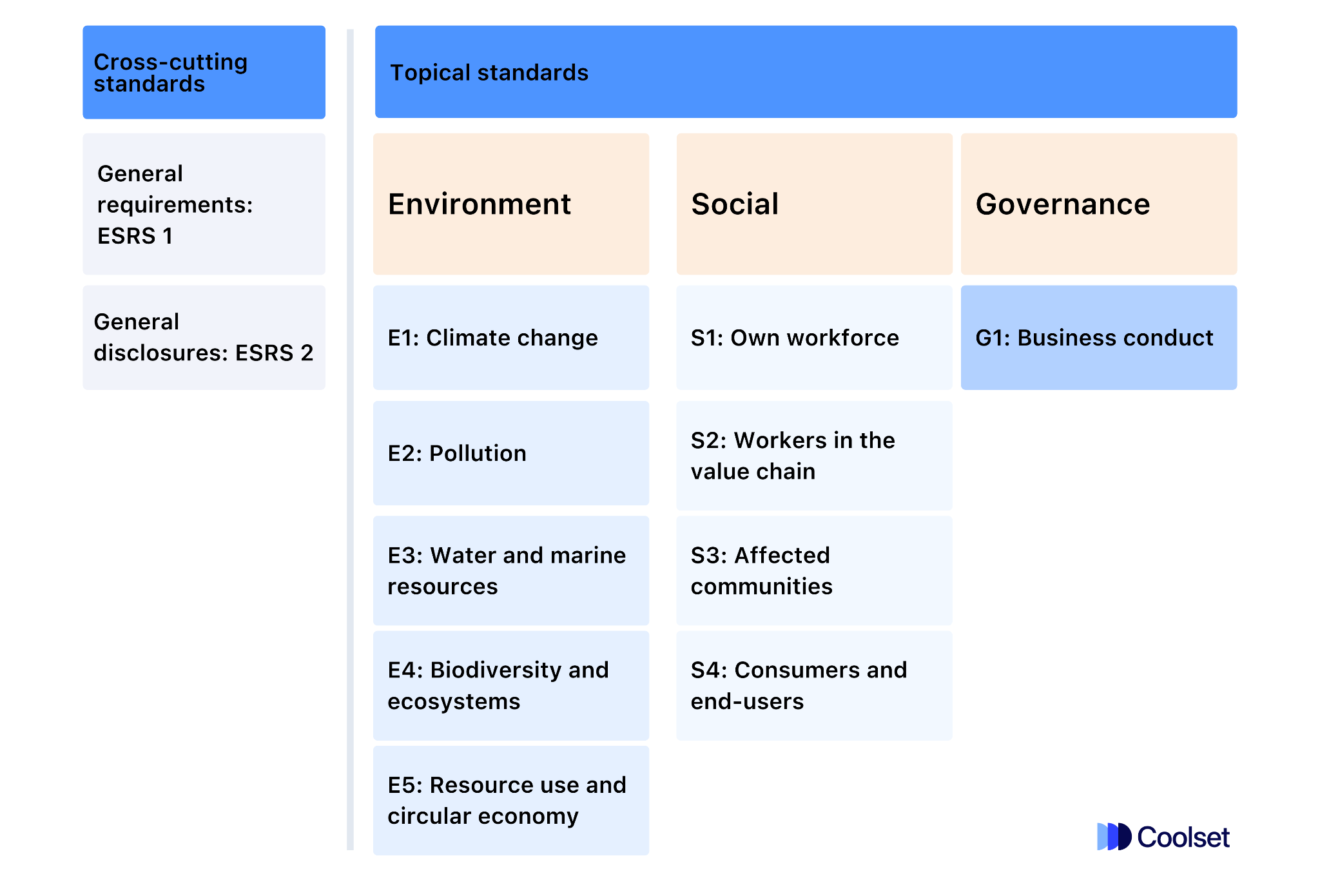
Lastly, it’s important to be part of a diverse network of professionals as collaboration is essential."

## 5. Therese Wesström

<figure><img alt="" loading="lazy" src="https://cdn.prod.website-files.com/63c7e16529317f2df4140ec0/699c5720127bd29d2d7de77e_683ff2383e9a4bb2eab12f75_66012e3ed642185123207600_Therese%252520Wesstro%2525CC%252588m%252520-%252520AS.webp" decoding="async" /></figure>

### Profile at a glance

<ul><li><strong>Full name: </strong><a href="https://www.linkedin.com/in/theresewesstrom/" rel="noopener noreferrer">Therese Wesström</a></li><li><strong>Role</strong>: Sustainability Manager</li><li><strong>Company</strong>: <a href="https://nl.oriflame.com/about" rel="noopener noreferrer">Oriflame Cosmetics</a></li><li><strong>Experience</strong>: 9 years in sustainability</li><li><strong>HQ location</strong>: Schaffhausen, Switzerland</li><li><strong>Industry</strong>: Manufacturing &amp; production</li><li><strong>Company size</strong>: 2,000-10,000</li></ul>

### Driving climate targets forward

From a climate consultant at South Pole to working with FIFA to estimate the climate impact of the 2018 FIFA World Cup in Russia, Therese has always focused her career on reducing environmental impact.

More recently as Sustainability Manager at Oriflame Cosmetics – a beauty product company founded in 1947 – Therese’s focus has remained the same: driving the company’s climate targets forward. 

As she explained: “I developed our current science-based targets and got them approved by SBTi. In 2023, I also worked on updating our renewable energy portfolio to achieve 100% renewable electricity worldwide.”

### Powering peace

When revising Oriflame Cosmetics’ renewable energy portfolio, Therese explained: “We decided to invest in a new kind of renewable energy credit which not only reduces fossil fuel dependency but also has a social impact and contributes to peacebuilding in vulnerable communities."

### Therese’s advice: Prioritize impact

For those just starting out their careers in sustainability, Therese suggests: "Focus your time on projects that can make the largest impacts. But remember to cater for your inner sustainability too."

## 6. Sybren Idzerda

<figure><img alt="" loading="lazy" src="https://cdn.prod.website-files.com/63c7e16529317f2df4140ec0/699c5721127bd29d2d7de7aa_683ff2383e9a4bb2eab12f51_66012e45d2c060aa6ed5a0b5_Sybren%252520Idzerda%252520-%252520AS.webp" decoding="async" /></figure>

### Profile at a glance:

<ul><li><strong>Full name: </strong><a href="https://www.linkedin.com/in/sybren-idzerda/" rel="noopener noreferrer">Sybren Idzerda</a></li><li><strong>Role</strong>: Technical Manager Product Sustainability</li><li><strong>Company</strong>: <a href="https://www.swisspearl.com/company" rel="noopener noreferrer">Swisspearl Group AG</a></li><li><strong>Experience</strong>: 2 years in sustainability</li><li><strong>HQ location</strong>: Niederurnen, Switzerland</li><li><strong>Industry</strong>: Construction &amp; real estate</li><li><strong>Company size</strong>: 1,001-2,000</li></ul>

### Identifying emission hotspots

Founded in 1894, Swisspearl is a family-owned fiber-cement company based in Switzerland.

As Technical Manager of Product Sustainability, Sybren has been responsible for the tough job of calculating the environmental footprint of fiber-cement products. He decided to undertake life cycle assessments (LCA) to work towards more sustainable processes.

“This enables us to <a href="https://www.coolset.com/academy/identify-emission-hotspots-in-growing-companies" rel="noopener noreferrer">identify 'hotspots'</a> in our products and can therefore help in considering where we have the most potential to improve our footprint. It also allows us to create Environmental Product Declarations (EPDs) in-house," he explained.

### ‘Design for Disassembly’

To support their goal of improving 'Design for Disassembly' of their products, Sybren recently implemented an innovative piece of technology:

“This is a fiber-cement board that uses a tongue and groove system to attach boards. It reduces the energy and time needed for assembly/disassembly and facilitates the recycling of the boards."

### Sybren’s advice: Stay in the know

Since starting his sustainability career two years ago, Sybren’s key takeaway is that the field is rapidly evolving. “It's crucial to stay informed about current happenings and consider how new initiatives could be applicable in your own organization as many could become mainstream in the near future."

## 7. Gabriele Pilger

<figure><img alt="" loading="lazy" src="https://cdn.prod.website-files.com/63c7e16529317f2df4140ec0/699c5721127bd29d2d7de78c_683ff2383e9a4bb2eab12f6c_66012e4db79d26a4d81ee390_Gabriele%252520Pilger-%252520AS.webp" decoding="async" /></figure>

### Profile at a glance

<ul><li><strong>Full name: </strong><a href="https://www.linkedin.com/in/gabriele-pilger-4aa6a985/" rel="noopener noreferrer">Gabriele Pilger</a></li><li><strong>Role</strong>: Senior Manager Sustainability Direction</li><li><strong>Company</strong>: <a href="https://www.adidas-group.com/en/about/profile/" rel="noopener noreferrer">adidas</a></li><li><strong>Experience</strong>: 7 years in sustainability</li><li><strong>HQ location</strong>: Herzogenaurach, Germany</li><li><strong>Industry</strong>: Sports and recreation</li><li><strong>Company size</strong>: 10,000+</li></ul>

### Deforestation-free supply chains

Producing 756 million pieces of apparel, footwear, accessories, and gear in 2023 alone, adidas is the largest sportswear manufacturer in Europe.

As Senior Manager of Sustainability Direction, Gabriele developed and led the Biodiversity strategy for adidas across different value chains, tackling possible deforestation as the first step.

“Under my leadership, adidas signed commitments towards deforestation-free supply chains for bovine leather and timber-related materials. In addition, the inclusion of biodiversity criteria to steer materials' strategy and the mapping of supply chains beyond Tier 3 for some of the commodities associated with deforestation risks."

### Cross-industry collaboration

Gabriele is a big believer in the power of cross-industrial collaboration with the food industry to boost transparency in supply chains such as bovine leather. “This strengthens and creates new partnerships among different stakeholders,” Gabriele explained.

### Gabriele’s advice: Get creative

For those looking to build a career in sustainability, Gabriele recommends: "Be creative and curious to find innovative solutions to overcome the diversity of challenges in sustainability. Learn how to communicate with different audiences because sustainability requires collaboration."

## 8. Ana Paz

<figure><img alt="" loading="lazy" src="https://cdn.prod.website-files.com/63c7e16529317f2df4140ec0/699c5720127bd29d2d7de768_683ff2383e9a4bb2eab12f5a_66012e59d67e07644f31ecf4_Ana%252520Paz%252520-%252520AS.webp" decoding="async" /></figure>

### Profile at a glance

<ul><li><strong>Full name: </strong><a href="https://www.linkedin.com/in/ana-paz--/" rel="noopener noreferrer">Ana Paz</a></li><li><strong>Role</strong>: Sustainability Reporting Manager</li><li><strong>Company</strong>: <a href="https://www.teliacompany.com/en/about-the-company" rel="noopener noreferrer">Telia Company</a></li><li><strong>Experience</strong>: 3 years in sustainability</li><li><strong>HQ location</strong>: Stockholm, Sweden</li><li><strong>Industry</strong>: Information technology and software</li><li><strong>Company size</strong>: 10,000+</li></ul>

### Preparing for a new era of sustainability reporting

Serving 25 million customers across the Nordic and Baltic regions, Telia Company is a leading telecommunications company with over 170 years of experience.

As Sustainability Reporting Manager, Ana led the <a href="https://www.coolset.com/academy/csrd-eu-climate-regulation-explained" rel="noopener noreferrer">Corporate Sustainability Reporting Directive (CSRD)</a> implementation program for the company – a new European regulation requiring companies to report on their non-financial sustainability information. As Ana explained:

“This project is made up of smaller projects which include the development of the company's <a href="https://www.coolset.com/academy/double-materiality-assessment" rel="noopener noreferrer">double materiality assessment</a>, a gap assessment in comparison to CSRD, as well as supporting in the closure of gaps. My role has been to define and coordinate an approach to integrate CSRD in collaboration with various stakeholders across the company."

### Ana’s advice: Stay attentive and speak up

How to build a career in sustainability? Ana’s advice is to "Keep your ears open to hear and understand your stakeholders, use your voice to educate and integrate and keep your head high so you can see the goals you are to meet. It’s an empowering and sometimes challenging journey to take, but it is also the right time."

## 9. Iacopo Russo

<figure><img alt="" loading="lazy" src="https://cdn.prod.website-files.com/63c7e16529317f2df4140ec0/699c5720127bd29d2d7de76b_683ff2383e9a4bb2eab12f7b_66012e604ccee8cb203ac10b_Iacopo%252520Russo%252520-%252520AS.webp" decoding="async" /></figure>

### Profile at a glance

<ul><li><strong>Full name: </strong><a href="https://www.linkedin.com/in/iacopo-maria-russo/" rel="noopener noreferrer">Iacopo Russo</a></li><li><strong>Role</strong>: Global Sustainability Senior Manager</li><li><strong>Company</strong>: <a href="https://www.emerson.com/en-us/about-us" rel="noopener noreferrer">Emerson</a></li><li><strong>Experience</strong>: 2 years in sustainability</li><li><strong>HQ location</strong>: St Louis, Missouri, USA</li><li><strong>Industry</strong>: Manufacturing &amp; production</li><li><strong>Company size</strong>: 10,000+</li></ul>

### Turning global targets into local action

With more than 130 years of history, Emerson has grown from a manufacturer of electric motors and fans to a global technology solutions powerhouse.

As Global Sustainability Senior Manager, last year Iacopo launched Emerson's Global Green Teams Network – 120 “green teams” around the world working to turn Emerson’s global sustainability targets into local action. As Iacopo explained:

“I established and now lead a Green Teams Council to share best practices and engage employees on projects that impact our <a href="https://www.coolset.com/academy/scope-1-2-and-3-emissions-navigating-climate-jargon" rel="noopener noreferrer">Scope 1, 2, and 3 emissions</a> as well as waste management. 

For Earth Day, I led a campaign that engaged over 4,200 Emerson employees in 59 countries to participate in a month-long online competition called Ecochallenge to implement more sustainable behaviors.”

### Driving sustainable investments

Iacopo shared many innovative approaches he introduced to enhance sustainability. For instance, implementing an internal carbon pricing policy and improving the design of Emerson’s products and packaging.

“We regularly collaborate with academic partners such as the University of Cambridge to design and implement decarbonization roadmaps, including better measurement and estimation of emissions, and modeling of future emissions. We have also improved the sustainable design of our products and packaging,” Iacopo explained. 

### Iacopo’s advice: Simplify challenges

For those new to sustainability, Iacopo believes learning the science behind climate change, emissions, and nature change is a crucial first step. “Focus on winning hearts and minds, and learn how to simplify complex problems into actionable tasks. Be pragmatic but don't forget your ideals.”

## 10. Taline Dekermenjian

<figure><img alt="" loading="lazy" src="https://cdn.prod.website-files.com/63c7e16529317f2df4140ec0/699c572050d3575df044859b_683ff2383e9a4bb2eab12f60_66012e6d85c1d2661dbdabb5_Taline%252520Dekermenjian%252520-%252520AS.webp" decoding="async" /></figure>

### Profile at a glance:

<ul><li><strong>Full name: </strong><a href="https://www.linkedin.com/in/taline-dekermenjian-63756192/" rel="noopener noreferrer">Taline Dekermenjian</a></li><li><strong>Role</strong>: Global Sustainability Program Manager</li><li><strong>Company</strong>: <a href="https://www.bekaert.com/en/" rel="noopener noreferrer">Bekaert</a></li><li><strong>Experience</strong>: 5 years in sustainability</li><li><strong>HQ location</strong>: Zwevegem, Belgium</li><li><strong>Industry</strong>: Manufacturing &amp; production</li><li><strong>Company size</strong>: 10,000+</li></ul>

### Prioritizing energy efficiency

Founded in Belgium in 1880, Bekaert is a technology leader in steel wire transformation and coating operating in 45 countries. As Global Sustainability Program Manager, Taline has been leading Bekaert’s global energy efficiency program – one of the key levers set to reduce the company’s Scope 1 and Scope 2 emissions worldwide. 

As Taline explained: “Since 2021, we've implemented transformation waves in 16 of our plants; through which we've identified, so far, energy savings potential of approximately 11% by 2030 (vs. Bekaert's 2019 baseline)."

By the end of 2022, Bekaert had achieved a -7.8% decrease in Scope 1 &amp; 2 GHG emissions, compared to 2019. For more in-depth information, refer to <a href="https://bekaertcomprod.blob.core.windows.net/custom/Bekaert-Annual-Report-2022.pdf" rel="noopener noreferrer">Bekaert's Integrated Annual Report 2022</a>. The company has also trained over 10,000 employees worldwide on the importance of sustainability.

### Tech-driven innovation

Alongside Taline's spearheading of Bekaert's global energy efficiency program, the company also has an in-house team focused on implementing renewables on-site, such as solar PV systems and wind turbines. Additionally, the company is also working to upgrade its production equipment to improve energy efficiency.

“Our in-house engineers and experts are always exploring ways towards more innovative operations such as electrification wherever viable, digitalization and automation, modification of certain processes to eliminate process steps that would ultimately reduce energy consumption or that would eliminate hazardous materials."

### Taline’s advice: Sustainability is a way of living

Taline believes sustainability is not just a career choice but rather a way of living. “It's best to keep focused on the end goal and keep in mind that every action, regardless of how small, makes an impact, and together, all these actions would ultimately foster positive change."

## 11. Jenny Lagergren

<figure><img alt="" loading="lazy" src="https://cdn.prod.website-files.com/63c7e16529317f2df4140ec0/699c5721127bd29d2d7de795_683ff2383e9a4bb2eab12f63_66012e76b90dcd496fd91cf5_Jenny%252520Lagergren%252520-%252520AS.webp" decoding="async" /></figure>

### Profile at a glance

<ul><li><strong>Full name: </strong><a href="https://www.linkedin.com/in/jennyveronicalagergren/" rel="noopener noreferrer">Jenny Lagergren</a></li><li><strong>Role</strong>: Sustainability Manager</li><li><strong>Company</strong>: <a href="https://www.estrella.se/" rel="noopener noreferrer">Estrella AB</a></li><li><strong>Experience</strong>: 5 years in sustainability</li><li><strong>HQ location</strong>: Gothenburg, Sweden</li><li><strong>Industry</strong>: Food &amp; beverage services</li><li><strong>Company size</strong>: 201-1,000</li></ul>

### Local purpose-driven partnerships

Owned by the Intersnack Group, Estrella AB has been making beloved popcorn, chips, and salted snacks since 1957. As Estrella's Sustainability Manager, building partner collaborations is an important part of Jenny’s role and the company’s social responsibility. 

“In 2024, Estrella was the official partner to the Gothia Cup: the world's largest football cup for young people with participants from all corners of the world,” shared Jenny. Together, they selected Equaity as the sustainability goal and focus of the collaboration. 

Jenny shared insights from a survey among participants: “73% of players shared they have at some point thought about quitting football, but 100% of respondents answered they will continue to play in the coming years. Many have also developed as players with 89% sharing that the Gothia Cup influenced their view of sport.”

### The power of collaboration

Jenny believes in the power of collaboration to spark social innovation, technological advancements, and industrial symbiosis to lower the company’s climate impact. 

“As a company and as a business, we are in the middle of a long chain of impacts, and we are never stronger than the weakest link! We are part of the food production of the future, where I see a mix of food-tech and back-to-basics. We need to dare to test new innovat


---

# How to get audit-ready for CSRD (in 7 simple steps)

Get audit-ready for CSRD in 7 simple steps: Understand regulations, assess data, report findings, and simplify with CSRD compliance software.

Author: Anna Kuppel
Published: 2024-04-26
Source: https://www.coolset.com/academy/csrd-compliance-audit

##### Key takeaways

<ul><li>CSRD reports must undergo third-party limited assurance, requiring traceable data, documented methodologies and a clear audit trail across all material ESRS disclosures.</li><li>Audit readiness starts with the <a href="https://www.coolset.com/academy/double-materiality-assessment" rel="noopener noreferrer">double materiality assessment</a> and extends to evidence management, internal controls and segregation of duties across data collection teams.</li><li><a href="https://www.coolset.com/csrd" rel="noopener noreferrer">Coolset's CSRD platform</a> centralizes sustainability data with linked evidence sources and built-in audit trails, reducing assurance preparation time and cost.</li></ul>

If your business is among the over 71,000 impacted by the EU's <a href="https://www.coolset.com/academy/csrd-eu-climate-regulation-explained" rel="noopener noreferrer">Corporate Sustainability Reporting Directive (CSRD)</a>, preparing for a CSRD audit is a critical step. The CSRD requires companies to submit their sustainability information for limited assurance from an auditor, with plans to move toward reasonable assurance over time. Getting audit-ready means building the documentation, processes, and data quality that auditors will assess.

This guide walks through the key elements of CSRD audit preparation.

## What auditors will look for

Under CSRD, your sustainability statement must be assured by an accredited third-party auditor. Auditors assess whether your disclosures comply with the applicable European Sustainability Reporting Standards (ESRS) and are free from material misstatement. Key areas of focus include:

<ul><li>The completeness and accuracy of your double materiality assessment</li><li>Data quality and traceability for all reported metrics</li><li>Consistency between your sustainability statement and other parts of the annual report</li><li>Internal processes and controls for data collection and validation</li></ul>

## Building an audit-ready evidence trail

The most important thing you can do to prepare for a CSRD audit is build a traceable evidence trail for every data point you report. This means being able to answer: where did this number come from, who provided it, when, and how was it calculated?

For carbon emissions, this means linking each emission figure to its source data (energy invoices, supplier data, travel records), the emission factor used, and the calculation methodology. For social metrics, it means having documented policies, HR data extracts, and verification of the numbers reported.

Coolset's platform is designed with audit readiness in mind. Every data point entered into the system is linked to its source and calculation logic, creating the kind of traceable evidence trail that <a href="https://www.coolset.com/academy/the-amended-esrs-what-has-changed-and-what-it-means-for-2026-csrd-reporting" rel="noopener noreferrer">ESRS reporting</a> requires.

## The role of your double materiality assessment

Your DMA is the foundation of your CSRD report. Auditors will examine whether it was conducted in accordance with ESRS 1 requirements and whether the topics you've identified as material are consistent with the disclosures you've made (or excluded). A well-documented DMA is essential for audit readiness.

## Common audit preparation mistakes

Companies that struggle with CSRD audits typically make one or more of these mistakes:

<ul><li>Collecting data in spreadsheets without version control or audit trails</li><li>Failing to document the methodology behind key calculations</li><li>Not involving auditors early enough in the process</li><li>Treating the DMA as a one-time exercise rather than a living document</li><li>Inconsistencies between the sustainability statement and the financial report</li></ul>

## Working with finance teams on CSRD preparation

Finance teams play a key role in CSRD audit preparation, especially for metrics that overlap with financial reporting. Building alignment between your sustainability team and finance early will make the audit process significantly smoother.

## How Coolset supports CSRD audit readiness

Coolset is purpose-built for CSRD audit readiness. The platform provides structured data collection, linked evidence, XBRL export, and full audit trails across Scope 1-3 emissions and ESRS disclosures. <a href="https://www.coolset.com/request-demo" rel="noopener noreferrer">Book a demo</a> to see how it works.


---

# How to audit-proof your greenhouse gas assessment (according to the GHG Protocol)

In this blog post, we'll outline the importance of auditing your GHG assessment, explain the implications under the Corporate Sustainability Reporting Directive (CSRD), and provide a step-by-step guide on how to prepare your GHG inventory for a third-party audit.

Author: Anna Kuppel
Published: 2024-04-19
Source: https://www.coolset.com/academy/audit-proof-greenhouse-gas-assessment

##### Key takeaways

<ul><li>An independent GHG audit adds credibility to your emissions data and is mandatory under the <a href="https://www.coolset.com/academy/csrd-eu-climate-regulation-explained" rel="noopener noreferrer">CSRD</a>, which requires limited assurance on sustainability reports.</li><li>Audit-proofing requires identifying all Scope 1-3 sources, gathering accurate data, calculating emissions per GHG Protocol standards and verifying quality with a pedigree matrix.</li><li><a href="https://www.coolset.com/scope-1-2-3" rel="noopener noreferrer">Coolset's carbon accounting platform</a> ensures GHG Protocol-compliant data collection, consistent emission factors and audit-ready documentation.</li></ul>

Starting your journey toward net zero or any environmental goal requires a detailed inventory of your <a href="https://www.coolset.com/csrd-glossary/greenhouse-gases-ghg" rel="noopener noreferrer">greenhouse gas</a> (GHG) emissions. This entails measuring your organization's carbon footprint across three categories of emissions that the Greenhouse Gas Protocol established – Scope 1, Scope 2, and Scope 3 – in line with established reporting standards.

Whether it's conducting a GHG assessment for the first time or improving existing practices, companies often struggle with where to start. Many organizations lack the internal expertise, tools, or guidance to conduct a thorough and reliable GHG assessment. Others don't know which framework to follow, who to involve, or what level of detail is needed to pass third-party audits.

In this article, we walk you through a step-by-step process for building an audit-proof GHG assessment – one that is accurate, traceable, and ready for assurance review.

## Step 1: Understand the purpose of your GHG assessment

Before collecting any data, it's important to understand why you're conducting the assessment. This shapes the scope of your work.

For most companies in the EU, the most immediate driver is the <a href="https://www.coolset.com/academy/csrd-eu-climate-regulation-explained" rel="noopener noreferrer">Corporate Sustainability Reporting Directive (CSRD)</a>, which mandates comprehensive sustainability reporting including climate-related disclosures. But other drivers include investor requests, supply chain due diligence, internal net-zero targets, or pre-emptive compliance with standards like the GHG Protocol.

Understanding your purpose helps you make scoping decisions: which organizational entities to include, whether to report on all three scopes, and what level of accuracy is expected.

## Step 2: Choose the right reporting framework

The most widely used framework for GHG accounting is the <a href="https://www.coolset.com/academy/ghg-protocol" rel="noopener noreferrer">Greenhouse Gas Protocol (GHG Protocol)</a>, which is aligned with reporting standards like the CSRD's ESRS E1. This framework defines Scope 1, 2, and 3 emissions and establishes the principles of relevance, completeness, consistency, transparency, and accuracy.

Aligning to the GHG Protocol is essential if you want your results to be auditable. It provides the standard definitions, emission factor sources, and documentation requirements that auditors will expect.

## Step 3: Set your organizational boundary

Decide which legal entities, sites, or subsidiaries are included in the assessment. The GHG Protocol offers two approaches:

<ul><li><strong>Equity share</strong>: Include emissions proportional to your equity stake in each entity</li><li><strong>Control approach</strong>: Include 100% of emissions from entities you operationally or financially control</li></ul>

The control approach is most common and aligns well with CSRD reporting requirements. Document your boundary clearly – auditors will want to understand what was included and why.

## Step 4: Define the operational boundary (Scope 1, 2, 3)

Once your organizational boundary is set, define the operational scope:

<ul><li><strong>Scope 1</strong>: Direct emissions from sources you own or control (company vehicles, on-site fuel combustion)</li><li><strong>Scope 2</strong>: Indirect emissions from purchased electricity, heat, or steam</li><li><strong>Scope 3</strong>: All other indirect emissions in your value chain, including purchased goods and services, business travel, and product use/disposal</li></ul>

For audit-readiness, you need to document why certain Scope 3 categories are included or excluded, particularly if you claim they're not relevant to your operations.

## Step 5: Collect emissions data across all scopes

Data collection is often the most time-consuming part of a GHG assessment. The key is to be systematic and document everything.

For Scope 1 and 2, gather energy bills, fuel receipts, and facility data. For Scope 3, you'll need supplier data, spend figures, logistics records, and employee commuting surveys, depending on the categories you're reporting on.

Where primary data (actual measurements from suppliers or operations) isn't available, you can use spend-based estimates or physical activity data combined with emissions factors from databases like <a href="https://www.exiobase.eu/" rel="noopener noreferrer">Exiobase</a>, <a href="https://ecoinvent.org/" rel="noopener noreferrer">Ecoinvent</a>, or the <a href="https://www.gov.uk/government/publications/greenhouse-gas-reporting-conversion-factors-2024" rel="noopener noreferrer">UK DEFRA</a> dataset.

Document the source of every figure: where did the number come from, what emission factor was applied, and how was it calculated. This documentation trail is critical for audits.

## Step 6: Apply emission factors correctly

Each activity data point is converted into CO2-equivalent (CO2e) emissions using an emission factor. These factors come from standardized databases and vary by region, energy source, or material type.

Common considerations:

<ul><li>Use market-based emission factors for Scope 2 where contractual instruments like renewable energy certificates are in place</li><li>Use location-based factors where contractual data isn't available</li><li>Ensure emission factors are specific to your region and year, as they are updated regularly</li><li>Document all factor sources – auditors will verify that appropriate, up-to-date factors were used</li></ul>

## Step 7: Validate data quality and run internal checks

Before finalizing your results, perform internal quality checks:

<ul><li>Cross-check energy data against invoices and meter readings</li><li>Verify that Scope 3 estimates are calculated correctly and that emission factors are applied consistently</li><li>Check that the sum of scopes aligns with your expected total footprint</li><li>Flag and document any data gaps or estimation assumptions</li></ul>

For audit readiness, it's important to be transparent about uncertainty. Auditors don't expect perfection – they expect documentation of your methodology, assumptions, and known limitations.

## Step 8: Prepare to handle prepare accounting for sustainability reporting

Accounting teams play a growing role in sustainability reporting – especially as the CSRD brings non-financial disclosures into the annual report. Understanding how to <a href="https://www.coolset.com/academy/finance-shouldnt-solve-sustainability-with-spreadsheets" rel="noopener noreferrer">integrate sustainability data into financial reporting processes</a> is increasingly important for companies preparing for assurance.

This includes aligning data governance, maintaining audit trails, and ensuring consistency between financial and sustainability disclosures.

## Step 9: Prepare for third-party assurance

An audit-proof GHG assessment needs to be verifiable by an external auditor. To prepare:

<ul><li>Organize data into a structured format with source references and calculation logic</li><li>Ensure clear ownership of each data point (who provided it, when, and from which system)</li><li>Document your materiality decisions and any emissions excluded from the scope</li><li>Prepare supporting documentation for material line items (e.g. utility bills, supplier invoices)</li></ul>

Under CSRD, limited assurance is required from 2025 onwards for Wave 1 entities, with a planned move to reasonable assurance by 2028. Third-party auditors will assess not just your numbers but your methodology and documentation.

## Using technology to streamline GHG assessments

Most companies that try to manage GHG assessments manually – in spreadsheets or disconnected systems – struggle with data quality, version control, and audit trails. Purpose-built software like <a href="https://www.coolset.com/scope-1-2-3" rel="noopener noreferrer">Coolset</a> is designed to address these challenges directly.

Coolset helps companies collect, organize, and audit Scope 1, 2, and 3 data in a structured environment. With built-in emission factor libraries, data traceability, and CSRD-ready reporting, it significantly reduces the time and effort required to produce an audit-ready GHG assessment.

Ready to make your GHG assessment audit-proof? <a href="https://www.coolset.com/request-demo" rel="noopener noreferrer">Book a free demo</a> with our team to see how Coolset can support your sustainability reporting.


---

# Prepare your accounting for sustainability reporting in 5 simple steps

This article explores the most common methods to quantify emissions and shares 5 practical steps to ensure your accounting fits today’s sustainability reporting requirements.

Author: Anna Kuppel
Published: 2024-03-11
Source: https://www.coolset.com/academy/prepare-accounting-for-sustainability-reporting-reaqp

##### Key takeaways

<ul><li>Accurate <a href="https://www.coolset.com/academy/ghg-protocol" rel="noopener noreferrer">carbon accounting</a> starts with well-structured financial data, using clear ledger categories, vendor names and transaction descriptions to enable precise spend-based emissions calculations.</li><li>The spend-based method is the most practical approach for Scope 3 measurement, but accuracy depends on data granularity and consistent categorization across all business activities.</li><li><a href="https://www.coolset.com/scope-1-2-3" rel="noopener noreferrer">Coolset's carbon management platform</a> ingests financial data directly and applies verified emission factors for accurate Scope 1-3 reporting.</li></ul>

In today’s corporate world, the call for environmental responsibility has never been louder. For businesses, this means <a href="https://www.coolset.com/product/measure-your-emissions" rel="noopener noreferrer">keeping track of your environmental impact</a> is no longer an optional task, but a critical component of ensuring your company’s future.

Carbon accounting has quickly become the tool of choice for businesses looking to measure, manage, and reduce their carbon footprint. And in many countries, measuring carbon emissions is not just recommended – it’s enforceable by law for certain businesses.

While effective carbon accounting takes time and effort, getting it right can unlock numerous benefits. This article unpacks why carbon accounting matters, explores the most common methods to quantify emissions, and shares five practical steps to ensure your accounting fits today’s sustainability reporting requirements.

We’ve also thrown in a <a href="https://www.coolset.com/downloads/preparing-your-financial-data-for-sustainability-reporting" rel="noopener noreferrer">free, step-by-step guide</a> on how to set up your accounting so it can be used for carbon footprint mapping. So, let’s dive in.

## The importance of carbon accounting in sustainability reporting

With small and mid-market companies accounting for at least <a href="https://www.oecd.org/coronavirus/en/data-insights/sustainable-smes" rel="noopener noreferrer">50% of the business sector’s greenhouse gas (GHG) emissions</a>, businesses of today face immense pressure to reduce their carbon footprint. 

Customers, employees, investors, and regulators are demanding more transparent information on a company's carbon emissions. In Europe, regulations like the <a href="https://www.coolset.com/academy/csrd-eu-climate-regulation-explained" rel="noopener noreferrer">Corporate Sustainability Reporting Directive (CSRD)</a> are setting deadlines for EU businesses to report their environmental impact as early as 2025. 

But as the saying goes: “You can’t manage what you can’t measure.” And that’s where <strong>carbon accounting</strong> comes in – the process that enables businesses to quantify their emissions so they’re in a better position to manage them.

Besides being a key tool in the global fight against climate change, carbon accounting is good for business, too. From complying with regulations to boosting brand image, and cutting costs, it's a strategic move that helps you gain a competitive edge for years to come.

<figure><img alt="" loading="lazy" src="https://cdn.prod.website-files.com/63c7e16529317f2df4140ec0/69a87c72415c10b0b72f6d65_675c0cb0021cf88bc965d2e9_65ef078d8fac9b9b9cd34632_Konstantinos-quote-prepare-accounting-sustainability-reporting.webp" decoding="async" /></figure>

### The GHG protocol and carbon accounting 

The <a href="https://www.coolset.com/sustainability-glossary/greenhouse-gas-protocol" rel="noopener noreferrer">Greenhouse Gas Protocol (GHG Protocol)</a> is the world's most widely adopted carbon accounting standard. <a href="https://ghgprotocol.org/" rel="noopener noreferrer">Used by more than 9 out of 10 Fortune 500 companies</a> reporting to CDP, it’s the ‘gold standard’ for how to <a href="https://www.coolset.com/academy/audit-proof-greenhouse-gas-assessment" rel="noopener noreferrer">measure, manage, and report GHG emissions</a>.

## Effective carbon accounting 

Effective carbon accounting relies on accurate data collection and data processing. Here are some tips for getting it right:

<ul><li><strong>Gather comprehensive data</strong>: Make sure to collect data from <a href="https://www.coolset.com/academy/scope-1-2-and-3-emissions-navigating-climate-jargon" rel="noopener noreferrer">all three emission categories</a>. These include direct emissions from your own activities (Scope 1), indirect emissions from purchased electricity (Scope 2), as well as <a href="https://www.coolset.com/academy/best-scope-3-reporting-software-tools" rel="noopener noreferrer">indirect emissions from your value chain (Scope 3)</a>.</li><li><strong>Choose the right methodology</strong>: Pick a carbon accounting method based on your company’s unique needs, resources, and objectives (more on this soon).</li><li><strong>Take advantage of specialized tools</strong>: Enhance the accuracy and speed of your carbon accounting efforts by using carbon accounting software like <a href="https://www.coolset.com/" rel="noopener noreferrer">Coolset</a>.</li></ul>

### Three carbon accounting methods for measuring emissions

There are three main carbon accounting methods: Spend-based, activity-based, and a hybrid approach that combines the two. Here’s a breakdown:

#### 1. Spend-based methodology

The spend-based approach is an indirect way to estimate emissions based on the amount of money a company spends on goods and services. It translates financial expenditures into GHG emissions by applying emission factors – representative values that quantify the environmental impact of products and processes. 

For example, let’s say your company spends €50,000 on flights. If the emissions factor for flights averages 0.25 kg CO2e per euro spent, the total emissions from company flights would be €50,000 * 0.25 kg CO2e = 12,500 kg CO2e.

It’s a simple yet reliable starting point for small to mid-market companies looking to understand their carbon footprint.

#### 2. Activity-based methodology

The activity-based method relies on granular emissions data tied to specific business activities. For instance, the emissions associated with the energy consumption of your facility. 

Although this approach requires more time, resources, and detailed data collection, it can provide a highly accurate picture of your carbon footprint. It’s a good fit for larger companies with complex operations.

#### 3. Hybrid methodology

The hybrid approach combines both the spend- and activity-based methodologies. It’s a balanced approach that uses financial data to estimate emissions when activity data isn’t readily available or is too complex to gather. The approach is suitable for a variety of businesses and can offer a complete view of a company’s carbon footprint.

### The importance of spend-based carbon accounting within the GHG protocol

The spend-based method is particularly useful for calculating indirect emissions known as <a href="https://www.coolset.com/sustainability-glossary/scope-3-emissions" rel="noopener noreferrer">Scope 3 emissions</a> under the GHG Protocol. These are the indirect GHG emissions that occur along an organization’s value chain like the production and transportation of purchased goods and services, among other things.

Since these emissions usually make up the majority of many sectors’ carbon footprints – <a href="https://ghgprotocol.org/sites/default/files/2022-12/Scope%203%20Detailed%20FAQ.pdf" rel="noopener noreferrer">sometimes up to 90%</a> – accurately measuring and managing them is crucial for an accurate picture of your environmental impact.

Spend-based carbon accounting also makes it easier to identify emission hotspots and prioritize reduction strategies. Despite its benefits, its accuracy relies on the quality and completeness of financial data – and that’s where ledgers and vendors come in.

<aside>

<a href="https://www.coolset.com/product-tour-carbon-management" rel="noopener noreferrer">Explore the product tour</a>

</aside>

## The role of ledgers and vendors in carbon accounting

Accurate spend tracking is the key to getting a precise overview of your carbon footprint. One tried and tested approach is to organize financial data in a table format featuring columns for ledgers, vendors, and descriptions.

### Ledgers 

Ledgers are the category names you give to similar types of business activities. By being specific with these categories, you can make it easier to identify and classify carbon-related expenses. 

For example, rather than lumping everything under a broad category like ‘Expenses,’ it’s more effective to break them down into descriptive labels like ‘Office supplies’ or Corporate travel - Air.’

### Vendors 

Vendors refer to the suppliers of the goods or services you purchase—for example, KLM or Microsoft.

### Descriptions 

Adding a clear description helps you to understand the purpose of each transaction and any relevant environmental impact factors. For instance, instead of a vague description like ‘Travel expenses,’ include more detail like ‘Employee air travel from Amsterdam to Paris, Economy class.’

<aside>

### Download your free guide about accurate carbon accounting

Learn more about spend-based carbon accounting and its application within the GHG Protocol standards.

<a href="https://www.coolset.com/downloads/preparing-your-financial-data-for-sustainability-reporting" rel="noopener noreferrer">Download for free</a>

</aside>

## 5 steps to prepare your accounting for sustainability 

<figure><img alt="" loading="lazy" src="https://cdn.prod.website-files.com/63c7e16529317f2df4140ec0/69a87c72415c10b0b72f6d62_675c0cb0021cf88bc965d2e3_65ef14fa08f6da8c3231d7e3_How%252520to%252520prepare%252520your%252520accounting%252520for%252520sustainability%252520-%2525205%252520steps%252520(1).webp" decoding="async" /></figure>

‍

Preparing your accounting for sustainability reporting is crucial to ensure your information is accurate and aligns with the latest sustainability regulations. Here are five simple steps to get you started:

### 1. Identify gaps in sustainability reporting

Begin by reviewing your company’s current reporting practices to identify areas where environmental impact data is lacking. This could involve assessing how your business currently reports on things like energy consumption, waste management, supply chain, and other activities.

### 2. Determine KPIs

Establish Key Performance Indicators (KPIs) to address the reporting gaps identified in step one. This will make sure the company is on track to gather the data you need for an accurate view of your company’s carbon footprint. Plus, these KPIs will serve as benchmarks for measuring your progress.

### 3. Implement tools for tracking 

Take advantage of <a href="https://www.coolset.com/academy/top-carbon-accounting-software-tools" rel="noopener noreferrer">specialized carbon accounting tools</a> designed to make tracking sustainability metrics easier. These platforms empower organizations to accurately measure, analyze, and manage GHG emissions.

From detailed dashboards to automated reporting and compliance, solutions like <a href="https://www.coolset.com/request-demo" rel="noopener noreferrer">Coolset</a> are quickly becoming a must-have for businesses.

### 4. Engage stakeholders 

Carbon accounting and reduction is a team effort. Therefore, it’s important to actively involve stakeholders at all levels for feedback, support, and collaboration. This can cultivate a culture of sustainability throughout the business.

### 5. Create a sustainability report structure

From increasing ESG value to benchmarking your sustainability performance, adopting a structured approach to sustainability reporting has many benefits. 

The <a href="https://www.globalreporting.org/media/wtaf14tw/a-short-introduction-to-the-gri-standards.pdf" rel="noopener noreferrer">Global Reporting Initiative (GRI) standards</a> are a set of guidelines that help you structure your reports according to globally recognized, trusted standards. Used correctly, these standards ensure your reports cover all the key environmental, social, and economic impacts of your organization in a clear, accessible, and well-structured way. 

Make sure to use plain language in your reports and provide necessary context so it’s understandable to a broad range of readers. Adding visual aids like graphs, charts, and infographics can also help with clarity.

## Prepare your accounting for sustainability reporting today

Now you’ve got a good overview of what accounting for sustainability reporting involves, you’re probably wondering “How to get started?” Our <a href="https://www.coolset.com/downloads/how-to-prepare-your-accounting-for-sustainability-reporting-dd" rel="noopener noreferrer">free downloadable guide</a> covers the essential steps to align your accounting practices with today’s sustainability reporting requirements.

## Automate sustainability reporting with Coolset 

Looking to streamline your sustainability reporting? Coolset is here to simplify your carbon accounting process with automated, insightful sustainability reports that comply with global standards. <a href="https://www.coolset.com/request-demo" rel="noopener noreferrer">Talk to one of our experts</a> for advice on how to simplify sustainability measurements, improvements and compliance today.


---

# How to spend more time on carbon reduction (and less on analysis & reporting)

Carbon reduction plans often fall short. This article explores the key challenges and shares meaningful tips on dealing with data complexities effectively. Gain actionable tips and strategies to help your business reduce its carbon footprint, today.

Author: Anna Kuppel
Published: 2024-02-19
Source: https://www.coolset.com/academy/spend-more-time-on-carbon-reduction

##### Key takeaways

<ul><li>Most carbon reduction plans fail because emissions data is scattered across siloed systems, making analysis slow, inconsistent and error-prone when managed with spreadsheets.</li><li>Decarbonization software centralizes data from all sources, automates <a href="https://www.coolset.com/academy/scope-1-2-and-3-emissions-navigating-climate-jargon" rel="noopener noreferrer">Scope 1-3 measurement</a> and delivers actionable insights to prioritize reduction efforts.</li><li><a href="https://www.coolset.com/scope-1-2-3" rel="noopener noreferrer">Coolset's carbon management platform</a> automates emissions tracking, identifies hotspots and helps mid-market companies build effective reduction plans faster.</li></ul>

<a href="https://www.coolset.com/product/build-a-carbon-reduction-plan" rel="noopener noreferrer">Carbon reduction</a> remains a major roadblock for many businesses, with even some of the world's biggest names failing to achieve their promised targets. 

<a href="https://newclimate.org/resources/publications/corporate-climate-responsibility-monitor-2023" rel="noopener noreferrer">Research from the NewClimate Institute</a> revealed that despite net-zero pledges, 22 major multinational companies from Amazon to Nestlé are only on track to reduce a median of 15-21% of their full value chain emissions between 2019 and 2030.

This issue highlights an urgent problem, not just for these global players, but for businesses at every level. For many, the journey towards meaningful carbon reduction often gets overshadowed by endless data collection and analysis – sidelining the real work of implementing sustainable changes.

This article explores these challenges in more detail, reminds us why carbon reduction is worth the effort, and offers lots of useful tips and strategies to help your business reduce its carbon footprint – starting today.

## Why most carbon reduction plans fail to meet their goals

Despite the best intentions, carbon reduction often hits a roadblock when businesses face the overwhelming task of managing scattered and inconsistent emissions data. 

### Carbon emissions data analysis can take ages

In many organizations, carbon emissions data is scattered across numerous departments and systems. 

You've got your energy management system tracking energy used by facilities and operations. Your supply chain management system logging emissions from your supply chain activities. Your travel and logistics platform documenting emissions from corporate travel, logistics, and transportation. Your financial system keeping tabs on energy costs and carbon offset purchases…

As you can see, with so many siloed systems using different metrics, formats, and reporting standards, getting a precise understanding of your company's carbon footprint is a massive undertaking. 

In reality, most companies simply don't have the capabilities to manage data analysis on their own effectively. 

A <a href="https://www.tcs.com/what-we-do/services/cloud/microsoft/white-paper/supply-chain-decarbonization-missing-link-net-zero" rel="noopener noreferrer">recent study</a> by Microsoft and Tata Consultancy Services (TCS) found that around 80% of the businesses surveyed admitted to failing to disclose operational emissions targets, as well as lacking the means to develop decarbonization initiatives throughout their supply chains.

The culprit? It often comes down to poor data management and using crude spreadsheets to track emissions.

#### How to overcome the challenge

There are plenty of ways to make data collection, analysis, and reporting more manageable:

<ul><li><strong>Use a centralized data management</strong> tool like <a href="https://www.coolset.com/product/measure-your-emissions" rel="noopener noreferrer">Coolset</a> that integrates data from various sources to give you a unified view of your emissions.</li><li><strong>Automate data collection and reporting</strong> to reduce the manual effort required and minimize the chance of errors.</li><li><strong>Standardize how data is measured, recorded, and reported</strong> within your company to simplify the analysis process.</li><li><strong>Partner with external experts</strong> who specialize in carbon data management to help you gather, analyze, and act on your emissions data.</li></ul>

### Not all datasets are created equal

Even after collecting data from every nook and cranny of your business, making sure that data is accurate, detailed, and relevant is a whole other story.

For many businesses, inconsistency in the quality of emissions data can cause major issues. Some data may be up-to-date and detailed, providing <a href="https://www.coolset.com/academy/audit-proof-greenhouse-gas-assessment" rel="noopener noreferrer">clear insights into specific areas of carbon outputs</a>. Other datasets may be outdated, incomplete, or lack the granularity for a detailed analysis.

This can cause big headaches, <a href="https://www.coolset.com/academy/finance-shouldnt-solve-sustainability-with-spreadsheets" rel="noopener noreferrer">especially for finance teams</a>, as they must spend even more time verifying if the data is accurate and seeking out more reliable sources of information. 

Not only can delay proper analysis but it can also put a halt to any decision-making. Or worse, increase the risk of investing in initiatives that do more harm than good.

Because after all, without quality data, it's impossible to develop effective carbon reduction strategies.

#### How to overcome the challenge

Here are some strategies your business can implement to address the variability in data quality: 

<ul><li><strong>Conduct regular data quality assessments</strong> to identify any gaps and take steps to address them. This could involve improving your data collection methods or sourcing more reliable data.</li><li><strong>Use data verification tools</strong> to help you identify any discrepancies in your emissions data.</li><li><strong>Educate your employees</strong> on the importance of high-quality data collection and reporting methods. Make sure to provide training on best practices.</li><li><strong>Work closely with your supply chain partners</strong> to make sure they can give you the accurate and detailed emissions data you need. This could mean encouraging the use of data quality standards.</li></ul><aside>

### Automate carbon management with Coolset's scope 1, 2 and & 3 calculation software.

Coolset's software ensures short onboarding times and audit-proof scope 1, 2 &amp; 3 reports.

<a href="https://www.coolset.com/request-demo" rel="noopener noreferrer">Get in touch</a>

</aside>

## Why reduce your business's carbon emissions, anyway

Before you toss the idea of carbon reduction in the "too hard" pile, let's take a moment to remember why we're doing it in the first place. Besides the clear environmental imperative, there are plenty of ways carbon reduction can be good for your business, too.

### Saving the planet

Did you know that mid-market companies are behind a whopping <a href="https://ec.europa.eu/newsroom/ener/newsletter-archives/42887" rel="noopener noreferrer">64% of industrial pollution in Europe</a>? By reducing your carbon footprint, you can start to chip away at some of the harsh effects of climate change.

### Saving costs on hiring

The results are in: Today's employees are drawn to companies that care about the planet. According to a study by <a href="https://www.ibm.com/thought-leadership/institute-business-value/en-us" rel="noopener noreferrer">IBM's Institute for Business Value (IBV)</a>, 67% of respondents are more willing to work for companies that prioritize environmental sustainability.

### Saving costs in general 

Diving into carbon reduction often means giving your business processes a makeover. From decreasing your energy consumption to reducing your reliance on fossil fuels, these changes tend to bring about better efficiency and, you guessed it, lower costs.

Plus, implementing carbon reduction initiatives can also make you eligible for some nice government grants and incentives, too. Check out PwC's <a href="https://incentivesscanner.pwc.be/landing" rel="noopener noreferrer">Government Incentives Scanner</a> to see which incentives apply to your business.

### Saving yourself from fines 

Governments around the world are getting stricter when it comes to environmental regulations. In 2022, for example, <a href="https://data.gov.uk/dataset/13c0893a-049a-4608-9f9b-7f268a71f15a/climate-change-civil-penalties" rel="noopener noreferrer">more than 30 UK companies got slapped with fines</a> for under-reporting emissions, failing to reduce energy use, and leaving energy audits incomplete. 

In Europe, the <a href="https://www.coolset.com/academy/csrd-eu-climate-regulation-explained" rel="noopener noreferrer">Corporate Sustainability Reporting Directive (CSRD)</a> is now in effect, mandating more than <a href="https://eur-lex.europa.eu/legal-content/EN/TXT/HTML/?uri=PI_COM:Ares(2023)6193431" rel="noopener noreferrer">71,000</a> companies to report on their environmental impact as early as 2024! With potential fines looming, it's wise to <a href="https://www.coolset.com/academy/csrd-eu-climate-regulation-explained" rel="noopener noreferrer">start thinking about compliance</a> as soon as possible. 

## Growing companies: here's how you make carbon reduction work

Here are some simple ways to achieve carbon reduction success – no matter your company's size.

## 5 ways to reduce your mid-market company's carbon footprint

### 1. Adopt renewable energy

Tapping into renewable energy sources like solar, wind, or hydropower can cut down your carbon emissions drastically. From installing solar PV panels or wind turbines to switching to a green energy provider, you can reduce your reliance on fossil fuels and save on energy costs in the long term.

### 2. Improve energy efficiency

Did you know that simply switching to LED lighting can help your business slash its electricity use for lighting by <a href="https://www.forbes.com/sites/ciocentral/2013/02/14/leds-lighting-the-way-to-major-energy-savings-2/" rel="noopener noreferrer">up to 80%</a>? Even the simple act of updating your appliances, implementing a smart energy system, or motivating employees to turn off their screens before leaving the office can make a big impact.

### 3. Use sustainable transportation

Choosing greener modes of transport is a key step in lowering your carbon emissions. Think about investing in electric vehicles for your company fleet, encouraging carpooling, or even offering perks for biking or using public transport.  
  
Limiting <a href="https://www.coolset.com/academy/creating-carbon-reduction-plan" rel="noopener noreferrer">business travel</a> by plane to essential trips only is also wise. Could you meet virtually or choose a destination accessible by train instead? These simple choices can cut down emissions, save costs, and support a healthier planet.

### 4. Reduce and recycle your waste

Adopting eco-friendly practices like <a href="https://www.coolset.com/csrd-glossary/waste-management" rel="noopener noreferrer">minimizing waste</a>, launching a recycling program, or opting for reusables over single-use items can reduce your environmental impact substantially. 

With <a href="https://www.forbes.com/sites/solitairetownsend/2018/11/21/consumers-want-you-to-help-them-make-a-difference/" rel="noopener noreferrer">88% of US and UK consumers</a> choosing brands that make it easier for them to make environmentally friendly choices on a daily basis, these actions also help you draw in more customers.

### 5. Use the right decarbonization software

Simply put, using decarbonization software is the simplest way to fast-track your carbon reduction success. 

<a href="https://media-publications.bcg.com/BCG-Technology-Is-the-Fast-Track-to-Net-Zero.pdf" rel="noopener noreferrer">BCG's Carbon Emissions Survey Report 2022</a> found that organizations with automated digital solutions for emissions measurement are 2.2 times more likely to measure emissions comprehensively and 1.9 times more likely to reduce emissions in line with their ambitions.

Here's what to look for when choosing a tool:

<ul><li>Complete data integration</li><li>User-friendly interface</li><li>Flexible reporting options</li><li>Actionable insights</li><li>Scalability</li><li>Regulatory compliance</li><li>Support and resources</li><li>Strong data security measures</li><li>Compatibility with existing systems</li><li>Sustainability credentials</li></ul>

## How decarbonization software helps you make the right decisions, faster

Decarbonization software simplifies the process of analyzing your carbon footprint by pulling together data from various sources and offering actionable insights. 

It enables you to quickly identify areas with high emissions so you can implement effective reduction strategies in the right places – saving you time and boosting your environmental efforts. 

And best of all, it replaces those outdated, error-prone data collection methods (like spreadsheets) with a sleeker, more reliable, and automated system. But don't wait too long to make the switch. Failing to embrace this new technology could put you at risk of falling behind in terms of competitiveness, compliance, and future readiness.

Ready to kickstart your company's carbon reduction journey? <a href="https://www.coolset.com/" rel="noopener noreferrer">Coolset</a> is here to help. Our user-friendly platform makes it easier than ever to measure, manage, and reduce your carbon emissions. Want to see how it works? <a href="https://www.coolset.com/request-demo" rel="noopener noreferrer">Schedule a free demo today</a> and take a meaningful step towards a more sustainable future for your business.


---

# Effective sustainability communication: a guide to honest and effective messaging

This guide highlights the necessity of transparent and factual sustainability communication in business, offering strategies to avoid greenwashing and genuinely connect with consumers.

Author: Jasper Akkermans
Published: 2024-01-16
Source: https://www.coolset.com/academy/effective-sustainability-communication

##### Key takeaways

<ul><li>Effective sustainability communication must be honest, specific and backed by quantifiable data to avoid greenwashing and build stakeholder trust.</li><li>The EU's new anti-greenwashing law (effective late 2025) bans generic environmental claims, making <a href="https://www.coolset.com/academy/decarbonization-certifications-mid-market-companies" rel="noopener noreferrer">third-party verification</a> of sustainability claims essential.</li><li><a href="https://www.coolset.com/request-demo" rel="noopener noreferrer">Coolset</a> provides verified emissions data and audit-ready sustainability reports to support credible, evidence-based communication.</li></ul>

In recent years, businesses have increasingly started focusing on integrating sustainable practices into their business models. This shift is reflected in the surge of green claims in advertising and marketing campaigns, highlighting a profound change in the way business is done.

While this market-driven change in supplier strategies is key in our collective efforts to <a href="https://www.coolset.com/sustainability-glossary/net-zero-emissions" rel="noopener noreferrer">reach net-zero</a> by 2050, it also raises the risk of greenwashing - the practice of making deceptive or unsupported claims about the sustainability of a product, service, or company, often to exploit the growing consumer interest in environmental responsibility.

One of the main drivers of green marketing is the ongoing change in consumer behaviour: when a product or service presents itself to be more sustainable than its competitors, it’s more likely to be purchased. 

In itself, this sign of the times is a very good thing. When market forces complement regulatory bodies, change is unstoppable.To assist your company in becoming a leading voice in sustainability communication, we've created this guide. 

We explain how to effectively communicate your sustainability initiatives, focusing on accuracy and detail, while also persuading your consumers of your genuine commitment to sustainability.

## Understanding the basics of sustainability in communications

Grasping the fundamentals of sustainability in communication is pivotal for any organization striving to be genuinely green. It begins with a clear understanding of what sustainability means in the context of your business and industry. 

This knowledge forms the backbone of all communication, ensuring that messages are not only accurate but also relevant to your specific operations and goals. 

The basics also involve being aware of the <a href="https://www.coolset.com/academy/three-pillars-of-sustainability" rel="noopener noreferrer">environmental, social, and economic dimensions</a> of sustainability, and how your business impacts or contributes to these areas. 

This comprehensive understanding is essential for creating messages that are genuinely reflective of your company’s sustainability efforts, rather than just echoing general eco-friendly sentiments.

## Be honest about your product or service; Don't mislead consumers

Honesty in sustainability communication is non-negotiable. Making false or exaggerated claims can quickly lead to accusations of greenwashing, damaging your brand's reputation and trustworthiness. When talking about your product or service, stick to the facts. 

If your product has certain sustainable features, highlight them, but also be transparent about areas where it may fall short. This transparency not only builds trust with your audience but also showcases a commitment to continuous improvement in sustainability.

It's also important to avoid vague or generic statements about sustainability. Phrases like 'eco-friendly' or 'green' are overused and can be misleading if not substantiated with specific information. Instead, provide clear, quantifiable data about how your product or service is sustainable. 

<a href="https://www.oatly.com/" rel="noopener noreferrer">Oatly</a>, a renowned producer of oat-based milk, exemplifies transparent sustainability communication by displaying the kilograms of CO2e emissions associated with each of its products. 

This initiative not only sets a new benchmark for sustainable product transparency but also aligns perfectly with their marketing strategy. 

By openly sharing this environmental impact data, Oatly has not only established itself as a leader in the plant-based milk market but has also demonstrated the power of honesty in fostering consumer trust and loyalty in a competitive industry.

## The art of effective messaging in sustainability

Effective messaging in sustainability is about crafting a narrative that connects with your audience on an emotional level while being anchored in facts. It’s about telling a story that goes beyond just the environmental benefits of a product or service, encompassing the broader impact on society and future generations, while not losing sight of the personal benefits. 

This narrative should be consistent across all platforms, whether it's in advertising, social media, or corporate reports, creating a cohesive and recognizable sustainability brand image.

Effective sustainability messaging is proactive rather than reactive. It anticipates the questions and concerns of the audience and addresses them head-on. This involves not only highlighting your successes but also acknowledging challenges and outlining plans for improvement. 

By being proactive, you can control the narrative around your sustainability efforts, setting the tone for open and honest communication. This approach not only enhances the credibility of your messages but also encourages engagement and dialogue, fostering a deeper connection with your audience.

## Staying ethical and credible

Greenwashing is avoidable; true sustainability starts with honest communication and real action. This begins with a commitment to authenticity in all your messaging. Every claim about sustainability should be backed by solid evidence and reflect actual practices or achievements. 

It's important to avoid overstating the impact of your actions or making broad claims that cannot be substantiated. This approach not only ensures compliance with advertising standards and regulations but also builds long-term trust with your stakeholders.

It's also vital to be mindful of the imagery and language used in your sustainability communications. Images that imply a greater environmental benefit than what is actually delivered can be misleading. 

Language should be clear, specific, and free of jargon that could obscure the true meaning of your messages. Regular audits of your sustainability claims, both internally and by <a href="https://www.coolset.com/academy/decarbonization-certifications-mid-market-companies" rel="noopener noreferrer">third parties</a>, can help ensure that your communications remain accurate and truthful. 

By rigorously checking the veracity of your claims, you demonstrate a commitment to ethical practices in both your operations and your communications.

## Future trends in sustainability communication

The future of sustainability communication is rapidly evolving, seen also through the changing policy landscape: Towards the end of 2023, the European Union passed a <a href="https://www.europarl.europa.eu/news/en/press-room/20230918IPR05412/eu-to-ban-greenwashing-and-improve-consumer-information-on-product-durability" rel="noopener noreferrer">new law</a> that will “ban greenwashing”. This means that “generic environmental claims and other misleading marketing tricks will be banned”. You can expect this to go into effect around the end of 2025. 

Another emerging trend is the integration of sustainability messaging into the core brand narrative, rather than treating it as a separate initiative. 

This shift reflects a growing understanding that sustainability is not just a side project or marketing tool but a fundamental aspect of modern business practice. 

Communicating sustainability as an integral part of your brand story makes it more authentic and relatable to your audience. It also underscores the idea that sustainable business practices are not just about environmental responsibility but also about creating long-term value for all stakeholders.

<aside>

### Turn words into actions with Coolset's ESG software.

Coolset offers carbon management software as well as CSRD compliance software. Reach out today to understand how Coolset can help you act on your sustainability goals.

<a href="https://www.coolset.com/request-demo" rel="noopener noreferrer">Talk to an expert</a>

</aside>

## 10 tips on improving your sustainability communication strategies

Here are 10 tips to make your sustainability communication strategies more effective. Print them, memorize them, repeat them out loud in the shower. You'll thank us later.

### 1. Be clear and concise in your messaging

Be clear and concise in your messaging; avoid jargon and technical terms that may confuse your audience.

### 2. Use storytelling to make sustainability relatable

Use storytelling to make sustainability relatable; share real stories about the impact of your efforts.

### 3. Always be honest in your communication

Always be honest in your communication. Avoid overselling your claims.

### 4. Regularly update your stakeholders

Regularly update your stakeholders on your progress and challenges in sustainability.

### 5. Use visuals like infographics and videos

Use visuals like infographics and videos to make complex sustainability topics more understandable.

### 6. Align your sustainability messaging with your overall brand

Align your sustainability messaging with your overall brand values for consistency and authenticity.

### 7. Present numbers and statistics

Present numbers and statistics rather than promises and big words.

### 8. Collaborate with credible third parties

Collaborate with credible third parties like <a href="https://www.coolset.com/academy/creating-carbon-reduction-plan" rel="noopener noreferrer">Coolset</a> to validate your sustainability claims.

### 9. Educate your audience

Educate your audience by providing them with information and resources to understand sustainability better.

### 10. Stay informed about the latest trends

Stay informed about the latest trends and developments in sustainability to keep your messaging up-to-date and relevant.

‍

<figure><img alt="" loading="lazy" src="https://cdn.prod.website-files.com/63c7e16529317f2df4140ec0/69987c4069a5770db58f5777_6708f6ba2122025a84503526_65a69fc54cb72a56e83d13b2_X9dBX0QONHZNKwB-Rt8dmwXgADaTjy07iV4b6ECIkFV05todJ2RfExiZEPf9ZxldHzCd-d5aIxVaFwVn-xHLMLRh0QYBWv3IlEofqHDU54Dwv6YUu6g1agQxTmWH-_xaJN1kOWSn-TGYPxALkDNoT8E.png" decoding="async" /></figure>

‍

## Walking the green talk

Let's face it: navigating the world of sustainability communication can feel like tiptoeing through a jungle of slippery slopes and green buzzwords - fear not. By sticking to the straight-and-narrow path of honesty and clarity - and sprinkling in a bit of creative storytelling - your business can emerge as a shining beacon of green leadership. 

So, go forth and communicate sustainably – after all, your customers and the planet will thank you for cutting through the smokescreen and leading the charge towards a genuinely greener tomorrow.


---

# 3 steps to identify emission hotspots in growing companies

In today's fast-paced business world, understanding and managing environmental impact has become a critical concern worldwide, especially for growing companies.

Author: Anna Kuppel
Published: 2024-01-12
Source: https://www.coolset.com/academy/identify-emission-hotspots-in-growing-companies

##### Key takeaways

<ul><li>Emission hotspots are the specific areas of your operations that contribute most to your total <a href="https://www.coolset.com/academy/ghg-protocol" rel="noopener noreferrer">greenhouse gas footprint</a>, often concentrated in Scope 3 supply chain activities.</li><li>Identifying hotspots requires assessing operations, collecting emissions data across all scopes and analyzing patterns to prioritize reduction efforts.</li><li><a href="https://www.coolset.com/scope-1-2-3" rel="noopener noreferrer">Coolset's carbon management platform</a> uses advanced analytics to pinpoint emission hotspots by supplier and spending category for targeted decarbonization.</li></ul>

In today's fast-paced business world, understanding and managing environmental impact has become a critical concern worldwide, especially for growing companies. 

With the Earth's carbon dioxide levels hitting a 4.5 million-year high in 2021, governments, investors, employees, and consumers are demanding more aggressive sustainability measures – particularly from the corporate sector.

So, how should businesses respond to the increasing call for climate action? The answer lies in <a href="https://www.coolset.com/product/unlock-powerful-analytics" rel="noopener noreferrer">identifying your 'emission hotspots</a>.' These are the specific areas of your operations that contribute most to your total environmental footprint. 

But, what exactly are classified as hotspots? How does identifying them benefit growing businesses? And most importantly, how can you go about spotting these hotspots within your own operations? Read on for everything you need to know.

## What do we mean by emission hotspots, exactly?

<a href="https://www.sciencedirect.com/science/article/abs/pii/S0959652618313301" rel="noopener noreferrer">Emission hotspots</a> are the areas or processes within your business where a large portion of <a href="https://www.coolset.com/academy/audit-proof-greenhouse-gas-assessment" rel="noopener noreferrer">greenhouse gas (GHG) emissions</a> are generated.

These hotspots can take various forms – from physical sites controlled by your business to energy-intensive processes that contribute heavily to your company's environmental impact. For instance, a manufacturing plant or a logistics hub could be an emission hotspot due to high energy use or emissions from transportation.

Looking at the broader picture, emission hotspots can also extend to entire industries, cities, or countries. 

In 2022, for instance, China, the United States, India, the EU27, Russia, and Brazil were identified as the six largest GHG emitters globally. Despite being top emitters, the EU27, Russia, and Brazil actually <a href="https://edgar.jrc.ec.europa.eu/report_2023" rel="noopener noreferrer">made notable progress in reducing their emissions</a> in 2022. 

The EU27 saw a 0.8% decrease in emissions from 2021, keeping emissions below pre-COVID-19 levels and continuing their decades-long decreasing trend. Notably, the EU27's emissions were 27% lower than in 1990, representing only 6.7% of global emissions as opposed to 14.8% in 1990.

Bringing the focus back to businesses, the global scenario highlights the importance of identifying and addressing emissions hotspots. By embracing new technologies, refining processes, or altering materials used in production, we can reduce our carbon footprints and contribute towards combating climate change more effectively.

## Why identifying emissions hotspots is important

Besides the obvious environmental responsibility, identifying emission hotspots is also a strategic business move. Here's how it can benefit your business:

### Reduce operational costs

High emissions often indicate areas of high inefficiency. By reducing your energy use or reducing waste, for instance, you can lessen your environmental impact and cut down on unnecessary expenses leading to cost savings.

Despite high upfront costs, investing in renewable energy sources or eco-friendly technologies can also lead to long-term savings and efficiencies.

### Meet regulatory requirements

Governments around the world are implementing more stringent climate regulations. The EU's new <a href="https://www.coolset.com/academy/csrd-eu-climate-regulation-explained" rel="noopener noreferrer">Corporate Sustainability Reporting Directive (CSRD)</a>, for instance, now requires over <a href="https://eur-lex.europa.eu/legal-content/EN/TXT/HTML/?uri=PI_COM:Ares(2023)6193431" rel="noopener noreferrer">71,000</a> companies to report their social and environmental impacts as early as this year!

Companies that address their emissions hotspots can stay compliant and avoid potential penalties. By taking proactive steps today, your business will be better prepared for upcoming regulations and avoid scrambling to comply last minute.

### Boost your brand reputation

Consumer and investor preferences are shifting. According to the 2023 <a href="https://pditechnologies.com/resources/report/2023-business-sustainability-index/" rel="noopener noreferrer">Business of Sustainability Index</a>, a whopping 66% of US consumers surveyed are willing to pay more for sustainable products versus less sustainable competitors. 

By addressing emission hotspots, your business can align with modern values and stand out in the market. This can help you build a stronger, more appealing brand in a market that increasingly values sustainability.

<aside>

### You can't reduce what you can't measure.

Coolset's carbon management software gives you in-depth insights into your emission hotspots by measuring your scope 1, 2 and 3 emissions.

<a href="https://www.coolset.com/request-demo" rel="noopener noreferrer">Get in touch</a>

</aside>

## Examples of common carbon emission types for growing businesses

Mid-sized businesses typically encounter three types of emissions outlined below.

### Scope 1, 2, and 3 emissions

Established in 1998, the <a href="https://www.coolset.com/sustainability-glossary/greenhouse-gas-protocol" rel="noopener noreferrer">Greenhouse Gas Protocol (GHG Protocol)</a> is widely known as the standardized framework for companies and countries to measure and report their GHG emissions. It categorizes GHG emissions into <a href="https://www.coolset.com/academy/scope-1-2-and-3-emissions-navigating-climate-jargon" rel="noopener noreferrer">three 'scopes'</a>:

#### Scope 1: Direct emissions

These are emissions that occur directly from your own business operations, under your business's control. Think your company vehicles or facilities.

#### Scope 2: Indirect emissions

These include indirect emissions from purchased electricity, steam, heating, and, cooling. 

#### Scope 3: Other indirect emissions

These include all other emissions associated with your company's activities. For example, when your company buys, uses, and disposes of products from suppliers.

Each scope has its own impact and requires different strategies for management. Scope 1 and 2 are often easier to measure and manage, while <a href="https://www.coolset.com/academy/best-scope-3-reporting-software-tools" rel="noopener noreferrer">Scope 3 can be more challenging</a> due to its expansive nature.

### Carbon emissions that have the highest impact

Scope 3 emissions usually make up the bulk of your company's carbon footprint. According to the <a href="https://www.cdp.net/en/research/global-reports/engaging-the-chain" rel="noopener noreferrer">Carbon Disclosure Project (CDP)</a>, Scope 3 emissions can be up to 11.4 times greater than emissions generated by your own operations.

This is because they encompass the entire environmental impact of your value chain – business travel and commuting, purchased goods and services, supply-chain distribution, and waste sent to landfills, for instance. In other words, a lot of things that are out of your control. 

So, paying attention to Scope 3 gives you a more realistic view of your environmental influence and helps you make more impactful sustainability decisions.

## 3 steps to identify emission hotspots for your business

Here are 3 straightforward steps how to identify emission hotspots within your business:

### 1. Assess business operations to find sources of emissions

The first step to identifying emission hotspots within your business is to conduct an in-depth review of all your business operations and processes. You should pay special attention to areas of your business where energy use and waste production are high. Think heavy machinery operations, logistics, or company travel for instance.

Make sure to talk to employees at all levels to collect insights into daily business operations that may produce high emissions. Often it's the employees on the frontline who have the clearest idea of where inefficiencies exist and can provide the most valuable input.

### 2. Collect and measure emissions data

Once you understand your business processes in detail, the next step is to collect and measure your emissions data. This gives you the hard numbers and facts to make informed business decisions. 

#### Tools to retrieve emissions data

While effectively gathering emissions data from multiple sources on your own can seem overwhelming, thankfully, there are plenty of specialized tools available that can give you <a href="https://www.coolset.com/academy/audit-proof-greenhouse-gas-assessment" rel="noopener noreferrer">accurate insights into the various aspects of your emissions profile</a>.

##### Carbon accounting software

<a href="https://www.coolset.com/academy/top-carbon-accounting-software-tools" rel="noopener noreferrer">Carbon accounting tools</a> are digital platforms that help you to accurately quantify, analyze, and manage your company's carbon footprint. 

From detailed emissions breakdowns to automated reports that comply with the latest climate regulations, these platforms are a must-have for companies looking to pinpoint and act upon their specific 'hotspots.'

When selecting a tool, you should opt for something that prioritizes scalability, integration capabilities, user-friendliness, and security features like <a href="https://www.coolset.com/product/unlock-powerful-analytics" rel="noopener noreferrer">Coolset</a>.

##### Energy audit services

Professional energy auditors can assess your energy usage and efficiency. They <a href="https://www.coolset.com/academy/audit-proof-greenhouse-gas-assessment" rel="noopener noreferrer">conduct thorough audits</a> of your facilities and operations, identifying not just the high-emission areas but also suggesting potential areas of improvement. 

Their reports can guide you in making strategic decisions to enhance energy efficiency.

##### Employee surveys and feedback

Surveys or feedback systems can allow employees to share any daily practices that could lead to higher emissions. Aside from tapping into a valuable internal resource – your employees – it can also foster a culture of environmental responsibility.

### 3. Identify key emission sources

The final step in identifying emission hotspots involves conducting a thorough analysis of your collected emissions data.

Tools like Coolset use <a href="https://www.coolset.com/product/unlock-powerful-analytics" rel="noopener noreferrer">advanced data analytics techniques</a> to help you uncover patterns, trends, and correlations that may indicate emission hotspots. Organizing data into segments like departments, processes or locations can make it easier to understand where emissions are highest.

## How to read and report on emissions data

To effectively read and report on your emissions data, you must understand your data points and what they signify. Key aspects to focus on include:

<ul><li><strong>Analyzing trends over time</strong>: Are emissions increasing or decreasing? This can help you figure out if your current practices are working and guide future strategies.</li><li><strong>Benchmark your data against industry standards</strong>: Compare your emissions data against that of similar businesses in your industry. Where do you stand in terms of environmental performance relative to others in your sector?</li><li><strong>Assess wider environmental and social impact</strong>: It's also important to evaluate the broader effects of your emissions. What are the environmental and social impacts such as community health or the well-being of ecosystems?</li></ul>

## Respond to your emission data with a carbon reduction plan

Once you've identified your emission hotspots, and interpreted your data points, now it's time to act. Building a carbon reduction plan can help you to translate your findings into practical measures to achieve your goals.

This could involve rethinking processes, investing in energy-efficient solutions, or even switching to more sustainable materials or suppliers.

Make sure to set realistic and measurable goals and involve stakeholders at all levels. And remember, carbon reduction is not a one-off task but a continuous journey of improvement.

Follow our simple <a href="https://www.coolset.com/academy/creating-carbon-reduction-plan" rel="noopener noreferrer">five-step process</a> for a step-by-step guide to building your first carbon reduction plan today.


---

# 5 ways to build a carbon reduction plan for mid-market enterprises

What exactly is a carbon reduction plan? Why are they crucial for mid-market enterprises like yours? And how do you go about building your own? Find out in our latest Academy article.

Author: Anna Kuppel
Published: 2024-01-04
Source: https://www.coolset.com/academy/carbon-reduction-plan-mid-market-companies

##### Key takeaways

<ul><li>A carbon reduction plan helps mid-market companies cut costs, improve operations and meet regulatory requirements like the <a href="https://www.coolset.com/academy/csrd-eu-climate-regulation-explained" rel="noopener noreferrer">CSRD</a> by systematically reducing greenhouse gas emissions.</li><li>Key steps include measuring Scope 1-3 emissions, setting SMART reduction targets, identifying hotspots and selecting the right tools for ongoing monitoring.</li><li><a href="https://www.coolset.com/scope-1-2-3" rel="noopener noreferrer">Coolset's carbon management platform</a> automates emissions tracking, identifies reduction opportunities and helps mid-market teams build actionable decarbonization plans.</li></ul>

In today's world, <a href="https://www.coolset.com/product/build-a-carbon-reduction-plan" rel="noopener noreferrer">building a carbon reduction plan</a> is no longer optional for mid-market companies. With increasing regulatory pressure from frameworks like the EU's CSRD and growing expectations from customers, investors, and employees, companies of all sizes are expected to take meaningful action to reduce their carbon emissions.

But for many mid-market companies, the journey toward carbon reduction can feel overwhelming. Where do you start? What are the most impactful steps? How do you turn good intentions into a concrete, measurable plan?

This guide walks you through the five key steps to building an effective carbon reduction plan for your mid-market company.

## Step 1: Measure your carbon footprint

Before you can reduce your emissions, you need to know where they come from. This means conducting a thorough greenhouse gas (GHG) inventory across all three scopes.

<ul><li><strong>Scope 1</strong>: Direct emissions from sources your company owns or controls (e.g. company vehicles, on-site fuel combustion)</li><li><strong>Scope 2</strong>: Indirect emissions from purchased electricity, heat, or steam</li><li><strong>Scope 3</strong>: All other indirect emissions in your value chain</li></ul>

For mid-market companies, Scope 3 often accounts for the vast majority of total emissions — sometimes over 90%. Understanding where emissions are concentrated helps you identify where reduction efforts will have the greatest impact.

A carbon accounting tool like Coolset makes this process significantly faster and more accurate, using spend-based data and emissions factors aligned with the GHG Protocol to build a detailed picture of your footprint. You can learn more in our guide to <a href="https://www.coolset.com/academy/measuring-your-companys-carbon-footprint" rel="noopener noreferrer">measuring your company's carbon footprint</a>.

## Step 2: Identify emission hotspots and priorities

Once you have your baseline measurement, analyze where your emissions are concentrated. Common hotspots for mid-market companies include:

<ul><li>Business travel and employee commuting</li><li>Purchased goods and services from high-emission suppliers</li><li>Energy use in offices or facilities</li><li>Logistics and transport</li></ul>

Prioritize the areas where you can have the greatest impact relative to the effort involved. Quick wins — like switching to renewable energy or reducing unnecessary air travel — can be implemented alongside longer-term structural changes.

## Step 3: Set science-based targets

Rather than setting arbitrary percentage reduction targets, anchor your goals to what climate science says is necessary. The <a href="https://sciencebasedtargets.org/" rel="noopener noreferrer">Science Based Targets initiative (SBTi)</a> provides a framework for companies to align their emission reduction targets with a 1.5°C pathway.

Setting science-based targets signals credibility to investors, customers, and regulators. It also gives your team a clear, defensible rationale for the ambition level of your goals.

## Step 4: Build your reduction roadmap

A carbon reduction plan is only as good as the actions behind it. For each emission hotspot identified in Step 2, develop specific initiatives with clear timelines, owners, and expected impact.

Examples of common reduction initiatives include:

<ul><li>Switching to renewable energy for electricity and heating</li><li>Electrifying company vehicle fleets</li><li>Implementing a sustainable travel policy (replacing flights with trains where feasible)</li><li>Engaging key suppliers on their own emission reduction plans</li><li>Improving energy efficiency in buildings and operations</li></ul>

Document each initiative with expected CO2e reductions, estimated cost, and a realistic implementation timeline. This makes your plan actionable rather than aspirational.

## Step 5: Monitor, report, and iterate

Carbon reduction is not a one-time exercise. Track your progress annually against your baseline, update your emissions inventory, and assess whether your initiatives are delivering the expected impact.

CSRD and other regulatory frameworks are increasingly requiring companies to report on their climate targets and progress. Building good measurement and reporting practices now will put you in a strong position for compliance and stakeholder reporting.

Coolset supports this entire cycle — from initial measurement to target setting, reduction planning, and annual progress reporting. <a href="https://www.coolset.com/request-demo" rel="noopener noreferrer">Request a demo</a> to see how it works for your company.


---

# Your 6-step plan to better ESG performance

Navigate the complexities of ESG integration with our six-step guide, designed to enhance sustainability and governance in your organization.

Author: Jasper Akkermans
Published: 2023-12-22
Source: https://www.coolset.com/academy/your-6-step-plan-to-better-esg-performance

##### Key takeaways

<ul><li>Better ESG performance starts with building a dedicated sustainability team, understanding relevant frameworks (<a href="https://www.coolset.com/academy/csrd-eu-climate-regulation-explained" rel="noopener noreferrer">CSRD</a>, ESRS, GRI) and collecting data across all business functions.</li><li>ESG is an iterative process: annual data collection, analysis, reporting and strategy refinement are essential for continuous improvement and regulatory compliance.</li><li><a href="https://www.coolset.com/request-demo" rel="noopener noreferrer">Coolset</a> supports the full ESG cycle with carbon measurement, CSRD compliance, data collection and audit-ready reporting in one platform.</li></ul>

Deciphering ESG is like trying to get the right frequency on a vintage radio — there’s a lot of static, and it takes patience to tune in. But amidst the noise, one signal is coming through clearly: ESG performance is becoming a business imperative, not just a sustainability aspiration.

In this article, we outline a 6-step plan to help your company move from ESG noise to meaningful action — whether you’re just starting out or looking to sharpen an existing program.

## Step 1: Understand what ESG means for your business

ESG stands for Environmental, Social, and Governance — three dimensions of business performance that are increasingly material to investors, customers, regulators, and employees. The specific ESG topics that matter most vary significantly by industry, business model, and stakeholder base.

The EU’s <a href="https://www.coolset.com/academy/the-amended-esrs-what-has-changed-and-what-it-means-for-2026-csrd-reporting" rel="noopener noreferrer">European Sustainability Reporting Standards (ESRS)</a> provide a structured framework for understanding which sustainability topics are material for your company — a useful starting point even for companies not yet in mandatory CSRD scope.

## Step 2: Measure your baseline

You can’t manage what you don’t measure. Establishing a baseline requires collecting data across the three ESG dimensions:

<ul><li><strong>Environmental:</strong> GHG emissions (Scope 1, 2, 3), energy consumption, water use, waste generation</li><li><strong>Social:</strong> Workforce metrics, health and safety performance, diversity and inclusion data</li><li><strong>Governance:</strong> Board composition, anti-corruption policies, business conduct practices</li></ul>

For mid-market companies, starting with a spend-based carbon footprint measurement gives you the fastest path to a baseline that covers your most material emissions category.

## Step 3: Identify what matters most (materiality)

Materiality assessment — identifying which ESG topics are most significant for your business and its stakeholders — is the foundation of credible ESG reporting. Under CSRD, this is formalized as the double materiality assessment, which evaluates both financial impacts on the company and impacts on people and the environment.

Even for companies not in mandatory CSRD scope, a materiality assessment helps focus effort and resources on the areas where your company can have the most impact.

## Step 4: Set targets and build a roadmap

Turning a baseline measurement into action requires setting specific, time-bound targets. For carbon emissions, science-based targets aligned with the Paris Agreement provide the most credible framework. For social and governance dimensions, targets should be tied to your material topics and your stakeholder expectations.

A realistic roadmap identifies which actions will have the greatest impact, what resources they require, and who is responsible for delivering them. See our guide on <a href="https://www.coolset.com/academy/csrd-eu-climate-regulation-explained" rel="noopener noreferrer">CSRD compliance</a> for how regulatory requirements connect to strategic target-setting.

## Step 5: Engage your stakeholders and supply chain

ESG performance is not just an internal management challenge — it extends into your supply chain and your relationships with customers, investors, and employees. For Scope 3 emissions in particular, meaningful progress requires engaging suppliers to collect data and drive reductions upstream.

Supply chain engagement is also increasingly important for regulatory compliance under regulations like EUDR and for responding to customer questionnaires that require supplier sustainability data.

## Step 6: Report and communicate

Sustainable businesses communicate their progress clearly and credibly. Reporting can take many forms: a VSME Basic Module disclosure for SMEs, a CSRD sustainability statement for large companies, or annual responses to customer questionnaires like EcoVadis or CDP.

Whatever format you use, the key principles are consistency (use the same methodology year-over-year), transparency (explain how metrics were calculated), and traceability (link every metric to its source data).

For companies managing business travel and fleet emissions, see our guide to <a href="https://www.coolset.com/academy/creating-carbon-reduction-plan" rel="noopener noreferrer">creating a carbon reduction plan</a>.


---

# Coolset reaches #7 in KVK Innovation Top 100

The KVK Innovation Top 100 was announced, and Coolset is part of the list. Read more about how the list is generated and what decarbonization innovations are included in our roadmap for 2024.

Author: Konstantinos Kouzelis
Published: 2023-12-04
Source: https://www.coolset.com/academy/coolset-kvk-innovation-top-100

On the 30th of November the KVK Innovation Top 100 was announced. This year was the first year we could be nominated and we’re very proud to announce we’ve reached position 7. Our platform was launched 1,5 years ago and this is an amazing milestone already. 

With our platform we enable SMEs to measure, analyze, reduce and remove their carbon footprint in just a few weeks. It’s reassuring that this is recognized by the KVK.

This wouldn't have been possible without the team here at Coolset. We’re also very thankful to our clients for trusting us to help them create a more sustainable future. A big thank you to you all.   

<figure><img alt="" loading="lazy" src="https://cdn.prod.website-files.com/63c7e16529317f2df4140ec0/69987c4069a5770db58f577a_675c0ee4714406fbdf215702_656dea4343a1fdb90c08172e_Konstantinos-quote-KVK-Innovation-Top-100.webp" decoding="async" /></figure>

‍

Let’s look into what the KVK Innovation Top 100 is and how they make up the list.

## What is the KVK Innovation top 100? 

The <a href="https://www.kvkinnovatietop100.nl/" rel="noopener noreferrer">KVK Innovation Top 100</a> is a list of the 100 most innovative companies in the Netherlands. Every year the <a href="https://www.kvk.nl/en/" rel="noopener noreferrer">Dutch Chamber of Commerce</a> presents an overview of successful innovative SMEs. 

Inclusion in this list is a recognition of a company's innovative capabilities and forward-looking approach. A variety of innovative businesses are honored for their achievements, highlighting the robust and dynamic nature of the Dutch business landscape​.

A new ranking is compiled by expert panels and a jury, assessing innovations based on three criteria:  

<ul><li>Originality</li><li>Impact on society</li><li>Availability</li></ul>

We would like to congratulate all companies that appeared in the 2023 KvK list, in particular Ferr-Tech for being awarded the coveted number one position.

## Innovation at Coolset

The <a href="https://www.coolset.com/academy/csrd-eu-climate-regulation-explained" rel="noopener noreferrer">EU CSRD</a> is approaching and will eventually impact over <a href="https://eur-lex.europa.eu/legal-content/EN/TXT/HTML/?uri=PI_COM:Ares(2023)6193431" rel="noopener noreferrer">71,000</a> companies. For SMEs facing the prospect of <a href="https://www.coolset.com/csrd-compliance" rel="noopener noreferrer">CSRD compliance</a>, this can seem like a daunting task.

We want to give startups and SMEs a simple and effective solution to automate decarbonisation. Our platform allows users to track their carbon footprint, set reduction targets and identify opportunities for improvement. 

We are preparing for 2024, when the first businesses will need to comply with new sustainability regulations. That’s why we’re continuously developing our platform and expanding features. 

### Coolset roadmap 2024

Our roadmap contains exciting new developments including AI assisted compliance tooling. We’re also planning to expand our offering with tools for portfolio management and financed emissions. All of this, including emission reduction through decarbonization playbooks will be visible through a new strategy module.

‍

Curious about the technology behind the innovation, or how we can help you with emission reduction and compliant sustainability reporting? Find out more on our <a href="https://www.coolset.com/product" rel="noopener noreferrer">product page</a>.


---

# Decarbonization certifications for mid-market companies: how to get them

We dive into decarbonization certifications for mid-market companies. We’ll outline who issues these certifications, the types available, the challenges companies may face, and nine straightforward steps to secure your own.

Author: Anna Kuppel
Published: 2023-11-14
Source: https://www.coolset.com/academy/decarbonization-certifications-mid-market-companies

##### Key takeaways

<ul><li>Decarbonization certifications (ISO 14064, PAS 2060, SBTi) validate a company's emissions reduction efforts and build credibility with investors, regulators and customers.</li><li>The process starts with a comprehensive <a href="https://www.coolset.com/academy/ghg-protocol" rel="noopener noreferrer">Scope 1-3 emissions baseline</a>, followed by clear targets, an action plan and ongoing monitoring.</li><li><a href="https://www.coolset.com/scope-1-2-3" rel="noopener noreferrer">Coolset's carbon management platform</a> automates emissions tracking, identifies reduction opportunities and generates audit-ready reports to support certification.</li></ul>

Businesses today face growing pressure to reduce their environmental impact. With mid-market companies responsible for a significant portion of global emissions, decarbonization certifications have become a key tool for demonstrating climate credibility to investors, customers, and regulators.

But the landscape of certifications is complex. Some focus on carbon offsetting, others on emissions measurement, and others on supply chain practices. This guide helps mid-market companies understand which certifications are most relevant and how to approach them strategically.

## Why certifications matter for mid-market companies

Mid-market companies increasingly face sustainability requirements from multiple directions:

<ul><li>Enterprise customers demanding supply chain ESG data (often via EcoVadis, CDP, or similar platforms)</li><li>Regulatory requirements such as <a href="https://www.coolset.com/academy/csrd-eu-climate-regulation-explained" rel="noopener noreferrer">CSRD</a> for companies in scope</li><li>Investor and lender ESG due diligence</li><li>Procurement gates at larger companies requiring sustainability credentials</li></ul>

Certifications can help meet these demands, but they work best when grounded in real emissions measurement rather than used as a substitute for it.

## Key decarbonization certifications for mid-market companies

### Science Based Targets initiative (SBTi)

SBTi is the gold standard for emissions reduction commitments. Companies set targets aligned with a 1.5°C or 2°C pathway and have their targets validated by the SBTi. It requires a credible Scope 1, 2, and 3 emissions baseline and a roadmap to reduce emissions in line with climate science.

SBTi is highly credible with investors, enterprise buyers, and regulators. It does not involve offsetting—it's about real reduction commitments. For mid-market companies, the SMB (Small and Medium-Sized Business) pathway offers a simplified target-setting process.

### EcoVadis

EcoVadis is a sustainability performance assessment platform widely used in procurement. Companies complete a questionnaire covering environment, labor practices, ethics, and sustainable procurement, and receive a scored medal rating. Many enterprise buyers require EcoVadis participation as a supplier qualification criterion.

EcoVadis is not a certification in the traditional sense—it’s an assessment—but it functions as one in procurement contexts. It is increasingly aligned with CSRD requirements, making CSRD preparation and EcoVadis improvement mutually reinforcing activities.

### CDP (formerly Carbon Disclosure Project)

CDP operates a global disclosure system for companies to report their environmental data. Companies receive a scored rating (from D to A) based on the completeness and quality of their disclosure. Many institutional investors use CDP scores as a screening criterion.

CDP participation requires detailed emissions data across Scope 1, 2, and 3 and is aligned with TCFD and ESRS E1 requirements. Mid-market companies can participate even without being CSRD-regulated.

### ISO 14001 (Environmental Management Systems)

ISO 14001 certifies that a company has implemented an environmental management system (EMS) meeting international standards. It focuses on processes and governance rather than specific emissions targets and is valuable for demonstrating structured environmental management to customers and regulators.

### TÜV Rheinland GHG Protocol certification

Some companies pursue third-party verification of their greenhouse gas inventory under the GHG Protocol. This is distinct from offsetting—it certifies that your measurement methodology meets international standards. Coolset's carbon accounting methodology is TÜV Rheinland-certified, which supports this verification for customers using the platform.

## The role of emissions measurement

Every credible certification starts with accurate emissions measurement. Certifications that don't require a verified emissions baseline—such as some simple offsetting schemes—are increasingly scrutinized and offer less credibility than measurement-based approaches.

Before pursuing certifications, establish your Scope 1, 2, and 3 baseline. This is the foundation that makes everything else credible. Our guide to <a href="https://www.coolset.com/academy/measuring-your-companys-carbon-footprint" rel="noopener noreferrer">measuring your company's carbon footprint</a> covers the key steps.

## Strategic approach for mid-market companies

Rather than pursuing certifications for their own sake, approach them as milestones in your decarbonization journey:

<ol><li>Measure your emissions baseline (Scope 1, 2, 3)</li><li>Identify which certifications your key customers or investors require</li><li>Prioritize SBTi for emissions credibility, EcoVadis for procurement, CDP for investors</li><li>Use certifications to drive internal accountability and supplier engagement</li></ol>

For companies navigating supply chain sustainability, see our guide to <a href="https://www.coolset.com/academy/9-decarbonization-methods-to-reduce-supply-chain-emissions" rel="noopener noreferrer">9 decarbonization methods to reduce supply chain emissions</a>.

Coolset supports the emissions measurement and reporting foundation that makes all of these certifications achievable. <a href="https://www.coolset.com/request-demo" rel="noopener noreferrer">Book a demo</a> to see how the platform works.


---

# Creating your first carbon reduction plan in 5 steps

Learn how to make a robust carbon reduction plan with Coolset Academy's guide on how to create a carbon reduction plan. Our comprehensive approach covers the essential 5 steps to create a carbon reduction plan, guiding businesses through the process. Explore the importance of clear carbon reduction targets, monitoring mechanisms, and regulatory frameworks. Leverage Coolset's automated carbon accounting software for an efficient decarbonization journey.

Author: Anna Kuppel
Published: 2023-10-05
Source: https://www.coolset.com/academy/creating-carbon-reduction-plan

##### Key takeaways

<ul><li>An effective <a href="https://www.coolset.com/academy/carbon-reduction-plan-mid-market-companies" rel="noopener noreferrer">carbon reduction plan</a> starts with a comprehensive Scope 1-3 emissions baseline, clear science-based targets and ongoing monitoring mechanisms.</li><li>Supply chain emissions (Scope 3) account for over 70% of most companies' footprints, making supplier engagement and sustainable procurement critical to any reduction strategy.</li><li><a href="https://www.coolset.com/scope-1-2-3" rel="noopener noreferrer">Coolset's carbon management platform</a> identifies emission hotspots, models reduction scenarios and tracks progress against science-based targets.</li></ul>

Governments, organizations, and citizens are increasingly concerned about the effects of climate change. As a result, companies are under increasing pressure to reduce their carbon emissions and demonstrate their commitment to sustainability. One effective way to do this is by creating a carbon reduction plan.

In this article, we look at what carbon reduction plans are and outline how you can effectively develop one for your organization.

## What is a carbon reduction plan?

A carbon reduction plan is a strategic framework that outlines the steps and measures a company will take to reduce its greenhouse gas (GHG) emissions. In other words, it is a concrete strategy for addressing the negative climate impacts of a company's operations.

It includes the setting of targets for emission reductions, timelines, and the specific actions that will be taken to meet those targets.

## Why create a carbon reduction plan?

Creating a carbon reduction plan can have many benefits for a company. Some of the key benefits include:

<ul><li><strong>Regulatory compliance:</strong> The <a href="https://www.coolset.com/academy/csrd-eu-climate-regulation-explained" rel="noopener noreferrer">EU Corporate Sustainability Reporting Directive (CSRD)</a> and other environmental regulations require companies to report on their environmental impact.</li><li><strong>Cost savings:</strong> Reducing energy consumption and other GHG emissions can lead to cost savings through lower energy bills and improved efficiency.</li><li><strong>Competitive advantage:</strong> Companies that are seen as leaders in sustainability often have a competitive advantage over their peers, particularly as more and more customers and investors prioritize sustainability.</li><li><strong>Reduced risk:</strong> Climate change poses a range of risks to businesses, including physical risks (such as extreme weather events) and transition risks (such as the introduction of carbon pricing mechanisms). A carbon reduction plan can help to mitigate these risks.</li><li><strong>Improved reputation:</strong> Taking action to reduce GHG emissions can enhance a company's reputation with stakeholders, including customers, employees, investors, and communities.</li></ul>

## How to create a carbon reduction plan

Carbon reduction plans typically involve a number of key steps. Here's how to set up a carbon reduction plan at your organization:

### Step 1: Measure your carbon footprint

The first step in creating a carbon reduction plan is to measure your current carbon footprint, meaning the total amount of GHG emissions that your organization produces. This involves identifying all sources of emissions and <a href="https://www.coolset.com/academy/measuring-your-companys-carbon-footprint" rel="noopener noreferrer">quantifying those emissions</a> in metric tons of CO2 equivalent (CO2e). To do this, you'll need to collect data on energy consumption, transportation, waste generation, and other activities that result in GHG emissions.

### Step 2: Set reduction targets

Once you have a baseline measurement, you can set specific reduction targets. These should be ambitious yet achievable and align with national and international commitments, such as the Paris Agreement's goals. Targets can be set in absolute terms (e.g. reduce emissions by X tonnes of CO2e by year Y) or in intensity terms (e.g. reduce emissions per unit of production by X% by year Y).

### Step 3: Develop an implementation plan

The next step is to develop a detailed implementation plan that outlines specific actions that will be taken to meet those targets. This might include transitioning to renewable energy, improving energy efficiency, reducing waste, or adopting sustainable transport options.

Here are some typical carbon reduction activities you can include in your plan:

<ul><li><strong>Business travel:</strong> Replace flights with trains where possible and consider video conferencing as an alternative. Start here: <a href="https://www.coolset.com/academy/creating-carbon-reduction-plan" rel="noopener noreferrer">reducing transport and travel emissions</a>.</li><li><strong>Renewable energy:</strong> Transition to renewable energy sources for electricity and heating.</li><li><strong>Supplier engagement:</strong> Work with suppliers to reduce emissions across your supply chain.</li><li><strong>Waste reduction:</strong> Implement waste reduction measures across your operations.</li></ul>

### Step 4: Engage stakeholders

Getting buy-in from key stakeholders, including employees, investors, suppliers, and customers, is crucial. Communicate your carbon reduction targets and implementation plan to these groups and seek their support and input.

### Step 5: Implement, monitor, and adjust the plan

Once the plan is in place, it's important to put it into action, monitor your progress against your targets, and make adjustments as necessary. This might involve setting up systems to track your energy consumption and GHG emissions on an ongoing basis and reporting on progress regularly.

### Step 6: Report on your progress

Reporting on your carbon reduction activities and progress towards your targets is an important part of the process. This might involve publishing an annual sustainability report or disclosing your carbon footprint and reduction activities to external bodies such as CDP.

## Examples of carbon reduction initiatives

Some common examples of carbon reduction initiatives include:

<ul><li><strong>Renewable energy:</strong> Transitioning to renewable energy sources such as wind and solar power can significantly reduce a company's GHG emissions.</li><li><strong>Energy efficiency:</strong> Improving energy efficiency through measures such as insulation, LED lighting, and more efficient machinery can reduce energy consumption and associated GHG emissions.</li><li><strong>Sustainable transportation:</strong> Encouraging the use of public transportation, electric vehicles, and other sustainable modes of transport can reduce GHG emissions associated with business travel and employee commuting.</li><li><strong>Waste reduction:</strong> Implementing waste reduction measures such as recycling programs, composting, and reducing packaging can help to reduce GHG emissions from waste disposal.</li><li><strong>Supplier engagement:</strong> Working with suppliers to reduce GHG emissions throughout the supply chain can have a significant impact on a company's overall carbon footprint.</li></ul>

By following these steps and focusing on these types of initiatives, companies can develop effective carbon reduction plans that will help them to meet their emission reduction targets and contribute to the broader goal of limiting global warming to 1.5 degrees Celsius above pre-industrial levels.

To learn more about creating carbon reduction plans, read about how to <a href="https://www.coolset.com/academy/creating-carbon-reduction-plan" rel="noopener noreferrer">reduce transport and business travel emissions</a> and how to <a href="https://www.coolset.com/academy/creating-carbon-reduction-plan" rel="noopener noreferrer">offset carbon emissions for your business</a>.


---

# Carbon accounting: measuring and managing your corporate carbon footprint

In a world where businesses must balance growth with environmental responsibility, carbon accounting is key. This is where we track greenhouse gas emissions and take steps to reduce them.

Author: Konstantinos Kouzelis
Published: 2023-07-06
Source: https://www.coolset.com/academy/carbon-accounting

##### Key takeaways

<ul><li>Carbon accounting involves measuring, documenting and reporting all sources of greenhouse gas emissions across a company's operations and supply chain to identify reduction opportunities.</li><li>Under the CSRD, companies must disclose Scope 1, 2 and 3 emissions as part of ESRS E1, making accurate carbon accounting a compliance requirement, not just a voluntary exercise.</li><li><a href="https://www.coolset.com/scope-1-2-3" rel="noopener noreferrer">Coolset's carbon management platform</a> automates emissions measurement, identifies hotspots and generates audit-ready GHG reports.</li></ul>

In a world where businesses must balance growth with environmental responsibility, carbon accounting is key. This is where we track greenhouse gas emissions and take steps to reduce them. 

This guide takes you through the ins and outs of carbon accounting. We'll also introduce you to carbon accounting software to help make this task easier. It's all about charting a path to a greener future for your business.

## What is carbon accounting?

Carbon accounting is a method used to measure, track, and report the <a href="https://www.coolset.com/academy/ghg-protocol" rel="noopener noreferrer">greenhouse gas (GHG) emissions</a> that an organization, product, event, or person is responsible for. Here's a simple breakdown:

### Measurement

Carbon accounting involves quantifying the amount of carbon dioxide equivalents (CO2e) that activities emit into the atmosphere. This is often measured in metric tons.

### Tracking

Carbon accounting isn't just a one-time thing. It requires consistent monitoring of GHG emissions over time to understand trends, make comparisons, and identify opportunities for reduction.

### Reporting

Transparently communicating a company's emissions data is a key part of carbon accounting. This helps stakeholders understand the environmental impact of the company's activities.

### Reduction

By identifying where most emissions come from, companies can strategically implement reduction initiatives.

### Scope

Carbon accounting takes into account emissions from direct operations (scope 1), indirect emissions from purchased electricity (scope 2), and other indirect emissions from activities like transportation, waste disposal, or raw material extraction (scope 3).


---

# The GHG Protocol: measuring and reducing your carbon footprint

The Greenhouse Gas Protocol (GHG Protocol) serves as a robust framework that provides internationally accepted standards to measure, manage, and reduce greenhouse gas emissions.

Author: Konstantinos Kouzelis
Published: 2023-05-17
Source: https://www.coolset.com/academy/ghg-protocol

##### Key takeaways

<ul><li>The GHG Protocol is the most widely used framework for measuring corporate greenhouse gas emissions across Scope 1 (direct), Scope 2 (energy) and Scope 3 (value chain) categories.</li><li>Accurate GHG accounting is now a regulatory requirement under the CSRD's ESRS E1 climate standard and forms the basis for science-based reduction targets.</li><li><a href="https://www.coolset.com/scope-1-2-3" rel="noopener noreferrer">Coolset's carbon management platform</a> measures Scope 1-3 emissions using TUV-certified GHG Protocol methodology and generates CSRD-compliant reports.</li></ul>

The Greenhouse Gas (GHG) Protocol is the world’s most widely used framework for measuring and managing greenhouse gas emissions. Developed jointly by the World Resources Institute (WRI) and the World Business Council for Sustainable Development (WBCSD), it provides the standards, guidance, and tools that businesses, governments, and organizations use to understand, quantify, and manage climate impacts.

This guide explains what the GHG Protocol is, how it works, and why it matters for companies preparing to report under CSRD and other sustainability frameworks.

## What the GHG Protocol covers

The GHG Protocol has published several standards and guidance documents covering different aspects of GHG accounting:

<ul><li><strong>The Corporate Standard:</strong> The foundational standard for company-level GHG inventories, covering Scope 1, 2, and 3 emissions</li><li><strong>The Corporate Value Chain (Scope 3) Standard:</strong> Detailed guidance on measuring and reporting Scope 3 emissions across 15 categories</li><li><strong>The Project Protocol:</strong> For quantifying GHG reductions from projects (e.g., offsetting)</li><li><strong>The Land Sector and Removals Guidance:</strong> For land use, land-use change, and forestry</li></ul>

## The three scopes of emissions

The GHG Protocol’s most important contribution is the three-scope framework for categorizing emissions:

### Scope 1: Direct emissions

Emissions from sources that a company owns or controls directly. This includes combustion in company-owned boilers, furnaces, and vehicles, as well as process emissions from manufacturing.

### Scope 2: Indirect emissions from energy

Emissions associated with the generation of purchased or acquired electricity, heat, steam, or cooling consumed by a company. Scope 2 can be reported on a location-based basis (using average grid emission factors) or a market-based basis (using contractual instruments like renewable energy certificates).

### Scope 3: Value chain emissions

All other indirect emissions that occur in a company’s value chain, both upstream (e.g., purchased goods, business travel) and downstream (e.g., use of sold products, end-of-life treatment). Scope 3 typically represents the largest share of a company’s total footprint — often over 70%.

## The 15 Scope 3 categories

The GHG Protocol defines 15 categories for Scope 3 emissions, covering the full upstream and downstream value chain. Understanding which categories are most material for your business is the first step to a credible Scope 3 inventory.

## Why the GHG Protocol matters for CSRD

The European Sustainability Reporting Standards (ESRS) are explicitly aligned with the GHG Protocol. ESRS E1 — the CSRD standard on climate — references GHG Protocol methodology for Scope 1, 2, and 3 reporting. This means that if your GHG inventory follows the GHG Protocol, you’re building on the right foundation for CSRD compliance.

The GHG Protocol’s principles of relevance, completeness, consistency, transparency, and accuracy also align directly with the ESRS requirements for quality sustainability information.

## Calculation methods under the GHG Protocol

The GHG Protocol supports several calculation methods for Scope 3:

<ul><li><strong>Spend-based:</strong> Multiplying spend by an industry-average emission factor — the simplest approach for initial inventories</li><li><strong>Average-data:</strong> Using physical activity data (e.g., tonnes of material purchased) with industry-average emission factors</li><li><strong>Hybrid:</strong> Combining average-data for most categories with supplier-specific data for the most material ones</li><li><strong>Supplier-specific:</strong> Using actual product-level emission data provided by suppliers — the most accurate approach</li></ul>

For an introduction to carbon accounting, see our guide to <a href="https://www.coolset.com/academy/carbon-accounting" rel="noopener noreferrer">carbon accounting</a>. For guidance on the financial side of sustainability, see our article on the <a href="https://www.coolset.com/academy/carbon-accounting" rel="noopener noreferrer">role of carbon accounting in sustainable finance</a>.

## Why a hybrid approach is often best suited for mid-market companies

Most mid-market companies don’t have the resources to collect supplier-specific data for all Scope 3 categories. A hybrid approach — using spend-based estimates for lower-impact categories and progressively introducing activity-based or supplier-specific data for the most material ones — is the GHG Protocol’s recommended pathway for companies building their Scope 3 capability over time.

## Coolset and GHG Protocol

Coolset’s carbon accounting methodology is certified by TÜV Rheinland as conformant with the GHG Protocol Corporate Standard and the GHG Protocol Corporate Value Chain (Scope 3) Standard. This means Coolset customers can trust that their GHG inventories meet the requirements of both the GHG Protocol and ESRS E1 under CSRD.

To see Coolset’s GHG Protocol-certified carbon accounting in action, <a href="https://www.coolset.com/request-demo" rel="noopener noreferrer">book a demo</a>.


---

# Announcing our new brand and €1.5m seed round

Just 12 months ago, we started our journey to build the automated decarbonization platform for mid-market companies. Today, we’re celebrating the launch of our new product and €1.5m fundraise under an all-new brand: Coolset. Our new identity better reflects our ambition to help thousands of businesses set net-zero targets, provide them with the tools to drive measurable emission reductions, and reverse global warming for a cooler, (more) liveable planet.

Author: Konstantinos Kouzelis
Published: 2023-03-20
Source: https://www.coolset.com/academy/announcing-our-seed-round

<a href="http://coolset.com/" rel="noopener noreferrer">Coolset</a>, formerly known as <a href="http://greencast.io/" rel="noopener noreferrer">Greencast.io</a>, announced today the launch of its new automated decarbonization platform for mid-market companies. The platform enables mid-market companies to measure, analyze, reduce, and remove their carbon footprint in just a few weeks, making it an accessible and actionable alternative to hiring expensive consultants or using Excel-based tools.  
  
By 2024, more than <a href="https://eur-lex.europa.eu/legal-content/EN/TXT/HTML/?uri=PI_COM:Ares(2023)6193431" rel="noopener noreferrer">71,000 businesses</a> across Europe will be required to report on their sustainability under the <a href="https://www.coolset.com/academy/csrd-eu-climate-regulation-explained" rel="noopener noreferrer">EU Corporate Sustainability Reporting Directive (CSRD)</a>. However, current solutions are often complex and tailored to large enterprises, making them unfit to serve 80% of global businesses. Coolset's platform fills this gap by providing a simple and effective solution that is accessible to those companies.  
  
The team just raised €1.5m in seed funding to double down on its vision of becoming the one-stop-shop for decarbonization. The round is led by Global Cleantech Capital, and joined by first investor Shamrock Ventures, Horizon, The Sharing Group and various angels.

<blockquote>  
"The cost-efficient solution is truly unique, and Coolset enables mid-market companies– which typically are not served by big consultants selling hours – to accelerate their journey towards net zero emissions," says Paul Kloppenborg, managing partner at Global Cleantech Capital.</blockquote>

  
"Coolset has the potential to revolutionize the way these companies approach decarbonization, effectively future-proofing the economy of the future. We have been impressed with Coolset's rapid growth and are thrilled to be a part of their journey."

The funding will be used to hire across engineering, sales, and marketing, as well as to further develop the platform's features that allow users to plan scenarios, create benchmarks and generate actionable decarbonization strategies across scope 1, 2, and 3.  
 

<blockquote>"We are thrilled to launch our new automated decarbonization platform and to have secured funding to help us expand our team and accelerate our growth," said Konstantinos Kouzelis, co-founder and CEO of Coolset. "We believe that businesses will need to deploy digital solutions to advise them on their optimal net-zero pathways, and our platform provides a simple and effective way for mid-market companies to do this."  
 </blockquote>

   
Coolset currently supports customers across industries such as Lepaya, HelloPrint, and MyWheels.  
  
"We were impressed by Coolset's vision and their ability to translate it into a tangible solution that can benefit thousands of businesses," said Tommy Hurley, managing partner at Shamrock Ventures. "Their platform offers a unique combination of automation, analytics, and user-friendliness, making it a compelling option for mid-market companies looking to reduce their carbon footprint. We are excited to continue to support Coolset in their growth and impact."  
  
To learn more about Coolset and our all new automated decarbonization platform, <a href="https://www.coolset.com/request-demo" rel="noopener noreferrer">get in touch</a>.


---

# Announcing Coolset x Lune – integrated carbon removals at scale

Coolset and Lune, an integrated carbon offsetting provider, have formed a partnership that will provide businesses with everything they need to hit their net zero emissions target. Coolset's platform makes it easy for companies to measure, analyse, and reduce emissions, while Lune's high-quality carbon offset projects allow businesses to neutralise any remaining, unavoidable emissions. The partnership allows customers to track their contributions to carbon offset projects from Coolset's end-to-end decarbonisation platform, providing transparency and accountability on the impact of their carbon offsetting efforts.

Author: Konstantinos Kouzelis
Published: 2023-01-18
Source: https://www.coolset.com/academy/announcing-greencast-x-lune-integrated-carbon-removals-at-scale

<a href="http://coolset.com/" rel="noopener noreferrer">Coolset</a>, the automated decarbonization platform for mid-market companies, and <a href="http://lune.co/" rel="noopener noreferrer">Lune</a>, an integrated carbon offsetting provider, are excited to announce a new partnership that will provide businesses with everything they need to hit their net zero emissions target. Coolset's platform makes it easy for companies to measure, analyze, and reduce emissions, while Lune's high-quality carbon offset projects allow businesses to now neutralize any remaining, unavoidable emissions.

Through this partnership, Coolset will integrate Lune's carbon offsetting solutions directly, making it easy for customers to contribute to their choice of carbon removal and avoidance projects. This partnership will provide Coolset's customers with access to a curated list of high-quality, verified carbon projects that they can trust.

<blockquote>"SMBs are mostly underserved from a climate tooling perspective. We are excited to partner with Coolset, enabling their SMB customers to go beyond their own value chains to take action at scale." – Erik Stadigh, co-founder &amp; CEO Lune</blockquote>

Additionally, the partnership now allows users to track their contributions to carbon offset projects from Coolset's end-to-end decarbonization platform. This not only helps businesses to neutralize their remaining emissions but also provides transparency and accountability on the impact of their carbon offsetting efforts. By combining the strengths of Coolset's measurements and scenario builder, users can track their net zero journey and ensure they are making progress towards their goal.

"We are thrilled to be working with Lune to offer our customers a full, end-to-end solution for their net zero journey," said Konstantinos, CEO of Coolset. "Lune is an integrated solution that makes it very easy for our customers to purchase trusted, verified carbon credits without needing to do their own in-depth research – all at a decent price.

"This partnership brings together two companies that are passionate about helping businesses achieve their sustainability goals, and we look forward to working together to make a positive impact on the environment. If you have any questions about the partnership or are interested in working with Coolset, please get in touch.

Coolset, an automated decarbonisation platform for mid-market companies, and Lune, an integrated carbon offsetting provider, have formed a partnership that will provide businesses with everything they need to hit their net zero emissions target. Coolset's platform makes it easy for companies to measure, analyse, and reduce emissions, while Lune's high-quality carbon offset projects allow businesses to neutralise any remaining, unavoidable emissions. The partnership allows customers to track their contributions to carbon offset projects from Coolset's end-to-end decarbonisation platform, providing transparency and accountability on the impact of their carbon offsetting efforts.


---

# Everything you need to know about the TNFD (Taskforce on Nature-Related Financial Disclosures)

The Taskforce on Nature-related Financial Disclosures (TNFD) is a market-led, science-backed, and government-supported initiative developing and delivering a risk management and disclosure framework for organizations to report and act on evolving nature-related risks. This comprehensive guide helps you understand what to expect from the TNFD and anticipate future regulations that would result from the TNFD.

Author: Anna Kuppel
Published: 2022-12-21
Source: https://www.coolset.com/academy/tnfd-taskforce-on-nature-related-financial-disclosures

The Taskforce on Nature-related Financial Disclosures (TNFD) is a market-led, science-backed, and government-supported initiative developing and delivering a risk management and disclosure framework for organizations to report and act on evolving nature-related risks. This comprehensive guide helps you understand what to expect from the TNFD and anticipate future regulations that would result from the TNFD.


## What is the TNFD?

The <a href="https://tnfd.global/" rel="noopener noreferrer">Taskforce on Nature-related Financial Disclosures (TNFD)</a> is an initiative currently developing an integrated framework for nature-related risks and impacts reporting. The TNFD aims to help organizations and businesses report and act on evolving nature-related risks, with the hope of shifting financial flows from nature-negative projects to nature-positive projects. 


The TNFD was informally established in 2020 and published its first draft in 2021. To date, the taskforce has published three drafts and plans to deliver its final report in 2023.


40 individual Taskforce Members from financial institutions, corporates, and markets service providers with over US$20trn in assets lead the TNFD. On top of that, the taskforce is supported by multiple scientific organizations, hundreds of institutions, and backed by major governments.


 For businesses, both today and in the future, nature loss presents risks and opportunities. More than half of the global economy, or US$44 trillion worth of economic value, is somewhat or heavily dependent on nature. However, financial institutions currently don't have access to the resources to properly quantify these nature-related risks and opportunities. The TNFD believe better information will enable businesses and financial institutions to address environmental risks and possibilities when making judgments about their strategic planning, risk management, and asset allocation.


The Taskforce on Nature-related Financial Disclosures is built on seven principles: market usability, science-based, nature-related risks, purpose-driven, integrated &amp; adaptive, climate-nature nexus, and globally inclusive.


In this Academy article, we'll take an in-depth look at TNFD's preliminary work, its timeline, and how it plans to help organizations around the world restore nature.


## What are the recommendations of the TNFD?

 In its latest draft in November 2022 (v0.3), the TNFD released several recommendations for businesses and financial institutions to report on their impacts on nature. Following four pillars: Governance, Strategy, Risk &amp; Impact Management, and Metrics &amp; Targets, these recommendations offer guidance for all sectors to measure and act on nature-related risks and opportunities.


---

# Why renewable energy  is crucial for mid-market companies

As fossil fuel supplies come under pressure from crises, geopolitical tensions, and resource depletion, energy deprivation and rationing will take hold in spite of us, and mid-market companies, being more vulnerable and dependent, will have to bear the consequences first. Small businesses will be the first to go under the bus if they still majorly rely on fossil fuels at the time. Making renewable energy crucial for mid-market companies.

Author: Not recorded
Published: 2022-12-01
Source: https://www.coolset.com/academy/why-renewable-energy-is-crucial-for-smes-d7f40

##### Key takeaways

<ul><li>Renewable energy is now the cheapest power source globally, offering mid-market companies cost stability and resilience against fossil fuel price volatility.</li><li>Government subsidies (SDE++, ISDE) and falling solar panel costs make the business case for <a href="https://www.coolset.com/academy/scope-1-2-and-3-emissions-navigating-climate-jargon" rel="noopener noreferrer">Scope 2 emissions</a> reduction through renewables stronger than ever.</li><li><a href="https://www.coolset.com/scope-1-2-3" rel="noopener noreferrer">Coolset's carbon management platform</a> tracks Scope 1-3 emissions so companies can measure the impact of renewable energy investments on their carbon footprint.</li></ul>

Fossil fuels still dominate the global energy mix, accounting for 79% of energy production in 2021, and their consumption hasn’t started to decline. Moreover, coal, oil, and gas are responsible for 87% of global CO2e emissions, which causes and continues to exacerbate global warming. Massive heat waves, fires, droughts, and floods are already having disastrous effects on social and economic health. In order to limit the consequences of climate change, we must quickly reach "net zero", i.e., switch from fossil fuels to a cleaner energy system. <strong>How can renewable energy help achieve net zero emissions?</strong> <a href="https://www.weforum.org/agenda/2021/12/doubling-renewable-energy-net-zero-emissions/" rel="noopener noreferrer">In a recent report</a>, the International Energy Agency (IEA) warned that “reaching net zero emissions by 2050 means doubling renewable energy in 10 years”. 

‍

Beyond carbon emissions alone, switching from fossil fuels to renewable energy can bring substantial benefits to individuals and small businesses. As current events show, our societies are heavily dependent on fossil fuels and risk facing a recession when their supply is challenged (e.g., the war in Ukraine causing energy prices to skyrocket, or fossil fuel stocks rapidly declining). Switching to renewable energy can bring resilience to small businesses in a world that seems to be facing an endless energy crisis. 

‍

Last but not least, fossil fuels kill millions of people <a href="https://www.seas.harvard.edu/news/2021/02/deaths-fossil-fuel-emissions-higher-previously-thought" rel="noopener noreferrer">every year</a>, while renewable energy is one of the safest energy sources. Small businesses around the world depend on healthy teams and customers to thrive and would benefit greatly from a world where renewable energy becomes the norm.

‍

In this Academy article, we’ll dive deeper into each of these reasons. You’ll learn what you can do to contribute to the global transition to renewable energy and how your company can benefit from it.

‍

## Resilience during an endless energy crisis

	Although many may consider Europe to be on the verge of decarbonization, our energy consumption is still very high and carbon-intensive, resulting in one of the highest carbon footprints in the world. For example, 86.63% of the Netherlands' energy consumption comes from <a href="https://ourworldindata.org/energy/country/netherlands" rel="noopener noreferrer">fossil fuels</a> (gas, oil, and coal), making its economy highly dependent on energy price fluctuations. Unfortunately, as recent events have shown, energy prices are not immune to crisis, and on the contrary, we are entering a phase of endless energy crisis.

‍

	In the EU, gas prices have recently skyrocketed, reaching an inflation rate of <a href="https://ec.europa.eu/eurostat/web/products-eurostat-news/-/ddn-20220225-2" rel="noopener noreferrer">over 40%</a>, while electricity has remained below 25% thanks to the stability of renewables. For the first time in 2020 (before fossil fuels became incredibly expensive), ⅔ of the world's new renewable energy projects were producing electricity for less than the cheapest coal plants. <em>“Today, renewables are </em><a href="https://www.irena.org/newsroom/pressreleases/2021/Jun/Majority-of-New-Renewables-Undercut-Cheapest-Fossil-Fuel-on-Cost" rel="noopener noreferrer"><em>the cheapest source of power,</em></a><em>”</em> said IRENA’s Director-General Francesco La Camera. In the span of a single year, renewable energy prices dropped by:

<ul><li>15% for onshore wind;</li><li>13% for solar photovoltaics;</li><li>13% for offshore wind.</li></ul>

‍

<figure><img alt="Energy prices from 2010 to 2022 - Fossil gas, onshore wind, offshore wind, PV" loading="lazy" src="https://cdn.prod.website-files.com/63c7e16529317f2df4140ec0/69a87c70790b69d0ee9f123c_63de642879cd9211a1875e32_Article%252045%2520-%252014.png" decoding="async" /><figcaption><em>Renewable energy v.s. fossil gas in the last decade - INERA</em></figcaption></figure>

‍

	As fossil fuel supplies come under pressure from crises, geopolitical tensions, and resource depletion, energy deprivation and rationing will take hold in spite of us, and  mid-market companies, being more vulnerable and dependent, will have to bear the consequences first. Small businesses will be the first to go under the bus if they still majorly rely on fossil fuels at the time.

‍

	On the other hand, renewable energy often results in more positive outcomes and less system vulnerabilities. Co-founder of <a href="https://regreener.eu/" rel="noopener noreferrer">Regreener</a>, Bernard De Wit told Coolset that renewables projects lead to: <em>“long-lasting employment for locals to co-create, set-up and maintain the installations that provide renewable energy sources. Next to that, people are trained and educated to learn the benefits of renewable energy sources, plus reduced pollution so increased health.”</em>

‍

## Small businesses thrive in a healthy world

	While no energy source is totally clean and risk-free, some of them have huge differences in their contribution to global warming and their risk to human health. Fossil fuels are the most polluting and harmful sources of energy, causing millions of deaths every year through <a href="https://ourworldindata.org/data-review-air-pollution-deaths" rel="noopener noreferrer">air pollution</a> (of which they are the main cause), accidents, and global warming (of which, again, they are the main cause).

‍

<figure><img alt="Death rate per electricty source - Solar is the lowest while rown coal is the highest" loading="lazy" src="https://cdn.prod.website-files.com/63c7e16529317f2df4140ec0/69a87c70790b69d0ee9f1239_63de63ddab951e61f01b0641_Article%252045%2520-%252015.png" decoding="async" /><figcaption>Renewables have by far the lowest death rate among other energy sources - OurWorldInData</figcaption></figure>

‍

In addition to weakening our health through air pollution, fossil fuels power a system of overconsumption that seriously harms our health, long-term productivity, and resilience. On the other hand, renewable energies are more adapted to decentralized systems that favor the development of local small businesses and enterprises, meaning that mid-market companies would greatly benefit from globally switching to renewable energy.

‍

<a href="https://www.coolset.com/request-demo" rel="noopener noreferrer"> <img alt="Start measuring with Coolset" src="https://cdn.prod.website-files.com/699e92fc35d42799f650fcd3/699e92fc35d42799f651010e_start-measuring-your-carbon-footprint-with-Coolset.jpg" loading="lazy" decoding="async" /></a>

‍

## How to get started - Netherlands

	The most common way for businesses to contribute to renewable energy expansion is to install solar panels on their facility’s roofs. Whether your company owns a large building such as a factory or a storage facility, or a smaller office building, solar panels installation offers a great Return-On-Investment (ROI).

‍

	In general, solar energy project costs have dropped over the last decade. Moreover, the Dutch Government offers multiple subsidies and tax returns for businesses that choose to produce their own renewable energy:

<ul><li><a href="https://english.rvo.nl/subsidies-programmes/sde" rel="noopener noreferrer">SDE++</a> (Stimulation of sustainable energy production and climate transition) pays for the amount of carbon emissions your renewable energy saved;</li><li><a href="https://business.gov.nl/subsidy/sustainable-energy-investment-subsidy-isde/" rel="noopener noreferrer">ISDE</a> (Sustainable energy investment subsidy scheme) is a subsidy for businesses that produce their own renewable energy from solar panels or heat pumps.</li><li>Other schemes offer tax returns to entrepreneurs that invest in solar panels to power their company’s electricity consumption;</li><li>The net metering scheme (intended for companies with a small consumer connection to the grid) allows companies to offset electricity powered back into the grid into future consumption credits to prevent financial loss when electricity is produced by the solar panels but not consumed. As of 2023, this scheme will be phased out by 9% annually.</li></ul>

‍

	Most solar panel installers offer two options to companies: either purchasing or leasing the panels. Both alternatives offer great advantages to businesses that want to invest in solar energy. 

‍

	Finally, mid-market companies can choose to buy their electricity from a renewable energy supplier to encourage the renewable sector to grow. Another effective alternative is to invest in heat pumps to cut your electricity consumption and lower your dependence on fossil fuels (heat pumps are mostly eligible for the subsidies above).

‍


---

# Why renewable energy  is crucial for mid-market companies

As fossil fuel supplies come under pressure from crises, geopolitical tensions, and resource depletion, energy deprivation and rationing will take hold in spite of us, and mid-market companies, being more vulnerable and dependent, will have to bear the consequences first. Small businesses will be the first to go under the bus if they still majorly rely on fossil fuels at the time. Making renewable energy crucial for mid-market companies.

Author: Anna Kuppel
Published: 2022-12-01
Source: https://www.coolset.com/academy/why-renewable-energy-is-crucial-for-smes

Fossil fuels still dominate the global energy mix, accounting for 79% of energy production in 2021, and their consumption hasn’t started to decline.


---

# What is net zero and how to achieve it effectively

Year after year, climate catastrophes weaken our food production, make energy highly expensive and destroy our infrastructures. However, by the time we reach net zero emissions, global warming should stop immediately and global temperatures should slightly get back to normal over time. Already, companies that have committed to reducing their emissions in line with climate science represent $38 trillion of the global economy.

Author: Anna Kuppel
Published: 2022-09-22
Source: https://www.coolset.com/academy/what-is-net-zero-and-how-to-achieve-it-effectively

## What is net zero

### Net zero explained

What does the term "net zero emissions" really mean? When an entity, whether a state, region, or company, emits an amount of carbon emissions equal to that, it offsets with carbon sinks (e.g., forests, wetlands, oceans). An entity can only achieve a "net zero" state by considering emissions from all of its activities (e.g., scopes 1, 2, and 3). 

‍

As the climate crisis progresses, it becomes increasingly critical that companies and governments understand why it is essential to achieve net zero and how to do so effectively. 

To achieve net zero emissions, companies must prioritize reducing the carbon intensity of their value chain as well as their overall carbon footprint. We have no other choice if we are to align with the goals of the Paris Agreements and prevent the global temperature from rising over 1.5°C. Only when all possible reductions have been achieved should companies invest in quality carbon offsets to remove the remaining emissions.  A company or state can then proudly claim that it has achieved net zero emissions.

‍

### What are the differences between carbon neutral and net zero

Carbon neutrality, an older notion that is frequently used by businesses, is less well defined than net zero and focuses more on carbon compensation. As a result, many companies declare themselves "carbon neutral" already. However, it is unclear if this neutrality refers to actual emission reductions along the value chain or the purchase of carbon credits. 

‍

Since there are no clear definitions for carbon neutrality, and despite honest efforts from companies to actually reduce their emissions, “carbon neutral” remains a term associated with greenwashing. A company can claim that a product or service is "carbon neutral" only by offsetting the Scope 1 and 2 emissions associated with that product or service at a single point in time. While this is not an outright lie, it does not demonstrate a genuine effort on the company's part to help address the climate crisis but rather a desire to take advantage of environmentally conscious consumers by misleading them. 

‍

Instead, achieving "net zero" involves an overall reduction in a company's carbon emissions throughout its value chain, in addition to long-term certified carbon offsets. As more companies achieve net zero emissions, we increase our chances of staying below the projected 1.5°C temperature rise.

‍

### Why is it essential to achieve net zero emissions

Reaching a sustainable economy is by far the most considerable challenge our society must tackle this century, or even before the 2050s if we want to keep our planet livable. To reach true sustainability, we inevitably need to radically change our ways of doing business: to emit less and less carbon dioxide and minimize our ecological footprint, decreasing the constant pressure we put on the environment. 

‍

Achieving net zero emissions is an ambitious goal in such a short time, but sadly, it is our only option. While some industries have high margins to reduce their carbon emissions and ecological footprint, others will face more significant challenges in transitioning from their current practices (e.g., agriculture, aviation). That’s why we must focus on achieving net zero emissions collectively, meaning some companies and organizations must contribute one step further. In contrast, others will need to question the necessity of some of their activities or even the core of their business model. 

‍

From an economic point of view, global warming is already a disaster. Year after year, climate catastrophes weaken our food production, make energy highly expensive and destroy our infrastructures. This is happening while we are “only” at a +1.1°C global temperature increase, and scientific scenarios predict we will reach +3°C or +4°C by the end of the century. And unfortunately, consequences are not proportional <a href="https://interactive.carbonbrief.org/impacts-climate-change-one-point-five-degrees-two-degrees/" rel="noopener noreferrer">but rather exponential</a>. There is little to no hope that our society could survive over the threshold of 3°C.

However, by the time we reach net zero emissions, <a href="https://www.carbonbrief.org/explainer-will-global-warming-stop-as-soon-as-net-zero-emissions-are-reached/" rel="noopener noreferrer">global warming should stop immediately</a> and slightly get back to normal over time. That means there is still room for hope and that we must act now.

‍

## How to get to net zero

### Net zero basics

The first step in this long journey will be building awareness. Awareness and knowledge of sustainability, climate science, energy, and global warming. Business leaders and their teams who undergo at least a little training on sustainability usually achieve their goals at a lower cost while demonstrating more credibility with investors and talent.

‍

<blockquote>To make it easier for you, we have created a knowledge base in Coolset so you don't have to waste time browsing endless web resources. <a href="https://www.coolset.com/request-demo" rel="noopener noreferrer">Request a demo</a>.</blockquote>

‍

Emissions reduction commitments have become very popular in many sectors. As of now, companies that have committed to reducing their emissions in line with climate science represent <a href="https://sciencebasedtargets.org/news/companies-committed-to-cut-emissions-in-line-with-climate-science-now-represent-38-trillion-of-global-economy" rel="noopener noreferrer">$38 trillion of the global economy</a>. This was made possible by initiatives like the Science-Based Target initiative (SBTi), which produces resources for companies to create zero-emissions strategies and set science-based targets, which is critical to aligning with the Paris Agreement and preventing climate disasters. 

‍

<strong>What is a science-based target?</strong> Emissions (GHG) reduction targets are considered 'science-based' if they are consistent with what the most recent climate science indicates is required to meet the Paris Agreement's goals of limiting global warming to 1.5°C above pre-industrial levels.

‍

### Accounting for GHG emissions

Before implementing any climate action, investing in carbon offsetting, or even setting a “science-based” target, any company or institution should measure their emissions and produce an analysis of their carbon footprint. This is what we call “<a href="https://www.coolset.com/academy/carbon-accounting" rel="noopener noreferrer">carbon accounting</a>”: accounting for carbon emissions directly and indirectly linked to your activities. 

‍

Emissions are classified into categories and <a href="https://www.coolset.com/academy/what-is-carbon-accounting-and-how-to-get-started" rel="noopener noreferrer">scopes</a>, from one to three. Understanding the carbon footprint (representing the total of your carbon emissions) is crucial to set relevant reduction targets and implementing practical climate actions while limiting the costs for the company. 

Learn everything there is to know about carbon accounting and how to get started on our <a href="https://www.coolset.com/academy/what-is-carbon-accounting-and-how-to-get-started" rel="noopener noreferrer">Academy</a>.

‍

<a href="https://www.coolset.com/request-demo" rel="noopener noreferrer">
<img alt="Start measuring with Coolset" src="https://cdn.prod.website-files.com/63c7e16529317fb70f140ebc/64609e0ea2dbd7cf98f13b32_start-measuring-your-carbon-footprint-with-Coolset.jpg" loading="lazy" decoding="async" />
</a>

‍

### Reducing your carbon footprint

Once a company has efficiently measured its carbon emissions and can identify <a href="https://www.coolset.com/" rel="noopener noreferrer">emissions hotspots</a> through its value chain, it is time to implement a rigorous reduction strategy to reach net zero emissions over time.

‍

Depending on the nature of the carbon footprint, reduction plans can be adjusted to fit companies’ business plans and minimize costs while effectively reducing carbon emissions. Measures to reduce emissions through the value chain can be very different from one company to another, but there are some general recommendations that any business can implement to start reducing its carbon footprint:

<ul><li>Consuming less energy by implementing a sobriety strategy and shifting to low-carbon electricity only (e.g., renewable energy or nuclear power);</li><li>Electrifying equipment where possible (e.g., company vehicles);</li><li>Reducing the consumption of meat in collective catering;</li><li>Investing in well-insulated and energy-efficient buildings;</li><li>Encourage low-carbon mobility (e.g., trains, bikes, public transport).</li></ul>

‍

<blockquote><a href="https://www.coolset.com/request-demo" rel="noopener noreferrer">Learn more about what you can do to reduce your business’s carbon emissions and effectively achieve net zero.</a></blockquote>

‍


---

# Scope 1, 2 and 3 emissions - navigating climate jargon

In this Academy article, we dive deeper into the three emission scopes: 1, 2 and 3. As a part of environmental reporting, over 95% of Fortune 500 companies use the Greenhouse Gas Protocol (GHG Protocol) as their ‘golden standard’

Author: Anna Kuppel
Published: 2022-01-21
Source: https://www.coolset.com/academy/scope-1-2-and-3-emissions-navigating-climate-jargon

##### Key takeaways

<ul><li>The <a href="https://www.coolset.com/academy/ghg-protocol" rel="noopener noreferrer">GHG Protocol</a> classifies emissions into three scopes: direct operations (Scope 1), purchased energy (Scope 2) and value chain activities (Scope 3), which often account for over 90% of total emissions.</li><li>Understanding all three scopes is essential for accurate carbon reporting and effective reduction strategies under frameworks like the CSRD.</li><li><a href="https://www.coolset.com/scope-1-2-3" rel="noopener noreferrer">Coolset</a> measures Scope 1, 2 and 3 emissions with minimal input using climate science and machine learning for accurate, regulation-ready reporting.</li></ul>

In every field of work, technical jargon causes confusion and discussion among outsiders - why can't we stick to simple terms? Well, let us explain…

In this Academy article, we dive deeper into the three emission scopes: 1, 2 and 3. As a part of environmental reporting, over 95% of Fortune 500 companies use the <a href="https://www.coolset.com/academy/ghg-protocol" rel="noopener noreferrer">Greenhouse Gas Protocol</a> (GHG Protocol) as their 'golden standard'. The GHG Protocol was developed by the World Research Institute in 2001 and breaks down greenhouse gas emissions into three scopes. For a deeper look at the full framework, including its five reporting principles, calculation methods, and connection to CSRD, see our <a href="https://www.coolset.com/academy/ghg-protocol-explained" rel="noopener noreferrer">complete guide to the GHG Protocol</a>.

So what do these scopes entail, and why should a distinction even be made? Aren't all emissions equally important? In the case of the GHG Protocol, it's not a matter of different importance that drives the need to classify emissions. In this case, it's rather the fact that emissions have different bases of origin. In the following paragraphs, we will break down scope 1, 2 and 3 and dissect their origin.

​

## Scope 1 emissions

​  

Scope 1 emissions are defined as direct emissions that a company generates at a firm level. These emissions are direct GHG emissions from sources owned by the company. Some examples include stationary combustion (e.g. fuel for generators), mobile combustion (e.g. fuel in company vehicles), building onsite energy use, fugitive emissions or process emissions. In short: everything the firm burns and consumes that directly produces GHG emissions

​  

## Scope 2 emissions

​

Scope 2 covers indirect emissions from purchased energy. Although these emissions are originally generated elsewhere, they are still part of a company's emission responsibility and must be counted as such. In the end, if the company wouldn't consume the energy, it would never been produced in the first place. Some examples of scope 2 emissions are purchased electricity, heating or cooling. These emissions are easily abated and can for instance be reduced by opting for more sustainable energy sources.

​

<a href="https://www.coolset.com/request-demo" rel="noopener noreferrer">
<img alt="Start measuring with Coolset" src="https://cdn.prod.website-files.com/63c7e16529317fb70f140ebc/64609e0ea2dbd7cf98f13b32_start-measuring-your-carbon-footprint-with-Coolset.jpg" loading="lazy" decoding="async" />
</a>

​  

## Scope 3 emissions

​

Scope 3 covers all indirect emissions in the value chain. For most companies, their carbon footprint consists largely of scope 3 emissions - often &gt;90%. Did you know that for Nike, their scope 3 impact accounts for <a href="https://purpose-cms-preprod01.s3.amazonaws.com/wp-content/uploads/2021/04/26225049/FY20_NIKE_Inc_Impact_Report2.pdf" rel="noopener noreferrer">over 98% of total emissions</a>?

​

<figure><img alt="scopes 1, 2 and 3" loading="lazy" src="https://cdn.prod.website-files.com/63c7e16529317f2df4140ec0/69be93bf9b1bc5e122035bd3_63c7e16529317f05b6140ec7_scopes%25201%252C%25202%2520and%25203.png" decoding="async" /><figcaption>Scopes 1, 2 and 3</figcaption></figure>

These emissions are a consequence of the company's activities but occur from non owned sources. These include emissions generated in the supply chain, such as purchased material, <a href="https://www.coolset.com/academy/sustainable-travel-policy-for-businesses" rel="noopener noreferrer">emissions from business travel</a> or waste generated in operations. 

Currently, EU regulations under <a href="https://www.coolset.com/academy/csrd-the-new-eu-climate-regulation-explained" rel="noopener noreferrer">CSRD</a> require listed companies, banks, insurance companies and public-interest entities to report scope 1 &amp; 2 emissions. So then why is it important to <a href="https://www.coolset.com/academy/best-scope-3-reporting-software-tools" rel="noopener noreferrer">measure scope 3 emissions</a> as well? In many cases, as we see with Nike, emissions along the value chain represent the largest GHG impact. 

Coolset helps companies gain insights in their emissions - including scopes 1, 2 and 3 with minimal input by leveraging the latest climate science and machine learning. Eager to learn more? Request a demo and see for yourself how we help our clients make an impact.


---

# The CSRD and NFRD: everything your company needs to know

In this article we dive deeper into the newly proposed Corporate Sustainability Reporting Directive (CSRD). The goal of this new EU directive is to give investors and consumers more information about the footprint of organizations they buy from.

Author: Anna Kuppel
Published: 2022-01-14
Source: https://www.coolset.com/academy/the-csrd-and-nfrd-everything-your-company-needs-to-know

##### Key takeaways

<ul><li>The CSRD replaces the NFRD with expanded scope, mandatory assurance, standardized ESRS disclosures and digital tagging requirements.</li><li>The Omnibus I Directive narrowed scope to 1,000+ employees and EUR 450M+ turnover, exempting roughly 85% of companies originally covered.</li><li><a href="https://www.coolset.com/csrd" rel="noopener noreferrer">Coolset's CSRD platform</a> helps companies transition from NFRD to CSRD with guided ESRS workflows and audit-ready reporting.</li></ul>

In this article we dive deeper into the newly proposed <a href="https://ec.europa.eu/info/business-economy-euro/company-reporting-and-auditing/company-reporting/corporate-sustainability-reporting_en" rel="noopener noreferrer">Corporate Sustainability Reporting Directive (CSRD)</a>. The goal of this new EU directive is to give investors and consumers more information about the footprint of organizations they buy from. With this knowledge about companies - investors, partners and consumers can make well-informed choices about what companies they want to invest in, who they want to work with or from who to purchase - and thus make more sustainable choices along the way. Funding economic activities that support environmental objectives is one of the key drivers for achieving the EU’s 2050 net-zero objective. 

‍

## The NFRD

‍

Up until recently, the Non-Financial Reporting Directive (<a href="https://www.europarl.europa.eu/RegData/etudes/BRIE/2021/654213/EPRS_BRI(2021)654213_EN.pdf" rel="noopener noreferrer">NFRD</a>) was the main compliance framework in place. Under the NFRD, only large companies (&gt;500 employees) are required to publish reports on social responsibility (including relevant KPIs). In practice, several shortcomings have been identified related to the comparability, reliability and relevance of the non-financial information provided.

‍

## The CSRD

‍

Therefore, the <a href="https://ec.europa.eu/info/business-economy-euro/company-reporting-and-auditing/company-reporting/corporate-sustainability-reporting_en" rel="noopener noreferrer">CSRD</a> was presented. The CSRD will require many companies ( &gt;50.000 compared to c. 11.700) to disclose more detailed information about their carbon footprint. The proposal requires companies' assurance on reported information, has more detailed reporting requirements, and requires companies to ‘tag’ the reported information, so it is machine readable. This allows auditors to efficiently review and evaluate the data. In addition, a standardized format will be used which will be more insightful for investors and which ensures that the comparability between companies will improve. 

‍

<a href="https://www.coolset.com/request-demo" rel="noopener noreferrer">
<img alt="Start measuring with Coolset" src="https://cdn.prod.website-files.com/63c7e16529317fb70f140ebc/64609e0ea2dbd7cf98f13b32_start-measuring-your-carbon-footprint-with-Coolset.jpg" loading="lazy" decoding="async" />
</a>

## When do companies need to become CSRD compliant?

##### Financial year 2024 (report in 2025)

All organizations already within the existing <a href="https://www.gtlaw.com/en/insights/2021/5/eu-non-financial-reporting-directive-proposal-corporate-sustainability-reporting-directive" rel="noopener noreferrer">scope of NFRD</a>.

##### Financial year 2025 (report in 2026)

All organizations where at least two of the following conditions apply: 

<strong>1.</strong> Net turnover of at least €50 million;

<strong>2. </strong>total assets of at least €25 million;

<strong>3.</strong> More than 250 employees.

##### Financial year 2026 (report in 2027)

All listed mid-market companies.

‍

Also, companies based outside the EU must comply if they have subsidiaries in the EU or have securities on EU-regulated markets (micro-enterprises form an exception).  

<a href="https://www.coolset.com/csrd-compliance" rel="noopener noreferrer">CSRD compliance</a> will be enforced by 2025 for companies reporting over 2024. Sustainability reporting will no longer be a non-binding choice and therefore, the best preparation is to start now, for instance, by checking out our list of <a href="https://www.coolset.com/academy/top-csrd-software-tools" rel="noopener noreferrer">CSRD software tools</a>. Alternatively, <a href="https://www.coolset.com/request-demo" rel="noopener noreferrer">book a demo</a> with one of our experts, today.