5 ways to build a carbon reduction plan for mid-market enterprises
What exactly is a carbon reduction plan?
Read the full introduction
What exactly is a carbon reduction plan? Why are they crucial for mid-market enterprises like yours? And how do you go about building your own? Find out in our latest Academy article.

Key takeaways
- A carbon reduction plan helps mid-market companies cut costs, improve operations and meet regulatory requirements like the CSRD by systematically reducing greenhouse gas emissions.
- Key steps include measuring Scope 1-3 emissions, setting SMART reduction targets, identifying hotspots and selecting the right tools for ongoing monitoring.
- Coolset's carbon management platform automates emissions tracking, identifies reduction opportunities and helps mid-market teams build actionable decarbonization plans.
In today's world, building a carbon reduction plan is no longer optional for mid-market companies. With increasing regulatory pressure from frameworks like the EU's CSRD and growing expectations from customers, investors, and employees, companies of all sizes are expected to take meaningful action to reduce their carbon emissions.
But for many mid-market companies, the journey toward carbon reduction can feel overwhelming. Where do you start? What are the most impactful steps? How do you turn good intentions into a concrete, measurable plan?
This guide walks you through the five key steps to building an effective carbon reduction plan for your mid-market company.
Step 1: Measure your carbon footprint
Before you can reduce your emissions, you need to know where they come from. This means conducting a thorough greenhouse gas (GHG) inventory across all three scopes.
- Scope 1: Direct emissions from sources your company owns or controls (e.g. company vehicles, on-site fuel combustion)
- Scope 2: Indirect emissions from purchased electricity, heat, or steam
- Scope 3: All other indirect emissions in your value chain
For mid-market companies, Scope 3 often accounts for the vast majority of total emissions — sometimes over 90%. Understanding where emissions are concentrated helps you identify where reduction efforts will have the greatest impact.
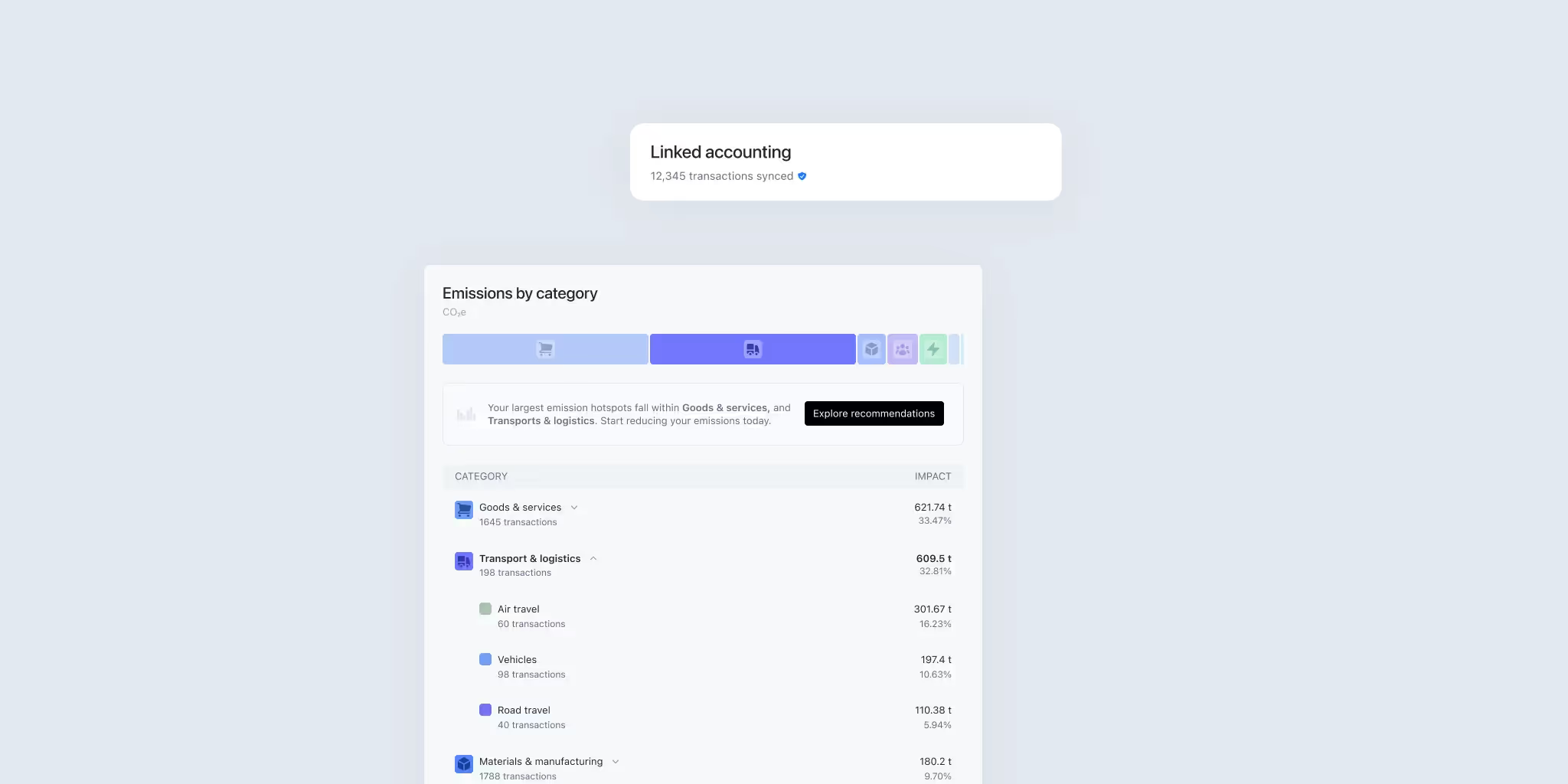
A carbon accounting tool like Coolset makes this process significantly faster and more accurate, using spend-based data and emissions factors aligned with the GHG Protocol to build a detailed picture of your footprint. You can learn more in our guide to measuring your company's carbon footprint.
Step 2: Identify emission hotspots and priorities
Once you have your baseline measurement, analyze where your emissions are concentrated. Common hotspots for mid-market companies include:
- Business travel and employee commuting
- Purchased goods and services from high-emission suppliers
- Energy use in offices or facilities
- Logistics and transport
Prioritize the areas where you can have the greatest impact relative to the effort involved. Quick wins — like switching to renewable energy or reducing unnecessary air travel — can be implemented alongside longer-term structural changes.
Step 3: Set science-based targets
Rather than setting arbitrary percentage reduction targets, anchor your goals to what climate science says is necessary. The Science Based Targets initiative (SBTi) provides a framework for companies to align their emission reduction targets with a 1.5°C pathway.
Setting science-based targets signals credibility to investors, customers, and regulators. It also gives your team a clear, defensible rationale for the ambition level of your goals.
Step 4: Build your reduction roadmap
A carbon reduction plan is only as good as the actions behind it. For each emission hotspot identified in Step 2, develop specific initiatives with clear timelines, owners, and expected impact.
Examples of common reduction initiatives include:
- Switching to renewable energy for electricity and heating
- Electrifying company vehicle fleets
- Implementing a sustainable travel policy (replacing flights with trains where feasible)
- Engaging key suppliers on their own emission reduction plans
- Improving energy efficiency in buildings and operations
Document each initiative with expected CO2e reductions, estimated cost, and a realistic implementation timeline. This makes your plan actionable rather than aspirational.
Step 5: Monitor, report, and iterate
Carbon reduction is not a one-time exercise. Track your progress annually against your baseline, update your emissions inventory, and assess whether your initiatives are delivering the expected impact.
CSRD and other regulatory frameworks are increasingly requiring companies to report on their climate targets and progress. Building good measurement and reporting practices now will put you in a strong position for compliance and stakeholder reporting.
Coolset supports this entire cycle — from initial measurement to target setting, reduction planning, and annual progress reporting. Request a demo to see how it works for your company.