Making sense of the Omnibus Proposal: A conversation with Wim Bartels on EFRAG, ESRS, and what’s next
EFRAG sustainability report board member Wim Bartels shares what the ESRS revisions and Omnibus proposal mean for businesses navigating sustainability reporting.
Read the full introduction
EFRAG sustainability report board member Wim Bartels shares what the ESRS revisions and Omnibus proposal mean for businesses navigating sustainability reporting. He offers clear advice on how auditors should prepare, how to approach double materiality, and why companies shouldn’t waste the CSRD delay. A must-read for anyone aligning reporting with upcoming EU regulations.
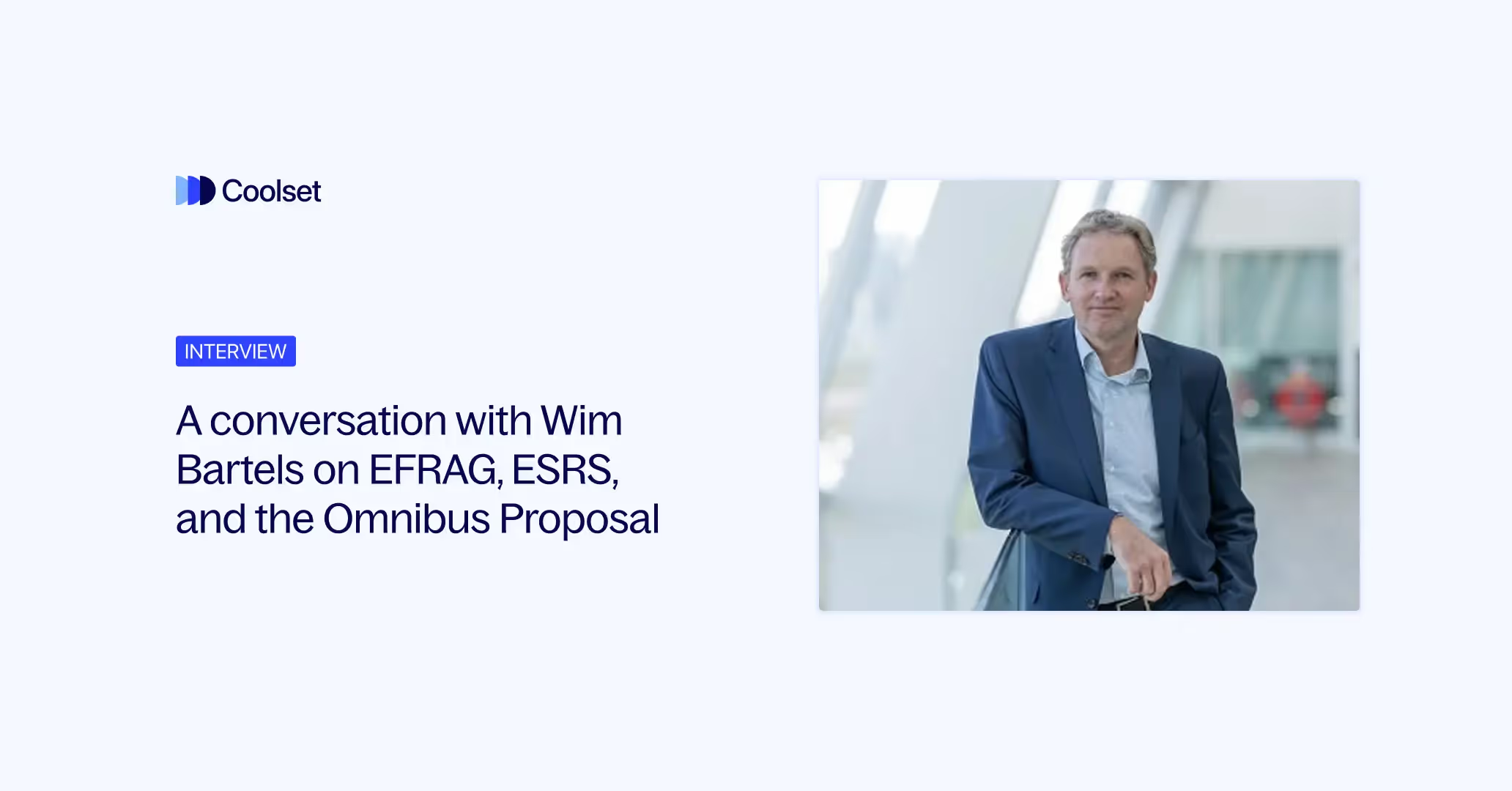
Wim Bartels is a prominent figure in EU sustainability reporting, having served as Chair of the EFRAG Sustainability Reporting Board and played a central role in developing the European Sustainability Reporting Standards (ESRS). This article summarizes his perspective on the ESRS, the Omnibus proposal, and the future of sustainability reporting in Europe.
On the development of the ESRS
Bartels has been a key architect of the ESRS framework that underpins CSRD reporting. He has consistently advocated for standards that are both ambitious in their sustainability content and practically implementable for the wide range of companies that fall within CSRD scope. His perspective on the ESRS reflects a balance between the need for comprehensive disclosure and the practical realities of data collection in mid-market and SME supply chains.
On the Omnibus proposal
Bartels has publicly commented on the EU Omnibus proposal and its implications for CSRD. His position reflects the tension between regulatory simplification (reducing burden on companies) and the need for investors, lenders, and other stakeholders to have access to comparable, reliable sustainability data.
Key themes in his commentary on the Omnibus:
- The reduction in mandatory ESRS data points is a pragmatic response to feedback about reporting burden, but must not undermine the information value for capital markets
- The VSME provides an important bridge for companies leaving mandatory CSRD scope, ensuring the sustainability data ecosystem doesn’t break down at the supply chain level
- The amended ESRS should be monitored carefully to ensure they maintain alignment with global standards like ISSB
For the latest on what the amended ESRS require, see our guide to the amended ESRS under Omnibus.
On the broader sustainability reporting landscape
Bartels has emphasized the importance of interoperability between ESRS and global standards, particularly ISSB. He has argued that the EU’s double materiality approach is compatible with ISSB’s financial materiality approach — companies reporting under CSRD can largely satisfy ISSB requirements without additional work on the financial materiality dimension.
What companies should take from his perspective
For companies navigating CSRD preparation, Bartels’ perspective reinforces several practical priorities:
- The double materiality assessment remains the foundation of CSRD compliance even after Omnibus simplification
- Supply chain sustainability reporting (including VSME) is essential for maintaining data flows across the value chain
- The Omnibus changes reduce burden but do not change the fundamental expectation that companies disclose material sustainability information
For the full context on how CSRD scope and timelines have changed, see our guide to CSRD under Omnibus.